








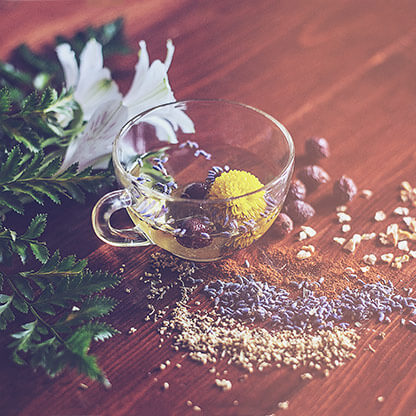
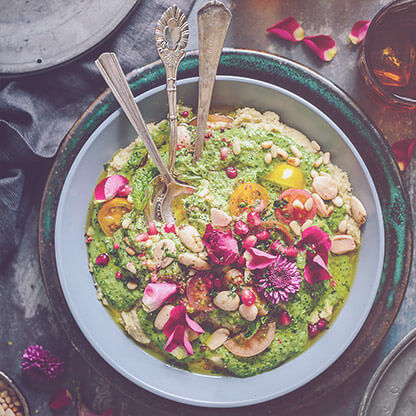
Your Summer Pharmacy
What nature gives you — and how to make the most of it

Your pharmacy is growing in GARDEN.
You just need to know what you're picking.
That's not a failure. That's summer.
It is the season of fire. Of expansion. Of peak yang energy. Everything blooms, everything grows, everything gives.
But giving without receiving leads to emptiness.
The old masters knew this. They didn't live in defiance of summer—they lived in harmony with it. They knew what the body needs during this time. And they found it where it had always been:
In the garden. In the meadow. Out in nature.
Your summer medicine cabinet is ready. You just need to know what to pick.
Hinweis: Wenn in diesem Beitrag von „Leber“, „Herz“, „Milz“, „Lunge“ oder „Niere“ die Rede ist, sind immer die Functional Circuits in Traditional Chinese Medicine—energetic systems, not anatomical organs.
🔥 What summer demands of the body
In TCM, summer is the season of the Fire element. The heart reigns supreme. The Shen—your spirit, your consciousness—is at its most active.
It brings gifts: joy, creativity, connection, and self-expression.
But it also comes at a cost.
Summer demands five things from the body:
1. Regulate body temperature
The heat from outside seeps in. It rises upward—to the head, to the heart. It makes you restless, irritable, and dazed.
The body needs to cool down. But not with cold—because cold doesn't actually cool you down. It needs thermal cooling—from the inside, gently, and sustainably.
The plants for this: Peppermint, chrysanthemum, hibiscus
2. Storing liquids
You sweat. You lose fluids. Not just water—but also minerals, and what TCM calls „substance.“.
The body fluids—Jin Ye—cool, moisturize, and nourish. When they are gone, everything becomes dry: the skin, the throat, the eyes, and the mind.
The body doesn't just need nourishment—it needs something that keeps it going.
The plants for this: Salbei und Goji–Beeren
3. Nourish Yin
Yang is above. Yang is outside. Yang is summer itself—hot, bright, active.
But Yang without Yin burns out. Yin is the cooling force, the substance, the depth. The quiet partner that keeps the fire in balance.
Summer depletes the Yin. It must be nourished—gently, steadily, every day
The plants for this: Weißer Tee und Lilienzwiebel
4. Protecting the Heart
The heart is the body's most vital organ. In the summer, it is particularly active—and particularly vulnerable.
Heat upsets the heart. Overwork exhausts it. Too much stimulation overwhelms it. And when the heart suffers, everything suffers.
The heart needs protection. Rest. Nourishment that strengthens it without weighing it down.
The plants for this: Hibiscus, hawthorn, lotus seeds
5. Calm the Shen
Shen is your spirit. It resides in the heart. In summer, it is most alert—but also most restless.
When the nights are short, when everything is pushing outward, Shen can’t settle down. He flutters. You sleep poorly, you’re restless, you feel „out of sorts.“.
Shen needs an anchor. Something to bring him home.
The plants for this: Lavender, lemon balm, linden blossom, lotus seeds
🌿 The Garden Pharmacy
These herbs grow on the balcony, in the garden, and on the windowsill. You can plant them today. They’re easy to grow, readily available—and surprisingly powerful.
Peppermint — the refresher
Peppermint is the quintessential summer herb.
Thermal effect: Cool
Taste: Sharp
Wirkt auf die Funktionskreise: Lungs, liver
What she does:
Peppermint cools—but it does more than that. It opens up, it clears the mind, it liberates.
In TCM, we say it „dispels wind-heat.“ That sounds technical, but you know the feeling. When heat builds up in your head. When your thoughts go round and round. When everything feels tight and you can’t think clearly anymore.
Peppermint creates space. It loosens what has become stuck. It gets stagnant energy moving again.
And—this is important—it opens the pores. It helps the body sweat instead of trapping heat. Unlike ice-cold drinks, which close the pores and trap heat inside.
What time of day:
- Morning: For a fresh start—instead of coffee or as a complement to it
- Afternoon: When that 3 p.m. slump hits and your head feels heavy
- After the meal: If you feel a heaviness in your stomach
Warning:
- Late at night, peppermint can be too stimulating
- If you have a severe Yin deficiency (dryness, night sweats), don’t overdo it—it can cause further dehydration
- Use with caution if you have heartburn—it may relax the lower esophageal sphincter
Pair with:
- Chrysanthemum — enhances the cooling effect on the head and eyes
- Green Tea — Clarity Squared
- Lemon balm — when you want both: refreshment and relaxation
Peppermint is the first thing to reach for when summer gets too much. It grows like crazy and forgives every beginner’s mistake. Plant some today.
Lavender — the Shen Calmer
It smells like summer. But it’s about much more than just being beautiful.
Thermal effect: Cool
Taste: Spicy, slightly bitter
Wirkt auf die Funktionskreise: Heart, liver, lungs
What he does:
Lavender cools in a different way than peppermint. It cools by soothing.
The heat that arises from stress, from agitation, from a mind that cannot find peace—lavender soothes it. It calms what is rising. It slows what is spinning too fast.
In TCM, we say: It calms the Shen. The spirit that dwells in the heart becomes still. Inner restlessness subsides. The heat caused by tension can dissipate.
At the same time, it regulates liver qi. If you feel constricted, irritable, or under pressure—lavender opens up what the liver constricts.
What time of day:
- Afternoons starting at 5 p.m.: As the day draws to a close, but the tension hasn't yet
- Before going to sleep: The classic way to enjoy it — a cup to calm the mind
- In the event of an acute stress reaction: Even during the day, when you realize you can't calm down
Warning:
- Am Tag nicht übertreiben, wenn du wach bleiben willst — Lavendel wirkt eher beruhigend
- Never apply essential oil undiluted to the skin
Pair with:
- Lemon balm — the gentle choice for sensitive individuals
- Linden Blossom — when you need extra room in the chest area
- Chamomile — a classic bedtime combination
Lavender doesn't offer quick relief. It offers deep comfort. For those nights when your heart won't settle.
Lemon Balm — The Gentle One
It smells like lemon, but it's much more than just a scent.
Thermal effect: Cool
Taste: Spicy-sweet, slightly bitter
Wirkt auf die Funktionskreise: Heart, liver, stomach
What she does:
Lemon balm is like peppermint’s gentler sister. It has a cooling effect, but a more delicate one. It soothes without causing drowsiness. It’s perfect for people who are sensitive—to herbs, to stimuli, to everything.
It calms the heart, soothes the stomach, and relieves mild liver qi stagnation. It also lifts the spirits—traditionally, it was used to treat „melancholy and heaviness of the heart.“.
That's what makes it unique: It soothes without weighing you down. It cools without drying you out. It restores balance.
What time of day:
- Morning: If you want to start off gently, without getting too worked up
- After lunch: To combat the afternoon slump
- Evening: On its own or with lavender
- For stomach-related nervousness: Anytime — lemon balm soothes an upset stomach like no other herb
Warning:
- Eines der sanftesten und verträglichsten Kräuter überhaupt
Pair with:
- Lavender — the perfect combination for relaxing evenings
- Peppermint — Refreshing with a gentle touch
- Linden Blossom — when you need both relaxation and openness
Lemon balm grows like a weed if you let it. It takes over everything. Just let it. In the summer, it’s worth its weight in gold.
Basil — the harmonizer
In der italienischen Küche unverzichtbar. In der TCM: ein unterschätztes Küchenkraut.
Thermal effect: Mildly warm to neutral (depending on the variety)
Taste: Spicy, sweet
Wirkt auf die Funktionskreise: Stomach, spleen, lungs
What it does:
Basil isn't traditionally considered a cooling herb. But it brings balance—and that's just as important in the summer.
It helps the spleen manage the dampness that becomes so oppressive on muggy days—that heavy, bloated, „everything sticks together“ feeling. Basil transforms dampness, relieves stagnation in the abdomen, and brings a sense of lightness.
And it lifts your spirits. It’s no coincidence that its scientific name is „basilicum“—meaning “royal.” In medieval Europe, it was said that basil dispelled melancholy and brought joy.
What time of day:
- About the meal: The classic way to enjoy it—on a tomato, in a salad, or on pizza
- In the morning: As a tea (less well-known but effective) for a light, clear day
- On humid days: When everything is sticky and heavy
Warning:
- Als Küchenkraut unbedenklich — konzentriertes ätherisches Basilikumöl gehört nicht in die tägliche Anwendung
Pair with:
- Tomato — perfect not only in the kitchen, but also energetically (cooling and harmonizing)
- Peppermint — in a salad or as a blended tea
- Ginger (a small amount) — if you also want to boost your digestion
Basil is the mediator. It doesn't cool you down directly, but it helps your body cope with the summer heat. Keep a pot on the windowsill. Use a few leaves every day.
Sage — the Guardian
A herb that most people only know from gargling. But in the summer, it can do so much more.
Thermal effect: Warming (but with an astringent effect)
Taste: Spicy, bitter
Wirkt auf die Funktionskreise: Lungs, stomach, kidneys
What he does:
Sage has a warming quality—and yet it’s a summer herb. Why? Because it preserves what summer seeks to take away.
It regulates sweating. It doesn’t suppress it—it regulates it. For people who sweat excessively, who wake up soaked at night, who break out in a sweat at the slightest exertion—sage helps keep it under control.
That’s what makes it so special: it keeps what sweat takes away. In the summer, when we’re constantly losing, that’s worth its weight in gold.
It also strengthens qi and dispels excess dampness—without causing dryness. A delicate balance that sage manages to strike.
What time of day:
- Morning: If you know you have a sweaty day ahead of you
- Before exercising: To control excessive sweating
- Evening: For night sweats — one cup before bed
Warning:
- Nicht in großen Mengen über lange Zeit — der Salbei ist intensiv
- Use with caution if you have a dry constitution—it can cause further dehydration
Pair with:
- Peppermint — if you want to cool down AND stay cool
- Goji Berries — Nourish and maintain Yin, the perfect summer combination
- Honey — softens the intense flavor
Sage is for those who lose too much. It preserves what summer takes away. Not in large quantities every day—but just when you need it.
Rosemary — the Qi-stimulator
Warm, aromatic, invigorating. Not the first herb that comes to mind in summer—but it’s underrated.
Thermal effect: Warm
Taste: Spicy, bitter
Wirkt auf die Funktionskreise: Lungs, spleen, liver
What he does:
Rosemary warms you up—but it also gets you moving. And sometimes that’s exactly what you need.
On muggy days, when the humidity brings everything to a standstill. When you can’t seem to get yourself going. When your circulation just won’t kick in. When everything feels sticky and nothing flows.
Rosemary gets things moving. It stimulates the flow of qi, clears the mind, and boosts energy. It’s like a breath of fresh air on a stuffy day.
Not for the hottest, driest days—but for the muggy, sluggish, leaden ones.
What time of day:
- Morning: The perfect tea to start your day and clear your mind
- Before engaging in intellectual work: Rosemary improves concentration — proven in studies
- On muggy mornings: When the air stands still and you're with it
Warning:
- Als Küchenkraut unbedenklich — konzentriertes ätherisches Rosmarinöl gehört nicht in die tägliche Anwendung
- Not in the late afternoon or evening—it's too stimulating
Pair with:
- Peppermint — Energizing + Cooling, perfect for muggy mornings
- Green tea — double the clarity
- Lemon — adds a refreshing touch
Rosemary is for those sweltering days when nothing seems to be moving. It gets things moving when everything has come to a standstill. In the morning, not in the evening. For energy, not for calm.
🍵 Summer Teas
These teas go beyond common garden herbs. You can find them at Asian grocery stores, on the tea aisle, in TCM pharmacies, and at specialty online shops.
They are the next level of summer first-aid kits.
The Chrysanthemum (Jú Huā) — the flower that cools the head and eyes
In China, chrysanthemum tea is as common as chamomile tea is here. Every office, every home, and every kitchen has dried chrysanthemums.
Thermal effect: Cool
Taste: Bitter, sweet
Wirkt auf die Funktionskreise: Lungs, liver
What she does:
The chrysanthemum specifically cools the upper part of the body. The head, eyes, forehead—all the heat that rises and accumulates there.
Das ist ihre Spezialität: Sie klärt Leber–Feuer, das nach oben schlägt. In der TCM ist die Leber das Organ, das unter Stress „überhitzt“. Und wenn die Leber–Hitze steigt, merkst du es zuerst im Kopf. Rote Augen. Druck im Kopf. Schwindel. Gereiztheit.
The chrysanthemum soothes this heat. It cools what rises. It clears what is cloudy. And it tastes wonderful—light, floral, golden.
An interesting detail: In TCM, there are two varieties. The yellow one (Hang Ju) has a stronger cooling effect. The white one (Bai Ju) also has a nourishing effect. Both are suitable for everyday use.
What time of day:
- Afternoon: When your head feels heavy and your eyes are tired
- After working at a computer: Chrysanthemum is THE office tea
- After heat exposure: If you've been out in the sun and your head is throbbing
- If you're feeling irritable:When you realize the fuse is getting shorter
Warning:
- For those with a cold constitution (always feeling cold, pale complexion, loose stools) – use in moderation
- Do not consume large amounts if you have diarrhea
- Not while you have a cold and are feeling chilly
Pair with:
- Goji berries — THE classic. Chrysanthemum cools, goji nourishes the yin. Pure balance.
- Peppermint — enhances the cooling, clarifying effect
- Honey — when the bitterness is too strong
Chrysanthemums are a must-have for any summer pantry. A jar of dried flowers will last a year. And when you have a headache, your eyes are burning, and the heat is rising—you know what to do.
Green Tea — The Gentle Guardian
Not all teas are the same. Green tea is special—and especially perfect for summer.
Thermal effect: Cool
Taste: Bitter, sweet
Wirkt auf die Funktionskreise: Heart, stomach, lungs
What he does:
Green tea is refreshing, but it also perks you up. That’s the beauty of it: clarity without overheating.
Unlike coffee, which warms you up and gives you a boost, green tea clears the mind and calms you down at the same time. It cools the stomach—which is great after spicy or greasy meals. It helps with the excess moisture that tends to build up in the summer. It protects the heart with its antioxidants.
And then there’s L-theanine—a compound produced exclusively by the tea plant. It makes you feel alert and relaxed at the same time. Concentrated, but not nervous. Focused, but not tense.
That's something coffee can't do.
What time of day:
- Morning: As an alternative to coffee or as a complement
- In the morning: For focused work
- After lunch: To combat afternoon fatigue
- Not after 3 p.m.: Caffeine stays in your system for a long time
Warning:
- It can upset your stomach on an empty stomach—it’s better to take it after breakfast
- If you have an iron deficiency: Do not drink this with meals, as it inhibits iron absorption
- If you have trouble sleeping: Have your last cup of green tea before 3 p.m.
Quality feature:
When it comes to green tea, quality is especially important. High-quality green tea doesn't taste bitter, but rather sweet and umami. If your green tea tastes only bitter, the water was too hot (maximum 80°C) or the quality was too low.
Pair with:
- Jasmine blossoms — a classic, cooling and soothing
- Mint — extra freshness
- Ginger (a small amount) — if you want to balance out the cooling effect a bit
Green tea is all about balance. Alert, but not jittery. Refreshing, but not cold. Try this experiment every summer: drink green tea instead of coffee in the morning for a week. Notice the difference.
Hibiscus — the heart-cooler
Die leuchtend roten Blüten sind nicht nur schön. Sie können viel — und werden unterschätzt.
Thermal effect: Cold
Taste: Acid
Wirkt auf die Funktionskreise: Heart, liver
What he does:
Hibiscus has a strong cooling effect. Stronger than chrysanthemum, stronger than mint. It’s for those really hot days—when nothing else will do.
Er kühlt das Blut. Er senkt, was zu hoch steigt — die aufsteigende Hitze. Er erfrischt das Herz. In der TCM ist das Herz das Feuer–Organ, und im Sommer besonders gefährdet. Der Hibiskus schützt es.
The sour taste is more than just a flavor—it’s an effect. Sour tightens. Sour preserves fluids. Exactly what summer needs when everything is pushing outward and getting lost.
And what about the color red? Red nourishes the heart—in TCM, but also symbolically.
What time of day:
- Afternoon: When the heat is at its peak
- After exercising: Refreshing and rich in electrolytes
- During heat waves:Hibiscus is for those extreme days
Warning:
- If you have a cold constitution, do not consume large quantities
- Intensiv sauer — wer empfindlich ist, mildert mit etwas Honig
Pair with:
- Rosehip — boosts the effects of vitamin C
- Mint — even more refreshing
- Honey — reduces acidity
Hibiscus is perfect for the hottest days. Bright red, intensely tart and fruity, refreshing. When nothing else works—hibiscus really cools you down.
Linden Blossom — The Relaxant
A European classic that’s perfect for your summer medicine cabinet. Our grandmothers knew more than we realize.
Thermal effect: Cool to neutral
Taste: Sweet
Wirkt auf die Funktionskreise: Heart, Lungs
What she does:
Linden blossoms have a relaxing effect. They open up, they expand, and they help your breath flow freely.
When the heat makes you feel suffocated. When you notice your breathing has become shallow. When it all becomes too much and you’re just going through the motions—the linden blossom opens up what has closed in.
It also promotes light sweating—which is good in the summer. Sweating is the body’s natural way of cooling itself. Ice-cold temperatures suppress sweating and trap heat. Linden blossom helps the body do what it’s supposed to do.
At the same time, it calms the nervous system. Mild, gentle, soothing. It’s like a warm (but not hot) hug.
What time of day:
- Late afternoon: When you've had a busy day and the evening hasn't even started yet
- Before going to sleep: For a smooth transition into the night
- In case of restlessness: Anytime you realize you're not yourself anymore
Warning:
- Eine der sanftesten und verträglichsten Pflanzen überhaupt
Pair with:
- Lavender — the ultimate combination for relaxation
- Chamomile — classic, time-tested, gentle
- Honey — makes it even milder
Linden blossom tea is comfort in a cup. For those evenings when the day was too hot and the night hasn't cooled down yet.
White Tea — The Yin-Bringer
The mildest of all teas. And perhaps the most underrated.
Thermal effect: Cool
Taste: Sweet, mild
Wirkt auf die Funktionskreise: Heart, lungs, kidneys
What he does:
White tea undergoes minimal processing—the leaves are simply dried, not fermented. This makes it milder than green tea, with a fresher, more nourishing flavor.
It cools, but gently. It nourishes the yin—precisely what summer depletes. It protects without being demanding.
Less caffeine than green tea, more antioxidants. Perfect for people who are exhausted and need to cool down without further stimulation. For people who are sensitive to caffeine. For those who need something gentle.
What time of day:
- All day long: Because of its low caffeine content, it can also be enjoyed in the afternoon or evening
- In case of exhaustion:If you need cooling but not stimulation
- During recovery: After an illness, after overwork, after too much summer
Warning:
- Hardly any warnings — one of the mildest teas
- For those who feel the cold easily—in moderation
Quality feature:
High-quality white tea (e.g., Bai Mu Dan, Yin Zhen) has silky, silvery leaves and tastes floral and sweet, never bitter. If it tastes bitter, something is wrong.
Pair with:
- Goji Berries — Nourishing Yin in Two Ways
- Chrysanthemum — Gentle Cooling and Nourishment
- Solo — white tea is so delicate that it’s best enjoyed on its own
White tea is the gentlest of teas. It nourishes without demanding anything in return. For everyone who has already given so much.
🧊 Foods that help you cool down
In addition to herbs and teas, there are foods that support your health from the inside. They round out your summer medicine cabinet on your plate.
🍉 Watermelon — the queen
It provides intense cooling, deeply hydrates, and quenches thirst in a way that water alone cannot. Ancient texts refer to it as the „Natural White Tiger Decoction“—named after one of the most potent heat-clearing formulas in TCM.
- Wirkt auf die Funktionskreise: Heart, stomach, bladder
- Best time: In the afternoon, during the hottest part of the day
- Warning: Do not consume in large quantities if you have poor digestion, loose stools, or feel cold
- Insider tip: The white layer beneath the peel cools even more effectively—in China, it is used as medicine
🥒 The Cucumber — The Gentle One
Milder than watermelon, but more versatile. Gently cools, hydrates, and soothes. Suitable for everyday use, even for sensitive digestive systems.
- Wirkt auf die Funktionskreise: Stomach, small intestine, bladder
- Best time: All day long, especially as cucumber water
- Warning: Reduce the flow if the system is very cold
- Tip: Let it steep in water overnight — naturally flavored water
🍅 The tomato — the heart's nourisher
It cools and nourishes at the same time. Red nourishes the heart—that’s TCM, but it’s also backed by modern science (lycopene protects the heart).
- Wirkt auf die Funktionskreise: Stomach, liver, heart
- Best time: For lunch
- Warning: Use with caution if you have heartburn—acidic foods can make it worse; if you have a weak spleen, it’s better to cook them rather than eat them raw
- Tip: Briefly heating it with a little oil makes the lycopene more bioavailable
🥒 Zucchini — the mild one
Gently cooling, easy to digest. Perfect for anyone who can't tolerate raw foods but still needs a cooling effect.
- Wirkt auf die Funktionskreise: Stomach, spleen, colon
- Best time: For lunch or dinner
- Warning: Barely — one of the most easily digestible vegetables
- Tip: Steamed or as zucchini noodles
🥬 Green leafy vegetables — the detoxifiers
Spinach, Swiss chard, lettuce—all of these cool and nourish the blood. Green is the color of the liver, and green vegetables help the liver relax.
- Wirkt auf die Funktionskreise: Liver, stomach
- Best time: With every meal
- Warning: Reduce spinach intake if you have kidney stones (oxalic acid)
- Tip: Lightly steamed is easier to digest than raw
🫛 The mung bean — the heat-quencher
The ultimate summer food in China. It has a strong cooling effect, detoxifies, and clears heat toxins. A classic soup for hot days.
- Wirkt auf die Funktionskreise: Heart, stomach
- Best time: On very hot days, in the afternoon
- Warning: Combine with ginger if you have a weak spleen or poor digestion
- Tip: The green peel contains the most cooling properties—don't peel it
🌸 Classic TCM Texts for Further Study
If you want to explore this further, there are herbs and substances that have been used in TCM for thousands of years to help with summer health.
You can find these at TCM pharmacies, specialty online stores, or well-stocked Asian supermarkets. Quality is especially important here (more on this in the next section).
Lotus seeds (Lián Zǐ) — the Shen anchors
Nourish the heart, calm the shen, and strengthen the spleen at the same time. Perfect for when heat disturbs your sleep, when you feel restless, or when you’re exhausted.
- Thermal: Neutral
- Special feature: The green seed inside (Lián Zǐ Xīn) has a particularly cooling and soothing effect
- Application: In congee, as tea, in soups
Goji berries (Gǒu Qǐ Zǐ) — the Yin-nourishing berries
Nourish the yin—exactly what summer depletes. Nourish the blood. Strengthen the eyes. Pairs wonderfully with chrysanthemum: the chrysanthemum cools, the goji nourishes.
- Thermal: Neutral
- Special feature: Also as a dry snack, a handful a day
- Application: In tea, in oatmeal, on its own
The Lily Bulb (Bǎi Hé) — the Moisturizer
Nährt Lungen– und Herz–Yin. Beruhigt, befeuchtet, klärt. Perfekt bei Trockenheit und innerer Unruhe mit Erschöpfung.
- Thermal: Slightly cool
- Special feature: Also used in cooking—frequently in stir-fries in China
- Application: As tea, in soups, fried
🔍 Quality — Where to buy, what to look for
Not all herbs are created equal. Quality is what makes the difference between „effective“ and „ineffective.“ And sometimes between „safe“ and „unsafe.“.
Where can I buy it?
TCM Pharmacy The best choice for TCM herbs (chrysanthemum, goji, lotus seeds, etc.). Here you’ll find quality-tested products, often organic or certified free of harmful substances. The prices are higher, but it’s worth it. Plus, you’ll get expert advice.
Specialized online TCM stores A good alternative to a TCM pharmacy. Look for certifications (organic, TCM quality seal, testing for harmful substances). Reputable shops provide information on the origin of their products and test reports.
Asian Supermarket Affordable and convenient for beginners. However, quality varies widely. Origin is often unclear. May contain harmful substances. Fine for trying chrysanthemum tea or goji berries—but for therapeutic use, it’s better to buy from a pharmacy.
Grow your own The best option for garden herbs (mint, lemon balm, lavender, basil, sage, rosemary). You know exactly what you have. No effort required—these herbs practically grow on their own.
Organic grocery store, specialty tea shop A good choice for green tea, white tea, hibiscus, and linden blossom. Look for the origin and the organic certification label.
What should you look out for?
For TCM herbs:
- Is the origin specified? (Ideally, traditional growing regions)
- Tested for contaminants? (Pesticides, heavy metals)
- Appearance: Rich color, aromatic smell, no signs of mold
- Organic certification is a plus, but it's not everything—some traditional farmers practice sustainable farming without a certification label
For teas:
- Loose is better than bagged (more potent, more flavorful)
- The first flush of green and white tea is of higher quality
- Whole leaves are better than broken ones
Regarding goji berries:
- Not bright red (often dyed), but rather dark red-orange
- Dry, but not rock-hard
- Sweet and tart in flavor, not just sweet
For chrysanthemums:
- Whole flowers, not crumbled
- Golden yellow (yellow variety) or creamy white (white variety)
- A rich yet pleasant fragrance
How should I store it?
- Dark, dry, cool
- In airtight containers
- Dried herbs last 1–2 years, but gradually lose their potency
- It's best to store TCM herbs in paper bags in a cupboard (not plastic—it can get moldy)
☀️ Your Summer Schedule
So much information. Where do I start?
Here’s a simple plan—it’s not a requirement, just an invitation.
Week 1: Creating a Garden Pharmacy
Buy or plant three herbs:
- Peppermint — for refreshment and clarity
- Lemon balm — for gentle cooling and a good mood
- basil — for harmony and lightness
A pot on the balcony, on the windowsill, in the garden. A few leaves every day—in water, in a salad, or as tea.
Week 2: Stocking up on tea
Get:
- Chrysanthemum flowers — one can lasts all summer
- Good green tea — for the early morning hours
- Hibiscus — for the hottest days
Try each tea at least three times before making up your mind. The taste changes as you get used to it.
Week 3: Establishing a daily routine
- Morning: Green tea or peppermint
- Afternoon: Chrysanthemum (especially after working at a computer)
- Evening:Lavender or linden blossom
Don't try to do everything at once. One new routine a week is enough.
Week 4: Incorporating cooling foods
More of this on your plate:
- Cucumber, tomato, zucchini
- Green leafy vegetables
- Watermelon as an afternoon snack
Less of this:
- Spicy, greasy, grilled
- Alcohol
- Freezing cold
Week 5 and beyond: Going deeper
If you'd like, try a classic TCM recipe:
- Goji Berries in Chrysanthemum Tea
- Lotus seeds in porridge
Or don't bother. The garden pharmacy and the teas are more than enough.
💫 The West Bridge
Was die TCM seit Jahrtausenden beobachtet, beschreiben moderne Ernährungs– und Pflanzenkunde oft mit anderen Worten. Viele der hier genannten Kräuter, Tees und Lebensmittel sind seit Langem geschätzt — als Teil einer bewussten, saisonalen Ernährung.
Aromatische Kräuter wie Minze, Lavendel oder Melisse gelten traditionell als erfrischend und entspannend. Grüner und weißer Tee, Hibiskus, Chrysantheme oder Lindenblüte sind beliebte Sommergetränke, die viele Menschen als wohltuend erleben.
Die Sprache ist anders. Die Beobachtung ist oft dieselbe: Wer im Rhythmus der Jahreszeit isst und trinkt, tut sich auf sanfte, natürliche Weise etwas Gutes.
🚨 Hinweis: Dieser Beitrag dient der Information und Bildung und ersetzt keine ärztliche oder therapeutische Beratung, Diagnose oder Behandlung. Bei gesundheitlichen Beschwerden wende dich bittean eine Ärztin, einen Arzt oder eine qualifizierte Therapeutin bzw. einen Therapeuten.
🔮 The deeper message
Nature is not a matter of chance.
It is a system.
A balance. An offer.
In summer, when the heat arrives, the herbs that cool the body are in bloom. The plants that nourish the body are growing. The fruits that hydrate the body are ripening.
This is no coincidence.
That's intelligence. Millions of years of it.
The old masters didn't invent it.
They watched. They tried.
They have passed it down—from generation to generation, from teacher to student, from mother to child.
Now you have that knowledge.
You don't have to use everything.
You don't have to understand everything.
A herb, a tea, a fruit—that's enough to get started.
A bunch of mint from the balcony.
A cup of chrysanthemum tea in the afternoon.
A slice of watermelon when the heat is on.
These are no small matters.
These are the things that make for a different kind of summer.
Don't fight the heat. Dance with it.
The Summer Pharmacy is waiting.
It grows in the garden, on the balcony, and along the side of the road.
You can find it at the TCM pharmacy, the tea shop, and the Asian supermarket.
You just need to know what you're picking.
And then: pick them.
📌 Even more for you
🌿 TCM analysis: How's your yin?
👉 Start now: www.meine-tcm.com/tcm-analyse
📜 Once a month, the Yellow Emperor in person:
Practical tips for everyday life and nutrition, simple recipes, and Eastern wisdom—all in language everyone can understand—delivered straight to your inbox.
👉 Subscribe for free: www.meine-tcm.com/newsletter-anmeldung
Those who live in harmony with the seasons,
rarely needs medicine.
TCM wisdom
More interesting tips & articles

TCM tip of the week
The Autumn Regimen: The Lungs and Large Intestine in the Metal Element
Anyone who waits until they're already thirsty to dig a well has waited too long—that's what the oldest textbook says…
Sep

TCM tip of the week
Kick Off Fall the Right Way
Between the first cool evening and the first frost, your body adjusts from summer to winter and is more vulnerable during that time…
Sep





Our most popular products









Back pain
Thanks for the interesting information.
I came across the videos a while ago and have participated several times; I take a qigong class in person.
I miss the warm-up and the Asian music (it always helps me relax, as does silent qigong). Still, I've already thought about switching to online classes.
Are there perhaps lower fees for low-income retirees? I'd appreciate it.
Best regards, and thank you for your videos
Dear Marion,
Thank you so much for your kind words and your loyalty—we're so glad you've been with us for so long! 🙏
We'd love to hear your feedback on the warm-up exercises and Asian music—we understand how much these elements can contribute to inner peace.
Regarding your question about lower fees: Unfortunately, we do not currently offer any discounts, not even for retirees. However, we have deliberately set our prices to be fair and accessible to as many people as possible.
We would still be very happy to welcome you to our online platform soon! If you have any questions, please don't hesitate to contact us.
Best wishes, and stay healthy! 😊