





The Fifth Season
Why Traditional Chinese Medicine Recognizes a Transition the West Has Forgotten

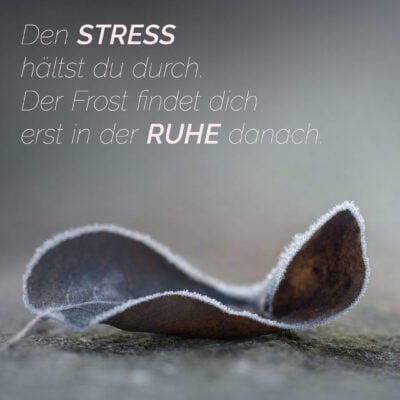
There is a SEASON, that no calendar knows.
Your BODY already.
In Traditional Chinese Medicine are not four seasons but five. The fifth does not appear on any calendar. It is the quiet threshold between two seasons — the breath before the wheel turns again.
The ancient masters called it the Dojo time. Only about two weeks. Yet they decide how you move forward — light and nourished, or tired and empty.
And right now you are standing in one of these very special ones: the transition from the Fire to the Metal. From summer into autumn.
🔥 From Fire to Metal — the biggest shift of the year
Summer belongs to Fire. It is the loudest time of the year: everything moves outward, upward, toward the light. Warmth, movement, connection, joy. Long evenings, open doors. We open ourselves outward — to other people, to life.
Autumn belongs to Metal. It is the opposite: everything draws inward and downward. The harvest is brought in, what is superfluous is let go. Clarity instead of abundance. Gathering instead of expanding. Breath, stillness, a clear head.
Between these two lies the Dojo time now. And it is the biggest shift of the whole year: from the greatest expansion into the first gathering in. From outside to inside. From giving to gathering.
A shift like this does not succeed in a single leap. It needs a transition, a ground that carries you gently from one side to the other.
This ground is your Center.
🌍 Why the Center rules precisely now
That this transition asks so much of you has a simple reason.
In TCM, the five elements nourish one another in a cycle. And in this cycle, the Earth stands exactly between Fire and Metal:
- Fire nourishes Earth — from burned wood comes ash, and from ash, fertile soil.
- Earth gives birth to Metal — the ore grows deep within it.
Fire → Earth → Metal. The path from summer into autumn therefore does not pass by your Center by — it leads right through it..
Of the four transitions in the year, this is the only one in which Earth is not just lending a hand, but at home . That is why you feel your Center so clearly right now. It digests the summer and prepares the harvest.
If you take care of her now, she will carry you gently into autumn. If you neglect her, you arrive empty-handed, just when autumn demands reserves from you.
🌾 Your Center — Explained Simply
Note: Whenever this article mentions the "Spleen," "Stomach," or other organs, it always refers to the Functional Circuits in Traditional Chinese Medicine—energetic systems, not anatomical organs.
In Traditional Chinese Medicine, your Center stands for two organs: Spleen and stomach. The idea behind it is simple: they are the place where food becomes vitality. From what the day brings you, what sustains you.
When your Center is strong, you rest within yourself: alert, clear, and grounded. You eat and then get up feeling lighter, not heavier.
When it is tired, everything slows down. Food sits like lead. The belly feels heavy in the evening. Thoughts circle round and round without finding an end. And in the afternoon a tiredness settles over you that no coffee can chase away.
Your Center makes itself known then: it needs a little attention right now. And the Dojo time is exactly the moment for that.
The Spleen loves warmth and fears cold.
It loves rhythm and fears chaos.
She loves stillness and dreads rumination.
— Nei Jing Su Wen, classic TCM–Kanon
🌾 Five Simple Ways Back to Your Center
You don't need grand resolutions. No discipline, no program. Just a few small kindnesses for your center, day by day.
1. Eat warm. Your center loves warmth. A warm breakfast is the simplest step: porridge, congee, or a stewed apple with cinnamon. A cold smoothie on an empty stomach may feel good, but it takes energy from your center before the day has even begun.
2. Keep a rhythm. Regular meal and sleep times provide steadiness. Three meals at similar times, with lighter, earlier dinners. Your center loves consistency almost as much as warmth.
3. Choose sweets wisely. The center enjoys sweetness, but in its gentle forms: sweet potato, pumpkin, carrots, dates, millet. Instead of a chocolate bar, try two or three dates. Sweetness should ground you, not overstimulate you.
4. Grübeln loslassen. Zu viel Denken erschöpft die Mitte — und eine müde Mitte kann nicht aufhören zu denken. Drei Minuten ruhig in den Bauch atmen, morgens und abends, durchbricht diesen Kreis oft leiser als jeder gute Vorsatz.
5. Auf die Erde. Das Erd–Element sehnt sich nach echtem Boden: ein Spaziergang in der Natur, barfuß über die Wiese, die Hände in der Gartenerde. Es erdet den Körper und den Kopf zugleich.
🍚 Das Kongee–Rezept — warm und bekömmlich
Congee ist ein weich gekochter Reisbrei — in der TCM ein Klassiker für die Mitte, weil er besonders leicht verdaulich ist. Das perfekte warme Frühstück für die Dojo–Zeit.
Für 2 Portionen:
- 1 Tasse Rundkorn–Reis
- 8 Tassen Wasser (Verhältnis 1:8)
- 1 daumengroßes Stück Ingwer, in Scheiben
- 3–4 entsteinte Datteln, halbiert
- 1 pinch of salt
This is how it works: Alles in einen großen Topf geben, aufkochen, dann bei niedrigster Hitze mit halb aufgelegtem Deckel zwei bis drei Stunden köcheln lassen, bis ein cremiger Brei entsteht. Ab und zu umrühren.
📣 Ingwer–Tipp: Der lang gekochte Ingwer im Congee ist mild und wärmt die Mitte sanft — morgens genau richtig. Als Faustregel gilt: Nach 15 Uhr den Ingwer besser weglassen oder nur wenig nehmen, denn am Nachmittag arbeitet die Mitte ruhiger und verträgt ihn dann weniger gut.
Süße Morgen–Variante: mit einem gewürfelten Apfel, etwas Zimt und ein paar Walnüssen.
📣 Tip: Gleich die doppelte Menge kochen — Congee hält im Kühlschrank drei Tage und schmeckt aufgewärmt fast besser.
📍 Zwei Punkte für die Mitte
Zwei einfache Akupressurpunkte, die in der TCM der Mitte zugeordnet sind. Massiere sie jeweils rund eine Minute sanft kreisend, auf beiden Seiten.
Ma 36 (Zu San Li) — vier Finger unterhalb der Kniescheibe, einen Daumen breit außerhalb des Schienbeins. In der TCM dem Stärken von Milz und Magen zugeordnet.
KG 12 (Zhong Wan) — auf halbem Weg zwischen Bauchnabel und dem unteren Ende des Brustbeins. In der TCM dem Harmonisieren des Magens zugeordnet.
🧭 Alle Punkte mit genauer Anleitung findest du in unserem kostenlosen Akupunktur–Atlas: 👉 www.meine-tcm.com/akupunkturatlas
💫 Finally
Es gibt eine Jahreszeit, die kein Kalender kennt. Dein Körper kennt sie.
Er erinnert sich an das Innehalten, auch wenn dein Alltag es überspringt. An die Pause, bevor das Neue beginnt. An den Boden, der dich vom Feuer ins Metall trägt — vom Sommer in den Herbst.
Die Müdigkeit, die du gerade manchmal spürst, ist ein Hinweis: Dein Körper wünscht sich jetzt Wärme, Rhythmus und Boden unter den Füßen.
Du musst nichts Großes tun. Nur ein wenig langsamer werden. Warm essen. Durchatmen. Deiner Mitte geben, wonach sie sich sehnt — Mahlzeit für Mahlzeit, Atemzug für Atemzug.
Dann trägt sie dich. Weich und leicht. Bis weit in den Herbst hinein.
Kehre zurück zur Wurzel.
Dort ist die Stille.
Dort findest du dich.
— Laozi, Dao De Jing
📌 Recommended
🔍 Free TCM analysis — Finde heraus, was deine Mitte gerade braucht.
👉 www.meine-tcm.com/tcm-analyse
📜 Newsletter - Monthly TCM wisdom: A Dialogue Between the Yellow Emperor, Qi Bo, and Dr. Weber.
👉 www.meine-tcm.com/newsletter-anmeldung
Hinweis: Dieser Beitrag dient der Information und Bildung und ersetzt keine ärztliche oder therapeutische Beratung. Anhaltende Müdigkeit oder Verdauungsbeschwerden können auch medizinische Ursachen haben — bitte lasse sie im Zweifel ärztlich abklären.