







The first cold wind blows, and your throat starts to feel scratchy—why does it affect some people but not others?
Ask the Yellow Emperor
Wei Qi is the guardian of your surface. By day, he patrols the outer wall; by night, he returns to the interior. For those who nourish him, send him out, and allow him to return home, the wind will find no open gate.
— Qí Bó
Most explain the difference by attributing it to luck, genes, or vitamin C. Chinese medicine explains it with something that every person has but very few nurture: the Wei Qi, the defense on the surface. In August, we called it an invisible protective cloak. Today we'll be discussing how this shell becomes watertight and what factors influence that.
What Wei Qi Is The Yellow Emperor, Qí Bó, and Dr. Weber will explain why it’s on the outside during the day and on the inside at night. And, most importantly, what you can do about it starting tomorrow morning.

Qí Bó | The Yellow Emperor Huángdì | Dr. Weber
Note: When this article refers to the „lung,“ „spleen,“ or „kidney,“ it always means the functional systems of Chinese medicine—energetic systems, not the anatomical organs.
The Emperor's Question
The Yellow Emperor: „Qí Bó, I made an announcement this summer, and now I have to follow through on it. I said we’d talk about Wei Qi as soon as the first cold winds arrived. They’re here. And I see what I see every year: two people standing in the same wind. One of them is in bed three days later. The other doesn’t notice a thing. What’s the difference between the two?“
Qí Bó: „It’s not the wind, Your Majesty. The wind is the same for both of them. The difference lies in the wall.”.
Imagine a city surrounded by a wall. The wall alone protects no one. What protects the city is the guard who patrols the wall. He checks the gates. He closes them when the wind picks up, and he opens them when the air inside becomes stagnant. In our teachings, this guard is called Wei Qi, the defensive Qi.
It does not flow through the meridians, the Meridians, just like the rest of the qi. It flows on the outside, between the skin and the muscles, wherever the body meets the outside world. It warms the skin. It opens and closes the pores. And it keeps Wind and Cold depending on whether you can get in.
“In August, I called it a cloak. A cloak is a good metaphor, but it hangs still. The Wei Qi does not hang still. It moves in its circuits. And it knows no rest, only a shift: By day, the guardian moves outward. By night, it returns inward."
The Yellow Emperor: „In other words, someone who’s constantly catching colds doesn’t have a weak wall. They have a tired guard.“
Qí Bó: „That’s how I’d put it, Your Majesty. And there are usually three reasons why a guard gets tired. He isn’t getting enough to eat. He isn’t being sent out on patrol. Or he isn’t allowed to go home at night.“
The Yellow Emperor: „I want to hear from all three of them. But first, Dr. Weber: What do you think of this guard?“
What modern medicine has to say about this
Dr. Weber: „More than I would have thought upon first hearing it, Your Majesty.”.
We distinguish between two parts of the immune system. One is the acquired immune system. It recognizes a pathogen because it has encountered it before. It is precise, but slow. The other part is the innate immune system. It’s located at the body’s boundaries: in the skin, the nose, the respiratory tract, and the intestines. It doesn’t ask who’s coming; it simply keeps the door shut. That’s Qí Bó’s guardian, pretty much.
And it works with the substance we were just talking about: moisture. A thin film covers the nasal mucosa; antibodies float within it, and beneath that, tiny hairs sweep out anything that gets trapped there. If the mucous membrane dries out, the guardian is left defenseless. That’s why I said: A moist mucous membrane and a strong immune system are two sides of the same coin.“
The Yellow Emperor: „And what about the cold? Qí Bó says the wind comes in through the gates. Does the cold really make you sick, or is that just a figure of speech?“
Dr. Weber: „For a long time, we’ve said: Cold weather doesn’t make you sick—viruses do. That’s true, but it’s only half the answer. Viruses are always there. The question is whether the guardian is awake.”.
And there has been some progress. In 2022, a research group in the United States demonstrated what happens in the nose when the tissue there cools by about five degrees. That’s how much it cools after a quarter of an hour in cold air. In cell samples taken from the nose, the mucous membrane then released significantly fewer of the tiny defense vesicles it uses to trap viruses. In this study, the number was nearly half as much. It was already known that cold viruses reproduce more effectively in the slightly cooler nose than deeper in the respiratory tract.
To put it more plainly: Cold on the surface weakens the surface’s defenses. Qí Bó described the same process, only with a guardian instead of bubbles.“
The Yellow Emperor: „So, the same observation—once with a wall and once with a microscope.“
Dr. Weber (smiles): „Something like that, Your Majesty. Just one more thing, because it’s important to me. We’re talking about the common cold here: a runny nose, a sore throat, a few days of feeling sluggish. A fever that won’t go down, shortness of breath, chest pain, or a cold that doesn’t get better after two weeks should be treated by a doctor. This is especially true for people whose immune systems are weakened by an illness or by medication.“
The Three Goals
The Yellow Emperor: „Qí Bó, you say the guards are checking the gates. Where are they?“
Qí Bó: „There are three that matter in the fall, Your Majesty.
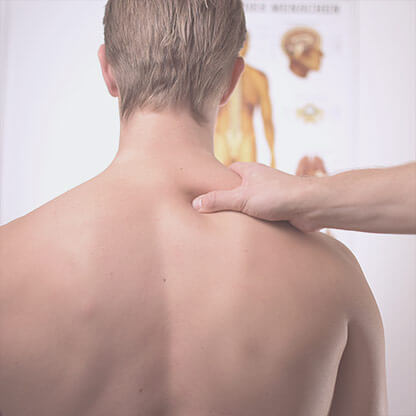
The first entry point is the neck. The ancient masters named the acupuncture points there after the wind: the Wind Gate, Windteich, the draft. They knew where the wind was coming in. Ask someone where they first felt the cold. Many say: “My neck was stiff in the evening, and my throat was sore in the morning.”.
The second opening is the nose. With every breath, the world enters through it, and behind it lie the lungs. That is why the lungs are the first organ the wind encounters, and that is why, in our teachings, the guardian serves them.
The third gateway is the pores. “The guardian opens them when you exert yourself, so the heat can escape. And he closes them when you come to rest. Whoever steps out into the wind, drenched in sweat, has all the gates open and no guardian standing before them. That is the moment when the wind enters."
The Yellow Emperor: „The neck, the nose, the pores. And does the same rule apply to all three?“
Qí Bó: „The same, Your Majesty: Keep it warm when it gets cold, and keep it closed when the wind blows. In our teachings, a scarf is not an ornament. It is a gatekeeper.“
Dr. Weber: „As for the neck itself, I don’t have any studies on that, Your Majesty—I’ll be honest. I do have data on surface cold, though. In a small study in Cardiff, healthy people were asked to soak their feet in cold water for twenty minutes. In the days that followed, about three times as many of them reported cold symptoms as in the control group, which had kept their feet dry. The researchers’ explanation: Cold on the skin causes the blood vessels to constrict, including those in the nose. There, the blood flow that supports the immune system is reduced for a while.”.
“That's how Qí Bó describes the pores—just in different words. Wet and cold on the surface, and its guardian is away for a while."
Where the Guardian Sleeps
The Yellow Emperor: „You’ve given three reasons, Qí Bó. I want to hear the last one first, because it puzzles me the most: The guard has to go home at night. What does that mean?“
Qí Bó: „It is the most beautiful part of our teachings on this subject, Your Majesty. The ancient texts state: In the morning, when a person opens their eyes, the Wei Qi emerges from the eyes and travels to the surface. It circulates there throughout the day. In the evening, when a person closes their eyes, it moves inward and travels through the organs. That is why one becomes tired when it goes inward. And that is why one wakes up when it comes out.”.
Now see what that means. Whoever keeps the night short calls the guard back to the wall before he’s finished inside. He then stands outside, but he isn’t rested. And whoever stays awake late into the night keeps the watchman outside, where he has nothing left to do. He won’t let him in, where he’s needed.
People say, “I caught a cold because I didn’t get enough sleep.” In our teaching, this isn’t just a figure of speech. It’s exactly what happens.”
The Yellow Emperor: „Dr. Weber, do you think this is a picture or a medical finding?“
Dr. Weber: „For a finding with a very good image in front of it, Your Majesty.".
The immune system actually has a day shift and a night shift. During the day, the cells that work at the body’s borders are on the move. At night, especially during deep sleep, other immune cells migrate to the lymph nodes and tissues. There, pathogens are presented, responses are generated, and memories are stored. These are processes that require rest, and they suffer measurably when sleep is lacking.
A study conducted in San Francisco illustrated this very clearly. Healthy volunteers were deliberately exposed to a cold virus, and their sleep had been monitored for a week beforehand. Those who had slept less than six hours were about four times as likely to get sick as those who had slept more than seven hours. The virus was the same for everyone. It was the nights leading up to the exposure that made the difference.“
The Yellow Emperor: „Then the night is the time when the watchman regains his strength, and the day is the time when he works. The question remains: what does he live on?“
What the Guardian Lives On
Qí Bó: „From what is on your table, Your Majesty. Wei Qi does not originate at the surface. It originates in the center. The Spleen The Stomach extracts it from food, the Lungs distribute it outward, and the warmth of the Kidneys keeps it circulating. Three organs, one guardian.
That is why a person with a cold, sluggish center rarely has a strong immune system. They eat, but they derive too little benefit from it—especially when the food is cold, raw, and sweet. Raw foods in the morning, yogurt from the refrigerator, sweets between meals: for the spleen, this is work without reward. The guardian doesn’t get paid.
The rule is: warm and cooked. And in the fall, there’s something extra: a little spice at just the right moment. Back in August, I said to eat less spicy food, and that still applies. But there’s a difference between chili every night and three slices of ginger on a morning when you’ve been freezing. One distracts you. The other briefly opens the surface, drives the cold out, and then the gatekeeper closes the gate again.“
The Yellow Emperor: „I'll remember this: Ginger for the day I was freezing. Not for every day.“
Qí Bó: „Exactly, Your Majesty. And here’s something else people forget: The guardian wants to be sent out. The lungs distribute the Wei Qi through the breath. Anyone who sits in a warm room all day and breathes shallowly has a Guardian sitting next to the gate instead of in front of it. Half an hour outside, dressed warmly, breathing deeply: That does more for the immune system than most people realize.“
Dr. Weber: „I completely agree with you, Qí Bó, and I can explain both points.".
About the meal: A large proportion of the body’s immune cells are located in the gut, and they thrive on what the gut microbiota produces from fiber and cooked vegetables. The body needs protein to produce antibodies. Vitamin D is one of these, and it’s often in short supply during the winter. The same goes for zinc, especially with an unbalanced diet. A warm meal with vegetables, legumes, or a little meat provides more of these nutrients than you might think. Sugar in large quantities, on the other hand, feeds the wrong kinds of bacteria in the gut.
About exercise: Moderate exercise—a brisk walk or a session of qigong—increases the number of immune cells circulating in the blood for a few hours. Researchers refer to this as “enhanced surveillance,” which comes quite close to Qí Bó’s concept of “guardians.” But there’s a flip side: According to current understanding, anyone who pushes themselves to the point of exhaustion will have a weaker immune system for hours afterward. Sports medicine specialists call this the “open window,” and even though it’s a matter of debate, working up a sweat in the wind during this window is the worst idea of the fall.”
The Yellow Emperor: „Let me summarize before we get to the plan. The guardian thrives on warm food. He works when I send him out. He rests when I sleep. And he guards three gates: the neck, the nose, and the pores.“
Qí Bó: „I couldn’t have said it better myself, Your Majesty.“
The Yellow Emperor: „Then work that into a plan for me. Simple enough that I can start putting it into action first thing tomorrow morning while I’m getting dressed.“
🍂 The "Three Sages" Method for Your Wei Qi
🌅 TOMORROW — Wake up the guard and send him out
TCM: Start with your neck, not your plate. In the morning, before getting dressed, rub your hands together until they’re warm, then use them to rub your neck. Only then should you eat the warm porridge. Save the ginger tea for the morning when you’re feeling chilled: two or three slices, steeped for ten minutes. When going outside: wrap a scarf around your neck, and make sure your hair is dry.
Science: A warm breakfast helps keep blood sugar levels and digestion stable. Cold on the skin triggers a reflex that causes the blood vessels in the nose to constrict. Keeping your throat and neck warm prevents this reflex from being triggered. The most common trigger in the fall: wet hair in the cold wind.
Practical:
- 7:00 a.m. — a glass of lukewarm water, then rub your hands together and massage your neck for one minute
- 7:15 a.m. — Warm millet or oatmeal porridge. If you got cold on your way to work or while airing out the room, have some ginger tea with it.
- on the way out — Scarf around the neck, hair dry, jacket buttoned up to the chin
🌞 DAY — Let the Guardian Do Its Job
TCM: Eat a warm meal for lunch—something cooked, not straight from the fridge. Leeks, onions, squash, carrots. Go outside once a day for some fresh air, dressed warmly, for thirty minutes, and breathe deeply into your belly. Don’t walk so fast that you start sweating. If you do, change your clothes before you go out into the wind again.
Science: Moderate exercise increases the number of immune cells in the blood for hours. Daylight—even when the sky is overcast—sets the body’s internal clock, which also regulates the immune system’s nighttime activity. When you step out into the cold while sweating, your blood vessels constrict—including those in your nose—and the immune defense along the mucous membrane weakens.
Practical:
- 12:30 p.m. — a hot meal, such as pumpkin and lentil stew or rice with steamed vegetables and leeks
- 1:30 p.m. — Walk briskly for 30 minutes, with a scarf around your neck, breathing through your nose
- 4:00 p.m. — warm tea instead of cold water, along with a handful of nuts or pumpkin seeds
🌙 EVENING — Let the Guardian Return Home
TCM: Eat an early, light, warm meal. After that, nothing that keeps the guardian at bay: no late-night exercise, no alcohol, no screen time late into the night. Ten minutes of warmth on the back of your neck closes the gate for the night. And go to bed as soon as you start to feel tired, not long after. Tiredness is the guardian coming home.
Science: During the deep sleep of the first half of the night, the body’s defense mechanisms—which require rest—are at work. Alcohol makes the second half of the night restless, late meals keep the digestive system active, and both disrupt the processes that require rest. Warmth on the neck relaxes the muscles that were tense from the wind, and a relaxed neck makes it easier to fall asleep.
Practical:
- 6:30 p.m. — a light, warm dinner, such as spring onion soup with ginger (see the reading suggestion below for the recipe)
- 9:00 p.m. — Place a cherry pit pillow or a warm towel on the back of your neck for 10 minutes
- 10:00 p.m. — Turn off the lights so I can get at least seven hours of sleep before my alarm goes off
Safety Notice: The exercises in this plan are based on traditional practices and are not a substitute for medical treatment or a doctor’s evaluation. If you have a medical condition or are pregnant, talk to your doctor first. If something doesn’t feel right, stop.

🌿 Recipe of the Month
The soup for the day when you were freezing
In China It’s on the table as soon as someone’s been out in the wind: a soup made from the white parts of spring onions and fresh ginger. It warms the core and briefly opens up the surface—exactly in the order the guardian needs. You can find the traditional recipe, the proper way to drink the soup, and the situations in which it isn’t appropriate here:
📋 Quick Check: How alert is your guardian?
How do you react to drafts and the first cold breeze?
- I get cold right away, especially at the nape of my neck, and the next day my throat feels scratchy = The Wei Qi is weak; the gates are wide open. Start with your neck today: keep it warm during the day, and warm it up in the evening.
- I'm shivering, but it'll pass = The guard is there, but he's tired. A warm breakfast and putting on a scarf before heading out are the first steps.
- I hardly notice it = The guard is doing his job. Keep doing what you're doing.
How many times did you have a cold last year?
- Three times or more, and it dragged on every time = The guard isn't getting enough food or sleep. Start with bedtime: Go to bed before 10:30 p.m. for two weeks.
- Once or twice, like most people = That's the average. The guard is working, but he could be better taken care of. Have a hot lunch.
- Not at all or only briefly = Your guardian is awake and well taken care of. Keep it that way.
On how many nights last week did you sleep for seven hours?
- At most two = The guard doesn't come home at night. Set a fixed bedtime today.
- Three to five = The guard comes home, but it's too late. Move the event up by half an hour.
- At six or seven = Your guardian comes home every night to rest. Let's keep it that way.
And do you find yourself shivering in bed between 3 and 5 a.m., with a stuffy nose or a slight cough? That's the Lung Hour, who assigns the guard. When she checks in, the guard hasn't returned home yet.
🍂 Start tonight: Rub your hands together until they’re really warm, then slowly stroke your hair ten times, starting at the hairline, down the back of your neck, and to your shoulders. Then place a warm towel or a cherry pit pillow on the back of your neck for ten minutes. This takes twelve minutes—and is the first act of service for your guardian.
Safety Notice: A traditional practice, not a medical treatment. It is not a substitute for a medical evaluation. Consult a doctor beforehand if you have a medical condition or are pregnant; discontinue use if you feel unwell.
The Guardian Weeks — Your 14-Day Program
The Structure It takes two weeks. Record where you stand today. Then follow the “Three-Step Method” and record where you stand again on the 15th day. The scale ranges from 1 to 10: 1 means shivering and under the weather, and 10 means warm and resilient.
Today
- Feeling chilly in a draft: ____
- Nose in the morning: ____
- Neck and shoulders: ____
- Sleep: ____
- Afternoon energy: ____
After 14 days
- Feeling chilly in a draft: ____
- Nose in the morning: ____
- Neck and shoulders: ____
- Sleep: ____
- Afternoon energy: ____
Most You’ll first notice that you feel less chilly and that the tension in your neck eases, often after just a few days. Whether winter brings fewer colds won’t become clear for months, and it’s not entirely up to you: The wind blows as often as it pleases. But you decide whether it gets through.
Wisdom to take away
The Yellow Emperor: „So the message is this: The wind isn’t as decisive as people think. The guardian also plays a role. And you can nourish the guardian, send him out, and let him sleep.“
Qí Bó: „That’s right, Your Majesty. You’ve had the wall since birth. You must tend to the guard every day. A warm meal in the morning, fresh air at noon, peace and quiet at night, and a scarf over the gate—the one the wind likes to blow away. That’s all the guard asks for. But he won’t settle for anything less.“
Dr. Weber: „And the best part, Your Majesty: None of this is a cure. A scarf, a warm meal, a walk, and seven hours of sleep. These are things you enjoy doing anyway, once you know why.“
The Yellow Emperor: „Then let everyone who reads this hang a scarf on their front door tonight. Not out of fear of winter—but so that the guard won’t be standing alone at the gate tomorrow morning.“
PS: And what if you’re already in the thick of a cold? Then the plan still applies, with one difference: In the first few days, keep your walk short, and make the spring onion soup with ginger your main meal. The Guardian doesn’t need work right now. He needs sustenance.
Preview: November
The Yellow Emperor: „Next month, when the days grow shorter, we’ll talk about the cold that comes from within—cold feet, a heavy head, a mood that fades along with the light.“
Qí Bó: „We’ll focus on the kidneys—the body’s furnace—and explain why November is a crucial time for the Water element.“
Dr. Weber: „And I'll explain what daylight, melatonin, and body temperature have to do with mood in November.“
About our „3 Wise Men“ story
Who are the Yellow Emperor and Qi Bo?
The Yellow Emperor (Huangdi, 黄帝) is said to have lived around 2,600 B.C. and is considered the mythical founder of Chinese culture and medicine. Qi Bo was his most important advisor and personal physician. Their discussions on health, illness, and human nature were recorded in the most important foundational text of TCM.
The book: Huangdi Neijing
The „Huangdi Neijing“ (黄帝内经), also known as „The Yellow Emperor—The Foundational Text of Traditional Chinese Medicine,“ was likely written between 200 B.C. and 200 A.D. It is the oldest surviving work on Chinese medicine and consists of dialogues between the Yellow Emperor and his advisors, primarily Qi Bo.
This work is to Traditional Chinese Medicine (TCM) what the Bible is to Christianity: the absolute foundation. All the key concepts—Yin and Yang, the Five Elements, Qi, meridians, and acupuncture points—are described systematically here for the first time.
Our modern approach: The 3 wise men
In our series „The Three Sages,“ we bring together the Yellow Emperor and Qi Bo with the fictional modern doctor and microbiologist Dr. Weber.
Important note: All three characters and their conversations are purely fictitious and invented by us.
We use this narrative style—similar to the dialogue format in the Huangdi Neijing—to convey the often complex concepts of TCM in a way that is both understandable and entertaining. When the 4,000-year-old emperor is confronted with modern science, enlightening „aha moments“ arise that show: ancient wisdom and modern research often speak the same language—just in different words.
This makes TCM lively, understandable and practically applicable for your everyday life.
The dialogs are creative interpretations, not historical documents. For medical questions, please consult a qualified TCM therapist or doctor.
The wind is heading for the goal.
The guardian decides whether he finds it.
— TCM Principle








Thank you so much for these conversations! A wonderful, easy-to-understand guide to TCM, and at the same time a bridge to modern medicine.
Dear Ulrike, thank you so much!
We're really glad you're enjoying the conversations between the three wise men.
The Yellow Emperor, Qi Bo, and Dr. Weber already have their sights set on the next topics, so you can look forward to more episodes.
Warm regards from the editorial staff
I'm new to this channel, and I've been interested in TCM for a long time. The way you explain things is really great, and the posts are extremely interesting and easy to follow. I just can't stop reading.
Thank you very much
Dear Sieglinde, a warm welcome to our community! We’re so glad to receive feedback like this, because that’s exactly what we aim to do: explain TCM in a way that people can relate to their own daily lives.
There are many more articles waiting for you in the magazine, and if you'd like to experience TCM firsthand, you're cordially invited to join Wolfgang's "Qi Gong Live" on YouTube every Monday.
Best regards, the TCM Team