






The breath your body has known for so long
How to lighten your belly again in late summer
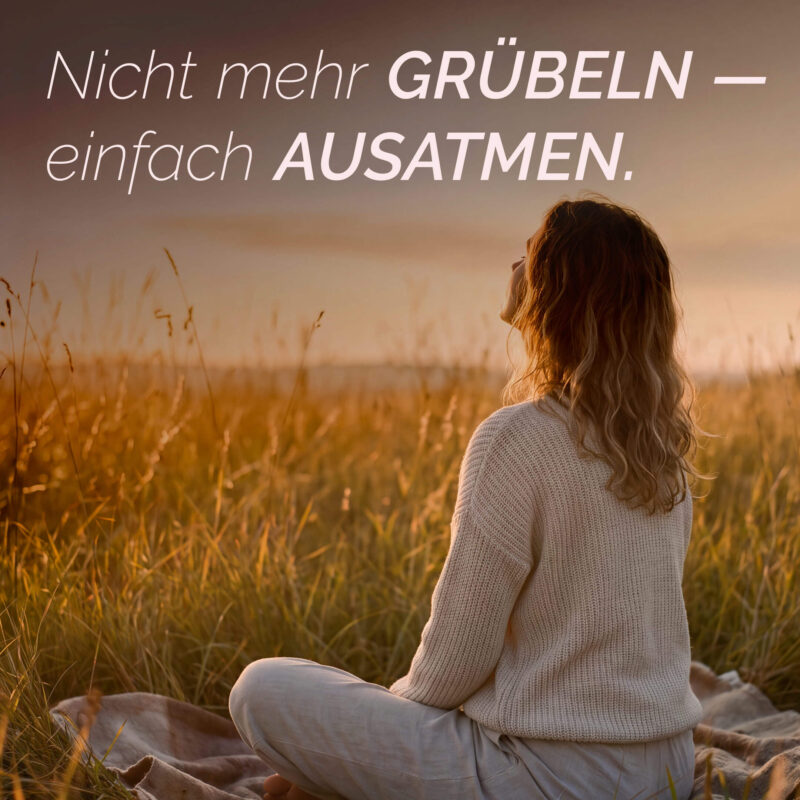
No longer WORRYING — just BREATHE OUT.
In Traditional Chinese Medicine, the place where both come together is called the Center — the energy circle of the Stomach and Spleen, your inner workshop.
It transforms not only food into energy, but also processes everything you take in over the course of the day: impressions, worries, the unresolved. And just as after an oversized meal, the Center becomes heavy when too much undigested material stays in it — whether it comes from your plate or from your mind.
Worrying weighs on the stomach — the old masters said so literally, and modern research confirms it through the gut–brain axis.
Late summer is the season of this Center — the time of digesting, gathering, and harvesting.
And here is the key point: what you do for your Center now shapes how you enter autumn. A Center that comes to rest carries you grounded through the cooler season. A Center that keeps grinding along carries the heaviness over with it. The window is now.
You don't have to overhaul anything. Three small rituals through the day — and one breath for the moment when things feel stuck.
🌅 Mornings — gently waking up your Center
If you can, start by drinking a glass of warm (not hot) water first thing, on an empty stomach, before you eat anything. Then have something warm to eat instead of cold muesli straight from the fridge — and if you have coffee, it's fine to wait about ninety minutes. Eat your first meal as free of distraction as possible — keep your phone out of reach.
In the morning your Center is still in resting mode; the warm water wakes it up gently and gets digestion going without shocking it with cold. Warm, cooked food can be easier for it to transform — cold and raw food first has to bring it up to working temperature, and that takes energy.
And the coffee: Your body has its own wake-up signal in the morning: the hormone cortisol. Caffeine, in turn, blocks adenosine, the messenger substance that signals tiredness. If you drink caffeine too early, you only suppress the tiredness instead of getting rid of it — and it catches up with you again in the afternoon.
🚶 After eating — take a walk
Get up instead of staying seated, and walk for ten minutes. Slowly, with no destination, no phone.
Two things happen at the same time. The gentle movement gets digestion going, rather than leaving everything to sit heavily while you're seated. And movement lifts your head out of the loop: A thought that keeps circling does not settle at rest — it settles while you walk.
It's no coincidence that people often arrive at solutions while walking; a circle has no exit, but a straight line does. The ancient Chinese knew this long ago: "After a meal, a hundred steps, and you will live a hundred years."
🌙 Evenings — place your hands on your belly
Rub your palms until they're warm and lay them flat on your belly, about a hand's width below the navel. Breathe calmly into your belly — roughly four seconds in, about six seconds out — and stay with it until you fall asleep.
If your hands start to tingle on your belly, simply rest them beside your body; keep the long exhale going until sleep comes.
This is the harvest of the day — the moment when you stop giving and begin taking in. The warmth of your hands and the calm breath send a signal to the body: the day is done, you are safe, you may let go.
The long exhale calms through the vagus nerve, the whole nervous system — the pulse slows, the tension drops away, and warmth, calm and breath become the ground for deep sleep.
💨 Our insider tip: the Zipp Breath
There is a breathing exercise that lifts the mind out of its carousel of thoughts — and it can do much more. The surprising part is that your body has been doing it on its own all along.
Whenever you sigh, when a weight lifts off your chest, when a child finally settles down after crying — it is exactly this breath. Science calls this breathing the physiological sigh, and we call it the Zipp Breath.
Here is how the Zipp Breath works:
Breathe in through your nose, but only to about eighty percent, not quite full. Then add a short, small second sip of air on top, the "Zipp": a quick sniff that fills the lungs all the way to the last corner. And now the most important part — breathe out slowly and long through your mouth. Longer than you breathed in, until the lungs are truly empty.
Repeat this a few times. Most people soon notice their breath becoming calmer and their shoulders dropping a little.
What happens in your body during this?
Wenn du grübelst, wird dein Atem flach. In deiner Lunge sitzen Millionen winziger Luftbläschen, und bei flachem Atem fallen viele davon in sich zusammen — wie Ballons, die die Luft verloren haben.
Ein einzelner tiefer Atemzug bekommt sie oft nicht ganz auf. Der kleine zweite Zug, der Zipp, schon: Er poppt die zusammengefallenen Bläschen wieder auf, und dein Körper kann das gestaute Kohlendioxid endlich abgeben.
Dann kommt das lange Ausatmen — und hier passiert die eigentliche Ruhe. Mit jedem Ausatmen schlägt dein Herz ein wenig langsamer. Machst du das Ausatmen bewusst länger als das Einatmen, kippt der ganze Körper aus dem Alarm zurück in die Ruhe.
Kein Gedanke muss dafür gelöst werden. Du machst nur bewusst, was dein Körper beim Seufzen sonst ganz von selbst tut.
Der Neurowissenschaftler Andrew Huberman und seine Kollegen in Stanford haben es 2023 gemessen: Schon wenige Minuten dieser Atmung am Tag beruhigten spürbar stärker als stilles Meditieren. Es ist einer der einfachsten Wege, den Körper zu beruhigen — und du hast ihn immer dabei.
Quelle: Balban et al., Cell Reports Medicine, 2023 — zur Studie
Wo du heute anfängst
Du musst nicht alles auf einmal ändern. Fang klein an, damit du auch dranbleibst.
Beginn mit dem Ritual, das dir am leichtesten fällt. Ist es dir zur Gewohnheit geworden, kommt das nächste dazu — Schritt für Schritt, ohne Druck.
Der Bauch wird zuerst weich, dann wird der Kopf frei. Und wenn der erste kühle Wind kommt, stehst du nicht müde und schwer da, sondern ruhig und geerdet.
Genau dafür ist der Spätsommer da: die Mitte zu füllen, aus der der Herbst lebt.
Hinweis: Die Rituale in diesem Beitrag sind Anregungen zur eigenen Achtsamkeit und ersetzen keine ärztliche Behandlung. Bei anhaltenden Beschwerden oder bestehenden Erkrankungen sprich bitte mit einem Arzt oder TCM–Therapeuten.
Was du festhältst, wird schwer.
Was du loslässt, wird leicht.
TCM Principle
More interesting tips & articles

TCM tip of the week
Perseverance is the most expensive strength you have
Last evening you hung up the laundry even though you were long past tired, and then answered the e-mail that could easily have waited until…
Nov

Retreats
RETREAT: Qi Gong & TAO Breathwork (May 2027)
May 5–9, 2027: 5 days of stillness in the Tyrolean Alps: Qi Gong, TAO Breath & Meditation in Leutasch. Find your way back to…
Nov


Es stimmt, Atem hilft sehr
Warmes essen zum Frühstück sehr gut und kein Kaffee morgens
Abends vor 23.00 Uhr schlafen gehen ,weniger Grübeln und besser schlafen.
Danke einiges umgesetzt Es wird immer besser.