





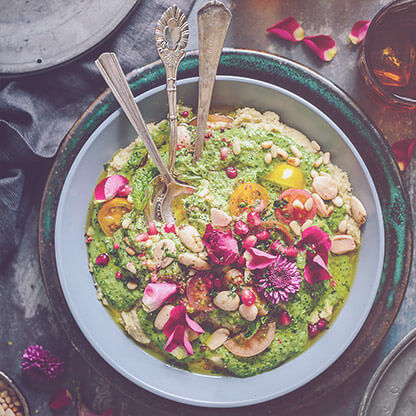
When sleep doesn't come even though you're tired
A guide from TCM and modern sleep medicine

Whoever follows the DAY gives no end, the NIGHT no depth.
🔬 What you should know about your sleep
In TCM the Heart the Shen - the mind, the consciousness. During the day, the Shen radiates outwards: it thinks, plans, feels, decides. In the evening, it must return - deep into the heart, into the silence, into the blood. There it rests. There it regenerates.
If the heart is too restless, too hot or too weakened, the Shen cannot find a foothold. It continues to circle - like a bird that wants to go home in the evening but can't find a safe branch. And sleep is waiting - but it doesn't come.
Modern sleep medicine describes the same thing: falling asleep is not a passive process. Your nervous system must Switch actively - from the Sympathetic nervous system (accelerator pedal) to the Parasympathetic nervous system (brake).
This requires GABA - Gamma-aminobutyric acid, the most important calming neurotransmitter in the brain. GABA is the chemical brake. When GABA is active, the nerve cells become calmer. Thoughts slow down. Sleep becomes possible.
The problem is: Cortisol inhibits GABA. If you are under constant stress during the day, your cortisol level is still high in the evening - and as long as cortisol is high, GABA cannot work. The brake remains blocked. You're lying in bed, exhausted to the bone, but your nervous system is still energized.
And this is precisely the realization that changes everything: Tired and sleepy are not the same thing. Tired means your body has no more energy. Sleepy means your nervous system is ready to let go. One is exhaustion - the other is an active transition. You can be dead tired and still not fall asleep because this transition is not happening.
Sleeping pills do not solve the problem - they numb the gas pedal, but they don't fix the brakes. That's exactly what this guide does. Step by step, from morning to night. And it starts with understanding exactly where your system is stuck - and when. Because your wake-up time is no coincidence.
🕐 Your wake-up time is no coincidence - the organ clock
TCM recognizes the Organ clock - a 24-hour rhythm in which each organ system has its main working time. If you regularly wake up at the same time every night, the organ clock shows you which system needs support.
Chronobiology confirms this: Our body actually follows circadian rhythms that activate organ functions at certain times.
23-1 o'clock: Gallbladder
- TCM: The gallbladder governs decisiveness and courage. Those who wake up here often have unprocessed decisions or the feeling of being stuck in a situation.
- Science: In the first deep sleep phase, the body releases growth hormone and melatonin reaches its highest level. If the cortisol level is still elevated - due to stress or late eating, for example - it is not possible to enter deep sleep.
- Practical: Write down three open decisions before going to sleep - don't solve them, just write them down. This relieves the mind.
1-3 o'clock: Liver
- TCM: The liver moves the Qi, stores the blood and processes emotions - especially anger and frustration. People who wake up here regularly often carry unexpressed anger or suppressed pressure.
- Science: The liver works at full speed between 1 and 3 a.m. - phase I and phase II of detoxification are at their most active. At the same time, cortisol should reach its lowest point. If blood sugar drops too low - for example after sugar or alcohol in the evening - the body releases cortisol to counteract this. This wakes you up.
- Practical: Write down what annoys you for 5 minutes in the evening - without a filter, without a solution. And: last meal before 7 pm, with protein to keep your blood sugar stable.
3-5 o'clock: Lungs
- TCM: The lungs govern grief and letting go. Those who wake up here are often coming to terms with a loss - or holding on to something that is allowed to go.
- Science: Der Körper ist jetzt am kältesten, der Atemwegswiderstand am höchsten. Cortisol beginnt seinen Morgenanstieg, Melatonin sinkt. Menschen mit empfindlichen Atemwegen wachen in diesem Fenster besonders häufig auf.
- Practical: Three slow, deep breaths - 4 seconds in, 7 seconds out. Do not stand up. Stay in bed, place your hands on your chest.
5-7 o'clock: Large intestine
- TCM: The large intestine stands for letting go - physically and emotionally. Waking up too early with brooding thoughts indicates a mind that cannot let go.
- Science: The cortisol level now rises sharply - the so-called Cortisol Awakening Response. Intestinal peristalsis increases, the body prepares for emptying. Serotonin production increases.
- Practical: Warm water straight after getting up. Morning routine with exercise before your head takes over.
💡 Important: The organ clock is a guide, not a diagnosis. If you always wake up at the same time for weeks, it is worth taking a closer look at your system.
The organ clock shows you, when your system is stuck. But the when alone is not enough - you need the why. Because not every sleep disorder has the same cause. Four patterns appear again and again in TCM:
🔍 Your sleep type - 4 patterns, 4 strategies
Every person has a different imbalance. The symptoms are similar - but the cause is individual. And each cause requires a different strategy.
Heart-blood deficiency
Signs: You fall asleep but wake up at night. Pale, palpitations, forgetful, sometimes dizzy.
What your body needs: Nourish blood - the heart-blood is the anchor of Shen.
If it is missing, the spirit loses its grip.
What you can do:
- Morgens: ein warmes, sättigendes Frühstück (z.B. Haferbrei mit Nüssen und etwas Obst)
- Abends: ein warmes Getränk als festes Ritual zum Tagesabschluss
- Tagsüber: regelmäßige, warme Mahlzeiten — nichts auslassen
- Früh genug zu Abend essen, damit die Nacht zur Ruhe kommt
📍 ACUPRESSURE: He 07 + HK 06 + MP 06
Heart Yin deficiency
Signs: Inner restlessness, night sweats, dry mouth at night, heat in hands and feet.
What your body needs: Nourish yin and clear inner heat - the cooling yin of the heart is depleted. Without counterbalance, the fire burns uncontrollably.
What you can do:
- Abends: leicht und warm essen, nichts Schweres mehr spät
- Nachmittags: ein ganz normaler, ungesüßter Tee (z.B. Kamille)
- Tagsüber: weniger Kaffee, weniger Scharfes, kein Alkohol
- Meiden: alles stark Erhitzende am Abend
📍 ACUPRESSURE: He 07 + Ni 01 + MP 06
Spleen Qi deficiency with rumination
Signs: Thoughts go round in circles without a solution. Tiredness, especially after eating. Flatulence, soft stools, feeling of heaviness, „head as if in absorbent cotton“. Craving for sweets.
What your body needs: Strengthen the center - the spleen carries the thoughts. If it is weak, thoughts circle without a bottom under your feet.
What you can do:
- Morgens: ein warmes Frühstück (z.B. Haferbrei), nichts Kaltes auf leeren Magen
- Tagsüber: drei Mahlzeiten, echte Pausen, kein Snacking
- Kochen: mit wärmenden Gewürzen wie Fenchel oder Kümmel
- Meiden: kalte Rohkost, Zucker und Weißmehl am Abend
📍 ACUPRESSURE: MP 06 + He 07 + Anmian
Liver Qi stagnation
Signs: Aufwachen zwischen 1 und 3 Uhr, Frustration, Verspannungen in Nacken und Schultern, Seufzen, innere Anspannung.
What your body needs: Moving the liver - suppressed emotions and constant pressure cause the Qi to stagnate. The liver fire rises and disturbs the Shen.
What you can do:
- During the day: Side stretches, shaking exercise, 20 min walk - without podcast
- In the evening: write down what annoys you for 5 minutes - without a filter, without a solution
- Nachmittags: ein ganz normaler, ungesüßter Tee (z.B. Kamille)
- Acupressure extra: Liver 03 (Taichong) - between big toe and second toe, press in circles for 1 minute
📍 ACUPRESSURE: Le 03 + HK 06 + Anmian
Du weißt jetzt, wann und warum dein System hakt. Jetzt zum praktischen Teil — was du konkret tun kannst, von morgens bis abends. Denn die Bremse repariert sich nicht von alleine. Sie braucht einen Plan.
🌅 Your morning - laying the foundation for the night
What you do in the morning determines whether GABA can work in the evening. Three things that make the difference:
1. Ein warmes Getränk zum Start
Beginne den Tag mit etwas Warmem — warmes Wasser oder ein ganz normaler, ungesüßter Tee. Warm statt kalt bringt den Körper morgens sanft in Gang.
2. hot breakfast with protein
Ein warmes Frühstück tut morgens gut und hält länger satt. Protein liefert Tryptophan — den Baustoff, aus dem der Körper Serotonin und später Melatonin bildet. Ideal ist eine warme, sättigende Grundlage.
Ein einfaches Basis–Frühstück:
- 50 g Haferflocken + 200 ml Wasser + 100 ml Pflanzendrink
- Simmer over a low heat for 5 minutes
- 1 EL gehackte Nüsse, etwas Obst, eine Prise Zimt
- Optional: add 1 egg (poached or scrambled extra)
🚨 Weniger geeignet am Morgen: kaltes Müsli mit kalter Milch, Smoothies, Joghurt pur — warm ist bekömmlicher.
3. five minutes of silence - before the cell phone is switched on
That sounds banal. But it's the moment when you decide whether your sympathetic nervous system immediately jumps into full gear - or whether your day starts on a calm note. No podcast, no news, no scrolling. Just silence, tea and arrival.
The morning is set. Now the day decides whether the brake will work in the evening.
🌞 Your day - reduce cortisol, nourish Shen
Poor sleep doesn't start at night. It starts during the day. During the day it is decided whether cortisol has dropped in the evening - and whether GABA has a clear pathway.
Ernährung, die einen ruhigen Abend unterstützt:
- Buntes Obst und Gemüse: rote Bete, dunkle Trauben, Kirschen, Beeren, Granatapfel — abwechslungsreich und farbenfroh.
- Protein with every meal: Chicken, eggs, fish, pulses, nuts - provide tryptophan.
- Bitterstoffe tagsüber: Chicorée, Radicchio, Rucola — mittags den Teller zur Hälfte grün.
- Hot meals: Kaltes und Rohes am Abend liegen schwerer. Die letzte Mahlzeit möglichst vor 19 Uhr — warm, leicht, mit Protein.
- Vollwertig statt verarbeitet: z.B. schwarzer Sesam, Hülsenfrüchte, dunkle Beeren.
What bothers Shen - the four saboteurs:
- Coffee after 2 pm: Caffeine has a half-life of 5-7 hours. A cup at 3 pm is still half effective at 10 pm. If you sleep badly: coffee only in the morning.
- Sugar in the evening: Gemeint ist zugesetzter Zucker — Süßigkeiten, Desserts, Softdrinks, versteckter Zucker in Fertigprodukten. Das lässt den Blutzucker erst steigen, dann abstürzen. Der Absturz nachts triggert Cortisol — besonders im Leber–Fenster (1–3 Uhr). Die natürliche Süße von etwas Obst oder einer kleinen Menge Trockenfrüchte ist etwas anderes — sie kommt mit Ballaststoffen und belastet den Blutzucker kaum.
- Alcohol: Feels like relaxation - but suppresses the deep sleep phases and REM sleep. Even a glass of wine measurably reduces the quality of sleep.
- News and social media in the evening: Every headline activates the amygdala - the fear center. Once activated, it takes hours to shut down.
The 10-minute rule:
Every day 10 minutes completely without a device. Take a walk, have a real conversation, listen to music. Non-negotiable. The heart needs real joy - not constant stimulation.
💡Why this is so important: Real breaks and social contact measurably reduce cortisol levels throughout the day. This is the most important prerequisite for GABA to work in the evening. Cortisol that is not reduced during the day remains elevated in the evening - and blocks the brakes.
Movement - but not too late: Exercise up to 3 hours before sleep is ideal. Later, it can rev up the sympathetic nervous system. Walking for 20 minutes is enough. Lateral stretches open the liver meridian and release stagnation.
💡 Professional tip: Qi Gong or Meridian Yoga - ideal because both combine movement, stretching and breathing work. Lateral stretching and twisting movements in particular open the liver and gallbladder meridians in a targeted manner.
🧘 Qi Gong: www.meine-tcm.com/thema/qi-gong/qi-gong-uebungen-erklaert/
🧘🏻♀️ Meridian Yoga: www.meine-tcm.com/thema/meridian-yoga
🔴 Qi Gong LIVE lesson - every Monday at 6:15 pm on YouTube:
www.meine-tcm.com/live-qi-gong-klasse
Everything you do during the day pays off in the evening. Now comes the heart of the matter.
🌙 Your evening - the 90-minute protocol
The heart of this guide. This is where it all comes together. 90 minutes before sleep, the transition begins - this is the minimum time your nervous system needs to switch from the sympathetic to the parasympathetic nervous system. Without this transition time, you're trying to slow down a car in fifth gear.
Step 1 - Last meal before 7 pm
- Light, warm, with protein
- Steamed vegetables + rice + egg or fish
- 70-80% Eat your fill - then the eating break begins
- No raw food, no salad, no sugar in the evening
Step 2 - Dim the light (from 90 minutes before sleep)
- Screens off - or consistent night mode with blue light filter
- Dimmed, warm light throughout the living area
- Candlelight is ideal: approx. 1800 Kelvin - the most melatonin-friendly light source. For thousands of years, our ancestors ended the evening by the fire. The nervous system still recognizes this warm light today as a signal: night is falling.
- Also in the bathroom: no bright overhead light when brushing your teeth. Night light or candle.
Step 3 - End the day (5 min.)
Take a sheet of paper and write three sentences:
- What was good today?
- What do I let go of?
- What can wait until tomorrow?
This is not a diary - this is an unloading process. Your head needs to know: Everything is written down. Nothing gets lost. I can let go. In case of anger or frustration (liver issue): Write down what's bothering you without a filter. The paper „holds“ it for you.
Schritt 4 — Dein Abendtrunk
About 60 minutes before sleep - after writing it down. Sit down and make yourself comfortable. This is not a drink to have on the side - it's the moment when the evening begins.
Nimm dir eine Tasse von etwas Warmem, Koffeinfreiem — zum Beispiel einen ganz normalen Tee (Kamille eignet sich gut) oder einfach warmes Wasser. Langsam trinken, ohne Ablenkung. Der Punkt ist nicht das Getränk selbst, sondern das Ritual: hinsetzen, in Ruhe trinken, den Tag bewusst beenden.
Step 5 - Acupressure: 4 points for the Shen (5 min.)
All points: 90 seconds per side, massage gently in a circular motion. Breathe calmly. Best done in bed or on the sofa, lying down or leaning comfortably. The sequence is deliberate: calm at the top, protect the middle, ground at the bottom, invite sleep.
He 07 - Shén Mén (Gate of the Spirit)
- Where: Inside the wrist, directly in the wrist crease, on the side of the little finger. Feel the small indentation between the bone and tendon.
- Effect: Speaks directly to the heart meridian. Calms the Shen, relieves inner restlessness. The most important point for problems falling asleep.
HK 06 - Nèi Guān (Inner Gate)
- Where: Three finger widths above the wrist, on the inside of the forearm, between the two tendons.
- Effect: The pericardium is the heart's protective wall. Takes the emotional burden off the heart - in case of brooding, worries, tightness in the chest.
MP 06 - Sān Yīn Jiāo (Meeting Point of the Three Yin)
- Where: Inner side of the lower leg, 4 finger widths above the inner ankle, directly behind the shin.
- Effect: The only point that reaches the spleen, liver and kidney meridians simultaneously. Nourishes blood and yin, grounds the spirit, draws energy downwards. Included in practically every TCM sleep protocol - because it gives the Shen what it needs to sink: Anchoring.
Anmian (Peaceful sleep)
- Where: Behind the ear - in the hollow between the mastoid process (the bone behind the ear) and the angle of the jaw. Feel behind the earlobe backwards and slightly downwards - you will find a soft hollow there.
- Effect: An extra point that is used specifically for sleep disorders. The name says it all.
- Tip: Both sides simultaneously with the middle fingers - gentle pressure, circling, in rhythm with your breath.
📍 All points in detail
In our free acupuncture atlas you will find all the points with pictures and detailed instructions. 👉 www.meine-tcm.com/akupunkturatlas
Two further points appear in the sample protocols above:
Le 03 (Taichong) - Back of the foot, in the hollow between the big toe and second toe. Moves liver qi, releases stagnation.
And Ni 01 (Yongquan) - Sole of the foot, in the hollow when bending the toes (upper third). Draws energy downwards, grounds, cools rising heat. You can find pictures of both points in the acupuncture atlas.
Step 6 - Breathing exercise in bed
- Hands on the lower abdomen
- Inhale: abdomen lifts (4 seconds)
- Exhale: abdomen lowers (8 seconds)
- At least 10 breaths - activates the parasympathetic nervous system, lowers cortisol
- If it feels good: 5, 10 or 15 minutes. There is no such thing as „too long“.
💡 Pro tip: 4-7-8 breathing. Breathe in for 4 seconds, hold your breath for 7 seconds, breathe out for 8 seconds. The pause in breathing may feel unusual at first - this is normal and will soon subside.
🎥 Guided 4-7-8 breathing: www.youtube.com/watch?v=r0w-Xdx-9Qs&t=1s
- Not: „Now I have to sleep.“ But: „I'm lying here and allowing my body to rest.“
- If sleep doesn't come after 20 minutes: get up, do something quiet with the light dimmed - read, don't scroll. Only go back to bed when you sleepy become. Not tired - sleepy.
Step 7 - Sleep before 11 pm
- 1-3 o'clock at night: liver time in TCM - the great regeneration
- At the same time: Glymphatic cleansing in the brain
💡 Why sleep is the most powerful cleanser:
In 2012, the glymphatic system was discovered - a detoxification system in the brain that only becomes active during deep sleep. The intercellular spaces enlarge by up to 60%.
Cerebrospinal fluid flows through these channels and removes waste products - including beta-amyloid, which is associated with Alzheimer's disease. No tea or cure can replace this. Sleeping pills can disrupt the process - because they do not produce a natural deep sleep, but a pharmacological sedation.
Das 90–Minuten–Protokoll ist dein Fundament. So sieht ein Tag aus, wenn alle Bausteine zusammenspielen:
📋 A day that shows how it's done
Not every day has to look like this. But this one shows you how all the building blocks work together. Take from it what fits into your everyday life.
☀️ In the morning
- Ein warmes Getränk zum Start — warmes Wasser oder ein normaler Tee
- Warmer Haferbrei mit Nüssen, etwas Obst und einer Prise Zimt
- 5 minutes of silence before the cell phone is switched on
🌤️ Morning
- No snacking. Only water or tea.
- The spleen needs rest between meals.
🍽️ Noon
- Vor dem Essen: ein paar Blätter Radicchio oder anderes Bittergemüse
- Half of the plate is green - spinach, chard, broccoli. Plus protein.
- Afterwards: 1 cup of digestive tea (fennel-caraway-aniseed)
🚶 Afternoon
- No coffee after 2 pm
- 20 min walk - without podcast, without destination
- 10 minutes without a device - real break
🍽️ Dinner (before 7 pm)
- Steamed zucchini, a piece of steamed fish, a little rice
- Light, warm, full of protein - 70-80%
🌙 From 90 minutes before sleep
- Dim the light. Candles on, screens off.
- Write down 3 sentences (good / let go / can wait)
- Warmer Abendtrunk: z.B. eine Tasse Kamillentee oder warmes Wasser. Langsam trinken.
- Acupressure: He 07, HK 06, MP 06, Anmian - 90 seconds per side
- In bed: Breathing exercise - hands on the lower abdomen. 4 seconds in, 8 seconds out. 10 breaths - 5, 10 or 15 minutes if you like. There is no such thing as „too long“.
- Fall asleep before 11 pm. The real work begins: liver time, glymphatic brain cleansing, regeneration.
✓ Practical tips
✓ First step: Only the 90-minute window. No screen, dimmed lights, a warm drink. For seven nights. Nothing more. If that works, add the rest.
✓ Routine griffbereit halten: Leg dir alles für den Abend bereit — eine Kerze, ein Blatt Papier zum Aufschreiben, deine Lieblingstasse für den warmen Abendtrunk. Je einfacher, desto eher bleibst du dran.
✓ Practice the acupressure points: In the beginning, 2 points are enough - He 07 and Anmian. When this becomes a habit, add HK 06 and MP 06.
✓ No alcohol as a sleeping aid: Feels like relaxation - but suppresses deep sleep and REM sleep. The effect is the opposite of what you want.
✓ Warm feet: Kalte Füße sind ein häufiger Schlafverhinderer. Ein warmes Fußbad vor dem Schlafen (ca. 15 Min) und danach warme Socken helfen, zur Ruhe zu kommen.
✓ Time frame: 7 nights for the first difference. 4 weeks for a stable
Change.
⚠️ When caution is advised
This guide is aimed at healthy adults who want to improve their sleep. In certain situations you should talk to your doctor or TCM therapist beforehand:
→ Pregnancy and breastfeeding — einige Anwendungen und Akupressurpunkte sind nicht geeignet. Keine Eigenexperimente.
→ Taking medication — besonders bei Schlafmitteln, Antidepressiva oder Beruhigungsmitteln: Sprich mit deinem Arzt, bevor du Routinen oder Anwendungen mit deinen Medikamenten kombinierst.
→ Mental illnesses - in the case of diagnosed depression, anxiety disorder or PTSD: sleep problems are often part of the clinical picture and require professional support. This guide is not a substitute for therapy.
→ Sleep apnea — wenn du stark schnarchst, morgens wie gerädert aufwachst oder tagsüber trotz ausreichend Schlaf erschöpft bist: Unbedingt ärztlich abklären — kein Ritual hilft gegen einen blockierten Atemweg.
→ Chronic insomnia for months - if you have been sleeping badly more than 3 nights a week for more than 3 months, speak to a sleep specialist. Cognitive Behavioral Therapy for Insomnia (CBT-I) is the scientific gold standard.
→ Children - This guide is designed for adults.
If in doubt, always ask. A good TCM therapist or doctor will not replace this guide - but will supplement it.
🔮 Welches System braucht bei dir Unterstützung?
Die vier Muster überschneiden sich oft, und nicht immer ist auf Anhieb klar, welches bei dir im Vordergrund steht. Wenn du das genauer einordnen möchtest, hilft dir die kostenlose TCM–Analyse weiter: 👉 www.meine-tcm.com/tcm-analyse
Your 7-night shen test
BEFORE the guide:
- Minutes until falling asleep (estimated): ___
- Thought carousel when falling asleep (1-10): ___
- Total sleep quality (1-10): ___
AFTER 7 nights:
- Minutes until falling asleep (estimated): ___
- Thought carousel when falling asleep (1-10): ___
- Total sleep quality (1-10): ___
🌿 One more thing
Du musst nicht alles auf einmal umsetzen. Fang mit dem 90–Minuten–Fenster an. Licht dimmen, Bildschirm aus, ein warmes Getränk. Sieben Nächte. Dann das warme Morgen–Getränk dazunehmen. Dann die Akupressur. Schritt für Schritt.
Your Shen doesn't need a complicated plan. He needs a safe branch. Give him one - and he'll come home.
Note: Please consult your doctor or TCM therapist if you have any existing illnesses or are taking medication.
„Sleep is not a state.
Sleep is an arrival.“
TCM wisdom
More interesting tips & articles
TCM tip of the week
The Way Out of the Cycle of Thoughts
You haven't done anything strenuous, yet you're exhausted? Often, it's just a single thought that keeps going round and round in your head. Why…
Aug
TCM tip of the week
It's time to harvest
Summer brings you light, warmth, and abundance. But what you don’t seize now will slip away. Late summer is that brief window,…
Aug





Our most popular products



Back pain