






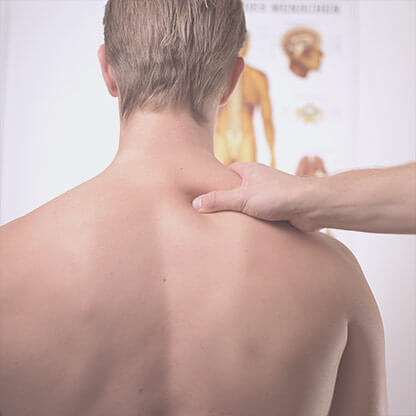


The first cold wind arrives, and your throat feels scratchy — why some people are affected and others are not
Ask the Yellow Emperor
Wei Qi is the guardian at your surface. By day he walks the wall on the outside, and at night he returns to the inside. For anyone who nourishes him, sends him out, and lets him come home, the Wind finds no open gate.
— Qí Bó
Most explain the difference with luck, with genes, or with vitamin C. Chinese medicine explains it with something every person has and very few look after: the Wei Qi, the defense at the surface. In August we called it an invisible protective cloak. Today is about how this cloak becomes tight and what that depends on.
What Wei Qi is and why it is on the outside during the day and on the inside at night, the Yellow Emperor, Qí Bó, and Dr. Weber will explain to you. And above all, what you can do about it starting tomorrow morning.

Qí Bó | The Yellow Emperor Huángdì | Dr. Weber
Note: When this article speaks of the "Lung," "Spleen," or "Kidney," it always means the functional spheres of Chinese medicine — energetic systems, not the anatomical organs.
The Emperor's Question
The Yellow Emperor: "Qí Bó, in the summer I announced something, and now I must deliver. I said we would talk about Wei Qi as soon as the first cold winds came. They are here. And I see what I see every year: two people stand in the same wind. One is in bed three days later. The other notices nothing. What sets the two apart?"
Qí Bó: "Not the wind, Your Majesty. The wind is the same for both. The difference lies at the wall.
Imagine a city surrounded by a wall. The wall alone protects no one. What protects the city is the guardian who walks the wall. He checks the gates. He closes them when the wind picks up, and he opens them when the air inside grows stale. In our teaching, this guardian is called Wei Qi, the defensive Qi.
It does not flow in the channels, the Meridians, like the rest of the Qi. It flows outside them, between the skin and the muscles, everywhere the body meets the world. It warms the skin. It opens and closes the pores. And it keeps Wind and Cold from getting in.
In August I called it a cloak. A cloak is a good image, but it hangs still. Wei Qi does not hang. It makes its rounds. And it knows no pause, only a change: by day the guardian walks on the outside. At night he returns to the inside."
The Yellow Emperor: "So someone who is constantly catching colds doesn't have a weak wall. He has a tired guardian."
Qí Bó: "That is how I would put it, Your Majesty. And a guardian usually grows tired for one of three reasons. He gets too little to eat. He is not sent out. Or he is not allowed to go home at night."
The Yellow Emperor: "I want to hear all three. But first, Dr. Weber: what do you say about this guardian?"
What Modern Medicine Says About This
Dr. Weber: "More than I would have thought when I first heard it, Your Majesty.
We distinguish two parts of the body's defense. One is the learned defense. It recognizes a pathogen because it has met it before. It is precise, but slow. The other part is the innate defense. It sits at the boundary surfaces: in the skin, in the nose, in the airways, in the gut. It doesn't ask who is coming. It simply keeps the door shut. That is Qí Bó's guardian, pretty much exactly.
And it works with the material we talked about last: with moisture. On the mucous membrane of the nose lies a thin film, defensive substances float in it, and beneath it fine little hairs sweep out everything that gets caught there. If the mucous membrane dries out, the guardian is left standing without tools. That is why I said earlier: a moist mucous membrane and a strong defense are two sides of the same thing."
The Yellow Emperor: "And Cold? Qí Bó says Wind comes in through the gates. Does Cold really make you sick, or is that just a figure of speech?"
Dr. Weber: "For a long time we said: Cold doesn't make you sick, viruses do. That's true, but it is only half the answer. The viruses are always there. The question is whether the guardian is awake.
And something has changed here. In 2022, a research group in the United States showed what happens in the nose when the tissue there cools by about five degrees. That is how much it cools after a quarter of an hour in cold air. In cell samples from the nose, the mucous membrane then released clearly fewer of the tiny defensive vesicles it uses to catch viruses. In this study it was almost half as many. It was already known earlier that cold viruses multiply better in the slightly cooler nose than deeper in the airways.
Put more soberly: Cold at the surface weakens the defense at the surface. Qí Bó described the very same process, only with a guardian instead of vesicles."
The Yellow Emperor: "So it's the same observation, once with a wall and once with a microscope."
Dr. Weber (smiles): "More or less, Your Majesty. One more sentence, because it matters to me. We are talking here about the common cold: a runny nose, a scratchy throat, a few days of feeling run down. A fever that does not go down, shortness of breath, pain in the chest, or a cold that has not improved after two weeks belongs in a doctor's hands. This applies all the more to people whose defenses are weakened by an illness or by medication."
The Three Gates
The Yellow Emperor: "Qí Bó, you say the guardian checks the gates. Where are they?"
Qí Bó: "There are three that count in autumn, Your Majesty.
The first gate is the nape of the neck. The old masters named the acupuncture points there after the wind: the Wind Gate, the Wind Pool, the Wind Palace. They knew where the wind comes in. Ask a person where they first felt their cold. Many say: In the evening my neck was stiff, and in the morning my throat was raw.
The second gate is the nose. With every breath, the world passes through it, and behind it lies the Lung. That is why the Lung is the first organ the wind meets, and why the guardian in our teaching is in its service.
The third gate is the pores. The guardian opens them when you exert yourself, so that the Heat can get out. And he closes them when you come to rest. Whoever steps into the wind sweaty has every gate open and no guardian in front of them. That is the moment the wind goes in."
The Yellow Emperor: "The neck, the nose, the pores. And the same rule applies to all three?"
Qí Bó: "The same one, Your Majesty: keep them warm when it turns cold, and keep them closed when the wind blows. In our teaching, a scarf is not an adornment. It is a gatekeeper."
Dr. Weber: "For the neck itself I have no study, Your Majesty, I say that honestly. But for cold on the surface, I do. In a small study in Cardiff, healthy people were asked to put their feet in cold water for twenty minutes. In the days that followed, about three times as many of them reported cold symptoms as in the comparison group, who had kept their feet dry. The researchers' explanation: cold on the skin constricts the blood vessels, including those in the nose. There, the circulation that the body's defenses work with is weaker for a while.
This is how Qí Bó describes the pores, just in other words. Wet and cold on the surface, and his guardian is gone for a while."
Where the Guardian Sleeps
The Yellow Emperor: "You named three reasons, Qí Bó. I want to hear the last one first, because it surprises me the most: the guardian has to go home at night. What does that mean?"
Qí Bó: "It is the loveliest passage of our teaching on this subject, Your Majesty. The old writings say: In the morning, when a person opens their eyes, the Wei Qi emerges from the eyes and goes out to the surface. All day long it makes its rounds there. In the evening, when a person closes their eyes, it goes inward and travels through the organs. That is why we become tired when it goes in. And that is why we wake up when it comes out.
Now see what that means. Whoever cuts the night short calls the guardian back to the wall before he has finished inside. He stands outside then, but he is not rested. And whoever stays awake deep into the night keeps the guardian outside, where he has nothing left to do. He does not let him in, where he is needed.
People say: I caught a cold because I didn't sleep enough. In our teaching, that is no figure of speech. It is exactly what happens."
The Yellow Emperor: "Dr. Weber, do you take this for an image or for a finding?"
Dr. Weber: "For a finding with a very good image in front of it, Your Majesty.
The body's defenses really do have a day shift and a night shift. During the day, the cells that work at the borders are on the move. At night, above all in deep sleep, other immune cells travel into the lymph nodes and the tissue. There, pathogens are presented, responses are built and memories are stored. These processes need rest, and they measurably suffer when sleep is missing.
A study from San Francisco made this very clear. Healthy volunteers were deliberately exposed to a cold virus, and beforehand their sleep had been measured for a week. Those who had slept less than six hours became ill about four times as often as those who had slept more than seven hours. The virus was the same for everyone. It was the nights before that made the difference."
The Yellow Emperor: "Then the night is the time when the guardian regains strength, and the day is the time when he works. The question remains what he lives on."
What the Guardian Lives On
Qí Bó: "On what is on your table, Your Majesty. Wei Qi does not arise at the skin. It arises in the Center. The Spleen draws it from food, the Lung distributes it outward, and the warmth of the Kidney keeps it going. Three organs, one guardian.
That is why a person with a cold, sluggish Center rarely has good defenses. He eats, but he gains too little from it. Especially when the food is cold, raw and sweet. Raw food in the morning, yogurt straight from the refrigerator, sweets in between: for the Spleen, that is work without pay. The guardian does not get his wages.
Warm and cooked is the rule. And in autumn something is added: a little something pungent at the right moment. In August I told you to eat less pungent food, and that still holds. But there is a difference between chili every evening and three slices of ginger on a morning when you were cold. The one disperses. The other briefly opens the surface, drives the cold out, and then the guardian closes the gate again."
The Yellow Emperor: "I'll remember that: ginger for the day when I was cold. Not for every day."
Qí Bó: "Exactly, Your Majesty. And one more thing people forget: the guardian wants to be sent out. The Lung distributes Wei Qi with the breath. Someone who sits in a warm room all day and breathes shallowly has a guardian sitting beside the gate instead of in front of it. Half an hour outside, dressed warmly, breathing deeply: that does more for your defenses than most people think."
Dr. Weber: "I am entirely with you, Qí Bó, and I can give reasons for both.
To eat: A large share of the body's immune cells sit in the gut, and they live on what the gut flora makes from fiber and cooked vegetables. The body needs protein to build immune substances. Vitamin D is part of it, and it is often in short supply in winter. Zinc as well, especially with a one-sided diet. A warm meal with vegetables, legumes or a little meat covers more of this than you would think. Sugar in large amounts, on the other hand, feeds the wrong residents in the gut.
On exercise: Moderate exercise, a brisk walk, a round of Qi Gong, raises for a few hours the number of immune cells traveling in the blood. Research speaks of heightened surveillance, which comes fairly close to Qí Bó's guardian. But there is an opposite direction: according to current knowledge, someone who exerts himself to exhaustion has weaker defenses for hours afterward. Sports physicians call this the open window, and even if there is debate about it: stepping out into the wind sweaty during that window is the worst idea of the autumn."
The Yellow Emperor: "Then let me sum up before we come to the plan. The guardian lives on warm food. He works when I send him out. He recovers when I sleep. And he watches over three gates: the neck, the nose and the pores."
Qí Bó: "I could not have said it better, Your Majesty."
The Yellow Emperor: "Then make a plan out of it for me. Simple enough that you can start it tomorrow morning while you're getting dressed."
🍂 The 3 Sages Method for Your Wei Qi
🌅 MORNING — wake the guardian and send it out
TCM: Start at the neck, not at the plate. In the morning, before you get dressed, rub your hands together until they are warm and stroke them over the back of your neck. Only then the warm porridge. Save the ginger tea for the mornings when you have been cold: two or three slices, steeped for ten minutes. As you head out: scarf over the neck, hair dry.
Science: A warm breakfast keeps blood sugar and digestion calm. Cold on the skin can also narrow the blood vessels in the nose through a reflex. If you keep your throat and neck warm, you take away the trigger for that reflex. The most common trigger in autumn: wet hair in the cold wind.
Practical:
- 7:00 a.m. — a glass of lukewarm water, then rub your hands and stroke the back of your neck, for one minute
- 7:15 a.m. — warm millet or oat porridge. If you got cold on the way to work or while airing out the room, have a ginger tea with it
- as you head out — scarf around the neck, hair dry, jacket zipped up to your chin
🌞 DAY — let the guardian work
TCM: Eat a warm meal at midday, cooked, not straight from the refrigerator. Leek, onion, pumpkin, carrot. Go out into the fresh air once a day, dressed warmly, for thirty minutes, and breathe deep into your belly as you go. Don't walk so fast that you break a sweat. If it happens anyway, change your clothes before you head back out into the wind.
Science: Moderate exercise raises the number of immune cells in the blood for several hours. Daylight, even under overcast skies, sets the internal clock, and that clock also sets the pace for the immune system's night shift. If you step out into the cold sweaty, your blood vessels constrict, including those in the nose, and the defense at the mucous membrane drops.
Practical:
- 12:30 p.m. — warm meal, such as pumpkin and lentil stew or rice with steamed vegetables and leek
- 1:30 p.m. — walk briskly for 30 minutes, scarf around your neck, breathing through your nose
- 4:00 p.m. — warm tea instead of cold water, with a handful of nuts or pumpkin seeds
🌙 EVENING — let the guardian come home
TCM: Eat early and light, and warm. After that, nothing that keeps the guardian outside: no late workout, no alcohol, no screen deep into the night. Ten minutes of warmth on the back of your neck closes the gate for the night. And go to bed as soon as you get tired, not long after. Tiredness is the guardian coming home.
Science: During deep sleep in the first half of the night, the body's defense processes that need rest take place. Alcohol makes the second half of the night restless, late meals keep digestion awake, and both disturb the processes that need rest. Warmth on the neck relaxes the muscles that were tense in the wind, and a relaxed neck makes it easier to fall asleep.
Practical:
- 6:30 p.m. — a light, warm dinner, such as a scallion soup with ginger (see the recipe in the reading tip below)
- 9:00 p.m. — a cherry pit pillow or a warm towel on the back of your neck, 10 minutes
- 10:00 p.m. — lights out, so that you still get at least seven hours of sleep before the alarm goes off
Safety note: The practices in this plan are traditional and do not replace treatment or a medical evaluation. If you have a medical condition or are pregnant, talk with your doctor first. If something doesn't feel right, stop.

🌿 Recipe of the Month
The soup for the day you got chilled
In China, it's on the table as soon as someone has been out in the wind: a soup made from the white parts of the scallion and fresh ginger. It warms the Center and briefly opens the surface, in exactly the order the guardian needs. You'll find the traditional recipe, how to drink the soup, and the situations in which it isn't suitable here:
📋 Quick Check: How Awake Is Your Guardian?
How do you react to drafts and the first cold wind?
- I get chilled right away, especially on the back of my neck, and the next day my throat feels scratchy = Your Wei Qi is weak, and the gates stand open. Start with your neck today: keep it warm during the day and warm it in the evening.
- I shiver, but it passes = The guardian is there, but tired. A warm breakfast and a scarf when you head out the door are the first step.
- I hardly notice it = The guardian is doing its job. Keep doing what you're doing.
How often did you have a cold last year?
- Three times or more, and it dragged on every time = The guardian isn't getting enough nourishment or enough sleep. Start with the night: for two weeks, get into bed before 10:30 p.m.
- Once or twice, like most people = That's the average. The guardian is working, but it could be better cared for. Eat a warm meal at midday.
- Not at all, or only briefly = Your guardian is alert and well cared for. Keep it up.
On how many nights last week did you sleep seven hours?
- On two at most = The guardian isn't coming home at night. Set a fixed bedtime today.
- On three to five = The guardian comes home, but too late. Move your evening forward by half an hour.
- On six or seven = Your guardian comes home every night and recovers. This is how it should stay.
And do you shiver in bed between three and five in the morning, with a stuffy nose or a little cough? That is the hour of the Lung, which distributes the Guardian. When it speaks up, the Guardian has not yet come home.
🍂 Start this evening: Rub your hands until they are really warm, and slowly stroke ten times from your hairline over your neck to your shoulders. Then lay a warm towel or a cherry pit pillow on your neck for ten minutes. That takes twelve minutes — and it is the first service you do for your Guardian.
Safety note: A traditional practice, not a treatment. It does not replace medical evaluation. If you have a medical condition or are pregnant, talk with your doctor first, and stop if you feel unwell.
The Guardian Weeks — your 14-day build-up
The build-up takes two weeks. Today, write down where you stand. Then follow the 3 Sages method, and on day 15 write down where you stand now. The scale runs from 1 to 10: 1 means chilly and run down, 10 means warm and resilient.
Today
- Shivering in a draft: ____
- Nose in the morning: ____
- Neck and shoulders: ____
- Sleep: ____
- Energy in the afternoon: ____
After 14 days
- Shivering in a draft: ____
- Nose in the morning: ____
- Neck and shoulders: ____
- Sleep: ____
- Energy in the afternoon: ____
Most first notice that they shiver less and their neck loosens up, often after just a few days. Whether winter brings fewer colds only shows over months, and it doesn't depend on you alone: The Wind comes as often as it likes. But you decide whether it finds a gate.
Wisdom to Take with You
The Yellow Emperor: "So the message is this: The Wind decides less than people think. The Guardian has a say too. And the Guardian is something you can nourish, send out, and let sleep."
Qí Bó: "That's right, Your Majesty. You have the wall from birth. The Guardian you must tend to every day. Warm food in the morning, fresh air at midday, rest at night, and a scarf over the gate the Wind likes best. The Guardian asks for nothing more. But he won't settle for less."
Dr. Weber: "And the best part, Your Majesty: None of this is a cure. A scarf, a warm plate of food, a walk, and seven hours of sleep. These are things people gladly do anyway, once they know what they are for."
The Yellow Emperor: "Then may everyone who reads this hang their scarf by the front door tonight. Not out of fear of winter — but so that the Guardian doesn't stand alone at the gate tomorrow morning."
PS: And what if you're already in the middle of a cold? The plan still applies, with one difference: In the first few days, keep your walk short, and make the scallion soup with ginger your main meal. Right now the Guardian doesn't need work. He needs fresh supplies.
Preview: November
The Yellow Emperor: "Next month, when the days grow short, we'll talk about the cold that comes from within. Cold feet, a heavy head, a mood that sinks with the light."
Qí Bó: "We'll turn to the Kidney, the furnace of the body, and show why November is the decisive time for the Water element."
Dr. Weber: "And I'll explain what daylight, melatonin, and body temperature have to do with our mood in November."
About our "3 Sages" story
Who are the Yellow Emperor and Qi Bo?
The Yellow Emperor (Huangdi, 黄帝) is said to have lived around 2,600 BCE and is regarded as the mythical founder of Chinese culture and medicine. Qi Bo was his most important advisor and personal physician. Their conversations about health, illness, and the nature of human beings were recorded in the most important foundational work of TCM.
The book: Huangdi Neijing
The "Huangdi Neijing" (黄帝内经), also known as "The Yellow Emperor — The Foundational Work of Traditional Chinese Medicine," was probably written between 200 BC and 200 AD. It is the oldest surviving work of Chinese medicine and consists of dialogues between the Yellow Emperor and his advisors, mainly Qi Bo.
For TCM, this work is what the Bible is for Christianity: the absolute foundation. All the key concepts — Yin and Yang, the 5 elements, Qi, meridians, and acupuncture points — are systematically described here for the first time.
Our modern approach: The 3 Sages
In our series "The 3 Sages," we bring the Yellow Emperor and Qi Bo together with the fictional modern physician and microbiologist Dr. Weber.
Important note: All three characters and their conversations are purely fictional and invented by us.
We use this narrative form, similar to the dialogue form in the Huangdi Neijing, to explain the often complex connections of TCM in a way that is easy to understand and entertaining. When the 4,000-year-old emperor is confronted with modern science, enlightening "aha moments" arise that show: ancient wisdom and new research often speak the same language, just in different words.
This is how TCM comes alive, becomes easy to understand, and can be put into practice in your everyday life.
The dialogues are creative interpretations, not historical documents. For medical questions, please consult a qualified TCM practitioner or doctor.
The Wind is looking for the gate.
The guardian decides whether it finds it.
— TCM Principle




Thank you so much for these conversations! A wonderful, easy-to-understand guide through TCM, and at the same time a bridge to modern medicine.
Dear Ulrike, thank you so much!
We're so glad you enjoy the conversations of The 3 Sages.
The Yellow Emperor, Qi Bo and Dr. Weber already have the next topics in mind, so you can look forward to more rounds.
Warm regards from the editorial team
I'm new to the channel, and I've been interested in TCM for a long time. The way you make it understandable is really great, and the posts are extremely interesting and easy to follow. I can't stop reading.
Thank you so much
Dear Sieglinde, a warm welcome! We're delighted to get feedback like this, because it's exactly what we aim for: explaining TCM in a way that you can recognize in your own everyday life.
Many more articles are waiting for you in the magazine, and if you'd also like to experience TCM with your body, you're warmly invited to join Wolfgang's Qi Gong Live on YouTube every Monday.
Warm regards, TCM Team