



The pressure costs you more energy than the work itself
What the Old Masters Knew About This

Hold life like a brush:
firmly enough that it doesn't SLIP AWAY,
and lightly enough that the ink can FLOW .
As long as nothing is at stake, you find the right words effortlessly. You tell a friend about your day or explain the way to the train station to a stranger, and everything comes easily.
But then you find yourself in a conversation that a lot depends on.
Your shoulders are tense and hunched up, your voice gets tighter and your hands grow damp. Suddenly the words are gone that were at your disposal just a moment ago. Afterward, you know exactly what you would have wanted to say.
Your ability was the same as before, the same as in that moment. The only thing that changed was how much depended on it.
🏹 The Story of the Three Archers
In the Zhuangzi, one of the foundational texts of Daoism, there is a short story about an archery contest.
If it's only about a few clay shards, the archer shoots skillfully and hits the target. If it's about a precious belt buckle, he becomes unsure and doubts his aim. And if it's about real gold, he gets so nervous that he can hardly think clearly.
In all three cases the archer is the same person with the same bow and the same practice. The Zhuangzi explains the difference in a single sentence: Whoever gives too much weight to the outside becomes clumsy on the inside.
⏱️ Why so much looks like gold today
In the past, life held plenty of clay shards and only now and then a piece of gold. Today, almost everything seems to be gold.
A message demands a quick reply, because the other person can see that you've read it. Work is measured in numbers, sleep in points and your walk in steps. And all day long, your phone shows you that other people are faster, prettier and more successful.
So from morning to night we shoot for gold, even with things that are really just clay shards. In autumn, when the days grow shorter and so much still wants to get done before the end of the year, many people feel this especially strongly.
Most of us know the result: you're exhausted in the evening even though you've done no more than you used to, and you make mistakes precisely because you don't want to make any.
🍃 What Chinese medicine recognizes in this
Chinese medicine grew from the same soil as the thinking of Laozi and Zhuangzi.
In it, too, Qi is meant to flow freely and not be pushed. The task of ensuring this free flow is attributed to the Liver which, in the five phases belongs to Wood. It is regarded as the functional sphere that reacts especially sensitively to ongoing pressure.
In Chinese medicine, it is said that the Liver loves to unfold freely and cannot tolerate force.
Anyone who constantly drives themselves and tries to force things causes their Qi to stagnate. Because, according to this teaching, the Liver also nourishes the sinews, the blockage shows up first as tension in the body and soon afterward as irritability in the mind. Chinese medicine calls this state Liver Qi Stagnation.
ℹ️ Note: When Traditional Chinese Medicine talks about the Liver, Spleen, or Lung, it means energetic functional spheres, not the anatomical organs.
🔎 How you can tell you're trying too hard to win gold
Your body usually shows it sooner than your mind will admit.
Your jaw muscles are tense, and often you only notice in the evening that you've had your teeth clenched together for hours.
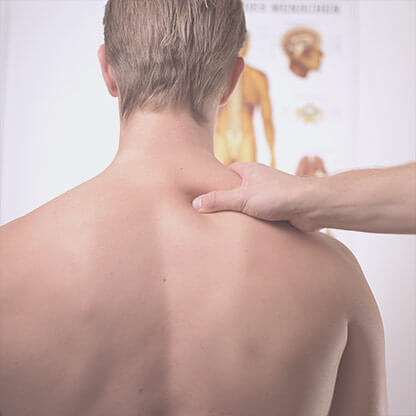
Your shoulders are tight and hunched, your breathing is shallow, and every so often a deep sigh escapes you without your knowing why.
On top of that comes the feeling that you have to get everything done right away and force every result. You check for the third time whether a reply has come in, you make small mistakes on things you could normally do in your sleep, and irritability rises faster than usual.
In Traditional Chinese Medicine, frequent sighing and irritability are considered typical signs that the Liver Qi is no longer flowing freely.
🔬 What researchers measured in pianists and golfers
As soon as something becomes important, the Sympathetic nervous system takes the lead. This part of the nervous system sets the body up for performance: your heart beats faster, your hands sweat, and your muscles tense. That's useful for a sprint, but it gets in the way of a fine movement.
Japanese researchers measured this in eighteen skilled pianists who played once in a rehearsal and once under competition conditions.
In the competition, pulse and sweating rose noticeably, the muscles in the upper arm and shoulder worked harder, and in the forearm the muscles that bend the fingers tensed at the same time as those that extend them.
So the muscles worked against each other, and the body needed more force for the same task than it did in rehearsal.
The American psychologist Sian Beilock has studied what the mind does to a well-practiced movement under pressure.
In several trials, she had beginners and experienced golfers sink putts on the green. The beginners did better when they took their time and paid close attention to their movement.
For the experienced players, it was the other way around. They did better when they were told to swing as fast as possible or were busy with another task at the same time, and worse as soon as they were asked to consciously monitor their swing.
The explanation makes sense. What we do well, the brain controls through practiced, automatic routines.
As soon as the conscious mind steps in because a lot is at stake, it breaks these routines back down into individual steps, and the movement loses its flow. In psychology, this phenomenon is called failing under pressure, or "choking under pressure.".
Calm works in a similar way, by the way, because it too can't be produced on command.
☯️ What Wu Wei Really Means
Wu Wei (無為) is most often translated as "non-doing," and that is exactly why it is so often misunderstood. It doesn't mean sitting back with your hands in your lap. It means acting in a way that happens without force and doesn't cling to the outcome.
The archer who shoots for clay shards does no less than the other one.
He draws the bow just the same and aims just the same, but nothing inside him works against his own hand. This has nothing to do with laziness, and it is especially with good resolutions that you see how much easier change comes when you don't force it.
If you have ever been completely absorbed in an activity, you know Wu Wei from your own experience. When cooking, gardening, or making music, there are moments when the work seems to happen by itself and time passes without your noticing.
So Wu Wei doesn't mean that you stop caring about something. You stay with it, you take it seriously, and you do what needs to be done.
You simply no longer try to force the result, and instead give it the time and space it needs.
🎯 How to Take the Pressure Off in Everyday Life
1. Ask yourself what you are shooting for right now. If you notice one of these signs in yourself, pause for a moment and ask yourself whether this thing is really gold. Most of the time it's a belt buckle, and often just a clay shard. Even this one question gives the matter its proper weight back.
2. Focus on the goal, not on yourself. Sports science has shown that movements become more precise when your attention is on the goal rather than on your own body. In everyday life, this means that in an important conversation, you think about what the other person should understand, not about how you come across.
3. Leave alone what can't be forced today. If something just won't work out despite all your effort, stop pushing and let it rest overnight. The next morning, what you tried so hard to force the evening before often resolves as if by itself.
4. Do one thing every day that doesn't have to produce anything. Go for a walk without a step counter, water the plants without hurrying, or cook a soup slowly. Activities like these remind your body what doing without striving feels like. We described in August why stuck thoughts loosen up especially while walking, .
5. Treat yourself to a meal without a screen. When you're under pressure, you often eat on the side at your desk or skip the meal entirely. At least once a day, sit down at the table without your phone and eat a warm meal in peace. In Chinese dietary teachings, mildly pungent and aromatic foods such as radishes, daikon, cress, or a pinch of cardamom are valued because they keep Liver Qi moving.
📍 The exercise: The archer who never looses an arrow
Among the Eight Brocades (Bā Duàn Jǐn), one of the best-known Qi Gong sequences, which has been documented in writing since the 12th century, there is a movement called "Drawing the bow left and right as if to shoot an eagle.".
The Archer in this exercise has no arrow, and there is nothing he could win. That is exactly why he can learn to draw the bow with relaxed strength.
Qi Gong teachers call this posture Sōng (鬆), which means something like relaxed, but not limp. The tradition also attributes to this movement that it opens the chest and addresses the Lung , the functional sphere of autumn.
- Stand with your feet a good bit wider than shoulder width and bend your knees slightly, as if you were sitting on a horse.
- Loosely cross your wrists in front of your chest.
- Slowly push your left arm out to the side until it is almost straight. Your index finger points up, and your thumb is spread out.
- At the same time, pull your right hand, closed into a loose fist, to the right in front of your chest, as if you were drawing a bowstring.
- Follow your left index finger with your eyes into the distance.
- Release the tension, straighten up a little, and bring your hands back in front of your chest. Then switch sides.
Practice three to six times on each side, breathing calmly and naturally. Draw the bow only as far as you can without trembling. If you notice your face tensing up or your shoulders creeping upward, ease off a little.
📱 Atemraum
If you'd like to let a few quiet breaths linger after your practice, our Atemraum app is there with guided breathing exercises for the evening, for sleep, and for quiet minutes in between.
💫 In Closing
Wu Wei doesn't ask that nothing matter to you anymore. It only asks that you stop giving one thing more weight than it needs to carry. The hand that then draws the bow is the same as before, but it no longer trembles.
Pick one single thing today that you would otherwise do as if it were worth its weight in gold, and do it as if it were only about a few clay shards. Notice how much more easily it flows from your hand.
The Dao never acts, and yet nothing is left undone.
— Laozi, Dàodéjīng, Chapter 37 (around the 4th century BCE)
📌 Recommended
🍂 The Autumn Journey, every Monday LIVE on YouTube: Seven weeks through the fall, with Qi Gong to practice along with and a TCM deep dive afterward. If you take part, you'll move through this season differently.
👉 Go to the Autumn Journey on YouTube
🔍 Your TCM analysis: Our TCM analysis is completely new and goes much deeper. In about ten minutes, you answer questions about how you're feeling and how you live, and you find out which pattern of Chinese medicine shows up for you, along with matching acupressure points, exercises, and nutrition tips. It's meant to give you orientation and is free of charge.
👉 Take the free TCM analysis
📖 The TCM Patterns: Here you'll find more than 60 patterns of Chinese medicine explained in plain language, each with tips on nutrition, acupressure, and Qi Gong.
👉 To the TCM Patterns
📩 Once a month, the Yellow Emperor writes to you: practical tips on TCM, nutrition, simple recipes, and Eastern wisdom in language everyone can understand — straight to your inbox. Subscribe for free:
👉 Sign up for free