






On this page you will learn:
- What this pattern means from the perspective of TCM and Western medicine
- Where your complaints come from and how they are connected
- Which specific treatment methods may help you now
- How you can get your Liver Qi moving again and restore the free flow of energy with TCM herbs, acupressure, Qi Gong, and nutrition
The good news: Liver Qi Stagnation responds very well to the right measures. With exercise, stress reduction, targeted acupressure and TCM herbs, you can get your Qi flowing again and regain a sense of lightness.
Take your time, getting to know the different treatment approaches — you don't have to put everything into practice at once. Choose what feels right to you and what you can easily fit into your daily life.
Your treatment at a glance:
Which TCM pattern is really behind your complaints?
Degree of the
imbalance

Mild to moderate
Typical
Treatment duration

1–3 months
Self-treatment
Possible

Easy to treat yourself
Treatment
scope

2–3 methods
Suggested
methods

Extensive selection
Our free TCM Analysis shows you your personal TCM pattern in just 10 minutes.
What is Liver Qi Stagnation?
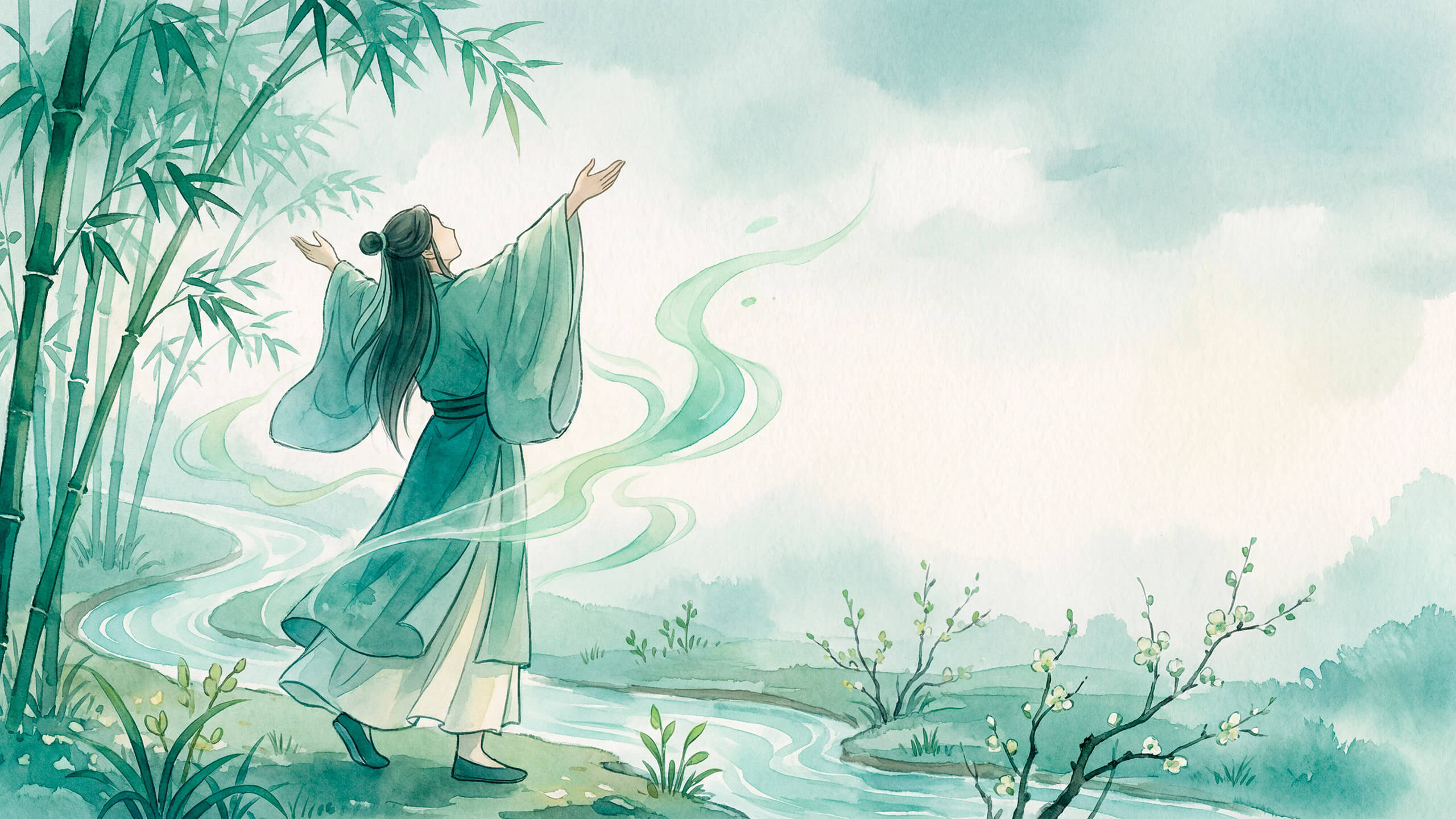
When vital energy gets stuck
The TCM perspective: The Liver as general of the army
In Traditional Chinese Medicine, the Liver (Gan) is far more than just a detox organ. It is called the "General of the Army" and has one of the most important jobs in the body: it ensures the free, harmonious flow of Qi in all directions. When this flow gets stuck, we speak of Liver Qi Stagnation — one of the most common patterns in TCM.
The Liver belongs to the Wood element and naturally tends to grow, spread out, and move — like a tree stretching its branches in every direction. When this natural movement is hindered — by stress, suppressed emotions, lack of exercise, or an unhealthy lifestyle — Qi builds up and begins to stagnate.
In TCM, the Liver has three important functions: it ensures the free flow of Qi, stores the Blood, and governs the sinews. With Qi Stagnation, the first function is affected most of all. Since Liver Qi also regulates the emotions, stagnation often leads to frustration, irritability, anger, or even depression.
The consequences of Liver Qi Stagnation: The Qi can no longer flow freely. It backs up like water behind a dam. This backup creates pressure, tension and eventually pain — especially in the areas the Liver meridian passes through: the flanks, chest and lower abdomen. Digestion can suffer too, because stagnant Liver Qi often "attacks" the Spleen and Stomach.
The typical signs of Liver Qi Stagnation:
- A feeling of tension and fullness in the upper abdomen and the flanks
- Frequent sighing — the body is trying to release the blockage
- Irritability, frustration, flaring emotions
- Changing moods that come and go for no apparent reason
- A lump in the throat — the "plum pit feeling" (Mei He Qi)
- Digestive issues: bloating, irregular bowel movements, belching
- In women: PMS, painful menstruation, irregular cycle
- Tension headaches, especially around the temples
The good news: Liver Qi Stagnation is a functional disturbance — which means it responds very well to the right measures. Exercise, stress reduction, the right herbs and acupressure may help get the Qi flowing again.
The Western perspective: Stress and the autonomic nervous system
From a Western point of view, Liver Qi Stagnation corresponds to a condition we know well today: chronic stress with dysregulation of the autonomic nervous system. The body is constantly in "fight-or-flight mode" (sympathetic dominance), while its relaxing counterpart (the parasympathetic nervous system) is underactive.
Think of your autonomic nervous system like a car: the sympathetic nervous system is the gas pedal, and the parasympathetic nervous system is the brake. With chronic stress, the gas pedal is constantly pressed to the floor — and the body can no longer really "slow down." This explains the inner tension, the sleep problems, and the digestive complaints that occur with Liver Qi Stagnation.
The connection to digestion is especially interesting: the liver produces bile, which is important for digesting fat. Under stress, bile secretion is inhibited, which leads to a feeling of fullness, bloating and digestive problems. Irritable bowel syndrome, which is often diagnosed in Western medicine, shows a great deal of overlap with the TCM pattern of Liver Qi Stagnation.
What does modern medicine show?
- Chronic stress: Elevated cortisol and adrenaline levels with far-reaching effects
- Autonomic imbalance: Sympathetic dominance with reduced vagal activity
- Irritable bowel syndrome: Functional gastrointestinal complaints without an organic finding
- Tension headaches: Muscle tightness caused by chronic tension
- PMS (premenstrual syndrome): hormone fluctuations made worse by stress
- Functional complaints: Symptoms without a clear organic cause
Modern research confirms: The TCM pattern "Liver Qi Stagnation" correlates strongly with measurable stress markers and autonomic imbalance. Acupuncture and TCM herbs such as Chai Hu (Bupleurum) have shown positive effects on the nervous system and stress regulation in studies. TCM's recommendations for exercise and relaxation also match modern approaches to coping with stress.
TCM treatment of Liver Qi Stagnation starts right here: it releases the energetic blockages, gets the Qi moving again and activates the parasympathetic nervous system — deeply and lastingly, if you give it time.

The Yellow Emperor's team explains your pattern
Qi Bo | The Yellow Emperor | Dr. Lisa Weber
MASTER OF THE HEALING ARTS | FOUNDER OF TCM | MODERN PHYSICIAN
What happens when the legendary Yellow Emperor of Traditional Chinese Medicine sits down with his advisor Qi Bo and a modern doctor? They discuss your pattern—using 4,000-year-old knowledge AND the latest science.
Liver Qi Stagnation — When vital energy gets stuck and its free flow is blocked
The Yellow Emperor: "Qi Bo, in my realm I see many people who seem tense and irritable. They sigh often, complain of pressure in the chest and flanks, their moods change for no apparent reason, and they report digestive problems. Some describe a lump in the throat, as if something were stuck there. What is the cause of this suffering?"
Qi Bo: "Your Majesty, these people are suffering from a stagnation of Liver Qi — called Gan Qi Yu Jie. In TCM, the Liver is the 'general of the army' and has one of the most important tasks: it ensures the free, harmonious flow of Qi in all directions throughout the body. When this flow is hindered — by stress, anger, frustration, or suppressed emotions — Qi builds up and begins to stagnate. This blockage creates pressure and tension, especially in the areas the Liver meridian passes through: the flanks, the lower abdomen, and the throat. Sighing is the body's attempt to release the blockage — a deep breath can move the Qi for a short time."
Dr. Weber: "That is a very accurate description of what we would call chronic stress with autonomic imbalance today! The body is constantly in 'fight-or-flight mode' — the sympathetic nervous system is overactive, and the relaxing parasympathetic nervous system is underactive. That explains the inner tension, the irritability, and also the deep sighing — medically speaking, a form of hyperventilation that actually influences the autonomic nervous system for a short time. The lump in the throat is called 'globus syndrome' in our medicine — a classic functional symptom with stress and tension."
The Yellow Emperor: "You speak of the Liver as a general. What exactly are this general's tasks?"
Qi Bo: "Your Majesty, the Liver belongs to the Wood element and naturally tends to grow, spread out, and move — like a tree stretching its branches in every direction. The Liver has three main functions: First, it ensures the free flow of Qi throughout the body — this is its most important task. Second, it stores the Blood and releases it when needed — more during physical activity, less at rest. Third, it governs the sinews and keeps them supple. With Liver Qi Stagnation, the first function is disturbed above all. Since Liver Qi also regulates the emotions, any stagnation leads to emotional imbalance."
Dr. Weber: "Fascinating! The liver is indeed a central metabolic organ with far-reaching functions. It produces bile for fat digestion, stores glycogen and regulates blood sugar, detoxifies the body, and actually stores blood — up to a liter can be stored in the liver! The idea of 'Qi movement' interestingly correlates with the liver's role in metabolism and its connection to the autonomic nervous system via the liver-vagus axis."
The Yellow Emperor: "What causes Liver Qi to stagnate?"
Qi Bo: "The causes are many, Your Majesty. First: emotional stress — especially anger, frustration, and rage that cannot be expressed, which cause the Qi to stagnate. The Liver 'hates' restriction and reacts sensitively to emotional suppression. Second: lack of exercise — the Wood element needs movement the way a tree needs the wind. Without movement, the Qi stagnates. Third: an unhealthy diet — especially alcohol, fatty foods, and irregular eating burden the Liver. Fourth: overwork — constant pressure without balance exhausts the Qi and causes it to stagnate. Fifth: unfulfilled wishes and life goals — the Liver loves to make plans and carry them out. When this is blocked, it suffers."
Dr. Weber: "That fits perfectly with what we know about stress and its effects! Chronic emotional stress leads to overactivation of the hypothalamic–pituitary–adrenal axis and to elevated cortisol levels. Lack of exercise intensifies the stress response, while physical activity has been shown to relieve stress. Alcohol puts a direct burden on the liver and disrupts sleep, which increases stress. And the feeling of being 'stuck' in an unsatisfying life situation — that is a well-known psychosocial stress factor with measurable physical effects!"
The Yellow Emperor: "You mentioned digestive problems. How is the Liver connected to digestion?"
Qi Bo: "Your Majesty, that is an important point! Liver Qi is meant not only to flow freely, but also to support the Spleen and Stomach in their digestive work. We say: 'The Liver supports the Spleen in transformation.' But when Liver Qi stagnates and becomes congested, it takes on an aggressive character and begins to 'attack' the Spleen and Stomach. We call this 'Gan Qi Fan Wei' — the Liver attacks the Stomach — or 'Gan Qi Fan Pi' — the Liver attacks the Spleen. The consequences are nausea, belching, bloating, abdominal pain, and changeable bowel movements."
Dr. Weber: "That is a brilliant description of irritable bowel syndrome! We know today that there is a strong gut–brain axis — emotional stress directly affects bowel function. The liver produces bile, and under stress bile secretion is inhibited, which leads to problems digesting fat and a feeling of fullness. At the same time, stress speeds up intestinal transit in some people (diarrhea) and slows it down in others (constipation) — that explains the 'changeable bowel movements.' The TCM description of the 'Liver attacking the Spleen/Stomach' is a perfect metaphor for this stress response of the digestive tract!"
The Yellow Emperor: "Which signs in the body reveal Liver Qi Stagnation?"
Qi Bo: "The signs are characteristic, Your Majesty. The tongue is often normally colored or slightly dark red at the edges — where the Liver area lies. It may have a thin white or yellowish coating. The pulse is the most telling sign: it is wiry — called Xian Mai — taut like a guitar string. This pulse shows the tension and the stagnation of Qi. It can also be irregular when emotions fluctuate strongly. The flanks are often tender to pressure, and patients describe a feeling of 'tightness' in the chest."
Dr. Weber: "Very interesting! The 'wiry' pulse corresponds to what we would call increased arterial stiffness — a sign of sympathetic overactivity and vascular tension. Tenderness in the flanks and upper abdomen is typical of functional complaints and can be related to muscle tension. We know the feeling of tightness in the chest from patients with anxiety disorders — it arises from tension in the breathing muscles and shallow breathing under stress."
The Yellow Emperor: "Now let us talk about treatment. How can Liver Qi be set in motion again?"
Qi Bo: "Your Majesty, the treatment principle is Shu Gan Li Qi — to free and regulate the Liver Qi. This happens in several ways. First: movement! The Liver loves movement — any form of physical activity that brings you joy moves the Qi. Walking, dancing, Qi Gong, gentle exercise. Second: finding emotional expression — suppressed feelings need a way out, whether through conversation, creative activities, or simply screaming into a pillow. Third: acupuncture and acupressure — especially Liver 3 (Tai Chong), the most important point for freeing the Liver Qi. Fourth: Qi-moving herbs — above all Chai Hu (Bupleurum), the classic herb for harmonizing the Liver."
Dr. Weber: "All of these recommendations are scientifically grounded! Physical exercise is one of the strongest natural stress relievers — it lowers cortisol, raises endorphins, and improves heart rate variability. Expressing emotions — called emotional expression — is a central building block of psychotherapy and demonstrably reduces stress and psychosomatic complaints. Acupuncture at the point Liver 3 has shown activation of the parasympathetic nervous system and stress-reducing effects in studies. And Chai Hu has shown anxiolytic (anxiety-relieving) and antidepressant effects in research!"
The Yellow Emperor: "What about the classic herbal formulas for Liver Qi Stagnation?"
Qi Bo: "Ah, Your Majesty touches on the foundations of Liver therapy! Xiao Yao San — the "Free and Easy Wanderer Powder" — is the most famous formula for Liver Qi Stagnation. The name says it all: it makes the Qi free and wandering again. It contains Chai Hu to free the Liver Qi, Bai Shao to nourish the Liver Blood, Dang Gui to nourish and move the Blood, Bai Zhu and Fu Ling to strengthen the Spleen, and Gan Cao and Bo He to harmonize. For stronger Stagnation with a lot of anger, we use Chai Hu Shu Gan San — even more powerful in moving Qi."
Dr. Weber: "Xiao Yao San is one of the best-researched TCM formulas! Clinical studies show effectiveness for depression, anxiety disorders, PMS, and irritable bowel syndrome. The formula demonstrably influences the serotonergic system and the HPA axis. Chai Hu contains saikosaponins with an anxiolytic effect. Bai Shao has pain-relieving and antispasmodic properties. The combination is a wonderful example of how traditional knowledge is confirmed by modern research!"
The Yellow Emperor: "Wonderful! Let's put this wisdom into a practical plan."
THE 3 SAGES METHOD FOR LIVER QI STAGNATION
MORNING PROTOCOL (getting Qi moving):
- TCM: Gentle stretching — opens the Liver meridians along the inner legs and the flanks
- Science: Morning stretches activate the parasympathetic nervous system and reduce muscle tension from the night
- Practical: 5–10 minutes of gentle stretching, especially hip openers and side stretches
- TCM: Mint tea or lemon water — moves the Qi and clears the head
- Science: The essential oils of mint have relaxing and digestion-supporting properties
- Practical: A cup of fresh peppermint tea or warm water with lemon before breakfast
- TCM: Acupressure on Liver 3 (Tai Chong) — frees the Liver Qi in the morning
- Science: Studies show activation of the parasympathetic nervous system and stress reduction through this point
- Practical: Between the 1st and 2nd toe, two thumb-widths from the base of the toes. Massage in circles for 2–3 min. per side
DAYTIME STRATEGY (letting Qi flow):
- TCM: Build in movement breaks — standing still promotes Stagnation
- Science: Regular movement reduces cortisol and improves mood
- Practical: Every 60–90 minutes, get up and walk or stretch for 5 minutes
- TCM: Deep sighing — releases Qi congestion in the chest and diaphragm
- Science: Deep breathing activates the vagus nerve and reduces stress
- Practical: 3–5 deep sighs when you feel tense — breathe in deeply, then sigh out loudly and slowly
- TCM: Light, green foods — the Wood element loves green and sour
- Science: Green vegetables provide magnesium (relaxing) and bitter compounds (Liver-strengthening)
- Practical: Plenty of leafy greens, broccoli, cucumber, lemon, and mint in your meal plan
EVENING RITUAL (calming Qi):
- TCM: Qi Gong "Looking Backward" — releases tension in the neck and moves the Liver Qi
- Science: Gentle twisting movements release muscle tension and promote circulation
- Practical: 10–15 minutes of Qi Gong before dinner
- TCM: Process emotions — don't go to bed angry, or the Qi will back up overnight
- Science: "Emotion-focused coping" before sleep improves sleep quality
- Practical: 10 minutes of journaling or talking about your day to process emotions
- TCM: The Liver regenerates between 1 and 3 a.m. — it needs rest for this
- Science: Important detoxification processes take place in the Liver during this time
- Practical: Be in bed before 11 p.m., no alcohol in the evening
The Yellow Emperor: "Qi Bo, how long does it take until the Liver Qi flows freely again?"
Qi Bo: "Your Majesty, the good news is: Qi moves faster than Blood or Yin! After just a few days of consistent practice, most people already notice less tension, freer breathing, and a better mood. After 2–3 weeks, digestive complaints and the lump-in-the-throat feeling should be noticeably better. After 1–3 months, the Stagnation can be fully resolved — if the causes are addressed! The duration depends on how long the Stagnation has been present and whether the triggering factors — stress, lack of exercise, emotional strain — can be changed."
Dr. Weber: "That fits well with what we know about stress intervention! Mindfulness programs and movement therapy often show measurable improvements in stress symptoms after just 2–4 weeks. Heart rate variability — a marker of autonomic balance — can improve within weeks. However, deep changes in lifestyle and the stress response often take several months. So the TCM timeframes are very realistic!"
The Yellow Emperor: "What absolutely must be avoided with Liver Qi Stagnation?"
Qi Bo: "Your Majesty, the most important points are these: First, do not suppress anger — suppressed emotions make the Stagnation worse. It is better to find a healthy way to express them! Second, no alcohol — it creates movement in the short term, but in the long term it worsens the Stagnation and heats the Liver. Third, do not lack exercise — standstill is poison for the Liver. Fourth, do not eat too late or too heavily — that burdens the Liver and Gallbladder. Fifth, no overwork without balance — the Liver also needs periods of rest. And sixth: avoid trying to 'sit out' problems — the Liver wants solutions, not standstill!"
Dr. Weber: "Scientifically absolutely correct! Suppressing emotions is a well-known risk factor for psychosomatic illnesses. Alcohol may seem relaxing in the short term, but it disrupts sleep and increases stress reactivity in the long term. Lack of exercise measurably worsens stress resilience. Eating late and heavily burdens the Liver and disrupts sleep. And chronic overload without recovery leads to burnout. The TCM recommendations are a perfect prevention program for stress-related illnesses!"
The Yellow Emperor: "Then the message is clear: The Liver is the general who ensures the free flow of Qi. When this flow stalls, tension, emotional imbalance and physical complaints arise. With exercise, emotional expression, the right herbs and a balanced lifestyle, we can get the Qi moving again and rediscover the natural lightness of life."
Qi Bo: [smiles] "So it is, Your Majesty. Liver Qi is like a river that wants to flow freely. When we remove the dams — reduce stress, express emotions, move our bodies — the Qi can flow again like water finding its natural path. Then lightness returns to the body, peace to the mind and joy to life."
About our "3 Sages" story
Who are the Yellow Emperor and Qi Bo?
The Yellow Emperor (Huangdi) is said to have lived around 2600 BCE and is regarded as the mythical founder of Chinese culture and medicine. Qi Bo was his most important advisor and personal physician. Their conversations about health, illness, and the nature of human beings were recorded in the most important foundational work of TCM.
The book: Huangdi Neijing
The "Huangdi Neijing," also known as "The Yellow Emperor — The Foundational Work of Traditional Chinese Medicine," was probably written between 200 BCE and 200 CE. It is the oldest surviving work of Chinese medicine and consists of dialogues between the Yellow Emperor and his advisors — mainly Qi Bo.
For TCM, this work is what the Bible is for Christianity: the absolute foundation. All the key concepts — Yin and Yang, the 5 Elements, Qi, meridians, and acupuncture points — are described systematically here for the first time.
Our modern approach: The 3 Sages
In our series "The 3 Sages," we bring the Yellow Emperor and Qi Bo together with the fictional modern physician and microbiologist Dr. Weber.
Important note: All three characters and their conversations are purely fictional and invented by us.
We use this narrative style, similar to the dialogue form in the Huangdi Neijing, to explain the often complex connections within TCM in a way that is easy to follow and entertaining. When the 4,000-year-old emperor is confronted with modern science, illuminating "aha moments" arise that show: ancient wisdom and new research often speak the same language — just in different words.
This is how TCM comes alive, becomes easy to understand, and can be put into practice in your everyday life.
The dialogues are creative interpretations — not historical documents. For medical questions, please consult a qualified TCM practitioner or physician.
Your treatment options
Liver Qi Stagnation responds very well to treatment! TCM offers you a wide range of effective methods to get your Qi flowing again and release emotional blockages. You don't have to do everything at once — choose the methods that fit you and your daily life.
Here you will find specific treatment approaches that have proven themselves in TCM over thousands of years and that you can mostly do yourself.
TCM Herbs
Herbal medicine (or, in modern terms, phytotherapy) is the MOST IMPORTANT tool of TCM. It is part of every classical TCM treatment. Today there is a suitable herbal blend for every TCM Pattern.

How to get your matching herbal blend
- Search online. Enter Liver Qi Stagnation "TCM Herbal Blend" — with the quotation marks — into the search engine of your choice. If you like, add the form: Pressed tablets — in our experience the easiest to take — or Granules. That way you'll see several providers and can compare at your leisure.
- Our therapist directory. In TCM Therapist Directory you'll find TCM therapists near you who tailor a TCM herbal blend to your personal pattern.
- Your TCM pharmacy. Some pharmacies carry TCM herbal blends or will order them for you. Tell them your pattern — or show them this page.
In any case, pay attention to the quality of the TCM herbal blend, not the price — it's worth taking a look at the ingredient list.
Not sure which herbal blend fits your TCM pattern? Write to us. We'll tell you which classical formula traditionally belongs to this pattern and what to look for when choosing.
Request a herbal blend tip
TCM uses many tools. Which of them suit you is the question we hear most often. And it can't be answered in passing.
That's why we offer personal TCM guidance. It begins with a free, no-obligation ONLINE initial consultation with Wolfgang.
After that, you'll receive your personal guidance plan with all of its components and the costs as a proposal. If it feels right for you, we get started: in a second online session (about 30 minutes), Wolfgang goes over your path with you.
Acupressure
Acupressure is acupuncture without needles — you can use them yourself at any time. By applying targeted pressure to certain points, you release blockages and get the Liver Qi moving again.
These three points form the classic combination for freeing the Liver Qi. With Qi Stagnation, the goal is to restore the free flow — regular stimulation releases blockages and brings a new sense of lightness.
ACUPUNCTURE POINT: Le 03
Liver 03
Great Rushing — Tai Chong
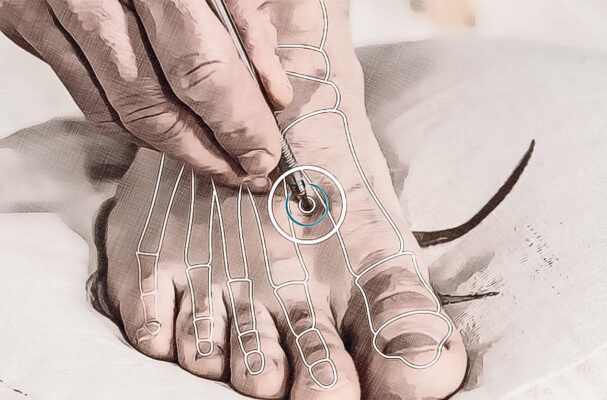
- The most important point for freeing the Liver Qi
- Releases Stagnation and gets energy flowing
- Eases headaches and eye problems
- Regulates emotions during frustration and irritability
- Relaxes tendons and muscles
Location: On the top of the foot, between the 1st and 2nd metatarsal bones, about two thumb-widths from the base of the toes, in the hollow.
Use:
Press firmly or massage in circles 2x daily for 2–3 minutes per side. During acute tension, also several times a day.
ACUPUNCTURE POINT: HK 06
Heart Circulation 06
Inner Pass — Nei Guan

- Opens the chest and releases Qi Stagnation
- Calms the mind and eases anxiety
- Helps with nausea and Stomach discomfort
- Regulates the Heart and relaxes the chest
- Classic point for emotional strain
Location: On the inner side of the forearm, three finger widths above the wrist crease, between the two tendons.
Use:
Press with medium pressure or massage in circles 2x daily for 2–3 minutes per side. Especially helpful during stress and emotional tension.
ACUPUNCTURE POINT: Gb 34
Gallbladder 34
Yang Mound Spring — Yang Ling Quan
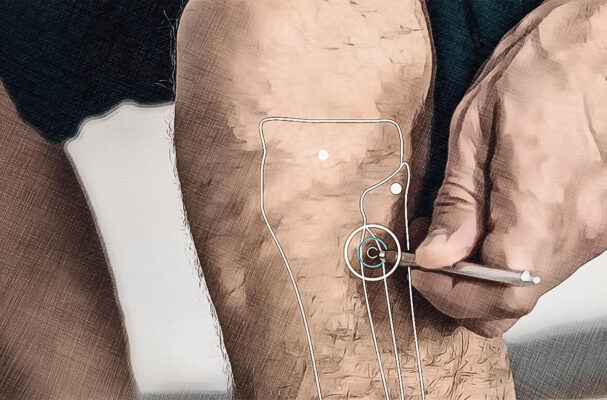
- Hui point of the tendons — relaxes and loosens
- Moves Liver and Gallbladder Qi
- Releases tension and stiffness
- Supports decisiveness
- Helps with headaches at the side of the head and migraines
Location: On the outer side of the lower leg, in the hollow in front of and below the head of the fibula (the small bony bump below the knee).
Use:
Press firmly or massage in circles 2x daily for 2–3 minutes per side. Especially effective together with Le 03.
Our app recommendation
Atemraum: your app for mindful breathing


Breathing is the foundation for physical and mental well-being — and in everyday life it is usually COMPLETELY underestimated. Yet hardly anything is as immediate: how we breathe shapes how we feel.
That's why we built Atemraum: an app with guided breathing exercises that you can take with you anywhere. Wolfgang put the exercises together — plus a 35-day course, quick help for the moment, and breath tests that let you see your progress.
A few minutes a day are enough. And if you use our personal guidance you already have Atemraum included.


You can try the app free for 7 days.
Qi Gong
Qi Gong is moving meditation — gentle, flowing exercises that harmonize your energy flow and release blockages. With Liver Qi Stagnation, these exercises help get the stagnant Qi moving again, release tension and ease emotional strain.
Practicing Qi Gong regularly (even just 10–15 minutes a day) has been shown to have positive effects on the flow of Qi, relaxation and emotional balance.
QI GONG: Exercise 1
Looking Backward
Releases tension, moves the Liver Qi

Especially helpful for:
- Neck and shoulder tension
- Headaches and migraines
- Inner tension and irritability
- Stiffness in the upper back
Effect:
This Wood element exercise specifically releases tension in the neck and shoulder area — exactly where stagnant Liver Qi often shows up. The gentle turning movement opens the area of the Gallbladder meridian and gets the Qi flowing again.
QI GONG: Exercise 2
Drawing the Bow
Opens the chest, frees stagnant Qi

Especially helpful for:
- Feeling of tightness in the chest
- Sighing and shallow breathing
- Suppressed emotions
- Tension between the shoulder blades
Effect:
This powerful exercise expands the chest and frees the Qi that often gets stuck in the upper burner in Liver Qi Stagnation. The stretching movement opens the flanks — the path of the Liver meridians — and creates space for the free flow of Qi.
QI GONG: Exercise 3
Regulating Qi
Harmonizes the flow of Qi throughout the body
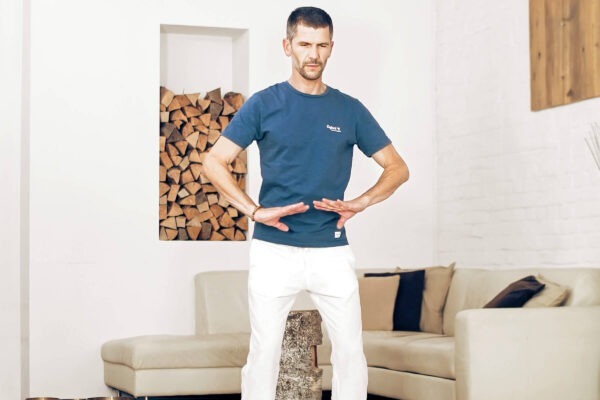
Especially helpful for:
- A general sense of imbalance
- Changing moods
- Energy blockages throughout the body
- stress and inner restlessness
Effect:
This balancing exercise harmonizes the flow of Qi in all the meridians. With Liver Qi Stagnation, the Qi is distributed unevenly — this exercise brings everything back into balance and calms the rising Liver Qi. Perfect for finishing an exercise sequence.
These Qi Gong exercises are chosen especially for releasing Liver Qi Stagnation. They open the chest, release tension, and get stagnant Qi moving again.
Between 1 and 3 a.m. is the Liver's time on the organ clock — but then you belong in bed asleep, because during these hours the Liver stores the Blood and restores itself. Practice in the early morning hours or early evening instead: that way you move the Liver Qi without taking away the rest it needs at night.
QI GONG:
When and how often?
In the morning (ideal):
- All 3 exercises as a sequence: approx. 15–20 min.
- Or just 1–2 exercises: approx. 5–10 min.
- Best before breakfast or as the sun rises
For acute tension:
- "Looking Backward" for neck tension
- "Drawing the Bow" for a feeling of tightness in the chest
- "Regulating Qi" for balance and calming
Consistency matters more than duration:
- It is better to exercise for 10 minutes every day than for 60 minutes once a week.
- After 2–3 weeks, you will notice your first changes
- After 2–3 months of regular practice: noticeably more calm
Pro tip: With Liver Qi Stagnation, movement is the most important remedy! Unlike with Deficiency states, you can practice a bit more dynamically here. Walks, swimming, or gentle yoga can also help get the Qi moving. Avoid performance pressure, though — it makes the Stagnation worse!
EVERY MONDAY LIVE: QI GONG WITH WOLFGANG
Every Monday at 6:00 p.m. we practice together live on YouTube. Among other things, Wolfgang guides you through a complete Qi Gong sequence — free of charge and suitable for all levels.
Why join live? ✓ Practicing together is motivating ✓ Wolfgang explains the exercises in detail ✓ You can ask questions in the live chat ✓ A fixed time gives your routine structure
More about Qi Gong LiveMeridian Yoga — The Yoga of TCM
Meridian Yoga combines yoga with Traditional Chinese Medicine. The result is a holistic movement concept for more health and energy.
The following exercises specifically activate the Liver meridian and the Gallbladder meridian. With Liver Qi Stagnation, energy builds up in these pathways — targeted stretches help restore the flow and release emotional as well as physical tension.
MERIDIAN YOGA: Exercise 1
Straddle Stretch for the Liver Meridian
Stretches the Liver meridian along the inner leg

Especially helpful for:
- Tension in the hip area and legs
- Menstrual discomfort and PMS
- Inner tension and irritability
- Digestive discomfort due to Qi congestion
Effect:
The straddle stretch deeply stretches the Liver meridian, which runs along the inner side of the legs. With Liver Qi Stagnation, tension often collects in this area. Through the stretch, the stagnant Qi can flow again — this releases not only physical tension but also emotional blockages.
MERIDIAN YOGA: Exercise 2
Angle Pose for the Gallbladder Meridian
Opens the side channels, releases tension in the flanks

Especially helpful for:
- Headaches at the sides of the head and migraines
- Tension in the neck and shoulder area
- Pain in the flanks and ribs
- Difficulty making decisions and frustration
Effect:
The Gallbladder meridian runs along the side of the body — exactly where pain and tension often show up with Liver Qi Stagnation. This exercise opens the side channels and allows the Qi to flow sideways. This eases typical symptoms such as flank pain, tension headaches and the feeling of being "stuck.".
Both exercises work specifically with the Wood element: The Liver stores the Blood and ensures the free flow of Qi, while the Gallbladder, as its partner organ, is responsible for decisiveness and courage. By activating these meridians, Stagnation is released on all levels — physical, emotional, and mental.
Especially effective: Hold each position for 3–5 breaths and breathe consciously into the stretched areas. Imagine tension and frustration flowing out of your body with every exhale.
MERIDIAN YOGA:
When and how often?
Best time:
- Between 1 and 3 a.m. is Liver time — a practical choice is early in the morning after getting up
- Or in the evening, to let go of the stress of the day
Duration:
- Hold each position for 3–5 breaths
- Complete sequence: 10–15 min.
- 3–5x per week for best results
Important:
- Practice without ambition — force makes the Stagnation worse
- Breathe deeply into your belly, not shallowly into your chest
- The stretch should be noticeable, but comfortable
Pro tip: Combine Meridian Yoga with Qi Gong exercises like "Parting the Clouds" or "Drawing the Bow." With Liver Qi Stagnation, movement is key — avoid sitting for long periods and build regular stretching breaks into your day.
Nutrition according to TCM
"Let food be your medicine" — this principle has held true in TCM for thousands of years. With Liver Qi Stagnation, the right diet is especially important for restoring the free flow of your energy.
The Liver belongs to the Wood Element and needs light, fresh, and gently moving foods. The sour flavor nourishes the Liver, bitter foods clear it, and mildly pungent ingredients get the Qi moving.
What you eat, HOW you eat, and WHEN you eat — all of this affects the free flow of your Liver Qi.
The golden rules for free-flowing Liver Qi
What does you good:
Leafy greens
- Spinach — relaxes the Liver
- Chard and salad greens
- Kale and bok choy
- Arugula and dandelion
Green is the color of the Wood element — green foods nourish the Liver!
Citrus fruits and sour foods
- Lemon — ideal as lemon water
- Grapefruit — moves the Qi
- Orange — relaxes and refreshes
- Apple cider vinegar — encourages flow
The sour flavor belongs to the Liver and nourishes its Blood — in moderation. Qi is moved by the mildly pungent: mint, dill, basil, lemon zest. Too much sour draws things together and tends to hold the stagnation in place.
Bitter and clearing foods
- Artichokes — the classic Liver cleanser
- Chicory and radicchio
- Dandelion leaves (as a salad or tea)
- Endive and frisée
Bitter foods clear the Liver and encourage the flow of bile
Fresh herbs and spices
- Mint — cools and moves the Qi
- Turmeric — anti-inflammatory
- Saffron — lifts the mood
- Basil, dill, cilantro
Fresh herbs bring lightness and movement
What you should avoid:
Alcohol
- Wine, beer, liquor
- Even "small amounts" burden the Liver
- Makes the free flow of Qi more difficult
- Promotes Liver Heat
Alcohol burdens the Liver directly and worsens Stagnation!
Fatty and fried foods
- Fried and Breaded Foods
- Heavy meat (fatty pork, lamb)
- Very oily foods
- Fast food and ready-made meals
Fat blocks the free flow of Qi!
Large amounts of coffee
- More than 1–2 cups a day
- Especially on an empty stomach
- Creates inner tension
- Increases emotional restlessness
Coffee heats the Liver and worsens Stagnation!
Late and heavy meals
- Meals after 8 pm
- Oversized portions
- Combinations that are hard to digest
- Eating under stress or time pressure
The Liver regenerates at night — eating late disrupts this process!
HOW YOU SHOULD EAT:
Light and fresh
- Steamed and blanched vegetables
- Light soups and broths
- Fresh salads as a side dish (not as a main meal)
- Lightly cooked foods instead of long-braised dishes
Calm and relaxed
- Don't eat standing up or in front of a screen
- Take time to chew
- Create a pleasant atmosphere
- Don't eat when you're stressed or angry
The Liver reacts strongly to emotions while eating!
Drinking the right way
- Green tea — moves Qi, cools slightly
- Peppermint tea — relaxes the Liver
- Warm water with lemon — ideal in the morning
- Chrysanthemum tea — clears Liver Heat
The right beverages support the free flow of Qi
IDEAL MENU FOR ONE DAY:
Breakfast (7–9 a.m.):
- Warm water with lemon juice
- Congee with fresh herbs or light porridge
- Along with it: Green Tea
Lunch (12–1 p.m.):
- Steamed fish with lemon
- Along with it: Spinach and rice
- Or: Artichoke-mint soup with whole grain bread
Dinner (6–7 p.m.):
- Green detox salad with lemon dressing
- Or: Light vegetable soup
- Along with it: Small portion of quinoa or millet
Snack if needed:
- Fresh grapefruit or orange
- Or: Handful of sprouts
- Or: Peppermint tea
The most important rule when changing your diet is:
Start with ONE step!
Don't change everything at once.
Our suggestion for getting started:
- Warm water with lemon in the morning — 2 weeks
- More green vegetables in every meal — 2 weeks
- Cut back on alcohol and coffee — 2 weeks
Step by step, you will notice how your Qi can flow freely again and you feel lighter.
Your Liver will thank you!
RECIPE: GREEN DETOX SALAD WITH LEMON DRESSING
Ingredients:
Serves 2
- 100 g mixed salad greens (arugula, lamb's lettuce, spinach)
- 1 handful of fresh sprouts (alfalfa, mung beans)
- 1/2 avocado
- 1 small cucumber
- Fresh mint and cilantro
- For the dressing:
- Juice of 1 lemon
- 3 tbsp olive oil
- 1 tsp honey, salt, pepper
Preparation:
- Wash the salad greens and spin them dry
- Cut the cucumber into thin slices
- Dice the avocado
- Arrange all the ingredients in a bowl
- Mix the dressing from lemon juice, oil, honey, salt, and pepper
- Pour over the salad and garnish with fresh herbs
- Sprinkle the sprouts on top
Effect:
Moves Liver Qi and relieves Stagnation
Cools mild Liver Heat
Refreshing and helps clear the head
As a light dinner or side dish — perfect for free-flowing Qi!
RECIPE: ARTICHOKE-MINT SOUP
Ingredients:
Serves 4
- 14 oz (400 g) artichoke hearts (fresh or from a jar)
- 1 small onion
- 2 cloves of garlic
- 2 tbsp olive oil
- 800 ml vegetable or chicken broth
- 1 handful of fresh mint
- Juice of 1/2 lemon
- Salt, pepper, a pinch of turmeric
Preparation:
- Finely chop the onion and garlic
- Heat the oil in a pot and sweat the onion and garlic
- Add the artichoke hearts and sweat briefly
- Pour in the broth, add turmeric
- Simmer for 20–25 min.
- Add the mint, blend until creamy
- Season to taste with lemon juice, salt, and pepper
Effect:
Clears and relieves the Liver
Promotes the flow of bile and digestion
Cools and relaxes in Liver Qi Stagnation
2–3 times per week — the TCM classic for a free-flowing Liver!
Breathing
Breathing is the bridge between body and mind. In TCM it is said: "The Lung governs the Qi" — according to this idea, conscious breathing lets you address your Qi flow directly and settle into deeper calm.
Breathe calmly and slowly: Deep belly breathing noticeably calms many people — the breath becomes deeper, the shoulders drop, and the mind becomes clearer. The good news: Even 5–10 minutes a day can make a difference for your well-being.
Recommended breathing techniques
ABDOMINAL BREATHING — The foundation for every breathing technique
Natural breathing
Abdominal breathing is the most natural and calming form of breathing. According to TCM teachings, with every breath you bring Qi into your center (Dantian).
Wolfgang shows you step by step, how to learn abdominal breathing correctly — lying down at first, and later sitting and standing too.
Duration: 9 minutes

4–7–8 BREATHING — Settle into calm
The calming breath for the evening
In 4–7–8 breathing, you inhale for 4 seconds, hold for 7 seconds, and exhale for 8 seconds. Many people find that this steady rhythm helps them wind down in the evening — ideal when your mind just won't switch off at night.
Ideal for the evening or whenever you want to settle down quickly.
Duration: 9 minutes
To the follow-along videoBOX BREATHING — For inner coherence
The pro breathing technique for focus and calm
Box Breathing (4 sec. in, 4 sec. hold, 4 sec. out, 4 sec. hold) combines activation and relaxation in perfect balance. This method is used by elite soldiers, athletes, and executives to stay calm and focused even in extremely stressful situations.
A steady 4–4–4–4 rhythm of activation and calm — many people experience it as clearing and centering.
Duration: 9 minutes
To the follow-along videoCOHERENT BREATHING — Brings body & mind into harmony
The calming breath for balance
In coherent breathing you breathe in for 5.5 seconds and out for 5.5 seconds. This rhythm brings your Heart and breathing into an even beat — a state known as "coherence." Many people use it as a regular breathing break in their day.
A nice side effect: Heart and breath settle into a calm, shared rhythm.
Duration: 14 minutes
To the follow-along video
COHERENT BREATHING Around the clock
Our 24/7 livestream for coherent breathing runs non-stop. You can tune in at any time and join right away.
Perfect for:
✓ Spontaneous breathing breaks during the day
✓ If you would like calm breathing guidance
✓ As background while you work
✓ For the evening and for winding down
✓ For regular daily practice
Relaxation
When your body is relaxed, things flow more easily. Ongoing tension keeps you in constant stress mode. With targeted relaxation techniques, you signal to your body that it can settle down and gather new strength.
Progressive Muscle Relaxation is one of the best-known relaxation methods and has been practiced for over 100 years. It helps you notice tension, actively let go, and reach a state of deep relaxation — whenever you like.
Recommended relaxation technique
PROGRESSIVE MUSCLE RELAXATION (PMR)
The classic relaxation method
Progressive Muscle Relaxation according to Jacobson is one of the best-known relaxation techniques worldwide. By deliberately tensing and releasing individual muscle groups, you learn to consciously notice tension and let it go again.
This is how it feels:
Step by step, the body becomes heavier and calmer, and the breath more even. Many people use it as a regular part of their evening routine to help them fall asleep well.
Maria guides you step by step through the complete exercise — perfect for beginners and advanced practitioners.
Duration: 23 minutes of complete instruction
To the guided PMRMeditation
Meditation calms the mind — and a calm mind is good for the whole person. In TCM, it is said that every emotion touches a particular organ. Through regular meditation, you learn to step out of circling thoughts, find emotional balance, and strengthen your inner center.
Just 10 minutes a day can do a lot for your inner calm. Many people find that it makes their everyday life feel more relaxed and clearer.
Recommended meditations
GUIDED MEDITATIONS FOR EVERY DAY
Your personal meditation library
We have put together a complete playlist with over 60 guided meditations, breathing exercises, and relaxation techniques for you — from short 5-minute meditations for in between to deep 30-minute sessions for intensive practice.
In the playlist you will find:
- Morning meditations for a mindful start to the day
- Sleep meditations for restful sleep
- Breathing meditations for inner calm
- Meditations for calm moments during stress and rumination
- TCM standing meditations for all 5 Elements
- Body scan and body journeys
- Calming meditations for body and mind
- Special breathing techniques (4-7-8, coherent breathing, bee breath)
Perfect for beginners and advanced practitioners. Choose the meditation that fits your time, time of day, and needs.
To the meditation playlist"The Liver is the General of the Army."
"It ensures the free flow of Qi in all directions, keeps the emotions in balance and plans the body's actions. When the Liver is free, life flows."
— From the HUANG DI NEI JING
(The Yellow Emperor's Classic of Internal Medicine)
More tips for your daily life
Alongside the classic TCM treatment methods there are many small everyday habits that can get your Liver Qi flowing again. The Liver loves freedom and movement — with the right habits, you can release stagnation and support the free flow of Qi.
Movement — the best remedy for Stagnation
Regular exercise
Movement is essential in Liver Qi Stagnation:
- At least 30 min. of movement every day
- Walks in nature — the Wood element loves trees and greenery
- Sports you enjoy — joy moves the Qi
- Dancing, swimming, cycling — anything that gets your body flowing
- Regularity matters more than intensity
What you should avoid
Not every kind of movement is helpful:
- Exercising too intensely to the point of exhaustion
- Grim, driven training "with anger in your gut"
- Competitive sports with a lot of pressure
- Exercising when you feel very tired or weak
- Movement should free you up, not add more stress
Movement in everyday life
Small bouts of movement can work wonders:
- Take the stairs instead of the elevator
- Take short stretching breaks at your desk
- Go for a walk during your lunch break
- Stand up and walk around while on the phone
Emotional expression — let your feelings flow
Don't suppress your feelings
Suppressed emotions intensify the Stagnation:
- Allow yourself to feel your feelings — even the unpleasant ones
- Seek out conversations with people you trust
- Journaling or keeping a diary helps you sort out your thoughts
- Therapeutic support if needed
- Crying is allowed — it releases Stagnation
Creative activities
Creativity belongs to the Wood element:
- Painting, drawing, crafting
- Making or listening to music
- Writing — stories, poems, letters
- Gardening — connecting with the Wood element
- Every form of creative expression frees the Liver Qi
Dealing with anger and frustration
Constructive expression instead of explosion:
- Physical expression: exercise, punching a pillow, stomping
- Sing or shout out loud (in the car, in the woods)
- Write down what annoys you — then tear it up
- Deep breathing with a long exhale
- Use anger as energy — for positive change
Stress management — counteracting the pressure
Setting boundaries
The Liver needs freedom:
- Learn to say no — without a guilty conscience
- Set priorities — not everything is equally important
- Delegate where possible
- Question your perfectionism
- Take your own needs seriously
Regular breaks
Breaks interrupt tension:
- A short break every 90 minutes
- During your break: open a window, get some fresh air
- Short stretching exercises or eye relaxation
- Consciously switch off — no phone during your break
Relaxation techniques
Regular relaxation releases stagnation:
- Meditation — even just 5–10 minutes a day can help
- Deep belly breathing — especially a long exhale
- Progressive muscle relaxation
- A warm bath in the evening
- Mindfulness exercises in everyday life
Respecting the Liver time
The sleep–wake rhythm
The Liver regenerates between 1 and 3 a.m.:
- Go to bed before 11 p.m. - so that you sleep soundly at 1 a.m.
- 7–8 hours of sleep is ideal
- Stick to a regular bedtime
- If you have trouble sleeping: avoid screens for 1 hour before bed
- Darkness in the bedroom — the Liver needs rest
Making the most of your evening
A calm evening supports the Liver:
- No alcohol in the evening — it puts additional strain on the Liver
- Don't fall asleep angry — better to talk it out or write it down beforehand
- No heavy work or upsetting conversations late in the evening
- Soft music or a book instead of action movies
- Gentle stretching exercises before bed
Using the Energy of Spring
Spring is the season of the Liver:
- Pay special attention to your Liver in spring
- Get up early — with the sun
- Get outside in nature — and take in the new green
- Light meals after the winter
- A time for fresh starts and new plans
Important to know
Resolving Liver Qi Stagnation takes time and patience. Getting the Qi flowing again is like clearing a traffic jam — it happens step by step. Pay attention to your body's signals: feelings of tension, irritability, and digestive troubles show that you need more movement, expression, and relaxation. With consistent care, you will feel the tension ease and your joy in life return.
When to see a doctor? If you have persistent, severe symptoms, suspect a depressive mood, have severe abdominal pain, or your symptoms do not get better despite self-care, you should see a doctor. Professional support is also important if you have strong mood swings or if your symptoms significantly limit you in daily life. TCM and Western medicine complement each other ideally here.
For the best possible course of treatment
TCM is not a quick fix for symptoms, but a holistic path to healing. You will get the best results when you consistently build the treatment into your daily life and give your body time to regenerate.
Integrating it into your daily life
Start with ONE step
Don't try to change everything at once! That is overwhelming and
usually leads to giving up. Instead:
- Weeks 1–2: Daily movement (30 min. walk or light exercise) — and start your TCM herbal blend
- Weeks 3–4: acupressure on Le 03 every day, morning and evening
- Weeks 5–6: Qi Gong daily for 10–15 min.
- From week 7 on: Check whether you still need your herbal blend at all — with mild to moderate severity, it has usually already been stopped by then. It ends with the signs, not with the weekly schedule
- From week 9: Add further methods as needed
Realistic expectations
After 2–3 weeks: First improvements noticeable
- Less irritability
- Better Digestion
- Less feeling of tension
After 6–8 weeks: Clear improvements
- Emotional balance
- Fewer headaches
- Better Sleep
After 1–3 months: Lasting healing
- Qi flows freely again
- Body and mind feel light and relaxed
- More calm and inner peace
TCM vs. Western Medicine
TCM and Western medicine do not exclude each other — they complement each other!
When Western medicine is important:
- For severe depression or anxiety
- For unexplained severe pain
- If you suspect a serious liver disease
- For precise diagnoses (liver values, ultrasound)
Where TCM has its strengths:
- For functional disorders caused by stress and emotional strain
- For chronic tension headaches and muscle tension
- For lasting stress relief and emotional balance
- For PMS and stress-related digestive complaints
Ideal: Combine both systems! Have your liver values checked regularly and use TCM for a lasting flow of Qi and to strengthen your body's self-healing powers.
Important: Never stop taking prescribed medications on your own!
Talk to your doctor when you begin TCM treatment.
Do you have questions?

Wolfgang from meine-tcm.com
TCM is a broad field. Much of it sounds unfamiliar at first, and the real question often comes up only once you start trying some of it out in everyday life.
That's exactly what I'm here for. Write to me — no matter whether your question is big or small, whether it relates to this page or to something else entirely from TCM. I read every message myself and will get back to you. Calmly, clearly, and without a sales pitch.
P.S. There are no silly questions. So write to me.
Ask your questionEvery step counts
Your body strives for balance — you just need to create the right conditions for it.
Remember:
👣 Every small step counts
You don't have to be perfect. Even one warm meal a day is better than none. Even 5 minutes of Qi Gong is better than no movement at all.
⏳ Patience pays off
Your body took years to get into this state. Give it time to find its balance again. Change takes time, but it comes.
🎯 Focus on what you CAN do
Don't concentrate on everything you're doing "wrong." Focus on every positive step you take.
💚 Be good to yourself
There's no such thing as perfection. You're allowed to have a bad day now and then. Tomorrow is a new day, and you can pick up where you left off.
🤝 You are not alone
Thousands of people are walking this path with you. For over 2,000 years, TCM has been guiding people like you on their journey toward greater well-being.
Track your progress

To track your progress, we recommend repeating the TCM analysis after about 3 months.
Why is this useful?
- You see how your pattern has changed
- You can adjust your support as needed
- It motivates you to keep going
- You recognize which measures suit you best
⚠️ Important: Your answers from today are stored in encrypted form in a code that you received by e-mail. ONLY with this code can you follow your progress later on. Keep the e-mail in a safe place!
🔒 YOUR DATA IS SAFE
We store:
✓ Only your email for the reminder
✓ The date for sending
We do NOT store:
✗ Your analysis results
✗ Your personal data
✗ The link between e-mail and pattern
All analysis data is completely anonymous and is not linked to your e-mail address.

Newsletter
Stay up to date with our newsletter. Along with helpful tips and tricks for your training and your everyday life, you won't miss any of our new releases.