







The Yin Summer Drink — The Secret of the Ancient Masters
THE COOLING SUMMER ELIXIR OF TCM
Nourish Instead of Cool — The Yin Summer Drink of the Ancient Masters
🔥 The Legend of the Red Bird
In ancient China, the sages divided the heavens among four guardians. The Red Bird—Zhū Què—watched over summer and the south; a being of fire whose feathers glowed like embers in the midday sun.
As long as he circled over the land, the fields ripened and everything was in full bloom.
But one summer, the fire refused to die down. The Red Bird flew higher and shone more brightly, and the brighter it burned, the more it consumed itself.
He sought relief from the heat at high altitudes, where he thought he might find it—in icy mountain lakes, in rushing rivers, in the cold night rain. But every drop of water sizzled against his feathers, turning to steam, and with every struggle, he burned out even faster.
When his strength began to fail, he sank to the ground, exhausted.
There, at the very bottom among the withered vines, lay a heavy fruit—green on the outside like a shadow, red on the inside like his own feathers. Its coolness lay deep within its flesh, bound up with sweetness and water, in a place where no ice could ever have reached it.
The bird opened its beak and drank slowly. Its fire did not go out—it regained its strength and burned brightly once more.
And so the Guardian of Summer learned what the battle high above had never shown him: The coolness that saves us does not come upon us from the outside. It grows from within, where the fire dwells.
🍉 What is this elixir?
Note: Whenever this post refers to the „heart,“ „liver,“ „spleen,“ „lungs,“ „stomach,“ or „kidneys,“ it always means the Functional Circuits in Traditional Chinese Medicine—energetic systems, not anatomical organs.
The Fruit of Legend It really does exist. In ancient China, it was called Xī Guā 西瓜 — the watermelon: green on the outside like shade, red on the inside like fire, and cool enough at its core to soothe the summer heat.
So what the Red Bird found is no fairy tale. It’s a nourishing summer drink based on a single principle—nourishing the Yin before summer depletes it.
In TCM, watermelon is considered the most potent Yin-nourishing summer food of all. The ancient masters called it the natural Bái Hǔ Tāng i, in reference to a classic "cooling" recipe from TCM.
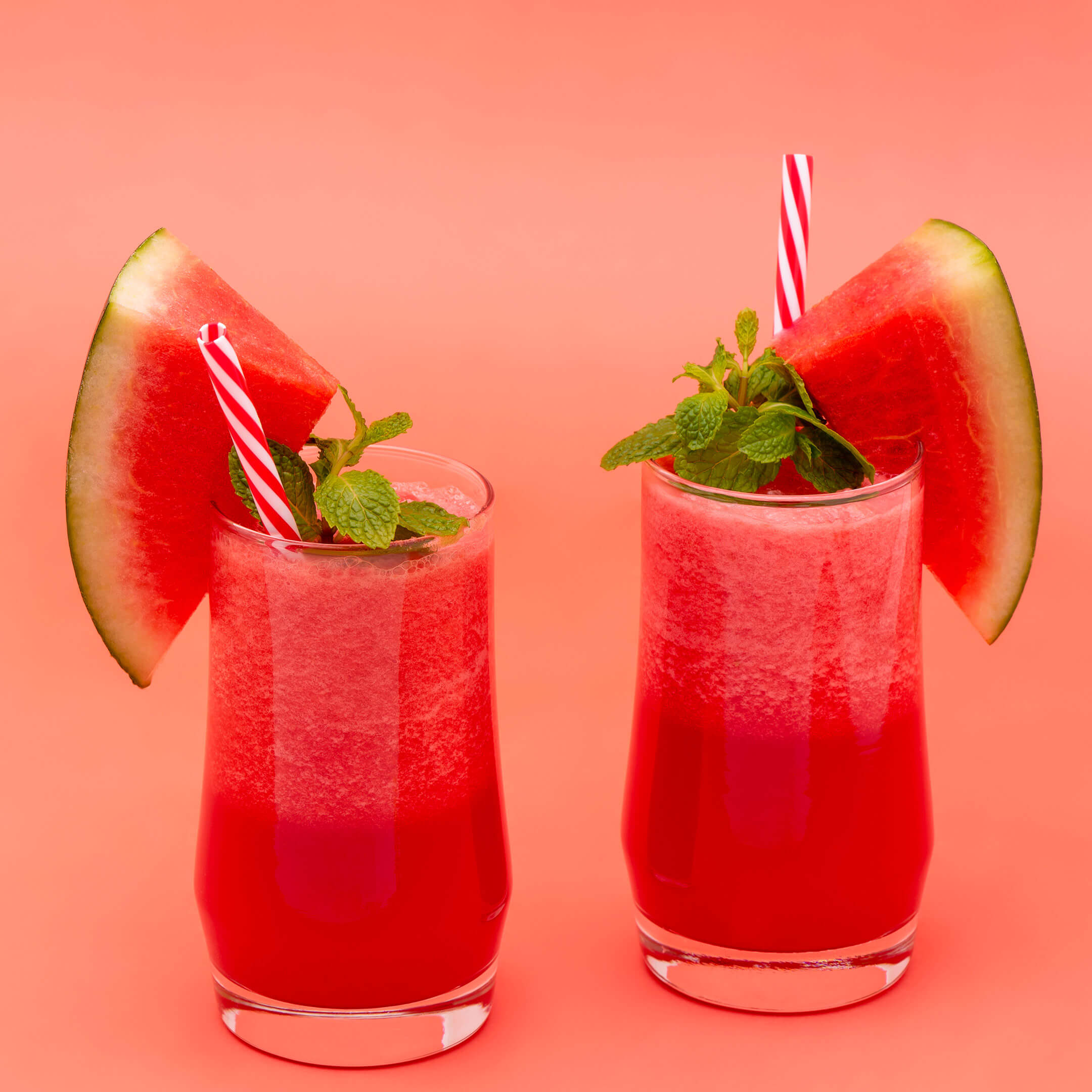
Mint — Bò Hé 薄荷 — opens the body’s surface and directs stagnant heat outward. Lime gathers the Yin. Sea salt reaches deep within. Together, these four ingredients restore to the body what summer takes away.
☀️ Why in the summer, of all times?
In TCM Sweat is the sap of the heart—a substance, not just water. Every drop that summer demands takes a piece of the heart’s yin. You don’t feel it right away. You feel it in the afternoon, when your circulation slows; at night, when sleep eludes you; and in the morning, when your body wakes up tired even though it has been resting for eight hours.
Those who replenish only water restore the volume but not the substance. The Jade Fountain Within a person, Yùquán—the source of Yin—remains empty.
Between 11 a.m. and 1 p.m. is “Heart Time” on the TCM organ clock—the phase when the heart works most intensely and Yin is under the greatest strain. That is precisely when this elixir is most effective. As a break. As a form of self-care. As a response to the daily demands of summer.
📋 The Recipe
Ingredients (for 1 portion):
- 300 g fresh watermelon (peeled, cut into pieces)
- 8–10 fresh mint leaves
- Juice of half a lime
- 1 pinch of sea salt
- Optional: 200 ml of lukewarm water (for a less concentrated version)
Preparation:
1. Prepare the watermelon: Cut into rough pieces. If you include the white rind, it enhances the cooling effect according to TCM—in Chinese nutrition, it is considered Xī Guā Cuì Yī, a cooling ingredient in its own right for hot days.
2. Mixing: Place the watermelon, mint leaves, lime juice, and sea salt in a blender. Blend briefly—not too finely—so that the fibers remain intact and your body can fully absorb the nutrients.
3. Check the temperature: The drink should be at room temperature or slightly chilled, but never ice-cold. Ice-cold drinks shock the digestive system and force the body to generate heat to counteract the cold. What seems like a cooling effect actually costs the body energy.
4. drink: Slowly, mindfully, toward calm. The body needs time to absorb the nutrients. This drink isn't a gas station—it's a ritual.
🌿 The effect according to TCM
Each ingredient Each component in this elixir has a specific role. Together, they form a chain that extends from the surface to the depths.
Watermelon (Xī Guā 西瓜) It begins to take effect: thermally cooling, it acts on the heart, stomach, and bladder. It dispels summer heat, nourishes body fluids, and quenches thirst at the level of substance. The white bark—Xī Guā Cuì Yī—goes even deeper: It clears heat more directly than the red pulp and is used independently in TCM.
Mint (Bò Hé 薄荷) takes on the second task: It opens the body’s surface and directs the accumulated heat outward. While the watermelon nourishes, the mint creates space by moving the liver qi and releasing the tension that causes overheating in the summer.
lime maintains what the other two have built up: Its acidity gathers the Yin, helps the body retain fluids instead of losing them, and protects what sweat takes away.
Sea salt Finally, it reaches its source: In TCM, salt directs the Qi downward—straight to the kidneys, to the Jade Spring. It is the mineral that completes the cycle of the four ingredients.
🔬 The Nutritional Background
As for TCM This concept, described as a “yin deficiency,” makes perfect sense from a nutritional perspective as well. The four ingredients primarily provide water and minerals—exactly what the body loses through sweat on hot days.
watermelon It consists of about 92 percent water and contains potassium—a mineral that is lost through sweat.
Mint Contains menthol, which creates a cooling sensation on the oral mucosa without actually lowering body temperature—pleasantly refreshing, without the discomfort associated with ice-cold drinks.
lime provides vitamin C and gives the drink its fresh tartness.
Sea salt provides sodium—another mineral that is lost through sweat. That's why you need that small pinch: it turns the water into more than just a liquid.
✓ Practical tips
✓ Temperature is everything: Never serve it ice-cold. Serve it at room temperature or, at most, slightly chilled—take it out of the refrigerator 15 minutes before drinking. You’ll really notice the difference in how it affects you.
✓ Date: Most effective between 11 a.m. and 2 p.m., during the "heart time." Ideal as an accompaniment to your midday rest, not just as a side activity at your desk.
✓ Using the peel: Including the white bark in the preparation significantly enhances the heat-clearing effect. It has a neutral flavor and is barely noticeable in the finished beverage.
✓ Mint That's Always Fresh: Dried mint loses most of its Bò–Hé effect. Pick fresh leaves just before preparing the drink.
✓ Don't leave out the salt: That pinch of salt is the key difference between a soft drink and a true Yin elixir. Small in quantity—big in effect.
Who is this elixir perfect for?
✅ Ideal for:
- Circulatory collapse in the afternoon
- Sleep problems and restlessness on hot nights
- Persistent thirst despite drinking plenty of fluids
- Summer Fatigue and an Unexplained Lack of Motivation
- Night sweats or shallow, fragmented sleep
- Dry Mouth and Dry Skin in the Summer
⚠️ Be careful with:
- Pronounced Cold Constitution — If you feel cold in the summer, are prone to diarrhea, or have cold hands, you should cut back on watermelon and drink more lukewarm water
- Weak spleen with loose stools — the cooling effect of watermelon can put a strain on the middle jiao
- Diabetes — Watermelon has a high glycemic index. Eat smaller portions, with less flesh and more white rind, and add mint. If in doubt, consult your doctor.
The recommended intake
Acute in extreme heat: A glass of freshly prepared wine, between 11 a.m. and 2 p.m., during lunch break. Not in a hurry—take your time.
Staying Healthy This Summer: One glass a day throughout the summer months. Most people notice a difference after 5–7 days—first in their sleep, then in their afternoon energy levels.
As part of the evening ritual: A cup of lukewarm mint tea, 90 minutes before bedtime. It calms the heart-fire and prepares the body for true rest.
🌱 Nourishing More Yin — The Summer Treasure Chest
Watermelon is the star, But it’s not the only one. In TCM, there are a whole range of foods that nourish yin, replenish body fluids, and gently clear heat. If you combine the watermelon-mint drink with one or two of these classics, you’ll build up a real reserve over the summer.
- 🥒 Cucumber — One of the most cooling foods in TCM. Enjoy it raw, sliced, in salads, or with a little salt as a snack. It clears heat, replenishes body fluids, and has a mild diuretic effect.
- 🍐 Pear — The classic source of yin for the lungs. Eat it raw in thin slices for breakfast or warm and steamed in the evening. It moistens dry mucous membranes and hydrates from within.
- 🌰 Almonds — Sweet and neutral. They nourish lung yin and are the perfect summer snack. A small handful a day is enough. If you’re sensitive, soak them overnight.
- 🫐 Berries — Blueberries, blackberries, raspberries. Sweet and tart, they nourish yin and blood. A small bowl for breakfast or as an afternoon snack.
- 🌾 Pearl barley or rice — If you're looking for a side dish to go with summer meals, choose pearl barley or white rice. Both gently cool the body and help clear excess moisture. A warm bowl of rice for lunch is more effective than a cold salad — even if that sounds counterintuitive.
- 🥥 Coconut water — The natural electrolyte drink. Rich in minerals, gently refreshing, ideal after exercise or a hot day. Drink it straight or mix it with the watermelon-mint drink.
Pro Tip: If you want to keep it simple, choose one or two of these foods each day in addition to the watermelon-mint drink. No program, no diet—just small choices that add up over the summer.
💫 The deeper wisdom
TCM says: „The wise person drinks before they get thirsty. They cool off before they get hot.“
This elixir is not medicine in the Western sense. It is a reminder that the body does not want to be fought against in the summer. It wants to be nourished. The watermelon, heavy and cool in the shade. The mint that smells like rain. The salt that reaches deep within.
The Jade Fountain empties a little more every day, every summer. The question isn't whether the fire will come. It always does. The question is whether you're prepared.
An invitation
Try it at lunchtime today. Not as an experiment—but as a decision.
Buy a watermelon. Pick a few mint leaves. Squeeze half a lime. Add a pinch of sea salt.
Drink it slowly. During your downtime. Without a screen.
Pay attention to what your body is telling you—not right away, but after three days. After a week. The Yin remembers.
Note: If you have any existing medical conditions or are taking medication, please consult a doctor or TCM therapist.
Yin is not destroyed by heat.
It dies from neglect.
TCM Principle
More interesting tips & articles

TCM tip of the week
Your nose remembers things faster than you do
You're walking home in the late afternoon; the light is already slanting across the street, and it smells like wet leaves…
Oct
TCM tip of the week
No sooner is it done than you're flat on your back
You hang in there for weeks, and as soon as the move or project is over, your throat starts to feel scratchy. Why do your defenses fail at this very moment…
Oct


Sep


Our most popular products




Back pain
So, dear friends, this was another very informative newsletter—one that’s also fun to read, full of insight, and easy for everyone to understand. Hats off to you for all your hard work! :-)) The survey items that apply to me are 1, 4, and 6. Ever since my thyroid surgery, I haven’t really been sweating much anymore; I get overheated in the summer and don’t feel well. Plus, I’m not allowed to consume iodine (would rock salt work?). I’d actually crossed watermelon off my shopping list because—whenever I ate it, maybe because it was too cold or I ate it too quickly—I’d get stomach and intestinal bloating. But this recipe is tempting me again, since I really love the taste, even though I have type 2 diabetes, among other things. (Because of my single kidney and proteinuria, I have to take blood pressure medication—a very low dose—and something for my diabetes.) Should I ask my specialist? Summer is long, so I want to give it a try. Or do you see it differently? Also regarding the W27 intake.
As for combining the Weidinger day and night formulas, I have to say that I actually sleep well at night and don’t sweat—or only rarely—so the day formula would probably be best for me? Maybe you could give me some feedback? That would be great. Have a wonderful vacation, everyone, and thanks for everything.
Dear Elvira, thank you so much for your detailed and very kind comment—we really appreciate it!
You've really put some thought into this, and that's exactly why I want to give you an honest and thoughtful answer.
My answer to your question, „Should I ask a specialist?“ is a resounding yes—and that’s not just a cliché; given your situation, it’s the only responsible course of action.
A single kidney with proteinuria, plus type 2 diabetes and your medications: These are exactly the issues where general summer tips need to be addressed on an individual basis. I'd be happy to explain why.
Regarding salt and your question about rock salt: Rock salt and unprocessed salt contain no added iodine, unlike iodized table salt—so in terms of iodine, that would be the better choice. But in your case, the more important issue isn’t iodine at all, but salt itself: With a single kidney, proteinuria, and blood pressure medication, you shouldn’t increase your sodium intake without consulting your doctor first.
On top of that: The morning pinch of salt is intended to replace what you lose through heavy sweating. You’ve hardly been sweating since your surgery—so you’re not losing that sodium at all, and your issue is more about heat buildup than salt loss. For you, the salt recommendation is therefore probably unnecessary and should be discussed with your doctor anyway.
About the watermelon: I totally understand why the recipe is tempting you again—it's delicious. But there are two things you should figure out first.
—First, watermelon contains quite a bit of potassium, and if you have only one kidney, that’s something only your doctor can assess for you.
—Second, despite its high water content, it affects blood sugar levels—so if you have type 2 diabetes, consume it with caution and preferably in small amounts. And regarding your previous bloating: This suggests that your „stomach“ is sensitive to foods that are too cold or eaten too quickly. If your doctor gives you the green light, it helps to enjoy the melon at room temperature rather than ice-cold, in small amounts, slowly, and not on an empty stomach.
Regarding W27 and the day/night question: Your reasoning is logical in itself—since you sleep well at night and hardly sweat, the night formula (W25) targets symptoms you don’t have, while W27 is the day formula designed to support Yin and blood. So far, your thinking is completely correct.
BUT when it comes to W27 in particular, there’s one specific point we can’t overlook: The blend contains, among other things, licorice (Gan Cao). When taken regularly, licorice can raise blood pressure and disrupt mineral balance—it promotes sodium and water retention and lowers potassium levels. This is particularly significant in your specific situation: high blood pressure managed with medication and having only one kidney.
That's why W27 isn't something you should just try on your own; it's something your doctor should evaluate first—ideally taking your medications into account and, if possible, in consultation with your pharmacy. Please do not take it without first consulting your doctor.
In short: Your general approach—staying cool, preserving your yin, and avoiding heat—suits you well. As for the specific steps (salt, watermelon, herbs), your instinct to ask a specialist is exactly the right one.
Take this path, and you'll be able to explore what's good for you in peace and safety.
Have a great time, take care of yourself—and thank you for sharing so openly with us.
Warm regards, Wolfgang & Team 💝