






Husten mit Auswurf aus Sicht der chinesischen Medizin
... Acupuncture points against your cough


Self-Acupressure with the Akupen


Wolfgang's Qi Gong Tips
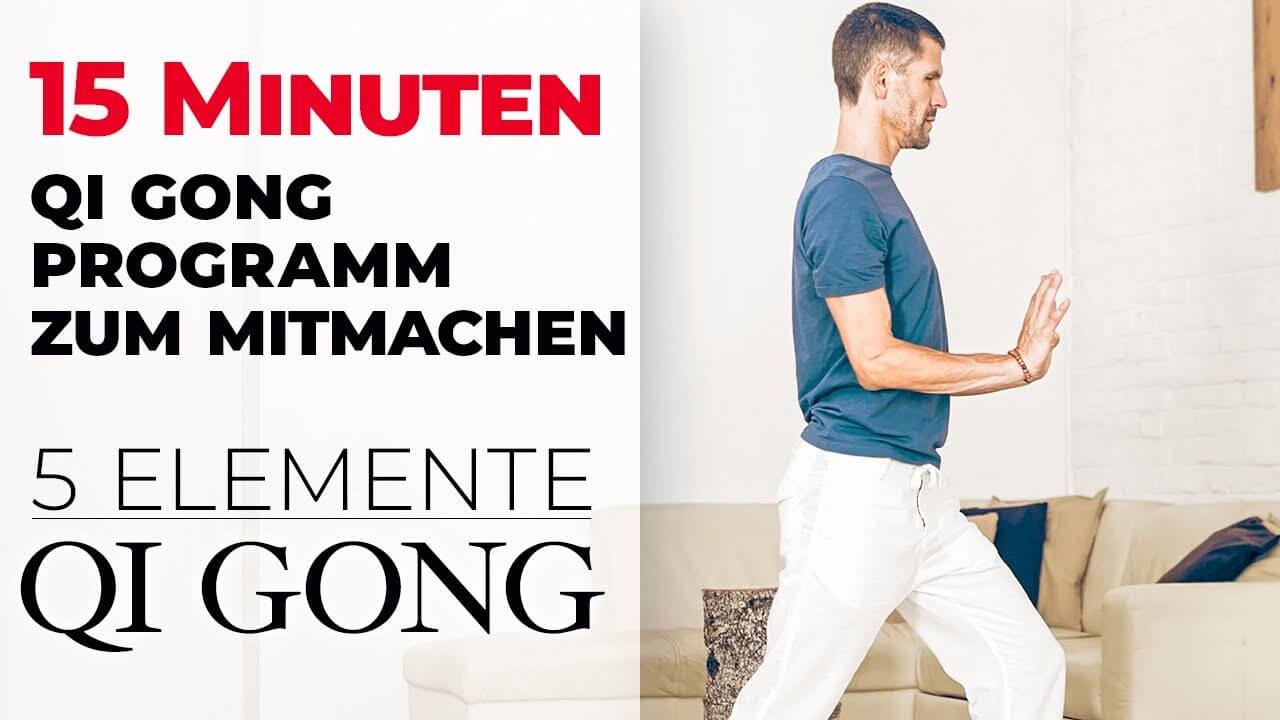
If you do Qi Gong for preventive reasons, it is quite possible to achieve good results with 15 minutes of daily practice. If you have a complaint, it is recommended to practice 2 times 15 minutes daily or 30 minutes at a time daily.
Basically, it is better to do 6 times 15 minutes Qi Gong, than once 1.5 hours. Therefore, I show you here a short variant of the 5 elements Qi Gong.

TCM background information

Tue 4 "United Valleys" - Hegu
Master point for pain in the head and face, especially for acne
- Location:
In the middle of the 2nd metacarpal on the radial side in a depression.
- Traditionally classified as:
Pain especially in the head area, neck pain, stiff neck, headaches, colds, flu-like infection, sore throat, cough, migraine, stuffy nose, dizziness, hay fever, soothing effect for all intestinal complaints, distant point for arm and shoulder pain.
Comment:
This item is included in the Pregnancy prohibited, as it is used to speed up the birth process.
It is often used as a remote point in the treatment of facial, oral, nasal and eye problems.
The combination LI 04 with Lv 03 is called "4 gates" and is very well known, because it is Wind from the head area dispels pain and calms the mind.
Di 04 also has a strong relation to the psyche and can therefore be needled to calm the mind and anxiety. In this case, the combination Di04 +Le03+LG24 is used.
Combine Di04 with another very important item, Ma36, and you have a brilliant combination to strengthen the immune system.
LI 11 "Curved pond" - Quchi
Toning point of the colon meridian
- Location:
With the elbow angled at 90 degrees, a crease is created between the upper arm and the forearm. At the end of the fold towards the elbow is the point in depth.
- Traditionally classified as:
High blood pressure, diarrhea, strengthen immune system, menstrual problems, colds, shoulder problems, tennis elbow, skin diseases.
Comment:
This item can be used similarly to Di04, the big difference being that Di04 specifically has a reference to the facial area that Di11 does not.
Lu 10 "Fish border"- Yuji
Main point to dissolve heat in the lungs
- Location:
On the wrist crease in a depression next to the tendon of the pollicis longus muscle.
- Traditionally classified as:
Cough, breathing problems, wrist problems, throat problems, sore throat.
Comment:
This point is mainly used in TCM to release heat in the lungs. Some call it the "anti-hangover point" because it can relieve the suffering of a night of partying with too much alcohol. This effect can be attributed to the heat-releasing effect that this point has. Alcohol generates heat in the body, especially high-proof alcohol.
GV 16 "Wind Palace" - Fengfu
Releases blockages in the neck area caused by wind
- Location:
1 cun within the hairline on the midline of the body, just below the occiput.
- Traditionally classified as:
Headaches, stiff neck, nosebleeds, dizziness, colds,
menstrual disorders, thyroid problems, migraine, stimulation of the brain.
Comment:
This point belongs to the wind points with GB20. These are the points that are considered in TCM, as the most vulnerable points for external wind. Therefore, these points must be specially protected in windy weather, especially if it is also cold. Otherwise, you run the risk of getting a stiff neck due to wind-chill. A scarf can help to prevent this.
Gb 20 "Wind Pond" - Fengchi
One of the main points for eye discomfort and ear problems.
- Location:
In the depression between the sternocleidomastoid muscle and the trapezius muscle. On a level with LG16
- Traditionally classified as:
Neck pain, neck stiffness (due to drafts), headaches, dizziness, fear of heights, blurred vision, tinnitus and hearing loss, memory impairment.
Comment:
This is an important point in order to achieve inner and outer Wind to eliminate. Especially when it manifests itself in neck stiffness and headaches. In combination with Lu07, the Wind-Cold eliminates. To eliminate Wind-Heat, GB20 is combined with Di04 and 3E05.
It is an important point because it forms the transition from the spine to the brain. This point (occipital area) should be free of blockages so that the brain is optimally supplied and can work smoothly.

The word Qi Gong consists of 2 syllables - Qi and Gong. The Chinese term "Qi" can be translated for us most likely by "life energy". But it contains more than this. It also means breath and air. In Chinese medicine, Qi is considered to be the invigorating force that flows through all living things. However, Qi is not only inside the body of a living being, but also outside. Qi also shows itself to us in nature. Thus animals, flowers and trees are flowed through by Qi. Qi is the living force that is inherent in everything and that makes life possible.
The Japanese call this force "Ki". In India it is called "Prana". It always means the same thing - the power and energy that is inherent in everything and keeps us alive. In Chinese medicine, health is only possible when the Qi in our body is pure, not polluted and can flow freely.
Due to bad living habits, in the course of time, energy blockages can occur in the body system and as a result, diseases can manifest, which can be physical or psychological in nature. Generally speaking, we can say that a living person has Qi throughout the body.
The word "gong means roughly "body work" or "success through perseverance and practice". Therefore Qi Gong is called "Work with the life energy". We learn to improve the flow and distribution of Qi in our body through movement and concentration to strengthen our health and bring body and mind into harmony. At the same time we learn to stand correctly, between heaven and earth. This significantly improves posture and many aches and pains disappear on their own.
Qi Gong is a holistic healing system with a long tradition, which has been continuously developed until today. It includes health-promoting postures, movement, self-massage, breathing techniques and meditation. Through these various exercise methods, Qi is supposed to be collected and stored in the body, like in a reservoir. The goal is to expel the impure Qi and absorb fresh pure Qi.
Qi Gong is not a medicine that is prescribed for a limited time, but rather it should be practiced daily. In this regard, 20 minutes of daily practice is enough to improve health and one's well-being to a great extent.
Anyone can practice qigong. There are exercises for every age and every state of health. The exercises can be practiced standing, sitting, lying down or walking. So even physically challenged people can easily practice Qi Gong and improve your health in a sustainable way.
You are interested in this topic?
Then you can find even more information about it here.
You want to learn Qi Gong - easily from home?
With our modern Qi Gong online courses this is easily possible!