









7-Day Reset to Combat Sensory Overload
One small action a day — based on neuroscience, behavioral research, and Traditional Chinese Medicine
The CONTROL doesn't start with sacrifice—but with a WAIT A SECOND.
🧠 What You Should Know About Your Reward System
When you scroll, something specific happens in your brain—and it happens in three stages.
Phase I — Anticipation (dopamine levels rise)
Your brain releases dopamine, before the reward comes. Dopamine isn’t the hormone of happiness, but of desire. Every time you unlock your phone, open a notification, or scroll through your feed, dopamine flows. It doesn’t say, „That was good“—it says: „Keep going, more, one more.“
Phase II — Reward (sometimes)
Algorithms are designed so that the real reward—an interesting video, a nice message—comes at irregular intervals. This is exactly the principle behind a slot machine and the most addictive reward structure known to behavioral science. Sometimes you get nothing, sometimes you get something—and it’s precisely this unpredictability that keeps you hooked.
Phase III — Deficit (the hidden problem)
People who chronically overstimulate the system lower their baseline level. Researchers refer to this condition as Dopamine deficiency. Everyday activities—a walk, a book, a conversation—suddenly feel dull. Not because they are any less valuable, but because the brain has lost its sensitivity to these small pleasures.
Traditional Chinese Medicine has described this same pattern for centuries. It calls it empty fire: one Yang, that blazes, but without Yin and blood that anchor it. An excitement devoid of nourishing substance. The old masters said: The Shen, The spirit within the heart is distracted by stimuli, not nourished by them.
The good news: The dopamine system is plastic. If you provide the right stimuli—small, genuine, and regular—you give your brain the chance to restore its sensitivity to genuine pleasures. It doesn’t happen overnight, but step by step. That’s exactly what this reset is designed to do.
But knowledge alone doesn't change anything—otherwise, the world would be full of well-balanced people. What really matters, says behavioral scientist James Clear: You don't rise to the level of your goals—you sink to the level of your systems. If you don't change your surroundings and the daily challenges you face, you'll always end up right back where you started—no matter how determined you were.
This is exactly where the three tools of this reset come into play.
Tool 1: Habit Stacking
You link every new action to one you’re already doing. The old, familiar habit pulls the new one along in its wake. You don’t have to remember or struggle—the old action is the track on which the new one runs.
Tool 2: Friction Design
You make the good things ten seconds easier and the bad things ten seconds harder. That twenty-second difference in your environment makes more of a difference in everyday life than any good intention.
Tool 3: Identity Framing
Instead of saying, „I want to scroll less,“ tell yourself, „I am someone who is authentic in the evenings.“ You can fall short of a goal, but an identity carries you—because it describes who you are, not what you’re supposed to achieve.
📋 Here's how to do it
One action per day. No more, no less. Two doubles the risk of failure; none means you lose your train of thought. One is the right number.
Follow the order. Each day builds on the one before: first the body, then the gaze, then the surroundings, then the courage, and finally the self. This sequence reflects the way change takes shape within a person.
Write one sentence each evening. On paper, not on your phone. Just one question: „What was different today?“ A single word is enough for an answer—the point is to consciously bring the day to a close.
After each action, say a sentence to yourself: silently or aloud, „That was me.“ That moment imprints the action on your mind. Without it, it remains just an action; with it, it becomes a part of you.
And in case you miss a day: No need to worry. Just pick up where you left off the next day. You don't have to start over.
Let's start with the simplest thing—what your body wants anyway.
🌅 Day 1 — Light
The Plot
Within thirty minutes of waking up: spend ten minutes outside, without your cell phone.
Here's how
Put on some clothes and step outside—your balcony, garden, street, or bus stop will do just fine. Look up at the sky, even if it’s cloudy (but don’t look directly at the sun). Breathe calmly, and after ten minutes, go back inside. That’s it.
Why
Stanford neuroscientist Andrew Huberman calls morning sunlight entering the eyes one of the most effective biological triggers for the day-night rhythm.
The light triggers a surge of cortisol that energizes you, while also serving as a temporal cue that prompts melatonin production to start earlier in the evening. The result: a clearer mind in the morning, an earlier onset of sleepiness in the evening, and faster sleep onset—all for free and backed by solid research.
TCM puts it this way: Between 7 and 9 a.m., the stomach is most active, and yang energy rises to the surface. Light is the nourishment of yang. Anyone who hides behind a screen during this time misses the biological start of the day.
The lever
Habit stacking. Link those ten minutes of light to a habit you already have—your first glass of water, walking the dog, checking the mailbox. The formula: „After X → the light.“ The old routine leads into the new one; you just have to set the stage.
Today, you’re someone who gives your body the head start it needs.
🌬️ Day 2 — Breath
The Plot
If you find yourself feeling tense today—in the car, at your desk, before falling asleep, or in the middle of a conversation—a a natural sigh: Breathe in briefly through your nose twice, then breathe out slowly through your mouth once. Repeat three times; the whole exercise takes about a minute.
Here's how
Take a deep breath in through your nose. When your lungs are almost full, immediately take a short, forceful breath after it, as if you were filling them to the very last corner. Then exhale slowly, calmly, and fully through your mouth until your lungs are completely empty. The exhalation should take about twice as long as the inhalation.
Three cycles are enough to feel the immediate effect: After about a minute, your pulse will slow down and your shoulders will relax on their own. If you like, you can continue for up to five minutes.
Do this exercise at least three times today—in the morning, at noon, and in the evening—and also whenever you feel yourself getting irritated or flustered.
Why
In 2023, Andrew Huberman and David Spiegel, both at Stanford University, conducted a controlled study to measure the effects of this breathing rhythm: The physiological sigh measurably reduced stress, cortisol levels, and heart rate—more significantly in this study than a comparable mindfulness exercise.
TCM describes the same thing, put another way: The lungs are considered the master of Qi, and the long exhalation calms the excess yang and anchors the shen, the spirit that dwells in the heart.
The lever
Habit Stacking — using triggers instead of specific times. Link the physiological sigh to specific situations: „When I’m sitting in the car before I drive off → three sighs.“ Or: „When I go to bed → three sighs.“ Such if-then rules make it much more likely that the action will actually take place.
Today, you're someone who takes a breath before reacting.
👁️ Day 3 — Seeing
The Plot
Today, you won’t change a thing. Once during the day, when your thumb reaches for your phone, pause. Take three deep breaths. And ask yourself just one question: „What am I really looking for right now?“
Here's how
Once a day is enough—it’s not something you have to think about all day long. Your hand reaches for your phone, you notice it, you take three deep breaths, and you ask yourself the question. After that, you do whatever you want, with or without your phone. It’s the moment of awareness that counts, not the result.
Why
Daniel Kahneman, a Nobel laureate in behavioral economics, has described two systems of thought: the fast, automatic System 1 and the slow, deliberate System 2.
Dopamine-fueled scrolling happens entirely in System 1 and thus below the level of your conscious awareness. As soon as you bring even a single moment of it into your conscious awareness, the behavior loses much of its automatic power—even before you’ve made a resolution.
TCM puts it this way: Shen must first see before he can act. For two days you have nourished your body; today, the journey of seeing begins.
The lever
Habit stacking—but in reverse. You link the moment to a trigger: „When my hand reaches for my phone → three breaths → the question.“ Behavioral scientists call this a Implementation Intention — The „if X, then Y“ rule significantly increases the likelihood that an action will actually be carried out.
Today, you're the kind of person who thinks things through before acting.
📵 Day 4 — Distance
The Plot
Starting tonight, your phone will be sleeping in a different room from you.
Here's how
Choose a spot outside the bedroom—the kitchen, hallway, or home office—and put your phone there before the evening begins, no later than 8:30 p.m. Place the charging station there so it will be waiting for you there in the morning instead of on the nightstand.
If you use your cell phone as an alarm clock: Go buy a simple alarm clock tomorrow. It’ll cost you ten euros, and it’ll be the best investment you make this week. Until then, put your phone on airplane mode and place it on the dresser across the room—far enough away that you’ll have to get up to reach it.
If you'd like, Do two more things, each taking just a minute: move your social media apps so you don’t see them right away when you unlock your phone, and turn off notifications for all apps except Phone and Text Messages. Both of these steps amplify the effect—the most important thing is maintaining some distance between you and your device in the evening.
Why
Anyone who relies on simply saying „no“ in the evening while their cell phone is right next to them is setting themselves up for failure—at the end of a long day, no one has the energy left to resist something within arm’s reach.
The solution isn't more discipline, but more distance. If your phone is in another room, you have to get up, walk over, and consciously go get it. Those few seconds are enough to give your brain a chance to say no.
TCM puts it this way: The wise person organizes the space around them so that the mind does not have to struggle.
The lever
Friction Design. Change your surroundings just once tonight, and they’ll work for you every night after that. No struggle, no resolution—just a cell phone that’s a few feet further away than it was yesterday.
Today, you're someone who makes your surroundings work for you.
🤲 Day 5 — Stillness in Action
The Plot
Today, you're going to do just one thing, and only that. For thirty minutes, without doing anything else on the side.
Here's how
Pick something you enjoy doing: reading, going for a walk, cooking, having a conversation, gardening, drawing, or writing by hand. It doesn't matter what it is—it just has to be one thing.
And then the key point: no cell phone within reach, no music playing in the background, no podcast in your ears, no TV on in the background. Just you and this one thing, for thirty minutes.
At first, it gets loud in your head because you stop drowning it out. At some point during those thirty minutes, it gets quieter. That moment is the reason this day is marked as a reset.
Why
Cal Newport, behavioral scientist and author of Deep Work, describes multitasking as lifting a weight with one arm while the other pulls it down.
Anyone who has been multitasking for years—eating while scrolling, running while listening to a podcast, cooking while watching a video—has forgotten what it feels like to give one thing their full attention.
Neurobiologically, something specific happens: as soon as you stop bombarding your brain with parallel stimuli, it switches from ruminating mode to experiencing mode. The book is then no longer just a book—you are in the book. The walk is no longer just exercise—you feel the wind.
TCM refers to this situation Shen Ding, to steady the mind. The Shen gathers on its own if it is not constantly scattered. It requires no practice to do so, only permission.
The lever
Identity Framing. Before you start, tell yourself: Today, I am someone who does things wholeheartedly. Don't say, „I'll see if I can do this.“ The first sentence will carry you through; the second will have you reaching for your phone after ten minutes.
Today, you are someone who does things wholeheartedly.
🧘 Day 6 — Courage
The Plot
Yesterday you did one thing completely. Today you're taking it a step further: For twenty minutes, you don't do a thing. No books, no music, no conversation. Just sitting there, simply being there.
Here's how
Find a quiet spot—an armchair, a sofa, a park bench, or your balcony. Set a timer for twenty minutes (use a kitchen timer, an alarm clock, or set the timer on your phone and put it in another room so you can hear the ringtone but won’t see the screen). Then sit down.
And then: nothing. When thoughts arise, let them come and go. You don’t have to meditate or count your breaths. You just have to be there, even when it feels uncomfortable.
Before you sit down, say this to yourself: „I don’t do it because it’s uncomfortable. I do it because it’s uncomfortable.“
If sitting is not possible today, Instead, go for an hour-long walk—without headphones, without music, without a podcast, and without your phone in your hand. Both paths lead to the same place: to yourself, without distractions.
Why
Anna Lembke, a psychiatrist at Stanford University and author of Dopamine Nation, describes the reward system in a single image: a scale inside you, with pleasure on the left and pain on the right. The brain does not tolerate imbalance—if you push down on one side, it pushes back on the other with equal force at the very same moment.
People who have spent years indulging in pleasure—through screens and a constant stream of input around the clock—have shifted the balance themselves, and the small, genuine joys of everyday life no longer resonate with them.
The way back, says Lembke, sounds almost paradoxical: Anyone who wants to restore balance to the scales must, at some point, consciously press down on the side of pain—and thereby endure a silence that they would otherwise immediately drown out.
The brain responds by raising its baseline level again and restoring its sensitivity to small pleasures: the opposite of what years of overstimulation have caused.
That's exactly what you're doing today. Twenty minutes of doing nothing is a deliberate push toward the side of pain—and that is precisely why silence feels uncomfortable at first to an overstimulated brain. It is in that uncomfortable moment that the effect lies—the moment when the scales begin to tip.
Traditional Chinese Medicine sums it up in an old saying: If you want to appreciate Yang, you must embrace Yin. If you want a warm, real fire, you have to endure the brief moment of emptiness from which it arises.
The lever
Identity Framing. The phrase „I’m doing this because it’s uncomfortable“ changes the whole experience. You’re no longer just enduring the silence—you’ve decided to choose it. When the twenty minutes are up, tell yourself: That was me.
Today, you are someone who can endure what most people cannot.
🪞 Day 7 — Who
The Plot
Today, look back at the six sentences listed under each day and choose one—the one that resonates with you the most.
Here's how
Here are six quotes you've picked up this week:
- Today, you’re someone who gives your body the head start it needs.
- Today, you're someone who takes a breath before reacting.
- Today, you're the kind of person who thinks things through before acting.
- Today, you're someone who makes your surroundings work for you.
- Today, you are someone who does things wholeheartedly.
- Today, you are someone who can endure what most people cannot.
Read them slowly, one by one, and see which one resonates most with you. Not the one that impresses you the most, but the one that feels as though it’s been inside you all along, just waiting to be spoken.
Once you've found it, grab a piece of paper and a pen. Cross out „Today“ and write in big letters:
I am someone who ____________.
Below, write why this sentence resonates with you. No essay, no fancy wording—just be honest. If you don’t know how to start, begin with: „Because I realized this week that …“ The rest will fall into place.
Then hang the sheet of paper somewhere you’ll see it every morning—the fridge, the mirror, a cabinet door, or the first page of your calendar. Don’t put it in a notebook where it’ll get lost. Keep it where you can see it, just for yourself.
And then say that sentence out loud. Right now, at this very moment. It will feel strange, maybe even ridiculous. At that point, the week stops being just a schedule and becomes a part of you.
Why
Look back on the last six days. You went outside in the morning even though you didn’t have to. You took a breath before reacting. You looked instead of reaching blindly. You put your phone in another room. You did one thing all the way through. And you managed to sit in silence for twenty minutes.
These are actions, not resolutions. Anyone who has acted this way for six days is already a different person—they just need to say it out loud.
Traditional Chinese Medicine puts it this way in one of its oldest sayings: Where the mind leads, the qi follows. Where the identity resides, the life force flows.
The lever
Identity Framing. Starting tomorrow, say this sentence out loud once every morning—in front of the mirror, on your way to the kitchen, as you take your first sip of water. It will feel strange at first, but after a week, it won’t anymore. And eventually, you won’t need the sentence anymore, because you’ll already be living it.
🌱 After the reset
Seven days are behind you. And you’re not a different person now—that would be a lie. But you’ve experienced something you didn’t know before, or rather, something you had forgotten.
You remember what it feels like to start the morning with light instead of a screen. You know how quickly a single breath can calm your nervous system. And you know how loud the silence becomes when you stop drowning it out.
That will be won't be enough to change everything. The old habits are still there—your phone will end up in your hand again, your thumb will start scrolling again, and there will be evenings when you find yourself right back where you were a week ago. That's not a failure. It's normal.
What has changed, It’s not your life. What has changed is your toolbox. You now have seven things you know and can use again at any time—individually, in any order, whenever you need them.
And if you find yourself falling back into old habits, open this article, read the one day that fits your current situation, and do it. Just one. Not seven. One is enough to tip the scales back a little.
That is It’s not a program you’ve „completed.“ It’s a set of basic tools that’s now part of you—and that you can draw on at any time.
The Old Masters The TCM would have put it differently. They would have said: For seven days, you have fed your heart with real wood, and now there is a fire that needs no outside fuel. It burns because it is yours. Tend to it—not with effort, but with attention.
📖 What a typical day looks like after that
You wake up. Before you reach for your phone, you step over to the window or out the front door for a moment—sometimes for ten minutes, sometimes just three. Your phone is lying in the hallway, where it’s been sitting since the reset. You’ll pick it up eventually, but not right away.
At some point during the day, there comes a moment when things get tough. You notice it, take three deep breaths, and the moment passes. Eventually, you catch yourself reaching for your phone without even meaning to.
You pause for a moment and ask yourself: „What am I really looking for right now?“ Sometimes you put it away afterward, sometimes you don't. Just asking the question makes a difference.
In the evening, you put your phone back in the hallway. You do one thing—read, cook, talk, go for a walk—and only that. Not every evening, but on more evenings than before.
Two or three times a week, make a point of setting aside half an hour at a time, without interruptions or distractions. This is your practice, which keeps your ability to go deep alive.
Once a week, set aside twenty minutes during which you do absolutely nothing. No tasks, no books, no goals—just sit and be present. This is your weekly reset within the reset, the moment when the scales recalibrate most deeply.
And sometimes, when the day has been noisy, you say that phrase to yourself. Quietly, just for you.
⚠️ When you should talk to someone first
This reset is intended for healthy adults who want to reevaluate their relationship with screens and digital stimuli. In certain situations, it is advisable to consult a doctor or therapist first:
→ In cases of active depression — Silence and reducing stimuli can temporarily worsen symptoms. Support is recommended.
→ In cases of ADHD or an attention deficit disorder — The tools work, but often in different doses. A therapist can adjust them.
→ In cases of a history of dissociation or panic — Day 6 (twenty minutes of silence) might be triggering. In that case, replace it with the walk.
→ In cases of active addiction — These behavioral tools are helpful, but they are no substitute for professional guidance.
→ In cases of severe sleep disturbance — If you’ve been sleeping less than five hours a night for weeks, see a doctor to find out why.
These tools are not a substitute for professional help—they are a supplement. If in doubt, ask.
🔗 You might also be interested in
Acupressure points for focus and calm
Yintang, Heart 07, Gallbladder 17 — can be found in the free Acupuncture Atlas:
👉 www.meine-tcm.com/akupunkturatlas
🔮 What TCM type are you?
Find out with the free TCM analysis:
👉 www.meine-tcm.com/tcm-analyse
„The scales are always there. You’re the one who decides which way they tip.“
More interesting tips & articles

TCM tip of the week
The Autumn Regimen: The Lungs and Large Intestine in the Metal Element
Anyone who waits until they're already thirsty to dig a well has waited too long—that's what the oldest textbook says…
Sep

TCM tip of the week
Kick Off Fall the Right Way
Between the first cool evening and the first frost, your body adjusts from summer to winter and is more vulnerable during that time…
Sep






Our most popular products
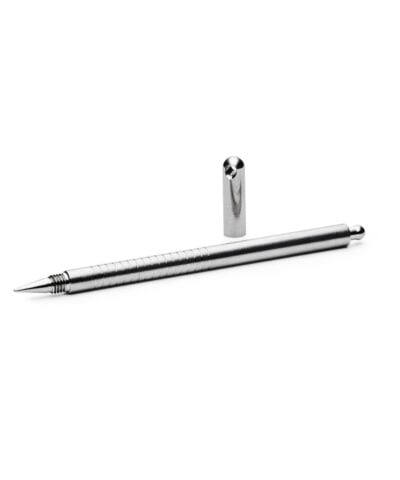
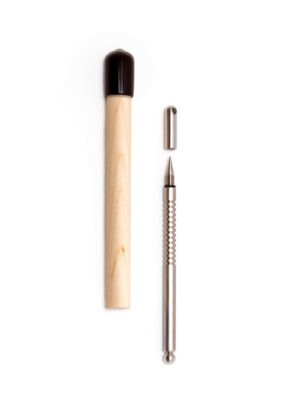



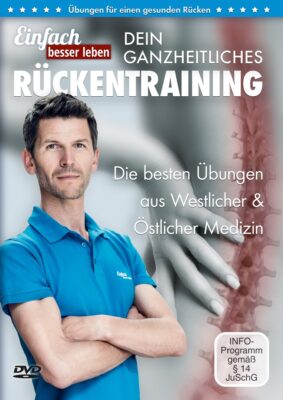
Back pain
Thank you so much for this wonderful post—it’s a great mix of practical tips, neuroscience, and a TCM approach! Today I moved my morning breathing practice outside to the garden; there, my breath flows even more freely, and I start the day surrounded by natural stimuli. Best regards
Thank you, dear Silvia, for the wonderful feedback 🙏.
Hanz, best regards from Tyrol,
Wolfgang & Team