






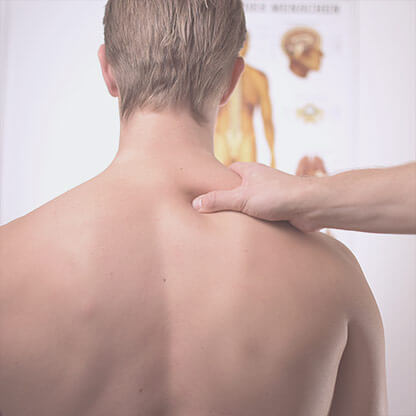


Sensitive to the weather? The problem is not the weather
What's really behind your spring headache
You can't change the wind.
But you can learn to close your window.
🌬️ Die Leber und dein Kopf — eine spannungsreiche Verbindung
In der TCM ist Druck im Kopf nie „nur Druck im Kopf“. Er ist ein Zeichen, dass etwas aus dem Gleichgewicht ist.
Und im Frühling ist der häufigste Auslöser: The liver.
The liver is the organ of spring (wood element). Its energy wants to grow upwards and outwards - like a tree that grows.
Normally that's a good thing: new beginnings, a thirst for action, creativity.
But if the liver energy too strong shoots upwards, that's what happens:
- Yang rises uncontrollably
- It collects in the head
- Druck, Pochen, Spannung
TCM calls this: Rising liver yang.
The typical signs:
- Druck an den Schläfen oder hinter den Augen
- Throbbing, pulsating
- Worse with stress, anger, frustration
- Often accompanied by irritability
- Red face, red eyes
- Dizziness, drowsiness
Why in spring?
- The liver is more active anyway
- The weather is constantly changing (wind!)
- The body must constantly adapt
- If the liver is already weakened or stagnant, it tips over more easily
🌀 Wind - The invisible trigger
Die TCM kennt einen Faktor, den die westliche Sicht oft unterschätzt: Wind.
In TCM, wind is not just air that moves.
Wind ist eine äußere Kraft, die:
- Suddenly comes and goes
- Wandernde Beschwerden verursacht
- Den Kopf besonders trifft (höchster Punkt des Körpers)
- Activates the liver
Outer wind: Hairdryer, weather change, air conditioning, draught
Inner wind: Caused by liver imbalance - stress, anger, frustration
Wenn äußerer Wind auf inneren Wind trifft: Druck im Kopf.
Deshalb: April-Wetter + Stress = Hochsaison für Beschwerden im Kopf.
⚠️ Welcher Typ bist du?
Nicht jeder Druck im Kopf ist gleich. Die Lokalisation verrät viel:
Temples / lateral head:
- Classic liver yang / gallbladder meridian
- Often throbbing, pulsating
- Worse with stress and anger
Back of the head / neck:
- Outer wind / bladder meridian
- Often after draughts, cold, changes in weather
- Stiff neck in addition
Forehead / behind the eyes:
- Stomach meridian / center weakness
- Often after heavy meals, with nausea
- Dull, oppressive
Whole head / like a ribbon:
- Moisture / spleen weakness
- Heavy, dull, dazed
- Worse in damp weather
crown / top:
- Liver-Yang extreme / Liver-Fire
- Intense, penetrating
- With dizziness, red face
Wo sitzt es bei dir? Das zeigt dir, wo du ansetzen kannst.
🧠 Die westliche Brücke: Was im Kopf passiert
The Western perspective also recognizes these connections:
Weather sensitivity:
Luftdruckänderungen können die Durchblutung beeinflussen. Bei manchen Menschen reagieren die Blutgefäße empfindlicher — sie weiten oder verengen sich schneller. Das kann sich als Druck im Kopf zeigen.
Stress and tension:
Dauerhafter Stress führt zu Muskelanspannung — besonders in Nacken und Schultern. Diese Spannung strahlt in den Kopf aus. Die TCM sagt dasselbe: Leber-Qi–Stagnation = Verspannung = Druck.
Histamine:
Im Frühling steigt die Histamin–Belastung (Pollen). Histamin kann die Blutgefäße erweitern und Druck im Kopf begünstigen — besonders bei Menschen, deren Histamin–Abbau langsamer läuft (Leber!).
Sleep and hormones:
Die Zeitumstellung und längeren Tage bringen den Melatonin–Rhythmus durcheinander. Schlechter Schlaf = mehr Beschwerden im Kopf.
Two worlds. One realization: Beschwerden im Kopf sind kein Schicksal. Sie haben Ursachen — und die kannst du beeinflussen.
🌿 Die 5 Säulen für einen klaren Kopf im Frühling
1. calming the liver yang - cooling instead of heating
Wenn die Energie nach oben schießt, darf sie wieder runter.
Install:
- Pfefferminztee (gilt in der TCM als kühlend)
- Chrysanthemen–Tee (ein Klassiker der TCM, kühlt aus TCM–Sicht die Leber)
- Green vegetables: spinach, chard, cucumber, celery
- Zitrone, Apfelessig (sauer gehört zur Leber)
Avoid:
- Alkohol (belastet die Leber)
- Coffee in large quantities
- Spicy food
- Greasy, fried, deep-fried
- Bei Empfindlichkeit: histaminreiche Speisen wie gereifter Käse und Rotwein
📣 Insider tip: Bei akutem Druck im Kopf: ein wenig Pfefferminzöl auf die Schläfen. Wirkt angenehm kühlend.
→ This week: Daily peppermint or chrysanthemum tea. No alcohol.
2. protect your neck - block out the wind
Der Nacken ist das „Tor zum Kopf“. Wenn Wind eindringt, geht er direkt hoch.
Practical:
- Wear a scarf - even in April (especially in windy conditions)
- Do not expose wet head / wet hair to the wind
- Do not point the air conditioning directly at the neck
- After sport: cover your neck
📣 Insider tip: Den Punkt Gb 20 (Nacken) morgens mit warmem Tuch abdecken — 2 Minuten. Schließt das „Wind–Tor“.
→ As of today: Always scarf in windy conditions. Do not discuss.
3. release tension - shoulders down
Die meisten Menschen mit Druck im Kopf haben etwas gemeinsam:
Raised shoulders.
Practical - The 3×3 rule:
- 3 times a day (morning, noon, evening)
- 3 deep breaths
- With each exhalation: consciously drop your shoulders
In addition:
- Neck stretches (ear to shoulder, 30 sec per side)
- Shoulder circles (10x forwards, 10x backwards)
- Loosen your jaw (often unconsciously tense!)
📣 Insider tip: Stell dir einen Alarm — 3x täglich „Schultern–Check“. Nach einer Woche ist es Gewohnheit.
→ As of today: The 3×3 rule. Every day.
4. regulate stress - the liver loves flow
Stress stagniert die Leber. Stagnation steigt auf. Aufstieg = Druck im Kopf.
Practical:
- Exercise that relaxes: Walking, Qi Gong, yoga, swimming
- NICHT: Hochintensives Training bei akutem Druck im Kopf
- Pausen einbauen — bevor der Druck kommt
- Letting out anger and frustration - not suppressing it
The 5-minute rescue:
- Close your eyes
- 10 deep breaths (exhale twice as long)
- Each time you exhale: imagine the energy flowing downwards - into your feet
→ At the first signs: 5-minute rescue. Don't wait until it gets bad.
5. regularity - the body loves rhythm
Irregularity stresses the liver. Rhythm calms it.
Practical:
- Regular sleeping times (also at the weekend)
- Regular meals (do not skip meals)
- Do not eat too late (before 7 pm)
- Screen breaks every 45-60 minutes
📣 Insider tip: Die Leber regeneriert zwischen 1 und 3 Uhr nachts. Wer da noch wach ist, raubt ihr die Erholung — und spürt es oft am nächsten Tag als Druck im Kopf.
→ As of today: In bed before 11 pm. Your liver will thank you.
📍 Akupressur–Punkte für einen klaren Kopf
Gb 20 (Fēng Chí) - „Wind Pond“
- Where: Neck, in the hollows under the skull, to the side of the spine
- What he does: DER Punkt bei Druck im Kopf — vertreibt Wind, entspannt den Nacken, senkt aufsteigendes Yang
- When: Bei Druck im Kopf, besonders Nacken/Hinterkopf
Gb 21 (Jiān Jǐng) - „Shoulder Well“
- Where: Highest point of the shoulder, halfway between the neck and shoulder joint
- What he does: Relieves shoulder and neck tension, lowers Qi
- When: Bei Spannung im Kopf, hochgezogenen Schultern
Tue 4 (Hé Gǔ) - „United Valleys“
- Where: Back of the hand, in the muscle between the thumb and index finger
- What he does: DER klassische Punkt bei Druck im Kopf, besonders Stirn und Gesicht
- When: Bei akutem Druck im Kopf
- Attention: Not during pregnancy!
Le 3 (Tài Chōng) - „Big Meeting“
- Where: Back of the foot, between big toe and second toe, 2 fingers wide towards the ankle
- What he does: Moves liver qi, lowers ascending yang - draws energy downwards
The acute ritual: Gb 20 → Gb 21 → Di 4 → Le 3 (in this order)
Duration: 5–7 Minuten.
How often: Can be repeated several times a day.
🧭 You can find all points with detailed instructions in our free acupuncture atlas: 👉 www.meine-tcm.com/akupunkturatlas
💫 The deeper message
April is raging. Your head doesn't have to join in.
Der Druck in deinem Kopf ist nicht das Wetter. Er ist, wie dein Körper auf das Wetter reagiert.
And you can change this reaction.
Not overnight. But step by step.
A liver that is in flow. A neck that is protected. Shoulders that let go. A rhythm that carries.
Then April can do whatever it wants. Your head stays clear.
„You can't change the wind. But you can learn to close your window.“
📌 Recommended
🤕 Why does your head react so strongly? Kostenlose TCM–Analyse — finde heraus, welche Muster gerade bei dir im Vordergrund stehen.
👉 www.meine-tcm.com/tcm-analyse
📜 Newsletter - Monthly TCM wisdom: The Yellow Emperor, Qi Bo and Dr. Weber in conversation. 👉 www.meine-tcm.com/newsletter-anmeldung
Hinweis: Dieser Beitrag ist allgemeine TCM– und Lebensstil–Information und ersetzt keine ärztliche Beratung. Neu auftretender, sehr starker, anhaltender oder mit Begleitsymptomen (z.B. Fieber, Sehstörungen, Taubheit) verbundener Druck im Kopf sollte immer ärztlich abgeklärt werden.
The wind is the origin of
hundred diseases.
Huangdi Neijing
More interesting tips & articles
TCM tip of the week
Kaum ist es geschafft, liegst du flach
Wochenlang hältst du durch, und kaum ist der Umzug oder das Projekt geschafft, kratzt der Hals. Warum die Abwehr ausgerechnet in…
Oct

TCM tip of the week
Warum du im Herbst öfter seufzt
Manchmal seufzt du, ohne zu wissen, warum. Es ist, als wollte etwas heraus, das du nie ausgesprochen hast. Das ganze Jahr…
Sep

Sep


Our most popular products






Back pain