






Ma Huang — Sea Buckthorn
Ma Huang — das Meerträubelkraut — ist eines der kraftvollsten Kräuter der TCM, um äußere Kälte–Syndrome zu vertreiben. Es öffnet die Oberfläche, fördert das Schwitzen und befreit die Lunge.
Als Hauptkraut der klassischen Rezeptur gegen Wind–Kälte an der Oberfläche ist es seit über 2000 Jahren die erste Wahl bei Schüttelfrost und fehlendem Schweiß. Aufgrund seiner starken Wirkung erfordert es eine präzise, an das Muster angepasste Dosierung.
Effect from a TCM perspective
Ma Huang opens the surface and promotes sweating—the most potent diaphoretic herb in TCM for wind-cold syndrome:
- Öffnet die Oberfläche und fördert das Schwitzen — bei Wind–Kälte–Syndrom mit Schüttelfrost, Hitzegefühl und Gliederspannung ohne Schweiß
- Frees the lungs und beruhigt rasselnden Atem — bei Kälte oder Schleim, die das Lungen–Qi blockieren
- Wicks away moisture und löst die Stauung — besonders bei akuter Wasserstauung im Oberkörper (Wind–Wasser)
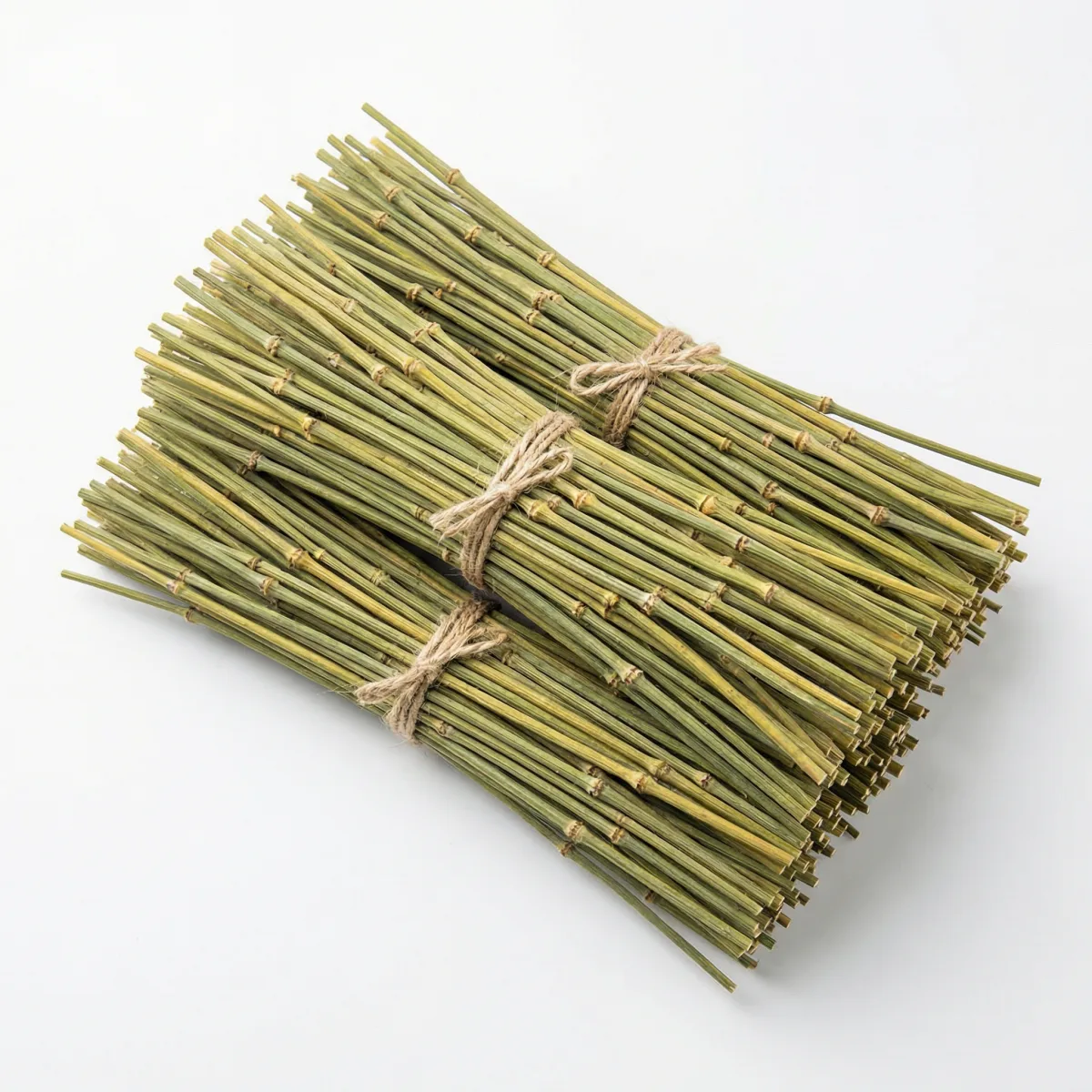
- Die Stängel (Ma Huang) fördern Schweiß — die Wurzel (Ma Huang Gen) stoppt Schweiß: gegensätzliche Wirkungen desselben Krauts
Application & dosage
Ma Huang wird im Dekokt eingesetzt. Wegen seiner starken Wirkung ist eine sorgfältige Dosage unerlässlich — im unteren Bereich beginnen und nur bei eindeutigem Muster steigern.
Beim Kochen zuerst 10–15 Min. vorkochen und den Schaum sorgfältig abschöpfen, um eine übermäßige Erregung von Herz und Shen zu vermeiden. Ma Huang Gen (Wurzel) wird bei Schweiß–Syndromen eingesetzt und zeigt die entgegengesetzte Wirkung.
Dosage forms
- Dekokt — zuerst 10–15 Min. vorkochen, Schaum abschöpfen, dann die übrigen Zutaten zugeben
- Granules — concentrated extract; dissolve in warm water
- Tablets and capsules — as a standardized extract in a lower dosage
- Honiggebraten (Zhì Má Huáng) — mildere Wirkung, mehr auf die Lunge fokussiert, weniger diaphoretisch
- Ma Huang Gen (root, 3–10 g) — to inhibit sweating; used for the opposite effect
Dosage
- Decoction: 2–10 g (standard)
- Low dose (2–3 g) for sensitive patients, children, and older adults
- Mit Honig geröstet (Zhì Má Huáng): 2–9 g, hauptsächlich bei Lungensyndromen
- Ma Huang Root: 3–10 g to stop sweating
Frequent combination partners
Ma Huang often does not reach its full effect until it is combined with other herbs
History & Tradition
Ma Huang zählt zu den ältesten bekannten Kräutern der Menschheit — im Shén Nóng Ben Cao Jing It is described in detail and classified as a „medium herb.“ Archaeological findings provide evidence of the use of Ephedra species more than 60,000 years ago.
In the Shāng Hán Lùn von Zhang Zhongjing (ca. 200 n. Chr.) nimmt Ma Huang eine Schlüsselrolle ein. Zhang Zhongjings Rezeptur mit Ma Huang gilt als die kraftvollste Formel gegen äußeres Wind–Kälte–Eindringen — seine präzise Beschreibung des Musters (fehlender Schweiß, Schüttelfrost stärker als Hitzegefühl, straffer Puls) bleibt der Standard der TCM–Diagnostik bis heute.
Besonders faszinierend ist das Paradox von Ma Huang und Ma Huang Gen: Die Stängel fördern Schweiß und öffnen die Oberfläche, die Wurzel derselben Pflanze stoppt Schweiß und festigt das Wei–Qi. Li Shizhen erläuterte dieses Prinzip ausführlich im Běn Cǎo Gāng Mù (1596) — a unique example of the opposing effects of different parts of a plant in TCM.
Der japanische Chemiker Nagai Nagayoshi isolierte 1885 erstmals Ephedrin aus Ephedra sinica. Diese Entdeckung veränderte die westliche Bronchialmedizin grundlegend und legte den Grundstein für eine ganze Klasse synthetischer Sympathomimetika — Ma Huang ist damit eines der wenigen TCM–Kräuter, dessen Wirkprinzip direkt in die westliche Forschung eingegangen ist.
Contraindications & caution
DO NOT use in cases of spontaneous sweating or night sweats—Ma Huang further opens the surface and exacerbates fluid loss. Do not use if you have high blood pressure, a rapid heartbeat, or arrhythmia.
Do not use in cases of Yin deficiency with internal heat. Use with caution in cases of hyperthyroidism. Contraindicated during pregnancy. Do not use for insomnia or anxiety disorders. Regulated in many countries—check local regulations.
Botany
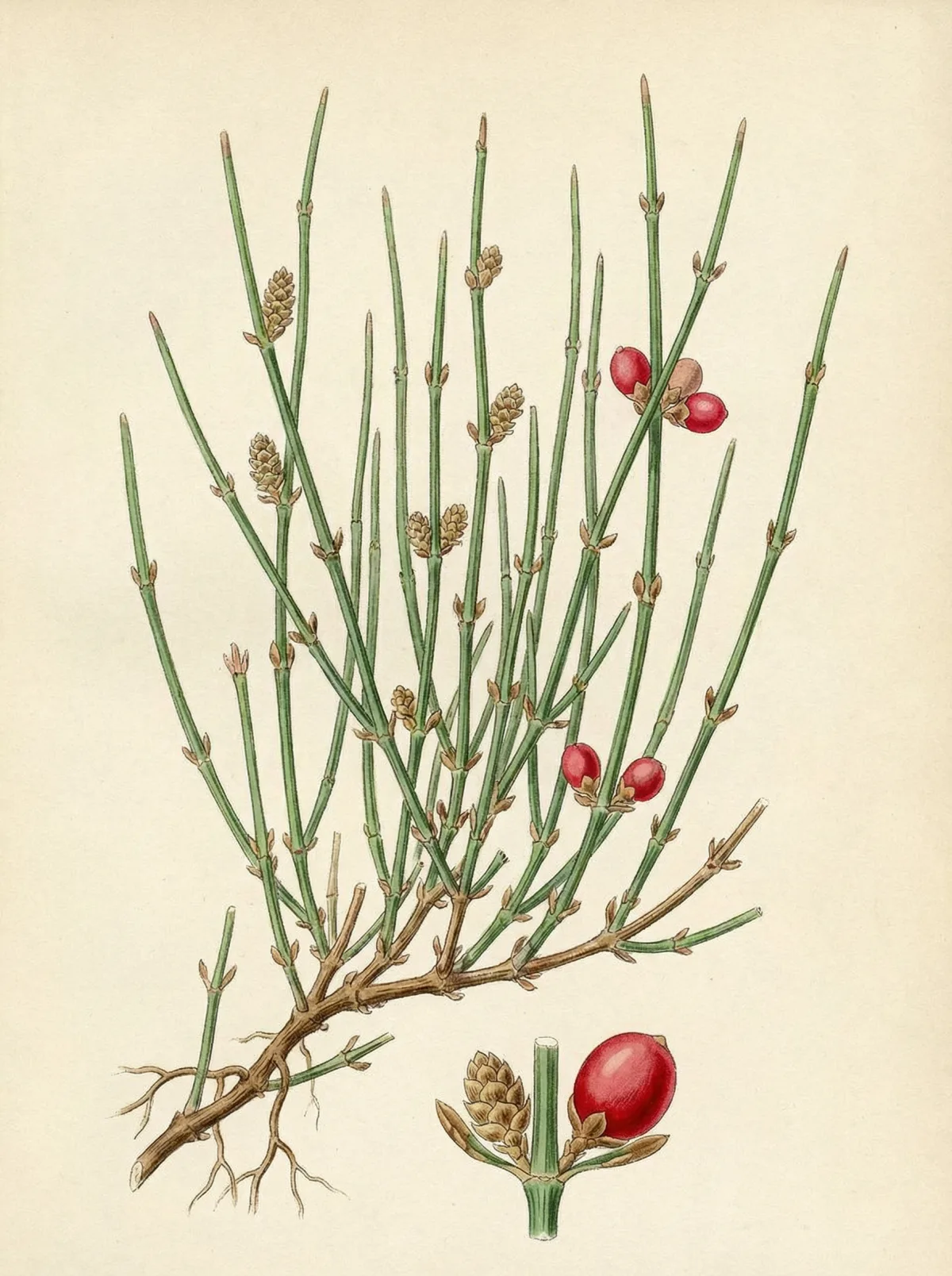
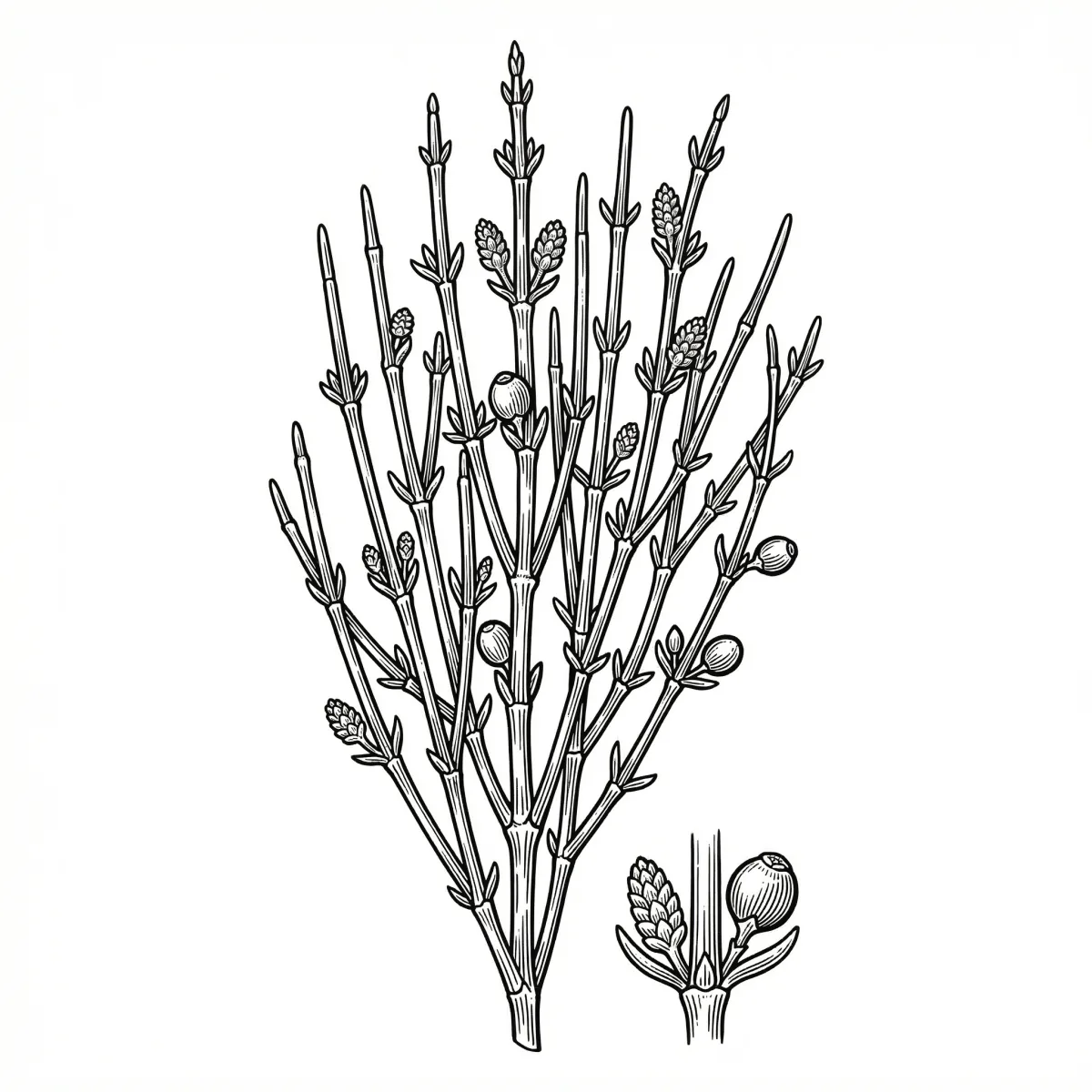
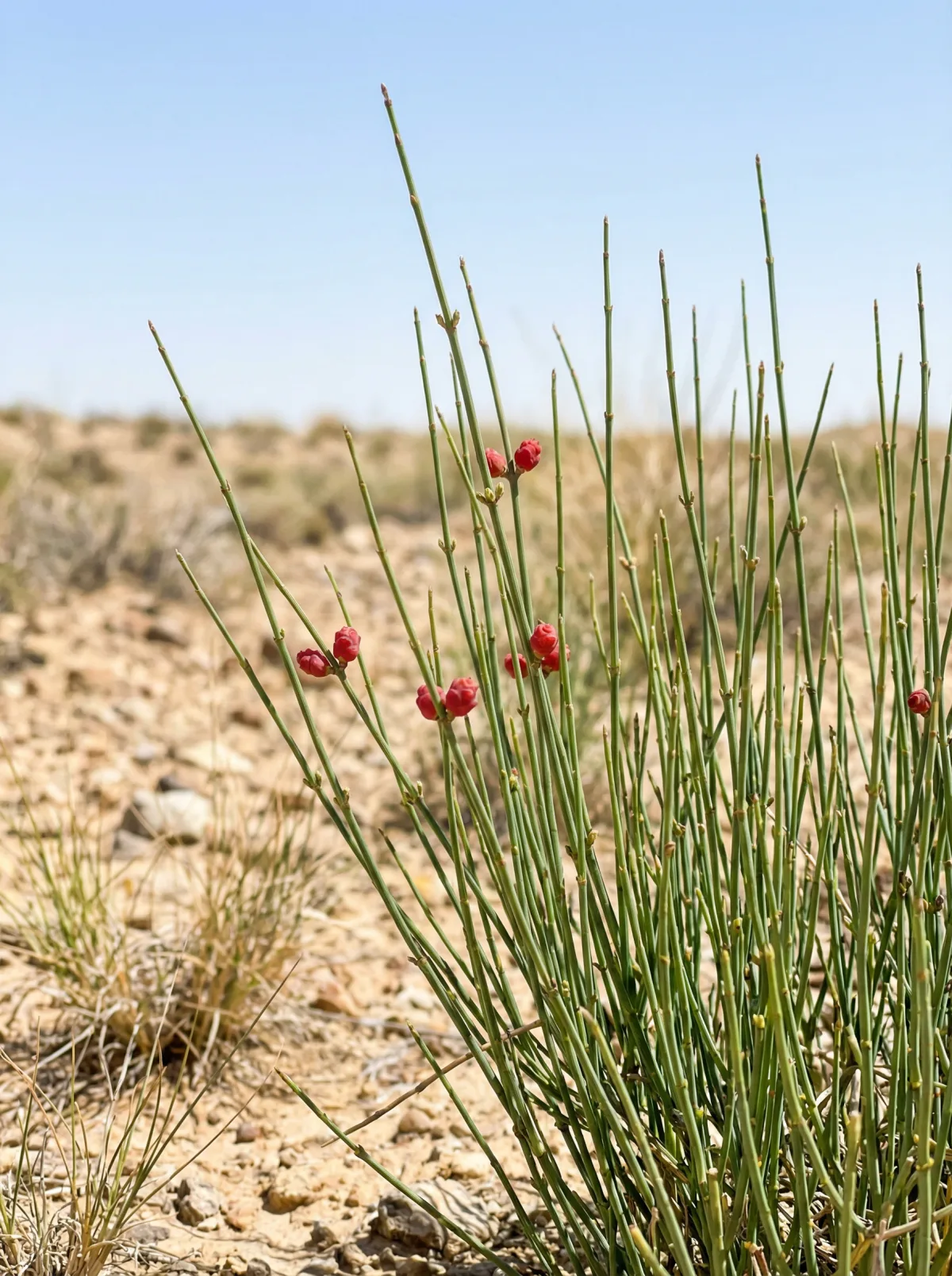
Ephedra sinica Stapf is an evergreen dwarf shrub belonging to the Ephedraceae family—one of the oldest families of gymnosperms, with no close relationship to typical flowering plants. The plant grows to a height of 30–70 cm and forms dense, branched mats with erect, yellowish-green, strongly jointed stems 1–2 mm in diameter. The leaves are reduced to small, scale-like pairs—photosynthesis takes place almost exclusively in the stems.
Die Blüten sind eingeschlechtig und windbestäubt. Weibliche Blüten entwickeln sich zu charakteristischen roten, beerenartigen Zapfen, die den Samen einschließen. Für die Medizin werden die oberirdischen krautigen Stem (Herba) genutzt — nicht die Wurzel (Radix), die die gegenteilige Wirkung zeigt. Qualitätsmerkmale sind hellgrüne bis gelblich–grüne Farbe, fester Stiel und intensiv–scharf–bitterer Geschmack durch den hohen Alkaloidgehalt.
Occurrence
- Northern China — Main growing regions in Shanxi, Hebei, Inner Mongolia, and Shaanxi
- Mongolia and neighboring regions of Central Asia — significant wild populations
- Russland (Sibirien) und Kasachstan — andere Ephedra–Populationen
- Dry steppes, semi-deserts, and open slopes at elevations of 700–1,500 m
- Prefers sandy, well-drained soils in a continental dry climate with significant temperature fluctuations
- Increasingly cultivated commercially due to regulatory pressure and a decline in wild populations
Harvest time
- Fall (September–October) — after the growing season has ended, before the first frost
- Prefer green stems without flowers or fruit — highest alkaloid content
- Spring (March–April) as a secondary harvest season in some growing regions
- Stems are cut close to the ground; roots remain in the soil to allow for regrowth
Processing
Die Verarbeitung von Ma Huang ist entscheidend für die Wirkrichtung — je nach Zubereitung dominieren unterschiedliche Wirkqualitäten:
- Raw Stems (Shēng Má Huáng)
- Remove any root remnants and debris from the harvested stems
- Cut into 1–2 cm long pieces
- Dry in the shade or at a maximum temperature of 40 °C to preserve the alkaloids
- When cooking, pre-cook for 10–15 minutes and carefully skim off the foam
- Honiggeröstet (Zhì Má Huáng)
- Evenly moisten the dried stem pieces with dissolved honey (25–30 g per 100 g of herb)
- Let it soak in until the honey is completely absorbed
- Toast in a skillet without oil over medium heat until the surface becomes shiny and golden brown
- Die Honig–Röstung mildert die diaphoretische Wirkung und verstärkt den Lungen–entspannenden Effekt bei Keuchen
- Ma Huang Root
The root is harvested, cleaned, and dried separately. It contains other alkaloids (ephedradines) and inhibits sweating rather than promoting it. Store and use it strictly separate from the herb.
Related herbs
Herbs with similar effects and related areas of application