







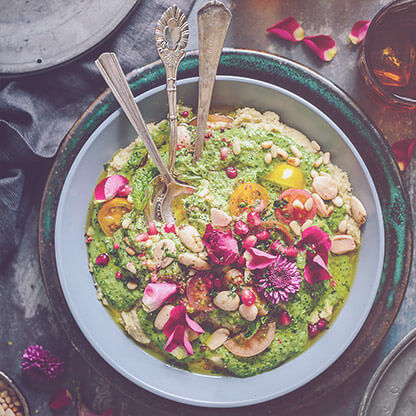
Ma Chi Xian — Purslane
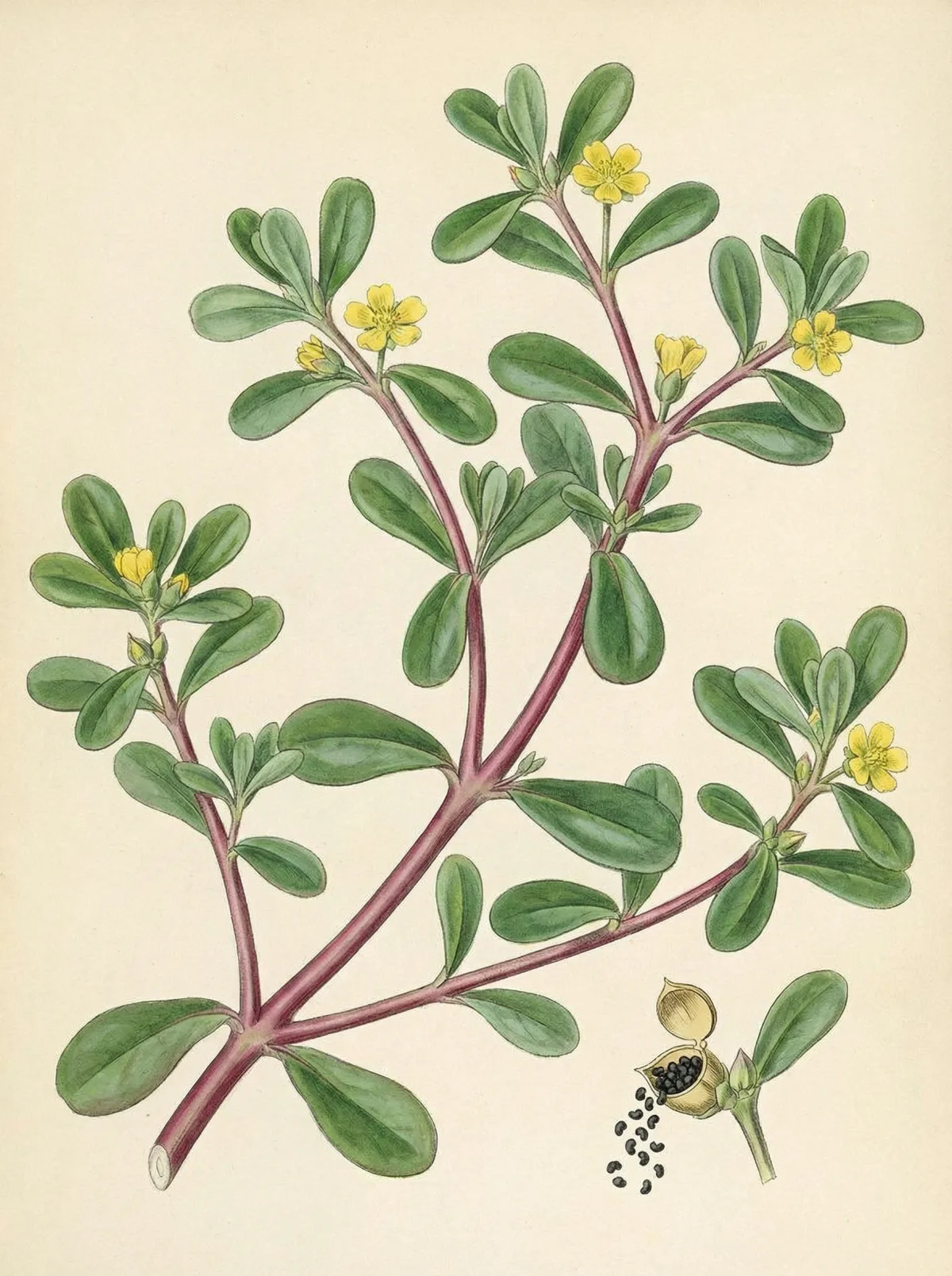
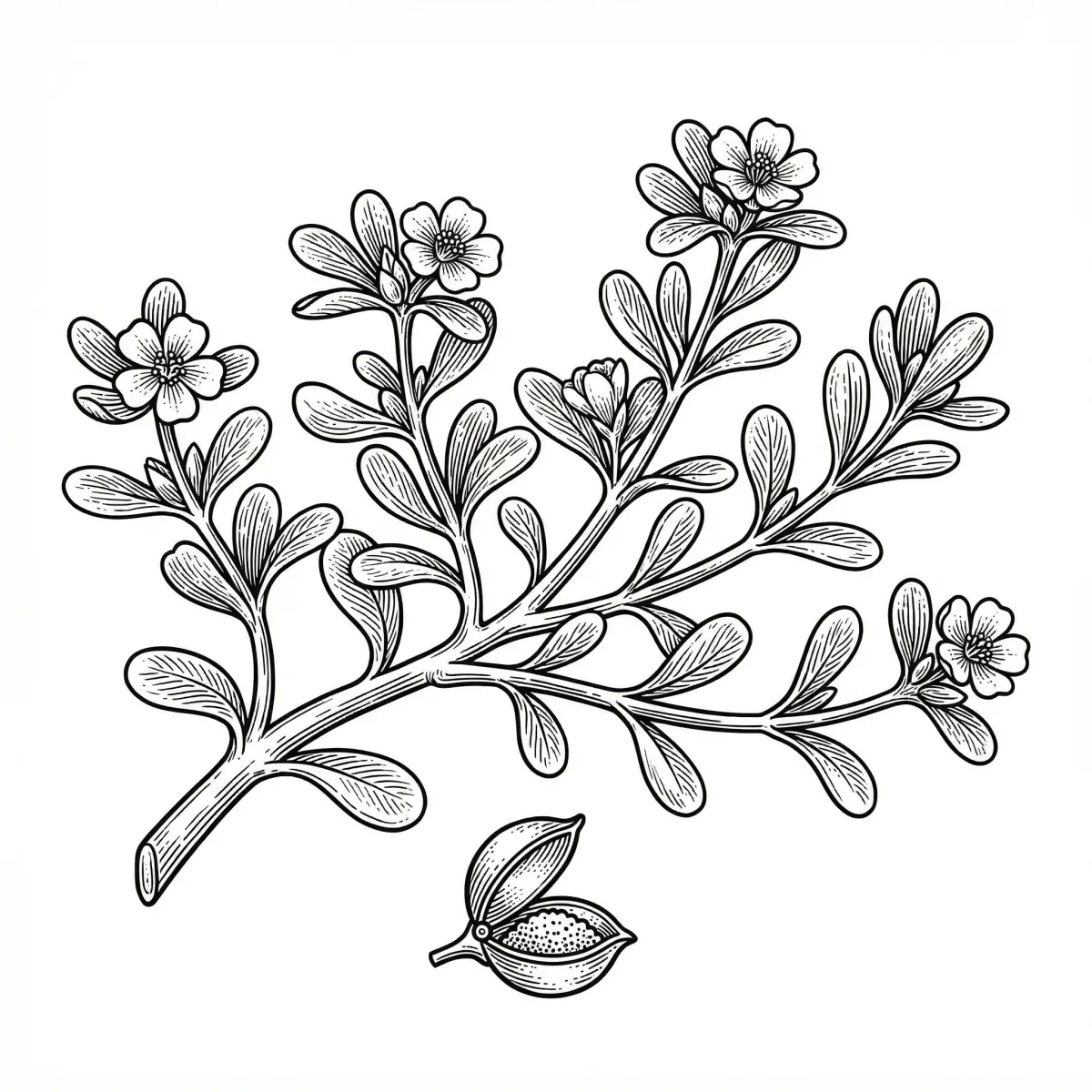
Ma Chi Xian — der Portulak — ist ein kühlendes, entgiftendes Kraut, das Feuchtigkeit–Hitze und toxische Hitze aus dem Dickdarm klärt. Es wird besonders bei Feuchte–Hitze im Darm mit Blutbeimengung und bei Hauterscheinungen durch Feuchtigkeit–Hitze eingesetzt.
Als Nahrungsmittel und Kraut zugleich ist es gut verträglich und vielseitig einsetzbar.
Effect from a TCM perspective
Ma Chi Xian klärt Feuchtigkeit–Hitze und entgiftet toxische Hitze. Es kühlt das Blut und hält es in den Gefäßen (Zhǐ Xuè). Sein Hauptwirkfeld sind Feuchtigkeit–Hitze–Muster im Dickdarm mit blutig–schleimigem Stuhlgang und nässender, heißer Haut.
- Klärt Feuchtigkeit–Hitze im Dickdarm (wässriger Stuhlgang mit Blut und Schleim)
- Leitet Hitze–Toxine (Rè Dú) in Haut und Fleisch aus (Haut mit Fülle–Hitze)
- Cools the blood und hält es in den Gefäßen (Zhǐ Xuè) im unteren Erwärmer
- Klärt Feuchtigkeit–Hitze auf der Haut (nässende, heiße Hautmuster)
- Leitet Feuchtigkeit–Hitze über den Urin aus
Application & dosage
- 15-30 g in a decoction (standard dose)
- Frisch: 30–60 g (als Gemüse oder Saft)
- External use: freshly crushed as a poultice
Dosage forms
- Decoction
- fresh juice
- topical application
- als Vegetables
Dosage
- 15–30 g (getrocknet)
- 30–60 g (frisch)
Frequent combination partners
Ma Chi Xian often does not reach its full potential until it is combined with other herbs
History & Tradition
Ma Chi Xian erscheint bereits im Shén Nóng Ben Cao Jing und wird seit der Tang–Dynastie als Hauptmittel bei Hitze–Toxin und Feuchte–Hitze im Darm dokumentiert. Sun Simiao empfiehlt es im Qiān Jīn Yào Fāng sowohl innerlich als auch äußerlich bei Hitze–Toxin an der Haut.
Der Name 马齿苋 bedeutet „Pferdezahn–Gemüse“ und bezieht sich auf die Form der Blätter. In Europa war Portulak bis ins 17. Jahrhundert ein beliebtes Salatgemüse — eine Tradition, die heute ein Revival erlebt.
Contraindications & caution
- Not at Milz–Kälte mit wässrigem Durchfall.
- Vorsicht in der Pregnancy (traditionell als uteruskontrahierend eingestuft).
- Not at Kälte–Durchfall ohne Hitzezeichen.
- Hoher Oxalatgehalt — Vorsicht bei Nierensteinen.
Botany
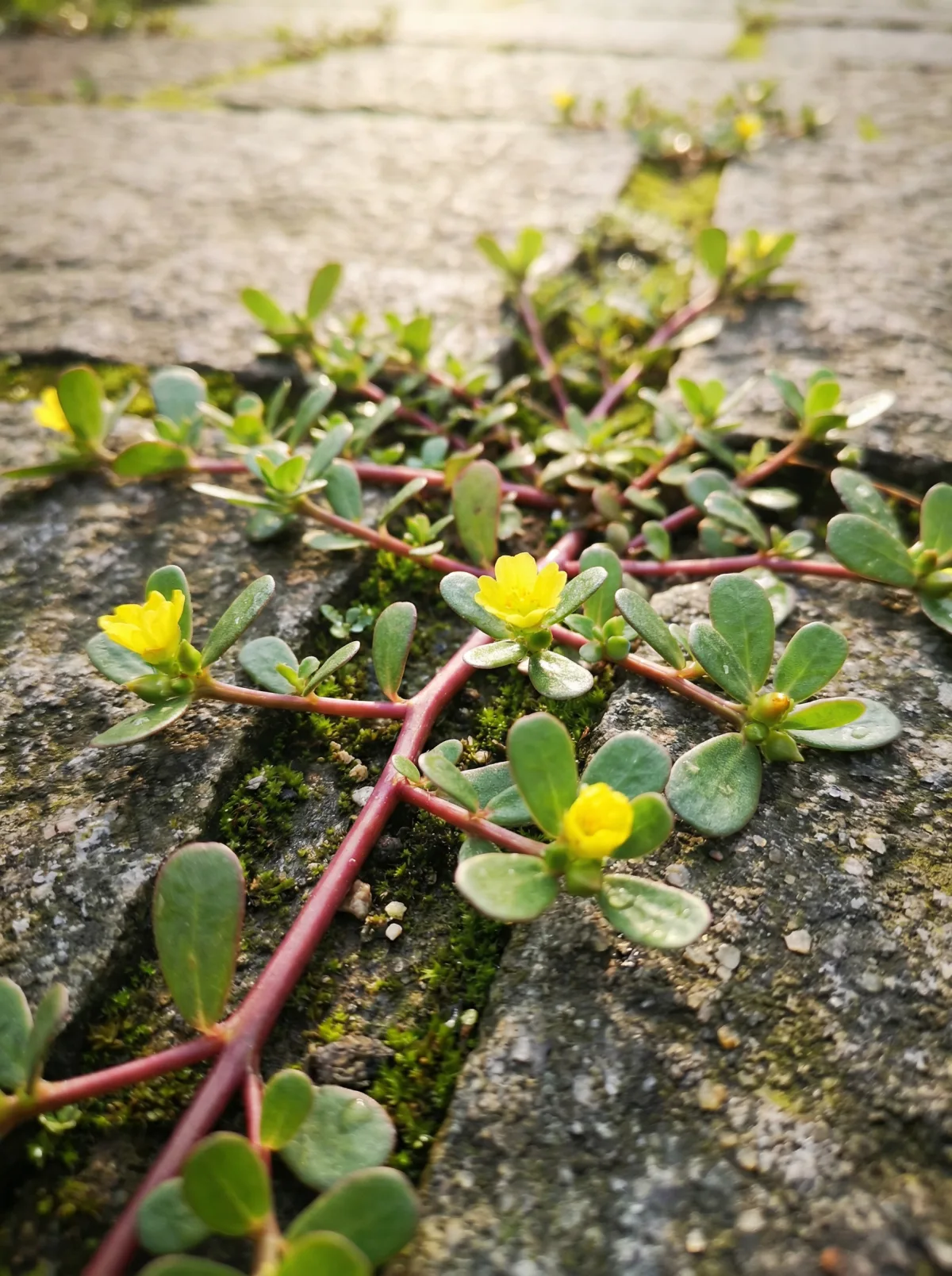
Portulaca oleracea ist eine einjährige, sukkulente Pflanze aus der Familie der Portulakgewächse (Portulacaceae). Sie wird 10–30 cm hoch, hat fleischige, spatelkörmige Blätter und rötliche Stengel. Kleine gelbe Blüten erscheinen im Sommer.
Distribution: Found worldwide as a cosmopolitan weed. Grows wild and is cultivated in China. Prefers warm, sunny locations with moist soil. Harvest in the summer during the peak growing season.
Harvest time
Summer (volle Vegetationsperiode)
Processing
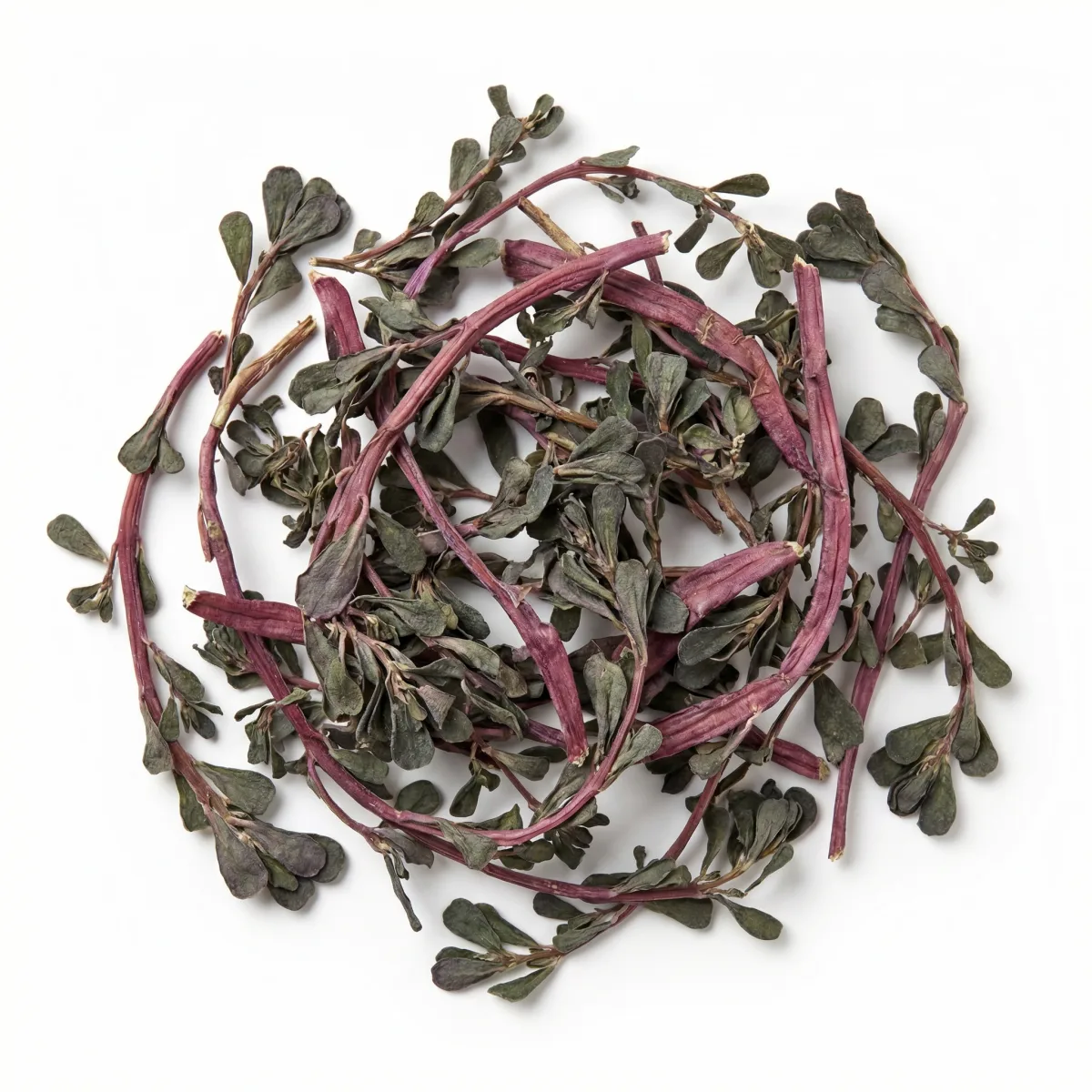
Frisch verwendet oder schonend getrocknet
Related herbs
Herbs with similar effects and related areas of application