







Ling Zhi — Reishi Mushroom
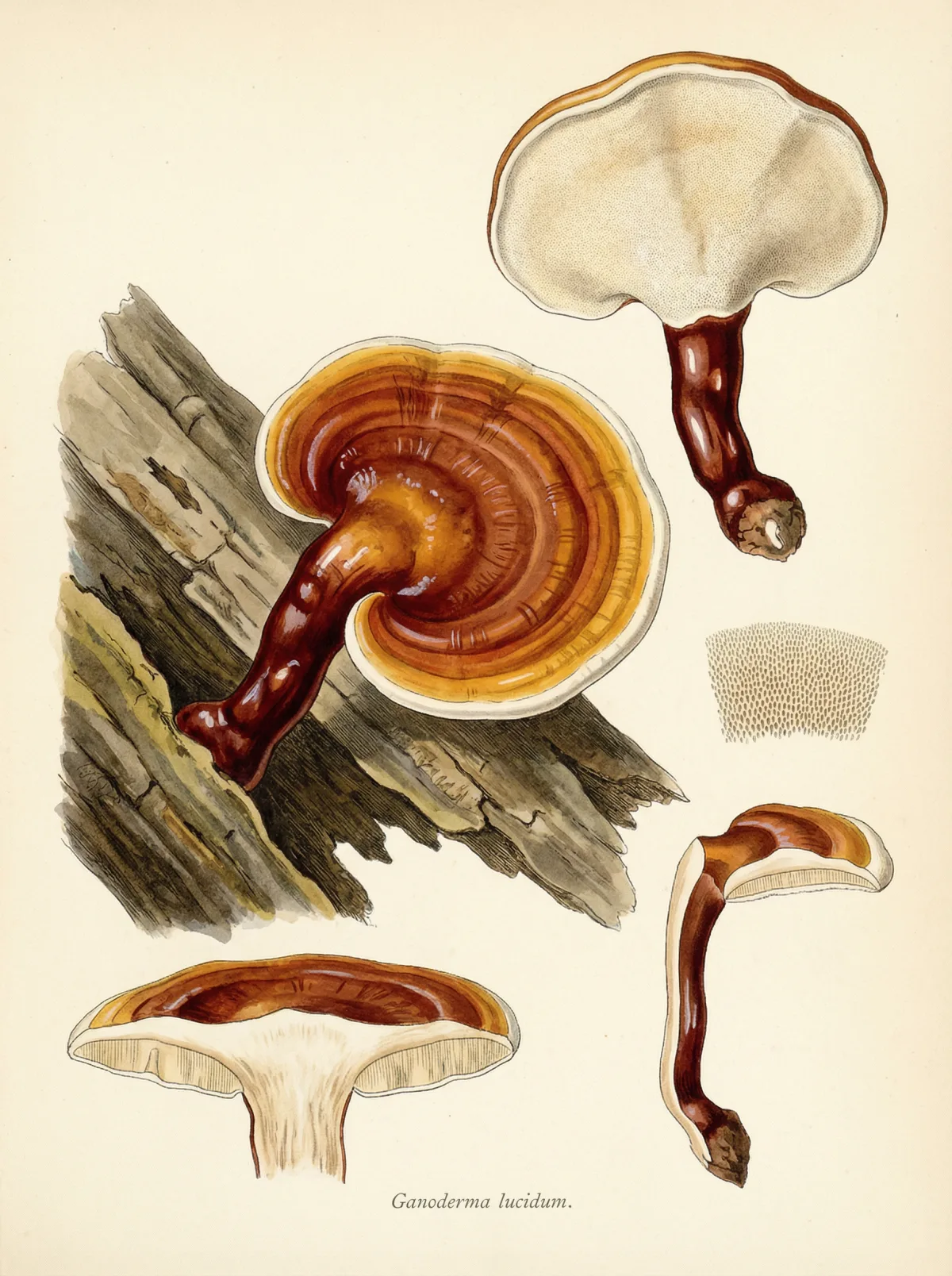
Ling Zhi—the reishi mushroom—is the most famous Tonic in traditional Chinese medicine. As a herb classified in the highest category of the *Shén Nóng Běn Cǎo Jīng*, it was revered as the „herb of divine power.“.
It tonifies Qi, nourishes the blood, calms the Shén, and strengthens the immune system. Its effects range from strengthening Wei-Qi to protecting the heart.
Effect from a TCM perspective
Ling Zhi tonifies Qi and nourishes the blood. It calms the Shén, strengthens the lungs, and supports kidney essence. Its broad spectrum of action makes it a universal tonic—it affects all five Zāng organs.
- Tones Qi and nourishes the blood (fatigue, pallor, weakness)
- Calms the Shén (restless sleep, restlessness of the Shen, declining concentration)
- Strengthens lung qi (long-term lung weakness, shortness of breath)
- Nourishes the liver and blood and protects the liver
- Strengthens the Kidney Essence and Wèi–Qi (vital energy)
Application & dosage
- 3–15 g in a decoction (standard dose)
- As an extract: 1–3 g daily
- As a tincture or powder: according to the manufacturer's specifications
- Long cooking time (60–90 min.) for full extraction
Dosage forms
- Decoction
- Extract
- Powder
- Tincture
- Granules
Dosage
- 3–15 g (Decoction)
- 1–3 g (Extract)
Frequent combination partners
Ling Zhi often does not reach its full potential until it is combined with other herbs
History & Tradition
Ling Zhi has been revered in China for over 2,000 years and is listed in the *Shén Nóng Běn Cǎo Jīng* as a top-class herb. Its name, 灵苝, means „divine mushroom“ or „spirit herb.“ In the Taoist tradition He was regarded as a symbol of longevity and spiritual strength.
Emperors of the Han Dynasty sent out expeditions to find wild lingzhi. The *Běn Cǎo Gāng Mù* distinguishes between Li Shizhen Six colors: red (the most common), black, blue, white, yellow, and purple—each associated with a specific organ. Controlled cultivation has only been possible since the 1970s.
Contraindications & caution
Generally very well tolerated.
- Be careful with Autoimmune diseases (immunomodulatory effect).
- Can Blood thinners increase — do not combine with warfarin.
- Allergic reactions are rare.
- At Heat Patterns Start with a low dose.
Botany
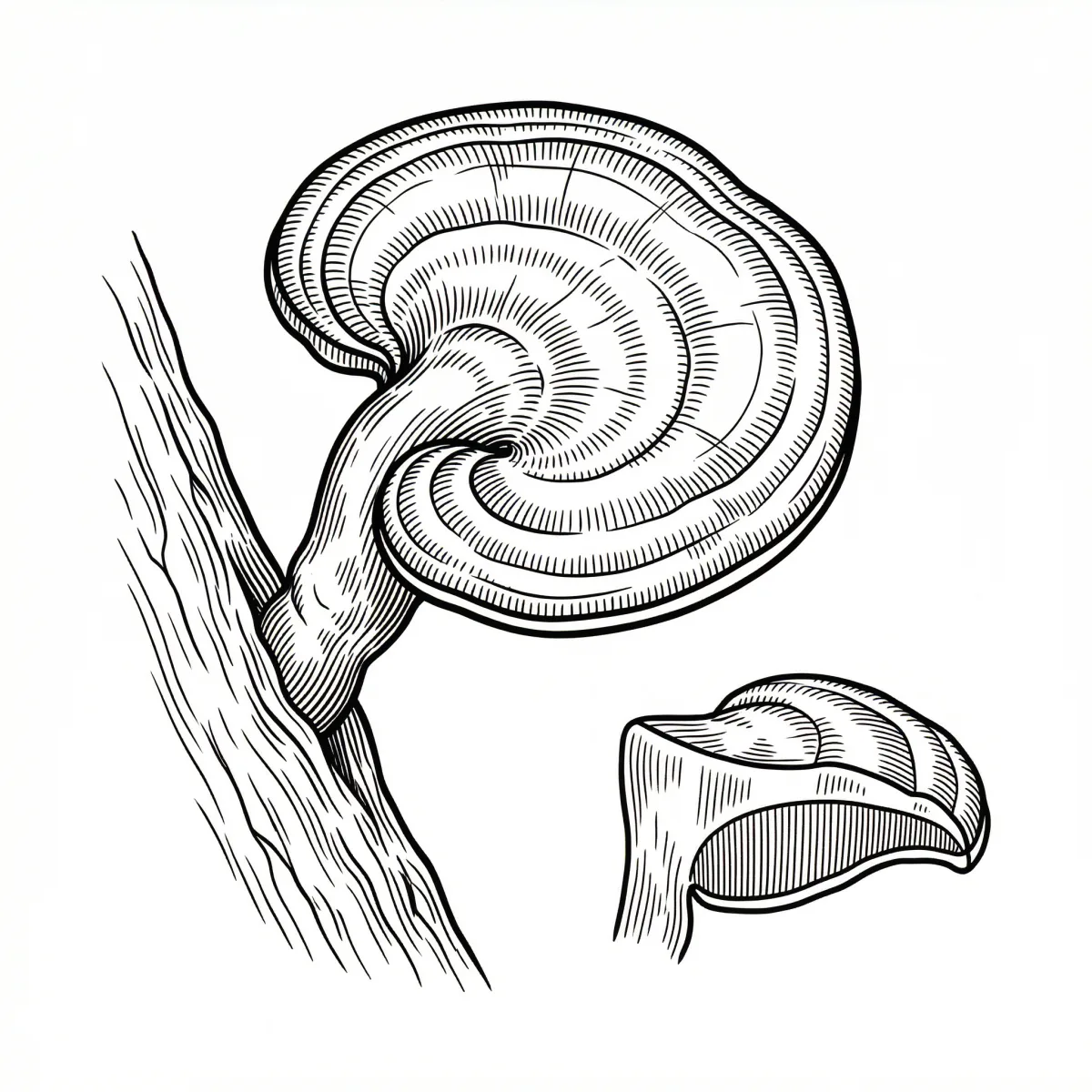
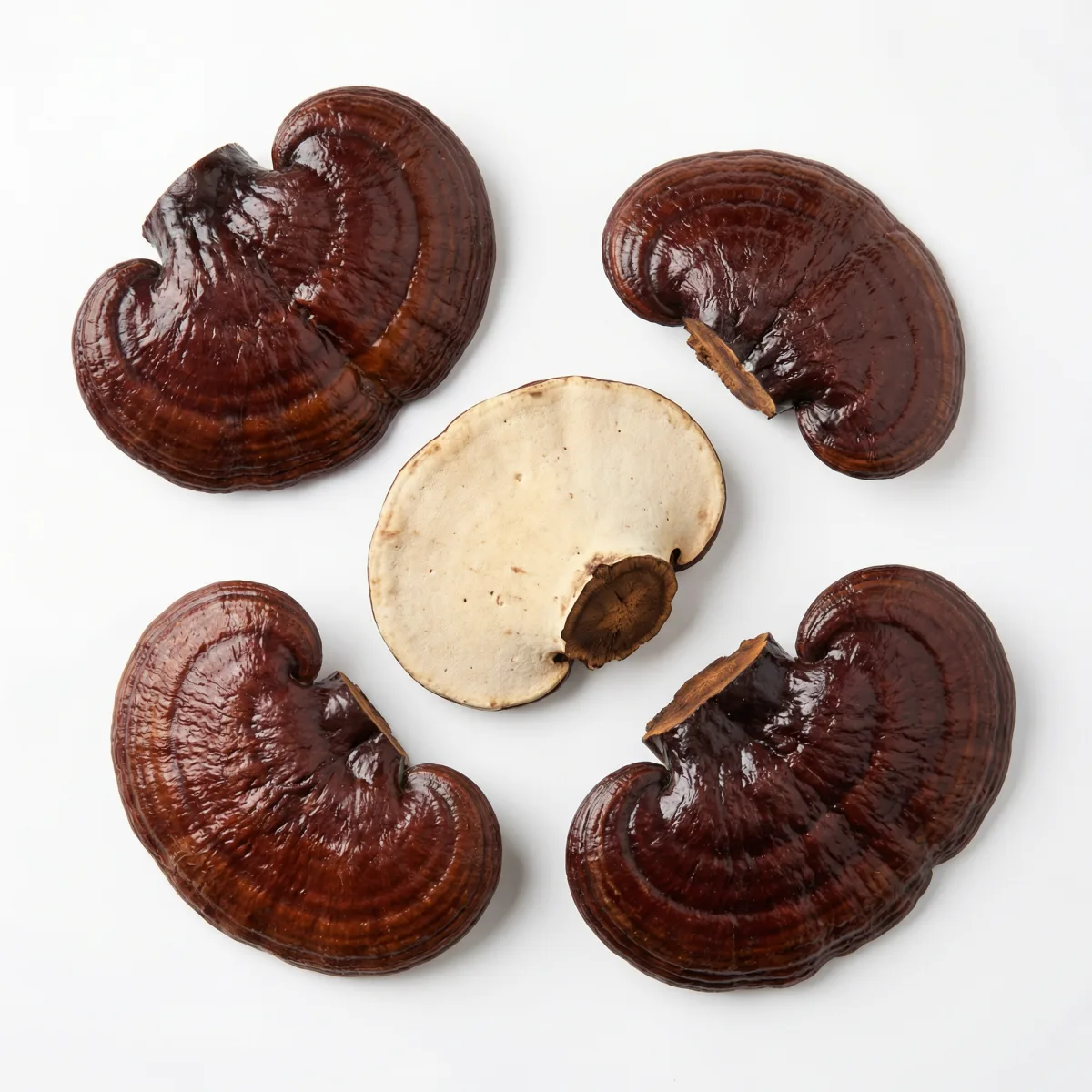
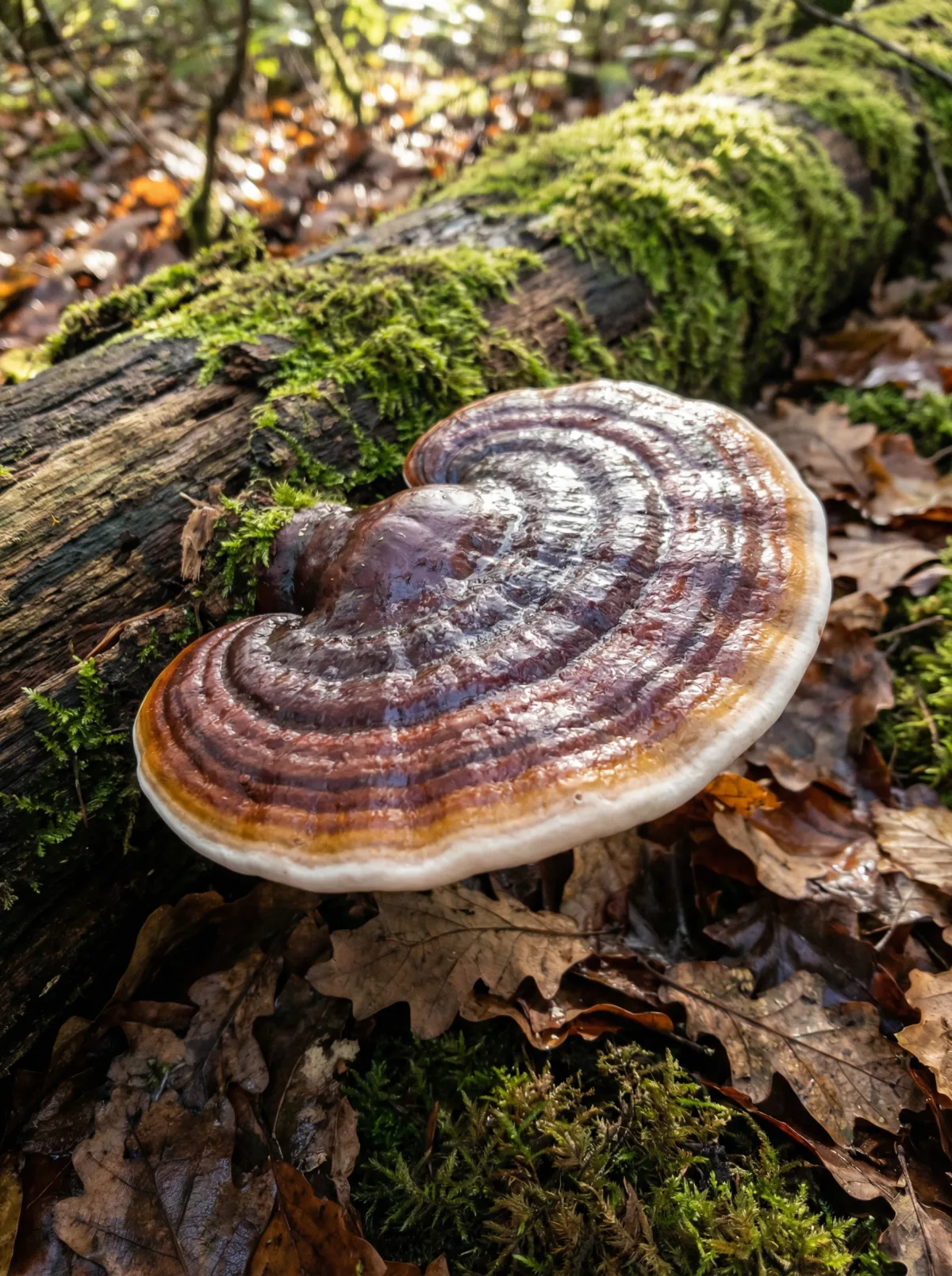
Ganoderma lucidum is a polypore mushroom belonging to the Ganodermataceae family. The fruiting body is kidney-shaped, 5–25 cm wide, with a glossy, reddish-brown surface. The underside has fine, white pores.
Distribution: Originally found growing wild on deciduous trees (oak, plum) in East Asia. Today, it is cultivated worldwide on substrates made of sawdust and grain. The main growing regions are China, Japan, and Korea.
Harvest time
Year-round (cultivated)
Processing
Dried and sliced; spores harvested separately for Spore oil
Related herbs
Herbs with similar effects and related areas of application