








Long Yan Rou — Longan pulp
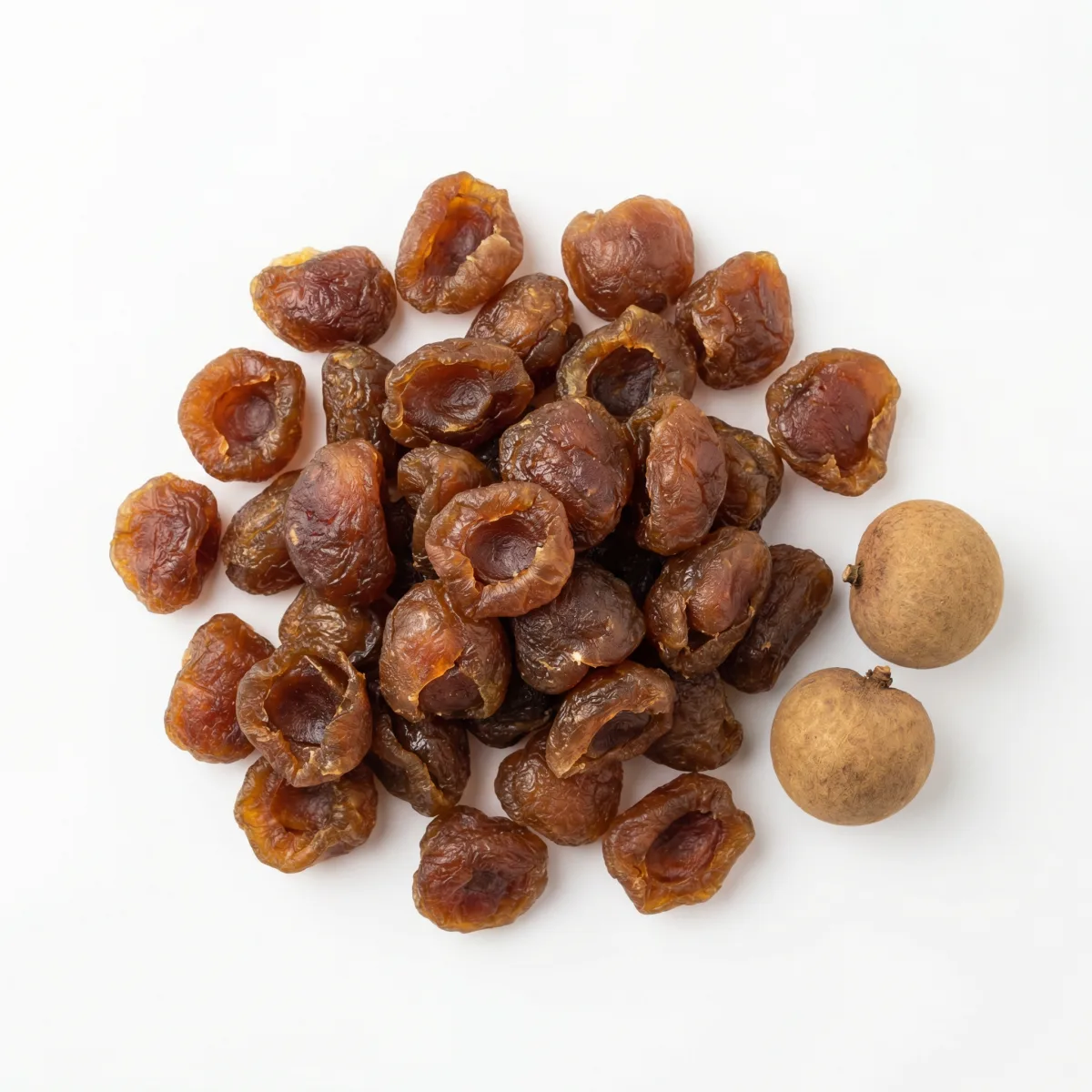
Long Yan Rou — das Fruchtfleisch der Longanfrucht — ist ein süßes, warmes Tonikum, das gleichzeitig Blut und Qi nährt. Es stärkt die Milz und das Herz und ist besonders bei Heart-blood deficiency mit unruhigem Shen und Herzklopfen geschätzt.
Als wohlschmeckendes Nahrungsmittel und Tonikum zugleich eignet es sich besonders zum Aufbau von Blut und Qi nach Erschöpfung oder Blutverlust. Das Shén Nóng Běn Cǎo Jīng führt es in der oberen Klasse.
Effect from a TCM perspective
- Long Yan Rou nährt das Herz–Blut und beruhigt den Geist — bei zerstreutem Shén mit unruhigem Schlaf, schwachem Gedächtnis und Herzklopfen durch Herz–Blut–Mangel.
- It stärkt das Milz–Qi und fördert die Blutbildung.
- Bei anhaltender Erschöpfung, blassem Gesicht und schwachem Appetit nach langwierigem Kräftemangel ist es ideal.
- It hebt das Qi und verhindert das Absacken — bei Organsenkung und anhaltend breiigem Stuhl durch Milz–Qi–Mangel.
- Die warme Natur macht es besonders geeignet bei Kälte–Konstitutionen.
Application & dosage
- 10-15 g in a decoction (standard dose)
- Bis 30 g bei starkem Blut–Mangel
- Als Tee oder Snack: 5–10 Stück täglich
Dosage forms
- Decoction
- Tea
- dried as a snack
- Congee
- Wine
- Granules
Dosage
- 10-15 g (Decoction)
- bis 30 g bei starkem Blut–Mangel
- als Nahrungsmittel 5–10 Stück täglich
Frequent combination partners
Long Yan Rou often does not reach its full potential until it is combined with other herbs
History & Tradition
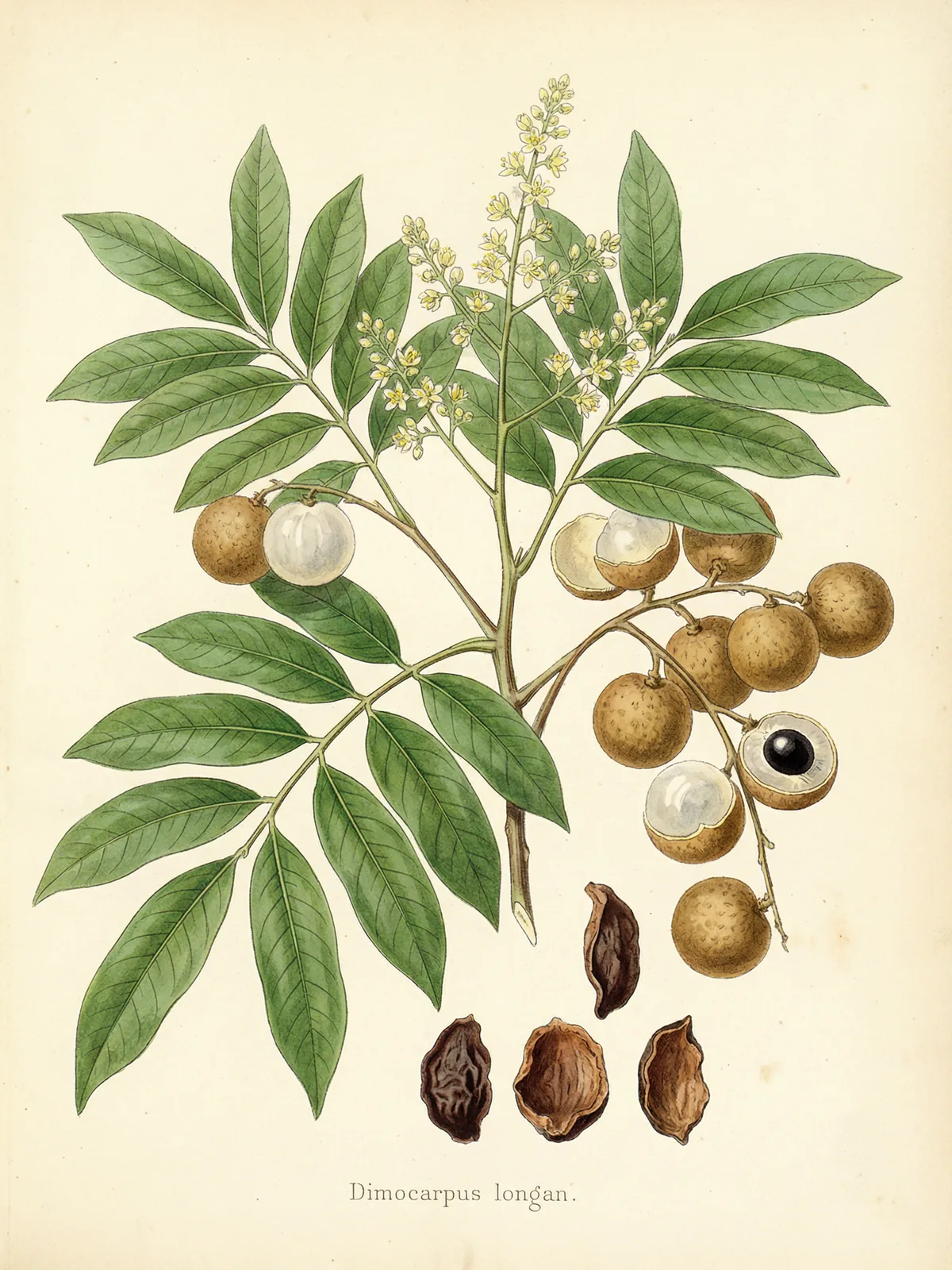
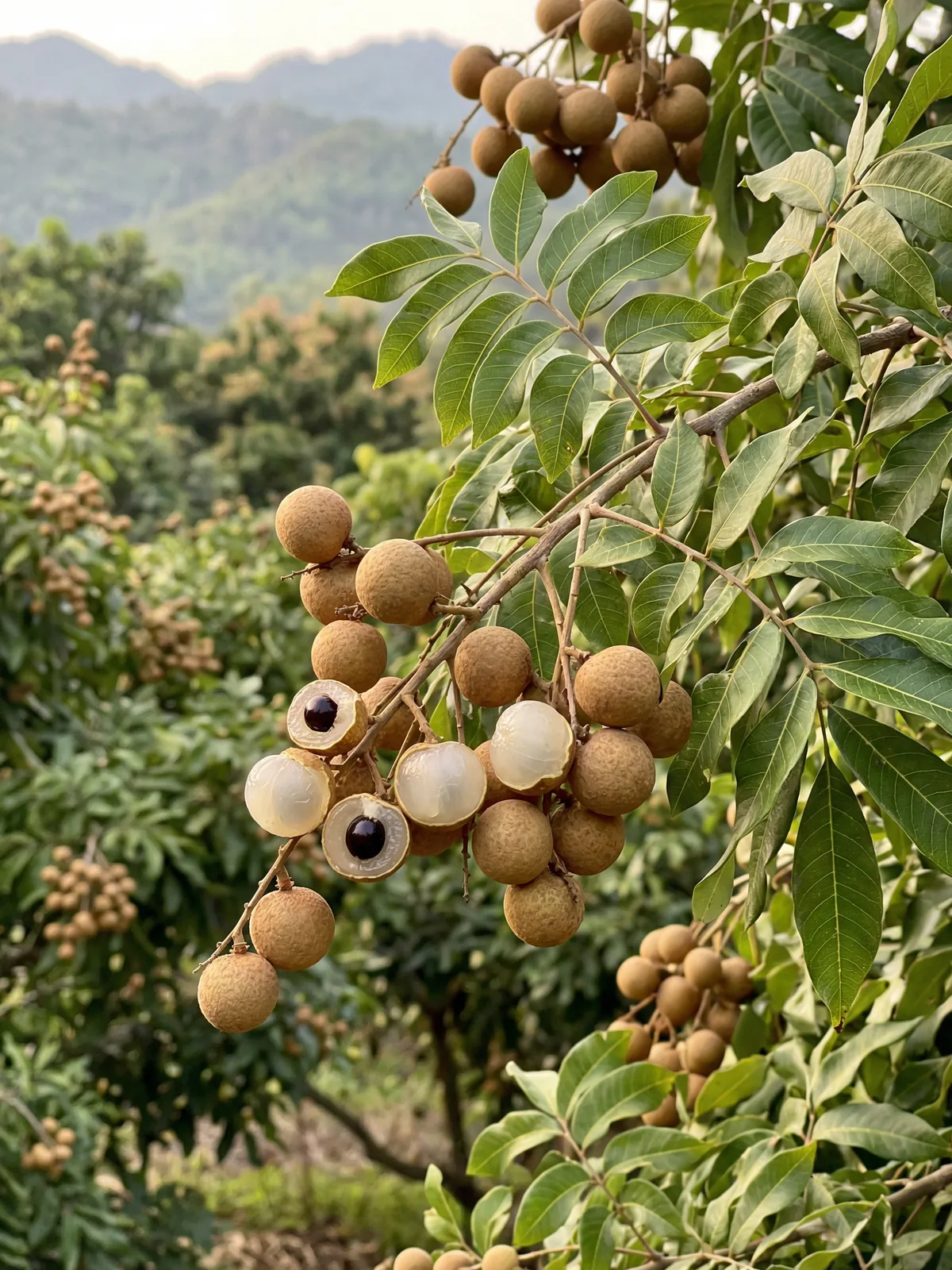
Long Yan Rou wird im Shén Nóng Běn Cǎo Jīng als Kraut der oberen Klasse aufgeführt — ein Zeichen dafür, dass es den Körper nährt, ohne ihm zu schaden. Der Name Lóng Yǎn Ròu — Drachen–Augen–Fleisch — leitet sich von der Ähnlichkeit der geschälten Frucht mit einem Augapfel ab: die transluzente Frucht umgibt einen dunklen, glänzenden Kern.
In der Ming–Dynastie verwendete der Arzt Wang Kentang Long Yan Rou als Hauptbestandteil einer eigenen Rezepturvariante — die bis heute als wichtigste Formel bei gleichzeitigem Herz–Blut–Mangel und Milz–Qi–Mangel gilt.
Contraindications & caution
- Schleim–Feuchtigkeit: Nicht anwenden bei Schleim–Feuchtigkeit, Völlegefühl und Übelkeit — die süße, warme Natur erzeugt Feuchtigkeit und kann Schleim verschlimmern.
- Yin deficiency: Nicht bei innerer Hitze oder Yin–Mangel mit Hitzezeichen.
- Pregnancy: Vorsicht in der Schwangerschaft bei Neigung zu Ödemen oder Feuchtigkeit.
- Diabetes: Vorsicht bei Diabetes wegen des hohen Zuckergehalts.
- Infekten: Nicht bei akuten Infekten mit Fieber.
Botany
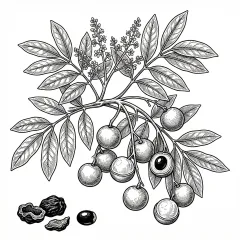
Dimocarpus longan ist ein immergrüner Baum aus der Familie der Seifenbaumgewächse (Sapindaceae), der 10–20 m hoch wird. Die kugelförmigen Früchte (2–3 cm Durchmesser) haben eine dünne, bräunliche Schale und ein transluzentes, saftiges Fruchtfleisch. Für die medizinische Verwendung wird das Fruchtfleisch getrocknet — es wird dabei dunkelbraun und schrumpelig.
Distribution: Southeastern China (Guangdong, Fujian, Guangxi), Thailand, Vietnam. Harvested in late summer.
Occurrence
Südostchina (Guangdong, Fujian, Guangxi), Thailand, Vietnam, Myanmar. Kultiviert in tropischen und subtropischen Regionen weltweit.
Harvest time
Late summer (Juli–August); je nach Region auch bis September.
Processing
Frische Früchte werden geerntet und getrocknet — entweder an der Sonne oder mit Heißluft. Das Fruchtfleisch (Arillus) wird von Schale und Kern getrennt. Für den Einsatz als Droge werden die getrockneten Fruchtfleischstücke verwendet — dunkelbraun, leicht klebrig und süß.
Related herbs
Herbs with similar effects and related areas of application