









Grief in Chinese medicine
When the lungs get tired

Grief loses its heaviness when you find the stillness within you again.
Grief from the TCM perspective
Grief is not a loud emotion. It is not like grief that overwhelms you,
but more like a heavy veil, that lies over you day after day.
👉 Important: In Chinese medicine, grief and sadness are both assigned to the metal element and the lungs - but they are not identical, they are finely differentiated:
- Mourning (悲 Bēi): a strong, acute emotion after loss that blocks or disperses the lung qi.
- Grief (憂 Yōu): a quiet, persistent heaviness that weakens the Qi and exhausts the lungs - more subtle but more protracted.
While grief comes suddenly and moves us, sorrow is what remains when worries never end. It doesn't make you loud - it makes you tired.
🫁 Grief in the TCM system
The lung is the most delicate organ in the system of the five Zang (Yin organs).
It connects us with the outside world through our breath, skin and voice.
If grief lasts too long, the lungs become exhausted and lose their ability to regulate Qi.
Typical signs of grief:
- Tiredness, quiet withdrawal
- shallow breathing, weak voice
- Dry skin or pale complexion
— the feeling of being less resilient
— an inner feeling of „being drained by worries“
In TCM they say:
„Grief saps the lungs“ qi—quietly but steadily.”
🌿 What helps with grief?
Sorrow exhausts the lung qi quietly and constantly.
Chinese medicine does not rely on repression here - but on gently opening and strengthening the lungs.
With movement, acupressure and small rituals, you can give your breath space again and lighten the heaviness step by step.
💠 Qi gong exercise - drawing the bow
→ The movement symbolizes: absorbing tension - and releasing it. It brings energy back into flow - and lightness into the chest.
👉 To the exercise instructions:
www.meine-tcm.com/qi-gong-uebung-den-bogen-spannen
Acupressure point - LUNG 9 (Tài Yuān)
This point strengthens your lung energy and helps ease the burden of grief.
👇 Instructions here:
www.meine-tcm.com/akupunkturpunkte/akupunkturpunkt-lu-09
🍵 Mild support
- Thyme tea: warming and clarifying.
- Lime blossom tea: soothes gently, releases inner tension.
These teas are readily available and gentle enough to nourish the lung energy without straining it.
🌲 Contact with nature
Fresh, clear air reminds the lungs of their actual task: absorbing and releasing.
A walk in the forest or in the clear autumn air can strengthen the Qi of the metal and create inner space.
🔎 What your tongue tells you
Grief is often found in the front third of the tongue diagnosis:
- Pale, slightly sunken shape
- Thin coating
- Dry surface
- sometimes fine cracks
🎥 Watch our video on tongue diagnosis:
www.youtube.com/watch?v=L-cOXGvci1Y
🧭 Your free TCM analysis
Grief is more than a feeling - it changes the flow of your Qi.
Chinese medicine asks: Where is the lung weakened, where are you holding on?
With the free TCM analysis you will find out how your energy is currently distributed - and which steps can help you to breathe more easily again.
👉 Do your TCM analysis now: www.meine-tcm.com/tcm-analyse
✨ Conclusion
Grief is the quiet sister of sadness. Not stormy, not overwhelming - but a steady weight that tires the lungs.
Chinese medicine understands grief as a form of Qi exhaustion. With breathing, movement, acupressure, herbs and simple rituals
the lung qi can be nourished again.
When sorrow becomes lighter, the clarity of the metal returns -
and with it the lightness of breath.
Sorrow is not a storm - it is the mist that slowly condenses the Qi of the lungs.
Author: Unknown
More interesting tips & articles
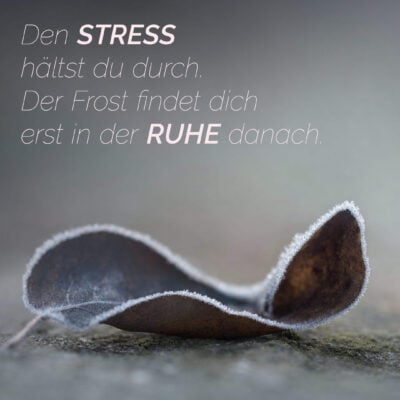
TCM tip of the week
Kaum ist es geschafft, liegst du flach
Wochenlang hältst du durch, und kaum ist der Umzug oder das Projekt geschafft, kratzt der Hals. Warum die Abwehr ausgerechnet in…
Oct

TCM tip of the week
Warum du im Herbst öfter seufzt
Manchmal seufzt du, ohne zu wissen, warum. Es ist, als wollte etwas heraus, das du nie ausgesprochen hast. Das ganze Jahr…
Sep

Sep


Our most popular products





Back pain