







Ze Xie — Water Realm
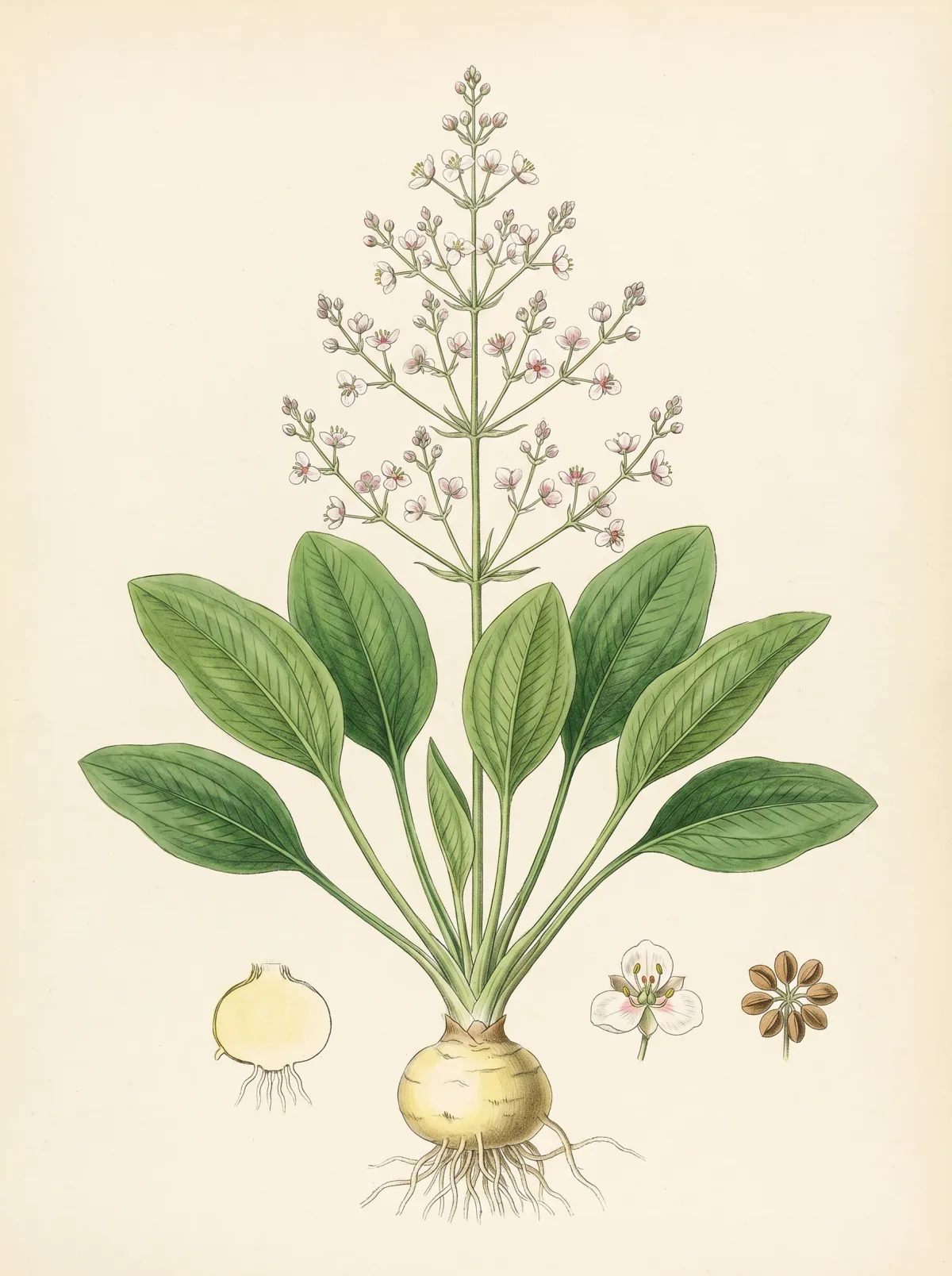
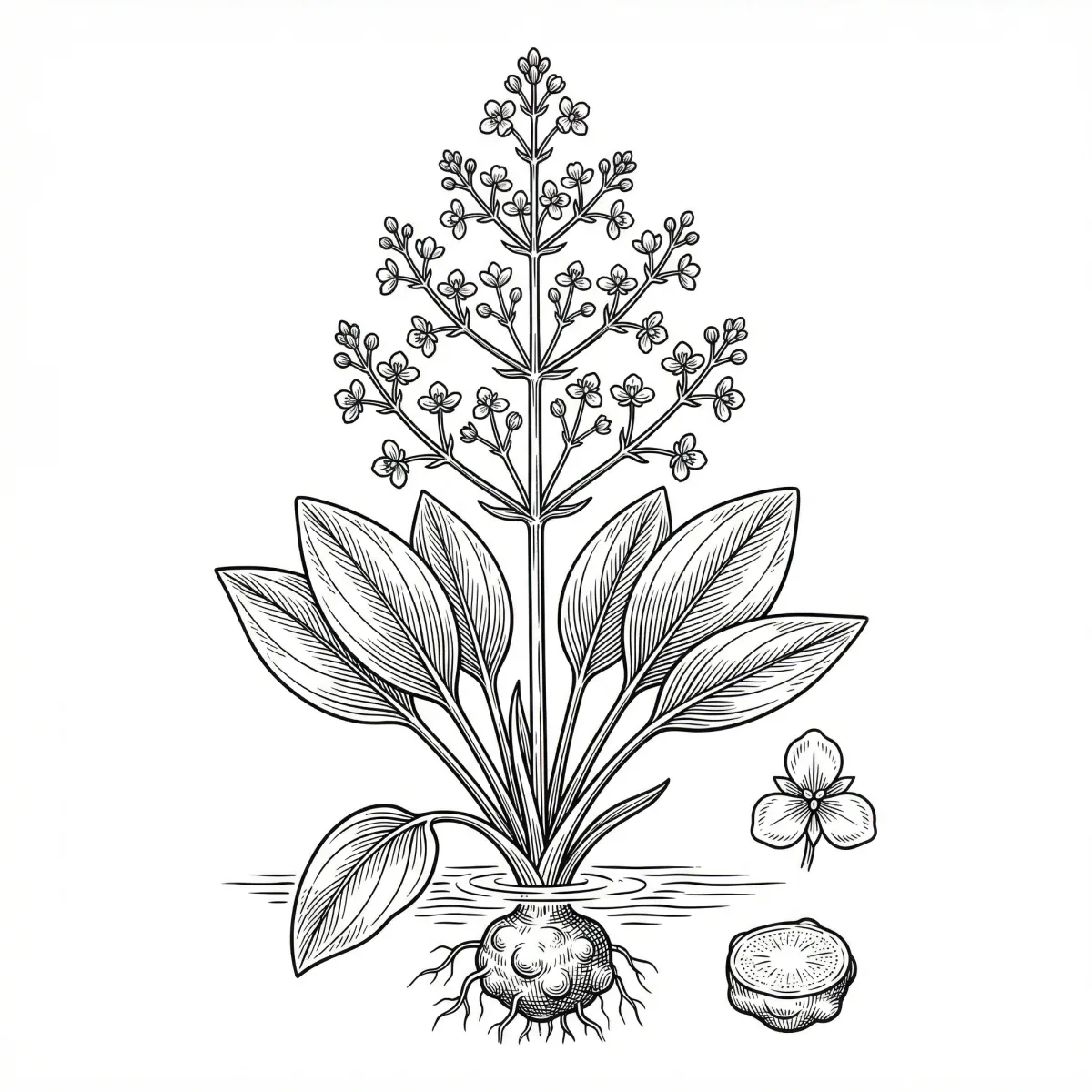
Ze Xie (Alismatis Rhizoma) is the dried rhizome of Alisma orientale of the Alismataceae family — a perennial wetland plant, which thrives in the humid lowlands of East Asia. The tuber is harvested in winter after the above-ground parts have died back, then peeled and dried.
In Western research, Ze Xie provides a distinctive group of bioactive triterpenes—the so-called Alisole — which have sparked interest in modern phytochemistry. Its detoxifying, lipid-lowering, and hepatoprotective effects have been documented; the substance is therefore considered one of the most scientifically well-studied TCM detoxifying agents.
Effect from a TCM perspective
Ze Xie is one of the most important dampness-draining herbs in TCM. With its sweet, bland, and slightly cold nature, it acts deep within the Lower Burner—it promotes urination, drains pathological dampness, and simultaneously clears rising kidney fire.
- Drain moisture and water — Ze Xie drains pathological dampness from the Lower Burner — for cases of stagnant dampness, a heavy sensation in the body, and swollen tissues.
- Promote urination and clear dampness and heat — When there is dampness and heat in the bladder, Ze Xie relieves dysuria, cloudy or burning urine, and a pulling sensation during urination.
- Dispel Kidney Fire (Clearing Xiàng Huǒ) — It disperses rising ministerial fire of the kidney — a crucial balancing agent in Yin-tonifying formulas such as the classic Six-Herb Formula, which nourishes kidney Yin, where it prevents the nourishing herbs from causing dampness to accumulate.
- Regulate hydrogen exchange — When combined with spleen-tonifying herbs, Ze Xie supports the transformation and elimination of dampness in cases of loose stools caused by spleen deficiency with retained dampness.
Application & dosage
Ze Xie is used in the traditional decoction with 6–12 g Used. Salt processing (Yán Zhì) enhances the action on the kidney and bladder—in cases of pronounced dampness stagnation, the dose can be increased to up to 15 g. For long-standing spleen deficiency, a moderate dose of 9 g is recommended in the formula.
As a granule extract (5:1 concentration), the following are typically sufficient: 1–2 g per dose. Ze Xie should not be taken as a single remedy in high doses over a long period of time, as its cold, purgative nature can deplete Yin and bodily fluids over time.
Dosage forms
- Decoct: Traditional method of preparation: simmer for 20–30 minutes
- Granule extract: Dissolved in hot water, quick to prepare
- Powder (Sǎn): Rarely used as a single ingredient; more commonly found in formula powders
- Pills/Tablets: e.g., as a component of the classic six-herb formula, which nourishes kidney yin
Dosage
- Decoct: 6–12 g (up to 15 g in cases of moisture accumulation)
- Granule extract (5:1): 1–2 g
- Powder: 2–4 g
Frequent combination partners
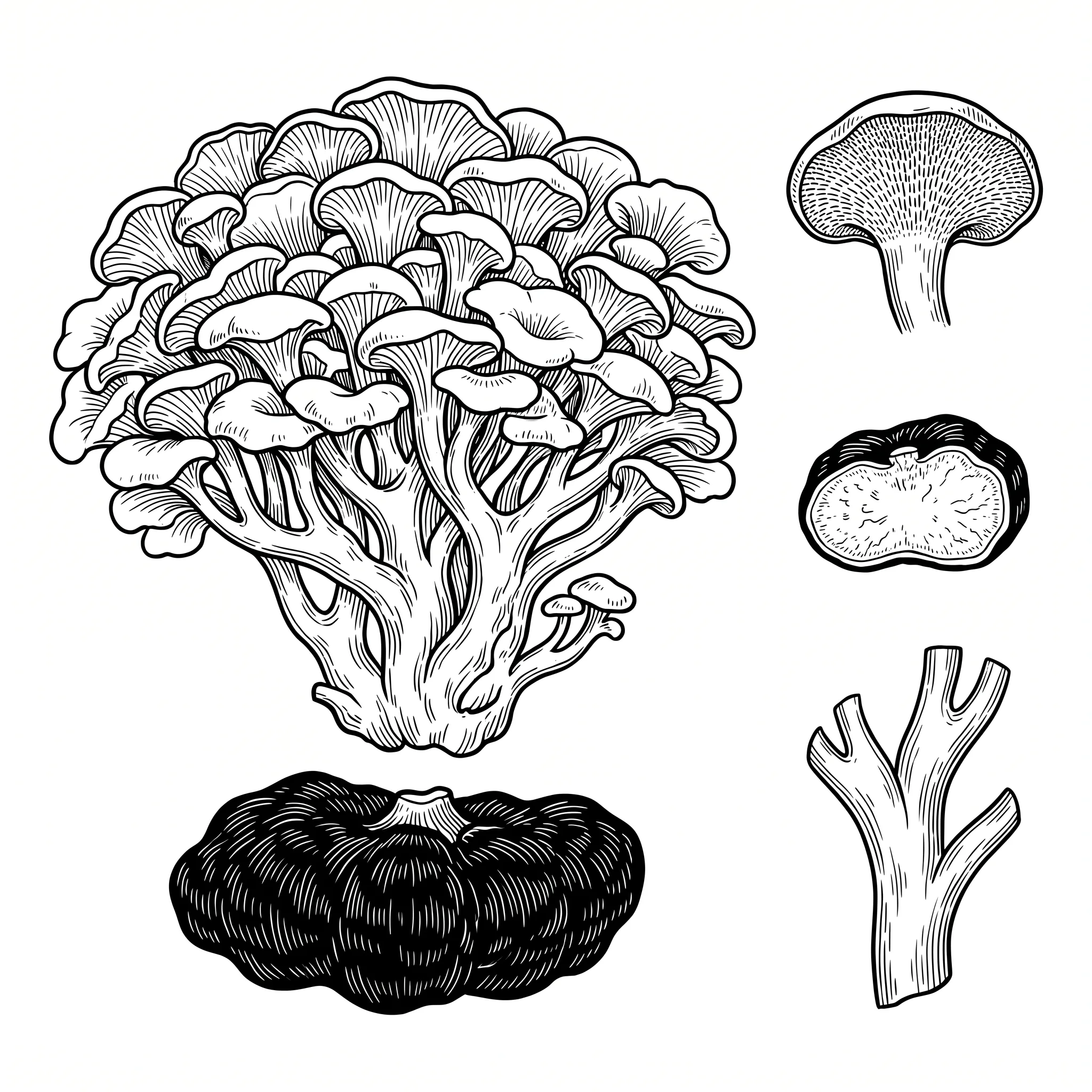
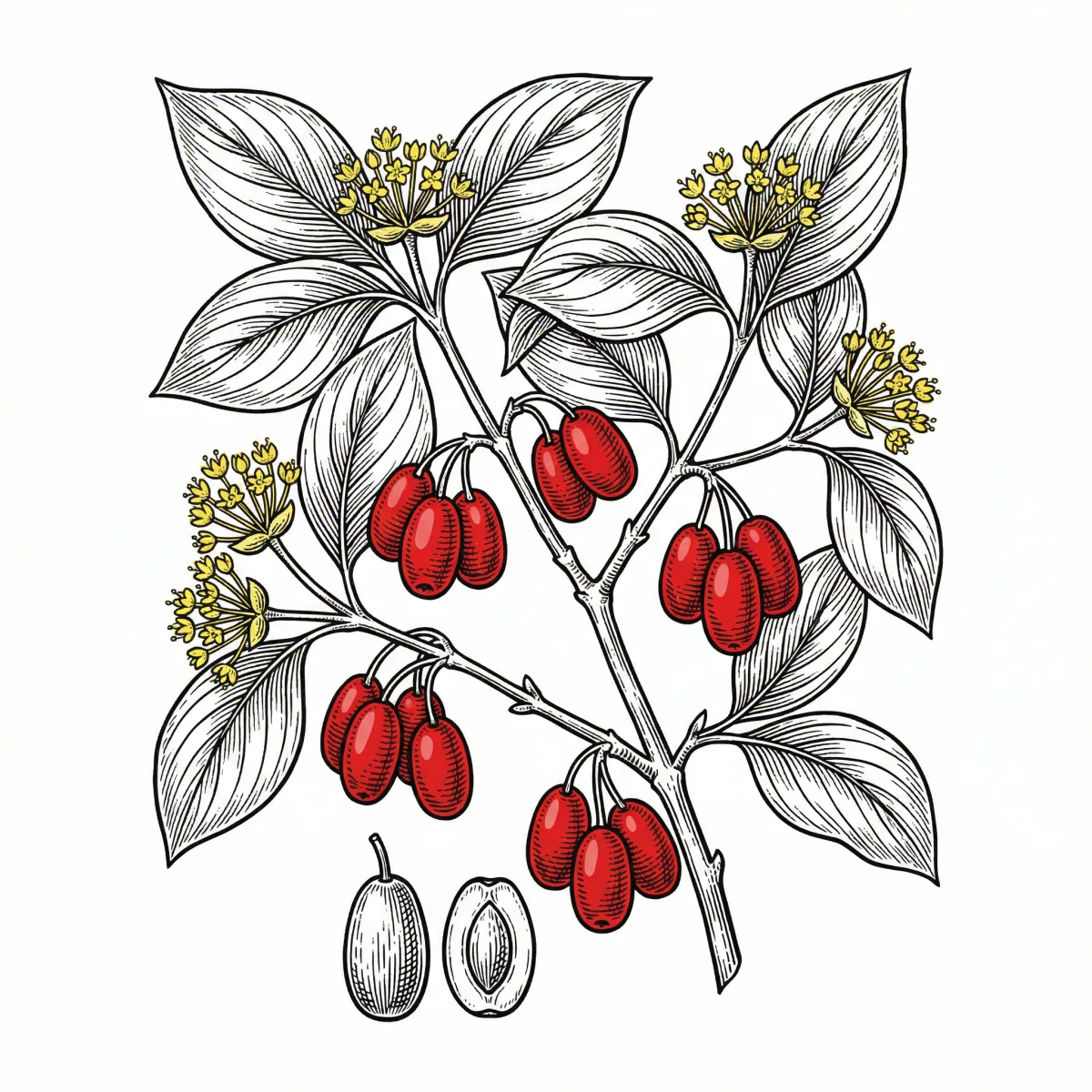
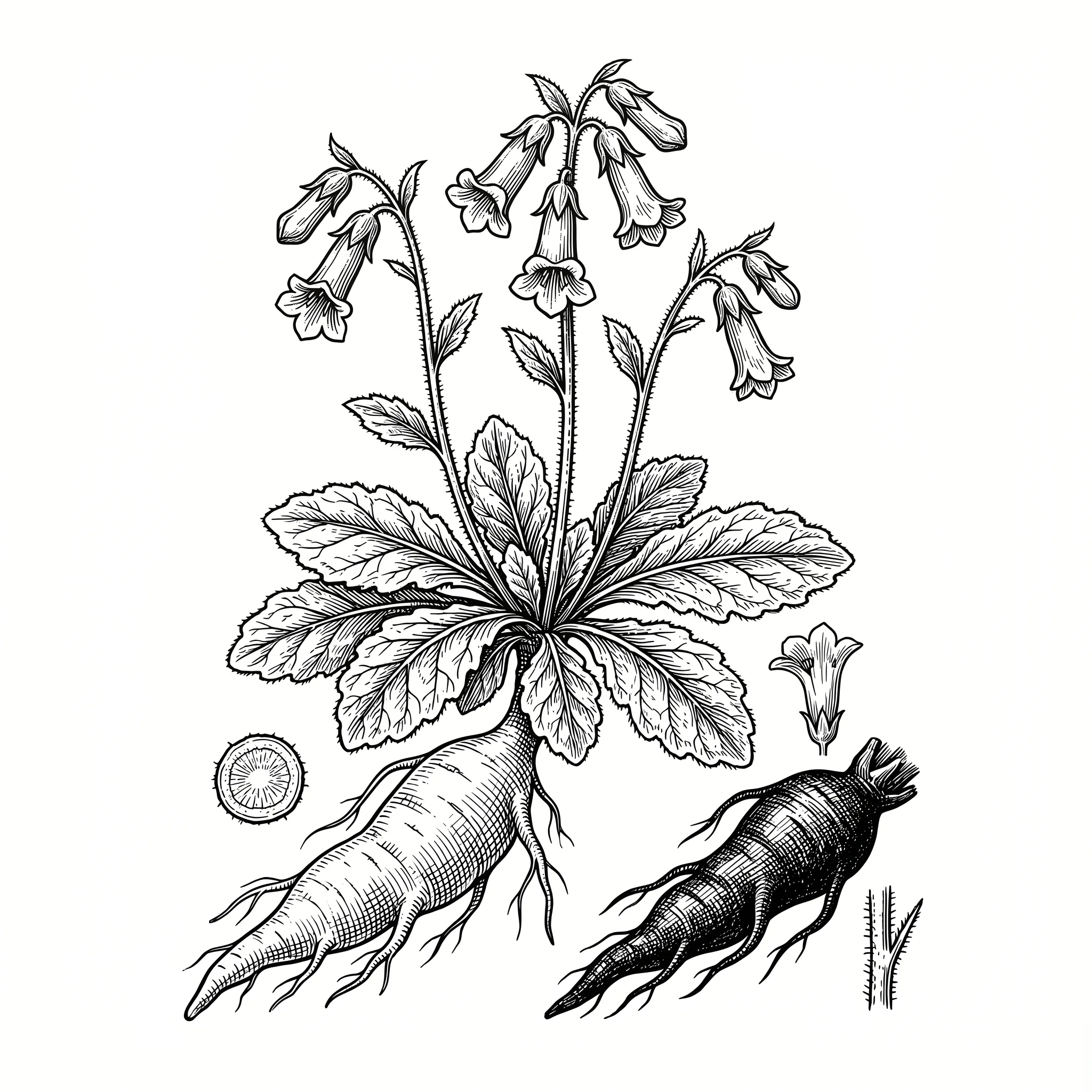
Ze Xie often does not reach its full potential until it is combined with other herbs
History & Tradition
Anyone who wants to understand the story of Ze Xie must go to the water—to the quiet pondshores and flooded rice fields of southern China, where the Oriental water-plantain stretches its broad leaves over the water. Even the authors of the Shennong Bencao Jing, the oldest systematic treatise on herbs in China, dating from the Han Dynasty, was known to Ze Xie, who classified it among the highest class of remedies—those that can be taken long-term without harming the body.
The Signature Principle — The idea that a herb’s environment reflects its effects — is particularly evident in the case of Ze Xie. The tuber grows even in the midst of standing water, surrounded by dampness and moisture. And yet it does not become diseased. It transforms the dampness, channels it away, and remains clear—exactly what it is meant to do in the human body: expel turbid, pathological dampness through the bladder without depleting the vital fluids.
Ze Xie is best known as an integral part of the classic six-herb formula that nourishes kidney yin. This formula, first developed by a physician of the Song Dynasty Qián Yǐ First described in the 11th century for children with kidney yin deficiency, it remains one of the most widely used TCM formulas in the world today. Ze Xie plays a subtle yet indispensable role in this formula: it serves as the counterbalance. While Shú Dì Huáng, Shān Zhū Yú, and Shān Yào deeply nourish and tonify, Ze Xie—together with Fú Líng and Mǔ Dān Pí—ensures that the rich, moisture-generating power of the tonifying herbs does not become stagnant. It drains excess, dissipates Minister Fire, and maintains the balance between fullness and flow. This principle of „three tonifications and three drainages“ is considered a masterpiece of classical formula design.
In the historical literature on the Bēncǎo Gāngmù, In the 16th-century compendium of herbal medicine by Li Shízhén, Ze Xie is described as a remedy that „regulates water, clears the kidneys, and eliminates rising fire that clouds the head.“ This description aligns exactly with modern TCM practice: Ze Xie is used when rising kidney fire clouds the mind and disrupts the upper orifices—not when there is pure deficiency alone. For centuries, doctors from Beijing to Guangzhou have relied on this unassuming marsh tuber. It is not a tonic, not an adaptogen, not a restorative—but without it, the classic kidney formula lacks balance.
Contraindications & caution
- Electrolyte loss during continuous use: As a potent diuretic, Ze Xie can lower potassium levels when taken long-term—especially at high doses. Regular laboratory monitoring is recommended during long-term use.
- Interactions with diuretics: Concomitant use with loop diuretics (e.g., furosemide) or thiazides enhances the diuretic effect and increases the risk of hypokalemia and dehydration.
- Renal insufficiency: Caution is advised in cases of impaired kidney function—an increased strain on the kidneys caused by triterpenes cannot be ruled out.
- Kidney Yang Deficiency / Dehydration: From a TCM perspective, it is contraindicated in cases of clear, copious urine, sensitivity to cold, or existing fluid deficiency—Ze Xie would worsen the condition.
Botany
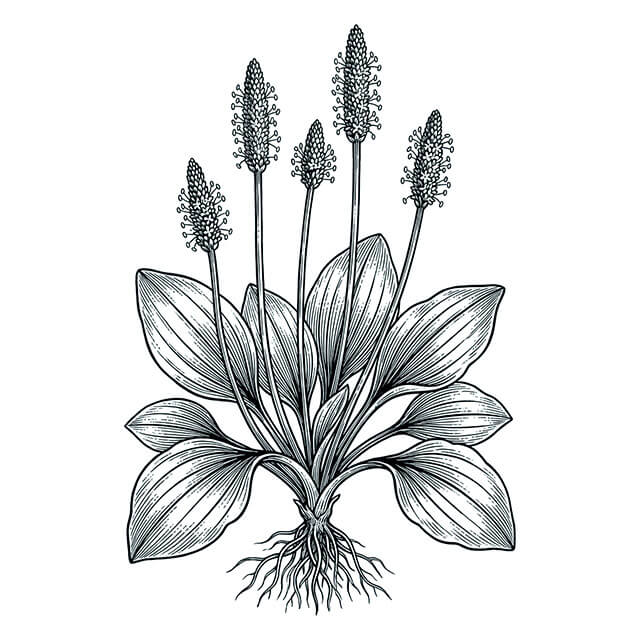
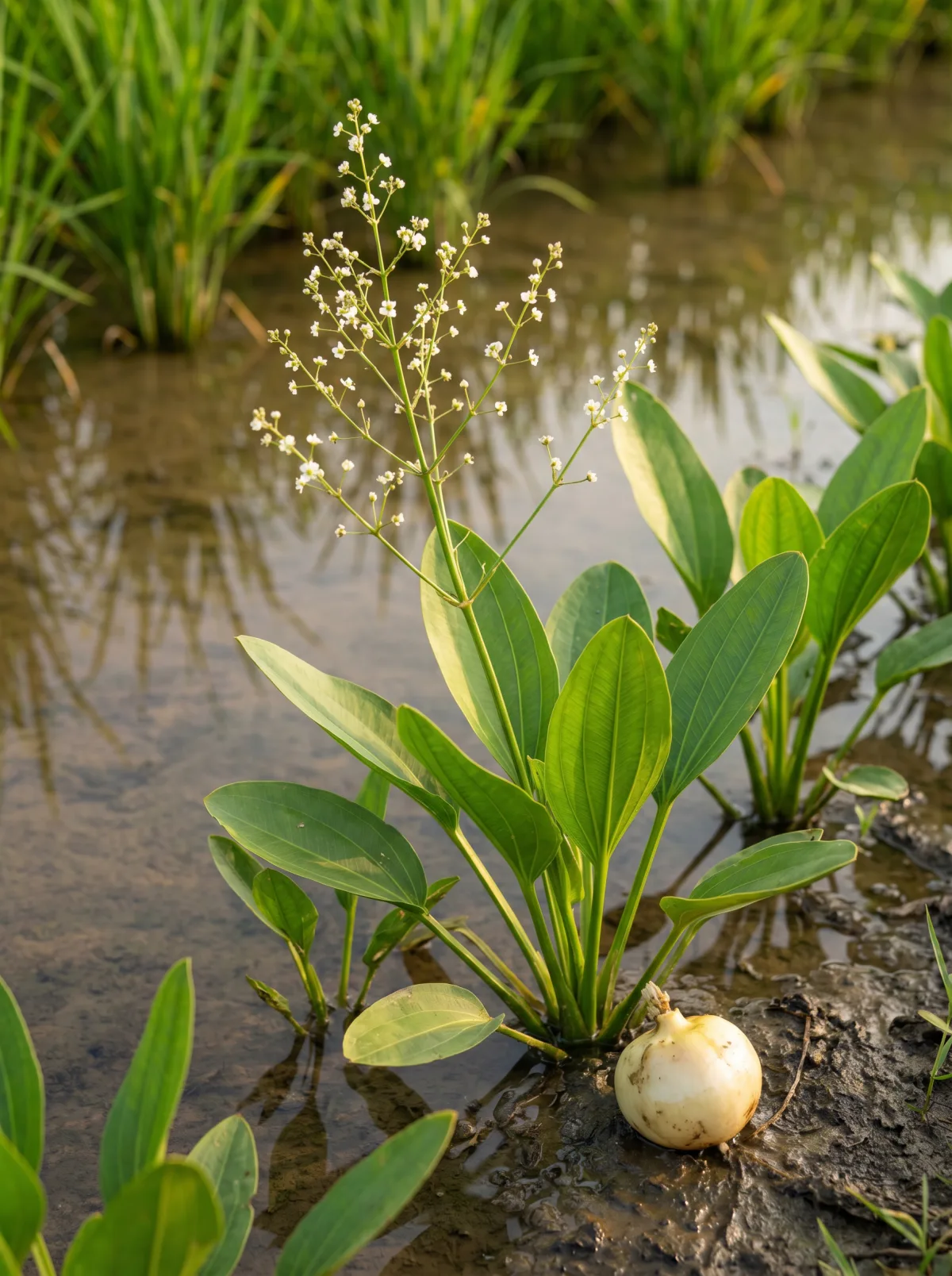
Alisma orientale (Juzepczuk) Juzepczuk belongs to the family of Alismataceae (Frogbit family) and is a perennial, herbaceous aquatic plant. It develops a rounded-oval, tuber-like shoot axis (rhizome) that is anchored in the substrate, as well as lanceolate, petiolate, floating leaves. The white to light pink flowers appear in panicle-like whorls from June through August. The plant is closely related to the common frogbit (Alisma plantago-aquatica) is related, but differs in leaf shape and alkaloid profile.
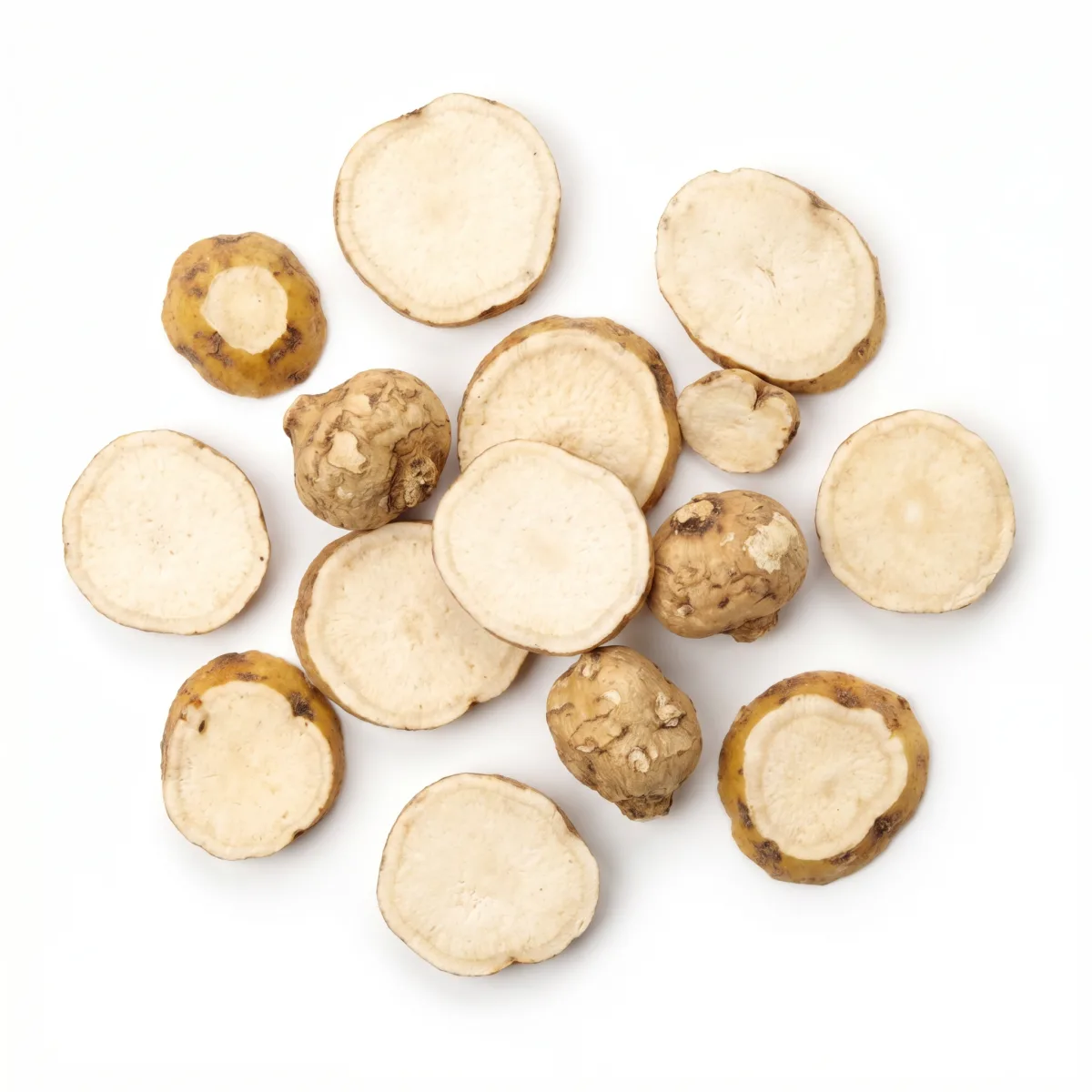
As a typical marsh plant, Ze Xie grows in shallow waters, rice paddies, pond edges, and damp depressions. To harvest the medicinal herb, the rhizome After harvesting in winter, it is cleaned, stripped of its roots and outer skin, and then dried—in many cases, it is also processed with salt water (Yán Zhì) to enhance its effect on the kidneys and bladder.
Occurrence
- China — Fujian: Most important growing region, known for particularly high alisol content (Jiànōu, Pǔchéng)
- China — Sichuan: A traditional growing region in the Chengdu Basin with ideal moist soil conditions
- China — Jiangxi: Another major production area in the Yangtze River basin
- Japan, Korea, Vietnam: Found in the wild and in small-scale cultivation; botanically identical to or very closely related to the Chinese variety
Harvest time
- Main harvest time: November through February (after the first frost, when the above-ground parts have died)
- Rhizomes that are 1–2 years old are harvested—younger rhizomes contain fewer active compounds, while older ones tend to become woody
- Major growing regions: Sichuan Province (Shuì Zé Xiè) is considered a premium growing region; Fujian and Jiangxi as well
- After harvesting, the roots and fibers are removed; the tuber is washed, sliced, and dried in the open air or at a low temperature
Processing
Ze Xie is prepared in three different ways, depending on the desired effect:- Raw (Shēng Ze Xie): unprocessed; strongest dampness-draining effect; preferred for acute damp-heat in the bladder with stagnant dampness
- Roasted in salt water (Yán Zhì Ze Xie): The tuber is moistened with salt water and roasted over medium heat; The salty taste directs the effect to the kidneys—enhancing the elimination of kidney fire and kidney heat; preferred in yin-tonifying formulas such as Liù Wèi Dì Huáng Wán
- Toasted with bran (Fū Chǎo Ze Xie): Roasting in wheat bran mitigates its cold nature and protects stomach qi; suitable for patients with weak spleen-stomach function
Related herbs
Herbs with similar effects and related areas of application