






Zao Jiao Ci — Honey locust
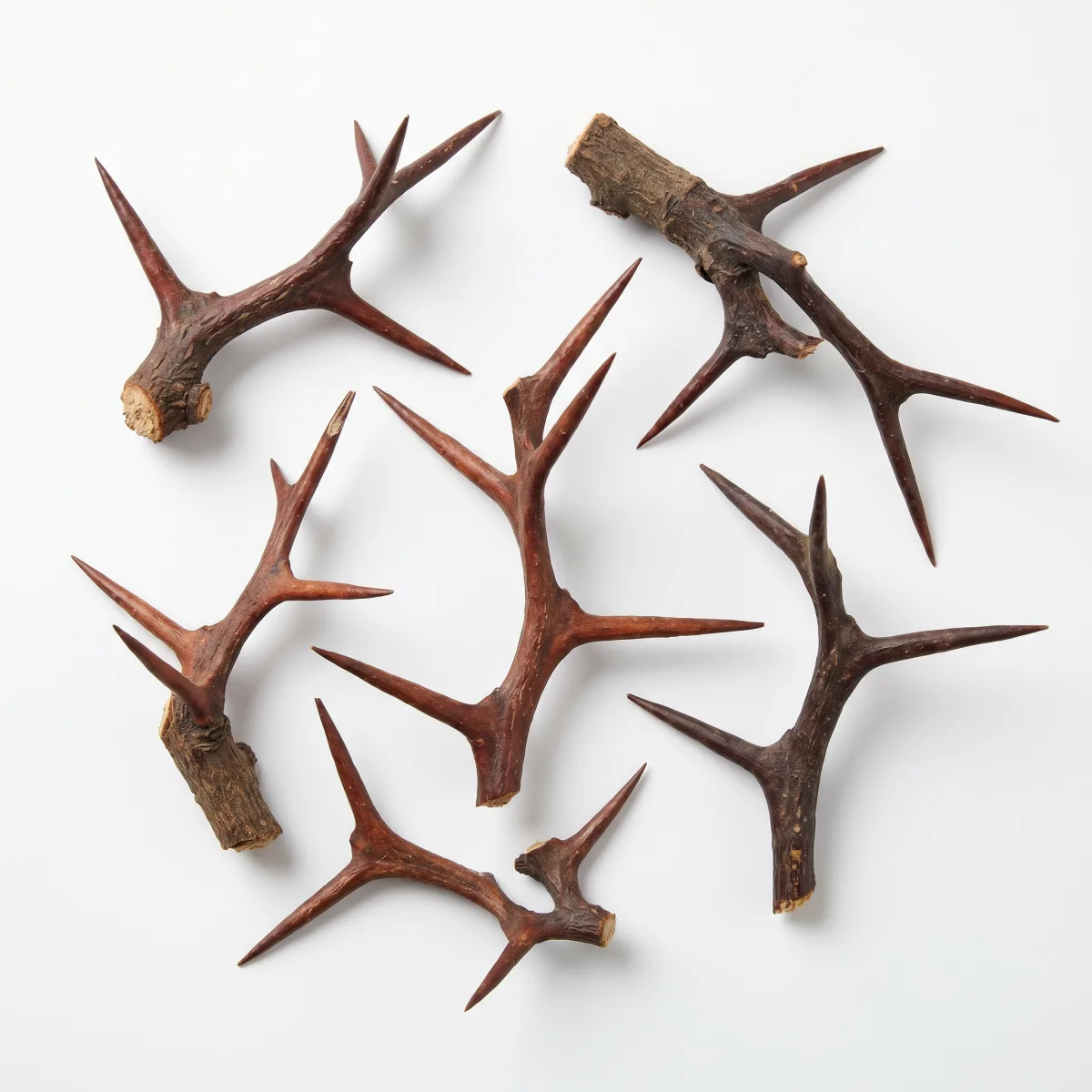
Zao Jiao Ci — the honey locust thorn — is derived from the dried, branched thorns of Gleditsia sinensis (Fabaceae). From a Western perspective, it is a plant-based raw material derivative with proven bioactive constituents: triterpenoid saponins, flavonoids, and phenolic acids characterize its pharmacological profile.
In the surgical tradition of TCM (Wài Kē), it is classically used to treat abscesses and boils. Modern in vitro studies support its antimicrobial and immunomodulatory effects—an interesting intersection between empirical tradition and laboratory-based evidence.
Effect from a Western perspective
The thorns of Gleditsia sinensis contain triterpenoid saponins (gledit saponins), flavonoids, phenolic acids, and polysaccharides. Recent cell culture and animal model studies demonstrate a broad pharmacological spectrum—clinical human studies are still pending for most indications.
- Antibacterial: In vitro, the extracts inhibit the growth of Staphylococcus aureus (including MRSA strains) and Streptococcus pyogenes—a finding consistent with the traditional indication for abscesses.
- Antitumor (in vitro evidence): Gledit saponins induce apoptosis in tumor cell lines (including HeLa and MCF-7) and inhibit cell proliferation; caspase-3 activation is thought to be the mechanism involved. Clinical relevance has not yet been established.
- Immunomodulatory: Polysaccharide fractions activate macrophages, enhance phagocytic activity, and promote cytokine release (IL-6, TNF-α)—a possible molecular basis for the classic anti-inflammatory effect.
- Anti-inflammatory: In animal models, flavonoid fractions reduce edema and prostaglandin-mediated inflammatory responses.
Effect from a TCM perspective
Warm and pungent, Zao Jiao Ci penetrates the deepest tissues—it expels toxins, breaks up abscesses, and draws pus to the surface. With its sharp, penetrating nature, Zao Jiao Ci achieves what other herbs cannot.- Eliminates toxins and detoxifies heat-affected tissue (Jie Du)
- Drains abscesses and promotes the maturation of immature boils (Tou Nong)
- Draws pus to the surface and relieves hardened areas of inflammation
- Promotes blood circulation and relieves stagnation associated with lumps and swelling
- Repels wind and moisture and relieves itching associated with skin conditions
- Promotes milk flow in cases of mastitis caused by qi and blood stagnation
Application & dosage
In TCM practice, Zao Jiao Ci is primarily used as a decoction, with a standard dose of 3–10 g. For acute, unruptured abscesses, the dose may be increased to up to 15 g—always under medical supervision and for a limited period of time.
When taken as a powder, 1–3 g per dose is sufficient, as the dried and finely ground thorns are more potent. For external use, the powder is applied directly to immature abscesses or boils to speed up the maturation process and promote drainage.
Dosage forms
- Decoct: Most common method of use: the crushed thorns are simmered in water for 20–30 minutes
- Powder: Dried, ground thorns for oral use or topical application
- External washing: Concentrated decoction for applying to abscesses, boils, and inflamed areas of skin
Dosage
- Decoction: 3–10 g (standard dose); up to 15 g for acute abscesses
- Powder (oral): 1–3 g per dose
- For external use: powder undiluted or as a concentrated decoction
Combinations & formulas
- With Jin Yin Hua and Lian Qiao — For acute abscesses and boils accompanied by symptoms of heat: Herbs that clear toxins extinguish the heat, while Zao Jiao Ci opens the path to the outside.
- With Chuan Shan Jia (Pangolin Armor) — For deep-seated, hardened abscesses that refuse to mature: Incise and drain any areas that remain closed.
- With Pu Gong Ying (dandelion) — For mastitis and breast inflammation: Pu Gong Ying cools and detoxifies, while Zao Jiao Ci clears blockages and promotes milk flow.
- With Wang Bu Liu Xing (cowherb seeds) — for milk congestion while breastfeeding (not during pregnancy!): Together, they stimulate the flow of qi in the breast and promote milk flow.
History & Tradition
In the ancient medical texts of the Tang Dynasty—that golden age when Chinese medicine first flourished—Zao Jiao Ci is described as the „thorn medicine." Gleditsia sinensis, a stately tree with massive, branched thorns, grew along the paths and riverbanks of China. Farmers and healers recognized early on: What is sharp and piercing on the tree’s exterior acts the same way inside the body—it breaks through what is closed off. The doctrine of signatures in Chinese medicine saw the thorn as a living symbol: just as the tip pierces a membrane, so the herb opens hardened, pus-filled swellings. In the classic work „Wai Ke Zheng Zong" (Orthopedics and Surgery — Authentic Tradition, 1617), Chen Shigong devotes a separate section to Zao Jiao Ci. He describes it as the decisive remedy for all stages of a purulent abscess: in the early stage, it accelerates maturation; in the late maturation stage, it drives the pus outward. The famous physician Li Shizhen documented Zao Jiao Ci in the „Bencao Gangmu" (1596) and highlighted its efficacy for boils, carbuncles, and skin diseases. He emphasized the thorn’s unusual property: It acts not only on the surface but penetrates deeply—a quality he described with the term „penetrating sharpness." In folk medicine of the Song Dynasty, the thorn extract was applied externally to immature abscesses to accelerate maturation. When used internally, it was considered so potent that doctors expressly warned against its use during pregnancy—a precaution that has been passed down to modern practice. The tradition of surgical TCM (Wài Kē) preserves this knowledge to this day: Zao Jiao Ci is indispensable in any pharmacy for skin conditions and abscesses.
Contraindications & caution
Pregnancy: strictly contraindicated. Its powerful, dispersing effect on blood and qi can trigger uterine contractions and poses a serious risk of miscarriage—it is strictly prohibited throughout pregnancy.
Contraindicated for abscesses that have already ruptured and are completely drained—its rupturing effect is only effective for abscesses that are still closed or immature. It may irritate the tissue in open wounds without pus. Use caution in cases of pronounced Qi and blood deficiency without stagnation: its strongly moving nature disperses the already weakened Qi. May cause gastrointestinal irritation at higher doses; use with caution in patients with a sensitive gastric mucosa.
Botany
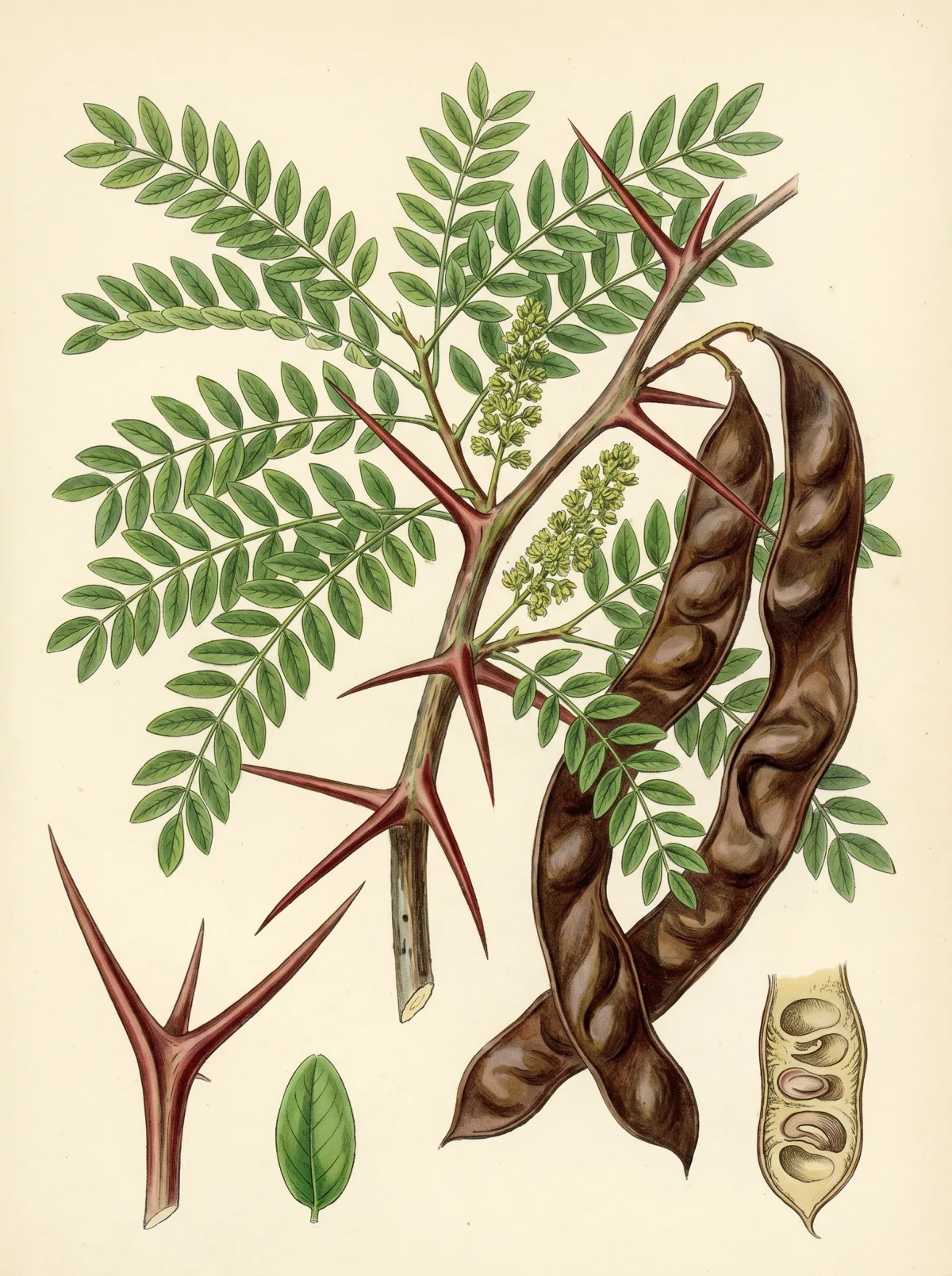
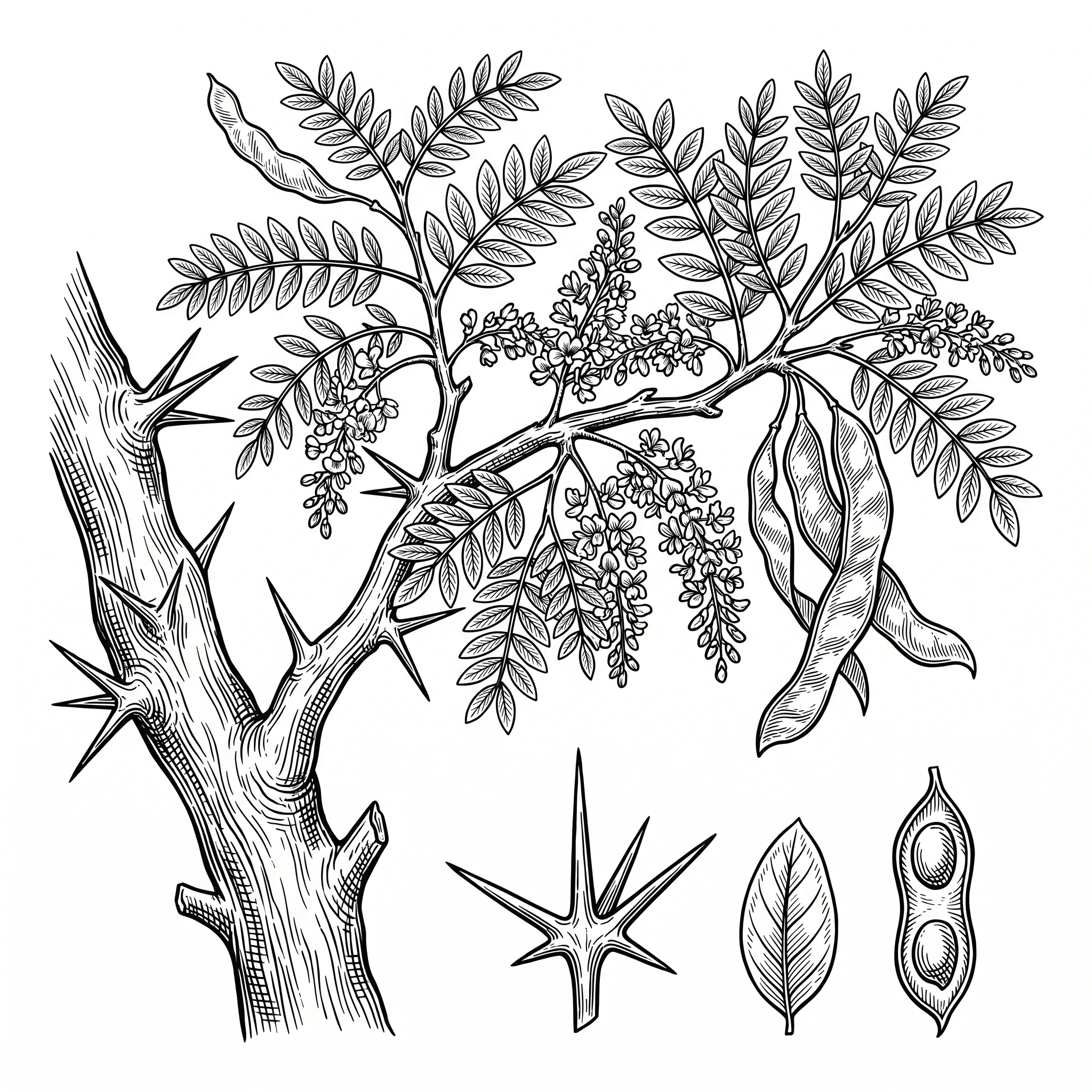
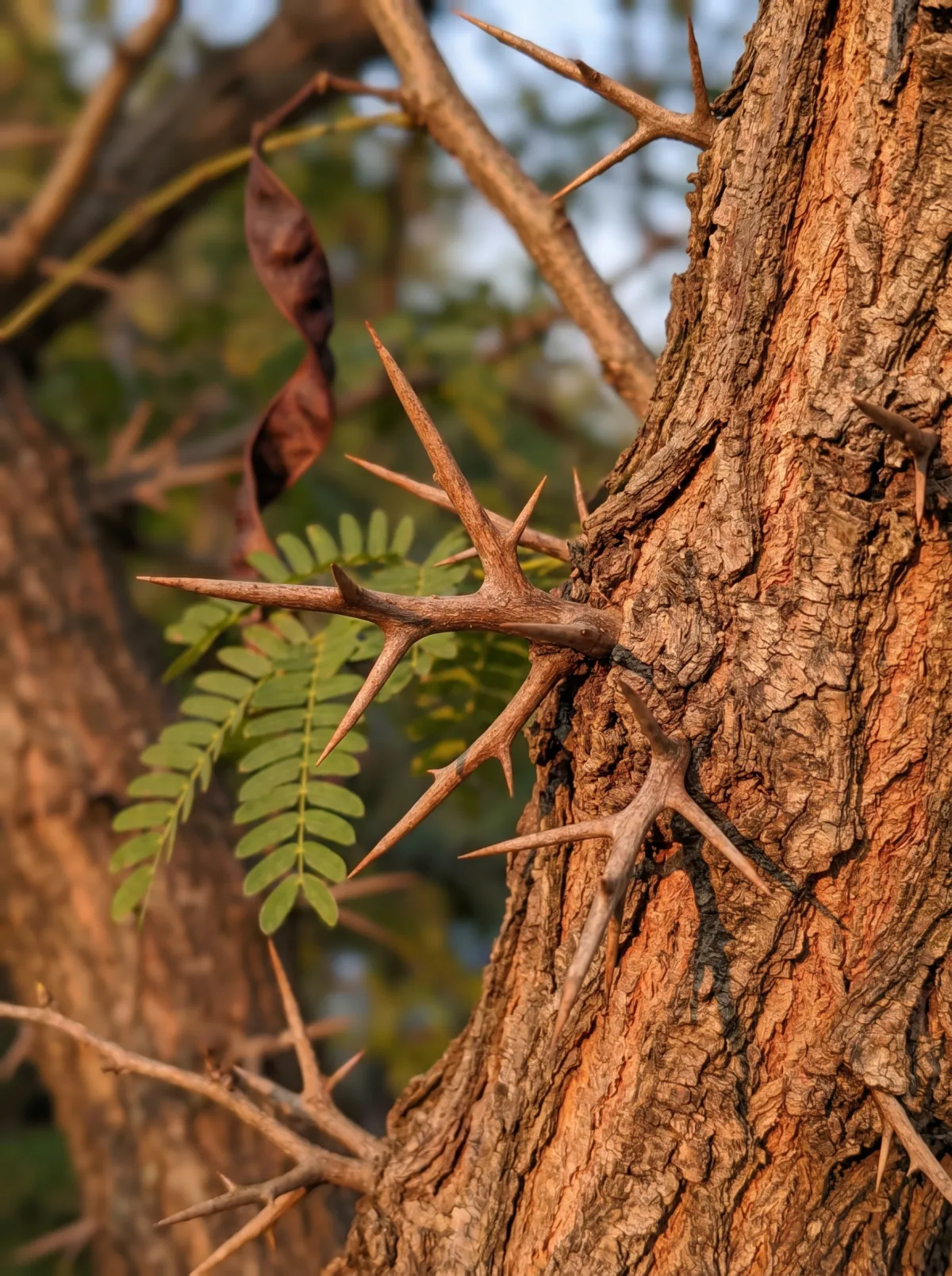
Gleditsia sinensis Lam. belongs to the Fabaceae family (legumes), subfamily Caesalpinioideae. This deciduous tree reaches a height of 10–15 m and bears conspicuous, reddish-brown to black thorns that emerge individually or in branched clusters directly from the trunk and older branches—not from leaf axils, but as modified short shoots (short spurs). These thorns can grow 3–15 cm long, are heavily lignified, and have a characteristically widened base tapering to a conical tip.
The leaves are alternate, simple or twice-pinnate with 14–24 leaflets. The small, yellowish-green flowers appear in axillary clusters from May to June. The fruits are 10–30 cm long, flat, often slightly twisted pods containing hard, brownish seeds—which are also rich in saponins (Zao Jiao). The medicinal product Zao Jiao Ci (皂角刺) consists exclusively of the dried thorns, preferably harvested in the fall or spring before flowering.
Occurrence
- China: Main growing regions in the provinces of Henan, Hebei, Shandong, and Shanxi
- Other occurrences in the provinces of Jiangsu, Anhui, Sichuan, and Yunnan
- Prefers riverbanks, forest edges, and semi-arid slopes with deep, calcareous soils
- Also grown in home gardens and along field boundaries as a natural hedge
Harvest time
- Can be harvested year-round, as the thorns on the Gleditsia sinensis tree remain present throughout the year
- Preferred harvest season: fall and winter, when the sap has receded and the active ingredients are more concentrated
- The thorns are broken off directly from the trunk and branches and then dried
Processing
After harvesting, the raw thorns (Shēng Zào Jiāo Cí) are cleaned, cut into slices or pieces, and air-dried. For oral use, they are often ground into a coarse powder.- Raw material processing: Dry freshly harvested thorns, cut them into thin slices, and use them to make a decoction or powder
- Cu Chao (vinegar stir-fry): Thorns soaked in rice vinegar and roasted over medium heat — enhances the blood-moving effect and tempers the pungent intensity
- Chao (dry roasting): Roasted without additives to reduce stomach irritation and extend the duration of use
Related herbs
Herbs with similar effects and related areas of application
Comparable western herbs
- Honey locust (American honey locust, North America) — a closely related species with a similar saponin profile; traditionally used in North American folk medicine to treat skin infections and swollen lymph nodes, but significantly less studied scientifically than G. sinensis.
- Calendula officinalis (Calendula) — also used for abscesses, boils, and slow-healing wounds; anti-inflammatory and antiseptic due to triterpenoid saponins and flavonoids — well-documented clinical data, similar classes of active compounds.
- Purple coneflower (Purple coneflower) — has immunomodulatory and antibacterial effects for recurrent skin infections and boils; stimulates macrophages in a manner comparable to the immunomodulatory fractions of Zao Jiao Ci.
- Baptisia tinctoria (Wild Indigo) — used in naturopathy for deep, slow-developing inflammatory foci and lymphatic swelling; similar therapeutic application, but based on alkaloids rather than saponins.