






Yu Jin — Turmeric Root
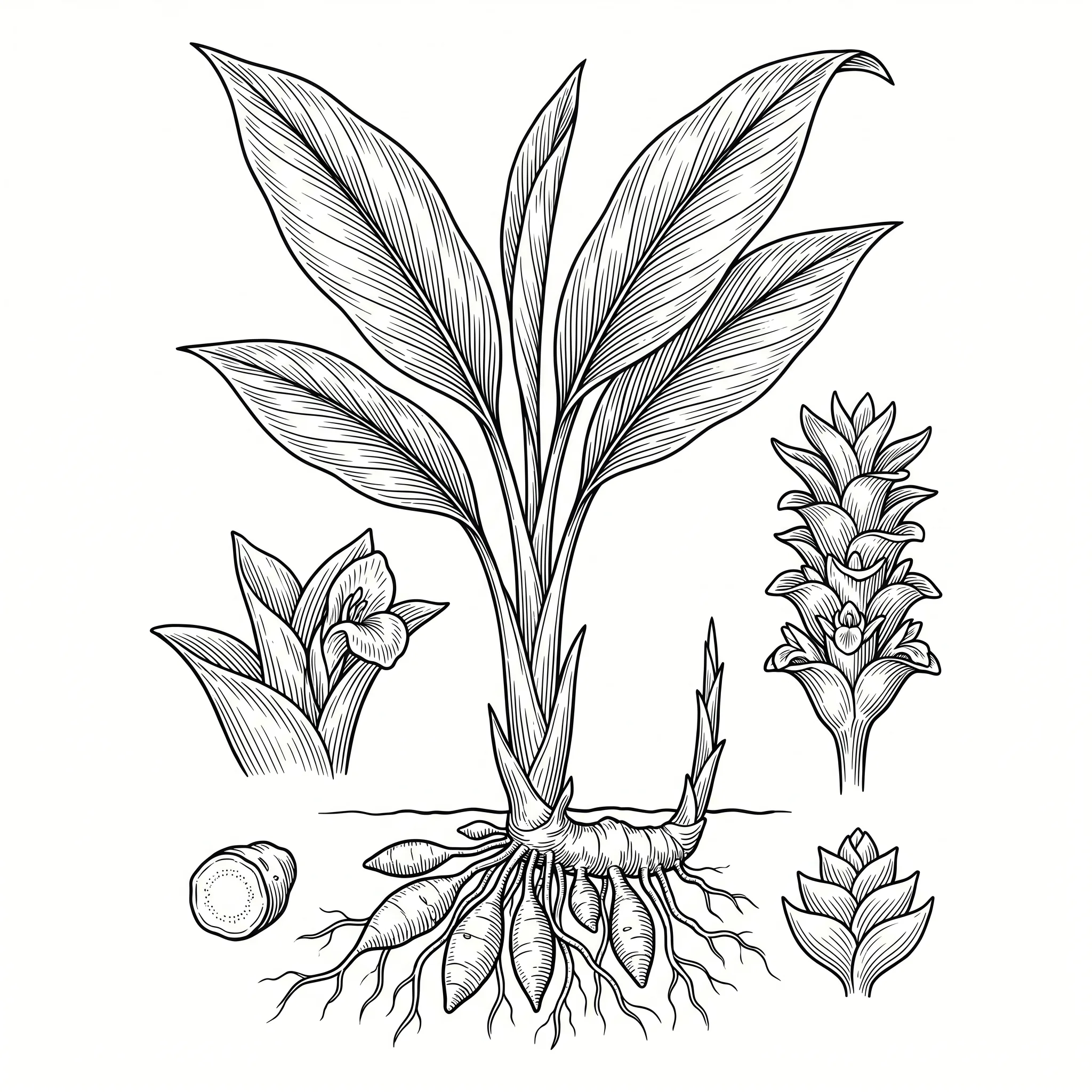
Yu Jin—the turmeric root—is one of the few TCM herbs that simultaneously promotes blood circulation, regulates qi, and clears heat. Biochemically, it contains curcuminoids, sesquiterpenes, and essential oils that protect the liver and cool the blood. Unlike its warming relative, Jiang Huang, Yu Jin has a cold nature — a distinction that is significant in herbal medicine as well as in Western research.
Western studies are particularly interested in its neuroprotective and hepatoprotective properties. The active ingredients influence the Microcirculation — a mechanism that explains why TCM uses it to treat conditions of stagnation in which blood and qi cannot flow freely.
Effect from a TCM perspective
Yu Jin promotes blood circulation, regulates qi, and clears heat from the heart and liver. Its cooling, blood-moving nature makes it unique among blood-moving herbs—it resolves stagnation without generating internal heat, and acts on four meridians simultaneously: the liver, heart, lung, and gallbladder.
- Gets the Blood Pumping and relieves blood stasis in the chest, flanks, and abdomen
- Regulates liver qi in cases of stagnation accompanied by a feeling of pressure and mood swings
- Clears heat from the heart and opens the senses when one is dazed or confused
- Cools the blood and retains it in the vessels (Zhǐ Xuè) in cases of blood heat, which causes the blood to leave its normal channels—into the nose, urine, or during menstruation
- Promotes the flow of bile and dispels damp-heat in the liver and gallbladder
- Clears Phlegm-Fire, which blocks the heart's sensory openings—during manic episodes and when consciousness is clouded
Application & dosage
6–12 g in a decoction (standard dose). Up to 15 g in cases of severe Qi and blood stagnation.
As a powder: 1.5–3 g per dose. For gallbladder Qi stagnation: combine with Jin Qian Cao.
Dosage forms
- Decoction
- Granules
- Tablets
- Powder
Dosage
6–12 g (Decoction)
Frequent combination partners
Yu Jin often only reaches its full potential when combined with other herbs
History & Tradition
Yu Jin—literally „Yu’s Gold" or „Yellow Gold Root"—is one of the classic Chinese herbs, the use of which dates back to the Han Dynasty. In the Shennong Bencao Jing, In the *Shennong Bencao Jing*, the oldest Chinese herbal compendium (ca. 1st century CE), the turmeric plant is already mentioned as a medicinal remedy. The systematic distinction between Yu Jin (the root tuber) and Jiang Huang (the rhizome) was first precisely elaborated in Li Shizhen’s *Bencao Gangmu* (1596 CE)—a differentiation significant both botanically and practically, which Chinese medicine made long before modern phytochemistry.
In the traditional view of TCM, Yu Jin is considered a herb that Shen — the spirit of the heart — is liberated. When phlegm and fire block the „doors of the heart" (心窍, xīn qiào), a person loses their inner clarity: They become confused, speak incoherently, or fall into the classical states of Diān (silent confusion) and Kuáng (agitation). Yu Jin opens these doors—together with other aromatic, opening herbs such as Shi Chang Pu, it forms classical formulas for mental clarity.
From a cultural-historical perspective, Yu Jin is inextricably linked to southern China. The curcuma plant was cultivated in the provinces of Sichuan, Zhejiang, and Guangdong and was a prized commodity along the ancient spice routes. During the Tang Dynasty (618–907 CE), knowledge of curcuma also spread to Japan and Korea, where it was incorporated into their respective traditional medical systems. Arab merchants They imported it into Europe as „Indian saffron"—a sign that its yellow coloring property initially attracted more attention than its effects.
In the context of the Huangdi Neijing The principle of blood-Qi movement is established as a central axiom: „Where Qi stagnates, constriction arises; where Qi flows freely, health prevails." Yu Jin embodies this principle in a unique way—as a cooling, moving herb that not only resolves physical stagnation but also the psycho-emotional stagnation that arises when suppressed emotions block liver Qi. The liver, as the „general of the body" (肝者,将军之官, gān zhě, jiāngjūn zhī guān), requires free flow—and Yu Jin is one of its most reliable allies.
Contraindications & caution
- Pregnancy: Do not use during pregnancy—the blood-activating effect may trigger uterine contractions and endanger the fetus.
- Tendency to bleed: Contraindicated in cases of a tendency to bleed without underlying blood stasis (e.g., in cases of thrombocytopenia or anticoagulant medication).
- Spleen-Yang Deficiency: Exercise caution in cases of spleen-yang deficiency accompanied by diarrhea or loose stools—the cold nature of these herbs further weakens the middle burner. In such cases, use them only in combination with warming herbs such as Gan Jiang (ginger) or Rou Gui (cinnamon bark).
- Classic Incompatibility: Do not use together with Ding Xiang (cloves)—this combination is considered incompatible in the *Bencao Gangmu*.
- Important Interactions: Curcuminoids and essential oils from Yu Jin inhibit CYP450 enzymes (particularly CYP2C9 and CYP3A4), which can slow the metabolism of anticoagulants such as warfarin or phenprocoumon and prolong bleeding time. Antiplatelet agents (aspirin, clopidogrel) and immunosuppressants (e.g., cyclosporine, which is metabolized by CYP3A4) may also be affected. If you are taking long-term medications, it is essential to consult a doctor.
Botany
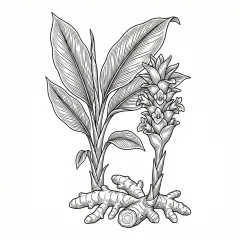
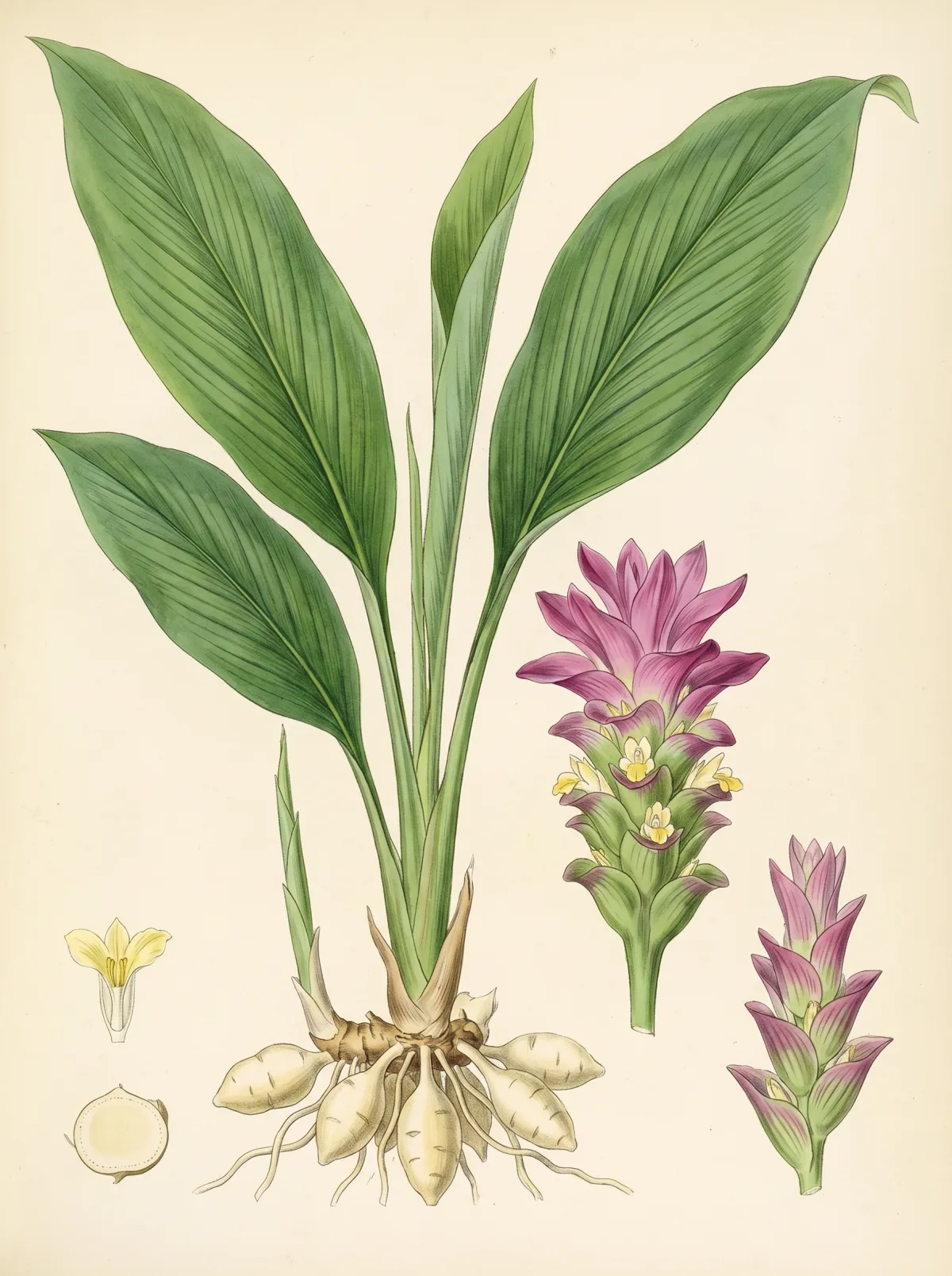
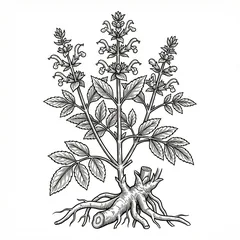
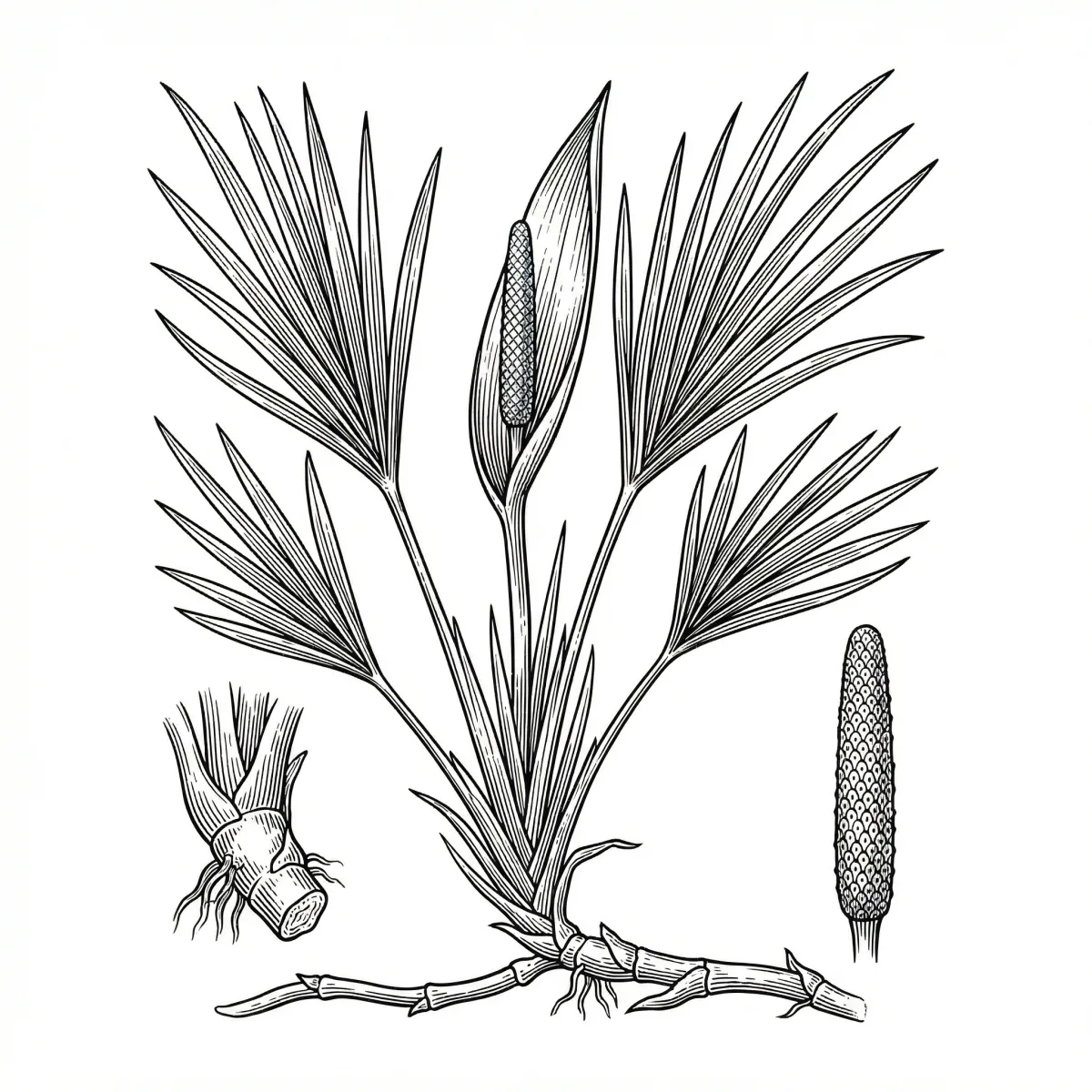
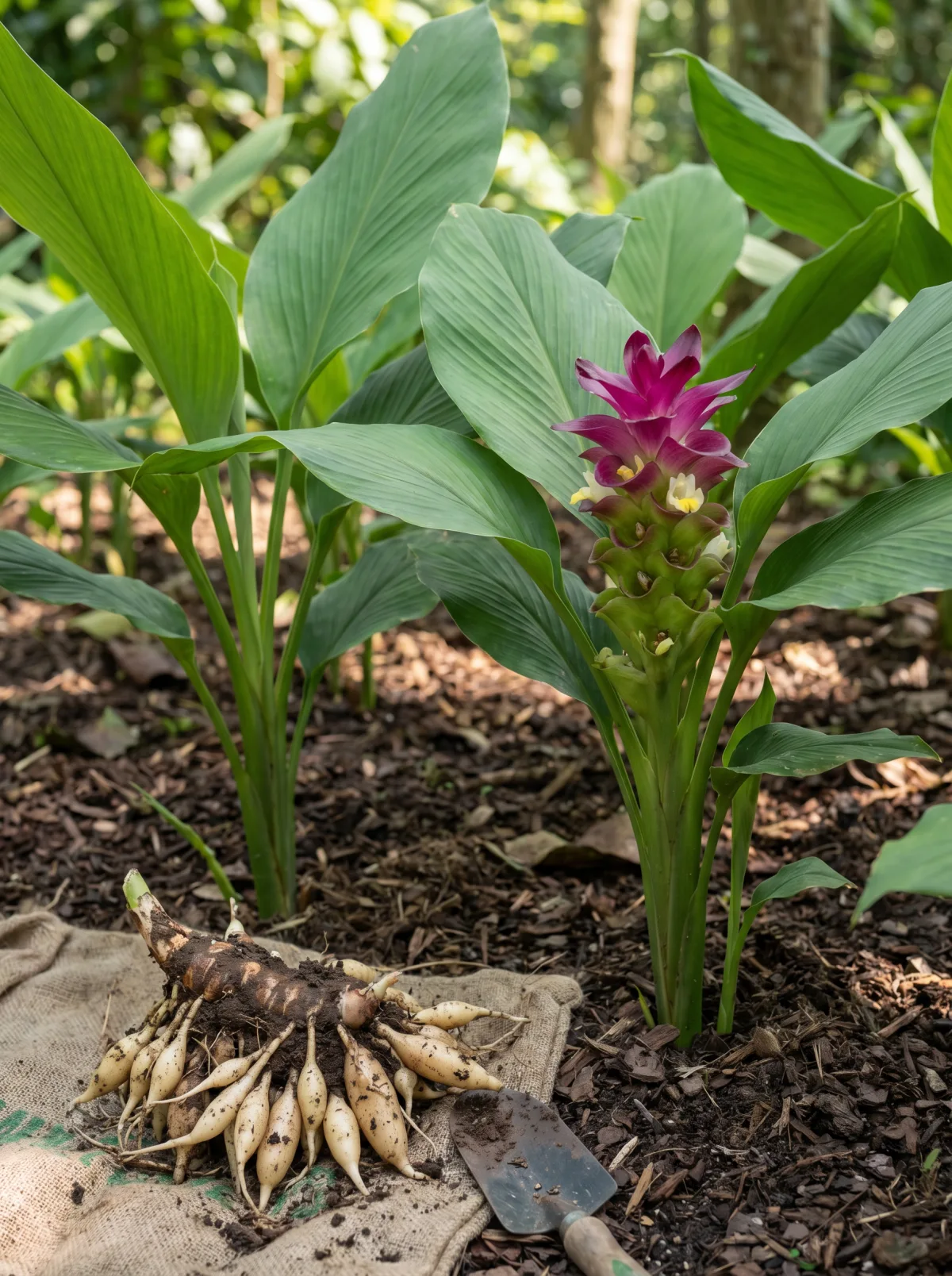
Yu Jin is from Curcuma wenyujin Y.H. Chen and C. Ling, or Curcuma aromatica Salisb. — both are perennial rhizomatous herbs in the ginger family (Zingiberaceae). The plant grows to a height of 60–100 cm and produces large, lanceolate leaves as well as striking flower spikes with white or yellowish bracts. The part used for medicinal purposes is the tuberous root—not the rhizome itself, which is used in Jiang Huang. This botanical distinction is essential: the same rhizome produces both Yu Jin (the tuberous roots) and Jiang Huang (the rhizome), which differ fundamentally in their chemical composition and mode of action.
Morphologically, the root tubers of Yu Jin are spindle-shaped to oval, grayish-yellow to brownish on the outside and whitish-yellow on the inside, with a characteristic aromatic, slightly bitter odor. In cross-section, the intense yellow color of the rhizome is absent—a reliable identifying feature. The Curcumin Content is significantly lower than that of Jiang Huang or turmeric (Curcuma longa), while the content of essential oils—especially camphor, borneol, and ar-turmerone—is significantly higher.
Occurrence
- China: Main growing regions in the provinces of Sichuan (Leshan, Yibin), Zhejiang (Rui'an, Yueqing), and Guangdong—Sichuan is considered the main supplier of the commercial drug
- Wild populations in subtropical mountain forests and along riverbanks in southern China, India, and Southeast Asia at elevations up to about 1,000 m
- Cultivation Prefers moist, humus-rich soils with good drainage in warm temperate to subtropical climates — annual precipitation of at least 1,200 mm
- Sensitive to frost: Cultivation outside Asia is limited to tropical and subtropical regions or protected crops
- Known as „Kachura“ in traditional Indian medicine (Ayurveda) and also cultivated
Related herbs
Herbs with similar effects and related areas of application