





Jiang Huang — Turmeric Rhizome
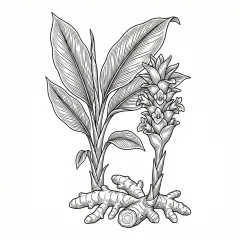
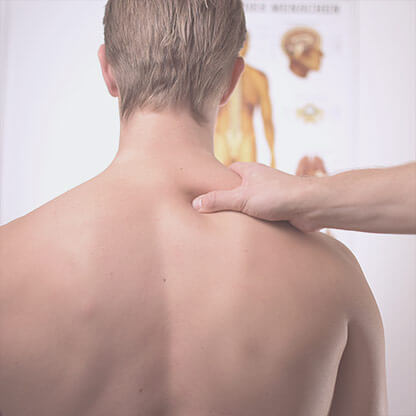
Jiang Huang—the turmeric rhizome—is a pungent, bitter, and warming herb that resolves blood stasis and dispels wind-dampness. In TCM, it is used particularly for pain caused by blood stasis and qi blockage—especially in the shoulders and arms. Jiang Huang has a special affinity for the upper body and the limbs — unlike Yu Jin, which has a cooling effect on the liver, Jiang Huang is warm and moving.
Effect from a Western perspective
Curcumin—the best-known active ingredient—is one of the most extensively studied plant compounds in the world. Studies demonstrate strong anti-inflammatory effects through the inhibition of NF-κB and COX-2. Its antioxidant, antitumor, and neuroprotective properties have been proven. The bioavailability of curcumin is low—but piperine from black pepper increases it by a factor of 20. Clinical studies demonstrate its efficacy in osteoarthritis, metabolic syndrome, and inflammatory bowel disease.
Effect from a TCM perspective
Jiang Huang invigorates the blood and resolves stasis—particularly in cases of pain in the shoulders, arms, and chest caused by blood stasis. It moves the Qi and relieves pain—which is why it is used for dysmenorrhea, abdominal pain, and post-traumatic swelling. It also dispels wind-dampness from the meridians—in cases of Bi syndromes with joint pain and limited mobility. It promotes bile secretion and supports digestion in cases of liver-spleen disharmony.
Application & dosage
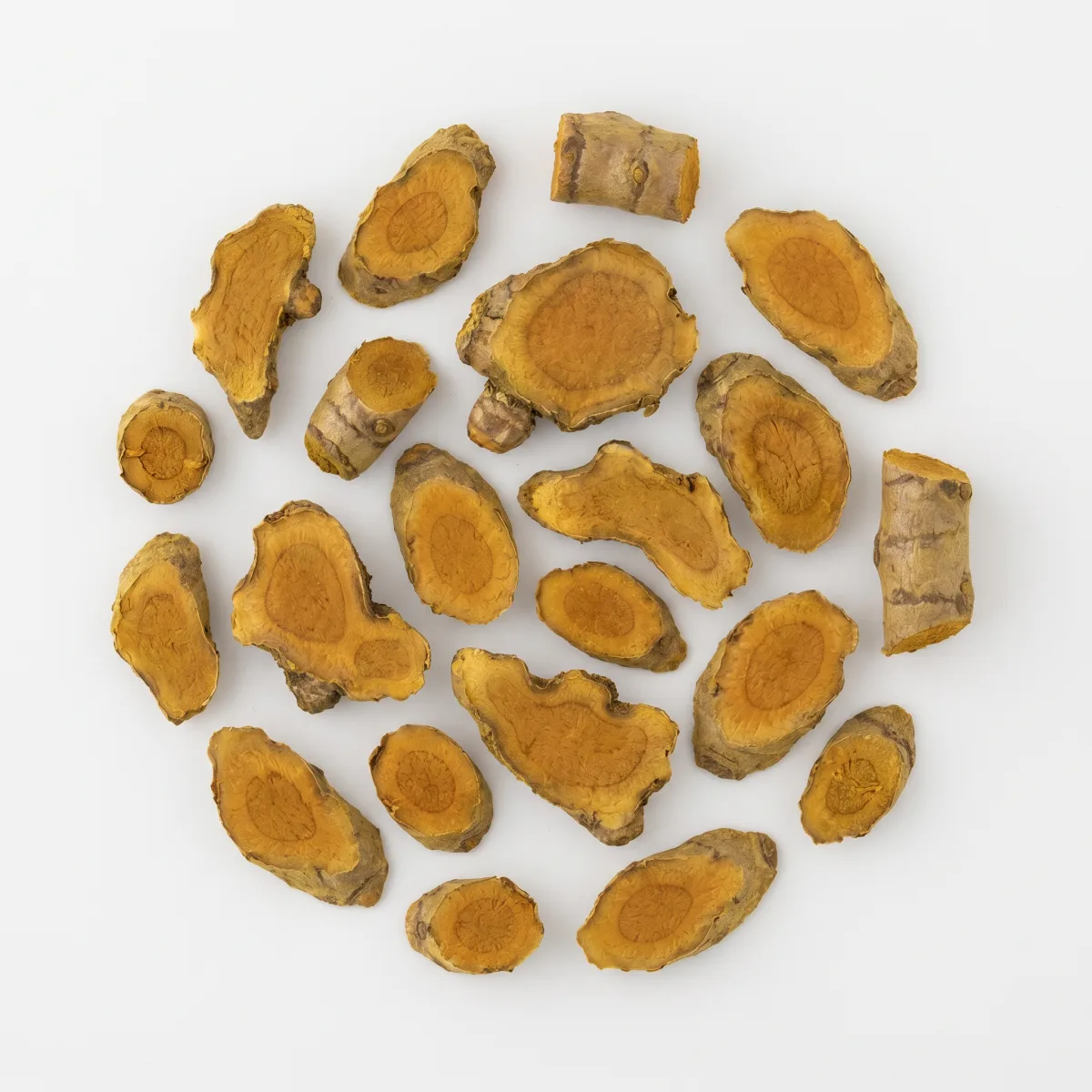
3–10 g in a decoction (standard dose) As a powder: 1–3 g daily For external use as a paste for bruises and swelling
Dosage forms
Decoction, granules, powder, paste (for external use), capsules
Dosage
3–10 g (decoction)
Combinations & formulas
When combined with Dang Gui and Chuan Xiong, Jiang Huang invigorates blood circulation to treat dysmenorrhea and post-traumatic pain. When combined with Qiang Huo and Fang Feng, it dispels wind-dampness to treat shoulder pain and Bi syndromes of the upper extremities. With Bai Zhi and Gui Zhi, it warms and opens the meridians in cases of cold-Bi with joint stiffness. With Chai Hu and Yu Jin, it moves Liver Qi in cases of flank tension and emotional stagnation.
History & Tradition
Jiang Huang—the turmeric rhizome—is one of the oldest medicinal plants in Asian medicine. In the classic Chinese herbal compendium „Bencao Gangmu" (本草綱目) by Li Shizhen from the 16th century, it is described as a warming, blood-moving agent with particular benefits for the shoulders and arms. References to its pain-relieving effects can already be found in the „Shennong Bencao Jing"—the oldest Chinese herbal text from the 1st century. In Indian Ayurvedic medicine, turmeric has been known as „Haridra" for more than 4,000 years—as a remedy, spice, and ritual dye all at once. Along the ancient spice routes, Jiang Huang made its way from Southeast Asia to China, Arabia, and finally to Europe. In the 13th century, Marco Polo described the bright yellow rhizome as „a plant that possesses all the properties of genuine saffron." In the TCM tradition, Jiang Huang is strictly distinguished from Yu Jin (Curcuma longa): While Yu Jin has a cooling effect on the liver and resolves emotional stagnation, Jiang Huang is the warming herb that acts outwardly on the limbs. This distinction highlights the precision of Chinese herbal medicine—even though both come from the same plant, they develop different therapeutic qualities due to variations in processing and origin. In Chinese medicine, the golden-yellow color of the rhizome symbolizes the earth—the element of the spleen and stomach, which Jiang Huang strengthens and harmonizes.
Contraindications & caution
Do not use during pregnancy — Jiang Huang stimulates blood circulation and may trigger contractions. Use with caution in cases of gallstones — its cholagogue effect may trigger colic. Do not use in cases of bleeding tendency or during anticoagulant therapy — Jiang Huang increases the tendency to bleed. Do not use in cases of Yin deficiency with heat without signs of stasis.
Botany
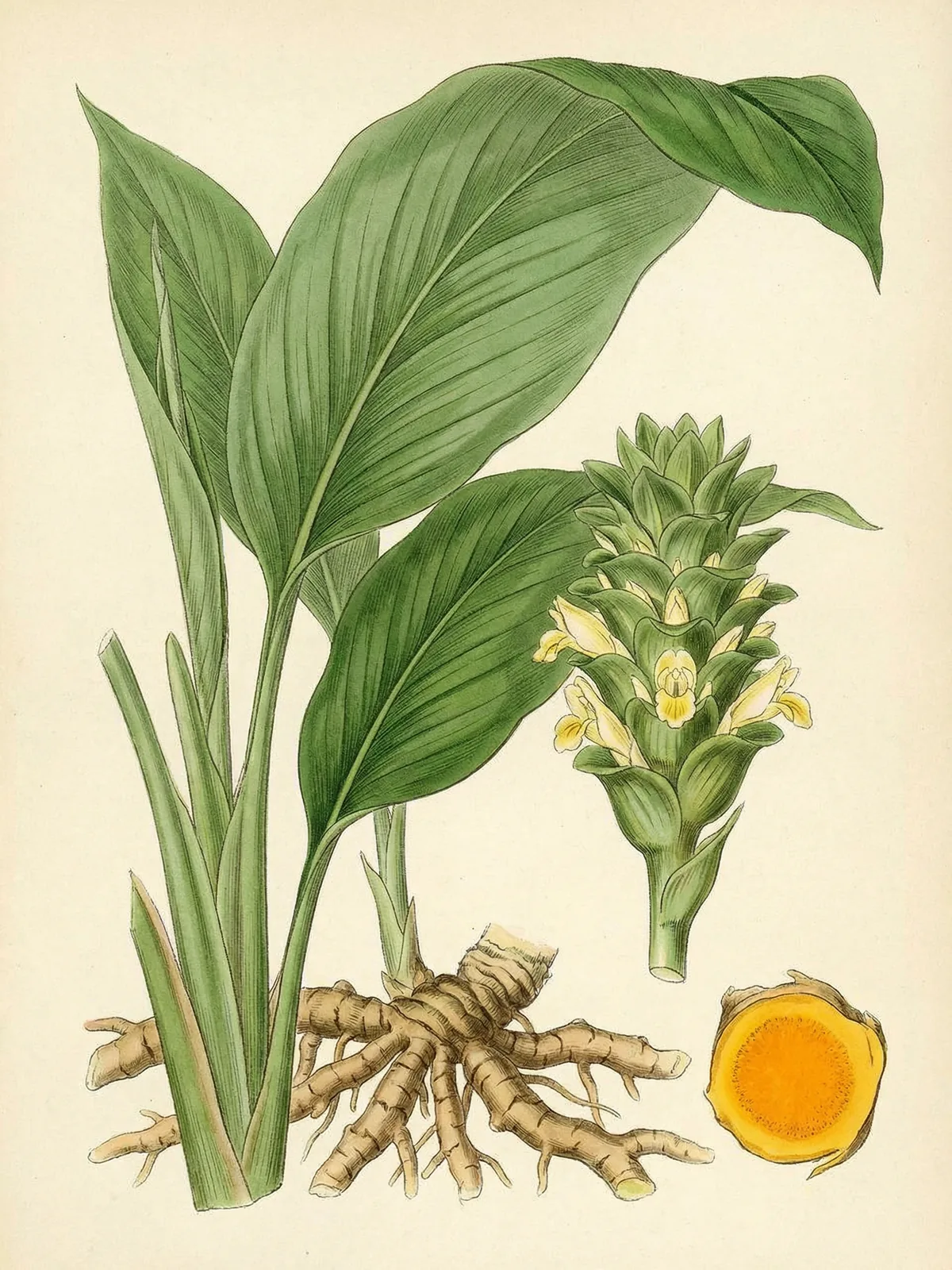
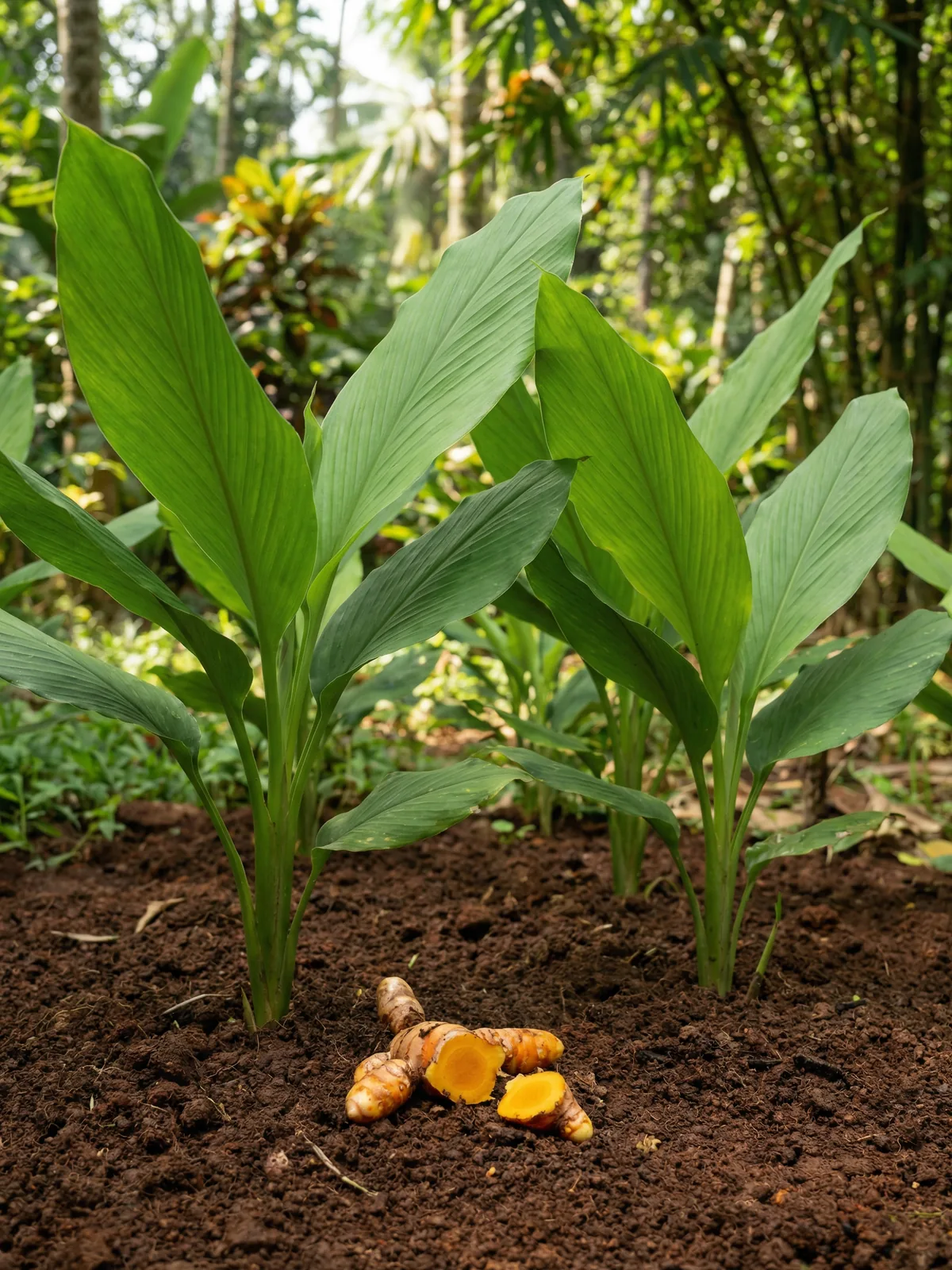
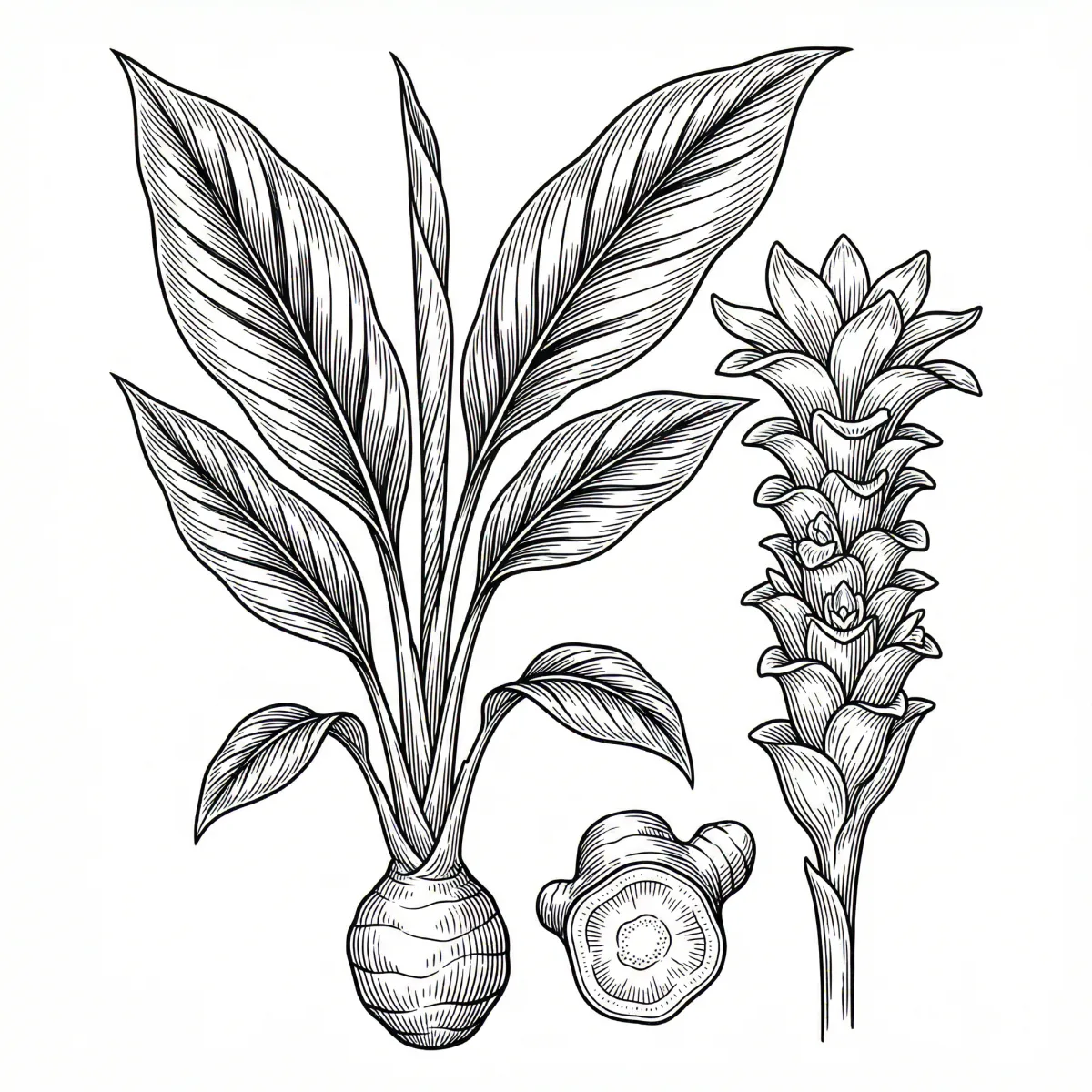
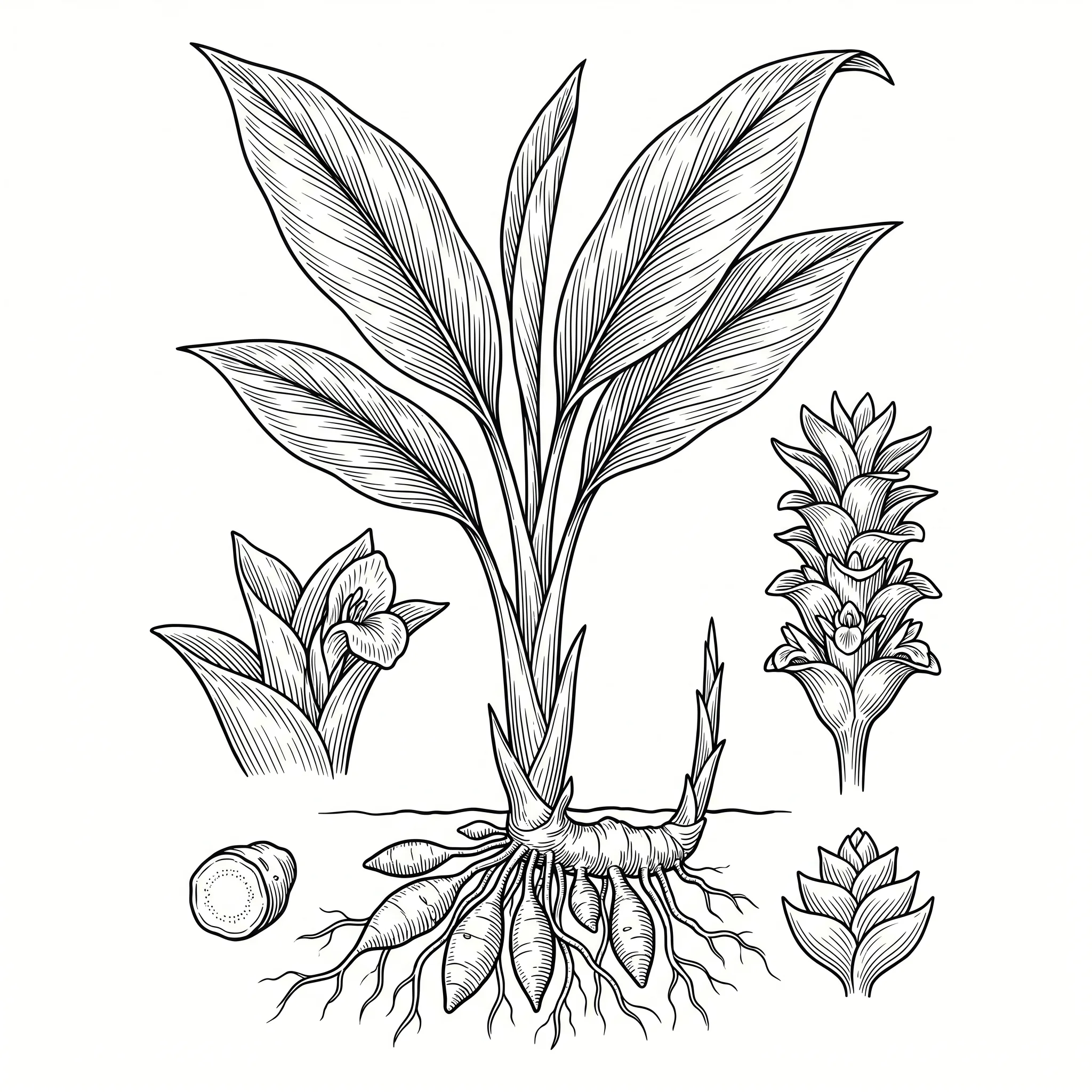
Curcuma longa L. is a perennial herbaceous plant in the ginger family (Zingiberaceae) that grows to a height of 60–120 cm. The large, lanceolate leaves are arranged alternately and can grow up to one meter long. The flowers appear in dense spikes and are pale yellow to whitish in color—surrounded by green to reddish-purple bracts. The underground rhizome is the part of the plant used for medicinal and culinary purposes: it consists of a central, egg-shaped main rhizome and finger-like lateral branches. In cross-section, it displays the characteristic bright orange-yellow color, which is due to the pigment curcumin. When dried and ground, the rhizome yields the well-known golden-yellow turmeric powder.
Occurrence
Curcuma longa is native to Southeast Asia—likely India or Indochina—and has been cultivated in tropical and subtropical regions for thousands of years. Today, turmeric is grown primarily in India, which accounts for over 75% of global production. Other major producing countries include China (Sichuan, Guangdong, and Fujian provinces), Bangladesh, Myanmar, Pakistan, and parts of Africa. The plant thrives in humid, warm climates on well-drained, humus-rich soil at elevations up to 1,500 m. In China, the Jiang Huang used in TCM comes primarily from the provinces of Sichuan and Guangdong.
Harvest time
October–December (after the above-ground parts of the plant have died back)
Processing
The rhizomes are harvested, cleaned of soil, briefly blanched in boiling water, then dried and ground, or used as whole dried pieces.
Related herbs
Herbs with similar effects and related areas of application
Comparable western herbs
**Ginger** (Zingiber officinale) — like Jiang Huang, a member of the ginger family with warming properties that promote blood circulation. Ginger has anti-inflammatory effects, aids digestion, and relieves nausea. In Western herbal medicine, it is used for joint pain, digestive complaints, and poor circulation — a functional overlap with the Qi-moving and dampness-transforming aspects of Jiang Huang. **Devil’s Claw** (Harpagophytum procumbens) — the most important Western medicinal plant for joint and back pain. Its harpagoside-containing roots inhibit inflammatory mediators in a manner similar to curcumin. Used in Western naturopathy for osteoarthritis, rheumatism, and Bi syndromes—a direct functional equivalent to the wind-dampness-dispelling effect of Jiang Huang. **Willow Bark** (Salix alba) — a classic Western pain and anti-inflammatory agent that contains salicylates and inhibits COX enzymes. Like Jiang Huang, it is used for joint and muscle pain as well as rheumatic complaints. While Jiang Huang is warming and mobilizing, willow bark has a more cooling and analgesic effect—complementary approaches in pain management. **Milk thistle** (Silybum marianum)—like Jiang Huang, a liver and bile remedy. Silymarin protects liver cells, promotes bile production, and has antioxidant effects. Used in Western phytotherapy for liver diseases, gallbladder problems, and metabolic disorders—functionally related to the liver-protective and bile-promoting aspects of Jiang Huang.