





Jiang Huang — Turmeric Rhizome
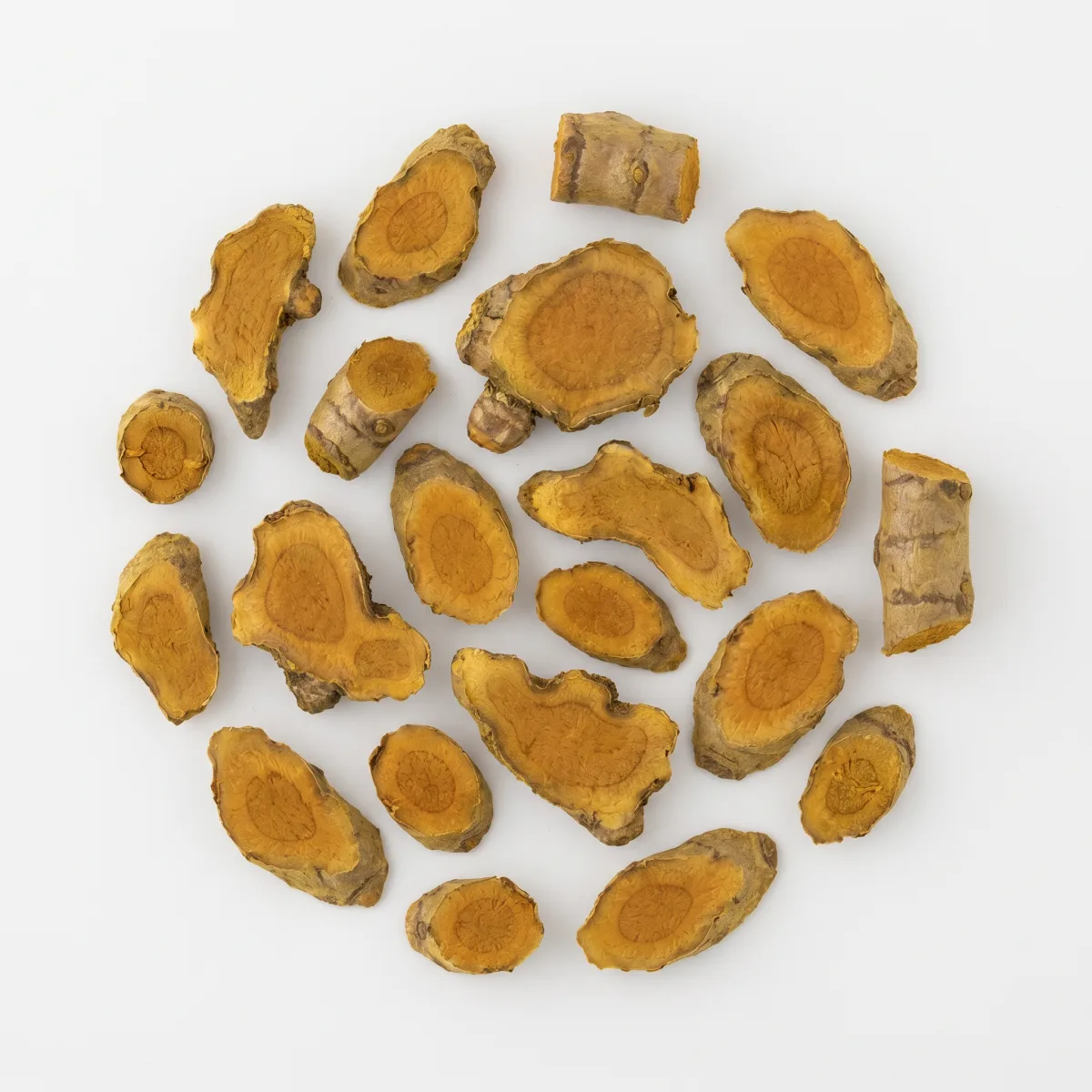
Jiang Huang — das Kurkuma–Rhizom — ist ein scharf–bitteres, warmes Kraut, das Blood Stasis löst und Wind–Feuchtigkeit vertreibt. In der TCM wird es besonders bei Blut–Stase und Qi–Blockade in Schultern und Armen eingesetzt.
Jiang Huang hat einen besonderen Bezug zum Oberkörper und zu den Gliedmaßen — anders als Yu Jin, das kühlend auf die Leber wirkt, ist Jiang Huang warm und bewegend.
Effect from a TCM perspective
- Jiang Huang belebt das Blut und löst Stase — besonders bei stechendem Druckgefühl in Schultern, Armen und Brust durch Blut–Stagnation.
- It bewegt das Qi und löst Stagnation — weshalb es bei Blut–Stase im Unteren Erwärmer, Unterbauch–Stauung und posttraumatischen Schwellungen eingesetzt wird.
- Zudem vertreibt es Wind–Feuchtigkeit aus den Leitbahnen — bei Bi–Syndromen mit steifen, schwer beweglichen Gelenken.
- It fördert die Gallensekretion und unterstützt die Verdauung bei Leber–Milz–Disharmonie.
Application & dosage
3–10 g im Dekokt (Standarddosis). Als Pulver: 1–3 g täglich.
Äußerlich als Paste bei Prellungen und Schwellungen.
Dosage forms
- Decoction
- Granules
- Powder
- Paste (äußerlich)
- Kapseln
Dosage
3–10 g (decoction)
Frequent combination partners
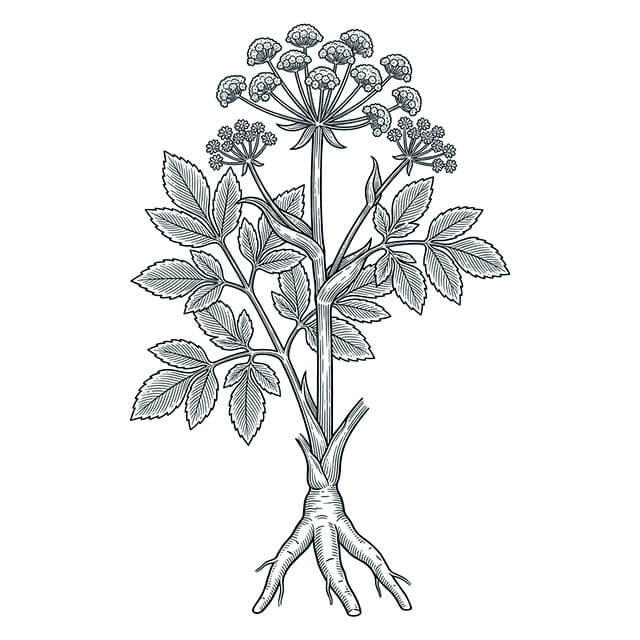
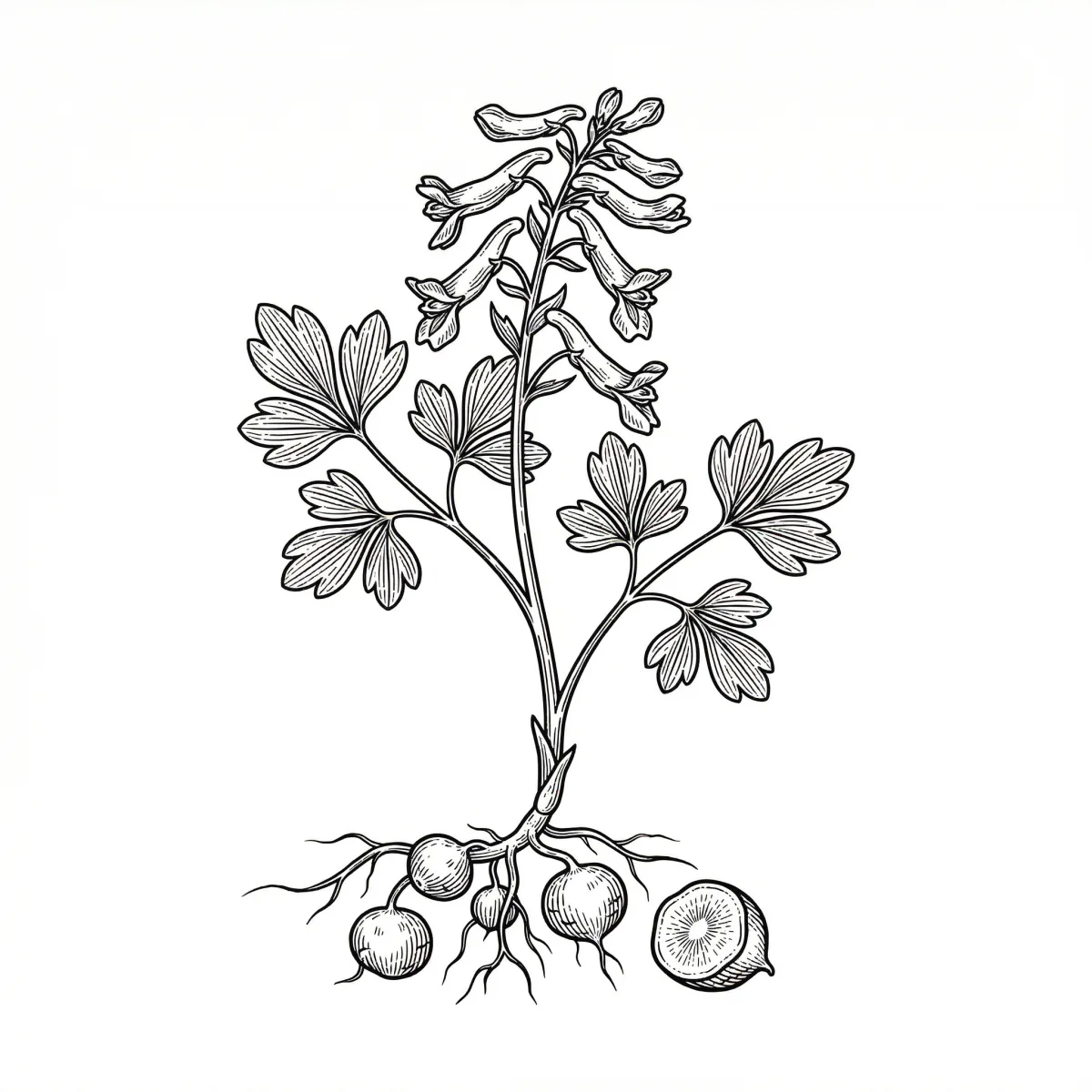
Jiang Huang entfaltet seine volle Wirkung oft erst in Kombination mit anderen Kräutern
History & Tradition
Jiang Huang — das Kurkuma–Rhizom — gehört zu den ältesten Kräutern der asiatischen Medizin. Im klassischen chinesischen Kräuterkanon „Bencao Gangmu“ (本草綱目) von Li Shizhen aus dem 16. Jahrhundert wird es als wärmendes, Blut bewegendes Mittel mit besonderem Bezug zu Schultern und Armen beschrieben. Bereits im „Shennong Bencao Jing“ — dem ältesten chinesischen Kräuterbuch aus dem 1. Jahrhundert — finden sich Hinweise auf ihre Wirkung bei Qi– und Blut–Stagnation.
In der indischen Ayurveda–Medizin ist Kurkuma als „Haridra“ seit mehr als 4000 Jahren bekannt — als Mittel, Gewürz und rituelles Färbemittel zugleich. Entlang der alten Gewürzrouten gelangte Jiang Huang von Südostasien nach China, Arabien und schließlich nach Europa. Im 13. Jahrhundert beschrieb Marco Polo das leuchtend gelbe Rhizom als „eine Pflanze, die alle Eigenschaften des echten Safrans besitzt“.
In der TCM–Tradition wird Jiang Huang von Yu Jin (Curcuma longa) streng unterschieden: Während Yu Jin kühlend auf die Leber wirkt und emotionale Stagnation löst, ist Jiang Huang das wärmende, nach außen in die Gliedmaßen wirkende Kraut. Diese Differenzierung zeigt die Präzision der chinesischen Kräutermedizin — auch wenn beide aus derselben Pflanze stammen, entfalten sie durch unterschiedliche Verarbeitung und Herkunft unterschiedliche Wirkqualitäten. Die goldgelbe Farbe des Rhizoms symbolisiert in der chinesischen Heilkunde die Erde — das Element der Milz und des Magens, die Jiang Huang stärkt und harmonisiert.
Contraindications & caution
- Nicht anwenden in der Pregnancy — Jiang Huang belebt Blut und kann Kontraktionen auslösen.
- Be careful with Gallensteinen — die gallentreibende Wirkung kann Koliken auslösen.
- Not at Blutungsneigung oder unter Antikoagulantien–Einnahme — Jiang Huang verstärkt die Blutungsneigung.
- Not at Yin–Mangel mit Hitze ohne Stase–Zeichen.
Botany
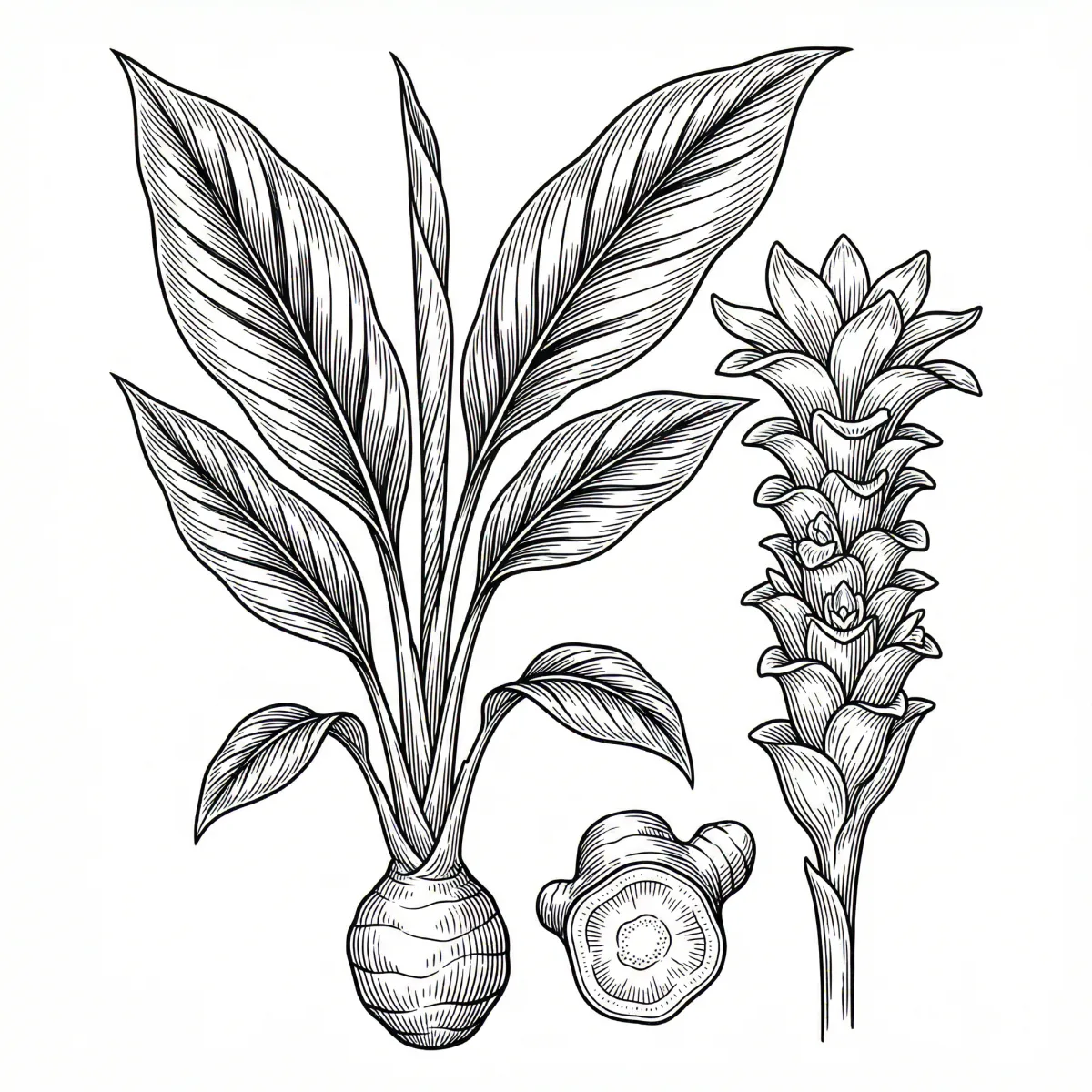
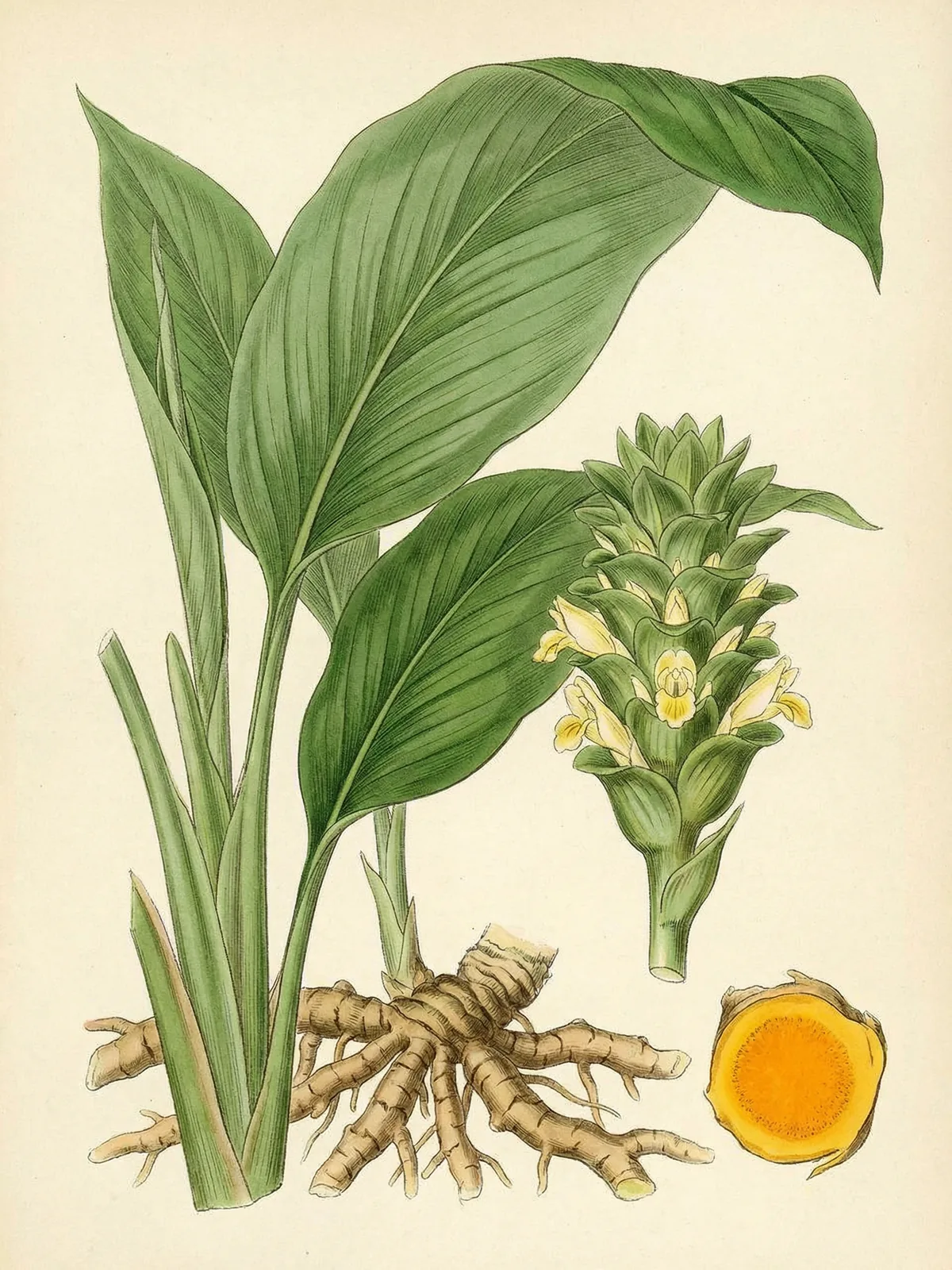
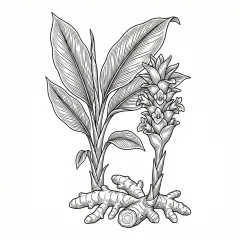
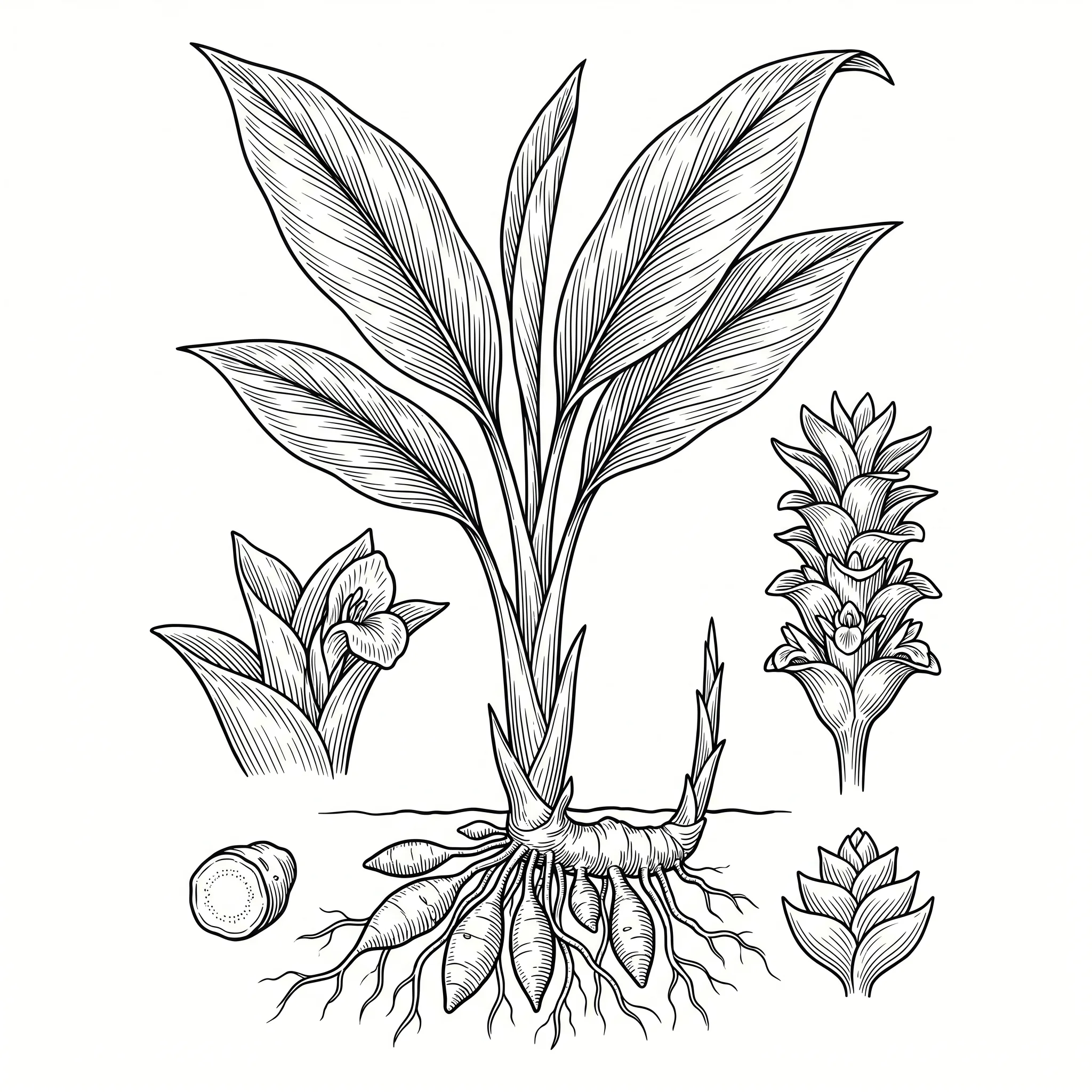
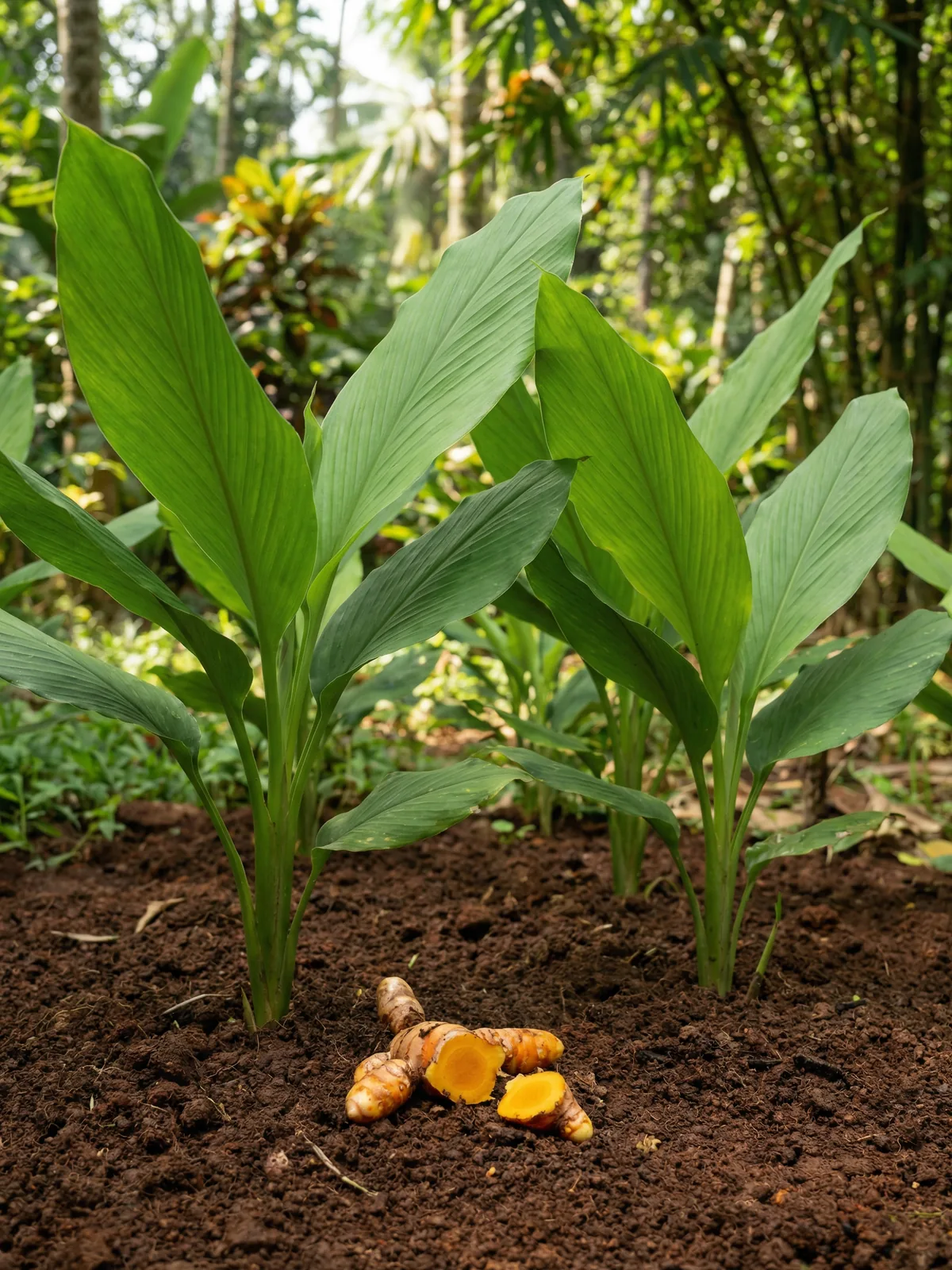
Curcuma longa L. ist eine ausdauernde krautige Pflanze aus der Familie der Ingwergewächse (Zingiberaceae) und wird 60–120 cm hoch. Die großen, lanzettlichen Blätter sind wechselständig angeordnet und können bis zu einem Meter lang werden. Die Blüten erscheinen in dichten Ähren und sind blassgelb bis weißlich gefärbt — umgeben von grünen bis rötlich–violetten Hochblättern, den sogenannten Brakteen.
Das unterirdische Rhizom ist das medizinisch und kulinarisch genutzte Pflanzenteil: Es besteht aus einem zentralen, eiförmigen Hauptrhizom und fingerförmigen Seitenästen. Im Querschnitt zeigt es die charakteristische leuchtend orangegelbe Farbe, die dem Farbstoff Curcumin zu verdanken ist. Getrocknet und gemahlen ergibt das Rhizom das bekannte goldgelbe Kurkuma–Pulver.
Occurrence
Curcuma longa stammt ursprünglich aus Südostasien — wahrscheinlich aus Indien oder Indochina — und wird seit Jahrtausenden in tropischen und subtropischen Regionen kultiviert. Heute wird Kurkuma vor allem in Indien angebaut, das über 75 % der weltweiten Produktion liefert. Andere wichtige Anbauländer sind China (Provinzen Sichuan, Guangdong und Fujian), Bangladesch, Myanmar, Pakistan und Teile Afrikas.
Die Pflanze gedeiht in feuchtem, warmem Klima auf gut drainiertem, humosem Boden in Höhenlagen bis 1500 m. In China stammt der für die TCM verwendete Jiang Huang vorwiegend aus den Provinzen Sichuan und Guangdong.
Harvest time
October–December (after the above-ground parts of the plant have died back)
Processing
The rhizomes are harvested, cleaned of soil, briefly blanched in boiling water, then dried and ground, or used as whole dried pieces.
Related herbs
Herbs with similar effects and related areas of application