







Sang Ye — Mulberry Leaf
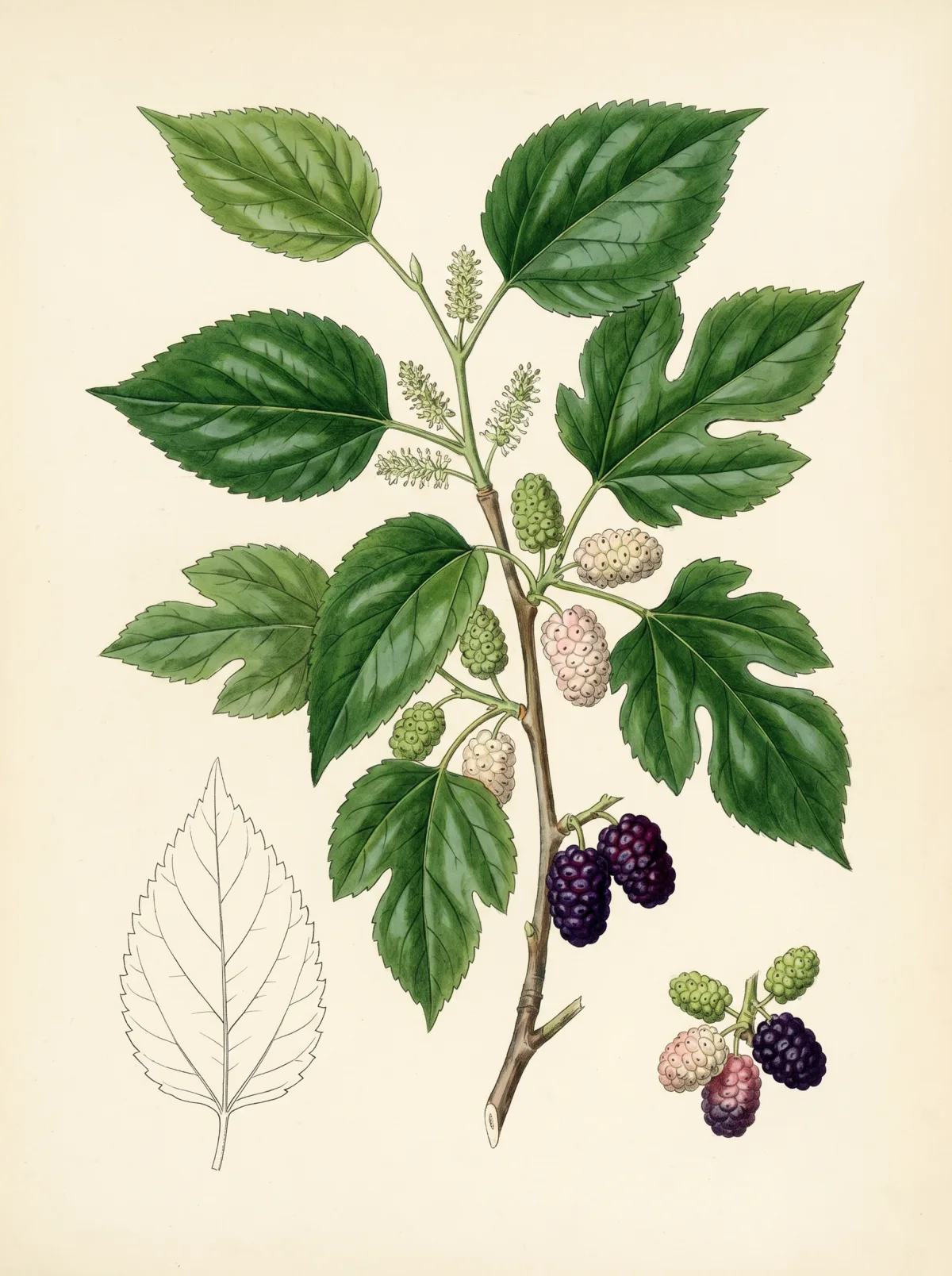
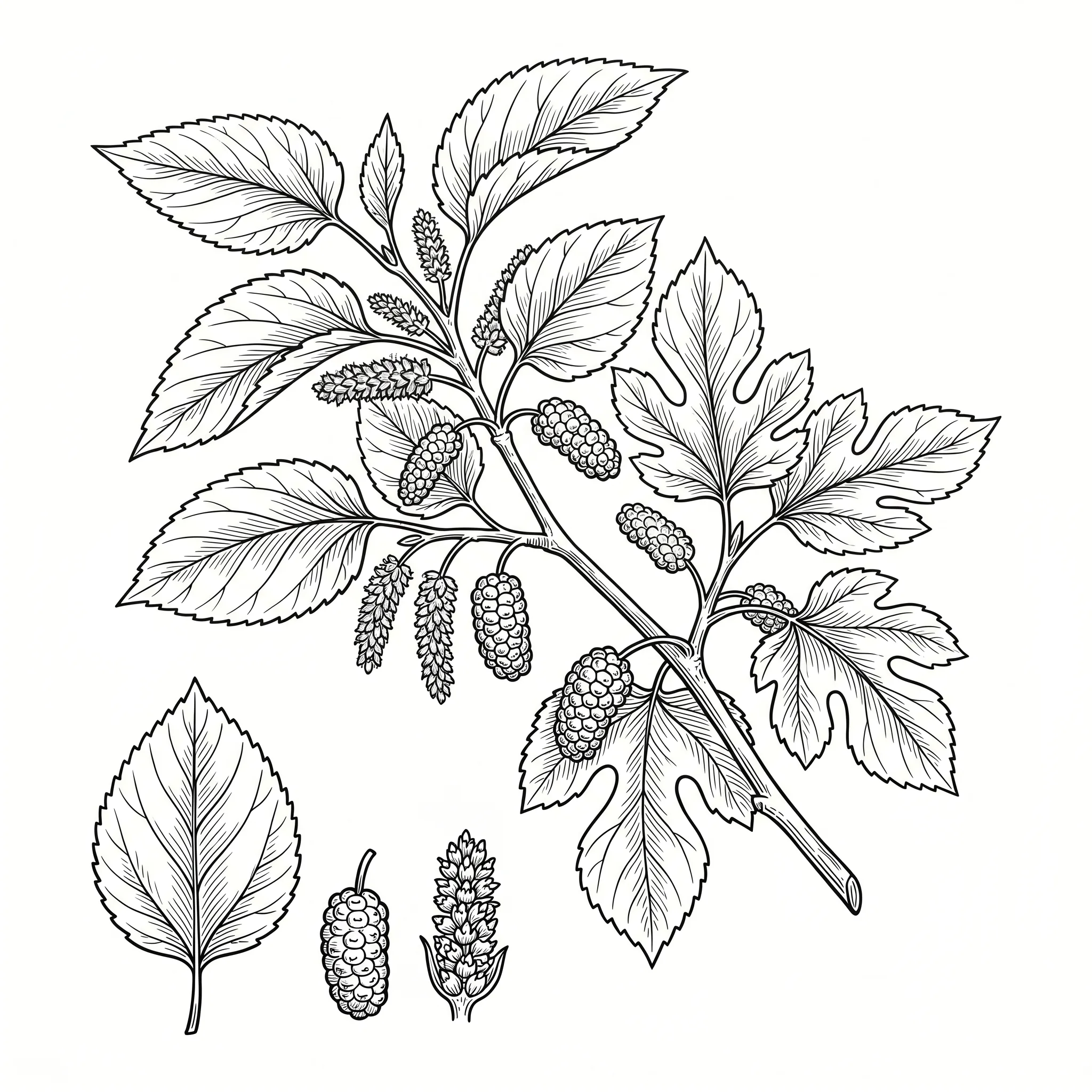
Sang Ye—the leaf of the mulberry tree (Morus alba)—is a light, cooling herb that Wind—Heat Dispersed and moistens the lungs. It is a mild expectorant and is traditionally used to treat wind-heat in the lungs, accompanied by a dry throat and reddened eyes.
Its particular strength lies in its ability to both cool the lungs and To soothe the liver — which makes it a versatile herb when wind and heat damage the surface in the spring and fall.
Effect from a TCM perspective
Sang Ye is a mild, cooling herb that acts on the Lung and Liver meridians. It dispels wind-heat from the surface while simultaneously moistening the lungs—a rare combination among surface-releasing herbs.
- Wind Dispels the Heat: Relieves an early wind-heat pattern characterized by a sensation of heat, redness in the throat, and mild sweating.
- Cools and moisturizes the lungs: Moisturizes dry lungs when there is little or thick mucus—especially during the dry autumn months.
- Cools the liver and clears the eyes: Clears red, dry, or burning eyes caused by rising liver heat or liver wind.
- Calms rising liver yang: Gently balances Liver Yang — for dizziness and a sensation of pressure in the head caused by rising Liver Yang.
Application & dosage
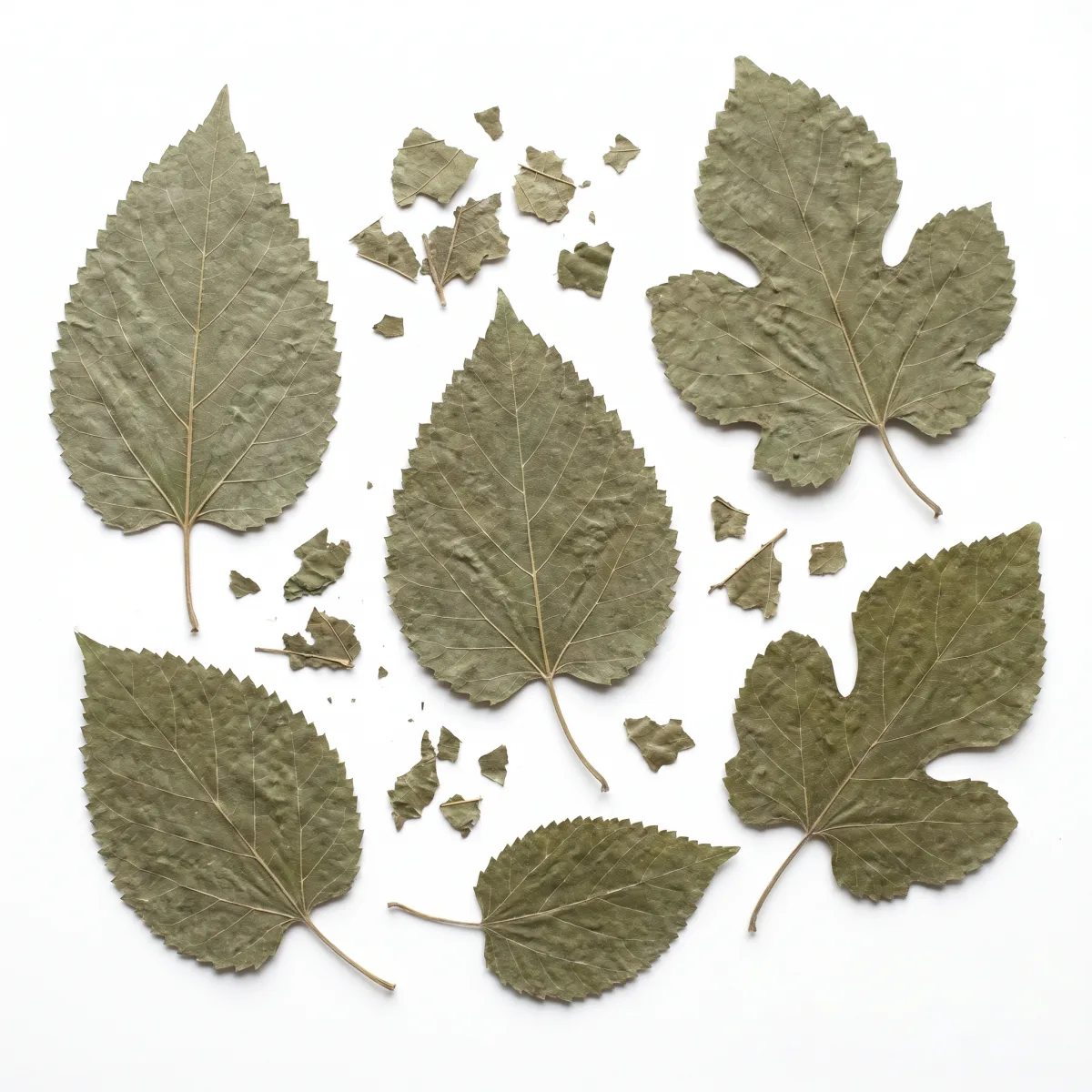
The standard dose is 5–10 g in a decoction. In cases of an acute wind-heat pattern, the dose may be increased to up to 15 g. Sang Ye should only be simmered briefly (5–10 min.), as prolonged boiling destroys its light, dispersing constituents.
To make tea, pour hot water over 3–5 g—a pleasant way to care for your eyes every day. When taken as a powder, 1.5–3 g per dose is recommended.
Dosage forms
- Decoct: 5–10 g, cook for just 5–10 minutes — standard preparation for acute wind-heat patterns in the lung.
- Tea: Pour hot water over 3–5 g — a mild, everyday remedy for red eyes and mild heat.
- Granules: 1–2 g daily — a convenient form for long-term use.
- Powder: 1.5–3 g per dose — traditionally used to treat liver heat in the eyes.
Dosage
- Decoction: 5–10 g (up to 15 g for acute wind-heat)
- Tea: 3–5 g
- Powder: 1.5–3 g per dose
- Granules: 1–2 g daily
Frequent combination partners
Sang Ye often does not reach its full potential until it is combined with other herbs
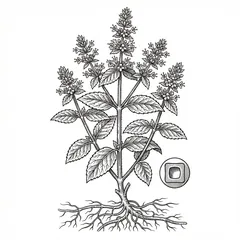
History & Tradition
Sang Ye is mentioned as early as the Shén Nóng Běn Cǎo Jīng—China’s oldest herbal—where it is described as a remedy for clearing the eyes and dispelling wind. Since the Tang Dynasty It is an integral part of herbal medicine and has been valued by generations of doctors for treating early symptoms of wind-heat and eye ailments.
Sang Ye reached the peak of its practical significance through a famous formula—formulated by Wu Jutong in the *Wēn Bìng Tiáo Biàn* (1798). In this classic text of the Wēn Bìng school, Sang Ye, together with Ju Hua, constitutes the two main herbs for treating wind-heat in the early stages of an external invasion. To this day, the formula is considered the gold standard for treating early-stage wind-heat with a sore throat and mild fever.
The Mulberry tree is deeply rooted in Chinese culture—as a food plant for silkworms, it symbolizes diligence, prosperity, and the connection between nature and craftsmanship. The leaves are traditionally harvested after the first frost—known as Shuāng Sang Ye—as the cold is said to enhance their cooling effect. This harvesting principle reflects the TCM understanding that climatic influences shape the herb’s properties.
Its close relationship to Sang Bai Pi (root bark), Sang Zhi (twigs), and Sang Shen (fruits) makes the mulberry tree the most versatile source of herbs in TCM—each part of the plant has its own niche within the spectrum of therapeutic effects.
Contraindications & caution
- Be careful with Wind—Cold—Colds with a runny nose and sensitivity to the cold — staying in the cold is counterproductive in this case.
- Not at Lung Qi Deficiency with a persistent, weak cough without signs of fever or dryness.
- Avoid if you have severe stomach cold accompanied by nausea and watery stools.
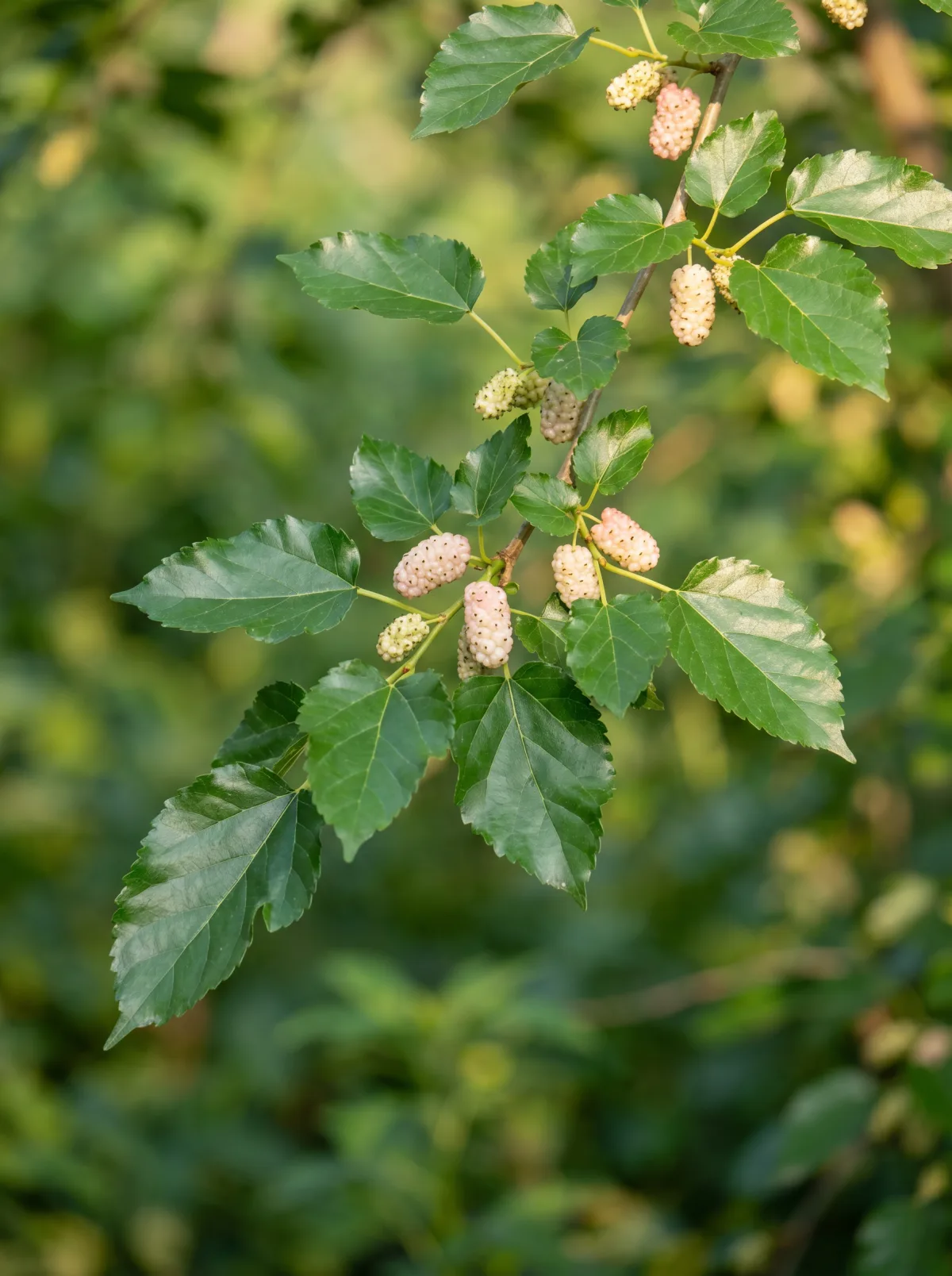
Botany
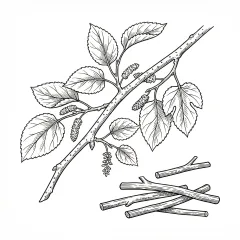
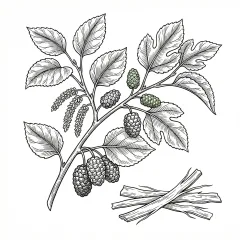
Morus alba is a deciduous tree belonging to the family of the Mulberry family (Moraceae), which reaches heights of 10–15 m. The alternate, heart-shaped to oval leaves grow to 5–15 cm in length and have irregularly serrated margins. The upper surface of the leaf is glabrous and glossy green, while the underside is lighter in color and slightly hairy along the leaf veins.
The leaves are harvested in late fall after the first frost—so-called Shuāng Sang Ye is considered to be of higher quality, since exposure to the cold reduces the content of Flavonoids increased. High-quality cannabis is characterized by large, intact leaves with a rich green color and a fresh, slightly herbaceous aroma.
Occurrence
- China: Cultivated in the traditional silk-producing regions of Zhejiang, Jiangsu, and Shandong—this is the main growing area for herb/medicinal-grade quality.
- Central Asia: It grows wild and is cultivated in Afghanistan, Pakistan, and northern India (Kashmir).
- Southern Europe: Introduced for silkworm farming in the Middle Ages, it has become naturalized in Italy, Spain, and southern France.
- Worldwide: Now widespread as an ornamental and fruit tree in temperate and subtropical climate zones on all continents.
Harvest time
- Main harvest season in late fall after the first frost (October–November)—known as "Shuāng Sang Ye," which has a higher flavonoid content
- Summer leaves (June–August) are also collected, but are considered to contain fewer active ingredients
- Harvest early in the morning when the weather is dry—damp leaves are prone to mold growth
- Use only healthy, undamaged leaves with no signs of insect damage or fungal infection.
Processing
Sang Ye is easy to prepare, as the leaves do not require any elaborate preparation. Gentle drying is crucial to preserve the volatile compounds.
- Raw Leaf (Shēng Sang Ye)
- Remove the stems from the freshly harvested leaves and sort them
- Spread out in the shade and let dry in a well-ventilated area — avoid direct sunlight
- Stir until the leaves are brittle and crumbly
- Honey-Roasted (Mì Zhì Sang Ye)
- Spray the dried leaves with diluted honey (ratio of about 1:5 honey to herb)
- Toast in a skillet over low heat until the surface is slightly sticky and golden brown
- Let it cool — the honey infusion enhances its moisturizing and lung-nourishing effects
Related herbs
Herbs with similar effects and related areas of application