







Zhu Ling — Squirrel Mushroom
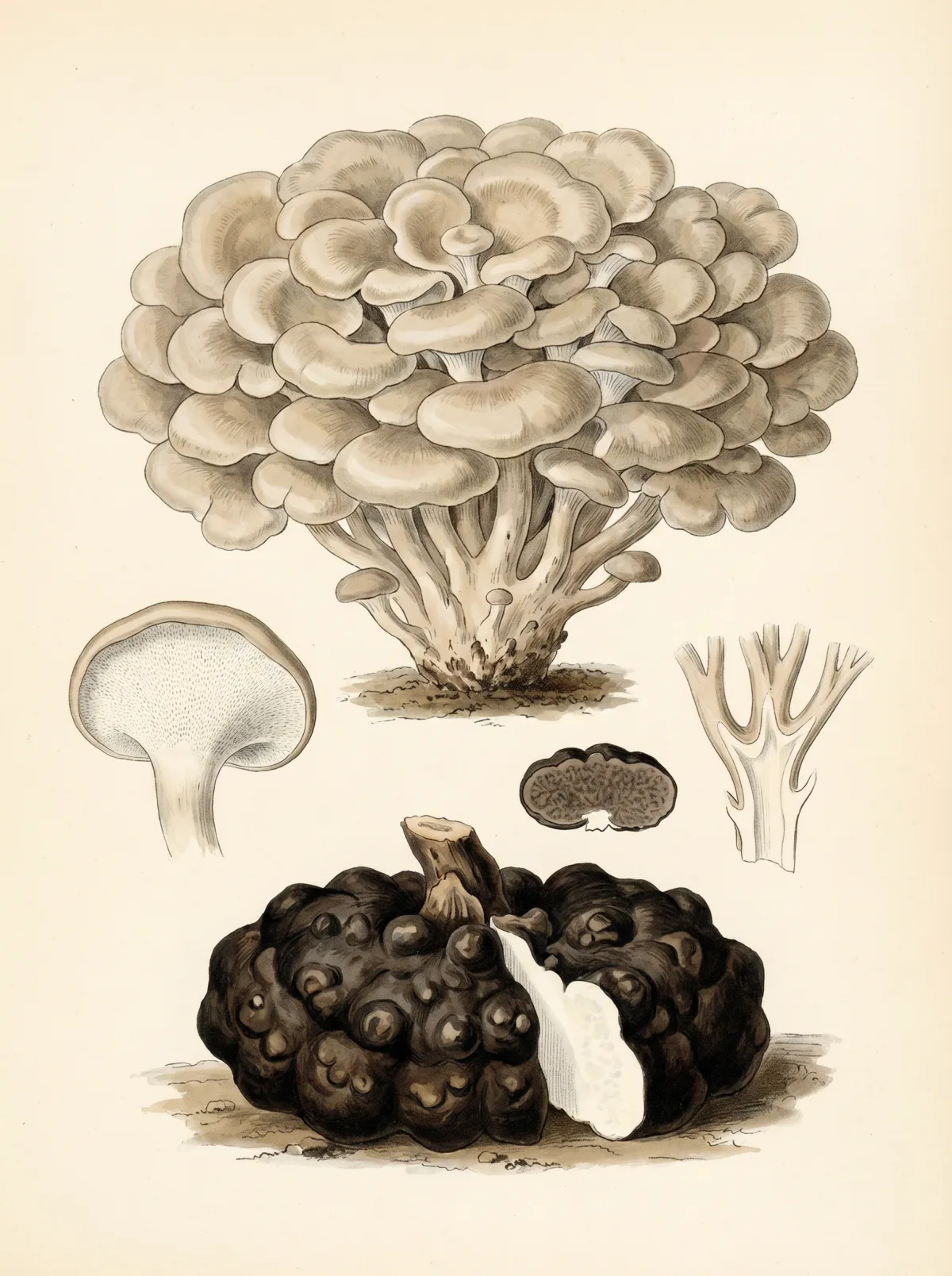
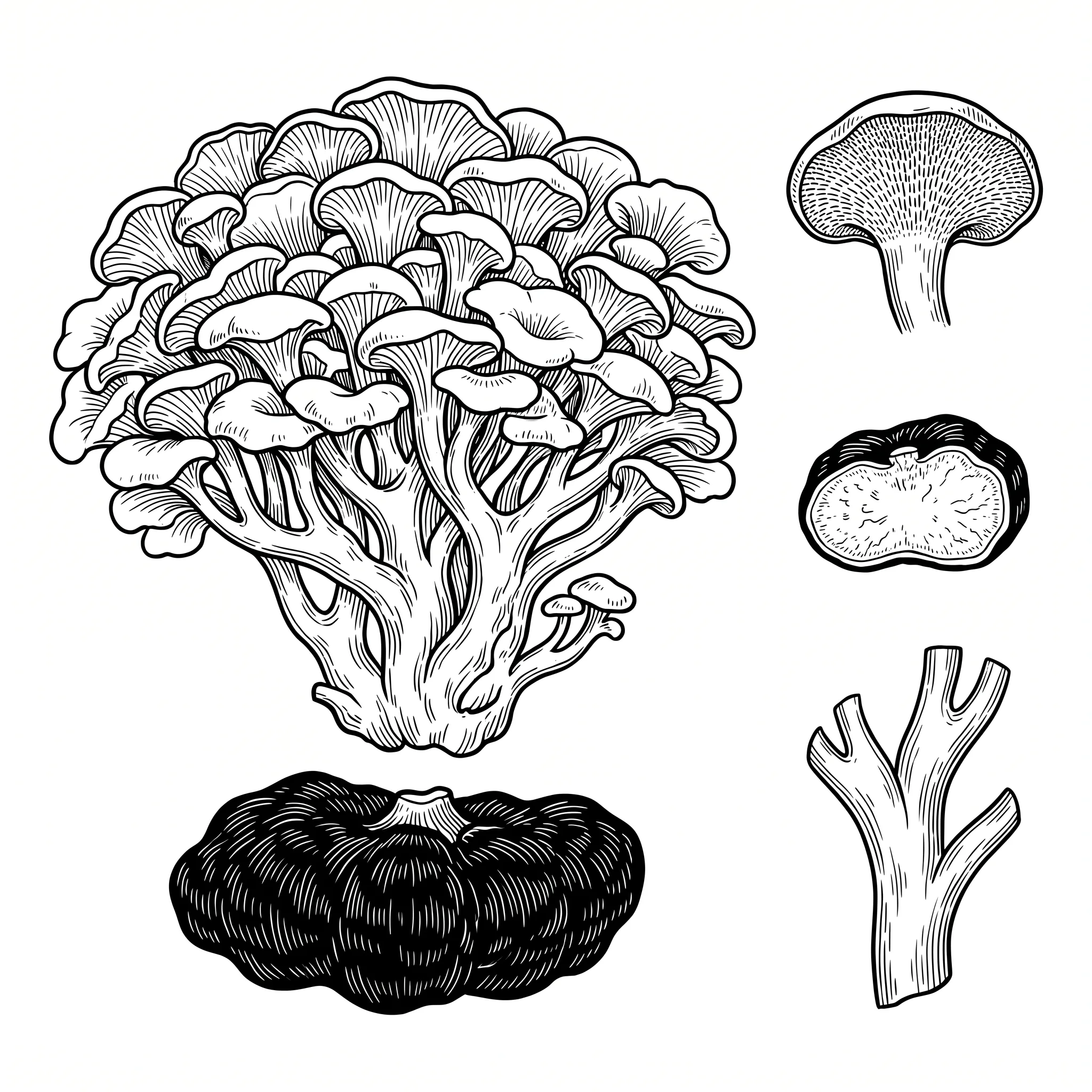
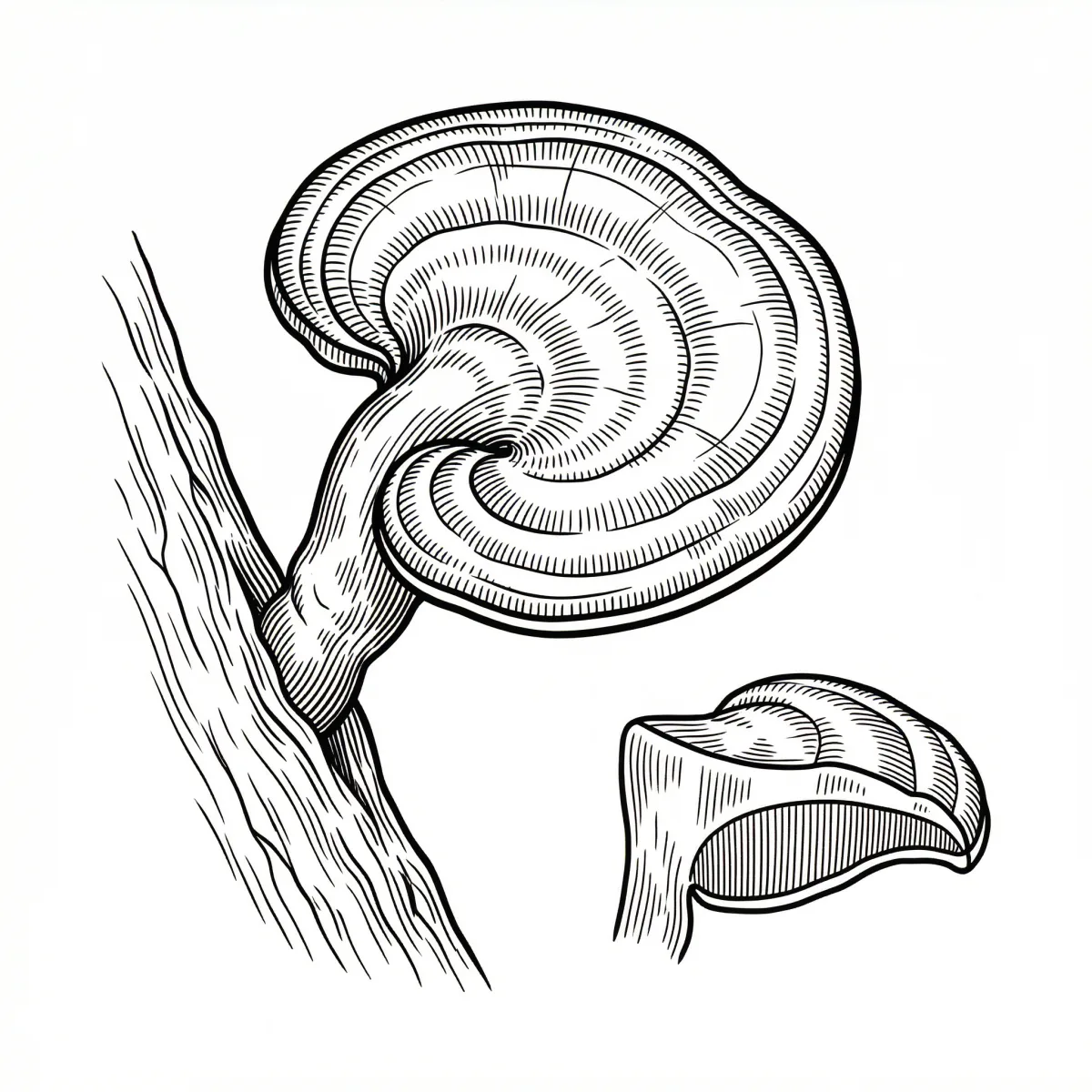
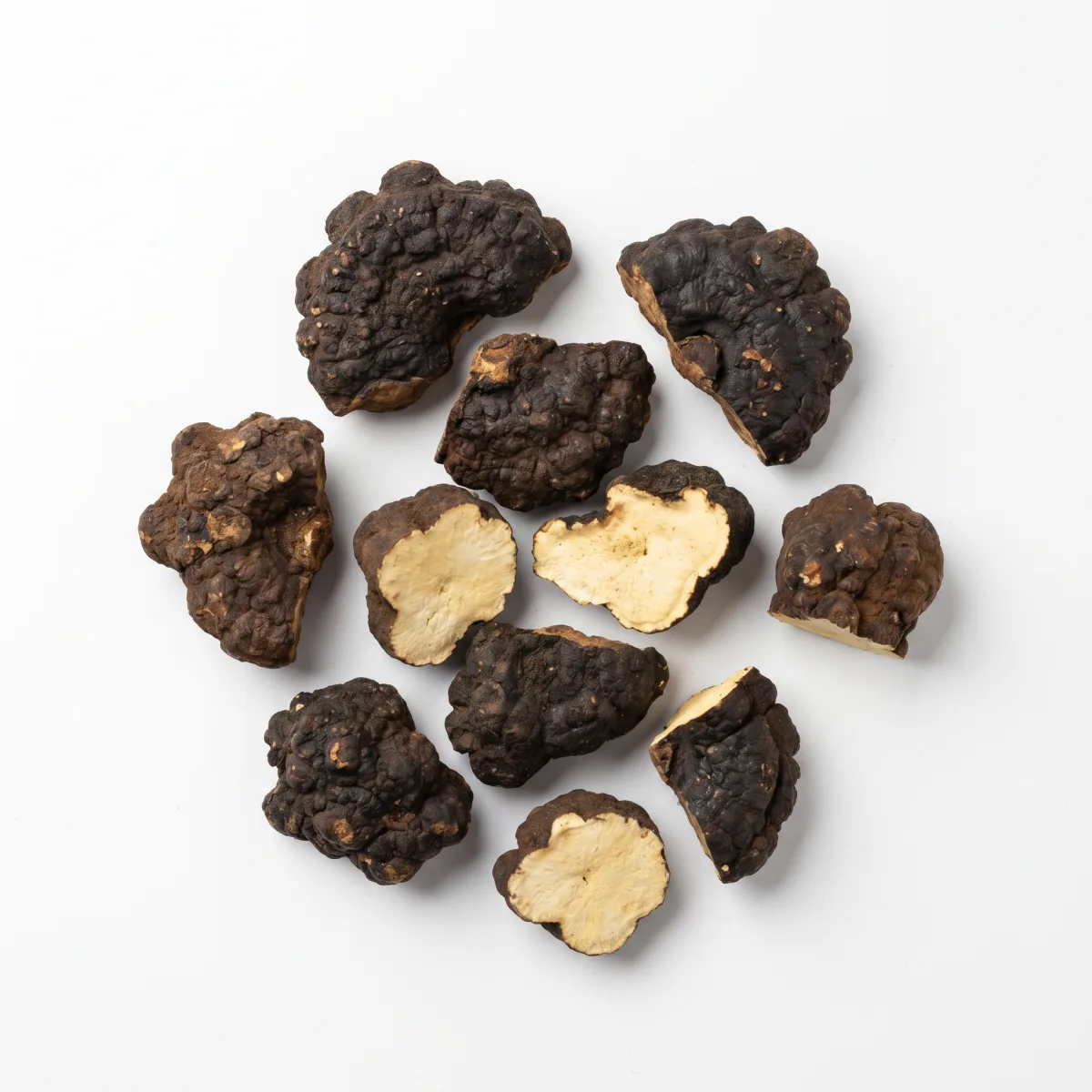
Polyporus umbellatus is a parasitic polypore fungus of the family Polyporaceae that grows underground on the roots of deciduous trees. The dried Sclerotium — a compact, hard fungal mycelium — has been used for centuries in Chinese medicine as a diuretic. Neutral in nature and mild-sweet in taste, it effectively expels fluid through the kidneys and bladder.
From a Western perspective, Polyporus umbellatus is a mushroom with well-documented detoxifying, immune-boosting, and hepatoprotective effects. Its use is also being studied outside the realm of TCM for cases where dampness accumulates in the liver and bladder—a rare instance in which traditional use and laboratory research align.
Effect from a TCM perspective
Zhu Ling is the most potent diuretic among the dampness-draining mushrooms in TCM—significantly more potent than Fu Ling, though it is in no way inferior to it in terms of its spleen-strengthening effect. Its sweet-bland taste and neutral nature allow it to be used for dampness patterns of any heat level. The Kidney and Bladder meridians are its traditional domain.
- Wicks away moisture and helps eliminate stagnant, pathogenic dampness of all kinds—it has a stronger diuretic effect than Fu Ling
- Cleanses the bladder and promotes urine flow in cases of difficult or cloudy urination
- Removes moisture from the lower heater — for leukorrhea and damp stagnation in the intestines
- Conduces moist heat excreted in the urine — helps relieve damp-heat in the liver, gallbladder, and bladder
- Protects the Yin with a simultaneous purgative effect — used in a traditional formula together with E Jiao when there is a risk of fluid deficiency
Application & dosage
In traditional TCM practice, Zhu Ling is mainly used as a decoction, as boiling helps break down the polysaccharides more effectively. The standard dose is 6–12 g daily; in cases of severe water retention or ascites, the dose may be increased to up to 15 g—always in combination with other herbs.
In cases of damp-heat in the Lower Burner accompanied by acute dysuria, lower doses of 6-9 g, since its purgative effect begins even in small amounts. Long-term use as a single remedy in high doses should be avoided, as Zhu Ling’s strong purgative effect can deplete the body’s fluids.
Dosage forms
- Decoct: Traditional preparation method — simmer the sclerotia for 20–30 minutes; optimal yield of polysaccharides
- Granules: Concentrated dry extract; taken dissolved in warm water; convenient for long-term use
- Powder: Ground, dried sclerotia; less common, as the polysaccharides are more easily absorbed in a decoction
- Extracts (capsules/tablets): Standardized Polysaccharide Extracts
Dosage
- Decoct: 6–12 g (standard dose)
- Decoction for severe fluid retention (ascites): 10-15 g
- Decoction for Damp-Heat in the Lower Burner: 6-9 g
- Granules: 3–6 g (equivalent to approximately 9–18 g of crude drug)
- Polysaccharide extract: According to the manufacturer's instructions, usually 1–3 g daily
Frequent combination partners
Zhu Ling often does not reach its full potential until it is combined with other herbs
History & Tradition
The story of Zhu Ling begins with the world's oldest Chinese herbal: the Shén Nóng Ben Cao Jing (Shennong Bencao Jing), which dates back to the Han Dynasty and is attributed to the legendary divine emperor Shennong. In it, Zhu Ling is classified as a middle-class herb—powerful and reliable, yet lacking the preeminent status of a top-class tonic. Even at this early stage, Chinese physicians recognized its outstanding ability to drain dampness and promote urination without noticeably weakening the qi. This property fundamentally distinguishes Zhu Ling from more strongly tonifying mushrooms such as Fu Ling: it drains fluid in a targeted and powerful manner—without depleting the body’s vital substance.
At the heart of the classical tradition are two formulas that Zhu Ling employs in a distinctive way. A classical recipe from the Shang Han Lun combines it with Fu Ling, Ze Xie, Bai Zhu, and Gui Zhi to form one of the most important remedies for stagnant dampness, dysuria, and upward-rising water-Qi. A second formula, named after the mushroom itself, combines it with Ze Xie, Fu Ling, E Jiao, and Hua Shi: a remedy for Yin deficiency accompanied by damp-heat—a condition that masterfully balances the principles of drainage and nourishment and reveals Zhang Zhongjing’s diagnostic acumen.
What makes Zhu Ling unique in the fungal kingdom is its hidden nature. It does not grow visibly on trunks or branches, but instead develops its sclerotium—a hard, tuberous network of hyphae—deep underground, intertwined with the roots of oaks, beeches, and other deciduous trees. Early Chinese naturalists observed this phenomenon and noted that the sclerotium is particularly common where oak trees grow—an association that gives the fungus its common name, „European hare"—even though the original Chinese name, 猪苓, literally means „pig truffle" and alludes to the tuberous, dark-brown shape of the sclerotium.
Modern science has impressively confirmed and expanded upon the traditional knowledge regarding Zhu Ling. Polysaccharides — in particular, polyporustin A and B, as well as glucans — have been shown to be compounds that influence the body’s immune system: they activate macrophages and strengthen the T-cell response. Liver-protective effects have also been demonstrated. Zhu Ling is thus one of the few TCM mushrooms for which a solid, well-researched body of knowledge exists—a characteristic that secures its firm place in modern integrative medicine as well.
Contraindications & caution
- Do not use if Yin deficiency without fluids — the strong diuretic effect can further deplete the body's fluids.
- Not intended for long-term use as a standalone treatment in high dose use.
- Pharmacologically relevant interactions: When taken concomitantly with chemical diuretics (furosemide, thiazides), there is a risk of an additive effect leading to hypokalemia and hyponatremia—electrolyte monitoring is mandatory in this case.
- Be careful with Lithium Intake (altered renal clearance).
- At Kidney yin deficiency Contraindicated in cases showing signs of dryness and in cases of spleen qi deficiency without dampness.
Botany
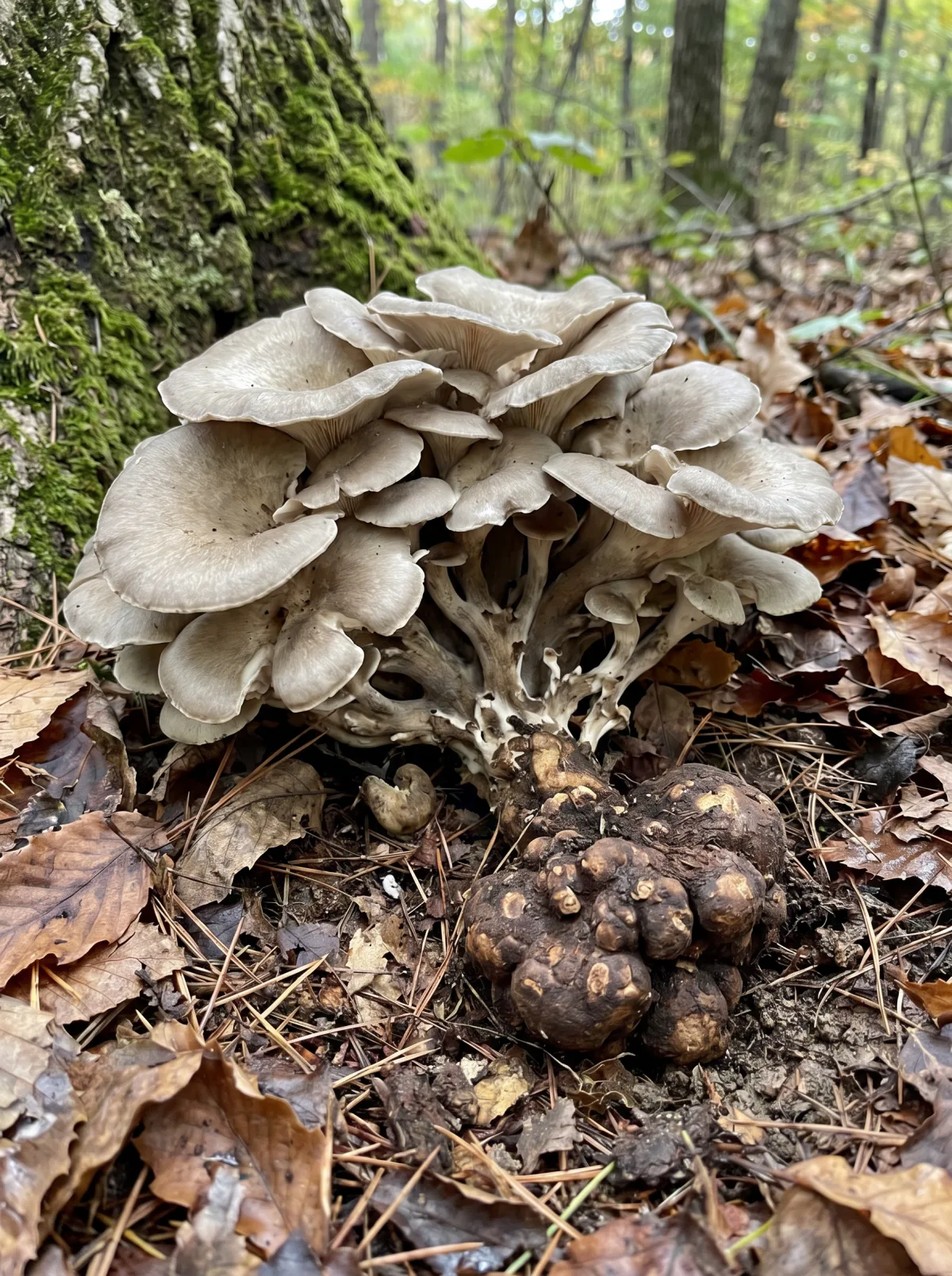
Polyporus umbellatus (Pers.) Fr. belongs to the family Polyporaceae and is therefore a true polypore—not a leaf mushroom, but a bolete with fine pores on the underside of its cap. The mushroom does not form visible mycelium in the soil, but rather a thickened, tuberous sclerotium: a compact overwintering structure made of intertwined hyphae that serves as a storage organ for the plant. In the summer, numerous small, flat caps with central stems emerge in clusters from this sclerotium—a distinctive appearance.
The mushroom is a root parasite and a saprophyte at the same time: It colonizes dying or already dead roots of deciduous trees—preferably beech (Fagus sylvatica), oak (Quercus etc.) and maple (Acer etc.). The underground sclerotium can survive for decades and only fruit under favorable conditions. Only the sclerotium is harvested; it is dried, ground, and processed.
Occurrence
- China: Main growing regions in Shaanxi, Yunnan, and Sichuan; also Guizhou and Shanxi; cultivated on beech and elm roots
- Japan and Korea: Found naturally in mountain forests; traditionally used in Korean medicine as well
- Europe: Rare and scattered in old deciduous forests—primarily among beech and oak trees; listed as endangered on Germany’s Red List; harvesting is prohibited
- Commercially available material: Comes almost exclusively from Chinese cultivation; wild-harvested specimens no longer play a role in the commercial market
Harvest time
- Spring (March–May): First harvest, when the soil is still moist and the sclerotia are firm
- Fall (September–November): Main Harvest Season — Sclerotia Have the Highest Nutrient Content After Summer
- The fungus grows underground as a sclerotium on the roots of deciduous trees; it is dug up, rather than harvested like above-ground mushrooms
Processing
The harvested sclerotia of Polyporus umbellatus are traditionally processed in several steps to ensure shelf life and the quality of their nutritional content.
- Cleaning: Sclerotia are thoroughly cleaned of soil and root debris and washed with water
- Drying: Then gently dried at 40–60 °C—avoid direct sunlight, as ergosterol derivatives are light-sensitive
- Cutting: Dried sclerotia are cut into thin slices (2–4 mm) or coarse pieces to increase the surface area for the decoction
- Storage: Store in a dry, cool place away from light; if stored properly, it will keep for 1–2 years
- No roasting: Unlike some other mushroom-based drugs, Zhu Ling is not roasted, as heat can alter its polysaccharide structure
Related herbs
Herbs with similar effects and related areas of application