







Sheng Jiang — Fresh Ginger
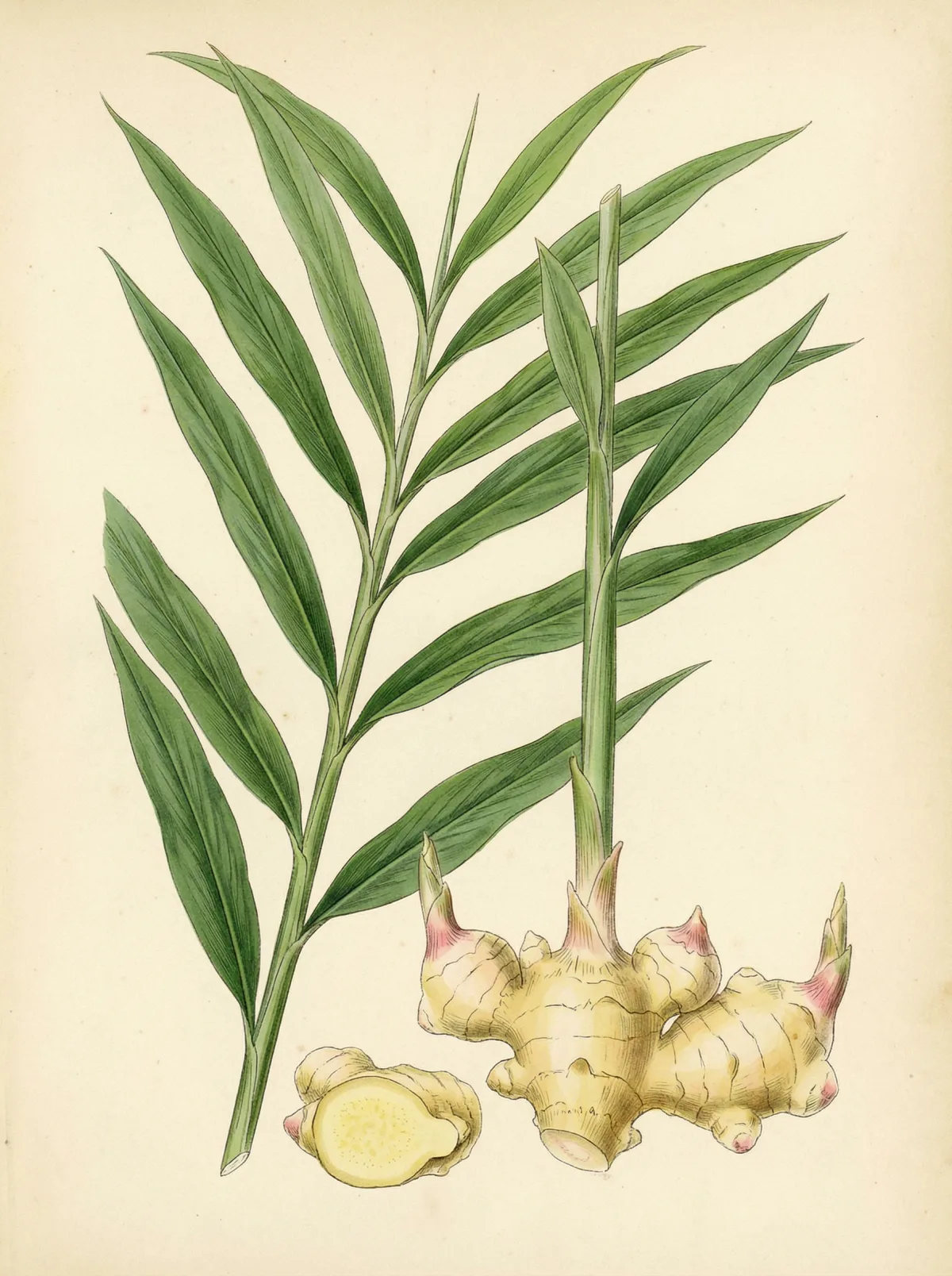
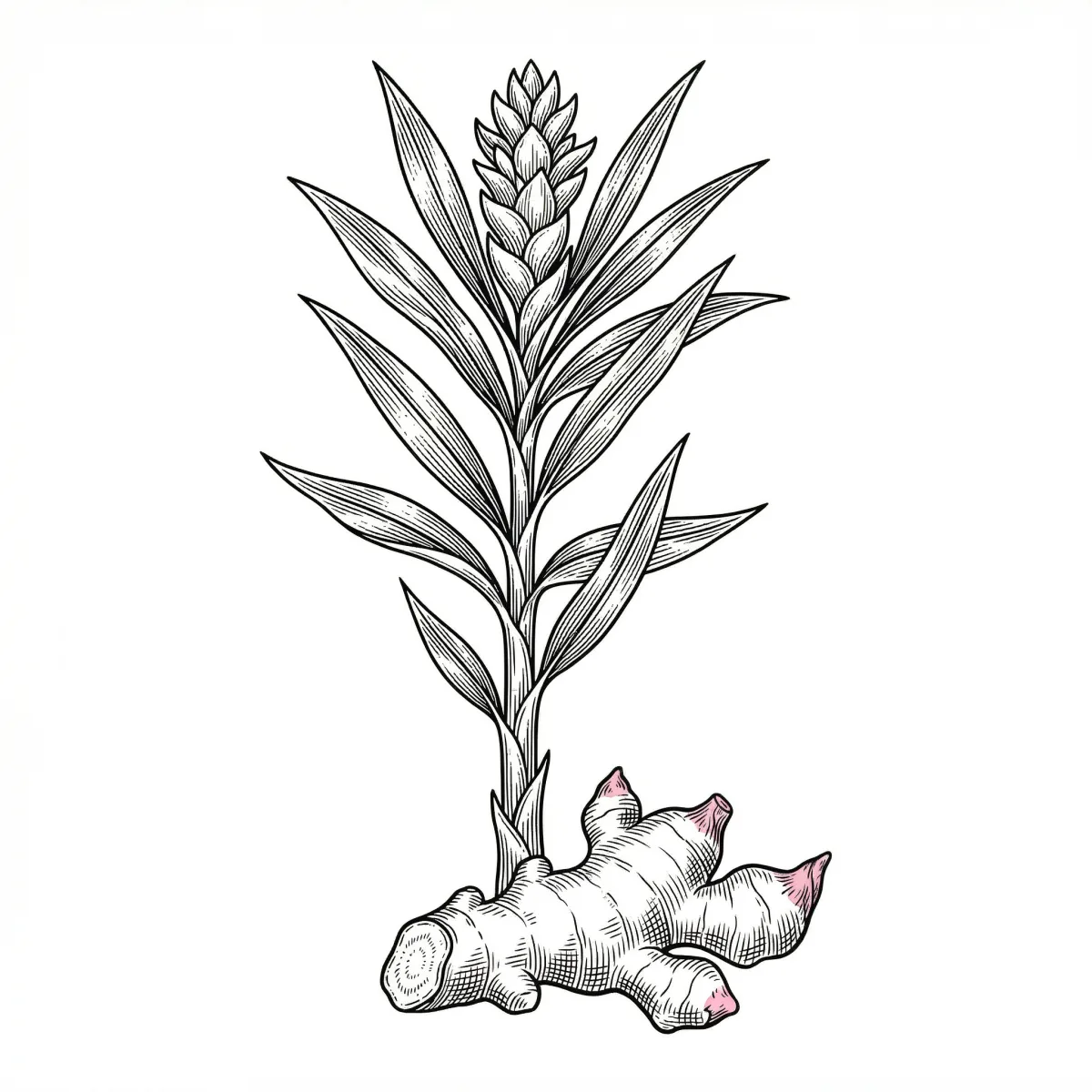
Sheng Jiang — der frische Ingwer — ist eines der am häufigsten verwendeten Kräuter der chinesischen Medizin und zugleich ein alltägliches Gewürz. Er wird seit Jahrtausenden als mildes, wärmendes Mittel bei Kälte–Mustern geschätzt.
Sheng Jiang befreit die Oberfläche von Wind–Kälte, wärmt die Mitte, senkt rebellierendes Magen–Qi ab und löst Schleim — kaum eine TCM–Rezeptur kommt ohne seine harmonisierende Wirkung aus.
Effect from a TCM perspective
Sheng Jiang befreit die Oberfläche bei leichter Wind–Kälte — es öffnet die Poren, fördert das Schwitzen und vertreibt Kälte. Im Mittleren Erwärmer wärmt es Milz und Magen und senkt das rebellierende Magen–Qi ab — als Hauptkraut einer klassischen kleinen Rezeptur mit Ban Xia bei aufsteigendem Magen–Qi. Es löst Kälte–Schleim in der Lunge und senkt das rebellierende Lungen–Qi ab — der Schleim zeigt sich klar und wässrig. Sheng Jiang harmonisiert zudem andere Kräuter und mildert deren Toxizität — besonders bei Ban Xia und Fu Zi.
- Cleans the surface und fördert das Schwitzen bei leichtem Wind–Kälte–Angriff
- Warms the Middle Burner und senkt das rebellierende Magen–Qi ab
- Relieves cold-related phlegm in der Lunge und senkt das rebellierende Lungen–Qi ab, wenn dieser klar und wässrig ist
- Reduces toxicity other herbs (especially Ban Xia and Fu Zi)
- Harmonizes Formulations and directs the effects to the stomach
Application & dosage
Die Standarddosis beträgt 3–9 g im Dekokt, entsprechend 3–5 frischen Scheiben. Bei stark rebellierendem Magen–Qi kann die Dosis auf 6–9 g erhöht werden. Als Harmonisierer in Rezepturen genügen 3 Scheiben (ca. 3 g).
Frischer Saft (Jiang Zhi) wird mit 3–10 Tropfen in den fertigen Dekokt eingerührt — er wirkt rasch bei akut rebellierendem Magen–Qi. Äußerlich dienen frische Scheiben als Unterlage für die Moxibustion auf Akupunkturpunkten. Als Congee werden 3 Scheiben mitgekocht — eine bewährte diätetische Anwendung zur Magenstärkung.
Dosage forms
- Decoction — 3–5 fresh slices; cook for 10–15 minutes
- Fresh Juice (Jiang Zhi) — Stir 3–10 drops into the prepared decoction
- ginger tea — 3–5 fresh slices steeped in hot water
- Moxibustion — a fresh slice placed on acupuncture points
- Congee — 3 slices cooked along with the meal to help strengthen the stomach as part of a diet
Dosage
- Decoct: 3–9 g (Standard)
- Bei rebellierendem Magen–Qi: 6-9 g
- Frischer Saft (Jiang Zhi): 3–10 Tropfen
- Ingwertee: 3–5 frische Scheiben
Frequent combination partners
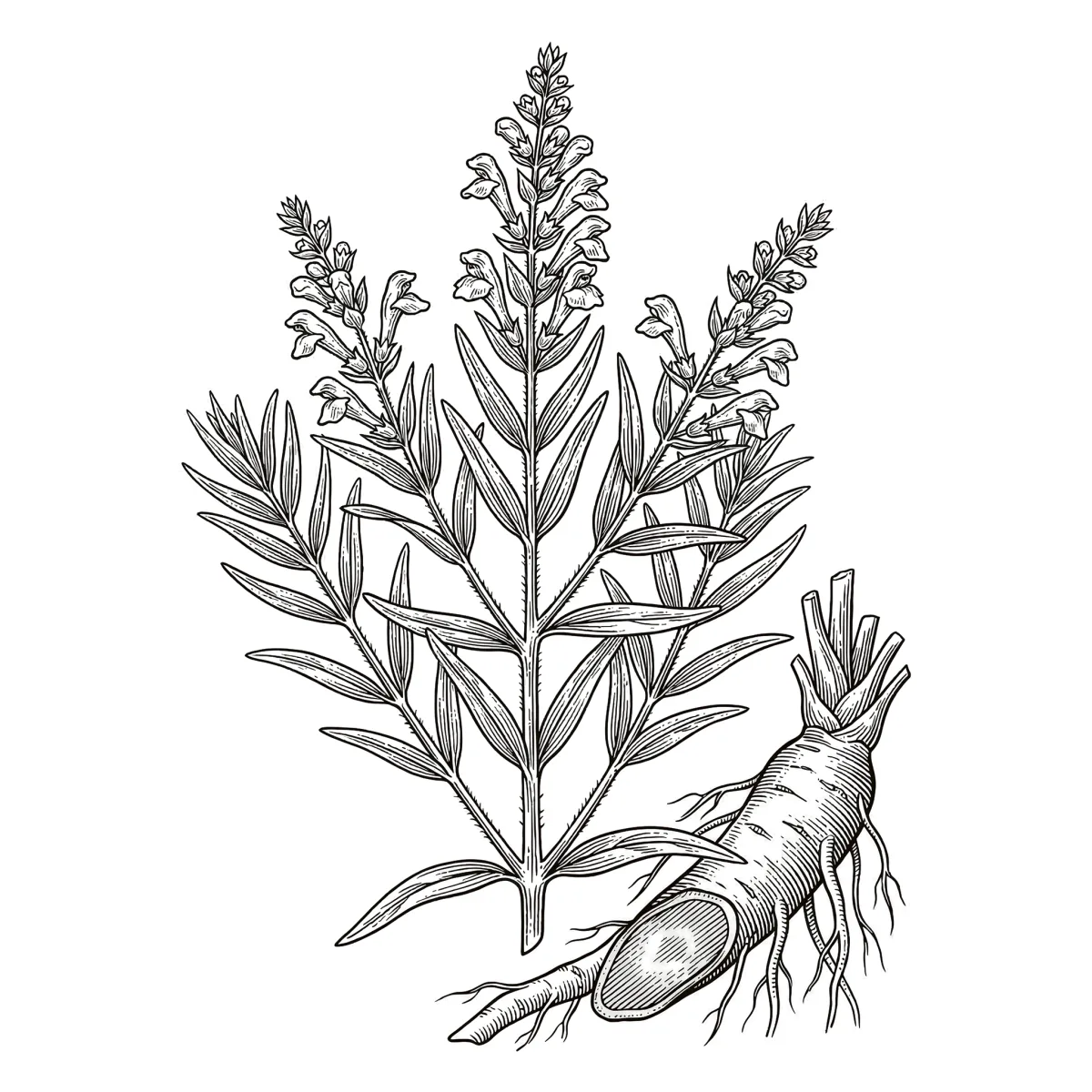
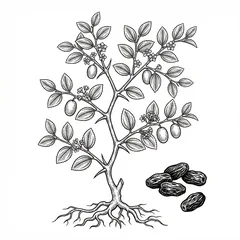
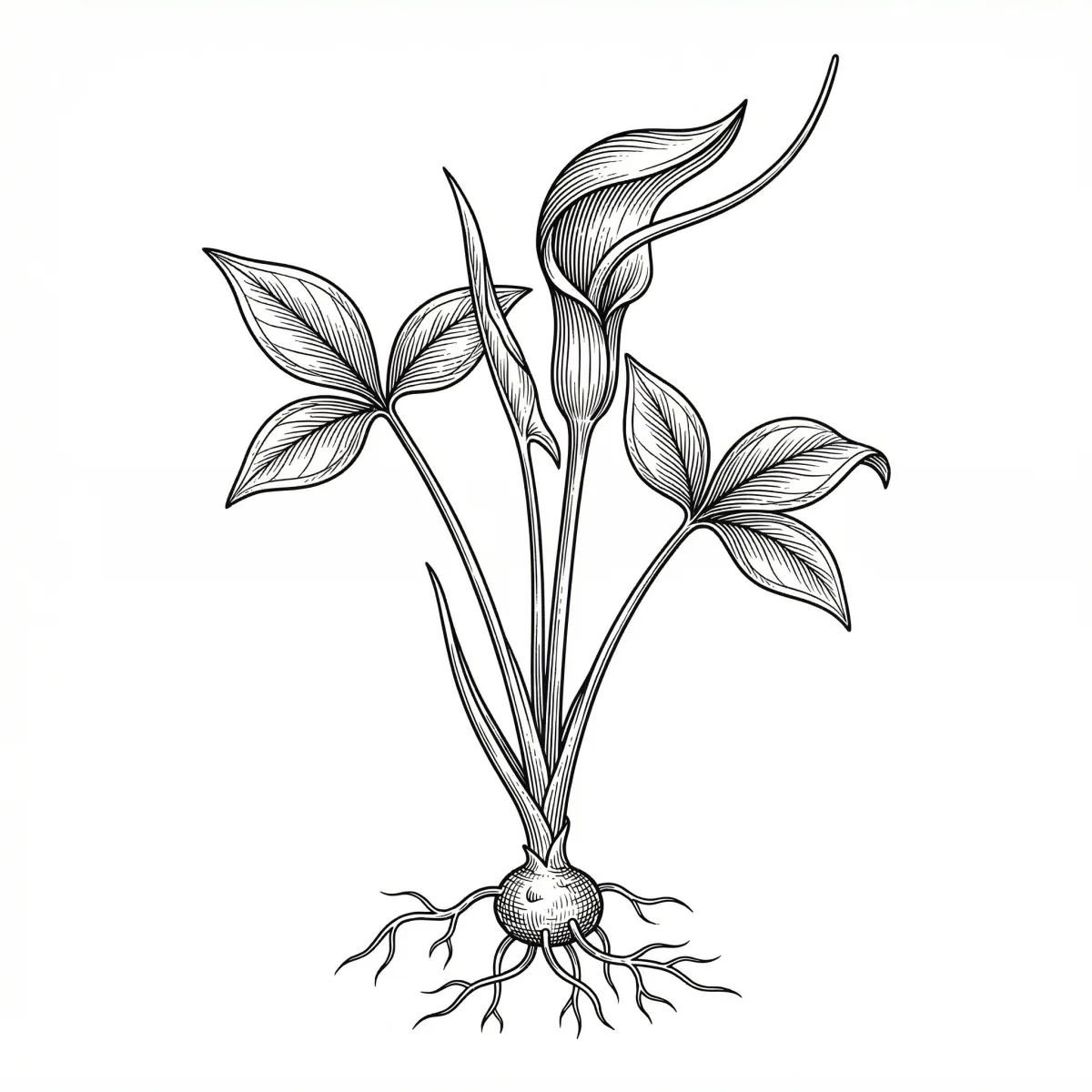
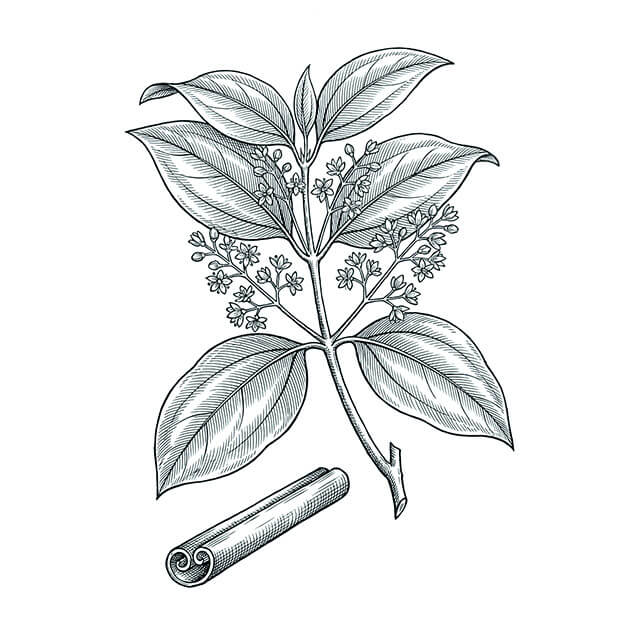
Sheng Jiang often does not reach its full potential until it is combined with other herbs
History & Tradition
In China ist frischer Ingwer seit mindestens 3.000 Jahren als Nahrungs– und Kräutermittel dokumentiert. Confucius soll niemals ohne Ingwer gegessen haben — im Lún Yǔ heißt es, er habe zu jeder Mahlzeit eine Scheibe Ingwer verzehrt. Diese Überlieferung spiegelt die tiefe Wertschätzung wider, die dem frischen Ingwer seit der Antike entgegengebracht wird.
Das Shén Nóng Běn Cǎo Jīng führt Sheng Jiang als mildes, wärmendes Mittel gegen Kälte und gegen aufsteigendes Magen–Qi. Zhang Zhongjing machte es im Shāng Hán Lùn zum am häufigsten verwendeten Kraut überhaupt — es erscheint in über der Hälfte aller Rezepturen, meist als Harmonisierer in Kombination mit Da Zao.
Das chinesische Sprichwort „Drei Scheiben Ingwer am Morgen sind besser als ein Jahr Ginseng“ spiegelt die tiefe kulturelle Verankerung wider. In der Tang Dynasty wurde frischer Ingwer auch als Konservierungsmittel in der Hofküche geschätzt. Sun Simiao empfahl Sheng Jiang in seinem Qiān Jīn Yào Fāng als tägliches Nahrungsmittel zum Schutz vor eindringender Kälte.
Die Unterscheidung zwischen Sheng Jiang (frisch) und Gan Jiang (getrocknet) ist ein Musterbeispiel für die Differenzierung in der TCM: Dieselbe Pflanze, zwei völlig verschiedene Kräuter mit unterschiedlichen Wirkprofilen. Sheng Jiang wirkt an der Oberfläche und im Mittleren Erwärmer, während Gan Jiang tiefer ins Innere dringt und das Yang stärkt.
Contraindications & caution
- Do not use if Yin–Mangel mit innerer Hitze — Sheng Jiang ist warm und scharf und kann die Hitze verschlimmern.
- Be careful with Blutungen — die wärmende Natur kann Blutungen verstärken.
- At Magen–Hitze mit saurem Aufstoßen ist Sheng Jiang ungeeignet.
- Nicht in hoher Dosierung während der Pregnancy use.
Botany
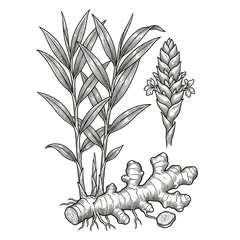
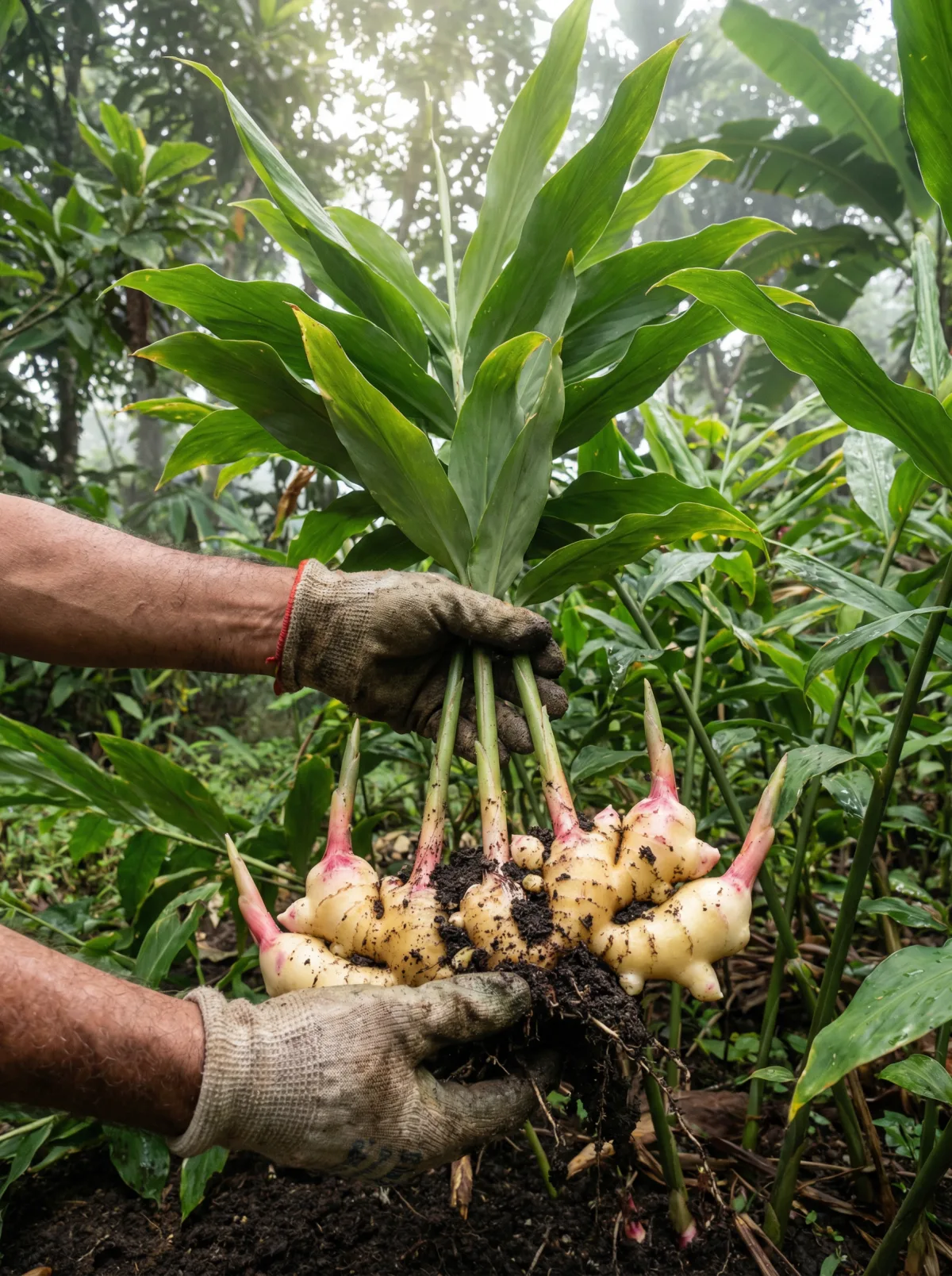
Zingiber officinale ist eine tropische Staude aus der Familie der Ingwergewächse (Zingiberaceae), die 60–120 cm hoch wird. Die Pflanze bildet ein fleischiges, aromatisches Rhizom mit knolligen Verzweigungen. Die lanzettlichen Blätter sind wechselständig und umhüllen den Scheinstamm.
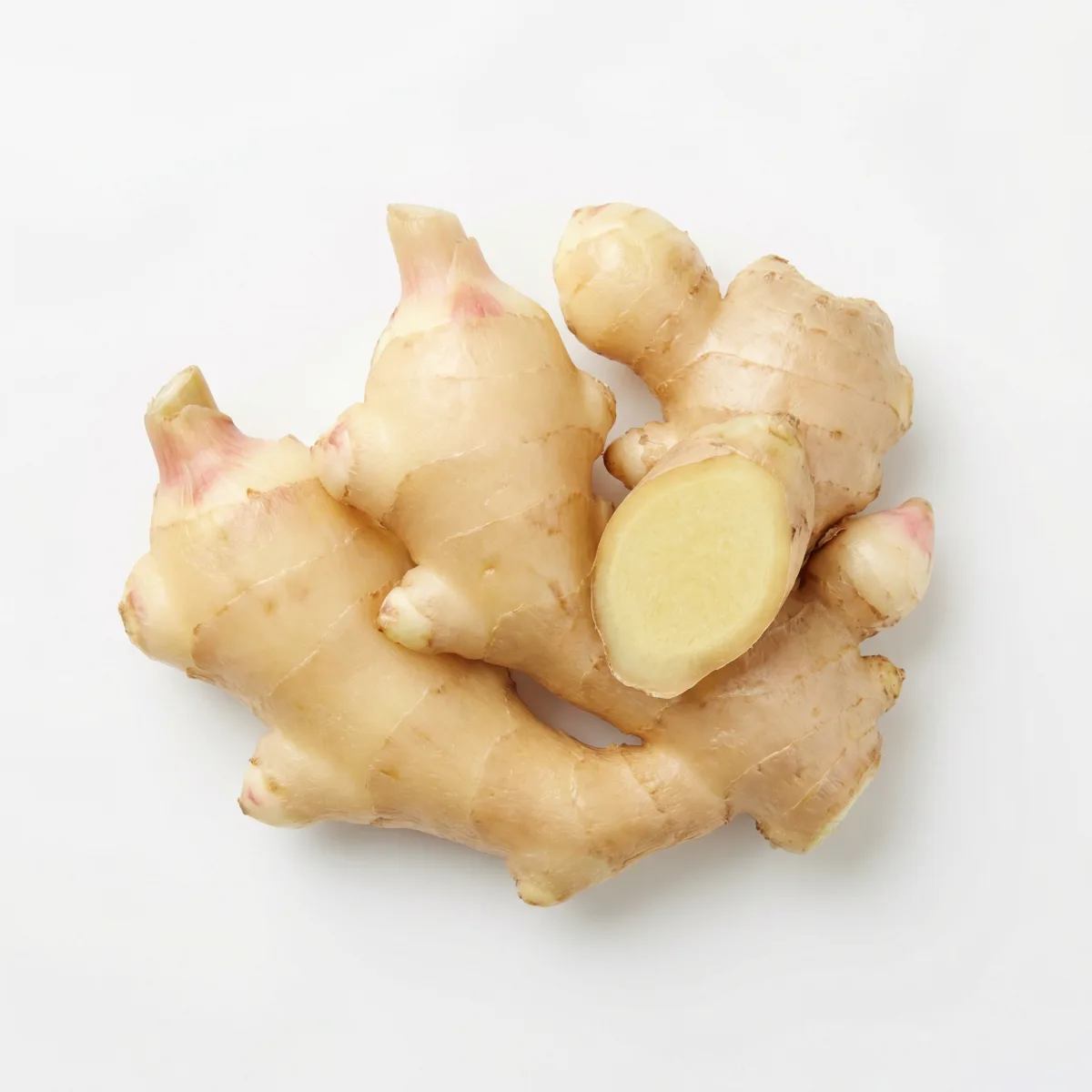
When used for medicinal purposes, the rhizome is light yellow in color when fresh, succulent, and has an intensely pungent flavor. Signs of high quality include a strong, aromatic scent and a light yellow cross-section free of woody fibers.
Occurrence
- Ursprünglich Südost–Asien (vermutlich Indien oder Malaysia)
- Kultiviert in ganz China, besonders Sichuan, Guizhou und Guangdong
- Tropical and subtropical regions around the world
- Benötigt warmes Klima, feuchte Böden und Halbschatten
Harvest time
- Ganzjährig verfügbar, Haupternte im Spätsommer und Herbst
- Junge Rhizome (6–8 Monate) für frischen Ingwer bevorzugt
- Nur frisches, saftiges Rhizom verwenden — nicht getrocknet wie Gan Jiang
Processing
Sheng Jiang is used fresh and unprocessed—unlike Gan Jiang, which has a different effect when dried. The quality of fresh ginger is evident in its plump, juicy texture and intensely aromatic scent.
- Sheng Jiang (fresh ginger) — Standard form:
- Wash the fresh rhizome and remove any soil
- Cut into thin slices (about 2–3 mm)
- Add directly to the decoction; do not dry first
- Jiang Zhi (frischer Ingwersaft) — bei rebellierendem Magen–Qi:
- Grate or press fresh rhizome
- Collect and filter the juice
- Stir 3–10 drops into the finished decoction
- Jiang Pi (Ingwerschale) — bei Wasser–Stauung:
- Thinly peel the outer layer of the fresh rhizome
- Dry separately or use fresh
- Has a cooling and diuretic effect — in contrast to the warm fruit pulp
Related herbs
Herbs with similar effects and related areas of application