








Hu Lu Ba — Fenugreek
Hu Lu Ba—fenugreek—is a warming Yang Tonic, which was brought to China from the Mediterranean region via the Silk Road. Its seeds strengthen kidney yang, dispel cold and dampness, and fortify the lower back and knees in cases of kidney yang deficiency.
Modern science confirms it: fenugreek seeds contain unique amino acids and saponins that regulate blood sugar, promote milk production, and reduce inflammatory responses in the tissues. An ancient herb—and one that has been surprisingly well researched.
Effect from a TCM perspective
- Warms the kidneys and strengthens Yang—in cases of kidney Yang deficiency with a cold lower back, cold knees, and weakness in the lower back
- Dispels cold and resolves stagnation — in cases of Shàn pattern (cold stagnation in the liver meridian, Shàn Qì) with coldness in the lower abdomen and groin, cold testicles, and a chilled uterus
- Warms the Ming Men and warms the uterus—in cases of a cold uterus, when kidney jing and yang are unable to support conception
- Strengthens the essence (Jing) — supports reproductive function in men and women with Yang deficiency
- Warms and dispels cold and dampness in the Liver Meridian—especially in cases of cold stagnation along the Liver Meridian in the genital area
- Warms the Ming Men for Kidney Yang Deficiency with loose stools in the early morning hours (Wu Geng Xie)
Application & dosage
In TCM, Hu Lu Ba is primarily used as a decoction—the heat from the cooking process enhances its Yang-tonifying effect. When roasted (Chao Hu Lu Ba), it produces an even more pronounced warming effect and is preferred for severe cold patterns.
The dosage depends on the form of administration and the patient’s constitution. In traditional TCM practice, it is always recommended to take this under the supervision of an experienced TCM practitioner—especially when combined with other Yang tonics. External applications such as warm compress are a useful supplement for treating localized cold in joints and muscles.
Dosage forms
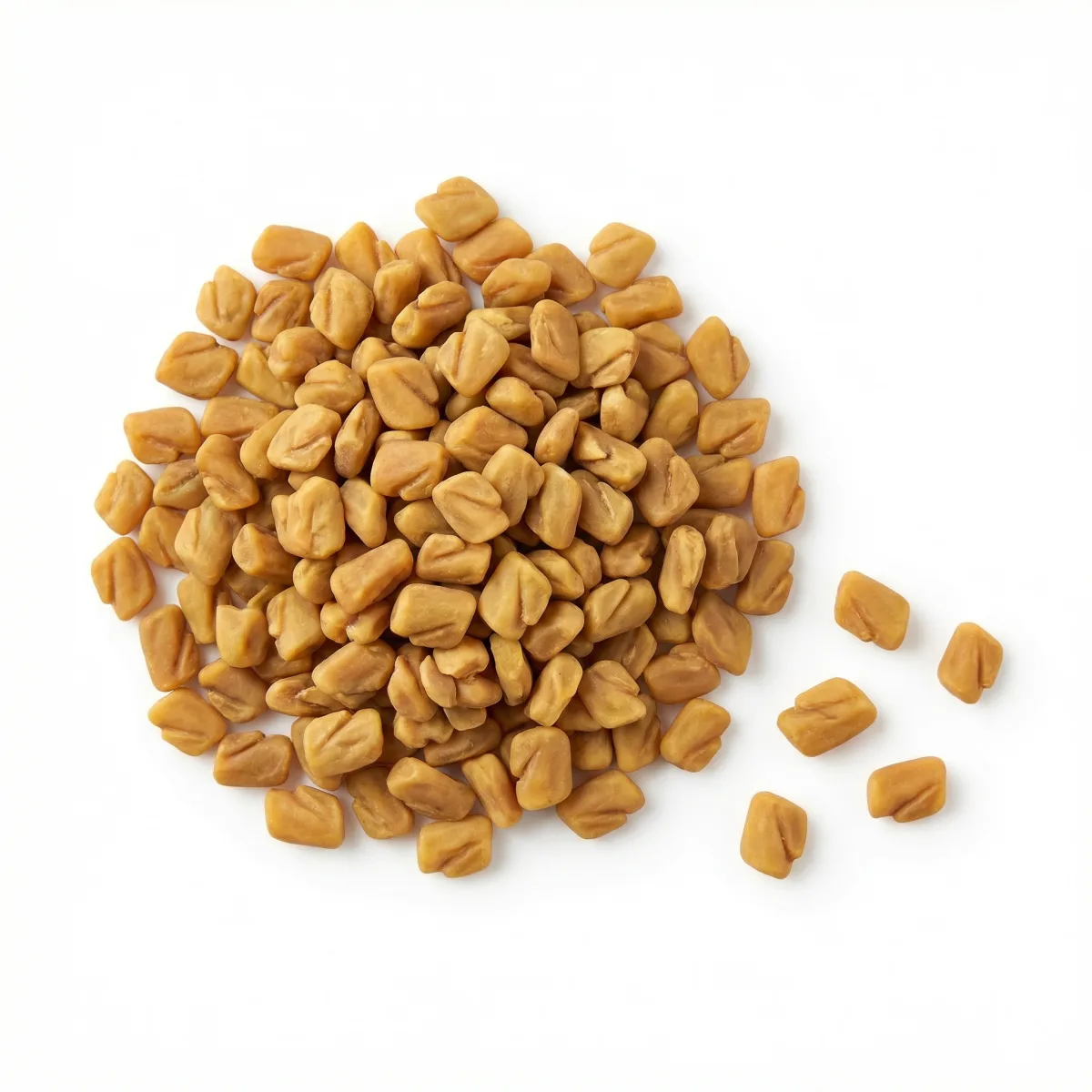
- Whole seeds — for decoctions and external poultices; the hard seed coat protects the active ingredients during cooking
- Ground seeds (powder) — easier to take; for capsules, tablets, or direct consumption with water
- Decoction — traditional TCM form; seeds boiled for 30–45 minutes; standard form in herbal formulas
- Capsules / Tablets — standardized extracts for Western use; suitable for long-term use
- Extract (dry extract) — concentrated; for pharmaceutical preparations; dosage based on the extract ratio
- Tincture — alcoholic extract; rarely used in TCM, more commonly used in Western herbal medicine
- Tea made from roasted seeds — brewed from roasted seeds; mild, nutty-spicy flavor; traditionally consumed as an everyday beverage in India and North Africa
Dosage
- Decoction — 3–10 g per day (standard TCM dosage); up to 15 g in cases of severe cold-Yang deficiency, under medical supervision
- Powder (ground seeds) — 1–3 g per dose, 2–3 times a day
- Dry extract — 500–1,000 mg of standardized extract per day; adjust according to the extract ratio (4:1 to 10:1)
- Tincture (1:5) — 2–4 ml, 3 times a day
- Maximum dose — Do not exceed: 15 g/day (raw herbs); higher doses can put a strain on the central nervous system and significantly lower blood sugar
Frequent combination partners
Hu Lu Ba often does not reach its full potential until it is combined with other herbs
History & Tradition
No other herb has such a long history as fenugreek. Fenugreek seeds were found as grave goods in the tombs of Egyptian pharaohs—including Tutankhamun’s tomb—bearing witness to its importance as a plant and incense in Ancient Egypt. The ancient Egyptians used its seeds to treat wounds, combat heat-related ailments, and as part of the embalming process. As early as the The Ebers Papyrus (ca. 1550 B.C.), the oldest surviving medical document in human history, lists fenugreek as a remedy.
In ancient Greece, [name] wrote Dioscorides In his seminal work *De Materia Medica* (ca. 70 C.E.), he wrote at length about the plant, which he Telis or Foenum Graecum — „Greek hay," as he called it. He recommended it for digestive problems, irritated and reddened skin, and for the external treatment of wounds. Hippocratic medicine valued its emollient and skin-soothing properties. It was also known in ancient Rome: Pliny the Elder described it in his *Naturalis Historia* as both a versatile plant and animal feed.
Fenugreek—Hu Lu Ba (胡芦巴)—made its way to China via the Silk Road, probably no later than the Tang Dynasty (618–907 CE). The character „Hu" (胡) refers to its origin beyond China’s borders, among the western barbarian peoples—a linguistic testament to its origins. It appears in the major TCM herbal texts beginning with the Song Dynasty: Su Song lists it in the „Bencao Tujing" (本草圖經, 1061 CE) as a warming agent for Shàn pattern (cold stagnation in the liver meridian, lower abdomen, and groin) and Yang deficiency. Li Shizhen devotes a detailed entry to it in the „Bencao Gangmu" (本草綱目, 1578) and highlights its ability to warm kidney yang and dispel cold-dampness.
Today, fenugreek is native to five continents. In India, it is — as Methi — an indispensable part of the kitchen and the Ayurvedic herbal tradition. In North Africa, the Middle East, and the Mediterranean region, its fresh leaves and aromatic seeds flavor countless dishes. In Europe, it is experiencing a renaissance as a dietary supplement—particularly for blood sugar regulation and testosterone support. Traditional Chinese Medicine (TCM) has developed a precise Yang-Tonic Agents Performed: specifically for cold, specifically for the kidneys, specifically for the dying fire of the Ming Men.
Contraindications & caution
- Yin Deficiency with Signs of Heat — Hu Lu Ba has a strong warming effect and would further exacerbate existing heat; it is contraindicated in cases of a sensation of heat, night sweats, and dry mouth
- Inner Heat–Abundance — Do not use in cases of acute inflammation, fever, or patterns of fullness and heat
- Pregnancy — strictly contraindicated: may stimulate uterine contractions and cause a miscarriage; historically used in folk medicine as an emmenagogue
- Diabetes Medication — May have an additive blood-sugar-lowering effect; consultation with a physician and close monitoring of blood sugar levels are required
- Blood Thinners (Anticoagulants) — Possible interactions with warfarin and similar medications; consult a doctor
- Allergy to legumes — Cross-reactions are possible in people with existing allergies to peanuts, soy, or other legumes
- May cause a characteristic sweetish body odor and urine odor — harmless, but worth noting
Botany
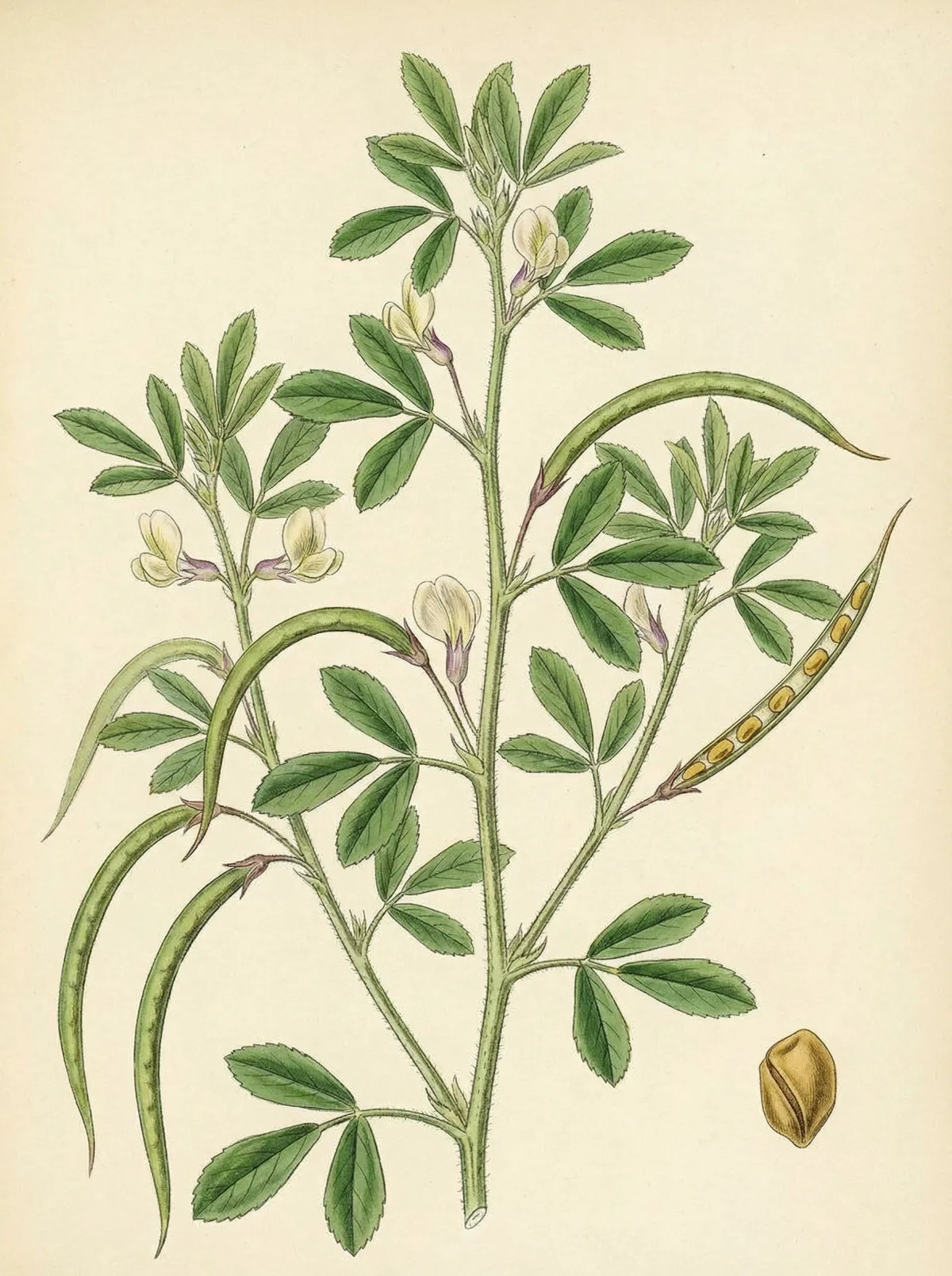
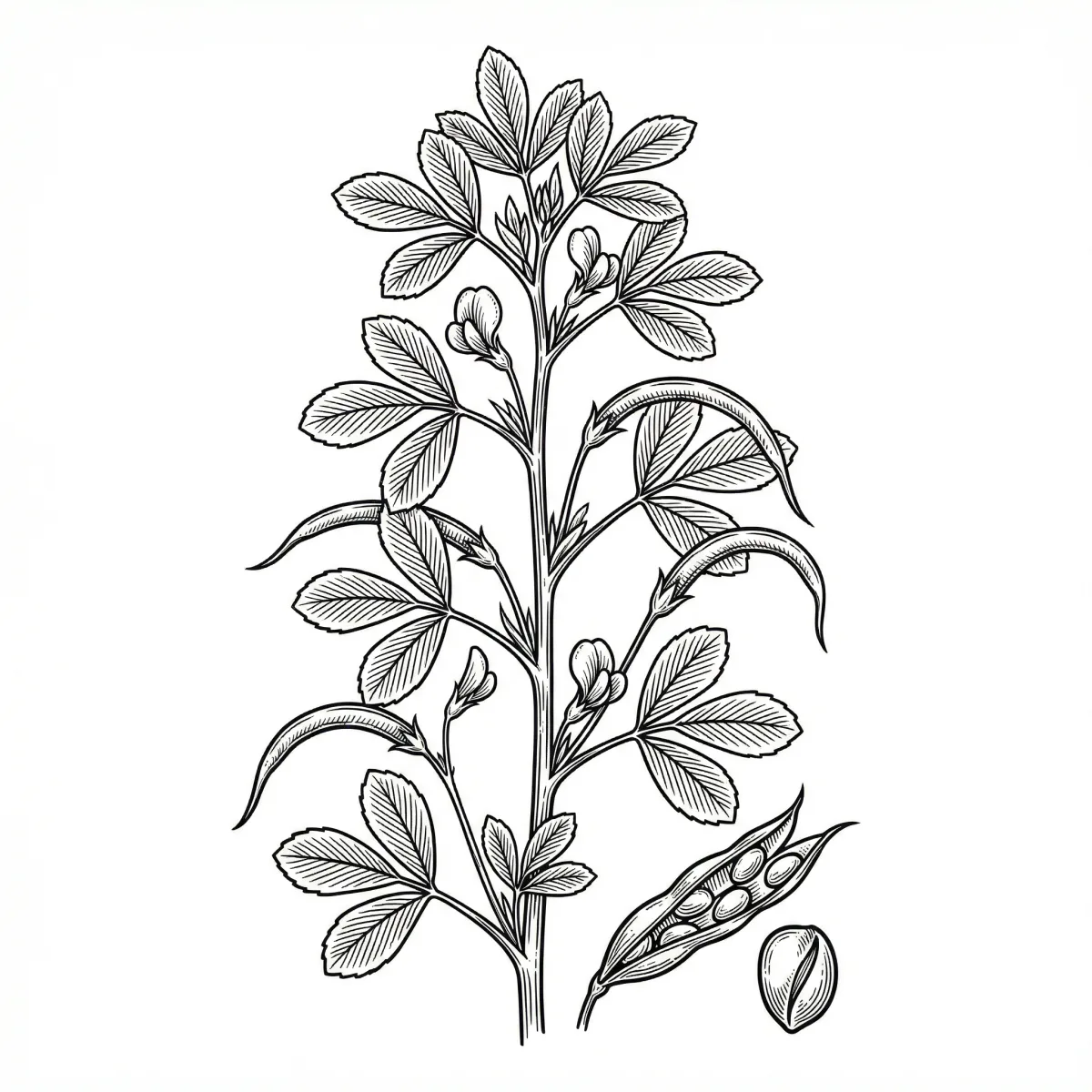
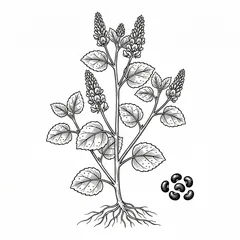
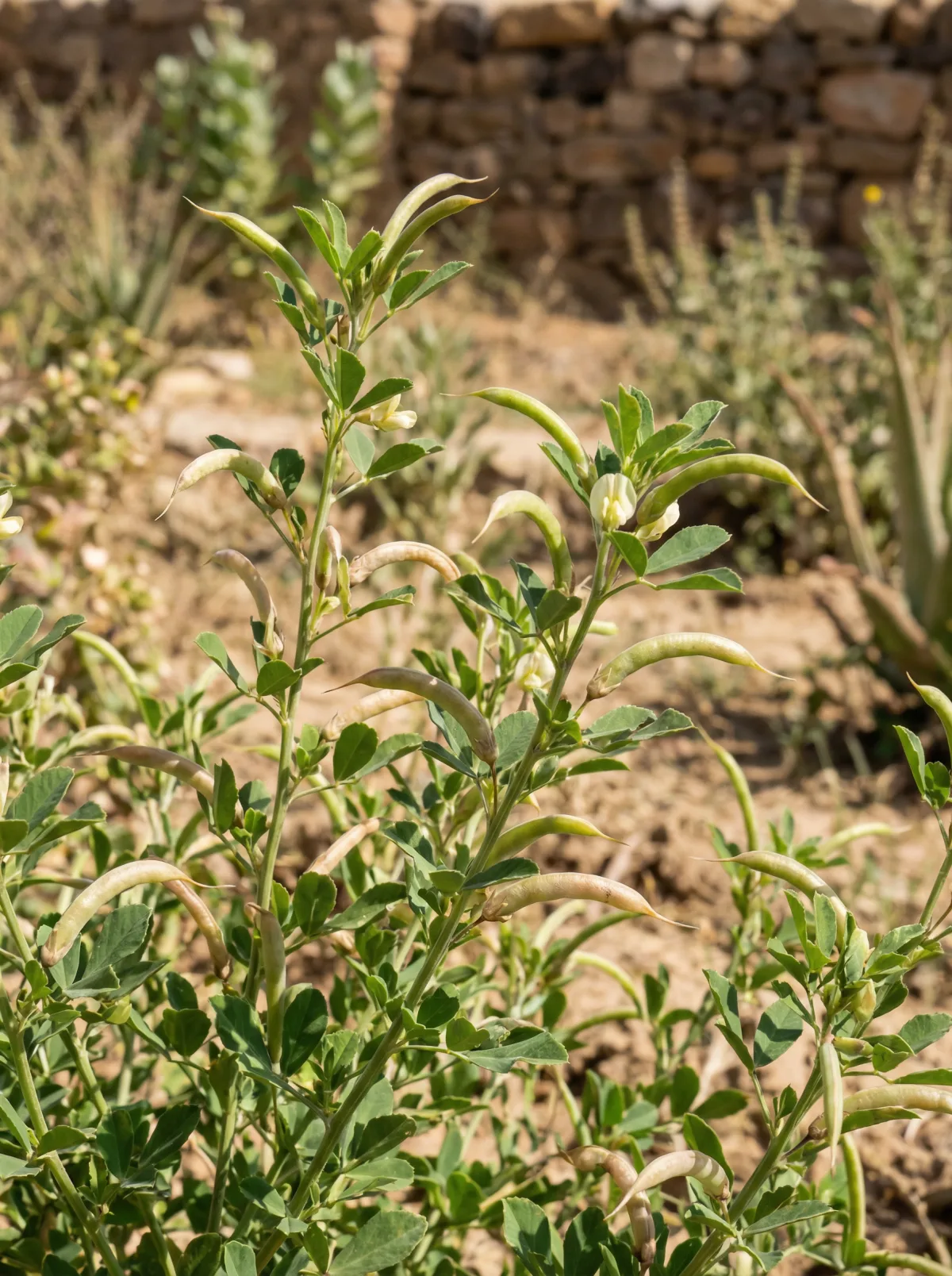
Fenugreek (Trigonella foenum-graecum L.) belongs to the family of Fabaceae (Legume) and is an annual, erect herbaceous plant that grows to a height of 20–60 cm. The erect, slightly hairy stem branches in the upper part; the trifoliate leaves resemble those of a clover leaf—an unmistakable identifying feature of the genus Trigonella. The white to pale yellowish papilionaceous flowers appear singly or in pairs in the leaf axils and bloom from May through July.
The most distinctive features are the long, narrow, cylindrical Sleeves: 10–15 cm long, slightly curved, with a beak-like tip — hence the Latin name foenum-graecum (Greek hay). Each pod contains 10–20 hard, rhombic seeds 3–5 mm long; their color ranges from pale yellow to ochre brown, and their surface features a characteristic diagonal groove. When crushed, the seeds give off an intensely spicy, curry-like odor—caused by the lactone sotolone.
Occurrence
- Mediterranean region — Native range of the wild form: Greece, Turkey, southern France, Spain; cultivated since ancient times
- Middle East — Egypt, Ethiopia, Morocco, Iran; cultivation documented for over 4,000 years; an important component of folk medicine
- India (the world's leading producer) — Rajasthan produces over 80 % of the global harvest; as Methi Culturally and culinarily indispensable; both the seeds and the leaves are used
- China — Cultivated in Yunnan, Sichuan, and Xinjiang; introduced via the Silk Road; used exclusively for medicinal purposes as Hu Lu Ba
- North Africa — Tunisia, Morocco, Algeria; traditionally used in cooking and medicine; found in the wild in some warm, dry habitats
- Cultivated worldwide—now also grown in Argentina, the United States, and Australia; industrial cultivation is primarily for the production of galactomannans and steroid saponins
Harvest time
- Seed Harvest (Main Harvest) — July through September, when the pods are fully mature and have turned yellowish-brown; harvesting too early reduces the nutrient content; the pods split open easily — Harvesting in the morning when the air is cool is recommended
- Harvest indicator — The pods are hard and dry, and the stem is beginning to die back; the seeds rattle audibly inside the pod
- Leafy greens (Methi) — Young leaves are harvested 3–4 weeks after sowing (when the plants are about 10–15 cm tall); multiple harvests are possible by pruning; used primarily in Indian cuisine, not in TCM
- Crop rotation cycle — annual plant; sow in the spring (March–April), harvest in midsummer through early fall; cannot overwinter
Processing
In TCM, Hu Lu Ba is generally used in a processed form. The most common method of preparation is roasting (Chao), which mitigates the typical bitter raw taste and enhances the warming effect. In addition, a salt preparation (Yan Zhi) is used to specifically direct the effect to the Kidney meridian.
- Raw Seeds (Sheng Hu Lu Ba)
Unprocessed seeds; stronger bitter taste; commonly sold this way in Western Europe. Rarely used in TCM—more often for external applications or when a strong effect is desired.
- Roasted (Chao Hu Lu Ba)
- Wipe the seeds with a damp cloth to remove any debris
- Preheat a dry skillet over medium heat (no oil)
- Toast the seeds, stirring constantly, until they give off a fragrant aroma and turn a uniform yellowish-brown to light brown color (about 5–8 min.)
- Remove immediately from the pan and let cool completely on a flat tray
- Store in an airtight container in a cool, dark place — Shelf life: 6–12 months
- Prepared with salt (Yan Zhi Hu Lu Ba)
- Briefly moisten the seeds with salt water (2–3 % salt solution) and let them soak for 30 minutes
- Toast in a skillet over medium heat, stirring constantly, until the salt has dried and the seeds are lightly browned
- Let it cool and store it as described above
Related herbs
Herbs with similar effects and related areas of application