






On this page, you will learn:
- What this diagnosis means from the point of view of TCM and Western medicine
- Where your symptoms come from and how they are connected
- Which specific treatment methods can help you now
- How you can use TCM herbs, acupressure, Qi Gong and nutrition to eliminate moisture and heat from your bladder and restore natural bladder function
The good news: Damp heat in the bladder can be treated very well with the right measures. With a cooling diet, targeted acupressure and proven TCM herbs, you can eliminate the dampness and heat and restore your balance.
Take your time, Get to know the different treatment approaches—you don't have to implement everything at once. Choose what feels right for you and what you can easily integrate into your everyday life.
Your treatment at a glance:
Which TCM pattern is really behind your complaints?
Degree of
imbalance

Medium
Typical
treatment duration

2 - 4 months
self-treatment
Possible

Well self-treatable
Treatment–
scope

2–3 methods
Proposed
methods

Extensive range
Our free TCM analysis shows you your personal TCM pattern in just 10 minutes - and which treatment will help you best.
What is damp heat in the bladder?
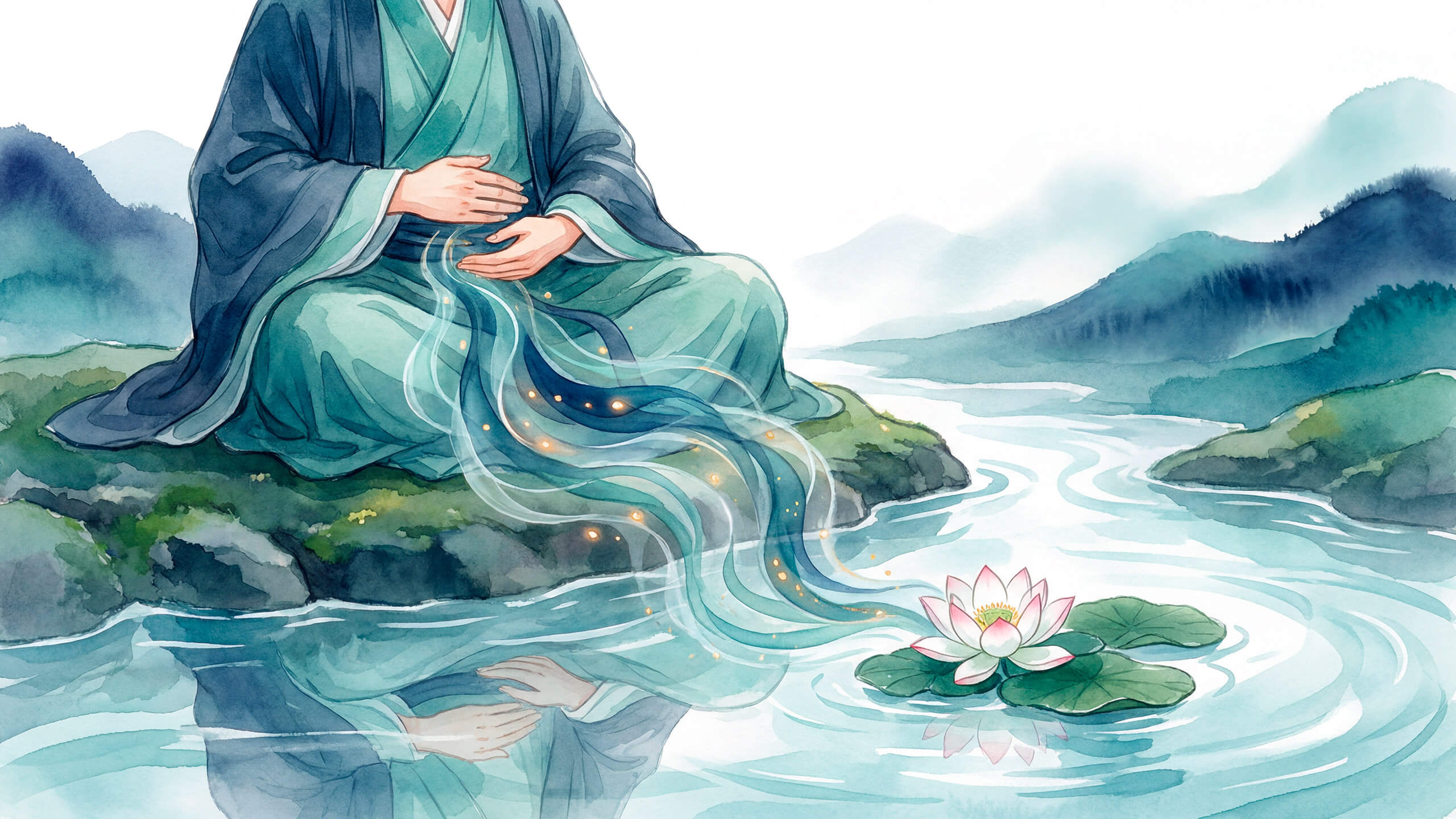
When moisture and heat put a strain on the bladder
The TCM perspective: When cloudy heat blocks the lower heater
In traditional Chinese medicine, the bladder is much more than just a storage organ for urine. It is the organ of Qi transformation in the lower warmer - it separates the clear from the turbid and drains excess body fluids. The bladder works closely with the kidney, which provides it with the necessary Qi for this transformation.
With Damp Heat in the bladder (Pangguang Shi Re), two pathogenic factors have combined in the lower heater: Humidity - heavy, sticky and sinking downwards - and Heat - burning, drying and pushing upwards. Together they form a particularly stubborn combination that gets stuck in the lower warmer and disrupts bladder function.
Moisture can penetrate from the outside - through a damp climate, wet clothing or prolonged sitting on cold, damp surfaces. However, it can also arise from within if the spleen is weakened and no longer transforms body fluids properly. The heat is often caused by eating too much spicy, greasy or sweet food, by alcohol or by pent-up emotions such as anger and frustration.
The result: The Qi of the bladder can no longer separate the clear from the turbid. The urine becomes cloudy and dark, urination burns and hurts. The damp heat irritates the bladder wall and creates a constant feeling of urgency - as if you have to go to the toilet immediately, even if the bladder is barely full.
The typical signs of damp heat in the bladder:
- Frequent, urgent urination with small amounts
- Burning and pain when urinating
- Cloudy, dark or yellowish urine
- Feeling of pressure or heaviness in the lower abdomen
- Possibly blood in the urine (in case of high heat)
- Feeling of heat in the body, especially in the pelvic area
- Thirsty, but little desire to drink
- Tiredness and heaviness in the legs
The good news: Damp heat in the bladder can be treated very well with the right TCM methods. With a cooling, moisture-draining diet, targeted acupressure and proven herbal formulas, you can clear the heat, drain the moisture and restore natural bladder function.
The Western perspective: cystitis and urinary tract infections
From a Western perspective, Damp Heat in the bladder most closely resembles cystitis or a urinary tract infection. The body fights against an inflammation in the urinary tract caused by bacteria, irritation or other factors.
Think of your bladder as a clear mountain lake: Normally, fresh water flows in and waste water flows out - everything is in balance. In humid heat, it is as if the lake becomes polluted and overheated - the water becomes cloudy, starts to ferment and the natural purification process no longer works. The bubble can no longer fulfill its task of separating the clear from the turbid.
Modern research shows that many factors promote bladder inflammation: a weakened immune system, cold in the pelvic area, stress, an unfavorable diet and a disturbed urinary tract microbiome. The TCM diagnosis „damp heat bladder“ captures all of these interrelationships in a holistic picture.
What does modern medicine show?
- Cystitis (inflammation of the bladder): The most common form of urinary tract infection, especially in women
- Bacterial infection: Mostly caused by E. coli bacteria that enter the urinary tract from the intestine
- Chronic recurrent urinary tract infections: Recurrent bladder infections
- Interstitial cystitis: Chronic bladder irritation without detectable bacteria
- Irritable bladder: overactive bladder with frequent urge to urinate
- Prostatitis (in men): Inflammation with similar symptoms
Modern research confirms: Many TCM herbs used to treat damp-heat in the bladder have been shown in studies to have antibacterial, anti-inflammatory and diuretic properties. Cranberries - known in TCM as a cooling, moisture-draining food - have been shown to prevent bacteria from adhering to the bladder wall.
TCM treatment takes a holistic approach here: It clears the heat, removes dampness and at the same time strengthens the kidneys as the root of the bladder's power - for a lasting cure that goes beyond mere symptom relief.

The Yellow Emperor team explains your diagnosis
Qi Bo | The Yellow Emperor | Dr. Lisa Weber
MASTER OF THE HEALING ARTS | TCM FOUNDER | MODERN PHYSICIAN
What happens when the legendary Yellow Emperor from TCM sits down with his advisor Qi Bo and a modern doctor? They discuss your diagnosis - with 4000 years of knowledge AND current science.
Moist heat bladder - When moisture and heat stress the lower warmer and disrupt bladder function
The Yellow Emperor: „Qi Bo, I observe people in my kingdom who suffer from a constant urge to urinate. They report a burning sensation when urinating, cloudy urine and an unpleasant feeling of pressure in the lower abdomen. What is the cause of this suffering?“
Qi Bo: „Your Majesty, these people suffer from Damp Heat in the Bladder - called Pangguang Shi Re. The bladder has a special function in TCM: it is the organ of Qi transformation in the lower warmer. It receives the turbid body fluids that are no longer needed by the kidneys and discharges them as urine. To do this, it needs the Qi of the kidney - the so-called bladder Qi. If moisture and heat enter the lower heater, they disrupt this Qi transformation. The bladder can no longer separate the clear from the cloudy. The urine becomes cloudy and dark, urination burns and the body feels heavy and hot.“
Dr. Weber: „This describes the picture of a urinary tract infection remarkably accurately! In Western medicine, we speak of cystitis - an inflammation of the bladder mucosa. The most common cause is bacteria, primarily E. coli, which enter the urethra and bladder from the intestinal tract. The inflammation causes exactly the symptoms you describe: Burning when urinating, frequent urge to urinate, cloudy or bloody urine. Women are particularly affected - around 50 percent of all women experience cystitis at least once in their lives.“
The Yellow Emperor: „What causes this moisture and heat in the bladder?“
Qi Bo: „Majesty, there are many causes. Firstly, external moisture - sitting for long periods on cold, damp ground, wet clothing, humid climate. The moisture penetrates from the outside and sinks into the lower warmer. Second: Diet - too much greasy, sweet, spicy food and alcohol create internal dampness and heat. Third: Spleen weakness - if the spleen does not transform the body fluids properly, internal dampness is created and collects in the lower warmer. Fourth: Emotional stress - pent-up anger and frustration generate Liver-Heat, which can sink down into the bladder. And fifth: Retained urination - holding urine for too long disturbs the Qi transformation of the bladder.“
Dr. Weber: „Amazing - almost all of these factors are also recognized in Western medicine as risk factors for urinary tract infections! Cold and wetness in the pelvic area weakens the local immune system. A high-sugar, high-fat diet promotes inflammation and changes the urobiome - the bacterial flora of the urinary tract. Stress increases cortisol, which weakens the immune system. And infrequent urination is actually one of the biggest risk factors - bacteria have more time to multiply in the bladder if the urine stands for too long!“
The Yellow Emperor: „What is so special about the combination of moisture and heat?“
Qi Bo: „Majesty, moisture and heat are like oil and fire - together they are particularly difficult to deal with. Dampness is heavy, sticky and sinks downwards. It clogs the channels and blocks the flow of Qi. Heat is hot, burning and urgent. It irritates the bladder wall and creates the burning sensation when urinating. Together they are literally stuck in the lower warmer. If you only clear the heat, the moisture remains and creates new heat. If you only expel the moisture, the heat remains and dries out the body fluids. That's why you ALWAYS have to treat both at the same time with moist heat.“
Dr. Weber: „This is an excellent model for what we observe in chronic urinary tract infections! The inflammation - the ‚heat‘ - promotes swelling and secretion formation - the ‚moisture‘. And the congestion - the moisture - creates an ideal environment for further bacterial proliferation - new heat. It's a vicious circle! Modern therapy therefore also aims to do both: reduce inflammation AND promote urine drainage.“
The Yellow Emperor: „What signs on the body reveal damp heat in the bladder?“
Qi Bo: „The signs are very clear, Your Majesty. The tongue is red - the heat is showing. The coating is thick, yellow and sticky - especially in the rear third, which corresponds to the lower warmer. The sticky coating shows dampness, the yellow color shows heat. The pulse is rapid - Shu Mai - because of the heat. It is slippery - Hua Mai - because of dampness. Sometimes also stringy - Xian Mai - if the liver is involved. In addition: dark, cloudy urine with a strong odor. And a feeling of heaviness and heat in the lower abdomen.“
Dr. Weber: „Urine changes are a key finding in Western diagnostics! Cloudy urine shows leukocytes - white blood cells that are fighting the infection. Dark coloration and strong odor indicate concentrated, inflamed urine. And if there is blood in the urine, this shows that the inflammation has already damaged the bladder mucosa. A simple urine test strip can detect leukocytes, nitrite and blood and confirm the diagnosis.“
The Yellow Emperor: „Now let's talk about the treatment. How can you remove damp heat from the bladder?“
Qi Bo: „Your Majesty, the treatment principle is: Qing Re Li Shi Tong Lin - clearing heat, eliminating dampness and restoring the free flow of urine. This is done in several ways. Firstly, clearing Heat - cooling herbs such as Zhi Zi (gardenia) and Huang Bai (cork tree) clear Heat from the Lower Warmer. Second, clear Dampness - diuretic herbs such as Che Qian Zi (plantain seed) and Hua Shi (talcum powder) promote water elimination. Thirdly, treat Lin syndrome - Qu Mai and Bian Xu relieve the blockage in the urinary tract. Fourth, change your diet - cool, dehydrating foods such as mung beans, watermelon and barley water. Fifth: Drink plenty of warm water - to flush the urinary tract.“
Dr. Weber: „The TCM treatment strategy is impressively in line with modern therapeutic approaches! For urinary tract infections, we recommend drinking plenty of fluids - at least 2-3 liters a day - to flush out the bacteria. Cranberries contain proanthocyanidins, which prevent E. coli from adhering to the bladder wall. D-mannose is a sugar that binds bacteria and excretes them in the urine. And many TCM herbs have actually shown antibacterial and anti-inflammatory effects in studies! Che Qian Zi, for example, has been shown to have diuretic and anti-inflammatory properties.“
The Yellow Emperor: „What is the classic herbal recipe for damp heat in the bladder?“
Qi Bo: „The basic formula is called Ba Zheng San - the Eight Correction Powder. It contains eight carefully balanced herbs. Mu Tong opens the waterways and expels heat. Che Qian Zi promotes water elimination and clears the eyes. Qu Mai and Bian Xu release damp heat from the bladder. Hua Shi smoothes the urinary tract and promotes urine flow. Zhi Zi clears heat from the Triple Warmer. Da Huang discharges heat via the intestines. And Gan Cao harmonizes all herbs and protects the stomach. If there is blood in the urine, we add Xiao Ji and Bai Mao Gen to cool the blood and stop the bleeding.“
Dr. Weber: „Ba Zheng San is one of the best-researched TCM formulas for urinary tract infections! A meta-analysis of several clinical studies showed that the combination of Ba Zheng San with standard Western therapy significantly improves the cure rate and reduces the relapse rate. The individual herbs show antimicrobial activity against E. coli and other urinary tract germs in laboratory studies. Particularly noteworthy: the formula not only has an antibacterial effect, but also has an anti-inflammatory effect and promotes the regeneration of the bladder mucosa.“
The Yellow Emperor: „Wonderful! Let's turn this wisdom into a practical plan.“
THE 3-WAY METHOD FOR MOIST HEAT BLISTERS
MORNING PROTOCOL (clarify heat):
- TCM: Warm water on an empty stomach - flushes the urinary tract and activates bladder function
- Science: Urine is most concentrated early in the morning, so hydration is particularly important
- Practical: Drink 2 large glasses of warm water immediately after getting up
- TCM: Cooling herbal tea - dandelion or corn beard (Yu Mi Xu) cools and removes moisture
- Science: Dandelion has proven diuretic and anti-inflammatory properties
- Practical: 1 cup of dandelion tea or corn beard tea for breakfast
- TCM: Light, cooling breakfast - the spleen needs support in the morning without additional moisture
- Science: An easily digestible breakfast does not burden the body and promotes detoxification
- Practical: Rice congee with some celery and mung beans, or light vegetable soup
TAGS-STRATEGY (remove moisture):
- TCM: Drink water regularly - the bladder needs to be flushed constantly
- Science: At least 2 liters a day significantly reduce the concentration of bacteria in the bladder
- Practical: Drink a glass of warm water or cooling tea every hour
- TCM: Acupressure on spleen 6 (San Yin Jiao) - the meeting point of the three Yin meridians regulates the lower warmer
- Science: Studies show positive effects of acupuncture on bladder function and inflammation markers
- Practical: 4 fingers wide over the inner ankle, massage in a circular motion for 3 minutes on each side. NOT during pregnancy!
- TCM: Do not hold back urine - this disturbs the Qi transformation and promotes dampness
- Science: Retained urine allows bacteria to multiply and increases the risk of infection
- Practical: Go to the toilet immediately every time you feel the urge to urinate, never „hold in“ your urine“
EVENING RITUAL (calming the bladder):
- TCM: Gentle Qi Gong „kidney circles“ - strengthens the kidneys and supports bladder function
- Science: Targeted pelvic floor activation has been proven to improve bladder control
- Practical: 10-15 minutes of gentle circular movements while standing, paying attention to the lower abdomen
- TCM: Warm foot bath - warms the kidney zone and promotes the flow of energy in the lower warmer
- Science: A foot bath improves circulation in the pelvic area and promotes relaxation
- Practical: 15-20 min. warm foot bath (38-40 degrees) with a handful of sea salt
- TCM: Keep your lower abdomen warm - cold is poison for the bladder in humid heat
- Science: Heat in the pelvic area promotes blood circulation and immune function of the urinary tract
- Practical: Hot water bottle on the lower abdomen before going to sleep, wear warm nightwear
The Yellow Emperor: „Qi Bo, how long does it take for damp heat to be expelled from the bladder?“
Qi Bo: „Majesty, it depends on how deep the damp heat is. In an acute condition - freshly penetrated dampness and heat - the symptoms can subside significantly within 1-2 weeks. After 2-3 weeks of consistent treatment: the burning sensation subsides, the urine becomes clearer and the urge to urinate normalizes. After 6-8 weeks, the symptoms should have largely subsided. Chronic damp heat - which has accumulated over months or years - requires 2-4 months of patient treatment. Moisture is sticky and stubborn - it only comes off layer by layer. Patience is the key here.“
Dr. Weber: „This fits in well with our clinical experience! Acute, uncomplicated cystitis often heals with treatment within 3-7 days. But recurrent infections - when the cystitis keeps coming back - require a longer-term strategy lasting months. The TCM recommendation to treat consistently for 2-4 months makes a lot of medical sense, especially to regenerate the bladder microbiome and strengthen the local immune system.“
The Yellow Emperor: „What must be avoided at all costs with moist heat in the bladder?“
Qi Bo: „Majesty, the most important thing: Firstly, no hot spices - chili, pepper and ginger in large quantities increase the heat. Secondly, no alcohol - it creates both dampness and heat and is poison for the bladder. Thirdly, no sugar and sweets - they create moisture and promote the growth of harmful germs. Fourth, no greasy, fried food - it creates dampness and stresses the spleen. Fifthly, don't drink too little - the urinary tract needs to be flushed. And sixthly, no wet or cold clothing - it promotes the penetration of moisture.“
Dr. Weber: „All these recommendations are medically sound! Hot spices can additionally irritate the bladder mucosa. Alcohol has a diuretic effect, but also promotes inflammation. Sugar promotes bacterial growth in the urine. And sufficient fluid intake is proven to be the best prevention against urinary tract infections - a study in JAMA Internal Medicine showed that women who drank 1.5 liters more per day had half as many bladder infections!“
The Yellow Emperor: „Then the message is clear: the bladder needs clarity and purity to do its job. When dampness and heat cloud it, we must clear the way for clear water with cooling herbs, wise nutrition and sufficient fluids.“
Qi Bo: [smiles] „That's right, Your Majesty. The bubble is like a clear mountain stream - if it is polluted, we must cleanse the source and restore the flow. With patience, the right herbs and an adapted lifestyle, the water will clear itself. Then lightness returns to the body and calmness to the mind.“
About our „3 Wise Men“ story
Who are the Yellow Emperor and Qi Bo?
The Yellow Emperor (Huangdi) is said to have lived around 2600 BC and is considered the mythical founder of Chinese culture and medicine. Qi Bo was his most important advisor and personal physician. Their discussions about health, illness, and human nature were recorded in the most important fundamental work of TCM.
The book: Huangdi Neijing
The Huangdi Neijing, also known as The Yellow Emperor's Classic of Internal Medicine, was probably written between 200 BC and 200 AD. It is the oldest surviving work on Chinese medicine and consists of dialogues between the Yellow Emperor and his advisors, mainly Qi Bo.
This work is to TCM what the Bible is to Christianity: the absolute foundation. All the important concepts - yin and yang, the 5 elements, qi, meridians and acupuncture points - are systematically described here for the first time.
Our modern approach: The 3 wise men
In our series „The Three Sages,“ we bring together the Yellow Emperor and Qi Bo with the fictional modern doctor and microbiologist Dr. Weber.
Important note: All three characters and their conversations are purely fictitious and invented by us.
We use this narrative form, similar to the dialogue form in the book Huangdi Neijing, to convey the often complex interrelationships of TCM in an understandable and entertaining way. When the 4,000-year-old emperor is confronted with modern science, enlightening „aha moments“ arise that show that ancient wisdom and new research often speak the same language — just in different words.
This makes TCM lively, understandable and practically applicable for your everyday life.
The dialogs are creative interpretations - not historical documents. For medical questions, please consult a qualified TCM therapist or doctor.
Your treatment options
Moist heat in the bladder is very treatable! TCM offers you a variety of effective methods to drain the moisture and heat from your lower heater and normalize bladder function. You don't have to do everything at once - choose the methods that suit you and your everyday life.
Here you will find specific treatment approaches that have been proven effective in TCM for thousands of years and that you can largely apply yourself.
TCM herbal therapy
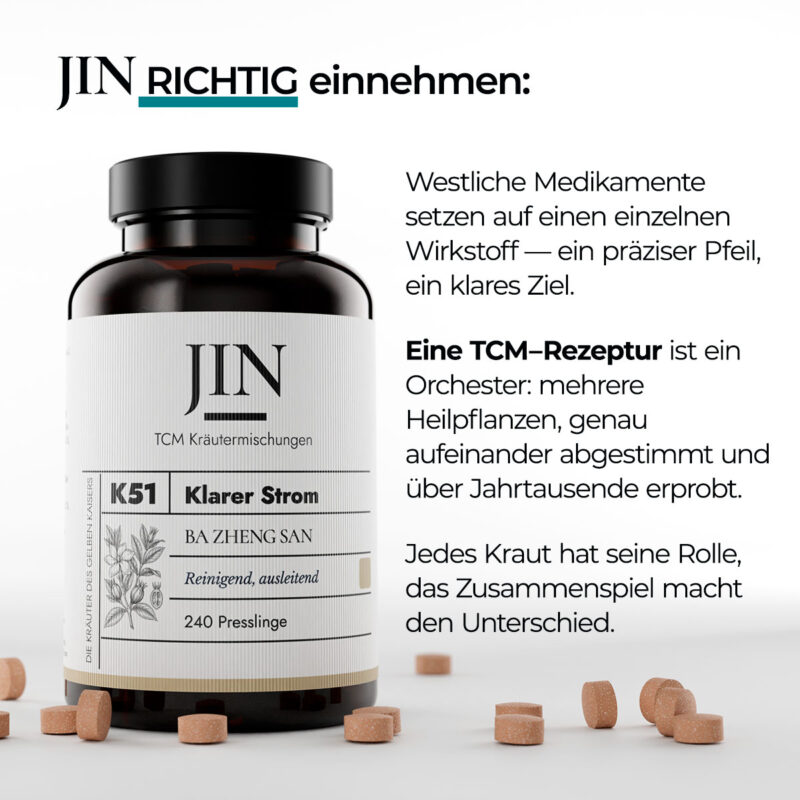
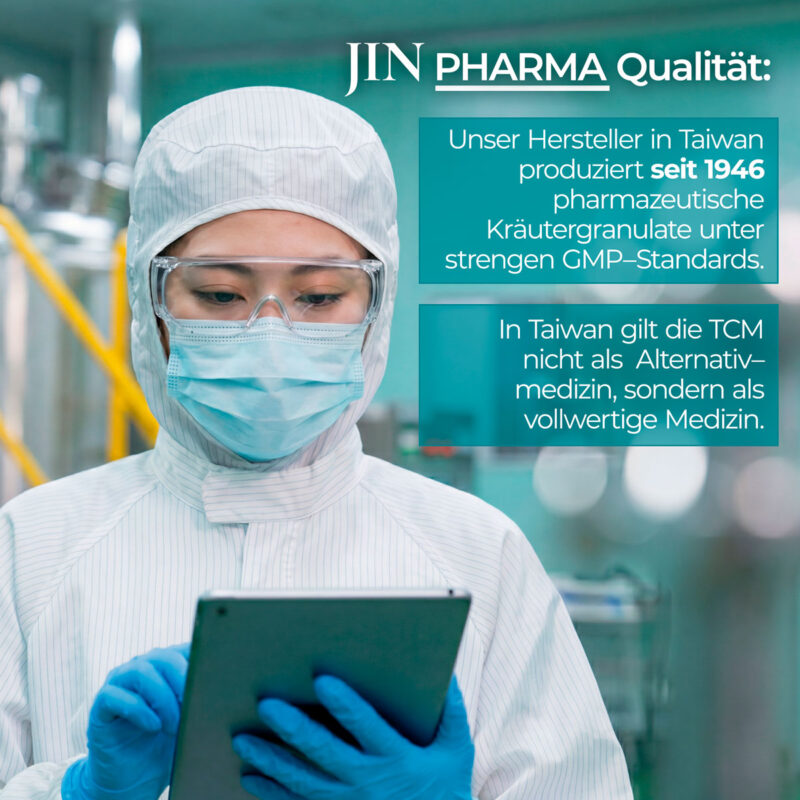
TCM herbs are the basis every classic TCM treatment. The carefully compiled mixtures have a synergistic effect — this means that the individual herbs reinforce each other's effects and balance out any possible side effects.
What modern medicine is only just discovering—the power of plant substances—has been used successfully by TCM for over 2,500 years.
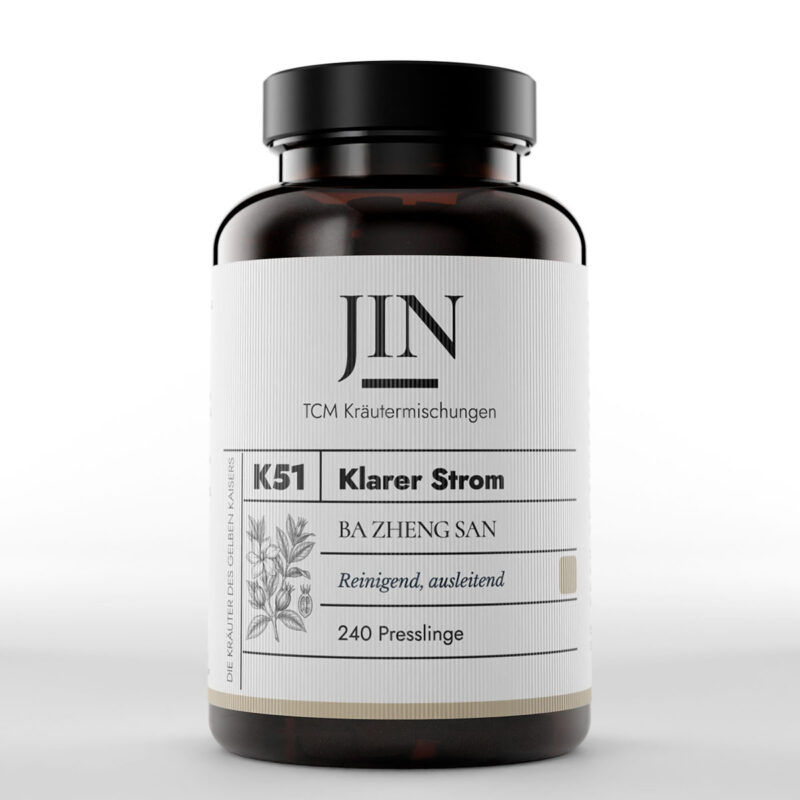
Empfohlene TCM–Kräutermischung bei Feuchter Hitze in der Blase
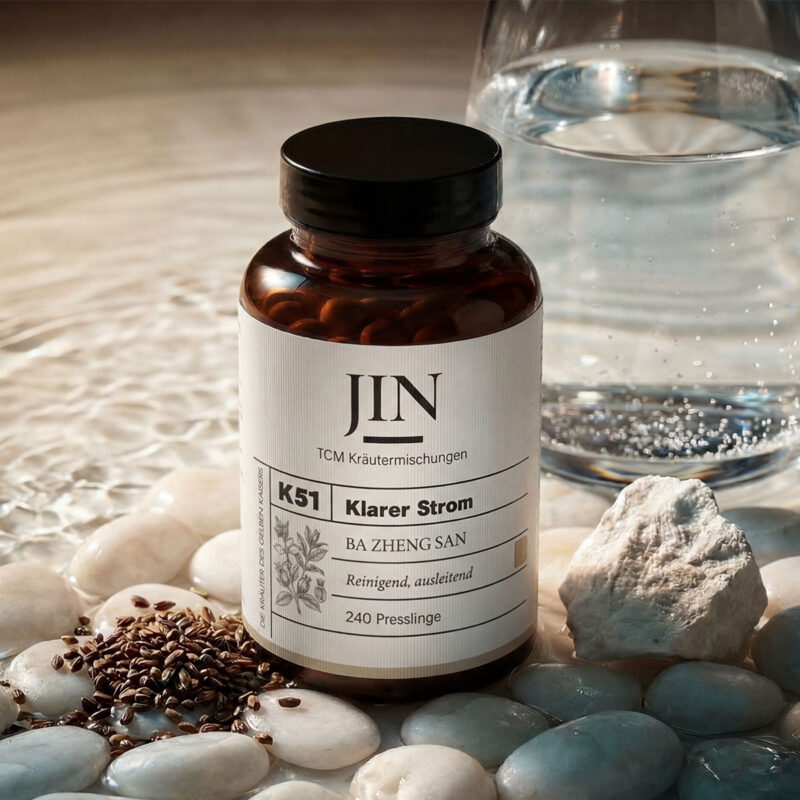
JIN K51 — Klarer Strom
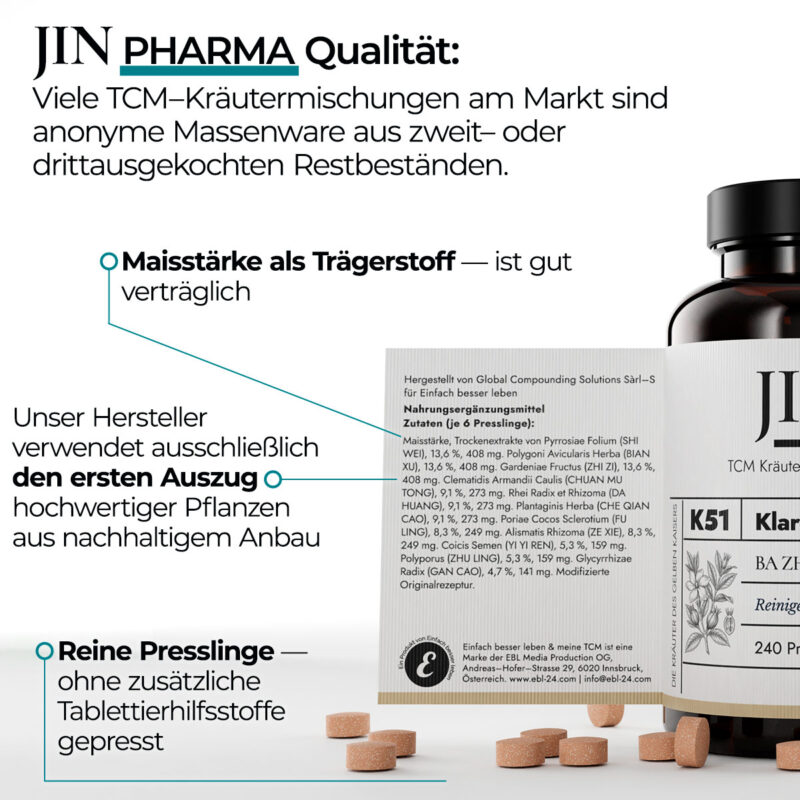
Die klassische Rezeptur Ba Zheng San (八正散) — das „Pulver der acht Korrekturen“. Elf Kräuter, die Feuchte–Hitze aus der Blase klären, das Wasserlassen erleichtern und brennende, schmerzhafte Miktion lindern.
Mit Zhi Zi (Gardenie) als Hauptkraut senkt diese Mischung die Hitze über den Urin, während Bian Xu, Chuan Mu Tong und Che Qian Cao das Wasserlassen erleichtern und Da Huang der Hitze einen zweiten Ausweg gibt. Ideal bei häufigem, brennendem und schmerzhaftem Wasserlassen, dunklem, trübem Urin und Druckgefühl im Unterbauch.
Quantity
224,70 €
i
To the product
The herbs in this recipeRecommended reading:How TCM herbal blends are formulatedLearn more now
| Herb (Pinyin) | German designation | Function in the recipe |
|---|---|---|
| Zhi Zi (Gardeniae Fructus) | Gardenia fruit | emperor Klärt Hitze aus allen drei Erwärmern, leitet sie über den Urin ab |
| Shi Wei (Pyrrosiae Folium) | Pyrrosia–Blatt | minister Klärt Feuchte–Hitze aus der Blase, lindert schmerzhaftes Wasserlassen |
| Bian Xu (Polygoni Avicularis Herba) | Knotweed | minister Klärt Feuchte–Hitze aus der Blase und erleichtert die Miktion |
| Chuan Mu Tong (Clematidis Armandii Caulis) | Clematis stems | assistant Fördert das Wasserlassen und leitet Hitze über die Harnwege aus |
| Da Huang (Rhei Radix et Rhizoma) | Rhubarb root | assistant Klärt Hitze und öffnet den Darm — ein zweiter Ausweg für die Hitze |
| Che Qian Cao (Plantaginis Herba) | Wegerichkraut | assistant Fördert das Wasserlassen und klärt Feuchte–Hitze |
| Fu Ling (Poria cocos sclerotium) | Poria mushroom | assistant Drains dampness and strengthens the spleen |
| Ze Xie (Alismatis Rhizoma) | Wasserwegerich | assistant Leitet Feuchte–Hitze über die Blase ab |
| Yi Yi Ren (Coicis Semen) | Job's ear seeds | assistant Klärt Feuchte–Hitze und stärkt die Milz |
| Zhu Ling (Polyporus) | Hare's-ear mushroom | assistant Leitet Feuchtigkeit aus und fördert das Wasserlassen |
| Gan Cao (Glycyrrhizae Radix) | licorice root | harmonizer Harmonisiert alle Kräuter und mildert die kühle Ausleitung |
Explanation of the most important herbs
emperor Zhi Zi (Gardenie) — Der Feuerlöscher
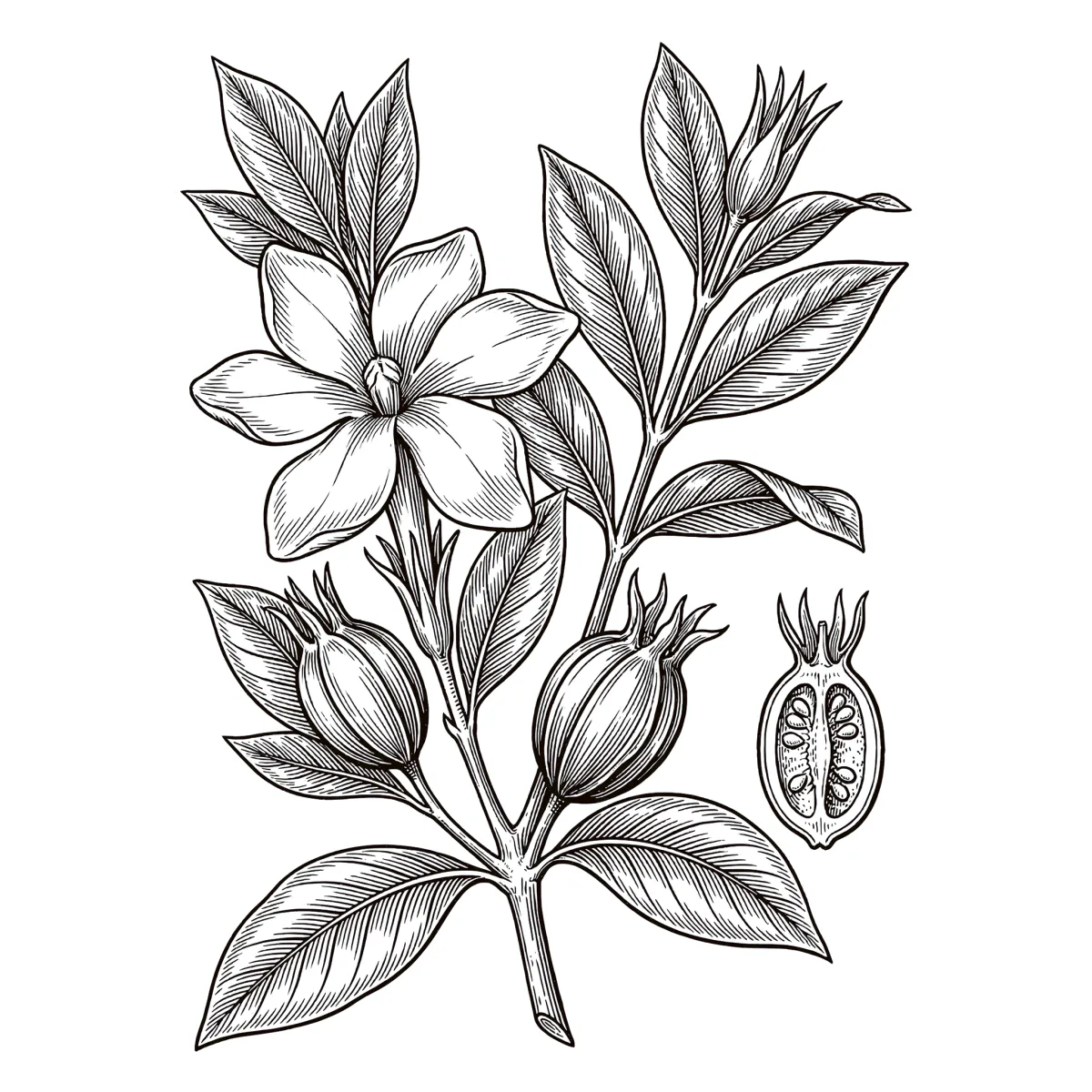
Zhi Zi ist der Kaiser dieser Rezeptur — es klärt Hitze aus allen drei Erwärmern, kühlt das Blut und leitet die Hitze über den Urin ab. Der „Feuerlöscher“, der die feuchte Hitze an der Wurzel senkt. Geniposid und Crocin der Gardenienfrucht werden in Untersuchungen mit entzündungshemmenden und kühlenden Eigenschaften in Verbindung gebracht.
minister Bian Xu (Vogelknöterich) — Der Blasen–Kühler
Bian Xu klärt feuchte Hitze aus der Blase und lindert schmerzhaftes Wasserlassen — es arbeitet eng mit Shi Wei als Paar zusammen. Die Flavonoide des Vogelknöterichs werden in Untersuchungen mit harntreibenden und entzündungshemmenden Eigenschaften in Verbindung gebracht.
assistant Chuan Mu Tong (Klematis) — Der Wasserwege–Öffner
Chuan Mu Tong fördert das Wasserlassen und leitet Hitze über die Harnwege aus — es öffnet die Wasserwege im Herz–Dünndarm–Blasen–Kanal und führt das Herzfeuer nach unten. Die Saponine des Clematis–Stängels werden in Untersuchungen mit harntreibenden und entzündungshemmenden Eigenschaften in Verbindung gebracht.
assistant Ze Xie (Wasserwegerich) — Der Ausleiter
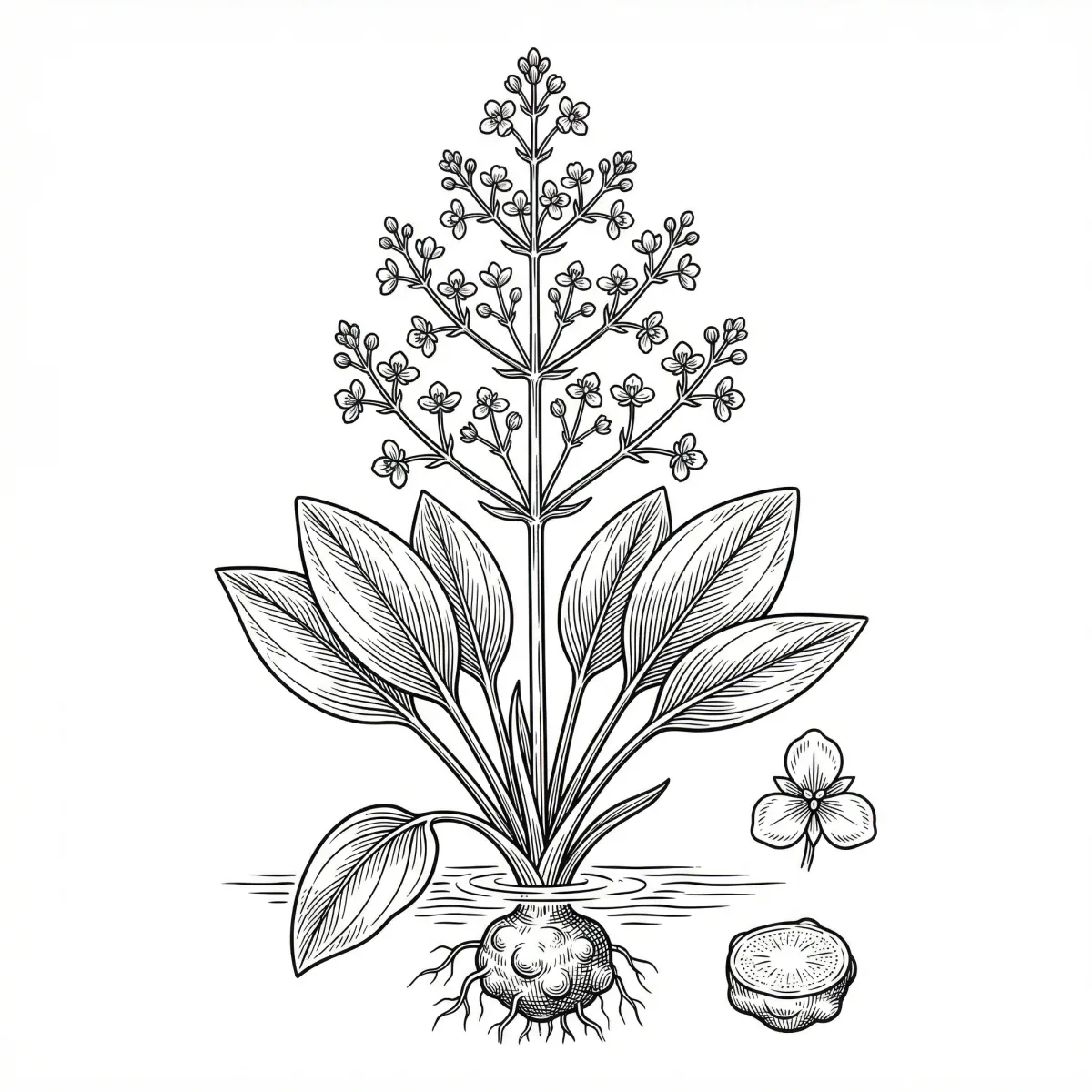
Ze Xie leitet feuchte Hitze über die Blase ab und fördert das Wasserlassen — es macht den Weg für die Ausleitung frei. Die Alisole des Wasserwegerichs werden in Untersuchungen mit harntreibenden Eigenschaften in Verbindung gebracht.
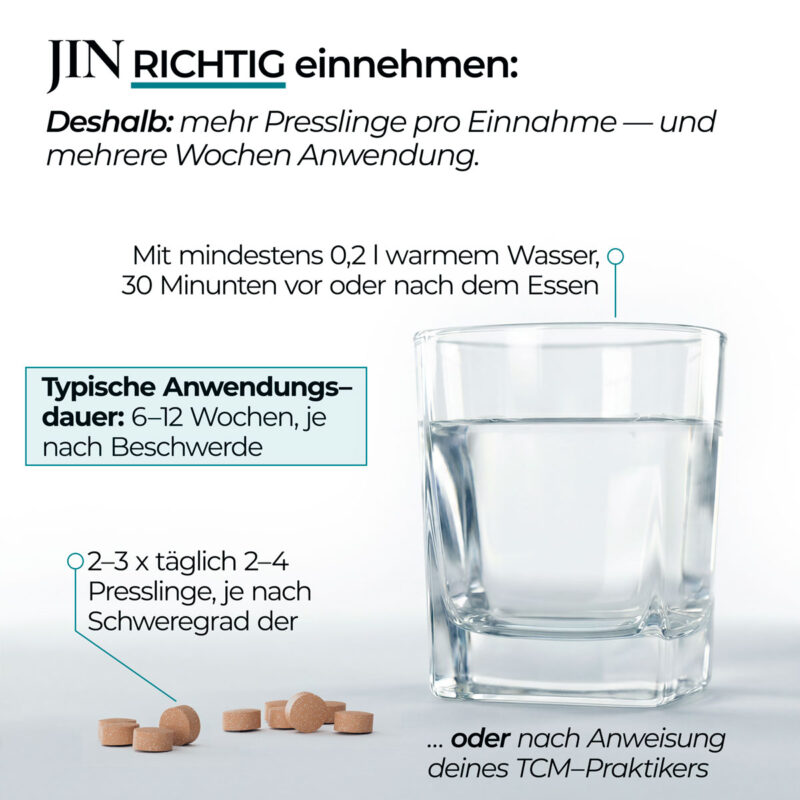
Recommended dosage
The dosage depends on the severity.
Based on your questionnaire results, we have highlighted the appropriate dosage for you below.
At light Severity:
- 2 tablets 3 times a day (morning, noon, and late afternoon) = 6 tablets per day
- Optional, if taking 3 doses a day is difficult for you: 3 tablets twice a day — same daily amount
- We recommend at least 2 cans, each containing 240 tablets (enough for about 12 weeks)
At middle Severity:
- 3 tablets 3 times a day (morning, noon, and late afternoon) = 9 tablets per day
- We recommend at least 3 cans, each containing 240 tablets (enough for about 12 weeks)
- If your condition improves, switch to the dosage recommendation for mild symptoms
At significantly Severity:
- 4 tablets 3 times a day (morning, noon, and late afternoon) = 12 tablets per day
- We recommend at least 4 cans, each containing 240 tablets (enough for about 12 weeks)
- If your condition improves, switch to the dosage recommendation for moderate severity
Why 3 times a day?
This ensures that the herbs' effects are evenly distributed throughout the day.
IMPORTANT:
- Take the tablets with at least 0.2 liters of warm water
- Ideally, 30 minutes before or after a meal
- This suggestion is not a substitute for a medical diagnosis or treatment
- If you are pregnant or breastfeeding, have a chronic medical condition, or are taking medication, consult a doctor or a TCM practitioner beforehand.
- If you have a severe cold, fever, or diarrhea, stop taking this product
- Viel warmes Wasser trinken und den Harndrang nicht unterdrücken; scharfe, fettige Speisen, Alkohol und Kaffee meiden
- Bei Fieber, Flankenschmerz, Blut im Urin oder anhaltenden Beschwerden ärztlich abklären
If little has changed after about 12 weeks:
Herbs are just one part of TCM. Combine taking them with other practices—acupressure, qigong, Pilates, or yoga, BS+, as well as meditation and breathing exercises. Afterward, take a two-week break from taking the herbs. Then, if needed, you can TCM analysis try again and/or compare your result with your TCM practitioner or discuss it with your doctor.
If you have any questions about how to take it, please feel free to contact us.
Want to know what dosage is right for you? Take our free TCM questionnaire—in just a few minutes, it will reveal your personal TCM pattern and the appropriate dosage of the recommended TCM herbal blend.
BS+ for your intestinal flora
A healthy gut is the basis for your well-being. Current studies show that around 80 % of people in Germany consume too little fiber - yet it is the most important food for your intestinal flora (also known as the intestinal microbiome).
BS+ was developed to support your daily fiber supply. With 11 high-quality, natural ingredients BS+ offers your intestinal flora a diverse nutrient base.
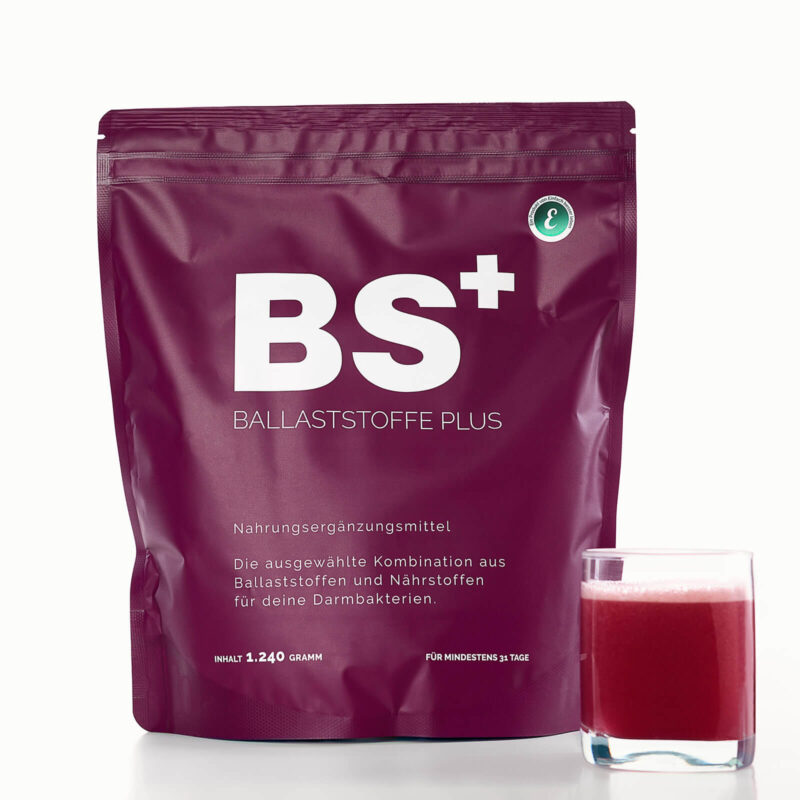
The revolutionary fiber formula
BS+ Dietary Fiber Plus
- Up to 20 g dietary fiber daily EXTRA
- Improved digestion and regular bowel movements
- Increased energy and vitality
- Better mood and mental clarity
- Support for your immune system
- Potential improvement in cholesterol and blood sugar levels
Simply stir into water twice a day - Your intestinal flora will thank you.
Why BS+ with moist heat in the bladder?
From a TCM perspective, damp heat in the bladder often has its origin in the center - more precisely in a weakened spleen. If the spleen is unable to metabolize food properly, internal dampness develops, which accumulates in the lower warmer and combines with heat there. A disturbed intestinal environment intensifies this process: harmful bacteria produce additional heat and moisture, which must be expelled via the bladder.
BS+ contains 11 prebiotic fibers and thus supports the development of healthy intestinal flora. A strong intestinal flora strengthens the transformation power of the spleen and helps the body to bind and eliminate moisture in the intestine - before it can settle in the lower warmer and burden the bladder.
Particularly important for damp heat in the bladder:
- Strengthens the spleen function and reduces the formation of new moisture
- Supports the elimination of moisture and cloudy residues via the intestines
- Promotes a healthy intestinal environment that generates less heat and fermentation
Acupressure
Acupressure is acupuncture without needles. - you can apply them yourself at any time. By applying gentle pressure to certain points, you activate the energy flow in the meridians and support the elimination of moisture and heat.
These three points form an effective combination for removing moisture and heat from the lower warmer. Regular stimulation helps to normalize bladder function and alleviate the symptoms.
ACUPUNCTURE POINT: MP 06
Spleen-Pancreas 06
Meeting place of the three Yin - San Yin Jiao
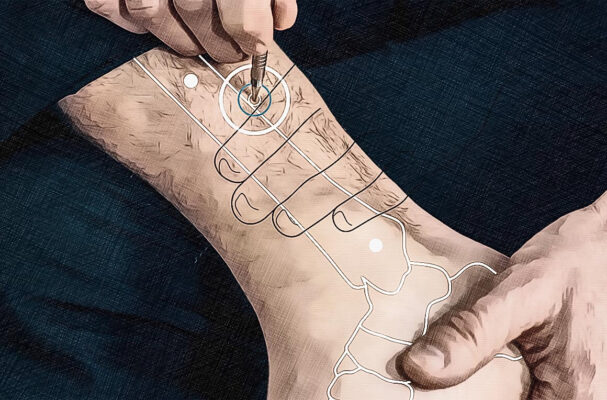
- Regulates the lower heater and removes moisture
- Strengthens the spleen to transform body fluids
- Meeting point of the three Yin meridians (spleen, liver, kidney)
- Supports bladder function and urinary flow
- Cools damp heat in the lower heater
Location: Four finger widths above the highest point of the inner ankle, directly behind the shin.
Application:
Massage in a circular motion twice a day for 2-3 minutes per side with medium pressure. Ideal in the morning and evening. DO NOT use during pregnancy!
ACUPUNCTION POINT: Bl 40
Bubble 40
Center of the popliteal fossa - Weizhong
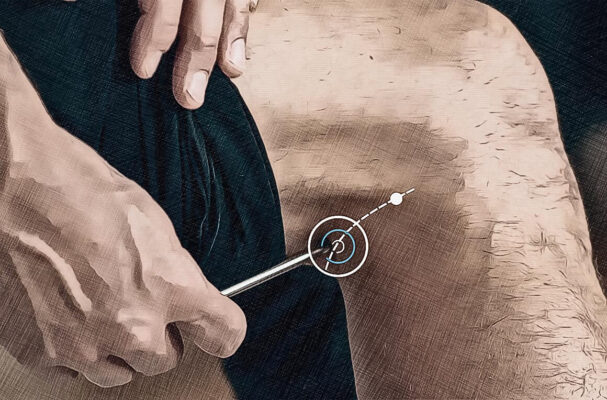
- He-Sea point of the bladder meridian - clears heat directly from the bladder
- Dissolves moisture from the bottom heater
- Relaxes the lower back with accompanying pain
- Promotes the free flow of waterways
- Relieves burning and pain when urinating
Location: In the middle of the hollow of the knee, between the two tendons.
Application:
Press twice daily for 2-3 minutes per side with gentle to medium pressure or massage in a circular motion. Particularly effective in combination with MP 06.
ACCESSION POINT: Ni 06
Kidney 06
Shining sea - Zhaohai
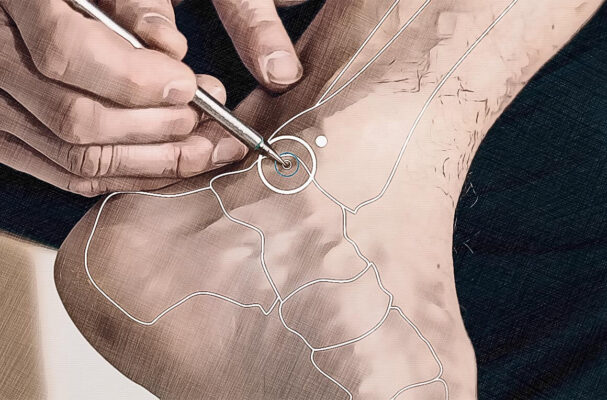
- Nourishes the kidney yin and cools the lower warmer
- Regulates the water passages and urine flow
- Soothes the urge to urinate at night
- Balances the yin and cools excess heat
- Supports the bladder by strengthening the kidney energy
Location: Directly below the inner ankle, in the hollow.
Application:
Massage twice a day for 2-3 minutes per side with gentle circular pressure. Particularly effective in the evening before going to bed for nocturnal urge to urinate.
TIP
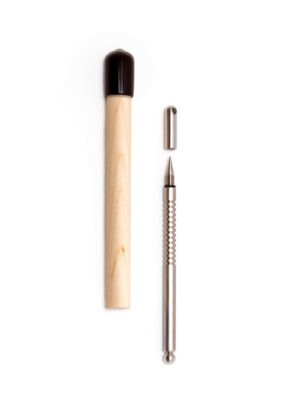
AkuPen
Acupuncture pen with video instructions
For even more intense stimulation You can use an AkuPen. The acupressure pen significantly enhances the effect of acupressure. With an extensive video library for over 80 acupuncture points.
Qi Gong
Qi Gong is moving meditation - Gentle, flowing exercises that harmonize your energy flow and help eliminate Damp Heat. For Damp Heat in the bladder, these exercises support the lower warmer, promote Qi transformation and help to dissolve stagnation and dampness.
Regular practice of Qi Gong (as little as 10-15 minutes a day) has been shown to have positive effects on bladder function, relaxation and general well-being.
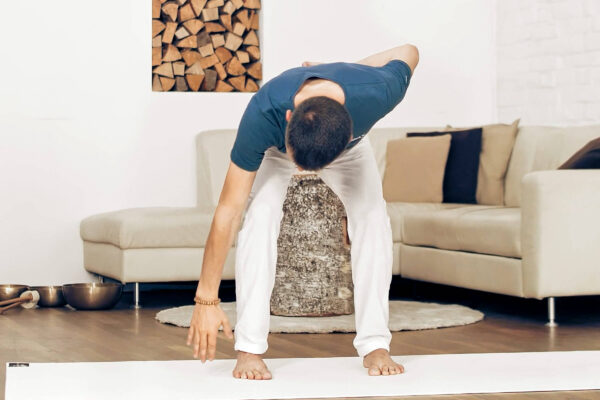
QI GONG: Exercise 1
Kidney circles
Strengthens the kidneys, supports bladder function
Particularly helpful for:
- Bladder weakness
- Back pain
- Fatigue
- Frequent urge to urinate
Effect:
This water element exercise specifically strengthens the kidneys - the root of bladder power. Gentle circular movements in the lumbar region activate the kidney energy and support the Qi transformation in the bladder.
QI GONG: Exercise 2
Activate life gates
Activates the lower warmer, promotes the flow of Qi
Particularly helpful for:
- Lack of energy in the lower abdomen
- Heaviness in the pelvic area
- Stagnant Qi
Effect:
This exercise activates the „Gate of Life“ (Ming Men) in the lower back - the seat of kidney energy. It promotes the flow of Qi in the lower warmer and helps to dissolve stagnation and strengthen the bladder function.
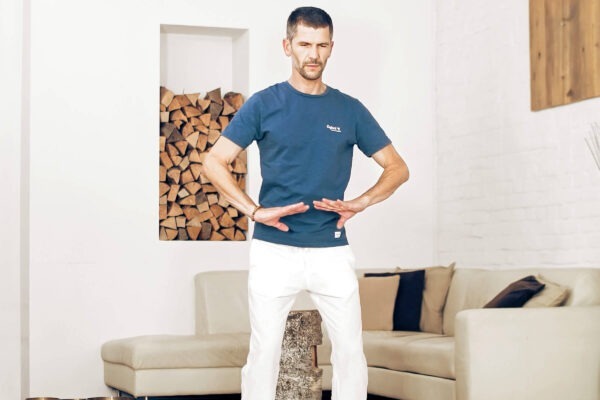
QI GONG: Exercise 3
Regulate Qi
Regulates the flow of Qi, harmonizes the center
Particularly helpful for:
- Qi stagnation
- Feeling of heaviness
- Digestive problems
- Inner tension
Effect:
This exercise regulates the entire Qi flow and harmonizes the center. In Damp Heat, it helps to move the Qi and release stagnation - because stagnant Qi promotes the accumulation of dampness.
These Qi Gong exercises are specially selected for draining damp heat from the bladder. They strengthen the kidney, activate the lower warmer and promote the free flow of Qi.
All exercises work particularly well if you practise them in the morning or late afternoon between 3 and 5 pm - this is the bladder time in the organ clock and ideal for supporting bladder function.
QI GONG:
When and how often?
In the morning or late afternoon (ideal):
- All 3 exercises as a sequence: approx. 15–20 min.
- Or just 1–2 exercises: approx. 5–10 min.
- Best between 3 and 5 pm (bubble time)
In between:
- Individual exercises if required (e.g. if you feel heavy)
- „Regulate Qi“ for rapid Qi movement
Regularity is more important than duration:
- It is better to exercise for 10 minutes every day than for 60 minutes once a week.
- After 2–3 weeks, you will notice the first changes.
- After 2-3 months of regular practice: significantly fewer complaints
Pro tip: Flowing, opening movements are ideal for damp heat. Avoid standing in one position for too long - keep the energy flowing. The bladder needs movement to expel the moisture.
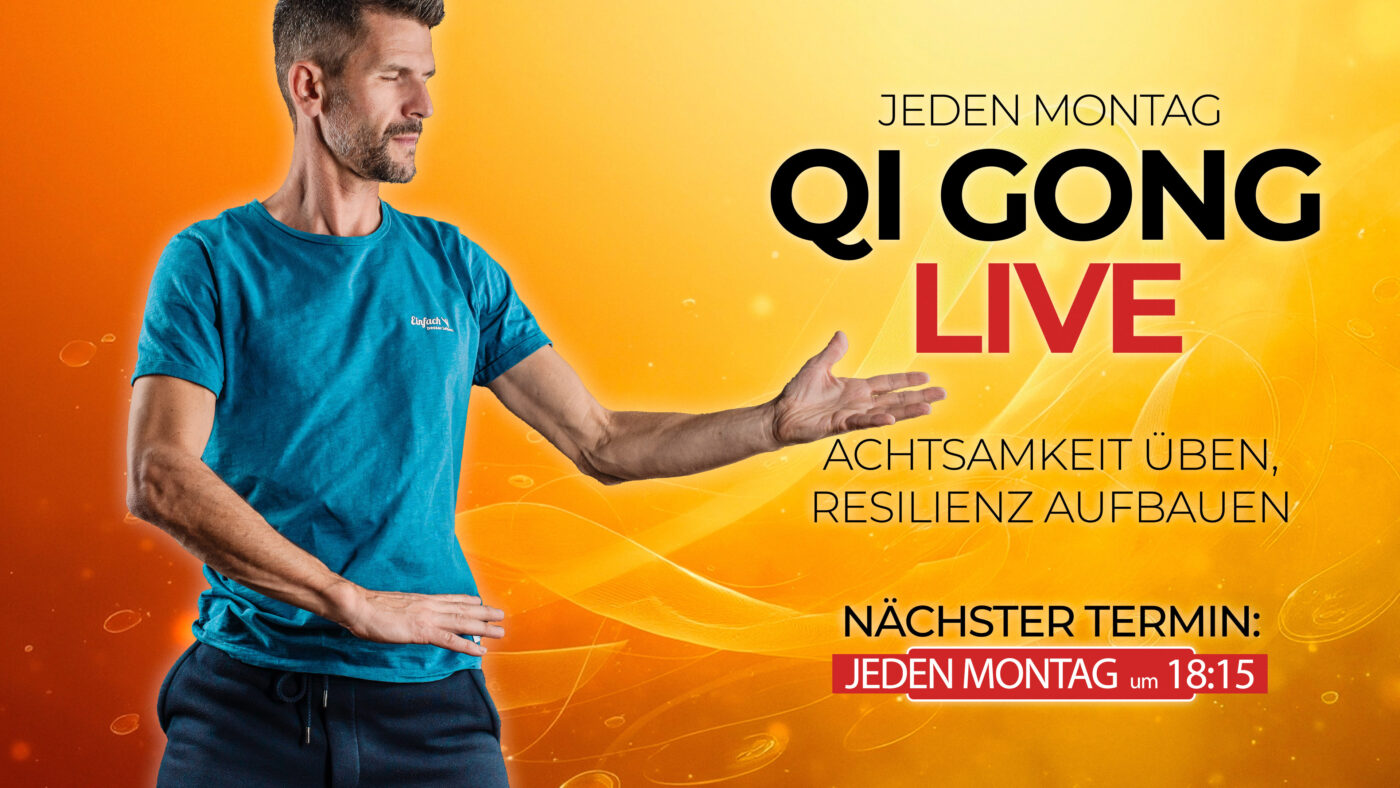
LIVE EVERY MONDAY: QI GONG WITH WOLFGANG
Every Monday at 6:00 p.m. Let's practice together live on YouTube. Among other things, Wolfgang will guide you through a complete qigong sequence — free of charge and suitable for all levels.
Why participate live? ✓ Practicing together is motivating ✓ Wolfgang explains the exercises in detail ✓ You can ask questions in the live chat ✓ Regular appointments help with your routine
More about Qi Gong LiveMeridian Yoga — The Yoga of TCM
Meridian Yoga combines yoga with traditional Chinese medicine. The following exercises specifically activate the bladder meridian - the longest meridian in the body, which runs from the head across the entire back to the little toes. If there is damp heat in the bladder, activating this meridian helps to restore the flow of energy and normalize bladder function.
MERIDIAN YOGA: Exercise 1
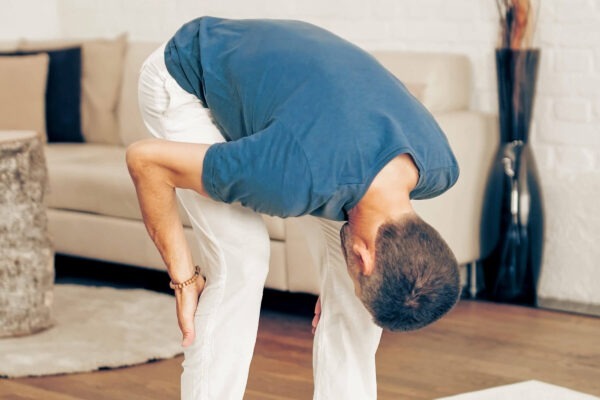
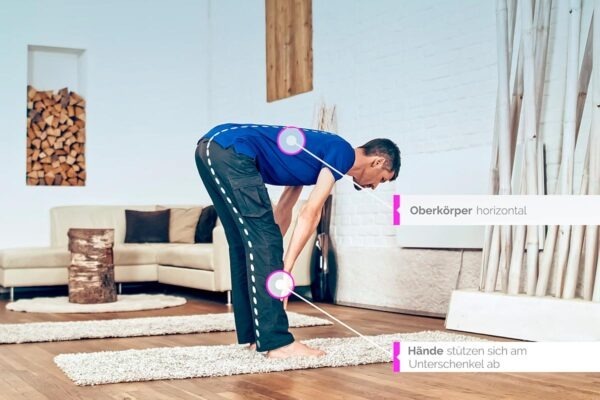
Standing forward bend for the bladder meridian
Stretches the bladder meridian, relieves tension in the back
Particularly helpful for:
- Bladder problems
- Back pain
- Headache
- Tension
Effect:
This exercise stretches the entire bladder meridian, which runs from the head to the back to the feet. The forward bend activates the energy flow in the bladder meridian and releases blockages in the lower warmer.
MERIDIAN YOGA: Exercise 2
Forward bend + acupressure Bl 60 for the bladder meridian
Combines stretching with targeted acupressure

Particularly helpful for:
- Bladder problems
- Ankle pain
- Back problems
- energy shortage
Effect:
This exercise combines the stretching of the bladder meridian with targeted acupressure on Bl 60 (Kunlun). Bl 60 is an important point for activating the entire bladder meridian and helps to expel dampness and heat from the lower warmer.
Both exercises activate the bladder meridian, which runs along the back of the body and is connected to the bladder. When there is damp heat in the bladder, the energy flow in this meridian is often blocked - regular stretching releases the blockages and supports the elimination of dampness and heat.
Particularly effective: Hold each position for 3-5 breaths and visualize cool, clear water cleansing your bladder and removing the heat.
MERIDIAN YOGA:
When and how often?
Best time:
- In the afternoon between 3 and 5 pm (bubble time)
- Or in the morning after getting up
Duration:
- Hold each position for 3–5 breaths.
- Complete sequence: 10–15 minutes
- 3–5 times per week for best results
Important:
- Practice in a calm, cool atmosphere
- Breathe deeply and slowly during the positions
- Stretching should be comfortable, never painful.
Pro tip: Combine Meridian Yoga with the Qi Gong exercises „Kidney Circles“ and „Activate Life Gates“. Stretching, opening movements are ideal for damp heat - they help to clear the bladder meridian and drain away the moisture.
Nutrition according to TCM
„Let food be your medicine.“ - This principle has been valid in TCM for thousands of years. With Damp Heat in the bladder, the right diet is crucial to cool the heat and eliminate the dampness.
The bubble belongs to the element Water and needs Cooling to neutral, light food, to restore their function. Damp heat must be actively expelled - heavy, fatty and spicy food would only intensify it.
What you eat, HOW you eat and WHEN you eat - all of this affects your bladder and your balance.
The golden rules for damp heat in the bladder
What is good for you:
Moisture-eliminating foods
- Watermelon (top heat clarifier!)
- Mung beans - cool and wick away moisture
- Barley / pearl barley (Yi Yi Ren) - gently dehydrates
- Cucumber - cools and moisturizes
Cooling foods clear the heat from the inside!
Diuretic foods
- Celery - promotes water excretion
- Asparagus - cleanses the urinary tract
- Cranberries - prevent bacterial adhesion
- Corn beard tea - classic bubble tea
Gentle drainage helps to eliminate moisture!
Anti-inflammatory foods
- Green tea - cools and clarifies
- Dandelion (as tea or salad) - cleanses and cools
- Parsley - diuretic and rich in vitamins
- Turmeric - anti-inflammatory
Natural anti-inflammatories support the healing process!
Light proteins and cereals
- Tofu - cooling and moisture neutral
- Fish (steamed) - light and nourishing
- Rice - neutral, strengthens the center
- Millet - light and digestible
Light food relieves the spleen and the lower warmer!
What you should avoid:
Hot spices
- Chili, cayenne, hot pepper
- Garlic and onions in large quantities
- Ginger (only small amounts)
- Curry and hot sauces
Spiciness increases the heat in the bladder!
Alcohol
- Beer (especially moisturizing!)
- Wine and spirits
- Cocktails with sugar
- Also avoid non-alcoholic beer
Alcohol generates both moisture AND heat!
Fatty and fried foods
- Fried and breaded food
- Fatty meat (pork, lamb)
- Fast food and potato chips
- Cream and fatty sauces
Fat produces moisture and burdens the spleen!
Sugar and sweets
- White sugar and sweets
- Soft drinks and fruit juices
- Cakes and pastries
- Too much sweet fruit
Sugar promotes moisture and bacterial growth!
HOW YOU SHOULD EAT:
Light and digestible
- Steamed, boiled, blanched
- Soups and light vegetable dishes
- Use less fat and oil
- Freshly prepared, no ready meals
Regularly and at rest
- 3 fixed meals a day
- Biggest meal at lunchtime
- Early and light in the evening (before 7 pm)
- Eat in peace, chew well
The spleen loves regularity - and a strong spleen expels moisture better!
Drink properly
- At least 2-3 liters of warm or room temperature water
- Herbal teas (dandelion, corn beard, green tea)
- NO ice-cold water
- No coffee - generates heat!
Drink plenty of fluids to flush the moisture and heat out of the bladder!
IDEAL MENU FOR ONE DAY:
Breakfast (7–9 a.m.):
- Rice congee with mung beans and some celery
- In addition: Green tea or dandelion tea
Lunch (12–1 p.m.):
- Steamed fish with rice and cucumber
- Or: Vegetable soup with tofu and barley
Dinner (6–7 p.m.):
- Light vegetable soup with millet
- Or: Steamed vegetables with rice
Snack if needed:
- Watermelon (season)
- Or: Cranberry juice (unsweetened)
- Or: Corn beard tea
The most important rule when changing your diet is:
Start with ONE step!
Don't change everything at once.
Our suggestion for getting started:
- Drink 2-3 liters of warm water or herbal tea daily - 2 weeks
- Reduce spicy, fatty food and alcohol - 2 weeks
- Introduce mung bean soup 2-3 times a week - 2 weeks
Step by step, you will notice how the heat and moisture subside and your bladder comes to rest.
Your bladder will thank you!
RECIPE: MUNG BEAN SOUP WITH BARLEY
Ingredients:
For 4 portions
- 100 g mung beans (soak overnight)
- 50 g pearl barley (Yi Yi Ren)
- 1 stalk of celery
- 1 L vegetable stock
- 1 small piece of fresh ginger (optional, just a little!)
- salt to taste
- Optional: 1 tablespoon goji berries
Preparation:
- Rinse the mung beans and barley
- Boil in vegetable stock
- Simmer for 40-50 minutes
- Cut the celery into small pieces, cook for the last 10 minutes
- Optional: add the goji berries at the end
- Season with salt to taste
Effect:
Clears heat and removes moisture
Strengthens the spleen and promotes water excretion
Cools the lower warmer and soothes the bladder
3-4 times a week - the ideal soup in humid heat!
RECIPE: COOLING CUCUMBER AND MINT SALAD WITH CRANBERRIES
Ingredients:
For 2 portions
- 2 organic cucumbers
- 1 handful of fresh mint
- 2 tbsp dried cranberries (unsweetened)
- 1 tablespoon sesame oil
- 1 tbsp rice vinegar
- 1 teaspoon honey
- Pinch of sea salt
Preparation:
- Thinly slice the cucumbers
- Roughly chop the mint
- Mix the dressing with sesame oil, rice vinegar, honey and salt
- Mix everything together, fold in the cranberries
- Leave to infuse for 15 minutes, serve chilled
Effect:
Cools the heat and moisturizes without generating moisture
Cranberries protect the bladder from bacteria
Mint clears the head and cools gently
As a side dish 2-3 times a week!
Breathing
Breathing is the bridge between body and mind. In TCM, we say: „The lungs govern qi“ — through conscious breathing, you can directly influence your energy flow, harmonize all organ systems, and activate your self-healing powers.
Studies show: Proper breathing activates the parasympathetic nervous system (rest & regeneration), massages the internal organs from within, improves oxygen supply, and reduces stress hormones. The good news: Just 5–10 minutes a day can have a measurable effect on your overall well-being.
Recommended breathing techniques
ABDOMINAL BREATHING — The basis for every breathing technique
Natural breathing
Abdominal breathing is the most natural and effective form of breathing. With every breath, you massage your internal organs, activate the flow of energy, and bring qi to the center of your body (dantian).
Wolfgang shows you step by step, How to learn abdominal breathing correctly—lying down to start with, then later also sitting and standing.
Duration: 9 minutes

4–7–8 BREATHING — Calms you down immediately
Breathing to fall asleep and combat inner restlessness
4–7–8 breathing (inhale for 4 seconds, hold for 7 seconds, exhale for 8 seconds) is known as a „natural sedative.“ This special rhythm calms your nervous system in just a few minutes—perfect for stress, racing thoughts, or trouble falling asleep.
Perfect for the evening or whenever you want to calm down quickly.
Duration: 9 minutes
To the interactive videoBOX BREATHING — For inner coherence
Professional breathing for focus and calmness
Box Breathing (4 seconds on, 4 seconds hold, 4 seconds off, 4 seconds hold) combines activation and relaxation in perfect balance. This method is used by elite soldiers, athletes, and executives to remain calm and focused even in extremely stressful situations.
Train your CO₂ tolerance and brings the heart, breathing, and nervous system
into a harmonious state.
Duration: 9 minutes
To the interactive videoCOHERENT BREATHING — Harmonizes body & mind
Breathing against burnout
With coherent breathing You breathe in for 5.5 seconds and out for 5.5 seconds. This rhythm brings your heart and breathing into perfect synchrony—a state that science refers to as „coherence.“ This method is also used in clinics for burnout treatment and stress reduction.
Proven to improve Heart rate variability (HRV) — the most important marker for stress resistance, health, and life expectancy.
Duration: 14 minutes
To the interactive video
COHERENT BREATHING Around the clock
Our 24/7 livestream on coherent breathing runs non-stop. You can tune in at any time and join in right away.
Perfect for:
✓ Spontaneous breaks to catch your breath in between
✓ If you need help breathing
✓ As background while working
✓ For falling asleep (calms the nervous system)
✓ For regular daily practice
relaxation
When your body is relaxed, all organ systems can function optimally. Chronic tension blocks your body's self-healing powers and keeps you in a state of constant stress. Through targeted relaxation techniques, you activate the parasympathetic nervous system and send your body the signal: „Now I can regenerate, heal, and build strength.“
Progressive muscle relaxation is one of the most researched relaxation methods and has been used successfully for over 100 years. It helps you to recognize tension, actively release it, and achieve a state of deep relaxation—whenever you want.
Recommended relaxation technique
PROGRESSIVE MUSCLE RELAXATION (PMR)
The scientifically proven relaxation method
Progressive muscle relaxation according to Jacobson is one of the most widely researched relaxation techniques worldwide. By deliberately tensing and relaxing individual muscle groups, you learn to consciously perceive tension and actively release it.
Proven effect:
Lowers blood pressure, improves sleep, reduces chronic pain, relieves tension, and activates self-healing powers. Successfully used by psychologists to treat anxiety disorders, depression, and chronic pain.
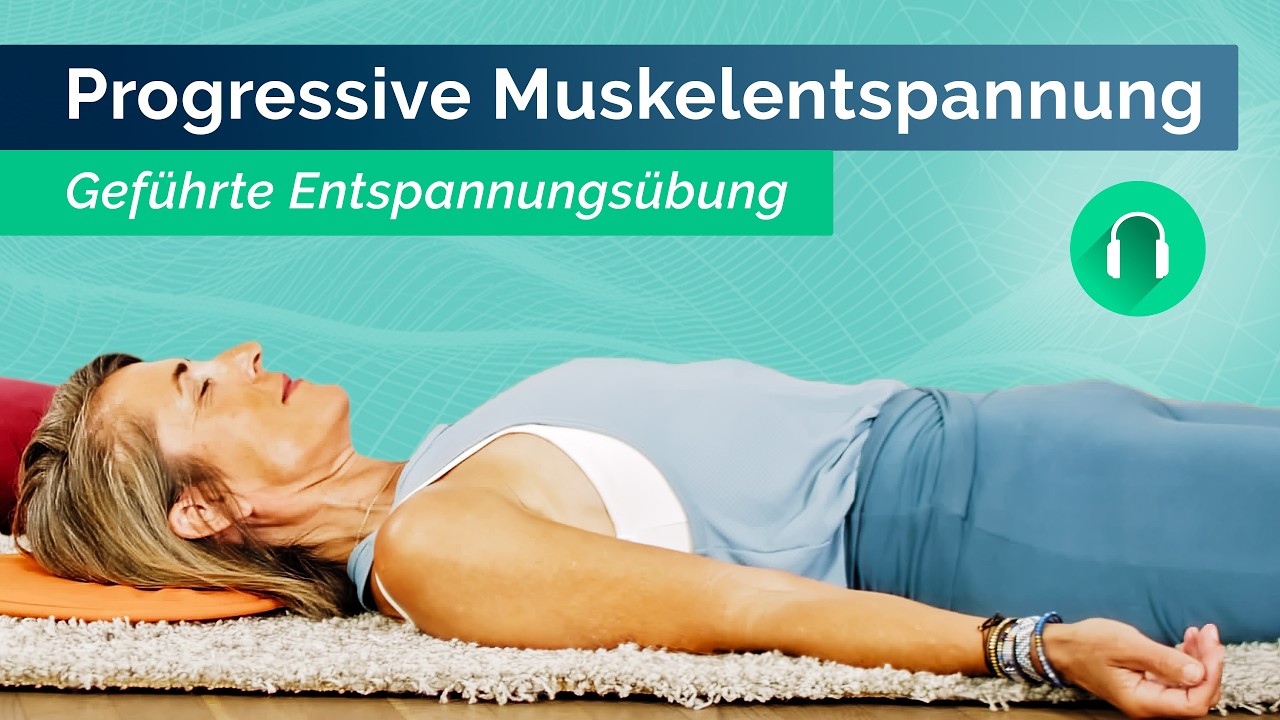
Maria guides you step by step through the entire exercise—perfect for beginners and advanced practitioners alike.
Duration: 23-minute complete guide
To the guided PMRMeditation
Meditation calms the mind — and a calm mind harmonizes the body. In TCM, we know that every emotion affects a specific organ. Through regular meditation, you learn to break out of destructive thought patterns, find emotional balance, and strengthen your inner core.
Modern studies confirm: Meditation has been proven to change brain structure, reduce stress hormones, strengthen the immune system, and improve self-healing powers. Just 10 minutes a day can change your life forever.
Recommended meditations
GUIDED MEDITATIONS FOR EVERY DAY
Your personal meditation library
We have a complete Playlist with over 60 guided meditations, breathing exercises, and relaxation techniques—from short 5-minute meditations for in between to deep 30-minute sessions for intensive practice.
In the playlist you will find:
- Morning meditations for a mindful start to the day
- Meditations for restful sleep
- Breathing meditations for inner peace
- Meditations against stress, brooding, and worries
- TCM standing meditations for all 5 elements
- Body scan and body journeys
- Healing meditations to activate self-healing powers
- Special breathing techniques (4–7–8, coherent breathing, bee breathing)

Perfect for beginners and advanced practitioners. Choose the right meditation for you depending on your time, the time of day, and your needs.
To the meditation playlistThe bladder - as a reservoir of body fluids - needs clarity and purity in order to fulfill its task. Only when the water flows freely can the body free itself from cloudy heat.
- Loosely based on the HUANG DI NEI JING
(The Yellow Emperor's Classic of Internal Medicine)
More tips for your everyday life
In addition to traditional TCM treatment methods there are many small everyday habits that can strengthen your bladder and support the elimination of moisture and heat.
Drinking and bladder hygiene
Drink enough
Sufficient fluids help to eliminate moisture and heat:
- At least 2-3 liters of warm water or herbal tea daily
- Drink throughout the day, not all at once
- Dandelion tea, corn beard tea and cranberry juice are ideal
- No ice-cold water - prefer room temperature or warm water
- Reduce coffee and black tea - they irritate the bladder
Urinate regularly
Emptying the bladder regularly protects against residues:
- NEVER hold back urine - go to the toilet immediately if you feel the urge to urinate
- Empty the bladder every 2-3 hours, even without an urge
- Urinate within 30 minutes after sexual intercourse
- Thorough intimate hygiene, but without aggressive soaps
Keep the lower abdomen warm
Cold makes bladder problems worse:
- Do not wear wet or cold clothing
- Warm underwear, especially in the cold season
- Do not sit on cold ground or stones
- Hot water bottle on the lower abdomen for discomfort
Drain moisture - strengthen the spleen
The spleen as the key
A strong spleen prevents internal dampness:
- The spleen transforms the body fluids - if it is weak, internal dampness develops
- Warm, wholesome meals strengthen the spleen
- Eat regularly (3 meals at fixed times)
- Reduce raw food, dairy products and sugar - they create moisture
Movement against moisture
Light exercise helps to eliminate moisture:
- Light, regular exercise helps to eliminate moisture
- Walks, Qi Gong, gentle yoga
- Swimming in warm water
- Avoid intense exertion and heavy sweating
Avoid brooding
Worry weakens the spleen and promotes dampness:
- Excessive thinking weakens the spleen and promotes dampness
- Meditation and mindfulness help
- Solve problems instead of endlessly pondering
Gentle movement and relaxation
Pelvic floor training
Strengthens the bladder muscles and improves control:
- Strengthens the bladder muscles and improves control
- 3x daily 10 repetitions: tense (5 sec.) - relax (5 sec.)
- Can be done anywhere - sitting, standing or lying down
- Particularly effective in combination with Qi Gong
Reduce stress
Stress can generate heat in the lower heater:
- Stress generates liver heat, which can sink into the lower heater
- Schedule regular relaxation
- Breathing exercises and meditation help to calm the liver
- Sufficient sleep (7-8 hours)
Sport and exercise
Gentle, regular exercise is ideal:
- Gentle, regular exercise is ideal
- Change immediately after exercise - do not wear wet clothing!
- In summer: put on dry clothes immediately after swimming
- Cycling with a comfortable saddle - avoid pressure on the pelvic floor
Important to know
Damp heat in the bladder tends to return - especially if the underlying cause is not treated. It is therefore important to maintain preventative measures even after the acute symptoms have subsided: drink enough, urinate regularly, keep your lower abdomen warm and strengthen your spleen. This will prevent relapses and strengthen your bladder in the long term.
When to see a doctor? If you have a fever, blood in your urine, severe pain in the kidney area or symptoms that last longer than 3 days, you should definitely consult a doctor. TCM and Western medicine complement each other perfectly here.
For optimal treatment progress
TCM is not a quick fix for symptoms., but rather a holistic healing process. You will achieve the best results if you consistently integrate the treatment into your daily routine and give your body time to regenerate.
Integration into everyday life
Start with ONE step
Don't try to change everything at once! That's overwhelming and leads to
usually leads to you giving up. Instead:
- Week 1-2: Change your diet (cooling, dehydrating, drink a lot)
- Week 3-4: Acupressure MP 06 and Bl 40 daily
- Week 5-6: Qi Gong daily 10 min.
- Week 7-8: Supplement TCM herbal mixture
- From week 9: Add further methods as required
Realistic expectations
After 2–3 weeks: First improvements noticeable
- Less burning sensation when urinating
- Less frequent urination
- Clearer urine
After 6–8 weeks: Significant improvements
- Significantly fewer bladder problems
- Normalization of bladder function
- Less heaviness in the lower abdomen
After 3–6 months: Sustainable healing
- Bladder function sustainably stabilized
- Body feels light and clear
- Relapses significantly less frequent
TCM vs. Western medicine
TCM and Western medicine are not mutually exclusive—they complement each other!
When Western medicine is important:
- In acute emergencies
- In case of structural damage
- In case of infections
- For accurate diagnoses (laboratory, imaging)
Where TCM has its strengths:
- In case of functional disorders
- For chronic complaints
- For prevention
- For holistic healing
Ideal: Combine both systems! Use Western medicine for
Acute treatment and accurate diagnosis, TCM for lasting healing
and strengthening the body's self-healing powers.
Important: Never stop taking prescribed medication without consulting your doctor first!
Talk to your doctor when you start TCM treatment.
TCM diagnosis for professionals
Syndrome differentiation according to TCM:
Tongue: Red, thick yellow sticky coating, especially in the rear third
Pulse: Fast (Shu Mai), slippery (Hua Mai), possibly stringy (Xian Mai)
Pathomechanism:
External Dampness and Heat invade the Lower Warmer, or internal Dampness due to Spleen Weakness transforms with Heat. The Bladder loses its ability to transform Qi (Qi Hua). The body fluids can no longer be clearly separated - turbid and clear parts mix. The damp heat irritates the bladder wall and disrupts the normal storage and emptying function.
Treatment principle:
Qing Re Li Shi Tong Lin (清热利湿通淋) - clearing heat, draining moisture, treating Lin syndrome
Classic recipe:
Ba Zheng San (eight-correction powder)
Important modifications depending on accompanying symptoms:
- For severe burning and blood in the urine: + Xiao Ji (Cirsii Herba), Bai Mao Gen (Imperatae Rhizoma)
- With accompanying Kidney Yin weakness: + Zhi Mu (Anemarrhenae Rhizoma), Huang Bai (Phellodendri Cortex) = Zhi Bai Di Huang Wan modification
- For chronic dampness with spleen weakness: + Bai Zhu (Atractylodis Rhizoma), Fu Ling (Poria)
- For urinary stones: + Jin Qian Cao (Lysimachiae Herba), Hai Jin Sha (Lygodii Spora)
- For Liver-Fire with Damp-Heat: + Long Dan Cao (Gentianae Radix), Huang Qin (Scutellariae Radix)
Every step counts
Your body WANTS to heal—you just have to create the right conditions for it to do so.
Remember:
👣 Every little step counts
You don't have to be perfect. Even one warm meal a day is better than none. Even 5 minutes of qigong is better than no exercise at all.
⏳ Patience pays off
It took years for your body to get into this state. Give it time to regenerate. Healing takes time, but it WILL happen.
🎯 Focus on what you can DO
Don't concentrate on what you are doing „wrong". Focus on every positive step you take.
💚 Be good to yourself
Perfection does not exist. It is acceptable to have an off day occasionally. Tomorrow is a new day when you can continue.
🤝 You are not alone
Thousands of people are walking this path with you. For over 2,000 years, TCM has been helping people like you who want to regain their health.
Measure your healing progress

To track your progress with treatment, we recommend that you repeat the TCM analysis after about 3 months.
Why is this important?
- You can see how your condition has improved.
- You can adjust the treatment as needed.
- It motivates you to keep going
- You recognize which measures work best
⚠️ Important: Your answers today will be stored in encrypted form in a code that you received by email. You can only measure your progress later with this code. Keep the email safe!
Activate reminder:
<>In 12 weeks, you'll receive an email with a link to the TCM analysis. When you fill it out, you can enter your personal health code—then you'll see a comparison overview at the end:
→ Your new values
→ Your scores from today's test
→ Direct changes
This allows you to see at a glance whether your symptoms
have improved!
🔒 YOUR DATA IS SAFE
We store:
✓ Only your email address for reminders
✓ The date for shipping
We do NOT store:
✗ Your analysis results
✗ Your personal health data
✗ The connection between email and diagnosis
All analysis data is completely anonymous and is not linked to your email address.

Newsletter
Stay up to date with our newsletter. Besides useful tips and tricks for training and your everyday life, you won't miss any of our new releases.
We are here for you
Do you have questions about your diagnosis or treatment?
Not sure which method is right for you?
Contact us — We're happy to help!