






On this page, you will learn:
- What your diagnosis means from the perspective of TCM and Western medicine
- Where your symptoms come from and how they are connected
- Which specific treatment methods can help you now
- How you can strengthen your lung energy and immune system with TCM herbs, acupressure, qi gong, and nutrition
The good news: Lung qi deficiency can be treated effectively with the right measures. You can rebuild your lung qi with targeted breathing exercises, a fortifying diet, and acupressure.
Take your time, Get to know the different treatment approaches—you don't have to implement everything at once. Choose what feels right for you and what you can easily integrate into your everyday life.
Your treatment at a glance:
Which TCM pattern is really behind your complaints?
Degree of
imbalance

Light to moderate
Typical
treatment duration

3–4 months
self-treatment
Possible

Can be treated yourself with instructions
Treatment–
scope

2–3 methods
Proposed
methods

Extensive range
Our free TCM analysis shows you your personal TCM pattern in just 10 minutes - and which treatment will help you best.
What is lung qi deficiency?

When your breath and immune system are fading
The TCM perspective: The delicate civil servant needs support
In traditional Chinese medicine, the lungs are affectionately referred to as the „delicate officials“ — they are the most sensitive organ and also one of the most important. The lungs control qi and breathing, absorbing pure qi from the air and distributing it throughout the body.
One of the most important tasks of the lungs is to distribute Wei Qi—your defensive energy. Wei Qi circulates on the surface of the body, protecting you from external pathogenic factors such as wind, cold, and moisture, and regulating your pores and perspiration.
The lungs are closely connected to the large intestine (both belong to the metal element) and are responsible for lowering and distributing qi. If the lung qi is weak, this lowering function can no longer be performed properly—the qi „rebels“ upwards and causes coughing or shortness of breath.
The consequence of lung qi deficiency: Breathing becomes shallow and weak, the body's defenses decline, and it becomes susceptible to external influences. The skin—the „tissue of the lungs“—loses its luster.
The typical signs of lung qi deficiency:
- Shortness of breath, especially during exertion or speaking
- Weak, quiet voice and no desire to speak
- Frequent colds and respiratory tract infections
- Spontaneous sweating, especially during the day
- Pale skin and complexion
- Chronic, weak cough with little or clear mucus
- Sensitivity to wind and cold
The good news: Lung qi can be strengthened. Through breathing exercises, strengthening herbs such as astragalus (huang qi), an appropriate diet, and acupressure on the lung and large intestine meridians, you can rebuild the strength of your lungs and strengthen your natural defenses.
The Western perspective: Focus on the immune system and respiratory tract
From a Western perspective, lung qi deficiency corresponds to a combination of a weakened immune system and reduced respiratory capacity. The lungs are not only responsible for gas exchange, but are also an important immune organ — their mucous membranes are the first line of defense against pathogens.
Imagine your respiratory tract as a filter system: if this system is weakened, viruses, bacteria, and allergens can penetrate more easily. This can lead to recurring infections, chronic bronchitis, or increased susceptibility to colds.
An often overlooked factor is the connection between breathing and stress. Chronic stress leads to shallow chest breathing—we only use a fraction of our lung capacity. This shallow breathing not only reduces oxygen supply, but also keeps the nervous system in stress mode.
What does modern medicine show?
- Reduced lung capacity: Less oxygen is absorbed, energy levels drop
- Weakened mucosal immunity: IgA antibodies and local defenses are reduced
- Chronic inflammation: Low-grade inflammation in the airways
- Imbalance of the autonomic nervous system: sympathetic dominance due to stress
- Vitamin D deficiency: Closely linked to respiratory infections and immune deficiency
- Lack of exercise: Leads to reduced respiratory muscle strength and lung capacity
Modern research confirms: Deep abdominal breathing activates the parasympathetic nervous system, strengthens the immune system, and improves lung function. Regular breathing exercises can significantly reduce susceptibility to respiratory infections.
TCM treatment for lung qi deficiency addresses precisely this issue: it strengthens breathing, supports natural defenses, and restores balance to the immune system—gently, naturally, and sustainably.

The Yellow Emperor team explains your diagnosis
The Yellow Emperor | Qi Bo | Dr. Lisa Weber
Founder of TCM | Master of Healing Arts | Modern Physician
What happens when the legendary Yellow Emperor from TCM sits down with his advisor Qi Bo and a modern doctor? They explain YOUR diagnosis—using 4,000 years of knowledge AND the latest science.
Lung qi deficiency — When breathing becomes weak and the immune system weakens
The Yellow Emperor: „Qi Bo, I notice many people in my kingdom who are constantly plagued by colds. Their voices are quiet, they sweat without exertion, and even with minimal exertion, they run out of breath. What is the cause of this affliction?“
Qi Bo: „Your Majesty, these people suffer from a deficiency of lung qi. The lungs are a special organ — we call them the ‚delicate officials‘ because they are sensitive and vulnerable like delicate tissue. They are at the forefront: they are the first organ to come into contact with the outside world through breathing. Its task is to distribute the Wei-Qi — the defensive energy that envelops the skin and pores like an invisible protective cloak. When the lung qi is weak, the pores open uncontrollably, sweat emerges for no reason, and pathogenic factors penetrate unhindered.“
Dr. Weber: „That's a fascinating description! In modern medicine, I would say that the respiratory tract is actually our first line of defense against pathogens. The mucous membranes of the respiratory tract produce immunoglobulin A—an important antibody. If this barrier function is disrupted, we are more susceptible to infections. We explain the spontaneous sweating described by Qi Bo as a dysregulation of the autonomic nervous system—the sympathetic and parasympathetic nervous systems no longer work together harmoniously.“
The Yellow Emperor: „So the ‚delicate civil servant‘ is also of particular importance for defense in your science?“
Qi Bo: „That's exactly right, Your Majesty. The lungs govern the qi of the entire body. They absorb the pure qi from the air and combine it with the nutritional qi from the spleen. This creates zong qi — the chest energy that powers the heart and lungs. If this qi is weak, the entire body lacks strength.“
The Yellow Emperor: „What causes this weakness of the lung qi?“
Qi Bo: „There are many causes, Your Majesty. First: chronic sadness and grief—these directly exhaust the lungs, because the lungs are the organ of grief. Second: repeated colds that do not heal completely—each new infection further weakens the lung qi. Thirdly: dry, dusty, or polluted air—it irritates the sensitive lungs. Fourthly: shallow, hasty breathing due to stress—the qi cannot sink deeply. And fifthly: weak spleen qi—because the spleen is the ‚mother‘ of the lungs in the element cycle.“
Dr. Weber: „This coincides remarkably with our findings! Chronic stress leads to shallow chest breathing instead of deep abdominal breathing, which means that the lungs are not fully ventilated. Air pollution and dry heated air damage the ciliated epithelium of the respiratory tract. And what is particularly interesting is that studies show that emotional stress—especially grief—actually measurably weakens the immune function of the respiratory tract. The production of secretory IgA decreases, and susceptibility to infections increases.“
The Yellow Emperor: „What signs indicate that someone is suffering from lung qi deficiency?“
Qi Bo: „The signs are clearly recognizable, Your Majesty. The affected person shows: shortness of breath, especially during exertion or speaking. A weak, quiet voice without carrying power. Frequent colds that quickly settle in the chest. Spontaneous sweating during the day, especially during the slightest activity. The skin is pale and dry, often sensitive. The tongue is pale with a thin white coating. The pulse is weak, especially at the lung position on the right wrist.“
Dr. Weber: „These clinical signs are extremely interesting! Shortness of breath during exertion may indicate reduced respiratory capacity. Frequent infections suggest an immune deficiency of the mucous membranes. Spontaneous sweating indicates a disturbance in thermoregulatory control. In the laboratory, we often see low IgA levels in saliva diagnostics, sometimes also vitamin D deficiency, which is closely linked to the immune function of the respiratory tract.“
The Yellow Emperor: „Now let's talk about treatment. How can lung qi be strengthened?“
Qi Bo: „Your Majesty, the treatment principle is: Bu Fei Qi — tonify the lung qi and strengthen the Wei qi. This is done in several ways: First, through breathing exercises — deep, slow breathing nourishes the lung qi like nothing else. Second, through acupressure on important points: Lung 9 on the wrist directly strengthens the lung qi, while Conception Vessel 17 in the center of the chest opens and strengthens the chest. Thirdly, through nourishing foods: pears moisturize and strengthen the lungs, radish loosens mucus and strengthens the qi, ginger warms and protects against external pathogens. And fourthly: protection from wind and cold — the ‚delicate official‘ must be protected.“
Dr. Weber: „Wonderful approach! From a scientific point of view: deep diaphragmatic breathing activates the vagus nerve and has been proven to strengthen the immune system. The pear mentioned contains antioxidants and actually moisturizes the mucous membranes. Radishes and other cruciferous vegetables contain sulfur compounds with immune-stimulating effects. Ginger has proven antiviral and anti-inflammatory properties. And protection against the cold? Studies show that cooling the respiratory tract actually temporarily weakens the local immune defense!“
The Yellow Emperor: „Qi Bo, which breathing exercises do you particularly recommend?“
Qi Bo: „The most important exercise is abdominal breathing, Your Majesty. The breath should sink deep into the lower abdomen like water into a well. When inhaling, the abdomen expands; when exhaling, it gently contracts. This allows the qi to sink and the lungs to expand fully. I recommend the ‚Qi Gong exercise of the six healing sounds‘ — the sound ‚Si‘ (pronounced like a long ‚Sssss‘) harmonizes and strengthens the lungs in particular. The ‚opening arms‘ movement from Baduanjin also expands the chest and strengthens the lung qi.“
Dr. Weber: „Diaphragmatic breathing is invaluable! It improves oxygen uptake by up to 20 percent compared to shallow chest breathing. At the same time, the diaphragm massages the abdominal organs and promotes lymph circulation. The prolonged exhalation, as in the ‚Si‘ sound, activates the parasympathetic nervous system and lowers stress hormones. Regular breathing exercises can measurably improve heart rate variability — an important marker for stress resilience.“
The Yellow Emperor: „Wonderful! Let's turn this wisdom into a practical plan.“
THE 3-WISE METHOD FOR LUNG QI DEFICIENCY
MORNING PROTOCOL (awaken lung qi):
- TCM: Open the window and take 5 deep breaths of fresh morning air.
- Science: Fresh air contains more oxygen and negative ions, which activate the mucous membranes.
- Practical: Immediately after getting up, open the window wide, stand upright, take 5 deep breaths in through your nose and exhale slowly through your mouth.
- TCM: Warm ginger water to protect the Wei Qi
- Science: Ginger has antiviral properties and warms the respiratory tract from within.
- Practical: 2-3 slices of fresh ginger in 250ml hot water, leave to infuse for 10 minutes, drink with a little honey before breakfast
- TCM: Acupressure on Lung 9 (Taiyuan) — the source point of the lung
- Science: Stimulation of acupuncture points on the wrist has been shown to influence breathing rate.
- Practical: On the wrist crease, under the thumb in the hollow next to the artery. Gently massage in a circular motion for 2 minutes per side
DAILY STRATEGY (nourish lung qi):
- TCM: Pear snack or pear compote to moisten the lungs
- Science: Pears contain pectin and antioxidants that protect the mucous membranes.
- Practical: 1 ripe pear as a snack or as a steamed compote with a little cinnamon for lunch
- TCM: Abdominal breathing — breathe consciously for 5 minutes, 3 times a day
- Science: Deep abdominal breathing increases oxygen intake and activates the vagus nerve.
- Practical: Place your hand on your stomach. Inhale: your stomach rises (4 seconds). Exhale: your stomach slowly lowers (6 seconds). 10 cycles.
- TCM: Protection from wind and drafts — keep your neck and upper back covered
- Science: The neck region cools down quickly, which weakens local blood circulation and immune defenses.
- Practical: Wear a scarf or shawl in drafty areas, avoid drafts from air conditioning, dry your hair after washing it.
EVENING RITUAL (regenerate lung qi):
- TCM: Acupressure on Conception Vessel 17 (Danzhong) — the „Sea of Qi“
- Science: Stimulation of the sternum activates the thymus and calms the nervous system.
- Practical: In the middle of the breastbone, at nipple level. Gently tap or massage in circles for 3-5 minutes
- TCM: Radish soup to strengthen the lungs and spleen
- Science: Radishes contain mustard oils with antimicrobial properties and aid digestion.
- Practical: Cook white radish in vegetable or chicken broth, season with a little ginger and spring onions.
- TCM: Humidification in the bedroom for sensitive lungs
- Science: Optimal humidity (40-60%) protects the mucous membranes of the respiratory tract from drying out.
- Practical: Set up a humidifier or place a damp cloth over the radiator, especially during the heating season.
The Yellow Emperor: „Qi Bo, how long will it take for the lung qi to regain its strength?“
Qi Bo: „Your Majesty, the lungs, as ‚delicate officials,‘ require careful care. After 2-3 weeks of consistent practice, most people notice that spontaneous sweating decreases and their voice becomes stronger. After 6-8 weeks, colds become less frequent and milder. After 3 months, the lung qi is significantly strengthened—breathing is deeper and the immune system is more stable. It is particularly important to note that the lungs are sensitive during the transition between seasons. Double mindfulness is required at this time.“
Dr. Weber: „This corresponds to our clinical experience! Building stable mucosal immunity takes time—about 2-3 months for measurable improvements in IgA levels. Regular exercise strengthens the respiratory muscles after 4-6 weeks. And the reference to the seasons is medically very relevant: in fall and spring, the viral load in the environment fluctuates greatly, and temperature changes stress the respiratory tract. That's when special precautions are worthwhile!“
The Yellow Emperor: „What should people do when they notice that a cold is coming on?“
Qi Bo: „Act immediately, Your Majesty! At the first tingling sensation in your nose, drink hot ginger water to mobilize the Wei Qi. Keep your neck warm—that's where the wind-cold pathogen penetrates most easily. Go to bed early so that the Zheng Qi—the upright energy—can fight. And don't overexert yourself! The body needs all its strength for defense.“
Dr. Weber: „Excellent recommendations! At the first sign of a cold, rest really is the best medicine. The body needs energy for its immune response. Ginger has antiviral and anti-inflammatory properties. Warmth on the neck promotes blood circulation in the throat mucosa. And getting enough sleep is crucial—important immune cells are formed and activated during deep sleep!“
The Yellow Emperor: „Then the message is clear: the lungs, our ‚delicate officials‘, deserve special care. With conscious breathing, protective foods, and a mindful lifestyle, lung qi can flourish and the body can develop its natural defenses.“
Qi Bo: [smiles] „That's right, Your Majesty. The lungs are the roof of the body, the first thing that touches the world. When we nourish and protect them, we don't just breathe air — we breathe life.“
About our „3 Wise Men“ story
Who are the Yellow Emperor and Qi Bo?
The Yellow Emperor (Huangdi) is said to have lived around 2600 BC and is considered the mythical founder of Chinese culture and medicine. Qi Bo was his most important advisor and personal physician. Their discussions about health, illness, and human nature were recorded in the most important fundamental work of TCM.
The book: Huangdi Neijing
The Huangdi Neijing, also known as The Yellow Emperor's Classic of Internal Medicine, was probably written between 200 BC and 200 AD. It is the oldest surviving work on Chinese medicine and consists of dialogues between the Yellow Emperor and his advisors, mainly Qi Bo.
This work is to TCM what the Bible is to Christianity: the absolute foundation. All the important concepts - yin and yang, the 5 elements, qi, meridians and acupuncture points - are systematically described here for the first time.
Our modern approach: The 3 wise men
In our series „The 3 Sages“, we bring the Yellow Emperor and Qi Bo together with the fictional modern doctor and microbiologist Dr. Weber.
Important note: All three characters and their conversations are purely fictitious and invented by us.
We use this narrative form, similar to the dialogue form in the book Huangdi Neijing, to convey the often complex interrelationships of TCM in an understandable and entertaining way. When the 4,000-year-old emperor is confronted with modern science, enlightening „aha moments“ arise that show that ancient wisdom and new research often speak the same language—just in different words.
This makes TCM lively, understandable and practically applicable for your everyday life.
The dialogs are creative interpretations - not historical documents. For medical questions, please consult a qualified TCM therapist or doctor.
Your treatment options
Lung qi deficiency is easily treatable! TCM offers a variety of effective methods to rebuild your lung energy and immune system. You don't have to do everything at once — choose the methods that suit you and your everyday life.
Here you will find specific treatment approaches that have been proven effective in TCM for thousands of years and that you can largely apply yourself.
TCM herbal therapy
TCM herbs are the basis every classic TCM treatment. The carefully compiled mixtures have a synergistic effect — this means that the individual herbs reinforce each other's effects and balance out any possible side effects.
What modern medicine is only just discovering—the power of plant substances—has been used successfully by TCM for over 2,500 years.
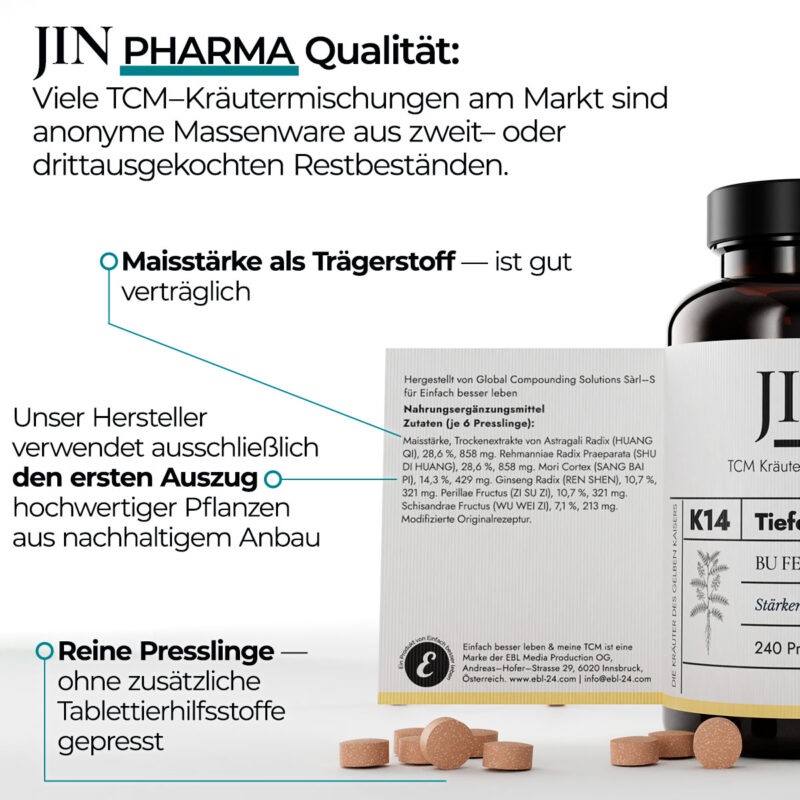
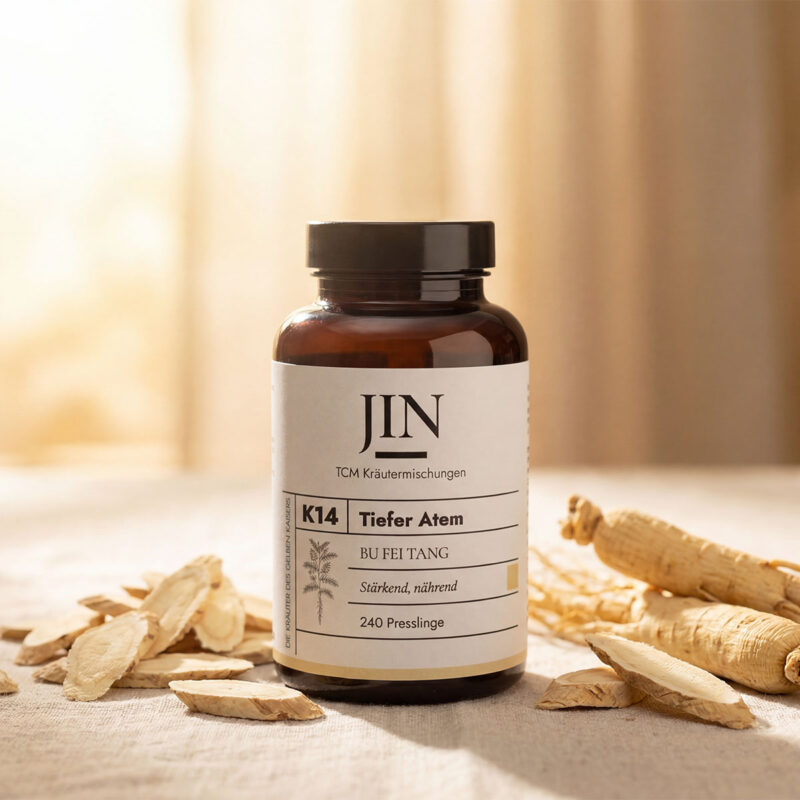
Empfohlene TCM–Kräutermischung bei Lungen–Qi Mangel
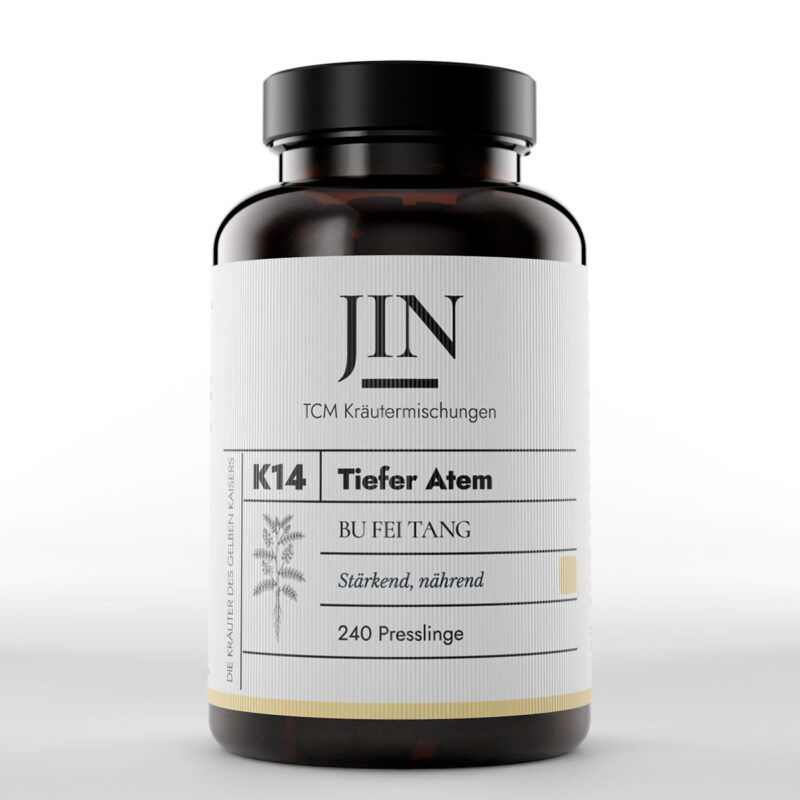
JIN K14 — Tiefer Atem
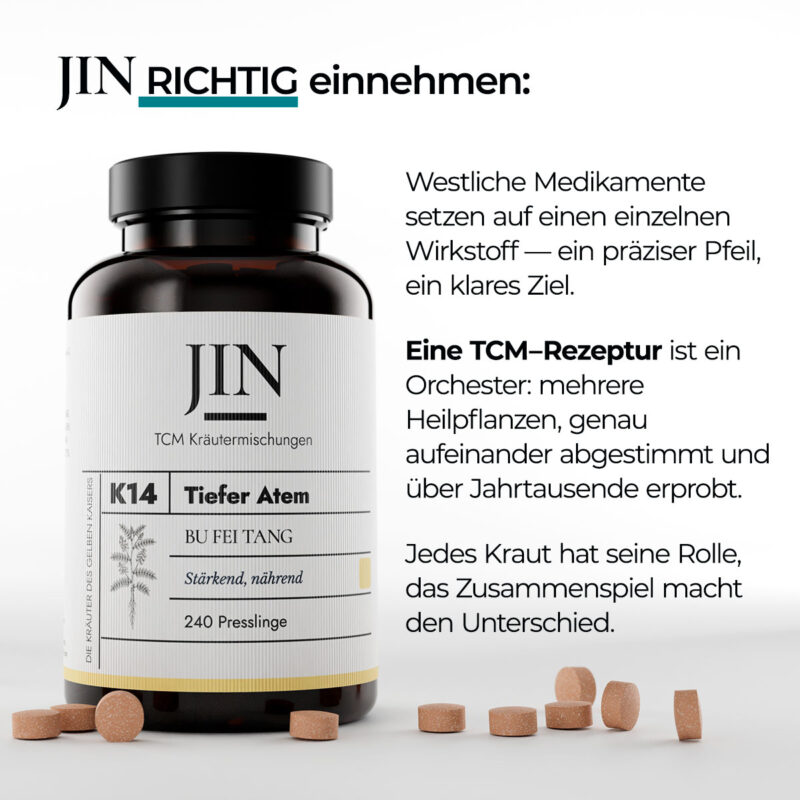
Die klassische Rezeptur Bu Fei Tang (补肺汤) — das „Dekokt zur Stärkung der Lunge“. Sechs aufeinander abgestimmte Kräuter, die das Lungen–Qi kraftvoll tonisieren, die Wurzel in der Niere nähren und den Atem wieder festigen.
Mit Huang Qi (Tragant) und Ren Shen (Ginseng) als Hauptkräutern baut diese Mischung das Lungen–Qi auf, während Shu Di Huang die nährende Basis stellt und Wu Wei Zi das Qi sichert. Ideal bei Kurzatmigkeit, schwacher, leiser Stimme, spontanem Schwitzen und anhaltender Infektanfälligkeit.
Quantity
269,70 €
i
To the product
The herbs in this recipeRecommended reading:How TCM herbal blends are formulatedLearn more now
| Herb (Pinyin) | German designation | Function in the recipe |
|---|---|---|
| Huang Qi (Astragali Radix) | Tragacanth | emperor Tonisiert das Lungen–Qi, hebt das Qi und festigt die Oberfläche |
| Shu Di Huang (Rehmanniae Radix Praeparata) | Prepared rehmannia root | minister Nährt das Yin und füllt das Jing auf |
| Sang Bai Pi (Mori Cortex) | Maulbeerwurzelrinde | assistant Senkt das Lungen–Qi, klärt Hitze und stillt Keuchen |
| Ren Shen (Ginseng Root) | Ginseng root | minister Tonisiert das Yuan–Qi, stärkt Lunge und Milz |
| Zi Su Zi (Perillae Fructus) | Perilla seeds | assistant Senkt das Lungen–Qi, löst Schleim, stillt Husten |
| Wu Wei Zi (Schisandrae Fructus) | Schisandra berry | assistant Sammelt und sichert das Lungen–Qi |
Explanation of the most important herbs
emperor Huang Qi (Tragacanth) — The Lung Strengthener
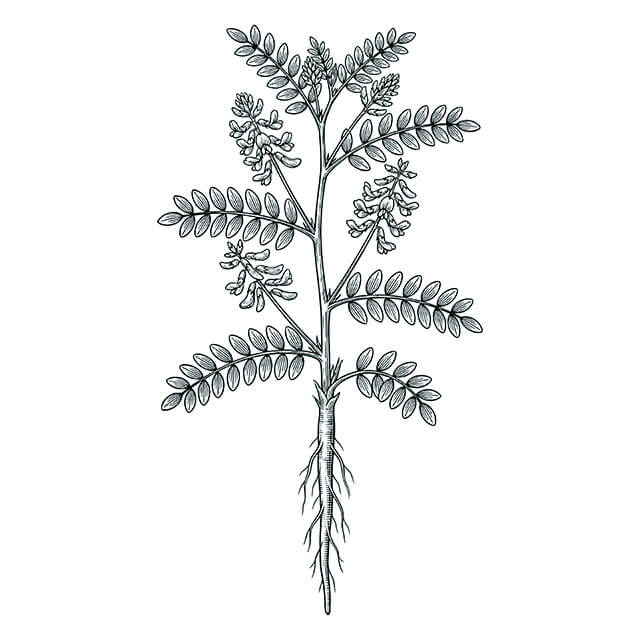
Huang Qi ist der mächtigste Qi–Toniker der Lunge — es hebt das Qi empor, festigt die Oberfläche und stärkt das Wei–Qi (Abwehr–Qi). In K14 ist es der Kaiser, der die geschwächte Lunge mit frischer Kraft versorgt. Die Astragalus–Polysaccharide modulieren in Untersuchungen die Immunantwort und aktivieren Makrophagen.
minister Ren Shen (ginseng) — The energy booster
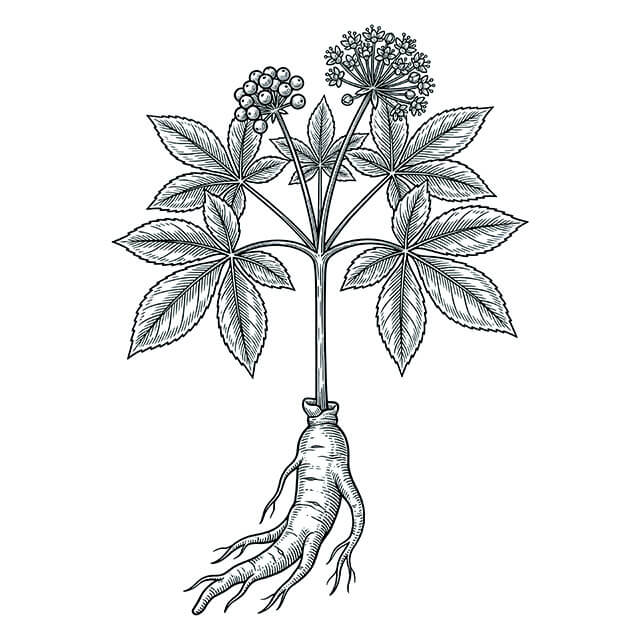
Ren Shen — die Menschenwurzel — tonisiert das Yuan–Qi (Ursprungs–Qi) und stärkt kraftvoll das Lungen–Qi. Gemeinsam mit Huang Qi bildet es das Qi–stärkende Herz der Rezeptur. Ginsenoside zeigen in Untersuchungen adaptogene Eigenschaften — sie scheinen die Stressantwort zu regulieren und die zelluläre Energiegewinnung zu unterstützen.
minister Shu Di Huang (Rehmannia) — Der Nährer
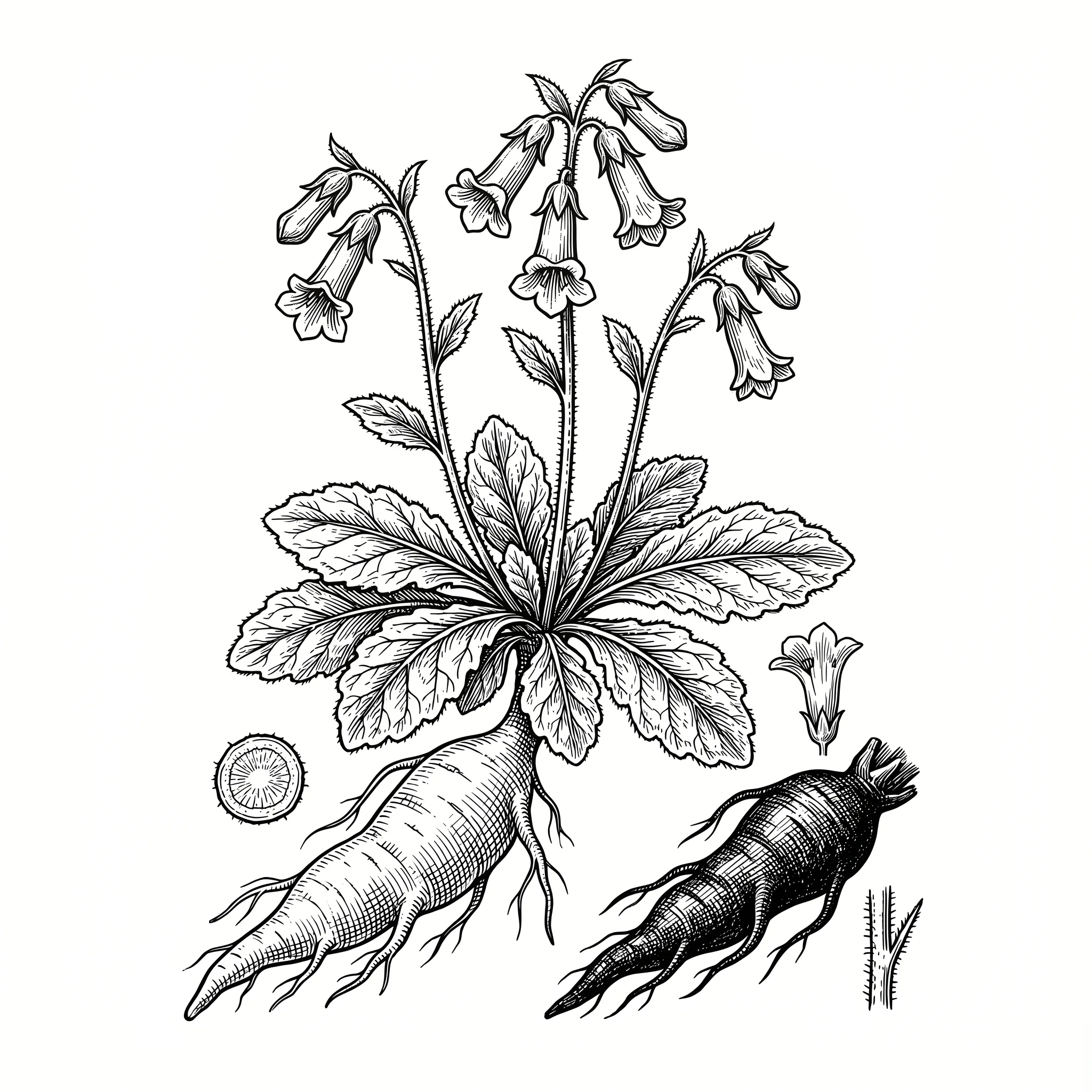
Shu Di Huang nährt das Yin und füllt das Jing auf. In K14 bildet es das Gegengewicht zur kraftvollen Qi–Stärkung, damit die Lunge nicht austrocknet, und stützt über die Verbindung von Lunge und Niere die Verankerung des Qi. Catalpol zeigt in Untersuchungen antioxidative Eigenschaften.
assistant Wu Wei Zi (Schisandra) — Der Bewahrer
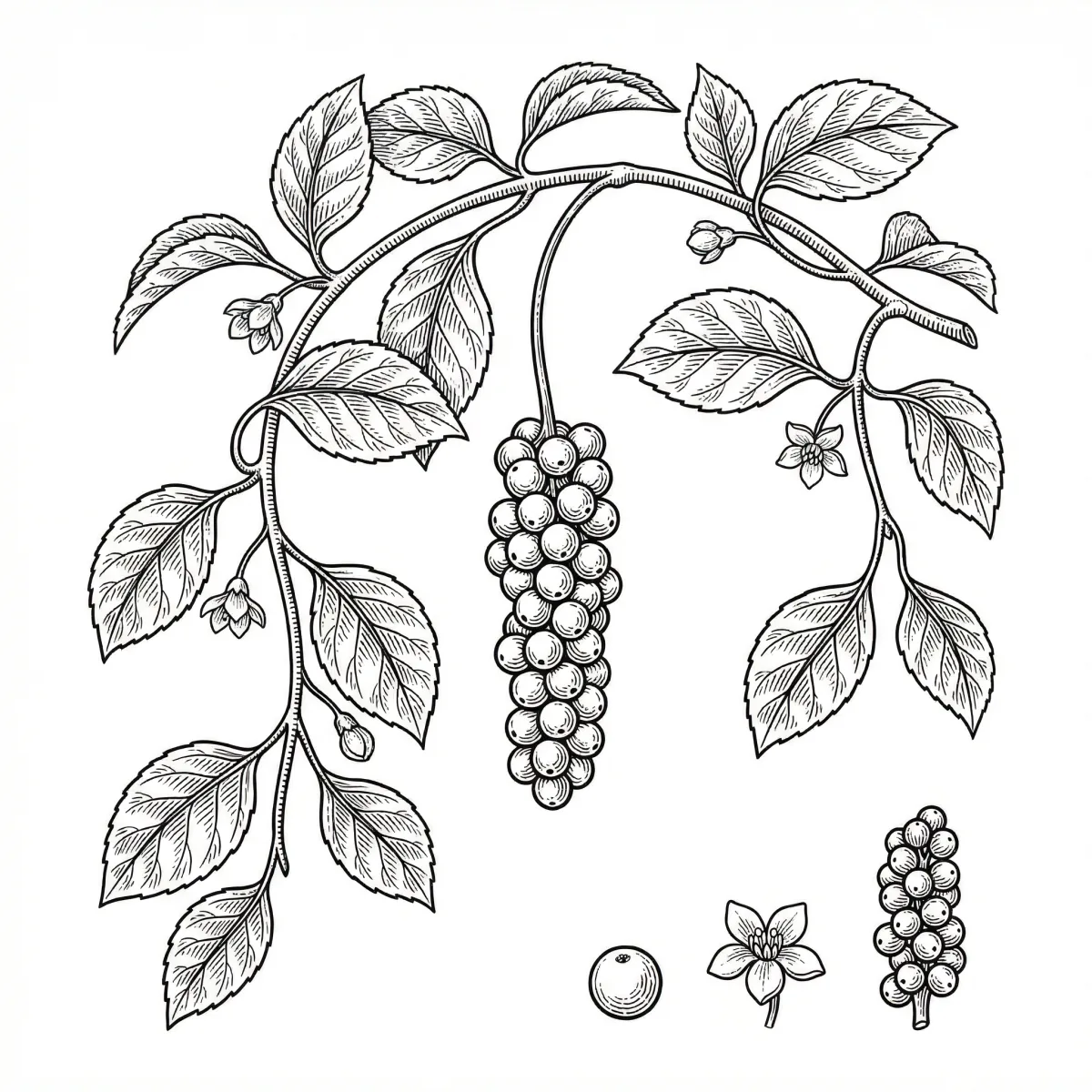
Wu Wei Zi — die Fünf–Geschmäcker–Frucht — sammelt und sichert das Lungen–Qi. Ihr saurer Geschmack zieht das zerstreute Qi zusammen und verhindert sein Entweichen über Husten und Schweiß — sie hält fest, was Huang Qi und Ren Shen aufbauen. Die Lignane der Schisandra–Beere (Schisandrin, Gomisin) zeigen in Untersuchungen antioxidative und adaptogene Eigenschaften; einzelne Arbeiten deuten auf eine Unterstützung der zellulären Energiegewinnung hin.
Recommended dosage
The dosage depends on the severity.
Based on your questionnaire results, we have highlighted the appropriate dosage for you below.
At light Severity:
- 2 tablets 3 times a day (morning, noon, and late afternoon) = 6 tablets per day
- Optional, if taking 3 doses a day is difficult for you: 3 tablets twice a day — same daily amount
- We recommend at least 2 cans, each containing 240 tablets (enough for about 12 weeks)
At middle Severity:
- 3 tablets 3 times a day (morning, noon, and late afternoon) = 9 tablets per day
- We recommend at least 3 cans, each containing 240 tablets (enough for about 12 weeks)
- If your condition improves, switch to the dosage recommendation for mild symptoms
At significantly Severity:
- 4 tablets 3 times a day (morning, noon, and late afternoon) = 12 tablets per day
- We recommend at least 4 cans, each containing 240 tablets (enough for about 12 weeks)
- If your condition improves, switch to the dosage recommendation for moderate severity
Why 3 times a day?
This ensures that the herbs' effects are evenly distributed throughout the day.
IMPORTANT:
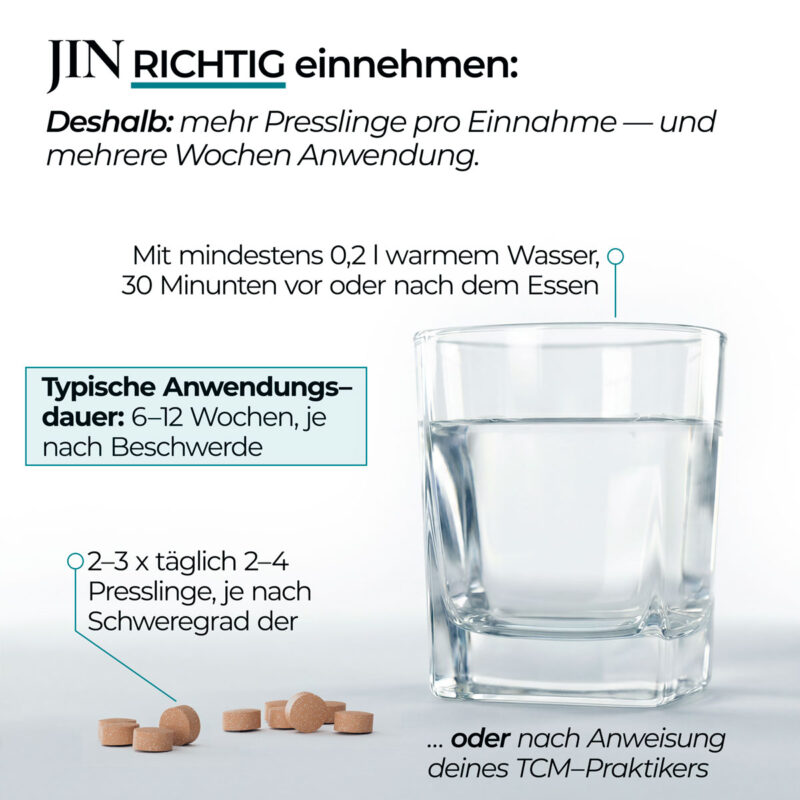
- Take the tablets with at least 0.2 liters of warm water
- Ideally, 30 minutes before or after a meal
- This suggestion is not a substitute for a medical diagnosis or treatment
- If you are pregnant or breastfeeding, have a chronic medical condition, or are taking medication, consult a doctor or a TCM practitioner beforehand.
- If you have a severe cold, fever, or diarrhea, stop taking this product
- Kalte, rohe Speisen und kalte Getränke meiden — sie schwächen Lungen– und Milz–Qi
- Atemübungen und sanfte Bewegung an frischer, nicht zu kalter Luft einplanen
If little has changed after about 12 weeks:
Herbs are just one part of TCM. Combine taking them with other practices—acupressure, qigong, Pilates, or yoga, BS+, as well as meditation and breathing exercises. Afterward, take a two-week break from taking the herbs. Then, if needed, you can TCM analysis try again and/or compare your result with your TCM practitioner or discuss it with your doctor.
If you have any questions about how to take it, please feel free to contact us.
Want to know what dosage is right for you? Take our free TCM questionnaire—in just a few minutes, it will reveal your personal TCM pattern and the appropriate dosage of the recommended TCM herbal blend.
BS+ for your intestinal flora
A healthy gut is the basis for your well-being. Current studies show that around 80 % of people in Germany consume too little fiber - yet it is the most important food for your intestinal flora (also known as the intestinal microbiome).
BS+ was developed to support your daily fiber supply. With 11 high-quality, natural ingredients BS+ offers your intestinal flora a diverse nutrient base.
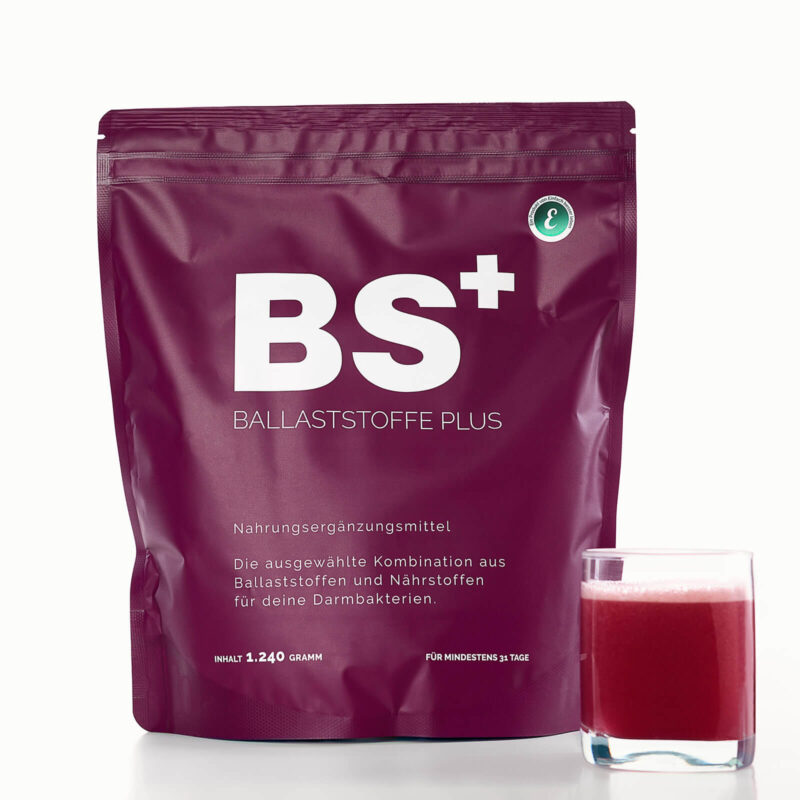
The revolutionary fiber formula
BS+ Dietary Fiber Plus
- Up to 20 g dietary fiber daily EXTRA
- Improved digestion and regular bowel movements
- Increased energy and vitality
- Better mood and mental clarity
- Support for your immune system
- Potential improvement in cholesterol and blood sugar levels
Simply stir into water twice a day - Your intestinal flora will thank you.
Why BS+ for lung Qi deficiency?
In TCM, the lungs and large intestine form a pair of organs in the metal element - they are closely connected via the same meridian. A lung Qi deficiency therefore always weakens the function of the large intestine: the transport capacity decreases, the intestinal flora is depleted and the immune system's resistance drops. This is because around 80 % of the immune system are located in the intestine - and it is precisely this Wei-Qi (defense Qi) that is controlled by the lungs.
BS+ delivers 11 prebiotic fibers and thus supports the development of a diverse intestinal flora. A well-nourished large intestine strengthens the lung-large intestine organ pair from the inside out, promotes the formation of defence qi and helps the lungs to better fulfil their distribution and protective function.
Especially important for lung qi deficiency:
- Strengthens the large intestine as a partner of the lungs and thus promotes the formation of defense qi
- Supports the transport function of the intestine in cases of Qi deficiency-related sluggishness
- Nourishes the intestinal flora as the basis for a strong immune system and free breathing
Acupressure
Acupressure is acupuncture without needles. — you can apply them yourself at any time. By gently pressing on specific points, you activate the flow of energy in the meridians and strengthen the corresponding organs.
The following three points are specifically tailored to the lung meridian and specifically strengthen lung qi.
ACUPUNCTURE POINT: Lu 09
Lung 09
Great Abyss — Tài Yuān
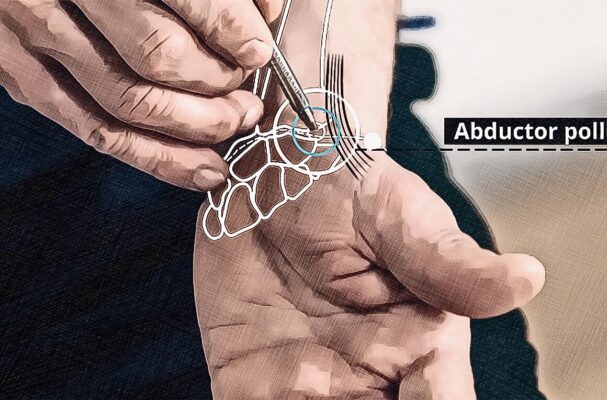
- Lung tonification point — strengthens lung qi
- Strengthens the thoracic qi (heart and lungs)
- Promotes blood circulation
- Master point of the blood vessels
- Helps with cold hands and weak voice
Location:
On the wrist, in the depression on the radial side of the radial artery.
Application:
Hold twice daily for 30–45 seconds with moderate pressure. Ideal in the morning and evening.
ACUPUNCTURE POINT: Lu 07
Lung 07
Interrupted series — Liè Quē
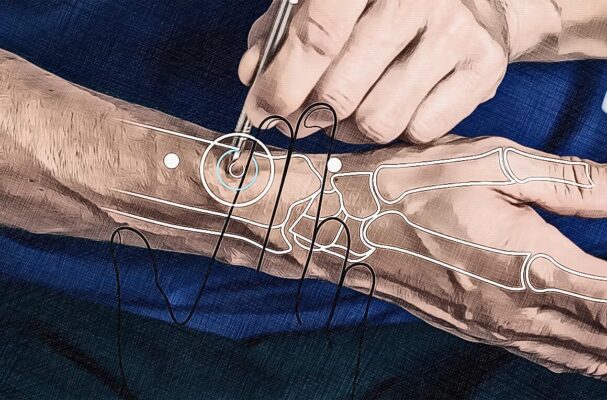
- Luo point — opens the lungs
- Dispels wind and resolves external pathogenic factors
- Regulates descending lung qi
- Strengthens the immune system (Wei-Qi)
- Helps with coughs and respiratory problems
Location:
On the forearm, 1.5 cun proximal to the wrist crease, above the styloid process of the radius.
Application:
Press firmly once a day for 30–45 seconds. Ideal for the onset of a cold.
ACUPUNCTURE POINT: KG 17
Concept container 17
Center of the chest — Dàn Zhōng
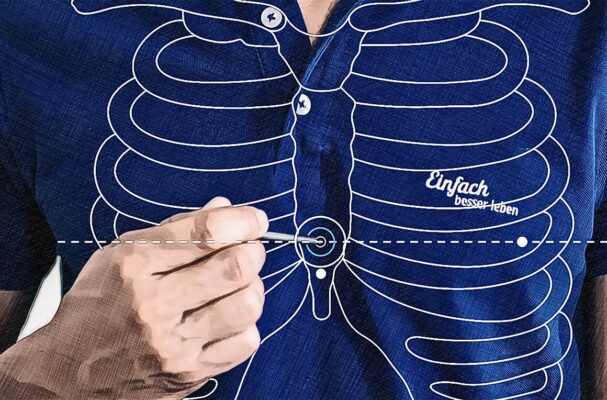
- Sea of Qi — opens the chest
- Strengthens breathing and thoracic qi
- Regulates the qi of the heart and lungs
- Relieves qi stagnation in the chest area
- Helps with shortness of breath and tightness in the chest
Location:
In the middle of the sternum, at nipple level (4th ICR).
Application:
Hold gently for 30–45 seconds once a day. Ideal for breathing difficulties or tightness in the chest.
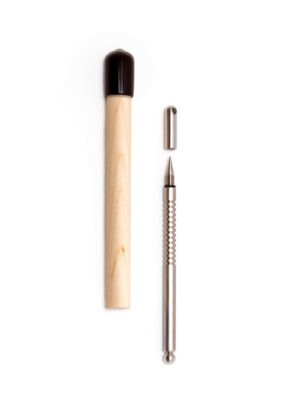
TIP
AkuPen
Acupuncture pen with video instructions
For even more intense stimulation You can use an AkuPen. The acupressure pen significantly enhances the effect of acupressure. With an extensive video library for over 80 acupuncture points.
Qi Gong
Qi Gong is moving meditation — Gentle, flowing exercises that harmonize your energy flow and strengthen your qi. If you have lung qi deficiency, these exercises help to build up lung energy, deepen your breathing, and open up your chest.
Regular practice of qigong (even just 10-15 minutes a day) has been shown to have positive effects on lung capacity, immune defense, and general well-being.
QI GONG: Exercise 1
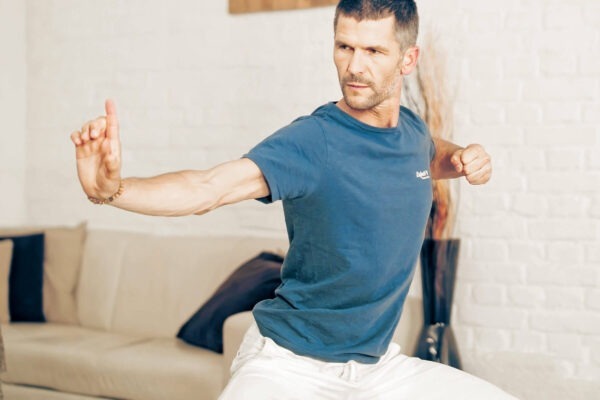
Stretching the bow
Opens the chest, strengthens the lungs
Particularly helpful for:
- Shortness of breath and shallow breathing
- Tightness in the chest area
- susceptibility to infection
- Fatigue and lack of energy
Effect:
This classic Ba Duan Jin exercise opens up the chest, stretches the lung meridian, and specifically strengthens lung energy. The arm movement activates the lung points and promotes deep breathing.
QI GONG: Exercise 2
Open cloud gates
Harmonizes the flow of qi, calms breathing

Particularly helpful for:
- Restless, shallow breathing
- Stress and inner tension
- Exhaustion and lack of energy
- Weak voice
Effect:
This exercise harmonizes the flow of qi throughout the body and calms the breathing. It is perfect for finding peace and gently strengthening lung energy — ideal as a break in between activities.
QI GONG: Exercise 3
Connecting heaven and earth
Opens the chest cavity, improves breathing

Particularly helpful for:
- Shallow breathing
- Tightness in the chest area
- Fatigue and weakness
- Heaviness in the body
Effect:
This exercise stretches the chest area, improves diaphragmatic breathing, and opens the lung meridians. Stretching upward activates the lung qi and promotes free flow of breath.
These Qi Gong exercises are specially selected to strengthen lung energy. They open up the chest, promote deep breathing, and strengthen lung qi and wei qi (defensive energy).
All exercises are particularly effective when practiced between 3 and 5 a.m. — this is the peak time for the lungs in the organ clock. However, the time between 5 and 7 a.m. (colon time) is also ideal, as the lungs and colon form a pair of organs.
QI GONG:
When and how often?
In the morning (ideal):
- All 3 exercises as a sequence: approx. 15-20 minutes
- Or just 1-2 exercises: approx. 5-10 minutes
- Preferably between 5 and 7 a.m. (colon time) or early in the morning
In between:
- Individual exercises as needed (e.g., in case of shortness of breath or fatigue)
- „Regulate Qi“ for rapid calming of breathing
Regularity is more important than duration:
- Better to do 10 minutes every day than 60 minutes once a week.
- After 2-3 weeks, you will notice the first changes.
- After 3 months of regular practice: significant improvement
Pro tip: Combine qi gong with conscious abdominal breathing. If you have lung qi deficiency, it is particularly important to breathe slowly and deeply into your abdomen—this strengthens lung qi and your immune system.
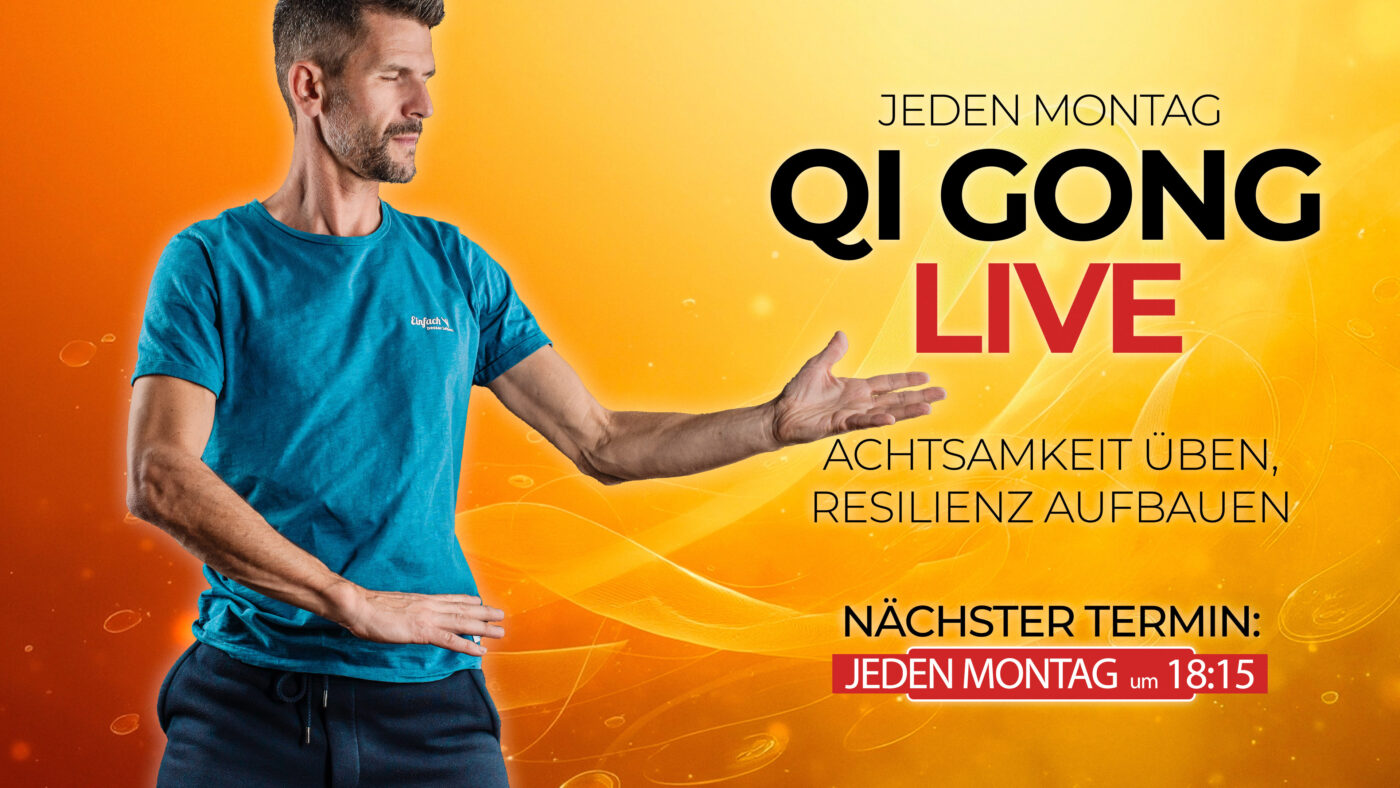
LIVE EVERY MONDAY: QI GONG WITH WOLFGANG
Every Monday at 6:00 p.m. Let's practice together live on YouTube. Among other things, Wolfgang will guide you through a complete qigong sequence — free of charge and suitable for all levels.
Why participate live? ✓ Practicing together is motivating ✓ Wolfgang explains the exercises in detail ✓ You can ask questions in the live chat ✓ Regular appointments help with your routine
More about Qi Gong LiveMeridian Yoga — The Yoga of TCM
Meridian Yoga combines classic yoga poses with the energy concept of traditional Chinese medicine. — more dynamic than traditional yoga and focused on improving health and energy levels.
Targeted stretches along the twelve main meridians open blocked energy pathways, strengthen organ functions, and increase permeability in fascia, joints, and muscles.
Accompanied by calm breathing and mindful body awareness, Meridian Yoga has a particularly balancing effect on stress, exhaustion, and inner restlessness. The gentle style is suitable for all ages—even without prior experience—and helps you strengthen your core, become more flexible, and let your life energy flow more freely again.
MERIDIAN YOGA: Exercise 1
Makko Ho for the lung meridian
Stretches the lung and large intestine meridians, opens the chest

Particularly helpful for:
- Shortness of breath and shallow breathing
- Tightness in the chest
- Sadness and melancholy
- Weak immune system
Effect:
The classic Makko Ho stretch for the lung meridian opens the chest and simultaneously stretches the lung and large intestine meridians. This exercise improves breathing and strengthens the Wei Qi (defensive Qi).
MERIDIAN YOGA: Exercise 2
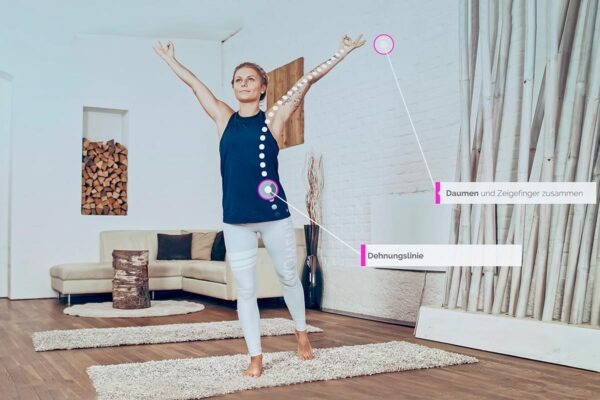
The lung stretch
Intensive stretching of the lung meridian, improves breathing
Particularly helpful for:
- Tension in shoulders and arms
- Restricted chest breathing
- Lack of energy and exhaustion
- Skin problems (lungs control skin)
Effect:
This intense stretch activates the entire lung meridian, which runs from the chest to the inside of the arms and up to the thumbs. The stretch releases blockages and promotes the free flow of qi in the lungs.
Both exercises activate the lung meridian, which runs from the chest to the inside of the arms. Stretching stimulates the flow of qi and strengthens lung function.
Particularly effective: Hold each position for 3-5 breaths, breathing deeply into your abdomen.
MERIDIAN YOGA:
When and how often?
Best time:
- Between 3 and 7 a.m. (lung meridian time)
- Or early in the morning after getting up (fresh air!)
Duration:
- Hold each position for 3-5 breaths.
- Complete sequence: 10-15 minutes
- 3-5 times per week for best results
Important:
- It is best to practice in the fresh air or with the window open.
- Breathe deeply and evenly during the positions.
- Stretching should be comfortable, never painful.
Pro tip: Combine Meridian Yoga in the morning with Qi Gong — first the flowing Qi Gong movements, then the Meridian Yoga exercises for maximum lung qi development.
Nutrition according to TCM
„Let food be your medicine.“ — this principle has been applied in TCM for thousands of years. If you have lung qi deficiency, proper nutrition is particularly important for strengthening your respiratory system.
The lungs belong to the Element Metal and needs warm, moisturizing food, to regain strength. White foods have a special relationship with the lungs.
What you eat, HOW you eat and WHEN What you eat—all of this affects your lung power and defensive energy.
The golden rules for strong lungs
What is good for you:
White foods (metal element)
- Pears (moisturize and cool the lungs)
- Radish (loosens mucus, strengthens the lungs)
- Almonds (nourish and strengthen the lungs)
- Rice (neutral, easily digestible)
- Cauliflower, parsnips
White is the color of the lungs.
Warming foods
- Ginger (warms, dispels cold)
- Onions (open the lungs)
- Leeks, spring onions
- Garlic (for cold symptoms)
Heat strengthens lung qi
Moisturizing foods
- Honey (moisturizes and nourishes)
- Pears (ideally stewed)
- Almonds, pine nuts
- Sesame (white)
Moisturizes the lungs when dry
Qi-building foods
- Oats (nourishes qi)
- Chicken (strengthens qi and immunity)
- Soups and broths
- Dates (tonic)
Builds up lung capacity
What you should avoid:
Dairy products
- cow's milk
- Yogurt, quark
- Cheese in large quantities
- cream
Produce mucus in the lungs!
Cold food and drinks
- Ice-cold drinks
- Ice cream, frozen food
- Raw food (especially in winter)
- Cold salads
Weakens the lung yang!
Sugar and sweets
- industrial sugar
- sweets
- Sweet baked goods
- Sweet drinks
Produces moisture and mucus
Fried and greasy foods
- Fried foods
- chips, fast food
- Fatty meat
- pork
Generates heat and mucus
HOW YOU SHOULD EAT:
Regular meals
- 3 fixed meals a day
- Breakfast between 7 and 9 a.m.
- Prefer a hot breakfast
- Dinner before 7 p.m. and light
Mindful eating
- Chew slowly (supports the lungs!)
- Eat calmly, don't rush
- Fresh air while eating
- Deep breathing before eating
The lungs love calm and rhythm!
Drink properly
- Warm or lukewarm water
- Herbal tea (ginger, thyme)
- Pear compote water
- Honey water (moisturizing)
Warm liquids strengthen the lungs
IDEAL MENU FOR ONE DAY:
Breakfast (7-9 a.m.):
- Warm oatmeal with stewed pears and almonds
- In addition: warm water with honey
Lunch (12:00–1:00 p.m.):
- Radish soup with ginger and spring onions
- In addition: Rice with steamed vegetables
- Or: Chicken broth with noodles and onions
Dinner (6–7 p.m.):
- Steamed fish with cauliflower
- Or: Vegetable rice soup
- In addition: ginger tea
Snack if needed:
- Pear and ginger compote with honey
- Or: Handful of almonds
The most important rule when changing your diet is:
Start with ONE step!
Don't change everything at once.
Our suggestion for getting started:
- Cut down on dairy products — 2 weeks
- Warm water instead of cold drinks — 2 weeks
- Eat a pear or radish every day — 2 weeks
Step by step, you will notice how your breathing becomes freer and your immune system strengthens.
Your lungs will thank you!
RECIPE: PEAR AND GINGER COMPOTE
Ingredients:
For 2 people
- 2 ripe pears
- 3-4 thin slices of fresh ginger
- 1-2 tablespoons honey
- 300 ml water
- 1 pinch of cinnamon
- Optional: some goji berries
Preparation:
- Peel and core the pears and cut them into pieces.
- Bring water with ginger slices to a boil
- Add pear pieces
- Simmer on low heat for 15-20 minutes.
- Add cinnamon
- Allow to cool slightly, then sweeten with honey.
- Serve warm
Effect:
Moistens the lungs
Loosens mucus and relieves coughing
Strengthens lung qi
Ideal for dry coughs or after a cold!
RECIPE: RADISH SOUP
Ingredients:
For 2 people
- 1 white radish (approx. 300g)
- 1 piece of ginger (approx. 3 cm)
- 2 spring onions
- 500ml vegetable or chicken stock
- 1 tablespoon sesame oil
- Salt, white pepper
Preparation:
- Peel the radish and cut it into thin slices.
- Finely chop the ginger, cut the spring onions into rings.
- Heat sesame oil, briefly sauté ginger
- Add the radish and fry for 2 minutes
- Deglaze with stock and simmer for 15 minutes
- Season with salt and pepper to taste
- Garnish with spring onions
Effect:
Loosens mucus in the lungs
Opens the airways
Warms and strengthens
Perfect for congested lungs or the onset of a cold!
Breathing
Breathing is the bridge between body and mind. In TCM, we say: „The lungs govern qi“ — through conscious breathing, you can directly influence your energy flow, harmonize all organ systems, and activate your self-healing powers.
Studies show: Proper breathing activates the parasympathetic nervous system (rest & regeneration), massages the internal organs from within, improves oxygen supply, and reduces stress hormones. The good news: Just 5–10 minutes a day can have a measurable effect on your overall well-being.
Recommended breathing techniques
ABDOMINAL BREATHING — The basis for every breathing technique
Natural breathing
Abdominal breathing is the most natural and effective form of breathing. With every breath, you massage your internal organs, activate the flow of energy, and bring qi to the center of your body (dantian).
Wolfgang shows you step by step, How to learn abdominal breathing correctly—lying down to start with, then later also sitting and standing.
Duration: 9 minutes

4–7–8 BREATHING — Calms you down immediately
Breathing to fall asleep and combat inner restlessness
4–7–8 breathing (inhale for 4 seconds, hold for 7 seconds, exhale for 8 seconds) is known as a „natural sedative.“ This special rhythm calms your nervous system in just a few minutes—perfect for stress, racing thoughts, or trouble falling asleep.
Perfect for the evening or whenever you want to calm down quickly.
Duration: 9 minutes
To the interactive videoBOX BREATHING — For inner coherence
Professional breathing for focus and calmness
Box Breathing (4 seconds on, 4 seconds hold, 4 seconds off, 4 seconds hold) combines activation and relaxation in perfect balance. This method is used by elite soldiers, athletes, and executives to remain calm and focused even in extremely stressful situations.
Train your CO₂ tolerance and brings the heart, breathing, and nervous system
into a harmonious state.
Duration: 9 minutes
To the interactive videoCOHERENT BREATHING — Harmonizes body & mind
Breathing against burnout
With coherent breathing You breathe in for 5.5 seconds and out for 5.5 seconds. This rhythm brings your heart and breathing into perfect synchrony—a state that science refers to as „coherence.“ This method is also used in clinics for burnout treatment and stress reduction.
Proven to improve Heart rate variability (HRV) — the most important marker for stress resistance, health, and life expectancy.
Duration: 14 minutes
To the interactive video
COHERENT BREATHING Around the clock
Our 24/7 livestream on coherent breathing runs non-stop. You can tune in at any time and join in right away.
Perfect for:
✓ Spontaneous breaks to catch your breath in between
✓ If you need help breathing
✓ As background while working
✓ For falling asleep (calms the nervous system)
✓ For regular daily practice
relaxation
When your body is relaxed, all organ systems can function optimally. Chronic tension blocks your body's self-healing powers and keeps you in a state of constant stress. Through targeted relaxation techniques, you activate the parasympathetic nervous system and send your body the signal: „Now I can regenerate, heal, and build strength.“
Progressive muscle relaxation is one of the most researched relaxation methods and has been used successfully for over 100 years. It helps you to recognize tension, actively release it, and achieve a state of deep relaxation—whenever you want.
Recommended relaxation technique
PROGRESSIVE MUSCLE RELAXATION (PMR)
The scientifically proven relaxation method
Progressive muscle relaxation according to Jacobson is one of the most widely researched relaxation techniques worldwide. By deliberately tensing and relaxing individual muscle groups, you learn to consciously perceive tension and actively release it.
Proven effect:
Lowers blood pressure, improves sleep, reduces chronic pain, relieves tension, and activates self-healing powers. Successfully used by psychologists to treat anxiety disorders, depression, and chronic pain.
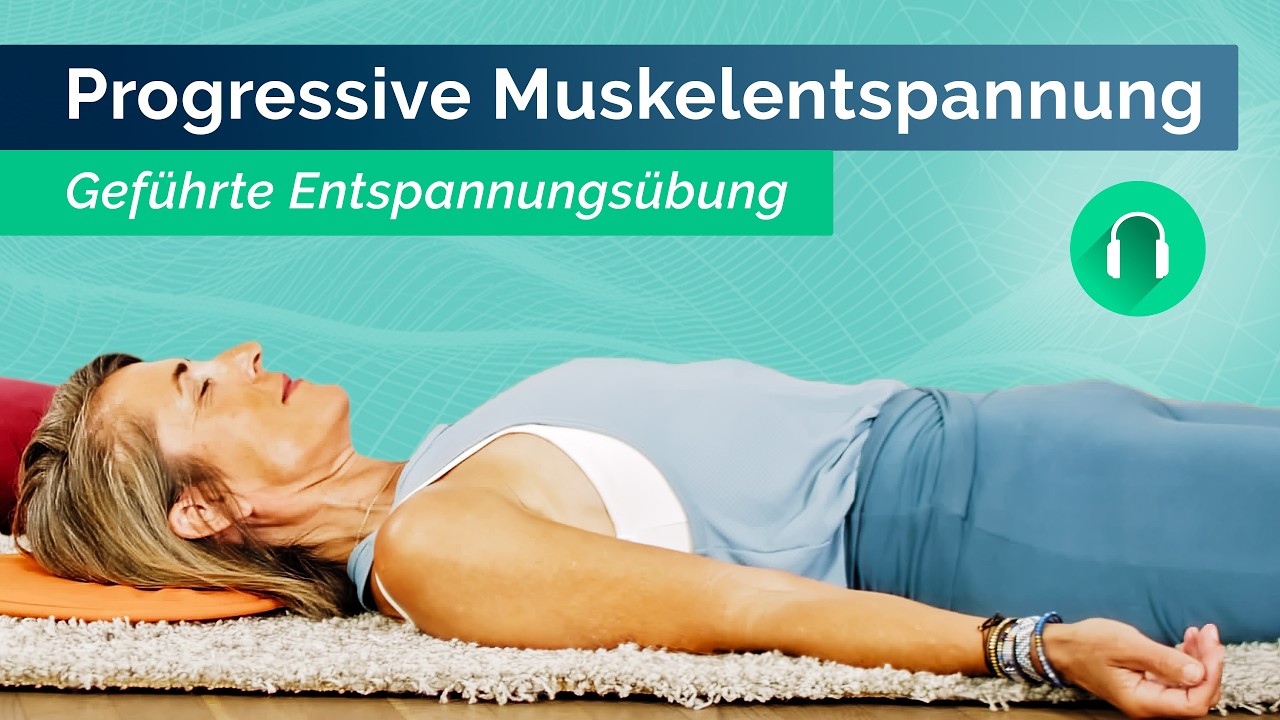
Maria guides you step by step through the entire exercise—perfect for beginners and advanced practitioners alike.
Duration: 23-minute complete guide
To the guided PMRMeditation
Meditation calms the mind — and a calm mind harmonizes the body. In TCM, we know that every emotion affects a specific organ. Through regular meditation, you learn to break out of destructive thought patterns, find emotional balance, and strengthen your inner core.
Modern studies confirm: Meditation has been proven to change brain structure, reduce stress hormones, strengthen the immune system, and improve self-healing powers. Just 10 minutes a day can change your life forever.
Recommended meditations
GUIDED MEDITATIONS FOR EVERY DAY
Your personal meditation library
We have a complete Playlist with over 60 guided meditations, breathing exercises, and relaxation techniques—from short 5-minute meditations for in between to deep 30-minute sessions for intensive practice.
In the playlist you will find:
- Morning meditations for a mindful start to the day
- Meditations for restful sleep
- Breathing meditations for inner peace
- Meditations against stress, brooding, and worries
- TCM standing meditations for all 5 elements
- Body scan and body journeys
- Healing meditations to activate self-healing powers
- Special breathing techniques (4–7–8, coherent breathing, bee breathing)
Perfect for beginners and advanced practitioners. Choose the right meditation for you depending on your time, the time of day, and your needs.
To the meditation playlistThe lung is the delicate official. It governs the qi and breathing. It opens to the nose and manifests itself in the skin.
– From the HUANG DI NEI JING
(The Yellow Emperor's Classic of Internal Medicine)
More tips for your everyday life
In addition to traditional TCM treatment methods There are many small everyday habits that can strengthen your lung qi. In TCM, the lungs are particularly sensitive to external influences — with the right habits, you can effectively protect and build them up.
Breathing exercises and meditation for the lungs
🧘 Deep abdominal breathing
The foundation for healthy lungs and strong qi:
- Sit or lie down comfortably
- Place one hand on your stomach, one on your chest
- Breathe in slowly through your nose — your belly will rise.
- Exhale slowly through your mouth—your belly will lower.
- Keep your chest as still as possible.
- 10–15 minutes daily, ideally in the morning in the fresh air
🌬️ Lung cleansing breathing
This technique cleanses and strengthens the lungs:
- Breathe in deeply through your nose
- Hold your breath for a moment
- Exhale through your mouth in 3–4 small bursts (like blowing out candles).
- Imagine how used energy leaves the body
- 5–10 repetitions, ideal for respiratory problems
✨ White Light Meditation for the Lungs
Visualization to strengthen lung qi:
- Sit upright, hands on your thighs
- As you inhale, imagine white light (the color of the lungs in TCM) flowing in.
- The light fills your lungs and cleanses them.
- When you exhale, gray, used energy flows out
- 10–15 minutes daily, especially effective in autumn
🔊 Healing lung sound „Sssss“
From Qi Gong — frees the lungs:
- Take a deep breath and raise your arms sideways
- When exhaling, make the sound „Sssss“ (like a snake).
- Imagine how grief and stagnation leave the lungs
- Arms slowly sink down
- 6–9 repetitions, especially during times of emotional stress
Lifestyle tips for strong lung qi
🌳 Fill up on fresh air
Your lungs need clean air to breathe:
- At least 30 minutes of fresh air every day
- Breathe in the morning at sunrise (Qi is at its strongest)
- Prefer forests or parks (better air quality)
- Open windows to ventilate when the weather is good.
- Walks in nature — „forest bathing“ strengthens the lungs
💧 Note the humidity
Dry air damages the lungs:
- Heated air in winter dries out the mucous membranes.
- Use a humidifier (ideal humidity level is 40–60%)
- Place bowls of water on the radiator
- Green plants in the home improve the indoor climate
- Drink more when the air is dry
🧣 Keep your neck and shoulders warm
The lungs are sensitive to wind and cold:
- Scarf or shawl around the neck — especially in windy conditions
- Cover your shoulders, even in summer (air conditioning!)
- Avoid drafts — do not sleep under an open window.
- Change clothes immediately after sweating
- Cover your hair in windy conditions (wind penetrates over the head)
🚭 Avoid smoking
Nothing harms the lungs more than smoke:
- Quitting active smoking — every day without counts
- Avoid secondhand smoke
- Incense sticks and candles should only be used in well-ventilated rooms.
- Be mindful of air pollution (spend less time outdoors on smoggy days)
- For smoking cessation: Acupuncture and herbs can help
🏃 Gentle exercise in the fresh air
Exercise that strengthens the lungs:
- Qi Gong — exercises specifically for the lungs
- Tai Chi — flowing movements with conscious breathing
- Light jogging or walking (breathing exercises)
- Endurance training (increase breathing capacity)
- No overexertion — exhaustion weakens the lung qi
Emotional aspects — grief and the lungs
💔 The lungs and mourning in TCM
In TCM, the lungs are the organ of grief:
- Unprocessed grief weakens the lung qi.
- Losses (people, relationships, stages of life) put strain on the lungs.
- Letting go is also part of the lung theme.
- Chronic sadness can lead to breathing problems
- Crying cleanses the lungs — suppressing tears is harmful
🌱 Healthy processing of grief
How to support your lungs emotionally:
- Allow feelings — crying is healing
- Talk to people you trust
- Develop rituals for letting go (write letters, burn them)
- Nature as consolation — autumn teaches us to let go
- Seeking professional help for deep grief
✨ Positive emotions for the lungs
What strengthens your lung qi emotionally:
- Cultivating gratitude — write down three things every evening
- Appreciation for what you have
- Perceiving beauty — in nature, in art
- Creating order and clarity — the lungs love purity
- Practice letting go — even when it comes to objects and habits
🧘 Practical exercises for emotional balance
Small exercises for everyday life:
- In the morning: Place your hand on your chest, take three deep breaths, and be grateful.
- Evening: What can I let go of today?
- When feeling sad: Hum the lung sound „Sssss.“
- Decluttering: Regularly get rid of unnecessary items (practice letting go)
- Keeping a diary: Writing down your feelings frees up your lungs
Skin care — The lungs manifest themselves in the skin
🪷 The connection between lungs and skin
In TCM, „the lungs open up in the skin“:
- The skin is the outer aspect of the lungs.
- Skin problems often indicate lung weakness.
- Dry skin indicates lung yin deficiency.
- Wei-Qi (defensive Qi) circulates in the skin.
- Healthy skin = strong immune system
💆 Skin care from the outside
How to support your skin and lungs:
- Dry brushing before showering — stimulates Wei-Qi
- Don't shower too hot — it dries out your skin.
- Use natural oils (sesame, almond oil)
- Moisturizing care, especially in fall and winter
- Gentle, natural products without harsh chemicals
🥗 Skin care from the inside
Nutrition for beautiful skin and strong lungs:
- Pears — moisturize the lungs and skin
- Almonds — nourish the lung yin
- White foods (radish, cauliflower, white mushrooms)
- Honey — moisturizes and soothes
- Drink enough fluids — warm water or tea
⚠️ What stresses the skin and lungs
These factors weaken both:
- Dry heating air and air conditioning systems
- Too much sun without protection
- Excessive amounts of hot, heating spices
- Smoking and alcohol
- Stress and lack of sleep
💡 Important to know
Strengthening lung qi requires patience—autumn is the best time to nourish and protect your lungs. With regular practice, you will not only breathe better, but also develop healthier skin and stronger defenses. Pay attention to your body's signals and be gentle with yourself.
For optimal treatment progress
TCM is not a quick fix for symptoms., but rather a holistic healing process. You will achieve the best results if you consistently integrate the treatment into your daily routine and give your body time to regenerate.
Integration into everyday life
Start with ONE step
Don't try to change everything at once! That's overwhelming and leads to
usually leads to you giving up. Instead:
- Week 1-2: Daily breathing exercises (5 minutes in the morning)
- Weeks 3-4: Warm breakfast with oats and pear
- Weeks 5-6: Integrate Qi Gong „Drawing the Bow“
- Weeks 7-8: Acupressure Lu 09 and KG 17 daily
- From week 9: Add lung-strengthening herbs
Realistic expectations
After 2-3 weeks: First improvements noticeable
- Deeper, calmer breathing
- Less quickly out of breath
- Voice becomes stronger
After 6-8 weeks: Significant improvements
- Significantly greater breathing capacity
- Less susceptible to colds
- Skin becomes clearer
After 3-6 months: Sustainable healing
- Lung qi is significantly strengthened
- Strong immune system
- Free, deep breathing
TCM vs. Western medicine
TCM and Western medicine are not mutually exclusive—they complement each other!
When Western medicine is important:
- In acute emergencies
- In case of structural damage
- In case of infections
- For accurate diagnoses (laboratory, imaging)
Where TCM has its strengths:
- In case of functional disorders
- For chronic complaints
- For prevention
- For holistic healing
Ideal: Combine both systems! Use Western medicine for
Acute treatment and accurate diagnosis, TCM for lasting healing
and strengthening the body's self-healing powers.
Important: Never stop taking prescribed medication without consulting your doctor first!
Talk to your doctor when you start TCM treatment.
TCM diagnosis for professionals
Syndrome differentiation according to TCM:
Tongue: Pale, possibly with a thin white coating, especially in the front area
Pulse: Weak (Ruo Mai 弱脉), especially at the right Cun position (lung)
Pathomechanism:
The lungs can no longer adequately perform their function of lowering and distributing qi (Fei Zhu Su Jiang 肺主肃降). The Wei Qi (defensive qi) is weakened, and the skin and pores are no longer adequately protected.
Treatment principle:
Bu Fei Qi (补肺气) — Tonify the lung qi
Classic recipe:
Bu Fei Tang (补肺汤) or Yu Ping Feng San (玉屏风散) as a base
Important modifications depending on accompanying symptoms:
- For frequent colds: + Huang Qi, Bai Zhu
- For dry cough: + Mai Men Dong, Bei Sha Shen
- For phlegm: + Ban Xia, Chen Pi
Every step counts
Your body WANTS to heal—you just have to create the right conditions for it to do so.
Remember:
👣 Every little step counts
You don't have to be perfect. Even one warm meal a day is better than none. Even 5 minutes of qigong is better than no exercise at all.
⏳ Patience pays off
It took years for your body to get into this state. Give it time to regenerate. Healing takes time, but it WILL happen.
🎯 Focus on what you can DO
Don't concentrate on what you are doing „wrong". Focus on every positive step you take.
💚 Be good to yourself
Perfection does not exist. It is acceptable to have an off day occasionally. Tomorrow is a new day when you can continue.
🤝 You are not alone
Thousands of people are walking this path with you. For over 2,000 years, TCM has been helping people like you who want to regain their health.
Measure your healing progress

To track your progress with treatment, we recommend that you repeat the TCM analysis after about 3 months.
Why is this important?
- You can see how your condition has improved.
- You can adjust the treatment as needed.
- It motivates you to keep going
- You recognize which measures work best
⚠️ Important: Your answers today will be stored in encrypted form in a code that you received by email. You can only measure your progress later with this code. Keep the email safe!
Activate reminder:
<>In 12 weeks, you'll receive an email with a link to the TCM analysis. When you fill it out, you can enter your personal health code—then you'll see a comparison overview at the end:
→ Your new values
→ Your scores from today's test
→ Direct changes
This allows you to see at a glance whether your symptoms
have improved!
🔒 YOUR DATA IS SAFE
We store:
✓ Only your email address for reminders
✓ The date for shipping
We do NOT store:
✗ Your analysis results
✗ Your personal health data
✗ The connection between email and diagnosis
All analysis data is completely anonymous and is not linked to your email address.

Newsletter
Stay up to date with our newsletter. Besides useful tips and tricks for training and your everyday life, you won't miss any of our new releases.
We are here for you
Do you have questions about your diagnosis or treatment?
Not sure which method is right for you?
Contact us — We're happy to help!