








Xian Mao — Curculigo Rhizome
Xian Mao — the Curculigo rhizome — is a powerful Yang tonic with a hot nature. Since the Tang Dynasty, it has been used to treat kidney yang deficiency accompanied by pronounced cold: It warms the Ming Men (Gate of Life fire), strengthens the essence (Jīng), and dispels cold from the joints and bones.
Xian Mao is particularly well known as a key ingredient in a classic formula—together with Yin Yang Huo, it forms the most important TCM formula for kidney yin and yang deficiency in the Menopause. Its distinctly hot nature makes it one of the strongest Yang-warming herbs in the Materia Medica; however, it must be used with respect and caution.
Effect from a TCM perspective
- Warms the kidney yang and strengthens the Ming Men Fire (Gate of Life)
- Strengthens Jīng (Essence) and the Kidney Yang, when the Ming Men Fire goes out
- Wards off cold and damp In the bones and joints (Cold-Bi Syndrome)
- Strengthens tendons and bones for weakness in the lower back and knees
- Warms the spleen and strengthens the center in cases of Yang deficiency in the Lower Burner
Application & dosage
In TCM, Xian Mao is always dosed with caution due to its pronounced heat and mild toxicity. The standard dosage in a decoction is 3–10 g daily — this limit should not be exceeded in routine use. A careful assessment by an experienced TCM practitioner is essential.
Long-term use at high doses should be avoided. The processed form Jiu Xian Mao (Processed in rice wine) reduces its toxicity and makes the herb easier to tolerate—it is preferable to the raw form for most uses. If you are taking other prescribed medications, it is essential to consult a doctor.
Dosage forms
- Decoction (seaweed): Traditional method of preparation — the rhizome is boiled in water for 20–30 minutes; most commonly used in TCM formulas
- Granules: Concentrated dry extract, dissolved in warm water — easy to use, consistent dosage
- Powder: Finely ground rhizome; a lower dose is required than with a decoction; can be encapsulated
- Jiu Xian Mao (酒仙茅): Rhizome macerated in rice wine and steamed—processing reduces toxicity and enhances the yang-warming effect; the preferred form of preparation in many classical formulas
- Capsules: Standardized extract or powder in capsule form — convenient for longer treatment regimens; dosage strictly according to the manufacturer's instructions
Dosage
- Decoct: 3–10 g daily (moderate dosage — strictly adhere to the upper limit due to toxicity!)
- Powder: 1–3 g per dose (lower dose, since absorption is more direct without loss due to cooking)
- Jiu Xian Mao as a decoction: 3–9 g — processed form, slightly less toxic
Frequent combination partners
Xian Mao often does not reach its full potential until it is combined with other herbs
History & Tradition
Xian Mao—literally „immortal grass" (仙茅)—doesn't get its name for no reason. As early as the Tang Dynasty (618–907 CE) this fiery rhizome was regarded as an elixir of vitality, believed to restore strength to elderly men and renew the essence (Jīng). The Kai Bao Ben Cao, one of the most important herbal texts from the 10th century, listed Xian Mao as a warming and tonifying agent with a particular affinity for the kidneys and the Ming Men — the „Gate of Life Fire" in the spine, which, according to TCM theory, houses the body’s entire heat and life energy.
Legend has it that an Indian monk brought the herb to China in the 8th century and presented it to the Tang emperor—as a gift of „immortality" from the Himalayas. Whether legend or truth: From the very beginning, Xian Mao was a herb for extreme conditions—used when Yang had nearly been extinguished, when cold had penetrated deep into the joints, and when the body could barely maintain its inner warmth. In the Ben Cao Gang Mu (本草纲目) by Li Shizhen (1596) describes it in detail: a fiery nature, a pungent taste, slightly toxic—a herb that commands respect.
The most significant new discovery in modern TCM was made by scientists in Shanghai in the 1950s and 1960s: Based on Xian Mao and Yin Yang Huo, they developed a new formula that combines both warming tonics. This formula revolutionized the TCM perspective on the Menopause: It addresses both Yang deficiency (with symptoms of cold and exhaustion) and Yin deficiency (with rising heat, night sweats, and restlessness of the Shen)—an elegant balance in a single formula. Today, this formula is one of the most extensively researched TCM formulas for menopause worldwide.
In the modern herbal atlas, Xian Mao exemplifies the strength of TCM: ancient herbal knowledge that has been confirmed and refined by modern research. Curculigoside — the active compounds in the rhizome — have been shown in laboratory studies to have estrogen-like, bone-protective, and neuroprotective effects. The „immortal grass" has survived for millennia — and for good reason.
Contraindications & caution
Strictly contraindicated in cases of Yin deficiency with rising fire—hot flashes, dryness, a red tongue, and a rapid pulse are warning signs. The herb’s hot nature would significantly intensify existing internal fire. Do not use in cases of blood heat with bleeding or in the presence of acute signs of inflammation. In cases of Yin deficiency without accompanying Yang deficiency, Xian Mao should generally be used with the utmost caution or avoided altogether. Toxicity & Liver Risk: Xian Mao is considered mildly toxic—hepatotoxic effects have been observed, particularly at high doses and with prolonged use. Its use is contraindicated in cases of liver failure or preexisting liver disease. Strictly adhere to the standard dosage of 3–10 g in a decoction; do not use high doses for prolonged periods. Contraindicated during pregnancy. Consultation with a physician is mandatory when taking this herb concurrently with hormonal preparations, anticoagulants, or medications that affect liver metabolism.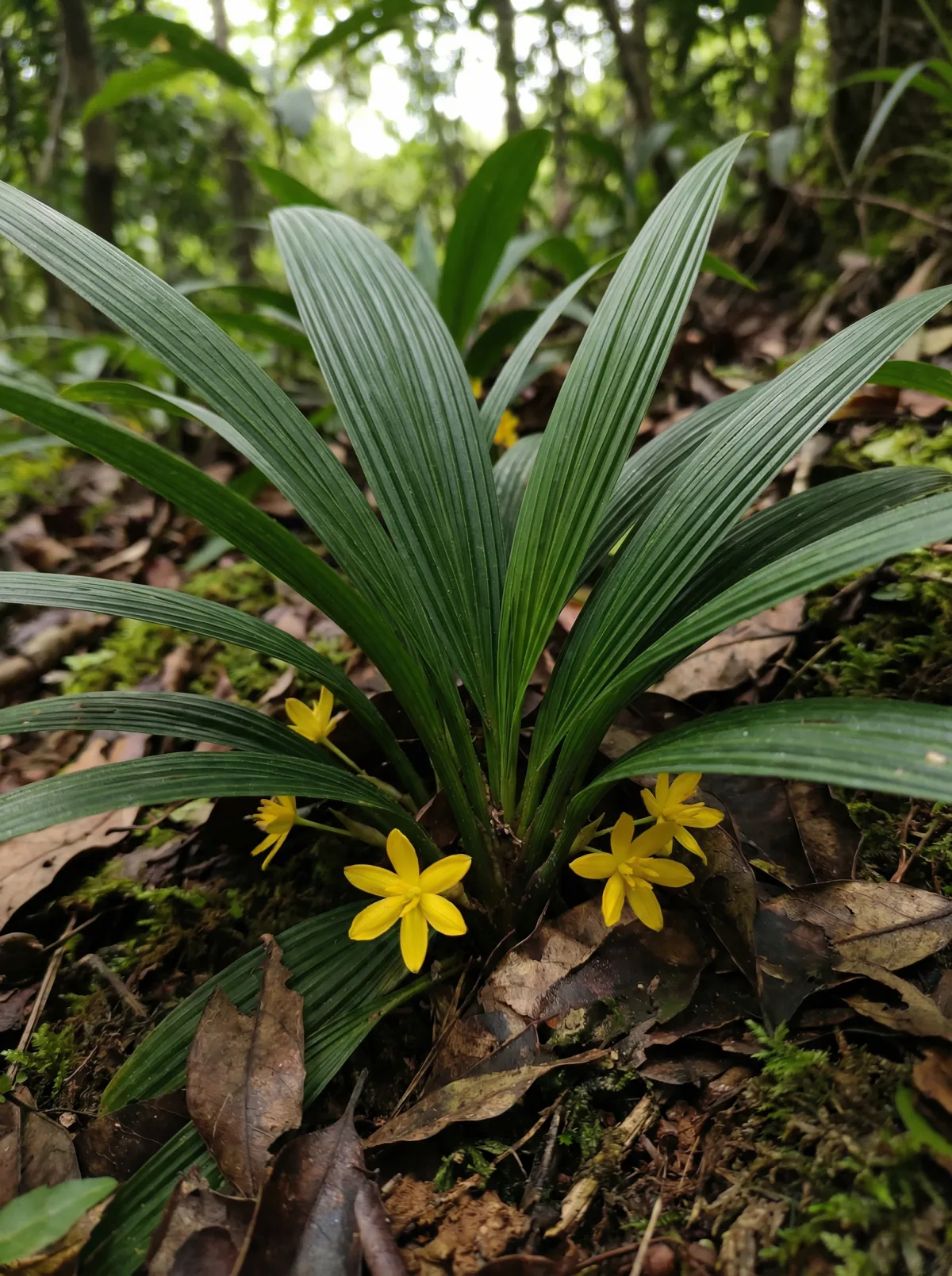
Botany
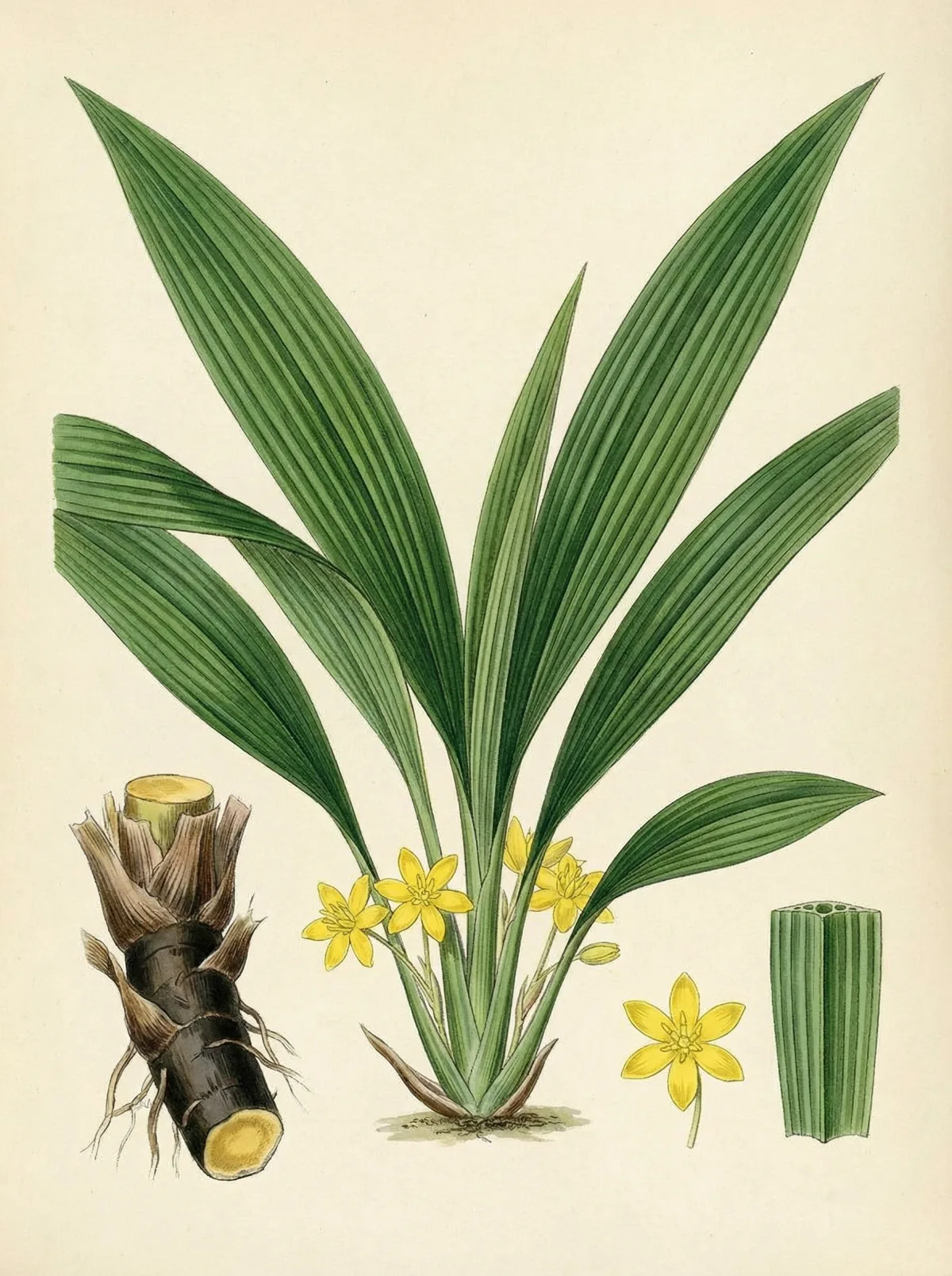
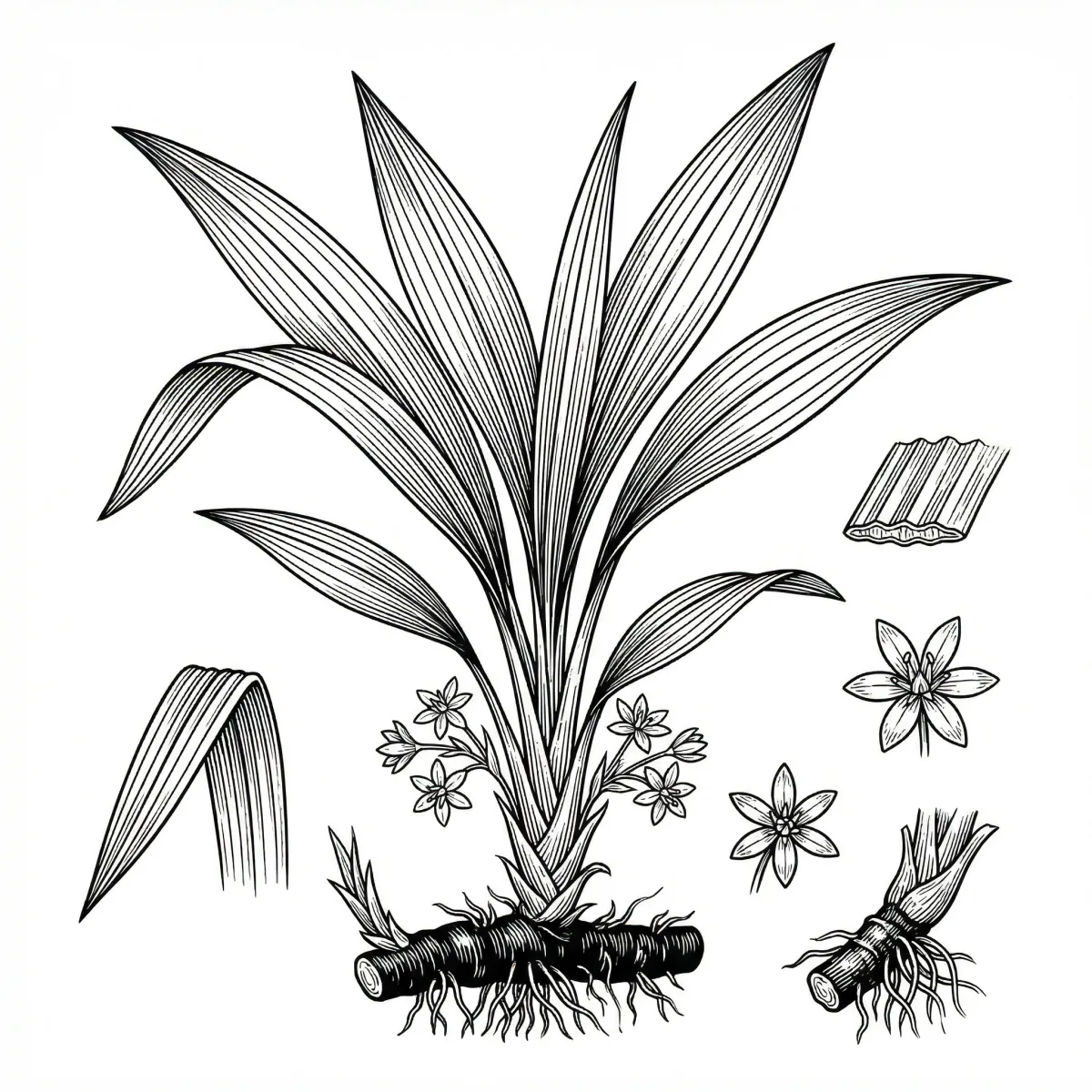
Curculigo orchioides belongs to the family of Hypoxidaceae (formerly classified in the Amaryllidaceae family) and grows as an evergreen rosette plant reaching a height of 10–30 cm. The linear-lanceolate leaves are characteristically covered with golden-yellow hairs and have wavy-serrated margins; small yellow flowers emerge from the leaf cluster, barely protruding above the foliage.
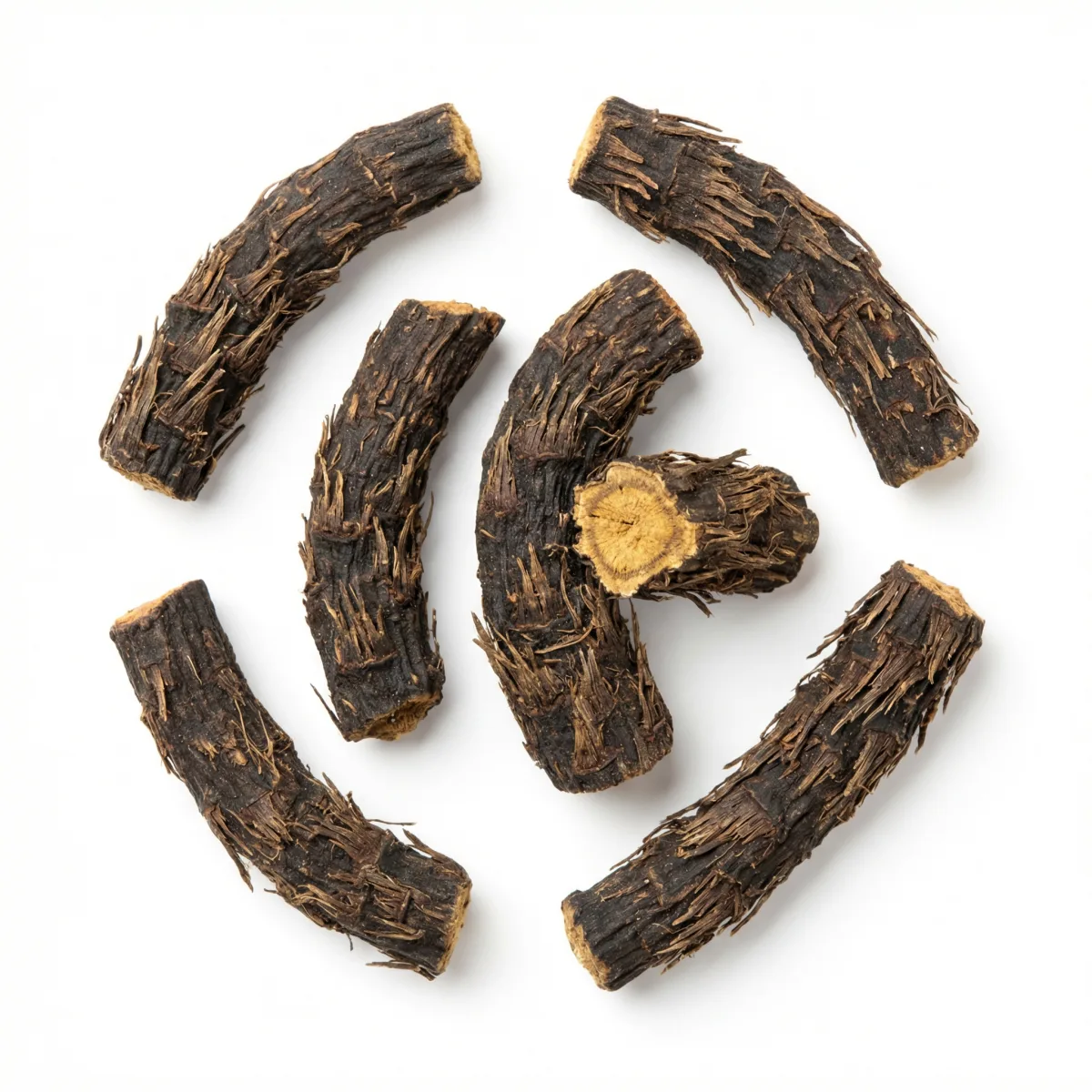
The eponymous rhizome It is dark brown to black, cylindrical and spindle-shaped, and whitish and fleshy in cross-section. It has a faintly aromatic scent and is the part of the plant used in TCM. The plant prefers partially shaded locations in open forests and grasslands on rocky-loamy soils.
Occurrence
- Southern China: Sichuan, Yunnan, and Guizhou Provinces — Main Cultivation Areas and Wild Populations
- India and Nepal: widespread in the Himalayan foothills and the mountains of southern India
- Southeast Asia: Malaysia, Vietnam, Thailand — in tropical and subtropical mountainous regions
- Elevation: primarily 300–1,500 m above sea level, in sparse forests and open grasslands
Harvest time
- Main harvest time: Fall (September–October) — at this time, the concentration of active ingredients in the rhizome is at its highest
- Plant age: Plants that are at least 2–3 years old — younger rhizomes are too small and lack the necessary nutrients for harvesting
- Distinguishing features: Harvest when the leaves above ground begin to wilt—a sign that the plant has withdrawn its energy into the rhizome
- Method: Carefully dig up the entire rhizome; separate the stems and fibrous roots, clean the main rhizome, and process it further
Processing
Processing Xian Mao requires special care, as the raw rhizome is slightly toxic. The quality of the processing plays a decisive role in determining the herb’s efficacy and tolerability. In classical TCM, two forms of preparation are distinguished: the uncooked Sheng Xian Mao (Shengxianmao) for external use, as well as the one processed in rice wine Jiu Xian Mao (Jiu Xian Mao) as the preferred form for internal use.
- Sheng Xian Mao (raw form):
- Thoroughly brush the freshly harvested rhizome under running water until all the soil has been removed
- Remove the fibrous roots and stem remnants; cut the rhizome into 3–5 mm-thick slices
- Dry completely on sieve mats or drying racks at 40–50 °C in an oven or in the open air (residual moisture below 10 %)
- Store in airtight containers in a cool, dry place
- Jiu Xian Mao (processed with rice wine — preferred form):
- Evenly moisten the dried Xian Mao slices with rice wine (Huang Jiu) in a 10:1 ratio (herb to wine) and let them macerate for 30–60 minutes until the wine is completely absorbed
- Steam the macerated rhizome in a steaming basket over boiling water for 30 minutes—this process removes alcohol and toxic compounds
- Then dry completely at 50–60 °C
- The wine-processed form reduces toxicity, enhances penetration into the kidney meridian, and increases the yang-warming effect
Related herbs
Herbs with similar effects and related areas of application