





Du Zhong - Eucommia bark
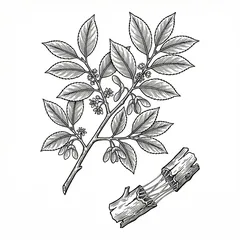
Du Zhong is the bark of the Eucommia tree and one of the most important remedies for strengthening tendons, bones and the lower back. It is traditionally used for kidney weakness with lumbar pain and to ensure pregnancy.
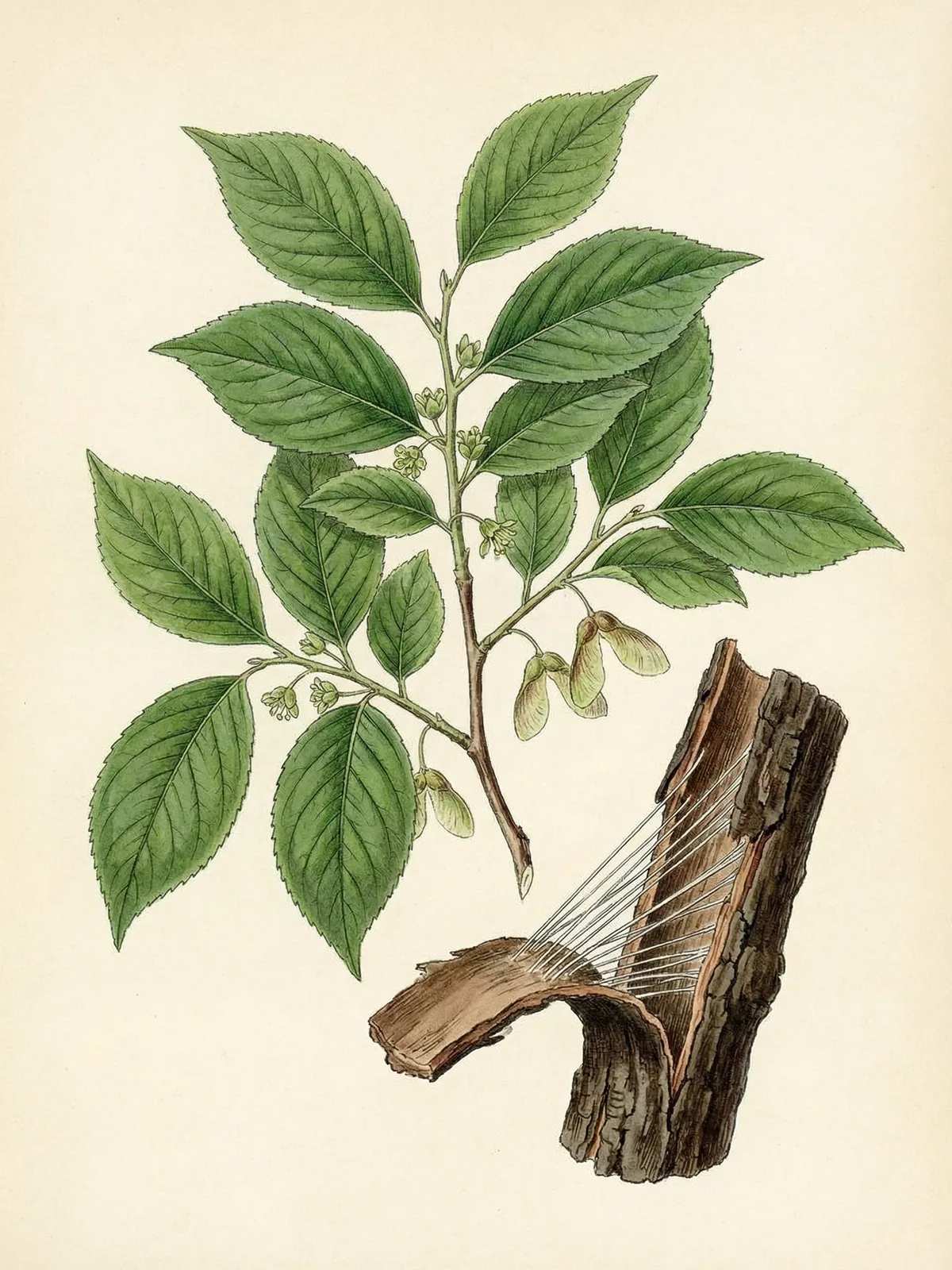
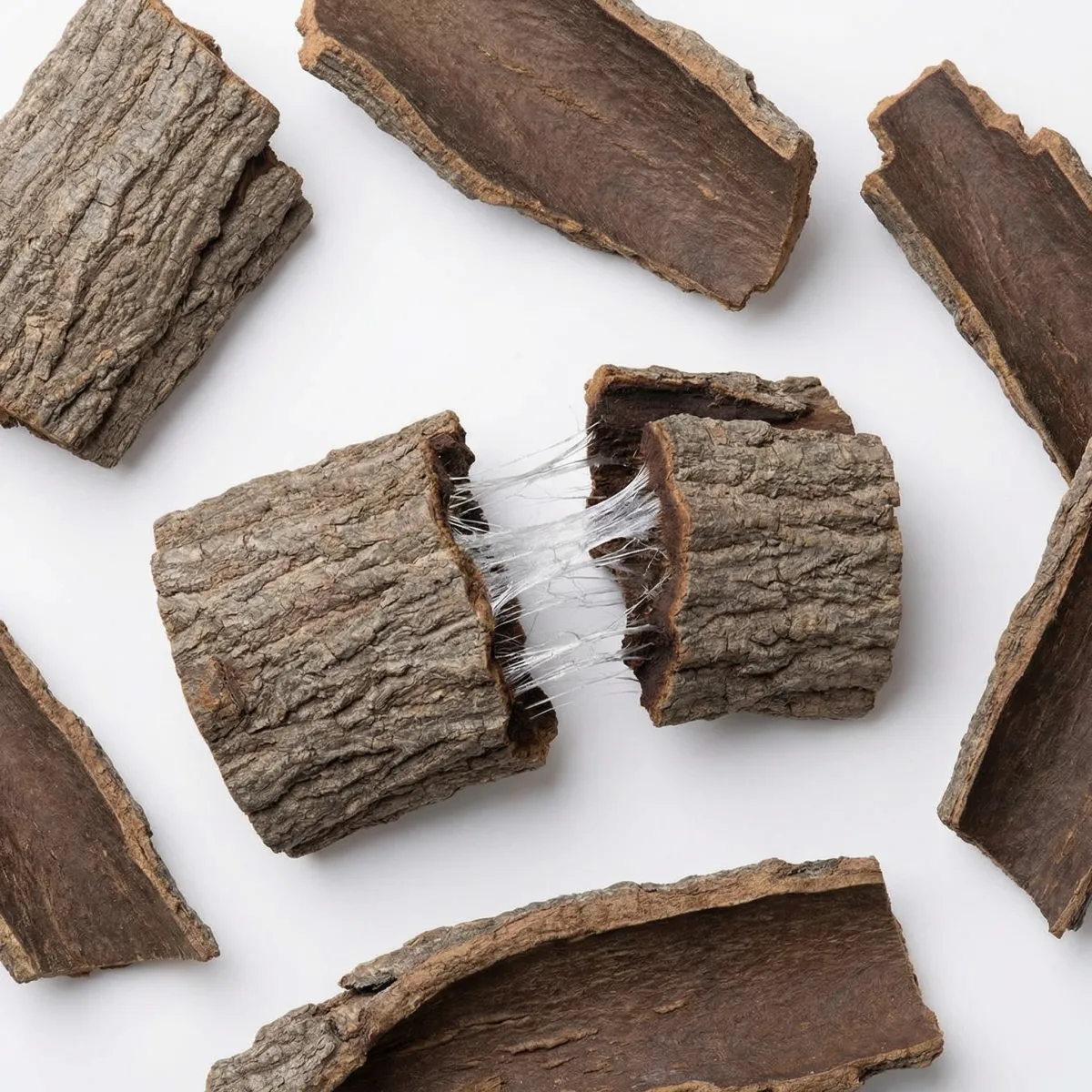
When the bark is broken, characteristic silvery gutta-percha threads appear - an unmistakable distinguishing feature that also serves as a Quality indicator serves.
Effect from a Western perspective
Aucubin and chlorogenic acid - the lead substances - show blood pressure-lowering and antioxidant properties. Clinical studies confirm positive effects on bone density and collagen metabolism.
- Aucubin stimulates collagen synthesis and promotes bone regeneration
- Chlorogenic acid lowers blood pressure via vasodilation and ACE inhibition
- Lignans from Du Zhong improve kidney function in animal models
- Gutta-percha polymer shows unique elastic properties with research potential
- Clinical studies prove efficacy in osteoporosis and lumbar spondylosis
Effect from a TCM perspective
Du Zhong tonifies the liver and kidney and strengthens tendons and bones - especially for pain and weakness in the lumbar and knee area. It warms the kidney yang and is traditionally used to calm the fetus in the event of a threatened miscarriage.
- Tones the liver and kidneys and strengthens tendons and bones in the case of lumbar pain
- Warms the kidney yang in cases of impotence, frequent urination and a cold back
- Calms the fetus and secures the pregnancy in the event of a threatened abortion
- Lowers ascending liver yang for dizziness and high blood pressure
- Strengthens the bone structure and promotes healing of fractures
Application & dosage
Du Zhong is usually prepared as a decoction. The salt-roasted form (Yán Dù Zhòng) specifically strengthens the kidney effect and is preferred for loin pain and kidney yang deficiency.
The dosage depends on the symptoms - for acute back pain the dose can be chosen in the upper range, for pregnancy protection in the middle range.
Dosage forms
- Decoction (boil for 15-20 minutes) - standard preparation
- Salt-roasted (Yán Dù Zhòng) - enhanced kidney effect
- Granules - easy to take, 3-5 g daily
- Tablets - 3-4 tablets of 500 mg, 2-3 times daily
- Powder - 3-5 g daily, in warm water or wine
Dosage
- Decoction: 10-15 g
- Granules: 3-5 g daily
- Powder: 3-5 g daily
- Tablets: 1.5-2 g daily
Frequent combination partners
Du Zhong often only unfolds its full effect in combination with other herbs
Combinations & formulas
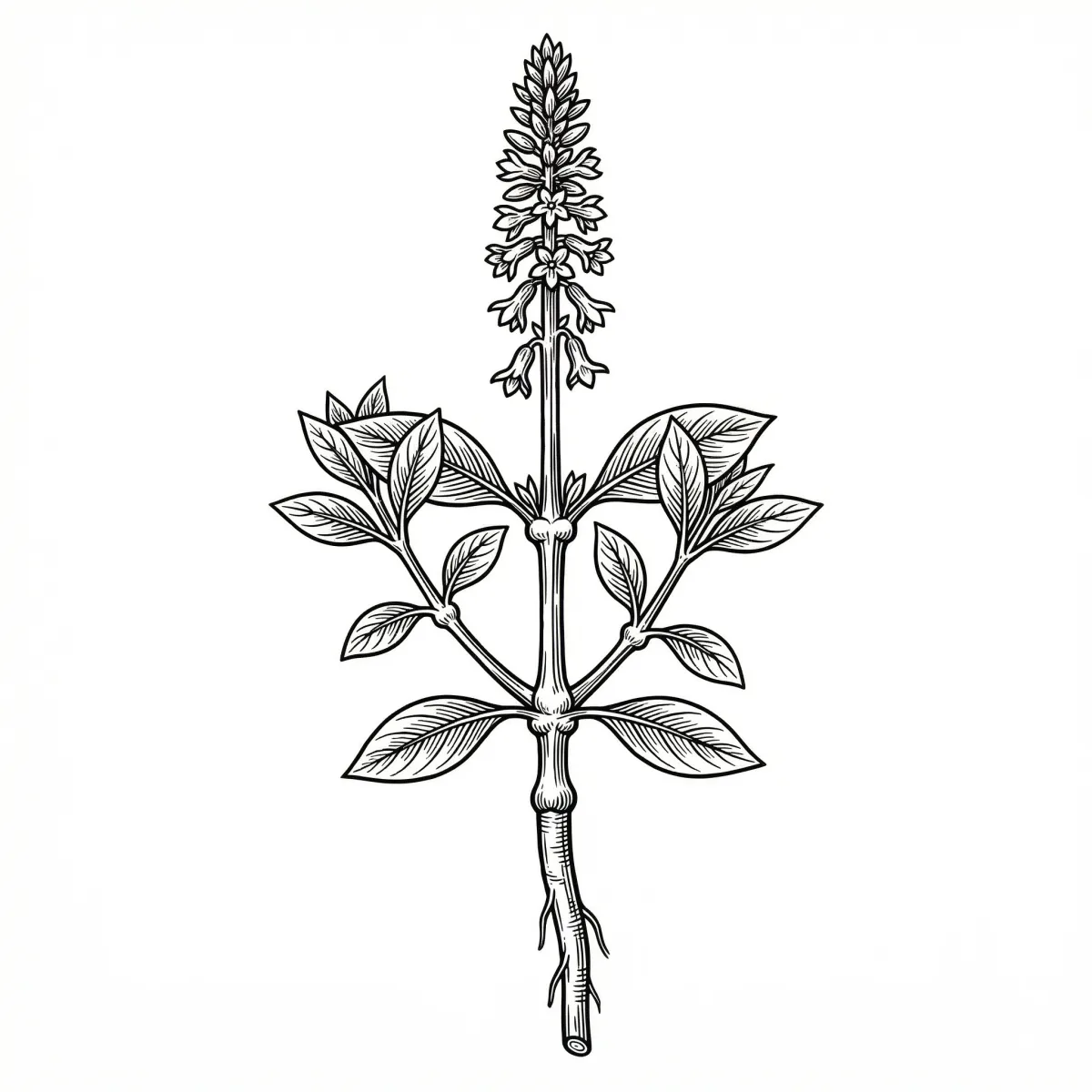
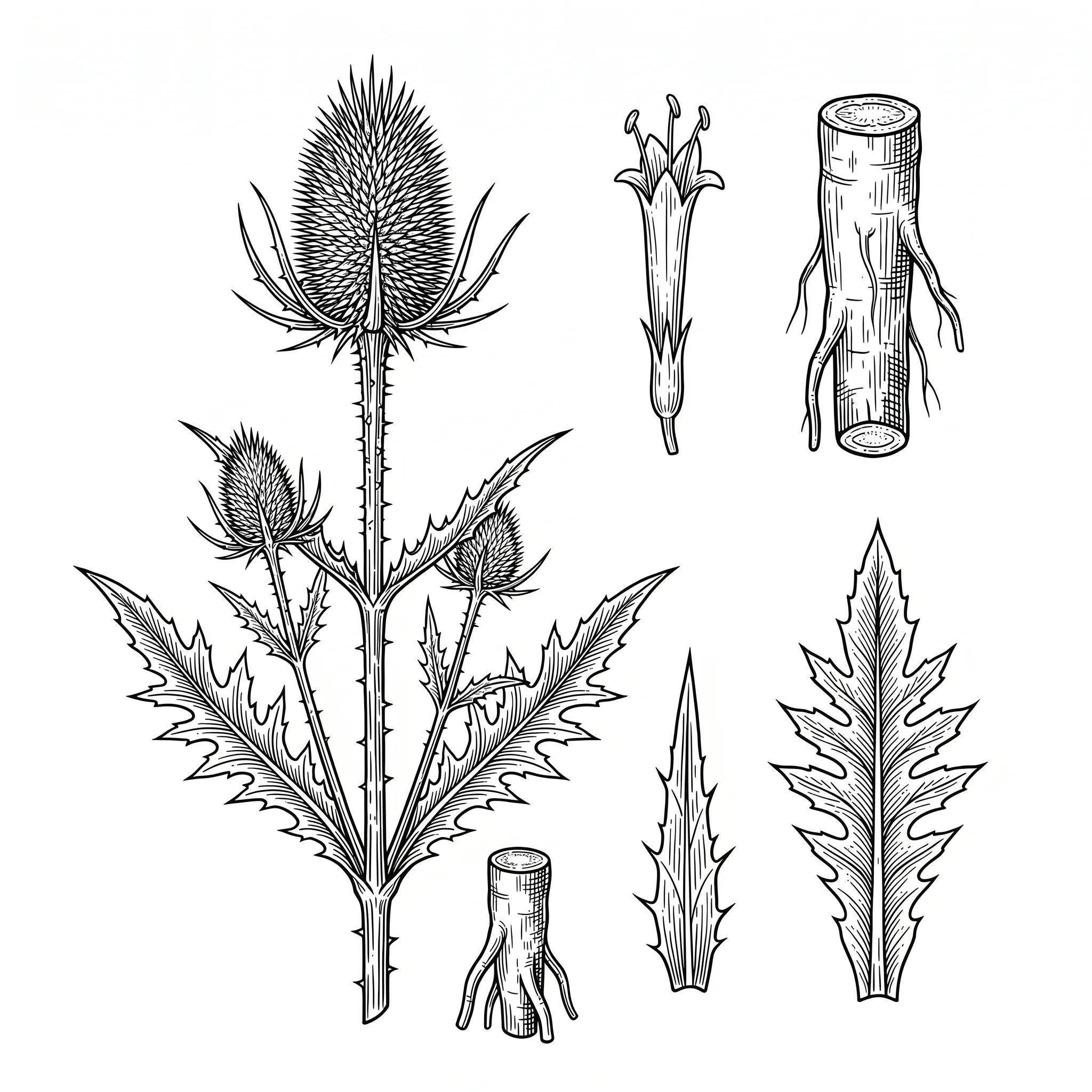
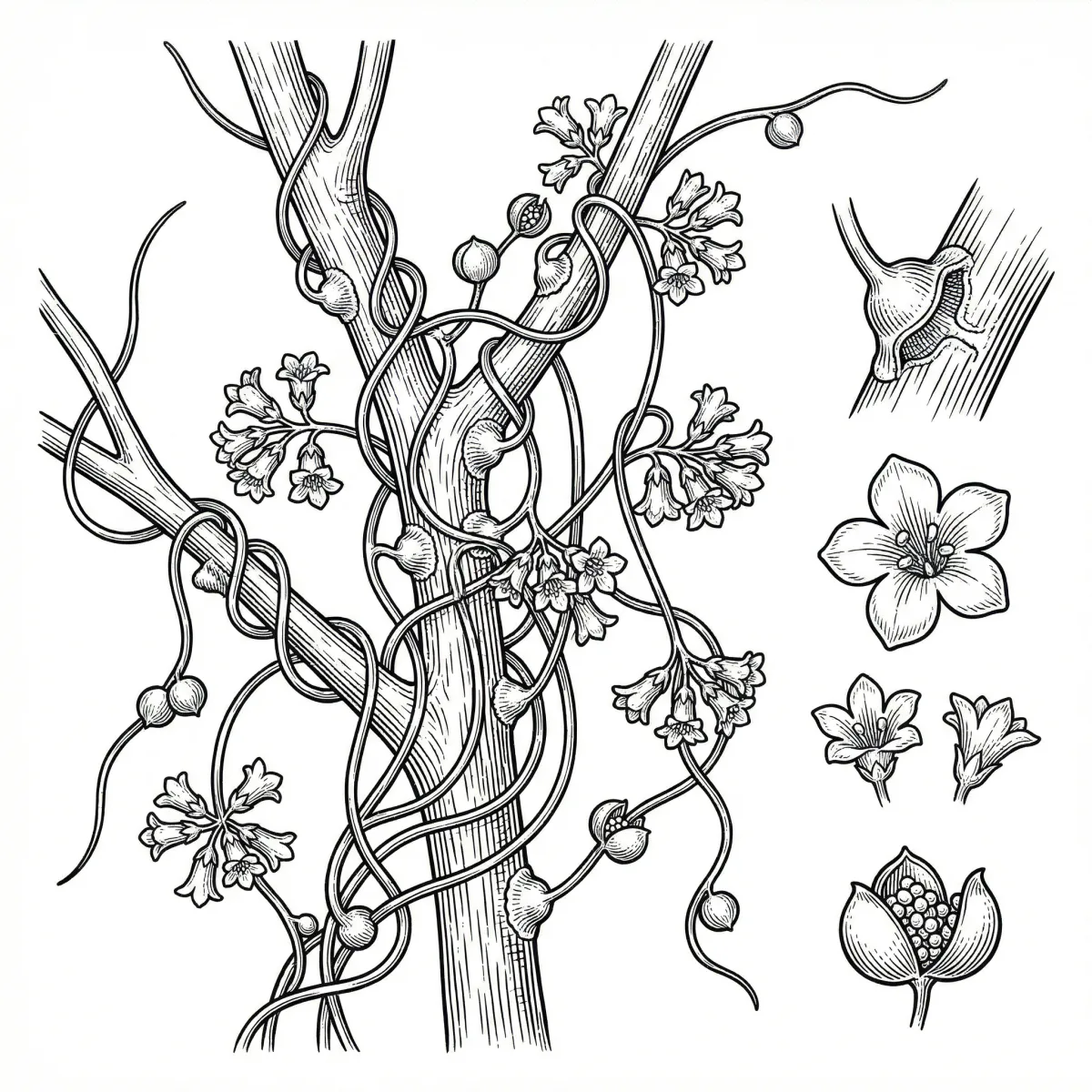
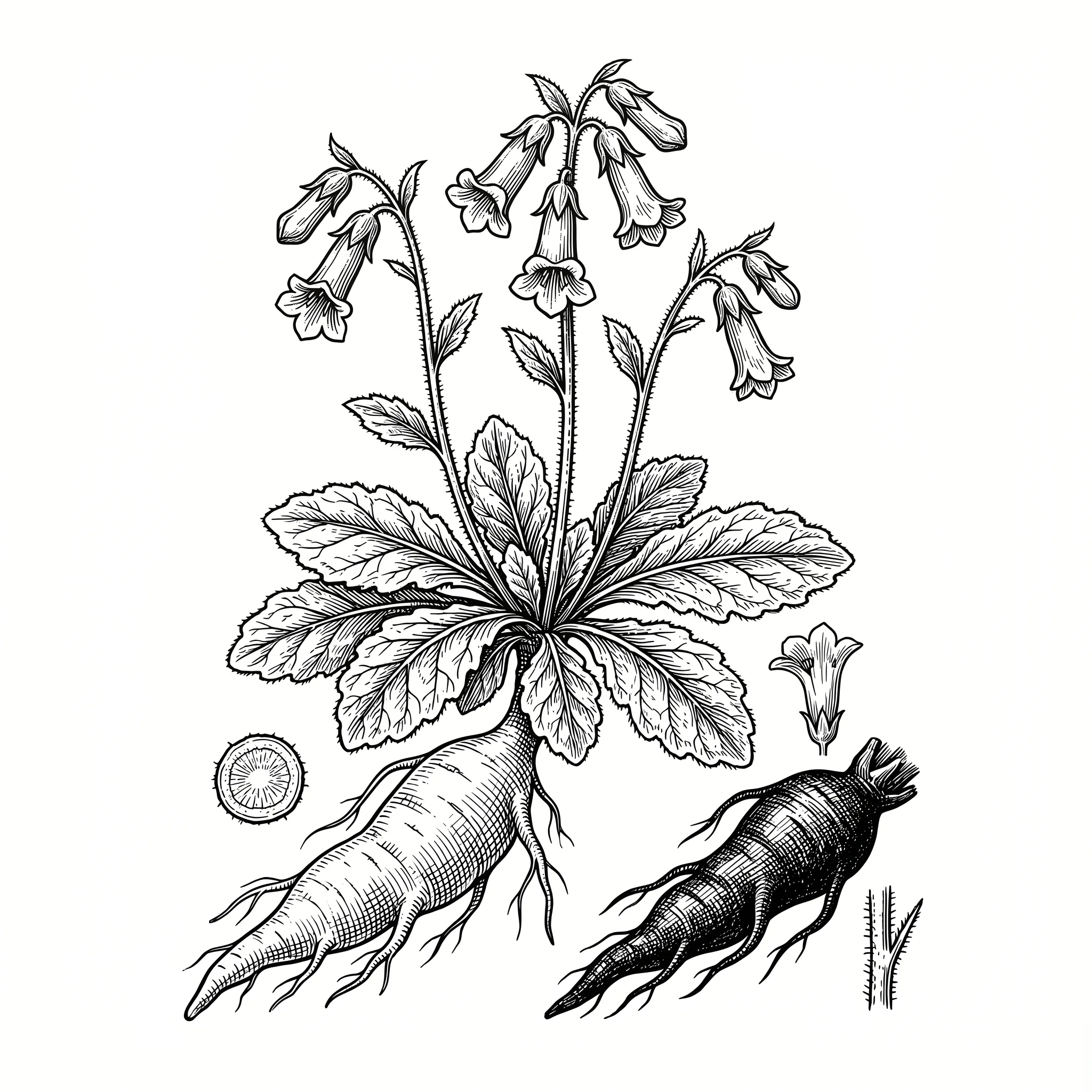
- Xu Duan and Niu Xi For lumbar and knee pain due to liver and kidney deficiency - the classic trio to strengthen the lower back
- Tu Si Zi and Sang Ji Sheng to safeguard the pregnancy in the event of a threatened miscarriage due to kidney weakness
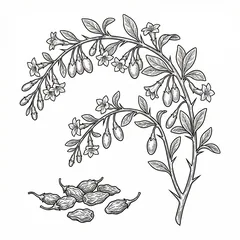
- Gou Qi Zi and Shu Di Huang for kidney yin and yang deficiency with dizziness, impaired vision and lumbar pain
- Tian Ma and Gou Teng with ascending Liver Yang with dizziness and headache - Du Zhong anchors the Yang downwards
History & Tradition
Du Zhong is in the Shén Nóng Běn Cǎo Jīng as an upper class herb - an indication that it was considered non-toxic and suitable for long-term use. Legend has it that it was named after a Daoist immortal called Dù Zhòng who is said to have discovered the plant and passed on its secret to mankind.
The Eucommia tree is a living fossil - it is the only surviving representative of its family (Eucommiaceae) and has existed since the Tertiary period. The genus was once widespread throughout the northern hemisphere; today only a single species survives in the mountain forests of central China.
Táo Hóngjǐng (456-536) praised Du Zhong as the most important remedy for strengthening the lower back. The tradition of roasting the bark with salt to increase the kidney effect goes back to the Sòng dynasty and is still used in clinical practice today.
In modern TCM, Du Zhong has gained particular importance in orthopaedics and gynaecology - as a support for the musculoskeletal system and as a gentle companion during pregnancy.
Contraindications & caution
Not for Yin deficiency with strong heat without Yang weakness - the warm nature of Du Zhong can intensify the heat.
Be careful with dry mouth and night sweats as a sign of Yin Empty-Heat - in this case, cooling Yin tonics such as Zhi Mu should also be combined.
Du Zhong is not suitable for fullness-heat in the liver area, as it tones the liver instead of clearing the heat. If taking blood pressure medication at the same time, medical consultation is recommended.
Botany
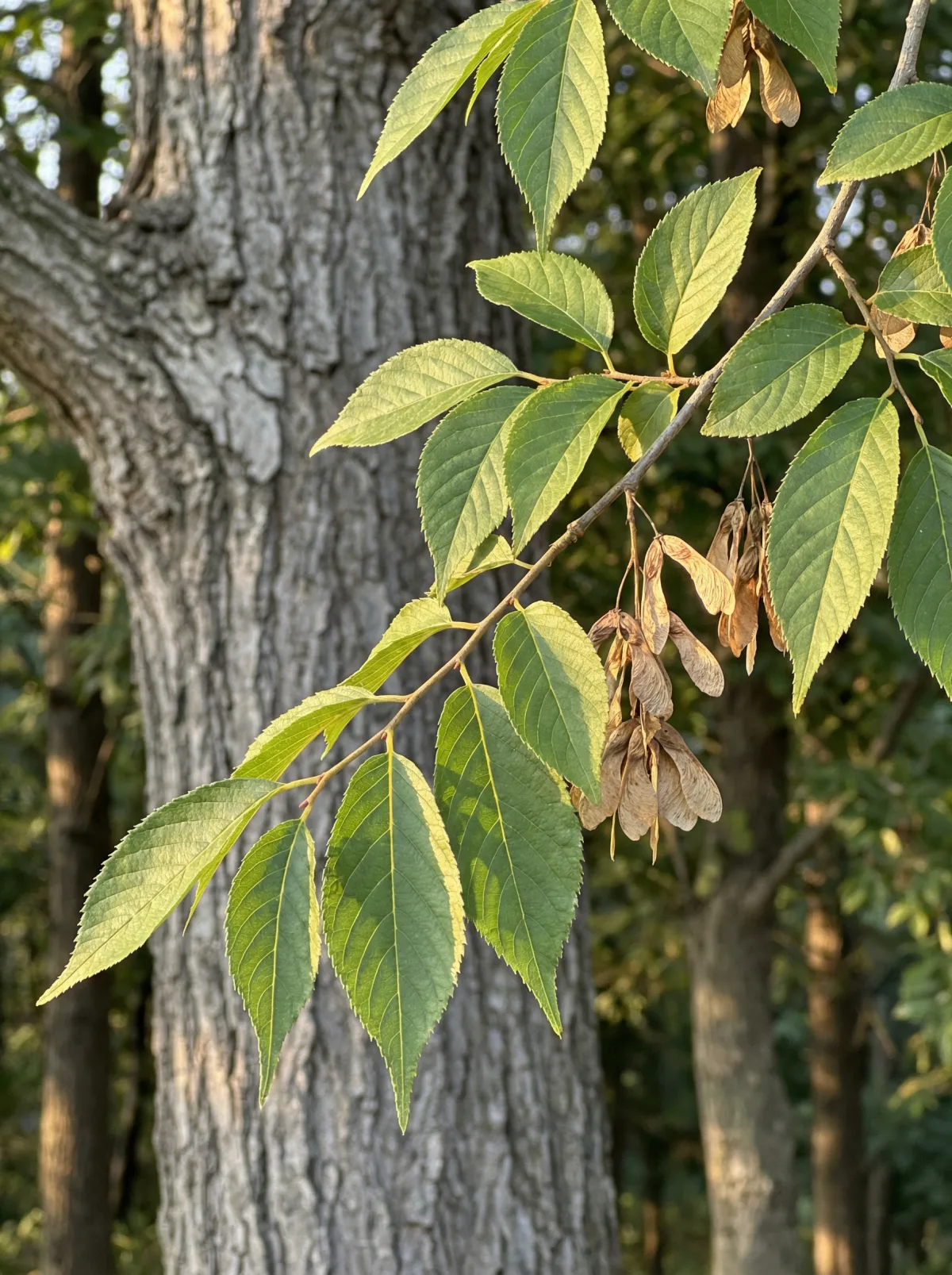
Eucommia ulmoides Oliv. is a deciduous tree from the monotypic family Eucommiaceae, which grows to heights of 10-20 meters. The leaves are elliptical, serrated and remotely reminiscent of elm leaves - hence the species name ulmoides. The plant is dioecious; male trees form catkins, female winged nut fruits.
The most striking feature is the gutta-percha-containing rind: if you break it, silvery-white latex threads run between the fragments. This feature serves as a reliable proof of authenticity and quality indicator. Leaves and seeds also contain gutta-percha, albeit in lower concentrations.
Occurrence
- Natural distribution in the mountain forests of central China - especially Sìchuān, Guìzhōu and Húběi
- Prefers moist, deep soils at altitudes of 300-1500 m
- The only surviving representative of the Eucommiaceae family - a living fossil
- Now also grown commercially in Japan and Korea
- Largest cultivation areas in Zhāngjiājiè (Húnán) and Zūnyì (Guìzhōu)
Harvest time
- Bark is harvested from April to June - during the strongest sap flow
- Only from trees over 15-20 years old - younger bark contains fewer active ingredients
- Harvesting method: strips of bark are peeled off; the tree regenerates the bark in 5-8 years
- Sustainable harvesting possible without felling the tree
Processing
After harvesting, the fresh bark is first stacked and lightly fermented until the inside takes on a purple-brown color. It is then dried and further processed for pharmaceutical use.
- Raw bark (Shēng Dù Zhòng)
Dried and cut into pieces - standard processing for general use
- Salt-roasted (Yán Dù Zhòng)
- Spray pieces of bark with salt water
- Toast in the pan over a medium heat until the gutta-percha threads break off when you break them
- Allow to cool - the salt-roasted form directs the effect specifically to the kidneys
Related herbs
Herbs with similar effects and related areas of application
Comparable western herbs
- Willow bark (Salix alba) - European equivalent for back and joint pain. Contains salicin, the natural precursor of aspirin, and has been used since ancient times for musculoskeletal pain.
- Comfrey (Symphytum officinale) - Traditional European medicinal herb for bones and tendons. The name „comfrey" (= bone healer) refers to its use for fractures and bruises - similar to how Du Zhong strengthens the bone structure.
- Devil's claw (Harpagophytum procumbens) - African medicinal herb for back and joint pain. Clinical studies have shown an anti-inflammatory and pain-relieving effect on lumbar complaints - comparable to Du Zhong's area of application.