








Yi Zhi Ren — Alpinia Fruit
Yi Zhi Ren — die Alpinia–Frucht — ist ein warmes, scharfes Mittel, das die Haltefunktion von Niere und Milz stärkt. Ihr Name bedeutet wörtlich „Frucht der gesteigerten Weisheit“ — ein Hinweis auf die Überzeugung, dass sie die geistige Klarheit fördert, indem sie das Nieren–Qi festigt.
In der Praxis wird Yi Zhi Ren vor allem eingesetzt, wenn der Körper Flüssigkeiten nicht mehr halten kann: häufiges Wasserlassen, nächtliches Einnässen, übermäßiger Speichelfluss und eine Mitte, die nicht mehr fest hält. Sie wärmt den Magen bei Kälte im Mittleren Erwärmer und stärkt die Milz–Funktion.
Effect from a TCM perspective
Yi Zhi Ren wärmt das Nieren–Yang und die Milz, festigt die Essenz und stoppt den unkontrollierten Verlust von Körperflüssigkeiten. Sie zielt besonders auf Kälte–Muster des unteren und mittleren Erwärmers.
- Warms the kidney und festigt die Essenz (Gu Jing) — wenn das Nieren–Qi die Essenz nicht mehr hält, mit häufigem Wasserlassen durch Nieren–Yang–Mangel
- Warms the spleen und festigt den Stuhl — bei wässrigem Stuhl und Yang–Mangel der Mitte
- Reduziert übermäßigen Speichelfluss — bei kaltem Magen und Milz–Kälte mit unkontrolliertem Speichelfluss
- Zerstreut Kälte im Epigastrium — wärmt Magen und Bauch bei innerer Kälte
- Stärkt die Haltefunktion des unteren Erwärmers — unterstützt Niere und Blase beim Bewahren der Flüssigkeiten
Application & dosage
Yi Zhi Ren wird im klassischen Dekokt mit 3–10 g pro Tagesdosis eingesetzt. In der klassischen Rezeptur, der Standardformel bei häufigem, unwillkürlichem Wasserlassen, beträgt die übliche Dosis 6-9 g. Als Pulver genügen 1,5–3 g pro Einnahme, zweimal täglich eingenommen. Die Salzröstung (Yán Zhì) verstärkt die gezielte Wirkung auf die Niere und wird bei ausgeprägtem Nieren–Yang–Mangel bevorzugt.
Bei Kindern mit unwillkürlichem nächtlichem Wasserlassen wird die Dosis auf 3–5 g reduziert und in der Regel in Kombination mit Wu Yao und Shan Yao verabreicht. Die Einnahmedauer beträgt typischerweise 4–8 Wochen; bei lang anhaltenden Mustern kann eine längerfristige Anwendung sinnvoll sein, sofern keine Hitze–Zeichen auftreten.
Dosage forms
- Decoction (Tāng): 3–10 g, 20–30 Min. köcheln lassen
- Granules (Kē Lì): fertige Auszüge, mit heißem Wasser auflösen
- Powder (Sǎn): 1,5–3 g pro Einnahme, in Wasser oder Suppe einrühren
- Tablets / capsules: standardisierte Fertigpräparate
- Salzgebraten (Yán Zhì): Frucht in Salzwasser getränkt und trocken geröstet, verstärkt Nieren–Bezug
Dosage
- Standard dose Decoct: 3–10 g
- In Rezepturen, die das Nieren–Qi festigen und die Blase wärmen: 6–9 g
- Powder: 1,5–3 g pro Einnahme, 2× täglich
- Kinder (Nieren–Qi schwach): 3–5 g im Dekokt
- Maximum dose: 10 g täglich
Frequent combination partners
Yi Zhi Ren often only reaches its full effect when combined with other herbs
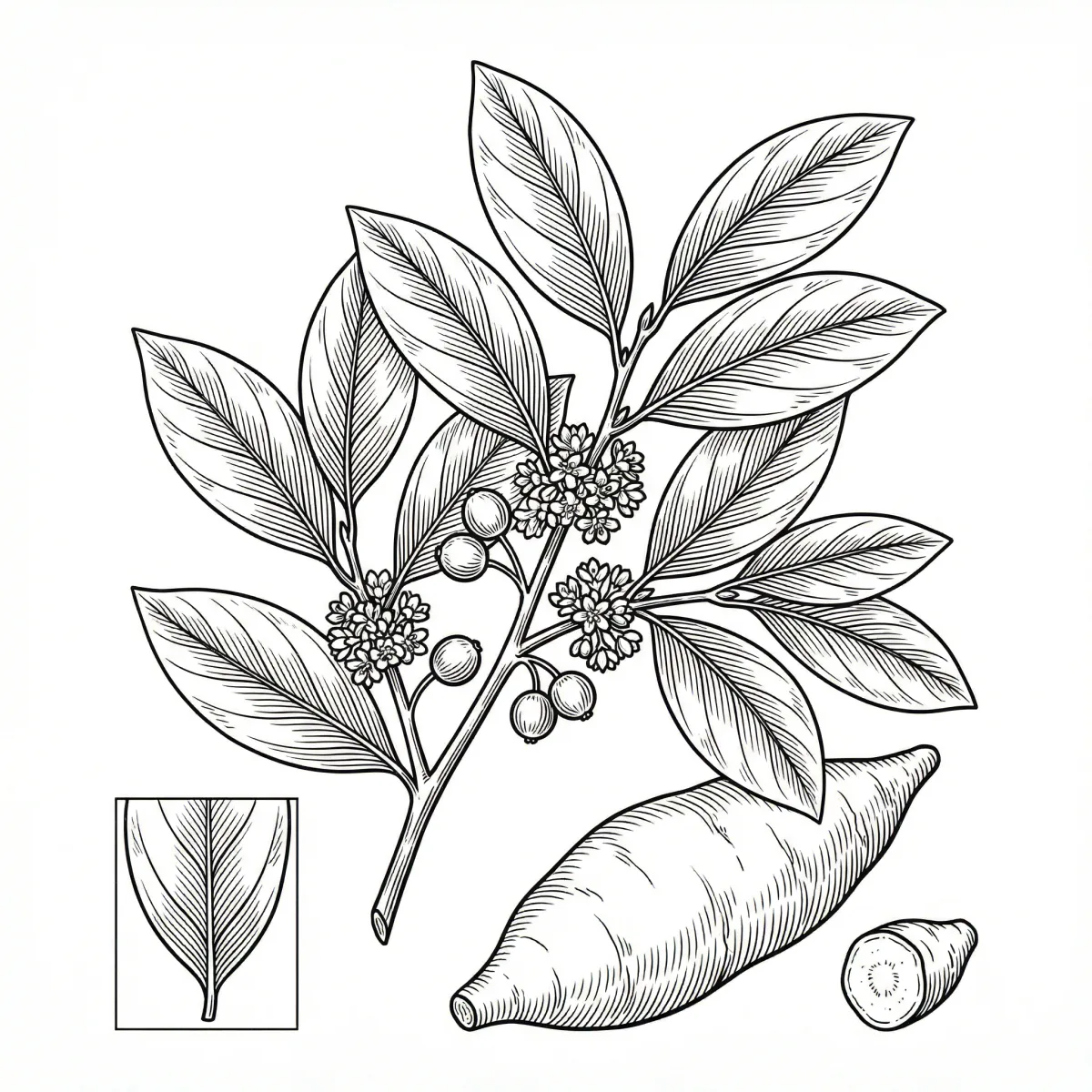
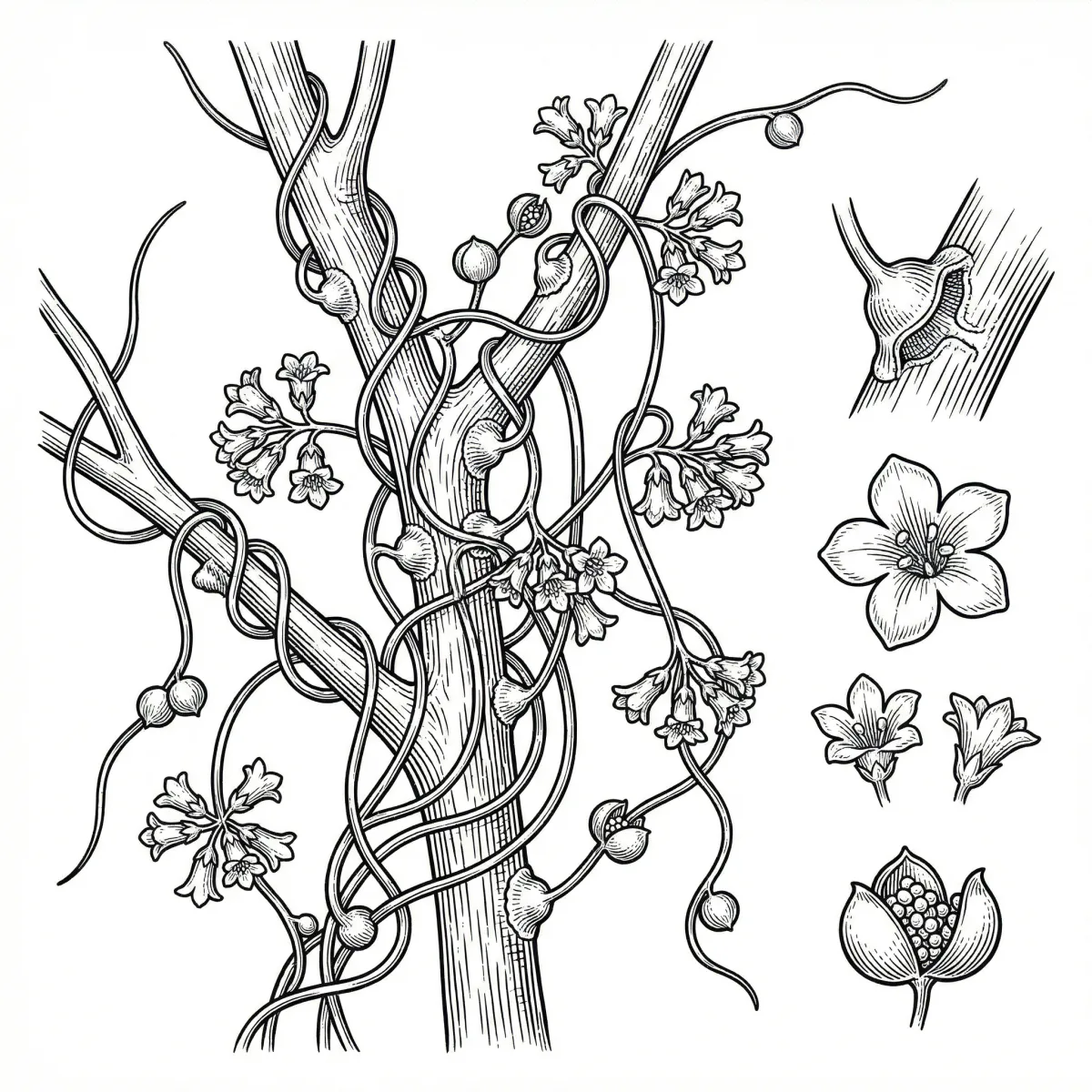
History & Tradition
Der Name Yi Zhi Ren — Frucht der gesteigerten Weisheit — reveals just how highly the ancient physicians valued this remedy. In an era when the kidneys were understood to be the seat of one’s innate constitution and will, an herb that strengthened kidney qi was also believed to fortify the mind. The belief was that whoever preserves their essence also preserves their mental clarity well into old age.
Die früheste schriftliche Erwähnung findet sich im Ben Cao Shi Yi (本草拾遗) aus der Tang–Dynastie, verfasst von Chen Cangqi um 739 n. Chr. Dort wird Yi Zhi Ren als wärmend und die Niere stärkend beschrieben. Li Shizhen ordnete die Frucht in seinem Ben Cao Gang Mu (1578) der Kategorie der Essenz–festigenden Mittel zu und betonte ihre Wirkung bei unwillkürlichem Wasserlassen, vermehrtem Speichelfluss und Kälte–Schwäche der Mitte.
In der südchinesischen Volksmedizin — besonders in den Provinzen Guangdong und Hainan, wo Alpinia oxyphylla heimisch ist — wurde Yi Zhi Ren seit Jahrhunderten auch als Gewürz und Hausmittel verwendet. Fischer und Bauern kauten die aromatischen Samen, um sich an kalten Morgen zu wärmen. Eine Rezeptur, in der Yi Zhi Ren die Hauptdroge darstellt, gehört zu den bekanntesten klassischen Formeln der Pädiatrie und wird bis heute bei nächtlichem, unwillkürlichem Wasserlassen im Kindesalter eingesetzt.
In der konfuzianischen Gelehrtentradition genoss Yi Zhi Ren einen besonderen Ruf als Mittel für Prüfungskandidaten. Wer vor den kaiserlichen Beamtenprüfungen unter Unruhe des Shen und häufigem Wasserlassen litt — beides Zeichen einer geschwächten Niere aus TCM–Sicht — erhielt Yi Zhi Ren, um Körper und Geist gleichzeitig zu festigen.
Contraindications & caution
Nicht anwenden bei Yin–Mangel mit Hitzezeichen und dunklem, konzentriertem Urin. Kontraindiziert bei Harnwegsinfekten mit Brennen und Schmerzen beim Wasserlassen.
Vorsicht bei Obstipation durch Trockenheit und Blut–Hitze. Bei fieberhaften Erkrankungen mit äußeren pathogenen Faktoren nicht einsetzen. In der Schwangerschaft nur unter fachkundiger Anleitung verwenden.
Wegen der wärmenden und adstringierenden Wirkung kann Yi Zhi Ren theoretisch die Wirkung von Diuretika abschwächen. Bei gleichzeitiger Einnahme von Präparaten — insbesondere Antikoagulantien, Antidiabetika oder Blutdrucksenkern — sollte ärztliche Rücksprache erfolgen.
Botany
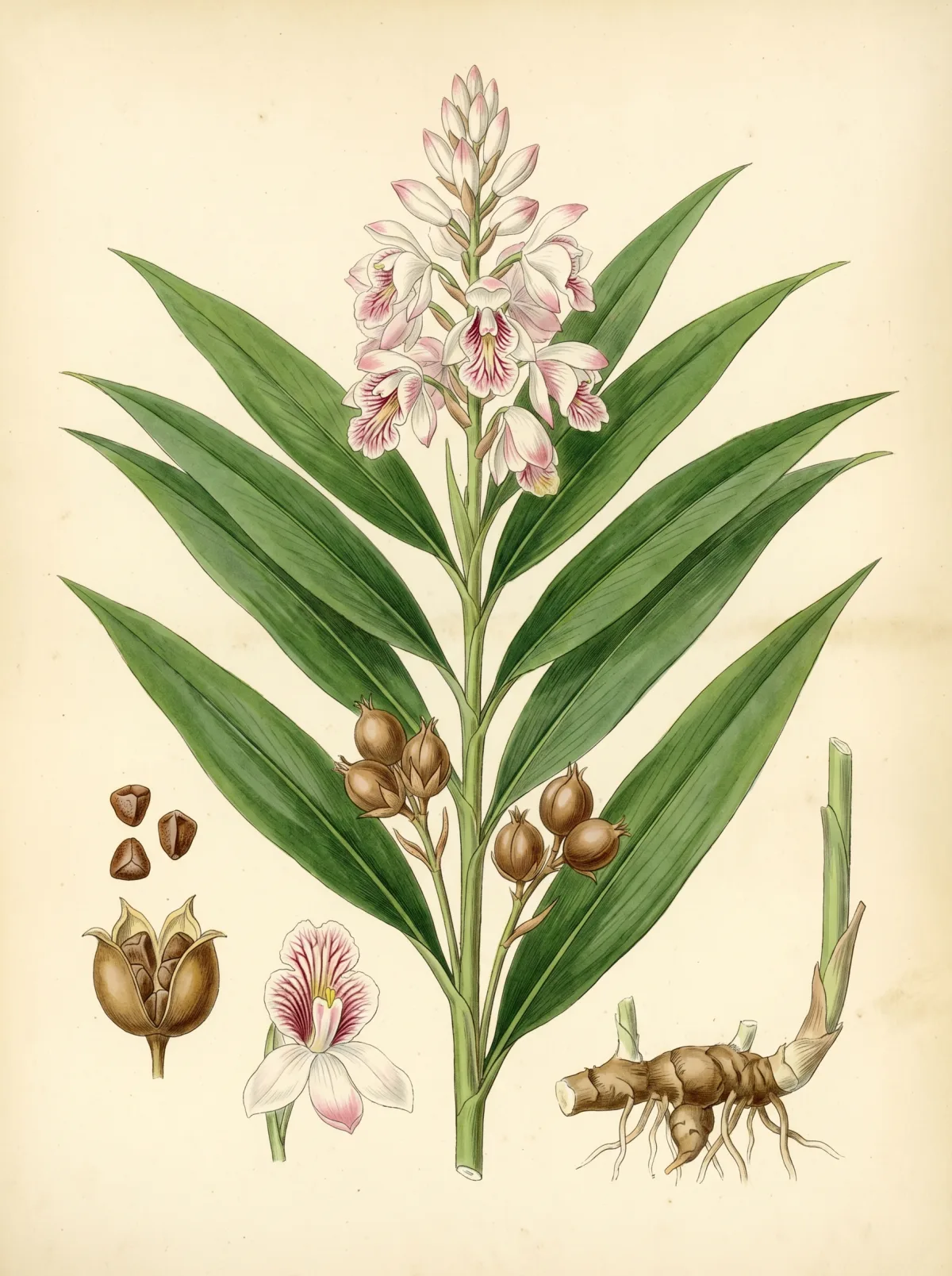
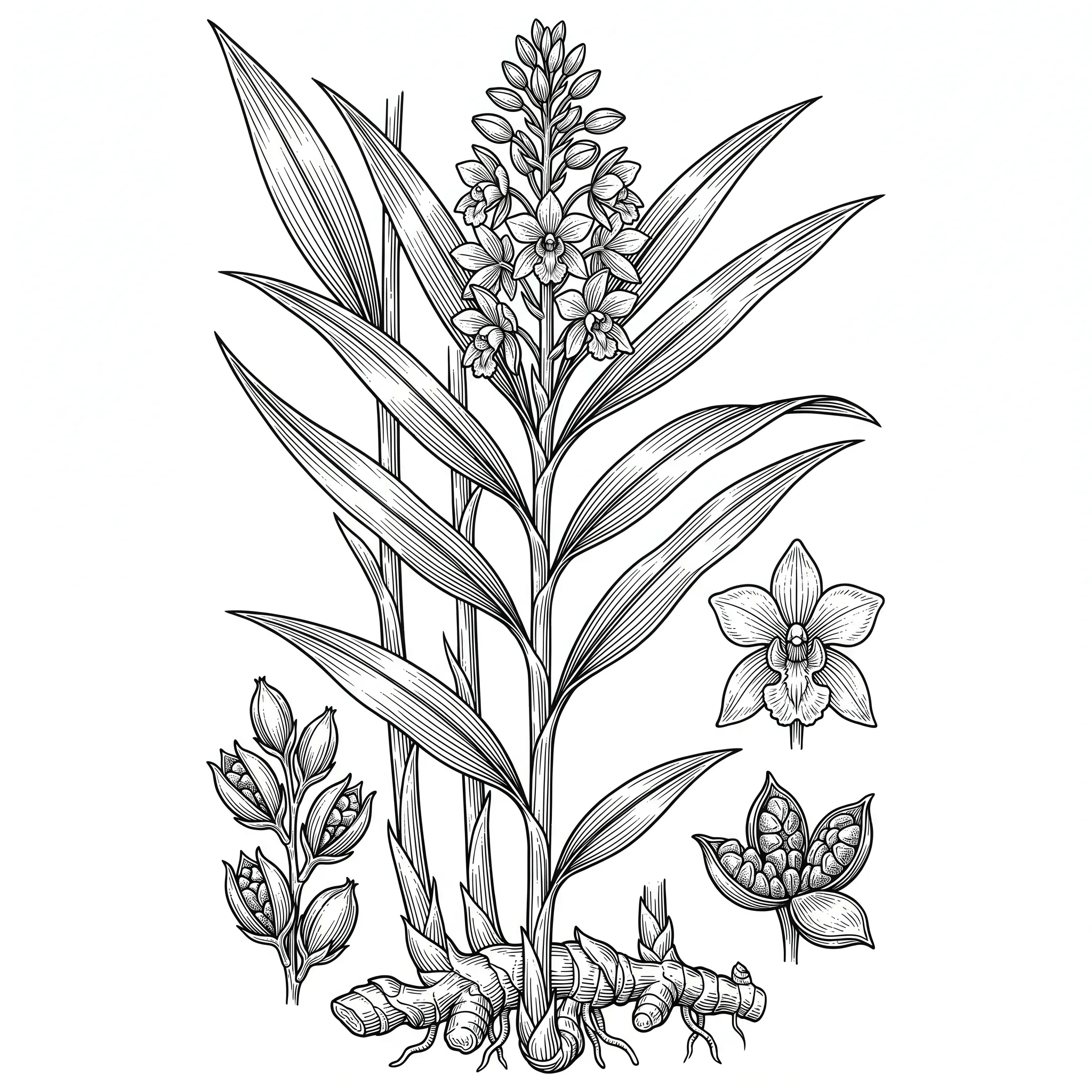
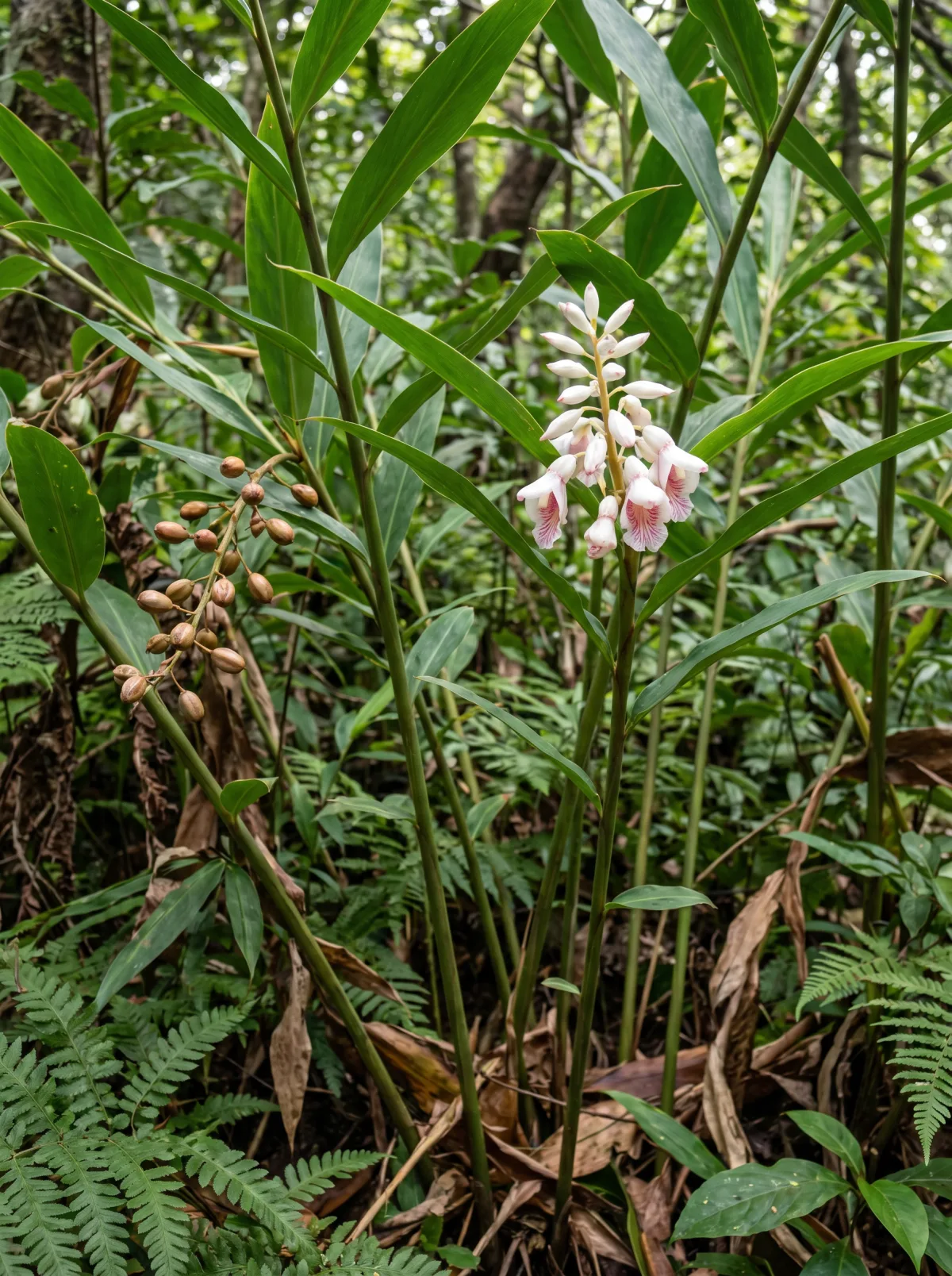
Alpinia oxyphylla Miquel gehört zur Familie der Zingiberaceae (Ingwergewächse) und ist eine ausdauernde, rhizomatöse Staude. Die Pflanze wächst horstig und erreicht eine Höhe von 1–3 m. Die lanzettlichen, wechselständigen Blätter sind bis zu 60 cm lang und 4–8 cm breit, oben dunkelgrün und glänzend, unterseits blasser. Die Blattoberfläche riecht beim Zerreiben aromatisch nach Kampfer und Ingwer. Der Blütenstand ist eine aufrechte, rispige Ähre; die Einzelblüten sind weiß bis cremegelblich mit einem roten Mittelstreifen auf der Lippe. Blütezeit ist März bis Mai.
Die Frucht ist eine ellipsoide bis kugelförmige Kapselbeere von 1,2–2 cm Länge. Reif ist sie außen hellbraun bis graubraun, längsgerippt und pergamentartig. Im Innern sitzen 15–25 unregelmäßig kantige Samen in einer grauweißen Samenhülle, die einen intensiv würzigen, leicht campherartigen Geruch und einen brennend–scharfen, schwach bitteren Geschmack besitzen. Botanisch wird Yi Zhi Ren von seiner nächsten Verwandten Alpinia katsumadai (Cao Dou Kou) unterschieden durch die kleineren Früchte, die geringere Samenanzahl und das spezifische Terpen–Profil der ätherischen Öle.
Occurrence
- Main growing region: Guangdong Province (southern China), primarily the Leizhou Peninsula and Hainan Island
- Zusätzliche Anbaugebiete: Guangxi, Fujian, Yunnan sowie Vietnam und Thailand
- Habitat: moist, partially shaded mountain forests and forest edges on acidic, humus-rich soils
- Elevation: 200–1,000 m above sea level; tropical to subtropical climate
- Cultivation: primarily in plantations, as wild populations have declined sharply due to overharvesting
Harvest time
- Haupternte: Juli bis August, wenn die Früchte unreif–grün bis gelblich sind (höchster Inhaltsstoffgehalt)
- Ripeness indicator: Fruit is firm, skin is still closed, seeds are fully developed but not overripe
- Fully ripe fruits are avoided because the levels of nootkatol and diarylheptanoids decrease as the fruit ripens
- Hand-picking: Fruit clusters are cut off, and individual fruits are separated
Processing
Nach der Ernte durchläuft Yi Zhi Ren eine schonende Aufbereitung, die den aromatischen Inhaltsstoffgehalt bewahrt und die Haltbarkeit sichert.
- Waschen: frische Früchte kurz in warmem Wasser abspülen, Blatt– und Stielneste entfernen
- Trocknen: ausbreiten auf Bambusmatten oder in Trockentunneln bei max. 50 °C, bis die Feuchte unter 13 % fällt (Dauer: 3–5 Tage)
- Sortieren: Früchte nach Größe und Unversehrtheit der Schale sortieren; beschädigte Stücke aussondern
- Lagerung (roh): in dicht schließenden Gefäßen, kühl, trocken und lichtgeschützt — haltbar bis 2 Jahre
- Salzröstung (Yán Zhì, Sonderzubereitung): ganze Früchte 30 Min. in 2%iger Salzlösung einweichen, abtropfen lassen, dann bei milder Hitze (ca. 140 °C) in der Pfanne unter ständigem Rühren trocken rösten, bis die Schale leicht gebräunt und würzig duftet — verstärkt die Leitbahnführung zur Niere
- Gebräuchlichste Form im TCM–Handel: getrocknete ganze Früchte oder grob zerbrochene Früchte
- Quality feature: intensiv aromatischer, würzig–campherartiger Geruch; Geruchlosigkeit deutet auf Qualitätsverlust durch Übertrocknung hin
- Sonderzubereitung Yán Zhì (salzgebraten): für den Nieren–Bezug bevorzugt
Related herbs
Herbs with similar effects and related areas of application