







Wu Jia Pi — Acanthopanax bark
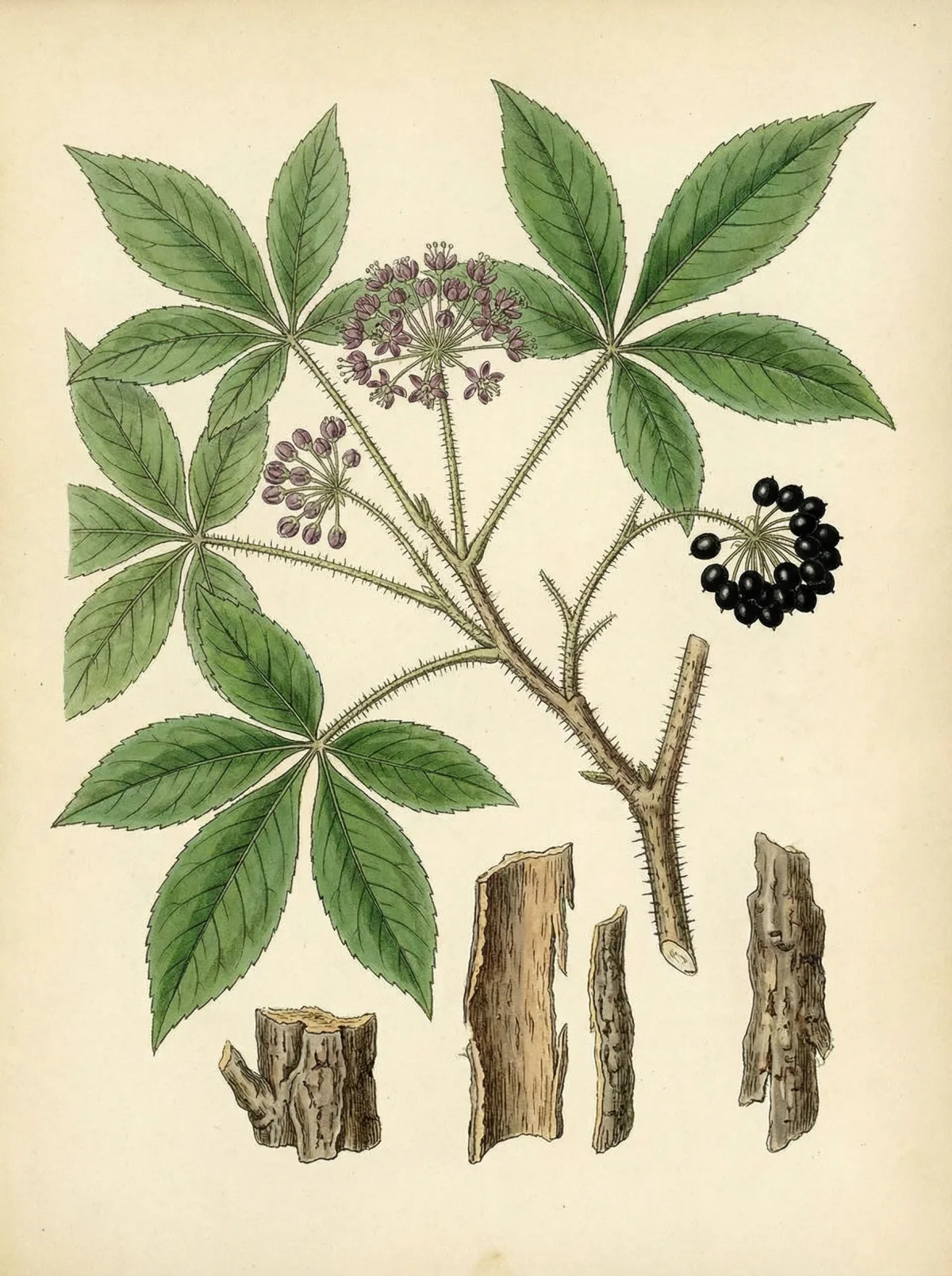
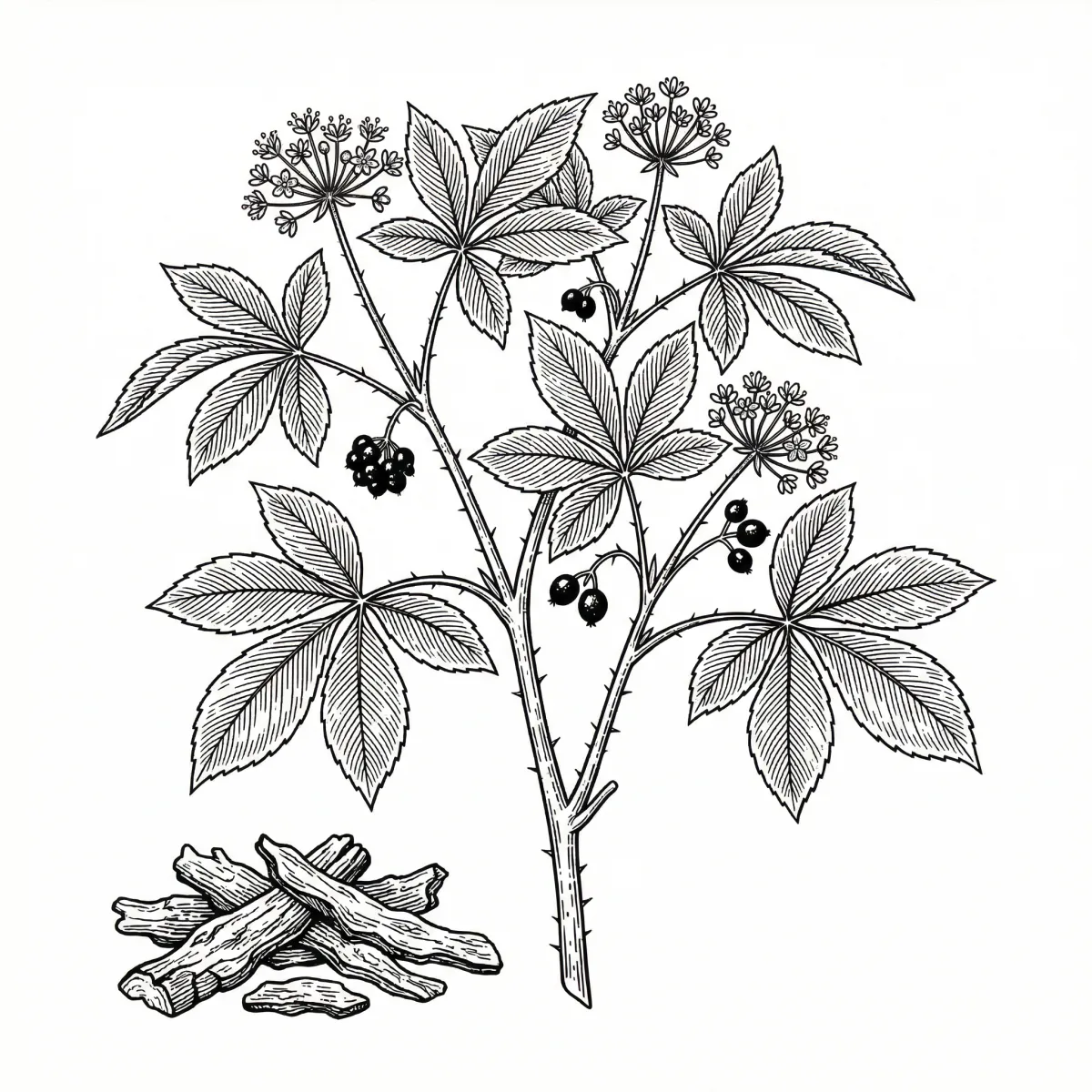
Wu Jia Pi—Acanthopanax bark—is a warming herb that Wind–Humidity flushes it out of the joints while strengthening the liver and kidneys.
As a close relative of Siberian ginseng, it strengthens bones and tendons. It is classified in the highest category of the *Shén Nóng Běn Cǎo Jīng*.
Effect from a TCM perspective
Wu Jia Pi has a warm and pungent-bitter effect on the Liver and Kidney meridians. It combines two modes of action: dispelling wind-dampness from the joints and tonifying the tendons and bones.
- Expels wind moisture: releases blockages in joints and meridians
- Strengthens tendons and bones: On Tonifying the Liver and Kidneys
- Nourishes Liver Yin and Kidney Yang: heats the lower heating system
- Moves water: wicks away trapped moisture from the lower body
- Relieves Bi syndromes: Relieves joints and meridians of wind, dampness, and cold
- Promotes child development: Helps with delayed walking and soft bones
Application & dosage
Wu Jia Pi is used in a decoction with 5–15 g administered daily. As a tonic for bones and tendons, the herb can also be used long-term—it is traditionally particularly valued in the form of Wu Jia Pi Jiu, a wine extract.
In powder form (Fen), they are sufficient 3–5 g daily. The dosage follows this pattern: for acute Bi syndromes, tend toward the upper limit; for long-term use of tonics, use the middle dose.
Dosage forms
- Decoction (seaweed): 5–15 g, standard dosage form
- Wine Extract (Wu Jia Pi Jiu): Traditional tonic formula for bones and joints
- Powder (Fen): 3–5 g per day; easily absorbed
- Granules (Keli): A modern form of preparation, convenient for daily use
- Alcoholic tincture: Can be used externally for localized joint inflammation with cold therapy
Dosage
- Standard dose in a decoction: 5–15 g per day
- Powder: 3–5 g per day
- Wine extract: Traditionally, 10–20 ml daily
- Long-term use as a tonic: low to moderate dose (5–9 g)
Frequent combination partners
Wu Jia Pi often does not reach its full effectiveness until it is combined with other herbs
History & Tradition
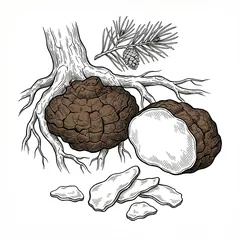
Wu Jia Pi is one of the oldest Chinese herbal remedies and is mentioned as early as the Shén Nóng Ben Cao Jing (approximately 200 B.C. to 100 A.D.) was classified among the highest-quality herbs—those that promote health and longevity without causing harm even with prolonged use. Even back then, the bark was considered a valued remedy for stiffness and weakness, particularly in cases of developmental delays in children and in old age.
In the classic work *Běn Cǎo* Gāng Mù (1578) Li Shi Zhen describes the bark in detail and distinguishes between various Acanthopanax species. A special tradition developed around Wu Jia Pi Jiu, a wine extract that has been produced since the Tang Dynasty (618–907) as a tonic for the elderly, warriors, and scholars. Legend has it that residents of certain mountain villages in Sichuan who regularly drank Wu Jia Pi Jiu reached an exceptionally advanced age while remaining fully mobile.
In modern TCM, Wu Jia Pi is an integral part of numerous classical formulas. The combination of Wind–Moisture–Repelling Its tonifying effect makes it particularly valuable for patients for whom purely purgative herbs would be too debilitating—a property praised in the classical texts as „bu xie jian shi" (both tonifying and purgative).
Contraindications & caution
- Not at Yin Deficiency with Signs of Heat apply.
- Be careful with severe internal heat, since the warming nature of the herb can intensify heat.
- It is important to distinguish between the two: The bark of Acanthopanax gracilistylus (Nan Wu Jia Pi) must not be confused with the poisonous bark of Periploca sepium (Bei Wu Jia Pi)—the latter contains cardiotoxic cardenolides. A definitive botanical identification is therefore essential.
- In the Pregnancy Only under the supervision of a qualified professional.
Botany
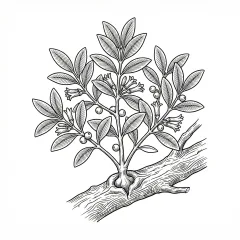
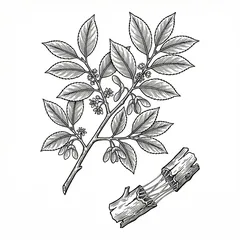
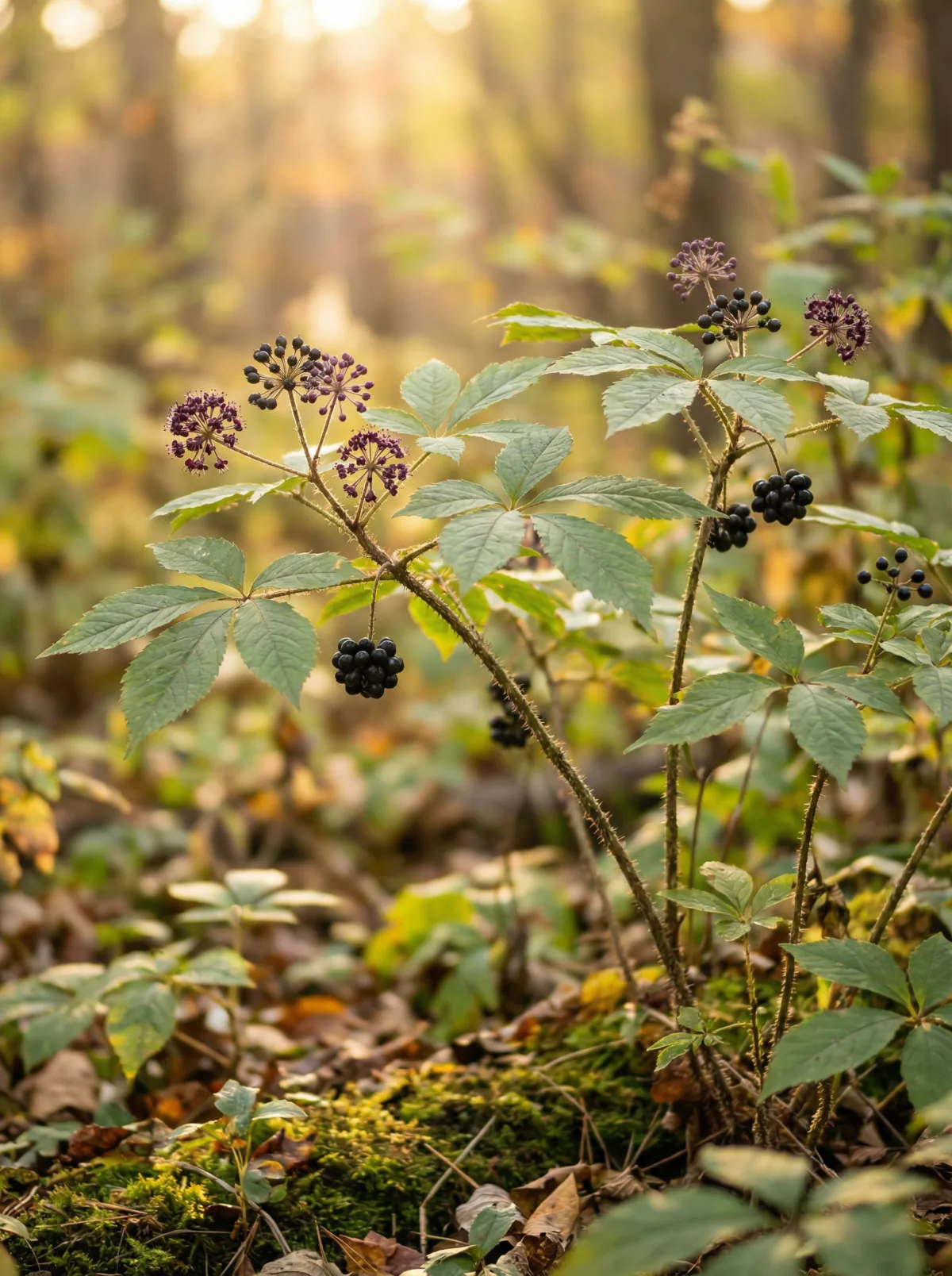
Acanthopanax gracilistylus W.W. Sm. (syn. Eleutherococcus gracilistylus) is a deciduous, thorny shrub in the araliad family (Araliaceae). It reaches a height of 2–3 m. The leaves are palmately pinnate with 3–5 leaflets; the flowers are small and yellowish-green, arranged in umbels. The bark of the 2–3-year-old roots and the base of the stem is used in TCM: it is grayish-brown, longitudinally furrowed, and, in cross-section, has a light-colored, corky outer layer over a thin bast layer.
From a botanical perspective, it is important to distinguish it from related species: Acanthopanax senticosus (Siberian ginseng, Eleutherococcus senticosus) is used for its root as an adaptogenic tonic, whereas Periploca sepium—also sold commercially as „Wu Jia Pi“—belongs to a completely different plant family (Dogbane family, Apocynaceae) and contains cardiotoxic cardenolides. A definitive botanical identification is therefore essential for safe use.
Occurrence
- Native to central China: the provinces of Hubei, Sichuan, Shanxi, Henan, and Anhui
- Grown at elevations of 200–1,500 m in mountainous regions with a temperate-humid climate
- Prefers open forests, forest edges, and shrublands on fresh, loamy soils
- Wild populations in Korea, Japan, and neighboring parts of East Asia
- Main growing regions today: Hubei, Sichuan, and Shaanxi, where the crop is grown commercially
Harvest time
- Main harvest: Spring (March–May) and Fall (September–October)
- Spring Harvest: Preferably in March–April, when the sap rises in the bark
- Fall Harvest: September–October, after the growing season; highest nutrient content
- Age of the plant: The root bark and the bark at the base of the stem are harvested from 3- to 5-year-old plants
- Harvesting method: gently peeling the bark off in strips; the roots remain in the ground
Processing
The freshly harvested bark is processed into a medicinal product in several steps. Rapid drying is crucial to prevent mold growth and the loss of active ingredients. Different processing methods are used depending on the desired therapeutic effect.
- Remove any soil and coarse cork from the fresh bark
- Cut into strips 5–10 cm long
- Dry in the open air or in a drying oven at 40–60 °C until the residual moisture content is below 12 %.
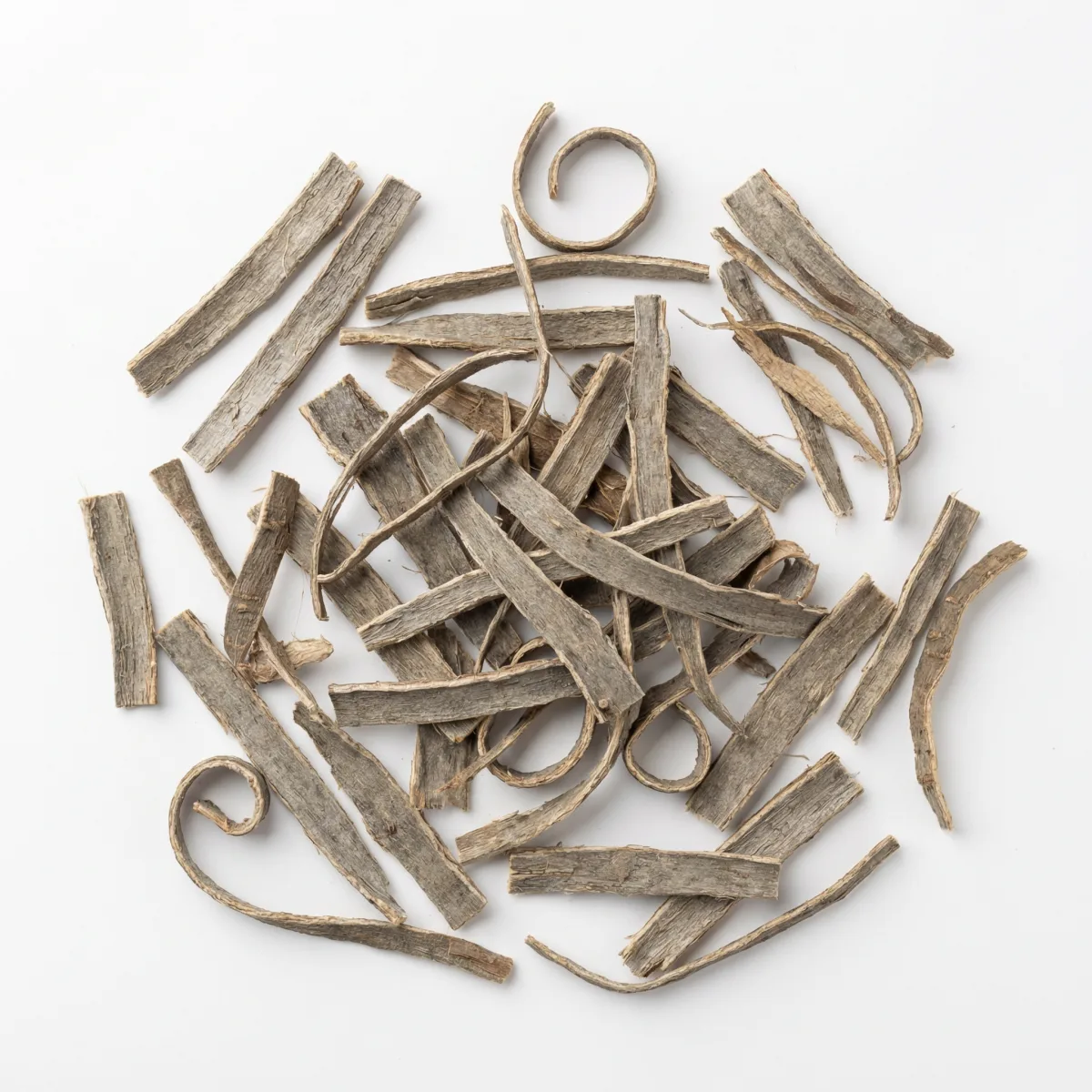
- Finished drug: gray-brown, slightly curved strips of bark with a characteristic resinous odor
- Store in airtight containers in a cool, dry place, protected from light
- Raw drug (Sheng): Standard Format for Wind–Humidity–Patterns
- Processed with salt water (Yan Zhi): strengthens the connection to the kidneys and bones
- Wine—processed (Jiu Zhi): promotes circulation; traditionally used for Wu Jia Pi Jiu
Related herbs
Herbs with similar effects and related areas of application