




Menstruation (schwach) aus Sicht der chinesischen Medizin
... Acupuncture points against a weak menstruation


Self-Acupressure with the Akupen


Wolfgang's Qi Gong Tips
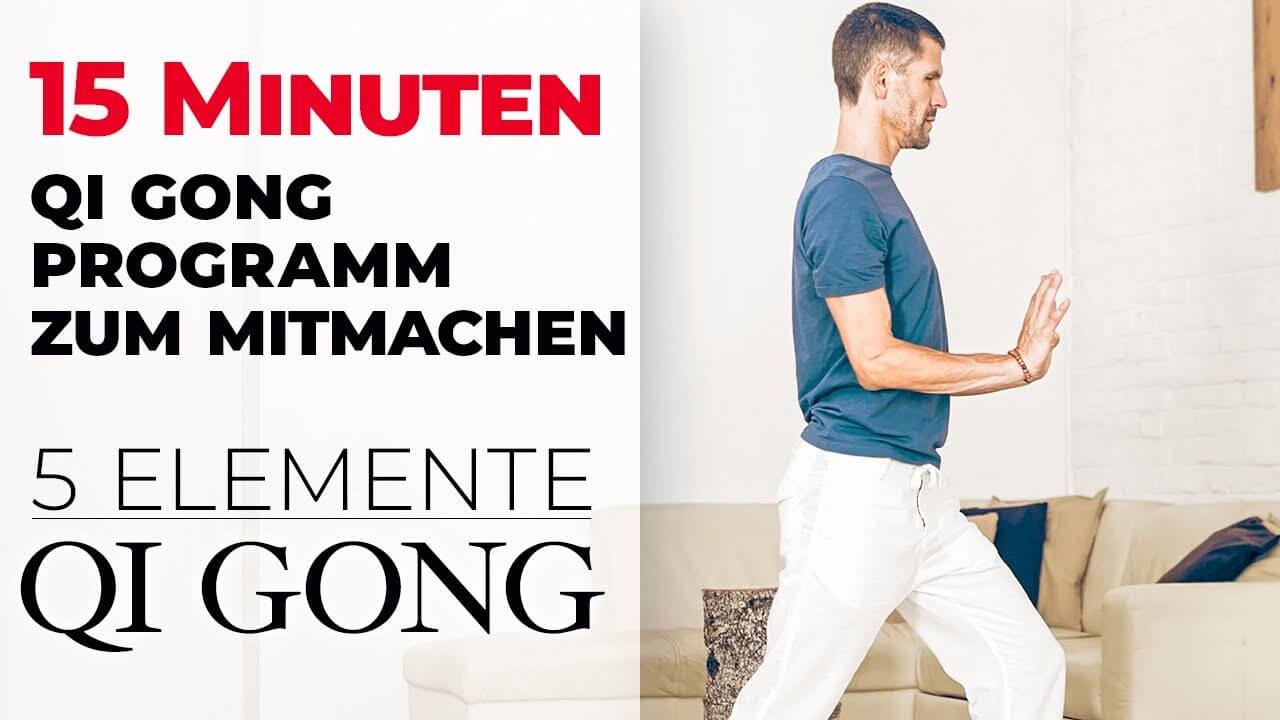
If you do Qi Gong for preventive reasons, it is quite possible to achieve good results with 15 minutes of daily practice. If you have a complaint, it is recommended to practice 2 times 15 minutes daily or 30 minutes at a time daily.
Basically, it is better to do 6 times 15 minutes Qi Gong, than once 1.5 hours. Therefore, I show you here a short variant of the 5 elements Qi Gong.

TCM background information

MP 6 "Meeting place of the 3 Yin" - Sanyinjiao
One of the most important Acupuncture Pointswhich strengthens the spleen
- Location:
4 transverse fingers above the tip of the inner ankle (malleolus internus)
- Traditionally classified as:
Loss of appetite, fatigue, diarrhea, feeling of weakness in the lower extremities, menstrual disorders, in the absence of menstruation, impaired libido.
Comment:
This point is used in Chinese medicine to tonify the spleen energy. It is often used in combination with the point Ma36. Due to our diet, many suffer from MIlz-Qi deficiency, which manifests itself in sweet cravings, tiredness after lunch, general fatigue and soft stools. So this point is very important for us.
Another area of action of this point is that it removes moisture from the lower of the 3 Heater removed. Thus, it also has a specific effect on the urinary tract and is used here for micturition disorders, dysuria (pain during urination) and cloudy urine.
MP6 is also an important point to Blood and Yin strengthen and will therefore be Blood deficiency and Yin deficiency used.
MP6 is also one of the main points in any gynecological problems, as it regulates the uterus and menstruation and resolves pain.
The point also has a lot to offer on the psychological level. Thus, it has a strong calming effect on the mind and is therefore used for sleep disorders. Due to its effect on the liver energy, it also works very well with irritability.
Sp 10 "Sea of Blood" - Xuehai
Frequently used point for the removal of Blood stasis
- Location:
3 transverse fingers (2 cun) proximal to the upper edge of the patella (kneecap). Above the upper edge of the patella.
- Traditionally classified as:
all types of menstrual cramps, amenorrhea (late onset of menstruation), dysmenorrhea (painful mentruation), eczema, itching, knee pain
Comment:
Many women suffer from pain during menstruation. This pain is often caused by a blockage. MP10 is an important point to relieve this blockage. Other points that also relieve congestion are MP06 and Le03, which are often used in combination with MP10.
Lv 03 "Big meeting" - Taichong
Source Point of the liver meridian, most important point on the liver meridian
- Location:
on the dorsum of the foot between the 1st and 2nd toes, at the end of the "groove".
- Traditionally classified as:
Migraine with sensitivity to light, menstrual problems, nausea, abdominal pain, general tension relieving, constipation.
Comment:
This is an important point to eliminate Fullness in the liver, it is somewhat milder in effect than Le02.
It has a special effect on cramps and increased muscle contraction.
It has a profound and calming effect on the psyche and is an important point for very tense, impatient and stressed people. This function is lacking in the point Le 02. For this purpose, the point is often used together with Di4. Together they belong to the most important acupuncture points and are called the "Four Gates".

The word Qi Gong consists of 2 syllables - Qi and Gong. The Chinese term "Qi" can be translated for us most likely by "life energy". But it contains more than this. It also means breath and air. In Chinese medicine, Qi is considered to be the invigorating force that flows through all living things. However, Qi is not only inside the body of a living being, but also outside. Qi also shows itself to us in nature. Thus animals, flowers and trees are flowed through by Qi. Qi is the living force that is inherent in everything and that makes life possible.
The Japanese call this force "Ki". In India it is called "Prana". It always means the same thing - the power and energy that is inherent in everything and keeps us alive. In Chinese medicine, health is only possible when the Qi in our body is pure, not polluted and can flow freely.
Due to bad living habits, in the course of time, energy blockages can occur in the body system and as a result, diseases can manifest, which can be physical or psychological in nature. Generally speaking, we can say that a living person has Qi throughout the body.
The word "gong means roughly "body work" or "success through perseverance and practice". Therefore Qi Gong is called "Work with the life energy". We learn to improve the flow and distribution of Qi in our body through movement and concentration to strengthen our health and bring body and mind into harmony. At the same time we learn to stand correctly, between heaven and earth. This significantly improves posture and many aches and pains disappear on their own.
Qi Gong is a holistic healing system with a long tradition, which has been continuously developed until today. It includes health-promoting postures, movement, self-massage, breathing techniques and meditation. Through these various exercise methods, Qi is supposed to be collected and stored in the body, like in a reservoir. The goal is to expel the impure Qi and absorb fresh pure Qi.
Qi Gong is not a medicine that is prescribed for a limited time, but rather it should be practiced daily. In this regard, 20 minutes of daily practice is enough to improve health and one's well-being to a great extent.
Anyone can practice qigong. There are exercises for every age and every state of health. The exercises can be practiced standing, sitting, lying down or walking. So even physically challenged people can easily practice Qi Gong and improve your health in a sustainable way.
You are interested in this topic?
Then you can find even more information about it here.
You want to learn Qi Gong - easily from home?
With our modern Qi Gong online courses this is easily possible!