





On this page, you will learn:
- What this diagnosis means from the point of view of TCM and Western medicine
- Where your symptoms come from and how they are connected
- Which specific treatment methods can help you now
- How you can rebuild your liver yin and calm your inner heat with TCM herbs, acupressure, qi gong and nutrition
The good news: Liver yin deficiency can be treated well with the right measures. You can restore your inner balance with a yin-nourishing diet, targeted acupressure, gentle qi gong and proven TCM herbs.
Take your time, Get to know the different treatment approaches—you don't have to implement everything at once. Choose what feels right for you and what you can easily integrate into your everyday life.
Your treatment at a glance:
Which TCM pattern is really behind your complaints?
Degree of
imbalance

Light to moderate
Typical
treatment duration

3-6 months
self-treatment
Possible

Well self-treatable
Treatment–
scope

2–3 methods
Proposed
methods

Extensive range
Our free TCM analysis shows you your personal TCM pattern in just 10 minutes - and which treatment will help you best.
What is liver yin deficiency?
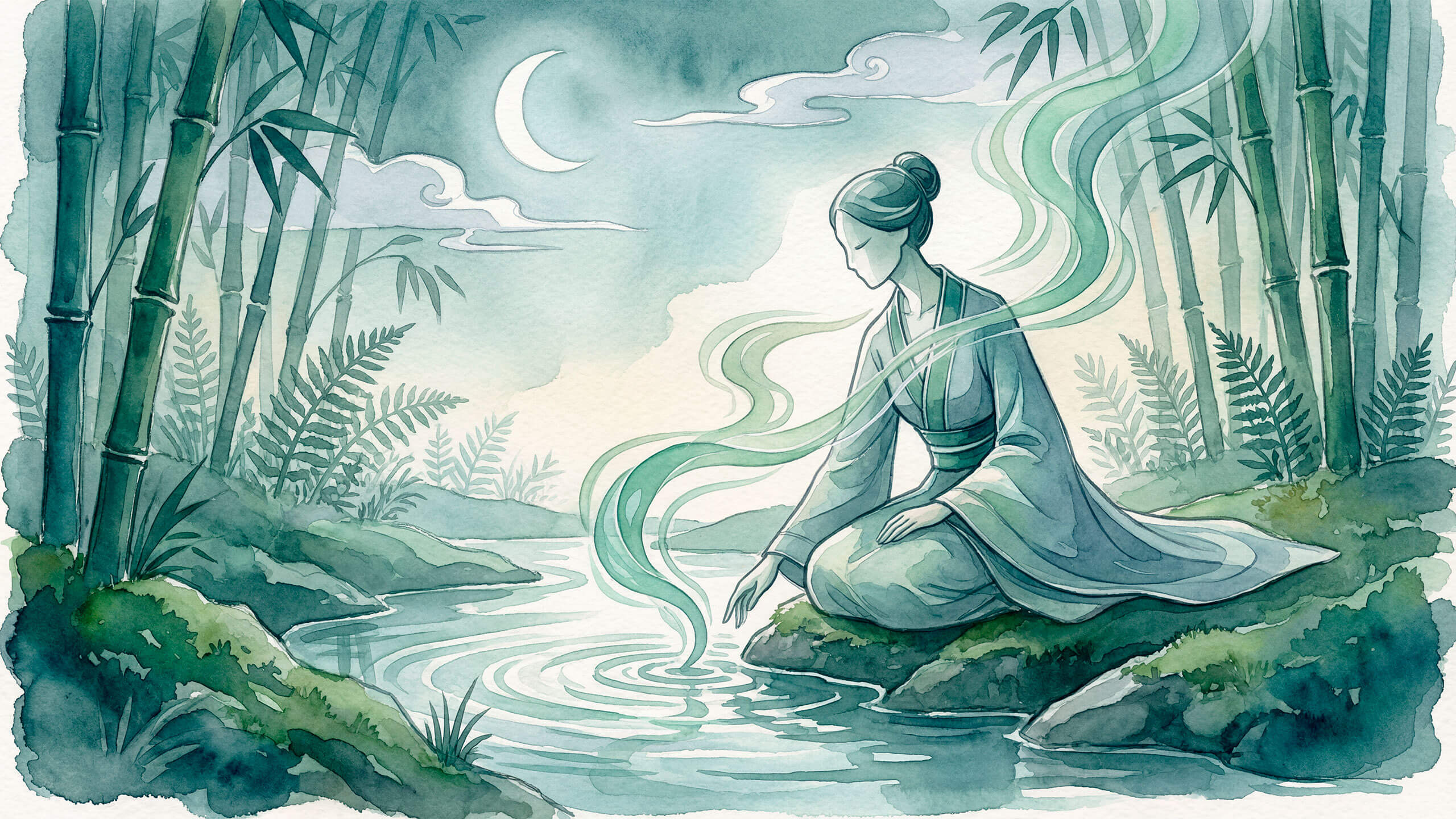
When the cooling, nourishing substance of the liver is exhausted and inner heat rises
The TCM perspective: liver yin as a cooling root
In traditional Chinese medicine, the liver is much more than just a detoxification organ. It is the „general“ of the body - responsible for the free flow of Qi, the storage of blood and the suppleness of tendons, ligaments and eyes. In order for the liver to perform these tasks, it needs sufficient yin - the cooling, moisturizing, nourishing substance.
Liver yin is like the water in a pond: as long as there is enough water, the surface remains calm and clear. However, when the water decreases, stones and debris become visible - heat and dryness arise. This is exactly what happens with a liver yin deficiency: the cooling substance is exhausted and the liver yang - the warm, ascending force - rises uncontrollably.
The liver has a special relationship with the kidney: both organs share a common yin root. TCM says: „Liver and kidney have the same origin.“ This is why a long-lasting liver yin deficiency often also affects the kidney yin - and vice versa, a kidney yin deficiency can increase the liver yin deficiency.
The consequences of liver yin deficiency: The liver can no longer control the rising yang. Heat rises to the head and causes headaches, dizziness and red eyes. The tendons and ligaments are no longer moisturized and become stiff. The eyes - the „window of the liver“ - become dry and tired. The mind becomes irritable and restless.
The typical signs of liver yin deficiency:
- Dry, reddened eyes and blurred vision
- Headaches and dizziness, especially with stress
- Inner restlessness, irritability and emotional sensitivity
- Sleep disorders with problems falling asleep or sleeping through the night
- Night sweats and hot flushes, especially in the evening
- Dry, brittle nails and stiff tendons
- Tinnitus and ringing in the ears
- Dry mouth and throat, especially at night
The good news: Liver yin can be restored with the right measures. With a yin-nourishing diet, TCM herbs, gentle exercise and targeted acupressure, you can restore the cooling substance and calm the inner heat.
The Western perspective: Chronic stress and hormonal imbalance
From a Western perspective, liver yin deficiency corresponds to a state of chronic overactivation of the sympathetic nervous system - the „fight or flight“ mode. The body is permanently in a state of increased tension without sufficient regeneration phases.
Imagine your nervous system like a pair of scales: On one side the sympathetic nervous system (activation, stress, tension), on the other the parasympathetic nervous system (relaxation, regeneration, healing). With a liver yin deficiency, the scales are permanently tipped towards the sympathetic nervous system - the body „burns up“ its reserves without replenishing them.
This condition manifests itself in measurable physical changes: increased cortisol levels, disturbances in the melatonin rhythm (hence the sleep problems), dry mucous membranes due to reduced fluid production and muscle tension due to permanently increased muscle tone.
What does modern medicine show?
- Chronic stress: Permanently elevated cortisol levels exhaust the adrenal glands
- Sleep disorders: Disturbed melatonin rhythm due to overactivation of the sympathetic nervous system
- Dry eyes: reduced tear production due to autonomic dysregulation
- Muscle tension: Permanently increased muscle tone, especially in the neck and shoulder area
- Hormonal imbalance: especially during the menopause with hot flushes and night sweats
- Irritability: dysregulation of the neurotransmitters serotonin and GABA
Modern research confirms: The TCM diagnosis of „liver yin deficiency“ correlates with measurable parameters such as increased cortisol, reduced DHEA, disturbed sleep-wake rhythm and vegetative dysregulation. TCM herbs such as gou qi zi (goji berries) and bai shao (peony root) have been shown in studies to have anti-inflammatory and hormone-regulating effects.
TCM treatment of liver yin deficiency starts right here: It nourishes the exhausted substance, calms the overactive Yang and restores the balance between tension and relaxation - profoundly, sustainably and gently.

The Yellow Emperor team explains your diagnosis
Qi Bo | The Yellow Emperor | Dr. Lisa Weber
MASTER OF THE HEALING ARTS | TCM FOUNDER | MODERN PHYSICIAN
What happens when the legendary Yellow Emperor from TCM sits down with his advisor Qi Bo and a modern doctor? They discuss your diagnosis - with 4000 years of knowledge AND current science.
Liver Yin deficiency - When the cooling, nourishing substance of the liver is exhausted and internal heat rises
The Yellow Emperor: „Qi Bo, I observe people in my realm who seem irritable and restless. Their eyes are dry and red, they complain of headaches and dizziness. At night they can't get a restful sleep and sweat in their sleep. Some report stiff tendons and brittle nails. What is the cause of this condition?“
Qi Bo: „Your Majesty, these people suffer from a deficiency of Liver Yin - called Gan Yin Xu. In TCM, the liver is the ‚general‘ of the body. It ensures the free flow of Qi, stores the blood and nourishes the tendons, ligaments and eyes. To do this, it needs sufficient yin - the cooling, moisturizing, nourishing substance. Liver yin is like the water in a pond: as long as there is enough water, the surface remains calm. But when the water disappears, heat and unrest rise. This is exactly what happens here: The yin is exhausted and the liver yang - the warm, rising force - rises uncontrollably.“
Dr. Weber: „That's a fascinating description! In Western medicine, we see a pattern of chronic overactivation of the sympathetic nervous system. The body is permanently in ‚fight or flight’ mode, without sufficient regeneration phases. The dry eyes are caused by reduced tear production with autonomic dysregulation. The headaches may be related to increased muscle tone and blood pressure fluctuations. And the night sweats indicate impaired thermoregulation and hormonal imbalance.“
The Yellow Emperor: „You're talking about the cooling substance. Where does the liver yin come from?“
Qi Bo: „Your Majesty, liver yin has two important sources. First, it is formed from the food essence that is processed by the spleen - the spleen transforms the food into qi and blood, and the blood becomes yin. Secondly, Liver Yin has a special relationship with Kidney Yin. Liver and kidney share a common yin root - it is said that ‚liver and kidney have the same origin‘. The kidney is the root of all yin in the body and continuously nourishes the liver yin. If the kidney yin is weakened, the liver yin also suffers - and vice versa.“
Dr. Weber: „This connection between the liver and kidneys is physiologically understandable! The kidney produces hormones such as erythropoietin and activates vitamin D, which influences blood formation and bone health. The liver is the central metabolic organ and regulates hormones, blood sugar and cholesterol. Both organs are hormonally connected via the hypothalamic-pituitary axis. When the adrenal glands are depleted by chronic stress - which is similar to ‚kidney yin deficiency‘ - liver regeneration also suffers.“
The Yellow Emperor: „What causes the liver yin to become exhausted?“
Qi Bo: „The causes are manifold, Your Majesty. Firstly, emotional stress - anger, frustration and suppressed rage consume liver yin the fastest. The liver is sensitive to emotions and ‚burns‘ its yin when under constant stress. Secondly, overwork and lack of sleep - the night is the time of Yin, and those who sleep too little cannot regenerate their Yin. Thirdly: Excessive alcohol and spicy food - they generate heat in the liver and dry out the Yin. Fourthly: Chronic illnesses - long-lasting illnesses deplete the Yin substance. Fifth: Natural ageing process - with age, Yin naturally decreases.“
Dr. Weber: „These causes are all medically understandable! Chronic emotional stress permanently increases cortisol levels, which depletes the body's own reserves - the ‚yin‘. Lack of sleep disrupts melatonin production and prevents the nightly regeneration of tissues and hormones. Alcohol places a direct burden on the liver and promotes oxidative stress. And yes, as we age - especially during the menopause - oestrogen and other hormones decrease, leading to dryness, hot flushes and sleep disorders. TCM describes this as a ‚natural decrease in yin‘.“
The Yellow Emperor: „What happens when the liver yang rises uncontrollably?“
Qi Bo: „Your Majesty, when the yin can no longer anchor the yang, the liver yang rises to the head. It's like a pot on the fire without enough water - the heat rises and creates steam. The consequences: Headaches and dizziness - the yang rises to the crown of the head. Red, dry eyes - the eyes are the window of the liver and the rising heat dries them out. Tinnitus and ringing in the ears - the liver meridian runs to the ear. Irritability and anger - the mind is agitated by the rising heat. In the worst cases, the rising yang can become inner wind - this manifests itself in tremor, trembling and cramps.“
Dr. Weber: „That is remarkable! The mechanism described - ascending yang with headaches, dizziness and irritability - is clinically similar to the picture in arterial hypertension with sympathetic overactivation. The connection to the ear is interesting: tinnitus often occurs with increased blood pressure and stress. The ‚rising heat‘ could correspond to increased sympathetic activity, which increases blood pressure and changes the blood flow in the head area. And the ‚inner wind‘ is reminiscent of hypertensive crises with neurological symptoms.“
The Yellow Emperor: „What signs on the body reveal a liver yin deficiency?“
Qi Bo: „The signs are very characteristic, Your Majesty. The tongue is red - especially at the edges, which are associated with the liver. It is thin - the yin is missing to fill it. The coating is thin or completely absent - the moisturizing substance is no longer sufficient. Sometimes the tongue shows cracks - a sign of internal dryness. The pulse is thin - Xi Mai - because the substance is missing. It is stringy - Xian Mai - this is the typical liver pulse. And it is fast - Shuo Mai - because the internal heat accelerates the pulse.“
Dr. Weber: „Tongue diagnostics are fascinating! We actually see a red, dry tongue with little coating in dehydrated patients and with increased sympathetic activity - the flow of saliva is reduced under stress. The edges of the tongue can actually be altered when the liver is stressed. The rapid pulse corresponds to the tachycardia we see with sympathetic overactivation and dehydration. And the ‚stringy‘ pulse - a tense, wiry pulse - is correlated in studies with increased vascular resistance and high blood pressure.“
The Yellow Emperor: „Now let's talk about the treatment. How can the liver yin be rebuilt?“
Qi Bo: „Your Majesty, the treatment principle is: Zi Yin Yang Gan - nourish the Yin and soothe the liver. This is done in several ways. First: Nourish the Yin - with cooling, moisturizing foods and herbs such as Gou Qi Zi (goji berries), Bai Shao (peony root) and Shu Di Huang (rehmannia). Secondly, calm the ascending yang - with herbs such as Ju Hua (chrysanthemum) and Tian Ma (gastrodia). Thirdly, strengthen the Kidney - as the Liver and Kidney share a common Yin root, the Kidney Yin often needs to be nourished too. Fourth: Ensure the free flow of liver qi - stagnation generates heat, which further burns the yin.“
Dr. Weber: „The treatment strategy is scientifically well founded! Gou Qi Zi - the goji berry - contains zeaxanthin and lutein, which have been shown to protect eye health. It has an antioxidant effect and has shown liver-protective properties in studies. Bai Shao contains paeoniflorin, which has anti-inflammatory, muscle-relaxing and hormone-regulating effects - it has been shown to lower elevated androgen levels and improve liver function. Studies have shown that Shu Di Huang has immunomodulating and hormone-regulating effects. The combination of yin nourishment and yang calming corresponds to the modern strategy of activating the parasympathetic nervous system and dampening the sympathetic nervous system!“
The Yellow Emperor: „What about the classic herbal formulas for liver yin deficiency?“
Qi Bo: „Your Majesty, the classic formula is Yi Guan Jian - the ‚Connecting Formula‘. It contains Sheng Di Huang to nourish the Yin, Gou Qi Zi to strengthen the Liver and Kidney, Sha Shen and Mai Men Dong to moisturize, Dang Gui to nourish the Blood and Chuan Lian Zi to move the Liver Qi. Another tried and tested formula is Qi Ju Di Huang Wan - the famous six-flavor pill with goji and chrysanthemum. It nourishes the liver and kidneys at the same time and clears the eyes. If there is a strong rise in yang, we supplement with Tian Ma Gou Teng Yin - to calm the yang and still the wind.“
Dr. Weber: „Yi Guan Jian is well documented in research! Studies show that this formula has a liver-protective effect and promotes liver regeneration. It has anti-fibrotic properties and can improve liver function in chronic liver disease. Qi Ju Di Huang Wan is based on Liu Wei Di Huang Wan, one of the best researched TCM formulas available. Studies show improvements in kidney function, hormone levels and antioxidant status. The addition of goji and chrysanthemum has shown additional benefits for eye health in studies!“
The Yellow Emperor: „Wonderful! Let's turn this wisdom into a practical plan.“
THE 3-WAY METHOD FOR LIVER YIN DEFICIENCY
MORNING PROTOCOL (Preserve Yin):
- TCM: Start the day gently and calmly - the liver doesn't like hectic mornings
- Science: A stress-free morning lowers cortisol levels for the entire day
- Practical: Lie still for 10 minutes before getting up, breathe consciously
- TCM: Warm, moisturizing breakfast - nourishes the yin and strengthens the center
- Science: A nutritious breakfast stabilizes blood sugar and hormones
- Practical: Warm porridge with goji berries and walnuts, served with chrysanthemum tea
- TCM: Qi Gong „Looking backwards“ - relaxes the liver and relieves stagnation
- Science: Gentle exercise in the morning activates the parasympathetic nervous system
- Practical: 5-10 min. Qi Gong, slow and conscious
TAGS-STRATEGY (protect Yin):
- TCM: Cooling food at lunchtime - the heat of the day can put a strain on Yin
- Science: Light, water-rich food supports hydration
- Practical: Cucumber and spinach soup or steamed fish with vegetables
- TCM: Acupressure on liver 3 (Tai Chong) - moves the liver Qi and calms the Yang
- Science: Studies show that stimulation of this point can lower blood pressure
- Practical: Between the metatarsal bones of the big toe and second toe. Gently press in a circular motion for 3 minutes on each side
- TCM: Consciously reduce stress - accumulating emotions is poison for the liver
- Science: Short relaxation breaks have been proven to lower cortisol levels
- Practical: Take a 5-minute break every 90 minutes, breathe deeply, relax your shoulders
EVENING RITUAL (Yin regeneration):
- TCM: Light dinner before 7 pm - the liver needs rest at night for blood regeneration
- Science: An early dinner promotes melatonin production and deep sleep
- Practical: Steamed vegetables with some rice, nothing spicy or greasy
- TCM: Acupressure on Kidney 3 (Tai Xi) - nourishes Kidney Yin, the root of Liver Yin
- Science: This point is located in a reflexogenic zone that calms the autonomic nervous system
- Practical: In the hollow between the inner ankle and Achilles tendon. Press gently for 3 minutes per side
- TCM: Sleep before 11 pm - between 1 am and 3 am is liver time, it needs rest
- Science: Liver regeneration takes place at night, deep sleep before midnight is particularly valuable
- Practical: Dim screens from 9 p.m., keep bedrooms cool and dark, sleep for 7-8 hours
The Yellow Emperor: „Qi Bo, how long does it take to rebuild the liver yin?“
Qi Bo: „Majesty, building yin takes more time than qi - because yin is substance, and substance grows slowly. After 2-3 weeks of consistent practice, most people notice: less irritability, better sleep, less dry eyes. After 6-8 weeks, the improvements become clearer: fewer feelings of heat, more balanced emotions, more relaxed muscles. After 3-6 months, the Yin can be noticeably built up - inner peace and serenity return. Building up the yin is like slowly filling a pond - drop by drop, day by day.“
Dr. Weber: „This is consistent with our clinical experience! The changeover of the autonomic nervous system from sympathetic dominance to more parasympathetic activity takes time. We often see the first changes in the cortisol profile after 2-4 weeks of consistent stress reduction. Hormonal changes need 2-3 cycles to stabilize. And the complete regeneration of exhausted adrenal glands can actually take 3-6 months or longer. So the TCM recommendation is absolutely realistic!“
The Yellow Emperor: „What must be avoided at all costs in the event of liver yin deficiency?“
Qi Bo: „Your Majesty, the most important thing is: First, no hot spices - chili, pepper and hot ginger generate heat and burn the yin. Secondly, no alcohol - it generates damp heat in the liver and directly destroys yin. Thirdly, not too much coffee - it excites Liver Yang and depletes Yin. Fourth, no emotional stress - anger and frustration are the greatest poison for the liver. Fifth, don't go to bed too late - between 1am and 3am is liver time in the organ clock, it needs to rest. And sixthly, no excessive physical exertion - intensive sport consumes yin through sweating.“
Dr. Weber: „All of these recommendations make medical sense! Spicy foods can irritate the stomach and exacerbate heartburn and insomnia in sensitive individuals. Alcohol is a direct liver toxin - the liver requires considerable resources to break it down. Caffeine activates the sympathetic nervous system and can increase the release of cortisol. Chronic emotional stress keeps cortisol levels high and prevents regeneration. Lack of sleep disrupts nocturnal liver regeneration and hormone production. And intensive sport can be counterproductive if the adrenal glands are already exhausted. TCM is absolutely spot on here!“
The Yellow Emperor: „Then the message is clear: liver yin is the cooling, nourishing root that keeps our liver in balance. When it is exhausted, heat rises and the body loses its suppleness and calm. With patient care - yin-nourishing food, rest, the right herbs and gentle exercise - we can restore this precious substance.“
Qi Bo: [smiles] „That's right, Your Majesty. Yin is like the cool bottom of a lake - invisible, but sustaining. We refill this lake with moisturizing food, inner peace and the gifts of nature. Then the surface becomes calm, the eyes become clear and the mind regains its serenity.“
About our „3 Wise Men“ story
Who are the Yellow Emperor and Qi Bo?
The Yellow Emperor (Huangdi) is said to have lived around 2600 BC and is considered the mythical founder of Chinese culture and medicine. Qi Bo was his most important advisor and personal physician. Their discussions about health, illness, and human nature were recorded in the most important fundamental work of TCM.
The book: Huangdi Neijing
The Huangdi Neijing, also known as The Yellow Emperor's Classic of Internal Medicine, was probably written between 200 BC and 200 AD. It is the oldest surviving work on Chinese medicine and consists of dialogues between the Yellow Emperor and his advisors, mainly Qi Bo.
This work is to TCM what the Bible is to Christianity: the absolute foundation. All the important concepts - yin and yang, the 5 elements, qi, meridians and acupuncture points - are systematically described here for the first time.
Our modern approach: The 3 wise men
In our series „The Three Sages,“ we bring together the Yellow Emperor and Qi Bo with the fictional modern doctor and microbiologist Dr. Weber.
Important note: All three characters and their conversations are purely fictitious and invented by us.
We use this narrative form, similar to the dialogue form in the book Huangdi Neijing, to convey the often complex interrelationships of TCM in an understandable and entertaining way. When the 4,000-year-old emperor is confronted with modern science, enlightening „aha moments“ arise that show that ancient wisdom and new research often speak the same language — just in different words.
This makes TCM lively, understandable and practically applicable for your everyday life.
The dialogs are creative interpretations - not historical documents. For medical questions, please consult a qualified TCM therapist or doctor.
Your treatment options
Liver yin deficiency is very treatable! TCM offers you a variety of effective methods to rebuild your liver yin and calm your inner heat. You don't have to do everything at once - choose the methods that suit you and your everyday life.
Here you will find specific treatment approaches that have been proven effective in TCM for thousands of years and that you can largely apply yourself.
TCM herbal therapy
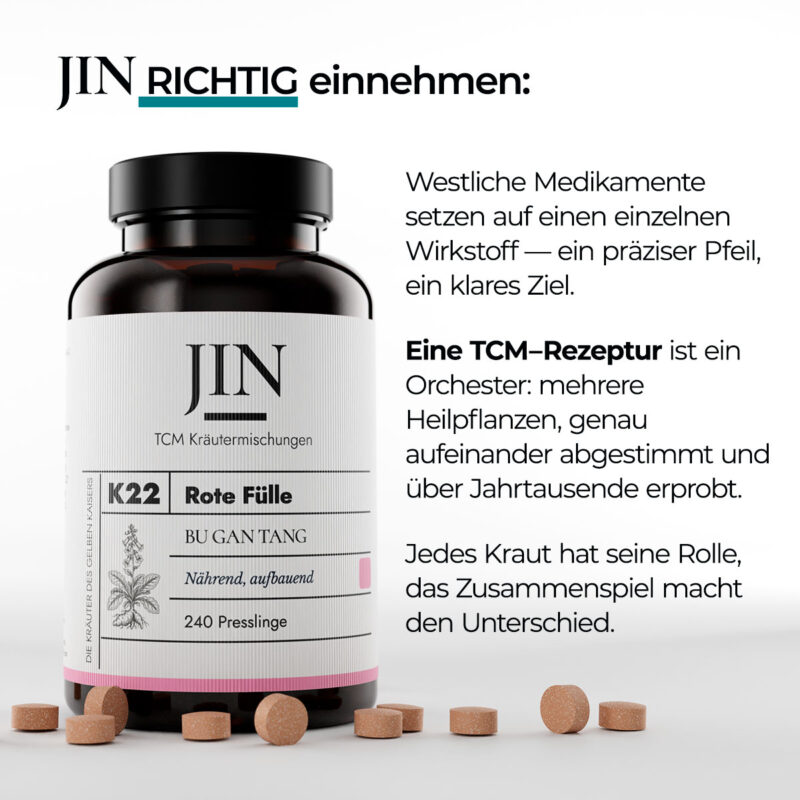
TCM herbs are the basis every classic TCM treatment. The carefully compiled mixtures have a synergistic effect — this means that the individual herbs reinforce each other's effects and balance out any possible side effects.
What modern medicine is only just discovering—the power of plant substances—has been used successfully by TCM for over 2,500 years.
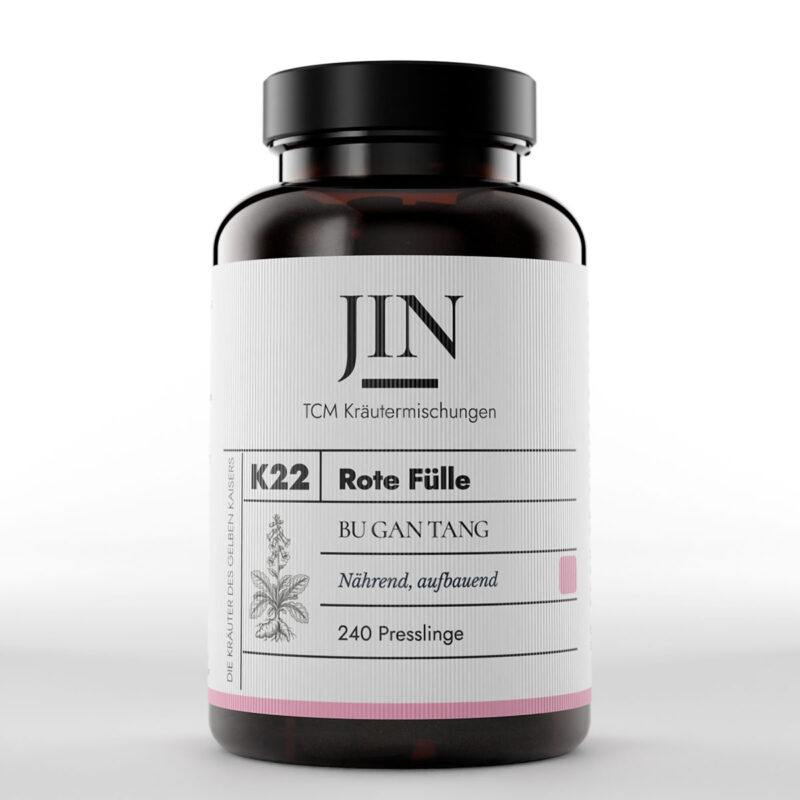
Empfohlene TCM–Kräutermischung bei Leber–Yin Mangel
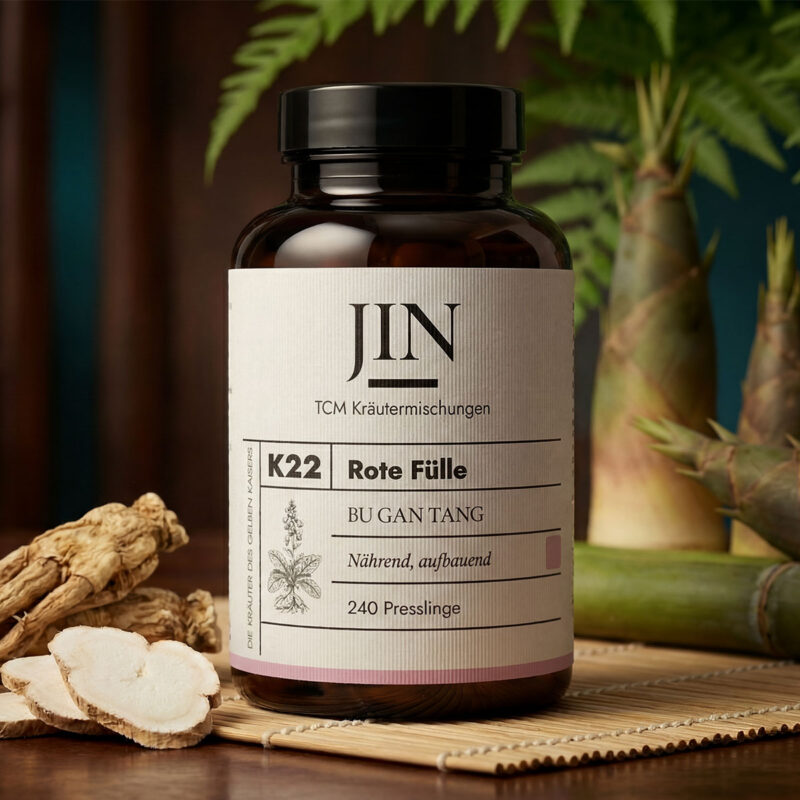
JIN K22 — Rote Fülle
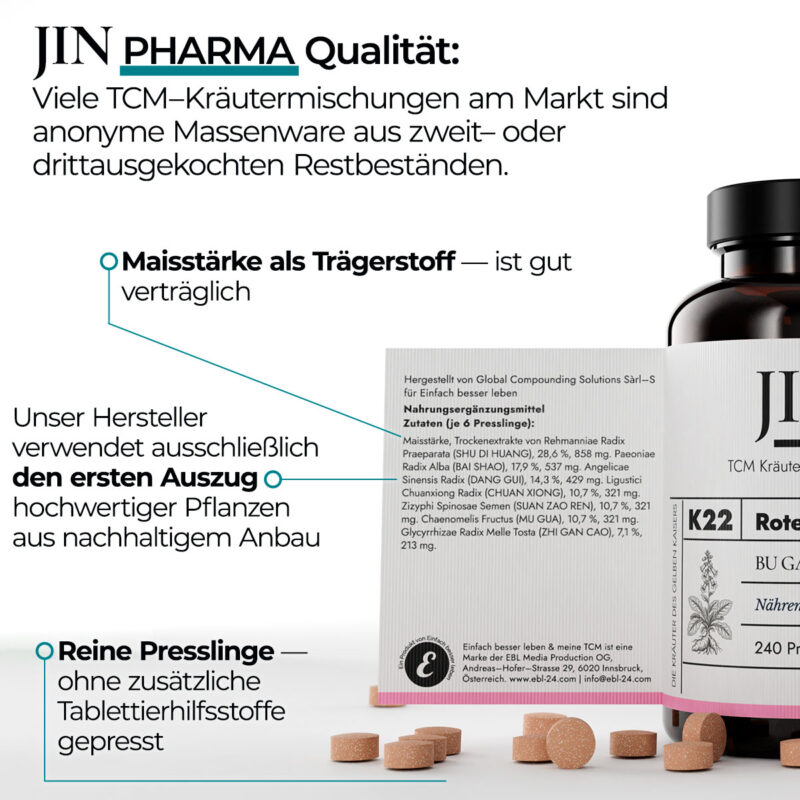
Die klassische Rezeptur Bu Gan Tang (补肝汤) — das „Dekokt zur Stärkung der Leber“. Sieben Kräuter, die das Leber–Yin auffüllen und das Leber–Blut nähren — auf der Basis der vier Blut–Schätze, ergänzt um Kräuter, die die Sehnen entspannen und den Geist beruhigen.
Mit Shu Di Huang und Bai Shao als nährenden Hauptkräutern füllt diese Mischung Leber–Yin und –Blut auf, während Dang Gui und Chuan Xiong das Blut bewegen, Mu Gua die Sehnen entspannt und Suan Zao Ren den Schlaf fördert. Ideal bei trockenen, brennenden Augen, Schwindel, Nachtschweiß, Reizbarkeit, Muskelkrämpfen und Einschlafstörungen durch Leber–Yin Mangel.
Quantity
284,70 €
i
To the product
The herbs in this recipeRecommended reading:How TCM herbal blends are formulatedLearn more now
| Herb (Pinyin) | German designation | Function in the recipe |
|---|---|---|
| Shu Di Huang (Rehmanniae Radix Praeparata) | Prepared rehmannia root | emperor Nährt das Blut und füllt das Yin auf — baut die Substanz auf |
| Bai Shao (Paeoniae Radix Alba) | White peony root | minister Nährt das Leber–Blut und bewahrt das Leber–Yin |
| Dang Gui (Angelicae Sinensis Radix) | Chinese angelica | minister Nährt und bewegt das Blut zugleich |
| Chuan Xiong (Ligustici Chuanxiong Radix) | Szechuan lovage | assistant Belebt das Blut und bewegt das Qi durch die Leber–Meridiane |
| Suan Zao Ren (Zizyphi Spinosae Semen) | Spiny jujube seed | assistant Nährt das Leber–Blut und beruhigt den Geist |
| Mu Gua (Chaenomelis Fructus) | Chinese quince | assistant Entspannt die Sehnen und löst Krämpfe |
| Zhi Gan Cao (Glycyrrhizae Radix Melle Tosta) | Honey–Licorice Root | harmonizer Harmonisiert alle Kräuter und schützt die Mitte |
Explanation of the most important herbs
emperor Shu Di Huang (Rehmannia) — Das Fundament
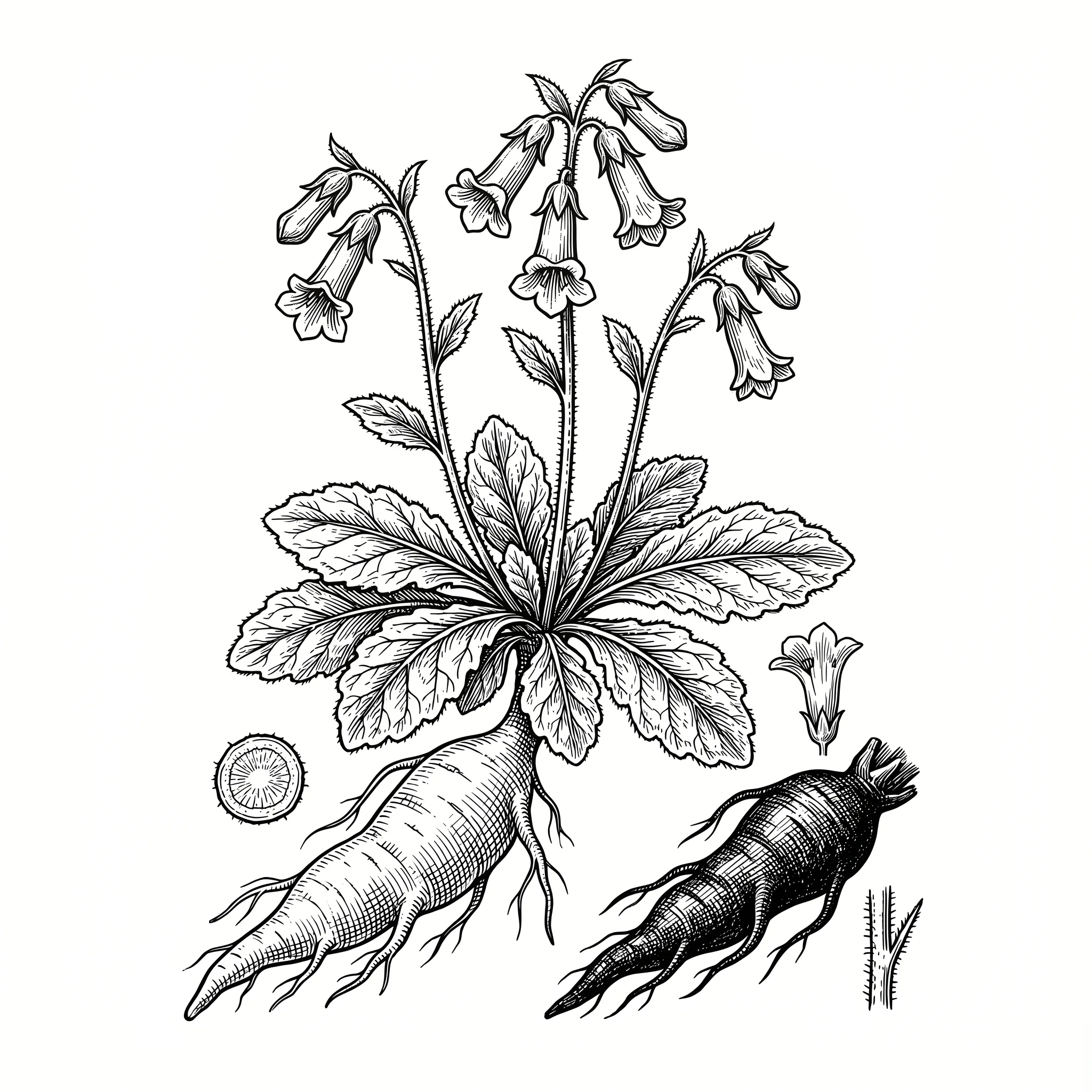
Shu Di Huang nährt das Blut und füllt das Yin auf — die schwerste und nährendste Substanz der Rezeptur, die die materielle Grundlage des Leber–Blutes aufbaut. Die zubereitete Rehmanniawurzel wird traditionell zum Blutaufbau eingesetzt.
minister Bai Shao (Weiße Pfingstrose) — Die Leber–Beruhigerin
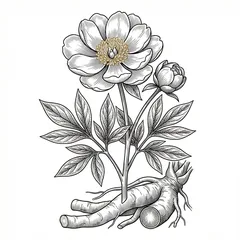
Bai Shao nährt das Leber–Blut und bewahrt das Leber–Yin — es entspannt die Leber, lindert Schmerzen und verhindert, dass aufsteigendes Leber–Yang die Ruhe stört. Paeoniflorin, der Hauptwirkstoff der weißen Pfingstrose, zeigt in Untersuchungen entzündungshemmende und krampflösende Eigenschaften; traditionell wird Bai Shao zur Entspannung der Leber und bei Krämpfen eingesetzt.
minister Dang Gui (Angelica) - The blood nourisher
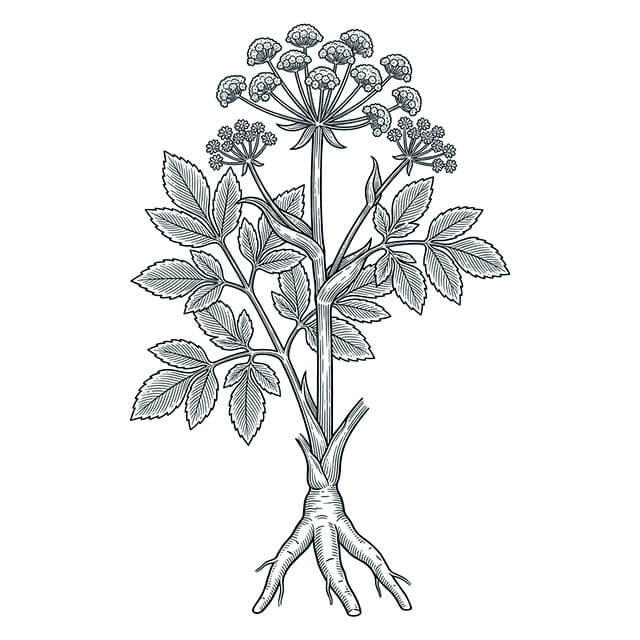
Dang Gui nährt und bewegt das Blut zugleich — es baut das Blut auf und hält es zugleich in Bewegung, ohne dass es staut. Dang Gui zählt zu den am besten untersuchten TCM–Kräutern.
assistant Mu Gua (Chinesische Quitte) — Der Sehnen–Entspanner
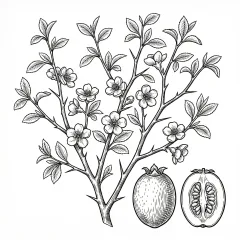
Mu Gua entspannt die Sehnen und löst Krämpfe — es adressiert die Funktion „die Leber regiert die Sehnen“ direkt und lindert Muskelkrämpfe und Verspannungen durch Leber–Blut Mangel. Die Chinesische Quitte zeigt in Untersuchungen entzündungshemmende und muskelentspannende Eigenschaften; traditionell wird sie bei Muskelkrämpfen und Gelenkbeschwerden verwendet.
Recommended dosage
The dosage depends on the severity.
Based on your questionnaire results, we have highlighted the appropriate dosage for you below.
At light Severity:
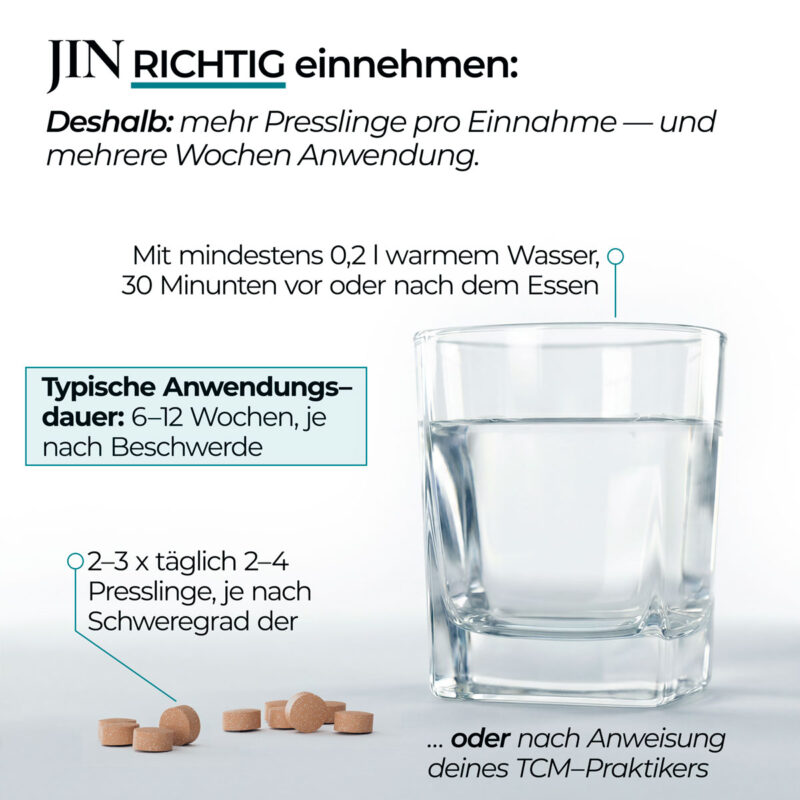
- 2 tablets 3 times a day (morning, noon, and late afternoon) = 6 tablets per day
- Optional, if taking 3 doses a day is difficult for you: 3 tablets twice a day — same daily amount
- We recommend at least 2 cans, each containing 240 tablets (enough for about 12 weeks)
At middle Severity:
- 3 tablets 3 times a day (morning, noon, and late afternoon) = 9 tablets per day
- We recommend at least 3 cans, each containing 240 tablets (enough for about 12 weeks)
- If your condition improves, switch to the dosage recommendation for mild symptoms
At significantly Severity:
- 4 tablets 3 times a day (morning, noon, and late afternoon) = 12 tablets per day
- We recommend at least 4 cans, each containing 240 tablets (enough for about 12 weeks)
- If your condition improves, switch to the dosage recommendation for moderate severity
Why 3 times a day?
This ensures that the herbs' effects are evenly distributed throughout the day.
IMPORTANT:
- Take the tablets with at least 0.2 liters of warm water
- Ideally, 30 minutes before or after a meal
- This suggestion is not a substitute for a medical diagnosis or treatment
- If you are pregnant or breastfeeding, have a chronic medical condition, or are taking medication, consult a doctor or a TCM practitioner beforehand.
- If you have a severe cold, fever, or diarrhea, stop taking this product
- Augen schonen, Bildschirmzeit begrenzen und ausreichend schlafen — das Leber–Yin regeneriert in der Nacht
- Alkohol, Kaffee und scharfe Speisen meiden; bei anhaltenden Augenbeschwerden, Schwindel oder Nachtschweiß ärztlich abklären
If little has changed after about 12 weeks:
Herbs are just one part of TCM. Combine taking them with other practices—acupressure, qigong, Pilates, or yoga, BS+, as well as meditation and breathing exercises. Afterward, take a two-week break from taking the herbs. Then, if needed, you can TCM analysis try again and/or compare your result with your TCM practitioner or discuss it with your doctor.
If you have any questions about how to take it, please feel free to contact us.
Want to know what dosage is right for you? Take our free TCM questionnaire—in just a few minutes, it will reveal your personal TCM pattern and the appropriate dosage of the recommended TCM herbal blend.
BS+ for your intestinal flora
A healthy gut is the basis for your well-being. Current studies show that around 80 % of people in Germany consume too little fiber - yet it is the most important food for your intestinal flora (also known as the intestinal microbiome).
BS+ was developed to support your daily fiber supply. With 11 high-quality, natural ingredients BS+ offers your intestinal flora a diverse nutrient base.
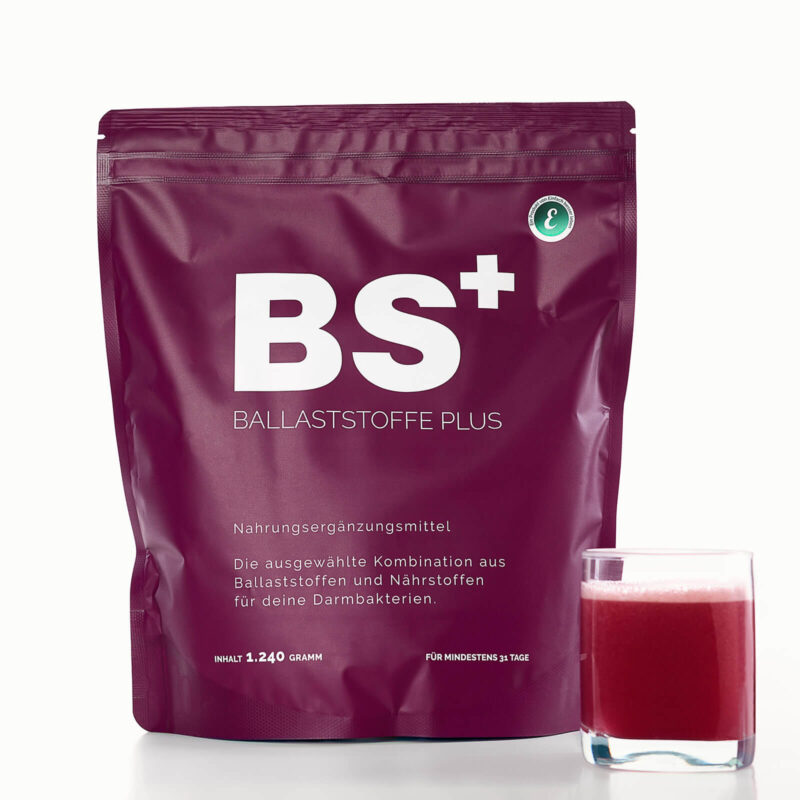
The revolutionary fiber formula
BS+ Dietary Fiber Plus
- Up to 20 g dietary fiber daily EXTRA
- Improved digestion and regular bowel movements
- Increased energy and vitality
- Better mood and mental clarity
- Support for your immune system
- Potential improvement in cholesterol and blood sugar levels
Simply stir into water twice a day - Your intestinal flora will thank you.
Why BS+ for liver yin deficiency?
When the yin of the liver is depleted, the body lacks the cooling, moisturizing substance - and this also affects digestion. In TCM, liver yin nourishes the tendons, eyes and nails, but the intestines also need sufficient moisture to function smoothly. If liver yin is deficient, the mucous membranes dry out, bowel movements become dry and irregular, and the intestinal flora suffers from the loss of moisture. The rising heat, which is typical of yin deficiency, puts additional strain on the sensitive intestinal mucosa.
BS+ delivers 11 prebiotic fibers and thus supports the development of healthy intestinal flora. The swellable fiber binds moisture in the intestine, promotes smooth digestion and creates a nourishing environment for the intestinal bacteria - exactly what an intestine dehydrated by yin deficiency needs.
Particularly important for liver yin deficiency:
- Binds moisture in the intestine and counteracts dryness caused by yin deficiency
- Strengthens the intestinal mucosa, which is stressed by rising heat
- Supports nutrient absorption so that yin-building foods are better utilized
Acupressure
Acupressure is acupuncture without needles. - You can apply them yourself at any time. By applying gentle pressure to certain points, you nourish the liver yin and calm rising yang.
These three points form an effective combination for nourishing the liver yin and calming the ascending yang. Le 03 moves the liver qi and lowers the yang, Ni 03 nourishes the Yin root, and MP 06 as the meeting point of the three Yin meridians strengthens blood and Yin - thus symptoms such as dry eyes, irritability and inner heat can be alleviated in the long term.
ACCESSION POINT: Le 03
Liver 03
Great flow - Tai Chong
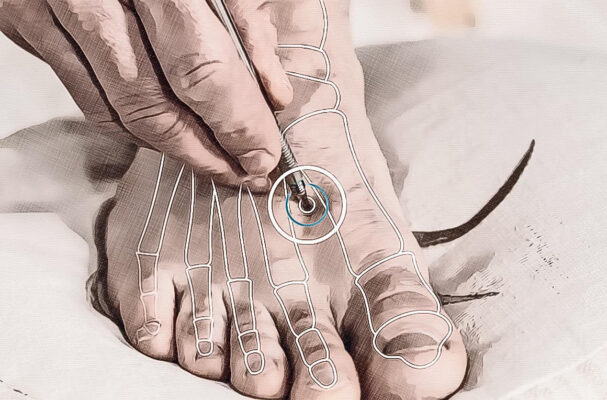
- Moves the liver qi and releases stagnation
- Calms rising liver yang
- Relieves headaches and irritability
- Relaxes the tendons and muscles
- Most important point for harmonizing the liver
Location: Between the 1st and 2nd metatarsal bones, in the hollow in front of the joint.
Application:
Massage in a circular motion twice a day for 2-3 minutes per side with gentle to medium pressure. Ideal in the morning and evening.
ACUPUNCTURE POINT: Ni 03
Kidney 03
Large stream - Tai Xi
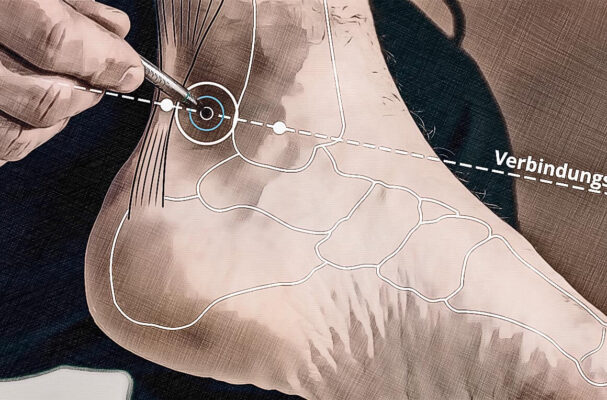
- Nourishes kidney yin - the root of liver yin
- Strengthens the lower back and knees
- Relieves night sweats and cools empty heat
- Helps with tinnitus and ringing in the ears
- Treats the root of liver yin deficiency
Location: In the hollow between the highest point of the inner ankle and the Achilles tendon.
Application:
Massage twice a day for 2-3 minutes per side using gentle circular pressure. This point nourishes the yin root - regular application is more important than strong pressure.
ACUPUNCTURE POINT: MP 06
Spleen-Pancreas 06
Meeting place of the three Yin - San Yin Jiao
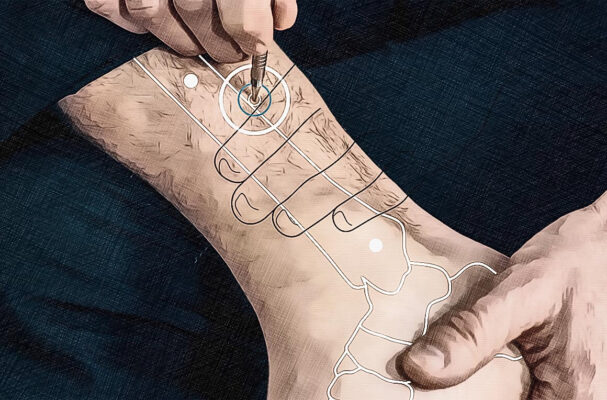
- Meeting point of the three Yin meridians - nourishes blood and Yin
- Calms the mind (Shen) and promotes sleep
- Strengthens the spleen and promotes blood formation
- Regulates the liver and smoothes the Qi
- One of the most important points about yin nutrition
Location: Four finger widths above the highest point of the inner ankle, directly behind the shin.
Application:
Massage twice daily for 2-3 minutes per side with gentle circular pressure. Do NOT use during pregnancy!
TIP
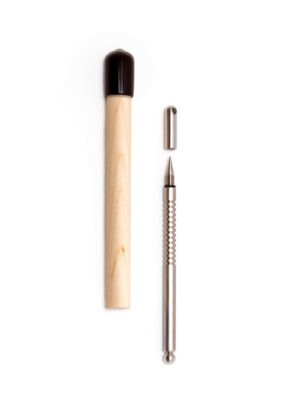
AkuPen
Acupuncture pen with video instructions
For even more intense stimulation You can use an AkuPen. The acupressure pen significantly enhances the effect of acupressure. With an extensive video library for over 80 acupuncture points.
Qi Gong
Qi Gong is moving meditation - Gentle, flowing exercises that relax the liver meridian, nourish the yin and calm the rising yang. With a liver yin deficiency, the liver lacks the cooling, moisturizing substance - as a result, the yang rises uncontrollably and creates inner heat, tension and restlessness.
The following exercises will help you to gently reverse this dynamic: They relax the liver, calm the mind and support the regeneration of yin. Just 10-15 minutes of daily practice has been proven to have positive effects on your inner balance.
QI GONG: Exercise 1
Look backwards
Relaxes the liver, relieves stagnation

Particularly helpful for:
- Neck tension and headaches
- Rising liver yang
- Qi stagnation in the liver meridian
- Emotional tension and irritability
Effect:
This wood element exercise specifically relaxes the liver and neck area. The gentle twisting movement releases Qi stagnation in the liver and gallbladder meridian, calms rising Yang and relieves headaches and neck tension. It is particularly effective for liver yin deficiency as it relaxes the liver without depleting yin.
QI GONG: Exercise 2
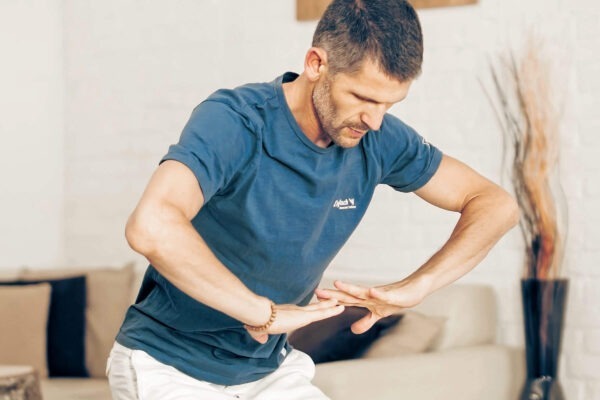
Collect Qi
Gathers energy, calms the mind
Particularly helpful for:
- Inner restlessness and nervousness
- Exhaustion and lack of energy
- Sleep disorders
- Stress and excessive demands
Effect:
This exercise collects vital energy from all directions and stores it in the lower abdomen (Dantian). It calms the mind, brings deep rest and supports Yin regeneration - ideal as the end of an exercise sequence. Particularly valuable for liver yin deficiency, as deep calm and relaxation form the basis for building up yin.
QI GONG: Exercise 3
Open heart
Calms the Shen, opens the chest

Particularly helpful for:
- Sleep problems and sleep disorders
- Inner restlessness and restlessness
- Emotional tension
- Tightness in the chest
Effect:
This fire element exercise opens the chest and calms the Shen (mind). It helps with sleep problems and inner restlessness and promotes emotional balance. Particularly important for liver yin deficiency, as the rising heat often disturbs the heart spirit - this exercise calms the Shen and creates inner peace.
These Qi Gong exercises are specially selected to nourish the liver yin and calm the ascending yang. They relax the liver, nourish the yin and calm the mind.
The exercises are particularly effective in the evening before going to bed or between 5 and 7 pm - this is the kidney time in the organ clock, and as the liver and kidneys have a common yin root, your liver yin benefits directly from this.
QI GONG:
When and how often?
In the evening (ideal for yin build-up):
- All 3 exercises as a sequence: approx. 15–20 min.
- Or just 1–2 exercises: approx. 5–10 min.
- In the evening before going to bed or between 5pm and 7pm (kidney time)
Daily 10-15 min:
- Regularity is more important than duration
- It is better to exercise for 10 minutes every day than for 60 minutes once a week.
- Liver Yin deficiency: NO intensive exercises, only gentle and flowing movements
Regularity brings results:
- After 2–3 weeks, you will notice the first changes.
- After 2-3 months of regular practice: noticeably strengthened liver yin
- In the long term: more inner peace, better sleep, more balanced emotions
Pro tip: Slow, flowing movements are ideal for liver yin deficiency. Avoid intense exertion - this consumes yin through sweating. Qi Gong is the perfect balance of gentle movement and deep relaxation.
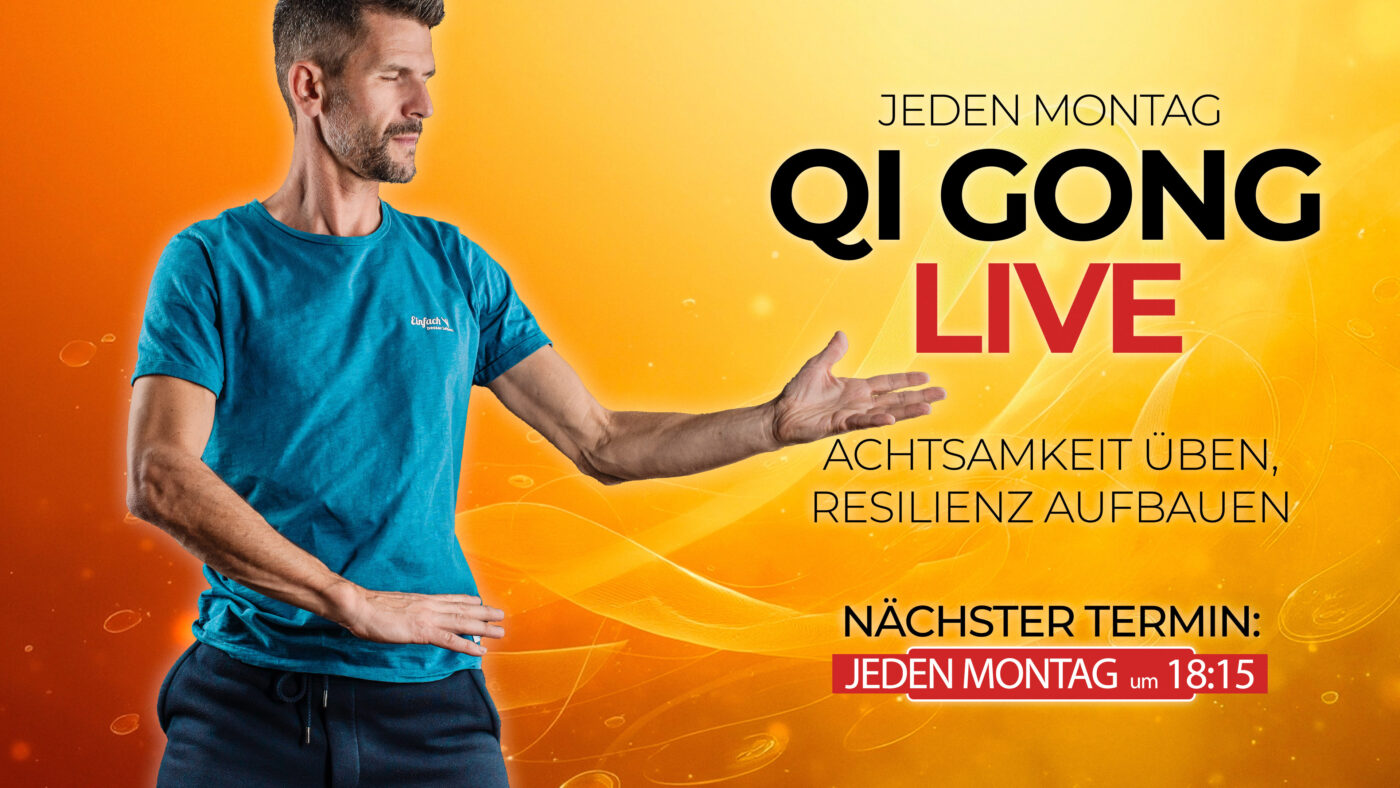
LIVE EVERY MONDAY: QI GONG WITH WOLFGANG
Every Monday at 6:00 p.m. Let's practice together live on YouTube. Among other things, Wolfgang will guide you through a complete qigong sequence — free of charge and suitable for all levels.
Why participate live? ✓ Practicing together is motivating ✓ Wolfgang explains the exercises in detail ✓ You can ask questions in the live chat ✓ Regular appointments help with your routine
More about Qi Gong LiveMeridian Yoga — The Yoga of TCM
Meridian Yoga combines yoga with traditional Chinese medicine. The result is a holistic exercise concept for better health and more energy.
The following exercises specifically activate the liver and gallbladder meridians - the liver needs particularly gentle stretching in cases of Yin deficiency in order to release stagnation and restore suppleness to the tendons.
MERIDIAN YOGA: Exercise 1
Straddle for the liver meridian
Stretches the liver meridian, relieves stagnation

Particularly helpful for:
- Hip stiffness and groin pain
- Feeling of tension on the inside of the legs
- Dry, stiff tendons and ligaments
- Inner restlessness and emotional tension
Effect:
The straddle stretches the Liver meridian on the inside of the legs and releases Qi stagnation, which often occurs with Liver Yin deficiency. When Liver Yin is depleted, tendons and ligaments become dry and stiff - this exercise promotes the free flow of Liver Qi and helps to restore suppleness to the tendons. At the same time, the gentle stretching calms the mind and nourishes the yin.
MERIDIAN YOGA: Exercise 2
Angle for the gallbladder meridian
Stretches the outside, releases lateral tension

Particularly helpful for:
- Tension in the side and hip
- Lateral headaches and migraines
- Decision-making difficulties and inner blockade
- Stiffness in the flank area
Effect:
The gallbladder meridian runs along the outside of the body - exactly where tension often accumulates in cases of liver yin deficiency. This exercise stretches the gallbladder meridian on the outside and releases tension in the side and hips. In TCM, the gallbladder is responsible for decisiveness - if the liver yin is exhausted, the gallbladder also suffers. This stretch supports clarity of mind and strengthens the ability to make decisions.
Both exercises activate the wood-element meridians: the liver stores the blood and ensures the free flow of Qi, while the gallbladder is the partner organ responsible for decisiveness and courage. In the case of liver yin deficiency, the tendons are dry and the energy stagnates - activating both meridians restores suppleness and releases stagnation on a physical, emotional and mental level.
Particularly effective: Hold each position for 3-5 calm breaths and imagine how cool, nourishing energy gently moisturizes your liver and makes the tendons supple. Practice consciously, slowly and without overexertion - because rest nourishes the yin.
MERIDIAN YOGA:
When and how often?
Best time:
- In the evening between 7 and 9 pm - ideal for letting go of the day and nourishing the Yin
- Or in the morning after getting up - gently and without haste
- Not if you are very exhausted - it is better to rest so that the Yin can regenerate
Duration:
- Hold each position for 3-5 calm breaths
- Complete sequence: 10-15 min.
- 3–5 times per week for best results
Important:
- Exercise gently and without overexertion - sweating consumes yin
- Breathe deeply and slowly into your stomach
- Stretching should be pleasant and nourishing, never painful
Pro tip: Combine Meridian Yoga with the Qi Gong exercises. The gentle, conscious movement nourishes the liver yin and releases stagnation - ideal for restoring suppleness to your tendons and ligaments.
Nutrition according to TCM
„Let food be your medicine.“ - This principle has been valid in TCM for thousands of years. Proper nutrition is particularly important in the case of liver yin deficiency. Yin needs cooling to neutral, moisturizing, nourishing food to rebuild the depleted substance of the liver.
The liver is part of the Element wood, but has a close connection to the Yin root via the common Yin root. Element Water (kidney). Your liver yin now needs Cool to neutral thermals - Moisturizing, gentle and nourishing.
What you eat, HOW you eat and WHEN you eat - all of this determines whether your liver yin can rebuild or whether the internal heat remains.
The golden rules for strong liver yin
What is good for you:
Yin-nourishing foods
- Goji berries - the TCM superfood for the liver and eyes
- Mulberries - moisturize and nourish the liver yin
- Black sesame - nourishes yin and strengthens hair and nails
- Walnuts - strengthen the yin root via the kidneys
Goji berries and black sesame seeds are the kings of liver-yin foods!
Moisturizing vegetables
- Spinach — nourishes the liver and blood and moisturizes
- Cucumber — cooling and moisturizing
- Celery — cools the liver and reduces rising yang
- Zucchini and tomatoes — neutral to cooling, gently moisturizing
Your liver loves green, juicy vegetables!
Cooling proteins
- Fish—especially salmon—nourishes yin and moisturizes
- Tofu — cooling, mild, and easy to digest
- Eggs - nourish blood and yin at the same time
- Duck — cooling, the ideal meat for yin deficiency
Steamed fish and tofu are perfect for your liver yin
Cereals and pulses
- Black beans — nourish the yin root through the kidneys
- Mung beans — cooling and detoxifying for the liver
- Barley — gently cools and moisturizes
- Black rice — strengthens the essence and nourishes the yin
Black legumes nourish the shared yin root of the liver and kidneys
What you should avoid:
Hot spices
- Chili — extremely hot, it dries out the Yin!
- Hot pepper in large quantities
- Too much spicy ginger (fresh and mild are fine)
- Garlic in large quantities — heating and drying
Spicy foods generate heat and deplete liver yin!
Alcohol
- Puts a direct and heavy strain on the liver
- Destroys yin and generates damp heat
- Especially schnapps and high-proof spirits
- Wine and beer in larger quantities as well
Alcohol is the biggest enemy of your liver yin!
Deep-fried and deep-fried food
- Fried foods — produce dry heat
- Well-grilled and seared
- Roasted snacks and chips
- Breaded and deep-fried
Dry heat damages the yin and causes the yang to rise!
Coffee and black tea
- Coffee — stimulates liver yang and causes dryness
- Black tea in large quantities
- Energy drinks — extremely stimulating
- Cola and caffeinated drinks
Caffeine stimulates the liver's yang and depletes its yin!
HOW YOU SHOULD EAT:
Cooked, but not too hot
- Steamed, gently cooked, or as a soup
- Do not sear or grill at too high a temperature
- Hot meals — but not prepared using high heat
- Raw foods are allowed in moderation (they have a mild cooling effect)
Eat regularly
- 3 fixed meals a day
- Eating dinner before 7 p.m. — preserves your yin at night
- Opt for light evening meals
- Chew slowly and mindfully
The liver yin thrives on regularity and calm!
Drink properly
- Chrysanthemum tea — cools the liver and clears the eyes
- Goji Tea — Nourishes the Yin Every Day
- Warm water — throughout the day
- Peppermint tea — slightly cooling and good for the liver
Chrysanthemum tea is the perfect remedy for liver yin deficiency!
IDEAL MENU FOR ONE DAY:
Breakfast (7–9 a.m.):
- Warm rice porridge with goji berries and walnuts
- Or: Oatmeal with black sesame seeds and mulberries
- In addition: Goji berry tea or warm water
Lunch (12–1 p.m.):
- Steamed salmon with spinach and barley
- Or: Tofu and Vegetable Stir-Fry with Celery and Zucchini
- In addition: Black Rice or Mung Bean Soup
Dinner (5–7 p.m.):
- Light Vegetable Soup with Spinach and Tofu
- Or: Steamed vegetables with egg and cucumber
- In addition: Chrysanthemum tea
Snack if needed:
- A handful of goji berries and walnuts
- Or: Mulberries with black sesame seeds
- Or: Warm Chrysanthemum and Goji Berry Tea
The most important rule when changing your diet is:
Start with ONE step!
Don't change everything at once.
Our suggestion for getting started:
- Reduce hot spices and alcohol - 2 weeks
- Eat goji berries and black sesame seeds every day — 2 weeks
- Replace coffee with chrysanthemum tea or goji tea — 2 weeks
Step by step, you will notice how your liver yin is being nourished again, your eyes become clearer, and the internal heat subsides.
Your liver yin will thank you for it!
RECIPE: GOJI BERRY AND CHRYSANTHEMUM CONGEE
Ingredients:
For 2 portions
- 100 g rice
- 1 L water
- 2 tbsp goji berries
- 1 tbsp dried chrysanthemum flowers
- 1 tbsp black sesame seeds
- Optional: 1 teaspoon honey
Preparation:
- Wash the rice and place in a pan with 1 liter of water
- Bring to the boil and then reduce to a low heat
- Let it simmer for about 40 minutes until it becomes a creamy porridge
- Add the goji berries 10 minutes before the end and let them simmer along with the rest
- Stir in the chrysanthemum blossoms during the last 5 minutes
- Sprinkle with black sesame seeds and serve
Effect:
Deeply and sustainably nourishes liver yin
Clears the eyes and cools rising heat
Chrysanthemum calms the liver and reduces yang
3–5 times a week — ideal for building up liver yin!
RECIPE: STEAMED SALMON WITH SPINACH AND SESAME SEEDS
Ingredients:
For 2 portions
- 2 salmon fillets (about 150 g each)
- 300 g fresh spinach
- 2 tablespoons black sesame seeds
- 1 thumb-sized piece of ginger (sliced)
- 2 tablespoons sesame oil
- 1 tbsp soy sauce
- Optional: 1 spring onion, a pinch of salt
Preparation:
- Marinate the salmon fillets with ginger slices and a little soy sauce (10 min.)
- Steam the salmon in a steamer or over a pot of water for about 12–15 minutes
- Sauté the spinach briefly in a little sesame oil until it wilts
- Arrange the spinach on plates and place the salmon on top
- Sprinkle with black sesame seeds and drizzle with the remaining sesame oil
Effect:
Nourishes liver yin and moistens the liver
Spinach strengthens the blood and moistens the tendons
Black sesame nourishes the yin root and strengthens hair and nails
2–3 times a week — perfect for nourishing your liver yin!
Breathing
Breathing is the bridge between body and mind. In TCM, we say: „The lungs govern qi“ — through conscious breathing, you can directly influence your energy flow, harmonize all organ systems, and activate your self-healing powers.
Studies show: Proper breathing activates the parasympathetic nervous system (rest & regeneration), massages the internal organs from within, improves oxygen supply, and reduces stress hormones. The good news: Just 5–10 minutes a day can have a measurable effect on your overall well-being.
Recommended breathing techniques
ABDOMINAL BREATHING — The basis for every breathing technique
Natural breathing
Abdominal breathing is the most natural and effective form of breathing. With every breath, you massage your internal organs, activate the flow of energy, and bring qi to the center of your body (dantian).
Wolfgang shows you step by step, How to learn abdominal breathing correctly—lying down to start with, then later also sitting and standing.
Duration: 9 minutes

4–7–8 BREATHING — Calms you down immediately
Breathing to fall asleep and combat inner restlessness
4–7–8 breathing (inhale for 4 seconds, hold for 7 seconds, exhale for 8 seconds) is known as a „natural sedative.“ This special rhythm calms your nervous system in just a few minutes—perfect for stress, racing thoughts, or trouble falling asleep.
Perfect for the evening or whenever you want to calm down quickly.
Duration: 9 minutes
To the interactive videoBOX BREATHING — For inner coherence
Professional breathing for focus and calmness
Box Breathing (4 seconds on, 4 seconds hold, 4 seconds off, 4 seconds hold) combines activation and relaxation in perfect balance. This method is used by elite soldiers, athletes, and executives to remain calm and focused even in extremely stressful situations.
Train your CO₂ tolerance and brings the heart, breathing, and nervous system
into a harmonious state.
Duration: 9 minutes
To the interactive videoCOHERENT BREATHING — Harmonizes body & mind
Breathing against burnout
With coherent breathing You breathe in for 5.5 seconds and out for 5.5 seconds. This rhythm brings your heart and breathing into perfect synchrony—a state that science refers to as „coherence.“ This method is also used in clinics for burnout treatment and stress reduction.
Proven to improve Heart rate variability (HRV) — the most important marker for stress resistance, health, and life expectancy.
Duration: 14 minutes
To the interactive video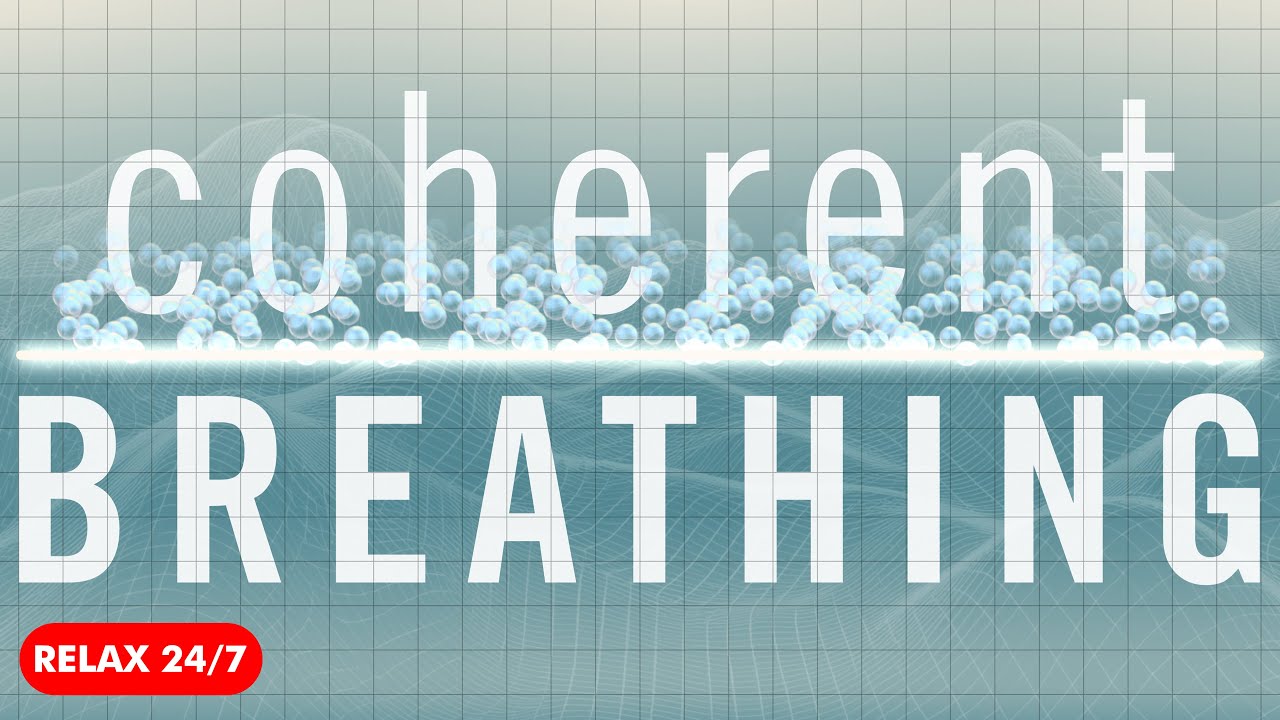
COHERENT BREATHING Around the clock
Our 24/7 livestream on coherent breathing runs non-stop. You can tune in at any time and join in right away.
Perfect for:
✓ Spontaneous breaks to catch your breath in between
✓ If you need help breathing
✓ As background while working
✓ For falling asleep (calms the nervous system)
✓ For regular daily practice
relaxation
When your body is relaxed, all organ systems can function optimally. Chronic tension blocks your body's self-healing powers and keeps you in a state of constant stress. Through targeted relaxation techniques, you activate the parasympathetic nervous system and send your body the signal: „Now I can regenerate, heal, and build strength.“
Progressive muscle relaxation is one of the most researched relaxation methods and has been used successfully for over 100 years. It helps you to recognize tension, actively release it, and achieve a state of deep relaxation—whenever you want.
Recommended relaxation technique
PROGRESSIVE MUSCLE RELAXATION (PMR)
The scientifically proven relaxation method
Progressive muscle relaxation according to Jacobson is one of the most widely researched relaxation techniques worldwide. By deliberately tensing and relaxing individual muscle groups, you learn to consciously perceive tension and actively release it.
Proven effect:
Lowers blood pressure, improves sleep, reduces chronic pain, relieves tension, and activates self-healing powers. Successfully used by psychologists to treat anxiety disorders, depression, and chronic pain.
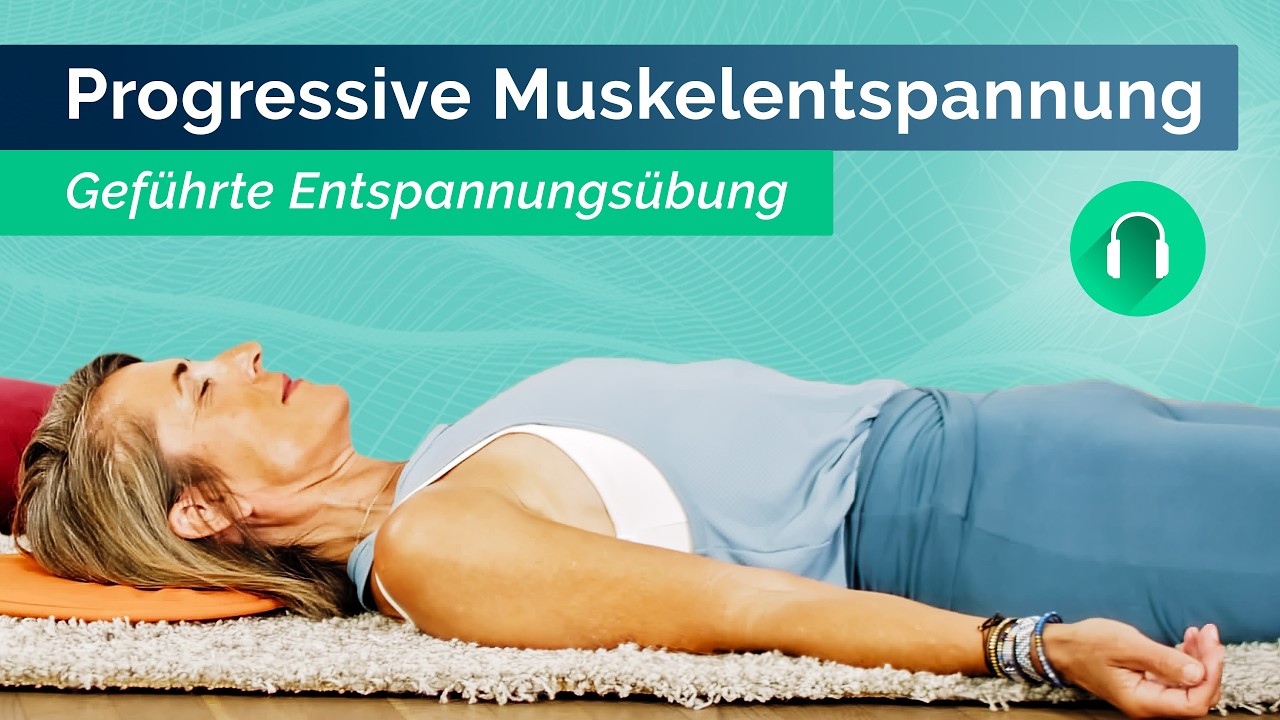
Maria guides you step by step through the entire exercise—perfect for beginners and advanced practitioners alike.
Duration: 23-minute complete guide
To the guided PMRMeditation
Meditation calms the mind — and a calm mind harmonizes the body. In TCM, we know that every emotion affects a specific organ. Through regular meditation, you learn to break out of destructive thought patterns, find emotional balance, and strengthen your inner core.
Modern studies confirm: Meditation has been proven to change brain structure, reduce stress hormones, strengthen the immune system, and improve self-healing powers. Just 10 minutes a day can change your life forever.
Recommended meditations
GUIDED MEDITATIONS FOR EVERY DAY
Your personal meditation library
We have a complete Playlist with over 60 guided meditations, breathing exercises, and relaxation techniques—from short 5-minute meditations for in between to deep 30-minute sessions for intensive practice.
In the playlist you will find:
- Morning meditations for a mindful start to the day
- Meditations for restful sleep
- Breathing meditations for inner peace
- Meditations against stress, brooding, and worries
- TCM standing meditations for all 5 elements
- Body scan and body journeys
- Healing meditations to activate self-healing powers
- Special breathing techniques (4–7–8, coherent breathing, bee breathing)
Perfect for beginners and advanced practitioners. Choose the right meditation for you depending on your time, the time of day, and your needs.
To the meditation playlistYin is the root of yang.
When the root withers, the fire rages out of control. Nourish the yin, and inner peace returns.
- Loosely based on the HUANG DI NEI JING
(The Yellow Emperor's Classic of Internal Medicine)
More tips for your everyday life
In addition to traditional TCM treatment methods There are many small daily habits that can nourish and strengthen your liver yin. Liver yin deficiency is often caused by overwork, chronic stress, and a lack of rest—but with the right changes, you can rebuild your yin and calm your internal heat.
Sleep and rest
Sufficient sleep
The liver yin regenerates during sleep—nighttime is the most important time for yin:
- Aim for 7–8 hours of sleep per night—the Yin needs enough time to regenerate
- Go to bed before 11 p.m. — the liver’s active period is between 1 and 3 a.m., so the body needs to be in a state of deep rest by then
- Keep the bedroom cool, dark, and quiet — darkness promotes yin regeneration
- Keep to regular bedtimes - even at the weekend
Midday rest
Short periods of rest during the day help build up Yin:
- 10–20 min. afternoon nap — especially between 1:00 and 3:00 p.m. (heart time)
- Even just closing your eyes and consciously relaxing can help
- No longer than 30 minutes—otherwise it may disrupt your sleep
- Make time for regular breaks in your daily routine—without feeling guilty
Avoid revision
Too much work—especially in the evenings—depletes liver yin:
- Avoid spending long periods of time looking at a screen in the evening—it strains the eyes and depletes liver yin
- Blue light from screens disrupts yin regeneration — Use blue light filters
- Night work is particularly harmful in cases of liver yin deficiency
- Plan regular breaks — take a short break every 90 minutes
- Exhaustion is a warning sign—take it seriously and get some rest
Caring for the Liver — Balancing Emotions
Relieve emotional stress
Anger and frustration are poison for the liver—they drive the yang upward:
- Suppressed anger leads to liver qi stagnation and depletes yin
- Learn to express frustration constructively—don’t suppress it, but don’t let it explode either
- Chronic stress generates internal heat and depletes liver yin
- Setting boundaries and learning to say no — Overwork is one of the main causes
- Meditation and breathing exercises help calm the mind
Discovering creative forms of expression
The liver loves creativity—it needs a free flow:
- Music, painting, writing, or dancing—creative activities naturally stimulate the liver qi
- Creativity provides a healthy outlet for pent-up emotions
- Make time for hobbies on a regular basis—they nourish the soul and take the strain off the liver
- Gardening can also be very therapeutic
Nature and Greenery
The Wood element is nourished by nature:
- Regular walks in the woods or park — the green surroundings soothe the liver
- The Wood element of the liver resonates with trees and growing plants
- Fresh air and wind help to move liver qi and dispel stagnation
- Spending time in nature has been shown to reduce stress hormones and inner tension
- Especially in the morning or evening—the cooler hours are ideal for those with a Yin deficiency
Gentle movement - not too much, not too little
The right intensity
When you have a liver yin deficiency, gentle, regular exercise is key:
- Qi Gong — gently calms the yang and nourishes the yin
- Tai Chi — its flowing movements harmonize the liver and stimulate the flow of qi
- Walks in nature — strengthen the Wood element without depleting it
- Gentle yoga—especially Yin Yoga and Restorative Yoga—are ideal
- Swimming — the cool water nourishes the yin and is gentle on the joints
What you should avoid
Intense exertion depletes the already scarce yin:
- HIIT, CrossFit, and high-intensity training — generate intense internal heat
- Marathons and endurance sports pushed to the point of exhaustion — deplete the yin
- Heavy sweating depletes the body's fluids and, consequently, the yin
- Avoid pressure to perform and competitive sports—they cause stress and tension
- After your workout, you should feel refreshed—not drained
Eye exercises
The eyes are the sensory organ of the liver—when there is a deficiency of yin, they become dry and tired:
- The 20-20-20 Rule: Every 20 minutes, look at something 20 feet (about 6 meters) away for 20 seconds
- Look into the distance regularly — consciously relax your eyes
- Take screen breaks — prolonged screen time directly depletes liver yin through the eyes
- Palm therapy: Place your warm palms over your closed eyes — this nourishes and relaxes
- For dry eyes: Drink goji berry tea and apply chrysanthemum compresses
Important to know
Building up liver yin requires patience and consistency. Unlike yang, which can be activated quickly, yin regenerates slowly—like filling a deep well. Treat yourself to rest, nourish your body with moisturizing, cooling foods, and move gently and regularly. Over time, you will feel the internal heat subside, your eyes become clearer, and your mind find peace again.
When to see a doctor? If you experience severe, recurring headaches, vision problems, high blood pressure, persistent night sweats, or if your symptoms do not improve despite consistent treatment, you should definitely see a doctor. In Western medicine, rising liver yang and internal heat can be associated with high blood pressure, migraines, or eye problems—a medical evaluation is important. TCM and Western medicine complement each other perfectly in this regard.
For optimal treatment progress
TCM is not a quick fix for symptoms., but rather a holistic healing process. You will achieve the best results if you consistently integrate the treatment into your daily routine and give your body time to regenerate.
Integration into everyday life
Start with ONE step
Don't try to change everything at once! That's overwhelming and leads to
usually leads to you giving up. Instead:
- Weeks 1–2: Include yin-nourishing foods in your daily diet (goji berries, spinach, cucumber)
- Weeks 3–4: Acupressure on Le 03 and Ni 03 daily
- Week 5-6: Qi Gong „Looking backwards“ daily 10 min.
- Week 7-8: Supplement TCM herbal mixture
- From week 9: Add further methods as required
Realistic expectations
After 2–3 weeks: First improvements noticeable
- Less inner restlessness and irritability
- Better sleep
- Less dry eyes
After 6–8 weeks: Significant improvements
- Significantly less sensation of heat
- More balanced emotions
- More relaxed muscles
After 3–6 months: Sustainable healing
- Noticeable improvement in liver yin
- Inner peace and serenity return
- Sustainable improvement in well-being
TCM vs. Western medicine
TCM and Western medicine are not mutually exclusive—they complement each other!
When Western medicine is important:
- In acute emergencies
- In case of structural damage
- In case of infections
- For accurate diagnoses (laboratory, imaging)
Where TCM has its strengths:
- In case of functional disorders
- For chronic complaints
- For prevention
- For holistic healing
Ideal: Combine both systems! Use Western medicine for
Acute treatment and accurate diagnosis, TCM for lasting healing
and strengthening the body's self-healing powers.
Important: Never stop taking prescribed medication without consulting your doctor first!
Talk to your doctor when you start TCM treatment.
TCM diagnosis for professionals
Syndrome differentiation according to TCM:
Tongue: Red, thin, little or no coating, possibly cracked; edges of the tongue are particularly red
Pulse: Thin (Xi Mai), quick (Shuo Mai), string-shaped (Xian Mai)
Pathomechanism:
The liver’s yin is depleted and can no longer anchor the liver’s yang. The yang rises unchecked, producing signs of heat in the upper burner (headaches, dizziness, red eyes, tinnitus). The moisturizing substance is lacking for the tendons, eyes, and nails. If this condition persists, kidney yin is also affected, as the liver and kidney share a common yin root (Gan Shen Tong Yuan). Liver heat can also attack Heart Yin and lead to insomnia and inner restlessness.
Treatment principle:
Zi Yin Yang Gan (滋阴养肝) — Nourish Yin, soften the liver, and calm rising Yang. In cases of concurrent kidney Yin deficiency: Zi Bu Gan Shen — Nourish both the liver and the kidneys.
Classic recipe:
Qi Ju Di Huang Wan (Rehmannia Pill with Lycium and Chrysanthemum) for liver and kidney yin deficiency with eye problems
Yi Guan Jian (Unifying Formula) for Liver Yin Deficiency with Qi Stagnation
Important modifications depending on accompanying symptoms:
- For severe liver yang rising with headaches: + Tian Ma (Gastrodiae Rhizoma), Gou Teng (Uncariae Ramulus cum Uncis) = Tian Ma Gou Teng Yin modification
- For severe heat with night sweats: + Zhi Mu (Anemarrhenae Rhizoma), Huang Bai (Phellodendri Cortex) = Zhi Bai Di Huang Wan
- For dry eyes and visual disturbances: + Gou Qi Zi (Lycii Fructus), Ju Hua (Chrysanthemi Flos), Sang Ye (Mori Folium)
- In cases of concomitant kidney yin deficiency: Liu Wei Di Huang Wan as a base, plus Gui Ban (tortoise shell) and Bie Jia (trionyx carapace)
- For Liver-Wind due to Yin deficiency (tremors, shaking): + Bai Shao (Paeoniae Radix Alba), E Jiao (Asini Corii Colla) = Gently calms Wind by nourishing Yin
Every step counts
Your body WANTS to heal—you just have to create the right conditions for it to do so.
Remember:
👣 Every little step counts
You don't have to be perfect. Even one warm meal a day is better than none. Even 5 minutes of qigong is better than no exercise at all.
⏳ Patience pays off
It took years for your body to get into this state. Give it time to regenerate. Healing takes time, but it WILL happen.
🎯 Focus on what you can DO
Don't concentrate on what you are doing „wrong". Focus on every positive step you take.
💚 Be good to yourself
Perfection does not exist. It is acceptable to have an off day occasionally. Tomorrow is a new day when you can continue.
🤝 You are not alone
Thousands of people are walking this path with you. For over 2,000 years, TCM has been helping people like you who want to regain their health.
Measure your healing progress

To track your progress with treatment, we recommend that you repeat the TCM analysis after about 3 months.
Why is this important?
- You can see how your condition has improved.
- You can adjust the treatment as needed.
- It motivates you to keep going
- You recognize which measures work best
⚠️ Important: Your answers today will be stored in encrypted form in a code that you received by email. You can only measure your progress later with this code. Keep the email safe!
Activate reminder:
<>In 12 weeks, you'll receive an email with a link to the TCM analysis. When you fill it out, you can enter your personal health code—then you'll see a comparison overview at the end:
→ Your new values
→ Your scores from today's test
→ Direct changes
This allows you to see at a glance whether your symptoms
have improved!
🔒 YOUR DATA IS SAFE
We store:
✓ Only your email address for reminders
✓ The date for shipping
We do NOT store:
✗ Your analysis results
✗ Your personal health data
✗ The connection between email and diagnosis
All analysis data is completely anonymous and is not linked to your email address.
Newsletter
Stay up to date with our newsletter. Besides useful tips and tricks for training and your everyday life, you won't miss any of our new releases.
We are here for you
Do you have questions about your diagnosis or treatment?
Not sure which method is right for you?
Contact us — We're happy to help!