





On this page, you will learn:
- What this diagnosis means from the point of view of TCM and Western medicine
- Where your symptoms come from and how they are connected
- Which specific treatment methods can help you now
- How you can use TCM herbs, acupressure, Qi Gong and nutrition to drive the cold out of your body, restore the free flow of Qi and blood and regain your natural warmth
The good news: A cold blockage can be treated well with the right measures. With a warming diet, targeted acupressure, moxibustion and proven TCM herbs, you can dispel the cold and restore the free flow in your body.
Take your time, Get to know the different treatment approaches—you don't have to implement everything at once. Choose what feels right for you and what you can easily integrate into your everyday life.
Your treatment at a glance:
Which TCM pattern is really behind your complaints?
Degree of
imbalance

Medium
Typical
treatment duration

3-6 months
self-treatment
Possible

Partly self-treatable
Treatment–
scope

2–3 methods
Proposed
methods

Extensive range
Our free TCM analysis shows you your personal TCM pattern in just 10 minutes - and which treatment will help you best.
What is a cold block?
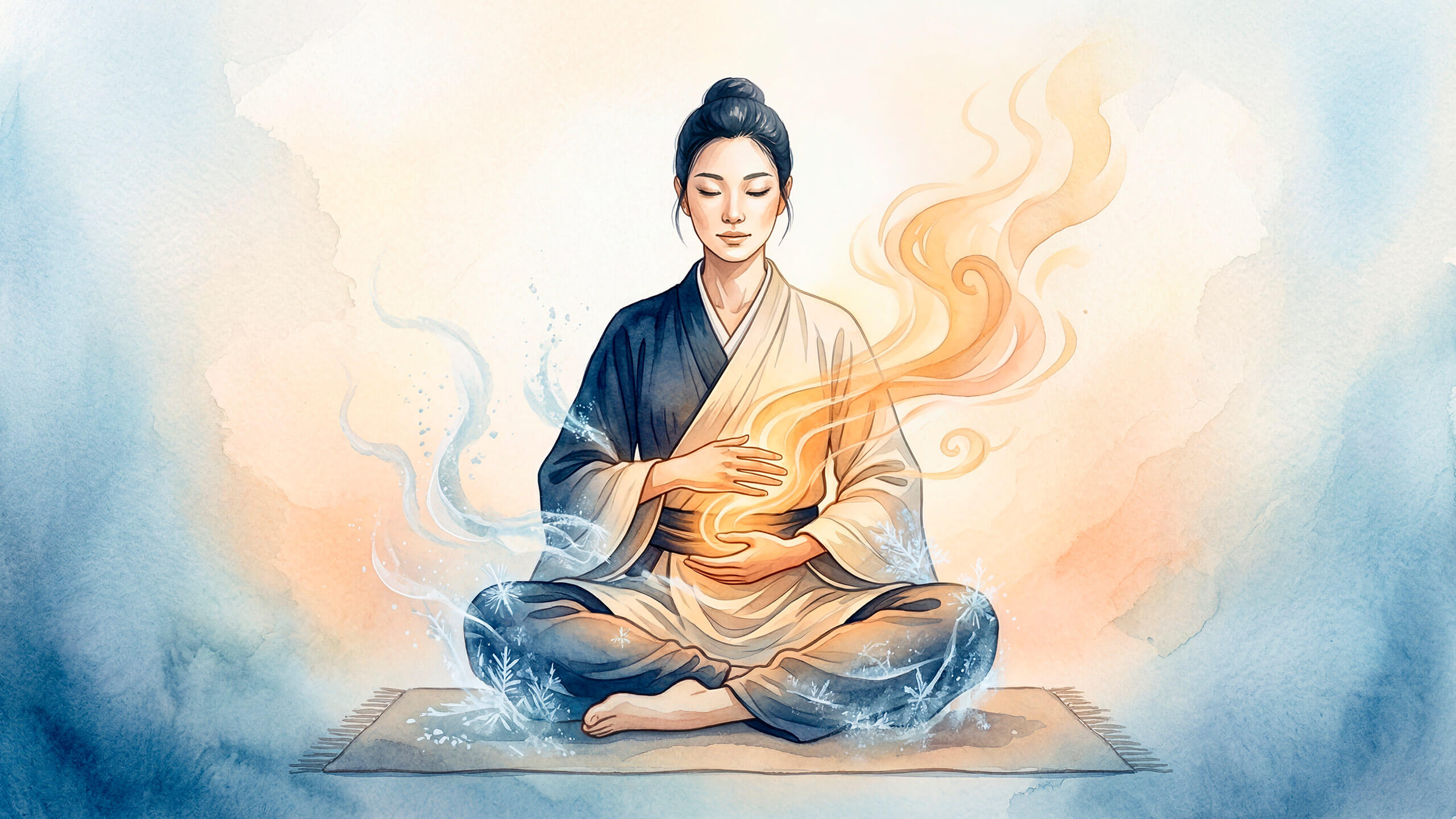
When cold freezes the flow of Qi and blood
The TCM perspective: When cold freezes the flow
In traditional Chinese medicine, cold (Han) is one of the six external pathogenic factors that can attack the body. When cold enters the body - whether from the outside due to weather and climate or from the inside due to Yang deficiency - a cold blockage occurs: the free flow of Qi and blood is disrupted, meridians constrict and tissue freezes.
In TCM, cold has a constricting and slowing effect. It contracts muscles, tendons and blood vessels, slows down all bodily processes and causes Qi and blood to stagnate. The classic principle is: „Bu Tong Ze Tong“ - where there is no free flow, there is pain. This is why pain is the main symptom of a cold blockage - severe, fixed pain that is significantly improved by heat.
A cold block can affect different areas of the body: the joints and muscles (bi-syndrome), the abdomen and digestion (cold in the middle), the uterus (cold in the womb) or the meridians of the limbs (cold hands and feet). They all have the same basic dynamic in common: cold blocks, warmth frees.
The result of a cold block: Qi and blood can no longer flow freely. Organs and tissues are not sufficiently warmed and nourished. This results in pain, stiffness, a feeling of cold and functional disorders. Over time, the cold can penetrate deeper and also weaken the Yang - the body's own heat source.
The typical signs of a cold block:
- Fixed pain that improves significantly with heat
- Feeling cold in the affected areas or all over the body
- Stiffness and limited mobility, especially in the morning
- Cold hands and feet, shivering and sensitivity to cold
- Worsening in cold, wet and changing weather conditions
- Pale face, tendency to watery, clear discharge
- Digestive complaints with abdominal pain that improve with warmth
- Tiredness, listlessness and slowed metabolism
The good news: A cold blockage can be treated well with the right measures. A warming diet, moxibustion, acupressure and targeted TCM herbs can dispel the cold, restore the flow of Qi and blood and regain your natural warmth.
The western perspective: cold-related complaints and circulatory disorders
From a Western perspective, cold blockade corresponds to a condition associated with circulatory disorders, sensitivity to cold, joint stiffness and cold-induced pain. The body reacts to cold by constricting the blood vessels (vasoconstriction), which reduces the supply to tissues and joints.
Imagine your body as a heating system: The blood is the warm water that flows through the pipes (vessels) and warms every room (every organ and tissue). If the pipes are constricted by cold or the heating system (the yang) does not produce enough heat, some rooms remain cold. The result: stiffness, pain and dysfunction - just like a house with frozen pipes.
Science confirms it: Cold has measurable effects on the entire body. Low temperatures slow down the metabolism, increase the viscosity of the blood, reduce the elasticity of connective tissue and activate cold pain receptors. People with Raynaud's syndrome, osteoarthritis or chronic circulatory disorders are particularly sensitive to cold.
What does modern medicine show?
- Vasoconstriction: cold constricts the blood vessels and reduces blood flow to the extremities and joints
- Blood viscosity: blood becomes more viscous in the cold and flows more slowly through the capillaries
- Connective tissue: loses elasticity in the cold - resulting in stiffness and limited mobility
- Cold receptors: TRPM8 and TRPA1 channels send pain and warning signals in the cold
- Metabolism: Chronic exposure to cold can slow down the basal metabolism
- Immune function: Cold lowers the local immune defense and can promote inflammatory processes
Modern research confirms: The TCM diagnosis „cold blockade“ correlates with measurable changes in blood circulation, blood viscosity and pain receptor activity. Thermotherapy - internal and external heat applications - has been shown in studies to have positive effects on circulation, pain reduction and joint mobility.
The TCM treatment of a cold blockage starts right here: It warms the body from the inside and outside, dispels the penetrating cold, restores the free flow of Qi and blood and strengthens the Yang as the body's own heat source - profoundly, sustainably and holistically.

The Yellow Emperor team explains your diagnosis
Qi Bo | The Yellow Emperor | Dr. Lisa Weber
MASTER OF THE HEALING ARTS | TCM FOUNDER | MODERN PHYSICIAN
What happens when the legendary Yellow Emperor from TCM sits down with his advisor Qi Bo and a modern doctor? They discuss your diagnosis - with 4000 years of knowledge AND current science.
Cold blockage - when internal or external cold freezes the flow of Qi and blood
The Yellow Emperor: „Qi Bo, I observe people in my realm who are constantly freezing. Their hands and feet are freezing cold, their joints ache in the cold and they feel stiff and slowed down. Some complain of abdominal pain, which immediately gets better with a hot water bottle. What is behind these various complaints?“
Qi Bo: „Majesty, all these people suffer from a cold blockage - called Han Ning, the congealing cold. In TCM, cold is one of the six external pathogenic factors and has a constricting, congealing nature. When cold enters the body - whether from the outside due to wind and weather or from the inside due to a yang deficiency - it contracts everything: Muscles, tendons, vessels and meridians. Qi and blood can no longer flow freely, they freeze and stagnate. And where the flow stops, pain arises - that is the basic principle: Bu Tong Ze Tong.“
Dr. Weber: „This is physiologically very precise! Cold triggers vasoconstriction in the body - the blood vessels constrict reflexively to minimize heat loss. The blood flow to the periphery - hands, feet, joints - decreases significantly. At the same time, the blood becomes more viscous in the cold, which further slows down the flow in the capillaries. The synovial fluid in the joints becomes thicker and the collagen in tendons and ligaments loses elasticity. All of this explains the stiffness, pain and limited mobility - precisely the ‚numbness‘ that TCM describes.“
The Yellow Emperor: „You say the cold can come from outside or inside. Explain that to me in more detail.“
Qi Bo: „Your Majesty, there are two ways of blocking the cold. Firstly, the external cold: it penetrates through the skin and pores - through cold weather, wind, wetness, air conditioning or cold water. The joints, neck, abdomen and lower back are particularly at risk. Wei Qi - the defensive Qi on the surface of the body - is the first line of defense. If it is weakened, the external cold has an easy time of it. Secondly, the internal cold: this occurs when the yang - the body's warming force - is weakened. The kidney is the source of yang fire. If the kidney yang is weak, the body does not produce enough heat to keep the cold away. A weak spleen can also promote internal cold because it can no longer convert food into warming energy.“
Dr. Weber: „This distinction has clinical relevance! The ‚external cold‘ corresponds to cold-related complaints caused by environmental factors - arthralgia on exposure to cold, muscle cramps, cold-related circulatory disorders such as Raynaud's syndrome. The ‚internal cold‘ due to yang deficiency correlates with endocrine disorders such as hypothyroidism, where the body actually produces less heat. A low basal metabolism, adrenal insufficiency and autonomic dysregulation of the nervous system can also lead to a chronic feeling of cold. TCM makes a very clever distinction here between exogenous and endogenous causes!“
The Yellow Emperor: „Which areas of the body are particularly susceptible to a cold block?“
Qi Bo: „Your Majesty, the cold prefers to seek out the areas that are less supplied with blood and less protected by yang qi. The joints - especially the knees, shoulders, hands and feet - are most often affected because they have little flesh and fat to protect them. We call this bi-syndrome, the joint blockage. The lower abdomen - especially the uterus in women - is very sensitive to cold, which can lead to menstrual pain, irregular menstruation and fertility problems. The middle - the stomach and spleen - can be weakened by cold food and drink, leading to indigestion, diarrhea and abdominal cramps. And the lower back - the seat of the kidneys - is particularly affected by cold with yang deficiency.“
Dr. Weber: „From an anatomical point of view, these areas are actually the most susceptible to the effects of cold! Joints have less blood supply than muscle tissue and cool down more quickly. The abdomen reacts to cold by cramping the smooth muscles - hence menstrual cramps and abdominal pain in cold weather. The gastrointestinal tract is influenced by the autonomic nervous system, which reacts to cold stimuli by slowing down digestion. And the lumbar spine is a common site for cold-induced muscle tension. TCM has mapped the vulnerable zones very precisely!“
The Yellow Emperor: „Now let's talk about the treatment. How do we banish the cold?“
Qi Bo: „Your Majesty, the treatment principle is: Wen Jing San Han - warm the meridians and disperse the cold. This is done in several ways. Firstly, moxibustion - the burning of mugwort over the affected areas and acupuncture points. The moxa heat penetrates deep into the meridians and dispels the cold directly. Moxibustion is the most important single method for cold blockage! Secondly, warming herbs - Gui Zhi (cinnamon twig), Gan Jiang (dried ginger), Rou Gui (cinnamon bark) and Fu Zi (prepared wolfsbane) for severe cold. Thirdly, warming food - ginger, cinnamon, lamb, walnuts, fennel and cloves warm the body from the inside. Fourth: Acupressure on Ma 36, KG 06 and MP 06 - to strengthen Yang and Qi and open the meridians. And fifthly: warm foot baths, hot water bottles and avoiding exposure to cold.“
Dr. Weber: „Thermotherapy is one of the oldest and most effective approaches in medicine! Heat dilates the blood vessels (vasodilation), improves microcirculation, lowers blood viscosity and increases the elasticity of connective tissue. In randomized controlled trials, moxibustion has shown significant effects on pain and function in knee osteoarthritis, dysmenorrhea and chronic back pain. Warming herbs such as ginger contain gingerols and shogaols, which stimulate thermogenesis and improve circulation. Cinnamon contains cinnamaldehyde with a vasodilatory effect. The combination of external and internal warming is pharmacologically sound!“
The Yellow Emperor: „Which herbal formulas do you recommend for a cold block?“
Qi Bo: „Your Majesty, the choice of formula depends on where and how the cold is located. For cold in the limbs and meridians, we use Dang Gui Si Ni Tang - the Angelica Four Reversal Decoction. It contains Dang Gui for blood nourishment, Gui Zhi for meridian warming, Bai Shao for tendon nourishment, Xi Xin for cold dispersal, Tong Cao for meridian opening, Da Zao for Qi strengthening and Gan Cao for harmonizing. For cold in the center - stomach and spleen - we use Li Zhong Wan, the pill for regulating the center, with Gan Jiang (dried ginger) as the main herb. For cold in the uterus, we use Ai Fu Nuan Gong Wan, the heat pill for the womb.“
Dr. Weber: „Dang Gui Si Ni Tang is a well-researched formula! Studies show that it significantly improves peripheral circulation and increases the skin temperature of the extremities - exactly the effect needed for cold hands and feet. Dang Gui contains ferulic acid with anti-aggregative and circulation-promoting effects. Xi Xin contains methyl eugenol with warming and analgesic properties. And dried ginger - the basis of Li Zhong Wan - has been shown to increase the thermal effect in the gastrointestinal tract and promote digestive enzyme activity. TCM has a specific recipe for each localization of cold - that's tailor-made phytotherapy!“
The Yellow Emperor: „What happens if a cold block is not treated?“
Qi Bo: „Your Majesty, this is an important warning. Untreated cold penetrates deeper and deeper - from the surface via the meridians into the organs and finally into the bones. The deeper the cold penetrates, the more difficult it is to treat. In addition, chronic cold weakens the yang - creating a vicious circle: Less yang means less heat, less heat means more cold can take hold. The cold can also cause blood stasis - because stagnant blood is further slowed down by the cold and begins to clot. Early treatment is therefore crucial!“
Dr. Weber: „This corresponds to the clinical progression! Acute exposure to cold initially leads to reversible vasospasms. If the cause is not remedied, chronic circulatory disorders can develop, leading to tissue damage - cartilage degradation, nerve damage, trophic disorders. The ‚vicious circle of yang deficiency‘ reflects what we know as chronification: Pain leads to relieving posture and lack of movement, which further worsens circulation. And the blood stasis corresponds with an increased tendency to thrombosis in cold weather - low temperatures measurably increase blood viscosity and the aggregation readiness of platelets!“
The Yellow Emperor: „Then the message is clear: cold must not remain in the body. With warmth from inside and outside, we release the blockage and get the Qi and blood flowing again. The body needs its warmth - it is the basis of life.“
Qi Bo: [smiles] „That's right, Your Majesty. The cold is like frost on a river - it freezes the flowing water. But just as the spring sun melts the frost, the warmth of TCM treatment restores the flow. With patience, warming food, healing herbs and the power of moxibustion, the blockage dissolves, the pain recedes and life flows freely again.“
THE 3-WAY METHOD FOR COLD BLOCKADE
MORNING PROTOCOL (build up heat):
- TCM: Warm ginger water on an empty stomach - warms the middle warmer and activates the yang
- Science: Gingerol stimulates thermogenesis and improves peripheral blood circulation
- Practical: Pour hot water over 3-4 slices of fresh ginger, leave to infuse for 5 minutes
- TCM: Gentle movement after getting up - moves Qi and blood, relieves morning stagnation
- Science: Gentle mobilization has been proven to reduce morning stiffness and improve circulation
- Practical: 5-10 min. gentle circular movements of all joints and light stretching exercises
- TCM: Warm breakfast with warming spices - strengthens the spleen qi and warms the center
- Science: Warm meals promote blood circulation and metabolism in the morning
- Practical: Warm porridge with cinnamon, walnuts and a spoonful of honey
TAGS-STRATEGY (keep out the cold):
- TCM: Acupressure on Ma 36 (Zu San Li) - strengthens Qi and Yang, warms the meridians of the legs
- Science: Studies have shown that stimulation of this point has positive effects on immune function and blood circulation
- Practical: A hand's width below the kneecap, to the side of the shin. Press firmly for 3 minutes on each side
- TCM: Keep your body consistently warm - cold must not penetrate again
- Science: Heat improves microcirculation and permanently reduces sensitivity to pain
- Practical: Warm clothing in layers, cover kidney and stomach area, scarf and warm socks
- TCM: Warming soup at lunchtime - the spleen works hardest between 9 and 11 a.m.
- Science: Warm soups promote hydration and provide nutrients in an easily digestible form
- Practical: Chicken soup with ginger and spring onions, or lamb soup with fennel and star anise
EVENING RITUAL (eliminate cold):
- TCM: Warm foot bath with ginger and cinnamon bark - opens the meridians and dispels cold through the feet
- Science: Foot baths at 38-42 °C improve blood circulation in the lower extremities and promote relaxation
- Practical: 15-20 min. foot bath with fresh ginger and cinnamon bark, water up to the ankles
- TCM: Acupressure on KG 06 (Qi Hai) - the „Sea of Qi“, strengthens the source Qi and warms the lower abdomen
- Science: This point is located above the hypogastrium and influences the autonomic nervous system
- Practical: 1.5 thumb widths below the navel. Gently press in a circular motion with a warm thumb for 3 minutes
- TCM: Hot water bottle on the lower abdomen or the painful areas - direct application of heat dispels the cold
- Science: Local heat application reduces the intensity of pain and improves sleep
- Practical: 20-30 min. hot water bottle on the affected area before going to sleep
The Yellow Emperor: „Qi Bo, how long will it take to release the cold blockage?“
Qi Bo: „Majesty, it depends on how deep the cold is and how long it has been there. In the case of a fresh cold block - when the cold has only recently penetrated - the treatment can work quickly: After 2-3 weeks of consistent heat therapy, most people notice significant improvement: less cold sensation, less pain, more mobility. Chronic cold blockages that have been present for months or years require more patience: 6-8 weeks for significant improvement and 3-6 months for lasting healing. Consistency is crucial - the heat must be applied daily and the cold avoided daily.“
Dr. Weber: „This corresponds well with our clinical experience! Acute cold-related complaints often improve quickly with heat therapy and circulation stimulation. Chronic conditions require 3-6 months of consistent treatment until the microcirculation and tissue have recovered sustainably. Studies on moxibustion for knee osteoarthritis show significant improvements after 4-6 weeks, with further increasing effects over 3-6 months. The recommendation for patience and consistency is therapeutically very important!“
The Yellow Emperor: „What is important to bear in mind with a cold block?“
Qi Bo: „Majesty, the most important thing: Firstly, no exposure to the cold! Consistently protect your body from the cold and wind - warm clothing, never go out in the cold with wet hair, always cover your kidneys and stomach. Secondly, no cold food and drink - raw food, ice cream, cold water and tropical fruit cool the body from the inside. Thirdly, no ice on painful areas! What would be right in the heat drastically worsens a cold blockage. Fourthly, don't overexert yourself - exhaustion weakens the Yang and makes you susceptible to cold. And fifthly, be patient - the cold has accumulated over time and needs persistent warmth to be dispelled.“
Dr. Weber: „The point about ice in particular is clinically relevant! Western medicine often reflexively recommends cooling. This is correct for acute inflammation and swelling, but counterproductive for cold-related chronic complaints. The TCM differentiation - cold blockade versus heat blockade - is diagnostically decisive: Does the pain get better with heat? Then never cool it! This differentiated approach would help many patients.“
The Yellow Emperor: „Then let's put this wisdom into practice. Warmth is the key - from within and without.“
About our „3 Wise Men“ story
Who are the Yellow Emperor and Qi Bo?
The Yellow Emperor (Huangdi) is said to have lived around 2600 BC and is considered the mythical founder of Chinese culture and medicine. Qi Bo was his most important advisor and personal physician. Their discussions about health, illness, and human nature were recorded in the most important fundamental work of TCM.
The book: Huangdi Neijing
The Huangdi Neijing, also known as The Yellow Emperor's Classic of Internal Medicine, was probably written between 200 BC and 200 AD. It is the oldest surviving work on Chinese medicine and consists of dialogues between the Yellow Emperor and his advisors, mainly Qi Bo.
This work is to TCM what the Bible is to Christianity: the absolute foundation. All the important concepts - yin and yang, the 5 elements, qi, meridians and acupuncture points - are systematically described here for the first time.
Our modern approach: The 3 wise men
In our series „The Three Sages,“ we bring together the Yellow Emperor and Qi Bo with the fictional modern doctor and microbiologist Dr. Weber.
Important note: All three characters and their conversations are purely fictitious and invented by us.
We use this narrative form, similar to the dialogue form in the book Huangdi Neijing, to convey the often complex interrelationships of TCM in an understandable and entertaining way. When the 4,000-year-old emperor is confronted with modern science, enlightening „aha moments“ arise that show that ancient wisdom and new research often speak the same language — just in different words.
This makes TCM lively, understandable and practically applicable for your everyday life.
The dialogs are creative interpretations - not historical documents. For medical questions, please consult a qualified TCM therapist or doctor.
Your treatment options
A cold block is very easy to treat! TCM offers you a variety of effective methods to dispel the cold and restore the free flow of Qi and blood in your body. You don't have to do everything at once - choose the methods that suit you and your everyday life.
Here you will find specific treatment approaches that have been proven effective in TCM for thousands of years and that you can largely apply yourself.
TCM herbal therapy
TCM herbs are the basis every classic TCM treatment. The carefully compiled mixtures have a synergistic effect — this means that the individual herbs reinforce each other's effects and balance out any possible side effects.
What modern medicine is only just discovering—the power of plant substances—has been used successfully by TCM for over 2,500 years.
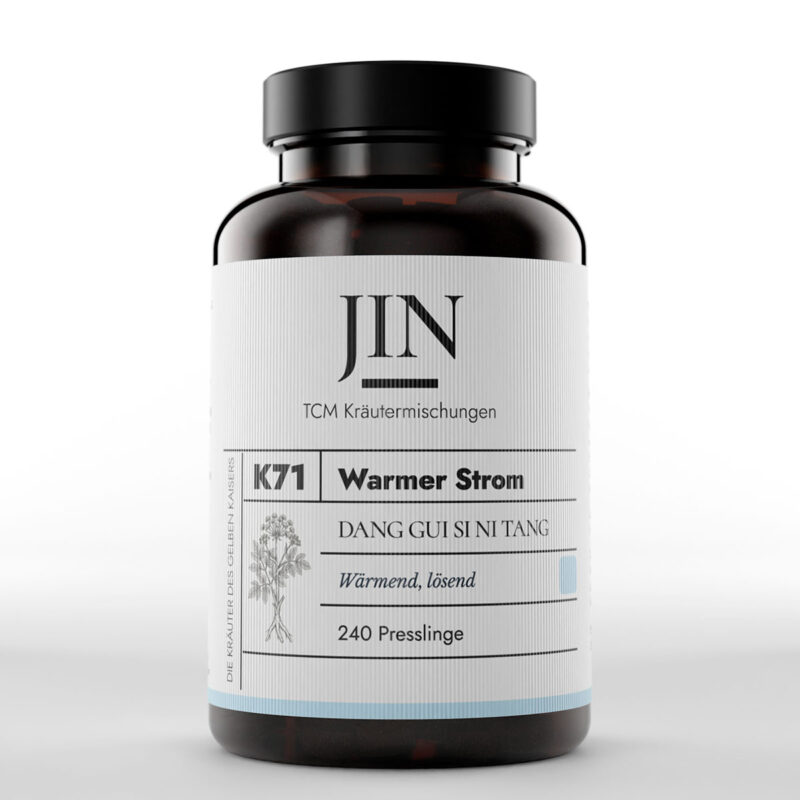
Empfohlene TCM–Kräutermischung bei Kälte–Blockade
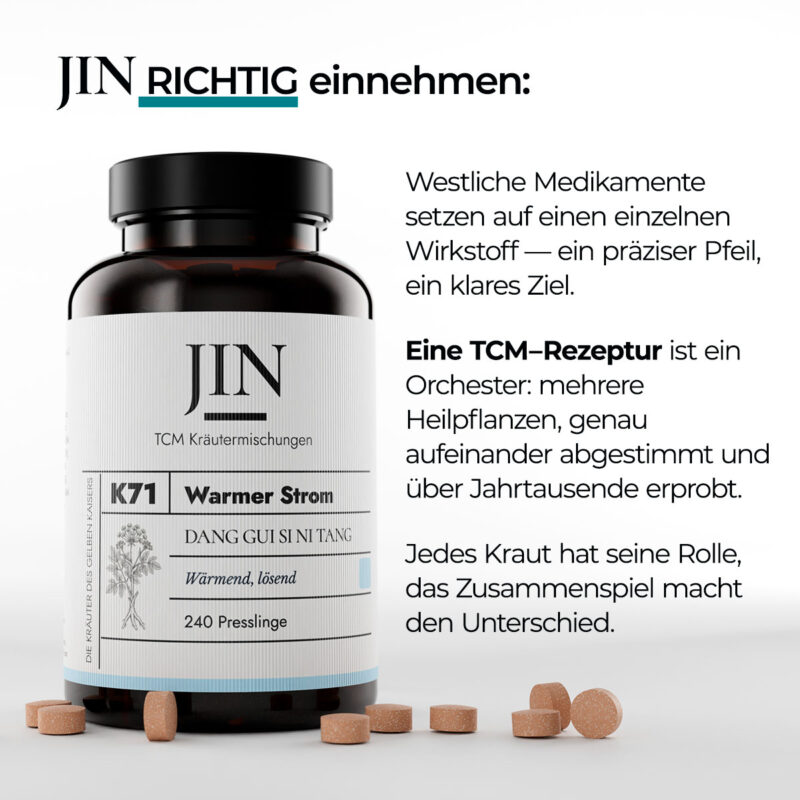
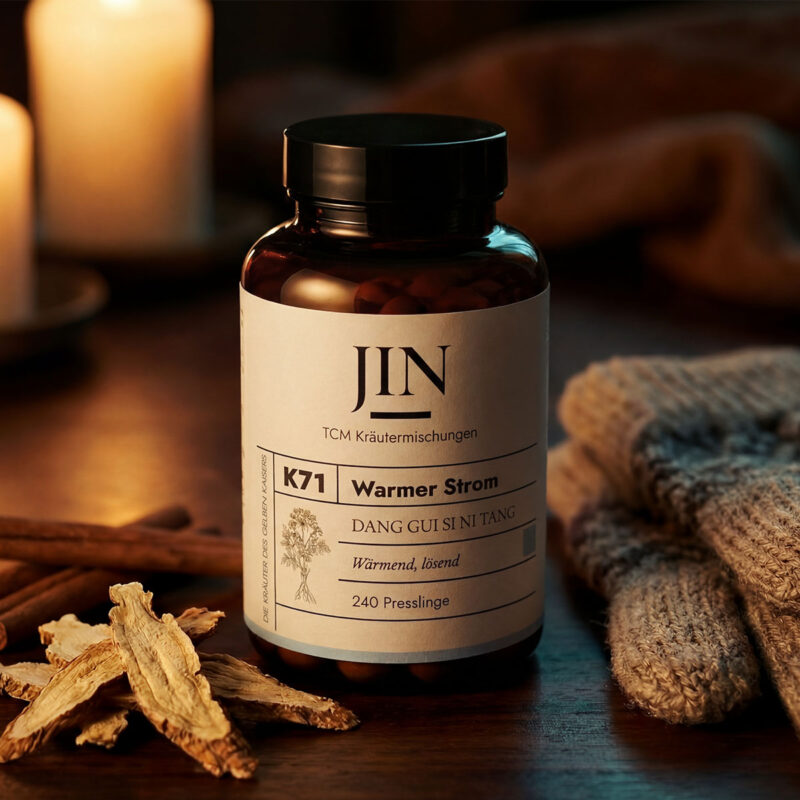
JIN K71 — Warmer Strom
Die klassische Rezeptur Dang Gui Si Ni Tang (当归四逆汤) — das „Dang Gui Dekokt gegen kalte Extremitäten“. Sieben Kräuter, die das Blut nähren, die Leitbahnen wärmen und die Kälte aus den Gefäßen vertreiben — damit warmes, fließendes Blut wieder bis in Hände und Füße gelangt.
Mit Dang Gui (Engelwurz) als Hauptkraut nährt und belebt diese Mischung das Blut, während Gui Zhi die Leitbahnen wärmt und öffnet und Bai Shao und Chuan Xiong das Blut füllen und bewegen. Ideal bei kalten Händen und Füßen, blassem Hautton, kältebedingten Schmerzen und Beschwerden, die sich bei Kälte verschlimmern.
Quantity
239,70 €
i
To the product
The herbs in this recipeRecommended reading:How TCM herbal blends are formulatedLearn more now
| Herb (Pinyin) | German designation | Function in the recipe |
|---|---|---|
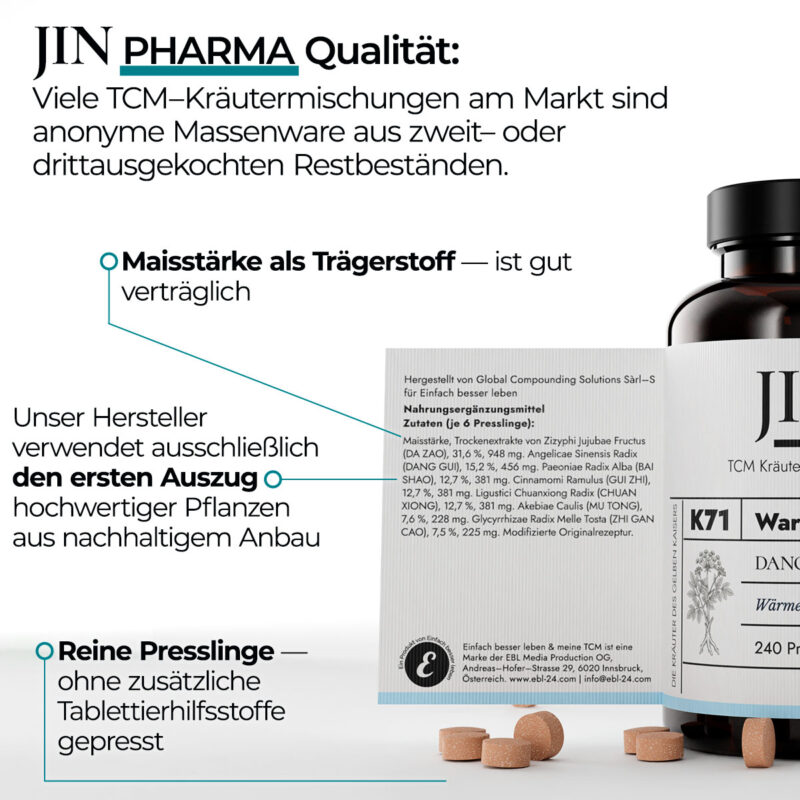
| Dang Gui (Angelicae Sinensis Radix) | Chinese angelica | emperor Nährt und belebt das Blut — die warme Strömung für die Extremitäten |
| Bai Shao (Paeoniae Radix Alba) | White peony root | minister Nährt das Blut und entspannt die Sehnen |
| Gui Zhi (Cinnamomi Ramulus) | cinnamon sticks | minister Wärmt und öffnet die Leitbahnen bis in Hände und Füße |
| Chuan Xiong (Ligustici Chuanxiong Radix) | Szechuan lovage | assistant Bewegt Blut und Qi und vertreibt Kälte |
| Mu Tong (Akebiae Caulis) | Akebia stems | assistant Macht die Gefäße und Leitbahnen wieder durchgängig |
| Da Zao (Zizyphi Jujubae Fructus) | Jujubes | harmonizer Stärkt die Mitte, nährt das Blut und harmonisiert |
| Zhi Gan Cao (Glycyrrhizae Radix Melle Tosta) | Honey-roasted licorice root | harmonizer Harmonisiert alle Kräuter und stärkt die Mitte |
Explanation of the most important herbs
emperor Dang Gui (Angelica) - The blood nourisher
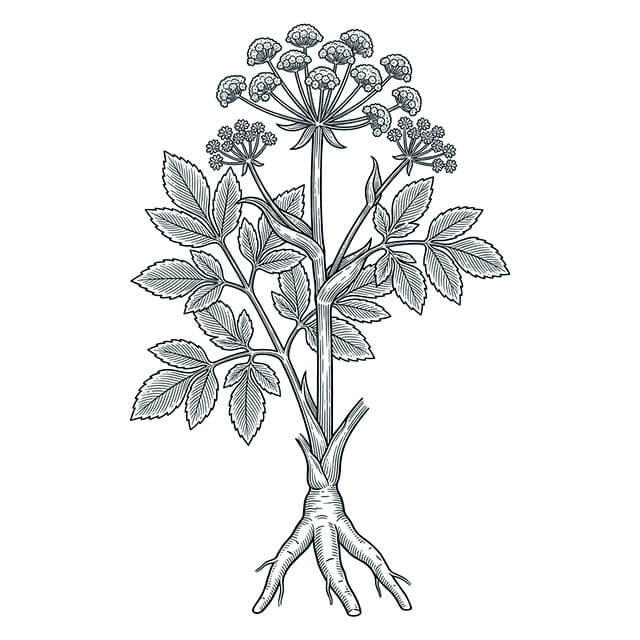
Dang Gui ist der Kaiser dieser Rezeptur — es nährt und belebt das Blut zugleich; bei Kälte–Blockade fehlt es den Extremitäten an warmem, fließendem Blut, und Dang Gui füllt diese Quelle. Ligustilid und Ferulasäure der Chinesischen Engelwurz werden in Untersuchungen mit durchblutungsfördernden und antioxidativen Eigenschaften in Verbindung gebracht.
minister Gui Zhi (cinnamon twig) — Der Leitbahn–Wärmer
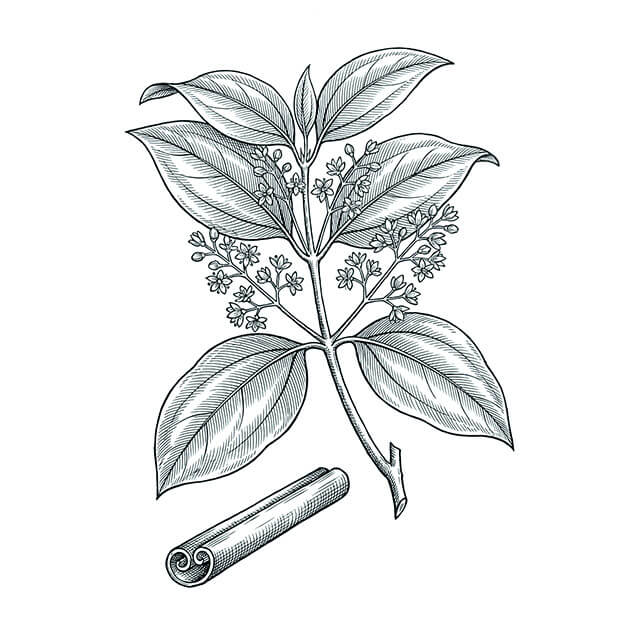
Gui Zhi wärmt und öffnet die Leitbahnen — es treibt die Kälte aus den Gefäßen und bringt das Yang–Qi bis in Hände und Füße, sodass die Blockade weicht. Zimtaldehyd und die ätherischen Öle der Zimtzweige werden in Untersuchungen mit durchblutungsfördernden und wärmenden Eigenschaften in Verbindung gebracht.
minister Bai Shao (Weiße Pfingstrose) — Die Bewahrerin
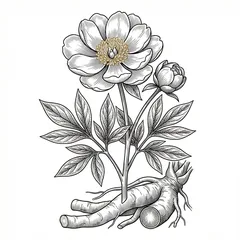
Bai Shao nährt das Blut und entspannt die Sehnen — gemeinsam mit Dang Gui füllt es das Blut, das die warme Strömung in die Glieder trägt. Paeoniflorin der Weißen Pfingstrosenwurzel wird in Untersuchungen mit krampflösenden und schmerzlindernden Eigenschaften in Verbindung gebracht.
assistant Chuan Xiong (Szechuan lovage) — Der Beweger
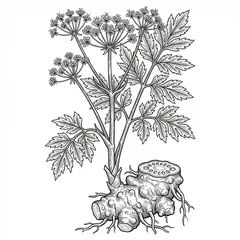
Chuan Xiong bewegt Blut und Qi und vertreibt Kälte — als „Blutbeweger im Qi“ treibt es die warme Strömung kraftvoll in die Peripherie. Ligustrazin und Ferulasäure des Szechuan–Liebstöckels werden in Untersuchungen mit durchblutungsfördernden Eigenschaften in Verbindung gebracht.
Recommended dosage
The dosage depends on the severity.
Based on your questionnaire results, we have highlighted the appropriate dosage for you below.
At light Severity:
- 2 tablets 3 times a day (morning, noon, and late afternoon) = 6 tablets per day
- Optional, if taking 3 doses a day is difficult for you: 3 tablets twice a day — same daily amount
- We recommend at least 2 cans, each containing 240 tablets (enough for about 12 weeks)
At middle Severity:
- 3 tablets 3 times a day (morning, noon, and late afternoon) = 9 tablets per day
- We recommend at least 3 cans, each containing 240 tablets (enough for about 12 weeks)
- If your condition improves, switch to the dosage recommendation for mild symptoms
At significantly Severity:
- 4 tablets 3 times a day (morning, noon, and late afternoon) = 12 tablets per day
- We recommend at least 4 cans, each containing 240 tablets (enough for about 12 weeks)
- If your condition improves, switch to the dosage recommendation for moderate severity
Why 3 times a day?
This ensures that the herbs' effects are evenly distributed throughout the day.
IMPORTANT:
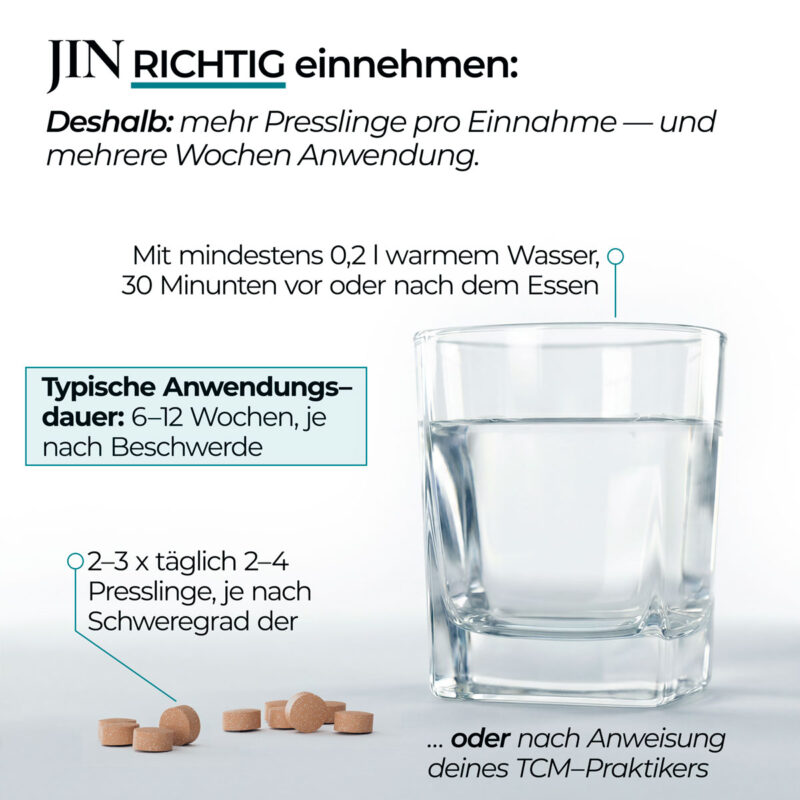
- Take the tablets with at least 0.2 liters of warm water
- Ideally, 30 minutes before or after a meal
- This suggestion is not a substitute for a medical diagnosis or treatment
- If you are pregnant or breastfeeding, have a chronic medical condition, or are taking medication, consult a doctor or a TCM practitioner beforehand.
- If you have a severe cold, fever, or diarrhea, stop taking this product
- Hände, Füße und den ganzen Körper warm halten; Kälte, Zugluft und kalte Speisen oder Getränke meiden
- Warme, gekochte Mahlzeiten bevorzugen und für sanfte, durchblutungsfördernde Bewegung sorgen
If little has changed after about 12 weeks:
Herbs are just one part of TCM. Combine taking them with other practices—acupressure, qigong, Pilates, or yoga, BS+, as well as meditation and breathing exercises. Afterward, take a two-week break from taking the herbs. Then, if needed, you can TCM analysis try again and/or compare your result with your TCM practitioner or discuss it with your doctor.
If you have any questions about how to take it, please feel free to contact us.
Want to know what dosage is right for you? Take our free TCM questionnaire—in just a few minutes, it will reveal your personal TCM pattern and the appropriate dosage of the recommended TCM herbal blend.
BS+ for your intestinal flora
A healthy gut is the basis for your well-being. Current studies show that around 80 % of people in Germany consume too little fiber - yet it is the most important food for your intestinal flora (also known as the intestinal microbiome).
BS+ was developed to support your daily fiber supply. With 11 high-quality, natural ingredients BS+ offers your intestinal flora a diverse nutrient base.
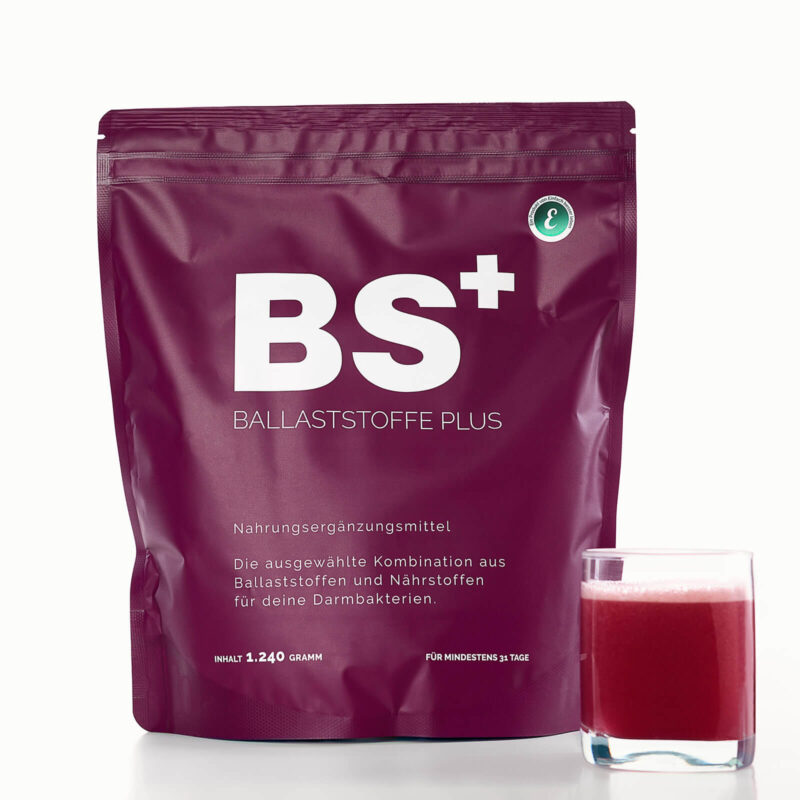
The revolutionary fiber formula
BS+ Dietary Fiber Plus
- Up to 20 g dietary fiber daily EXTRA
- Improved digestion and regular bowel movements
- Increased energy and vitality
- Better mood and mental clarity
- Support for your immune system
- Potential improvement in cholesterol and blood sugar levels
Simply stir into water twice a day - Your intestinal flora will thank you.
Why BS+ for cold block?
A cold blockage freezes the flow of Qi and blood - and this also affects the center. When cold enters the body, digestion slows down, the spleen can no longer convert food properly and dampness accumulates. A weakened gut is less able to absorb warming nutrients and cannot strengthen the yang sufficiently. Healthy intestinal flora is therefore crucial to strengthen the center and drive out the cold from within.
BS+ contains 11 prebiotic fibers and thus supports the development of healthy intestinal flora. A well-nourished intestinal flora strengthens the transformative power of the spleen and helps the body to absorb nutrients better - so your yang can grow again and the cold can recede.
Particularly important for cold block:
- Strengthens spleen function and improves nutrient absorption for yang build-up
- Supports digestive warmth and counteracts internal cold
- Helps to remove moisture caused by slowed digestion
Acupressure
Acupressure is acupuncture without needles. - You can apply them yourself at any time. By applying targeted pressure to certain points, you activate the flow of Qi, warm the meridians from the inside and help to drive the cold out of your body.
These three points form an effective combination for warming the meridians, strengthening the Yang and dispelling the cold. Regular stimulation combined with heat - For example, warming the points with warm hands after pressing - significantly increases the effect.
ACUPUNCTURE POINT: Ma 36
Stomach 36
Three miles of the leg - To San Li
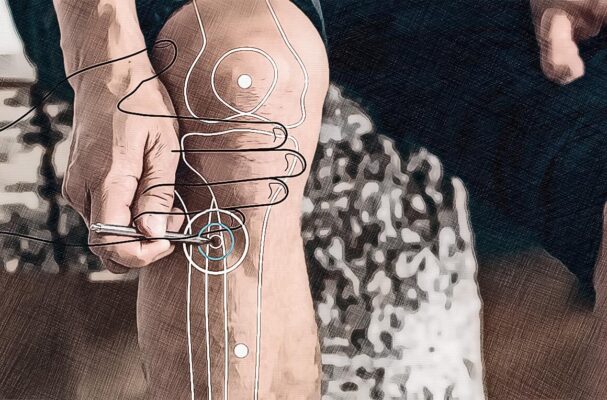
- Strengthens Qi and Yang and warms the meridians
- Promotes blood circulation and banishes cold from the whole body
- Strengthens the spleen and stomach as a source of Qi and blood
- Activates the body's own heat production
- One of the most important points for overcoming cold blockages
Location: A hand's width below the kneecap, a thumb's width to the side of the edge of the shinbone to the outside.
Application:
Massage in a circular motion twice a day for 3 minutes per side with firm pressure. Then warm the area with warm hands or a heating pad - this intensifies the warming effect.
ACUPUNCTURE POINT: KG 06
Concept vessel 06
Sea of Qi - Qi Hai
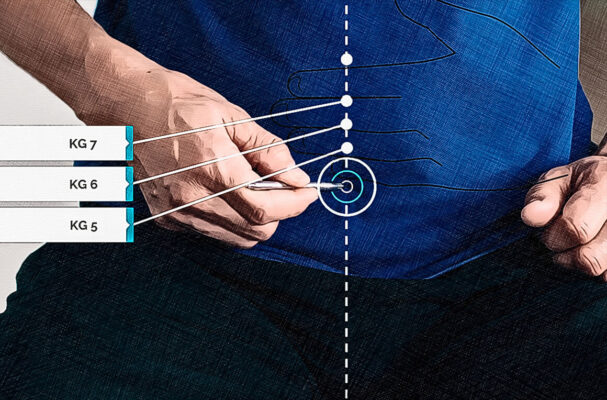
- Strengthens the source Qi and warms the lower abdomen
- Tonifies the yang and dispels inner cold
- Promotes the circulation of Qi and blood throughout the body
- Strengthens the kidney energy as the root of body heat
- Particularly effective for cold sensations in the abdomen and lower back
Location: On the midline of the abdomen, about one and a half thumb widths below the navel.
Application:
Massage twice a day for 3 minutes with gentle to medium pressure in a clockwise circular motion. Particularly effective in bed in the morning - then place your warm hands on the area and feel the warmth flow deep into the skin.
ACUPUNCTURE POINT: MP 06
Spleen-Pancreas 06
Meeting place of the three Yin - San Yin Jiao
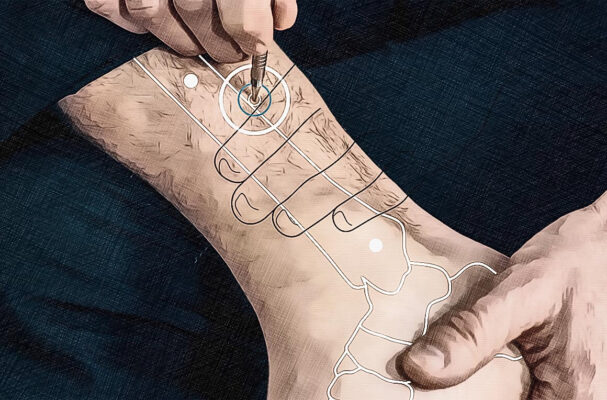
- Meeting point of the three Yin meridians - nourishes blood and strengthens the center
- Warms the lower extremities and promotes blood circulation
- Relieves cold blockages in the legs and lower abdomen
- Harmonizes the spleen, liver and kidneys at the same time
- Particularly effective for cold feet and a feeling of heaviness in the legs
Location: Four finger widths above the inner ankle, directly behind the edge of the shinbone.
Application:
Massage in a circular motion twice a day for 3 minutes per side with medium pressure. Ideal in the evening before going to bed - the warming effect is enhanced in combination with a warm foot bath. DO NOT use during pregnancy!
TIP
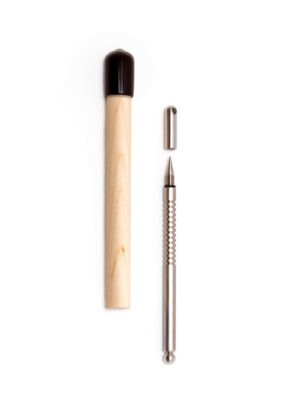
AkuPen
Acupuncture pen with video instructions
For even more intense stimulation You can use an AkuPen. The acupressure pen significantly enhances the effect of acupressure. With an extensive video library for over 80 acupuncture points.
Qi Gong
Qi Gong for cold blockage warms the body from the inside, gets the frozen Qi moving again and helps to dispel the cold from the meridians. The gentle, flowing movements generate inner warmth - without overloading the body.
Just 5-10 minutes of daily practice is enough to noticeably promote blood circulation, strengthen the Yang and dissolve the typical cold stiffness. Regularity is more important than duration.
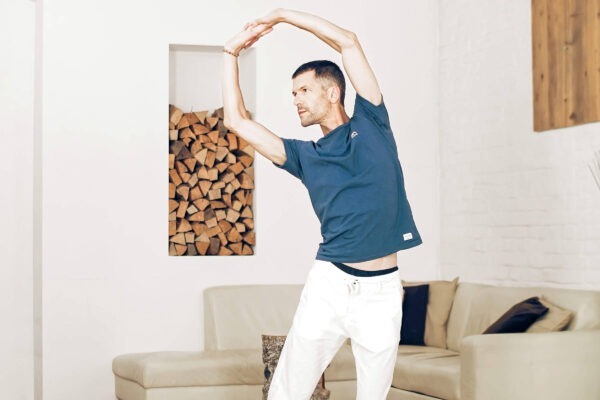
QI GONG: Exercise 1
Warm the center
Warms the middle warmer and strengthens the yang
Particularly helpful for:
- Feeling of coldness in the stomach and limbs
- Inner coldness and yang deficiency
- Weak digestion due to cold
- Stiffness and slowed Qi flow
This is how you practise:
Stand with your feet hip-width apart, place both hands on your lower abdomen and perform slow, circular movements. Feel the warmth building up under your hands. 8-12 repetitions in each direction, approx. 5-10 min.
Effect:
The circular movements activate the inner fire in the middle warmer - the center of your digestion and heat production. This exercise is particularly valuable if you have a cold blockage because it strengthens the yang directly at its source and distributes the heat from the center to the entire body.
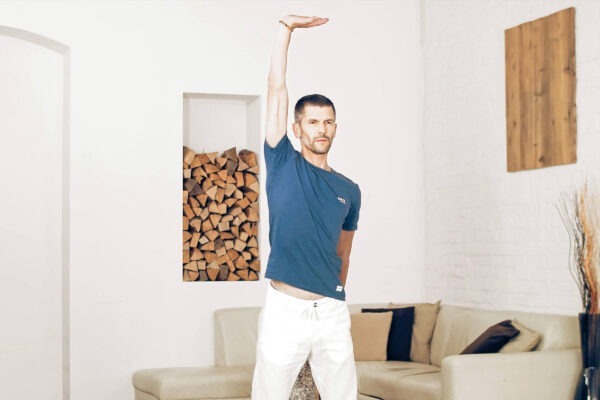
QI GONG: Exercise 2
Connecting heaven and earth
Stretches the meridians and promotes the free flow of Qi
Particularly helpful for:
- Blocked Qi flow in the meridians
- Stiffness in the back and flanks
- Feeling of coldness in the upper and lower half of the body
- Lack of energy and listlessness
This is how you practise:
Stand hip-width apart, press one hand up towards the sky and the other down towards the earth. Alternate sides in a calm rhythm. 8-12 repetitions per side, approx. 5-10 min.
Effect:
The stretching movement opens the gallbladder and bladder meridians - the very channels through which cold often enters the body. The alternating upward and downward stretching stimulates the flow of Qi in the entire meridians and releases any blockages caused by the cold.
QI GONG: Exercise 3
Regulate Qi
Moves the Qi and dispels the cold from the body
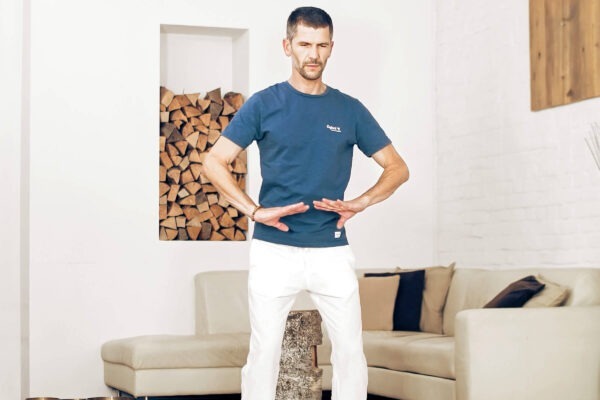
Particularly helpful for:
- Stagnant Qi flow due to cold
- Feeling of heaviness and sluggishness
- Cold hands and feet
- General reluctance to move
This is how you practise:
Stand with your feet hip-width apart, slowly raise your arms up and lower them again. Breathe in as you lift and out as you lower. The movement is calm and flowing. 8-12 repetitions, approx. 5-10 min.
Effect:
This exercise gets the entire Qi moving and distributes the heat evenly throughout the body. This is particularly important in the case of a cold blockage - because where Qi flows, no cold can settle. The rhythmic up and down movement gently releases the stagnation and helps the body to actively transport the cold to the outside.
These three Qi Gong exercises are specially selected for cold blockages. They warm the body from the inside, get the frozen Qi moving again and help to drive the cold out of the meridians step by step.
The exercises are most effective if you do them in the morning after getting up - this helps to combat the typical morning stiffness and cold. Late afternoon is also a good time to build up warmth before the evening chill sets in.
QI GONG:
When and how often?
In the morning after getting up (ideal):
- All 3 exercises as a sequence: approx. 15–20 min.
- Or just 1–2 exercises: approx. 5–10 min.
- Helps specifically against morning stiffness and cold
In between:
- Individual exercises if required (e.g. if you feel cold or stiff)
- „Warm the center“ for quick inner warmth
Regularity is more important than duration:
- It is better to exercise for 10 minutes every day than for 60 minutes once a week.
- After 2–3 weeks, you will notice the first changes.
- After 2-3 months of regular practice: significantly more warmth and mobility
Pro tip: If you have a cold blockage, Qi Gong can be a little more dynamic - movement generates heat! However, never practise in a cold environment or in a draught. Keep warm, especially your neck, lower back and feet - the typical entry points for cold.
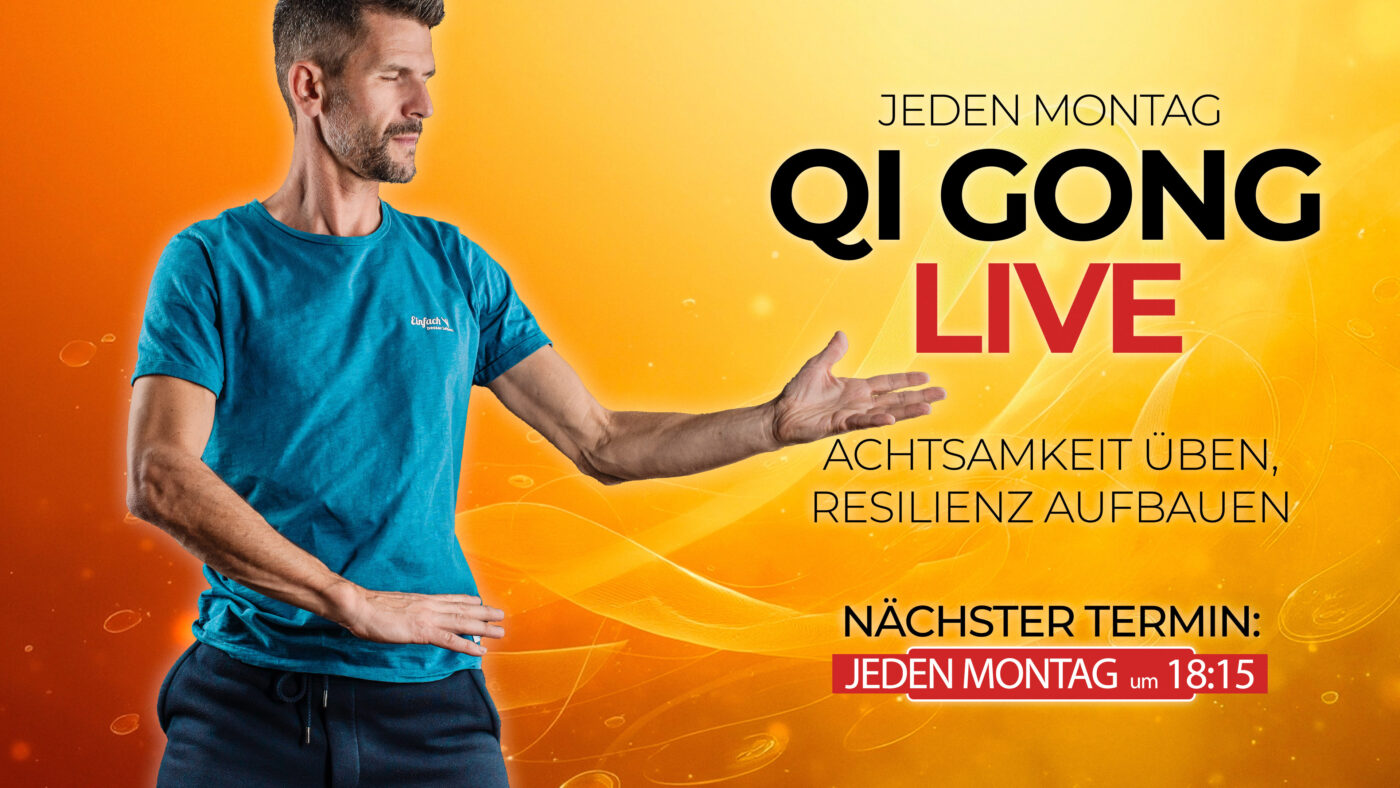
LIVE EVERY MONDAY: QI GONG WITH WOLFGANG
Every Monday at 6:00 p.m. Let's practice together live on YouTube. Among other things, Wolfgang will guide you through a complete qigong sequence — free of charge and suitable for all levels.
Why participate live? ✓ Practicing together is motivating ✓ Wolfgang explains the exercises in detail ✓ You can ask questions in the live chat ✓ Regular appointments help with your routine
More about Qi Gong LiveMeridian Yoga — The Yoga of TCM
Meridian Yoga combines yoga with traditional Chinese medicine. The result is a holistic exercise concept for better health and more energy.
The following exercises specifically activate the stomach meridian, which runs along the front of the body and is closely connected to the earth element. In TCM, the stomach is the source of digestive heat - and it is precisely this heat that your body needs to release a cold blockage. When the stomach meridian flows freely, your body's natural heat production is strengthened and the cold can be dispelled.
MERIDIAN YOGA: Exercise 1
The tree with acupressure
Activates Ma 36, warms the center and dispels cold
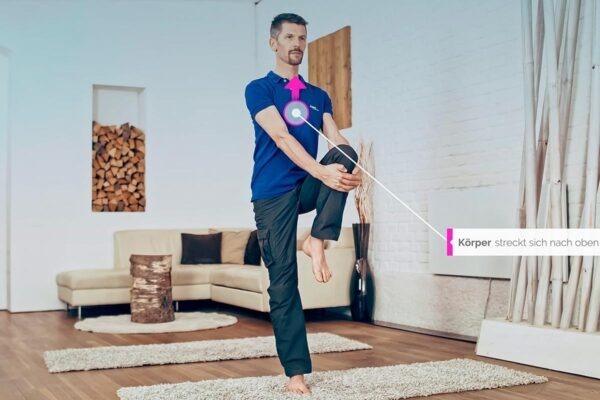
Particularly helpful for:
- Feeling of coldness in the stomach and limbs
- Pain that is aggravated by cold
- Lack of digestive heat and sluggish digestion
- Lack of energy and inner chills
Effect:
In this version of the tree, you hold the Ma 36 acupuncture point on the lower leg while balancing. This point is one of the most effective points in TCM - it strengthens the yang, warms the center and promotes blood circulation. In the case of a cold blockage, the combination of balance, acupressure and stomach meridian activation helps to stimulate internal heat production and drive the cold out of the body.
MERIDIAN YOGA: Exercise 2
The bow
Opens the stomach meridian, warms the entire body
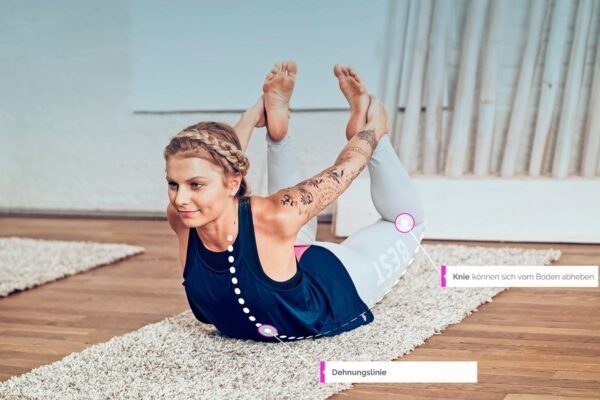
Particularly helpful for:
- Coldness and stiffness in the trunk and abdominal area
- Blocked Qi flow in the center of the body
- Feeling of heaviness and poor circulation
- Cold pain that radiates to the back
Effect:
This backbend stretches the entire stomach meridian, which runs along the front of the body. The intense opening of the abdomen activates the stomach and spleen energetically and stimulates digestive heat. This exercise is particularly valuable in the case of a cold blockage - the stretching brings movement and warmth into the frozen Qi flow and helps to release the cold from deep within the body.
Both exercises activate the stomach meridian, which runs along the front of the body and legs. The stomach belongs to the earth element and is the central source of digestive heat in TCM - exactly the heat your body needs to overcome a cold blockage. Targeted activation of the stomach meridian strengthens internal heat production and the cold can gradually give way.
Particularly effective: Hold each position for 3-5 breaths and visualize warming, golden energy flowing from the center of your body into all areas and melting the cold. Breathe deeply and slowly - each breath creates inner warmth.
MERIDIAN YOGA:
When and how often?
Best time:
- In the morning after getting up to activate the digestive heat for the day
- Or between 7 and 9 o'clock (stomach time in the organ clock)
- If you have a cold block: warm up beforehand - a warm bath or shower works wonders
Duration:
- Hold each position for 3–5 breaths.
- Complete sequence: 10–15 minutes
- 3–5 times per week for best results
Important:
- Practice in a warm room - cold makes the blockage worse
- Breathe deeply and evenly during the positions.
- Stretching should be comfortable, never painful.
Pro tip: Combine Meridian Yoga with warming Qi Gong exercises such as „Warming the center“ or „Connecting heaven and earth“. The gentle movement generates inner warmth and helps to dissolve the cold blockage from within. A warm ginger tea afterwards enhances the warming effect.
Nutrition according to TCM
„Let food be your medicine.“ - This principle has been valid in TCM for thousands of years. In the case of a cold blockage, the right diet is an essential key to banishing the cold from your body and restoring the free flow of Qi and blood.
Nutrition for a cold block is one of the elements Water (kidney) and fire (heart) and needs warm to hot, spicy and nourishing food, to warm the body from the inside, strengthen the yang and dissolve the cold.
What you eat, HOW you eat and WHEN you eat - all of this influences your Qi flow, your warmth and your well-being.
The golden rules against the cold in your body
What is good for you:
Warming spices
- Ginger (fresh and dried) - the No. 1 chiller
- Cinnamon - warms deeply and strengthens the yang
- Star anise and cloves - release the cold blockade
- Fennel - warms the center and moves the Qi
Warming spices are your strongest allies against the cold!
Warming meat
- Lamb - the warmest meat in TCM!
- Beef - warms and strengthens Qi and blood
- Wild - expels cold from the meridians
- Chicken - strengthens the Qi and warms the center
Animal protein warms your body from the inside and releases the blockage
Warming drinks
- Ginger tea - 2-3 cups daily
- Cinnamon tea - warms the kidney yang
- Hot water - never drink it cold!
- Bone broth - nourishes and warms at the same time
Every sip should be warm - cold has no place in your body!
Nuts and warming ingredients
- Walnuts - warm the kidney yang
- Spring onions - open up the surface and banish the cold
- Chestnuts - strengthen kidneys and bones
- Garlic - warms and moves the Qi
Nuts and onions are little heat reservoirs for your yang!
What you should avoid:
Raw vegetables and salads
- Salads as a main meal
- Raw vegetables in large quantities
- Smoothies with raw fruit
- Raw food diets of any kind
Raw food cools your body and intensifies the cold blockade!
Cold drinks and food
- Ice-cold water and iced drinks
- Ice cream and frozen desserts
- Drinks straight from the refrigerator
- Cold milk
Every cold drink increases your cold block!
Cooling fruits
- Watermelon - strongly cooling
- Bananas - cooling thermals
- Oranges and kiwi - cooling
- Tropical fruits in large quantities
South fruits bring extra cold to your body!
Cooling food
- Yogurt and cold dairy products
- Tofu in large quantities (cooling)
- Cucumber - strongly cooling and moisturizing
- Sugar and sweets
These foods cool the middle and promote humidity and cold!
HOW YOU SHOULD EAT:
Warm, cooked and seasoned
- Every meal hot and cooked
- Season generously with ginger and cinnamon
- Prefer soups and stews
- Also breakfast warm (porridge!)
Regularly and at rest
- 3 fixed meals a day
- Biggest meal at lunchtime
- Light and early in the evening (before 7 pm)
- Eat in peace, chew well
The spleen loves regularity and warmth!
Drink properly
- Always drink warm or hot
- Ginger tea - several cups a day
- Bone broth as a snack
- Never drink cold and never with meals
Warm drinks banish the cold from the inside!
IDEAL MENU FOR ONE DAY:
Breakfast (7–9 a.m.):
- Warm porridge with cinnamon, walnuts and honey
- In addition: Ginger tea or warm water
Lunch (12–1 p.m.):
- Warming lamb stew with ginger and star anise
- In addition: Whole grain rice or potatoes
- Or: Beef with warming vegetables and spring onions
Dinner (6–7 p.m.):
- Chicken soup with ginger and fennel
- Or: Vegetable soup with garlic and spring onions
- In addition: Small portion of rice
Snack if needed:
- Handful of walnuts or chestnuts
- Or: cup of warm bone broth
- Or: Ginger tea with honey
The most important rule when changing your diet is:
Start with ONE step!
Don't change everything at once.
Our suggestion for getting started:
- Drink ginger tea daily (2-3 cups) - 2 weeks
- Introduce a warm breakfast (porridge with cinnamon and walnuts) - 2 weeks
- Cut out raw food and cold drinks completely - 2 weeks
Step by step, you will notice how the warmth returns to your body, the cold blockage is released and the flow of Qi is restored.
Your body will thank you for it!
RECIPE: WARMING LAMB STEW WITH GINGER AND STAR ANISE
Ingredients:
For 4 portions
- 500 g lamb (shoulder or leg)
- 1 piece of fresh ginger (approx. 5 cm), sliced
- 2 star anise
- 3 cloves
- 1 teaspoon fennel seeds
- 3 potatoes, diced
- 2 carrots, sliced
- 3 spring onions, in rings
- 3 cloves of garlic, chopped
- 1.5 l water or bone broth
- Salt, pepper, 1 pinch of cinnamon
Preparation:
- Wash the lamb and cut into bite-sized pieces
- Place the meat in a pan with water, heat slowly
- Skim off the foam, add the ginger and garlic
- Add the star anise, cloves and fennel seeds
- Simmer over a low heat for 1-1.5 hours
- Add the potatoes and carrots, cook for a further 30 minutes
- Stir in the spring onions and season to taste with salt, pepper and cinnamon
Effect:
Warms deeply from the inside and dispels the cold blockade
Strengthens the Yang and nourishes Qi and blood
Star anise and ginger release blockages in the meridians
2x per week - the powerful chiller!
RECIPE: WARMING CINNAMON CONGEE WITH WALNUTS
Ingredients:
For 2 portions
- 100 g jasmine rice or round grain rice
- 800 ml water
- 1 piece of fresh ginger (approx. 3 cm), finely sliced
- 1 teaspoon cinnamon
- 1 handful of walnuts, roughly chopped
- 3 dates, pitted and finely chopped
- 1 tbsp honey
- Optional: 1 pinch of clove powder, 1 pinch of cardamom
Preparation:
- Wash the rice thoroughly and place in a pan with water
- Add the ginger slices and bring to the boil
- Reduce the heat and simmer with the lid on for 45-60 minutes
- Stir regularly until a creamy porridge is formed
- Stir in the cinnamon and dates and cook for a further 5 minutes
- Pour into bowls and top with walnuts and honey
- Enjoy warm - never let it get cold!
Effect:
Warms the core and dispels inner cold gently but effectively
Cinnamon and ginger strengthen the yang and release the cold blockade
Walnuts warm the kidney yang and strengthen the bones
Ideal every day - the perfect warming breakfast!
Breathing
Breathing is the bridge between body and mind. In TCM, we say: „The lungs govern qi“ — through conscious breathing, you can directly influence your energy flow, harmonize all organ systems, and activate your self-healing powers.
Studies show: Proper breathing activates the parasympathetic nervous system (rest & regeneration), massages the internal organs from within, improves oxygen supply, and reduces stress hormones. The good news: Just 5–10 minutes a day can have a measurable effect on your overall well-being.
Recommended breathing techniques
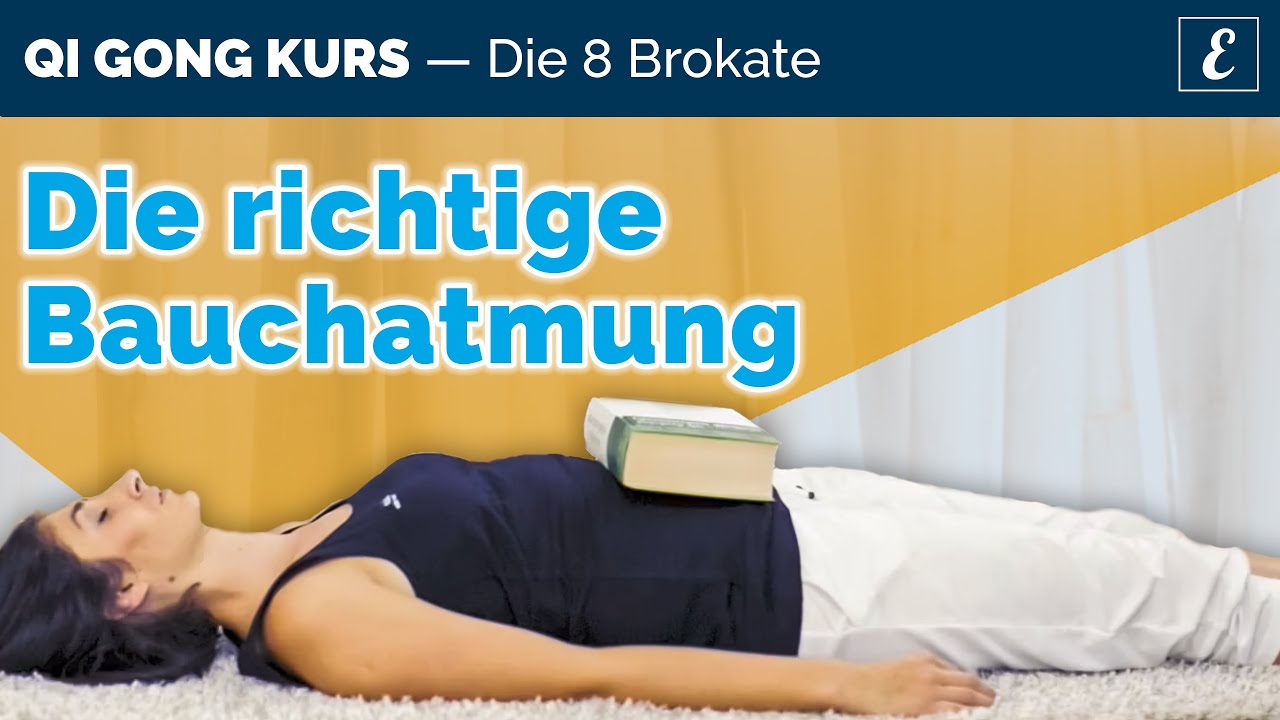
ABDOMINAL BREATHING — The basis for every breathing technique
Natural breathing
Abdominal breathing is the most natural and effective form of breathing. With every breath, you massage your internal organs, activate the flow of energy, and bring qi to the center of your body (dantian).
Wolfgang shows you step by step, How to learn abdominal breathing correctly—lying down to start with, then later also sitting and standing.
Duration: 9 minutes
4–7–8 BREATHING — Calms you down immediately
Breathing to fall asleep and combat inner restlessness
4–7–8 breathing (inhale for 4 seconds, hold for 7 seconds, exhale for 8 seconds) is known as a „natural sedative.“ This special rhythm calms your nervous system in just a few minutes—perfect for stress, racing thoughts, or trouble falling asleep.
Perfect for the evening or whenever you want to calm down quickly.
Duration: 9 minutes
To the interactive videoBOX BREATHING — For inner coherence
Professional breathing for focus and calmness
Box Breathing (4 seconds on, 4 seconds hold, 4 seconds off, 4 seconds hold) combines activation and relaxation in perfect balance. This method is used by elite soldiers, athletes, and executives to remain calm and focused even in extremely stressful situations.
Train your CO₂ tolerance and brings the heart, breathing, and nervous system
into a harmonious state.
Duration: 9 minutes
To the interactive videoCOHERENT BREATHING — Harmonizes body & mind
Breathing against burnout
With coherent breathing You breathe in for 5.5 seconds and out for 5.5 seconds. This rhythm brings your heart and breathing into perfect synchrony—a state that science refers to as „coherence.“ This method is also used in clinics for burnout treatment and stress reduction.
Proven to improve Heart rate variability (HRV) — the most important marker for stress resistance, health, and life expectancy.
Duration: 14 minutes
To the interactive video
COHERENT BREATHING Around the clock
Our 24/7 livestream on coherent breathing runs non-stop. You can tune in at any time and join in right away.
Perfect for:
✓ Spontaneous breaks to catch your breath in between
✓ If you need help breathing
✓ As background while working
✓ For falling asleep (calms the nervous system)
✓ For regular daily practice
relaxation
When your body is relaxed, all organ systems can function optimally. Chronic tension blocks your body's self-healing powers and keeps you in a state of constant stress. Through targeted relaxation techniques, you activate the parasympathetic nervous system and send your body the signal: „Now I can regenerate, heal, and build strength.“
Progressive muscle relaxation is one of the most researched relaxation methods and has been used successfully for over 100 years. It helps you to recognize tension, actively release it, and achieve a state of deep relaxation—whenever you want.
Recommended relaxation technique
PROGRESSIVE MUSCLE RELAXATION (PMR)
The scientifically proven relaxation method
Progressive muscle relaxation according to Jacobson is one of the most widely researched relaxation techniques worldwide. By deliberately tensing and relaxing individual muscle groups, you learn to consciously perceive tension and actively release it.
Proven effect:
Lowers blood pressure, improves sleep, reduces chronic pain, relieves tension, and activates self-healing powers. Successfully used by psychologists to treat anxiety disorders, depression, and chronic pain.
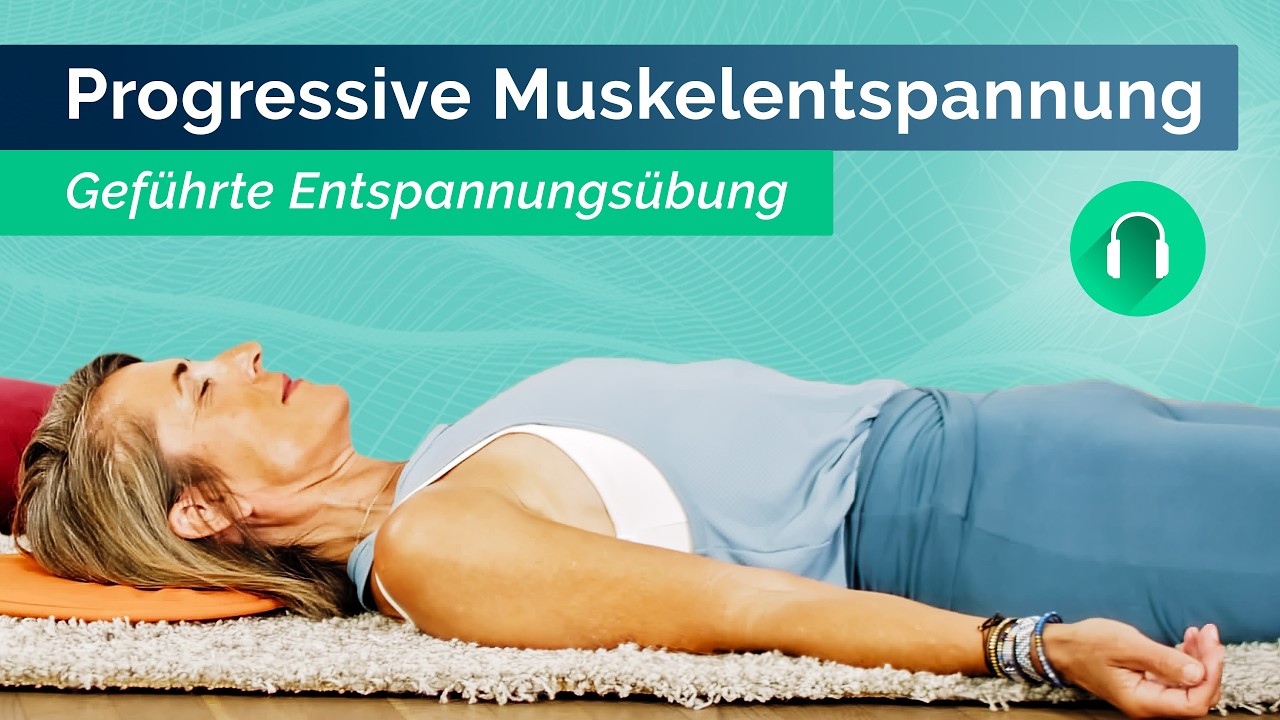
Maria guides you step by step through the entire exercise—perfect for beginners and advanced practitioners alike.
Duration: 23-minute complete guide
To the guided PMRMeditation
Meditation calms the mind — and a calm mind harmonizes the body. In TCM, we know that every emotion affects a specific organ. Through regular meditation, you learn to break out of destructive thought patterns, find emotional balance, and strengthen your inner core.
Modern studies confirm: Meditation has been proven to change brain structure, reduce stress hormones, strengthen the immune system, and improve self-healing powers. Just 10 minutes a day can change your life forever.
Recommended meditations
GUIDED MEDITATIONS FOR EVERY DAY
Your personal meditation library
We have a complete Playlist with over 60 guided meditations, breathing exercises, and relaxation techniques—from short 5-minute meditations for in between to deep 30-minute sessions for intensive practice.
In the playlist you will find:
- Morning meditations for a mindful start to the day
- Meditations for restful sleep
- Breathing meditations for inner peace
- Meditations against stress, brooding, and worries
- TCM standing meditations for all 5 elements
- Body scan and body journeys
- Healing meditations to activate self-healing powers
- Special breathing techniques (4–7–8, coherent breathing, bee breathing)
Perfect for beginners and advanced practitioners. Choose the right meditation for you depending on your time, the time of day, and your needs.
To the meditation playlistCold freezes the river.
Where there is cold, everything contracts - muscles, tendons and meridians. Only when the warmth returns does the blockage melt and life flows freely again.
- Loosely based on the HUANG DI NEI JING
(The Yellow Emperor's Classic of Internal Medicine)
More tips for your everyday life
In addition to traditional TCM treatment methods there are many simple everyday habits that can help you to banish the cold from your body and prevent new cold accumulation. The following applies to a cold blockage: warmth from inside and outside is your strongest ally - the more consistently you use it, the faster the blockage will dissolve.
Heat and cold protection
Warm foot baths with ginger
Cold feet draw cold into the whole body - warm foot baths counteract this:
- In the evening, take a warm foot bath with 3-5 slices of fresh ginger (15-20 minutes)
- Water temperature 38-42 °C - pleasantly warm, not too hot
- The water should reach above the ankles
- Put on warm socks immediately after the footbath - lock in the warmth
- Particularly effective before going to bed - promotes blood circulation and sleep
Moxibustion (mugwort cigars)
Moxibustion is one of the most effective methods against cold:
- Burn mugwort (moxa) over the affected areas - the heat penetrates deep into the tissue
- Moxa plaster as a simple alternative for everyday life
- Use 2-3 times a week on Ma 36 and KG 06 - the most important points against the cold
- The heat should be pleasantly penetrating - never burn
- Particularly effective in the cold season and for acute cold pain
Warm clothing and protection against the cold
Consistent protection against the cold is the basis of any treatment:
- Always keep your lower back, stomach and knees warm - this is where the yang is located
- Wear kidney warmers and joint warmers, even in milder temperatures
- Scarf and hat in winter - the neck is an entry point for external cold
- Never go outside with wet hair
- Avoid air conditioning or cover the affected areas with a cloth
Warming drinks and treatments
Hot drinks
Warming drinks dissolve the cold from the inside:
- Ginger tea: Pour hot water over 3-5 slices of fresh ginger - drink throughout the day
- Cinnamon tea: steep half a cinnamon stick in hot water - warms the center and the yang
- Ginger and cinnamon honey: combine ginger and cinnamon, sweeten with a little honey - triple the warming effect
- Warm water with a pinch of turmeric - promotes blood circulation
- Consistently avoid cold drinks, iced tea and soft drinks - they intensify the cold blockade
Hot water bottle and cherry stone cushion
Targeted heat releases the blockage on the spot:
- Place a hot water bottle on the lower abdomen or lower back - warms the kidney yang
- Warm a cherry stone cushion in the oven and place on painful or stiff areas
- Direct the red light lamp onto the affected areas - 15-20 minutes daily
- Put a hot water bottle in bed before going to sleep - so you don't get cold at night
- For acute cold pain: apply heat several times a day - the more often, the better
Movement to activate the flow of Qi
Regular gentle exercise
Movement generates heat and stimulates the flow of Qi:
- Qi Gong and Tai Chi - gentle, warming and particularly effective for cold blockages
- Brisk walks - movement generates inner warmth and promotes the flow of Qi
- Gentle yoga - improves circulation and relieves stiffness
- Only swim in warm water - cold water aggravates the cold blockade
- Regularity is more important than intensity - 15 minutes a day is better than an hour once a week
Morning ritual against the cold
Start the day with warmth and exercise:
- 5-10 minutes of gentle stretching exercises directly after getting up
- Rub your hands warm and place them on your lower back - warms the kidney yang
- Massage the abdomen clockwise - activates the center
- Start the day with a glass of warm ginger water
- In case of severe stiffness: take a warm shower beforehand to warm up the body
What you should avoid
Cold and bad habits reinforce the blockage:
- Intensive outdoor exercise in cold weather - the body opens its pores and the cold penetrates
- Swimming in cold water - the cold penetrates deep into the body
- Prolonged sitting without movement - Qi and blood stagnate and the cold solidifies
- Walking barefoot on a cold floor - the cold rises through your feet
- Don't let it cool down after exercise - dress warmly immediately and drink warm water
Important to know
A cold block can worsen if it is not treated. Over time, the cold penetrates deeper and deeper into the body - from the meridians to the organs and into the bones. The sooner you take action, the easier it will be to banish the cold. Patience and consistency are crucial: warm your body inside and out every day, consistently protect yourself from the cold and wind and activate your Qi flow through regular exercise.
When to see a doctor? In case of severe pain that does not subside, numbness or sensory disturbances, blue-violet discoloration of the skin, digestive problems with a strong feeling of coldness in the abdomen or symptoms that do not improve despite consistent treatment. Have yourself examined by a doctor to rule out serious causes. TCM and Western medicine complement each other perfectly here.
For optimal treatment progress
TCM is not a quick fix for symptoms., but rather a holistic healing process. You will achieve the best results if you consistently integrate the treatment into your daily routine and give your body time to regenerate.
Integration into everyday life
Start with ONE step
Don't try to change everything at once! That's overwhelming and leads to
usually leads to you giving up. Instead:
- Week 1-2: Consistently implement a warming diet (ginger, cinnamon, warm soups)
- Week 3-4: Acupressure Ma 36 and KG 06 daily, warm foot baths in the evening
- Week 5-6: Qi Gong „Warming the center“ daily 10 min.
- Week 7-8: Supplement TCM herbal mixture
- From week 9: Add further methods as required
Realistic expectations
After 2–3 weeks: First improvements noticeable
- Feeling less cold in hands and feet
- Pain intensity begins to subside
- Better general feeling of warmth
After 6–8 weeks: Significant improvements
- Significant pain reduction
- Improved blood circulation and mobility
- Less weather sensitivity
After 3–6 months: Sustainable healing
- Cold blockade clearly resolved
- Body feels warmer and more vital
- Sustainable improvement in quality of life
TCM vs. Western medicine
TCM and Western medicine are not mutually exclusive—they complement each other!
When Western medicine is important:
- In acute emergencies
- In case of structural damage
- In case of infections
- For accurate diagnoses (laboratory, imaging)
Where TCM has its strengths:
- In case of functional disorders
- For chronic complaints
- For prevention
- For holistic healing
Ideal: Combine both systems! Use Western medicine for
Acute treatment and accurate diagnosis, TCM for lasting healing
and strengthening the body's self-healing powers.
Important: Never stop taking prescribed medication without consulting your doctor first!
Talk to your doctor when you start TCM treatment.
TCM diagnosis for professionals
Syndrome differentiation according to TCM:
Tongue: Pale or bluish-purple, swollen with a white, moist coating, possibly wet
Pulse: Deep (Chen Mai), slow (Chi Mai), tense (Jin Mai)
Pathomechanism:
External cold (Han Xie) penetrates the meridians via the surface of the body and blocks the free flow of Qi and blood. If there is a simultaneous Yang deficiency, internal cold can intensify the blockage. The constricting nature of cold causes Qi and blood to congeal - where there is no flow, pain arises (Bu Tong Ze Tong). If it persists for a long time, the cold can penetrate deeper into the organs and bones and further weaken the Yang.
Treatment principle:
Wen Jing San Han, Tong Yang Hua Yu (温经散寒, 通阳化瘀) - Warm the meridians, disperse cold, make Yang pervasive and dissolve stasis
Classic recipe:
Dang Gui Si Ni Tang (Angelica Four Reversal Decoction) for cold blockade with cold extremities
Li Zhong Wan (pill to regulate the center) for cold blockade with internal yang deficiency
Important modifications depending on accompanying symptoms:
- For severe external cold in joints: + Gui Zhi (Cinnamomi Ramulus), Xi Xin (Asari Herba)
- For internal Yang deficiency: + Fu Zi (Aconiti Radix Lateralis Praeparata), Gan Jiang (Zingiberis Rhizoma)
- For blood stasis due to cold: + Tao Ren (Persicae Semen), Hong Hua (Carthami Flos)
- In case of humidity: + Cang Zhu (Atractylodis Rhizoma), Yi Yi Ren (Coicis Semen)
- For cold in utero: + Ai Ye (Artemisiae Argyi Folium), Wu Zhu Yu (Evodiae Fructus)
Every step counts
Your body WANTS to heal—you just have to create the right conditions for it to do so.
Remember:
👣 Every little step counts
You don't have to be perfect. Even one warm meal a day is better than none. Even 5 minutes of qigong is better than no exercise at all.
⏳ Patience pays off
It took years for your body to get into this state. Give it time to regenerate. Healing takes time, but it WILL happen.
🎯 Focus on what you can DO
Don't concentrate on what you are doing „wrong". Focus on every positive step you take.
💚 Be good to yourself
Perfection does not exist. It is acceptable to have an off day occasionally. Tomorrow is a new day when you can continue.
🤝 You are not alone
Thousands of people are walking this path with you. For over 2,000 years, TCM has been helping people like you who want to regain their health.
Measure your healing progress

To track your progress with treatment, we recommend that you repeat the TCM analysis after about 3 months.
Why is this important?
- You can see how your condition has improved.
- You can adjust the treatment as needed.
- It motivates you to keep going
- You recognize which measures work best
⚠️ Important: Your answers today will be stored in encrypted form in a code that you received by email. You can only measure your progress later with this code. Keep the email safe!
Activate reminder:
<>In 12 weeks, you'll receive an email with a link to the TCM analysis. When you fill it out, you can enter your personal health code—then you'll see a comparison overview at the end:
→ Your new values
→ Your scores from today's test
→ Direct changes
This allows you to see at a glance whether your symptoms
have improved!
🔒 YOUR DATA IS SAFE
We store:
✓ Only your email address for reminders
✓ The date for shipping
We do NOT store:
✗ Your analysis results
✗ Your personal health data
✗ The connection between email and diagnosis
All analysis data is completely anonymous and is not linked to your email address.
Newsletter
Stay up to date with our newsletter. Besides useful tips and tricks for training and your everyday life, you won't miss any of our new releases.
We are here for you
Do you have questions about your diagnosis or treatment?
Not sure which method is right for you?
Contact us — We're happy to help!