








Gu Ya — Rice Malt
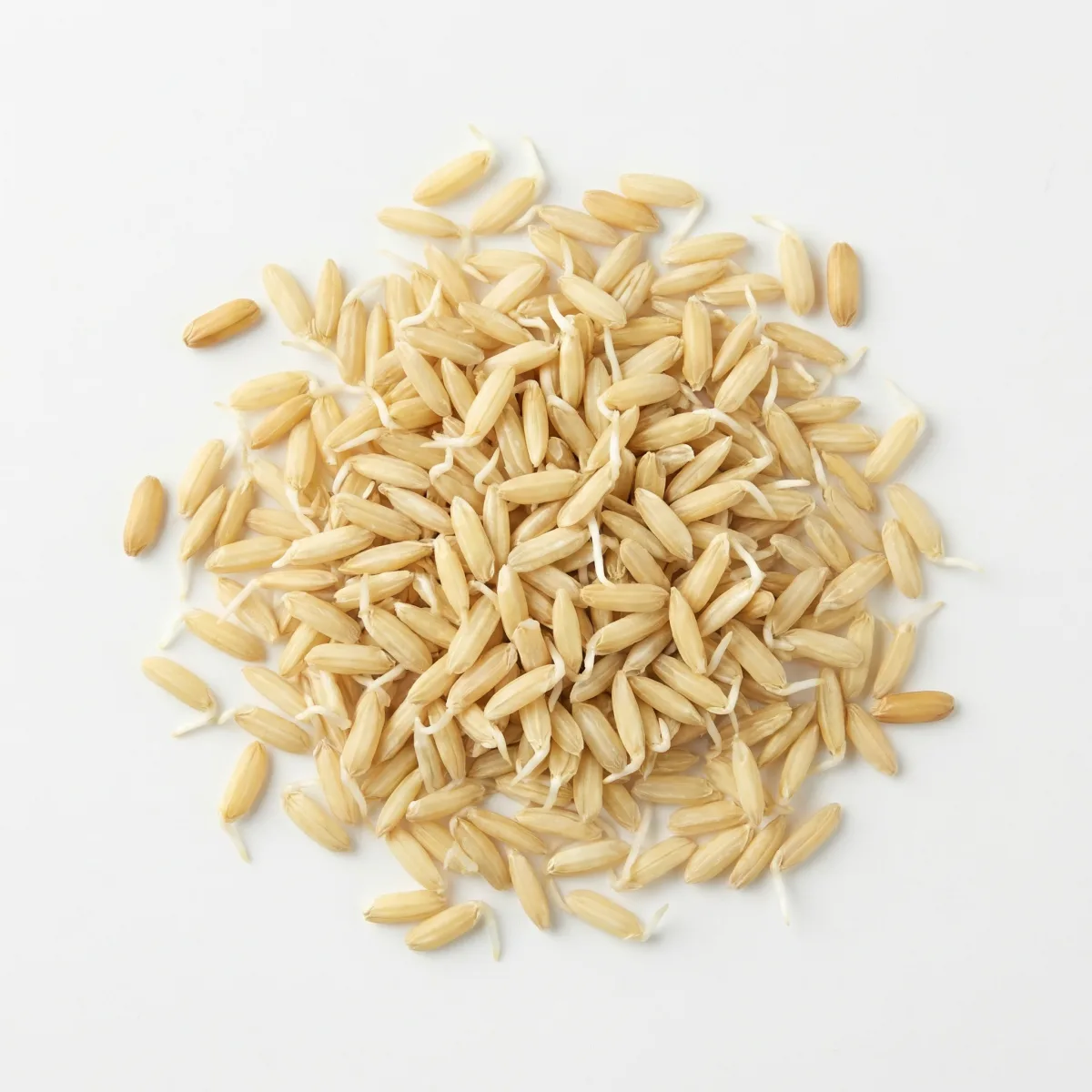
Gu Ya — gekeimter Reis — ist ein mildes, nahrungsnahes Digestivum zur Förderung der Verdauung. Es löst Nahrungsstagnation, stärkt den Magen und harmonisiert die Mitte. Sein sanfter Charakter macht es zum idealen Kraut für empfindliche Konstitutionen.
As a particularly gentle digestive aid, it is suitable for children, the elderly, and patients with weak stomach qi. When combined with Mai Ya (barley malt), it forms one of the most classic digestive pairs in TCM.
Effect from a TCM perspective
Gu Ya opens the stomach and aids digestion. It relieves food stagnation—especially from starchy foods and grain products—and gently strengthens spleen qi.
- Öffnet den Magen und fördert die Verdauung bei Nahrungsstagnation
- Löst Stagnation von stärkehaltigen Speisen und Getreideprodukten
- Strengthens the spleen qi sanft und harmonisiert die Mitte
- Stärkt den Appetit nach Erschöpfung oder bei empfindlicher Konstitution
- Löst Fülle und Stauung im Bauch nach dem Essen
Application & dosage
The standard dose is 9–15 g im Dekokt. Die geröstete Form (Chao Gu Ya) wird bei Milz–Qi–Mangel bevorzugt, da das Rösten die adstringierende Wirkung verstärkt. Die rohe Form wird bei Nahrungsstagnation mit Hitzezeichen eingesetzt.
Gu Ya ist ein mildes Mittel und kann auch in höherer Dosis (bis 30 g) sicher angewendet werden. Bei lang anhaltender Verdauungsschwäche wird es oft über mehrere Wochen eingenommen — seine sanfte Natur macht es für die Langzeitanwendung geeignet.
Dosage forms
- Decoction — 9–15 g, 10–15 Min. mitkochen
- Geröstet (Chao Gu Ya) — bevorzugt bei Milz–Qi–Schwäche mit schwacher Verdauungskraft
- Granules — 3–5 g pro Einnahme
- Powder — kann in Brei oder Suppe eingerührt werden
Dosage
- Decoct: 9–15 g (Standard), bis 30 g bei starker Nahrungsstagnation
- Geröstet (Chao): 9–15 g
- Granules: 3–5 g pro Einnahme
- Powder: 3–6 g pro Einnahme
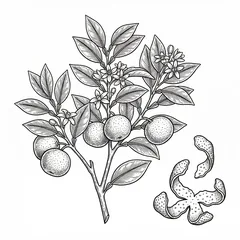
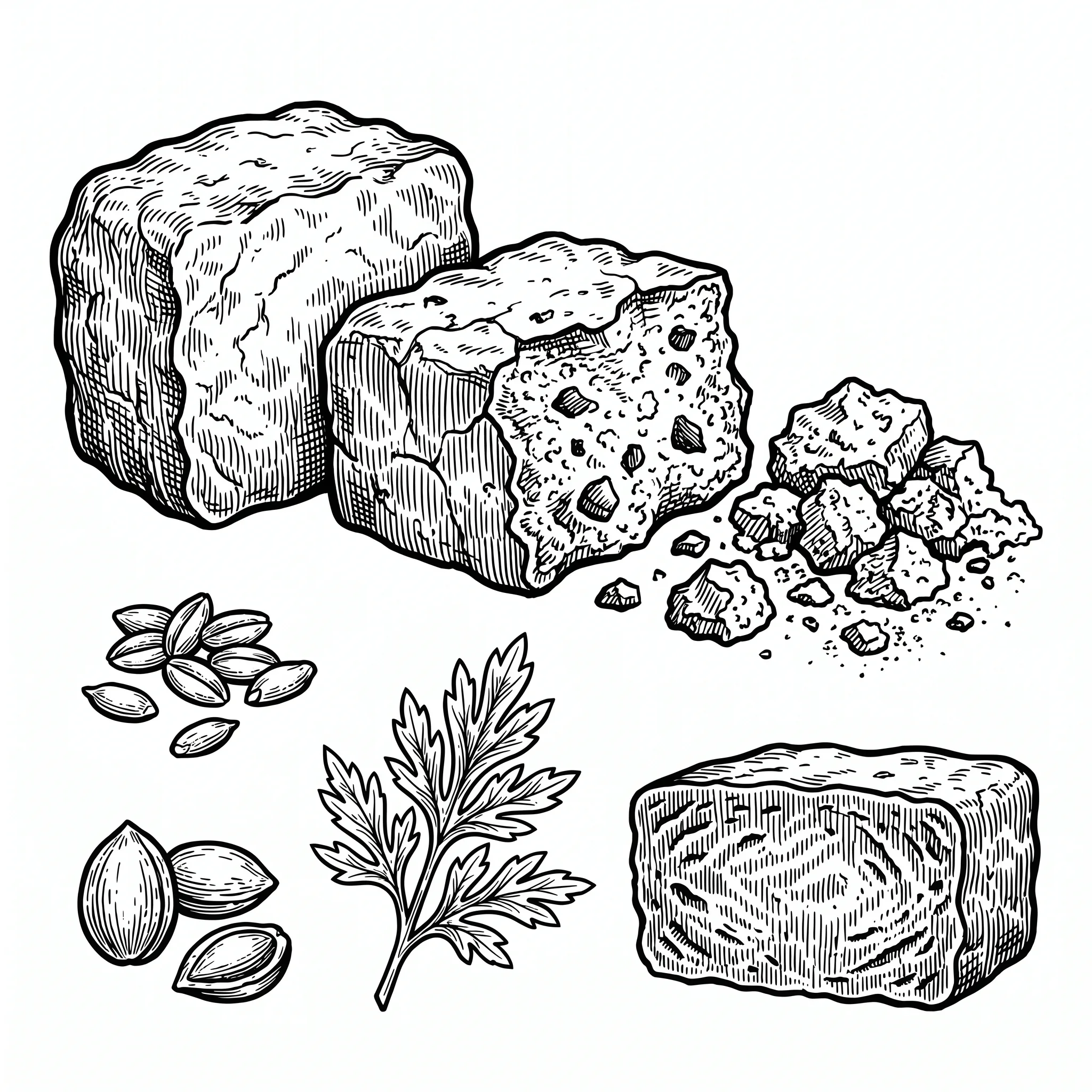
Frequent combination partners
Gu Ya often only reaches its full potential when combined with other herbs
History & Tradition
Gu Ya wird im Běn Cǎo Gāng Mù ausführlich beschrieben. Li Shizhen beschreibt seinen Einsatz bei Stagnation von Reis und Getreide im Magen mit blockiertem Mitte–Qi. Die Keimung des Reiskorns wurde als Methode verstanden, die verdauende Kraft des Getreides zu aktivieren und freizusetzen.
In traditional practice, Gu Ya is often used in combination with May Ya (Gerstenmalz) eingesetzt — die beiden bilden ein harmonisches Paar zur Verdauungsförderung. Während Mai Ya besonders auf Getreidestagnation wirkt, hat Gu Ya eine umfassendere, sanftere Wirkung auf den gesamten Verdauungstrakt.
Die Idee, gekeimte Getreidekörner als Mittel zu verwenden, findet sich in vielen Kulturen — von der ägyptischen über die griechische bis zur indischen Tradition. In China wurde die kontrollierte Keimung bereits in der Han–Dynastie als pharmaceutical method documented to increase enzyme activity and improve digestive function.
In der modernen Ernährungswissenschaft erlebt gekeimter Reis als „Sprouted Rice“ ein Comeback — der erhöhte GABA–Gehalt macht ihn zu einem funktionellen Lebensmittel, das in Japan als Hatsuga Genmai große Beliebtheit genießt.
Contraindications & caution
Keine wesentlichen Gegenanzeigen — Gu Ya ist eines der sichersten Kräuter der TCM.
- Vorsicht in der Stillzeit — kann in hoher Dosierung die Milchproduktion reduzieren (ähnlich wie Mai Ya).
- In cases of severe Spleen Qi deficiency allein nicht ausreichend — sollte mit tonisierenden Kräutern wie Bai Zhu und Dang Shen kombiniert werden.
Botany
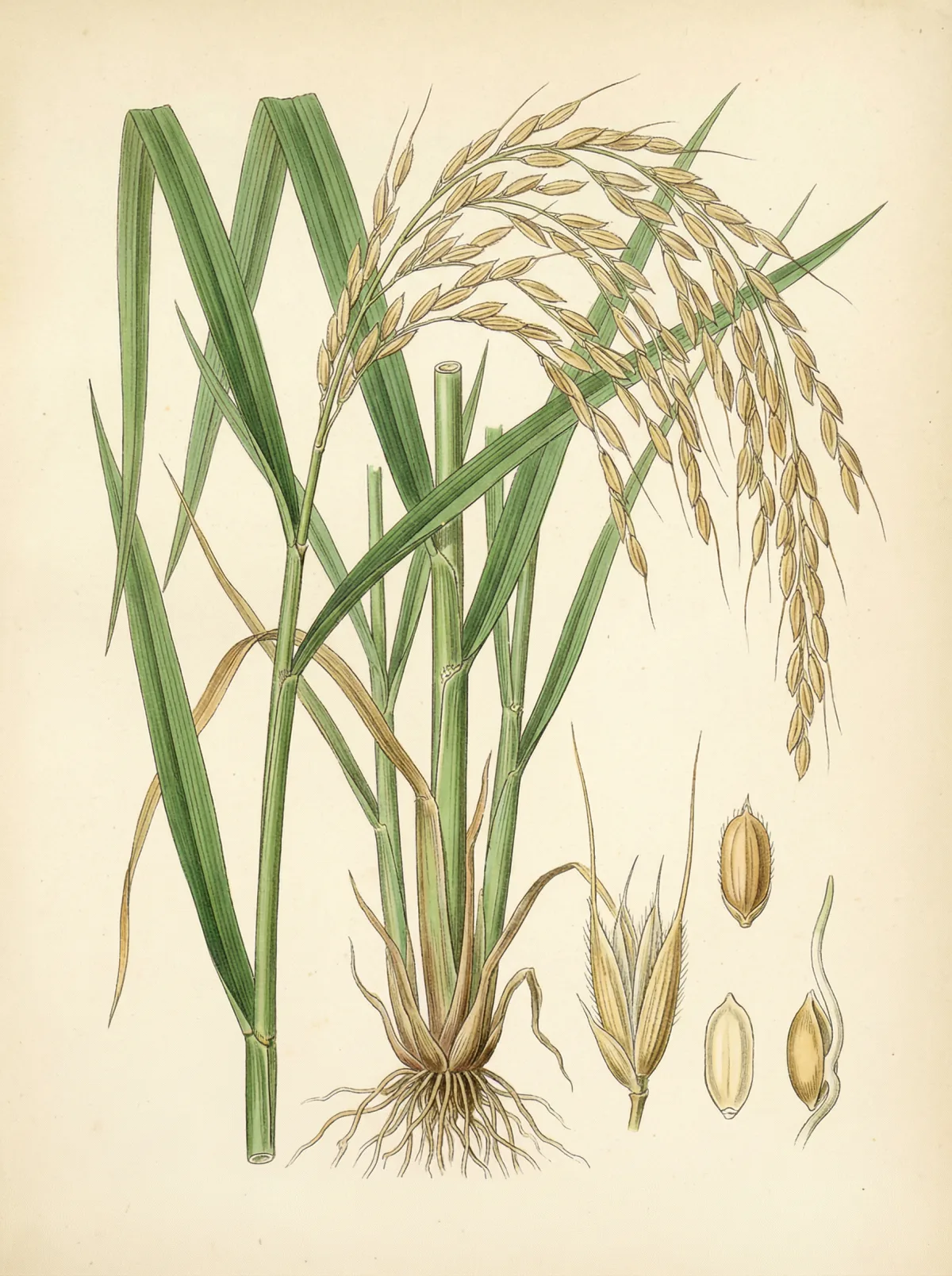
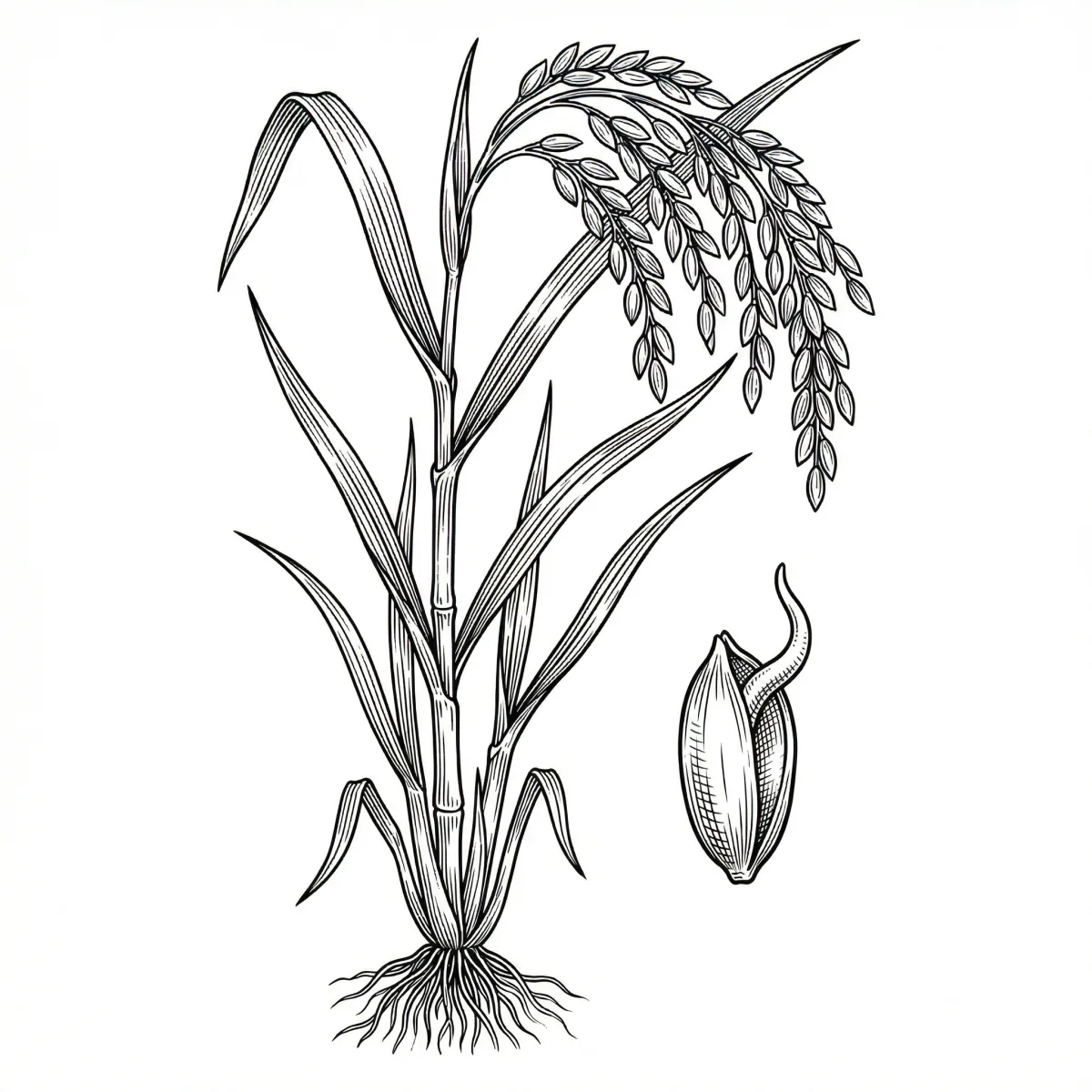
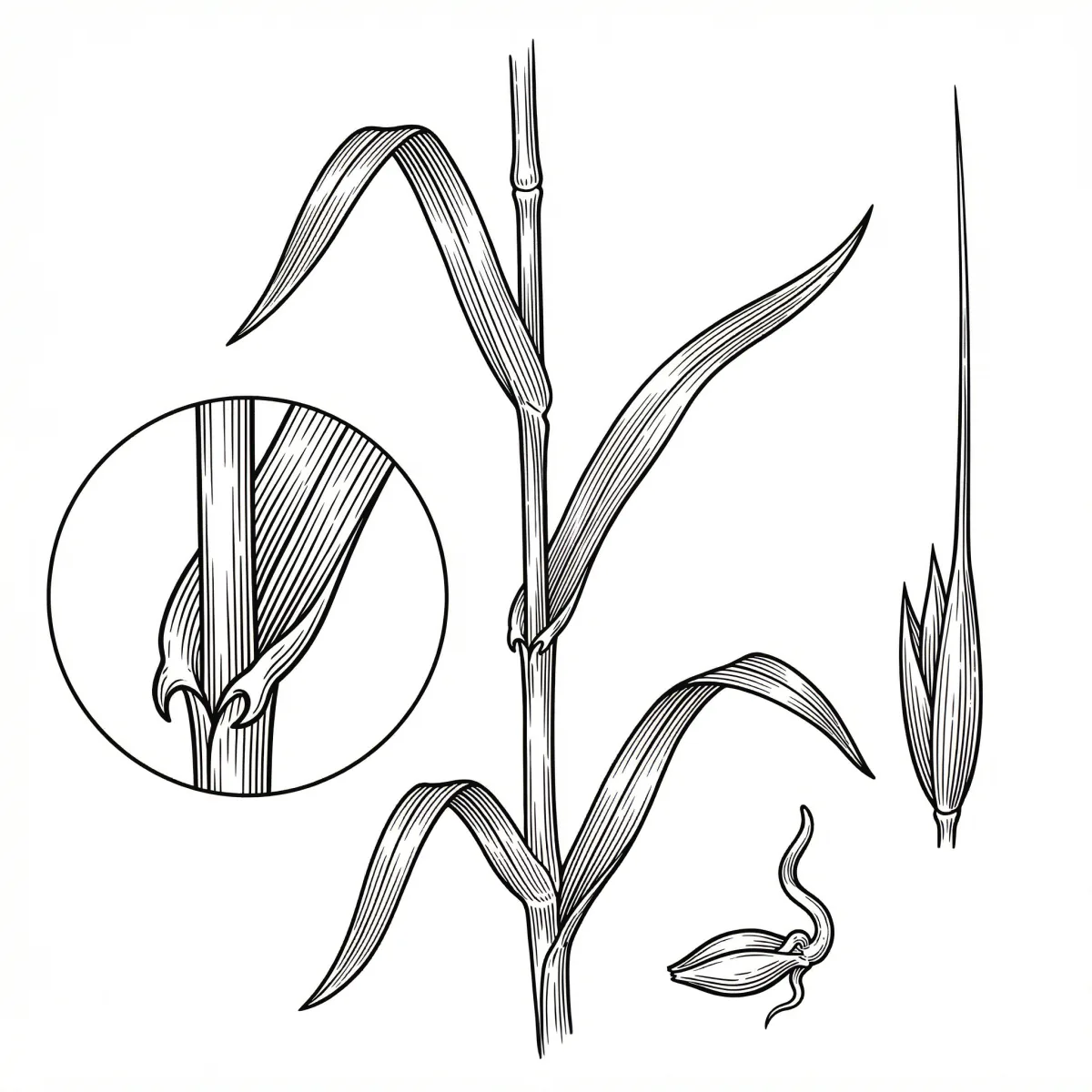
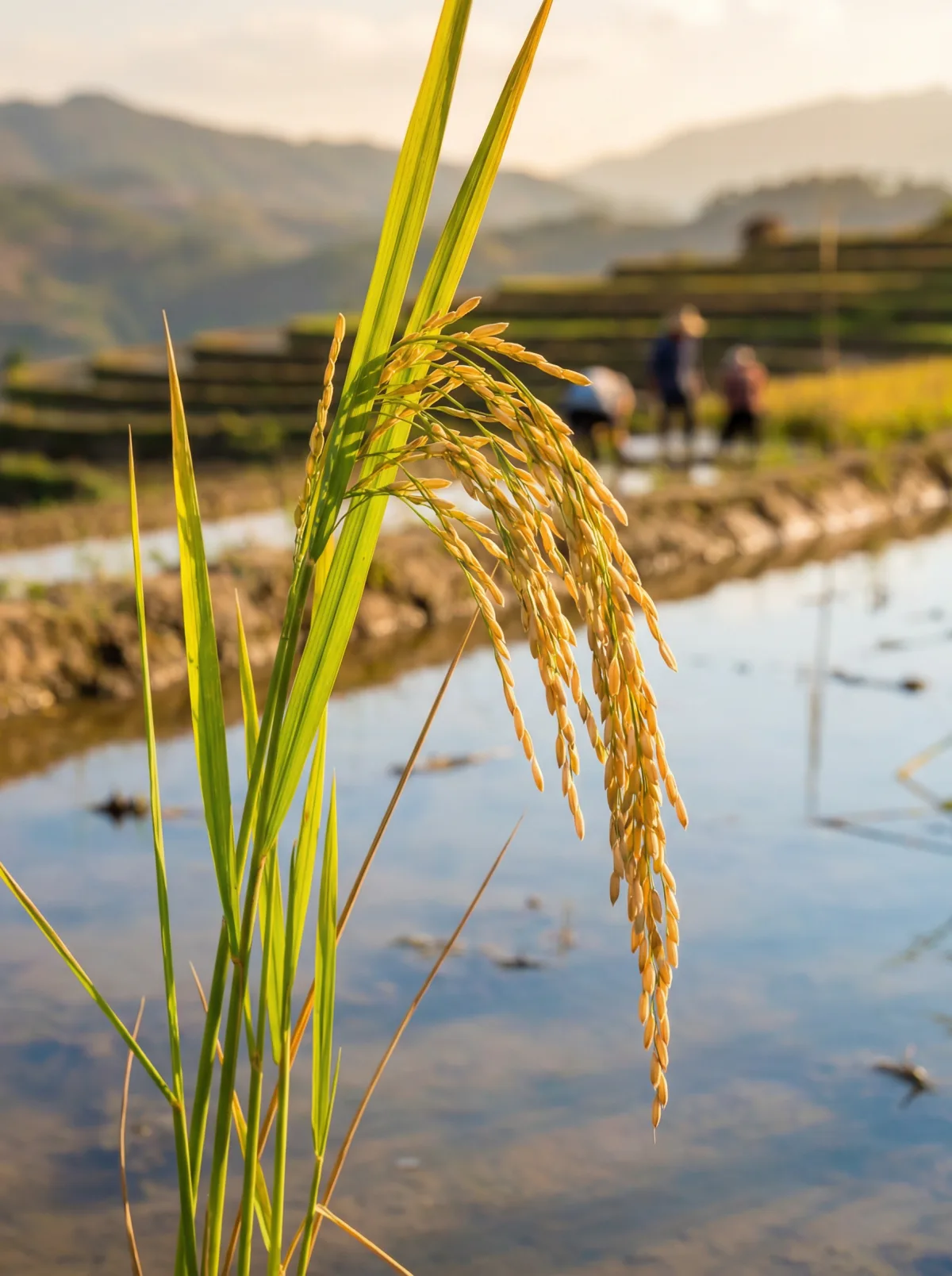
Oryza sativa L. (Reis) ist eine einjährige Graspflanze aus der Familie der Süßgräser (Poaceae), die 50–130 cm Höhe erreicht. Die Pflanze bildet aufrechte Halme mit langen, schmalen Blättern und endständige Rispen. Die Körner — umhüllt von Spelzen — sind der weltweit wichtigste Nahrungsmittelrohstoff nach Weizen.
Für Gu Ya werden die ungemahlenen Reiskörner (mit Spelzen) in Wasser eingeweicht und zum Keimen gebracht. Die gekeimten Körner mit 1–2 cm langen Keimlingen werden bei niedriger Temperatur getrocknet. Der Keimungsprozess aktiviert Amylasen und andere Enzyme, die die Stärkespaltung unterstützen.
Occurrence
- Überall dort, wo Reis angebaut wird — hauptsächlich Süd– und Ostchina
- Südostasien (Thailand, Vietnam, Indonesien) — die „Reisschüssel“ der Welt
- India — zweitgrößter Reisproduzent weltweit
- Gu Ya is produced industrially through controlled germination
Harvest time
- Reiskörner werden nach der Reisernte im Fall gesammelt
- Germination is possible year-round under controlled conditions
- Optimale Keimtemperatur: 25–30 °C, Keimdauer: 2–3 Tage
Processing
The production of Gu Ya is a controlled germination process that specifically activates the enzymatic activity of the rice grain.
- Sheng Gu Ya (raw form) — for food stagnation with heat:
- Soak unpolished rice grains in water for 12–24 hours
- Spread the seeds on a damp cloth and let them germinate at 25–30 °C
- After 2–3 days (when the seedlings are 1–2 cm tall), dry them at a low temperature
- Chao Gu Ya (geröstet) — bei Milz–Schwäche mit ungefestigter Mitte:
- Toast the sprouted, dried grains in a pan without oil
- Toast until they are lightly golden and give off a fragrant aroma
- Cool immediately to prevent over-browning
Related herbs
Herbs with similar effects and related areas of application