







Mu Li — Oyster Shell
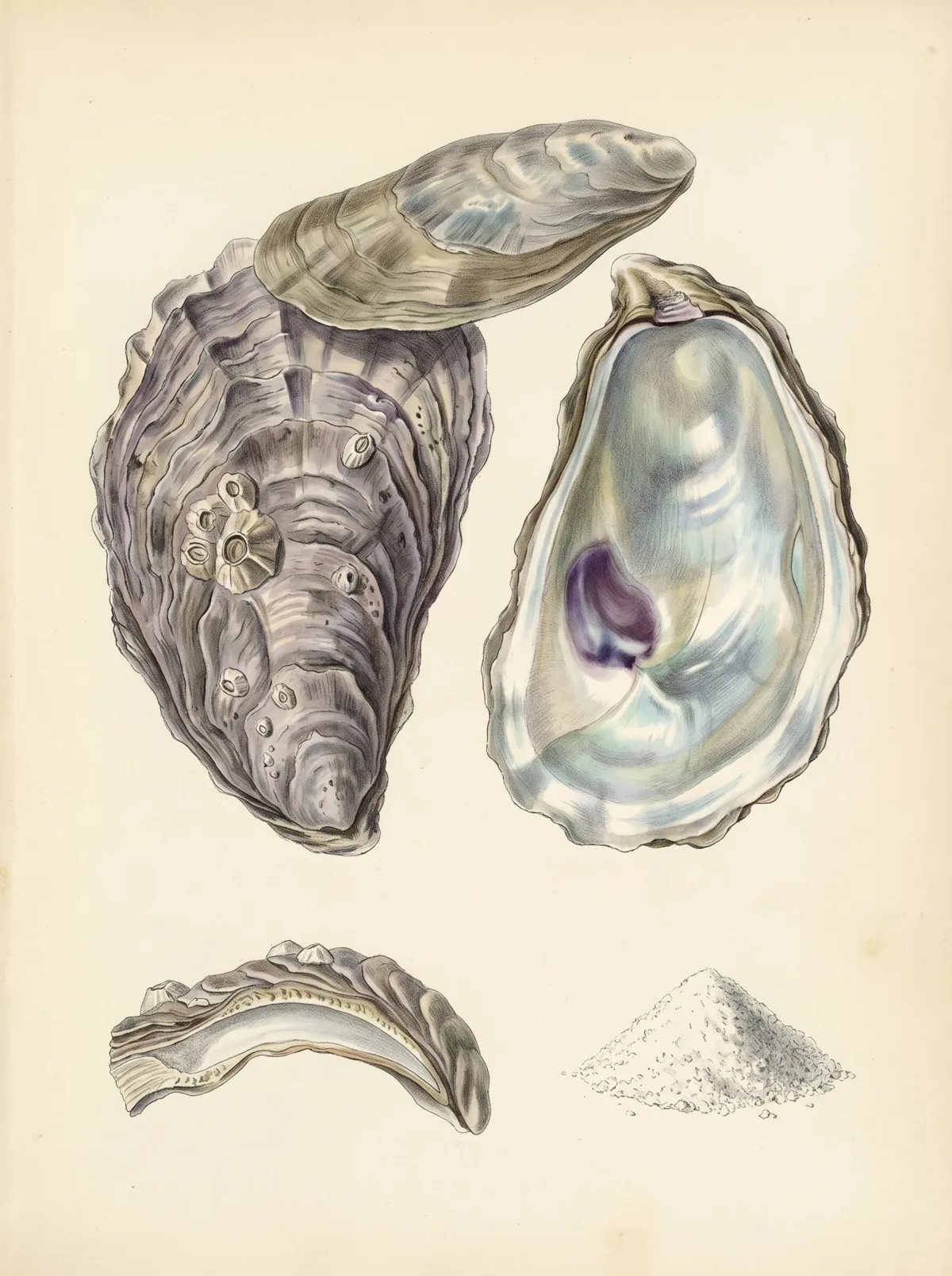
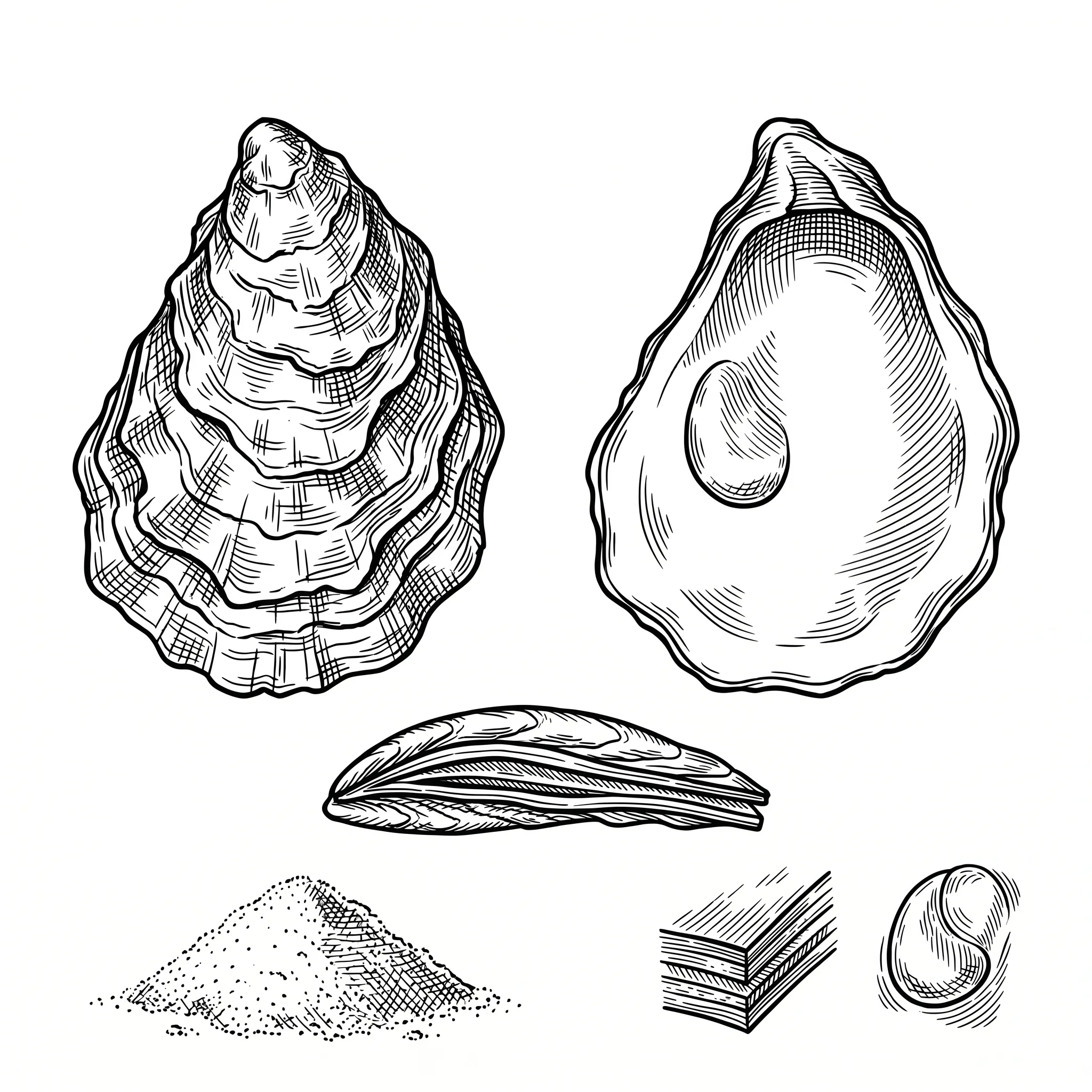
Mu Li — the oyster shell Ostrea gigas — is a high-grade mineral remedy. In TCM, it anchors rising yang, calms the mind, and softens hardened areas such as lumps caused by phlegm and qi stagnation in the neck.
Scientifically speaking, the shell consists of more than 95 % of Calcium carbonate with traces of magnesium, zinc, and iron. When calcined (Duan Mu Li), it has an astringent effect on night sweats and consolidates the essence (Jing) when the kidney qi can no longer retain it—at the same time, it serves as a natural antacid, comparable to pharmaceutical calcium carbonate.
Effect from a TCM perspective
Mu Li is a heavy, descending mineral-herb that calms the mind and anchors rising Yang. Depending on how it is prepared—raw or calcined—it has different primary effects:
- Calms the liver, anchors Yang: For rising liver yang with restlessness in the head
- Calms the Shén: For restlessness of the Shén accompanied by palpitations
- Softens stiffness and knots: Used in its raw form for Luǒ Lì (phlegm nodules in the neck) and palpable hardening
- Astringent and firming (calcined): Duan Mu Li stops spontaneous sweating and night sweats, consolidates essence in cases of spermatorrhea, and neutralizes excess stomach acid
Application & dosage
Mu Li is taken as a decoction in a dosage of 15-30 g Used. Since this is a mineral-based remedy, it must always be boiled first—at least 20–30 minutes before the other herbs—so that the active ingredients are fully dissolved.
In powder form (e.g., from calcined Mu Li), it is sufficient 1–3 g per dose, since the concentration is significantly higher. Calcined (Duan Mu Li) is used in the same decoction dosages (15–30 g), but specifically for its astringent effect.
Dosage forms
- Decoction (raw, shēng): Pre-cook for 20–30 minutes before adding the other ingredients; anchors Yang, calms Shén, and softens hardened areas
- Calcined (Duan Mu Li, duàn): Prepared in advance by heating; enhances astringent effects—stops sweating, consolidates the essence, and binds stomach acid
- Powder: Finely ground peel, 1–3 g per dose; useful for mild Shen imbalances and for long-term use
- Appearance: Apply powder made from calcined shells to damp areas of skin — astringent and drying
Dosage
- Decoction (raw or calcined): 15–30 g — Standard amount in the recipe; always pre-cook
- Powder: 1–3 g per single dose — more concentrated, so a smaller amount is needed
- External use: No fixed dosage — Apply a thin layer of the powder to the affected areas of skin
- Maximum daily dose: In classical literature, up to 60 g in cases of severe rising Yang; always under professional supervision
Frequent combination partners
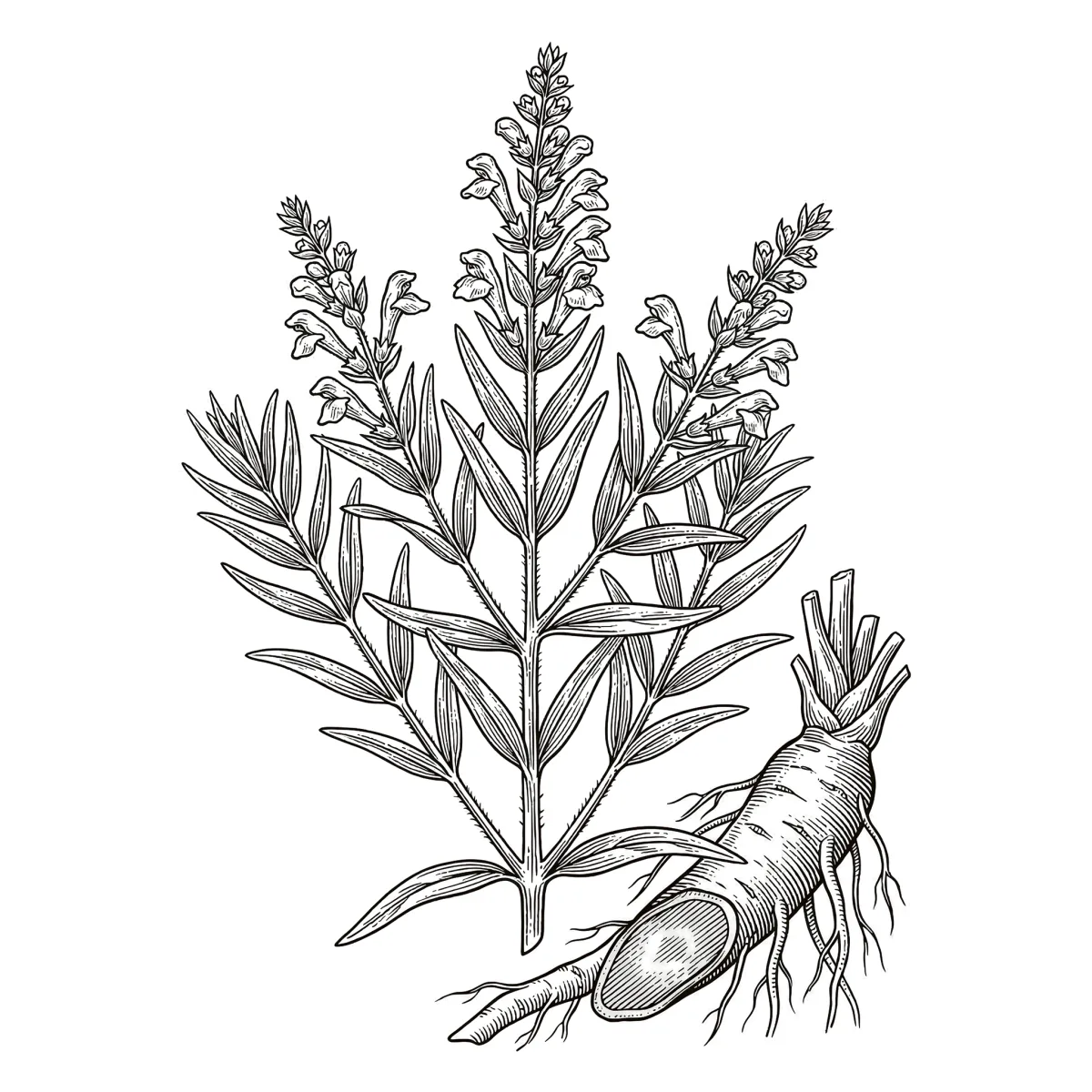
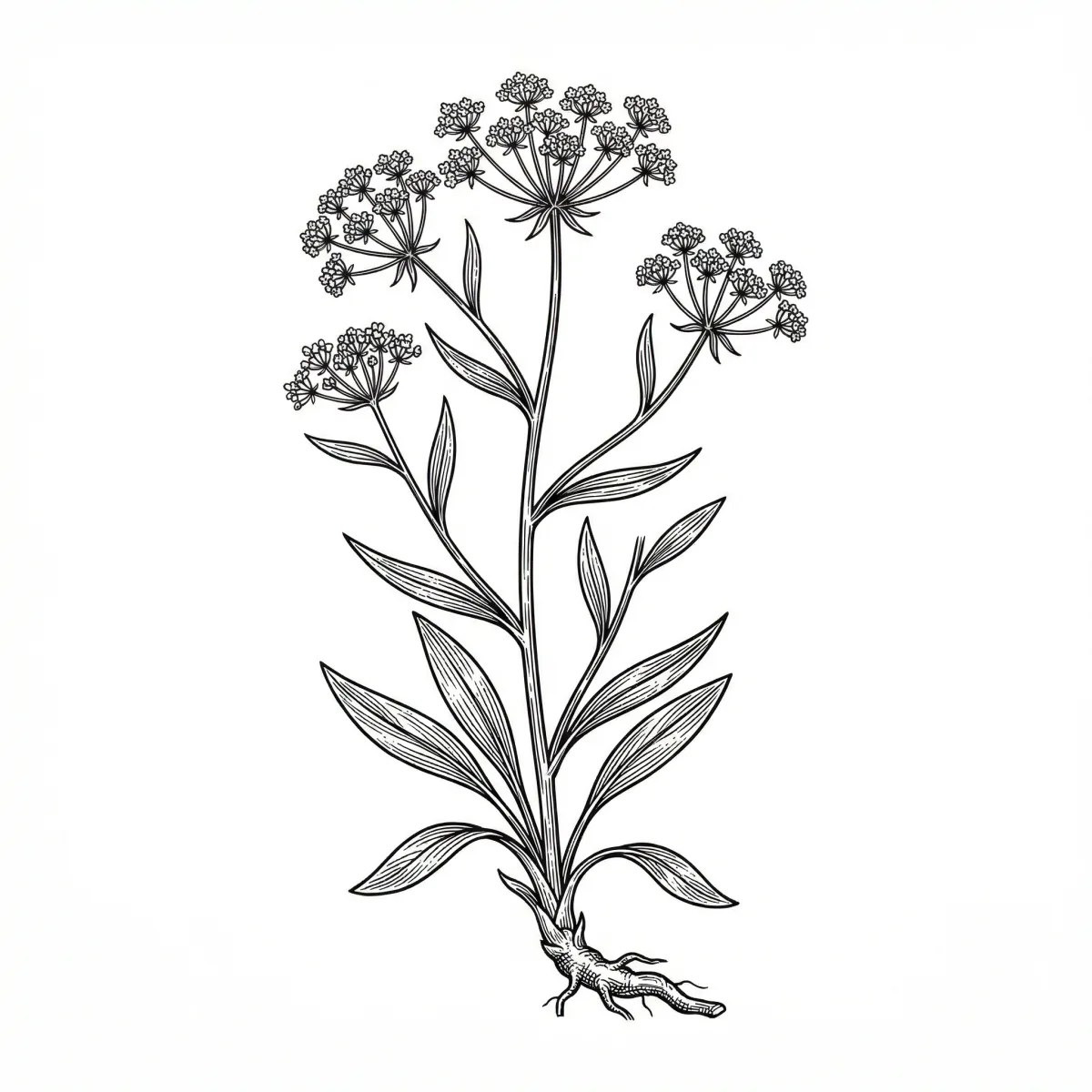
Mu Li often does not reach its full potential until it is combined with other herbs
History & Tradition
Mu Li is one of the oldest mineral remedies in Chinese medicine. It is mentioned as early as the *Shén Nóng Běn Cǎo Jīng*—China’s oldest herbal—in the upper class Used: as a means of calming the mind, softening hardened areas, and strengthening the bones. The upper class includes substances that nourish life and cause no harm when taken over the long term.
Zhang Zhongjing—the most prominent physician of the Han Dynasty—prescribed Mu Li in the Shāng Hán Lùn in a famous formula. This formula addresses a complex pattern of restless Shén, palpitations, and rising Yang with stagnant Qi—a condition that Zhang Zhongjing himself described in this way. To this day, this formula is considered one of the most important formulas in classical TCM for calming the Shén and the heart.
The name Mǔ Lì (牡蛎) literally means „mother oyster“—a poetic reference to the protective, sheltering quality of the shell, which, like a mother, safeguards the soft and vulnerable within. In the Taoist tradition The oyster symbolizes the ability to create something precious (the pearl) from an irritant (the grain of sand)—an image representing the transformation of suffering into wisdom.
In the Qing Dynasty Doctor Zhang Xichun significantly expanded the use of Mu Li. In his work *Yī Xué Zhōng Zhōng Cān Xī Lù*, he described the combination of Mu Li and Long Gu as an inseparable pair—„like Yin and Yang, which are interdependent“ — and developed his own formulas based on this, which are used to treat insufficient consolidation of kidney qi accompanied by sweating and involuntary loss of jing and bodily fluids.
Contraindications & caution
Do not use in cases of external pathogenic factors (colds, fever)—the astringent effect could trap the pathogens. Use caution in cases of spleen-stomach cold and weak digestion, as the mineral substance may be difficult to digest. Due to the high calcium content, use caution when taking this product concurrently with tetracycline antibiotics, bisphosphonates, and cardiac glycosides (digoxin)—calcium may inhibit their absorption. Consult a physician if you have renal insufficiency or hypercalcemia.
Botany
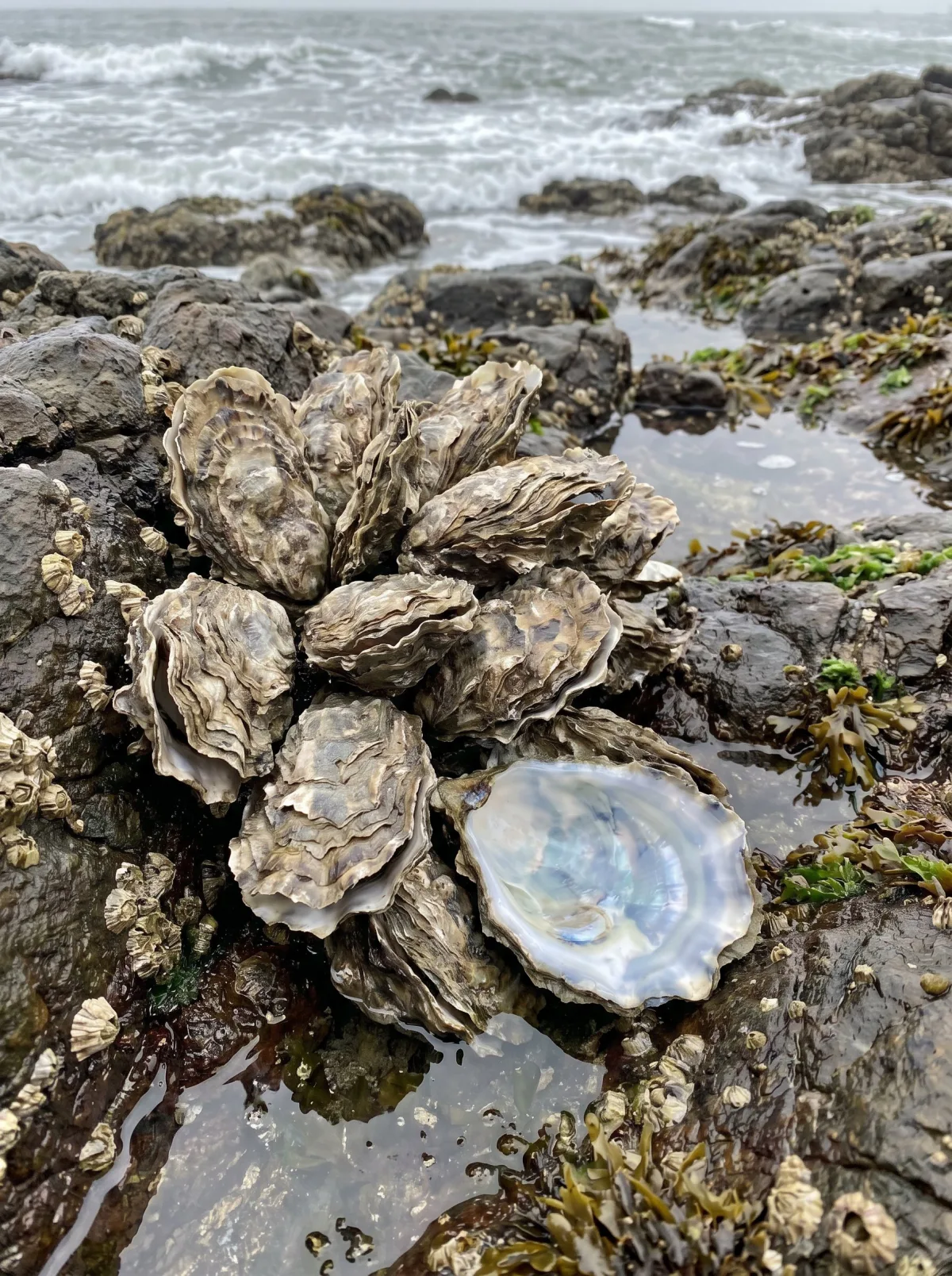
Mu Li is not a herbal remedy, but rather the shell of the Pacific oyster Ostrea gigas (Syn. Crassostrea gigas, Ostreidae family). In addition, related species such as Ostrea rivularis and Ostrea talienwhanensis used. The oyster is a filter-feeding bivalve mollusk with an asymmetrical, two-valved shell—the left valve is convex and attached to the substrate, while the right valve is flat and serves as a lid.
The shell used for medical purposes consists of more than 95 % of Calcium carbonate in the form of calcite and aragonite, embedded in an organic conchiolin matrix. It also contains trace elements such as magnesium, iron, zinc, and strontium. Fully grown specimens reach a shell length of 10–25 cm. For pharmaceutical use, shells from mature animals (at least 2–3 years old) with sufficient wall thickness are preferred.
Occurrence
- Main producer: China: The coastal provinces of Shandong, Fujian, Guangdong, Zhejiang, and Liaoning—the largest suppliers of high-quality TCM products, primarily from aquaculture
- Japan and Korea: Crassostrea gigas from aquaculture facilities in Hiroshima, Miyagi, and on the southern coast of Korea
- Europe: Pacific oysters are farmed in France (Brittany, Normandy), Ireland, and the Netherlands—primarily for the restaurant industry, with shells available as a byproduct
- North America: Pacific Coast (Washington, British Columbia) with established aquaculture
- Habitat: Shallow coastal waters, estuaries, and brackish water areas up to about 10 m deep, preferably on rocky or hard substrates
Harvest time
- Year-round: Thanks to aquaculture, availability is not tied to the seasons
- Optimal quality: Oysters harvested after 3–5 years of growth — thicker shells with a higher mineral content
- Seasonal Highlight: In some regions of China, winter harvests are preferred because the colder water makes the shells denser and richer in minerals
Processing
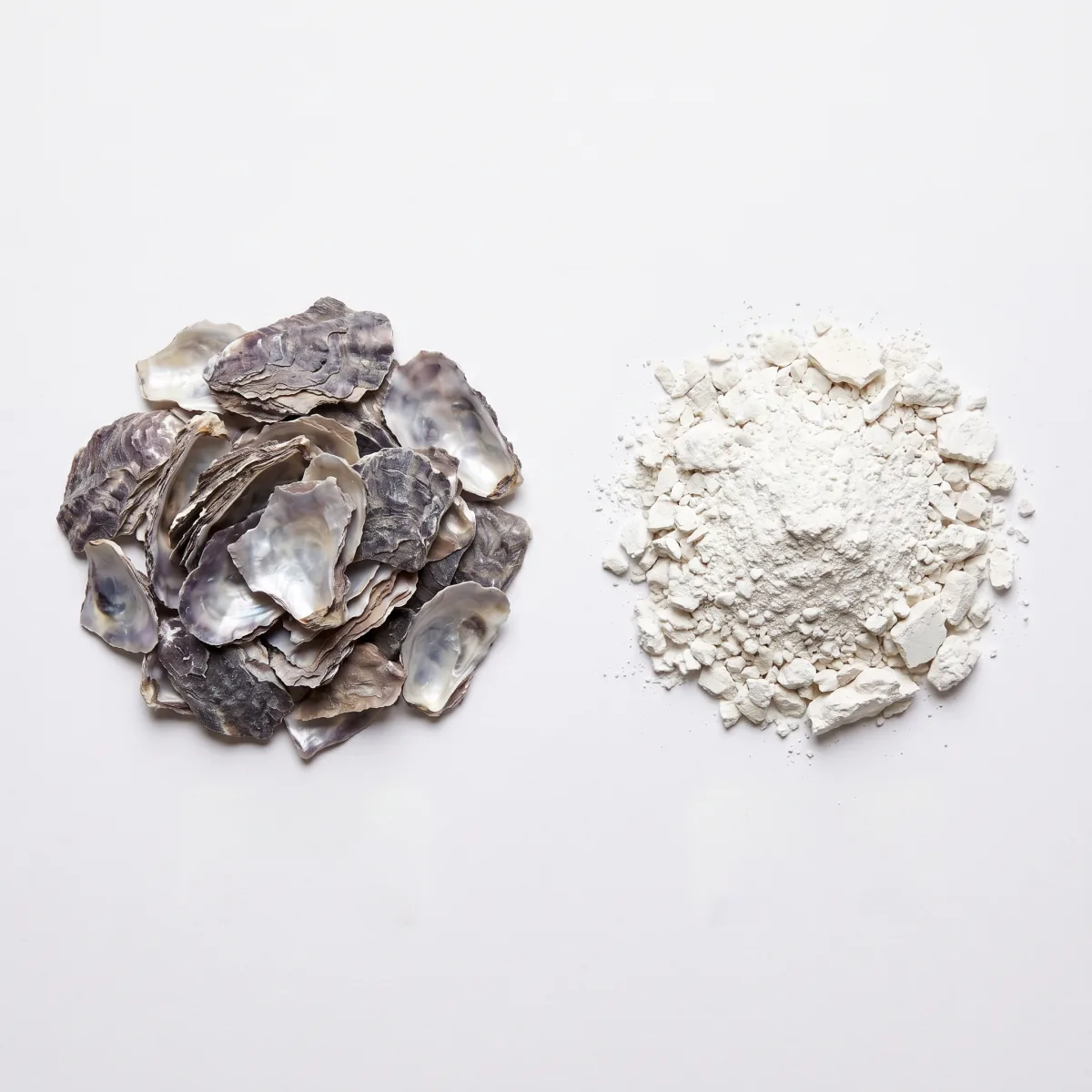
The raw oyster shell is first thoroughly cleaned, stripped of any remaining soft tissue, and dried. It is then further processed depending on the desired form—raw (shēng) or calcined (duàn). The choice of processing method is crucial and determines the remedy’s primary effect.
- Raw (shēng Mu Li): The shell is coarsely crushed and pre-cooked directly in the decoction; main effects: anchor Yang, soften hardened areas, calm Shén
- Calcined (duàn Mu Li): The shell is fired at a high temperature (approx. 700–800 °C) until it turns white and becomes brittle; this enhances its astringent effect: stops sweating, consolidates the essence, and neutralizes acidity
- Grinding into powder: Calcined shell is finely ground for oral consumption or external use
- Quality Control: High-quality product is heavy, uniformly light in color, and free of impurities; a strong fishy odor indicates inadequate cleaning
Related herbs
Herbs with similar effects and related areas of application