







Sang Ji Sheng - Mulberry mistletoe
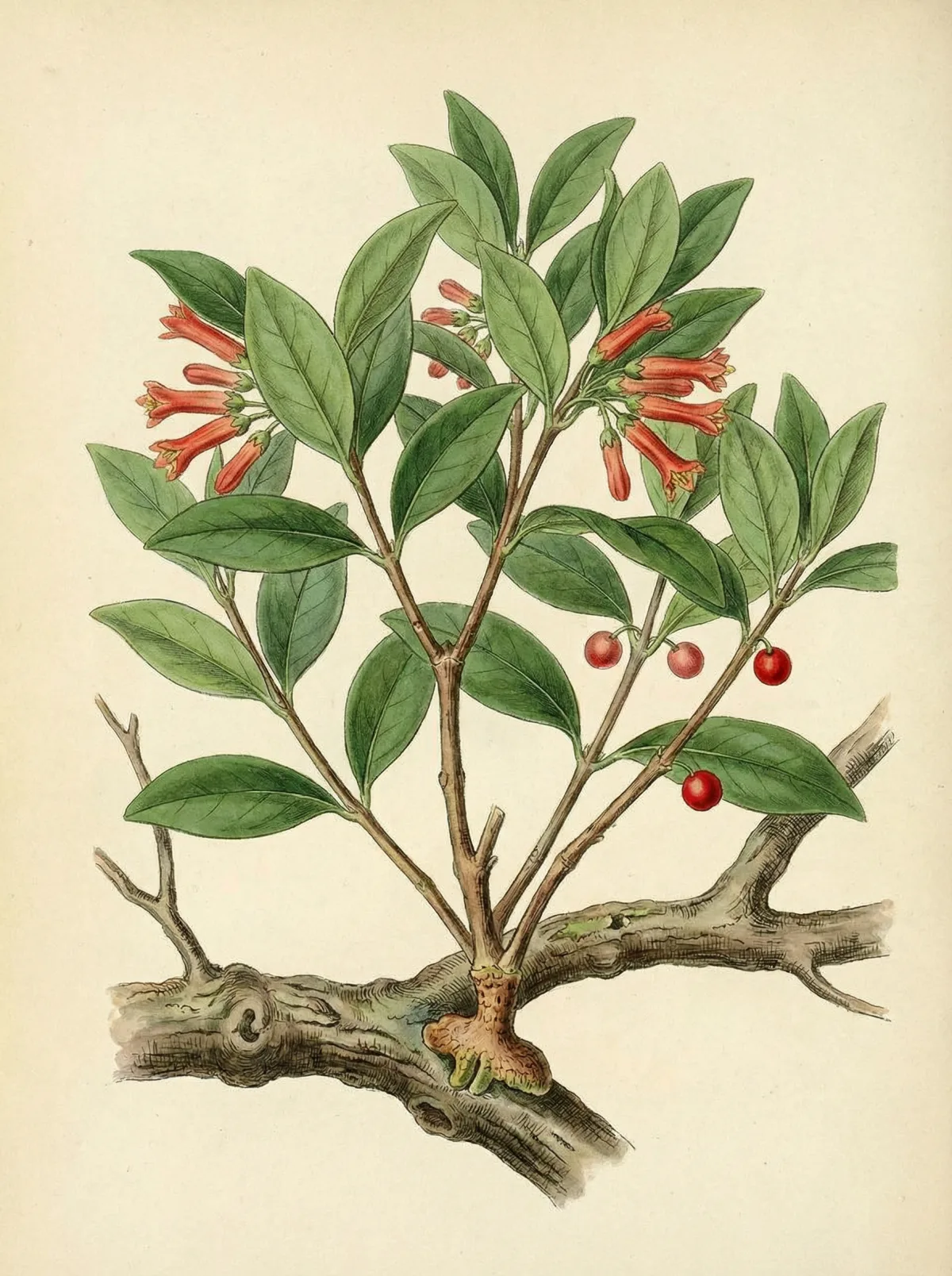
Sang Ji Sheng — die Maulbeer–Mistel — vereint zwei Wirkrichtungen: Sie vertreibt Wind–Feuchtigkeit aus Knochen und Sehnen und tonisiert gleichzeitig Leber– und Nieren–Yin.
This Doppelwirkung macht sie besonders wertvoll bei älteren Menschen mit Bi–Syndrom in den Gelenken und zugrunde liegendem Nieren–Mangel. Darüber hinaus beruhigt sie den unruhigen Fötus (Tāi Dòng Bù Ān) durch Nieren–Schwäche und sichert die Schwangerschaft (Ān Tāi).
Effect from a TCM perspective
Sang Ji Sheng combines the elimination of wind-dampness with the strengthening of the liver and kidneys - a rare dual effect that makes it particularly indispensable for bi-syndromes with underlying deficiencies.
- Expels wind moisture: Löst Blockaden in Sehnen, Knochen und Gelenken bei Bi–Syndromen mit Steifheit und Taubheitsgefühlen
- Strengthens tendons and bones: Tonisiert Leber– und Nieren–Yin und festigt den unteren Rücken und die Knie bei zugrunde liegendem Mangel
- Calms the fetus: Protects the pregnancy in the event of impending miscarriage due to kidney deficiency and a lack of blood
- Calms rising liver yang: Mild ausgleichende Wirkung auf Leber–Yang–Aufsteigen mit Benommenheit und Druck im Kopf
Application & dosage
Die Standarddosierung von Sang Ji Sheng liegt bei 10–20 g im Dekokt. Bei Schwangerschaftsschutz kann die Dosis auf 15–30 g erhöht werden, um die fötusberuhigende Wirkung zu verstärken.
For long-term intake as a tea, 10-15 g per day is sufficient. Sang Ji Sheng is boiled for 20-30 minutes and can be taken over longer periods of time without any problems.
Dosage forms
- Decoct: The most common use - boil for 20-30 minutes, combines well with other herbs
- Granules: Concentrated extract for daily intake without the need for cooking
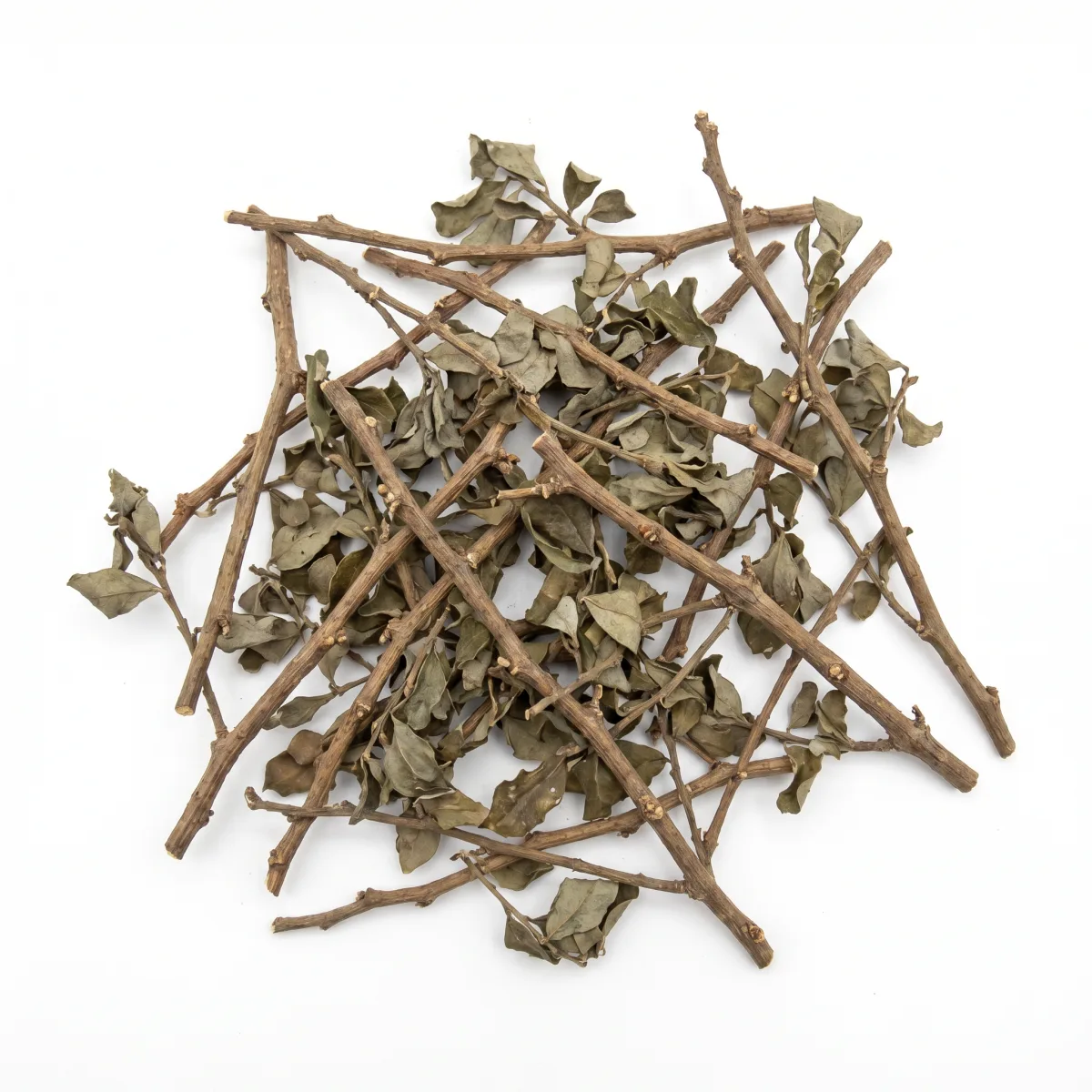
- Tea: Getrocknete Zweige mit heißem Wasser aufgießen — geeignet zur langfristigen Einnahme bei leichtem Leber–Nieren–Mangel
Dosage
- Standard dose: 10-20 g in decoction
- Pregnancy protection: 15-30 g
- Tea (long-term intake): 10-15 g daily
Frequent combination partners
Sang Ji Sheng often only unfolds its full effect in combination with other herbs
History & Tradition
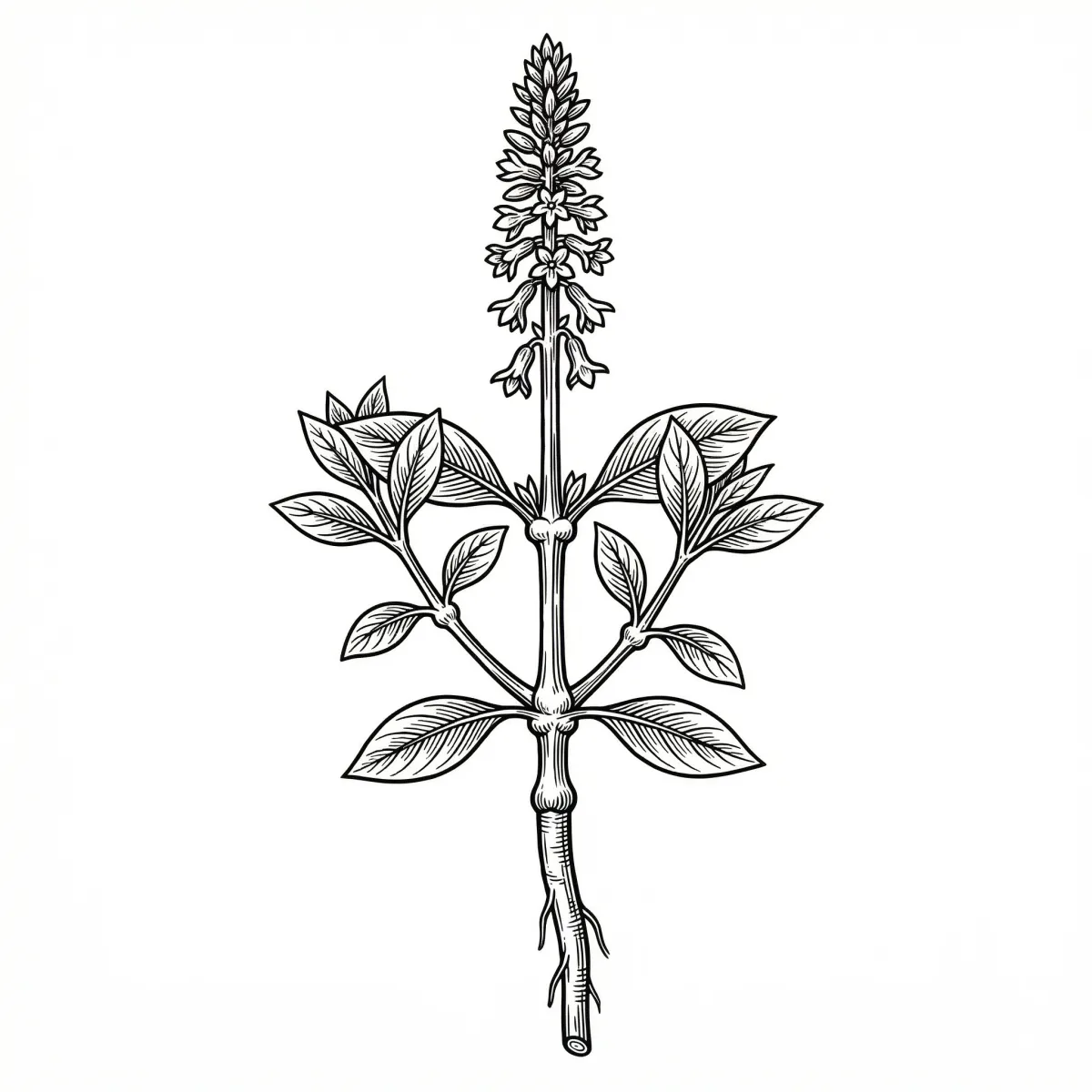
Sang Ji Sheng wurde bereits im Shén Nóng Ben Cao Jing — dem ältesten chinesischen Kräuterbuch — als Mittel der mittleren Klasse aufgeführt. Dort wird es als Mittel beschrieben, die Sehnen und Knochen stärkt, Wind–Feuchtigkeit vertreibt und die Schwangerschaft schützt. Diese dreifache Wirkbeschreibung hat sich über zwei Jahrtausende als zutreffend erwiesen.
Der Name Sāng Jì Shēng (桑寄生) bedeutet wörtlich „Maulbeerbaum–Parasit–Leben“ — ein präziser Hinweis auf die parasitäre Lebensweise der Pflanze. Nur die vom Mulberry tree (Sang) geerntete Mistel galt den alten Ärzten als medizinisch hochwertig, da der Maulbeerbaum selbst in der TCM als lebertonisierend und windvertreibend gilt. Die Mistel nimmt nach klassischer Vorstellung die Essenz ihres Wirtsbaumes auf und verstärkt dessen Wirkung.
In the Tang Dynasty wurde Sang Ji Sheng von Sun Si–Miao in seinen gynäkologischen Rezepturen prominent eingesetzt — insbesondere zum Schutz der Schwangerschaft bei Frauen mit schwacher Konstitution. Eine berühmte Rezeptur aus dem Bèi Jí Qiān Jīn Yào Fāng kombiniert Sang Ji Sheng mit Du Huo und anderen Kräutern gegen langdauernde Bi–Syndrome mit Leber– und Nieren–Mangel — eine Formel, die bis heute zu den meistverwendeten in der TCM–Orthopädie gehört.
Contraindications & caution
Caution with damp-heat - Sang Ji Sheng can increase dampness due to its tonifying effect. Do not use as the sole remedy for acute bi-syndromes with severe swelling and redness (heat-bi). If there is a pronounced accumulation of Dampness in the Middle Warmer, first dissolve the Dampness before adding Sang Ji Sheng.
Interactions: With simultaneous intake of Antihypertensives (ACE inhibitors, beta blockers, calcium antagonists) there is a risk of additive blood pressure reduction - medical consultation required. With Anticoagulants (warfarin, heparin) should be taken with caution, as flavonoids can influence platelet aggregation. Sang Ji Sheng can influence the effect of Immunosuppressants theoretically modulate - should not be used on organ transplant patients without medical supervision.
Botany
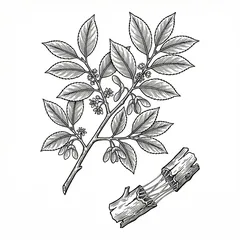
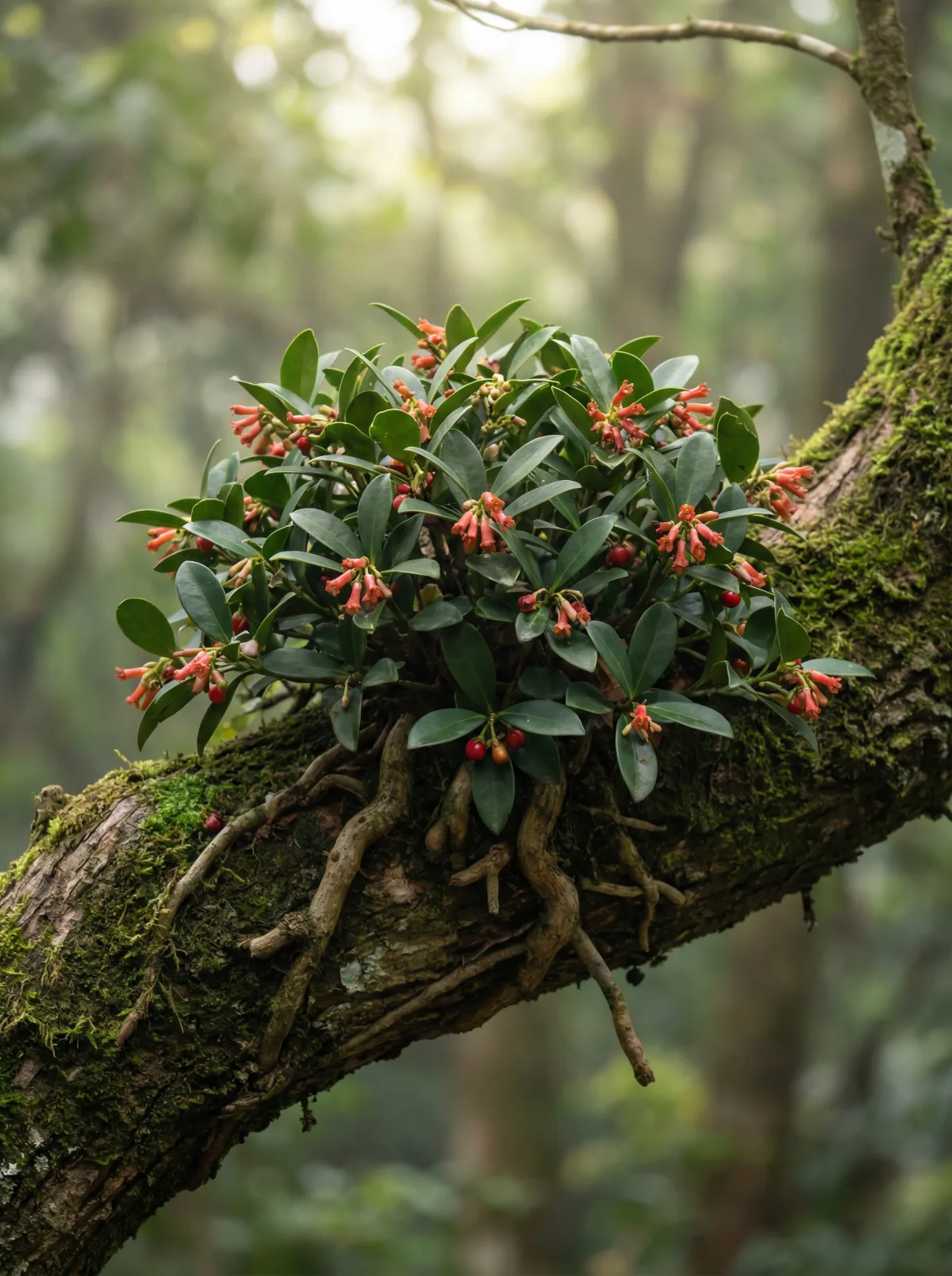
Taxillus chinensis (DC.) Danser ist eine immergrüne, halbparasitäre Pflanze aus der Familie der Loranthaceae (Riemenblumengewächse). Sie wächst als Strauch auf den Ästen verschiedener Wirtsbäume und erreicht eine Länge von 30–100 cm. Die gegenständigen Blätter sind ledrig, elliptisch bis eiförmig, 3–8 cm lang und an der Unterseite filzig behaart. Die röhrenförmigen Blüten sind rötlich bis purpurfarben und stehen in achselständigen Büscheln.
As Halbparasit besitzt die Pflanze eigene Chloroplasten zur Photosynthese, entzieht dem Wirtsbaum jedoch Wasser und Mineralstoffe über spezialisierte Haustorien. Die pharmazeutisch bevorzugte Droge stammt von Pflanzen, die auf dem Maulbeerbaum (Morus alba) wachsen — diese gelten als qualitativ hochwertiger, da die Mistel nach klassischer Vorstellung die heilkräftigen Substanzen ihres Wirts aufnimmt. Verwendet werden die beblätterten Zweige mit gelegentlich anhaftenden Blüten.
Occurrence
- Southern China - Guangxi, Guangdong and Fujian as the main distribution areas with a subtropical climate
- Southwest China - Yunnan and Guizhou at altitudes of 100-1,600 m
- Central China - Hubei and Hunan in humid mountain forests
- Southeast Asia - Vietnam, Laos and Myanmar as natural distribution areas
- Prefers moist, warm locations on deciduous trees in sparse forests and on forest edges
Harvest time
- Main harvest time: Winter bis Frühjahr — wenn der Inhaltsstoffgehalt am höchsten ist
- Possible all year round: In southern regions of China, Sang Ji Sheng is harvested all year round
- Optimal time: After the leaves of the host tree have fallen, as the mistletoe branches are then easily recognizable and easily accessible
Processing
Die beblätterten Zweige der Maulbeer–Mistel werden nach der Ernte sorgfältig aufbereitet, um ihre Inhaltsstoffe zu bewahren.
- Harvesting and cleaning:
- Remove leafy branches from the mulberry tree
- Remove foreign bodies, dead leaves and bark from the host tree
- Rinse briefly with water
- Drying:
- Spread out in a shady, well-ventilated place
- Turn regularly until the twigs are completely dry
- Avoid direct sunlight
- Cutting:
- Cut the dried twigs into 2-3 cm long pieces
- Store in a dry and cool place
Related herbs
Herbs with similar effects and related areas of application