







Hou Po - Magnolia bark
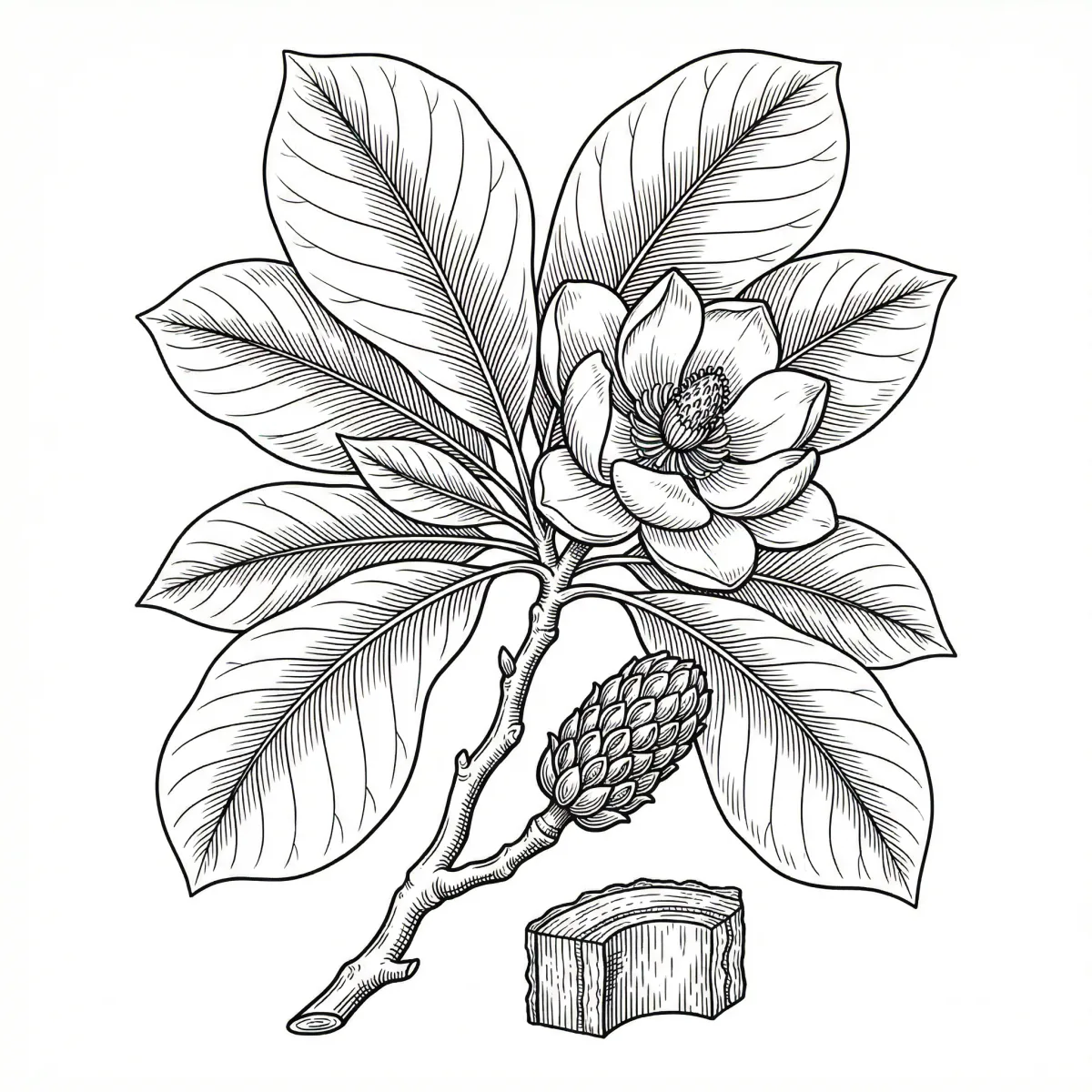
Hou Po—the bark of the magnolia tree—is one of the most important Herbs That Promote the Flow of Qi TCM. With its warm, bitter-pungent nature, it resolves qi stagnation in the Middle Burner, dries dampness, and transforms pathogenic phlegm. It has been used for over 2,000 years to treat conditions where stagnant Qi and dampness block the Middle Burner and prevent Qi from descending properly in the chest.
The most important ingredients Magnolol and Honokiol They have an anxiolytic, antimicrobial and antioxidant effect - a remarkable correlation between millennia-old empirical medicine and modern biochemistry.
Effect from a TCM perspective
- Moves the Qi and relieves stagnation in the Middle Burner while promoting a feeling of fullness and tension in the abdomen
- Absorbs moisture and transforms thick, cloudy phlegm (tan) that accumulates in the lungs
- Does this Rebellious Lung Qi downward and opens the chest in cases of phlegm stagnation
- Relieves emotional qi stagnation in the throat (feeling of a plum pit, Mei He Qi) as the imperial herb in the classic formula for this pattern
- Warms the center and strengthens the declining transformative power of the spleen and stomach
Application & dosage
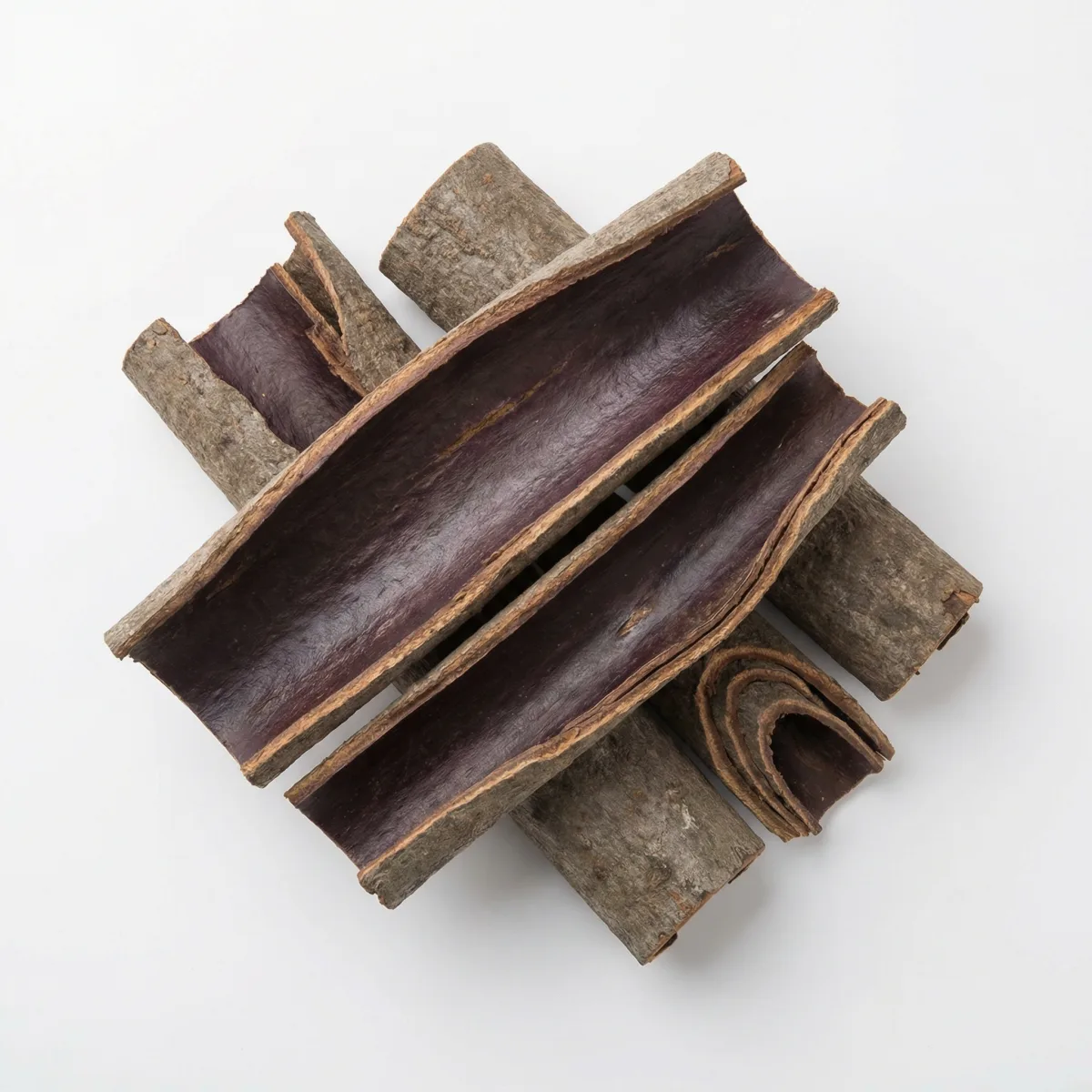
In classical TCM, Hou Po is primarily administered as a decoction—the bark must be boiled for a sufficient amount of time (15–20 min.), so that the bitter-pungent compounds magnolol and honokiol dissolve completely. The dosage depends on the condition: Higher doses are indicated for Qi stagnation with severe abdominal distension, while smaller amounts are sufficient for cases where phlegm accumulation in the lungs is predominant.
In modern dosage forms—granules and powder capsules—significantly smaller amounts are sufficient because the active ingredients are concentrated. The form processed with ginger (Jiang Hou Po) is particularly suitable for stomach Qi stagnation caused by cold, as processing the ginger enhances its warming properties and improves stomach tolerance.
Dosage forms
- Decoction (seaweed): Classic form of preparation - boil bark for 15-20 minutes; standard dose 3-10 g; for acute stagnation and mucus accumulation
- Granules (cooking extract): Concentrated extract for modern use - easy to dissolve, easy to dose; corresponds to approx. ⅓ of the amount of raw drug
- Capsules / powder: Ground bark in capsule form; practical for long-term use and combination formulas; lower dose than decoction
- Jiang Hou Po (ginger roasted): Stem bark processed with fresh ginger juice and roasted - strengthens the stomach effect, reduces mucous membrane irritation; preferred for stomach qi stagnation with cold signs and for weakened patients
Dosage
- Decoction (raw drugs): 3-10 g per day - standard range; up to 15 g for acute stagnation under TCM supervision
- Granules (concentrated cooking extract): 1-3 g per day
- Powder / capsules: 1.5-3 g per day
- Jiang Hou Po (ginger roasted): Same dosage ranges as for raw drugs; selection based on pattern and constitution
Frequent combination partners
Hou Po often does not reach its full effect until it is combined with other herbs
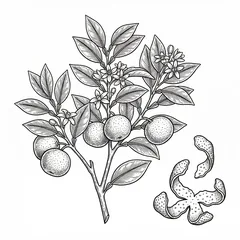
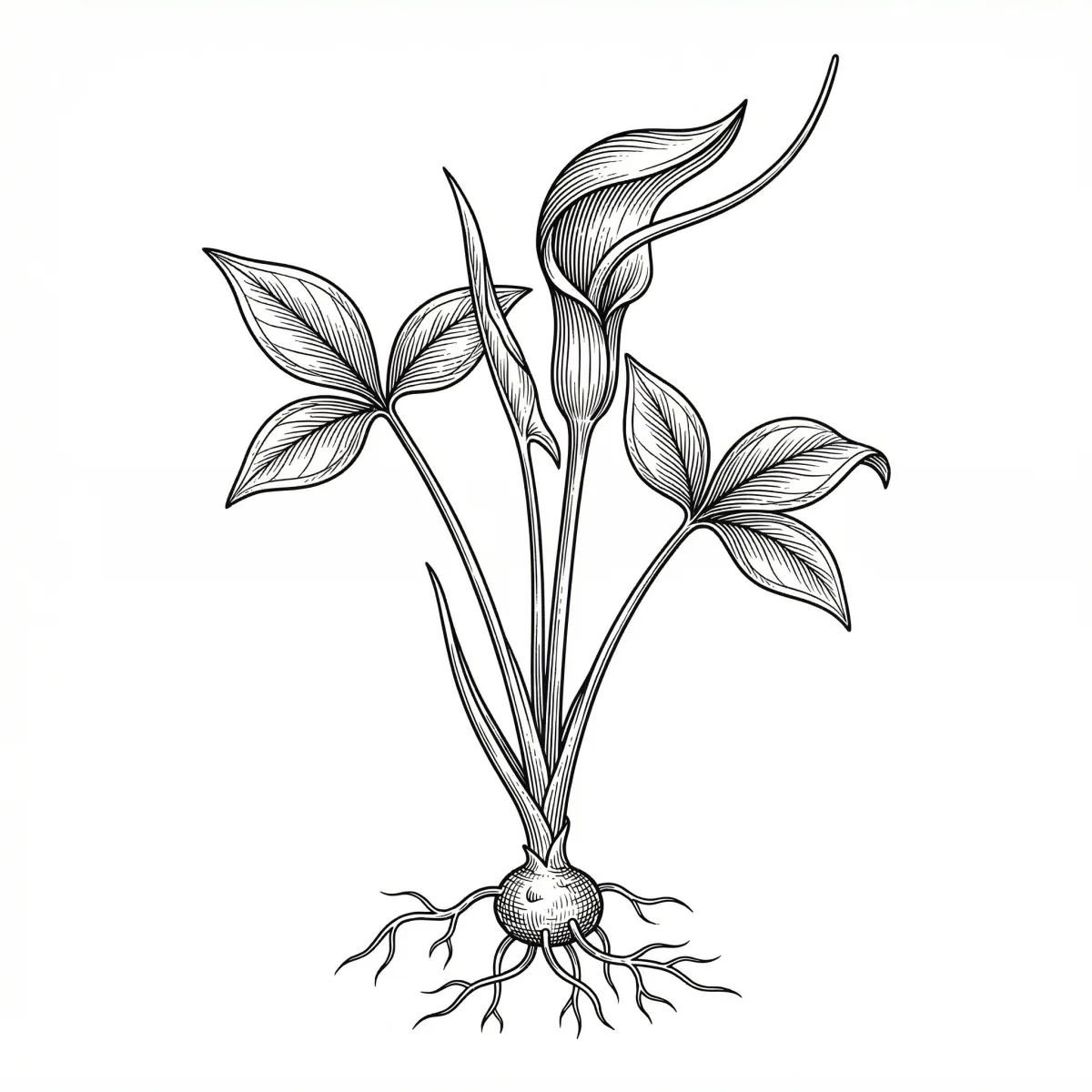
History & Tradition
The bark of the Magnolia tree (Magnolia officinalis) is one of the oldest and best-documented remedies in China. As early as the Shén Nóng Běn Cǎo Jīng—the oldest Chinese herbal text, dating back to the 1st century CE—Hou Po is listed as a herb of the middle class. It was not the radiant Yang herb of kings, but rather the reliable, humble remedy of the common people: the one that soothes the troubled stomach, restores free breathing, and brings a person back into balance.
In the Bencao Gangmu In the work of the great scholar Li Shizhen (16th century), Hou Po is described in detail and praised for its dual nature: it is both stimulating and warming—it promotes movement without causing harm. Li Shizhen observed that the bark exerts its greatest potency when it comes from trees that are at least 15–20 years old—young trees yield a weaker medicine. This insight remains true to this day: Only the old, thick bark (hou means „thick,“ po means „bark“) has the necessary concentration of active ingredients.
In classical formulary studies, Hou Po became an indispensable component of some of the most important TCM formulas. A formula from the Song Dynasty (10th–13th centuries) includes Hou Po as one of its four main herbs and is still used today as a basic formula for treating dampness in the middle jiao. A second formula, recorded in the Jin Gui Yao Lüe by Zhang Zhongjing (ca. 200 CE), relieves the sensation of a plum pit in the throat (Mei He Qi)—a sign of Qi stagnation caused by pent-up emotions, which we now recognize as somatized stress.
In the folk medicine of the Sichuan Province, the main growing region for Hou Po, the bark was not only used internally. When applied externally, decoctions of the bark relieved stagnation of Qi in the muscles and joints. The fragrant magnolia blossoms—also used medicinally as Xin Yi Hua—were regarded as a sign of the approaching spring and symbolized purity and transformation in Chinese poetry. Thus, the magnolia tree as a whole conveys the message: Life unfolds when the flow is not obstructed.
Contraindications & caution
- Pregnancy: Contraindicated - Hou Po strongly moves the Qi downwards and can trigger premature labor. In classical TCM, it is an absolute taboo during the entire pregnancy.
- Qi deficiency without stagnation: Do not use in cases of pure Spleen Qi deficiency without signs of dampness or stagnation - Hou Po moves and drains, which increases weakness in cases of deficiency.
- Yin deficiency with dryness: Use caution in cases of dry stools caused by yin deficiency or persistent fatigue with internal heat—the bitter and warming nature of Hou Po can exacerbate dryness.
- Severe underweight / deficiency states: Do not use in cases of anorexia, severe weight loss or severely weakened overall condition without simultaneous signs of fullness or dehydration.
- Interactions: Honokiol and Magnolol from Hou Po act on GABA receptors - caution is advised when taking benzodiazepines, sleeping pills or sedatives at the same time. Medical consultation recommended. Possible interactions with anticoagulants (blood thinners) cannot be ruled out.
- Long-term use: Do not use long-term without consulting a TCM practitioner — Hou Po is an herb for acute phases of stagnation, not intended for long-term use.
Botany
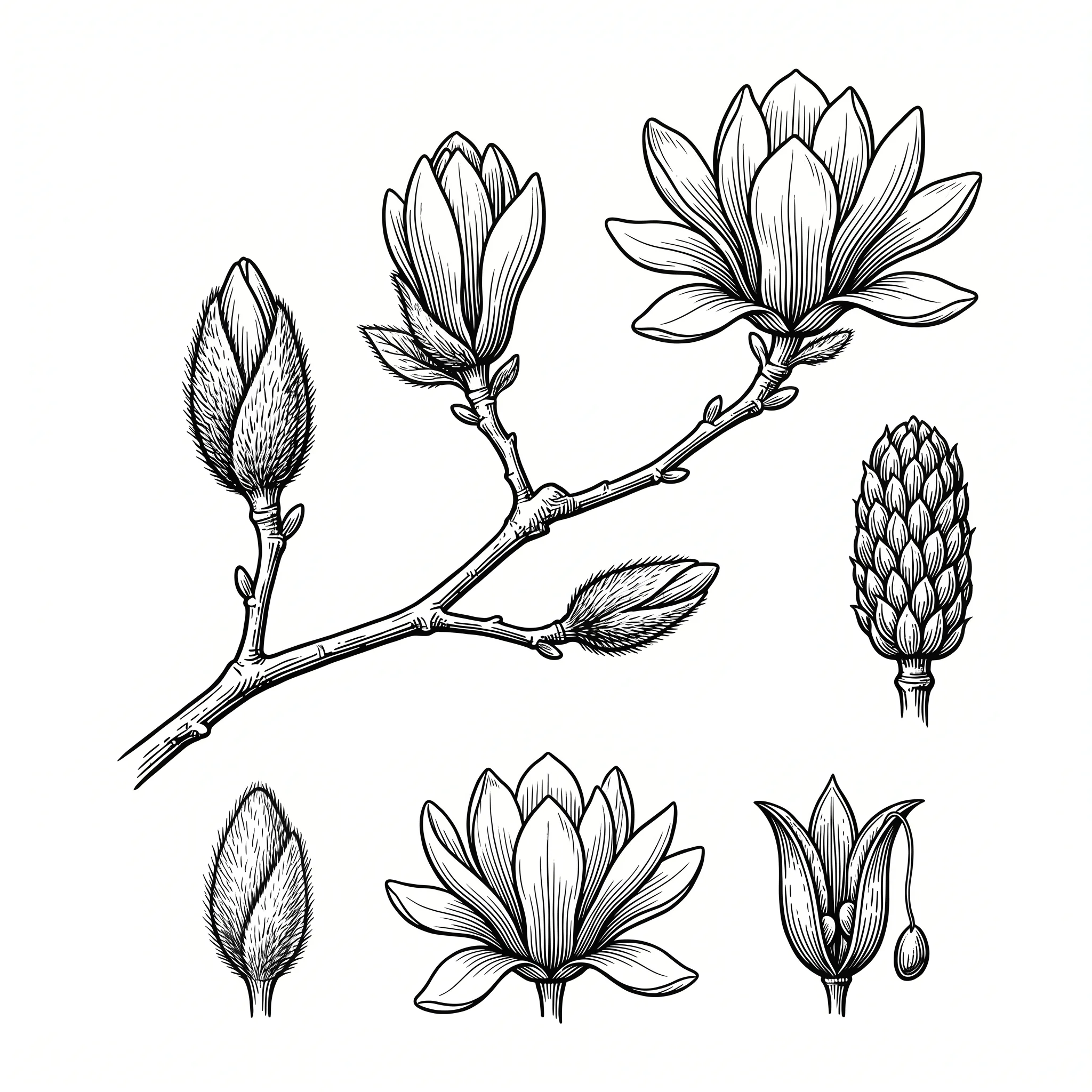
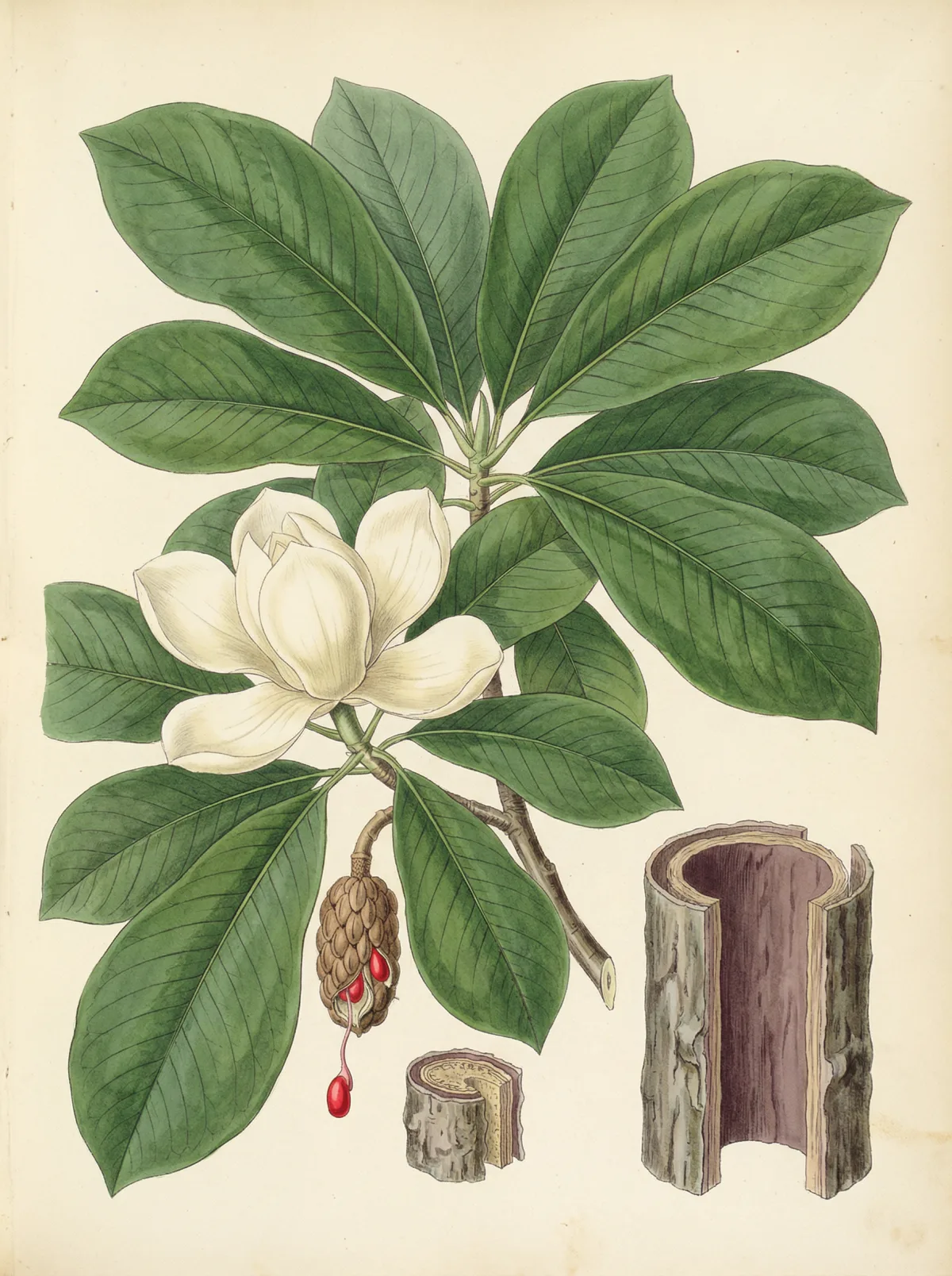
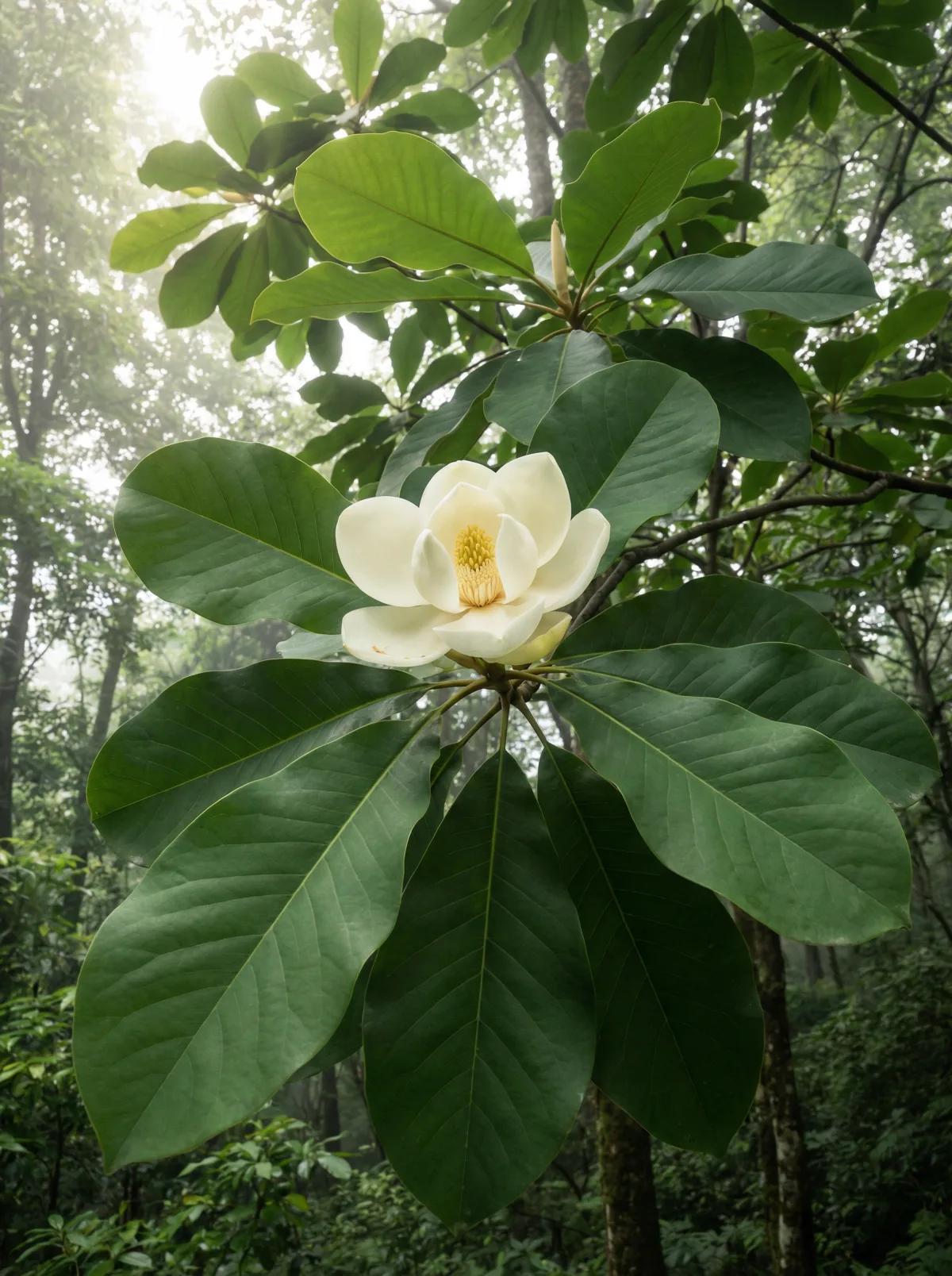
Magnolia officinalis Rehd. et Wils. belongs to the family of Magnoliaceae - one of the oldest flowering plant families on earth, which developed over 100 million years ago, even before bees existed as pollinators. The magnolia tree is a deciduous tree that grows to a height of up to 20 meters. Its leaves are large, oval to obovate (up to 45 cm long) and characteristically gather at the ends of the branches. The cream to white flowers appear in spring before the leaves emerge and exude an intense, sweet and spicy fragrance.
Only the bark is used medicinally - and only from trees that are at least 15-20 years are old. Younger trees produce bark that is too thin and lacks sufficient active ingredient concentration. The characteristically thick, furrowed bark (hou = thick, po = bark) contains the highest concentrations of the biphenolic compounds magnolol and honokiol. The root bark (gen pi) and sections of branch bark (zhi pi) are also used, but are considered to have a weaker effect than the trunk bark (gan pi).
Occurrence
- Main growing areas: Sichuan and Hubei - these two provinces supply the majority of commercial quality; goods from Sichuan are traditionally considered to be of particularly high quality
- Other growing provinces: Zhejiang, Jiangxi, and Fujian
- Home: Central and southern China - natural occurrence in temperate to subtropical mountain forests at 300-1500 m altitude
- Wild populations: Severely depleted due to intensive exploitation; today's supply comes primarily from cultivation on plantations
- Related species: Magnolia officinalis var. biloba — a variety with two-lobed leaves, also used as a herb or medicinal plant, primarily in Hunan and Guangxi
Harvest time
- Stem bark (Gan Pi): Spring to early summer (April-June) - this is when the bark separates most easily from the wood body, as the sap flow is active and the separation between bark and sapwood is facilitated
- Tree age: Exclusively from trees that are at least 15–20 years old—younger trees produce bark that is too thin and lacks sufficient concentrations of active compounds (magnolol, honokiol)
- Method: Peel the bark from the trunk in longitudinal strips without damaging the cambium; trees can sprout again after the bark is removed, provided not too much bark is taken
- Drying: Store in a cool, dark place at room temperature—direct sunlight damages the volatile aromatic compounds; the bark is dried by rolling or stacking it
- Root bark (Gen Pi) and branch bark (Zhi Pi): Also harvested in spring and summer; considered to contain fewer active ingredients than trunk bark
- Bud (Hou Po Hua): Harvested in March before the flower buds fully open—used as a standalone herb with milder qi-moving properties and a pleasant aroma
Processing
The freshly harvested magnolia bark undergoes a multi-step processing procedure that has been handed down for centuries. The characteristic „sweating“ of the stacked pieces of bark—a controlled fermentation phase—is crucial for the development of the dark brown color and the concentration of active ingredients. This process distinguishes high-quality medicinal products from those processed to a lower standard.
- Sheng Hou Po (raw, unprocessed): Freshly peeled, dried bark from the trunk, without any additional processing—has the strongest qi-moving effect; preferred for acute stagnation and conditions of fullness
- Peel fresh bark in strips from the trunk surface
- Scald briefly in boiling water (2-3 minutes) to kill insects and soften the bark
- Stack pieces of bark on top of each other and cover with damp cloths (sweating phase: 3-5 days at approx. 30-40 °C)
- Turn the pile daily; the bark darkens to dark brown to blackish
- Allow to dry completely in the shade; press into rolls or sheets
- Jiang Hou Po (ginger roasted): Bark impregnated with fresh ginger juice and then gently roasted - reduces mucous membrane irritation, strengthens stomach Qi, reduces the descending Qi effect; preferred for weakened patients and cold signs
- Soak dried Hou Po bark pieces evenly in freshly squeezed ginger juice (Zingiber officinale)
- Allow the ginger juice to absorb completely (several hours)
- Gently roast in a wok or oven over a medium heat until the bark is lightly browned and dry
- Zhi Hou Po (honey-roasted): Bark roasted with rice vinegar or honey—a less common form of preparation; mitigates the bitter, pungent taste for more sensitive patients; rarely found in standard formulations, occasionally in historical formulas
Related herbs
Herbs with similar effects and related areas of application