








Ye Jiao Teng — Knotweed Vines
Ye Jiao Teng—the vine of the knotweed plant Polygonum multiflorum—is a gentle, soothing herb that has been used for centuries to Heart-blood deficiency is used to treat restless sleep and restlessness of the Shen. Its name literally means „vine that creates a connection at night“—a poetic reference to its sleep-promoting effect.
In TCM, it nourishes the Heart blood, calms the Shen and opens the meridians. Western research confirms its sedative and anxiolytic effects—but also points to risks of hepatotoxicity at high doses or with long-term use, similar to those of its sister drug, He Shou Wu.
Effect from a TCM perspective
- Nourishes the heart and blood and calms the spirit (Shen)—for inner restlessness and palpitations caused by blood deficiency
- Calms the mind during nighttime brooding and restless thoughts
- Opens the meridians and moves the qi in the joints — for wind-dampness-bi syndrome with stiff limbs
- Wards off wind and heat from the skin in cases of anemia — applied externally as a wash
- Has a gentle, nourishing, and long-lasting effect — suitable for long-term use, even for those with sensitive constitutions
Application & dosage
In practice, Ye Jiao Teng is primarily used as a decoction—the most traditional form of administration in Chinese herbal medicine. The dosage depends on the patient’s constitution and the severity of the pattern: moderate amounts are sufficient for mild restlessness of the Shen, while for severe Shen—Restlessness the dose can be significantly increased.
When used externally as a wash, Ye Jiao Teng exerts its wind-dispelling and skin-soothing effects directly on the skin—the amount can be adjusted as needed. Granules and powder are particularly suitable for Long-term use, since they are easy to measure out and well tolerated.
Dosage forms
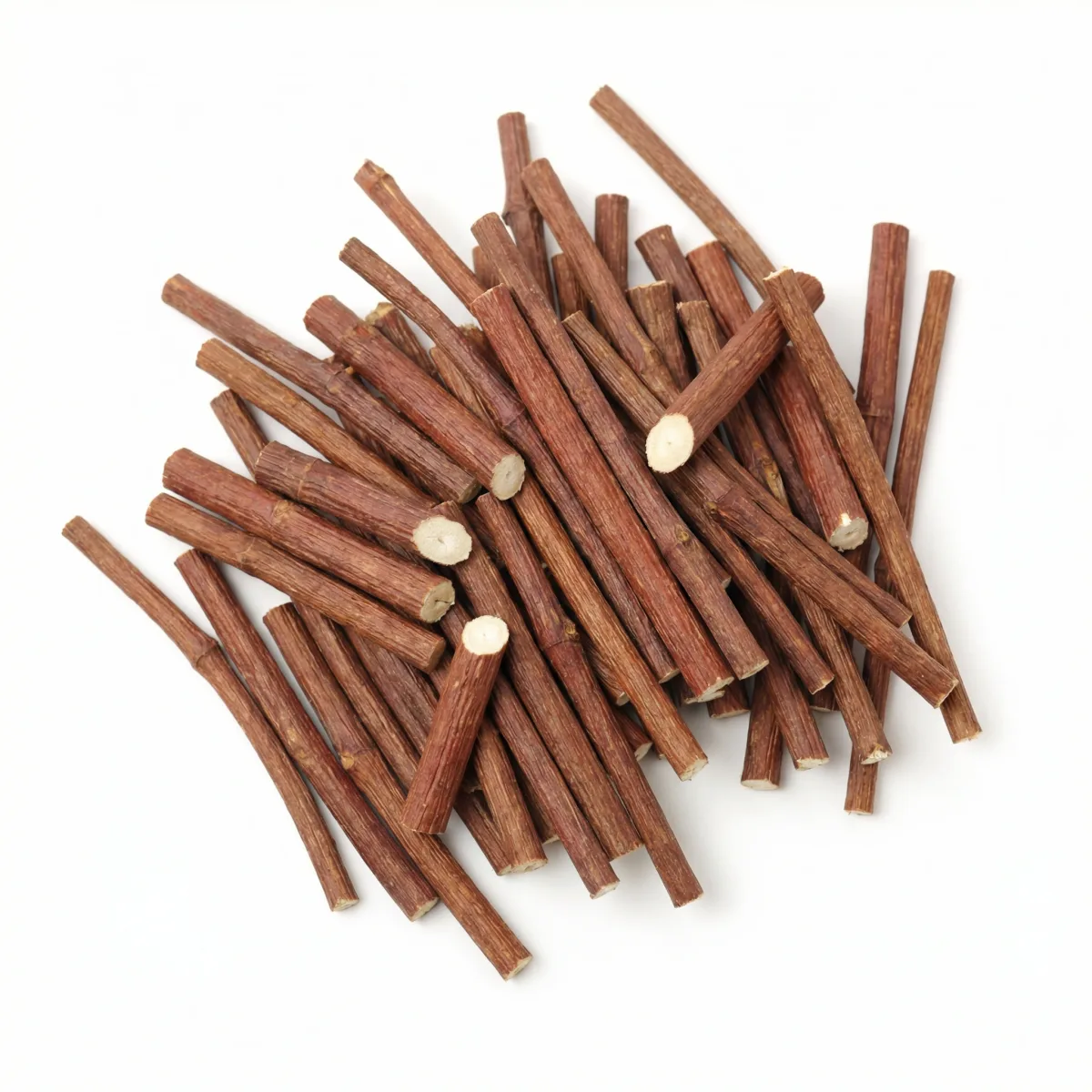
- Decoct: The most traditional method of use — boil stem pieces in water and drink the mixture in the evening before bedtime
- Granules: Concentrated cooking extract, dissolved in water — convenient for long-term use and on the go
- Powder: Finely ground herb, as tea or in capsule form — rare, but possible
- For external use as a wash: Let the strong decoction cool, then wash the affected areas of skin affected by wind-heat patterns — adjust the dosage as needed
Dosage
- Decoction (for internal use): 15–30 g per day — standard dose 15 g; up to 30 g is possible in cases of severe Shen restlessness
- Granules: As recommended by the manufacturer, typically 3–6 g of extract (equivalent to 15–30 g of crude drug)
- Powder: Rarely used; about 3–5 g per dose
- External washing: Amount can be chosen freely — typically 30–60 g of the drug per 1–2 liters of water to make a strong decoction
Frequent combination partners
Ye Jiao Teng often does not reach its full effectiveness until it is combined with other herbs
History & Tradition
The name Ye Jiao Teng—literally „night-united tendrils"—carries a quiet poetry within it. The knotweed vines twist and turn in the darkness, touching one another, twining around each other—as if they were finding themselves in the night. This observation made the herb a symbol of the union of Yin and Yang in sleep: that daily return to unity, without which the body cannot recover and the mind cannot rest.
Ye Jiao Teng is the above-ground part of the same plant that gives us He Shou Wu — the „Black-Haired Mr. He" — from its root. While He Shou Wu penetrates deeply into the kidney jing and preserves essence, Ye Jiao Teng has a lighter, more communicative effect and helps open the meridians. It is the vine that connects—heart and blood, inside and outside, wakefulness and sleep. The plant was described in detail in Li Shizhen’s 16th-century *Ben Cao Gang Mu* (本草纲目), the principal work of Chinese materia medica. Li Shizhen praised both the root and the vines, highlighting their respective distinct properties.
In the classical tradition, Ye Jiao Teng is classified among the group of mind-calming, Shen-nourishing herbs—those remedies that work not by suppression but by nourishment. It does not quell restlessness by calming the mind, but by giving it what it needs: enough blood to serve as a peaceful bed in which it can rest. This logic— Silence Through Abundance, not due to deficiency — is a fundamental principle of TCM when the Shen cannot find rest at night.
Traditionally, Ye Jiao Teng was used externally as a wash for wind in the skin—an indication of its ability to dispel wind from the superficial meridians. In folk medicine, it was also considered a restorative tonic for older people who had trouble sleeping at night. The combination of its mild nature, good tolerability, and clear mode of action made it one of the most commonly used herbs in traditional sleep formulas China's — a position it still holds today.
Contraindications & caution
- Liver Diseases — Hepatotoxicity Warning: Like the He Shou Wu root, Ye Jiao Teng has a documented history of hepatotoxicity. Ye Jiao Teng is contraindicated in cases of existing liver disease, elevated liver enzyme levels, or concurrent use of liver-toxic substances. Regular monitoring of liver enzyme levels is strongly recommended during long-term use.
- Spleen Qi Deficiency with Diarrhea: Ye Jiao Teng has a nourishing effect and can increase dampness in cases of severe spleen deficiency accompanied by loose stools or diarrhea—in such cases, use it sparingly or combine it with herbs that strengthen the spleen.
- Moisture–Mucus–Accumulations: If there is significant dampness in the middle burner (feeling of fullness, heaviness, foggy head), caution is advised, as nourishing herbs can promote dampness.
- Pregnancy and breastfeeding: Ye Jiao Teng should only be used during pregnancy and while breastfeeding under the supervision of a healthcare professional—there is insufficient safety data available.
- Interactions with Sedatives: Potential additive effects with sedative medications (benzodiazepines, sleep aids, antihistamines) — use in combination only after consulting your doctor.
Botany
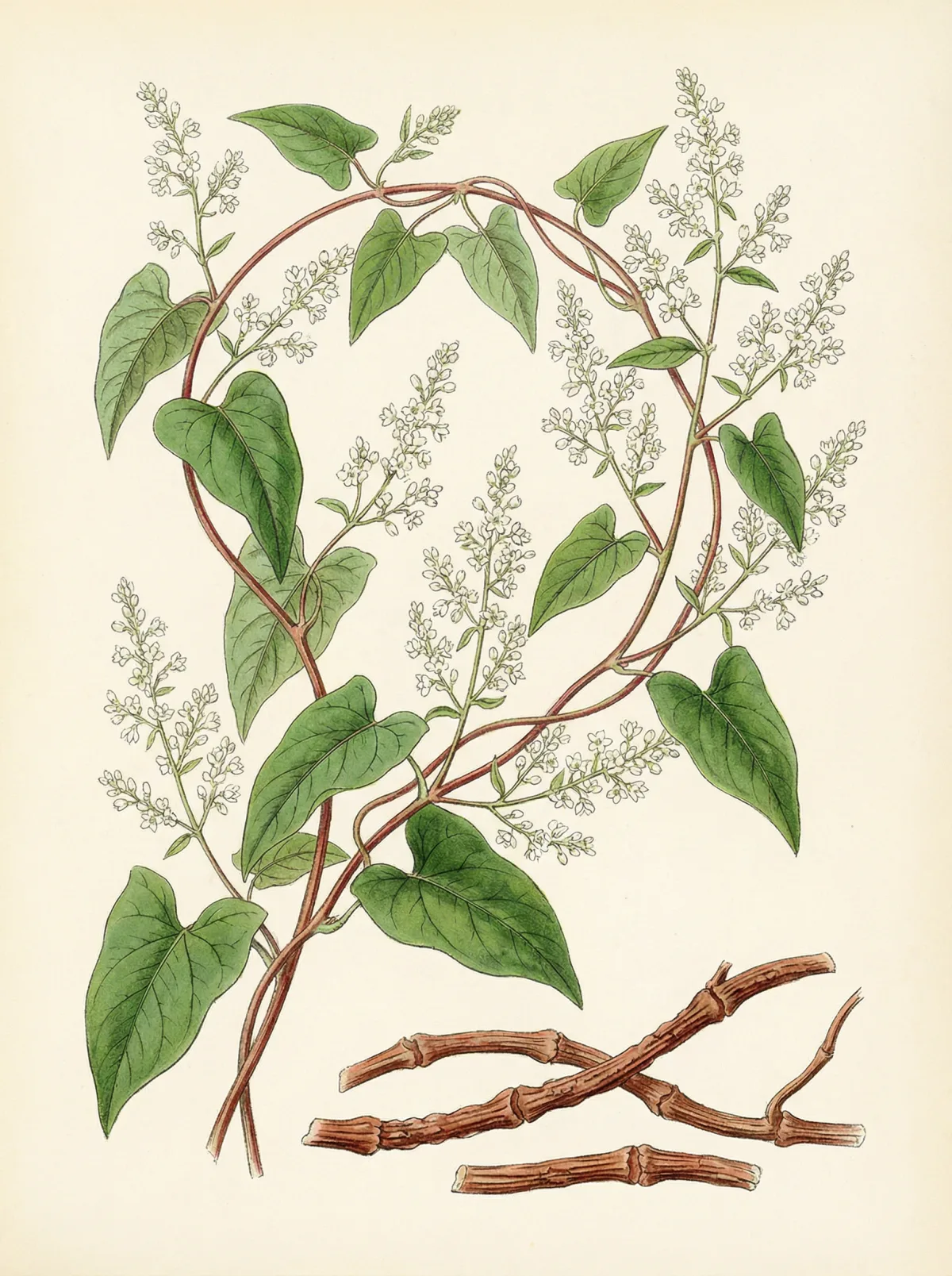
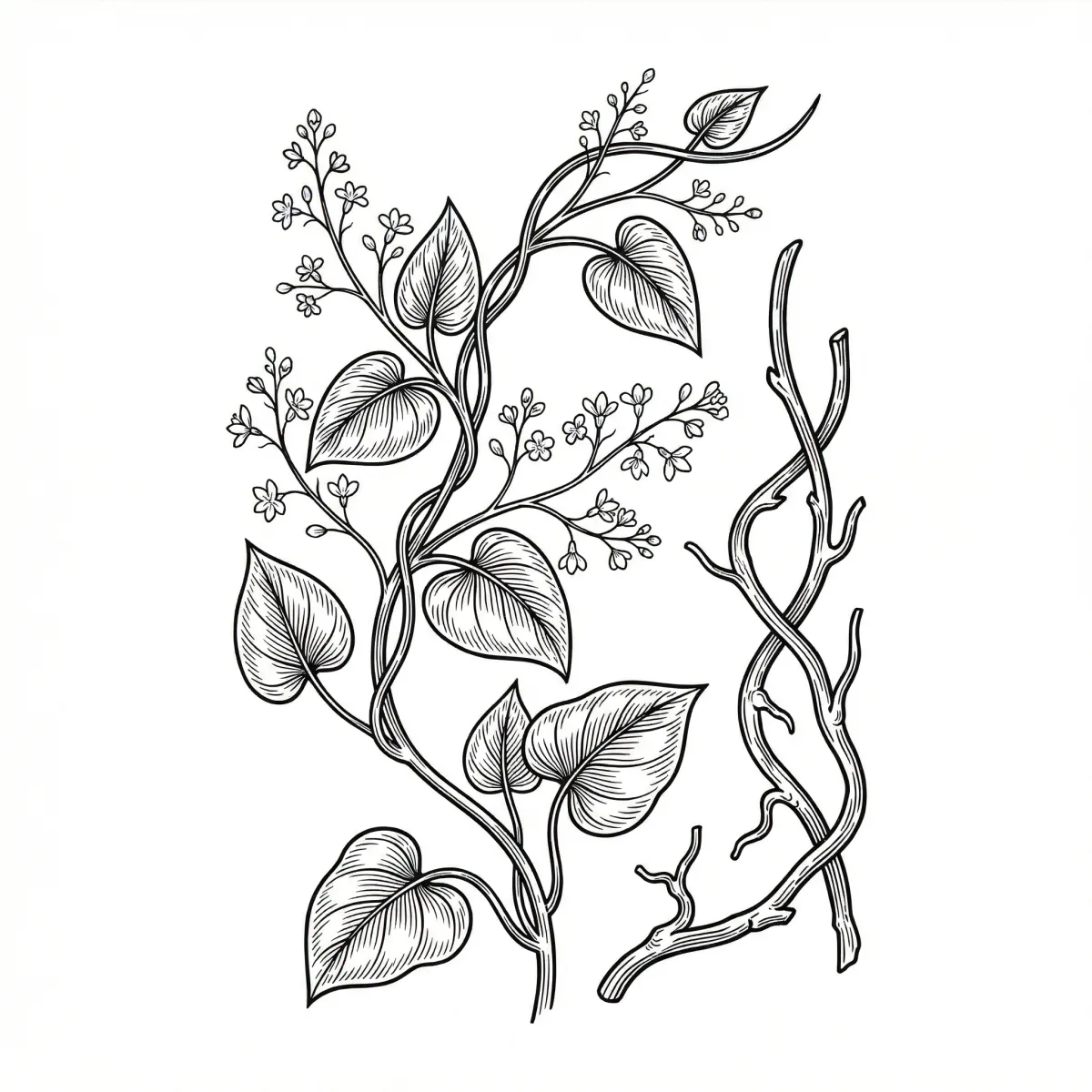
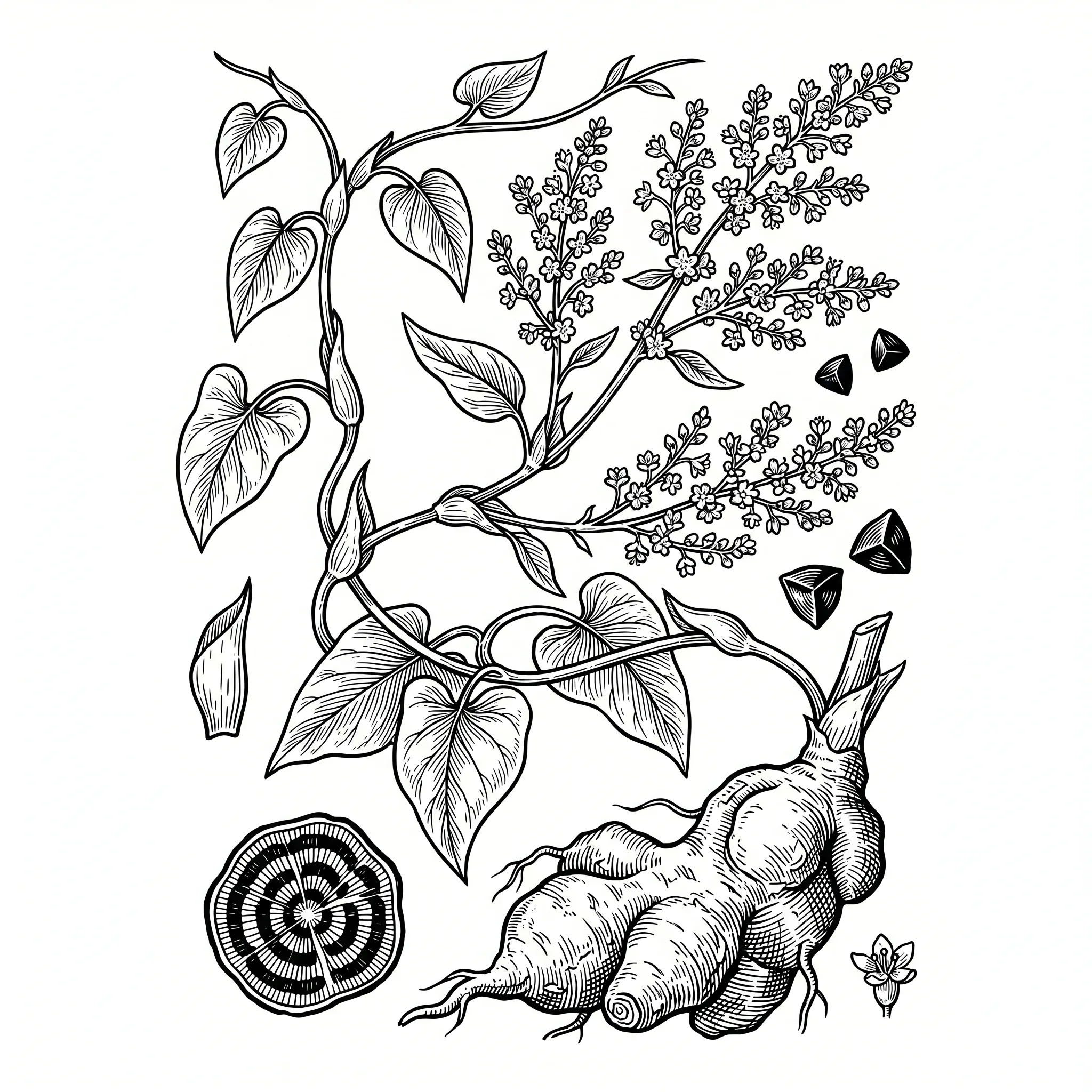
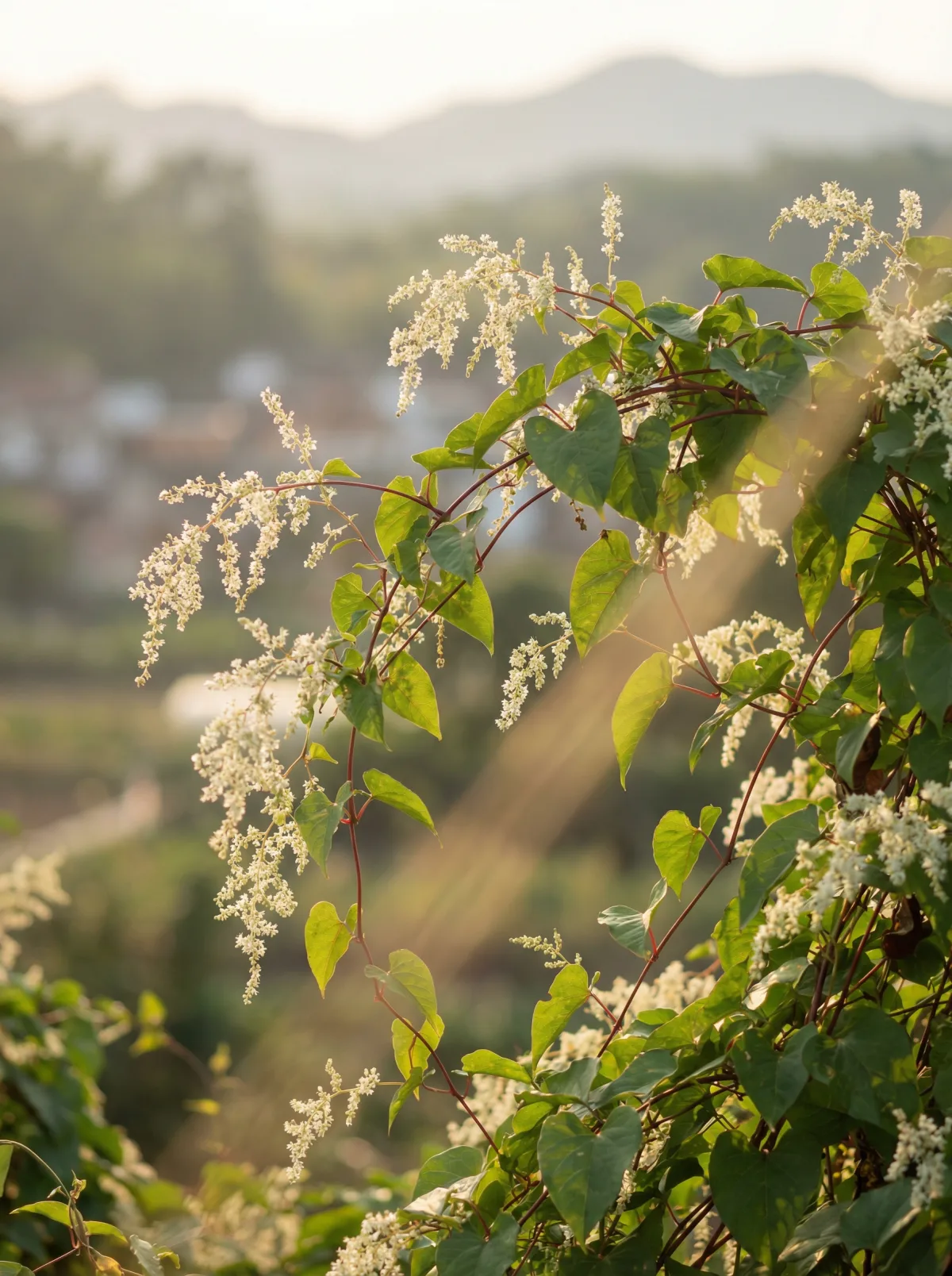
Ye Jiao Teng comes from Polygonum multiflorum Thunb. (syn. Reynoutria multiflora), a perennial herbaceous vine in the Polygonaceae family (knotweed family). The plant grows as a vigorous climber and can reach lengths of up to 4 meters. Its stems are hollow, angular, and reddish-brown in color—a characteristic identifying feature. The leaves are heart-shaped to ovate with a pointed tip and measure 4–8 cm in width. The herbal medicine „Ye Jiao Teng“ consists of the dried, cut stems and tendrils of the plant—botanically distinct from the root (He Shou Wu).
In late summer, the plant produces dense flower panicles with small white to pale pink individual flowers—unremarkable on their own, but impressive when seen in large numbers. The fruits are triangular, winged achenes, typical of the Polygonaceae family. The plant prefers sunny to partially shaded locations in Forest Edges, in thickets and gardens, as well as on rocky slopes with well-drained, moderately moist soil. It is cultivated primarily for its root (He Shou Wu), with the stems harvested as a byproduct.
Occurrence
- Regions of origin: China (primarily), Japan, and Korea—known in East Asia for centuries for their cultural significance and wild populations
- Main growing regions in China: Henan and Hubei provinces (largest quantities), as well as Guizhou, Sichuan, Yunnan, and Jiangxi
- Occurrence of game: Mountain forests and forest edges at moderate elevations (200–3,000 m), shrubs, hedges, and gardens — prefers humus-rich, slightly acidic soils
- Introduced to Europe: Related knotweed species (especially Reynoutria japonica, Japanese knotweed) are known in Europe as invasive neophytes—however, the commercial product comes exclusively from East Asia
Harvest time
- Date: Fall — September through November, after flowering but before the first frost, when the stems are fully mature
- Method: Cut the above-ground stems and vines close to the ground with scissors or a knife—the root (He Shou Wu) remains in the ground and can be harvested separately
- Plant age: Plants that are at least 3–4 years old produce the strongest stems with the highest concentration of active ingredients
- Special feature: Since the plant is perennial, the stems can be harvested annually without harming the plant—sustainable harvesting is entirely possible
Processing
The processing of Ye Jiao Teng is relatively straightforward—the herb is generally used as is (unprocessed, „sheng“). Unlike the He Shou Wu root, which requires special processing such as steaming or roasting, the stems do not require any such treatment. The key step in processing is drying the freshly harvested vines.
- Cutting and drying fresh stems:
- Clean freshly harvested stems and tendrils of soil and leaves
- Cut into even pieces 2–5 cm long (this makes it easier to dry them evenly and measure them out later)
- Spread the pieces out loosely and let them dry in the sun or in a well-ventilated, shaded area—typically 5–10 days
- Check fully dried pieces for residual moisture (they should crack when broken) and transfer them to airtight containers
- Storage: Store in a cool, dry place away from light—the dried drug has a shelf life of at least 1–2 years when stored properly
- Quality Features: High-quality Ye Jiao Teng consists of reddish-brown to purplish, robust pieces with a slightly sweet, earthy aroma—pale, soft, or very woody pieces are of inferior quality
Related herbs
Herbs with similar effects and related areas of application