







Niu Xi - Achyranthes root
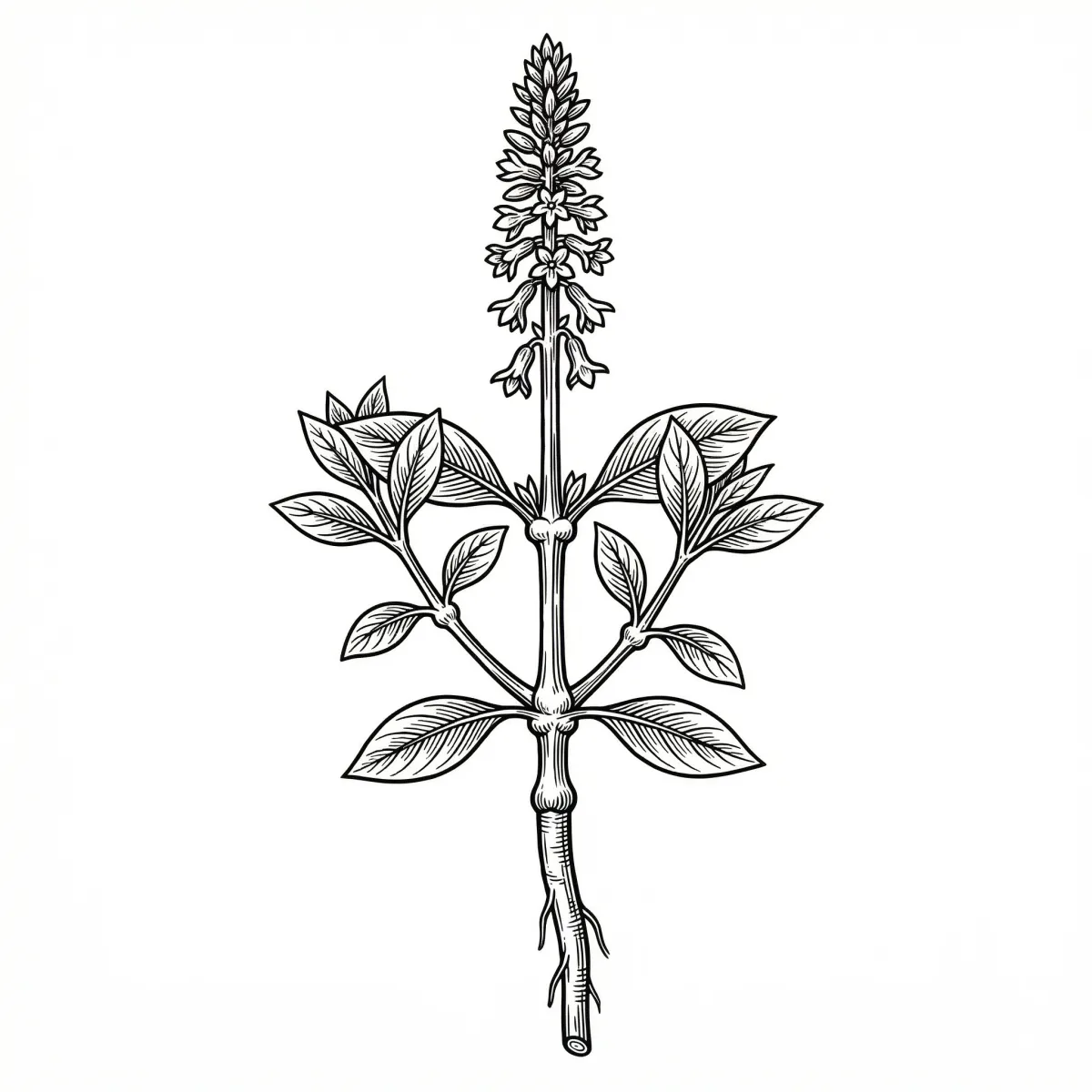
Niu Xi — die Achyranthes–Wurzel — ist in der TCM vor allem für ihre absenkende Wirkung bekannt. Sie leitet Blut und Qi gezielt in den Unterkörper und wird häufig eingesetzt, wenn Leber–Niere–Mangel oder Blut–Stase Knie und unteren Rücken schwächen.
At the same time, it strengthens the liver and kidneys, dissolves blood stasis and promotes diuresis. Its versatility as a leading herb for the lower Jiao makes it an indispensable ingredient in numerous classic recipes.
Effect from a TCM perspective
Niu Xi invigorates the blood and dissolves stasis, especially in the lower Jiao. It directs blood and fire downwards and strengthens the liver and kidney, which strengthens tendons and bones. As a guide drug, it carries the effects of other herbs into the lower body.
- Revitalize blood, release stasis — belebt das Blut und löst Blutstase auf, besonders bei stagnierender Menstruation
- Conducting blood and fire downwards — leitet aufsteigendes Blut und Feuer herab bei Blut–Hitze im oberen Körper, die das Blut aus Nase und Zahnfleisch aus seinen Bahnen treibt
- Strengthen the liver and kidneys — kräftigt Sehnen und Knochen bei Leber–Niere–Schwäche in Lende und Knien
- Drain moisture and heat - Promotes urination and drains damp heat downwards in the lower Jiao
- Messenger herb (Shǐ Yào) — leitet die Wirkung anderer Kräuter gezielt in den unteren Jiao
Application & dosage
Niu Xi wird am häufigsten als Dekokt eingesetzt. Die Standarddosis beträgt 6–15 g pro Tag. Rohe Wurzel (shēng Niú Xī) wird bei Blutstase und Hitzezuständen bevorzugt; weingeröstete Wurzel (jiǔ zhì Niú Xī) stärkt stärker Leber und Niere und ist bei längerer Anwendung zur Tonisierung besser geeignet.
In modernen Zubereitungsformen sind Granulate und Tabletten gebräuchlich. Die Dosierung richtet sich nach Anwendungsform und Muster — bei Lendenschwäche und Knochenabbau wird eher die höhere Dosierung gewählt, bei hitzebedingten aufsteigenden Zuständen die mittlere.
Dosage forms
- Decoction (Tāng): 6–15 g, 20–30 Min. köcheln; rohe Wurzel (shēng) bei Hitze und Stase, weinpräpariert (jiǔ zhì) zur Nieren– und Leber–Tonisierung
- Granules (Kē Lì): 2-5 g daily, dissolved in warm water; practical for long-term use
- Tablets / capsules: 3-4 tablets of 500 mg, 2-3× daily; often in combination preparations
- Powder (Fěn): 2-4 g daily, stirred into warm water or rice wine; promotes the absorption of saponins
- Wine extract (Yào Jiǔ): Traditionell in Reiswein mazeriert bei Blut–Stase in der Lendenregion und Gelenksteife des Unterkörpers
Dosage
- Standard dose Decoct: 6-15 g per day
- Light toning / long-term use: 6-9 g
- Blutstase, Feuchte–Hitze, ausgeprägte Stagnation: 10-15 g
- Granules: 2-5 g per day
- Powder: 2-4 g per day
- Maximum dose (short-term, under supervision): 20 g
Frequent combination partners
Niu Xi often only unfolds its full effect in combination with other herbs
History & Tradition
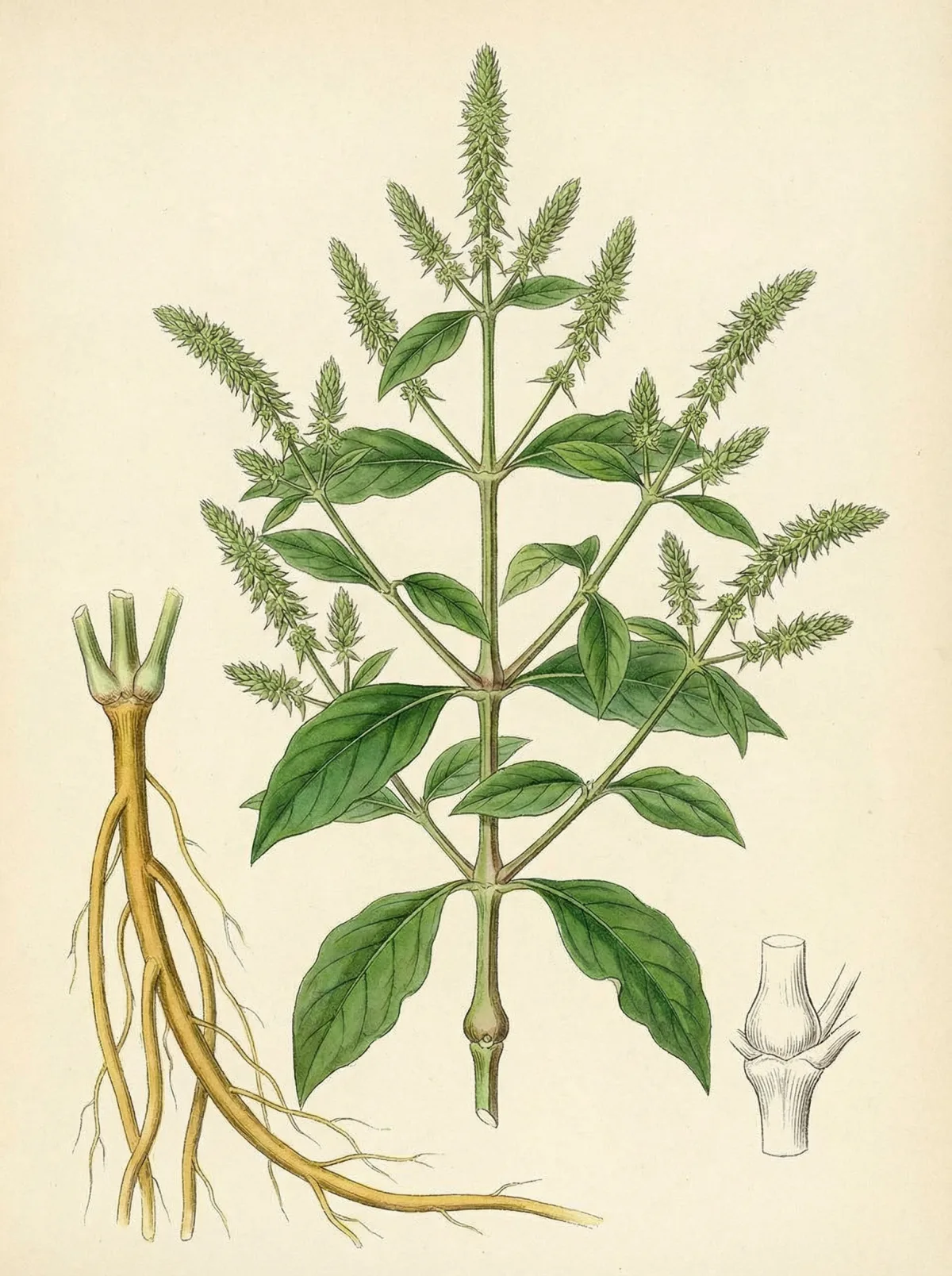
Niu Xi wird bereits im Shén Nóng Běn Cǎo Jīng als Kraut der oberen Klasse aufgeführt — ein Hinweis auf seine gute Verträglichkeit bei Langzeitanwendung. Der Name „Ochsenknie" (Niú Xī) beschreibt die auffälligen knotigen Verdickungen an den Stängelknoten, die an die kräftigen Knie eines Ochsen erinnern.
In der Signaturenlehre der TCM wurde diese Form als Hinweis auf die stärkende Wirkung für Knie und Gelenke gedeutet. Zhāng Zhòngjǐng setzte Niu Xi in mehreren Rezepturen ein, um Blut und Qi abwärts zu leiten. Im Běn Cǎo Gāng Mù hebt Lǐ Shízhēn hervor, dass Niu Xi als „Botenkraut" (Shǐ Yào) fungiert — es geleitet die Wirkung anderer Kräuter gezielt in den unteren Jiao und verstärkt sie dort.
Es existieren zwei pharmazeutisch unterschiedene Arten: Huái Niú Xī (Achyranthes bidentata) aus der Provinz Hénán, die stärker tonisierend wirkt, und Chuān Niú Xī (Cyathula officinalis) aus Sìchuān, die stärker blutbewegend ist. Die Unterscheidung ist bis heute von Bedeutung und wird beachtet. Huái Niú Xī zählt zu den berühmten „Vier Kräutern aus Huáiqìng" (Sì Dà Huái Yào) gemeinsam mit Dì Huáng, Shān Yào und Jú Huā — und genießt seit Jahrhunderten den Ruf höchster Qualität.
Contraindications & caution
Contraindicated in pregnancy - the lowering and blood-moving effect can endanger the fetus and trigger premature labor. Not for heavy menstrual bleeding or metrorrhagia, as Niu Xi increases the downward flow of blood.
Caution is advised in cases of spermatorrhea and nocturnal emissions due to renal insufficiency - the lowering effect can worsen the condition. With simultaneous intake of Anticoagulants (warfarin, heparin) or Platelet aggregation inhibitors (ASA, clopidogrel), medical consultation is required as Niu Xi can also affect blood clotting. Also with Antihypertensives there is a potential risk of additive blood pressure reduction.
Botany
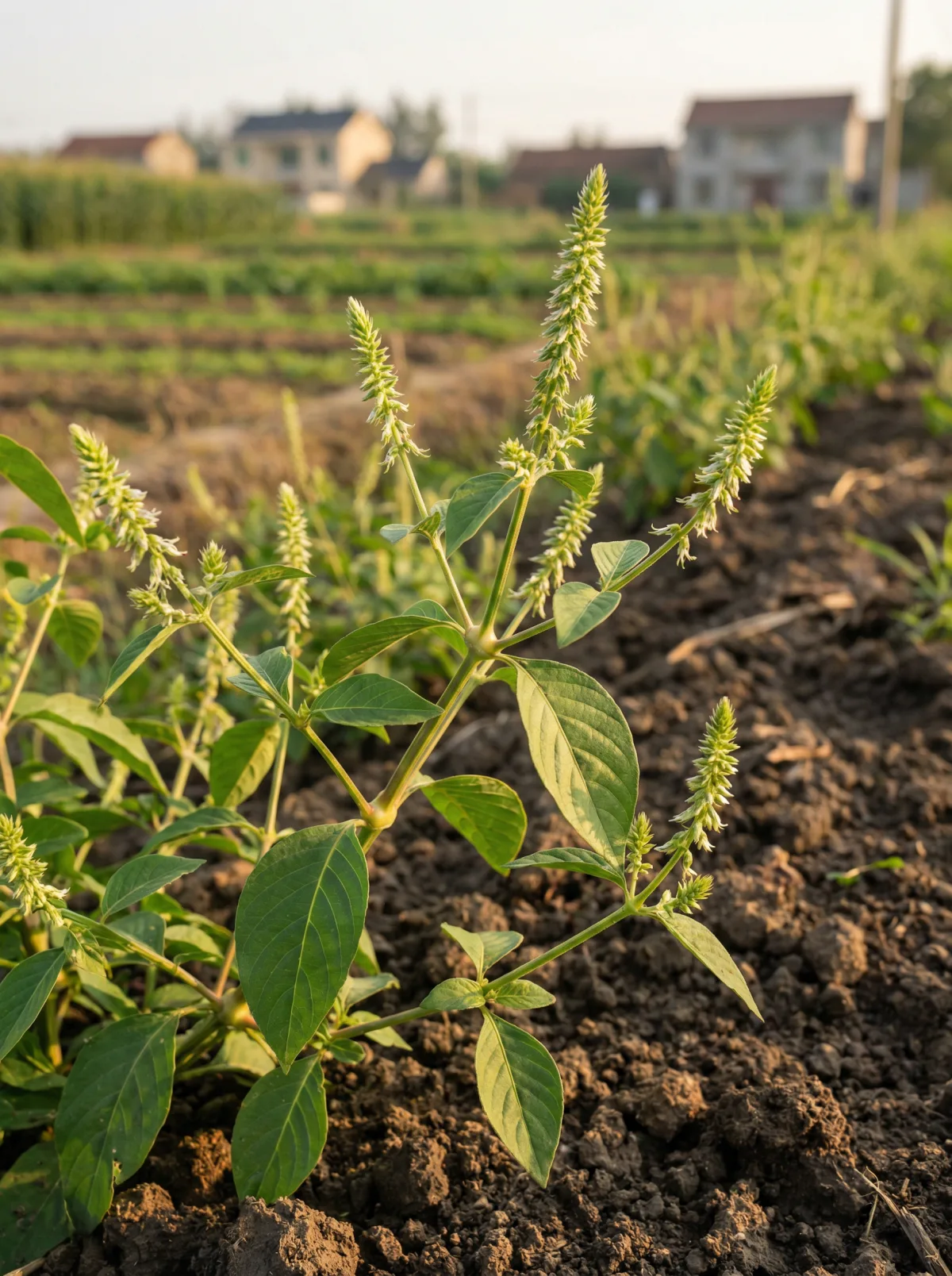
Achyranthes bidentata Bl. ist eine ausdauernde krautige Pflanze aus der Familie der Amaranthaceae (Fuchsschwanzgewächse), die Wuchshöhen von 70–120 cm erreicht. Die Stängel sind vierkantig mit charakteristischen knotigen Verdickungen an den Blattansätzen. Die gegenständigen Blätter sind elliptisch bis lanzettlich, die unscheinbaren Blüten stehen in endständigen Ähren.
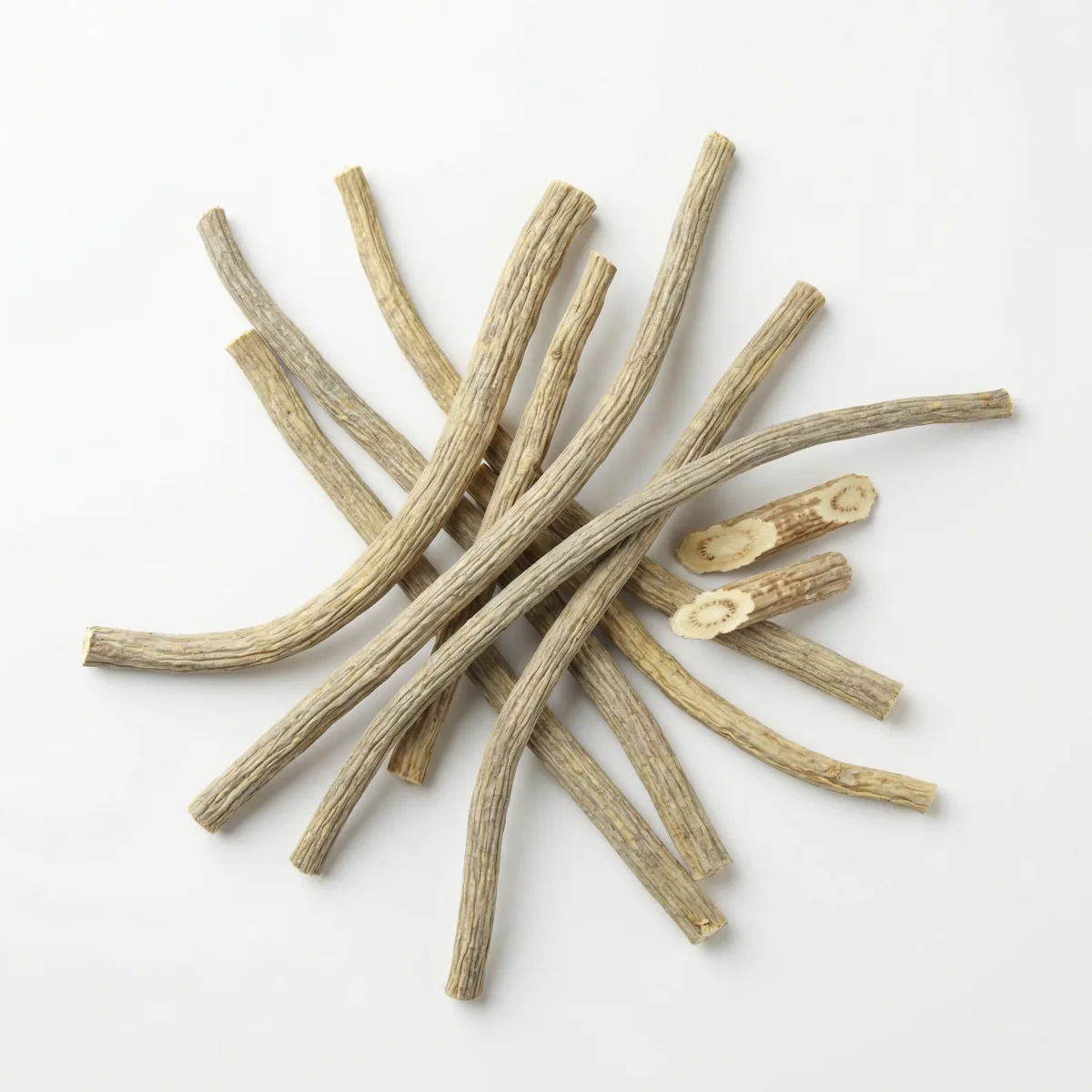
Die Wurzel ist die verwendete Droge — sie ist zylindrisch, 30–60 cm lang, gelblich–braun und hat einen leicht süßlichen, dann bitteren Geschmack. Die Qualität wird an der Dicke, Festigkeit und dem hellen Querschnitt der Wurzel beurteilt. Relevante Inhaltsstoffe sind Ecdysteroide (v. a. Ecdysteron), Triterpen–Saponine, Polysaccharide und Oleanolsäure.
Occurrence
- Central China — Hénán (Region Huáiqìng) als Hauptanbaugebiet für die Premiumsorte Huái Niú Xī
- Südwestchina — Sìchuān und Yúnnán für Chuān Niú Xī (Cyathula officinalis)
- Natural Distribution in Japan, Korea und Indien in Höhenlagen von 200–1.700 m
- Prefers sandy, well-drained loamy soil in a sunny to semi-shady location
- Today also cultivated in Southeast Asia and parts of Africa
Harvest time
- Main harvest: October to December - after the above-ground shoots have died back, when the nutrients have been completely absorbed by the roots
- Optimal time: After the first frost, when the stems turn yellow and wilt; this is when the ecdysterone and saponin content is at its highest
- Harvest age: Annual crops (cultivation from April/May), harvest in the same year in fall/winter
- Vorgehen: Handgrabung mit Spaten oder Grabgabel, da die langen Pfahlwurzeln (40–90 cm) mechanische Ernte erschweren; unverletzte Wurzeln werden bevorzugt
Processing
Niu Xi wird nach der Ernte in zwei unterschiedlich wirkenden Formen aufbereitet. Die Wahl der Verarbeitungsform bestimmt die Wirkung wesentlich: Rohe Wurzel (shēng Niú Xī) leitet stärker ab und bewegt Blut, während weinverarbeitete Wurzel (jiǔ zhì Niú Xī) tonisiert und wärmt.
- Cleaning: Remove soil from fresh roots, remove fine roots and root head, wash briefly in water
- Bundling and pre-drying: Gather the roots into even bundles and leave to air dry for a few days until they are pliable but not brittle
- Final drying: Dry at max. 50 °C in a drying cabinet or in the sun until the water content is below 15 %; quality feature: flexible, non-splintery root
- Cutting: Cut the dried roots into diagonal slices 3-5 mm thick
- Raw drug (Shēng Niú Xī): Ready for use immediately after cutting; serves to move blood, dissipate heat and promote micturition
- Weinverarbeitung (Jiǔ Zhì Niú Xī): Sprinkle the root slices with rice wine (10-20 ml per 100 g of drug), leave to soak for 30-60 minutes, then roast in a wok over a medium heat, stirring constantly, until the surface is light yellowish-brown and the smell of the wine dissipates; enhances liver and kidney tonification
- Storage: In tightly closed containers, cool and dry, at 15-25 °C; protected from moisture and light; shelf life 1-2 years
Related herbs
Herbs with similar effects and related areas of application