







On this page, you will learn:
- What this pattern means from the perspective of TCM and Western medicine
- Where your symptoms come from and how they are connected
- Which specific treatment methods can help you now
- How to Use TCM Herbs, Acupressure, Qigong, and Nutrition to Disperse Wind, Clear Heat, and Restore Your Wei Qi (Defensive Qi)
The good news: Wind-heat can be treated very effectively and quickly with the right measures. With cooling TCM herbs, targeted acupressure, and the right diet, you can ward off the wind-heat invasion and restore your immune system.
Take your time, Get to know the different treatment approaches—you don't have to implement everything at once. Choose what feels right for you and what you can easily integrate into your everyday life.
Your treatment at a glance:
Which TCM pattern is really behind your complaints?
Degree of
imbalance

Light to moderate
Typical
treatment duration

1–3 weeks
self-treatment
Possible

Well self-treatable
Treatment–
scope

2–3 methods
Proposed
methods

Extensive range
Our free TCM analysis shows you your personal TCM pattern in just 10 minutes.
What is wind-heat?

When wind and heat breach the body's defenses, causing a sore throat, fever, and headache
The TCM Perspective: When Wind and Heat Overcome the Body's Defenses
In Traditional Chinese Medicine, wind-heat (Fēng Rè, 风热) is one of the most common external disease patterns. Wind is considered the „leader of the hundred diseases“—it opens the body’s gates and allows other pathogenic factors to invade. In wind-heat, wind joins forces with heat, and together they attack the body’s surface.
The lungs are the first organ to be affected. In TCM, they are called the „delicate organ“—sensitive to external influences because they are directly connected to the outside world through the skin and the nose. The lungs control the Wei Qi (defensive Qi), which circulates on the body’s surface like an invisible protective shield. When wind-heat penetrates this protective shield, the lungs’ function is disrupted: they can no longer properly descend and distribute the Qi.
The "heat" component causes signs of inflammation: the throat becomes red and sore, a fever sets in, and the body feels hot. The wind component causes the characteristic wandering, sudden-onset symptoms: headaches, chills alternating with hot flashes, and itchy skin. Together, they produce the typical picture of an acute cold with signs of heat.
The Consequences of the Wind–Heat Invasion: The Wei-Qi is blocked, and the lungs can no longer breathe freely. A sore throat, fever, headache, and cough are the body’s cries for help—it is trying to fend off the intruder.
The typical signs of a wind-heat invasion:
- Sore throat with redness and difficulty swallowing — On the other hand, severe pain on one side of the face, accompanied by slurred speech, an inability to open your mouth wide, or an inability to swallow saliva, requires immediate medical attention. and are not a sample symbol
- Fever or a feeling of heat, mild chills — A fever above 39 °C, a fever that lasts longer than three days, a fine-spotted rash, or a stiff neck should be evaluated by a doctor
- Headaches, especially in the forehead and temples
- Light sweating (the pores are open)
- Stuffy nose with yellowish discharge
- Cough with yellow or sticky phlegm
- A thirst for cold drinks
- Red eyes, possibly conjunctivitis
The good news: Wind-heat is an acute, superficial pattern that responds very well to treatment when addressed promptly. The sooner you take action with cooling herbs, acupressure, and the right diet, the faster you’ll drive out the intruder.
The Western Perspective: Acute Respiratory Infections
From a Western perspective, wind-heat corresponds to an acute viral respiratory infection—what we colloquially refer to as a „cold“ or „flu-like illness.“ Everyone is familiar with the symptoms—sore throat, fever, headache, and cough—from personal experience.
Imagine your immune system as a castle wall: The mucous membranes in your nose and throat are the first line of defense. When viruses—rhinoviruses, adenoviruses, influenza viruses, or coronaviruses—breach this barrier, they begin to multiply. The body responds with an inflammatory reaction: immune cells rush to the site, and signaling molecules such as interleukins and prostaglandins are released. The result: swelling of the mucous membranes (stuffy nose), elevated temperature (fever to fight the virus), sore throat (inflammation in the throat), and coughing (a protective reflex to clear mucus).
The TCM description of „wind-heat“ aligns remarkably well with modern infectious disease medicine: „Wind“ corresponds to the virus itself—fast, invisible, and ever-changing. „Heat“ corresponds to the body’s inflammatory response—redness, swelling, fever, and pain.
What does modern medicine show?
- Acute pharyngitis: inflammation of the throat accompanied by a sore throat and difficulty swallowing
- Acute Tonsillitis: Inflammation of the Tonsils with Fever and Swollen Lymph Nodes
- Upper respiratory tract infections: rhinitis, sinusitis with nasal congestion and headaches
- Flu (Influenza): A more severe form of the illness characterized by high fever and body aches
- Conjunctivitis: Red, watery eyes associated with a viral infection
- Elevated inflammatory markers: leukocytosis, slightly elevated CRP as a sign of an immune response
What the research says about this: Several of the herbs traditionally used to treat wind-heat have been studied in the laboratory; honeysuckle, forsythia, and peppermint have been linked to anti-inflammatory and antimicrobial properties. However, what happens in a test tube does not necessarily indicate how a formula will work in humans—and it says nothing at all about when an infection should be treated by a doctor. Furthermore, the studies comparing Yin Qiao San with antiviral medications are small and methodologically weak—a few promising results do not constitute evidence that a herbal formula can replace a medication. A herbal remedy does not bring a fever down immediately and does not replace necessary treatment.
TCM treatment for wind-heat focuses precisely on this: it dispels the wind, clears the heat, and supports the body’s defenses. It is designed for the first few days—see the section on dosage below for important considerations.

The Yellow Emperor's team explains your pattern
Qi Bo | The Yellow Emperor | Dr. Lisa Weber
MASTER OF THE HEALING ARTS | TCM FOUNDER | MODERN PHYSICIAN
What happens when the legendary Yellow Emperor of Traditional Chinese Medicine sits down with his advisor Qi Bo and a modern doctor? They discuss your pattern—using 4,000-year-old knowledge AND the latest science.
Wind–Heat — When wind and heat breach the body’s defenses, causing a sore throat, fever, and headache
The Yellow Emperor: „Qi Bo, many people in my kingdom are suddenly falling ill: they complain of sore throats, fevers, and headaches. Their noses are stuffy, they’re coughing, and they feel miserable. These symptoms seem to come out of nowhere, often after a change in the weather. What is the cause of this illness?“
Qi Bo: „Your Majesty, these people are suffering from a wind-heat invasion—known as Fēng Rè. Wind is the ‚leader of the hundred diseases.‘ It is swift, changeable, and opens the body’s gates to other pathogenic factors. In wind-heat, the wind joins forces with heat, and together they attack the body’s surface. The Wei-Qi—the defensive energy that circulates on the body’s surface like an invisible shield—is breached. The lung, the ‚delicate organ,‘ is the first organ to be affected.“
Dr. Weber: „That’s a remarkable description of an acute viral respiratory infection! In Western medicine, we refer to this as a cold or flu-like illness—caused by viruses such as rhinoviruses, adenoviruses, influenza viruses, or coronaviruses. These pathogens breach the mucosal barrier in the nose and throat and begin to multiply. The body responds with an inflammatory reaction: immune cells rush to the site, and signaling molecules are released. The TCM description of ‚wind‘ fits the virus surprisingly well: fast, invisible, and changeable. And ‚heat‘ corresponds to the inflammatory response—redness, swelling, fever, and pain.“
The Yellow Emperor: „You talk about Wei–Qi as a protective shield. How exactly does this defense work?“
Qi Bo: „Your Majesty, Wei-Qi is a special form of Qi that circulates on the body’s surface. It is controlled and distributed by the lungs. Wei–Qi has three functions: it warms the skin and muscles, it controls the opening and closing of the pores, and it protects the body from external pathogenic factors. When Wei–Qi is strong, the wind is repelled like rain off a sturdy roof. But when it is weakened—by overwork, lack of sleep, irregular eating habits, or chronic stress—the wind can penetrate and bring heat with it.“
Dr. Weber: „Fascinating! This correlates perfectly with our understanding of the innate immune system! The mucous membranes in the nose and throat form the first line of defense—just like the Wei–Qi on the surface. Immunoglobulin A, antimicrobial peptides, and cilia on the mucous membranes ward off pathogens. And the risk factors for catching a cold match exactly: Lack of sleep measurably reduces immune function—studies show that people who get less than 6 hours of sleep are three times more likely to catch a cold! Chronic stress increases cortisol levels and weakens the immune system. And nutrient deficiencies impair the production of immune cells.“
The Yellow Emperor: „Why are the lungs affected first?“
Qi Bo: „Your Majesty, the lung is called the ‚delicate organ‘—Jiāo Zàng. It is the most sensitive of the five Zang organs because it is directly connected to the outside world through the nose and the skin. The lungs control breathing, distribute Wei–Qi, and regulate the waterways. When wind–heat invades, the lungs are the first to be disrupted. They can no longer properly descend Qi—which causes a cough. It can no longer regulate the waterways—which causes a runny nose. And it can no longer distribute Wei-Qi—which makes the body susceptible to further invaders.“
Dr. Weber: „The lungs as the ‚gateway to the outside world‘—that is anatomically completely accurate! The respiratory tract has a vast surface area of about 70 square meters that is constantly in contact with the ambient air. The upper respiratory tract—the nose, pharynx, and larynx—is the first point of contact for pathogens. And the TCM description of the impaired ‚descending function‘ associated with coughing is physiologically precise: Coughing is a protective reflex that occurs when the mucous membrane is irritated and mucus needs to be cleared. The ‚impaired fluid regulation‘ associated with a cold corresponds to the increased mucus production caused by the inflamed mucous membranes.“
The Yellow Emperor: „How is wind-heat different from wind-cold?“
Qi Bo: „Your Majesty, this is an important distinction! In cases of wind-cold, cold is the dominant pathogenic factor. The pores are tightly closed—hence no sweating. The phlegm is clear and thin. The headache is stiff, and the body feels cold. The patient craves warmth. In Wind–Heat, on the other hand, heat is the dominant factor. The pores are partially open—hence slight sweating. The throat is red and very sore. The phlegm is yellow and sticky. The patient craves cool drinks. The tongue shows red edges and a thin yellow coating. This is crucial for treatment: Wind–Cold is treated with warming herbs, Wind–Heat with cooling ones!“
Dr. Weber: „This distinction is clinically very important! What TCM describes as ‚Wind–Heat‘—sore throat, fever, yellow phlegm—most closely corresponds to viral pharyngitis or tonsillitis with a severe inflammatory reaction. ‚Wind–Cold‘ with clear phlegm and chills is more similar to the early stage of a cold without severe inflammation. And the recommendation to tailor treatment to heat or cold makes medical sense: In cases of severe inflammation (heat), anti-inflammatory measures are appropriate; in cases of feeling cold (cold), warming beverages and sweat-inducing treatments can help.“
The Yellow Emperor: „How do we treat wind-heat?“
Qi Bo: „Your Majesty, the principle of treatment is: Shū Fēng Qīng Rè—disperse the wind and clear the heat. First: Cooling, wind-dispersing herbs—primarily Jīn Yín Huā (honeysuckle) and Lián Qiào (forsythia), which form the foundation of the treatment. They clear the heat and dispel the wind from the surface. Second: Cool the throat—Bò Hé (peppermint) and Niú Bàng Zǐ (burdock seeds) clear the throat and relieve pain. Third: Support the lungs — Jié Gěng (balloon flower) opens the lungs and helps clear phlegm. Fourth: Cooling foods — peppermint tea, chrysanthemum tea, pears, and cucumber cool from the inside. Fifth: Acupressure — Di 04 (Hé Gǔ) and Lu 07 (Liè Quē) dispel wind and strengthen the lungs.“
Dr. Weber: „Many of these TCM herbs have been shown in modern studies to possess impressive antiviral and immunomodulatory properties! Jīn Yín Huā—honeysuckle—has been shown to inhibit the replication of influenza and adenoviruses. Chlorogenic acid and luteolin in the plant have strong antiviral and anti-inflammatory effects. Lián Qiào contains forsythoside A, which has antibacterial and antiviral effects. Bò Hé—peppermint—has proven antiviral, pain-relieving, and fever-reducing properties due to menthol. And acupressure on Di 04 and Lu 07 has been shown to stimulate the immune system—studies demonstrate increased natural killer cell activity!“
The Yellow Emperor: „Which herbal remedies are particularly effective for wind-heat?“
Qi Bo: „Your Majesty, the most important formula is Yín Qiào Sǎn—the Lonicera–Forsythia Powder. It contains Jīn Yín Huā and Lián Qiào as the main herbs, supplemented by Bò Hé, Niú Bàng Zǐ, Jié Gěng, Dàn Zhú Yè, Jīng Jiè, Dàn Dòu Chǐ, Lú Gēn, and Gān Cǎo. This formula is the gold standard for wind-heat—it dispels wind, clears heat, and relieves surface symptoms. For more severe coughs, we alternatively use Sāng Jú Yǐn—the mulberry leaf and chrysanthemum decoction—which specifically targets the lungs.“
Dr. Weber: „Yín Qiào Sǎn is one of the most extensively studied TCM formulas for respiratory infections! Clinical studies show that it can shorten the duration of cold symptoms and reduce their severity. The combination of herbs has a synergistic effect—it’s antiviral, anti-inflammatory, and immunomodulatory all at once. Particularly noteworthy: A meta-analysis showed that Yín Qiào Sǎn was just as effective as oseltamivir in treating influenza—but with fewer side effects! A 200-year-old formula that can outshine modern antivirals!“
The Yellow Emperor: „Wonderful! Let's turn this wisdom into a practical plan.“
THE "3 WISE MEN" METHOD FOR WIND AND HEAT
MORNING ROUTINE (To dispel the wind and clear away the heat):
- TCM: Peppermint tea to start — Bò Hé dispels wind, clears heat, and clears the mind
- Science: The menthol in peppermint reduces swelling in the mucous membranes and has fever-reducing properties
- Practical: Pour hot water over 1 teaspoon of fresh or dried peppermint leaves and let steep for 5 minutes
- TCM: Acupressure on Di 04 (Hé Gǔ)—the most important point for dispelling wind and strengthening the body's defenses
- Science: Studies show that stimulating this point increases the activity of natural killer cells
- Practical: In the hollow between your thumb and index finger. Massage for 3 minutes on each side, applying firm pressure. DO NOT use during pregnancy!
- TCM: A light, refreshing breakfast—don't overburden the spleen so the body can use its energy for defense
- Science: During acute infections, the body benefits from light meals that require little energy to digest
- Practical: Light congee with scallions, or warm pear soup with honey
TAGS STRATEGY (Supporting the Lungs and Clearing Heat):
- TCM: Chrysanthemum tea throughout the day — cools the lungs, clears the eyes, and dispels heat
- Science: Chrysanthemums contain flavonoids with anti-inflammatory and antiviral properties
- Practical: Pour hot water over 5–8 chrysanthemum blossoms; drink several times a day
- TCM: Acupressure on Lu 07 (Liè Quē)—the main point of the lung meridian—opens the airways and dispels wind
- Science: This point lies along the course of the radial nerve and affects the bronchial muscles
- Practical: On the forearm, 1.5 cun above the wrist crease, on the thumb side. Massage in a circular motion for 3 minutes on each side.
- TCM: Drink plenty of fluids — Heat depletes the body's fluids, which need to be replenished
- Science: Adequate hydration thins mucus and supports immune function
- Practical: At least 2–3 liters of fluid a day: peppermint tea, chrysanthemum tea, warm water with honey and lemon
EVENING ROUTINE (Regeneration and Immune System Support):
- TCM: Warm Pear Decoction — Pears nourish the lungs, moisten the respiratory tract, and clear heat
- Science: Pears contain quercetin, a flavonoid with anti-inflammatory properties
- Practical: Cut 1 pear into pieces, simmer with water and 1 tsp honey for 15 minutes, and drink while warm
- TCM: Acupressure on Di 11 (Qū Chí) — clears heat and strengthens the immune system
- Science: Studies show that stimulating this point can reduce markers of inflammation
- Practical: On the elbow with the arm bent, at the outer end of the elbow crease. Press firmly for 3 minutes on each side.
- TCM: Go to bed early—during sleep, the Wei-Qi regenerates and the lungs can recover
- Science: Sleep is the most important resource for the immune system — immune cells are produced during deep sleep
- Practical: Go to bed before 10 p.m.; aim for 8–9 hours of sleep if you have an acute infection
The Yellow Emperor: „Qi Bo, how long will it take for the wind-heat to be dispelled?“
Qi Bo: „Your Majesty, Wind-Heat is an acute, superficial pattern that responds very well to treatment when addressed promptly. If you intervene within the first 1–2 days with cooling herbs and the right diet, the pathogen can often be expelled within 3–5 days. Most people notice after 1–3 days that their fever subsides, their sore throat eases, and their head feels clearer. After 5–7 days, the acute symptoms have usually subsided. Energy should return after 1–2 weeks. After that, I recommend another 1–2 weeks to strengthen the Wei-Qi and prevent relapses. The sooner you act, the shorter the illness will be.“
Dr. Weber: „That’s consistent with our clinical experience! The average cold lasts 7–10 days. With early intervention—rest, plenty of fluids, and symptom relief—the duration can be shortened. Studies show that herbal antivirals such as honeysuckle and forsythia can shorten symptoms by 1–3 days when taken within the first 48 hours. And the TCM recommendation to strengthen the immune system after the acute phase makes a lot of medical sense—in the weeks following an infection, susceptibility to secondary infections is increased!“
The Yellow Emperor: „What should you absolutely avoid when it's windy and hot?“
Qi Bo: „Your Majesty, the most important things are: First, no spicy or warming foods—large amounts of ginger, chili, garlic, and lamb intensify the heat. Second, no alcohol—it generates heat and weakens the immune system. Third, no heavy, greasy foods—they burden the spleen and produce phlegm, which further blocks the lungs. Fourth, no warming herbs—ginseng and astragalus are contraindicated in cases of acute wind-heat; they ‚lock the thief inside the house.‘ Fifth, avoid overexertion—the body needs its energy to fight off the invader. And sixth, avoid drafts—the wind must not be allowed to enter again.“
Dr. Weber: „Scientifically sound! Spicy seasonings can further irritate inflamed mucous membranes. Alcohol dehydrates the body and measurably weakens the immune system. High-fat foods divert blood and energy to digestion rather than to the immune system. And the advice to avoid immune-stimulating herbs during an acute infection is medically sound—an overactive immune response can worsen symptoms! Rest and taking it easy are essential during acute infections—the body needs its resources to fight the virus.“
The Yellow Emperor: „Then the message is clear: wind-heat is like an intruder storming through an open gate. By acting quickly—using cooling herbs, eating light meals, and resting—we can drive the intruder away and close the gate again.“
Qi Bo: [smiles] „That is correct, Your Majesty. The lungs are a delicate organ that deserves special protection. When the wind-heat invader arrives, we counter it with cooling herbs like honeysuckle and forsythia, support the lungs with peppermint and pear, and strengthen the Wei-Qi through rest and nourishing food. In this way, we drive out the invader and rebuild the wall—stronger than before.“
About our „3 Wise Men“ story
Who are the Yellow Emperor and Qi Bo?
The Yellow Emperor (Huangdi) is said to have lived around 2600 BC and is considered the mythical founder of Chinese culture and medicine. Qi Bo was his most important advisor and personal physician. Their discussions about health, illness, and human nature were recorded in the most important fundamental work of TCM.
The book: Huangdi Neijing
The Huangdi Neijing, also known as The Yellow Emperor's Classic of Internal Medicine, was probably written between 200 BC and 200 AD. It is the oldest surviving work on Chinese medicine and consists of dialogues between the Yellow Emperor and his advisors, mainly Qi Bo.
This work is to TCM what the Bible is to Christianity: the absolute foundation. All the important concepts - yin and yang, the 5 elements, qi, meridians and acupuncture points - are systematically described here for the first time.
Our modern approach: The 3 wise men
In our series „The Three Sages,“ we bring together the Yellow Emperor and Qi Bo with the fictional modern doctor and microbiologist Dr. Weber.
Important note: All three characters and their conversations are purely fictitious and invented by us.
We use this narrative form, similar to the dialogue form in the book Huangdi Neijing, to convey the often complex interrelationships of TCM in an understandable and entertaining way. When the 4,000-year-old emperor is confronted with modern science, enlightening „aha moments“ arise that show that ancient wisdom and new research often speak the same language — just in different words.
This makes TCM lively, understandable and practically applicable for your everyday life.
The dialogs are creative interpretations - not historical documents. For medical questions, please consult a qualified TCM therapist or doctor.
Your treatment options
Wind-heat is very treatable! TCM offers you a variety of effective methods to dispel wind, clear heat, and strengthen your defensive Qi. You don't have to do everything at once—choose the methods that work best for you and your daily life.
Here you will find specific treatment approaches that have been proven effective in TCM for thousands of years and that you can largely apply yourself.
TCM herbs
Herbal medicine (or, in modern terms, phytotherapy) is the MOST IMPORTANT tool of TCM. It is an integral part of every traditional TCM treatment. Today, there is a suitable herbal blend for every TCM pattern.

Here's how to find the right herbal blend for you
- Search online. Enter Wind–Heat "TCM Herbal Blend" — including the quotation marks — into the search engine of your choice. If you wish, add the following to the search term: Compressed pieces — in our experience, the easiest to take — or Granules. This way, you'll see several providers and can compare them at your leisure.
- Our Therapist Directory. In the TCM Therapist Directory You can find TCM practitioners in your area who will tailor a TCM herbal blend to your individual constitution.
- Your TCM Pharmacy. Some pharmacies carry TCM herbal blends or can order them for you. Tell them what you're looking for—or show them this page.
In any case, pay attention to the quality of the TCM herbal blend, not the price—it’s worth taking a look at the list of ingredients.
Not sure which herbal blend is right for your TCM pattern? Write to us. We'll tell you which classic recipe traditionally goes with this pattern and what you should look for when choosing one.
Request a tip on herbal blends
TCM uses many different methods. Which ones are right for you is the question we hear most often. And it’s not something that can be answered offhand.
That’s why we offer our personalized TCM support. It begins with a free, no-obligation ONLINE initial consultation with Wolfgang.
After that, you’ll receive a personalized support plan outlining all the components and costs as a proposal. If it works for you, we’ll get started: In a second online session (about 30 minutes), Wolfgang will discuss your path with you.
Acupressure
Acupressure is acupuncture without needles. — You can perform this technique yourself at any time. By applying targeted pressure to specific points, you can dispel wind and heat from the meridians and help the lungs restore their protective function.
These three points form the classic combination for dispelling wind-heat and strengthening the lungs. Regular stimulation clears heat, opens the airways, and strengthens your defensive Qi (Wei Qi).
ACCESSION POINT: Tue 04
Large intestine 04
Valley Connection — Hé Gǔ
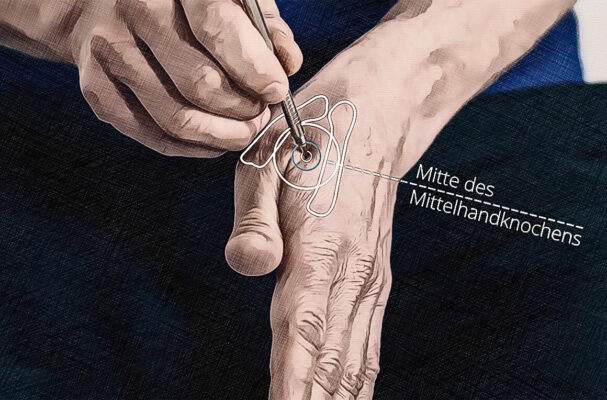
- Key point for wind–heat — dispels wind and clears heat
- Opens the pores and promotes sweating
- Strengthens the defensive Qi (Wei Qi) and regulates immune function
- Relieves headaches, sore throats, and fever
- Promotes the free flow of qi in all meridians
Location:
In the hollow between the thumb and index finger on the back of the hand.
Application:
Massage twice a day for 3 minutes per side, applying firm pressure or using circular motions. DO NOT use during pregnancy!
ACCESSION POINT: Tue 11
Large intestine 11
Pond at the bend - Qū Chí
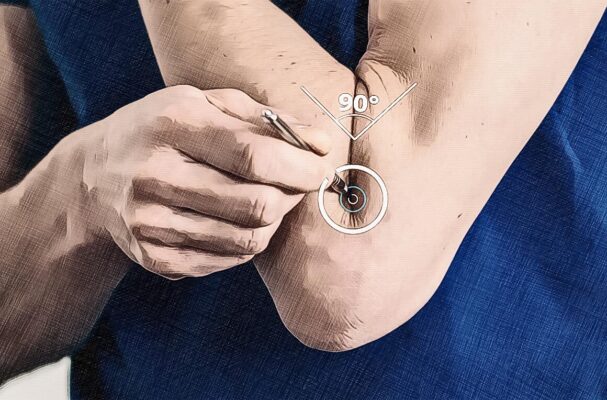
- Most effective remedy for clearing heat and reducing fever
- Clears heat and cools the blood
- Strengthens the immune system and regulates the body's defenses
- Reduces inflammation in the throat and pharynx
- Particularly effective for high fever and sore throat
Location:
On the elbow with the arm bent, at the outer end of the elbow crease.
Application:
Press firmly or massage in a circular motion for 3 minutes on each side, twice a day. Particularly effective for acute fever and inflammation.
ACUPUNCTURE POINT: Lu 07
Lung 07
Interrupted series — Liè Quē
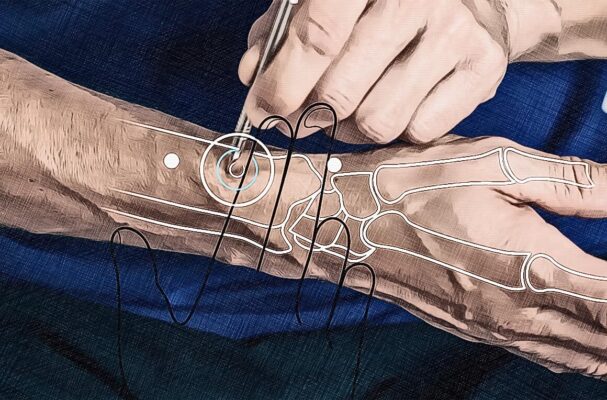
- Main point of the lungs — dispels wind and opens the airways
- Luo Point — regulates the descending Lung Qi
- Clears the nose and relieves a runny nose
- Strengthens the body's defenses (Wei–Qi) in the early stages
- Particularly effective for coughs, stuffy noses, and headaches
Location:
On the forearm, 1.5 cun above the wrist crease, on the thumb side (above the styloid process of the radius).
Application:
Press firmly twice a day for 3 minutes on each side. Ideal for the early stages of a cold and a stuffy nose.
Our App Recommendation
Atemraum: Your App for Mindful Breathing


Breathing is the foundation of physical and mental well-being—and is usually COMPLETELY underestimated in everyday life. Yet hardly anything has such a direct impact: the way we breathe shapes the way we feel.
That's why we created Atemraum: an app with guided breathing exercises that you can take with you anywhere. Wolfgang put together these exercises—along with a 35-day course, quick tips for the moment, and breathing tests that let you track your progress.
Just a few minutes a day is enough. And anyone who uses our personal support If you use it, it already comes with breathing space.


You can try the app for free for 7 days.
Qi Gong
Qi Gong is moving meditation — Gentle, flowing exercises that harmonize your energy flow and strengthen your Wei Qi (defensive Qi). In cases of wind-heat, these exercises help regulate Lung Qi, dispel the heat through the open meridians, and restore your body’s natural defenses.
Regular practice of qigong (as little as 10–15 minutes a day) has been shown to have positive effects on the immune system, respiratory health, and inner balance.
QI GONG: Exercise 1
Regulate Qi
Regulates lung qi, strengthens the body's defensive energy

Particularly helpful for:
- Blocked Lung Qi and Difficulty Breathing
- Weakened Wei Qi (Defensive Qi)
- Inner Restlessness Caused by the Wind–Heat–Attack
- Stagnation in the Lung and Large Intestine Meridians
Effect:
This Earth Element exercise regulates the flow of Qi in all meridians—especially in the Lung and Large Intestine meridians. In cases of wind-heat, it helps to restore the flow of blocked Wei Qi and support the lungs’ descending function so that the heat can be directed downward.
QI GONG: Exercise 2
Open heart
Opens up the chest, aids breathing

Particularly helpful for:
- Tightness in the chest and shallow breathing
- Heat in the upper body (neck, head, chest)
- Coughing and difficulty exhaling
- Internal tension caused by the infection
Effect:
This Fire Element exercise opens the chest and expands the lung meridians. In cases of wind-heat, it helps to dispel the accumulated heat from the upper body and clear the respiratory tract. The gentle stretch helps the lungs restore their dispersing and descending functions.
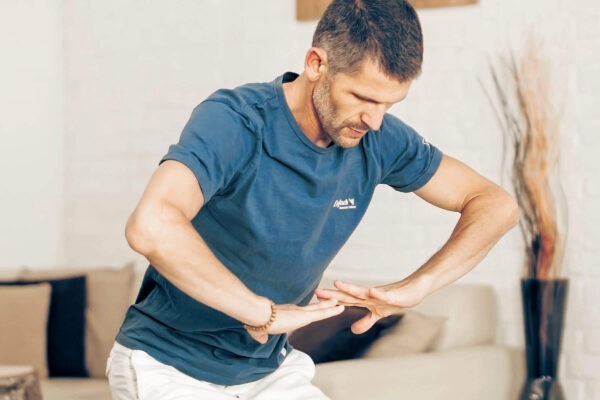
QI GONG: Exercise 3
Collect Qi
Strengthens Wei Qi, builds resilience
Particularly helpful for:
- Exhaustion Following the Wind-Heat Attack
- A weakened immune system and immune defenses
- General weakness during the recovery phase
- Susceptibility to Relapse
Effect:
This Fire Element exercise gathers vital energy and strengthens the Wei Qi (defensive Qi). After a wind-heat attack, the defensive Qi is often weakened—this exercise helps replenish your reserves and build up your resistance over the long term, so your body is better protected against future infections.
These Qi Gong exercises are specifically selected for wind-heat. They regulate lung qi, open the chest, and strengthen your Wei qi—your body’s natural protective barrier against external pathogens.
It's best to do the exercises in the morning when the air is cool, or in the evening when the heat of the day has subsided. If you're experiencing acute wind-heat with a fever, practice very gently or take a break entirely — Wait until the fever has subsided before you resume your regular practice.
QI GONG:
When and how often?
In the morning or evening (when it's cool):
- All 3 exercises as a sequence: approx. 15–20 min.
- Or just 1–2 exercises: approx. 5–10 min.
- At least 3–5 times a week
Important in windy, hot weather:
- If you have a fever: only „gather Qi“ while sitting—no active exercises!
- Do not begin all 3 exercises until the fever has subsided.
- Gentle, flowing movements—don't force them
Regularity is more important than duration:
- It is better to exercise for 10 minutes every day than for 60 minutes once a week.
- During the acute phase: gently gathering Qi while sitting is sufficient
- During the recovery phase: all 3 exercises for strengthening Wei-Qi
Pro tip: During the recovery phase, begin with „Regulate Qi“ and „Open the Heart“ to clear the lung qi. Conclude with „Gather Qi“ to strengthen the Wei qi long-term and prevent relapses.
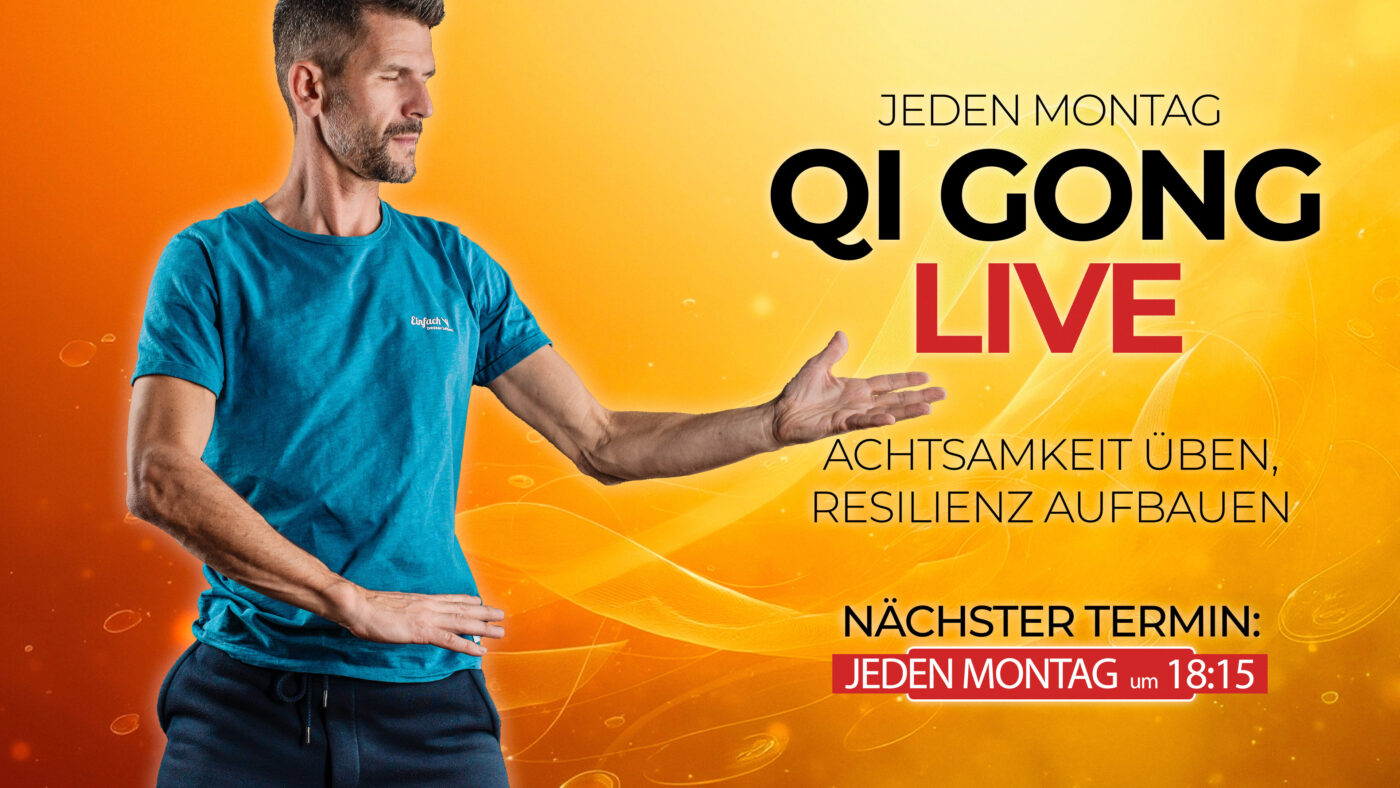
LIVE EVERY MONDAY: QI GONG WITH WOLFGANG
Every Monday at 6:00 p.m. Let's practice together live on YouTube. Among other things, Wolfgang will guide you through a complete qigong sequence — free of charge and suitable for all levels.
Why participate live? ✓ Working out together keeps you motivated ✓ Wolfgang explains the exercises in detail ✓ You can ask questions in the live chat ✓ A set time helps keep your routine on track
More about Qi Gong LiveMeridian Yoga — The Yoga of TCM
Meridian Yoga combines yoga with traditional Chinese medicine. The result is a holistic exercise program that specifically aligns stretches and postures with the body's meridians.
When it’s windy and hot, we focus on exercises for the Stomach Meridian. The Stomach is part of the Yangming system—and this system also includes the Large Intestine Meridian, which, together with the Lung Meridian, forms the Metal element. By activating the Stomach Meridian, you strengthen your center (spleen and stomach), which in TCM is considered the foundation of defensive Qi. A strong center means a strong immune system—and that’s exactly what your body needs to ward off wind-heat.
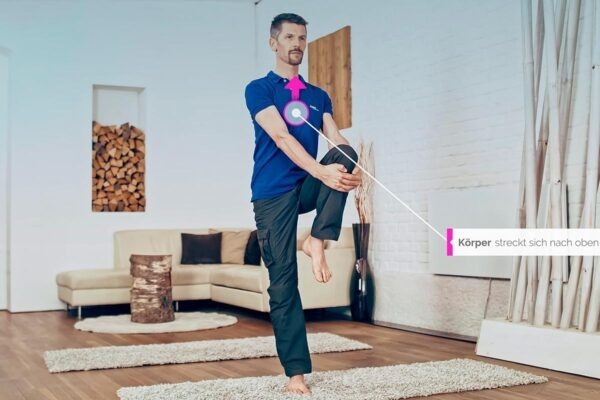
MERIDIAN YOGA: Exercise 1
The tree with acupressure for the stomach meridian
Strengthens balance, activates defensive Qi
Particularly helpful for:
- A weakened immune system and susceptibility to infections
- Digestive Problems During a Cold
- Lack of grounding and inner restlessness
- Fatigue and a feeling of weakness after a fever
Effect:
The Tree Pose is a stabilizing exercise that activates the Stomach Meridian on the front of the leg. In cases of wind-heat, it helps strengthen the center and stabilize the defensive Qi. The acupressure component also stimulates points that support the immune system.
MERIDIAN YOGA: Exercise 2
The bow for the stomach meridian
Expands the Stomach Meridian, supports the center

Particularly helpful for:
- Tension in the upper body and shoulder area
- Blockages in the Stomach Meridian
- Fatigue and Low Energy After Infections
- Shallow breathing due to a blocked lung
Effect:
This exercise gently stretches the Stomach Meridian while opening up the chest. In cases of wind-heat, this helps clear the lungs and restore deep breathing. Through the Yangming system, the exercise also supports the large intestine meridian, which, together with the lungs, is responsible for the body’s defenses.
Both exercises activate the Stomach Meridian and thereby strengthen your center—the foundation for strong defensive Qi. Through the Yangming system (Stomach and Large Intestine), they also indirectly support the Lungs, which are most severely affected by wind-heat.
Particularly effective: Hold each position for 3–5 breaths, focusing on deep, calm abdominal breathing—this strengthens both your core and your lungs.
MERIDIAN YOGA:
When and how often?
Best time:
- In the morning or late in the afternoon—never during a fever spike
Duration:
- Hold each position for 3–5 breaths.
- Complete sequence: 10-15 min.
- 3–5 times a week, once the fever has subsided
Important:
- If you have a high fever and feel very sick: Rest instead of exercising!
- Wait until the fever has subsided before starting gentle meridian yoga
- Build up slowly—the body needs energy to heal
Pro tip: Start practicing Meridian Yoga during the recovery phase and combine it with warm ginger water (a small amount) and the acupressure points Di 04 and Lu 07. This will help you strengthen your core, your defensive Qi, and your lungs all at once.
Nutrition according to TCM
„Let food be your medicine.“ — This principle has been followed in TCM for thousands of years. When dealing with wind-heat, proper nutrition is crucial for clearing the invading heat and supporting your lungs.
Wind and heat are part of the element Metal and needs Cooling to neutral, easily digestible food, to help dissipate the heat and boost the immune system. Light, cool meals and plenty of fluids are especially important right now.
What you eat, HOW you eat and WHEN What you eat—all of this affects your recovery and your well-being.
The Golden Rules for Wind and Heat
What is good for you:
Refreshing Beverages and Teas
- Peppermint tea — refreshes, cools, and clears the airways
- Chrysanthemum Tea — Clears Heat, Calms the Mind
- Warm water with honey and lemon — soothes a sore throat
- Mung bean water — the classic TCM remedy for heat
Drink plenty of fluids—warm, not ice-cold!
Cooling Vegetables and Fruits
- Pears — cool the lungs, moisturize the airways
- Cucumber — cools and moisturizes
- Radish — loosens mucus, cools the lungs
- Chinese cabbage — slightly cooling and easy to digest
Pears and radishes are your lungs' best friends!
Light Sources of Protein
- Tofu — cooling, easy to digest, and nutritious
- Mung beans — clear heat and detoxify
- Silken tofu — especially gentle and cooling
- White beans — mild and nourishing
Light sources of protein support recovery without putting a strain on the body
Foods That Help Keep You Hydrated
- Honey — moisturizes the lungs, soothes a cough (not for children under one year of age)
- Almonds — nourish the lungs and moisturize
- Sesame — nourishes the Yin
- Rice — neutral, easily digestible, strengthens the center
Humidification protects the lungs from drying out due to the heat
What you should avoid:
Spicy spices and warming herbs
- Chili, pepper, and hot sauces
- Ginger in large quantities (a little is OK)
- Raw garlic
- Cinnamon and cloves
Sharpness generates even more heat and drives the wind deeper!
Alcohol and coffee
- Alcohol in any form
- Coffee — it heats up and dries out
- Black tea in large quantities
- Energy drinks
Alcohol and coffee increase body heat and weaken the immune system!
Meat That Rises in Temperature and Fried Foods
- Lamb (very hot)
- Fried foods
- Fatty, fried meat
- Fast food
Heavy foods put a strain on digestion and fuel internal heat!
Sweets and Dairy Products
- Chocolate — produces moist heat
- White sugar and sweets
- Milk and cheese — cause phlegm
- Soft drinks
Sugar and dairy products produce phlegm and increase body heat!
HOW YOU SHOULD EAT:
Light and cooling
- Small, light portions
- It's better to eat more often and in smaller portions
- Nothing heavy or greasy
- Choose fresh ingredients
Boiled, steamed, or in soup
- Soups and broths are ideal—they warm you up and nourish you
- Lightly steamed vegetables
- Congee as a Light Meal
- No heavy stews
Drink plenty of fluids
- Warm Water Throughout the Day
- Peppermint tea in the morning and early afternoon
- Chrysanthemum Tea in the Afternoon
- Warm water with honey in the evening
Fluids help the body release heat!
Peace and quiet while eating
- Eat in peace, chew well
- Don't eat too late in the evening
- Don't force someone to eat when they have a high fever
- Listen to Your Body
Your body needs energy for healing—not for heavy digestion!
IDEAL MENU FOR ONE DAY:
Breakfast:
- Rice Congee with Pear and a Little Honey
- In addition: Peppermint tea
Lunch:
- Tofu with Steamed Daikon and Chinese Cabbage
- In addition: Light Vegetable Broth
Dinner:
- Mung Bean Soup with Fresh Mint
- In addition: Rice
Snack if needed:
- Pear or Cucumber
- Or: Warm water with honey and lemon
The most important rule when changing your diet is:
Start with ONE step!
Don't change everything at once.
Our suggestion for getting started:
- Drink peppermint tea and chrysanthemum tea instead of coffee — right away
- Cut out spicy foods, alcohol, and chocolate — right away
- Eat a pear every day or drink a pear-honey decoction — starting on Day 1
Step by step, you'll notice how the heat subsides, your throat calms down, and your energy returns.
Your body will thank you for it!
RECIPE: PEAR-HONEY DECOCTION
Ingredients:
For 2 portions
- 2 ripe pears
- 500 ml water
- 2 tablespoons honey
- 3–5 dried chrysanthemum blossoms
- Optional: 1 teaspoon goji berries
Preparation:
- Peel the pears and cut them into pieces
- Bring the water to a boil
- Add the pears and let them simmer for 15–20 minutes
- Add the chrysanthemum blossoms in the last 5 minutes
- Remove from the stove and let cool slightly
- Stir in the honey (not into boiling water!)
- Drink it warm or lukewarm
Effect:
Cools the lungs and moisturizes the airways
Relieves coughs and sore throats
Gently clears heat from within
1–2 cups a day — perfect for wind and heat when you have a cough!
RECIPE: MUNG BEAN AND MINT SOUP
Ingredients:
For 4 portions
- 200 g mung beans
- 1 L water
- 1 handful of fresh peppermint leaves
- 2 tablespoons honey
- 1 pinch of salt
- Optional: 1 fresh radish, diced
Preparation:
- Soak the mung beans overnight
- Bring the mung beans to a boil in fresh water
- Simmer over medium heat for 30–40 minutes until tender
- Optionally, add radishes during the last 15 minutes of cooking
- Add fresh peppermint leaves just before serving
- Season to taste with honey and salt
- Serve warm
Effect:
Clears heat and cools the body from the inside
Detoxifies and supports the elimination of toxins
Refreshes and revitalizes when you have a fever or feel hot
2–3 times a week — perfect for windy, hot weather!
Breathing
Breathing is the bridge between body and mind. In TCM, it is said: „The lungs govern the qi“—according to this concept, through conscious breathing you can directly influence your qi flow and find a deeper sense of calm.
Breathe calmly and slowly: Deep abdominal breathing noticeably calms many people—their breathing becomes deeper, their shoulders relax, and their minds become clearer. The good news: Just 5–10 minutes a day can make a difference in your well-being.
Recommended breathing techniques
ABDOMINAL BREATHING — The basis for every breathing technique
Natural breathing
Abdominal breathing is the most natural and calm form of breathing. According to the teachings of TCM, with every breath you bring qi into your body’s center (Dantian).
Wolfgang shows you step by step, How to learn abdominal breathing correctly—lying down to start with, then later also sitting and standing.
Duration: 9 minutes

4–7–8 BREATHING — Find Peace
Calm Breathing for the Evening
With the 4–7–8 breathing technique, you inhale for 4 seconds, hold your breath for 7 seconds, and exhale for 8 seconds. This steady rhythm helps many people wind down in the evening—ideal when your mind won’t shut off at night.
Perfect for the evening or whenever you want to calm down quickly.
Duration: 9 minutes
To the interactive videoBOX BREATHING — For inner coherence
Professional breathing for focus and calmness
Box Breathing (4 seconds on, 4 seconds hold, 4 seconds off, 4 seconds hold) combines activation and relaxation in perfect balance. This method is used by elite soldiers, athletes, and executives to remain calm and focused even in extremely stressful situations.
A steady 4–4–4–4 rhythm A balance of activity and stillness—many people find it clarifying and grounding.
Duration: 9 minutes
To the interactive videoCOHERENT BREATHING — Brings Body and Mind into Harmony
Calm Breathing for Balance
With coherent breathing Breathe in for 5.5 seconds and out for 5.5 seconds. This rhythm brings your heart and breathing into a steady rhythm—a state known as „coherence.“ Many people use it as a regular breathing break in their daily lives.
A nice side effect: The heart and breath settle into a calm, synchronized rhythm.
Duration: 14 minutes
To the interactive video
COHERENT BREATHING Around the clock
Our 24/7 livestream on coherent breathing runs non-stop. You can tune in at any time and join in right away.
Perfect for:
✓ Spontaneous breaks to catch your breath in between
✓ If you'd like some gentle breathing guidance
✓ As background while working
✓ For the evening and to wind down
✓ For regular daily practice
relaxation
When your body is relaxed, Things tend to flow more easily. Persistent tension keeps you in a constant state of stress. By using specific relaxation techniques, you signal to your body to calm down and recharge.
Progressive muscle relaxation It is one of the best-known relaxation methods and has been practiced for over 100 years. It helps you become aware of tension, actively let go of it, and achieve a state of deep relaxation—whenever you want.
Recommended relaxation technique
PROGRESSIVE MUSCLE RELAXATION (PMR)
The Classic Relaxation Method
Progressive muscle relaxation according to Jacobson is one of the best-known relaxation techniques worldwide. By deliberately tensing and relaxing individual muscle groups, you learn to consciously recognize tension and release it.
That's what it feels like:
Step by step, the body becomes heavier and calmer, and the breathing more even. Many people make this a regular part of their evening routine to help them fall asleep easily.

Maria guides you step by step through the entire exercise—perfect for beginners and advanced practitioners alike.
Duration: 23-minute complete guide
To the guided PMRMeditation
Meditation calms the mind — and a calm mind is good for your whole being. In TCM, it is said that every emotion affects a specific organ. Through regular meditation, you’ll learn to step away from racing thoughts, find emotional balance, and strengthen your inner center.
Just 10 minutes a day can do a lot to help you find inner peace. As a result, many people find that their daily lives become more relaxed and clear.
Recommended meditations
GUIDED MEDITATIONS FOR EVERY DAY
Your personal meditation library
We have a complete Playlist with over 60 guided meditations, breathing exercises, and relaxation techniques—from short 5-minute meditations for in between to deep 30-minute sessions for intensive practice.
In the playlist you will find:
- Morning meditations for a mindful start to the day
- Meditations for restful sleep
- Breathing meditations for inner peace
- Meditations for Moments of Calm Amid Stress and Worry
- TCM standing meditations for all 5 elements
- Body scan and body journeys
- Meditations for Peace of Mind and Body
- Special breathing techniques (4–7–8, coherent breathing, bee breathing)

Perfect for beginners and advanced practitioners. Choose the right meditation for you depending on your time, the time of day, and your needs.
To the meditation playlistThe lungs are a delicate organ. They thrive on moisture and fear dryness. Protect them from wind and heat, and your breath will flow freely.
- Loosely based on the HUANG DI NEI JING
(The Yellow Emperor's Classic of Internal Medicine)
More tips for your everyday life
In addition to traditional TCM treatment methods There are simple everyday measures that can help your body dispel wind-heat more quickly. Adopting the right habits supports your Wei-Qi and speeds up your recovery.
Peace and Relaxation
Why Rest Is So Important
When you're exposed to intense wind and heat, your body needs all its energy to defend itself:
- Wei-Qi is primarily replenished during sleep
- Physical activity diverts qi away from the immune system
- Any exertion prolongs the illness
- Mental work also consumes qi—not just physical work
Practical Implementation
Here's how to give your body the rest it needs:
- Call in sick — don't „push through“
- At least 8–9 hours of sleep per night
- Go to bed early—between 9 and 10 p.m.
- Rest during the day when your body needs it
Indoor Climate and Ventilation
Fresh Air for the Lungs
Your lungs love fresh, cool air—but watch out for drafts:
- Fresh air supports the lungs' ability to expand
- Stale air intensifies the heat inside the body
- But: Avoid drafts—don't let the wind get in again!
- The lungs are the „delicate organ“ and are particularly sensitive
Practical Implementation
Here's how to ventilate properly:
- Air out the room briefly instead of continuously — 5–10 minutes, then close the windows again
- Keep the bedroom cool (16–18 °C)
- Heated air dries out the mucous membranes — use a humidifier
- Don't sleep right next to an open window
Hydration — Flushing Out Heat
Why Drinking Is So Important
Heat depletes your body's fluids—you need to actively replenish them:
- Fever and sweating cause the body to lose fluids
- Heat dries out the mucous membranes and weakens the lungs
- Drinking enough fluids helps flush out the heat through urine
- Dehydration prolongs the illness
What and how much to drink
The right beverages can help with healing:
- 35 ml of water per kg of body weight per day (for 60 kg = approx. 2.1 liters)
- Peppermint tea — cools and clears the throat
- Chrysanthemum Tea — Clears Heat and Calms the Mind
- Warm water with honey and lemon — soothes a sore throat
- NO ice-cold drinks — they weaken the spleen and block the qi
Stress Reduction — Protecting the Wei–Qi
Why Stress Hinders Healing
Emotional stress weakens the Wei-Qi and prolongs the illness:
- Stress generates internal heat—which intensifies the external wind-heat
- Tension blocks the free flow of qi in the lungs
- Worrying and brooding further weaken the spleen
- The body cannot heal and cope with stress at the same time
Practical Implementation
Here's how to reduce stress while you're sick:
- Reduce Screen Time — Your Eyes and Mind Need a Break
- Don't make any difficult decisions
- Gentle breathing exercises — 5 min., slow inhalation and exhalation
- Light meditation or listening to soothing music
After Recovery — Strengthening Wei–Qi
Rebuilding the Body
Once the acute symptoms have subsided, strengthen the immune system again:
- Getting Back into the Swing of Things — Walks in the Fresh Air
- Eat nourishing soups — chicken broth, rice soup with dates
- Gentle Qigong to Strengthen Lung Qi
- Continue to make sure you get enough sleep
Avoiding Relapses
Resuming physical activity too soon often leads to relapses:
- Astragalus Tea (Huang Qi) to Boost the Immune System — ONLY after a full recovery!
- Do not resume full activity too soon—wait at least 2–3 days after symptoms have subsided
- Avoid wind and cold — wear a scarf, protect your neck
- Maintain regular meals and a warm diet
Important to know
In TCM, wind-heat is an acute condition—it comes on quickly and can also go away quickly if you respond properly. Your body uses its symptoms to tell you what it needs: rest, cooling, and fluids. Listen to these signals and give your Wei-Qi a chance to win the battle.
When to see a doctor? If you experience shortness of breath or chest pain; a very severe, one-sided sore throat accompanied by a slurred speech, an inability to open your mouth wide, or an inability to swallow saliva; a stiff neck accompanied by a fever and headache; a fine-spotted rash with a raspberry-red tongue, a fever over 39 °C or a fever that lasts longer than 3 days, febrile seizures, or any worsening of symptoms despite treatment. Take special care with children, the elderly, and immunocompromised individuals. And if there’s no improvement after two to three days: don’t wait any longer. TCM and Western medicine complement each other—don’t hesitate to use both.
For optimal treatment progress
TCM is not a quick fix for symptoms., but rather a holistic healing process. You will achieve the best results if you consistently integrate the treatment into your daily routine and give your body time to regenerate.
Integration into everyday life
Start with ONE step
First, a few words about this plan: Yin Qiao San isn't included here—it belongs at the beginning, during those few days when your throat burns and your fever rises. What follows here goes beyond that: It begins with what can be changed immediately and focuses on the time that comes afterward.
Don't try to change everything at once! That's overwhelming and leads to
usually leads to you giving up. Instead:
- Days 1–3: Start right away — peppermint and chrysanthemum tea, light meals, and rest
- Days 3–5: Apply acupressure to points Di 04 and Lu 07 several times a day
- Days 5–7: Gentle qigong, once the fever has subsided
- Week 2: If the symptoms are still present at this point, it is no longer an acute case of wind-heat—in that case, it should be evaluated by a doctor rather than treated further with herbs
- Week 3: Strengthening Wei–Qi to Prevent Relapses
Realistic expectations
After 2–3 days: The trend is becoming apparent
- The fever goes down, the sore throat subsides — if that doesn't happen, it should be checked out
- Coughs and runny noses are subsiding significantly
- Energy Returns
After 1–2 weeks: The infection has run its course
- Immune function has been restored
- No more residual symptoms
- The immune system is strengthened
After 2–3 months: The defense is back on track
- Significantly lower susceptibility to colds
- Strong defensive qi protects against new infections
- A Lasting Boost to the Immune System
TCM vs. Western medicine
TCM and Western medicine are not mutually exclusive—they complement each other!
When Western medicine is important:
- In acute emergencies
- In case of structural damage
- In case of infections
- For accurate diagnoses (laboratory, imaging)
Where TCM has its strengths:
- In case of functional disorders
- For chronic complaints
- For prevention
- For holistic healing
Ideal: Combine both systems! Use Western medicine for
Acute treatment and accurate diagnosis, TCM for lasting healing
and strengthening the body's self-healing powers.
Important: Never stop taking prescribed medication without consulting your doctor first!
Talk to your doctor when you start TCM treatment.
Do you have any questions?

Wolfgang from meine-tcm.com
TCM is a broad field. Much of it sounds unfamiliar at first glance, and often the real question doesn't arise until you start putting some of it into practice in your daily life.
That's exactly what I'm here for. Write to me—no matter how big or small your question is, whether it’s related to this page or to something else entirely in TCM. I read every message myself and will get back to you. Calmly, clearly, and without any sales pitch.
P.S.: There are no stupid questions. So write to me.
Ask your questionEvery step counts
Your body strives for balance—you just need to create the right conditions for it.
Remember:
👣 Every little step counts
You don't have to be perfect. Even one warm meal a day is better than none. Even 5 minutes of qigong is better than no exercise at all.
⏳ Patience pays off
It took your body years to get to this point. Give it time to regain its balance. Change takes time, but it will happen.
🎯 Focus on what you can DO
Don't concentrate on what you are doing „wrong". Focus on every positive step you take.
💚 Be good to yourself
Perfection does not exist. It is acceptable to have an off day occasionally. Tomorrow is a new day when you can continue.
🤝 You are not alone
Thousands of people are walking this path with you. For over 2,000 years, TCM has been guiding people like you on their journey toward greater well-being.
Track Your Progress

To track your progress, we recommend that you repeat the TCM analysis after about 3 months.
Why does this make sense?
- You can see how your pattern has changed
- You can adjust your group as needed
- It motivates you to keep going
- You'll figure out which steps work best for you
⚠️ Important: Your answers from today will be stored in encrypted form using a code that you received via email. ONLY with this code will you be able to track your progress later. Be sure to keep the email in a safe place!
🔒 YOUR DATA IS SAFE
We store:
✓ Only your email address for reminders
✓ The date for shipping
We do NOT store:
✗ Your analysis results
✗ Your personal information
✗ The connection between email and the sample
All analysis data is completely anonymous and is not linked to your email address.

Newsletter
Stay up to date with our newsletter. Besides useful tips and tricks for training and your everyday life, you won't miss any of our new releases.