






On this page, you will learn:
- What this pattern means from the perspective of TCM and Western medicine
- Where your symptoms come from and how they are connected
- Which specific treatment methods can help you now
- How to use TCM herbs, acupressure, qigong, and nutrition to restore your spleen yang, boost digestive heat, and resolve food stagnation
The good news: With this pattern, you can make a big difference by taking the right steps. With a warming diet, targeted acupressure, digestive-boosting qigong, and time-tested TCM herbs, you can restore your digestive strength and relieve that bloated feeling.
Take your time, Get to know the different treatment approaches—you don't have to implement everything at once. Choose what feels right for you and what you can easily integrate into your everyday life.
Your treatment at a glance:
Which TCM pattern is really behind your complaints?
Degree of
imbalance

Light to moderate
Typical
treatment duration

2-4 months
self-treatment
Possible

Well self-treatable
Treatment–
scope

2–3 methods
Proposed
methods

Extensive range
Our free TCM analysis shows you your personal TCM pattern in just 10 minutes.
What is spleen-yang deficiency with food stagnation?

When Food Sits Heavy in an Empty Stomach
The TCM Perspective: When the Digestive Fire Dies Out and Food Stagnates
In Traditional Chinese Medicine, the spleen (Pi) is the central organ of digestion. But the spleen does not digest food like a Western stomach—it „transforms“ it. You can think of the spleen as a cooking pot: the spleen’s yang provides the heat needed to transform food into usable essence (Gu Qi).
In the case of a spleen-yang deficiency, this warming force is lacking. The „cooking pot“ is no longer properly heated. The result: Food can no longer be fully transformed. It remains undigested in the middle burner—like food in a cold pot that won’t cook through. TCM refers to this accumulation of undigested food as food stagnation (Shi Zhi).
The tricky thing about this combination is that the Yang deficiency and food stagnation reinforce each other. The weaker the Yang, the more the food stagnates. And the more undigested food accumulates, the more it burdens and blocks the spleen’s already weak Yang. A vicious cycle ensues.
The result of this vicious cycle: A feeling of fullness and pressure in the upper abdomen after eating, bloating, loss of appetite, infrequent bowel movements or loose stools containing undigested food particles, fatigue after eating, and a general feeling of coldness—especially in the abdominal area.
The typical signs of spleen-yang deficiency with food stagnation:
- A feeling of fullness and pressure in the upper abdomen, especially after eating
- Flatulence and gas formation
- Loss of appetite or feeling full quickly
- Fatigue and a feeling of heaviness after meals
- Soft, mushy stool, possibly containing undigested food particles
- A feeling of coldness in the stomach and cold limbs
- Belching and acid reflux
- Nausea, especially in the morning or after eating greasy foods
The good news: It’s actually quite easy to break this vicious cycle. By eating warming foods, taking TCM herbs that aid digestion, and using targeted acupressure, you can restore digestive warmth and resolve food stagnation—step by step.
The Western Perspective: Functional Dyspepsia and Digestive Weakness
From a Western perspective, Spleen-Yang deficiency with food stagnation corresponds to a condition known as functional dyspepsia (irritable stomach)—a digestive disorder in which no organic cause can be found, but the symptoms are very real and distressing.
Imagine your digestive system as a factory: The stomach is the processing plant, the enzymes and acids are the machines, and intestinal movement (peristalsis) is the conveyor belt. With functional dyspepsia, the machines run more slowly, the conveyor belt stalls, and the raw materials pile up. The result: a feeling of fullness, bloating, and the sensation that food is sitting in your stomach „like a rock.“.
Modern research shows that in functional dyspepsia, gastric motility (movement) is reduced, gastric emptying is delayed, and the sensitivity of the gastrointestinal tract is increased. The autonomic nervous system also plays a role—chronic stress activates the sympathetic nervous system and slows digestion.
What does modern medicine show?
- Delayed gastric emptying: Food remains in the stomach longer than normal
- Reduced gastric motility: The stomach muscles are less active
- Visceral Hypersensitivity: The stomach reacts with hypersensitivity to normal stretching
- Enzyme deficiency: Insufficient production of digestive enzymes
- Microbiome Imbalance: Changes in Gut Flora Affect Digestion
- Vagus Nerve Dysfunction: Impaired Communication Between the Brain and the Digestive Tract
Modern research confirms: The TCM description of „cold spleen with stagnant food“ correlates remarkably well with what Western medicine describes as functional dyspepsia with delayed gastric emptying. Studies have indeed shown that TCM herbs such as Shan Zha (hawthorn) and Shen Qu (medicinal sourdough) have motility-enhancing and digestion-stimulating effects.
TCM treatment for spleen-yang deficiency with food stagnation addresses this very issue: It warms the middle burner and strengthens digestive power, resolves the stagnation, and restores the natural flow of digestion—in a profound, lasting, and gentle way.

The Yellow Emperor's team explains your pattern
Qi Bo | The Yellow Emperor | Dr. Lisa Weber
MASTER OF THE HEALING ARTS | TCM FOUNDER | MODERN PHYSICIAN
What happens when the legendary Yellow Emperor of Traditional Chinese Medicine sits down with his advisor Qi Bo and a modern doctor? They discuss your pattern—using 4,000-year-old knowledge AND the latest science.
Spleen-Yang Deficiency + Food Stagnation — When Food Remains in the Cold Stomach
The Yellow Emperor: „Qi Bo, many people in my kingdom complain of an unpleasant feeling of fullness after eating. Their stomachs feel bloated and cold; they feel tired after meals and have little appetite. Some say their food feels like a stone in their stomach. What is the cause of this condition?“
Qi Bo: „Your Majesty, these people suffer from a dual disorder: a deficiency of spleen yang—Pí Yáng Xū—combined with food stagnation—Shí Zhì. The spleen is the central organ of digestion; it transforms food into usable essence. To do this, it needs Yang—warming energy. When the Yang of the spleen is weakened, the spleen loses its ability to ‚cook‘ and transform food. You can think of it like a cooking pot: without a fire under the pot, the food won’t cook. The undigested food accumulates and begins to stagnate—that is food stagnation.“
Dr. Weber: „That’s a striking metaphor! In Western medicine, we describe a very similar condition as functional dyspepsia—an irritable stomach. In these patients, we often find delayed gastric emptying: Food remains in the stomach significantly longer than normal. Gastric motility—that is, the ability of the stomach muscles to contract—is reduced. And the production of digestive enzymes and stomach acid may be insufficient. Interestingly, TCM has been describing for millennia exactly what we can measure today using modern diagnostic methods!“
The Yellow Emperor: „How are Yang deficiency and food stagnation related? Does one cause the other?“
Qi Bo: „Your Majesty, that is an excellent observation! It is indeed a vicious cycle. The spleen’s yang deficiency is the root cause—its weak warming power cannot transform food. This leads to food stagnation. But the stagnant food, in turn, places an additional burden on the already weak spleen. It obstructs the middle burner, blocks the flow of qi, and further weakens the yang. The Yang cannot recover because the stagnation constantly burdens it. And the stagnation cannot be resolved because the Yang is too weak to transform it. Therefore, in treatment, we must always address both aspects simultaneously: strengthen the Yang AND resolve the stagnation.“
Dr. Weber: „We see this vicious cycle in modern medicine as well! In functional dyspepsia, delayed gastric emptying causes the stomach to be constantly overstretched. This chronic overstretching damages the local nerve supply and further weakens the stomach muscles. The slowed transit promotes bacterial overgrowth in the upper gastrointestinal tract, which causes additional gas and bloating. And the resulting inflammatory response disrupts the function of the enteric nervous system—the ‚gut brain.‘ A classic vicious cycle that we, too, can only break by treating both sides: improving motility and resolving stagnation.“
The Yellow Emperor: „What causes this Yang deficiency in the spleen?“
Qi Bo: „There are many causes, Your Majesty. First: Excessive consumption of cold and raw foods—they directly extinguish the Yang fire of the spleen. Second: Irregular eating—the spleen needs a rhythm. Third: Overeating—too much food overwhelms the spleen’s transformative power. Fourth: Excessive brooding and worry—the emotion associated with the spleen, which directly weakens its function. Fifth: Chronic illness or overwork—these deplete the Yang. And sixth: A congenital constitutional weakness—some people have weaker spleen Yang from birth.“
Dr. Weber: „It’s remarkable how precisely TCM has identified the causes! Cold foods and beverages do indeed slow down gastric emptying—the stomach muscles work less efficiently when exposed to cold, and enzyme activity is temperature-dependent. Irregular eating disrupts the circadian rhythm of digestion—the stomach and pancreas produce their enzymes according to an internal schedule. Overeating chronically overstretches the stomach. And chronic stress activates the sympathetic nervous system, which actively slows digestion—TCM’s concept of ‚brooding‘ has a direct neurophysiological counterpart!“
The Yellow Emperor: „That cold feeling in my stomach—where does it come from, and what does it mean?“
Qi Bo: „Your Majesty, the Yang of the spleen is like an internal fire that warms the middle burner. When this fire grows weak, the middle burner cools down. Patients feel an objective coldness in the abdominal region—not just a sensation of cold, but actually cool skin over the abdomen. This internal cold spreads: cold hands and feet, a cold back, and chills. Cold slows everything down—including the movement of qi and the transformation of food. Therefore, warmth is the first principle of treatment: we must warm the center to restore digestive strength.“
Dr. Weber: „There’s a physiological explanation for this! Digestion is a heat-dependent process—enzymes work best at 37 degrees Celsius. When peripheral blood flow to the gastrointestinal tract is reduced, the local temperature drops and enzyme activity decreases. In cases of functional dyspepsia, we often find reduced blood flow to the gastric mucosa. Studies show that warm drinks and foods actually accelerate gastric emptying, while cold foods slow it down. The TCM recommendation to ‚warm the center‘ therefore has a clear biochemical basis!“
The Yellow Emperor: „What physical signs indicate this imbalance?“
Qi Bo: „The signs are very revealing, Your Majesty. The tongue is pale and swollen, often with tooth marks along the edges—a sign of spleen qi deficiency. The coating is thick and white, sometimes greasy—this indicates both cold and food stagnation. The pulse is deep—Chén Mài—the Yang is too weak to bring the pulse to the surface. It is also weak—Ruò Mài—due to Yang deficiency. And slippery—Huá Mài—which indicates stagnation and accumulated dampness. The abdomen feels full and bloated, especially after eating, and is tender to pressure in the area of the stomach.“
Dr. Weber: „Fascinating! The swollen tongue with tooth marks indicates edema—increased fluid retention in the tissue, which suggests impaired fluid regulation. The thick coating correlates with an altered oral microbiome composition, which is frequently observed in cases of digestive disorders. And the bloated abdomen after eating—known as postprandial distension—is a cardinal symptom of functional dyspepsia. All these findings show remarkable consistency!“
The Yellow Emperor: „How do we address this twofold imbalance?“
Qi Bo: „Your Majesty, the principle of treatment is: Wēn Zhōng Jiàn Pí, Xiāo Shí Dǎo Zhì—warm the center and strengthen the spleen, resolve and eliminate food stagnation. We must treat both aspects at the same time! First: Warm the center—with warming herbs such as Gān Jiāng (dried ginger), which kindles the inner fire. Second: Strengthen the spleen—with Rén Shēn (ginseng) and Bái Zhú (Atractylodes), which restore the spleen’s transformative power. Third: Resolve the stagnation—with Shān Zhā (hawthorn), Shén Qū (medicinal sourdough), and Lái Fú Zǐ (radish seeds), which break down undigested food and restore the flow of qi in the middle burner. Fourth: A warming diet—warm, cooked, easily digestible meals with ginger, fennel, and cardamom.“
Dr. Weber: „The herbal recommendations are backed by remarkable scientific evidence! Ginger—Zingiber officinale—is one of the most extensively studied spices: It has been shown to accelerate gastric emptying, has a prokinetic effect on the stomach muscles, and stimulates enzyme production. Hawthorn—Crataegus—contains organic acids and flavonoids that activate digestive enzymes and stimulate peristalsis. Studies show that radish seeds have significant motility-promoting effects. And Atractylodes — Bái Zhú — has been shown to have positive effects on gastrointestinal motility and nutrient absorption. The combination of promoting motility and stimulating enzyme production is exactly what modern gastroenterology recommends!“
The Yellow Emperor: „Wonderful! Let's turn this wisdom into a practical plan.“
DIE 3–WEISEN–METHODE BEI MILZ–YANG MANGEL + NAHRUNGSSTAGNATION
MORGEN–PROTOKOLL (Yang entfachen, Verdauung vorbereiten):
- TCM: Warmes Ingwerwasser auf nüchternen Magen — weckt das Yang der Milz und bereitet die Verdauung vor
- Science: Ingwer stimuliert die Magensaftproduktion und beschleunigt die Magenentleerung nachweislich
- Practical: 2–3 Scheiben frischen Ingwer mit heißem Wasser aufgießen, 5 Min. ziehen lassen, warm trinken
- TCM: Warmes, leicht verdauliches Frühstück — die Milz ist morgens noch schwach und braucht sanfte Kost
- Science: Ein leicht verdauliches Frühstück optimiert die Enzymaktivität ohne den Magen zu überlasten
- Practical: Warmer Reisbrei (Congee) mit Ingwer und Datteln, oder Haferbrei mit Zimt und Kardamom
- TCM: Akupressur auf Ma 36 (Zu San Li) — der wichtigste Punkt zur Stärkung der Verdauungskraft
- Science: Stimulation von Ma 36 verbessert nachweislich die Magenmotilität und Enzymproduktion
- Practical: Eine Handbreit unter der Kniescheibe, eine Daumenbreite nach außen. 3 Min. pro Seite kräftig kreisend massieren
TAGS–STRATEGIE (Stagnation auflösen, Verdauung unterstützen):
- TCM: Kleine, warme Mahlzeiten — die geschwächte Milz kann große Mengen nicht transformieren
- Science: Kleinere Portionen reduzieren die Magendehnung und verbessern die Entleerungsgeschwindigkeit
- Practical: 3 kleine Hauptmahlzeiten statt 2 große, bei Hunger dazwischen eine Tasse Fencheltee
- TCM: Kurzer Spaziergang nach dem Essen — bewegt das Qi und hilft der Milz bei der Transformation
- Science: Moderate Bewegung nach dem Essen beschleunigt die Magenentleerung um bis zu 30 %
- Practical: 10–15 Min. langsames Gehen nach jeder Mahlzeit, nicht hinlegen!
- TCM: Akupressur auf KG 12 (Zhong Wan) — die Mitte des Magens, harmonisiert die Verdauung
- Science: Dieser Punkt liegt über dem Magenbereich und stimuliert die lokale Durchblutung und Peristaltik
- Practical: Auf der Mittellinie, genau zwischen Bauchnabel und Brustbein. 3 Min. sanft kreisend im Uhrzeigersinn massieren
ABEND–RITUAL (Yang bewahren, Ruhe fördern):
- TCM: Leichtes, frühes Abendessen — die Milz braucht nachts Ruhe zur Regeneration
- Science: Spätes Essen verlängert die Magenverweildauer und stört die nächtliche Verdauungsruhe
- Practical: Vor 18:30 Uhr leicht essen — Gemüsesuppe, Congee oder gedämpftes Gemüse mit Reis
- TCM: Qi Gong „Die Mitte wärmen“ — stärkt das Yang und löst Stagnation im Bauch
- Science: Sanfte Bauchbewegungen stimulieren die Peristaltik und aktivieren den Parasympathikus
- Practical: 10 Min. Qi Gong mit Fokus auf die Bauchregion, sanfte kreisende Bewegungen
- TCM: Wärmflasche auf den Bauch — wärmt die Mitte und unterstützt das Yang über Nacht
- Science: Wärme verbessert die Durchblutung der Bauchorgane und fördert die Entspannung der glatten Muskulatur
- Practical: Angenehm warme Wärmflasche mit Tuch oder Bezug dazwischen auf den Oberbauch legen — so warm, dass es wohltut, nie so heiß, dass es brennt oder die Haut rötet. 15–20 Min. vor dem Schlafen
The Yellow Emperor: „Qi Bo, wie lange dauert es, bis das Yang wiederhergestellt und die Stagnation aufgelöst ist?“
Qi Bo: „Majestät, die Nahrungsstagnation lässt sich relativ schnell auflösen — schon nach 2–3 Wochen konsequenter Behandlung spüren die meisten: Weniger Völlegefühl, weniger Blähungen, bessere Verdauung. Das Yang der Milz wieder aufzubauen braucht etwas mehr Geduld. Nach 6–8 Wochen bemerken die meisten: Wärmeres Körpergefühl, mehr Energie nach dem Essen, kräftigerer Appetit. Nach 2–4 Monaten kann das Milz–Yang deutlich gestärkt sein — die Verdauung funktioniert wieder zuverlässig, das Kältegefühl schwindet und die Lebensenergie kehrt zurück.“
Dr. Weber: „Das stimmt gut mit unseren klinischen Beobachtungen überein! Bei funktioneller Dyspepsie sehen wir oft nach 2–4 Wochen Lebensstiländerungen erste Verbesserungen der Symptome. Diätische Maßnahmen — kleinere Portionen, warme Speisen, Vermeidung von Trigger–Nahrungsmitteln — zeigen schnelle Erfolge. Die dauerhafte Stabilisierung der Verdauungsfunktion dauert typischerweise 2–4 Monate. Wichtig ist die Konsequenz: Regelmäßige, warme Mahlzeiten in ruhiger Atmosphäre sind der Schlüssel!“
The Yellow Emperor: „What must be avoided at all costs?“
Qi Bo: „Majestät, das Allerwichtigste: Keine kalten und rohen Speisen! Sie sind der größte Feind des Milz–Yang. Kein kaltes Wasser, keine Eisgetränke, kein Joghurt, kein Salat als Hauptmahlzeit. Zweitens: Nicht überessen — lieber wenig und dafür öfter. Drittens: Kein Essen unter Stress oder im Stehen. Viertens: Keine schwer verdaulichen Speisen — fettige, frittierte oder stark gewürzte Kost belastet die schwache Milz. Fünftens: Kein spätes Essen — nach 19 Uhr sollte der Magen ruhen. Und sechstens: Nicht zu viel Grübeln — Sorgen schwächen die Milz direkt.“
Dr. Weber: „Alles wissenschaftlich nachvollziehbar! Kalte Nahrung verlangsamt die Magenentleerung messbar. Große Portionen überdehnen den Magen und verstärken die viszerale Hypersensitivität. Essen unter Stress aktiviert den Sympathikus und hemmt aktiv die Verdauung. Fettreiche Nahrung hat die langsamste Magenentleerungsrate. Und spätes Essen stört den zirkadianen Rhythmus der Verdauung — der Magen produziert nachts deutlich weniger Enzyme. Die TCM–Empfehlungen sind ernährungswissenschaftlich perfekt begründet!“
The Yellow Emperor: „Dann ist die Botschaft klar: Die Mitte ist die Quelle aller Lebenskraft. Wenn das Verdauungsfeuer erlischt und die Nahrung stockt, verliert der ganze Körper seine Versorgung. Mit Wärme, Rhythmus und den richtigen Kräutern können wir das Feuer neu entzünden und die Mitte wieder in Gang bringen.“
Qi Bo: [smiles] „So ist es, Majestät. Die Milz ist wie ein treuer Koch, der den ganzen Körper versorgt. Wenn sein Herd erkaltet, hungert das ganze Haus. Aber es braucht nur einen Funken, um das Feuer wieder zu entfachen — warme Nahrung, liebevolle Pflege und Geduld. Dann beginnt der Koch wieder zu kochen, und das ganze Haus wird satt und warm.“
About our „3 Wise Men“ story
Who are the Yellow Emperor and Qi Bo?
The Yellow Emperor (Huangdi) is said to have lived around 2600 BC and is considered the mythical founder of Chinese culture and medicine. Qi Bo was his most important advisor and personal physician. Their discussions about health, illness, and human nature were recorded in the most important fundamental work of TCM.
The book: Huangdi Neijing
The Huangdi Neijing, also known as The Yellow Emperor's Classic of Internal Medicine, was probably written between 200 BC and 200 AD. It is the oldest surviving work on Chinese medicine and consists of dialogues between the Yellow Emperor and his advisors, mainly Qi Bo.
This work is to TCM what the Bible is to Christianity: the absolute foundation. All the important concepts - yin and yang, the 5 elements, qi, meridians and acupuncture points - are systematically described here for the first time.
Our modern approach: The 3 wise men
In our series „The Three Sages,“ we bring together the Yellow Emperor and Qi Bo with the fictional modern doctor and microbiologist Dr. Weber.
Important note: All three characters and their conversations are purely fictitious and invented by us.
We use this narrative form, similar to the dialogue form in the book Huangdi Neijing, to convey the often complex interrelationships of TCM in an understandable and entertaining way. When the 4,000-year-old emperor is confronted with modern science, enlightening „aha moments“ arise that show that ancient wisdom and new research often speak the same language — just in different words.
This makes TCM lively, understandable and practically applicable for your everyday life.
The dialogs are creative interpretations - not historical documents. For medical questions, please consult a qualified TCM therapist or doctor.
Your treatment options
Milz–Yang Mangel mit Nahrungsstagnation ist sehr gut behandelbar! Die TCM bietet dir eine Vielzahl wirksamer Methoden, um dein Milz–Yang zu stärken, die Verdauungswärme wiederherzustellen und die Nahrungsstagnation aufzulösen. Du musst nicht alles auf einmal machen — wähle die Methoden aus, die zu dir und deinem Alltag passen.
Here you will find specific treatment approaches that have been proven effective in TCM for thousands of years and that you can largely apply yourself.
TCM herbs
Herbal medicine (or, in modern terms, phytotherapy) is the MOST IMPORTANT tool of TCM. It is an integral part of every traditional TCM treatment. Today, there is a suitable herbal blend for every TCM pattern.

Here's how to find the right herbal blend for you
- Search online. Enter Milz–Yang Mangel + Nahrungsstagnation "TCM Kräutermischung" — including the quotation marks — into the search engine of your choice. If you wish, add the following to the search term: Compressed pieces — in our experience, the easiest to take — or Granules. This way, you'll see several providers and can compare them at your leisure.
- Our Therapist Directory. In the TCM Therapist Directory You can find TCM practitioners in your area who will tailor a TCM herbal blend to your individual constitution.
- Your TCM Pharmacy. Some pharmacies carry TCM herbal blends or can order them for you. Tell them what you're looking for—or show them this page.
In any case, pay attention to the quality of the TCM herbal blend, not the price—it’s worth taking a look at the list of ingredients.
Not sure which herbal blend is right for your TCM pattern? Write to us. We'll tell you which classic recipe traditionally goes with this pattern and what you should look for when choosing one.
Request a tip on herbal blends
TCM uses many different methods. Which ones are right for you is the question we hear most often. And it’s not something that can be answered offhand.
That’s why we offer our personalized TCM support. It begins with a free, no-obligation ONLINE initial consultation with Wolfgang.
After that, you’ll receive a personalized support plan outlining all the components and costs as a proposal. If it works for you, we’ll get started: In a second online session (about 30 minutes), Wolfgang will discuss your path with you.
Acupressure
Acupressure is acupuncture without needles. — du kannst sie jederzeit selbst anwenden. Durch sanften Druck auf bestimmte Punkte aktivierst du den Energiefluss in den Meridianen und stärkst die Verdauungskraft.
Diese drei Punkte bilden eine wirkungsvolle Kombination, um die Verdauungswärme zu stärken und Nahrungsstagnation aufzulösen. Regelmäßige Stimulation wärmt die Mitte, kräftigt die Milz–Funktion und bringt gestaute Nahrung wieder in Bewegung — so kann dein Körper die Nahrung wieder vollständig umwandeln.
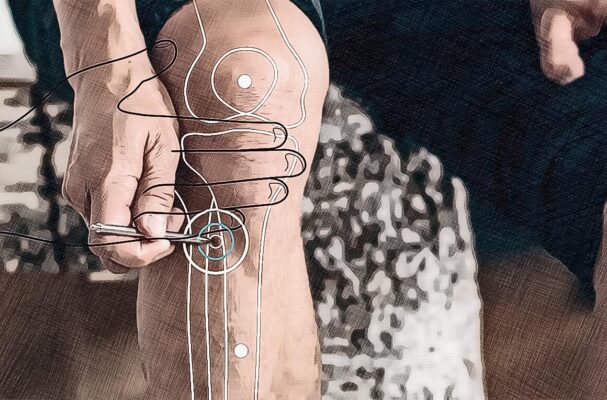
ACUPUNCTURE POINT: Ma 36
Stomach 36
Three miles of the leg - To San Li
- Wichtigster Punkt zur Stärkung von Qi und Yang
- Fördert die Verdauungskraft und wärmt die Mitte
- Strengthens the spleen and stomach
- Helps with bloating and flatulence
- Gives energy and stamina
Location: A hand's width below the kneecap, a thumb's width to the side of the edge of the shinbone to the outside.
Application:
2x täglich für 2–3 Min. pro Seite kräftig drücken oder mit kleinen Kreisen massieren. Kann auch mit Moxibustion gewärmt werden — besonders wirksam bei Kälte–Zeichen in der Mitte.
ACUPUNCTURE POINT: KG 12
Conception vessel 12
Center of the stomach - Zhong Wan
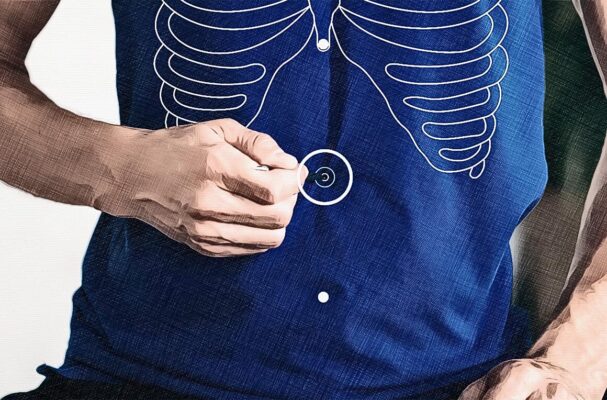
- Key Point for Balancing the Stomach
- Löst Nahrungsstagnation und Völlegefühl
- Stärkt die Milz und fördert die Umwandlung
- Reguliert das Qi im mittleren Erwärmer
- Hilft bei Übelkeit, Aufstoßen und Druckgefühl im Oberbauch
Location: Auf der Mittellinie des Bauches, vier Daumenbreiten oberhalb des Bauchnabels.
Application:
2x täglich für 2–3 Min. mit sanftem bis mittlerem Druck im Uhrzeigersinn kreisend massieren. Am besten nicht direkt nach dem Essen anwenden. Besonders wirksam in Kombination mit Wärme.
ACUPUNCTURE POINT: MP 06
Spleen-Pancreas 06
Meeting place of the three Yin - San Yin Jiao
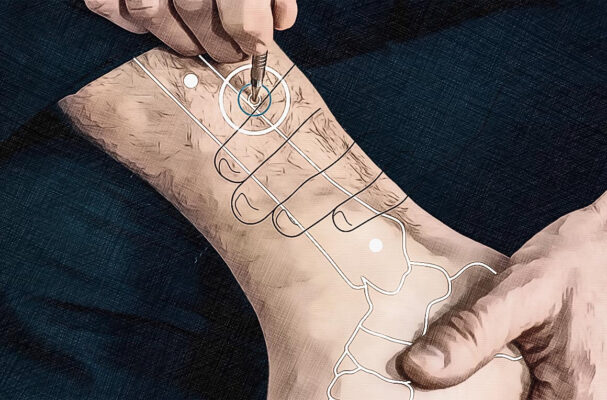
- Stärkt die Milz und ihre Umwandlungsfunktion
- Reguliert die Verdauung und löst Stagnation
- Harmonisiert den mittleren Erwärmer
- Meeting point of the three Yin meridians (spleen, liver, kidney)
- Calms the mind and promotes sleep
Location: Four finger widths above the highest point of the inner ankle, directly behind the shin.
Application:
Massage in a circular motion twice a day for 2-3 minutes per side with medium pressure. Ideal in the morning and evening. DO NOT use during pregnancy!
Our App Recommendation
Atemraum: Your App for Mindful Breathing


Breathing is the foundation of physical and mental well-being—and is usually COMPLETELY underestimated in everyday life. Yet hardly anything has such a direct impact: the way we breathe shapes the way we feel.
That's why we created Atemraum: an app with guided breathing exercises that you can take with you anywhere. Wolfgang put together these exercises—along with a 35-day course, quick tips for the moment, and breathing tests that let you track your progress.
Just a few minutes a day is enough. And anyone who uses our personal support If you use it, it already comes with breathing space.


You can try the app for free for 7 days.
Qi Gong
Qi Gong is moving meditation — sanfte, fließende Übungen, die deinen Energiefluss harmonisieren und deine Mitte stärken. Bei einem Milz–Yang Mangel mit Nahrungsstagnation helfen diese Übungen, die Verdauungswärme zu aktivieren, stagnierende Nahrung in Bewegung zu bringen und die Transformationskraft der Milz wiederherzustellen.
Regelmäßiges Praktizieren von Qi Gong (schon 10–15 Min. täglich) zeigt nachweislich positive Effekte auf Verdauung, Stoffwechsel und allgemeines Wohlbefinden.
QI GONG: Exercise 1
Warm the center
Warms the center, strengthens the spleen-yang

Particularly helpful for:
- Feeling cold in the stomach
- Schwacher Verdauungskraft
- Weichem Stuhl mit unverdauter Nahrung
- Tiredness after eating
Effect:
Diese Erde–Element–Übung wärmt und stärkt gezielt die Mitte — die Milz als Motor der Verdauung. Durch die sanften, kreisenden Bewegungen werden die Verdauungsorgane massiert und das Yang der Mitte aktiviert. So kann die Milz ihre Transformationsfunktion besser erfüllen und stagnierende Nahrung wird in Bewegung gebracht.
QI GONG: Exercise 2
Connecting heaven and earth
Dehnt den mittleren Erwärmer, löst Stagnation
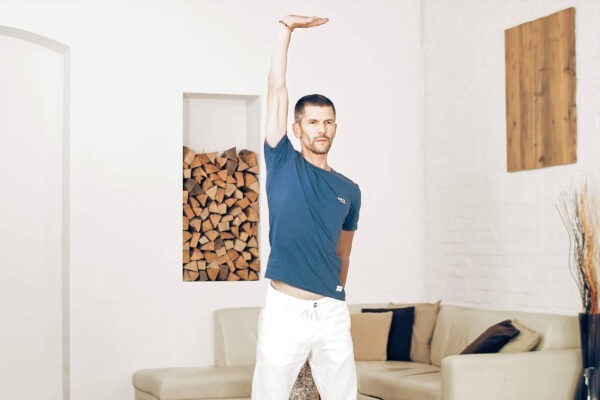
Particularly helpful for:
- Völlegefühl und Druckgefühl im Oberbauch
- Flatulence after eating
- Feeling of heaviness in the whole body
- Träger Verdauung und Appetitlosigkeit
Effect:
Diese Erde–Element–Übung dehnt die Meridiane von Milz und Magen und fördert den Qi–Fluss im mittleren Erwärmer. Die sanfte Streckbewegung hilft, Stagnation im Bauchraum zu lösen, und unterstützt die Milz–Funktion, Reines nach oben zu heben und Trübes nach unten zu leiten.
QI GONG: Exercise 3
Regulate Qi
Harmonisiert den Qi–Fluss, fördert die Peristaltik
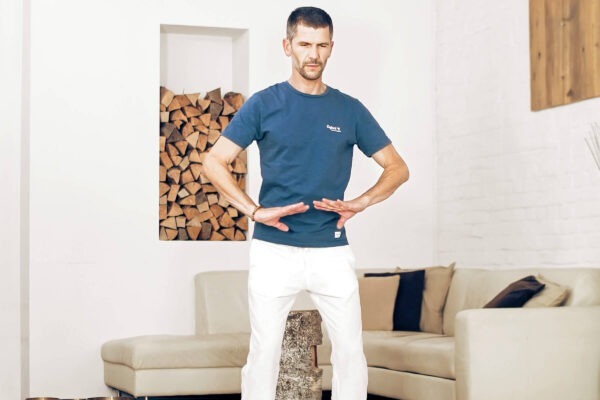
Particularly helpful for:
- Flatulence and belching
- Nausea after eating
- Irregular digestion
- Feeling of tension in the stomach
Effect:
Diese Erde–Element–Übung harmonisiert den Qi–Fluss im gesamten Körper und löst Blockaden im mittleren Erwärmer. Sie fördert die Peristaltik und hilft, stagnierende Nahrung weiterzutransportieren. Perfekt nach dem Essen — schon 2–3 Min. helfen, die Verdauung anzuregen.
These Qi Gong exercises sind speziell für die Kombination aus Milz–Yang Mangel und Nahrungsstagnation ausgewählt. Sie wärmen die Mitte, aktivieren die Verdauungskraft und helfen, stagnierende Nahrung aufzulösen und zu transformieren.
Alle Übungen wirken besonders gut, wenn du sie zwischen 9 und 11 Uhr praktizierst — das ist die Hochzeit der Milz in der Organuhr. Auch nach den Mahlzeiten sind sanfte Übungen wie „Qi regulieren“ ideal, um die Verdauung zu unterstützen.
QI GONG:
When and how often?
Morgens vor dem Frühstück (ideal):
- All 3 exercises as a sequence: approx. 15–20 min.
- Or just 1–2 exercises: approx. 5–10 min.
- Preferably between 9 and 11 am (spleen time)
Nach dem Essen (bei akuter Stagnation):
- „Qi regulieren“ oder „Himmel und Erde verbinden“: ca. 3–5 Min.
- Helps immediately with bloating and flatulence
- Gentle movement instead of lying down promotes digestion
Regularity is more important than duration:
- It is better to exercise for 10 minutes every day than for 60 minutes once a week.
- After 2–3 weeks, you will notice the first changes.
- Nach 3 Monaten regelmäßiger Praxis: stärkeres Milz–Yang und stabile Verdauung
Pro tip: Praktiziere „Die Mitte wärmen“ morgens vor dem Frühstück, um das Verdauungsfeuer zu aktivieren. Danach ein warmes Frühstück wie Congee oder Haferbrei verstärkt die Wirkung. Bei akutem Völlegefühl nach dem Essen hilft ein kurzer Spaziergang kombiniert mit „Qi regulieren“.
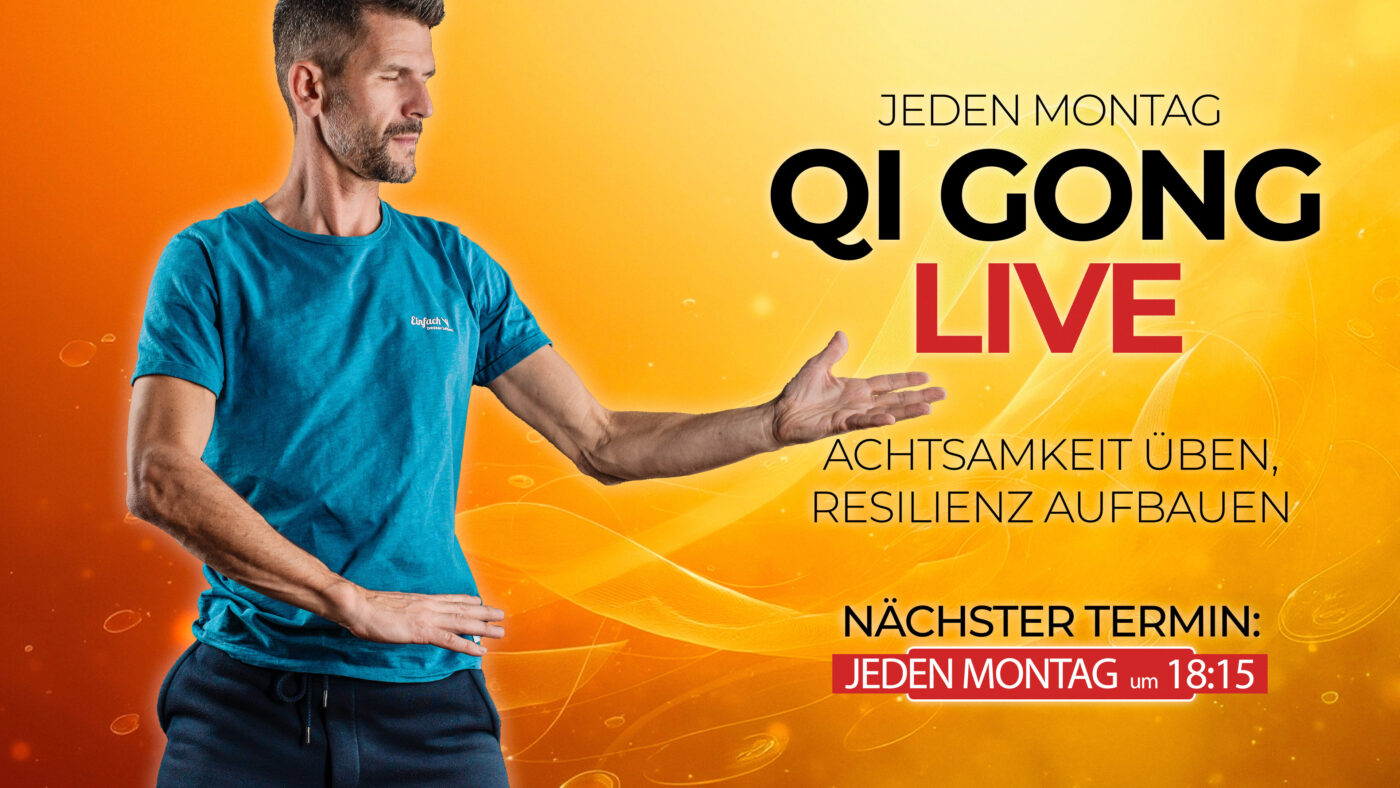
LIVE EVERY MONDAY: QI GONG WITH WOLFGANG
Every Monday at 6:00 p.m. Let's practice together live on YouTube. Among other things, Wolfgang will guide you through a complete qigong sequence — free of charge and suitable for all levels.
Why participate live? ✓ Working out together keeps you motivated ✓ Wolfgang explains the exercises in detail ✓ You can ask questions in the live chat ✓ A set time helps keep your routine on track
More about Qi Gong LiveMeridian Yoga — The Yoga of TCM
Meridian Yoga combines yoga with traditional Chinese medicine. The result is a holistic exercise concept for better health and more energy.
Die folgenden Übungen aktivieren gezielt den Magen–Meridian — denn der Magen ist das zentrale Organ für die Aufnahme und Zersetzung der Nahrung. Bei Milz–Yang Mangel mit Nahrungsstagnation ist die Verdauungskraft geschwächt und die Nahrung bleibt unverdaut im Mittleren Erwärmer liegen. Übungen für den Magen–Meridian stärken die Verdauungsfunktion, lösen Stagnation und bringen die Mitte wieder in Bewegung.
MERIDIAN YOGA: Exercise 1
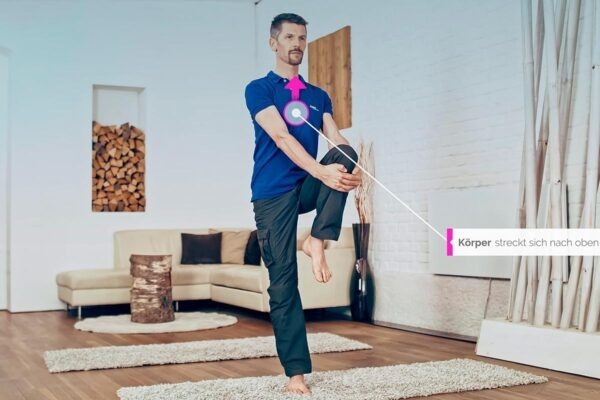
The tree with acupressure for the stomach meridian
Stärkt die Erdung und aktiviert den Magen–Meridian
Particularly helpful for:
- Feeling of fullness and flatulence after eating
- Loss of appetite and sluggish digestion
- Tiredness and heaviness in the legs
- Mangelnder Erdung und innerer Instabilität
Effect:
Der Baum mit Akupressur aktiviert den Magen–Meridian, der an der Vorderseite des Körpers und der Beine verläuft. Die Übung stärkt die Erdung und Stabilität, fördert die Verdauungskraft und hilft, stagnierende Nahrung im Mittleren Erwärmer in Bewegung zu bringen.
MERIDIAN YOGA: Exercise 2
The bow for the stomach meridian
Dehnt den Magen–Meridian und öffnet den Bauchraum

Particularly helpful for:
- Völlegefühl und Druckgefühl im Oberbauch
- Nahrungsstagnation und träger Verdauung
- Spannungen und Verkrampfungen in der Körpermitte
- Lack of energy and listlessness
Effect:
Der Bogen ist eine öffnende Übung, die den gesamten Magen–Meridian dehnt. Sie weitet den Bauchraum, löst Spannungen in der Mitte und fördert den freien Fluss der Verdauungsenergie. Bei Nahrungsstagnation hilft sie, den Stau im Mittleren Erwärmer aufzulösen und das Yang der Milz zu aktivieren.
Beide Übungen aktivieren den Magen–Meridian, der an der Vorderseite des Körpers und entlang der Beine verläuft. Der Magen ist für die Aufnahme und Zersetzung der Nahrung zuständig — durch die Aktivierung dieses Meridians unterstützt du die Verdauungskraft und hilfst, stagnierende Nahrung aufzulösen.
Particularly effective: Halte jede Position für 3–5 Atemzüge und spüre dabei bewusst in deinen Bauchraum hinein. Visualisiere warme, goldene Energie, die deine Mitte wärmt und die Verdauung in Gang bringt.
MERIDIAN YOGA:
When and how often?
Best time:
- In the morning between 7 and 9 a.m. (stomach time)
- Oder 30 Min. vor dem Essen, um die Verdauung vorzubereiten
Duration:
- Hold each position for 3–5 breaths.
- Complete sequence: 10-15 min.
- 3–5 times per week for best results
Important:
- Übe in einer warmen Umgebung — Kälte schwächt das Milz–Yang zusätzlich
- Breathe deeply into your stomach during the positions
- Nicht direkt nach dem Essen üben — warte mindestens 1 Stunde
Pro tip: Kombiniere Meridian Yoga mit sanften Qi Gong–Übungen wie „Die Mitte wärmen“. Bei Milz–Yang Mangel mit Nahrungsstagnation ist es besonders wichtig, die Übungen regelmäßig durchzuführen — so bleibt die Verdauungsenergie in Bewegung und Stagnation kann sich gar nicht erst festsetzen.
Nutrition according to TCM
„Let food be your medicine.“ — dieser Grundsatz gilt in der TCM seit Jahrtausenden. Bei einem Milz–Yang Mangel mit Nahrungsstagnation ist die richtige Ernährung der wichtigste Schlüssel zur Heilung.
Die Milz gehört zum Element Earth and needs warme, gekochte, leicht verdauliche Nahrung in kleinen Portionen. Dein Verdauungsfeuer ist zu schwach — alles Kalte, Rohe und Schwerverdauliche löscht es noch weiter.
What you eat, HOW you eat and WHEN du isst — all das entscheidet darüber, ob deine Mitte wieder warm und stark wird.
Die goldenen Regeln für eine starke Mitte
What is good for you:
Warming spices
- Ingwer (frisch und getrocknet) — der Milz–Wärmer Nr. 1
- Kardamom — löst Stagnation und wärmt
- Zimt — stärkt das Yang und wärmt die Mitte
- Fenchelsamen — fördern die Verdauung sanft
Wärmende Gewürze sind deine beste Medizin!
Warme Suppen und Breie
- Congee (Reisbrei) — das Grundnahrungsmittel für die Milz
- Warmer Haferbrei — stärkt die Mitte
- Kürbissuppe — nährt und wärmt die Erde
- Klare Brühen mit Ingwer
Suppen und Breie sind vorverdaut — perfekt für eine schwache Milz!
Leicht verdauliches Gemüse (gekocht!)
- Kürbis — wärmt und nährt die Milz
- Süßkartoffel — stärkt die Erde sanft
- Karotten — stützen die Verdauung
- Kartoffeln — nähren die Mitte
Gemüse immer gekocht — niemals roh!
Light proteins
- Chicken meat - warms and strengthens the Qi
- Reis — das Grundnahrungsmittel der Mitte
- Fencheltee — fördert die Verdauung
- Warmes Wasser mit Ingwer
Kleine Portionen — dafür öfter essen!
What you should avoid:
Raw food and cold dishes
- Salads as a main meal
- Raw fruit in large quantities
- Smoothies und Rohkost–Diäten
- Alles Ungekochte und Kalte
Rohkost löscht dein Verdauungsfeuer!
Cold drinks and ice cream
- Iced drinks and ice cream
- Cold water from the fridge
- Yoghurt (cold and moist)
- Eisgekühlte Softdrinks
Kälte im Magen ist Gift für das Milz–Yang!
Milchprodukte und Süßes
- Milch (erzeugt Feuchtigkeit und Schleim)
- Yogurt and cottage cheese
- Süßigkeiten und Zucker
- Cakes and pastries
Milchprodukte und Zucker verschleimen die Milz!
Fettige und schwer verdauliche Kost
- Fried foods
- Fette Braten und Sahnesoßen
- Portions that are too large
- Spätes, schweres Abendessen
Schweres Essen überfordert die geschwächte Milz!
HOW YOU SHOULD EAT:
Warm, gekocht und leicht
- Every meal hot and cooked
- Suppen, Eintöpfe, gedämpftes Gemüse
- Auch das Frühstück warm (Congee oder Porridge!)
- Gemüse immer garen — niemals roh
Kleine Portionen — öfter essen
- Lieber 4–5 kleine Mahlzeiten als 3 große
- Aufhören, bevor du satt bist (70 %–Regel)
- Abends besonders wenig und leicht
- In Ruhe essen, gründlich kauen
Die Milz liebt Regelmäßigkeit, Wärme und kleine Portionen!
Drink properly
- Warmes oder heißes Wasser — den ganzen Tag
- Fencheltee — fördert die Verdauung
- Ingwerwasser — wärmt die Mitte
- Do not drink with meals
Warme Getränke unterstützen das Verdauungsfeuer
IDEAL MENU FOR ONE DAY:
Breakfast (7–9 a.m.):
- Warmer Congee mit Kardamom und Datteln
- Or: Haferbrei mit Zimt und gekochtem Apfel
- In addition: Ingwerwasser oder Fencheltee
Lunch (12–1 p.m.):
- Kürbissuppe mit Ingwer und Reis
- Or: Hühnerfleisch mit Karotten und Kartoffeln
- In addition: Small portion of rice
Dinner (5-6 p.m.):
- Leichte Gemüsesuppe mit Fenchel
- Or: Gedämpfte Süßkartoffel mit Karotten
- Important: Kleine Portion — früh essen!
Snack if needed:
- 1 Tasse warme Brühe
- Or: 2–3 Datteln mit Ingwerwasser
- Or: Kleine Schale Congee
The most important rule when changing your diet is:
Start with ONE step!
Don't change everything at once.
Our suggestion for getting started:
- Warmes Frühstück (Congee oder Porridge) einführen — 2 Wochen
- Kalte Getränke und Rohkost konsequent meiden — 2 Wochen
- Portionen verkleinern, dafür öfter essen — 2 Wochen
Schritt für Schritt wirst du merken, wie deine Verdauung wieder in Gang kommt und das Völlegefühl nachlässt.
Deine Mitte wird es dir danken!
REZEPT: INGWER–KÜRBIS–SUPPE MIT KARDAMOM
Ingredients:
For 4 portions
- 500 g Hokkaido pumpkin
- 1 daumengroßes Stück frischer Ingwer
- 1 small onion
- 3–4 Kardamomkapseln (leicht angedrückt)
- 2 EL Ghee oder Kokosöl
- 800 ml vegetable or chicken stock
- Salz, Pfeffer, eine Prise Zimt
- Optional: 1 EL Kürbiskerne zum Garnieren
Preparation:
- Kürbis waschen, entkernen und in Würfel schneiden
- Ingwer schälen und fein hacken
- Ghee in einem Topf erhitzen, Zwiebel und Ingwer anschwitzen
- Kürbis und Kardamomkapseln dazugeben, kurz mitschwitzen
- Mit Brühe aufgießen, 20–25 Min. köcheln lassen
- Kardamomkapseln entfernen, alles pürieren
- Season to taste with salt, pepper and a pinch of cinnamon
Effect:
Warms the center and strengthens the spleen yang
Kardamom und Ingwer lösen Nahrungsstagnation
Leicht verdaulich und trotzdem sättigend
3–4x pro Woche — perfekt für die Verdauungskraft!
REZEPT: CONGEE MIT FENCHEL UND DATTELN
Ingredients:
For 2-3 portions
- 100 g short-grain rice
- 1 kleine Fenchelknolle (fein geschnitten)
- 4–5 Datteln (entsteint, in Stücke geschnitten)
- 1 TL Fenchelsamen (leicht angedrückt)
- 1 L water
- 2 slices of fresh ginger
- A pinch of salt
- Optional: 1 TL Ghee zum Verfeinern
Preparation:
- Reis gründlich waschen
- Reis mit Wasser und Ingwer aufkochen
- Hitze reduzieren, 45–60 Min. bei niedriger Flamme köcheln
- Nach 30 Min.: Fenchel, Datteln und Fenchelsamen hinzufügen
- Weiterköcheln, bis der Reis cremig–breiig ist
- Ingwer entfernen, mit Salz abschmecken
- Optional: Einen Löffel Ghee unterrühren
Effect:
Stärkt das Milz–Yang und wärmt sanft die Mitte
Fenchel fördert die Verdauung und löst Blähungen
Datteln nähren Qi und Blut — ohne die Milz zu belasten
Täglich zum Frühstück — das TCM–Grundrezept für die Mitte!
Breathing
Breathing is the bridge between body and mind. In TCM, it is said: „The lungs govern the qi“—according to this concept, through conscious breathing you can directly influence your qi flow and find a deeper sense of calm.
Breathe calmly and slowly: Deep abdominal breathing noticeably calms many people—their breathing becomes deeper, their shoulders relax, and their minds become clearer. The good news: Just 5–10 minutes a day can make a difference in your well-being.
Recommended breathing techniques
ABDOMINAL BREATHING — The basis for every breathing technique
Natural breathing
Abdominal breathing is the most natural and calm form of breathing. According to the teachings of TCM, with every breath you bring qi into your body’s center (Dantian).
Wolfgang shows you step by step, How to learn abdominal breathing correctly—lying down to start with, then later also sitting and standing.
Duration: 9 minutes

4–7–8 BREATHING — Find Peace
Calm Breathing for the Evening
With the 4–7–8 breathing technique, you inhale for 4 seconds, hold your breath for 7 seconds, and exhale for 8 seconds. This steady rhythm helps many people wind down in the evening—ideal when your mind won’t shut off at night.
Perfect for the evening or whenever you want to calm down quickly.
Duration: 9 minutes
To the interactive videoBOX BREATHING — For inner coherence
Professional breathing for focus and calmness
Box Breathing (4 seconds on, 4 seconds hold, 4 seconds off, 4 seconds hold) combines activation and relaxation in perfect balance. This method is used by elite soldiers, athletes, and executives to remain calm and focused even in extremely stressful situations.
A steady 4–4–4–4 rhythm A balance of activity and stillness—many people find it clarifying and grounding.
Duration: 9 minutes
To the interactive videoCOHERENT BREATHING — Brings Body and Mind into Harmony
Calm Breathing for Balance
With coherent breathing Breathe in for 5.5 seconds and out for 5.5 seconds. This rhythm brings your heart and breathing into a steady rhythm—a state known as „coherence.“ Many people use it as a regular breathing break in their daily lives.
A nice side effect: The heart and breath settle into a calm, synchronized rhythm.
Duration: 14 minutes
To the interactive video
COHERENT BREATHING Around the clock
Our 24/7 livestream on coherent breathing runs non-stop. You can tune in at any time and join in right away.
Perfect for:
✓ Spontaneous breaks to catch your breath in between
✓ If you'd like some gentle breathing guidance
✓ As background while working
✓ For the evening and to wind down
✓ For regular daily practice
relaxation
When your body is relaxed, Things tend to flow more easily. Persistent tension keeps you in a constant state of stress. By using specific relaxation techniques, you signal to your body to calm down and recharge.
Progressive muscle relaxation It is one of the best-known relaxation methods and has been practiced for over 100 years. It helps you become aware of tension, actively let go of it, and achieve a state of deep relaxation—whenever you want.
Recommended relaxation technique
PROGRESSIVE MUSCLE RELAXATION (PMR)
The Classic Relaxation Method
Progressive muscle relaxation according to Jacobson is one of the best-known relaxation techniques worldwide. By deliberately tensing and relaxing individual muscle groups, you learn to consciously recognize tension and release it.
That's what it feels like:
Step by step, the body becomes heavier and calmer, and the breathing more even. Many people make this a regular part of their evening routine to help them fall asleep easily.
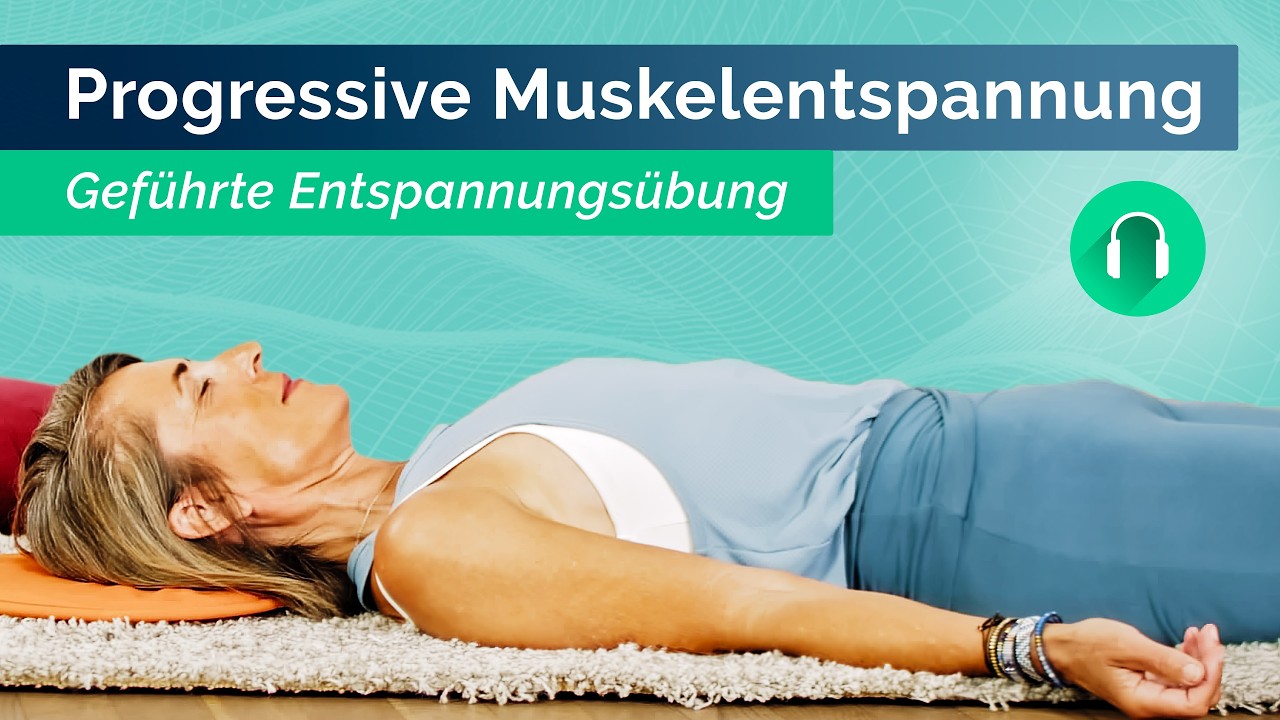
Maria guides you step by step through the entire exercise—perfect for beginners and advanced practitioners alike.
Duration: 23-minute complete guide
To the guided PMRMeditation
Meditation calms the mind — and a calm mind is good for your whole being. In TCM, it is said that every emotion affects a specific organ. Through regular meditation, you’ll learn to step away from racing thoughts, find emotional balance, and strengthen your inner center.
Just 10 minutes a day can do a lot to help you find inner peace. As a result, many people find that their daily lives become more relaxed and clear.
Recommended meditations
GUIDED MEDITATIONS FOR EVERY DAY
Your personal meditation library
We have a complete Playlist with over 60 guided meditations, breathing exercises, and relaxation techniques—from short 5-minute meditations for in between to deep 30-minute sessions for intensive practice.
In the playlist you will find:
- Morning meditations for a mindful start to the day
- Meditations for restful sleep
- Breathing meditations for inner peace
- Meditations for Moments of Calm Amid Stress and Worry
- TCM standing meditations for all 5 elements
- Body scan and body journeys
- Meditations for Peace of Mind and Body
- Special breathing techniques (4–7–8, coherent breathing, bee breathing)
Perfect for beginners and advanced practitioners. Choose the right meditation for you depending on your time, the time of day, and your needs.
To the meditation playlistDie Milz ist die Wurzel des Nachgeburtlichen Qi.
Sie transformiert die Nahrung in Lebensenergie. Wenn die wärmende Kraft der Milz erlischt und die Nahrung stockt, verliert der Körper seine Mitte — und mit ihr seine Kraft.
- Loosely based on the HUANG DI NEI JING
(The Yellow Emperor's Classic of Internal Medicine)
More tips for your everyday life
In addition to traditional TCM treatment methods gibt es viele kleine Alltagsgewohnheiten, die dein Milz–Yang stärken und die Nahrungsstagnation auflösen können. Die Verdauungskraft ist in der TCM das Fundament deiner Energie — mit den richtigen Gewohnheiten kannst du sie wirksam unterstützen und wiederherstellen.
Wärme und Verdauung
Bauch warm halten
Die Milz braucht Wärme von außen und innen:
- Wärmflasche oder Kirschkernkissen auf den Bauch legen — besonders nach dem Essen
- Warme Kleidung tragen — den Bauch nie der Kälte aussetzen
- Bauchfreie Kleidung und kalten Wind auf dem Bauch vermeiden
- Im Winter einen Nierengurt oder ein warmes Unterhemd tragen
Prefer warm drinks
Kaltes löscht das Verdauungsfeuer:
- Ingwertee ist ideal — er wärmt die Mitte und löst Stagnation
- Fencheltee beruhigt den Magen und reduziert Blähungen
- Kümmeltee unterstützt die Verdauung bei Völlegefühl
- Kalte Getränke konsequent vermeiden — auch im Sommer
- Kein Wasser direkt aus dem Kühlschrank trinken
Kalte Füße vermeiden
Kälte steigt von unten auf und schwächt die Mitte:
- Warme Socken tragen — auch zu Hause
- Fußbäder mit frischem Ingwer (3–5 Scheiben in warmem Wasser) wärmen den ganzen Körper
- Nicht barfuß auf kalten Böden laufen
- Füße vor dem Schlafengehen wärmen
Essgewohnheiten — die Milz liebt Rhythmus und Ruhe
Eat regularly
Die Milz braucht einen festen Rhythmus:
- 3 feste Mahlzeiten am Tag — möglichst zur gleichen Zeit
- Biggest meal at lunchtime, when digestive power is at its strongest
- Zwischenmahlzeiten reduzieren — die Milz braucht Pausen zwischen den Mahlzeiten
Chew slowly and thoroughly
Digestion begins in the mouth:
- Jeden Bissen 15–20 Mal kauen — das entlastet die Milz enorm
- Nicht schlingen — hastige Nahrungsaufnahme fördert Stagnation
- Kleine Bissen nehmen und bewusst schmecken
- Gründliches Kauen ist die einfachste Maßnahme gegen Nahrungsstagnation
Eat in peace
Die Milz braucht deine volle Aufmerksamkeit:
- Nicht am Schreibtisch oder im Stehen essen
- Do not work, read or watch the news while eating
- Sich hinsetzen und die Mahlzeit bewusst genießen
- Stressiges Essen „nebenbei“ fördert Stagnation und Blähungen
Small portions
Überessen ist Gift für eine schwache Milz:
- Lieber weniger essen und dafür öfter
- Aufhören, wenn du zu 70–80 % satt bist
- Ein übervoller Magen überfordert die geschwächte Verdauungskraft
- Nachschlag vermeiden — auch wenn es gut schmeckt
Don't eat too late
Die Milz braucht nachts Ruhe:
- Last meal before 7 pm
- Abends nur leichte, warme Kost — Suppe oder Congee
- Spätes Essen führt zu Stagnation über Nacht
- Mindestens 2–3 Stunden zwischen Abendessen und Schlafengehen
Bewegung und Entspannung
Kurzer Spaziergang nach dem Essen
Bewegung bringt die Verdauung in Schwung:
- 10–15 Min. langsames Gehen nach jeder Mahlzeit
- Helps the spleen to transform food
- Nicht sofort hinlegen oder hinsetzen nach dem Essen
- Even light housework after a meal is good
Sanfte Bauchmassage
Fördert den Qi–Fluss in der Mitte:
- Handfläche auf den Bauchnabel legen und im Uhrzeigersinn kreisen
- 36 Kreise mit sanftem Druck — morgens nach dem Aufwachen oder abends vor dem Schlafen
- Wärmt die Mitte und löst Stagnation
- Besonders wirksam bei Völlegefühl und Blähungen
Avoid brooding
Sorgen und Grübeln schwächt die Milz direkt:
- Excessive thinking depletes the spleen energy
- Break the Cycle of Worry Through Exercise or Distraction
- Meditation and mindfulness help to calm the mind
- Probleme aktiv lösen statt endlos darüber nachzudenken
Qi Gong und sanfte Bewegung
Bewegen ohne zu erschöpfen:
- Qi Gong und Tai Chi sind ideal — sie stärken das Milz–Qi sanft
- Walks in the fresh air
- Gentle yoga without overexertion
- Intensiven Sport und starkes Schwitzen vermeiden — das schwächt das Yang zusätzlich
Important to know
Die Stärkung des Milz–Yang und die Auflösung der Nahrungsstagnation brauchen Geduld und Konsequenz. Die Verdauungskraft wiederherzustellen ist wie das Entfachen eines Feuers — es geschieht Schritt für Schritt. Achte auf die Signale deines Körpers: Völlegefühl, Blähungen und Müdigkeit nach dem Essen zeigen, dass deine Milz Unterstützung braucht. Mit konsequenter Pflege wirst du spüren, wie deine Verdauung stärker wird und deine Energie zurückkehrt.
When to see a doctor? Bei anhaltendem Erbrechen, Blut im Stuhl, starkem Gewichtsverlust oder Schmerzen, die nicht nachlassen, solltest du unbedingt einen Arzt aufsuchen. TCM und westliche Medizin ergänzen sich hier optimal — eine schulmedizinische Abklärung ist bei diesen Symptomen wichtig.
For optimal treatment progress
TCM is not a quick fix for symptoms., but rather a holistic healing process. You will achieve the best results if you consistently integrate the treatment into your daily routine and give your body time to regenerate.
Integration into everyday life
Start with ONE step
Don't try to change everything at once! That's overwhelming and leads to
usually leads to you giving up. Instead:
- Woche 1–2: Warme, leicht verdauliche Ernährung einführen, kalte und rohe Speisen meiden — und mit deiner TCM–Kräutermischung beginnen
- Woche 3–4: Akupressur Ma 36 und KG 12 täglich
- Week 5-6: Qi Gong „Warming the center“ daily 10 min.
- Woche 7–8: Zwischenbilanz — Völlegefühl und saures Aufstoßen sollten längst nachgelassen haben; vergleiche jetzt Kältegefühl im Bauch, Stuhl und die Müdigkeit nach den Mahlzeiten mit dem, was am Anfang stand
- From week 9: Add further methods as required
Realistic expectations
After 2–3 weeks: First improvements noticeable
- Weniger Völlegefühl nach dem Essen
- Improved digestion
- Less flatulence
After 6–8 weeks: Significant improvements
- Deutlich weniger Verdauungsbeschwerden
- Mehr Energie nach den Mahlzeiten
- Warmer body sensation
After 2–4 months: Sustainable healing
- Verdauung funktioniert wieder zuverlässig
- Körper fühlt sich warm und kräftig an
- Sustainable improvement in well-being
TCM vs. Western medicine
TCM and Western medicine are not mutually exclusive—they complement each other!
When Western medicine is important:
- Bei anhaltendem Erbrechen oder starkem Gewichtsverlust
- Bei Blut im Stuhl oder schwarzem Stuhl
- Bei starken Bauchschmerzen
- Für genaue Diagnosen (Magenspiegelung, Ultraschall)
Where TCM has its strengths:
- Bei funktioneller Dyspepsie (Reizmagen)
- Bei chronischen Verdauungsbeschwerden
- Zur Stärkung der Verdauungskraft
- Bei wiederkehrender Nahrungsstagnation
Ideal: Combine both systems! Use Western medicine for
Acute treatment and accurate diagnosis, TCM for lasting healing
and strengthening the body's self-healing powers.
Important: Never stop taking prescribed medication without consulting your doctor first!
Talk to your doctor when you start TCM treatment.
Do you have any questions?

Wolfgang from meine-tcm.com
TCM is a broad field. Much of it sounds unfamiliar at first glance, and often the real question doesn't arise until you start putting some of it into practice in your daily life.
That's exactly what I'm here for. Write to me—no matter how big or small your question is, whether it’s related to this page or to something else entirely in TCM. I read every message myself and will get back to you. Calmly, clearly, and without any sales pitch.
P.S.: There are no stupid questions. So write to me.
Ask your questionEvery step counts
Your body strives for balance—you just need to create the right conditions for it.
Remember:
👣 Every little step counts
You don't have to be perfect. Even one warm meal a day is better than none. Even 5 minutes of qigong is better than no exercise at all.
⏳ Patience pays off
It took your body years to get to this point. Give it time to regain its balance. Change takes time, but it will happen.
🎯 Focus on what you can DO
Don't concentrate on what you are doing „wrong". Focus on every positive step you take.
💚 Be good to yourself
Perfection does not exist. It is acceptable to have an off day occasionally. Tomorrow is a new day when you can continue.
🤝 You are not alone
Thousands of people are walking this path with you. For over 2,000 years, TCM has been guiding people like you on their journey toward greater well-being.
Track Your Progress

To track your progress, we recommend that you repeat the TCM analysis after about 3 months.
Why does this make sense?
- You can see how your pattern has changed
- You can adjust your group as needed
- It motivates you to keep going
- You'll figure out which steps work best for you
⚠️ Important: Your answers from today will be stored in encrypted form using a code that you received via email. ONLY with this code will you be able to track your progress later. Be sure to keep the email in a safe place!
🔒 YOUR DATA IS SAFE
We store:
✓ Only your email address for reminders
✓ The date for shipping
We do NOT store:
✗ Your analysis results
✗ Your personal information
✗ The connection between email and the sample
All analysis data is completely anonymous and is not linked to your email address.
Newsletter
Stay up to date with our newsletter. Besides useful tips and tricks for training and your everyday life, you won't miss any of our new releases.