






On this page, you will learn:
- What this diagnosis means from the point of view of TCM and Western medicine
- Where your symptoms come from and how they are connected
- Which specific treatment methods can help you now
- How you can use TCM herbs, acupressure, Qi Gong and nutrition to dissolve the hot phlegm, clear the heat and free your lungs again
The good news: Mucus heat in the lungs can be treated well with the right measures. With a cooling, expectorant diet, targeted acupressure, breathing exercises and proven TCM herbs, you can clear the heat, dissolve the mucus and breathe freely again.
Take your time, Get to know the different treatment approaches—you don't have to implement everything at once. Choose what feels right for you and what you can easily integrate into your everyday life.
Your treatment at a glance:
Which TCM pattern is really behind your complaints?
Degree of
imbalance

Mittel bis Deutlich
Typical
treatment duration

2-4 months
self-treatment
Possible

Partly self-treatable
Treatment–
scope

2–3 methods
Proposed
methods

Extensive range
Our free TCM analysis shows you your personal TCM pattern in just 10 minutes - and which treatment will help you best.
What is mucus heat in the lungs?
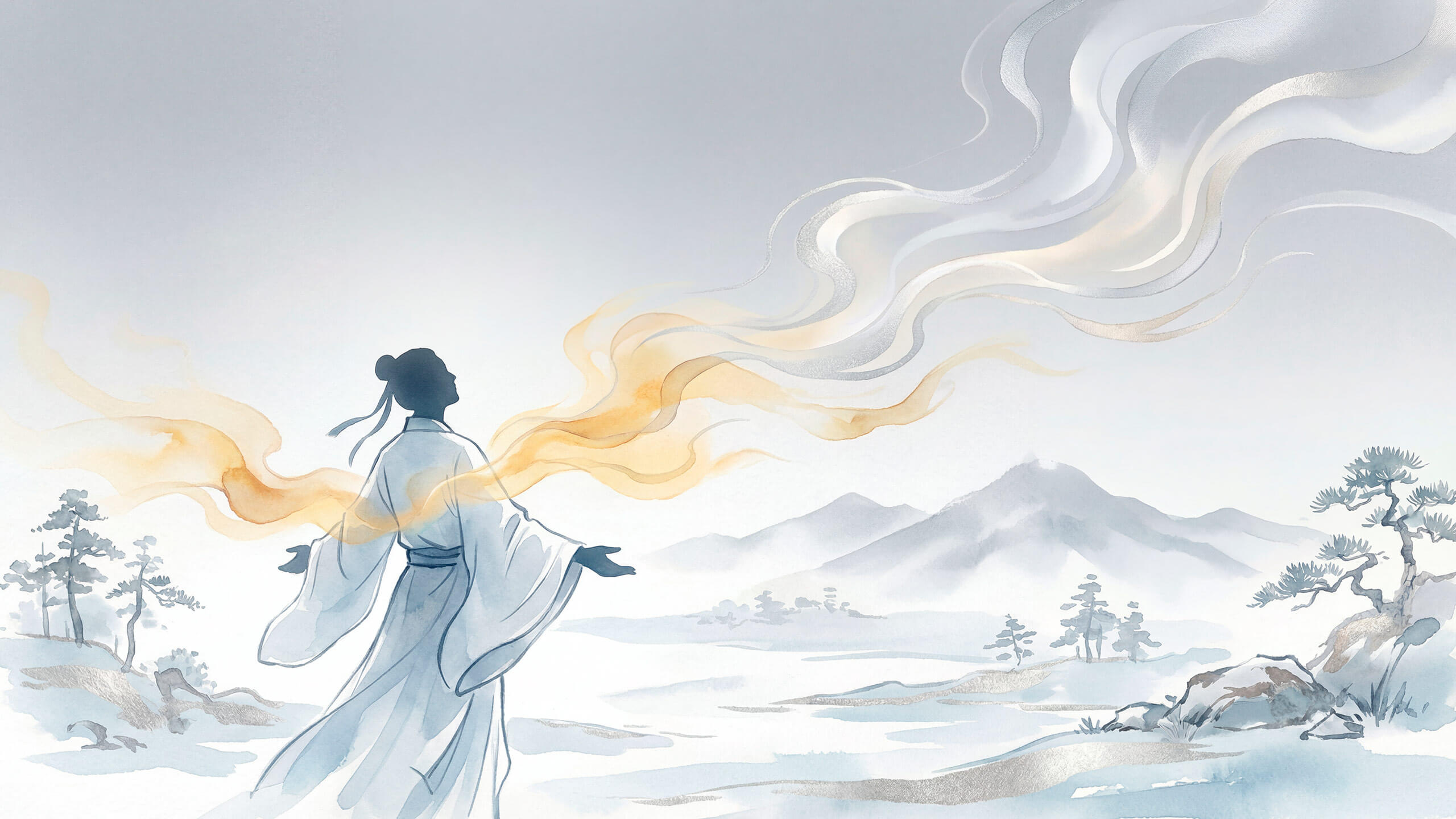
When hot mucus clogs the lungs and your breath stops
The TCM perspective: When hot phlegm blocks the lungs
In traditional Chinese medicine, the lungs are the „delicate canopy“ of the body - the most sensitive of the Zang organs. It governs Qi and breath, distributes defensive energy (Wei Qi) to the surface of the body and controls the water balance. If hot phlegm blocks the lungs, all these functions can no longer be carried out properly.
Phlegm-Heat in the Lung (Tan Re Zu Fei) is a fullness disorder: the phlegm is not cold and watery as with pure phlegm-dampness, but hot, viscous and yellowish. It sticks stubbornly in the lungs and is more difficult to clear. This combination of heat and mucus occurs in different ways: External wind-heat can enter the lungs and combine with moisture. Or a weak spleen produces moisture, which condenses into mucus - and is then „cooked“ by internal heat.
In TCM, the lungs have two main movements: Distributing (Xuan) upwards and outwards, and descending (Su Jiang) downwards. Hot phlegm blocks both directions. The Qi can no longer descend, resulting in coughing, wheezing and shortness of breath. It can no longer disperse - the Wei Qi does not reach the surface, the immune system is weakened.
The result of the mucus heat: The body fights against a stubborn blockage. The lungs cannot breathe freely, the viscous yellow mucus is stuck, the heat dries out the sensitive lung tissue. The chest feels tight and heavy, the cough is agonizing and productive.
The typical signs of mucus heat in the lungs:
- Cough with yellow, viscous mucus that is difficult to cough up
- Feeling of tightness and fullness in the chest
- Shortness of breath and wheezing
- Fever or feeling hot, especially in the afternoon
- Thirst with a craving for cool drinks
- Foul-smelling breath
- Dark, concentrated urine
- Constipation due to internal heat
The good news: Mucus heat in the lungs can be treated well with the right methods. Cooling, expectorant food, targeted acupressure, breathing exercises and proven TCM herbs can clear the heat, dissolve the phlegm and free your lungs again.
The Western perspective: respiratory infections and chronic inflammation
From a Western perspective, phlegm-heat in the lungs corresponds to a condition with inflammation and increased phlegm production in the airways. The body reacts to infections or chronic stimuli with an inflammatory reaction that produces thick, purulent phlegm - the yellow or greenish phlegm that TCM describes as „hot phlegm“.
Think of your airways as a fine tube system: Normally, they are lined with a thin layer of mucus that traps foreign bodies and germs and transports them to the outside. In the event of inflammation, the mucous membrane swells, produces thick, sticky mucus and constricts the airways. The result: difficult breathing, an agonizing cough and the feeling of not getting enough air.
Bacterial bronchitis, pneumonia, chronic obstructive pulmonary disease (COPD) or bronchiectasis are particularly common causes. Allergic asthma can also develop into this picture with secondary infection.
What does modern medicine show?
- Acute bronchitis: inflammation of the bronchial tubes with a productive cough and yellow sputum
- Pneumonia: pneumonia with fever, purulent mucus and shortness of breath
- COPD with exacerbation: exacerbation of chronic lung disease with increased, purulent mucus
- Sinusitis with postnasal drip: sinusitis with mucus flowing into the throat
- Bronchiectasis: Dilated bronchi with chronic mucus production
- Chronic smoker's cough: airways damaged by tobacco smoke with inflammation
Modern research confirms: The TCM diagnosis of „phlegm-heat in the lungs“ correlates with elevated inflammatory markers (CRP, leukocytes), purulent sputum and radiological signs of bronchitis or pneumonia. Studies have shown that TCM herbs such as Huang Qin (Baikal Gillwort) have antibacterial and anti-inflammatory effects on the respiratory tract.
This is exactly where TCM treatment comes in: It clears the heat (combats inflammation), dissolves the thick mucus, strengthens the lungs and the spleen as the root of mucus formation - holistically, sustainably and with methods that have been tried and tested for thousands of years.

The Yellow Emperor team explains your diagnosis
Qi Bo | The Yellow Emperor | Dr. Lisa Weber
MASTER OF THE HEALING ARTS | TCM FOUNDER | MODERN PHYSICIAN
What happens when the legendary Yellow Emperor from TCM sits down with his advisor Qi Bo and a modern doctor? They discuss your diagnosis - with 4000 years of knowledge AND current science.
Mucus-heat lungs - When hot mucus clogs the lungs and your breath stops
The Yellow Emperor: „Qi Bo, I observe people in my realm who are breathing heavily and have an agonizing cough. They cough up a thick, yellow phlegm, their face is red, they have a fever and complain of a tight feeling in their chest. Their breath smells unpleasant and they are restless. What is the cause of this condition?“
Qi Bo: „Your Majesty, these people suffer from Tan Re Zu Fei - Phlegm-Heat, which blocks the lungs. This is a serious fullness disorder. The lungs - the delicate canopy of the body - become clogged with hot, viscous phlegm. Unlike simple phlegm-dampness, which is cold and watery, this is hot phlegm: it is yellow, thick, sticky and stubbornly stuck. The heat has ‚cooked‘ the slime and made it tough and difficult to remove.“
Dr. Weber: „This is a precise description of acute bronchitis or pneumonia! The yellow, viscous mucus corresponds to the purulent sputum that occurs in bacterial respiratory infections. The yellow color comes from the neutrophils - white blood cells that fight bacteria. The fever shows the systemic inflammatory reaction and the shortness of breath is caused by the constriction and congestion of the bronchial tubes. TCM recognized these connections thousands of years ago!“
The Yellow Emperor: „How does this hot mucus form in the lungs?“
Qi Bo: „Majesty, there are several ways. First: External wind-heat penetrates the lungs - an infection begins with a sore throat and fever and turns into phlegm-heat in the lungs. Secondly, the spleen is weakened and can no longer transform the body fluids. Dampness develops, which condenses into phlegm. Internal heat - caused by emotional stress, liver qi stagnation or poor diet - then combines with this phlegm. Thirdly, smoking and polluted air directly damage the lungs and generate heat and phlegm. Fourthly, excessive consumption of fatty, fried and spicy foods and alcohol creates dampness and heat in the body.“
Dr. Weber: „Amazing! This correlates perfectly with our modern etiology! Viral respiratory infections (wind-heat) can lead to bacterial superinfections of the bronchi and lungs. A weakened immune system - the ‚weak spleen‘ of TCM - makes you susceptible to infections. Smoking is the biggest risk factor for chronic lung disease and damages the cilia that normally clear mucus. And an unhealthy diet increases systemic inflammation via the gut-lung axis - a highly topical research subject!“
The Yellow Emperor: „You said that the lungs are a ‚delicate canopy‘. What makes them so sensitive?“
Qi Bo: „Your Majesty, the lungs are the only Zang organ that is in direct contact with the outside world - via the nose and mouth. It is therefore particularly susceptible to external pathogenic factors. It is also called ‚the tender organ‘ (Jiao Zang). The lung loves purity and moisture - it does not like dryness, heat or phlegm. If hot phlegm blocks it, it suffers particularly, because it simultaneously injures its sensitive tissues and prevents the free flow of Qi.“
Dr. Weber: „Exactly! The lungs have the largest contact area with the outside world - around 70 square meters of surface area. The alveoli (pulmonary alveoli) are extremely thin-walled to enable gas exchange, which also makes them vulnerable. The mucous membrane of the airways is covered with cilia that transport a thin film of mucus upwards - the so-called mucociliary clearance. This system fails in the event of inflammation and excessive mucus production. The TCM description of the lungs as a ‚delicate organ‘ is anatomically and physiologically absolutely accurate!“
The Yellow Emperor: „What signs on the body reveal mucus heat in the lungs?“
Qi Bo: „The signs are clear, Your Majesty. The tongue is red - it shows the heat. The coating is thick, yellow and sticky - it shows hot phlegm. The tongue may be swollen, indicating dampness. The pulse is slippery - Hua Mai - it slides like a pearl under the finger, indicating Phlegm. It is also rapid - Shuo Mai - which indicates Heat. Then there is the yellowish phlegm when coughing, the fever, the thirst for cool drinks and the foul-smelling breath - all signs of the heat that ‚boils‘ the phlegm.“
Dr. Weber: „Tongue diagnostics has interesting parallels with modern medicine! A reddened tongue with a yellowish coating can actually indicate an infection - the surface of the tongue reacts to systemic inflammation. Purulent sputum is the gold standard in the diagnosis of respiratory tract infections. The rapid pulse corresponds to tachycardia in fever and infections. And the foul breath odor may be caused by anaerobic bacteria in the infected phlegm. It is remarkable how TCM diagnostics integrates these clinical signs!“
The Yellow Emperor: „How does mucus heat differ from simple mucus moisture in the lungs?“
Qi Bo: „An important difference, Your Majesty! With phlegm dampness, the phlegm is white, thin, abundant and easy to cough up. There are no signs of heat - no fever, no redness, no thirst. The tongue is pale with a white, moist coating. With mucus heat, on the other hand, everything is hotter and more persistent: the mucus is yellow, thick, viscous and difficult to cough up. There are clear signs of heat - fever, thirst, restlessness, flushed complexion. The tongue is red with a yellow, sticky coating. Mucus heat is the more severe variant and requires heat clearing as well as mucus clearance.“
Dr. Weber: „This distinction is clinically extremely relevant! Clear, white phlegm indicates a viral infection or allergic reaction - this corresponds to TCM phlegm dampness. Yellow or greenish phlegm, on the other hand, indicates a bacterial infection - TCM Phlegm-Heat. This color change actually shows an increased concentration of neutrophils and the enzyme myeloperoxidase, which is greenish. The TCM differentiation therefore reflects real pathophysiological differences!“
The Yellow Emperor: „Now let's talk about the treatment. How can the mucus heat be cleared from the lungs?“
Qi Bo: „Your Majesty, the treatment principle is: Qing Re Hua Tan - clear the heat and transform the phlegm. This happens on several levels. Firstly, clear the heat - cooling herbs such as Huang Qin (Baikal Gillweed) and Zhu Ru (Bamboo Cane) reduce the heat in the lungs. Secondly, transform phlegm - expectorant herbs such as Ban Xia (Pinellia) and Gua Lou (Trichosanthes) loosen viscous phlegm. Third: Open the Lung - Xuan Fei - herbs such as Xing Ren (Bitter Almond Seed) restore the distributing and descending function of the Lung. Fourth: Strengthen the Spleen - to eliminate the root of Phlegm formation.“
Dr. Weber: „This treatment strategy is conclusive from a scientific point of view! Huang Qin contains baicalin, which has been shown in studies to have antibacterial, antiviral and strong anti-inflammatory effects - it inhibits TNF-alpha and interleukins, which are precisely the inflammatory mediators in respiratory tract infections. Ban Xia has been shown in studies to have mucolytic properties - it liquefies mucus and facilitates expectoration. Xing Ren contains amygdalin, which acts as an antitussive and mild bronchodilator. And strengthening the spleen - the digestive system - actually supports the immune defense of the lungs via the gut-lung axis!“
The Yellow Emperor: „What is the classic herbal recipe for mucus heat in the lungs?“
Qi Bo: „The main formula is Qing Qi Hua Tan Wan - the pill for clearing qi and transforming phlegm. It combines cooling and expectorant herbs in a balanced composition. Dan Nan Xing as the main herb clears heat and dissolves stubborn phlegm. Huang Qin cools the heat of the lungs. Gua Lou Ren moistens the lungs and dissolves phlegm. Ban Xia dries dampness and transforms phlegm. Xing Ren lowers Lung Qi and relieves coughs. Zhi Shi moves Qi and helps to expel phlegm. Chen Pi regulates Qi and dries dampness. Fu Ling strengthens the spleen and expels dampness.“
Dr. Weber: „An impressive combination! Dan Nan Xing has proven anti-inflammatory and expectorant properties. The synergy of these herbs simultaneously addresses inflammation (anti-inflammatory), phlegm (mucolytic), cough irritation (antitussive) and bronchoconstriction (bronchodilator) - a multimodal approach that modern medicine is just beginning to appreciate! The inclusion of spleen-strengthening herbs is particularly noteworthy, as we now know that the gut microbiome has a significant influence on lung immunity.“
The Yellow Emperor: „Wonderful! Let's turn this wisdom into a practical plan.“
THE 3-WAY METHOD FOR MUCUS-HEAT LUNG
MORNING PROTOCOL (clear heat, clear lungs):
- TCM: Start with a warm, light breakfast - strengthen the spleen without producing mucus
- Science: A low-inflammatory breakfast reduces systemic inflammation
- Practical: Congee with radish and a piece of ginger, or millet porridge with boiled pear
- TCM: Chrysanthemum or dandelion tea - cools the lungs and clears the heat
- Science: Chrysanthemum tea contains antioxidant flavonoids with an anti-inflammatory effect
- Practical: Pour hot water over 1 tablespoon of dried chrysanthemum flowers, leave to infuse for 5 minutes
- TCM: Breathing exercise „Tighten the bow“ from Qi Gong - opens the chest and strengthens the lungs
- Science: Deep breathing improves ventilation of all sections of the lungs and mobilizes mucus
- Practical: 5-10 minutes of Qi Gong in the morning, consciously inhaling deeply and exhaling slowly
TAGS-STRATEGY (loosen mucus, reduce inflammation):
- TCM: Light, cooling meal - no mucus-forming food, no fried food
- Science: A plant-based, low-inflammatory diet reduces mucus production in the airways
- Practical: Vegetable soup with radish, broccoli and seaweed, served with rice
- TCM: Acupressure on Lu 10 (Yu Ji) - clears heat in the lungs and relieves sore throat
- Science: Stimulation of this point activates the vagus nerve and has inflammation-modulating effects
- Practical: On the ball of the thumb, center of the 1st metacarpal bone. Massage for 3 minutes with firm pressure
- TCM: Drink plenty of warm water - loosens mucus and removes heat
- Science: Sufficient hydration liquefies bronchial secretions and facilitates expectoration
- Practical: 2-3 liters of warm water or herbal tea throughout the day
EVENING RITUAL (calm the lungs, regenerate):
- TCM: Light dinner - not too late, no heavy food that creates moisture
- Science: A light dinner reduces gastroesophageal reflux, which can aggravate coughs
- Practical: Steamed vegetables with a small portion of rice, no later than 7 pm
- TCM: Acupressure on Tue 04 (He Gu) - clears heat, strengthens the immune system
- Science: Di 04 has proven immunomodulating and pain-relieving effects
- Practical: Between thumb and index finger, in the muscle bulge. Press firmly for 3 minutes per hand. DO NOT use during pregnancy!
- TCM: Steam inhalation with thyme or eucalyptus - opens the airways and loosens mucus
- Science: Warm steam moisturizes the airways, essential oils have an antimicrobial and mucolytic effect
- Practical: Hot water in a bowl, 2-3 drops of thyme or eucalyptus oil, inhale for 10 minutes
The Yellow Emperor: „Qi Bo, how long does it take for the phlegm heat to clear from the lungs?“
Qi Bo: „Majesty, phlegm-heat is more stubborn than simple phlegm-dampness, but can be managed well with consistent treatment. After 2-3 weeks most people notice: less thick mucus, easier breathing, the fever goes down. After 6-8 weeks, the improvements become clear: the cough subsides, breathing becomes freer, the signs of heat disappear. After 2-4 months, the lungs may be clear and free again. It is important: Not only clear the phlegm, but also clear the heat and strengthen the spleen - otherwise the phlegm will come back.“
Dr. Weber: „This is consistent with our clinical experience! Acute bacterial bronchitis usually improves within 2-3 weeks with adequate treatment. In chronic conditions such as COPD with exacerbation, full recovery takes 6-8 weeks. And the recommendation to ‚strengthen the spleen‘ - i.e. to maintain gut health - is highly topical: the gut-lung axis shows that a healthy gut microbiome strengthens lung immunity in the long term and prevents relapses!“
The Yellow Emperor: „What must be avoided at all costs with mucus heat in the lungs?“
Qi Bo: „Majesty, the most important thing is: Firstly, no dairy products - they produce mucus and aggravate the blockage. Secondly, no fried and fatty foods - they create dampness and heat. Third, no alcohol - it creates damp heat. Fourthly, no hot spices in excess - they increase the heat. Fifth, no smoking - it directly damages the lungs and produces heat and phlegm. Sixth, no sweets and white flour - they create dampness and nourish phlegm.“
Dr. Weber: „Scientifically plausible! Dairy products can increase mucus production in some people - the casein protein activates mucin genes. Fried food contains trans fats and AGEs (Advanced Glycation Endproducts), which promote inflammation. Alcohol weakens the immune system and can irritate the airways. And smoking is of course the biggest enemy of the lungs - it paralyzes the cilia, damages the mucous membrane and makes you susceptible to infections. All these TCM recommendations are evidence-based!“
The Yellow Emperor: „Then the message is clear: mucus heat in the lungs is a serious but easily treatable disorder. When heat and phlegm combine in the lungs, a two-pronged approach is needed: clear the heat and resolve the phlegm. With a cooling diet, the right herbs, acupressure and breathing exercises, the lungs can be freed again and the breath can flow freely.“
Qi Bo: [smiles] „That's right, Your Majesty. The lungs are like a precious jade screen - delicate, pure and of great beauty. When hot phlegm darkens this screen, we must cleanse it gently but consistently. We clear the heat with cooling herbs, free the airways with expectorants and ensure that no new phlegm is produced with a strengthening diet. Then the jade screen shines again in full clarity and the breath of life flows freely.“
About our „3 Wise Men“ story
Who are the Yellow Emperor and Qi Bo?
The Yellow Emperor (Huangdi) is said to have lived around 2600 BC and is considered the mythical founder of Chinese culture and medicine. Qi Bo was his most important advisor and personal physician. Their discussions about health, illness, and human nature were recorded in the most important fundamental work of TCM.
The book: Huangdi Neijing
The Huangdi Neijing, also known as The Yellow Emperor's Classic of Internal Medicine, was probably written between 200 BC and 200 AD. It is the oldest surviving work on Chinese medicine and consists of dialogues between the Yellow Emperor and his advisors, mainly Qi Bo.
This work is to TCM what the Bible is to Christianity: the absolute foundation. All the important concepts - yin and yang, the 5 elements, qi, meridians and acupuncture points - are systematically described here for the first time.
Our modern approach: The 3 wise men
In our series „The Three Sages,“ we bring together the Yellow Emperor and Qi Bo with the fictional modern doctor and microbiologist Dr. Weber.
Important note: All three characters and their conversations are purely fictitious and invented by us.
We use this narrative form, similar to the dialogue form in the book Huangdi Neijing, to convey the often complex interrelationships of TCM in an understandable and entertaining way. When the 4,000-year-old emperor is confronted with modern science, enlightening „aha moments“ arise that show that ancient wisdom and new research often speak the same language — just in different words.
This makes TCM lively, understandable and practically applicable for your everyday life.
The dialogs are creative interpretations - not historical documents. For medical questions, please consult a qualified TCM therapist or doctor.
Your treatment options
Mucus heat in the lungs is very treatable! TCM offers you a variety of effective methods to clear the heat, dissolve phlegm and clear your lungs. You don't have to do everything at once - choose the methods that suit you and your everyday life.
Here you will find specific treatment approaches that have been proven effective in TCM for thousands of years and that you can largely apply yourself.
TCM herbal therapy
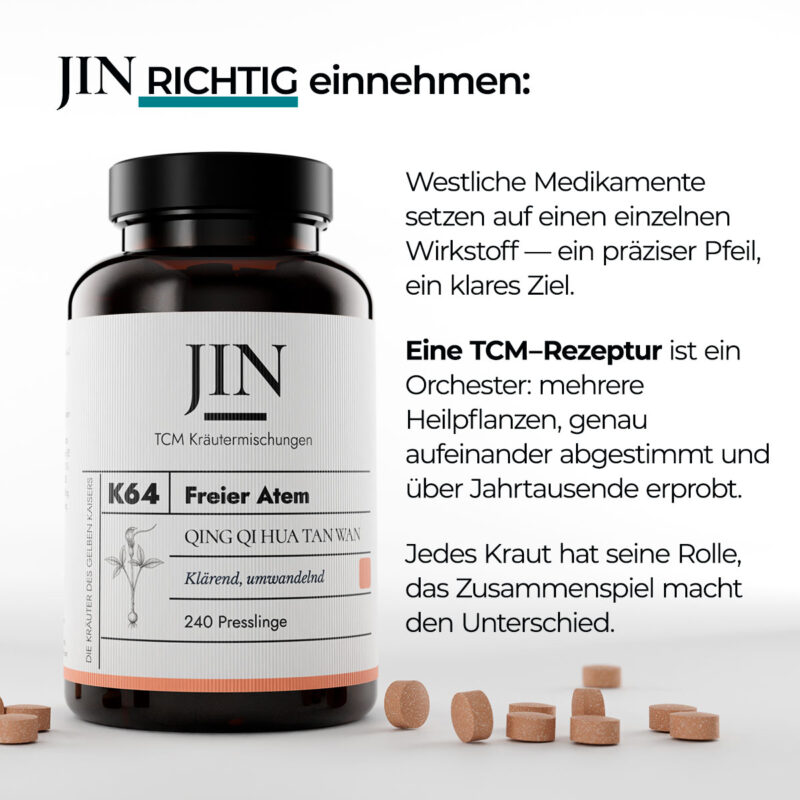
TCM herbs are the basis every classic TCM treatment. The carefully compiled mixtures have a synergistic effect — this means that the individual herbs reinforce each other's effects and balance out any possible side effects.
What modern medicine is only just discovering—the power of plant substances—has been used successfully by TCM for over 2,500 years.
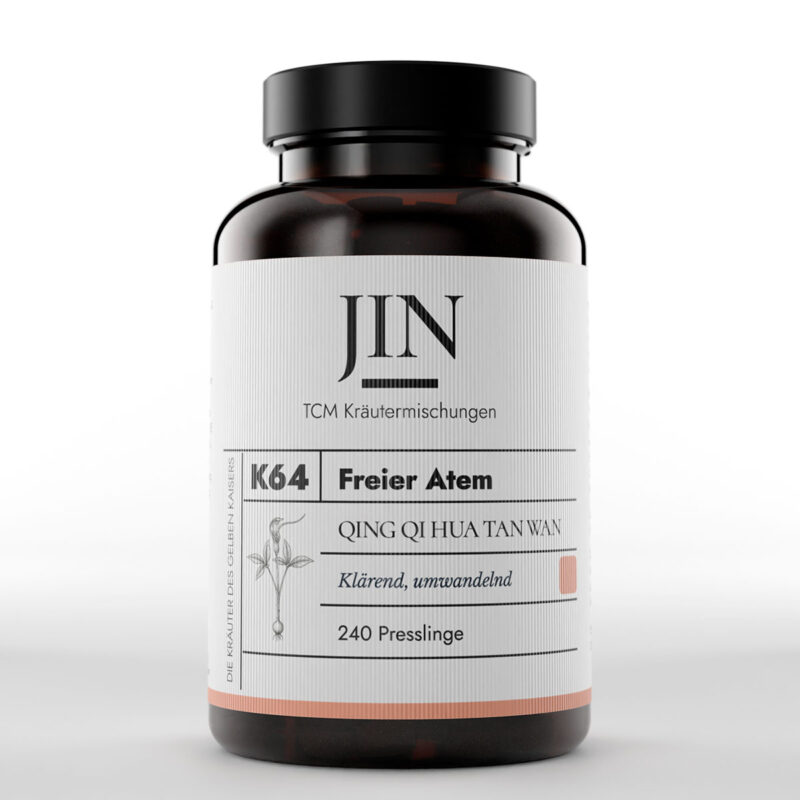
Empfohlene TCM–Kräutermischung bei Schleim–Hitze in der Lunge
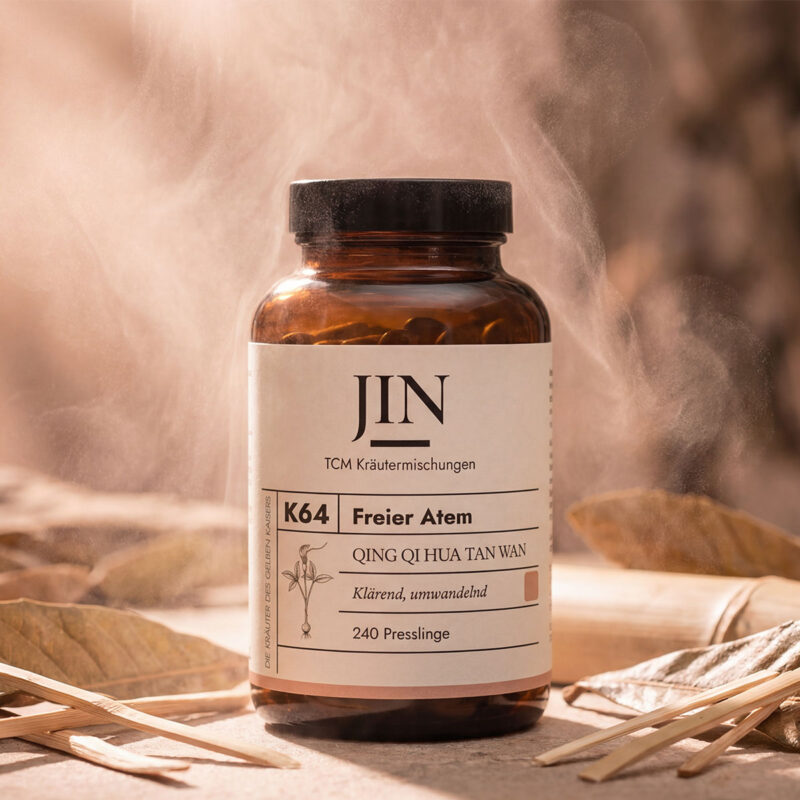
JIN K64 — Freier Atem
Die klassische Rezeptur Qing Qi Hua Tan Wan (清气化痰丸) — die „Pille zur Klärung des Qi und Umwandlung des Schleims“. Neun Kräuter, die heißen Schleim aus der Lunge lösen, das aufsteigende Qi absenken und die Brust befreien — bei gelbem, zähem Auswurf und verschleimter Hitze.
Mit Ban Xia als Hauptkraut wandelt diese Mischung den zähen Schleim um und senkt das Qi, während Gua Lou Pi und Huang Qin die Hitze klären, die den Schleim verklebt, und Jie Geng und Xing Ren die Atemwege befreien. Ideal bei Husten mit gelbem, zähem Auswurf, verschleimter, enger Brust, schwerem Atem und Hitzegefühl.
Quantity
239,70 €
i
To the product
The herbs in this recipeRecommended reading:How TCM herbal blends are formulatedLearn more now
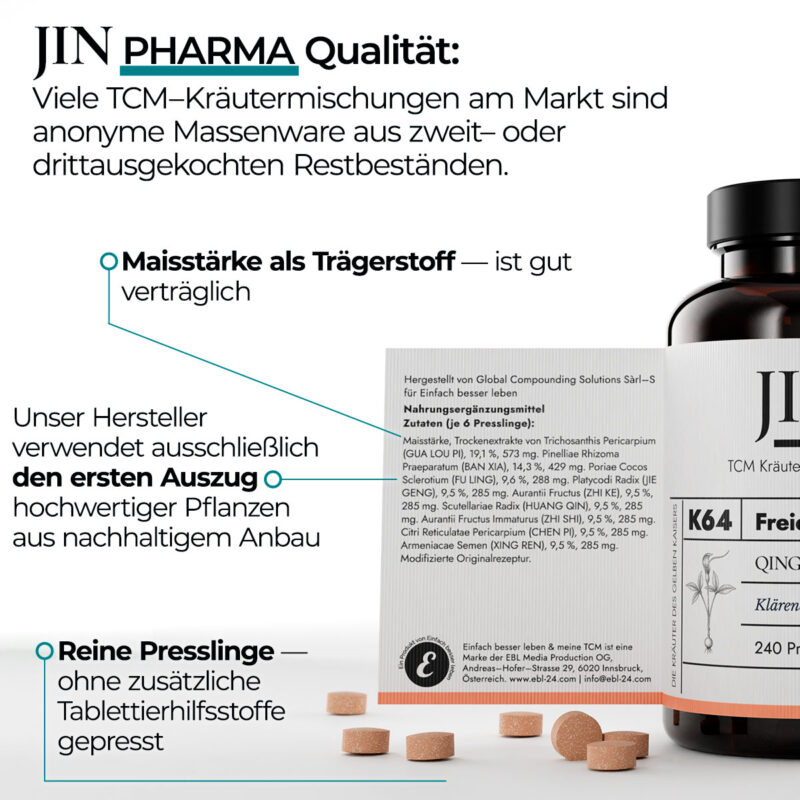
| Herb (Pinyin) | German designation | Function in the recipe |
|---|---|---|
| Ban Xia (Prepared Pinellia Rhizome) | Pinellia rhizome | emperor Trocknet Feuchtigkeit, wandelt Schleim um, senkt das aufsteigende Qi |
| Gua Lou Pi (Trichosanthis Pericarpium) | Schlangenkürbis–Schale | minister Klärt Hitze, wandelt heißen Schleim um, weitet die Brust |
| Huang Qin (Scutellariae Radix) | Baikal skullcap | minister Klärt die Hitze aus der Lunge, die den Schleim verklebt |
| Fu Ling (Poria cocos sclerotium) | Poria mushroom | assistant Stärkt die Milz und leitet Feuchtigkeit aus — die Quelle des Schleims |
| Jie Geng (Platycodi Radix) | Balloon flower root | assistant Öffnet das Lungen–Qi und treibt den Schleim nach oben aus |
| Zhi Ke (Aurantii Fructus) | bitter oranges | assistant Bewegt das Qi und weitet die Brust |
| Zhi Shi (Aurantii Fructus Immaturus) | Unripe bitter orange | assistant Bewegt das Qi kräftig nach unten und löst Schleim–Stauungen |
| Chen Pi (Pericarp of Citrus reticulata) | Tangerine peel | assistant Regulates the Qi and dries moisture |
| Xing Ren (Armeniacae Semen) | apricot pits | assistant Senkt das Lungen–Qi und stillt den Husten |
Explanation of the most important herbs
emperor Ban Xia (Pinellia) — The Slime Converter
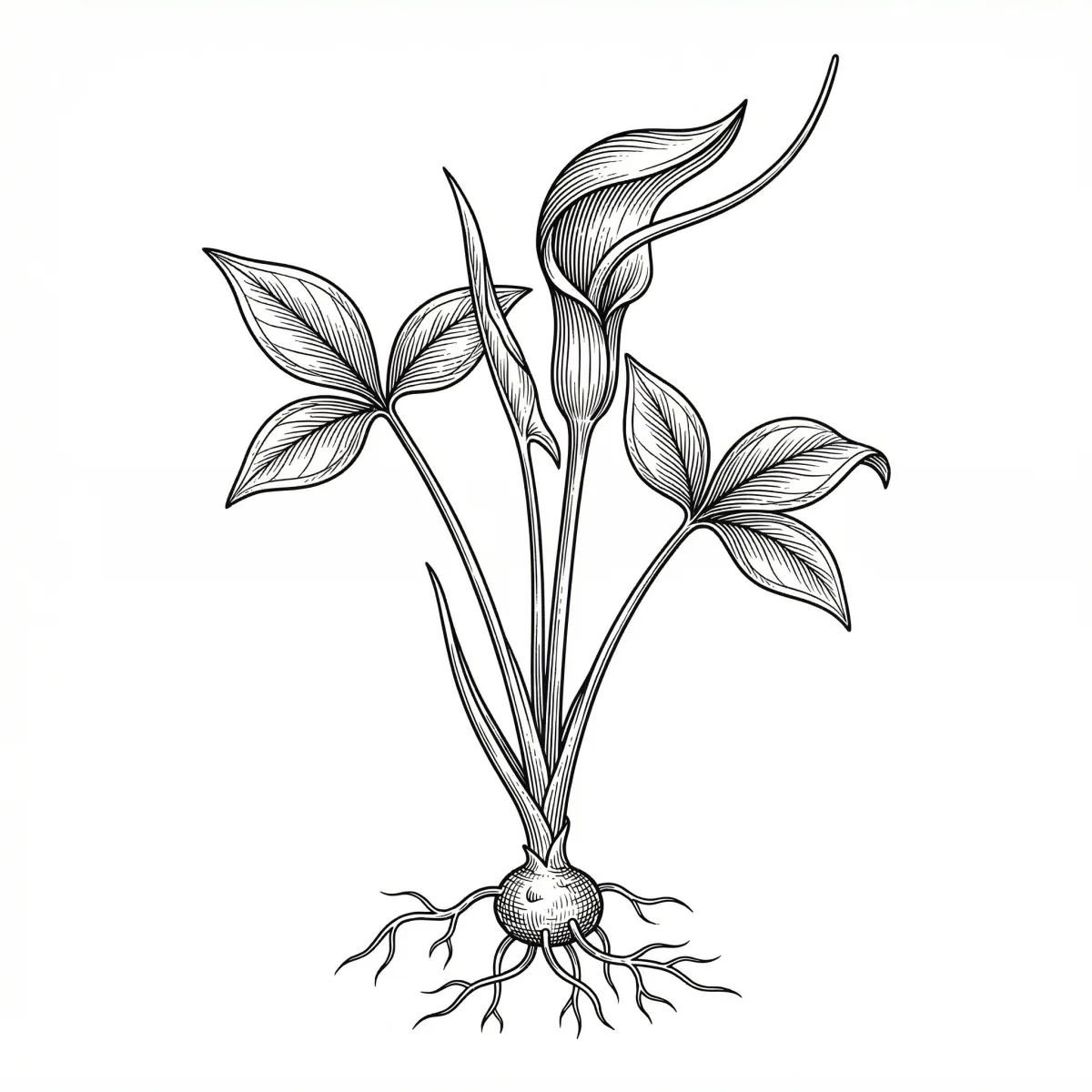
Ban Xia ist der Kaiser dieser Rezeptur — es trocknet Feuchtigkeit, wandelt Schleim um und senkt das aufsteigende Qi; der Kern jeder schleimlösenden Formel. Die Inhaltsstoffe des Pinellia–Rhizoms werden in Untersuchungen mit hustenstillenden und schleimlösenden Eigenschaften in Verbindung gebracht.
minister Gua Lou Pi (Schlangenkürbis–Schale) — Der Brust–Weiter
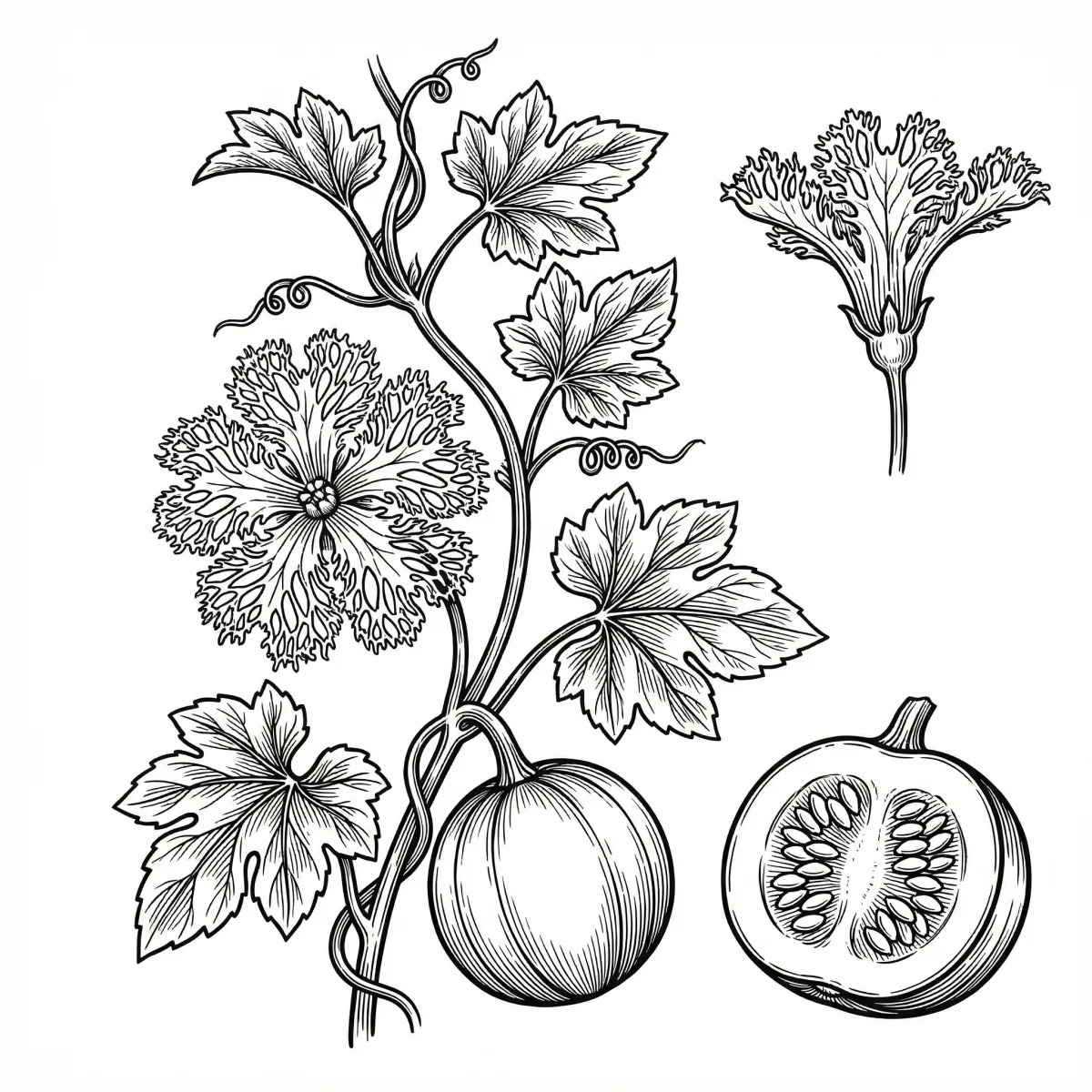
Gua Lou Pi klärt Hitze und wandelt heißen Schleim um — es weitet die Brust, löst das beklemmende Enge–Gefühl und macht zähen Schleim wieder beweglich. Die Inhaltsstoffe der Schlangenkürbis–Schale werden in Untersuchungen mit schleimlösenden und entzündungshemmenden Eigenschaften in Verbindung gebracht.
minister Huang Qin (Helmkraut) — Der Hitze–Kühler
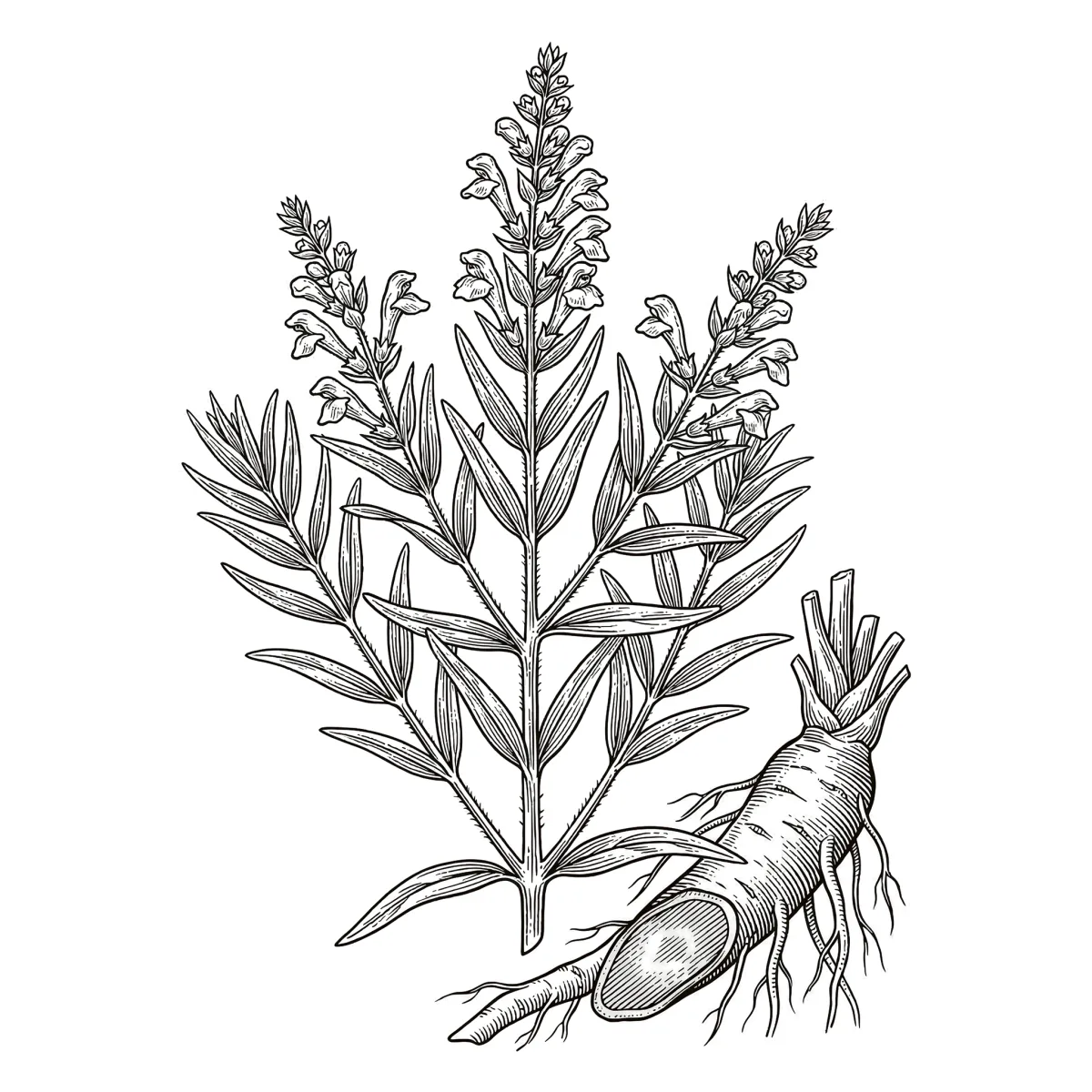
Huang Qin klärt Hitze aus der Lunge — es ist der „Qing Qi“–Teil der Rezeptur, der die Hitze löscht, die den Schleim verklebt und gelblich werden lässt. Baicalin und Baicalein des Baikal–Helmkrauts werden in Untersuchungen mit entzündungshemmenden Eigenschaften in Verbindung gebracht.
assistant Xing Ren (Aprikosenkern) — Der Husten–Stiller
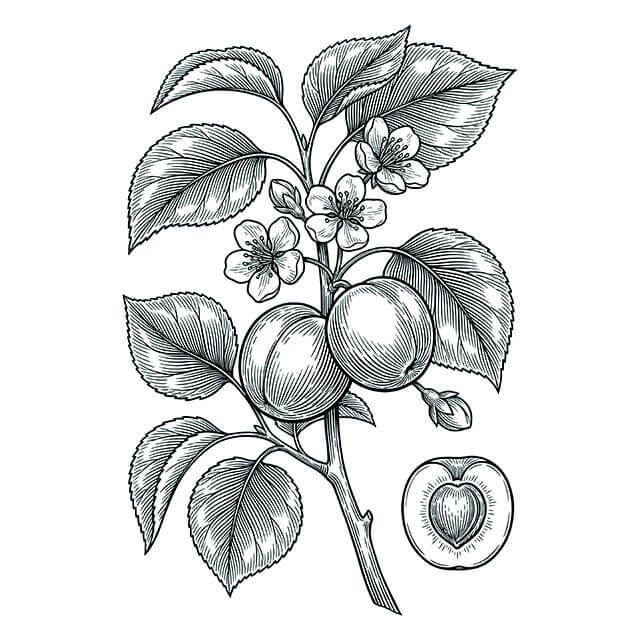
Xing Ren senkt das Lungen–Qi und stillt den Husten — es lenkt die Wirkung nach unten und unterstützt das Befreien der Atemwege. Die Inhaltsstoffe der Aprikosenkerne werden in Untersuchungen mit hustenstillenden Eigenschaften in Verbindung gebracht.
Recommended dosage
The dosage depends on the severity.
Based on your questionnaire results, we have highlighted the appropriate dosage for you below.
At light Severity:
- 2 tablets 3 times a day (morning, noon, and late afternoon) = 6 tablets per day
- Optional, if taking 3 doses a day is difficult for you: 3 tablets twice a day — same daily amount
- We recommend at least 2 cans, each containing 240 tablets (enough for about 12 weeks)
At middle Severity:
- 3 tablets 3 times a day (morning, noon, and late afternoon) = 9 tablets per day
- We recommend at least 3 cans, each containing 240 tablets (enough for about 12 weeks)
- If your condition improves, switch to the dosage recommendation for mild symptoms
At significantly Severity:
- 4 tablets 3 times a day (morning, noon, and late afternoon) = 12 tablets per day
- We recommend at least 4 cans, each containing 240 tablets (enough for about 12 weeks)
- If your condition improves, switch to the dosage recommendation for moderate severity
Why 3 times a day?
This ensures that the herbs' effects are evenly distributed throughout the day.
IMPORTANT:
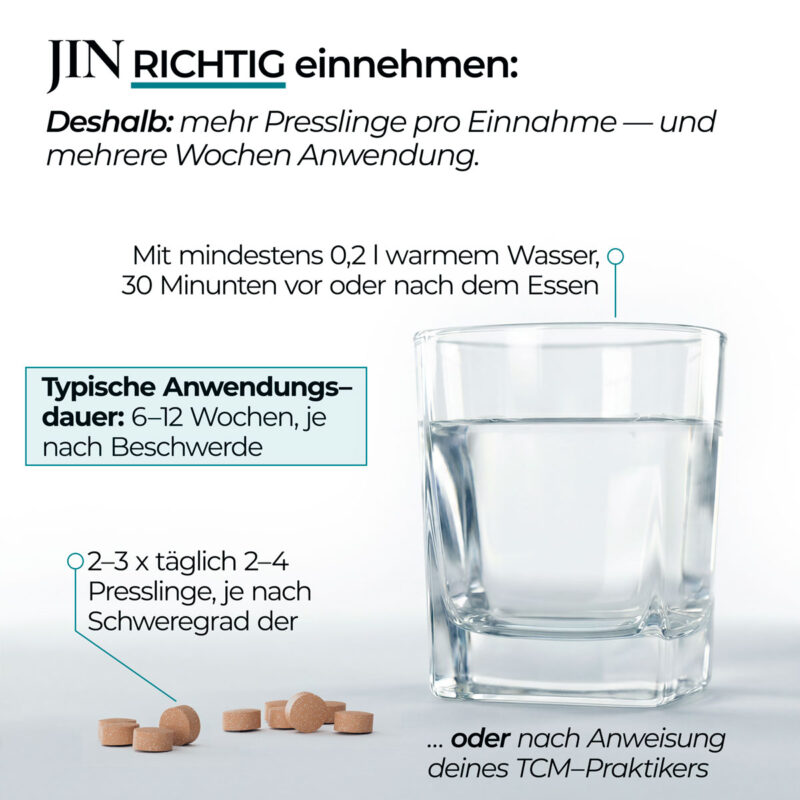
- Take the tablets with at least 0.2 liters of warm water
- Ideally, 30 minutes before or after a meal
- This suggestion is not a substitute for a medical diagnosis or treatment
- If you are pregnant or breastfeeding, have a chronic medical condition, or are taking medication, consult a doctor or a TCM practitioner beforehand.
- If you have a severe cold, fever, or diarrhea, stop taking this product
- Schleimbildende und erhitzende Speisen meiden — Milchprodukte, Süßes, stark Fettiges, Frittiertes und Alkohol
- Bei anhaltendem oder blutigem Husten, Atemnot oder hohem Fieber ärztlich abklären
If little has changed after about 12 weeks:
Herbs are just one part of TCM. Combine taking them with other practices—acupressure, qigong, Pilates, or yoga, BS+, as well as meditation and breathing exercises. Afterward, take a two-week break from taking the herbs. Then, if needed, you can TCM analysis try again and/or compare your result with your TCM practitioner or discuss it with your doctor.
If you have any questions about how to take it, please feel free to contact us.
Want to know what dosage is right for you? Take our free TCM questionnaire—in just a few minutes, it will reveal your personal TCM pattern and the appropriate dosage of the recommended TCM herbal blend.
BS+ for your intestinal flora
A healthy gut is the basis for your well-being. Current studies show that around 80 % of people in Germany consume too little fiber - yet it is the most important food for your intestinal flora (also known as the intestinal microbiome).
BS+ was developed to support your daily fiber supply. With 11 high-quality, natural ingredients BS+ offers your intestinal flora a diverse nutrient base.
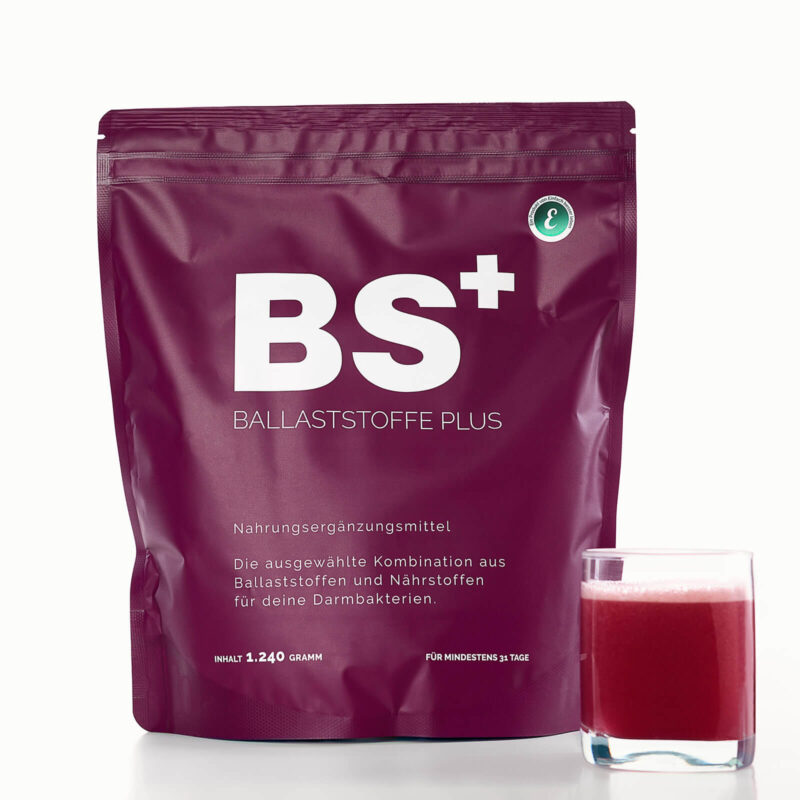
The revolutionary fiber formula
BS+ Dietary Fiber Plus
- Up to 20 g dietary fiber daily EXTRA
- Improved digestion and regular bowel movements
- Increased energy and vitality
- Better mood and mental clarity
- Support for your immune system
- Potential improvement in cholesterol and blood sugar levels
Simply stir into water twice a day - Your intestinal flora will thank you.
Why BS+ for mucus heat in the lungs?
According to TCM: „The spleen is the source of phlegm, the lungs are the storehouse of phlegm.“ In the case of phlegm-heat, internal heat also combines with the phlegm - it becomes viscous, yellow and difficult to dissolve. The root cause is often a weakened spleen that does not transform moisture properly. An intestine with impoverished intestinal flora further weakens spleen function and encourages the formation of moisture, which condenses into stubborn mucus when exposed to heat. Only when the intestine is healthy can the spleen fulfill its task again and stop the formation of mucus at the root.
BS+ delivers 11 prebiotic fibers and thus specifically supports the development of a diverse intestinal flora. A strong intestinal flora strengthens the transformative power of the spleen, reduces the formation of cloudy moisture and removes the breeding ground for mucus heat. At the same time, a healthy gut supports the immune system - this is particularly important as mucus heat in the lungs is often associated with recurring infections.
Particularly important for mucus heat in the lungs:
- Strengthens the spleen function via healthy intestinal flora - so that less moisture is produced, which can condense into hot mucus
- Supports the immune system and helps the body to clear the heat component and reduce susceptibility to infection
- Promotes efficient digestion so that cooling, expectorant foods such as radish, pear and mung beans can develop their full effect
Acupressure
Acupressure is acupuncture without needles. - you can apply them yourself at any time. By applying targeted pressure to specific points, you activate the energy flow in the meridians and help your lungs to clear heat and dissolve phlegm.
These three points form an effective combination for clearing heat and dissolving mucus in the lungs. Lu 10 clears the lung heat directly, Di 04 strengthens the immune system and Ma 36 strengthens the spleen - so that the root of the mucus formation is eliminated.
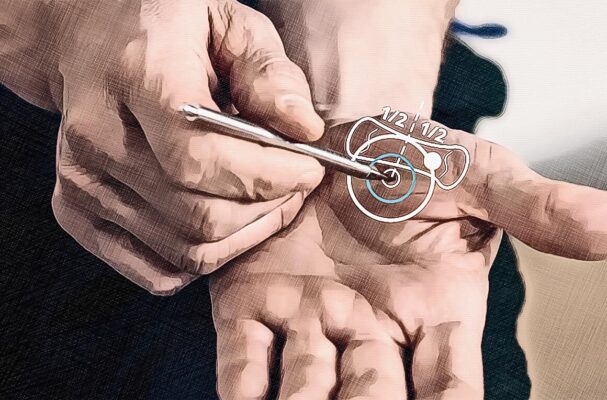
ACCESSION POINT: Lu 10
Lung 10
Fish belly limit - Yu Ji
- Clears heat in the lungs
- Relieves sore throat and hoarseness
- Helps with dry coughs with yellow phlegm
- Cools the lung fire
- Frees the throat and voice
Location: On the ball of the thumb, in the middle of the 1st metacarpal bone, on the border between red and white skin.
Application:
Massage twice daily for 2-3 minutes per side with firm pressure. Particularly effective for signs of heat.
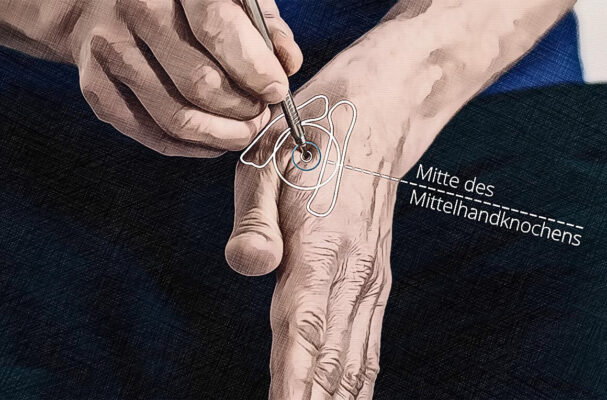
ACCESSION POINT: Tue 04
Large intestine 04
United Valleys - He Gu
- Clears heat and wind
- Strengthens the immune system (Wei Qi)
- Relieves headaches and fever
- Opens the nose and clears the airways
- Regulates the lung qi
Location: Between thumb and index finger, on the highest point of the muscle bulge when the hand is closed.
Application:
Press twice daily for 2-3 minutes per side with firm pressure. Do NOT use during pregnancy!
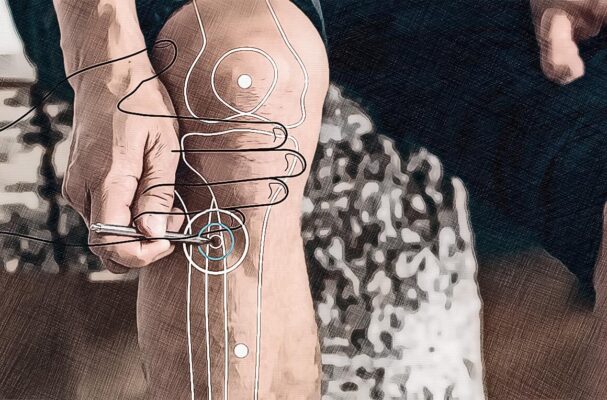
ACUPUNCTURE POINT: Ma 36
Stomach 36
Three miles of the leg - To San Li
- Strengthens the spleen and the immune system
- Eliminates the root of mucus formation
- Gives energy and strengthens the Zheng Qi
- Promotes the transformation of moisture
- Supports the defense against pathogenic factors
Location: A hand's width below the kneecap, a thumb's width to the side of the edge of the shinbone to the outside.
Application:
Press firmly twice a day for 2-3 minutes per side or massage with small circles.
TIP
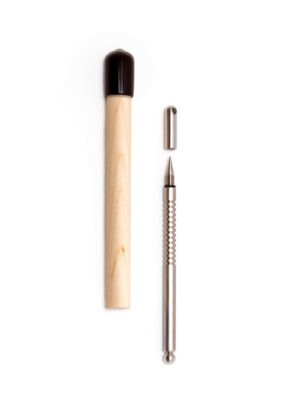
AkuPen
Acupuncture pen with video instructions
For even more intense stimulation You can use an AkuPen. The acupressure pen significantly enhances the effect of acupressure. With an extensive video library for over 80 acupuncture points.
Qi Gong
Qi Gong opens the chest - Gentle, flowing exercises that strengthen your lung function and support the spleen so that no new mucus is produced. When there is mucus heat in the lungs, these exercises help to expand the chest cavity, clear the airways and promote deep breathing.
Regular practice of Qi Gong (as little as 10-15 minutes a day) has been shown to have positive effects on lung function, mucus reduction and general well-being.
QI GONG: Exercise 1
Stretching the bow
Opens the chest cavity, strengthens the lungs

Particularly helpful for:
- Tightness in the chest
- Shortness of breath
- Weak lungs
- Mucus formation
Effect:
This metal element exercise opens the chest area wide and strengthens lung function. Stretching the chest area activates the lung meridian and helps to clear the airways.
QI GONG: Exercise 2
Regulate Qi
Regulates the flow of Qi, harmonizes the body

Particularly helpful for:
- Qi stagnation
- Unrest
- Digestive weakness
- Mucus formation
Effect:
This exercise regulates the flow of Qi throughout the body. It helps the lungs to distribute Qi correctly and supports the spleen in transforming fluids - thus preventing the formation of new phlegm.
QI GONG: Exercise 3
Warm the center
Strengthens the spleen, dissolves moisture

Particularly helpful for:
- Digestive weakness
- Moisture accumulation
- Fatigue
- Mucus formation
Effect:
This earth element exercise strengthens the spleen - the root of phlegm production. A strong spleen transforms fluids correctly and prevents new phlegm from forming.
These Qi Gong exercises are specially selected to dissolve mucus heat in the lungs. They open up the chest cavity, strengthen lung function and support the spleen so that no new mucus is produced.
The best time to exercise is between 3 and 5 a.m. - this is the lung time in the organ clock. Practical and equally effective for strengthening the spleen is the morning between 7 and 9 a.m. (stomach time).
QI GONG:
When and how often?
In the morning or in the morning (ideal):
- All 3 exercises as a sequence: approx. 15–20 min.
- Or just 1–2 exercises: approx. 5–10 min.
- Best between 7 and 9 am (stomach time) to strengthen the spleen
In between:
- Individual exercises if required (e.g. if you feel tight in your chest)
- „Tighten the bow“ for rapid opening of the airways
Regularity is more important than duration:
- It is better to exercise for 10 minutes every day than for 60 minutes once a week.
- After 2–3 weeks, you will notice the first changes.
- After 2-3 months of regular practice: significantly freer breathing
Pro tip: Breathing exercises are particularly important when you have mucus heat. Breathe in deeply and exhale for a long time during all exercises - this helps to mobilize the mucus. Avoid intense exertion that causes you to sweat profusely.
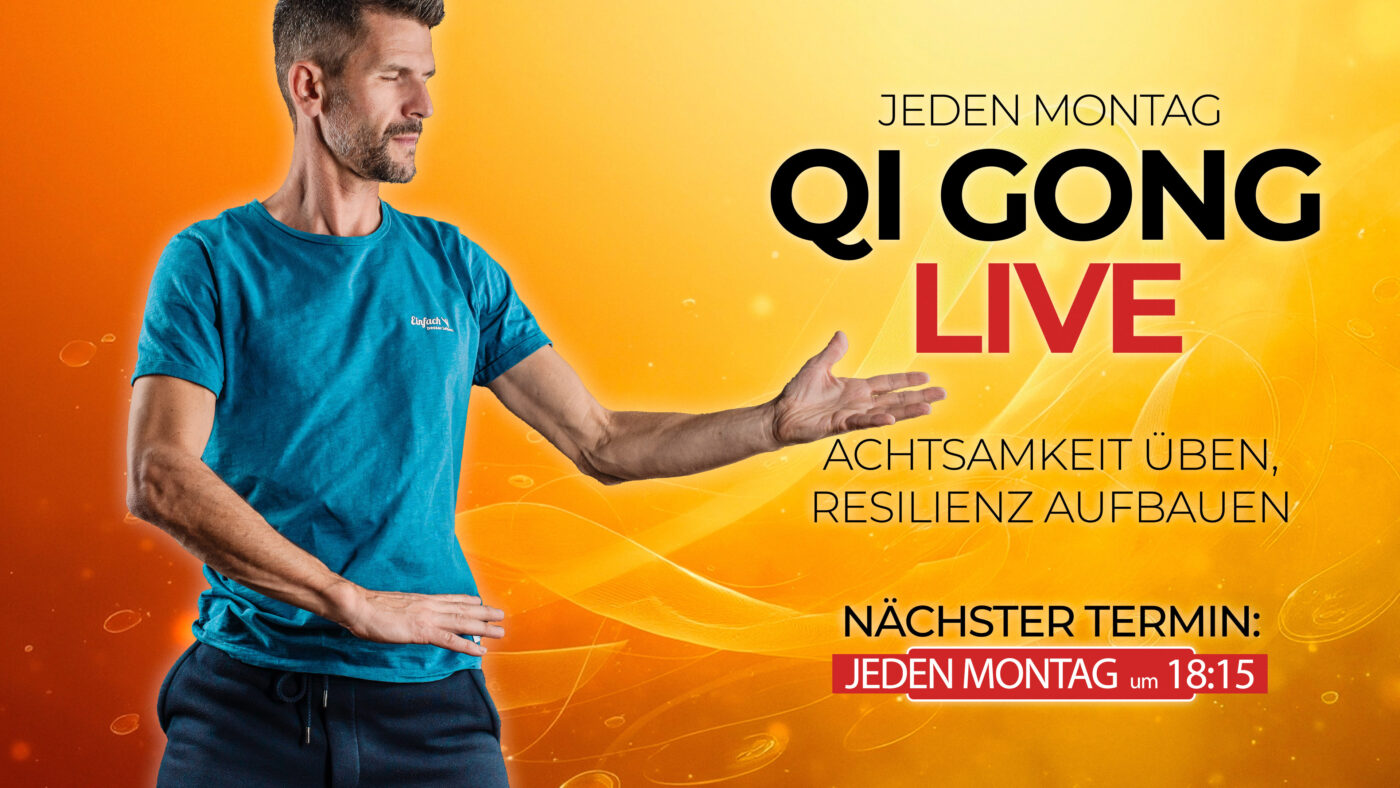
LIVE EVERY MONDAY: QI GONG WITH WOLFGANG
Every Monday at 6:00 p.m. Let's practice together live on YouTube. Among other things, Wolfgang will guide you through a complete qigong sequence — free of charge and suitable for all levels.
Why participate live? ✓ Practicing together is motivating ✓ Wolfgang explains the exercises in detail ✓ You can ask questions in the live chat ✓ Regular appointments help with your routine
More about Qi Gong LiveMeridian Yoga — The Yoga of TCM
Meridian Yoga combines yoga with traditional Chinese medicine. The result is a holistic exercise concept for better health and more energy.
The following exercises specifically activate the lung meridian - because the lung governs Qi and breathing. If there is phlegm heat in the lungs, activating this meridian helps to loosen the phlegm and restore free breathing.
MERIDIAN YOGA: Exercise 1
Makko Ho lung stretch for the lung meridian
Opens the chest, clears the airways

Particularly helpful for:
- Breathing problems
- Tightness in the chest
- Lung diseases
- Grief and letting go
Effect:
Classic Makko Ho exercise that stretches and activates the lung meridian. Opens the chest and supports the distribution function of the lungs. Helps to clear the airways in case of mucus-heat.
MERIDIAN YOGA: Exercise 2
Lung stretch for the lung meridian
Stretches the lung meridian on the inside of the arm

Particularly helpful for:
- Breathing problems
- Shoulder tension
- Chest tightness
- Immunodeficiency
Effect:
Targeted stretching of the lung meridian on the inside of the arm. Activates the flow of Qi in the lungs and supports the immune system. Particularly helpful for phlegm blockages in the chest area.
Both exercises activate the lung meridian, which runs along the inside of the arm and is connected to the lungs. The lung governs Qi and breathing - by activating this meridian, you support both phlegm clearance and free breathing.
Particularly effective: Hold each position for 3-5 breaths, visualizing fresh, clear energy flowing into your lungs with each inhale and expelling phlegm and heat with each exhale.
MERIDIAN YOGA:
When and how often?
Best time:
- Between 3 and 5 a.m. (lung time) or in the morning after getting up
- Also effective in the evening before going to bed to open the chest
Duration:
- Hold each position for 3–5 breaths.
- Complete sequence: 10-15 min.
- 3–5 times per week for best results
Important:
- Practice in a quiet, well-ventilated atmosphere
- Breathe deeply and slowly during the positions
- Stretching should be comfortable, never painful.
Pro tip: Combine Meridian Yoga with Qi Gong breathing exercises. Opening, stretching exercises are ideal for phlegm-heat. Breathe in deeply during the positions and imagine how the phlegm is released and the heat is expelled with every exhalation.
Nutrition according to TCM
„Let food be your medicine.“ - This principle has been valid in TCM for thousands of years. In the case of phlegm-heat in the lungs, the right diet is crucial to dissolve the hot phlegm and clear the heat.
The lungs belong to the element Metal, mucus is often caused by a weakened immune system. Earth (spleen). The diet should Cooling, light and expectorant be - anything that generates moisture or heat must be avoided.
What you eat, HOW you eat and WHEN you eat - all of this affects your phlegm, your lungs and your energy.
The golden rules for slime heat
What is good for you:
Expectorant foods
- Radish (top expectorant!)
- Daikon radish - particularly effective
- Dandelion - bitter and cooling
- Cress - pungency dissolves mucus
Radish is the classic remedy for mucus in the lungs!
Cooling food
- Pear (cooked) - cools and moisturizes the lungs
- Watermelon (moderate) - cools heat
- Cucumber - light and refreshing
- Celery - removes moisture
Boiled pear is the TCM home remedy for the lungs
Seaweed and algae
- Kombu - dissolves mucus and removes moisture
- Wakame - rich in minerals and cooling
- Nori - easily digestible
Algae are powerful expectorants in TCM
Legumes
- Mung beans - cooling and detoxifying
- Adzuki beans - remove moisture
- Lentils - strengthen the spleen
Legumes strengthen the spleen and prevent mucus formation
What you should avoid:
Dairy products
- Milk - produces mucus!
- Cheese - particularly mucilaginous
- Yogurt - cold and moist
- Cream - strains the spleen
Dairy products are the biggest mucus producer!
Fried and greasy foods
- French fries and chips
- Roasted meat
- Fat sauces
- Fast food
Fat generates heat and moisture - both nourish the mucus!
Sweets and white flour
- Cakes and pastries
- White bread and rolls
- Sugar and sweets
- Soft drinks
Sweets and white flour nourish the mucus directly!
Alcohol
- Beer - particularly mucus-forming
- Wine - generates moist heat
- Spirits - turn up the heat
Alcohol creates damp heat and aggravates the condition!
HOW YOU SHOULD EAT:
Light and cooked
- Moderately warm meals - not too hot, not cold
- Prefer soups and broths - easy to digest
- Vegetables steamed or boiled
- Small portions, eat regularly
Drink properly
- Plenty of warm water or herbal tea
- Chrysanthemum tea - cools and clarifies
- Peppermint tea - opens the lungs
- Do not drink with meals
Warm liquid helps to loosen the mucus!
IDEAL MENU FOR ONE DAY:
Breakfast (7–9 a.m.):
- Congee with radish or millet porridge with boiled pear
- In addition: Chrysanthemum tea or warm water
Lunch (12–1 p.m.):
- Steamed vegetables with rice
- In addition: Vegetable broth with seaweed
- Or: Broccoli with tofu and rice
Dinner (6–7 p.m.):
- Light vegetable soup
- Or: Rice with steamed broccoli
- In addition: Warm herbal tea
Snack if needed:
- Pear (cooked)
- Or: Chrysanthemum tea
- Or: A few radish slices
The most important rule when changing your diet is:
Start with ONE step!
Don't change everything at once.
Our suggestion for getting started:
- Consistently avoid dairy products - 2 weeks
- Eat radish or cooked pear daily - 2 weeks
- Reduce fried foods, sweets and alcohol - 2 weeks
Step by step, you will notice how the mucus loosens, the heat subsides and you can breathe more freely again.
Your lungs will thank you!
RECIPE: RADISH AND PEAR SOUP
Ingredients:
For 4 portions
- 400 g white radish
- 2 pears
- 1 L vegetable stock
- 3 slices of fresh ginger
- salt to taste
Preparation:
- Peel and dice the radish
- Peel and core the pears and cut them into pieces.
- Boil the vegetable stock with ginger
- Add the radish and pears
- Simmer for 25 minutes over a low heat
- Puree lightly until creamy
- Season with salt, serve warm
Effect:
Dissolves mucus and clears the airways
Cools the lungs and gently moisturizes them
Easily digestible and beneficial
2-3 times a week - expectorant and cooling!
RECIPE: MUNG BEAN SOUP WITH SEAWEED
Ingredients:
For 4 portions
- 200 g mung beans
- 1 strip of kombu
- 1 L water
- Some spring onion
- salt to taste
Preparation:
- Soak the mung beans in water for 4 hours
- Cut the kombu into small pieces
- Add 1 liter of water to the mung beans and kombu
- Bring to the boil and simmer over a low heat for 40 minutes
- Cook until the beans are soft
- Season with spring onion and salt to taste
- Serve warm
Effect:
Clears heat and detoxifies the body
Drains moisture and loosens mucus
Strengthens the spleen and prevents new mucus formation
2-3x per week - heat clarifying and expectorant!
Breathing
Breathing is the bridge between body and mind. In TCM, we say: „The lungs govern qi“ — through conscious breathing, you can directly influence your energy flow, harmonize all organ systems, and activate your self-healing powers.
Studies show: Proper breathing activates the parasympathetic nervous system (rest & regeneration), massages the internal organs from within, improves oxygen supply, and reduces stress hormones. The good news: Just 5–10 minutes a day can have a measurable effect on your overall well-being.
Recommended breathing techniques
ABDOMINAL BREATHING — The basis for every breathing technique
Natural breathing
Abdominal breathing is the most natural and effective form of breathing. With every breath, you massage your internal organs, activate the flow of energy, and bring qi to the center of your body (dantian).
Wolfgang shows you step by step, How to learn abdominal breathing correctly—lying down to start with, then later also sitting and standing.
Duration: 9 minutes

4–7–8 BREATHING — Calms you down immediately
Breathing to fall asleep and combat inner restlessness
4–7–8 breathing (inhale for 4 seconds, hold for 7 seconds, exhale for 8 seconds) is known as a „natural sedative.“ This special rhythm calms your nervous system in just a few minutes—perfect for stress, racing thoughts, or trouble falling asleep.
Perfect for the evening or whenever you want to calm down quickly.
Duration: 9 minutes
To the interactive videoBOX BREATHING — For inner coherence
Professional breathing for focus and calmness
Box Breathing (4 seconds on, 4 seconds hold, 4 seconds off, 4 seconds hold) combines activation and relaxation in perfect balance. This method is used by elite soldiers, athletes, and executives to remain calm and focused even in extremely stressful situations.
Train your CO₂ tolerance and brings the heart, breathing, and nervous system
into a harmonious state.
Duration: 9 minutes
To the interactive videoCOHERENT BREATHING — Harmonizes body & mind
Breathing against burnout
With coherent breathing You breathe in for 5.5 seconds and out for 5.5 seconds. This rhythm brings your heart and breathing into perfect synchrony—a state that science refers to as „coherence.“ This method is also used in clinics for burnout treatment and stress reduction.
Proven to improve Heart rate variability (HRV) — the most important marker for stress resistance, health, and life expectancy.
Duration: 14 minutes
To the interactive video
COHERENT BREATHING Around the clock
Our 24/7 livestream on coherent breathing runs non-stop. You can tune in at any time and join in right away.
Perfect for:
✓ Spontaneous breaks to catch your breath in between
✓ If you need help breathing
✓ As background while working
✓ For falling asleep (calms the nervous system)
✓ For regular daily practice
relaxation
When your body is relaxed, all organ systems can function optimally. Chronic tension blocks your body's self-healing powers and keeps you in a state of constant stress. Through targeted relaxation techniques, you activate the parasympathetic nervous system and send your body the signal: „Now I can regenerate, heal, and build strength.“
Progressive muscle relaxation is one of the most researched relaxation methods and has been used successfully for over 100 years. It helps you to recognize tension, actively release it, and achieve a state of deep relaxation—whenever you want.
Recommended relaxation technique
PROGRESSIVE MUSCLE RELAXATION (PMR)
The scientifically proven relaxation method
Progressive muscle relaxation according to Jacobson is one of the most widely researched relaxation techniques worldwide. By deliberately tensing and relaxing individual muscle groups, you learn to consciously perceive tension and actively release it.
Proven effect:
Lowers blood pressure, improves sleep, reduces chronic pain, relieves tension, and activates self-healing powers. Successfully used by psychologists to treat anxiety disorders, depression, and chronic pain.

Maria guides you step by step through the entire exercise—perfect for beginners and advanced practitioners alike.
Duration: 23-minute complete guide
To the guided PMRMeditation
Meditation calms the mind — and a calm mind harmonizes the body. In TCM, we know that every emotion affects a specific organ. Through regular meditation, you learn to break out of destructive thought patterns, find emotional balance, and strengthen your inner core.
Modern studies confirm: Meditation has been proven to change brain structure, reduce stress hormones, strengthen the immune system, and improve self-healing powers. Just 10 minutes a day can change your life forever.
Recommended meditations
GUIDED MEDITATIONS FOR EVERY DAY
Your personal meditation library
We have a complete Playlist with over 60 guided meditations, breathing exercises, and relaxation techniques—from short 5-minute meditations for in between to deep 30-minute sessions for intensive practice.
In the playlist you will find:
- Morning meditations for a mindful start to the day
- Meditations for restful sleep
- Breathing meditations for inner peace
- Meditations against stress, brooding, and worries
- TCM standing meditations for all 5 elements
- Body scan and body journeys
- Healing meditations to activate self-healing powers
- Special breathing techniques (4–7–8, coherent breathing, bee breathing)

Perfect for beginners and advanced practitioners. Choose the right meditation for you depending on your time, the time of day, and your needs.
To the meditation playlistWhen heat and phlegm oppress the lungs, the breath of life falters.
Clear the heat, dissolve the phlegm - and the lungs breathe freely again. The clear flow of Qi returns and the body finds its purity.
- Loosely based on the HUANG DI NEI JING
(The Yellow Emperor's Classic of Internal Medicine)
More tips for your everyday life
In addition to traditional TCM treatment methods there are many everyday habits that help to dissolve mucus and heat in the lungs. The lungs love purity and fresh air - with the right habits you can support their healing.
Breathing exercises and fresh air
Conscious deep breathing
Deep breathing opens the lungs and releases stagnation:
- Breathe in deeply and slowly 3-5 times a day for 5 minutes
- Breathe in through your nose, breathe out through your slightly open mouth
- Consciously breathe longer when exhaling than when inhaling
- Best practiced at an open window or outside
Abdominal breathing
Strengthens the diaphragm and improves lung ventilation:
- Place your hand on your stomach and feel how your stomach rises and falls
- Gently arch your stomach outwards as you inhale
- Gently pull your stomach inwards as you exhale
- Practice daily for 5-10 minutes - preferably in the morning and evening
Out into the fresh air
The lungs need fresh, clean air:
- Daily walks in the fresh air
- Open windows, ventilate rooms regularly
- Ventilate in the morning and evening in particular
- Forest walks are particularly beneficial for the lungs
Steam inhalation
Dissolves mucus and clears the airways:
- Inhale 1-2 times a day with thyme, eucalyptus or camomile
- Hot water in a bowl, towel over your head, inhale for 5-10 minutes
- Not too hot - choose a comfortable temperature
- Stay warm after inhaling and do not go outside immediately
Avoid mucus - strengthen the spleen
Hot meals
The spleen loves warmth - and a strong spleen does not produce mucus:
- Prefer cooked food, avoid raw food
- Also eat breakfast warm (porridge, congee, soup)
- Avoid cold drinks - they weaken the spleen
- Soups and stews are ideal for eliminating mucus
Consistently avoid dairy products
Milk is the No. 1 mucilage-forming agent in TCM:
- Consistently avoid milk, cheese, yogurt, cream and quark
- Use plant-based alternatives such as oat milk or rice milk
- Also watch out for hidden dairy products in ready meals
- Noticeably less mucus after just 1-2 weeks
Eat regularly
The spleen likes rhythm and regularity:
- 3 meals at fixed times
- Biggest meal at lunchtime, eat light and early in the evening
- Don't eat too late in the evening - the spleen needs rest at night
- Reduce snacks between meals
Avoid brooding
Worry and brooding weaken the spleen:
- Excessive thinking depletes the spleen energy
- Don't work or watch the news while eating
- Breaking through spirals of worry - through exercise or distraction
- Meditation and mindfulness help to calm the mind
Avoid heat
No alcohol
Alcohol generates damp heat in the body:
- Consistently avoid alcohol in any form
- Beer and wine in particular generate moisture and heat
- Even small amounts increase the mucus heat
- Instead, drink cool teas such as chrysanthemum or peppermint tea
No smoking
Smoking directly damages the lungs:
- Smoking is the biggest burden on the lungs
- E-cigarettes and shisha also pollute the airways
- Avoid passive smoking - even indoors
- After quitting, the lungs regenerate step by step
No hot spices in excess
Spicy food intensifies the inner heat:
- Chili, pepper, curry - increase the heat in the lungs
- Garlic and onions only in small quantities
- Prefer mild spices such as turmeric or cardamom
- Ginger only in small quantities - it is also warming
No fried food
Deep-frying generates heat and moisture:
- Consistently avoid chips, potato chips and fried snacks
- Also avoid breaded dishes and fast food
- Instead, steam, boil or lightly fry
- Reduce fatty meat - it produces moisture and mucus
Reduce stress
Emotional stress generates inner heat:
- Constant stress and anger create liver fire that attacks the lungs
- Plan regular relaxation - Qi Gong, meditation, walks
- Resolving conflicts instead of swallowing them
- Sufficient sleep - at least 7-8 hours
Environment and air quality
Air humidity
The right humidity protects the airways:
- 40-60% Humidity is optimal for the respiratory tract
- Use a humidifier for dry heating air
- Laying wet cloths over the heating as a simple solution
- Avoid excessive humidity - promotes mold growth
Keep dust free
Clean air relieves the lungs:
- Regular damp mopping instead of dry sweeping
- Use air purifier with HEPA filter if required
- Wash bed linen regularly at 60°C
- Clean carpets and curtains regularly
Avoid allergens
Allergens irritate the airways and increase mucus:
- Avoid pollen, mold and animal hair as much as possible
- Keep windows closed when pollen is flying
- Wash hair and change clothes after spending time outdoors
- Use mattress and pillow covers for allergy sufferers
Do not smoke and avoid passive smoking
Smoke is poison for the lungs:
- Creating a smoke-free environment - at home and at work
- Ventilate rooms thoroughly after contact with smoke
- Change smoking clothes immediately
- Incense sticks and candle smoke also pollute the lungs
Important to know
The dissolution of mucus heat in the lungs requires consistency and patience. The most important step is to change your diet - avoid mucus-forming foods and prefer cool, light food. At the same time, breathing exercises and fresh air help to actively cleanse the lungs. Pay attention to your body's signals: if the mucus becomes less and your breathing freer, you are on the right track.
When to see a doctor? If you have a high fever of over 39°C, purulent phlegm, blood in the sputum, severe shortness of breath or symptoms that last longer than 3 weeks, you should definitely consult a doctor. TCM and Western medicine complement each other perfectly here - medical clarification is particularly important for severe or persistent cases.
For optimal treatment progress
TCM is not a quick fix for symptoms., but rather a holistic healing process. You will achieve the best results if you consistently integrate the treatment into your daily routine and give your body time to regenerate.
Integration into everyday life
Start with ONE step
Don't try to change everything at once! That's overwhelming and leads to
usually leads to you giving up. Instead:
- Week 1-2: Consistently avoid dairy products, fried foods and mucus-forming foods
- Week 3-4: Acupressure Lu 10 and Tue 04 daily
- Week 5-6: Qi Gong „Drawing the bow“ daily 10 min.
- Week 7-8: Supplement TCM herbal mixture
- From week 9: Add further methods as required
Realistic expectations
After 2–3 weeks: First improvements noticeable
- Less viscous mucus
- Breathe easier
- Less feeling of heat in the chest
After 6–8 weeks: Significant improvements
- Significantly less phlegm and coughing
- Freer breathing and more stamina
- Heat signs are decreasing
After 3–6 months: Sustainable healing
- Lungs feel free and clear
- Mucus and heat are permanently dissolved
- Immune system is strengthened and more resistant
TCM vs. Western medicine
TCM and Western medicine are not mutually exclusive—they complement each other!
When Western medicine is important:
- In acute emergencies
- In case of structural damage
- In case of infections
- For accurate diagnoses (laboratory, imaging)
Where TCM has its strengths:
- In case of functional disorders
- For chronic complaints
- For prevention
- For holistic healing
Ideal: Combine both systems! Use Western medicine for
Acute treatment and accurate diagnosis, TCM for lasting healing
and strengthening the body's self-healing powers.
Important: Never stop taking prescribed medication without consulting your doctor first!
Talk to your doctor when you start TCM treatment.
TCM diagnosis for professionals
Syndrome differentiation according to TCM:
Tongue: Red, swollen body, thick yellow sticky coating, possibly tooth impressions
Pulse: Slippery (Hua Mai), fast (Shuo Mai), possibly full (Shi Mai)
Pathomechanism:
The spleen is weakened in its transformation function and cannot convert the body fluids correctly. Dampness develops and condenses into phlegm. Internal Heat - caused by Liver-Qi stagnation, external pathogenic factors or a damp and hot diet - combines with Phlegm to form Phlegm-Heat. This hot phlegm is deposited in the lungs, blocking their distributing and descending function and damaging the lung fluids. The lung qi can no longer circulate freely, resulting in a productive cough with yellow, viscous phlegm, chest tightness and shortness of breath.
Treatment principle:
Qing Re Hua Tan, Xuan Fei Zhi Ke (清热化痰,宣肺止咳) - clearing heat, transforming phlegm, opening the lungs and quelling coughs
Classic recipe:
Qing Qi Hua Tan Wan (pill for clearing qi and transforming phlegm) as the main prescription for phlegm heat in the lungs
Important modifications depending on accompanying symptoms:
- For severe cough with yellow, viscous phlegm: + Huang Qin (Scutellariae Radix), Zhu Ru (Bambusae Caulis) = Wen Dan Tang modification
- For high fever and purulent phlegm: + Yu Xing Cao (Houttuyniae Herba), Jin Yin Hua (Lonicerae Flos) = Ma Xing Shi Gan Tang modification
- For dry cough after heat damage to Yin: + Bei Mu (Fritillariae Bulbus), Mai Men Dong (Ophiopogonis Radix) = Bei Mu Gua Lou San
- For Spleen-Qi deficiency as root cause: + Dang Shen (Codonopsis Radix), Bai Zhu (Atractylodis Macrocephalae Rhizoma) = Liu Jun Zi Tang supplementation
Every step counts
Your body WANTS to heal—you just have to create the right conditions for it to do so.
Remember:
👣 Every little step counts
You don't have to be perfect. Even one warm meal a day is better than none. Even 5 minutes of qigong is better than no exercise at all.
⏳ Patience pays off
It took years for your body to get into this state. Give it time to regenerate. Healing takes time, but it WILL happen.
🎯 Focus on what you can DO
Don't concentrate on what you are doing „wrong". Focus on every positive step you take.
💚 Be good to yourself
Perfection does not exist. It is acceptable to have an off day occasionally. Tomorrow is a new day when you can continue.
🤝 You are not alone
Thousands of people are walking this path with you. For over 2,000 years, TCM has been helping people like you who want to regain their health.
Measure your healing progress

To track your progress with treatment, we recommend that you repeat the TCM analysis after about 3 months.
Why is this important?
- You can see how your condition has improved.
- You can adjust the treatment as needed.
- It motivates you to keep going
- You recognize which measures work best
⚠️ Important: Your answers today will be stored in encrypted form in a code that you received by email. You can only measure your progress later with this code. Keep the email safe!
Activate reminder:
<>In 12 weeks, you'll receive an email with a link to the TCM analysis. When you fill it out, you can enter your personal health code—then you'll see a comparison overview at the end:
→ Your new values
→ Your scores from today's test
→ Direct changes
This allows you to see at a glance whether your symptoms
have improved!
🔒 YOUR DATA IS SAFE
We store:
✓ Only your email address for reminders
✓ The date for shipping
We do NOT store:
✗ Your analysis results
✗ Your personal health data
✗ The connection between email and diagnosis
All analysis data is completely anonymous and is not linked to your email address.

Newsletter
Stay up to date with our newsletter. Besides useful tips and tricks for training and your everyday life, you won't miss any of our new releases.
We are here for you
Do you have questions about your diagnosis or treatment?
Not sure which method is right for you?
Contact us — We're happy to help!