







On this page, you will learn:
- What this diagnosis means from the point of view of TCM and Western medicine
- Where your symptoms come from and how they are connected
- Which specific treatment methods can help you now
- How you can strengthen your defensive qi and resilience with TCM herbs, acupressure, qi gong, and nutrition
The good news: A Wei-Qi deficiency can be treated effectively with the right measures. You can rebuild your Wei-Qi with targeted exercises, an immune-boosting diet, and acupressure.
Take your time, Get to know the different treatment approaches—you don't have to implement everything at once. Choose what feels right for you and what you can easily integrate into your everyday life.
Your treatment at a glance:
Which TCM pattern is really behind your complaints?
Degree of
imbalance

Light to moderate
Typical
treatment duration

3–4 months
self-treatment
Possible

Can be treated yourself with instructions
Treatment–
scope

2–3 methods
Proposed
methods

Extensive range
Our free TCM analysis shows you your personal TCM pattern in just 10 minutes - and which treatment will help you best.
What is a Wei-Qi deficiency?
When your defenses weaken and you become vulnerable
The TCM perspective: The guardian at the body's surface
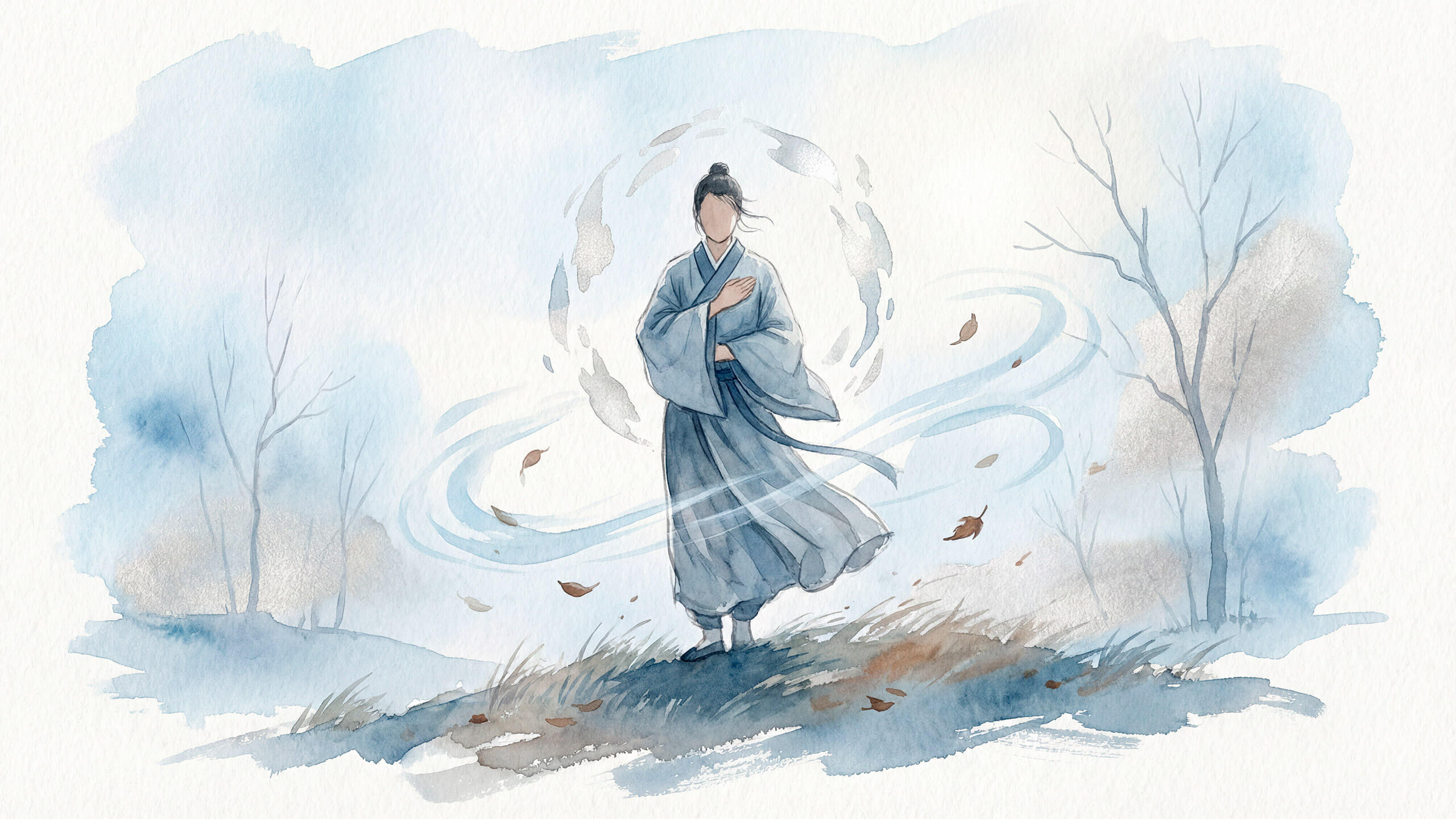
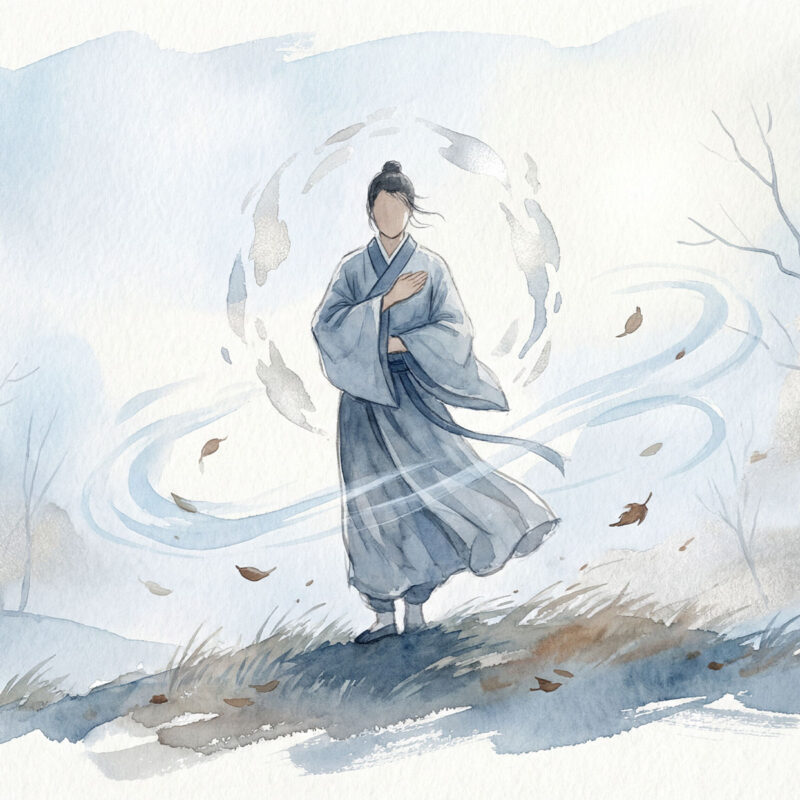
In traditional Chinese medicine, Wei Qi—the defensive Qi—is your invisible protective shield. It circulates on the surface of the body, directly beneath the skin, and forms the first line of defense against external pathogenic factors such as wind, cold, and dampness.
Wei-Qi has three main functions: it protects the body from external pathogens, regulates the opening and closing of the pores and thus controls perspiration, and warms the skin and muscles.
Wei-qi is distributed by the lungs but produced by the spleen and stomach. Therefore, a deficiency of wei-qi is often closely linked to a deficiency of lung-qi or spleen-qi. If the lungs can no longer properly bring wei-qi to the surface of the body, the body loses its protection.
The consequence of a Wei-Qi deficiency: The body surface is no longer adequately protected. External pathogenic factors easily penetrate, the pores do not close properly, and spontaneous sweating occurs—especially with the slightest exertion or for no apparent reason.
The typical signs of a Wei-Qi deficiency:
- Frequent colds and infections, slow recovery
- Spontaneous sweating, especially during the day and during light activity
- Sensitivity to wind and drafts
- Slight chills and sensitivity to cold
- Pale complexion and dull skin
- Chronic fatigue and lack of energy
- Tendency to have allergic reactions
The good news: Wei-Qi can be strengthened in a targeted manner. With the classic Yu Ping Feng San (Jade Wind Protection Powder) formula, immune-boosting foods such as astragalus and shiitake, and Qi Gong exercises such as „drawing the bow,“ you can rebuild your defensive Qi and regain your natural resistance.
The Western perspective: The innate immune system and the skin barrier
From a Western perspective, Wei-Qi deficiency corresponds to a weakness of the innate immune system and the skin barrier. The skin and mucous membranes are our first line of physical defense—they prevent pathogens from entering the body.
Imagine your immune system as a fortress with several layers of defense: the outer wall is your skin with its protective acid mantle and beneficial bacteria. Behind it are the mucous membranes with their IgA antibodies. A Wei Qi deficiency means that this outer defense has become permeable.
One aspect that is often overlooked is the connection between the immune system and the autonomic nervous system. Chronic stress puts the body in a permanent state of alert—the immune system is suppressed, susceptibility to infections increases, and even small changes in temperature become a burden.
What does modern medicine show?
- Weakened mucosal immunity: Reduced IgA antibodies in saliva and respiratory tract
- Dysregulation of sweat production: Impaired autonomic control of the sweat glands
- Reduced thermoregulation: The body adapts less well to temperature changes.
- Vitamin D deficiency: Closely linked to increased susceptibility to infection
- Adrenal fatigue: Chronic stress leads to reduced stress tolerance
- Intestinal dysbiosis: 70% of the immune system is located in the gut — an imbalance weakens the body's defenses.
Modern research confirms: Adaptogenic herbs such as astragalus can strengthen the immune system and reduce susceptibility to infections. Regular exercise in the fresh air, alternating hot and cold showers, and sufficient sleep are also important for a strong immune system.
TCM treatment for Wei Qi deficiency addresses precisely this issue: it strengthens the body's external defenses, regulates sweating, and makes the body resistant to external influences—gently, naturally, and sustainably.

The Yellow Emperor team explains your diagnosis
The Yellow Emperor | Qi Bo | Dr. Lisa Weber
Founder of TCM | Master of Healing Arts | Modern Physician
What happens when the legendary Yellow Emperor from TCM sits down with his advisor Qi Bo and a modern doctor? They explain YOUR diagnosis—using 4,000 years of knowledge AND the latest science.
Wei-Qi deficiency — When the body's protective shield weakens
The Yellow Emperor: „Qi Bo, in my kingdom I observe people who are constantly cold, who get sick at the slightest breeze, and whose pores open uncontrollably. The slightest wind seems to harm them. What is the cause of this affliction?“
Qi Bo: „Your Majesty, these people suffer from a deficiency of Wei Qi—the defensive Qi. Wei Qi is the body's protective shield. It circulates on the surface, between the skin and muscles, and protects us like invisible armor against external invaders. It controls the opening and closing of the pores, regulates body temperature, and keeps pathogenic factors such as wind, cold, and moisture at bay. When this protective qi is weak, the body is as exposed as a city without walls.“
Dr. Weber: „That's a wonderful metaphor! In modern immunology, we would say: The body's first line of defense—the innate immune system—is disrupted. The skin and mucous membranes form our physical barrier. In addition, there are antimicrobial peptides, immune cells in the skin such as Langerhans cells, and the microbiome. If these systems do not function optimally, pathogens can penetrate more easily. We explain spontaneous sweating as a dysregulation of the autonomic nervous system.“
The Yellow Emperor: „Where does this Wei-Qi originate?“
Qi Bo: „Wei-Qi is generated in the lower warmer from the essence of food and is distributed to the body's surface by the lungs. The lungs are like a commander who sends out the protective troops. Therefore, Wei-Qi deficiency often also disrupts Lung-Qi. But the true origin lies deeper — Kidney-Yang provides the warmth and strength that drives Wei-Qi. And the spleen provides the nourishing foundation.“
Dr. Weber: „Fascinating! This corresponds with our understanding that the immune system depends on many organ systems. The intestine—associated with the spleen and lower warmer in TCM—is home to about 70 percent of our immune cells. The adrenal glands produce cortisol, which modulates the immune response. And the respiratory tract, with its mucosal immune system, is actually our first line of defense.“
The Yellow Emperor: „What causes weakness of Wei-Qi?“
Qi Bo: „There are many causes, Your Majesty. First: chronic exhaustion and overwork—they consume qi faster than it can be replenished. Second: repeated colds that never fully heal—each infection further weakens the Wei-Qi. Thirdly: lack of outdoor exercise — the Wei-Qi must be trained. Fourthly: a cold, raw diet — it weakens the spleen and thus Qi production. And fifthly: constitutional weakness from birth or due to long illness.“
Dr. Weber: „This is consistent with modern findings! Chronic stress increases cortisol levels, which suppresses immune function in the long term. Lack of exercise reduces the circulation of immune cells. An unbalanced diet disrupts the gut microbiome — and thus the immune system. And indeed, there are genetic variants that influence the innate immune system. The link between unresolved infections and immune dysregulation is also well documented.“
The Yellow Emperor: „What signs indicate a deficiency of Wei Qi?“
Qi Bo: „The signs are clear, Your Majesty. The affected person exhibits: spontaneous sweating at the slightest exertion or even at rest. Strong sensitivity to wind and drafts. Frequent colds that recur easily. A pale face without luster. Fatigue and shortness of breath. Often a soft voice. The tongue is pale, possibly slightly swollen with a thin white coating. The pulse is weak and superficial—it is close to the surface but has no strength.“
Dr. Weber: „This constellation of symptoms is clinically very interesting! The spontaneous sweating indicates an autonomic imbalance. The susceptibility to infection indicates an immune deficiency - we often see low IgA values or reduced NK cell activity (natural killer cells). The pallor may indicate a slight anemia or circulatory disorder. In the laboratory, we sometimes find vitamin D deficiency, zinc deficiency or low ferritin levels - all important for immune function.“
The Yellow Emperor: „How does Wei-Qi deficiency differ from Lung-Qi deficiency?“
Qi Bo: „An important question, Your Majesty! Lung qi deficiency primarily affects respiratory function—shortness of breath and a weak voice are the main symptoms. Wei qi deficiency affects the entire immune system—the main symptoms here are susceptibility to infection, spontaneous sweating, and sensitivity to wind. Of course, the two often overlap, because the lungs distribute the wei qi. But the treatment focuses are different.“
Dr. Weber: „From a clinical perspective: In cases of purely pulmonary problems, we see more respiratory symptoms. In cases of Wei-Qi deficiency, systemic immune deficiency is the primary concern—frequent infections of various kinds, not just respiratory infections. This is an important diagnostic difference!“
The Yellow Emperor: „Now let's talk about treatment. How can the Wei-Qi be strengthened?“
Qi Bo: „Majesty, the treatment principle is: Bu Wei Qi Gu Biao - tonify the Wei-Qi and strengthen the surface. This is done in several ways: firstly, through outdoor exercise - the Wei-Qi must come into contact with the outside world in order to become stronger. Secondly, through immune-boosting foods: Astragalus tea is the king herb for Wei-Qi, shiitake mushrooms nourish the defenses, ginger and garlic warm and protect. Thirdly, through acupressure on important points: Stomach 36 strengthens the entire Qi, Lung 09 supports the distribution of Wei-Qi. And fourthly: Qi Gong exercises such as „drawing the bow“, which strengthen the lungs and the immune system.“
Dr. Weber: „Excellent strategies! Astragalus — Huang Qi — has been shown in studies to have immunomodulatory effects, activating macrophages and promoting antibody production. Shiitake mushrooms contain beta-glucans, which stimulate the immune system. Outdoor exercise — especially in the forest — reduces stress hormones and activates NK cells. And acupressure on Stomach 36 has actually been shown to have immune-stimulating effects in studies!“
The Yellow Emperor: „What about the famous Yu Ping Feng San — the Jade Wind Protection Powder?“
Qi Bo: „Ah, Your Majesty knows the classic recipes! Yu Ping Feng San is the queen of Wei-Qi strengthening formulas. It contains only three herbs: Huang Qi — Astragalus — as the main herb strengthens the Wei-Qi. Bai Zhu — Atractylodes — strengthens the spleen and thus Qi production. And Fang Feng — Ledebouriella — strengthens the surface and wards off wind. These three work together like a wall, a watchtower, and a soldier.“
Dr. Weber: „Yu Ping Feng San has actually been studied in clinical trials! It has prebiotic effects on the gut microbiome and can reduce the frequency of respiratory infections. The combination has an immunomodulatory effect—it strengthens a weak immune system without promoting an excessive immune response. That's the difference between this and pure immunostimulants!“
The Yellow Emperor: „Wonderful! Let's turn this wisdom into a practical plan.“
THE 3-WISE METHOD FOR WEI-QI DEFICIENCY
MORNING PROTOCOL (Activate Wei-Qi):
- TCM: Warm breakfast — never start the day sober and cold
- Science: A warm breakfast activates the metabolism and supports the morning release of cortisol.
- Practical: Oatmeal with cinnamon and steamed apple, or warm rice soup with spring onions
- TCM: Astragalus tea to strengthen Wei Qi
- Science: Astragalus contains polysaccharides that activate macrophages and promote antibody production.
- Practical: Simmer 5–10 g of astragalus root in 500 ml of water for 15 minutes, drink one cup in the morning.
- TCM: Qi Gong exercise „Drawing the Bow“ — opens the lungs and strengthens the Wei Qi
- Science: Deep breathing during exercise activates the lymphatic system and promotes immune cell circulation.
- Practical: Do the exercise for 5-10 minutes, consciously breathing deeply, preferably at an open window
TAGS STRATEGY (nourish and train Wei-Qi):
- TCM: Outdoor exercise — Wei-Qi must come into contact with the outside world
- Science: Exercise in the fresh air activates NK cells and reduces stress hormones.
- Practical: 20–30 min. walk in the park or forest, even in light wind (dress warmly!)
- TCM: Acupressure on Stomach 36 (Zusanli) — the „master point“ for qi and defense
- Science: Stimulation of Ma 36 shows immunomodulatory effects in studies
- Practical: Four finger widths below the kneecap, one finger width beside the edge of the shinbone. Press or tap firmly for 3 minutes on each side.
- TCM: Incorporate shiitake mushrooms and garlic into your meals
- Science: Shiitake mushrooms contain beta-glucans, garlic has antimicrobial properties
- Practical: Add shiitake mushrooms to soups or stir-fries, eat 1–2 cloves of garlic (cooked) daily.
EVENING RITUAL (regenerate Wei-Qi):
- TCM: Warm soup for dinner — nourishes the spleen and Wei-Qi
- Science: Warm liquids promote blood circulation and support nighttime regeneration.
- Practical: Chicken broth with ginger, spring onions, and vegetables, or miso soup with tofu
- TCM: Acupressure on lung 09 (Taiyuan) - strengthens lung and Wei-Qi distribution
- Science: Stimulation of the wrist has a positive effect on the autonomic nervous system.
- Practical: On the wrist crease, under the thumb in the hollow. Massage gently in a circular motion for 2 minutes on each side.
- TCM: Keep warm — cover your neck, lower back, and feet
- Science: Heat promotes blood circulation and supports immune function.
- Practical: Wear socks, warm the kidney area with a hot water bottle, avoid drafts when sleeping
The Yellow Emperor: „Qi Bo, how long will it take for the Wei-Qi to regain its strength?“
Qi Bo: „Your Majesty, Wei-Qi is like an army that needs to be reorganized—this takes time and consistency. After 2–3 weeks of consistent practice, most people notice that spontaneous sweating decreases and they feel less cold. After 6–8 weeks, colds become significantly less frequent and milder. After 3–4 months, the Wei-Qi is noticeably strengthened — the body is more resistant to wind, weather, and pathogens. Especially important: in autumn, when the metal element prevails, one should take special care of the Wei-Qi.“
Dr. Weber: „This corresponds to our clinical experience! Building up a robust immune function takes time—about 2–3 months for measurable improvements. Regenerating the gut microbiome, which hosts 70 percent of the immune system, takes a similar amount of time. And the reference to fall makes medical sense: that's when cold season begins, and preventive measures are particularly valuable!“
The Yellow Emperor: „Are there things that should be avoided at all costs?“
Qi Bo: „Yes, Your Majesty! First: Cold drinks and raw foods—they weaken the spleen and thus Qi production. Second: Drafts and air conditioning—they directly attack the weakened Wei Qi. Thirdly: overexertion — it consumes precious qi. Fourthly: too little sleep — the Wei qi regenerates internally at night. And fifthly: suppressing sweating during exercise — the Wei qi must be able to move.“
Dr. Weber: „All scientifically comprehensible! Cold food requires more digestive energy. Draughts can actually weaken the local immune system. Overtraining measurably suppresses the immune system. And a lack of sleep dramatically reduces the production of immune cells - just one night with less than six hours of sleep halves the activity of natural killer cells (NK cells)!“
The Yellow Emperor: „Then the message is clear: Wei-Qi is our protective shield against the harshness of the world. With warm food, targeted exercise, immune-boosting herbs, and sufficient rest, we can rebuild this protection.“
Qi Bo: [smiles] „That's right, Your Majesty. Wei-Qi is the faithful guardian who never sleeps. When we nourish and strengthen it, it protects us like invisible armor — and we can face the winds of life with confidence.“
About our „3 Wise Men“ story
Who are the Yellow Emperor and Qi Bo?
The Yellow Emperor (Huangdi) is said to have lived around 2600 BC and is considered the mythical founder of Chinese culture and medicine. Qi Bo was his most important advisor and personal physician. Their discussions about health, illness, and human nature were recorded in the most important fundamental work of TCM.
The book: Huangdi Neijing
The Huangdi Neijing, also known as The Yellow Emperor's Classic of Internal Medicine, was probably written between 200 BC and 200 AD. It is the oldest surviving work on Chinese medicine and consists of dialogues between the Yellow Emperor and his advisors, mainly Qi Bo.
This work is to TCM what the Bible is to Christianity: the absolute foundation. All important concepts—yin and yang, the five elements, qi, meridians, and acupuncture points—are described systematically here for the first time.
Our modern approach: The 3 wise men
In our series „The Three Sages,“ we bring together the Yellow Emperor and Qi Bo with the fictional modern doctor and microbiologist Dr. Weber.
Important note: All three characters and their conversations are purely fictitious and invented by us.
We use this narrative form, similar to the dialogue form in the book Huangdi Neijing, to convey the often complex interrelationships of TCM in an understandable and entertaining way. When the 4,000-year-old emperor is confronted with modern science, enlightening „aha moments“ arise that show that ancient wisdom and new research often speak the same language—just in different words.
This makes TCM lively, understandable and practically applicable for your everyday life.
The dialogues are creative interpretations—not historical documents. For medical questions, please consult a qualified TCM therapist or doctor.
Your treatment options
A Wei-Qi deficiency is very treatable! TCM offers you a variety of effective methods to rebuild your defensive qi and your resistance. You don't have to do everything at once — choose the methods that suit you and your everyday life.
Here you will find specific treatment approaches that have been proven effective in TCM for thousands of years and that you can largely apply yourself.
TCM herbal therapy
TCM herbs are the basis every classic TCM treatment. The carefully compiled mixtures have a synergistic effect — this means that the individual herbs reinforce each other's effects and balance out any possible side effects.
What modern medicine is only just discovering—the power of plant substances—has been used successfully by TCM for over 2,500 years.
Empfohlene TCM–Kräutermischung bei Wei–Qi Mangel
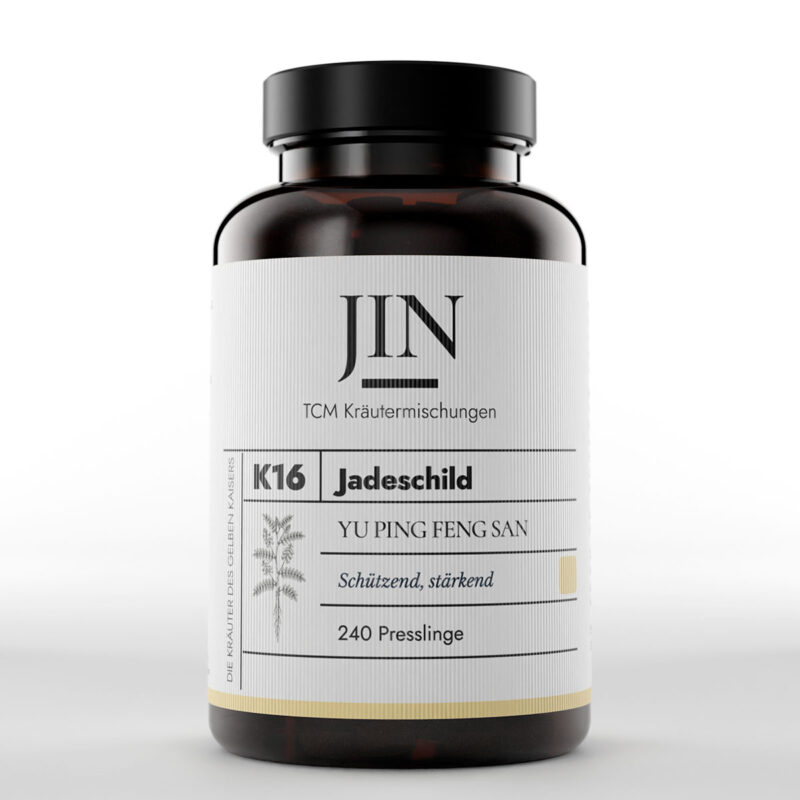
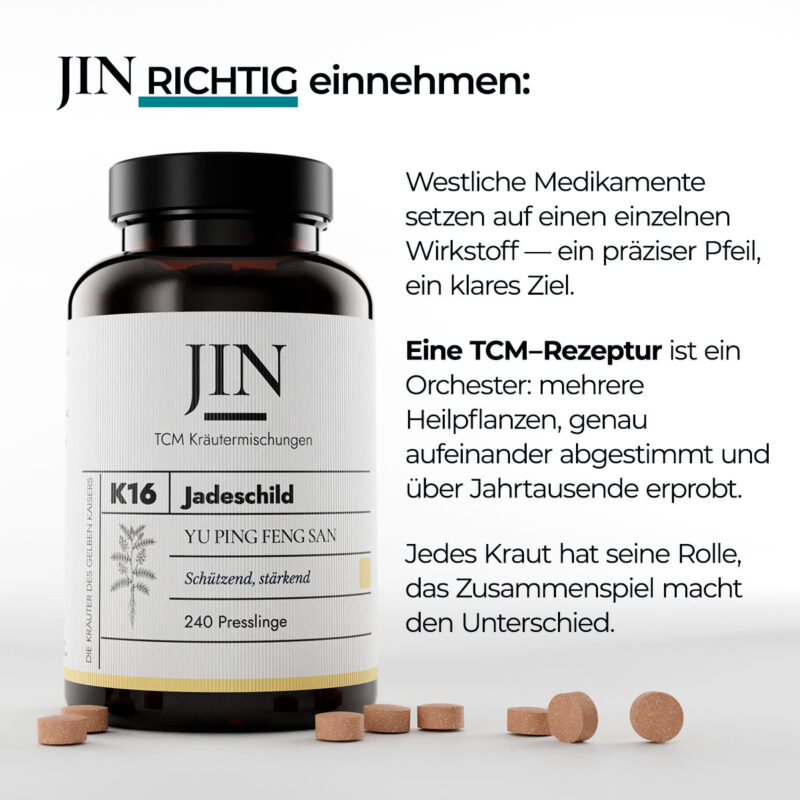
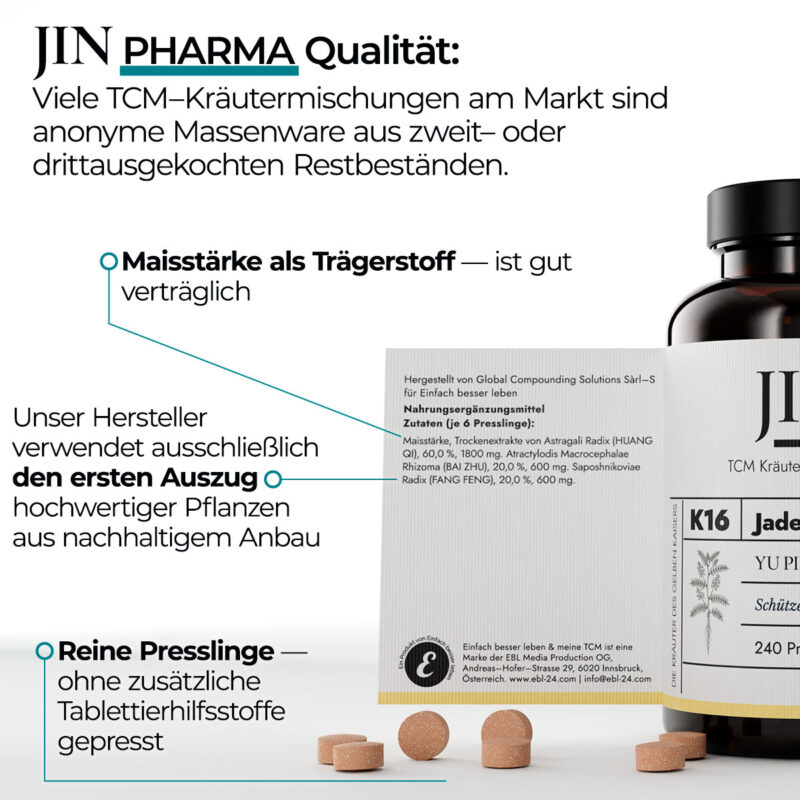
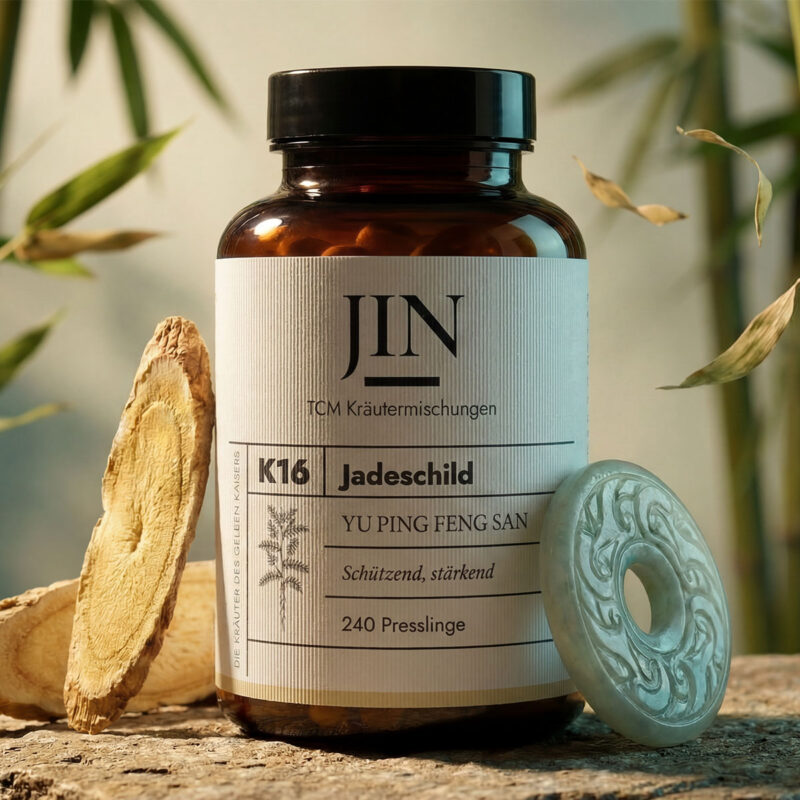
JIN K16 — Jadeschild
Die klassische Rezeptur Yu Ping Feng San (玉屏风散) — der „Jade–Windschutz–Schirm“. Drei Kräuter, die das Wei–Qi (Abwehr–Qi) stärken, die Körperoberfläche festigen und einen stabilen Schutzschild gegen äußere Krankheitsfaktoren aufbauen.
Mit Huang Qi (Tragant) als kraftvollem Hauptkraut festigt diese Mischung die Abwehr und stillt spontanes Schwitzen, während Bai Zhu die Milz als Qi–Quelle stärkt und Fang Feng eindringenden Wind abfängt. Ideal bei häufigen Erkältungen, spontanem Schwitzen und allgemeiner Infektanfälligkeit.
Quantity
239,70 €
i
To the product
The herbs in this recipeRecommended reading:How TCM herbal blends are formulatedLearn more now
| Herb (Pinyin) | German designation | Function in the recipe |
|---|---|---|
| Huang Qi (Astragali Radix) | Tragacanth | emperor Stärkt das Wei–Qi, festigt die Oberfläche, stillt spontanes Schwitzen |
| Bai Zhu (Atractylodis Macrocephalae Rhizoma) | White Atractylodes | minister Stärkt die Milz als Quelle des Wei–Qi |
| Fang Feng (Saposhnikoviae Radix) | Windbreak root | assistant Vertreibt Wind und fängt äußere Krankheitsfaktoren ab |
Explanation of the most important herbs
emperor Huang Qi (Tragacanth) — Der Schutzschild
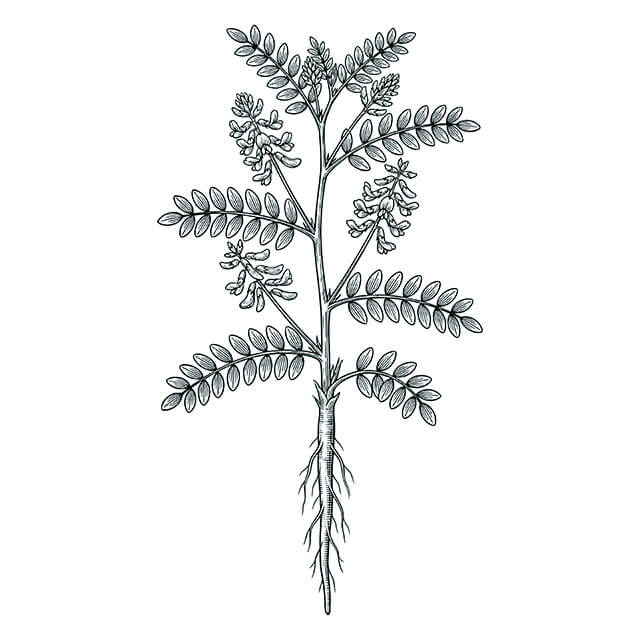
Huang Qi ist der mächtigste Qi–Toniker der Oberfläche. Es hebt das Yang–Qi, festigt die äußere Abwehr und stillt spontanes Schwitzen — das Zeichen eines löchrigen Schutzschilds. Mit 60 % bildet es das unangefochtene Fundament dieser Formel. Astragalus zählt zu den am besten untersuchten immunmodulierenden Heilpflanzen.
minister Bai Zhu (Atractylodes) — The spleen tonic
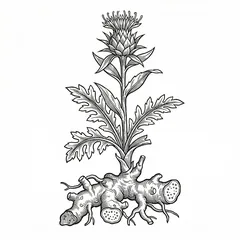
Bai Zhu stärkt die Milz und trocknet Feuchtigkeit — es ist die Basis, auf der das Qi entsteht. Ohne eine starke Mitte kann kein Wei–Qi gebildet werden; Bai Zhu sorgt dafür, dass der Nachschub nicht versiegt. Atractylenolide zeigen in Untersuchungen entzündungshemmende Eigenschaften.
assistant Fang Feng (Windschutzwurzel) — Der Wächter
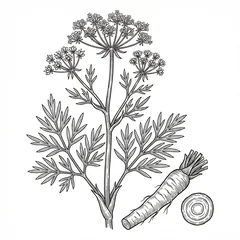
Fang Feng — die Windschutzwurzel — vertreibt Wind aus der Oberfläche. In dieser Formel hat es eine doppelte Rolle: Es patrouilliert an der Körperoberfläche, fängt eindringende Wind–Pathogene ab und leitet sie aus, bevor sie Schaden anrichten — das gestärkte Qi gibt ihm die Kraft dazu. Cimifugin und verwandte Chromone zeigen in Untersuchungen entzündungshemmende Eigenschaften; einzelne Arbeiten deuten auf eine modulierende Wirkung bei allergischen Reaktionen hin.
Recommended dosage
The dosage depends on the severity.
Based on your questionnaire results, we have highlighted the appropriate dosage for you below.
At light Severity:
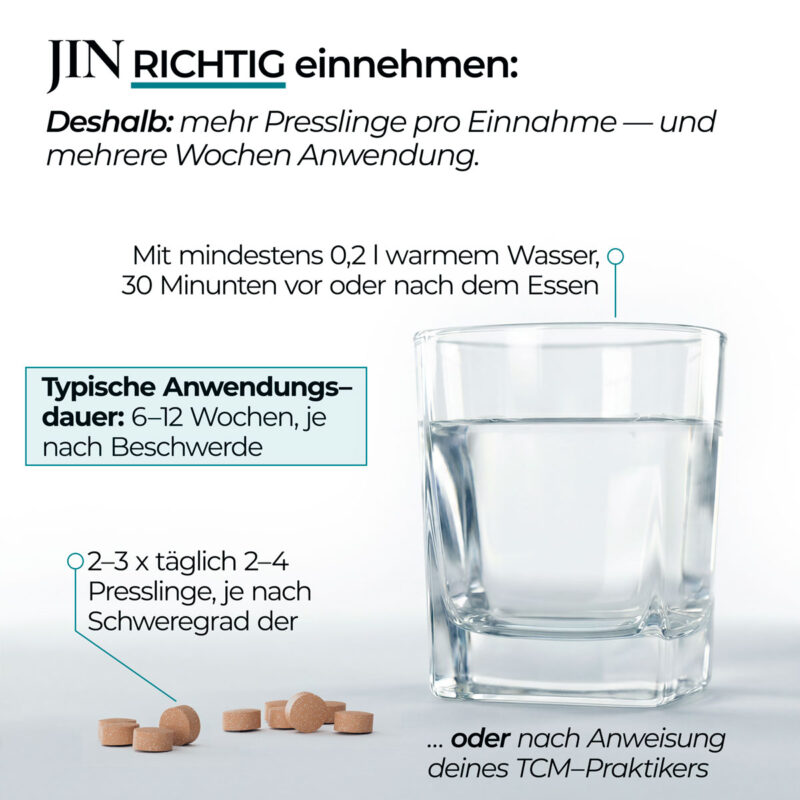
- 2 tablets 3 times a day (morning, noon, and late afternoon) = 6 tablets per day
- Optional, if taking 3 doses a day is difficult for you: 3 tablets twice a day — same daily amount
- We recommend at least 2 cans, each containing 240 tablets (enough for about 12 weeks)
At middle Severity:
- 3 tablets 3 times a day (morning, noon, and late afternoon) = 9 tablets per day
- We recommend at least 3 cans, each containing 240 tablets (enough for about 12 weeks)
- If your condition improves, switch to the dosage recommendation for mild symptoms
At significantly Severity:
- 4 tablets 3 times a day (morning, noon, and late afternoon) = 12 tablets per day
- We recommend at least 4 cans, each containing 240 tablets (enough for about 12 weeks)
- If your condition improves, switch to the dosage recommendation for moderate severity
Why 3 times a day?
This ensures that the herbs' effects are evenly distributed throughout the day.
IMPORTANT:
- Take the tablets with at least 0.2 liters of warm water
- Ideally, 30 minutes before or after a meal
- This suggestion is not a substitute for a medical diagnosis or treatment
- If you are pregnant or breastfeeding, have a chronic medical condition, or are taking medication, consult a doctor or a TCM practitioner beforehand.
- If you have a severe cold, fever, or diarrhea, stop taking this product
- Zugluft und plötzliche Kälte meiden, Nacken und Rücken warm halten — dort dringt Wind am leichtesten ein
- Sanfte, regelmäßige Bewegung und ausreichend Schlaf stärken das Abwehr–Qi
If little has changed after about 12 weeks:
Herbs are just one part of TCM. Combine taking them with other practices—acupressure, qigong, Pilates, or yoga, BS+, as well as meditation and breathing exercises. Afterward, take a two-week break from taking the herbs. Then, if needed, you can TCM analysis try again and/or compare your result with your TCM practitioner or discuss it with your doctor.
If you have any questions about how to take it, please feel free to contact us.
Want to know what dosage is right for you? Take our free TCM questionnaire—in just a few minutes, it will reveal your personal TCM pattern and the appropriate dosage of the recommended TCM herbal blend.
BS+ for your intestinal flora
A healthy gut is the basis for your well-being. Current studies show that around 80 % of people in Germany consume too little fiber - yet it is the most important food for your intestinal flora (also known as the intestinal microbiome).
BS+ was developed to support your daily fiber supply. With 11 high-quality, natural ingredients BS+ offers your intestinal flora a diverse nutrient base.
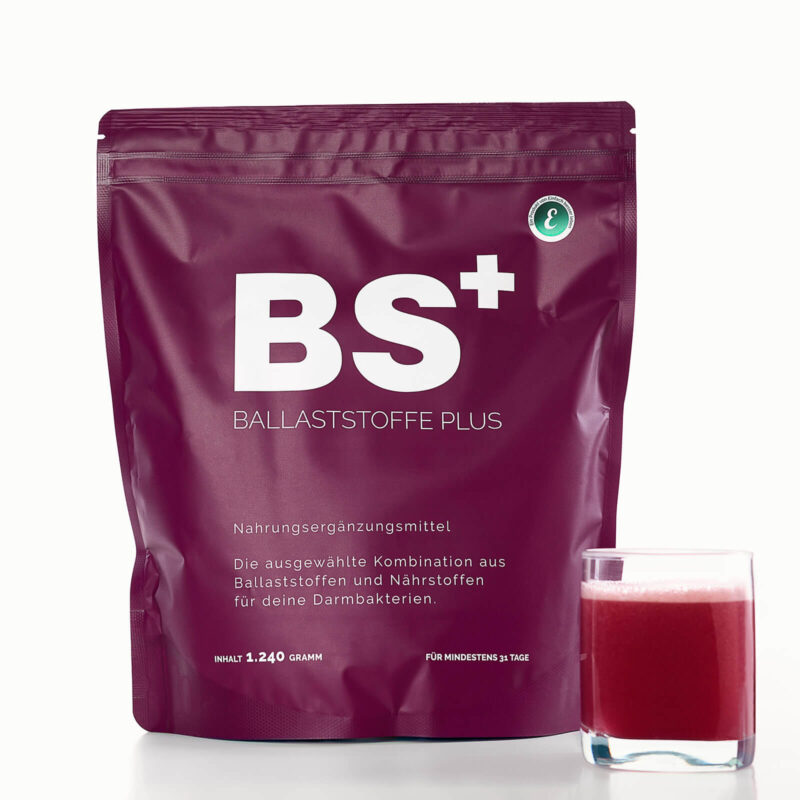
The revolutionary fiber formula
BS+ Dietary Fiber Plus
- Up to 20 g dietary fiber daily EXTRA
- Improved digestion and regular bowel movements
- Increased energy and vitality
- Better mood and mental clarity
- Support for your immune system
- Potential improvement in cholesterol and blood sugar levels
Simply stir into water twice a day - Your intestinal flora will thank you.
Warum BS+ bei Wei–Qi Mangel?
In der TCM wird das Wei–Qi — deine Abwehrenergie — von der Milz und der Lunge gebildet. Die Milz gewinnt das Nahrungs–Qi aus der Verdauung, die Lunge verteilt es an die Körperoberfläche. Moderne Forschung bestätigt diese Verbindung: Rund 80 % des Immunsystems sitzen im Darm. Wenn die Darmflora aus dem Gleichgewicht gerät, wird die Milz–Funktion geschwächt und es steht weniger Qi zur Verfügung, um das Wei–Qi aufzubauen. Ein gesunder Darm ist daher die wichtigste Grundlage für eine starke Abwehrkraft.
BS+ delivers 11 prebiotic fibers und unterstützt so gezielt den Aufbau einer vielfältigen Darmflora. Eine gut genährte Darmflora stärkt die Milz als Quelle des Nahrungs–Qi, unterstützt die Immunzellen im Darm und schafft damit die Basis, auf der Milz und Lunge dein Wei–Qi wieder kraftvoll aufbauen können — für eine starke, natürliche Abwehr.
Besonders wichtig bei Wei–Qi Mangel:
- Stärkt die Milz–Funktion als Wurzel des Wei–Qi, damit aus der Nahrung wieder ausreichend Abwehrenergie gebildet werden kann
- Nährt die Immunzellen im Darm — dort wo 80 % deiner Abwehrkraft entsteht — und unterstützt so die Bildung des Wei–Qi an der Körperoberfläche
- Fördert eine gesunde Verdauung, damit immunstärkende Lebensmittel wie Astragalus, Shiitake–Pilze und Ingwer ihre volle Wirkung entfalten können
Acupressure
Acupressure is acupuncture without needles. — you can apply them yourself at any time. By gently pressing on specific points, you activate the flow of energy in the meridians and strengthen the corresponding organs.
The following three points form the classic combination for strengthening Wei-Qi and the body's own defenses.
ACUPUNCTURE POINT: Lu 09
Lung 09
Great Abyss — Tài Yuān
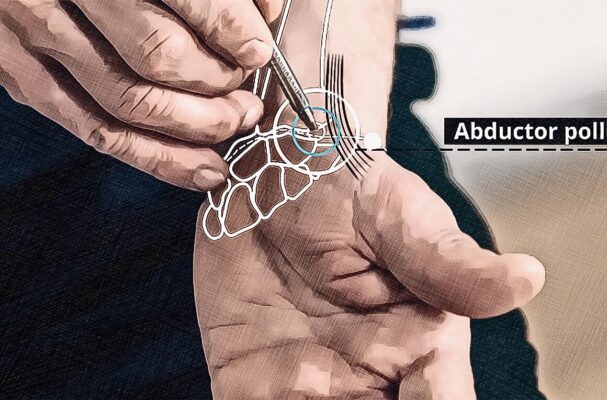
- Lung tonification point — strengthens lung qi
- Strengthens the thoracic qi (heart and lungs)
- Promotes blood circulation
- Master point of the blood vessels
- Helps with cold hands and weak voice
Location:
On the wrist, in the depression on the radial side of the radial artery.
Application:
Hold twice daily for 30–45 seconds with moderate pressure. Ideal in the morning and evening.
ACUPUNCTURE POINT: Ma 36
Stomach 36
Three miles on foot — Zú Sān Lǐ
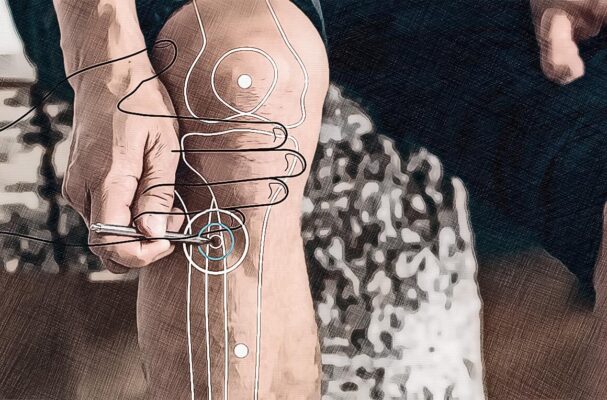
- Vitality master point — strengthens qi and blood
- Supports the stomach and spleen (post-heaven qi)
- Strengthens and revitalizes the entire body
- Repels wind and moisture
- Helps with fatigue, exhaustion, and weakness
Location:
4 fingertips (3 cun) below the kneecap, on the outside of the shin bone on the tibialis muscle.
Application:
Press firmly once a day for 30–45 seconds. Ideal for general strengthening.
ACUPUNCTURE POINT: KG 17
Concept container 17
Center of the chest — Dàn Zhōng
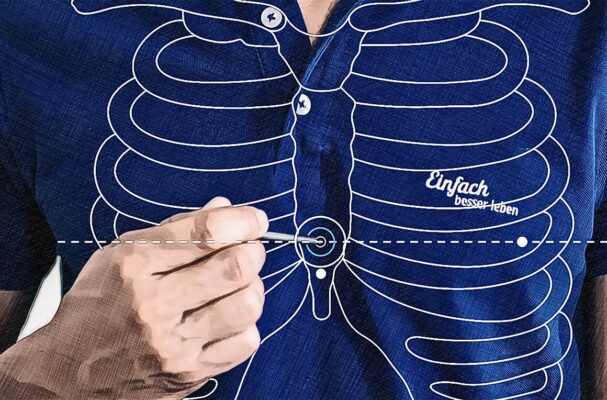
- Sea of Qi — opens the chest
- Strengthens breathing and thoracic qi
- Regulates the qi of the heart and lungs
- Relieves qi stagnation in the chest area
- Helps with shortness of breath and tightness in the chest
Location:
In the middle of the sternum, at nipple level (4th ICR).
Application:
Hold gently for 30–45 seconds once a day. Ideal for breathing difficulties or tightness in the chest.
TIP
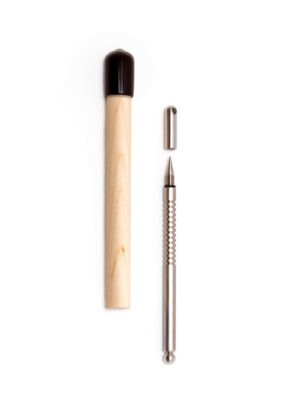
AkuPen
Acupuncture pen with video instructions
For even more intense stimulation You can use an AkuPen. The acupressure pen significantly enhances the effect of acupressure. With an extensive video library for over 80 acupuncture points.
Qi Gong
Qi Gong is moving meditation — Gentle, flowing exercises that harmonize your energy flow and strengthen your qi. If you have a deficiency of Wei qi, these exercises help to build up your defensive energy, strengthen the surface of your body, and boost your immune system.
Regular practice of qigong (even just 10–15 minutes a day) has been shown to have positive effects on the immune system, resilience, and general well-being.
QI GONG: Exercise 1
Stretching the bow
Strengthens Wei-Qi, opens the chest cavity
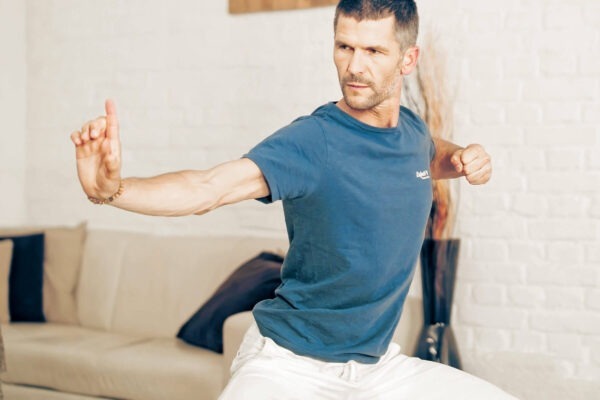
Particularly helpful for:
- Frequent colds and infections
- Spontaneous sweating
- sensitivity to cold
- Weakened immune system
Effect:
This classic Ba Duan Jin exercise opens up the chest area and specifically strengthens the Wei Qi on the body's surface. The arm movement activates the lung meridian and promotes the circulation of defensive energy.
QI GONG: Exercise 2
Regulate Qi
Harmonizes the flow of qi, strengthens the immune system
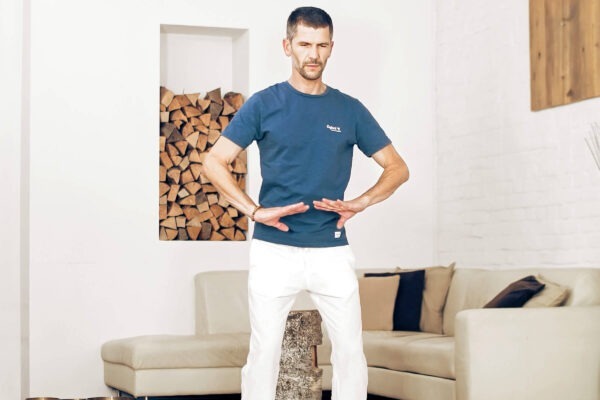
Particularly helpful for:
- Lack of energy and exhaustion
- Restless, shallow breathing
- Weakness after infections
- General immune deficiency
Effect:
This exercise harmonizes the flow of qi throughout the body and supports the regeneration of wei qi. It is perfect for regaining strength after a cold and gently building up the body's defenses.
QI GONG: Exercise 3
Connecting heaven and earth
Activates Wei-Qi, strengthens the surface

Particularly helpful for:
- Susceptibility to wind and cold
- Open pores and sweating
- Fatigue and weakness
- Slow recovery after illness
Effect:
This exercise stretches the entire body and activates the Wei-Qi on the surface. The stretching movement promotes the circulation of defensive energy and helps regulate the pores — a key mechanism in Wei-Qi deficiency.
These Qi Gong exercises are specially selected to strengthen Wei-Qi. They activate the body's surface defenses, support the immune system, and help to properly regulate the pores.
All exercises are particularly effective when practiced between 3 and 5 a.m. — this is the peak time for the lungs in the organ clock. However, the time between 5 and 7 a.m. (large intestine time) is also ideal, as Wei Qi is closely connected to the lungs.
QI GONG:
When and how often?
In the morning (ideal):
- All 3 exercises as a sequence: approx. 15–20 min.
- Or just 1–2 exercises: approx. 5–10 min.
- Preferably between 5 and 7 a.m. (colon time) or early in the morning
In between:
- Individual exercises as needed (e.g., if feeling cold or weak)
- „Den Bogen spannen“ für schnelle Aktivierung des Wei–Qi
Regularity is more important than duration:
- It is better to exercise for 10 minutes every day than for 60 minutes once a week.
- After 2–3 weeks, you will notice the first changes.
- After 3 months of regular practice: significantly stronger Wei-Qi
Pro tip: Practice qigong outdoors in the fresh air, but protected from the wind. Wei qi is particularly strengthened by gentle movement in nature—but avoid drafts and strong winds, as these can easily penetrate when there is a deficiency of wei qi.
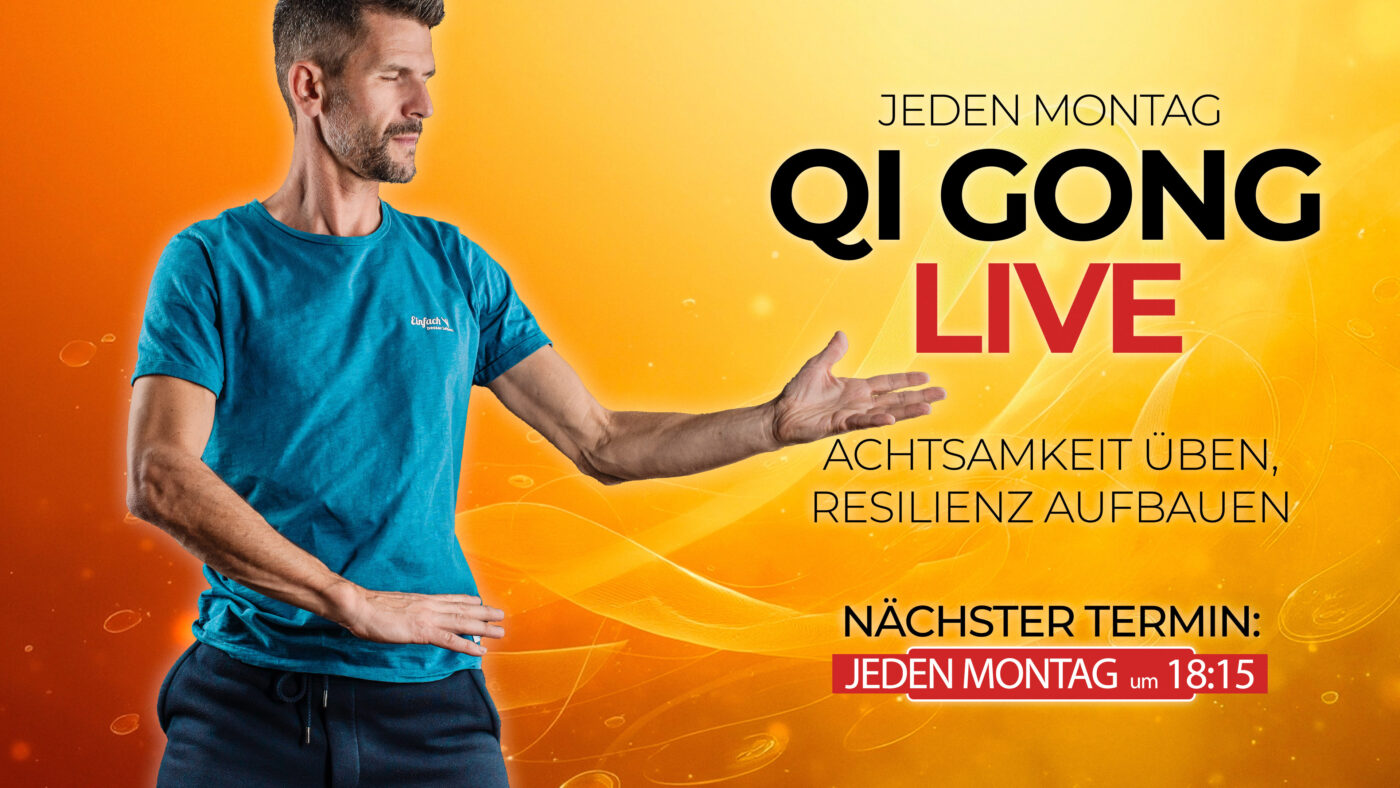
LIVE EVERY MONDAY: QI GONG WITH WOLFGANG
Every Monday at 6:00 p.m. Let's practice together live on YouTube. Among other things, Wolfgang will guide you through a complete qigong sequence — free of charge and suitable for all levels.
Why participate live? ✓ Practicing together is motivating ✓ Wolfgang explains the exercises in detail ✓ You can ask questions in the live chat ✓ Regular appointments help with your routine
More about Qi Gong LiveMeridian Yoga — The Yoga of TCM
Meridian Yoga combines yoga with traditional Chinese medicine. The result is a holistic exercise concept for better health and more energy.
The following exercises specifically activate the lung meridian and thus strengthen your Wei Qi—your physical defenses.
MERIDIAN YOGA: Exercise 1
Makko Ho for the lung meridian
Stretches the lung and large intestine meridians, opens the chest

Particularly helpful for:
- Frequent colds and infections
- Spontaneous sweating during light exertion
- Sensitivity to cold and feeling cold
- Weakened immune system
Effect:
The classic Makko Ho stretch for the lung meridian opens the chest and simultaneously stretches the lung and large intestine meridians. This exercise strengthens the Wei Qi and improves the defensive function of the lungs.
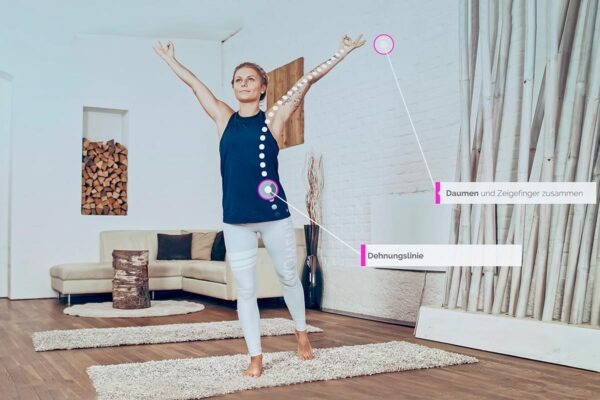
MERIDIAN YOGA: Exercise 2
The lung stretch
Intensive stretching of the lung meridian, strengthens the immune system
Particularly helpful for:
- Susceptibility to wind and drafts
- Weak skin defense function
- Tension in the shoulders and neck
- Lack of energy and exhaustion
Effect:
This intense stretch activates the entire lung meridian, which runs from the chest to the inside of the arms and up to the thumbs. The stretch releases blockages, promotes the free flow of qi, and strengthens the wei qi on the body's surface.
Both exercises activate the lung meridian, which plays a key role in the distribution of Wei Qi. Stretching strengthens the protective layer on the body's surface.
Particularly effective: Hold each position for 3–5 breaths, breathing deeply into your abdomen.
MERIDIAN YOGA:
When and how often?
Best time:
- Between 3 and 7 a.m. (lung meridian time)
- Or early in the morning after getting up (fresh air!)
Duration:
- Hold each position for 3–5 breaths.
- Complete sequence: 10–15 minutes
- 3–5 times per week for best results
Important:
- Do not practice outdoors in windy or drafty conditions.
- Breathe deeply and evenly during the positions.
- Stretching should be comfortable, never painful.
Pro tip: Combine Meridian Yoga in the morning with Qi Gong — first the flowing Qi Gong movements, then the Meridian Yoga exercises for maximum Wei Qi strengthening.
Nutrition according to TCM
„Let food be your medicine.“ — this principle has been applied in TCM for thousands of years. If you have a Wei-Qi deficiency, proper nutrition is particularly important for strengthening your immune system.
Wei-Qi belongs to the Element Metal and needs warm, immune-boosting food, to regain strength. Warming foods and qi-building soups have a special relationship with Wei-Qi.
What you eat, HOW you eat and WHEN What you eat—all of this affects your immune system and resilience.
The golden rules for strong Wei-Qi
What is good for you:
Immune-boosting herbs and teas
- Astragalus tea (strengthens Wei Qi)
- Ginger tea (warms and protects)
- Shiitake mushrooms (boost the immune system)
- Goji berries (nourish and strengthen)
Astragalus is the king of Wei-Qi herbs.
Warming foods
- Ginger (warms, dispels cold)
- Garlic (strengthens the immune system)
- Onions (open and protect)
- Leeks, spring onions
Heat strengthens Wei-Qi
Qi-building foods
- Chicken (strengthens qi and immunity)
- Oats (nourishes qi)
- Soups and hearty broths
- Dates (tonic)
Builds up resistance
Energy soups and congee
- Chicken soup with ginger
- Astragalus congee
- Shiitake soup
- Vegetable broth
Soups are the best medicine for Wei-Qi
What you should avoid:
Cold drinks
- Ice-cold drinks
- Drinks straight from the refrigerator
- ice cube
- Cold smoothies
Cold weakens the Wei-Qi!
Raw food
- Raw salads (especially in winter)
- Raw vegetables
- Uncooked fruit in large quantities
- Raw food diets
Raw food cools and weakens the immune system!
Dairy products
- cow's milk
- Yogurt, quark
- Cheese in large quantities
- cream
Produce mucus and moisture
Sugar and alcohol
- industrial sugar
- sweets
- Alcohol (especially beer)
- Sweet drinks
Weaken the Wei-Qi and generate moisture
HOW YOU SHOULD EAT:
Regular meals
- 3 fixed meals a day
- Breakfast between 7-9 am
- Prefer a hot breakfast
- Dinner before 7 p.m. and light
Mindful eating
- Chew slowly (supports the Qi!)
- Eat calmly, don't rush
- Do not eat while standing
- Cozy atmosphere
Wei-Qi loves calmness and rhythm!
Drink properly
- Warm or lukewarm water
- Astragalus tea (daily)
- Ginger tea (especially in the morning)
- Warm broth as a snack
Warm liquids strengthen Wei-Qi
IDEAL MENU FOR ONE DAY:
Breakfast (7–9 a.m.):
- Warm oatmeal with dates and cinnamon
- In addition: Ginger tea with honey
Lunch (12–1 p.m.):
- Chicken soup with ginger, garlic, and shiitake mushrooms
- In addition: Rice with steamed vegetables
- Or: Astragalus congee with onions
Dinner (6–7 p.m.):
- Vegetable soup with oats
- Or: Steamed chicken with ginger
- In addition: Warm herbal tea
Snack if needed:
- Hot consommé
- Or: Astragalus tea with goji berries
The most important rule when changing your diet is:
Start with ONE step!
Don't change everything at once.
Our suggestion for getting started:
- Replace cold drinks with warm ones — 2 weeks
- Drink astragalus or ginger tea daily — 2 weeks
- Chicken soup or broth 2–3 times a week — 2 weeks
Step by step, you will notice how your immune system becomes stronger and you are less susceptible to illness.
Your Wei-Qi will thank you!
RECIPE: IMMUNE-BOOSTING CHICKEN SOUP
Ingredients:
Serves 4
- 500 g chicken (leg or breast with bone)
- 1 piece of ginger (approx. 5 cm), sliced
- 4 garlic cloves, lightly crushed
- 2 onions, quartered
- 100 g shiitake mushrooms (fresh or dried)
- 2 spring onions
- 1.5 liters of water
- Salt, white pepper
- Optional: 10 g astragalus root (Huang Qi)
Preparation:
- Wash the chicken and cut it into large pieces.
- Bring water to a boil, blanch chicken briefly, and drain.
- Bring fresh water to a boil, add chicken, ginger, garlic, and onions.
- Simmer on low heat for 45–60 minutes.
- Add shiitake mushrooms and simmer for another 15 minutes.
- Season with salt and pepper to taste
- Garnish with spring onions
Effect:
Strengthens Wei-Qi and the immune system
Warms the body from within
Tones the immune system
Ideal during the cold season and if you are prone to colds!
RECIPE: ASTRAGALUS CONGEE
Ingredients:
For 2 people
- 100 g short-grain rice
- 15 g astragalus root (Huang Qi)
- 1 piece of ginger (approx. 3 cm), sliced
- 1 liter of water or chicken broth
- 2 spring onions, finely chopped
- 1 tablespoon sesame oil
- salt to taste
- Optional: a few goji berries, 3–4 dates
Preparation:
- Simmer astragalus root in 500 ml of water for 30 minutes.
- Remove astragalus, save the decoction
- Wash the rice and place it in a pot with the stock and the remaining water.
- Add ginger slices
- Simmer on low heat for 60–90 minutes, stirring regularly.
- Season with salt to taste
- Serve with spring onions and sesame oil.
Effect:
Powerfully tones the Wei-Qi
Strengthens the immune system in the long term
Warms and nourishes
Perfect as a warm breakfast or when feeling weak!
Breathing
Breathing is the bridge between body and mind. In TCM, we say: „The lungs govern qi“ — through conscious breathing, you can directly influence your energy flow, harmonize all organ systems, and activate your self-healing powers.
Studies show: Proper breathing activates the parasympathetic nervous system (rest & regeneration), massages the internal organs from within, improves oxygen supply, and reduces stress hormones. The good news: Just 5–10 minutes a day can have a measurable effect on your overall well-being.
Recommended breathing techniques
ABDOMINAL BREATHING — The basis for every breathing technique
Natural breathing
Abdominal breathing is the most natural and effective form of breathing. With every breath, you massage your internal organs, activate the flow of energy, and bring qi to the center of your body (dantian).
Wolfgang shows you step by step, How to learn abdominal breathing correctly—lying down to start with, then later also sitting and standing.
Duration: 9 minutes

4–7–8 BREATHING — Calms you down immediately
Breathing to fall asleep and combat inner restlessness
4–7–8 breathing (inhale for 4 seconds, hold for 7 seconds, exhale for 8 seconds) is known as a „natural sedative.“ This special rhythm calms your nervous system in just a few minutes—perfect for stress, racing thoughts, or trouble falling asleep.
Perfect for the evening or whenever you want to calm down quickly.
Duration: 9 minutes
To the interactive videoBOX BREATHING — For inner coherence
Professional breathing for focus and calmness
Box Breathing (4 seconds on, 4 seconds hold, 4 seconds off, 4 seconds hold) combines activation and relaxation in perfect balance. This method is used by elite soldiers, athletes, and executives to remain calm and focused even in extremely stressful situations.
Train your CO₂ tolerance and brings the heart, breathing, and nervous system
into a harmonious state.
Duration: 9 minutes
To the interactive videoCOHERENT BREATHING — Harmonizes body & mind
Breathing against burnout
With coherent breathing You breathe in for 5.5 seconds and out for 5.5 seconds. This rhythm brings your heart and breathing into perfect synchrony—a state that science refers to as „coherence.“ This method is also used in clinics for burnout treatment and stress reduction.
Proven to improve Heart rate variability (HRV) — the most important marker for stress resistance, health, and life expectancy.
Duration: 14 minutes
To the interactive video
COHERENT BREATHING Around the clock
Our 24/7 livestream on coherent breathing runs non-stop. You can tune in at any time and join in right away.
Perfect for:
✓ Spontaneous breaks to catch your breath in between
✓ If you need help breathing
✓ As background while working
✓ For falling asleep (calms the nervous system)
✓ For regular daily practice
relaxation
When your body is relaxed, all organ systems can function optimally. Chronic tension blocks your body's self-healing powers and keeps you in a state of constant stress. Through targeted relaxation techniques, you activate the parasympathetic nervous system and send your body the signal: „Now I can regenerate, heal, and build strength.“
Progressive muscle relaxation is one of the most researched relaxation methods and has been used successfully for over 100 years. It helps you to recognize tension, actively release it, and achieve a state of deep relaxation—whenever you want.
Recommended relaxation technique
PROGRESSIVE MUSCLE RELAXATION (PMR)
The scientifically proven relaxation method
Progressive muscle relaxation according to Jacobson is one of the most widely researched relaxation techniques worldwide. By deliberately tensing and relaxing individual muscle groups, you learn to consciously perceive tension and actively release it.
Proven effect:
Lowers blood pressure, improves sleep, reduces chronic pain, relieves tension, and activates self-healing powers. Successfully used by psychologists to treat anxiety disorders, depression, and chronic pain.
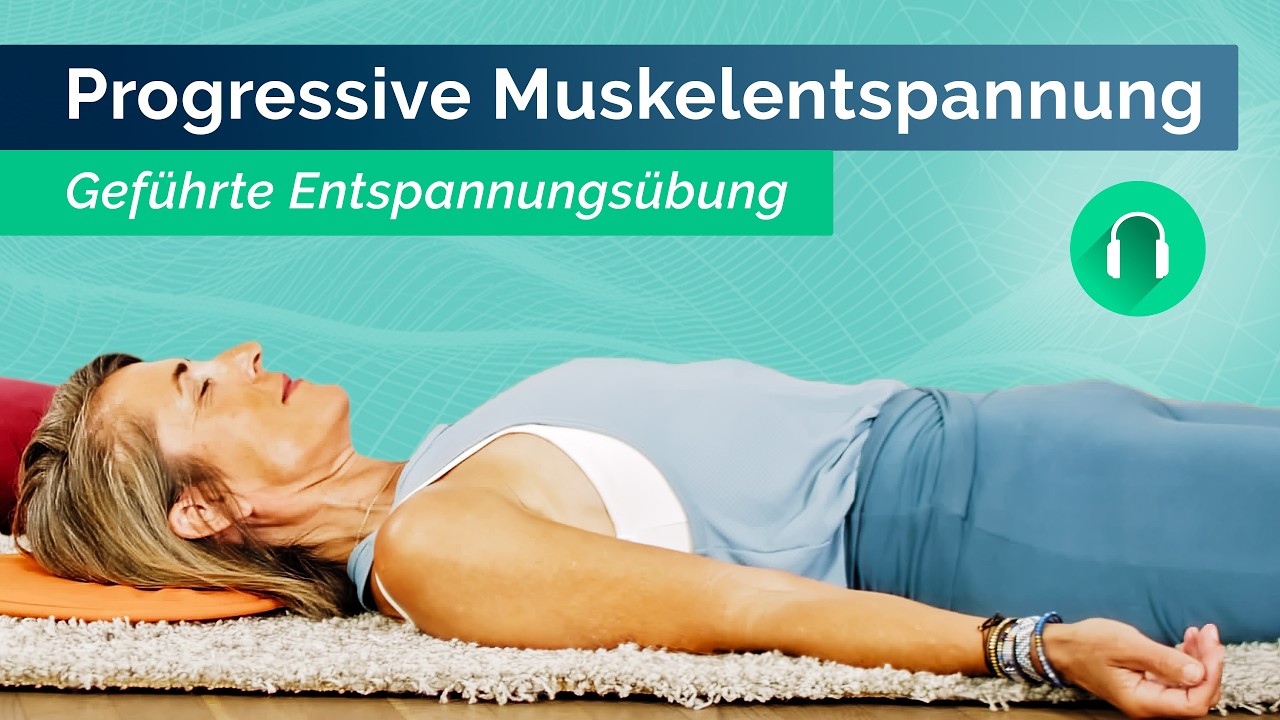
Maria guides you step by step through the entire exercise—perfect for beginners and advanced practitioners alike.
Duration: 23-minute complete guide
To the guided PMRMeditation
Meditation calms the mind — and a calm mind harmonizes the body. In TCM, we know that every emotion affects a specific organ. Through regular meditation, you learn to break out of destructive thought patterns, find emotional balance, and strengthen your inner core.
Modern studies confirm: Meditation has been proven to change brain structure, reduce stress hormones, strengthen the immune system, and improve self-healing powers. Just 10 minutes a day can change your life forever.
Recommended meditations
GUIDED MEDITATIONS FOR EVERY DAY
Your personal meditation library
We have a complete Playlist with over 60 guided meditations, breathing exercises, and relaxation techniques—from short 5-minute meditations for in between to deep 30-minute sessions for intensive practice.
In the playlist you will find:
- Morning meditations for a mindful start to the day
- Meditations for restful sleep
- Breathing meditations for inner peace
- Meditations against stress, brooding, and worries
- TCM standing meditations for all 5 elements
- Body scan and body journeys
- Healing meditations to activate self-healing powers
- Special breathing techniques (4–7–8, coherent breathing, bee breathing)
Perfect for beginners and advanced practitioners. Choose the right meditation for you depending on your time, the time of day, and your needs.
To the meditation playlistWei-Qi is the guardian of the body.
It circulates on the surface, protects against external intruders, and regulates the opening and closing of pores.
— From the HUANG DI NEI JING
(The Yellow Emperor's Classic of Internal Medicine)
More tips for your everyday life
In addition to traditional TCM treatment methods There are many small everyday habits that can strengthen your Wei Qi. In TCM, Wei Qi is your protective shield against external influences—with the right habits, you can effectively build it up and maintain it.
Protection from wind and cold
🧣 Keep your neck and shoulders warm
Wei-Qi protects your body surface — help it do so:
- Always wear a scarf or neckerchief around your neck — especially in windy conditions.
- The „Wind Gate“ (Feng Men) point on the upper back is particularly sensitive.
- Cover your shoulders and upper back, even in summer (air conditioning!).
- Put on dry clothes immediately after sweating.
- Cover your hair in windy conditions — wind penetrates through the head
🏠 Zugluft vermeiden
Wind is the „carrier of 100 diseases“:
- Do not sleep under an open window.
- Do not direct air conditioning directly at the body.
- Dry thoroughly after showering or bathing and keep warm.
- Do not go outside with wet hair.
- Do not point fans directly at the body.
❄️ Avoid the cold
Cold further weakens the Wei-Qi:
- Keep your feet warm — cold feet weaken your immune system
- Cover the kidney and lumbar region
- Do not sit on cold surfaces (stone, metal)
- Prefer warm drinks — no ice-cold drinks
- Use a hot water bottle or warm foot baths in winter
Hardening and exercise in the fresh air
🌳 Regelmäßig an die frische Luft
Wei-Qi is strengthened through contact with nature:
- At least 30 minutes of fresh air every day
- Go outside in any weather — dressed appropriately
- Breathe in the morning at sunrise - the Qi is strongest then
- Prefer forests or parks — „forest bathing“ strengthens the immune system
- Soaking up sunlight — important for the immune system
🏃 Sanfte, regelmäßige Bewegung
Movement activates the Wei-Qi:
- Qi Gong — especially „Drawing the Bow“ for Wei-Qi
- Tai Chi — flowing movements strengthen the immune system
- Light jogging or walking in the fresh air
- Swimming (but dry off thoroughly and keep warm afterwards)
- No overexertion — exhaustion weakens the Wei-Qi
💪 Sanfte Abhärtung
Train your Wei-Qi step by step:
- Contrast showers — start slowly with lukewarm/cool
- Wash your face and hands with cold water in the morning.
- Dry brushing before showering — stimulates the Wei Qi
- Walking barefoot on grass or sand (in warm weather)
- Increase slowly — toughening up takes time and regularity
Sleep and regeneration
🌙 Ausreichend Schlaf
Wei-Qi regenerates during sleep:
- 7–8 hours of sleep per night is ideal
- Go to bed before 11 p.m. — gallbladder time begins
- Maintain regular bedtimes
- Keep the bedroom cool, dark, and well ventilated.
- No screens 1 hour before bedtime
😴 Qualität des Schlafs
Deep sleep strengthens the immune system:
- Eat lightly in the evening — not too late and not too heavy
- Relaxation ritual before bed (tea, reading, meditation)
- No caffeine after 2 p.m.
- Warm feet help you fall asleep
- For problems falling asleep: Acupressure at point He 07 (Shenmen)
⏸️ Breaks in everyday life
Wei-Qi also needs rest during the day:
- Plan short breaks - every 90 minutes
- A short nap (20 minutes) can help
- Don't push yourself when you're tired
- At the first signs of a cold: rest and warmth
- Exhaustion is a warning sign — take it seriously
Avoid stress — it weakens the Wei-Qi
😰 Wie Stress das Wei–Qi schwächt
In TCM, stress consumes protective qi:
- Chronic stress exhausts the qi as a whole
- Tension blocks the flow of qi
- Worrying and brooding weaken the spleen and lungs — the sources of Wei Qi.
- Anger and frustration heat up the qi and make it unstable.
- When you are stressed, you become more susceptible to infections.
🧘 Stressbewältigung
Protect your Wei Qi through inner peace:
- Daily relaxation exercises (Qi Gong, meditation, breathing exercises)
- Setting boundaries — learning to say no
- Set priorities — not everything has to be perfect
- Plan regular breaks
- Hobbies and activities that bring joy
🌿 Natürliche Stresskiller
Diese Aktivitäten bauen Stress ab und stärken das Wei–Qi:
- Spending time in nature
- Maintain social contacts — loneliness weakens you
- Laughter — proven to strengthen the immune system
- Creative activities (painting, music, crafts)
- Practice gratitude — write down three positive things every evening
Seasonal adjustment
🍂 Herbst — Die Lunge stärken
Autumn is the season of the lungs and the metal element:
- Pay special attention to heat — change comes quickly
- Eat moisturizing foods (pears, almonds, honey)
- Nourish the lungs—they produce Wei Qi
- Practice letting go — emotionally and materially
- Good time for acupuncture and herbal remedies
❄️ Winter — Preserving Wei-Qi
Preserving yang in winter:
- Go to bed early, get up late (with the sun)
- Warming foods — soups, stews, spices
- Reduce activity — focus energy inward
- Keep especially warm — kidneys, feet, neck
- Astragalus tea to strengthen Wei Qi
🌸 Frühling — Langsam aufbauen
The qi begins to rise outward:
- Increase outdoor exercise
- Lighter fare — less heavy food
- Be careful in changeable weather
- Intensify stretching exercises and qi gong
- Supporting the liver — it distributes qi
☀️ Summer — Strengthen with caution
Yang is strongest — but beware of air conditioning:
- Avoid overheating — avoid strenuous activity
- Avoid cool rooms after sweating
- Air conditioners are a common cause of wind and cold invasion.
- Light exercise in the morning or evening
- Good time to train the Wei-Qi through gentle hardening
💡 Important to know
Strengthening your Wei Qi requires patience and consistency. It is like training a muscle—only through consistent practice will your immune system become stronger. Pay attention to your body's signals and allow yourself to rest at the first signs of weakness. Over time, you will become more resistant to external influences and enjoy a more stable sense of well-being.
For optimal treatment progress
TCM is not a quick fix for symptoms., but rather a holistic healing process. You will achieve the best results if you consistently integrate the treatment into your daily routine and give your body time to regenerate.
Integration into everyday life
Start with ONE step
Don't try to change everything at once! That's overwhelming and leads to
usually leads to you giving up. Instead:
- Weeks 1–2: Dress warmly, avoid wind, eat a warm breakfast
- Weeks 3–4: Qi Gong „Drawing the bow“ daily for 10 minutes.
- Weeks 5–6: Integrate acupressure points Lu 09 and Ma 36
- Weeks 7–8: Immune-boosting foods such as shiitake mushrooms and astragalus
- From week 9: Add herbs that strengthen Wei-Qi
Realistic expectations
After 2–3 weeks: First improvements noticeable
- Less spontaneous sweating
- Improved thermal comfort
- Less sensitive to cold
After 6–8 weeks: Significant improvements
- Significantly fewer colds
- Stronger immune system
- More energy
After 3–6 months: Sustainable healing
- Wei-Qi is significantly strengthened
- Robust immunity
- Resistant to external influences
TCM vs. Western medicine
TCM and Western medicine are not mutually exclusive — they complement each other!
When Western medicine is important:
- In acute emergencies
- In case of structural damage
- In case of infections
- For accurate diagnoses (laboratory, imaging)
Where TCM has its strengths:
- In case of functional disorders
- For chronic complaints
- For prevention
- For holistic healing
Ideal: Combine both systems! Use Western medicine for
Acute treatment and accurate diagnosis, TCM for lasting healing
and strengthening the body's self-healing powers.
Important: Never stop taking prescribed medication without consulting your doctor first!
Talk to your doctor when you start TCM treatment.
TCM diagnosis for professionals
Syndrome differentiation according to TCM:
Tongue: Pale, possibly slightly swollen, thin white coating
Pulse: Weak and superficial (Fu Mai 浮脉), especially at the right Cun position
Pathomechanism:
The Wei-Qi can no longer adequately protect the body's surface. The pores do not close properly, leading to spontaneous sweating. External pathogenic factors such as wind and cold easily penetrate the body.
Treatment principle:
Bu Wei Qi, Gu Biao (补卫气, 固表) — Tonify Wei Qi and consolidate the surface
Classic recipe:
Yu Ping Feng San (玉屏风散) — Jade Windscreen Powder as a base
Important modifications depending on accompanying symptoms:
- For heavy sweating: + Mu Li, Fu Xiao Mai
- For frequent colds: + Fang Feng, Jing Jie
- For simultaneous spleen qi deficiency: + Ren Shen, Bai Zhu
Every step counts
Your body WANTS to heal—you just have to create the right conditions for it to do so.
Remember:
👣 Every little step counts
You don't have to be perfect. Even one warm meal a day is better than none. Even 5 minutes of qigong is better than no exercise at all.
⏳ Patience pays off
It took years for your body to get into this state. Give it time to regenerate. Healing takes time, but it WILL happen.
🎯 Focus on what you can DO
Don't concentrate on what you are doing „wrong". Focus on every positive step you take.
💚 Be good to yourself
Perfection does not exist. It is acceptable to have an off day occasionally. Tomorrow is a new day when you can continue.
🤝 You are not alone
Thousands of people are walking this path with you. For over 2,000 years, TCM has been helping people like you who want to regain their health.
Measure your healing progress

To track your progress with treatment, we recommend that you repeat the TCM analysis after about 3 months.
Why is this important?
- You can see how your condition has improved.
- You can adjust the treatment as needed.
- It motivates you to keep going
- You recognize which measures work best
⚠️ Important: Your answers today will be stored in encrypted form in a code that you received by email. You can only measure your progress later with this code. Keep the email safe!
Activate reminder:
<>In 12 weeks, you'll receive an email with a link to the TCM analysis. When you fill it out, you can enter your personal health code—then you'll see a comparison overview at the end:
→ Your new values
→ Your scores from today's test
→ Direct changes
This allows you to see at a glance whether your symptoms
have improved!
🔒 YOUR DATA IS SAFE
We store:
✓ Only your email address for reminders
✓ The date for shipping
We do NOT store:
✗ Your analysis results
✗ Your personal health data
✗ The connection between email and diagnosis
All analysis data is completely anonymous and is not linked to your email address.
Newsletter
Stay up to date with our newsletter. Besides useful tips and tricks for training and your everyday life, you won't miss any of our new releases.
We are here for you
Do you have questions about your diagnosis or treatment?
Not sure which method is right for you?
Contact us — We're happy to help!