






On this page, you will learn:
- What this diagnosis means from the point of view of TCM and Western medicine
- Where your symptoms come from and how they are connected
- Which specific treatment methods can help you now
- How you can use TCM herbs, acupressure, Qi Gong and nutrition to eliminate moisture and heat from your intestines and rebalance your digestion
The good news: Feuchte Hitze im Dickdarm lässt sich mit den richtigen Maßnahmen gut behandeln. Mit kühlender Ernährung, gezielter Akupressur und bewährten TCM–Kräutern kannst du die Hitze klären und die Feuchtigkeit ausleiten — dein Darm wird es dir danken.
Take your time, Get to know the different treatment approaches—you don't have to implement everything at once. Choose what feels right for you and what you can easily integrate into your everyday life.
Your treatment at a glance:
Which TCM pattern is really behind your complaints?
Degree of
imbalance

Mittel bis Deutlich
Typical
treatment duration

2 - 4 months
self-treatment
Possible

Partly self-treatable
Treatment–
scope

2–3 methods
Proposed
methods

Extensive range
Our free TCM analysis shows you your personal TCM pattern in just 10 minutes - and which treatment will help you best.
Was ist Feuchte Hitze Dickdarm?
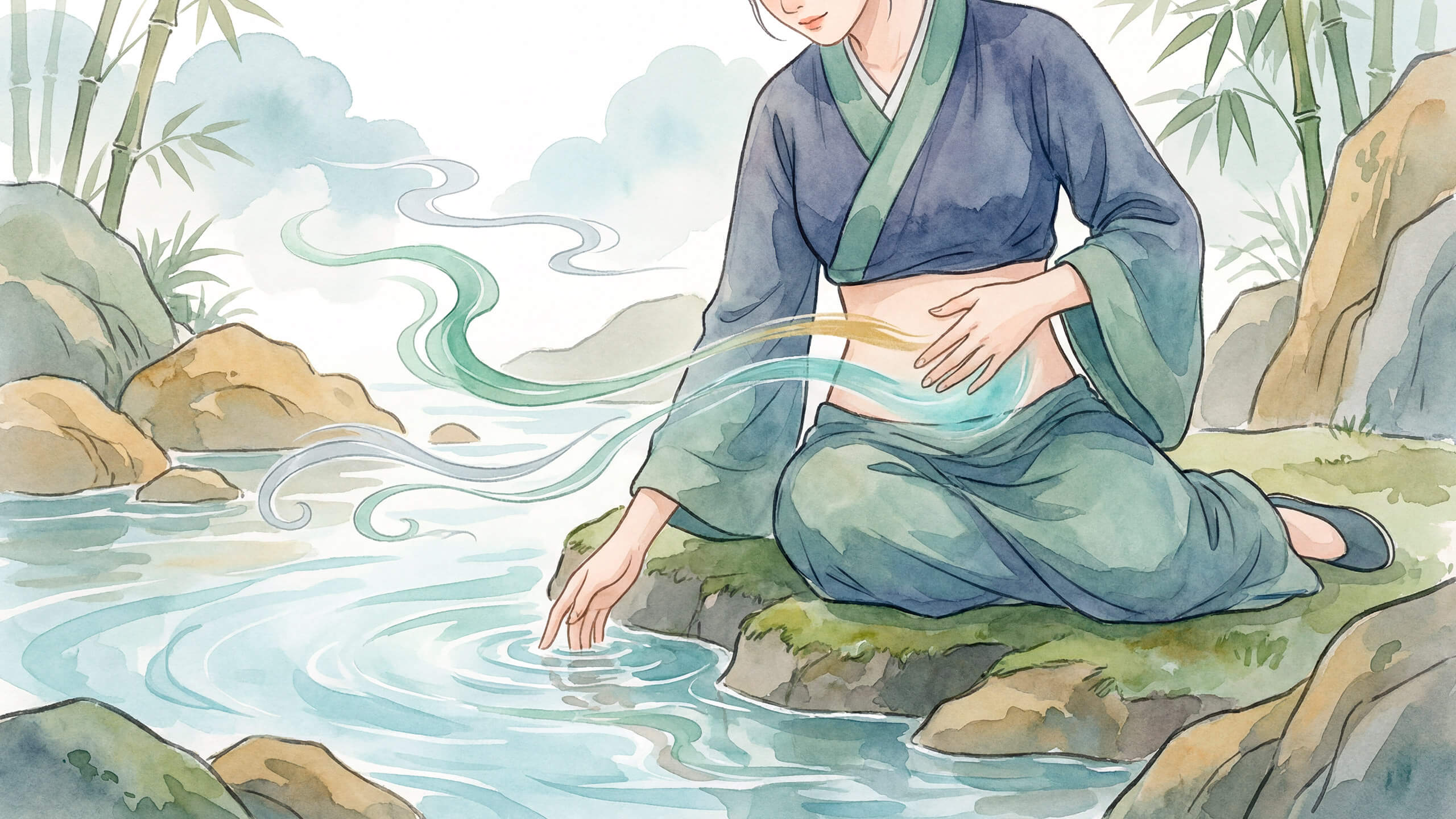
When moisture and heat strain the intestines
The TCM perspective: When the intestines sink into damp heat
In traditional Chinese medicine, the intestine is much more than just a digestive organ. It is the „official of transportation and transformation“ - it separates the pure from the turbid, absorbs nourishing substances and expels waste products. If this process is disrupted, the body and mind become unbalanced.
Feuchte Hitze im Dickdarm (Chang Dao Shi Re) entsteht, wenn sich zwei pathogene Faktoren im Darm verbinden: Feuchtigkeit (Shi) und Hitze (Re). Die Feuchtigkeit ist schwer, klebrig und trüb — wie zähes Öl, das alles verstopft. Die Hitze ist brennend und treibend — sie beschleunigt und entzündet. Zusammen bilden sie ein hartnäckiges Muster, das den Darm in seiner Funktion massiv stört.
The spleen plays a central role here: in TCM, it is responsible for the transformation of body fluids. If the spleen is weakened - through poor diet, excessive brooding or external exposure to dampness - it can no longer transform dampness. The dampness accumulates and combines with heat, which can be caused by spicy food, alcohol, stress or external heat.
The result: The bowel can no longer separate the pure from the turbid. The stool becomes thin, urgent, foul-smelling and sometimes mixed with mucus or blood. The abdomen feels full, distended and full of pressure. It burns during bowel movements. The whole body feels heavy and tired, although at the same time there is an inner restlessness.
Die typischen Zeichen von Feuchter Hitze im Dickdarm:
- Diarrhea with an urgent urge to defecate and a burning sensation
- Foul-smelling, sticky stools, possibly with mucus or blood
- Abdominal pain and cramps, especially before bowel movements
- Flatulence and a strong feeling of fullness
- Nausea and loss of appetite
- Feeling of heaviness in the whole body
- Tiredness despite inner restlessness
- Thirsty, but no desire to drink a lot
- Yellowish skin or eye tint in severe cases
The good news: Feuchte Hitze im Dickdarm lässt sich mit den richtigen Maßnahmen gut behandeln. Durch kühlende, leichte Ernährung, gezielte TCM–Kräuter und sanfte Bewegung kannst du die Hitze klären und die Feuchtigkeit ausleiten — dein Darm kann wieder frei arbeiten.
The Western perspective: Intestinal inflammation and disturbed intestinal flora
Aus westlicher Sicht entspricht Feuchte Hitze im Dickdarm einem Zustand chronischer oder akuter Darmentzündung, verbunden mit einer gestörten Darmflora (Dysbiose). Der Darm ist gereizt, die Schleimhaut entzündet und die natürliche Balance der Darmbakterien ist aus dem Gleichgewicht geraten.
Imagine your bowel like a river: Normally, the water flows clear and evenly. In humid heat, the river is polluted and overheated - instead of clear water, cloudy, hot broth flows. The banks (intestinal mucosa) are attacked, the fish (beneficial intestinal bacteria) die and algae (harmful germs) spread.
Modern research shows that inflammatory bowel diseases are associated with a change in the intestinal flora. Certain bacterial strains take over, while protective bacteria decrease. The intestinal mucosa becomes more permeable („leaky gut“), inflammatory messengers are released and the immune system reacts excessively.
What does modern medicine show?
- Irritable bowel syndrome (IBS): Chronic abdominal pain, bloating and irregular bowel movements - the most common findings
- Chronic inflammatory bowel diseases: Crohn's disease and ulcerative colitis show strong parallels to the TCM diagnosis of damp heat
- Dysbiosis: Imbalance of the intestinal flora with a predominance of harmful germs
- Food intolerances: Lactose, fructose or histamine intolerance can trigger similar symptoms
- Infectious gastroenteritis: bacterial or viral intestinal infections as an acute cause
- Elevated inflammatory markers: CRP, calprotectin in the stool as measurable signs
Modern research confirms: Die TCM–Diagnose „Feuchte Hitze Dickdarm“ korreliert stark mit messbaren Entzündungsmarkern und Veränderungen der Darmflora. TCM–Kräuter wie Huang Lian (Rhizoma Coptidis) zeigen in Studien antimikrobielle, antientzündliche und darmflora–regulierende Wirkungen — die Wissenschaft entdeckt gerade, was die TCM seit Jahrtausenden nutzt.
This is exactly where TCM treatment comes in: It clears the heat, drains the moisture, strengthens the spleen for better transformation and restores the natural intestinal function - profoundly, sustainably and holistically.

The Yellow Emperor team explains your diagnosis
Qi Bo | The Yellow Emperor | Dr. Lisa Weber
MASTER OF THE HEALING ARTS | TCM FOUNDER | MODERN PHYSICIAN
What happens when the legendary Yellow Emperor from TCM sits down with his advisor Qi Bo and a modern doctor? They discuss your diagnosis - with 4000 years of knowledge AND current science.
Feuchte Hitze Dickdarm — Wenn Feuchtigkeit und Hitze den Darm belasten und die Verdauung stören
The Yellow Emperor: „Qi Bo, I observe people in my realm who suffer from an urgent urge to defecate, whose stool is foul-smelling and sticky, whose abdomen is constantly distended and painful. Some report blood and mucus in their stool, others a burning sensation. What is the cause of this suffering?“
Qi Bo: „Majestät, diese Menschen leiden an Feuchter Hitze im Dickdarm — Chang Dao Shi Re genannt. Zwei pathogene Faktoren haben sich im Darm verbunden: Die Feuchtigkeit (Shi) ist schwer, klebrig und trüb — wie zäher Morast, der alles blockiert. Die Hitze (Re) ist brennend und treibend — sie entzündet und beschleunigt. Zusammen bilden sie ein besonders hartnäckiges Muster. Der Darm kann das Reine nicht mehr vom Trüben trennen, der Stuhl wird dünn und dringend, die Hitze brennt die Schleimhäute und verursacht Blut und Schleim. Es ist, als würde ein Sumpf in der Mittagshitze gären — stinkend, klebrig und unangenehm.“
Dr. Weber: „A very vivid description! In Western medicine, we see a picture here that is reminiscent of inflammatory bowel diseases - from acute gastroenteritis to irritable bowel syndrome and chronic inflammatory diseases such as ulcerative colitis. The inflammation of the intestinal mucosa leads to increased secretion, accelerated peristalsis and impaired absorption - this explains the diarrhea, the mucus and the urge. The presence of blood indicates that the mucous membrane is affected. And the foul odor is caused by an altered intestinal flora with a predominance of putrefactive bacteria.“
The Yellow Emperor: „Where does this combination of moisture and heat in the intestine come from?“
Qi Bo: „Majesty, the causes are manifold. Firstly, a poor diet - excessive consumption of fatty, spicy or fried foods generates heat and moisture directly in the intestines. Too much alcohol is particularly harmful - it is moist and hot at the same time. Secondly, a weakened spleen - if the spleen cannot fulfill its transformative function, dampness accumulates. This combines with heat that comes from outside or inside. Thirdly, external influences - in hot and humid climates, damp heat penetrates from outside and settles in the intestines. Fourth: Emotional stress - anger and frustration generate liver heat, which attacks the intestines. The liver ‚invades‘ the spleen - Mu Wu Tu - and disrupts the entire digestive system.“
Dr. Weber: „That is remarkably differentiated! Modern research confirms all these correlations. A diet high in processed foods, saturated fats and sugar has been shown to promote inflammatory processes in the gut and negatively alter the intestinal flora. Alcohol directly damages the intestinal mucosa and increases its permeability - the infamous ‚leaky gut‘. Chronic stress activates the gut-brain axis: stress hormones such as cortisol alter intestinal motility, mucosal blood flow and the immune response. And tropical infections caused by pathogenic germs in hot and humid climates are, of course, a classic of travel medicine!“
The Yellow Emperor: „You mentioned the spleen as playing a central role. Explain that in more detail.“
Qi Bo: „Majesty, the spleen is the key to understanding this pattern. The spleen ‚hates‘ moisture - it is the organ of transformation and distribution of body fluids. When the spleen is strong, fluids are distributed correctly: Useful is absorbed, superfluous is expelled. However, when the spleen is weakened, the fluids stagnate and become pathogenic dampness. This moisture is like a wet sponge in the body - heavy, sticky and sluggish. When heat is added - through poor diet, external heat or liver fire - it combines with the dampness to form damp heat. And because moisture sinks downwards, this pattern particularly likes to collect in the intestines.“
Dr. Weber: „The spleen as the central digestive organ - this correlates wonderfully with the concept of the intestinal barrier and the immune system! The intestinal mucosa is actually our largest immune organ. If its function is impaired, toxins and germs can penetrate. The ‚dampness‘ of TCM corresponds in modern terms to increased mucus production, edema of the intestinal wall and the accumulation of fluid in the intestinal lumen. The ‚heat‘ correlates with inflammatory markers such as CRP and calprotectin. And the link between spleen weakness and dampness is reflected in the finding that a weakened gut barrier leads to increased permeability and inflammation.“
The Yellow Emperor: „Welche Zeichen am Körper verraten Feuchte Hitze im Dickdarm?“
Qi Bo: „The signs are very clear, Your Majesty. The tongue is red - that shows the heat. The coating is thick, yellow and sticky - especially in the middle and back, the area of the stomach and intestines. This is the classic sign of Damp Heat. The pulse is slippery - Hua Mai - indicating Dampness sliding in the body. It is also rapid - Shuo Mai - indicating Heat. The stool is urgent, foul-smelling and burning. The urine is dark yellow and concentrated. And the patient feels heavy and tired, as if he is wearing a wet coat - and at the same time inwardly restless due to the heat.“
Dr. Weber: „Tongue diagnostics are amazingly informative! We actually see a reddened, coated tongue in intestinal infections and inflammatory diseases. The yellow coating correlates with bacterial overgrowth and changes in oral flora, which often occur with intestinal problems. The dark urine shows dehydration due to fluid loss. And what you describe as a ‚slippery‘ pulse could correspond to increased cardiac output in systemic inflammation. TCM has developed a coherent diagnostic system that correlates amazingly well with our laboratory parameters!“
The Yellow Emperor: „Now let's talk about the treatment. How can the moist heat be removed from the intestine?“
Qi Bo: „Your Majesty, the treatment principle is: Qing Re Li Shi - clear the heat and expel the moisture. This is done in several ways. Firstly, clearing the heat - with cooling, bitter herbs that directly extinguish the heat in the intestines. Huang Lian (Coptis) and Huang Qin (Scutellaria) are the most important herbs here. Secondly, transform and eliminate dampness - with aromatic and diuretic herbs that dissolve turbid dampness. Third: Strengthen the spleen - so that it can transform the dampness again and no new dampness is created. Fourthly, regulate the intestines so that they can resume their transportation function. And fifthly, change the diet - cooling, light and draining moisture.“
Dr. Weber: „This is a comprehensive treatment concept! Huang Lian - Coptis chinensis - is fascinating: the main active ingredient berberine has shown antimicrobial, anti-inflammatory and antidiarrheal effects in numerous studies. It inhibits pathogenic intestinal bacteria, reduces inflammatory markers and - particularly exciting - positively regulates the intestinal flora! Berberine promotes the growth of Lactobacillus and Bifidobacterium. Huang Qin - Scutellaria baicalensis - also contains baicalin and wogonin with strong anti-inflammatory properties. The combination of antimicrobial effect, anti-inflammation and intestinal flora regulation is exactly what modern gastroenterology is aiming for!“
The Yellow Emperor: „What about the classic herbal formulas?“
Qi Bo: „Majestät, die Hauptrezeptur bei Feuchter Hitze im Dickdarm ist Ge Gen Qin Lian Tang — das Pueraria, Scutellaria und Coptis Dekokt. Es enthält: Ge Gen (Kudzu–Wurzel) als Kaiser — er löst die Oberfläche und hebt das klare Yang, damit die Milz wieder aufsteigend wirken kann. Huang Qin (Baikal–Helmkraut) als Minister — klärt Hitze und trocknet Feuchtigkeit im Darm. Huang Lian (Goldfaden) als Assistent — klärt die Hitze besonders stark im mittleren und unteren Erwärmer. Und Gan Cao (Süßholz) als Harmonisierer — harmonisiert alle Kräuter und schützt den Magen. Bei schwerem Verlauf mit Blut und Schleim setzen wir Bai Tou Weng Tang ein — das Pulsatilla Dekokt — das noch stärker Hitze klärt und Toxine ausleitet.“
Dr. Weber: „Ge Gen - Pueraria lobata - contains puerarin and daidzein, which have been shown to have an anti-inflammatory effect and protect the intestinal mucosa. The combination with berberine from Huang Lian and baicalin from Huang Qin results in a synergistic antimicrobial and anti-inflammatory profile. Studies show that Ge Gen Qin Lian Tang significantly reduces stool frequency and lowers inflammatory markers in acute diarrhea. Particularly impressive: the formula positively changes the intestinal flora composition and strengthens the intestinal barrier. An 1800-year-old formula with solid scientific evidence!“
The Yellow Emperor: „What role does nutrition play in treatment?“
Qi Bo: „Majestät, die Ernährung ist bei Feuchter Hitze im Dickdarm von entscheidender Bedeutung — sie kann heilen oder verschlimmern! Das Grundprinzip: Kühlend, leicht und Feuchtigkeit ausleitend. Mungbohnen sind hervorragend — sie klären Hitze und leiten Feuchtigkeit aus. Weißer Reis ist sanft und stützt die Mitte, ohne Feuchtigkeit zu erzeugen. Gerste und Hiobsträne (Yi Yi Ren) leiten Feuchtigkeit kräftig aus. Gurke, Wintermelone und Zucchini kühlen und befeuchten schonend. Grüner Tee klärt Hitze und beruhigt. MEIDEN muss man: Scharfes — es erzeugt Hitze. Fettiges und Frittiertes — es erzeugt Feuchtigkeit. Alkohol — er ist feucht UND heiß. Milchprodukte — sie erzeugen Feuchtigkeit. Zucker — er nährt die pathogene Feuchtigkeit.“
Dr. Weber: „The nutritional recommendations are based on excellent scientific evidence! Mung beans contain flavonoids and polyphenols with anti-inflammatory and antimicrobial effects. Barley provides beta-glucans, which have a positive effect on the intestinal flora and strengthen the intestinal barrier. The recommendation to avoid sugar and processed foods is fully in line with current gastroenterological guidelines: Sugar and saturated fats promote inflammatory intestinal processes and encourage the proliferation of pathogenic germs. And alcohol is one of the strongest risk factors for a disturbed intestinal barrier. TCM nutrition is practically applied intestinal medicine!“
The Yellow Emperor: „Dann ist die Botschaft klar: Feuchte Hitze im Dickdarm ist ein hartnäckiges, aber behandelbares Muster. Die Hitze muss geklärt, die Feuchtigkeit ausgeleitet und die Milz gestärkt werden — mit Kräutern, Ernährung und Geduld.“
Qi Bo: [smiles] „That's right, Your Majesty. The intestines are like a river that needs to be cleansed. If we clear the murky waters, remove the sludge and strengthen the riverbed, the water will flow clear and pure again. With the right diet, cooling herbs and patient care, the intestines regain their natural cleansing power - and with it, well-being and lightness return to the entire body.“
THE 3-WAY METHOD FOR DAMP HEAT IN THE INTESTINE
MORNING PROTOCOL (clarify heat):
- TCM: Light, cooling breakfast - the spleen needs gentle nourishment in the morning, not heavy food
- Science: A light breakfast with complex carbohydrates promotes intestinal motility and stabilizes blood sugar levels
- Practical: Rice congee with some mung beans, or steamed rice with light vegetables
- TCM: Warm water with fresh mint - gently cools the heat and opens the Qi flow
- Science: Peppermint contains menthol with an antispasmodic and cooling effect on the intestines
- Practical: Infuse 3-5 fresh mint leaves in warm water, drink on an empty stomach
- TCM: Acupressure on Tue 04 (Hé Gǔ) - clears heat in the large intestine and regulates the bowel
- Science: Stimulation of this point activates the vagus nerve and reduces inflammatory markers
- Practical: In the hollow between thumb and index finger. Press firmly for 3 minutes per hand
TAGS-STRATEGY (remove moisture):
- TCM: Eat light and cool at lunchtime - the intestines need relief, not strain
- Science: Light meals reduce the strain on the inflamed bowel and promote healing
- Practical: Steamed vegetables with rice, light soups, no spicy or greasy food
- TCM: Drink barley water - Yi Yi Ren (Job's tears) powerfully draws out moisture
- Science: Barley contains beta-glucans, which have a positive effect on the intestinal flora and reduce inflammation
- Practical: Boil 2 tablespoons of barley in 1 liter of water for 30 minutes, drink throughout the day
- TCM: Don't sit too much - movement promotes the flow of Qi and helps to eliminate moisture
- Science: Moderate exercise improves intestinal motility and reduces inflammatory markers
- Practical: Short walk after eating (15-20 minutes), get up every 90 minutes
EVENING RITUAL (calm the bowels):
- TCM: Gentle Qi Gong „Qi regulation“ - harmonizes the Qi flow in the center
- Science: Gentle movement activates the parasympathetic nervous system and promotes intestinal regeneration
- Practical: 10-15 minutes of gentle Qi Gong exercises before dinner
- TCM: Acupressure on Ma 36 (Zú Sān Lĭ) - strengthens the center and regulates bowel function
- Science: Stimulation of this point has been shown to improve intestinal motility and reduce inflammatory reactions
- Practical: A hand's width below the kneecap, to the side of the shin. Press for 3 minutes on each side
- TCM: Early, light dinner - the intestines need rest at night to regenerate
- Science: Late, heavy meals put a strain on digestion and disrupt sleep
- Practical: A light soup or steamed vegetables before 7 p.m., nothing to eat afterwards
The Yellow Emperor: „Qi Bo, wie lange dauert es, bis die Feuchte Hitze im Dickdarm gelöst ist?“
Qi Bo: „Majesty, damp heat is stubborn - the moisture sticks and the heat burns in. But with consistent treatment there are improvements. After 2-3 weeks, most people notice: less diarrhea and abdominal pain, improved stool appearance, less gas and bloating. After 6-8 weeks, the improvements become clearer: more stable digestion, more energy, a reduction in skin impurities and a feeling of heaviness. After 2-4 months, the damp heat can be largely eliminated - the bowel functions reliably again. The duration depends on how long the pattern has persisted and whether the diet is consistently changed.“
Dr. Weber: „This corresponds well with our clinical experience! In acute gastroenteritis, we often see an improvement after days to a few weeks. In the case of chronic inflammatory bowel disease or irritable bowel syndrome, it takes longer - 2-3 months are realistic for a significant improvement. The intestinal flora needs at least 3-6 months to normalize sustainably. And dietary change is indeed the key - studies show that dietary modifications lead to significant improvement in 60-70% of cases of irritable bowel syndrome. So patience and consistency are key!“
The Yellow Emperor: „What must be avoided at all costs?“
Qi Bo: „Majesty, the most important thing is: firstly, no alcohol - it is moist and hot at the same time and directly nourishes the pattern. Secondly, no hot spices - chili, pepper and the like generate heat in the intestines. Thirdly, no greasy and fried food - it creates dampness and stresses the spleen. Fourthly, no dairy products - they produce moisture and mucus. Fifth, no sugar and sweets - they feed the pathogenic dampness. And sixth, don't stay in a hot and humid environment - it reinforces the pattern from the outside.“
Dr. Weber: „Absolutely scientifically sound! Alcohol damages the intestinal mucosa and demonstrably increases its permeability. Hot spices contain capsaicin, which irritates the mucous membrane and increases intestinal motility - counterproductive for an already irritated intestine. Saturated fats promote inflammatory processes and negatively change the intestinal flora. Dairy products can exacerbate symptoms, especially in the case of concomitant lactose intolerance. And sugar is one of the strongest promoters of dysbiosis - it favors the growth of pathogenic germs at the expense of beneficial bacteria. The TCM recommendations are practically a summary of modern nutritional medicine!“
The Yellow Emperor: „Dann ist die Botschaft klar: Feuchte Hitze im Dickdarm ist hartnäckig, aber behandelbar. Mit kühlender Ernährung, den richtigen Kräutern und geduldiger Pflege können wir den Darm reinigen und seine natürliche Funktion wiederherstellen.“
Qi Bo: [smiles] „That's right, Your Majesty. Just as a polluted river becomes clear again if you remove the source of the pollution and give the water time - so too does the intestine regain its cleansing power. With light food, purifying herbs and the wisdom of patience, clarity and lightness return to body and mind.“
About our „3 Wise Men“ story
Who are the Yellow Emperor and Qi Bo?
The Yellow Emperor (Huangdi) is said to have lived around 2600 BC and is considered the mythical founder of Chinese culture and medicine. Qi Bo was his most important advisor and personal physician. Their discussions about health, illness, and human nature were recorded in the most important fundamental work of TCM.
The book: Huangdi Neijing
The Huangdi Neijing, also known as The Yellow Emperor's Classic of Internal Medicine, was probably written between 200 BC and 200 AD. It is the oldest surviving work on Chinese medicine and consists of dialogues between the Yellow Emperor and his advisors, mainly Qi Bo.
This work is to TCM what the Bible is to Christianity: the absolute foundation. All the important concepts - yin and yang, the 5 elements, qi, meridians and acupuncture points - are systematically described here for the first time.
Our modern approach: The 3 wise men
In our series „The Three Sages,“ we bring together the Yellow Emperor and Qi Bo with the fictional modern doctor and microbiologist Dr. Weber.
Important note: All three characters and their conversations are purely fictitious and invented by us.
We use this narrative form, similar to the dialogue form in the book Huangdi Neijing, to convey the often complex interrelationships of TCM in an understandable and entertaining way. When the 4,000-year-old emperor is confronted with modern science, enlightening „aha moments“ arise that show that ancient wisdom and new research often speak the same language — just in different words.
This makes TCM lively, understandable and practically applicable for your everyday life.
The dialogs are creative interpretations - not historical documents. For medical questions, please consult a qualified TCM therapist or doctor.
Your treatment options
Feuchte Hitze im Dickdarm ist sehr gut behandelbar! TCM offers you a variety of effective methods to eliminate dampness and heat from your intestines and harmonize your digestion. You don't have to do everything at once - choose the methods that suit you and your everyday life.
Here you will find specific treatment approaches that have been proven effective in TCM for thousands of years and that you can largely apply yourself.
TCM herbal therapy
TCM herbs are the basis every classic TCM treatment. The carefully compiled mixtures have a synergistic effect — this means that the individual herbs reinforce each other's effects and balance out any possible side effects.
What modern medicine is only just discovering—the power of plant substances—has been used successfully by TCM for over 2,500 years.
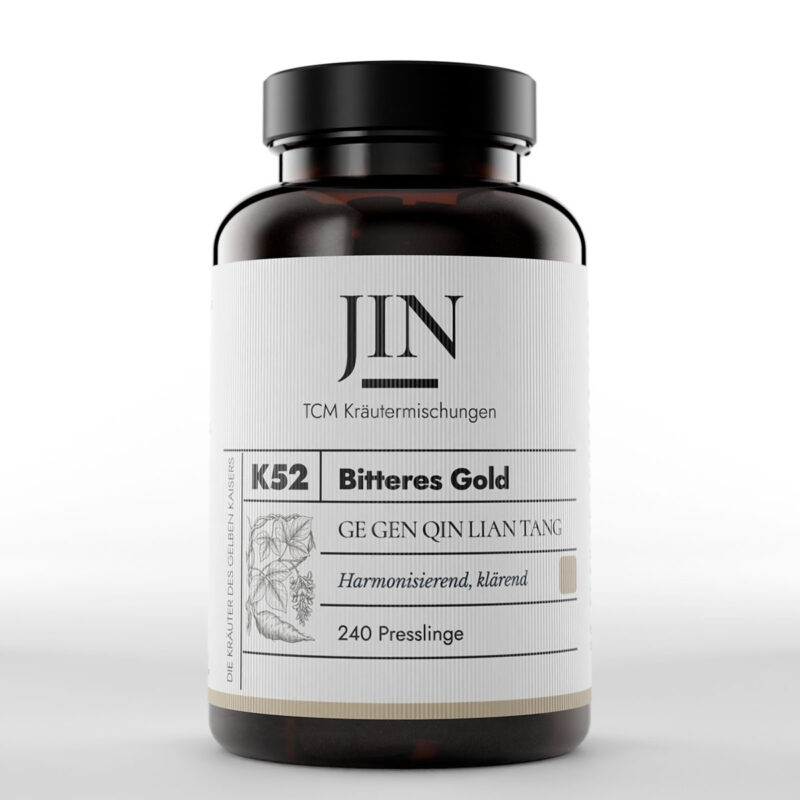
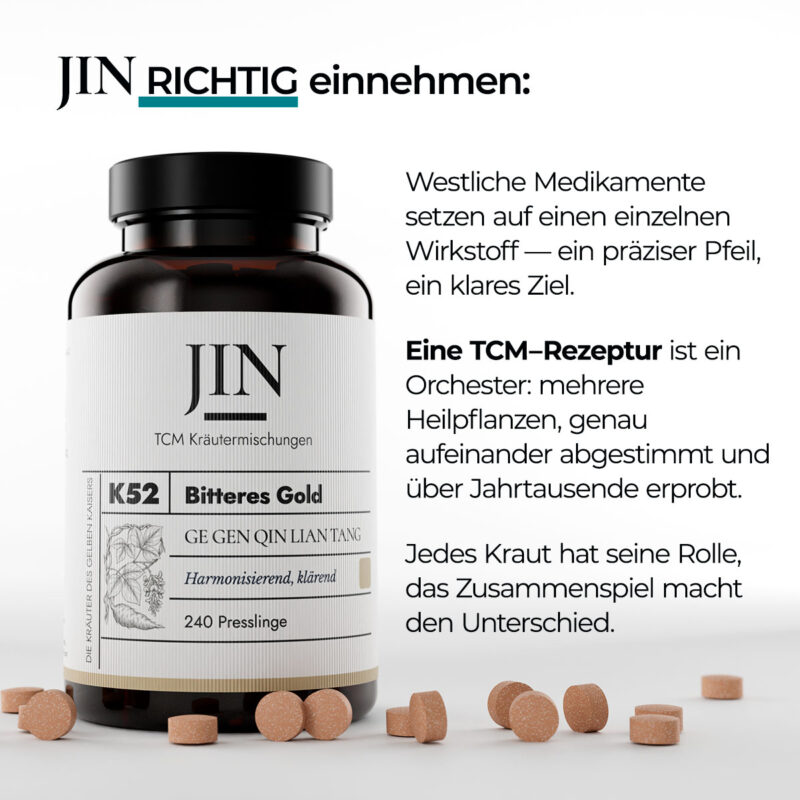
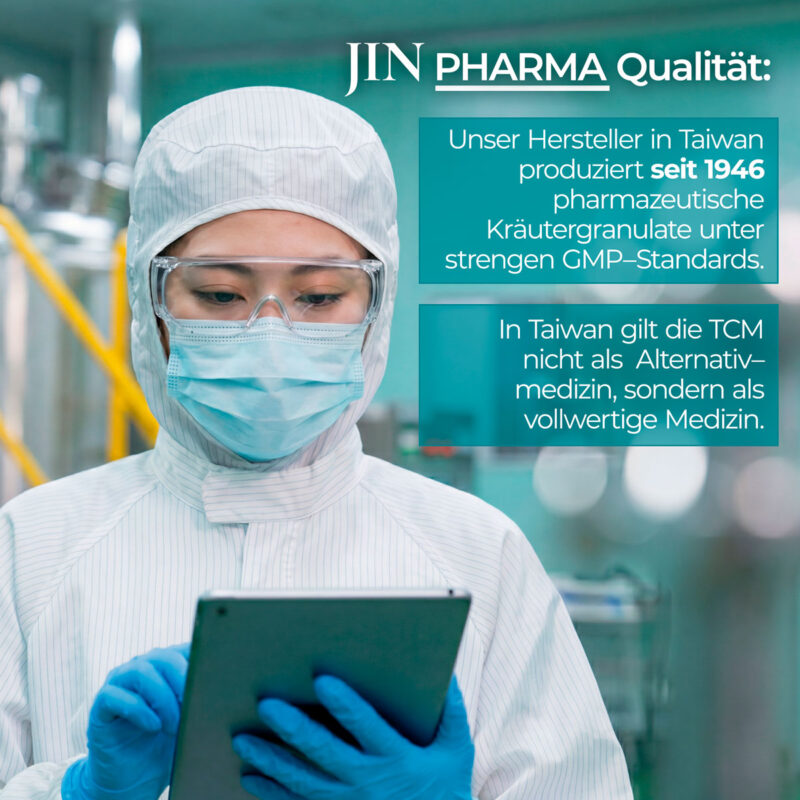
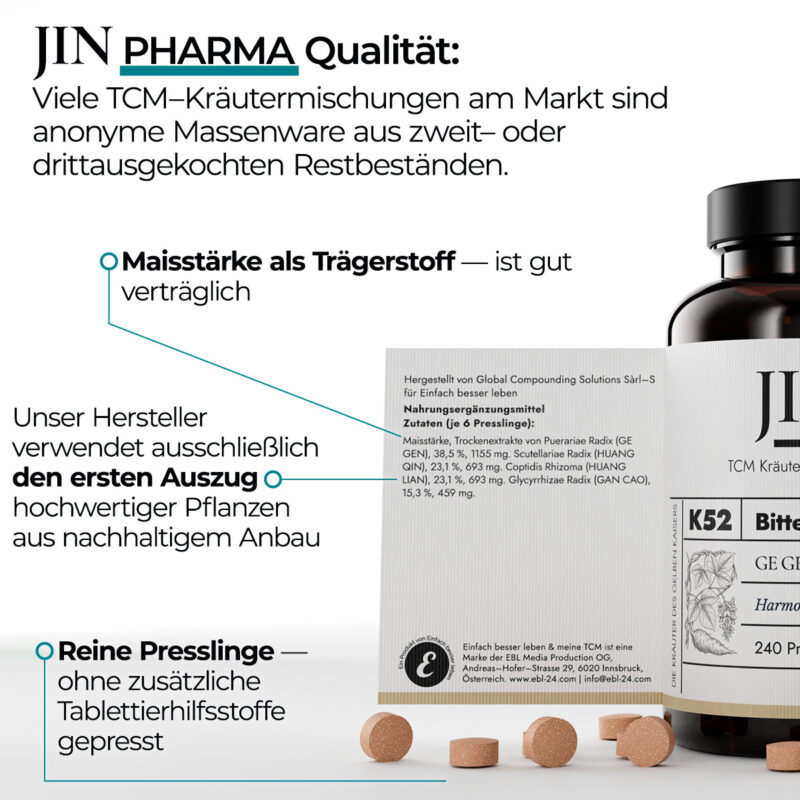
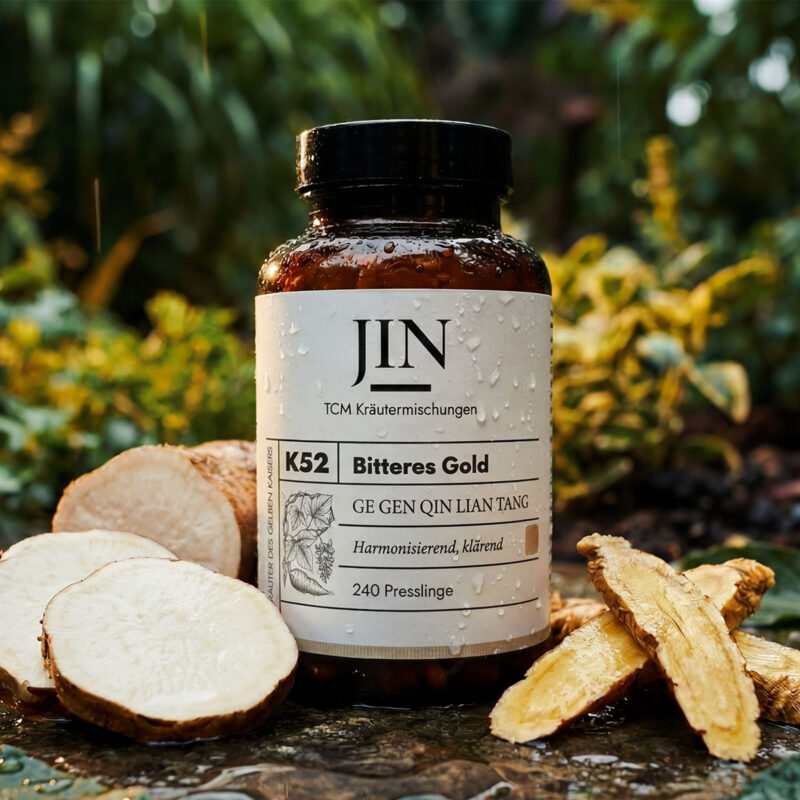
Empfohlene TCM–Kräutermischung bei Feuchter Hitze im Dickdarm
JIN K52 — Bitteres Gold
Die klassische Rezeptur Ge Gen Qin Lian Tang (葛根芩连汤) — das „Kudzu–Scutellaria–Coptis–Dekokt“. Vier Kräuter, die Feuchte–Hitze aus dem Dickdarm klären, das klare Yang anheben und hitzebedingten Durchfall stoppen.
Mit Ge Gen (Kudzu) als Hauptkraut hebt diese Mischung das klare Yang und stoppt den Durchfall, während Huang Qin und Huang Lian die Feuchte–Hitze im Dickdarm kräftig kühlen und Gan Cao Milz und Magen schützt. Ideal bei Durchfall mit Drang und Brennen, übel riechendem Stuhl, Bauchschmerzen, Hitzegefühl und Durst.
Quantity
314,70 €
i
To the product
The herbs in this recipeRecommended reading:How TCM herbal blends are formulatedLearn more now
| Herb (Pinyin) | German designation | Function in the recipe |
|---|---|---|
| Ge Gen (Puerariae Radix) | Kudzu root | emperor Hebt das klare Yang, löst Hitze aus der Muskelschicht, stoppt Durchfall |
| Huang Qin (Scutellariae Radix) | Baikal skullcap | minister Klärt Feuchte–Hitze aus oberem und mittlerem Erwärmer |
| Huang Lian (Coptidis Rhizoma) | Golden Thread Root | minister Klärt Hitze und trocknet Feuchtigkeit im Dickdarm |
| Gan Cao (Glycyrrhizae Radix) | licorice root | harmonizer Harmonisiert die Rezeptur und schützt Milz und Magen |
Explanation of the most important herbs
emperor Ge Gen (Kudzuwurzel) - The Yang lifter
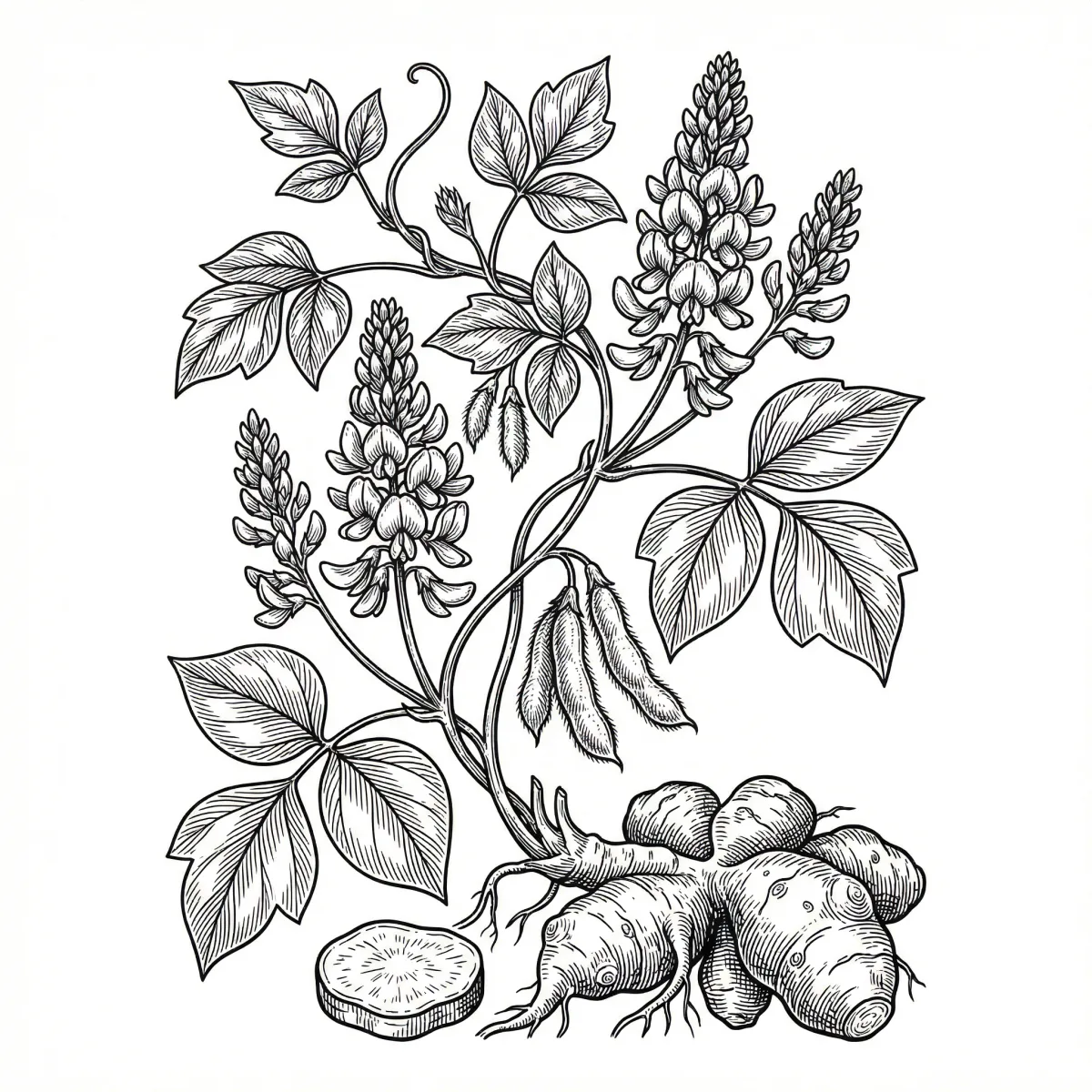
Ge Gen ist der Kaiser dieser Rezeptur — es hebt das klare Yang nach oben, löst Hitze aus der Muskelschicht und stoppt Durchfall. Das Ankerkraut, das die absinkende Funktion des Dickdarms wieder aufrichtet. Puerarin und die Isoflavone der Kudzu–Wurzel werden in Untersuchungen mit krampflösenden und durchblutungsfördernden Eigenschaften in Verbindung gebracht.
minister Huang Qin (Helmkraut) — Der Hitze–Kühler
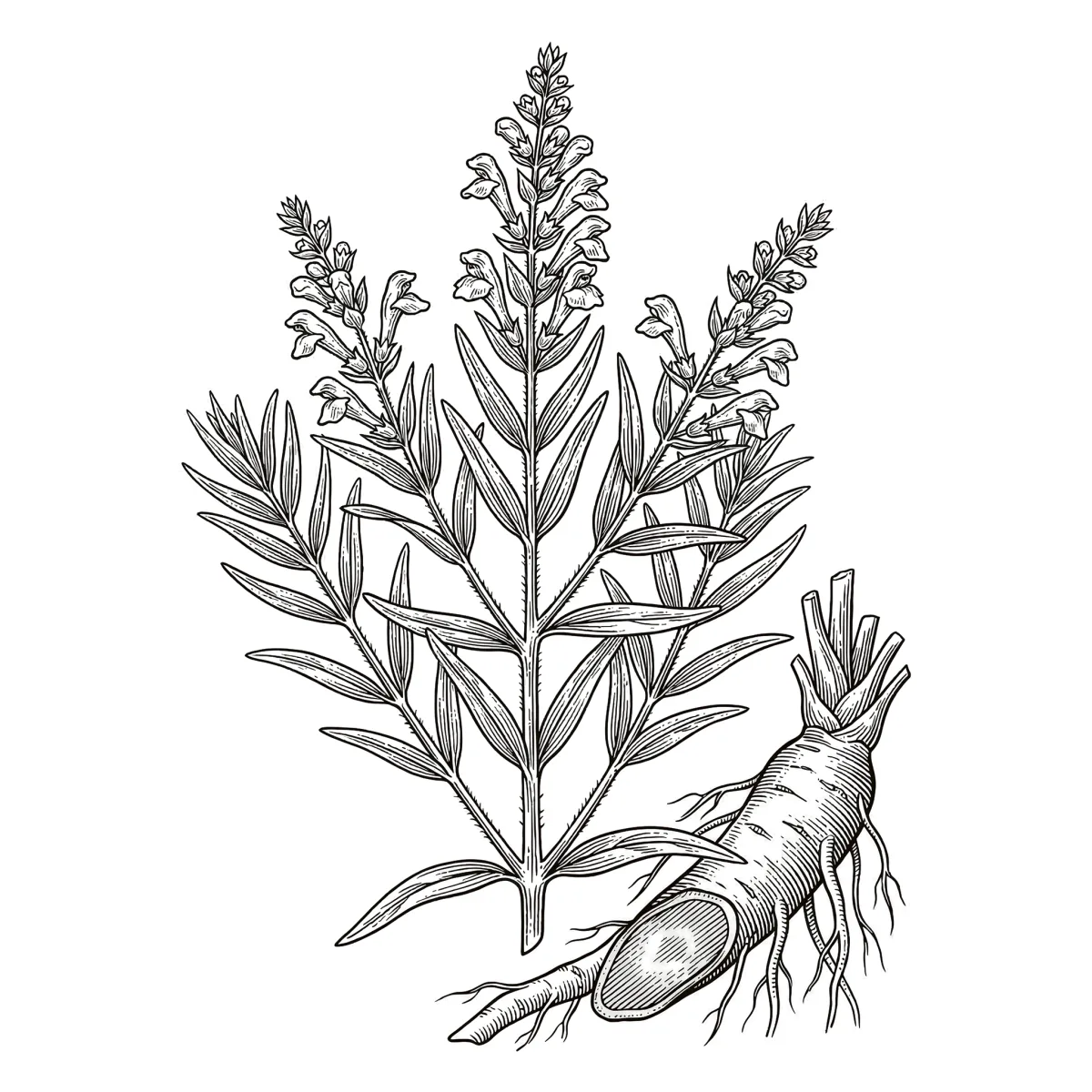
Huang Qin klärt feuchte Hitze aus dem oberen und mittleren Erwärmer — es kühlt besonders Lunge und Dickdarm, die in der TCM als Partnerorgane gelten. Baicalin und Wogonin des Baikal–Helmkrauts werden in Untersuchungen mit entzündungshemmenden und antioxidativen Eigenschaften in Verbindung gebracht.
minister Huang Lian (gold thread) — Der Darm–Klärer
Huang Lian klärt Hitze und trocknet Feuchtigkeit im mittleren Erwärmer — einer der stärksten Hitze–Klärer für den Dickdarm in der gesamten Materia Medica. Berberin, der goldgelbe Hauptwirkstoff der Goldfadenwurzel, wird in Untersuchungen mit entzündungshemmenden Eigenschaften und einer Wirkung auf die Darmflora in Verbindung gebracht.
harmonizer Gan Cao (licorice) — Der Harmonisierer
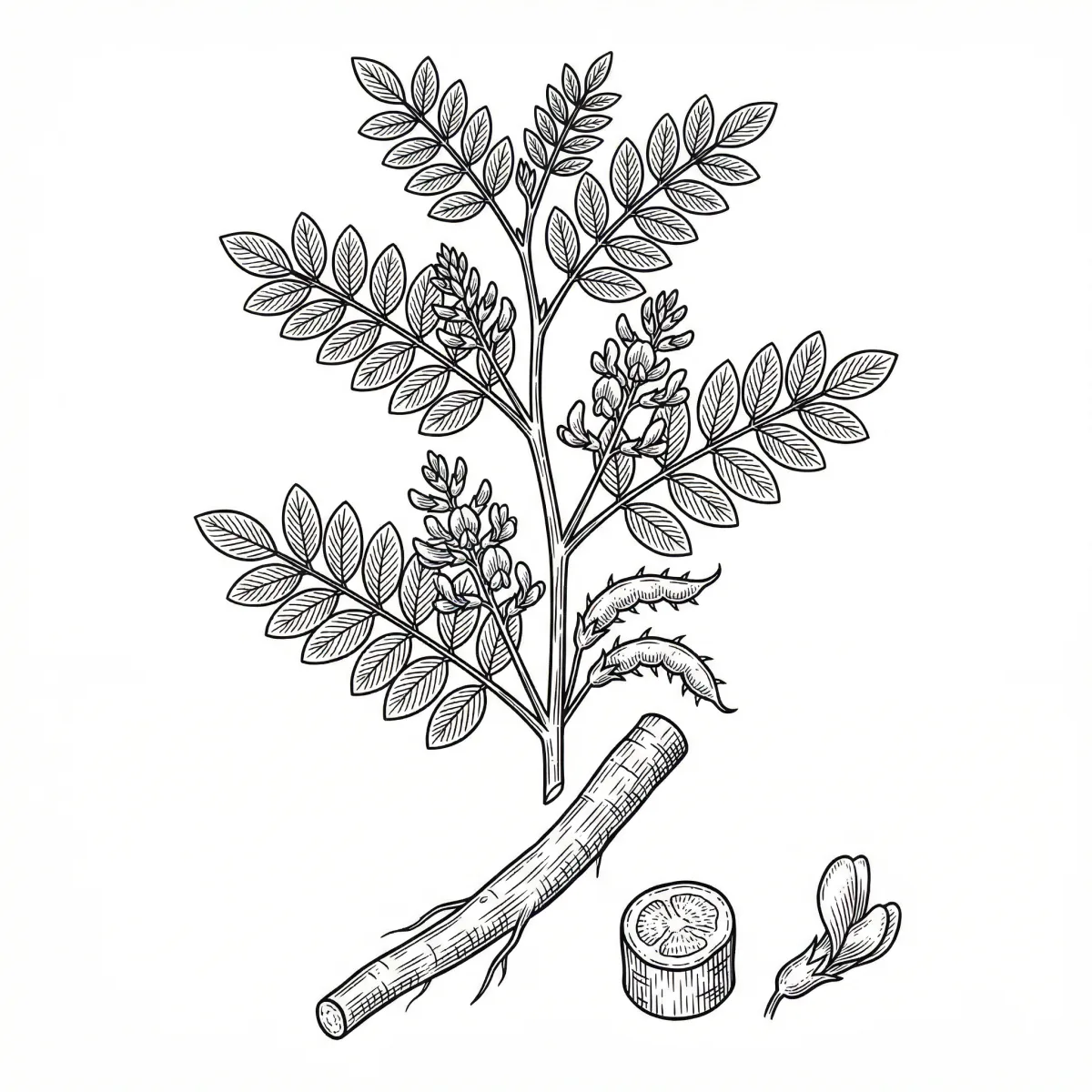
Gan Cao harmonisiert die Rezeptur und schützt Magen und Milz vor der bitter–kalten Wirkung von Huang Qin und Huang Lian — und bewahrt so das Milz–Qi. Glycyrrhizin und Liquiritin der Süßholzwurzel werden in Untersuchungen mit entzündungshemmenden und schleimhautschützenden Eigenschaften in Verbindung gebracht.
Recommended dosage
The dosage depends on the severity.
Based on your questionnaire results, we have highlighted the appropriate dosage for you below.
At light Severity:
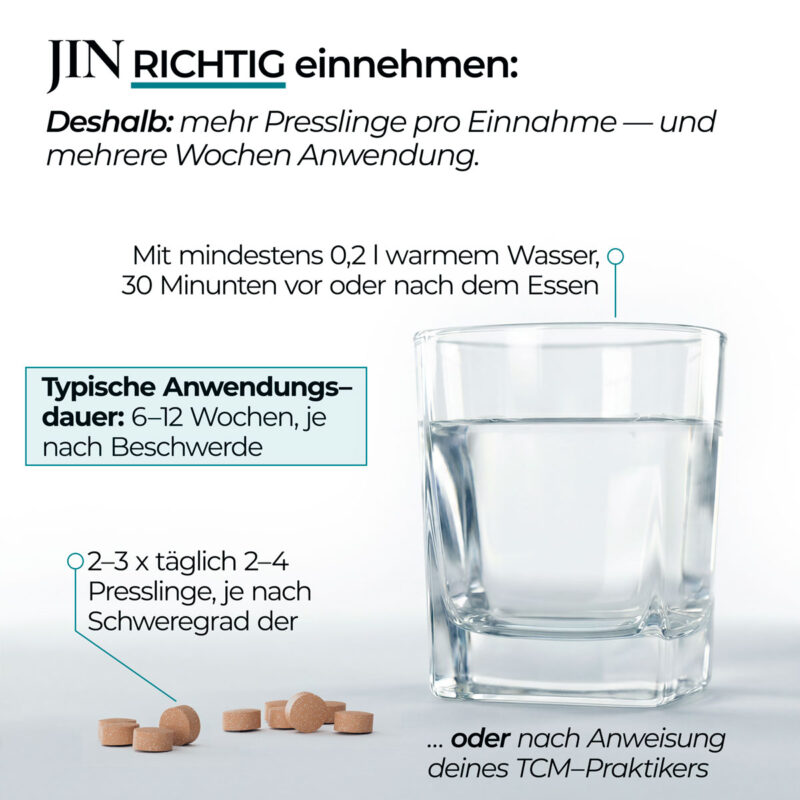
- 2 tablets 3 times a day (morning, noon, and late afternoon) = 6 tablets per day
- Optional, if taking 3 doses a day is difficult for you: 3 tablets twice a day — same daily amount
- We recommend at least 2 cans, each containing 240 tablets (enough for about 12 weeks)
At middle Severity:
- 3 tablets 3 times a day (morning, noon, and late afternoon) = 9 tablets per day
- We recommend at least 3 cans, each containing 240 tablets (enough for about 12 weeks)
- If your condition improves, switch to the dosage recommendation for mild symptoms
At significantly Severity:
- 4 tablets 3 times a day (morning, noon, and late afternoon) = 12 tablets per day
- We recommend at least 4 cans, each containing 240 tablets (enough for about 12 weeks)
- If your condition improves, switch to the dosage recommendation for moderate severity
Why 3 times a day?
This ensures that the herbs' effects are evenly distributed throughout the day.
IMPORTANT:
- Take the tablets with at least 0.2 liters of warm water
- Ideally, 30 minutes before or after a meal
- This suggestion is not a substitute for a medical diagnosis or treatment
- If you are pregnant or breastfeeding, have a chronic medical condition, or are taking medication, consult a doctor or a TCM practitioner beforehand.
- If you have a severe cold, fever, or diarrhea, stop taking this product
- Auf Hygiene und gut gegarte Speisen achten; fettige, scharfe Speisen, Rohkost, Alkohol und Milchprodukte meiden
- Bei hohem Fieber, Blut oder Schleim im Stuhl oder Zeichen von Austrocknung ärztlich abklären
If little has changed after about 12 weeks:
Herbs are just one part of TCM. Combine taking them with other practices—acupressure, qigong, Pilates, or yoga, BS+, as well as meditation and breathing exercises. Afterward, take a two-week break from taking the herbs. Then, if needed, you can TCM analysis try again and/or compare your result with your TCM practitioner or discuss it with your doctor.
If you have any questions about how to take it, please feel free to contact us.
Want to know what dosage is right for you? Take our free TCM questionnaire—in just a few minutes, it will reveal your personal TCM pattern and the appropriate dosage of the recommended TCM herbal blend.
BS+ for your intestinal flora
A healthy gut is the basis for your well-being. Current studies show that around 80 % of people in Germany consume too little fiber - yet it is the most important food for your intestinal flora (also known as the intestinal microbiome).
BS+ was developed to support your daily fiber supply. With 11 high-quality, natural ingredients BS+ offers your intestinal flora a diverse nutrient base.
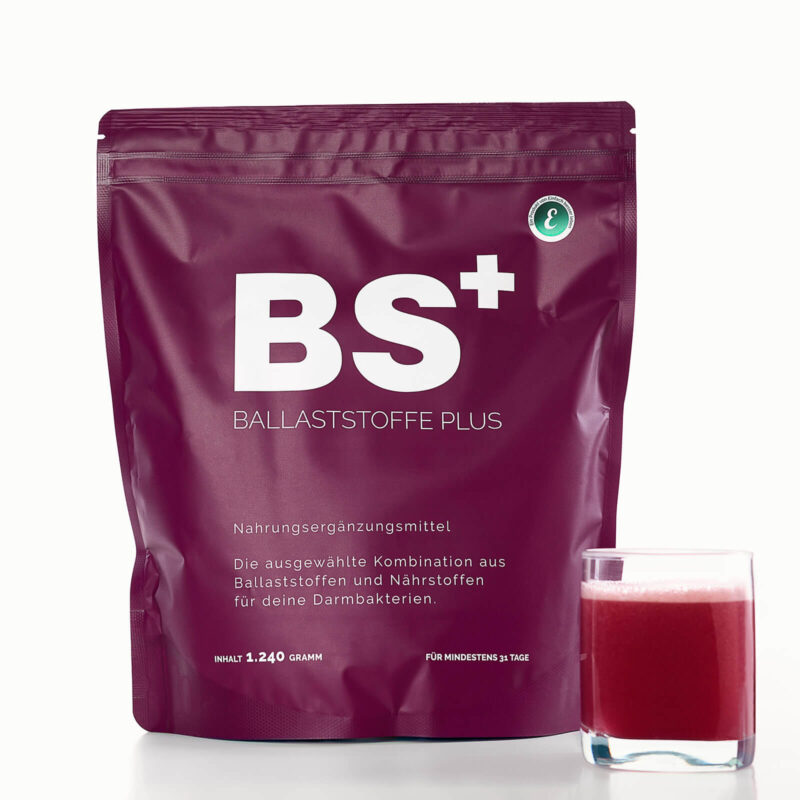
The revolutionary fiber formula
BS+ Dietary Fiber Plus
- Up to 20 g dietary fiber daily EXTRA
- Improved digestion and regular bowel movements
- Increased energy and vitality
- Better mood and mental clarity
- Support for your immune system
- Potential improvement in cholesterol and blood sugar levels
Simply stir into water twice a day - Your intestinal flora will thank you.
Warum BS+ bei Feuchter Hitze im Dickdarm?
Feuchte Hitze im Dickdarm entsteht häufig, wenn die Milz ihre Transformationsfunktion verliert und Feuchtigkeit sich im Darm ansammelt. Diese Feuchtigkeit verbindet sich mit Hitze und erzeugt einen klebrigen, zähen Zustand — Durchfall, Blähungen und Bauchschmerzen sind die Folge. Eine gestörte Darmflora verstärkt diesen Kreislauf, da nützliche Darmbakterien fehlen, um die Feuchtigkeit abzubauen und den Darm in seiner Reinigungsfunktion zu unterstützen.
BS+ contains 11 prebiotic fibers and specifically nourishes the good intestinal bacteria. A diverse, well-nourished intestinal flora strengthens the transport function of the large intestine and helps the spleen to effectively transform moisture again - thus gradually removing the breeding ground for damp heat.
Besonders wichtig bei Feuchter Hitze im Dickdarm:
- Supports the breakdown of moisture by strengthening the intestinal flora
- Promotes the transport function of the large intestine and regulates bowel movements
- Strengthens the spleen transformation and prevents renewed moisture accumulation
Acupressure
Acupressure is acupuncture without needles. - you can apply them yourself at any time. By applying gentle pressure to certain points, you activate the energy flow in the meridians and help your body to eliminate moisture and heat.
These three points form an effective combination for clearing moisture and heat in the intestines. Regular stimulation is important - Patient care brings the intestines back into balance.
ACCESSION POINT: Tue 04
Large intestine 04
Valley connection - He Gu
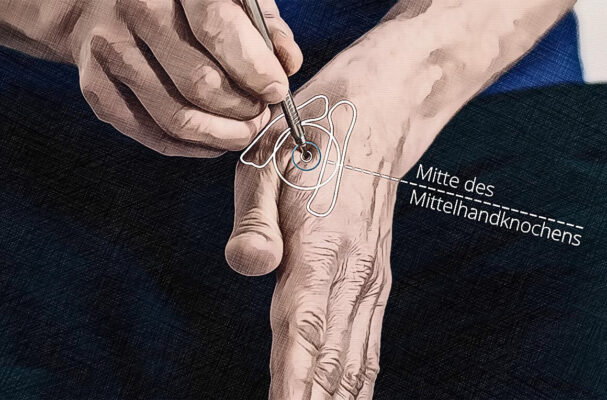
- Clears heat in the colon
- Regulates bowel function and relieves pain
- Strengthens the immune system
- Most important distant point for the entire large intestine meridian
- Has an anti-inflammatory and decongestant effect
Location: In the hollow between the thumb and index finger, on the highest point of the muscle with the fingers together.
Application:
Press firmly or massage in circles twice a day for 2-3 minutes per hand. Do NOT use during pregnancy!
ACUPUNCTURE POINT: Ma 36
Stomach 36
Three miles of foot - To San Li
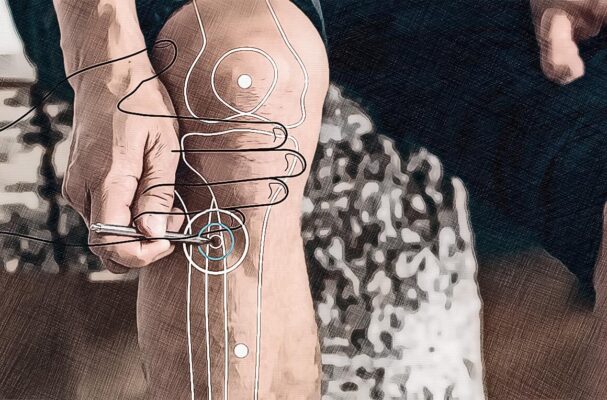
- Strengthens the spleen and stomach
- Drains moisture and regulates bowel function
- Strengthens the immune system
- Promotes the transformation of food
- Most important point for strengthening the middle warmer
Location: One hand's width below the kneecap, one thumb's width outwards to the side of the shin.
Application:
Press firmly twice a day for 2-3 minutes per side or massage with small circles. Ideal in the morning and evening.
ACUPUNCTURE POINT: MP 06
Spleen-Pancreas 06
Meeting place of the three Yin - San Yin Jiao
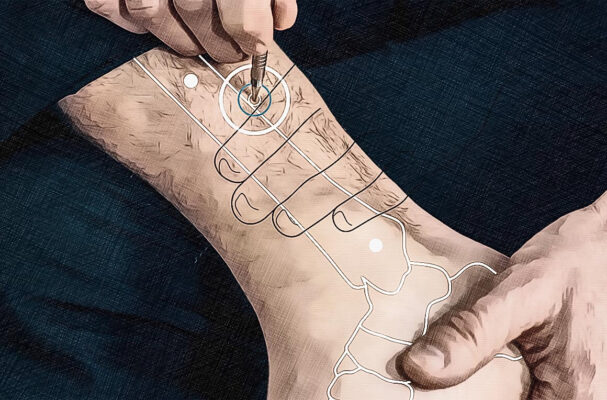
- Dissolves moisture and strengthens the spleen
- Regulates the lower heater
- Harmonizes the liver and kidneys
- Meeting point of the three Yin meridians (spleen, liver, kidney)
- Supports the discharge of damp heat via all three Yin organs
Location: Four finger widths above the highest point of the inner ankle, directly behind the shin.
Application:
Massage in a circular motion twice a day for 2-3 minutes per side with medium pressure. Ideal in the morning and evening. DO NOT use during pregnancy!
TIP
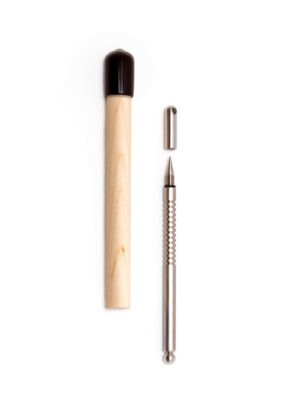
AkuPen
Acupuncture pen with video instructions
For even more intense stimulation You can use an AkuPen. The acupressure pen significantly enhances the effect of acupressure. With an extensive video library for over 80 acupuncture points.
Qi Gong
Qi Gong is moving meditation — sanfte, fließende Übungen, die deinen Energiefluss harmonisieren und deinem Darm helfen, Feuchtigkeit und Hitze auszuleiten. Bei Feuchter Hitze im Dickdarm helfen diese Übungen, den Qi–Fluss zu regulieren, die Milz zu stärken und die Transformation der Feuchtigkeit zu fördern.
Regular practice of Qi Gong (as little as 10-15 minutes a day) has been shown to have positive effects on digestion, inflammation reduction and general well-being.
QI GONG: Exercise 1
Regulate Qi
Regulates the flow of Qi in the center, releases stagnation

Particularly helpful for:
- Digestive problems and flatulence
- Inner imbalance
- Stagnation in the stomach
- Blocked Qi flow in the center
Effect:
Diese Erde–Element–Übung reguliert den Qi–Fluss in der Mitte und hilft, Stagnation aufzulösen. Bei Feuchter Hitze im Dickdarm ist der Qi–Fluss blockiert — diese Übung bringt die Energie wieder ins Fließen und unterstützt die Darmfunktion.
QI GONG: Exercise 2
Connecting heaven and earth
Harmonizes the middle warmer, strengthens the transformation

Particularly helpful for:
- Weak digestion and feeling of fullness
- Feeling of heaviness in the stomach
- Lack of transformation of moisture
- Tiredness after eating
Effect:
This earth element exercise connects upper and lower energy and harmonizes the middle warmer. It strengthens the spleen in its transformation function - so that moisture can be better transformed and eliminated.
QI GONG: Exercise 3
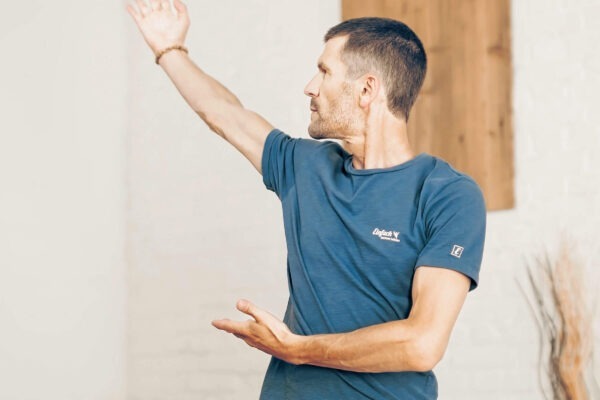
Watch the full moon
Opens the abdominal cavity, stimulates the flow of Qi in the intestine
Particularly helpful for:
- Flatulence and bloating
- Digestive disorders
- Feeling of tension in the stomach
- Stagnation in the intestine
Effect:
The gentle twisting movement opens up the abdominal cavity and stimulates the flow of Qi in the stomach and intestines. The exercise helps to release stagnation in the intestines and support the transformation of moisture.
These Qi Gong exercises sind speziell für das Ausleiten von Feuchter Hitze im Dickdarm ausgewählt. Sie stärken die Milz als Transformationszentrum, regulieren den Qi–Fluss und helfen, Feuchtigkeit und Hitze aus dem Darm auszuleiten.
All exercises work particularly well if you practise them in the morning - between 7-9 am (stomach time) or 9-11 am (spleen time). This is the peak of the digestive organs in the organ clock.
QI GONG:
When and how often?
Best time - in the morning:
- All 3 exercises as a sequence: approx. 15–20 min.
- Or just 1–2 exercises: approx. 5–10 min.
- Ideally between 7-9 am (stomach time) or 9-11 am (spleen time)
In between:
- Individual exercises if required (e.g. if you feel full)
- „Regulate Qi“ for quick relief of the center
- „Look at the full moon“ for a feeling of tension in the stomach
Regularity is more important than duration:
- It is better to exercise for 10 minutes every day than for 60 minutes once a week.
- After 2–3 weeks, you will notice the first changes.
- After 2-3 months of regular practice: significantly lighter body feeling
Pro tip: Bei Feuchter Hitze im Dickdarm sanfte, fließende Bewegungen bevorzugen. Nicht zu intensiv schwitzen — das kann die Hitze verschärfen. Qi Gong ist die perfekte Balance: genug Bewegung, um Feuchtigkeit zu bewegen, aber sanft genug, um die Hitze nicht zu verstärken.
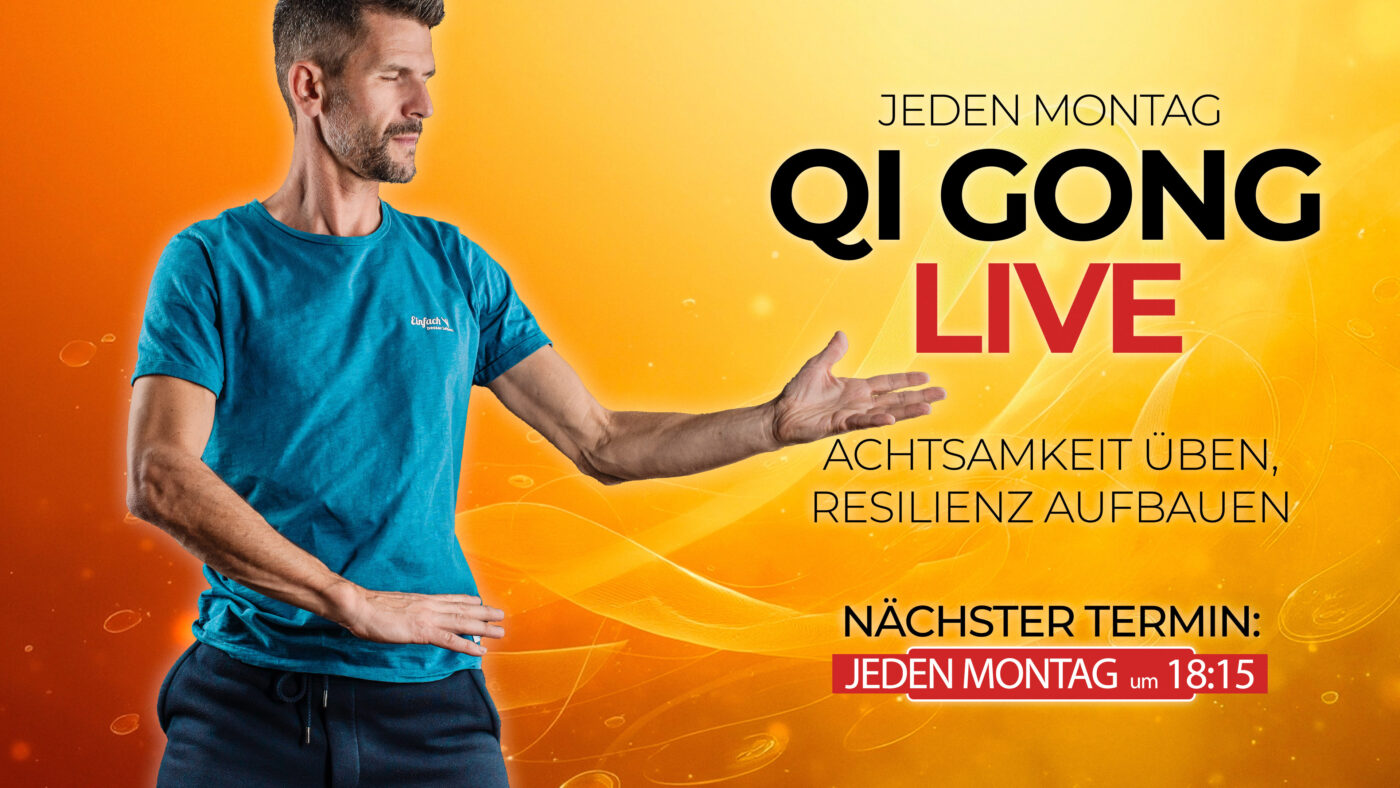
LIVE EVERY MONDAY: QI GONG WITH WOLFGANG
Every Monday at 6:00 p.m. Let's practice together live on YouTube. Among other things, Wolfgang will guide you through a complete qigong sequence — free of charge and suitable for all levels.
Why participate live? ✓ Practicing together is motivating ✓ Wolfgang explains the exercises in detail ✓ You can ask questions in the live chat ✓ Regular appointments help with your routine
More about Qi Gong LiveMeridian Yoga — The Yoga of TCM
Meridian Yoga combines yoga with traditional Chinese medicine. The result is a holistic exercise concept for better health and more energy.
The following exercises specifically activate the large intestine meridian - because the large intestine is the main organ affected by damp heat. By activating this meridian, you help your body to eliminate moisture and heat and restore natural bowel function.
MERIDIAN YOGA: Exercise 1
The archer for the large intestine meridian
Activates the large intestine meridian, opens the chest

Particularly helpful for:
- Colon complaints and digestive problems
- Flatulence and bloating
- Constipation or diarrhea
- Stagnation in the large intestine meridian
Effect:
This exercise activates the large intestine meridian, which runs along the outside of the arm. It opens the chest and strengthens the elimination function of the large intestine. In Damp Heat, it helps to stimulate the flow of Qi in the large intestine and dissolve stagnation.
MERIDIAN YOGA: Exercise 2
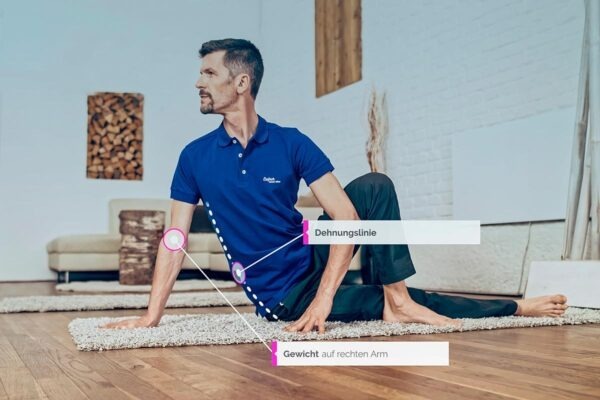
Torso Twist for the Large Intestine Meridian
Gentle rotating movement, promotes the removal of damp heat
Particularly helpful for:
- Digestive problems and flatulence
- Carrier bowel function and abdominal pain
- Feeling of heaviness in the abdomen
- Accumulated moisture and heat in the intestine
Effect:
The Torso Twist stretches and stimulates the large intestine meridian through a gentle rotating movement. The rotation massages the internal organs, promotes blood circulation in the abdomen and helps to eliminate moisture and heat.
Beide Übungen aktivieren den Dickdarm–Meridian, der an der Aussenseite der Arme verläuft. Der Dickdarm ist bei Feuchter Hitze im Dickdarm das zentral betroffene Organ — durch die Aktivierung dieses Meridians unterstützt du die Ausleitung von Feuchtigkeit und Hitze und hilfst deinem Körper, die natürliche Darmfunktion wiederherzustellen.
Particularly effective: Hold each position for 3-5 breaths, visualizing cool, clear water flushing the heat out of your gut and leaving you feeling light.
MERIDIAN YOGA:
When and how often?
Best time:
- In the morning between 5 and 7 a.m. (colon time in the organ clock)
- Or in the evening before going to bed to calm the bowels
Duration:
- Hold each position for 3–5 breaths.
- Complete sequence: 10-15 min.
- 3–5 times per week for best results
Important:
- Bei Feuchter Hitze im Dickdarm sanfte Drehbewegungen bevorzugen
- Practice in a well-ventilated, cool room - avoid heat and humidity
- Breathe deeply and evenly to promote the flow of Qi
Pro tip: Bei Feuchter Hitze im Dickdarm sanfte Drehbewegungen bevorzugen. Nicht überanstrengen — der Körper braucht Schonung. Kombiniere die Übungen mit leichten Spaziergängen an der frischen Luft, um die Ausleitung von Feuchtigkeit und Hitze zusätzlich zu unterstützen.
Nutrition according to TCM
„Let food be your medicine.“ — dieser Grundsatz gilt in der TCM seit Jahrtausenden. Bei Feuchter Hitze im Dickdarm ist die richtige Ernährung der wichtigste Hebel, um die Hitze zu klären und die Feuchtigkeit auszuleiten.
Die Ernährung bei Feuchter Hitze im Dickdarm orientiert sich an den Elementen Earth (spleen) and metal (large intestine) and needs Cooling, light and moisture-draining food. Spicy, fatty and sweet foods are the biggest enemies of your gut.
What you eat, HOW you eat and WHEN you eat - all of this influences your digestion and the condition of your gut.
The golden rules for a healthy gut
What is good for you:
Cooling vegetables
- Cucumber - cools and wicks away moisture
- Zucchinis - light and mild
- Winter melon - classic moisture eliminator
- Chinese cabbage, celery, radish
Cooling vegetables clear the heat and relieve the intestines!
Moisture-draining cereals
- Barley - cools and wicks away moisture
- Millet - strengthens the spleen
- White rice - easy to digest
- Mung beans - clear heat and detoxify
Light cereals support the spleen without creating moisture
Light proteins
- Tofu - cools and nourishes gently
- White fish (cod, sole)
- Eggs (boiled) - easily digestible
- Chicken broth - strengthens the center
Light protein nourishes without burdening the intestines
Cooling drinks
- Green tea - cools and clarifies
- Peppermint tea - refreshes and soothes
- Barley water - removes moisture
- Chrysanthemum tea - clears heat
The right drinks support the removal of heat and moisture
What you should avoid:
Hot spices
- Chili and hot sauces
- Garlic (raw)
- Hot pepper
- Curry and spicy pastes
Spicy food generates heat and aggravates the condition!
Fatty and fried foods
- French fries and fast food
- Potato chips and fried snacks
- Breaded and fried in oil
- Fatty meat (pork, lamb)
Fat produces moisture and burdens the spleen!
Alcohol
- Beer - particularly moist and hot
- Wine and spirits
- Cocktails with sugar
- Even „just one glass“ is harmful
Alcohol is moist AND hot - the worst thing about this diagnosis!
Dairy products
- Milk - produces moisture
- Cheese - particularly mature cheese
- Yogurt and cream
- Quark and cream cheese
Dairy products produce moisture and mucus in the intestines!
HOW YOU SHOULD EAT:
Light and gently prepared
- Steamed, boiled or blanched
- Soups and light stews
- Gently steamed vegetables
- Use less oil and fat
Regularly and in small portions
- 3 fixed meals a day
- Biggest meal at lunchtime
- Light and early in the evening (before 7 pm)
- Don't eat too much at once
An overloaded stomach produces moisture!
Drink properly
- Room temperature or slightly cool water
- Green tea or barley water
- Peppermint tea after meals
- No ice-cold drinks
Drinking enough helps to eliminate moisture
IDEAL MENU FOR ONE DAY:
Breakfast (7–9 a.m.):
- Rice congee with mung beans and a little ginger
- In addition: Green tea or warm water
Lunch (12–1 p.m.):
- Steamed fish with zucchini and rice
- In addition: Cucumber salad with a light dressing
- Or: Tofu with steamed vegetables
Dinner (6–7 p.m.):
- Light vegetable soup with barley
- Or: Rice soup with Chinese cabbage
- In addition: Small portion of white rice
Snack if needed:
- A piece of cucumber or celery
- Or: Barley water
- Or: 1 boiled egg
The most important rule when changing your diet is:
Start with ONE step!
Don't change everything at once.
Our suggestion for getting started:
- Cut out spicy, fatty foods and alcohol completely - 2 weeks
- Drink barley water or green tea daily - 2 weeks
- Replace dairy products with tofu and plant-based alternatives - 2 weeks
Step by step, you will notice how the heat and dampness subside and your bowels calm down.
Your gut will thank you!
RECIPE: MUNG BEAN SOUP WITH RICE
Ingredients:
For 4 portions
- 200 g mung beans (soaked overnight)
- 100 g white rice
- 1.5 L water
- A little salt
- Fresh mint to garnish
Preparation:
- Soak the mung beans overnight, drain and rinse
- Put the mung beans and rice together in a pan
- Pour in 1.5 liters of water and bring to the boil
- Reduce the heat and simmer for 40-50 minutes until soft
- Season with salt to taste
- Serve garnished with fresh mint
Effect:
Clears heat and removes moisture from the intestine
Strengthens the spleen and promotes digestion
Soothes the intestines and relieves inflammation
3-4 times a week - ideal for eliminating damp heat!
RECIPE: STEAMED FISH WITH GINGER AND SPRING ONIONS
Ingredients:
For 2-3 portions
- 400 g white fish (cod or sole)
- 1 piece of fresh ginger (cut into fine strips)
- 3-4 spring onions (cut into rings)
- 2 tbsp light soy sauce
- 1 tsp sesame oil
- A little salt
Preparation:
- Wash the fish, pat dry and lightly salt
- Place ginger strips on and under the fish
- Steam in a steamer or over boiling water for 10-12 minutes
- Mix the soy sauce and sesame oil
- Drizzle the finished fish with the sauce
- Garnish with spring onions and serve immediately
Effect:
Easily digestible protein that does not burden the intestines
Strengthens the center without creating moisture
Ginger harmonizes digestion and gently warms
2x per week - light protein for a healthy gut!
Breathing
Breathing is the bridge between body and mind. In TCM, we say: „The lungs govern qi“ — through conscious breathing, you can directly influence your energy flow, harmonize all organ systems, and activate your self-healing powers.
Studies show: Proper breathing activates the parasympathetic nervous system (rest & regeneration), massages the internal organs from within, improves oxygen supply, and reduces stress hormones. The good news: Just 5–10 minutes a day can have a measurable effect on your overall well-being.
Recommended breathing techniques
ABDOMINAL BREATHING — The basis for every breathing technique
Natural breathing
Abdominal breathing is the most natural and effective form of breathing. With every breath, you massage your internal organs, activate the flow of energy, and bring qi to the center of your body (dantian).
Wolfgang shows you step by step, How to learn abdominal breathing correctly—lying down to start with, then later also sitting and standing.
Duration: 9 minutes

4–7–8 BREATHING — Calms you down immediately
Breathing to fall asleep and combat inner restlessness
4–7–8 breathing (inhale for 4 seconds, hold for 7 seconds, exhale for 8 seconds) is known as a „natural sedative.“ This special rhythm calms your nervous system in just a few minutes—perfect for stress, racing thoughts, or trouble falling asleep.
Perfect for the evening or whenever you want to calm down quickly.
Duration: 9 minutes
To the interactive videoBOX BREATHING — For inner coherence
Professional breathing for focus and calmness
Box Breathing (4 seconds on, 4 seconds hold, 4 seconds off, 4 seconds hold) combines activation and relaxation in perfect balance. This method is used by elite soldiers, athletes, and executives to remain calm and focused even in extremely stressful situations.
Train your CO₂ tolerance and brings the heart, breathing, and nervous system
into a harmonious state.
Duration: 9 minutes
To the interactive videoCOHERENT BREATHING — Harmonizes body & mind
Breathing against burnout
With coherent breathing You breathe in for 5.5 seconds and out for 5.5 seconds. This rhythm brings your heart and breathing into perfect synchrony—a state that science refers to as „coherence.“ This method is also used in clinics for burnout treatment and stress reduction.
Proven to improve Heart rate variability (HRV) — the most important marker for stress resistance, health, and life expectancy.
Duration: 14 minutes
To the interactive video
COHERENT BREATHING Around the clock
Our 24/7 livestream on coherent breathing runs non-stop. You can tune in at any time and join in right away.
Perfect for:
✓ Spontaneous breaks to catch your breath in between
✓ If you need help breathing
✓ As background while working
✓ For falling asleep (calms the nervous system)
✓ For regular daily practice
relaxation
When your body is relaxed, all organ systems can function optimally. Chronic tension blocks your body's self-healing powers and keeps you in a state of constant stress. Through targeted relaxation techniques, you activate the parasympathetic nervous system and send your body the signal: „Now I can regenerate, heal, and build strength.“
Progressive muscle relaxation is one of the most researched relaxation methods and has been used successfully for over 100 years. It helps you to recognize tension, actively release it, and achieve a state of deep relaxation—whenever you want.
Recommended relaxation technique
PROGRESSIVE MUSCLE RELAXATION (PMR)
The scientifically proven relaxation method
Progressive muscle relaxation according to Jacobson is one of the most widely researched relaxation techniques worldwide. By deliberately tensing and relaxing individual muscle groups, you learn to consciously perceive tension and actively release it.
Proven effect:
Lowers blood pressure, improves sleep, reduces chronic pain, relieves tension, and activates self-healing powers. Successfully used by psychologists to treat anxiety disorders, depression, and chronic pain.
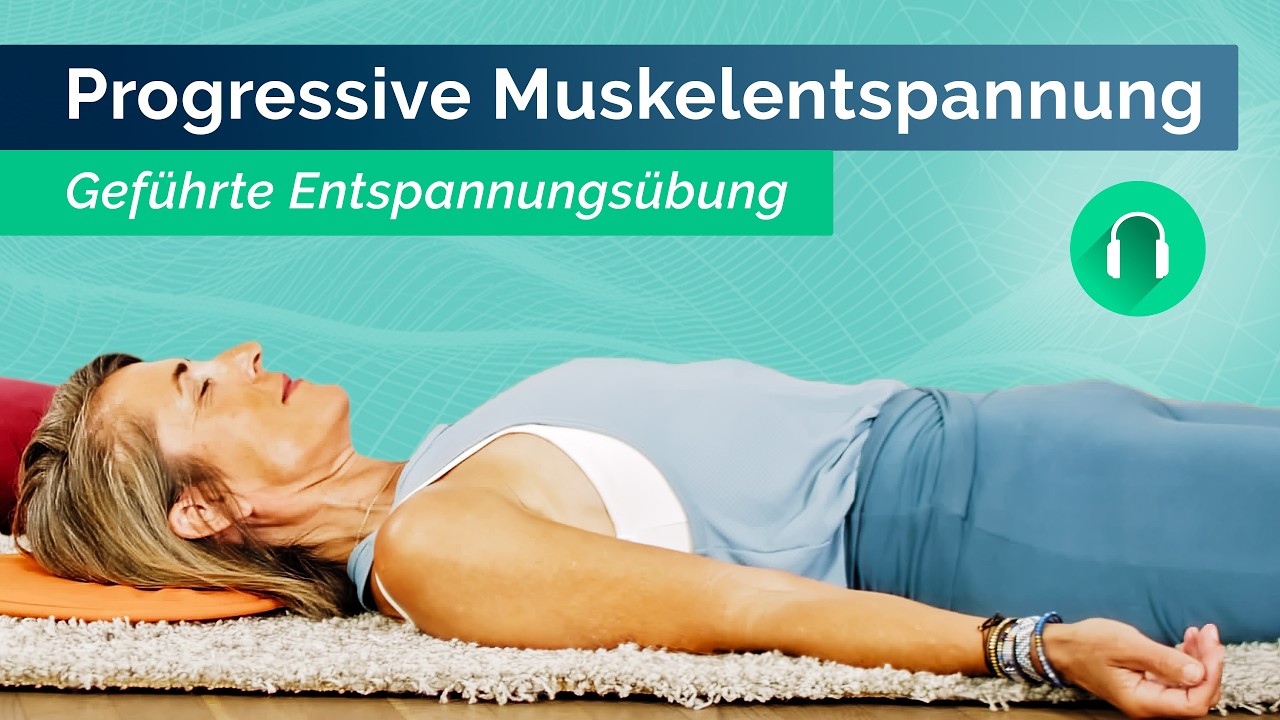
Maria guides you step by step through the entire exercise—perfect for beginners and advanced practitioners alike.
Duration: 23-minute complete guide
To the guided PMRMeditation
Meditation calms the mind — and a calm mind harmonizes the body. In TCM, we know that every emotion affects a specific organ. Through regular meditation, you learn to break out of destructive thought patterns, find emotional balance, and strengthen your inner core.
Modern studies confirm: Meditation has been proven to change brain structure, reduce stress hormones, strengthen the immune system, and improve self-healing powers. Just 10 minutes a day can change your life forever.
Recommended meditations
GUIDED MEDITATIONS FOR EVERY DAY
Your personal meditation library
We have a complete Playlist with over 60 guided meditations, breathing exercises, and relaxation techniques—from short 5-minute meditations for in between to deep 30-minute sessions for intensive practice.
In the playlist you will find:
- Morning meditations for a mindful start to the day
- Meditations for restful sleep
- Breathing meditations for inner peace
- Meditations against stress, brooding, and worries
- TCM standing meditations for all 5 elements
- Body scan and body journeys
- Healing meditations to activate self-healing powers
- Special breathing techniques (4–7–8, coherent breathing, bee breathing)
Perfect for beginners and advanced practitioners. Choose the right meditation for you depending on your time, the time of day, and your needs.
To the meditation playlistWhen heat and moisture combine in the intestine, the free flow stops.
Only when the cloudy juices have been cleared and the heat expelled can the intestines regain their cleansing power and the body regain its natural balance.
- Loosely based on the HUANG DI NEI JING
(The Yellow Emperor's Classic of Internal Medicine)
More tips for your everyday life
In addition to traditional TCM treatment methods gibt es viele kleine Alltagsgewohnheiten, die dir helfen, Feuchte Hitze im Dickdarm aufzulösen. Feuchtigkeit und Hitze im Darm sind ein hartnäckiges Paar — mit den richtigen Gewohnheiten kannst du sie Schritt für Schritt ausleiten und deinen Darm wieder ins Gleichgewicht bringen.
Eating habits - the basis for a healthy gut
Eat slowly and in peace
How you eat is just as important as what you eat:
- Take your time for each meal - at least 20 minutes.
- Eat in peace - not on the side at your desk or in front of the screen
- Sit down to eat and create a relaxed atmosphere
- Eating with pleasure and mindfulness strengthens the center
Chew thoroughly
Digestion begins in the mouth - good chewing relieves the intestines:
- Chew each bite 20-30 times before swallowing
- Saliva contains important enzymes that initiate digestion
- Well-chewed food puts significantly less strain on the stomach and intestines
- Chinese proverb: „Drink your food, chew your water“
Smaller portions and the right timing
Weniger ist mehr — besonders bei Feuchter Hitze im Dickdarm:
- Better to eat smaller portions and more often
- Only fill the stomach to 70-80 percent
- No cold drinks with meals - prefer warm water or tea
- Eat light and early in the evening - by 7 pm at the latest
- Don't eat too late - the intestines need rest at night to regenerate
Avoid moisture - help the gut
Avoid external moisture
External moisture can increase internal moisture in the intestine:
- Avoid damp environments - basements, damp apartments, poorly ventilated rooms
- Ventilate regularly - shock ventilation is better than permanently tilted windows
- Change wet clothes immediately - do not sit in damp clothes
- No wet hair - keep your head and neck thoroughly dry
- Dress warmly and protect your body in damp weather
Reduce moisture-producing foods
These foods promote moisture in the intestines:
- Dairy products - especially cheese, yogurt and cream produce moisture
- Sugar and sweets - nourish moisture and heat in equal measure
- White flour products - bread, pasta and pastries put a strain on the spleen
- Little raw food - weakens the spleen and produces moisture
- Cold drinks and ice cream - block the digestive power of the spleen
Stress and emotions - the liver-gut connection
Anger and frustration damage the gut
In TCM, the liver attacks the intestines during stress - the so-called liver-colon connection:
- Anger, frustration and suppressed rage dam up the Liver Qi
- Stagnant liver qi attacks the intestines and aggravates diarrhea and cramps
- Many bowel problems worsen during periods of stress - this is no coincidence
- Consciously observe the connection between emotions and intestinal complaints
Relaxation and inner peace
Get out of your head and into balance:
- Relaxation techniques: Meditation, Qi Gong or a quiet walk
- Avoid brooding - excessive thinking directly weakens the spleen
- Consciously plan breaks - small recovery phases in everyday life work wonders
- Get enough sleep - 7-8 hours a night is ideal for regeneration
- Go to bed before 11 pm - the best time for the liver and intestines to recover
Exercise and lifestyle - getting moisture flowing
Regular, moderate exercise
Moisture loves stagnation - movement gets it flowing:
- 30-45 minutes of moderate exercise daily - fast walking, cycling, swimming
- Qi Gong and Tai Chi are ideal - they move the Qi and release moisture
- Walking after eating promotes bowel movement and Qi flow
- Reduce sitting - get up and move every 90 minutes
- Fresh air and nature - a walk in the countryside is good for body and soul
What you should bear in mind
Not too much and not too little - find the right balance:
- Don't exercise too intensively - heavy sweating can exacerbate the heat
- Light sweating is desirable, exhaustion is not
- Don't stand or sit sweaty in the cold after sport
- Listen to your body: you should feel revitalized after exercise, not exhausted
- Regularity is more important than intensity
Important to know
Feuchte Hitze im Dickdarm zu behandeln braucht Geduld und Konsequenz. Feuchtigkeit ist in der TCM dafür bekannt, dass sie hartnäckig und zäh ist — sie „klebt“ und löst sich nur Schritt für Schritt. Die Ernährungsumstellung ist dabei der wichtigste Hebel, und der Verzicht auf feuchtigkeitserzeugende Lebensmittel bringt oft den größten Erfolg. Achte auf die Signale deines Körpers: Schleimiger Stuhl, Völlegefühl und ein klebriger Zungenbelag zeigen dir, dass du konsequent dranbleiben musst. Mit der richtigen Pflege wirst du spüren, wie sich Leichtigkeit und Klarheit zurückmelden.
When to see a doctor? If you experience the following symptoms, you should definitely seek medical advice:
- Blood in the stool - always have it checked by a doctor
- Persistent fever over several days
- Severe, unexplained weight loss
- Chronic intestinal inflammation requires medical attention
- Colonoscopy recommended for prolonged symptoms
TCM and Western medicine complement each other perfectly here. A medical check-up gives you peace of mind - and TCM methods support the healing process in a natural way.
For optimal treatment progress
TCM is not a quick fix for symptoms., but rather a holistic healing process. You will achieve the best results if you consistently integrate the treatment into your daily routine and give your body time to regenerate.
Integration into everyday life
Start with ONE step
Don't try to change everything at once! That's overwhelming and leads to
usually leads to you giving up. Instead:
- Week 1-2: Change your diet - cooling, easy to digest, no spicy or fatty foods
- Week 3-4: Acupressure Tue 04 and Ma 36 daily
- Week 5-6: Qi Gong „Qi regulation“ daily 10 min.
- Week 7-8: Supplement TCM herbal mixture
- From week 9: Add further methods as required
Realistic expectations
After 2–3 weeks: First improvements noticeable
- Less diarrhea and abdominal pain
- Improved chair image
- Less flatulence and bloating
After 6–8 weeks: Significant improvements
- Significantly more stable digestion
- More energy and less heaviness
- Reduction of skin blemishes
After 3–6 months: Sustainable healing
- Intestine has calmed down sustainably
- Body feels light and clear
- Digestion works reliably and without complaints
TCM vs. Western medicine
TCM and Western medicine are not mutually exclusive—they complement each other!
When Western medicine is important:
- In acute emergencies
- In case of structural damage
- In case of infections
- For accurate diagnoses (laboratory, imaging)
Where TCM has its strengths:
- In case of functional disorders
- For chronic complaints
- For prevention
- For holistic healing
Ideal: Combine both systems! Use Western medicine for
Acute treatment and accurate diagnosis, TCM for lasting healing
and strengthening the body's self-healing powers.
Important: Never stop taking prescribed medication without consulting your doctor first!
Talk to your doctor when you start TCM treatment.
TCM diagnosis for professionals
Syndrome differentiation according to TCM:
Tongue: Red, thick yellow sticky coating, especially in the middle and back, possibly tooth impressions
Pulse: Slippery (Hua Mai), fast (Shuo Mai), possibly stringy (Xian Mai)
Pathomechanism:
Moisture and heat accumulate in the intestine and disrupt its transport function. The spleen is impaired in its ability to transform and can no longer eliminate the moisture. The heat burns the body fluids and creates a sticky, viscous condition. The free flow in the lower warmer is blocked. Liver Qi stagnation is often involved, which further weakens the Spleen through the „Wood Overwhelms Earth“ (Mu Wu Tu) mechanism.
Treatment principle:
Qing Chang Re, Li Shi Zhuo (清肠热, 利湿浊) - Clearing intestinal heat, draining turbid dampness
Classic recipe:
Ge Gen Qin Lian Tang (Pueraria, Scutellaria and Coptis Decoction) for acute Damp Heat with diarrhea.
Bai Tou Weng Tang (Pulsatilla decoction) for severe course with blood and phlegm.
Important modifications depending on accompanying symptoms:
- For severe diarrhea with blood and phlegm: Bai Tou Weng Tang (Pulsatillae Radix, Coptidis Rhizoma, Phellodendri Cortex, Fraxini Cortex)
- For abdominal cramps and tenesmus: + Bai Shao (Paeoniae Radix Alba), Mu Xiang (Aucklandiae Radix) = Shao Yao Tang
- In case of simultaneous spleen weakness with loss of appetite: + Bai Zhu (Atractylodis Macrocephalae Rhizoma), Fu Ling (Poria)
- For nausea and vomiting: + Ban Xia (Pinelliae Rhizoma), Huo Xiang (Pogostemonis Herba)
- Liver Qi stagnation with flank pain: + Chai Hu (Bupleuri Radix), Bai Shao (Paeoniae Radix Alba)
Every step counts
Your body WANTS to heal—you just have to create the right conditions for it to do so.
Remember:
👣 Every little step counts
You don't have to be perfect. Even one warm meal a day is better than none. Even 5 minutes of qigong is better than no exercise at all.
⏳ Patience pays off
It took years for your body to get into this state. Give it time to regenerate. Healing takes time, but it WILL happen.
🎯 Focus on what you can DO
Don't concentrate on what you are doing „wrong". Focus on every positive step you take.
💚 Be good to yourself
Perfection does not exist. It is acceptable to have an off day occasionally. Tomorrow is a new day when you can continue.
🤝 You are not alone
Thousands of people are walking this path with you. For over 2,000 years, TCM has been helping people like you who want to regain their health.
Measure your healing progress

To track your progress with treatment, we recommend that you repeat the TCM analysis after about 3 months.
Why is this important?
- You can see how your condition has improved.
- You can adjust the treatment as needed.
- It motivates you to keep going
- You recognize which measures work best
⚠️ Important: Your answers today will be stored in encrypted form in a code that you received by email. You can only measure your progress later with this code. Keep the email safe!
Activate reminder:
<>In 12 weeks, you'll receive an email with a link to the TCM analysis. When you fill it out, you can enter your personal health code—then you'll see a comparison overview at the end:
→ Your new values
→ Your scores from today's test
→ Direct changes
This allows you to see at a glance whether your symptoms
have improved!
🔒 YOUR DATA IS SAFE
We store:
✓ Only your email address for reminders
✓ The date for shipping
We do NOT store:
✗ Your analysis results
✗ Your personal health data
✗ The connection between email and diagnosis
All analysis data is completely anonymous and is not linked to your email address.

Newsletter
Stay up to date with our newsletter. Besides useful tips and tricks for training and your everyday life, you won't miss any of our new releases.
We are here for you
Do you have questions about your diagnosis or treatment?
Not sure which method is right for you?
Contact us — We're happy to help!