








Long Dan Cao - Gentian root
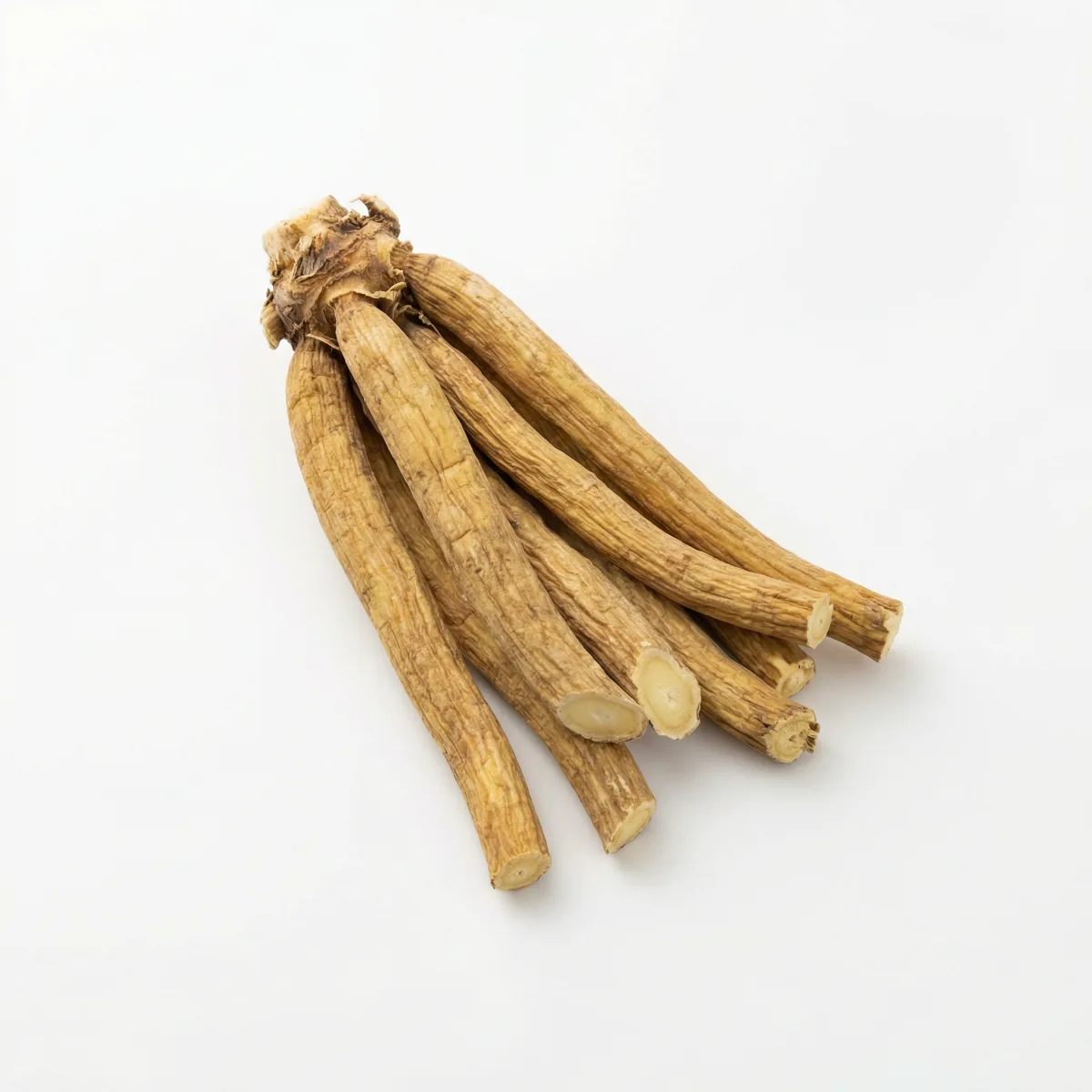
Long Dan Cao—the root of the Chinese gentian (Gentiana scabra)—bears the striking name „dragon gall herb,“ which refers to its extremely bitter taste. It is the primary herb in a famous classical formula for draining Liver–Fire — and the most potent TCM remedy for clearing liver fire and damp-heat in the lower jiao.
Its bitter, cold nature subdues rising Liver Yang and extinguishes fire, which manifests as reddened eyes and ringing in the ears and disturbs the Shen. At the same time, it dries up damp-heat in the urogenital region.
Effect from a TCM perspective
- Long Dan Cao clears Humidity–Heat in the liver and gallbladder and extinguishes liver fire.
- At rising liver fire For red eyes, hearing loss, and a bitter taste in the mouth, it is the treatment of choice.
- At Moisture and Heat in the Lower Heater — Leukorrhea, cloudy urine, swollen testicles — it penetrates the pathogenic factors and expels them.
- Even with severe humidity and heat Long Dan Cao is used for the liver and gallbladder.
- Its strong, downward-directing nature—typical of bitter, cold herbs—makes it one of the most effective drainage agent the entire TCM materia medica.
Application & dosage
In a decoction 3–6 g — Small doses are sufficient due to its strong bitterness and cold nature. An overdose strains the Middle Jiao and causes the stomach qi to rise upward, leading to weakened digestion.
As a granule extract (5:1), the typical dosage is 0.6–1.2 g. In pill form, this amount is suitable for long-term use in cases of prolonged damp-heat.
Dosage forms
- Decoction
- Granules
- Tablets
- Pills
Dosage
3–6 g (Decoction)
Frequent combination partners
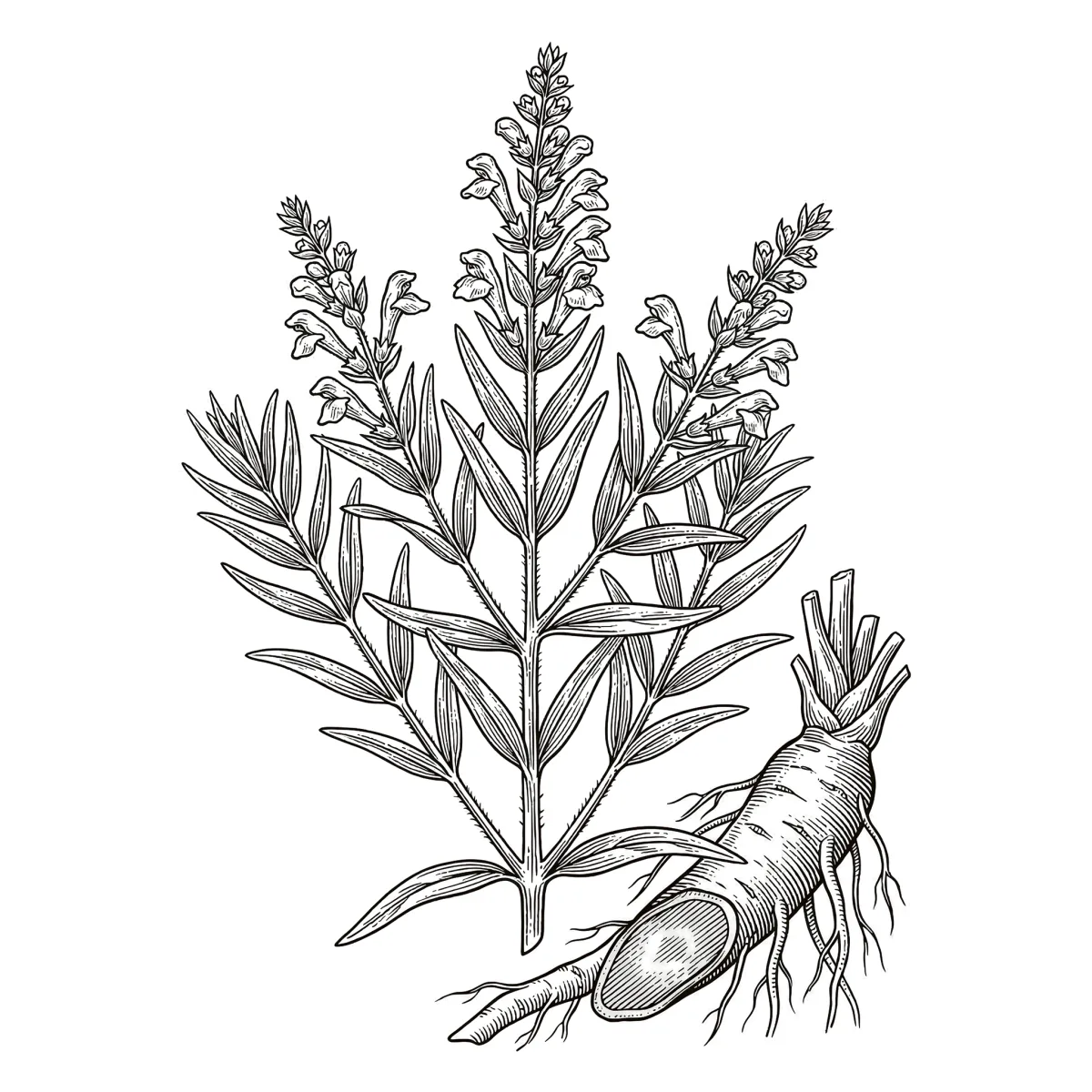
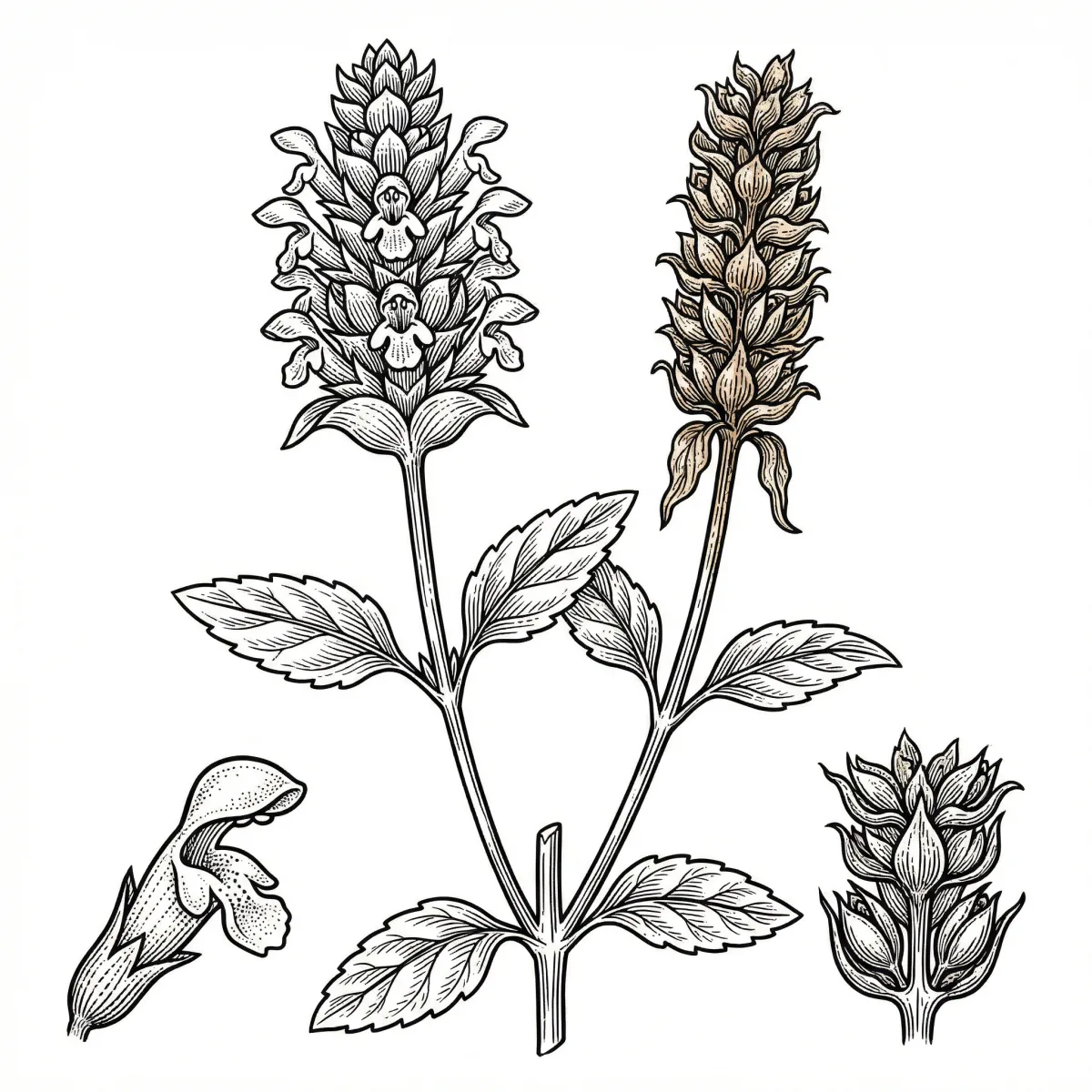
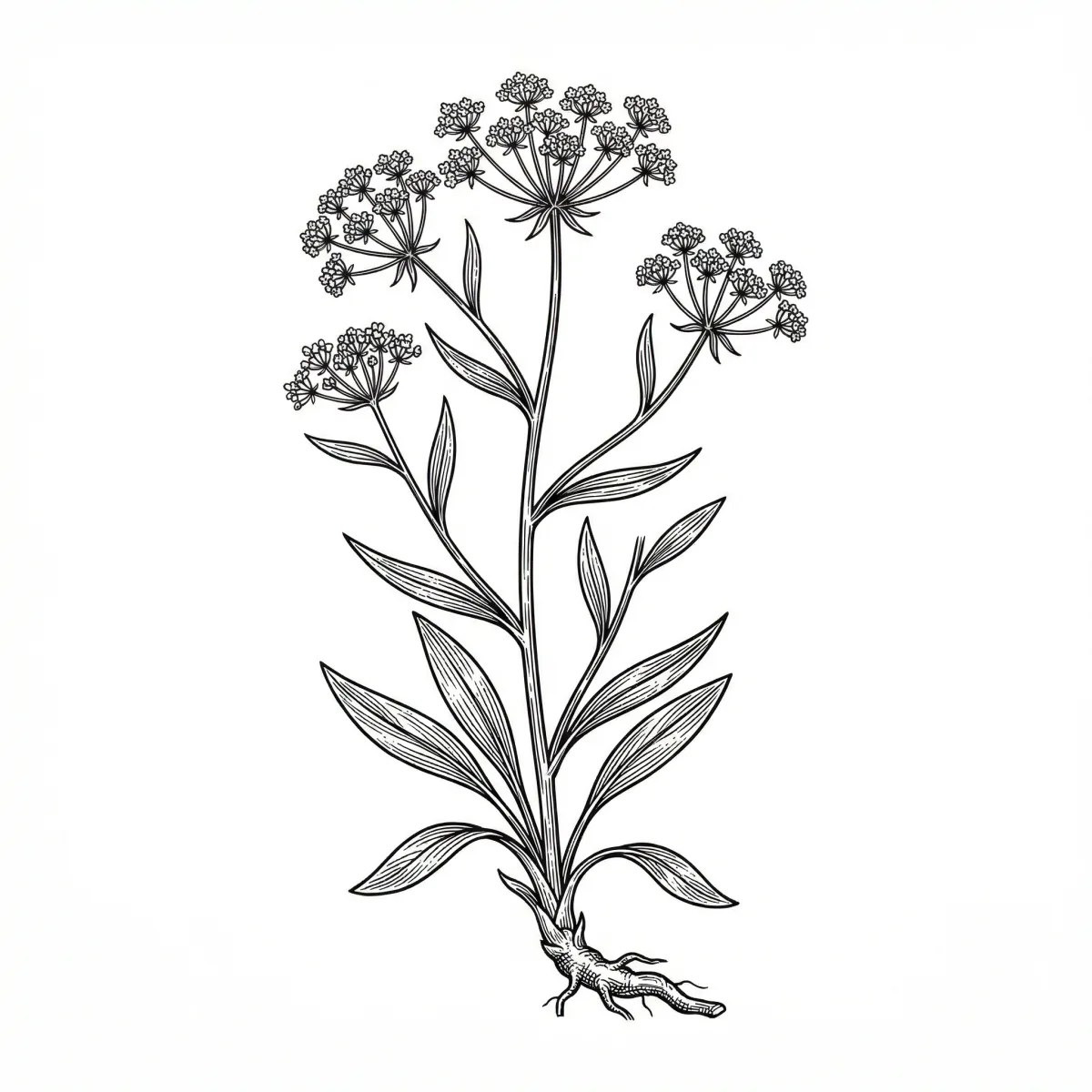
Long Dan Cao often only develops its full effect in combination with other herbs
History & Tradition
Long Dan Cao — „Dragon’s Bile Herb“ — has been an integral part of Chinese medicine for over 2,000 years. It was already mentioned in the „Shennong Ben Cao Jing“ (Divine Farmer’s Classic of Materia Medica), the oldest Chinese herbal text from the Han Dynasty (ca. 200 B.C.), it is listed as a remedy for the middle class and praised for its ability to clear heat from the viscera and expel damp-heat.
The name „Long Dan“—literally „dragon bile“—refers to the root’s extraordinarily bitter taste. In Chinese mythology, dragon bile is considered the bitterest substance of all. Li Shizhen, the great encyclopedist of the Ming Dynasty (1518–1593), devoted a detailed entry to Long Dan Cao in his magnum opus *Ben Cao Gang Mu* and highlighted its efficacy in treating liver fire with internal liver wind and heat patterns. He particularly stressed the need to use the herb with caution and not for too long, due to its extreme cold nature.
A classic formula for draining liver fire comes from the work *Yi Fang Ji Jie* (1682) by the physician Wang Ang from the Qing Dynasty. This formula is still considered one of the most important TCM formulations for treating liver fire and damp-heat in the lower burner, and is used in modern TCM practice worldwide. Long Dan Cao is the key herb in this formula—its bitter, cold nature drains fire downward and expels damp-heat through the large intestine and bladder.
In Japan—where the plant is known as „Rindō“ (竜胆)—it has been used since the Nara Period (710–794) was used for medicinal purposes and continues to adorn family crests to this day. In Japanese culture, the gentian flower is considered a symbol of sincerity and inner strength—qualities that are also attributed to the herb’s effects: the clear, uncompromising, and direct extinguishing of fire.
Contraindications & caution
Strictly contraindicated in cases of Spleen and Stomach Cold, for diarrhea caused by Yang deficiency and for loss of appetite without signs of heat. Its extreme bitterness and coldness can severely impair digestion. Do not use in high doses over the long term—it can cause lasting damage to Spleen Yang. Do not use in cases of Yin deficiency without damp-heat. In the Pregnancy Use only after careful consideration.
Botany
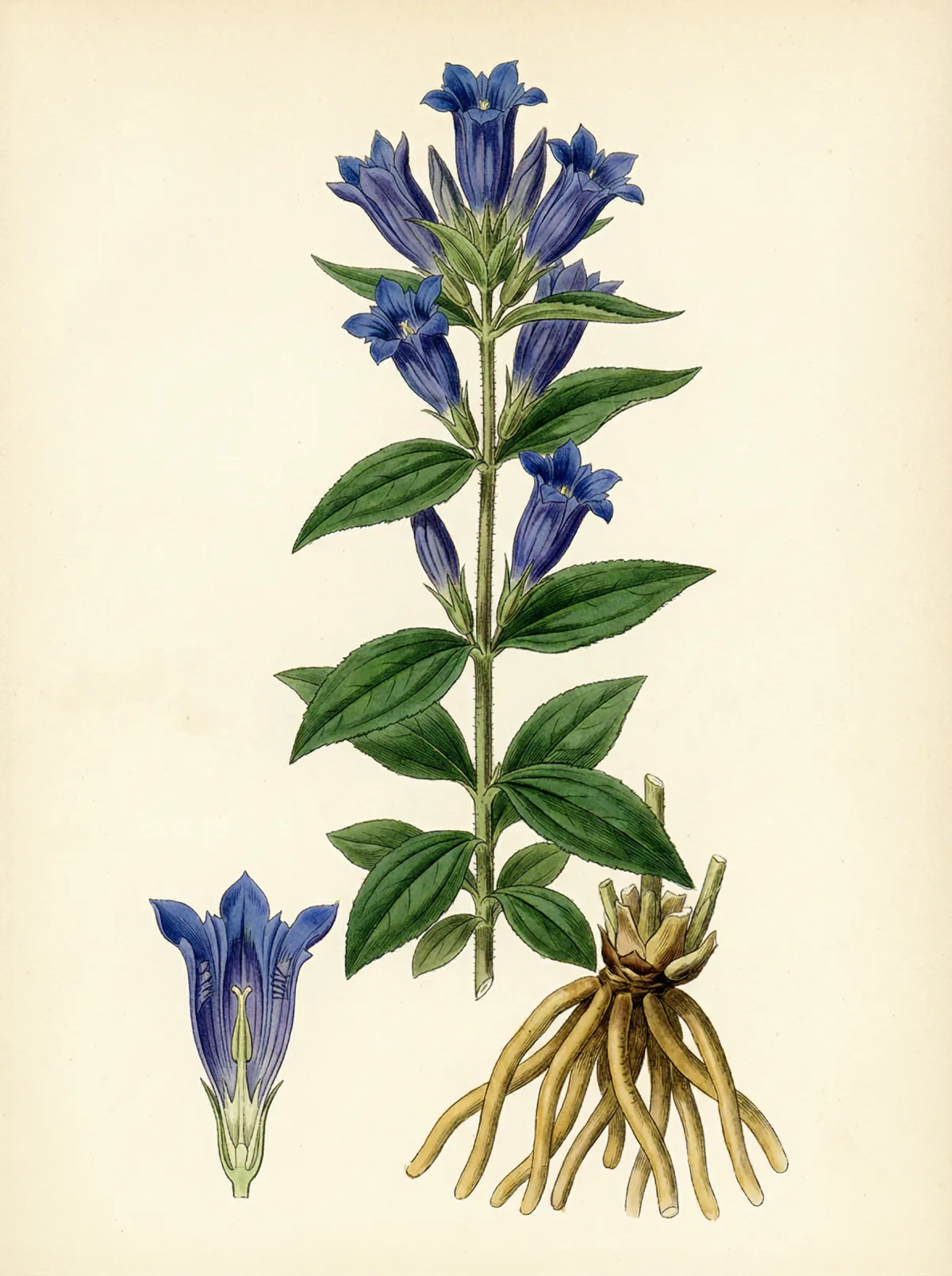
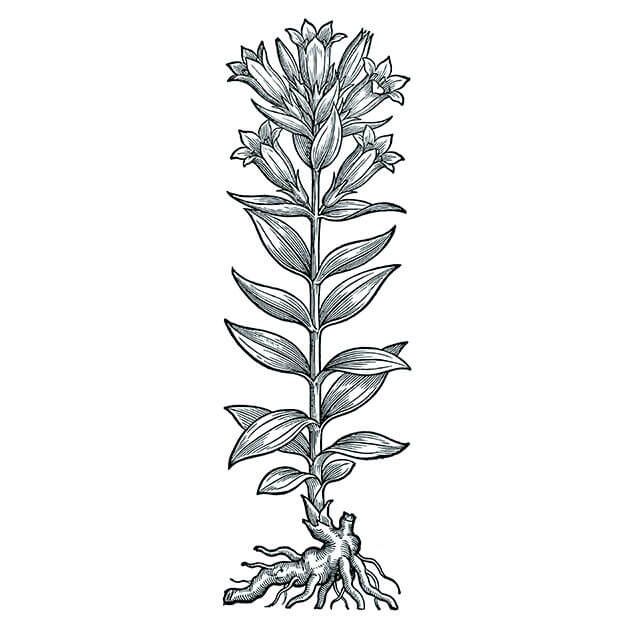
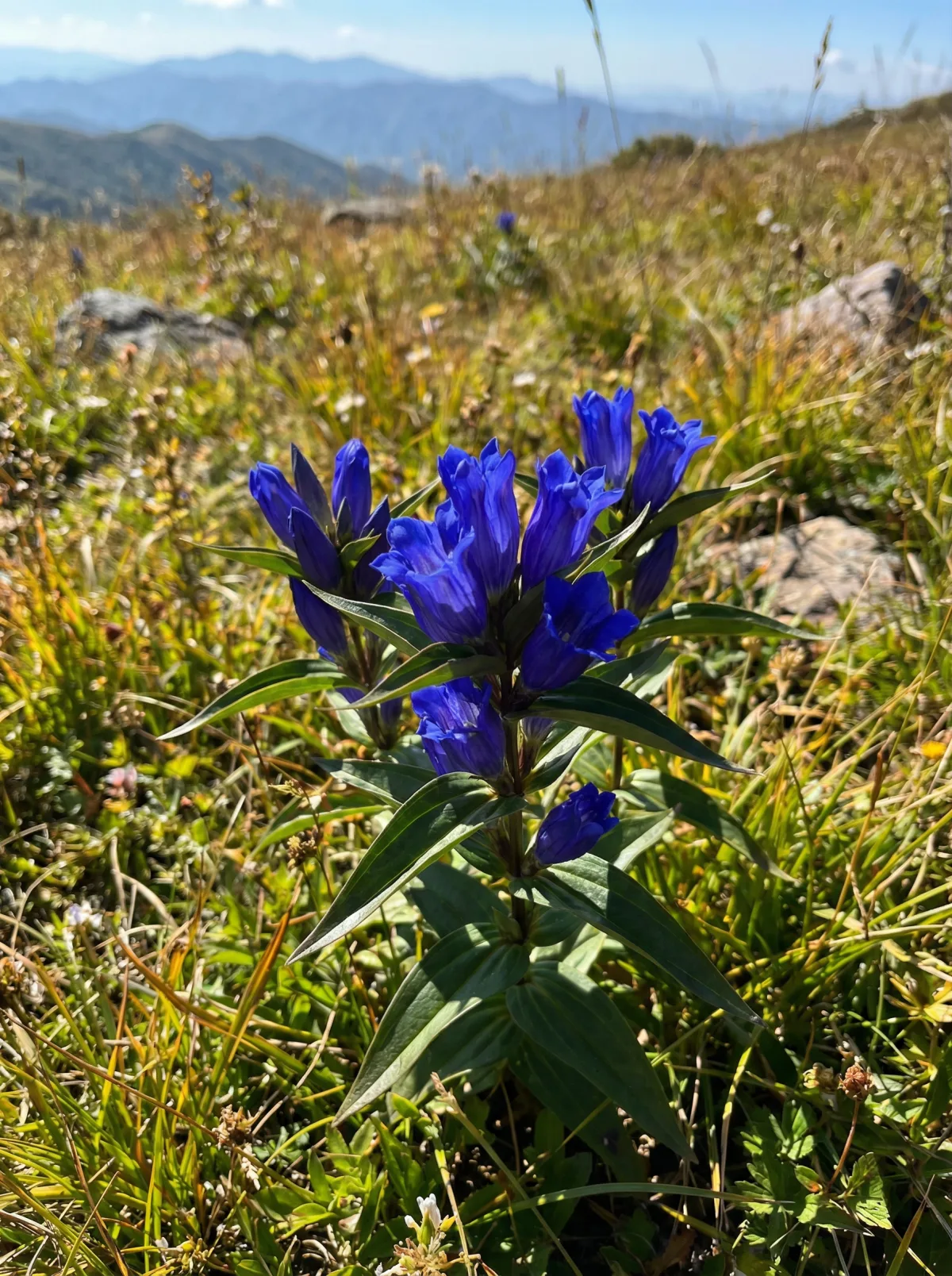
Gentiana scabra is a perennial plant from the Family of the Enzian plants (Gentianaceae) and grows to a height of 30–60 cm. The erect stems bear opposite, lanceolate leaves with a rough surface—hence the species name „scabra“ (Latin for “rough”). The funnel-shaped, deep blue-violet flowers appear in late summer and fall. The robust, yellowish-brown roots and rhizomes are used medicinally; when dried, they develop a characteristically intense, bitter odor.
The genus Gentiana comprises over 400 species worldwide; in TCM, in addition to Gentiana scabra, the closely related species Gentiana triflora and Gentiana manshurica are also used, and they are recognized as equivalent in the Pharmacopoeia of the People's Republic of China. Gentiopicroside — responsible for the extreme bitterness — is present in comparable concentrations in all three varieties. The roots are harvested in the fall, when their active ingredient content is at its highest, and are then dried and cut or processed into granules.
Occurrence
Gentiana scabra is found in East Asia It is native to and grows wild in the mountainous regions of China (Manchuria, Sichuan, Yunnan), Japan, and Korea. The plant prefers moist, partially shaded locations on acidic, well-drained soil at elevations of 200–2,000 m. In China, a large portion of the supply now comes from cultivated crops, primarily in the provinces of Heilongjiang, Jilin, and Liaoning. Wild harvests have declined due to overharvesting, which is why commercial cultivation is becoming increasingly important.
Related herbs
Herbs with similar effects and related areas of application