







Mu Xiang — Costus root
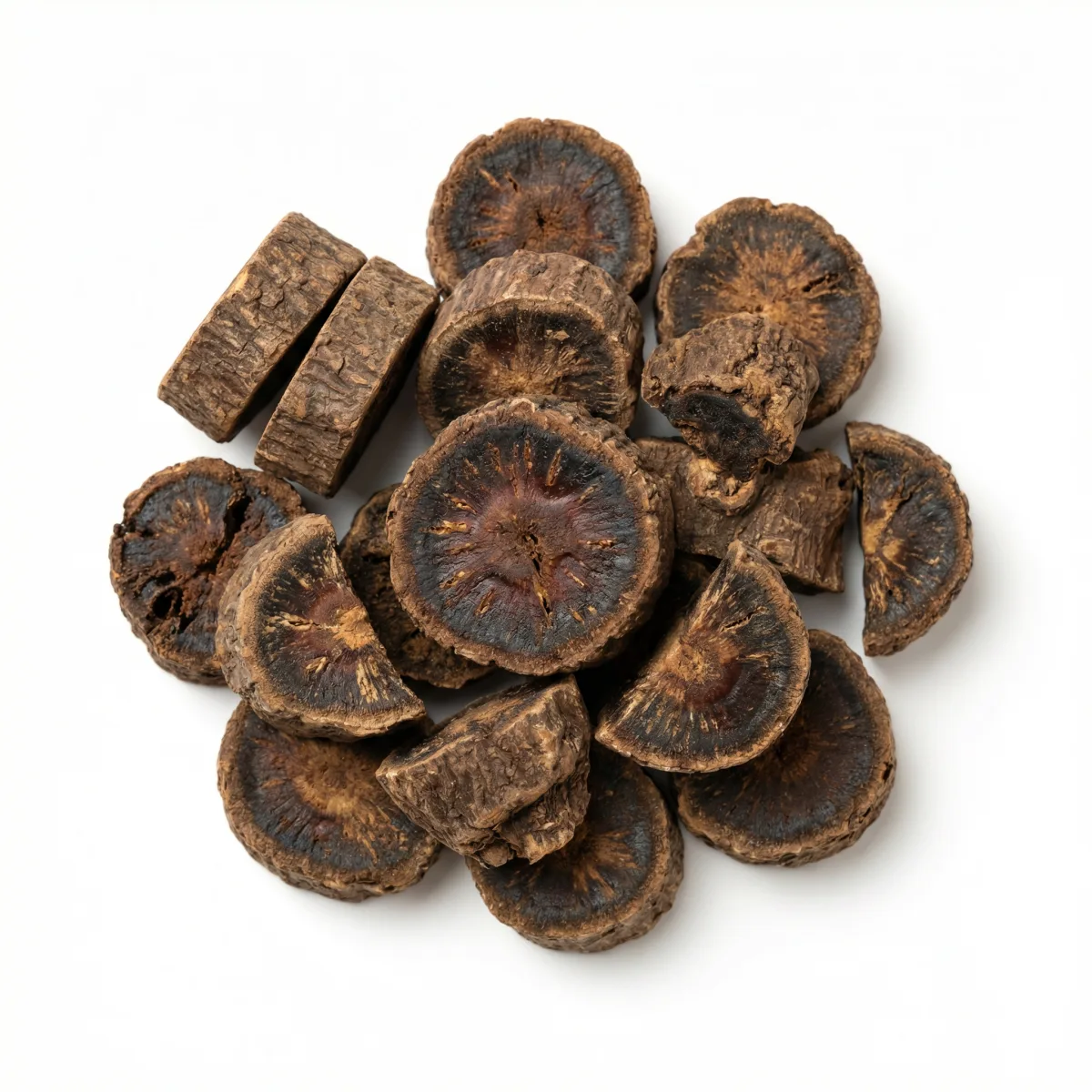
Mu Xiang — die Costuswurzel — ist eines der stärksten Qi–bewegenden Kräuter für den Mittleren und Unteren Erwärmer. Ihr intensiver, aromatischer Duft durchdringt Stagnation und löst gestautes Qi im Bauch bei drängendem Stuhlgang.
Costunolid and dehydrocostus lactone zählen zu den Inhaltsstoffen und unterstützen die Qi–bewegende Wirkung des Krauts auf die glatte Muskulatur. In der TCM–Praxis ist Mu Xiang unverzichtbar bei Qi–Stagnation im Verdauungstrakt und wird häufig als Assistent in tonisierenden Rezepturen eingesetzt.
Effect from a TCM perspective
Mu Xiang bewegt Qi und löst Stagnation — besonders im Mittleren und Unteren Erwärmer. Die warme, aromatische Natur durchdringt Stagnation und wärmt die Mitte.
- Bewegt Qi und löst Stagnation: Bei ziehender Spannung im Bauch, aufgetriebenem Bauch und Fülle durch Qi–Stagnation im Mittleren Erwärmer
- Regulates spleen and stomach qi: Bei schwachem Appetit, aufsteigendem Magen–Qi und Verdauungsschwäche durch stagnierendes Qi
- Reguliert den Dickdarm bei Li Ji: Löst drängenden, unvollständigen Stuhldrang und reguliert den Stuhlgang durch feuchte Hitze im Dickdarm
- Prevents stagnation through tonics: As an adjuvant (Zuǒ) in tonifying formulas to counteract the heavy, hard-to-digest nature of qi and blood tonics
Application & dosage
Die Standarddosis im Dekokt beträgt 3–10 g. Da die ätherischen Öle bei langer Hitzeeinwirkung verloren gehen, wird Mu Xiang erst in den letzten 5 Min. des Kochvorgangs zugegeben. Als Pulver werden 1–3 g pro Einnahme verwendet — diese Form bewahrt die flüchtigen Inhaltsstoffe besonders gut.
Die Verarbeitungsform beeinflusst das Wirkprofil: Shēng Mù Xiāng (roh) wirkt stärker Qi–bewegend und wird bei ausgeprägter Stagnation bevorzugt. Zhì Mù Xiāng (roasted) is milder, less drying, and is more suitable for weakened patients who also have a deficiency of Qi.
Dosage forms
- Decoct: 3–10 g; add only during the last 5 minutes to preserve the volatile essential oils
- Powder (Sǎn): 1–3 g pro Einnahme, besonders bei akuter Qi–Stagnation im Darm
- Tablets / Pills: Standardisierte Fertigpräparate aus klassischen Rezepturen, die Feuchte–Hitze klären oder die Milz stärken und das Qi bewegen
- Granules: Concentrated instant granules for easy preparation as a hot beverage
- Tincture / Extract: Alkoholischer Auszug für die westliche Pflanzenheilkunde, vor allem bei Qi–Stagnation des Verdauungstrakts
Dosage
- Decoction (Täng): 3–10 g — Standard range in the classic recipe
- Powder (Sǎn): 1–3 g per dose, 2–3 times daily
- Granules: According to the manufacturer's instructions, typically 1.5–3 g per dose
- Tincture (1:5): 2–4 ml, 3 times a day
- Maximum dose: 10 g in a decoction — higher doses increase the risk of depleting yin and body fluids
Frequent combination partners
Mu Xiang often only reaches its full potential when combined with other herbs
History & Tradition
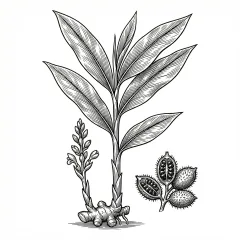
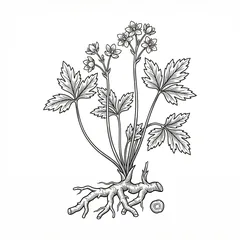
Mu Xiang wird im Shén Nóng Běn Cǎo Jīng als Kraut der mittleren Klasse aufgeführt. Ursprünglich aus Nordindien und dem Himalaya stammend, gelangte die Wurzel über die antike Silk Road nach China. Dort wurde sie als Mù Xiāng — wörtlich „Holz–Duft" — bekannt: ein treffender Verweis auf den intensiven, holzig–aromatischen Geruch der getrockneten Wurzel. Bereits in der Han–Dynastie schätzten Ärzte die Fähigkeit dieses Krauts, stagnierendes Qi im Verdauungstrakt zu bewegen und zu regulieren.
Zhang Zhongjing verwendete Mu Xiang in Rezepturen bei Qi–Stagnation im Darm mit ungeordnetem Abwärtsfluss. In der Song–Dynastie wurde es zum zentralen Bestandteil einer berühmten Abwandlung der klassischen, milz–stärkenden Grundrezeptur, die zusätzlich Qi–Stagnation mit Milz–Schwäche verbindet. Diese Kombination zeigt das klassische TCM–Prinzip: Tonisierung und Bewegung müssen Hand in Hand gehen, damit stärkende Kräuter keine zusätzliche Stagnation erzeugen. Bis heute ist Mu Xiang eines der am häufigsten eingesetzten Qi–regulierenden Kräuter der TCM–Praxis.
Contraindications & caution
Do not use in cases of Yin deficiency with dryness or Qi deficiency without stagnation—its warm, aromatic nature can cause dryness and direct Qi downward. In cases of Yin-deficient heat patterns, Mu Xiang may exacerbate the heat.
Use with caution during pregnancy, as its strong qi-moving effect may affect the fetal qi.
Botany
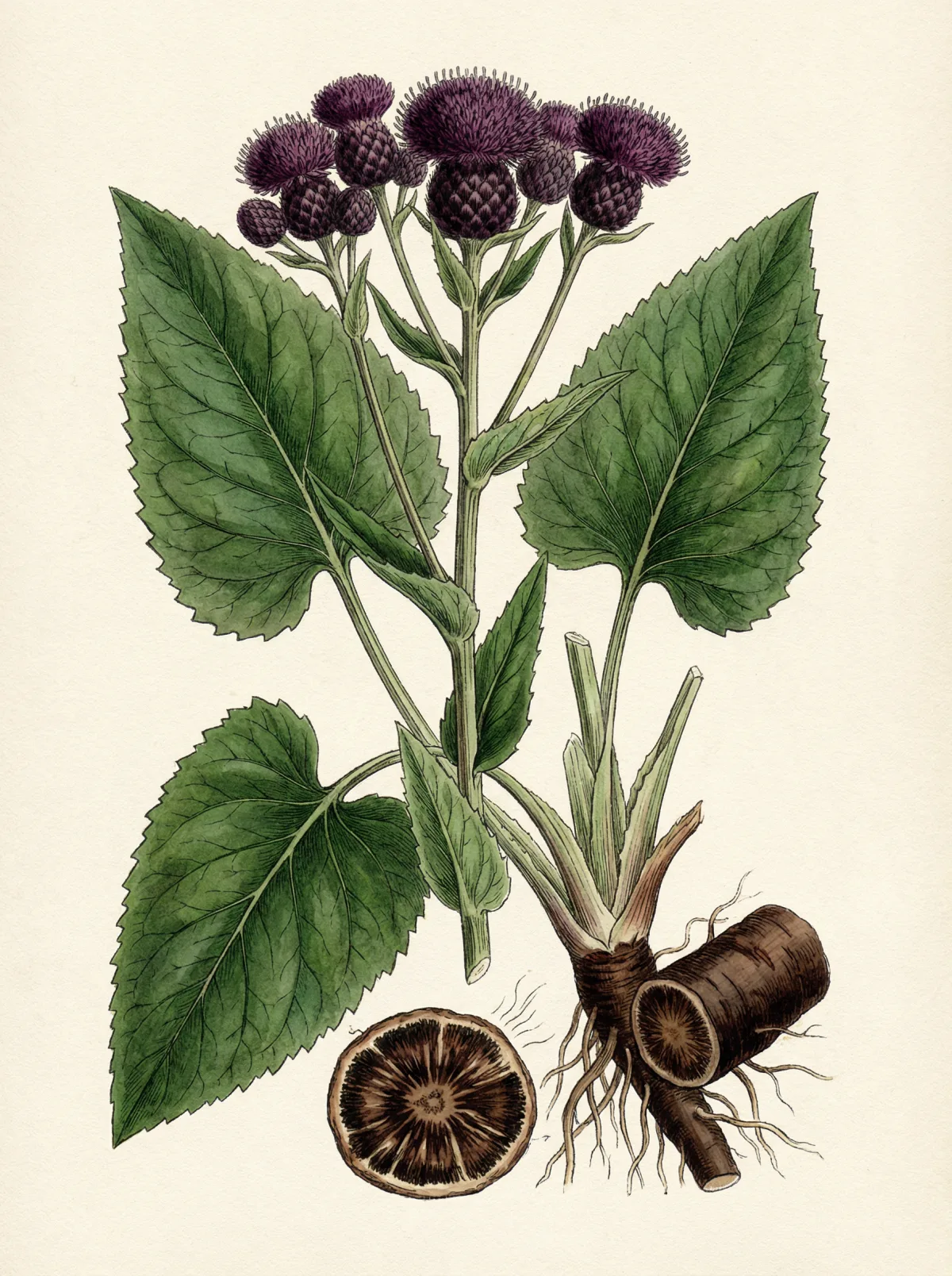
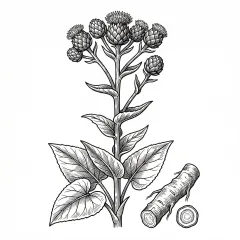
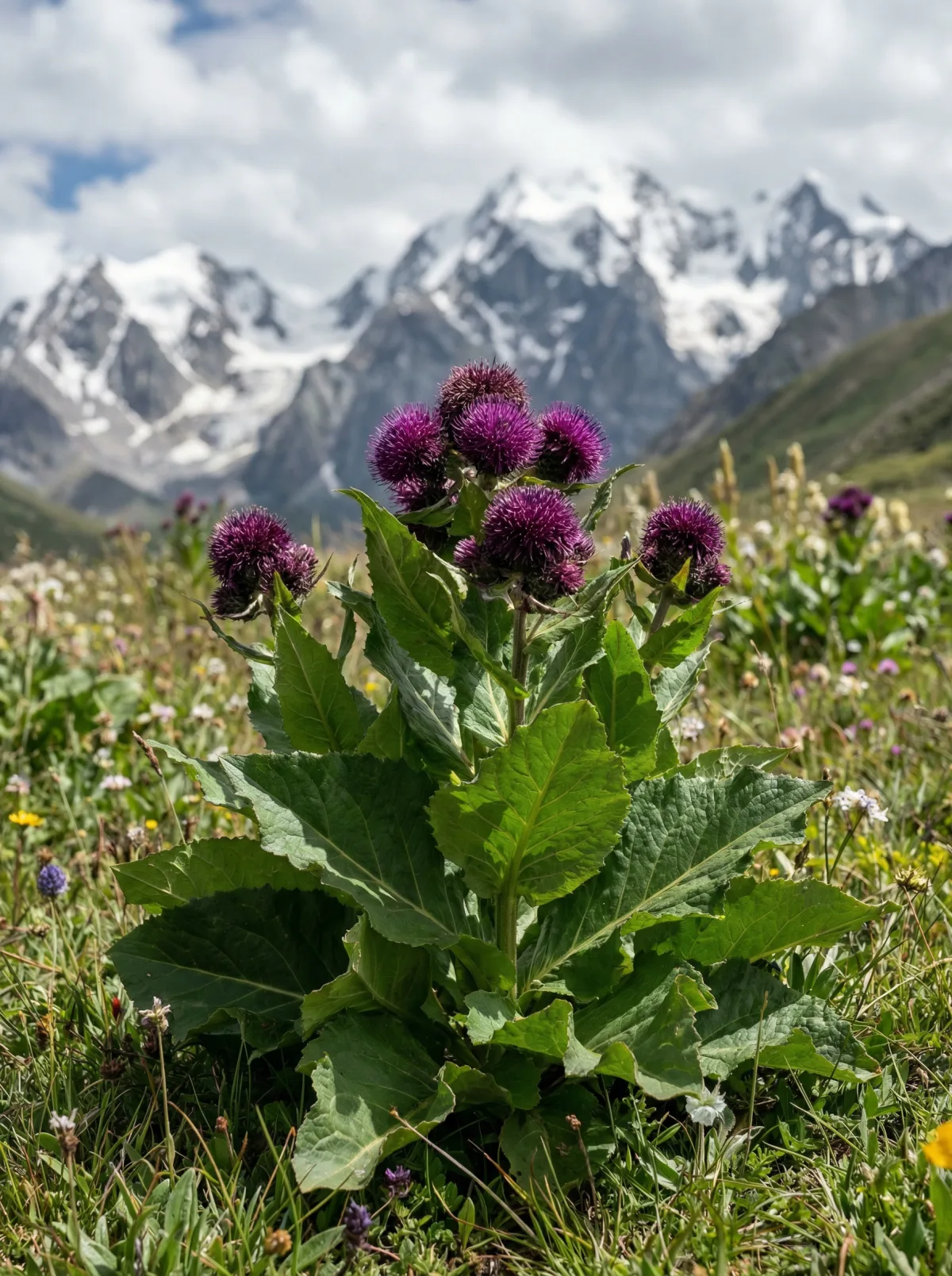
Aucklandia lappa (Syn. Saussurea costus) ist eine ausdauernde Krautpflanze aus der Familie der Korbblütler (Asteraceae) und erreicht eine Wuchshöhe von 1–2 m. Die großen, basalen Blätter sind tief gelappt und unverwechselbar; die purpurvioletten Blütenköpfe erscheinen im Spätsommer. Medizinisch verwendet wird die Pfahlwurzel: dick, holzig, außen graubraun und innen hell, mit einem durchdringenden, würzig–aromatischen Duft, der auf die hohe Konzentration an Sesquiterpenlactonen (Costunolid, Dehydrocostus–Lacton) und ätherischen Ölen zurückgeht.
Die Pflanze bevorzugt feuchte, gut drainierte Böden in kühlen, gebirgigen Lagen auf 2.500–4.000 m Höhe. Sie bildet im ersten Jahr eine Blattrosette und blüht im zweiten Jahr. Die Wurzel wird nach 3–4 Jahren geerntet, wenn sie den maximalen Inhaltsstoffgehalt erreicht hat. In der botanischen Nomenklatur ist Saussurea lappa ein häufig verwendetes Synonym, unter dem die Art in älteren Quellen geführt wird.
Occurrence
- Source: Himalayan region — Kashmir, northern India, Nepal, and Bhutan at elevations of 2,500–4,000 meters
- Cultivation in China: Yunnan (Lijiang region) and Sichuan — today the most important growing regions for the Chinese market
- Kultivierung weltweit: Indien (Jammu & Kashmir), Pakistan, Myanmar sowie in geringem Umfang Europa (Versuchsanbau)
- CITES status: Saussurea costus is listed on CITES Appendix I—trade in wild-collected specimens is prohibited internationally; commercially available Mu Xiang comes exclusively from certified cultivation
- Gefährdung: In Wildbeständen stark zurückgegangen durch Übernutzung; in Indien als gefährdete Art eingestuft
Harvest time
- Main harvest time: Fall (October–November) — after the above-ground parts of the plant have died back
- Age of the plant: 3–4 years, so that the root reaches its maximum sesquiterpene lactone content
- Harvesting method: The taproots are dug up by hand to prevent damage
- Qualitätsmerkmal: Hochwertige Wurzeln sind fest, schwer, intensiv aromatisch duftend und zeigen im Querschnitt ein deutliches Muster aus Harzkanälen
- Lagerung nach Ernte: Trocknen bei max. 40 °C (Schonung der ätherischen Öle), danach trocken und dunkel lagern
Processing
After harvesting, Mu Xiang is processed in different ways depending on the desired properties. The raw form (Shēng Mù Xiāng) retains all the volatile oils and has the strongest qi-moving effect. The roasted form (Zhì Mù Xiāng) becomes milder in effect when heated dry and is particularly suitable for weakened patients, for whom excessive Qi movement would be counterproductive.
-
Raw processing (Shēng Mù Xiāng):
- Thoroughly remove all soil and root hairs from freshly harvested roots
- Cut into slices or pieces 3–5 mm thick
- Dry gently at a maximum temperature of 40°C, either in the open air or in a dryer
- Store in airtight containers in a cool, dark place
-
Roasted processing (Zhì Mù Xiāng):
- Heat the dried slices in a dry wok or skillet over medium heat
- Toast while stirring constantly until the surface is lightly browned and the aroma becomes milder
- Let cool and check that it is completely dry
- Store in airtight containers immediately after cooling, as the roasted beans absorb moisture more quickly
Related herbs
Herbs with similar effects and related areas of application