






On this page you will learn:
- What this pattern means from the perspective of TCM and Western medicine
- Where your complaints come from and how they are connected
- Which specific treatment methods may help you now
- How you can nourish your stomach yin and harmonize your digestion with TCM herbs, acupressure, qi gong and nutrition
The good news: Stomach yin deficiency can be treated very effectively with the right measures. With a moisturizing diet, gentle methods, and plenty of rest, you can restore your stomach yin and strengthen your digestion.
Take your time, getting to know the different treatment approaches — you don't have to put everything into practice at once. Choose what feels right to you and what you can easily fit into your daily life.
Your treatment at a glance:
Which TCM pattern is really behind your complaints?
Degree of the
imbalance

Moderate to Pronounced
Typical
Treatment duration

2–4 months
Self-treatment
Possible

Can be treated yourself with guidance
Treatment
scope

2–3 methods
Suggested
methods

Extensive selection
Our free TCM Analysis shows you your personal TCM pattern in just 10 minutes.
What is a gastric yin deficiency?
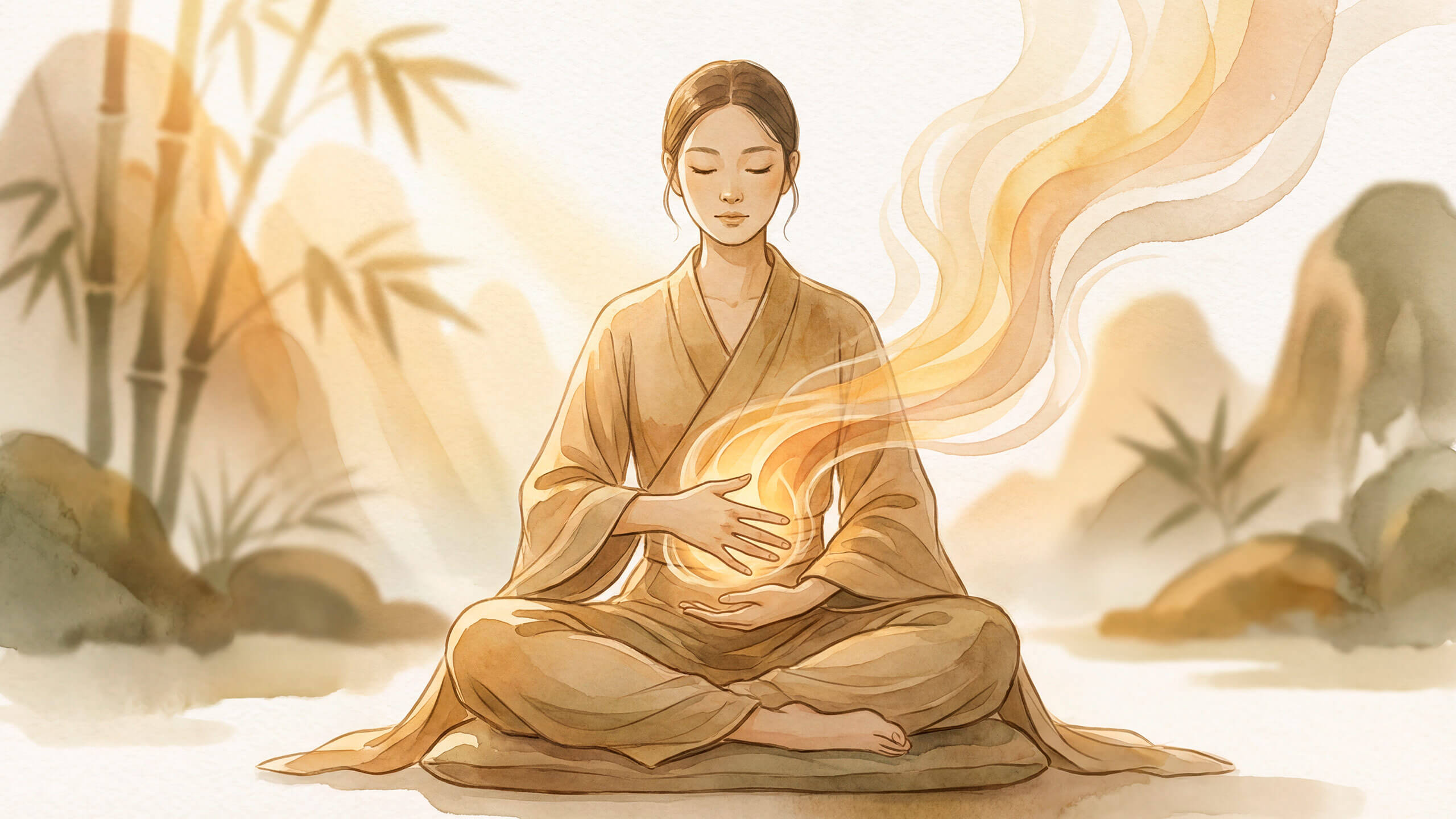
When the moisturizing juices of the stomach are exhausted
The TCM perspective: Moisturize the stomach and nourish digestion
In Traditional Chinese Medicine, the stomach is the central digestive organ and is often referred to as the „sea of food.“ Stomach Yin is the cool, moisturizing substance that lubricates the stomach and facilitates digestion.
Stomach yin is like cooling water in a cooking pot. Without this water, the food burns instead of cooking gently. The stomach becomes dry, digestion stagnates and the natural downward movement of the stomach is disturbed.
In TCM, the stomach receives and „breaks down“ the food, while the spleen transforms the nutrients and distributes them throughout the body. With a stomach yin deficiency, there is a lack of moisture for this digestive work - dry mucous membranes, loss of appetite and constipation are the result.
The result of a stomach yin deficiency: The moisturizing yin that lubricates the stomach and supports digestion is depleted. Empty heat can develop, the stomach lining dries out and the natural digestive function is impaired.
The typical signs of a stomach yin deficiency:
- Dry mouth, especially in the afternoon and evening
- Loss of appetite or intense cravings without actually feeling hungry
- Dull stomach pain or slight burning sensation
- Constipation with dry, hard stools
- Nausea without vomiting
- Dry, chapped lips
- Feeling thirsty, but no desire to drink
- Emaciation despite normal food intake
The good news: Stomach Yin can be restored with patience and the right measures. By eating moisturizing foods, drinking plenty of fluids, and using herbs such as Mai Men Dong (Ophiopogon), you can rehydrate your stomach and harmonize your digestion.
The Western perspective: Chronic gastritis and mucosal atrophy
From a Western perspective, gastric yin deficiency often corresponds to chronic atrophic gastritis or a condition of reduced gastric juice production. The gastric mucosa is thinner than normal and the protective mucus layer is reduced.
Think of your stomach like a cooking pot: With sufficient „yin“, it is well coated and can process food gently. If the stomach lacks yin, the coating is worn away - the food sticks, burns and the pot itself is damaged.
Modern gastroenterology recognizes that chronic stress, unhealthy eating habits, and certain medications (especially NSAIDs) can damage the stomach lining. TCM has described this condition for thousands of years as stomach yin deficiency and successfully treats it with moisturizing methods.
What does modern medicine show?
- Chronic atrophic gastritis: regression of the gastric mucosa
- Decreased gastric juice: less hydrochloric acid and digestive enzymes
- Impaired intestinal motility: delayed gastric emptying, constipation
- Sjögren's-like symptoms: dryness of the mucous membranes
- Functional dyspepsia: complaints without organic findings
- Dehydration and electrolyte imbalances
What the research says: Mai Men Dong (Ophiopogon) and Sha Shen (Glehnia)—two of the herbs in Yi Wei Tang—have been well studied pharmacologically; they are described as having mucosal-protective and moisturizing properties. However, this does not necessarily mean that regeneration of the gastric mucosa will occur; only an examination by a doctor can determine that.
TCM treatment for stomach-Yin deficiency focuses precisely on this: It moistens the stomach and helps digestion regain its natural rhythm. This takes patience—and, as with any formula, an eye for what isn’t working: You’ll find the relevant points below in the section on how to take it.

The Yellow Emperor's team explains your pattern
Qi Bo | The Yellow Emperor | Dr. Lisa Weber
MASTER OF THE HEALING ARTS | FOUNDER OF TCM | MODERN PHYSICIAN
What happens when the legendary Yellow Emperor of Traditional Chinese Medicine sits down with his advisor Qi Bo and a modern doctor? They discuss your pattern—using 4,000-year-old knowledge AND the latest science.
Stomach Yin deficiency - when the moisturizing juices of the stomach are exhausted
The Yellow Emperor: „Qi Bo, in my realm people complain of dry mouth, loss of appetite and constipation. Their lips are chapped, their stool is hard like sheep dung and they have a burning sensation in their stomach. Although they eat, they lose weight. What is the cause?“
Qi Bo: „Your Majesty, these people suffer from a deficiency of stomach yin - the moisturizing, cooling substance that lubricates the stomach and enables digestion. The stomach is the ‚sea of food‘ and the most important place for digestion. Stomach yin is like the water in a saucepan - without it, food burns instead of gently cooking. When Stomach Yin is depleted, the stomach dries out, the mucous membranes become cracked, and the natural downward movement of the stomach is disturbed. Hence the constipation - the dryness continues downwards.“
Dr. Weber: „This corresponds remarkably to the concept of atrophic gastritis! In this disease, the gastric mucosa is thinned and the protective mucus layer is reduced. Less gastric juice is produced and digestion is impaired. Interestingly, patients show exactly these symptoms: Loss of appetite, a burning sensation in the upper abdomen, constipation due to reduced intestinal motility. TCM recognized these connections thousands of years ago!“
The Yellow Emperor: „You're talking about the downward movement of the stomach. Explain this in more detail.“
Qi Bo: „Majesty, in TCM every organ has a natural direction of movement. The stomach moves downwards - it receives the food and directs it downwards into the intestine. The spleen, on the other hand, moves upwards - it transforms the food and transports the nutrients upwards. When stomach yin is exhausted, the downward movement is disrupted. The food stagnates, the stool becomes dry and hard. In severe cases, the movement can even be reversed, causing nausea and belching.“
Dr. Weber: „That's an elegant description of peristalsis! The stomach and intestines actually have a directional movement that transports food forward. In chronic gastritis and dehydration, this motility is often disturbed - delayed gastric emptying, reduced intestinal peristalsis. The TCM description of ‚disturbed downward movement‘ captures precisely this phenomenon. And treatment through moisturizing is consistent with what we know: Adequate hydration is essential for normal intestinal motility!“
The Yellow Emperor: „What causes the stomach yin to become exhausted?“
Qi Bo: „There are many causes, Your Majesty. First: Irregular eating - hasty eating, skipping meals or eating too late exhausts the stomach. Second: Dry, spicy food - too much fried, grilled, hot and spicy food burns the stomach yin. Third: Chronic illnesses with fever - they consume the body fluids. Fourth: Emotional stress - especially suppressed emotions and brooding damage the spleen and stomach. Fifth: Excessive consumption of stimulants - coffee, alcohol and cigarettes deplete Yin. Sixth: Certain medications - some drugs dry out the stomach.“
Dr. Weber: „All of these factors are scientifically known to be risk factors for gastritis! Alcohol and smoking reduce mucus production. Stress increases acid production and impairs blood flow to the mucous membrane. Irregular eating disrupts the circadian rhythm of digestion. Hot spices can irritate the mucous membrane in sensitive stomachs. The TCM recommendations for prevention are absolutely medically sound!“
The Yellow Emperor: „What signs on the body reveal a stomach yin deficiency?“
Qi Bo: „The signs are characteristic, Your Majesty. The tongue is red, especially in the center - the stomach area. It has little or no coating - the juices are missing. It is dry and may show cracks - the lack of fluids is visible. The lips are dry and cracked - the stomach opens into the mouth. The pulse is thin like a fine thread - Xi Mai - and can be slightly rapid. It is particularly weak at the right guan position, the stomach place on the wrist.“
Dr. Weber: „Tongue diagnosis detects real physiological conditions! A dry, cracked tongue is a classic sign of dehydration. An absent or minimal tongue coating can indicate atrophic gastritis - the coating consists largely of bacteria and exfoliated cells, which are reduced when the mucous membrane is weakened. And dry, cracked lips are a well-known sign of dehydration and vitamin deficiencies. Traditional diagnostics detect measurable body conditions!“
The Yellow Emperor: „How can the stomach yin be nourished?“
Qi Bo: „Majesty, the treatment principle is: Yang Wei Sheng Jin - nourish the Stomach Yin and generate body fluids. First: Moisturizing diet - pears moisten the stomach, rice gently nourishes, honey lubricates digestion. Second: Regular meals - the stomach loves regularity. Eat three times a day at the same time. Thirdly: Eat slowly and consciously - hasty eating damages the stomach. Fourth: Avoid dry and spicy food - fried, grilled and spicy food further depletes Yin.“
Dr. Weber: „These dietary recommendations make sense from a gastroenterological perspective! Pears contain pectin, which protects the stomach lining. Rice is easy to digest and does not irritate the lining. Honey has proven mucosal-protective and antibacterial properties. Regular meals optimize the digestive rhythm and prevent excessive acid production. And chewing slowly promotes saliva production, which neutralizes the stomach’s pH. These traditional recommendations are physiologically sound!“
The Yellow Emperor: „What about the classic herbal formulas for stomach yin?“
Qi Bo: „The classic formula is Sha Shen Mai Men Dong Tang - the decoction of Glehnia and Ophiopogon. It contains Bei Sha Shen - Glehnia root - for gentle moisturizing, Mai Men Dong - Ophiopogon - for Yin nourishment, and Yu Zhu - Solomon's Seal - for generating body fluids. For severe dryness, we add Shi Hu - Dendrobium - one of the most precious Yin-nourishing herbs. For nausea and disturbed downward movement, we add Zhu Ru - bamboo shells - for harmonization.“
Dr. Weber: „These herbs are pharmacologically interesting! Ophiopogon contains saponins and polysaccharides, which have been shown to stimulate mucus production and have an antioxidant effect. Glehnia has mucous membrane-protecting properties. Dendrobium contains mucopolysaccharides, which have a moisturizing effect. Several studies show that Sha Shen Mai Men Dong Tang can be helpful in chronic atrophic gastritis - mucosal regeneration is promoted!“
The Yellow Emperor: "Wonderful! Let's put this wisdom into a practical plan."
THE 3-WAY METHOD FOR GASTRIC YIN DEFICIENCY
MORNING PROTOCOL (Nourish Stomach Yin):
- TCM: Warm breakfast - the stomach needs soft, warm food in the morning to activate it
- Science: Warm food is easier to digest and gently stimulates gastric juice production
- Practical: Rice congee with a little honey and stewed apple - or porridge with pears
- TCM: Warm water after waking up — gently stimulates the stomach
- Science: Liquid in the morning hydrates after a night's rest and stimulates peristalsis
- Practical: A glass of warm water with a teaspoon of honey — 30 minutes before breakfast
- TCM: Acupressure on Ma 36 (Zusanli) - strengthens the stomach and promotes digestion
- Science: This point has been shown to improve gastric emptying and intestinal motility
- Practical: 3 finger widths below the knee, on the outside of the shin. Massage gently in a circular motion for 2-3 minutes
TAGS-STRATEGY (protect stomach yin):
- TCM: Regular meals - the stomach loves routine and regularity
- Science: Eating regularly optimizes the digestive rhythm and prevents acidosis
- Practical: 3 main meals at fixed times, do not skip meals, do not eat too late
- TCM: Chew slowly and consciously - relieves the stomach and aids digestion
- Science: Thorough chewing increases saliva production, which protects the stomach
- Practical: Chew each bite 20-30 times, eat without distraction, enjoy in peace
- TCM: Moisturizing snack - nourishes the stomach yin
- Science: Pears and other juicy fruits provide liquid and protective pectins
- Practical: A ripe pear in the afternoon or stewed apple with a little cinnamon
EVENING RITUAL (regenerate stomach yin):
- TCM: Light dinner - the stomach needs time to regenerate during the night
- Science: Late, heavy meals disrupt the nightly regeneration of the stomach lining
- Practical: Eat before 7 pm, prefer light soups or steamed vegetables
- TCM: Acupressure on KG 12 (Zhongwan) - the alarm point of the stomach calms and harmonizes
- Science: This point is located above the stomach and can have a positive influence on stomach function
- Practical: Halfway between the navel and the breastbone. Gently massage in a circular motion for 2-3 minutes
- TCM: Qi Gong „Connecting heaven and earth“ - harmonizes stomach and spleen
- Science: Gentle movement with deep breathing promotes digestion and relaxation
- Practical: 10 minutes of gentle Qi Gong in the evening, focused on the center of the body
The Yellow Emperor: „Qi Bo, how long does it take for the stomach yin to be nourished again?“
Qi Bo: „Majesty, the stomach yin can regenerate relatively quickly if the right measures are taken consistently. After 1-2 weeks, most people notice that dry mouth subsides, appetite returns and digestion becomes more regular. After 4-6 weeks, the improvements become clearer: constipation is relieved, lips become softer and the burning sensation in the stomach disappears. After 2-4 months, the stomach yin can be noticeably nourished - digestion is harmonious, energy is stable, dry mouth has disappeared. The key is regularity, Majesty - the stomach loves routine more than any other organ!“
Dr. Weber: „This corresponds to what we see in the treatment of atrophic gastritis! The gastric mucosa can regenerate, but it needs time and the right conditions. Studies show that a mucosal-protective diet and certain herbs can promote regeneration within a few months. Regular meals are essential - they allow the stomach to prepare for digestion and prevent acid spikes!“
The Yellow Emperor: „What must be avoided at all costs with a stomach yin deficiency?“
Qi Bo: „Your Majesty, the most important thing is: Firstly, avoid spicy and dry food - chili, fried food, strongly spiced food burns the already scarce Yin. Secondly, avoid irregular eating - the stomach hates nothing more than irregularity. Thirdly, greatly reduce coffee and alcohol - they deplete the stomach yin and irritate the mucous membrane. Fourthly, don't eat too quickly and don't eat too much - both overtax the weakened stomach. Fifthly, avoid eating late - the stomach needs the night to regenerate. And sixthly: avoid stress while eating - emotionally upset food damages digestion.“
Dr. Weber: „It’s all scientifically sound! Spicy foods can directly irritate the mucous membrane. Irregular eating leads to spikes in stomach acid and disrupts the digestive rhythm. Coffee and alcohol increase acid production and damage the mucous membrane. Eating too quickly and consuming large portions place excessive mechanical strain on the stomach. Eating late at night disrupts nighttime regeneration. And eating while stressed reduces blood flow to the digestive tract and impairs digestion. These recommendations are backed by gastroenterological research!“
The Yellow Emperor: „Then the message is clear: stomach yin is the moisturizing substance that lubricates the stomach and enables digestion. When it is exhausted, the stomach dries out, digestion stagnates and discomfort arises. With patient care - moisturizing food, regular meals, slow eating and avoiding harmful influences - we can nourish the stomach yin again and restore harmonious digestion.“
Qi Bo: [smiles] „That's right, Your Majesty. The stomach is the sea of food that nourishes us all. When the stomach yin is nurtured, digestion flows like a calm stream - we can eat with joy, digest with ease and enjoy life with a good appetite.“
About our "3 Sages" story
Who are the Yellow Emperor and Qi Bo?
The Yellow Emperor (Huangdi) is said to have lived around 2600 BCE and is regarded as the mythical founder of Chinese culture and medicine. Qi Bo was his most important advisor and personal physician. Their conversations about health, illness, and the nature of human beings were recorded in the most important foundational work of TCM.
The book: Huangdi Neijing
The "Huangdi Neijing," also known as "The Yellow Emperor — The Foundational Work of Traditional Chinese Medicine," was probably written between 200 BCE and 200 CE. It is the oldest surviving work of Chinese medicine and consists of dialogues between the Yellow Emperor and his advisors — mainly Qi Bo.
For TCM, this work is what the Bible is for Christianity: the absolute foundation. All the key concepts — Yin and Yang, the 5 Elements, Qi, meridians, and acupuncture points — are described systematically here for the first time.
Our modern approach: The 3 Sages
In our series "The 3 Sages," we bring the Yellow Emperor and Qi Bo together with the fictional modern physician and microbiologist Dr. Weber.
Important note: All three characters and their conversations are purely fictional and invented by us.
We use this narrative style, similar to the dialogue form in the Huangdi Neijing, to explain the often complex connections within TCM in a way that is easy to follow and entertaining. When the 4,000-year-old emperor is confronted with modern science, illuminating "aha moments" arise that show: ancient wisdom and new research often speak the same language — just in different words.
This is how TCM comes alive, becomes easy to understand, and can be put into practice in your everyday life.
The dialogues are creative interpretations — not historical documents. For medical questions, please consult a qualified TCM practitioner or physician.
Your treatment options
A gastric yin deficiency is very treatable! TCM offers you a variety of effective methods to rebuild your stomach yin and harmonize your digestion. You don't have to do everything at once - choose the methods that suit you and your everyday life.
Here you will find specific treatment approaches that have proven themselves in TCM over thousands of years and that you can mostly do yourself.
TCM Herbs
Herbal medicine (or, in modern terms, phytotherapy) is the MOST IMPORTANT tool of TCM. It is part of every classical TCM treatment. Today there is a suitable herbal blend for every TCM Pattern.

How to get your matching herbal blend
- Search online. Enter Stomach Yin Deficiency "TCM Herbal Blend" — with the quotation marks — into the search engine of your choice. If you like, add the form: Pressed tablets — in our experience the easiest to take — or Granules. That way you'll see several providers and can compare at your leisure.
- Our therapist directory. In TCM Therapist Directory you'll find TCM therapists near you who tailor a TCM herbal blend to your personal pattern.
- Your TCM pharmacy. Some pharmacies carry TCM herbal blends or will order them for you. Tell them your pattern — or show them this page.
In any case, pay attention to the quality of the TCM herbal blend, not the price — it's worth taking a look at the ingredient list.
Not sure which herbal blend fits your TCM pattern? Write to us. We'll tell you which classical formula traditionally belongs to this pattern and what to look for when choosing.
Request a herbal blend tip
TCM uses many tools. Which of them suit you is the question we hear most often. And it can't be answered in passing.
That's why we offer personal TCM guidance. It begins with a free, no-obligation ONLINE initial consultation with Wolfgang.
After that, you'll receive your personal guidance plan with all of its components and the costs as a proposal. If it feels right for you, we get started: in a second online session (about 30 minutes), Wolfgang goes over your path with you.
Acupressure
Acupressure is acupuncture without needles - you can apply them yourself at any time. By applying gentle pressure to certain points, you activate the energy flow in the meridians and support your digestion.
These three points form the classic combination for nourishing the stomach yin and harmonizing digestion. Regular, gentle stimulation is particularly important in cases of stomach yin deficiency - patient care nourishes the yin and moisturizes the stomach.
ACUPUNCTURE POINT: Ma 36
Stomach 36
Three Miles of the Foot — Zu San Li
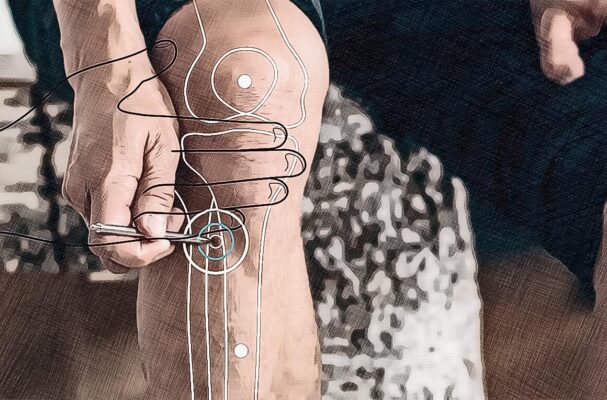
- The most important point for digestion of all
- Strengthens the stomach and spleen at the same time
- Nourishes the stomach yin and strengthens the qi
- Improves appetite and digestion
- Regulates bowel movements in case of constipation
Location: 3 finger widths below the knee, 1 finger width outside the shin in a muscle depression.
Use:
Massage twice a day for 2-3 minutes with medium pressure. Particularly effective in the morning before breakfast.
ACUPUNCTION POINT: Ma 44
Stomach 44
Inner courtyard - Nei Ting

- Clears stomach heat and empty heat
- Helps with heartburn and acid reflux
- Relieves burning in the stomach
- Reduces cravings and excessive appetite
- Also for headaches in the forehead area
Location: In the webbed skin between the 2nd and 3rd toe.
Use:
Press gently twice a day for 30-45 seconds. Particularly effective for heartburn and a burning sensation in the stomach.
ACUPUNCTURE POINT: KG 12
Conception Vessel 12
Center of the stomach - Zhong Wan
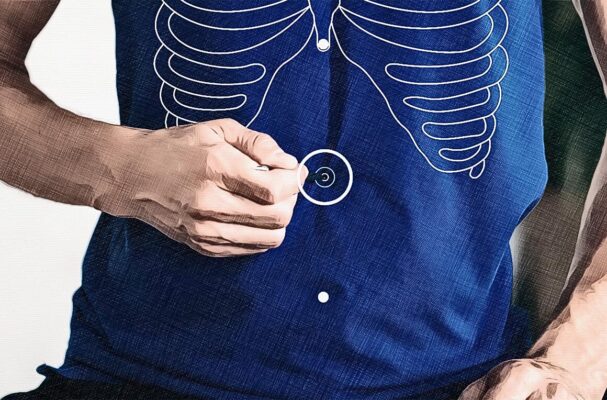
- Stomach alarm point - harmonizes directly
- Comprehensively regulates stomach function
- Helps with nausea and bloating
- Promotes gastric emptying
- Has a calming effect on the middle warmer
Location: On the midline of the abdomen, halfway between the navel and the tip of the sternum (4 finger widths above the navel).
Use:
Gently massage in a circular motion twice a day for 2-3 minutes. Clockwise for constipation, anticlockwise for diarrhea. Particularly effective after meals for bloating.
Our app recommendation
Atemraum: your app for mindful breathing


Breathing is the foundation for physical and mental well-being — and in everyday life it is usually COMPLETELY underestimated. Yet hardly anything is as immediate: how we breathe shapes how we feel.
That's why we built Atemraum: an app with guided breathing exercises that you can take with you anywhere. Wolfgang put the exercises together — plus a 35-day course, quick help for the moment, and breath tests that let you see your progress.
A few minutes a day are enough. And if you use our personal guidance you already have Atemraum included.


You can try the app free for 7 days.
Qi Gong
Qi Gong is moving meditation — Gentle, flowing exercises that harmonize your energy flow and support your digestion. If you have a deficiency of stomach yin, these exercises help nourish your stomach yin, strengthen your core, and harmonize your digestion.
Regular practice of qigong (as little as 10–15 minutes a day) has been shown to have positive effects on digestion, stress relief, and overall well-being.
QI GONG: Exercise 1
Connecting Heaven and Earth
Harmonizes Stomach and Spleen

Especially helpful for:
- Digestive complaints of all kinds
- Loss of appetite and nausea
- Feeling of fullness and bloating
- Tiredness after eating
Effect:
This classic earth element exercise directly harmonizes the stomach and spleen. By alternately stretching upwards and downwards, the center is stretched and the digestive organs are gently massaged - ideal for stomach yin deficiency with digestive weakness.
QI GONG: Exercise 2
Gazing at the Full Moon
Strengthens stomach and spleen, relieves tension

Especially helpful for:
- Tension in the abdominal area
- Stress and tension when eating
- Stagnation in the Middle Burner
- Emotional stress on the digestive system
Effect:
This exercise stretches and relaxes the entire torso and relieves tension in the digestive area. The gentle twisting movement massages the internal organs and promotes the flow of Qi in the center - particularly helpful for stomach Yin deficiency with a feeling of tension.
QI GONG: Exercise 3
Lowering and raising Qi
Directly regulates the stomach and spleen

Especially helpful for:
- Weak digestion and loss of appetite
- Feeling of heaviness after eating
- Tiredness and lack of energy
- Constipation due to sluggish digestion
Effect:
With this Qi Gong exercise, you harmonize your earth element and thus the energies of the spleen and stomach. Only when this central element is in harmony do we feel vital and full of energy.
These Qi Gong exercises are specially selected to harmonize the stomach and spleen and nourish the stomach yin. They strengthen the center, promote digestion and help to find inner peace.
All exercises work particularly well if you practise them between 7 and 9 a.m. - this is the stomach's peak time in the organ clock. The time between 9 and 11 a.m. (spleen time) is also ideal for digestive exercises.
QI GONG:
When and how often?
In the morning (ideal):
- All 3 exercises as a sequence: approx. 15–20 min.
- Or just 1–2 exercises: approx. 5–10 min.
- Best between 7 and 9 a.m. (stomach time)
- Before breakfast or 30 minutes afterwards
Throughout the day:
- Individual exercises as needed (e.g., after a meal if you feel full)
- „Connecting heaven and earth“ for quick digestive aid
Consistency matters more than duration:
- It is better to exercise for 10 minutes every day than for 60 minutes once a week.
- After 2–3 weeks, you will notice your first changes
- After 2 months of regular practice: noticeably improved digestion
Pro tip: Don't practice Qigong right after a large meal—wait at least 30 minutes. If you have stomach-Yin deficiency, you should perform the exercises very gently and slowly, breathing deeply into your abdomen.
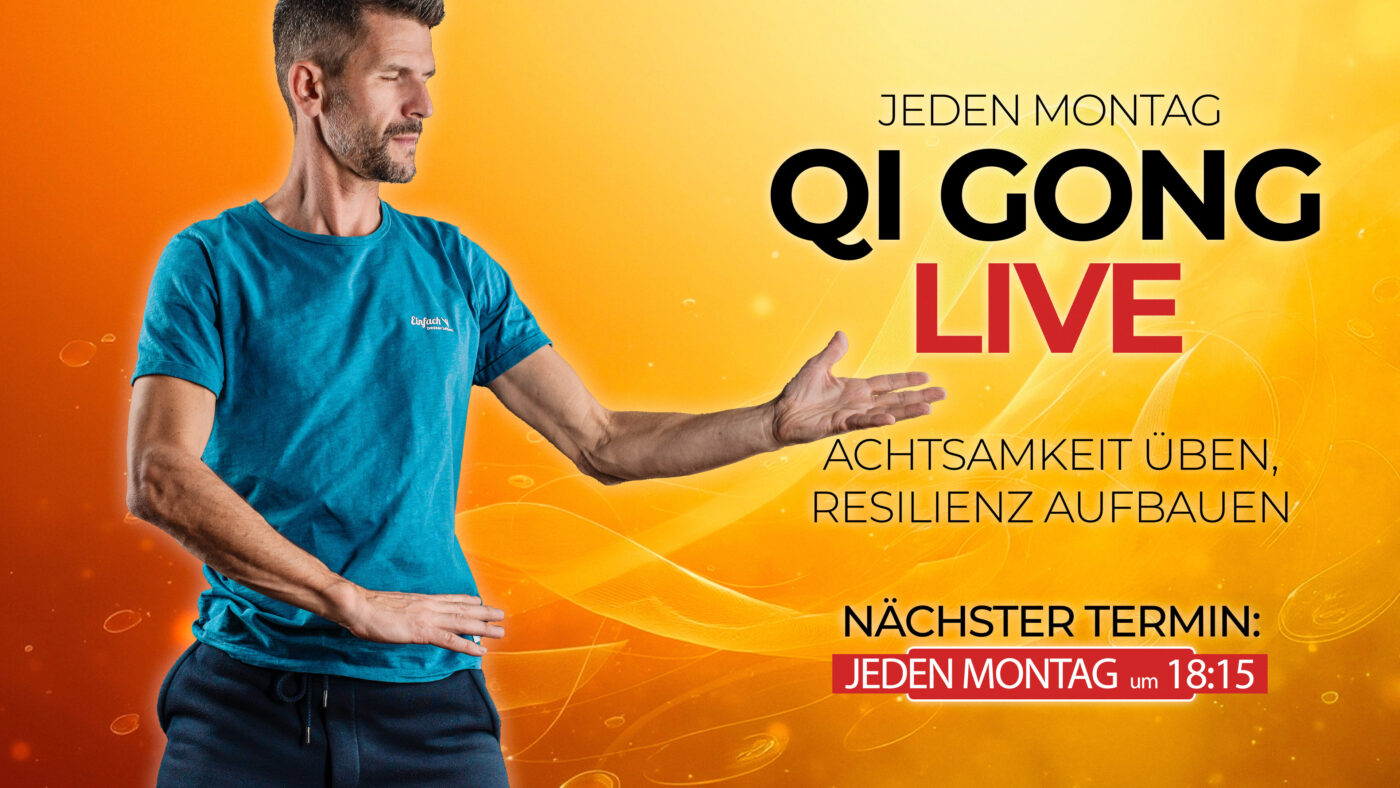
EVERY MONDAY LIVE: QI GONG WITH WOLFGANG
Every Monday at 6:00 p.m. we practice together live on YouTube. Among other things, Wolfgang guides you through a complete Qi Gong sequence — free of charge and suitable for all levels.
Why join live? ✓ Practicing together is motivating ✓ Wolfgang explains the exercises in detail ✓ You can ask questions in the live chat ✓ A fixed time gives your routine structure
More about Qi Gong LiveMeridian Yoga — The Yoga of TCM
Meridian Yoga combines yoga with Traditional Chinese Medicine. The result is a holistic movement concept for more health and energy.
The following exercises specifically activate the stomach meridian - the longest Yang meridian, which runs from the forehead across the front of the body to the toes. Activating it harmonizes the stomach and nourishes the stomach yin.
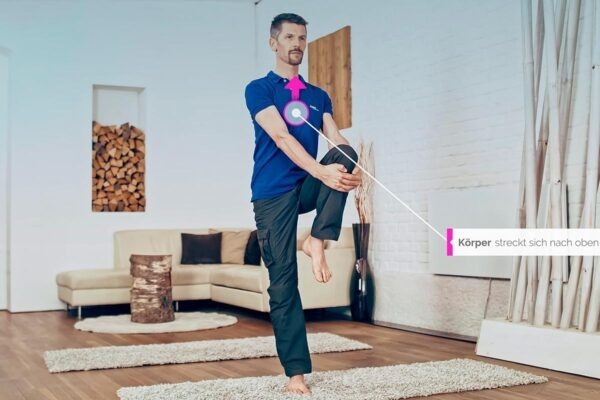
MERIDIAN YOGA: Exercise 1
The Tree with Acupressure
Activates Ma 36 and strengthens the stomach
Especially helpful for:
- Weak digestion and loss of appetite
- Tiredness and lack of energy
- Constipation and sluggish digestion
- Feeling of heaviness in the abdomen
Effect:
This exercise combines the classic tree pose with acupressure on Ma 36 - the most important digestive point. While balancing, you hold the point on your lower leg. Double effect: balance training plus acupressure to strengthen the stomach and spleen.
MERIDIAN YOGA: Exercise 2
The Sheet for the Stomach Meridian
Stretches the entire stomach meridian

Especially helpful for:
- Tension in the abdomen and thighs
- Carrier digestion and stagnation
- Lack of energy and heaviness
- Blocked energy flow in the center
Effect:
The bow is an intensive backbend that stretches the entire stomach meridian - from the forehead to the chest and abdomen to the thighs. This stretch activates the flow of Qi in the stomach meridian and harmonizes the digestive function.
Both exercises activate the stomach meridian, which is the longest yang meridian and runs from the forehead across the entire front of the body to the toes. It has 45 acupuncture points and is closely linked to digestive function.
Especially effective: Hold each position for 3-5 breaths, visualizing nourishing, moisturizing energy that strengthens your stomach and builds your stomach yin.
MERIDIAN YOGA:
When and how often?
Best time:
- In the morning between 7 and 9 a.m. (Stomach time)
- Or in the evening as a gentle exercise before going to sleep
- Don't eat right after a meal—wait at least 1–2 hours
Duration:
- Hold each position for 3–5 breaths
- Complete sequence: 10–15 minutes
- 3–5x per week for best results
Important:
- Only practise the bow on an empty stomach
- Breathe deeply and slowly during the positions
- Stretching should feel comfortable, never painful
Pro tip: Combine Meridian Yoga with the Qi Gong exercises „Connecting Heaven and Earth“ or „Lowering and Raising Qi“. This combination of stretching and gentle movement optimally harmonizes the stomach and nourishes the stomach yin.
Nutrition according to TCM
"Let food be your medicine" - This principle has been valid in TCM for thousands of years. In the case of stomach yin deficiency, the right diet is particularly important for moistening the stomach and strengthening your digestion.
The stomach yin belongs to the Earth Element and needs Moisturizing, nourishing and easily digestible food, to protect the stomach lining and harmonize digestion.
WHAT you eat, HOW you eat, and WHEN you eat - all of this influences your stomach yin and your digestive power.
The golden rules for a strong stomach yin
What does you good:
Moisturizing fruits
- Pears (the classic stomach-yin food!)
- Apples (especially stewed)
- Grapes (nourish the juices)
- Papayas (support digestion)
Pears are the most important food for stomach yin deficiency!
Nourishing vegetables
- Spinach (gently moisturizes)
- Tomato (cools and moisturizes)
- Cucumber (very moisturizing)
- Zucchini (easily digestible)
All juicy vegetables nourish the stomach yin
Moisturizing proteins
- Pork (highly moisturized)
- Duck (cools and nourishes)
- Tofu (light and moisturizing)
- Eggs (gently nourish the yin)
Pork is traditionally the most moisturizing meat
Stomach-friendly cereals
- Rice (neutral and nourishing)
- Millet (strengthens the center)
- Oats (moisturizes and soothes)
- Barley (cools and moisturizes)
Rice congee is the ideal breakfast for stomach yin deficiency
What you should avoid:
Spicy seasonings
- Chili (burns the yin!)
- Pepper in large quantities
- Ginger (only very sparingly)
- Garlic (avoid raw)
Spiciness dries out the stomach!
Dry preparations
- Deep-fried and deep-fried food
- Grilled food (especially charred)
- Dry cookies and crackers
- Toast and dry bread
Dry food dehydrates the stomach!
Stomach-damaging drinks
- Coffee (irritates the mucous membrane)
- Alcohol (dries out and heats up)
- Black tea in large amounts
- Ice-cold drinks
Coffee exhausts the stomach yin particularly strongly!
Difficult to digest
- Very fatty meat
- Cheese in large amounts
- Raw foods in large amounts
- Cold food straight from the fridge
Overstrains the weakened stomach!
HOW YOU SHOULD EAT:
Regular meals
- 3 main meals at fixed times
- The stomach loves routine!
- Don't skip meals
- Do not eat too late in the evening (before 7 pm)
Eat slowly and consciously
- Chew each bite 20-30 times
- Eat in peace, without distractions
- Don't eat standing up or on the go
- Enjoy your meals!
Chewing thoroughly takes a huge strain off your stomach!
Drinking the right way
- Enough fluids (1.5–2 liters)
- Warm water
- Do not drink too much during the meal
- Herbal teas instead of coffee
Moisturizing is the key to stomach yin deficiency
IDEAL MENU FOR ONE DAY:
Breakfast (7–9 a.m.):
- Rice congee with stewed apple
- Along with it: Warm water with honey
Lunch (12–1 p.m.):
- Rice with steamed vegetables and tofu
- Along with it: Light chicken soup
- Or: Spinach with egg and rice
Dinner (6–7 p.m.):
- Light Vegetable Soup with Rice
- Or: Steamed Fish with Vegetables
- Along with it: Pear compote for dessert
Snack if needed:
- One ripe pear or stewed apple
- Or: Handful of grapes
The most important rule when changing your diet is:
Start with ONE step!
Don't change everything at once.
Our suggestion for getting started:
- Eat a pear or stewed apple every day - 2 weeks
- Hot breakfast (congee or porridge) - 2 weeks
- Reduce coffee and replace with herbal tea - 2 weeks
Step by step, you will notice how your stomach yin is nourished again and your digestion is harmonized.
Your stomach yin will thank you!
RECIPE: MOISTURIZING PEAR AND RICE CONGEE
Ingredients:
Serves 2
- 100 g rice (preferably round grain)
- 1 ripe pear
- 1 liter of water
- 1–2 tbsp honey
- Optional: 5 goji berries, a little cinnamon
Preparation:
- Wash the rice and boil with 1 liter of water
- Reduce the heat and simmer for 45-60 minutes until creamy
- Peel, core and cut the pear into small pieces
- Add the pear pieces in the last 10 minutes
- Sweeten with honey and serve warm
- Optional: Garnish with goji berries and cinnamon
Effect:
Gently and deeply moisturizes the stomach
Nourishes the stomach yin and produces body fluids
Easily digestible and easy on the stomach
Ideal as a breakfast for stomach yin deficiency!
RECIPE: HONEY-PEAR DESSERT (CLASSIC FOR YIN DEFICIENCY)
Ingredients:
Serves 2
- 2 ripe pears
- 2 tbsp honey
- 200 ml water
- Optional: 5 g Chuan Bei Mu (TCM pharmacy)
Preparation:
- Wash the pears, cut off the top and scoop out the core
- Pour the honey into the hollowed-out pears
- Optional: Add Chuan Bei Mu powder to the honey
- Put the lid back on, place in a steaming pot
- Steam for 30–40 minutes until tender
- Serve warm, drink the juice with it
Effect:
The classic TCM home remedy for moisturizing
Nourishes the lung and stomach yin
Also helps with dry coughs
As a dessert or snack - possible every day!
Breathing
Breathing is the bridge between body and mind. In TCM it is said: "The Lung governs the Qi" — according to this idea, conscious breathing lets you address your Qi flow directly and settle into deeper calm.
Breathe calmly and slowly: Deep belly breathing noticeably calms many people — the breath becomes deeper, the shoulders drop, and the mind becomes clearer. The good news: Even 5–10 minutes a day can make a difference for your well-being.
Recommended breathing techniques
ABDOMINAL BREATHING — The foundation for every breathing technique
Natural breathing
Abdominal breathing is the most natural and calming form of breathing. According to TCM teachings, with every breath you bring Qi into your center (Dantian).
Wolfgang shows you step by step, how to learn abdominal breathing correctly — lying down at first, and later sitting and standing too.
Duration: 9 minutes

4–7–8 BREATHING — Settle into calm
The calming breath for the evening
In 4–7–8 breathing, you inhale for 4 seconds, hold for 7 seconds, and exhale for 8 seconds. Many people find that this steady rhythm helps them wind down in the evening — ideal when your mind just won't switch off at night.
Ideal for the evening or whenever you want to settle down quickly.
Duration: 9 minutes
To the follow-along videoBOX BREATHING — For inner coherence
The pro breathing technique for focus and calm
Box Breathing (4 sec. in, 4 sec. hold, 4 sec. out, 4 sec. hold) combines activation and relaxation in perfect balance. This method is used by elite soldiers, athletes, and executives to stay calm and focused even in extremely stressful situations.
A steady 4–4–4–4 rhythm of activation and calm — many people experience it as clearing and centering.
Duration: 9 minutes
To the follow-along videoCOHERENT BREATHING — Brings body & mind into harmony
The calming breath for balance
In coherent breathing you breathe in for 5.5 seconds and out for 5.5 seconds. This rhythm brings your Heart and breathing into an even beat — a state known as "coherence." Many people use it as a regular breathing break in their day.
A nice side effect: Heart and breath settle into a calm, shared rhythm.
Duration: 14 minutes
To the follow-along video
COHERENT BREATHING Around the clock
Our 24/7 livestream for coherent breathing runs non-stop. You can tune in at any time and join right away.
Perfect for:
✓ Spontaneous breathing breaks during the day
✓ If you would like calm breathing guidance
✓ As background while you work
✓ For the evening and for winding down
✓ For regular daily practice
Relaxation
When your body is relaxed, things flow more easily. Ongoing tension keeps you in constant stress mode. With targeted relaxation techniques, you signal to your body that it can settle down and gather new strength.
Progressive Muscle Relaxation is one of the best-known relaxation methods and has been practiced for over 100 years. It helps you notice tension, actively let go, and reach a state of deep relaxation — whenever you like.
Recommended relaxation technique
PROGRESSIVE MUSCLE RELAXATION (PMR)
The classic relaxation method
Progressive Muscle Relaxation according to Jacobson is one of the best-known relaxation techniques worldwide. By deliberately tensing and releasing individual muscle groups, you learn to consciously notice tension and let it go again.
This is how it feels:
Step by step, the body becomes heavier and calmer, and the breath more even. Many people use it as a regular part of their evening routine to help them fall asleep well.

Maria guides you step by step through the complete exercise — perfect for beginners and advanced practitioners.
Duration: 23 minutes of complete instruction
To the guided PMRMeditation
Meditation calms the mind — and a calm mind is good for the whole person. In TCM, it is said that every emotion touches a particular organ. Through regular meditation, you learn to step out of circling thoughts, find emotional balance, and strengthen your inner center.
Just 10 minutes a day can do a lot for your inner calm. Many people find that it makes their everyday life feel more relaxed and clearer.
Recommended meditations
GUIDED MEDITATIONS FOR EVERY DAY
Your personal meditation library
We have put together a complete playlist with over 60 guided meditations, breathing exercises, and relaxation techniques for you — from short 5-minute meditations for in between to deep 30-minute sessions for intensive practice.
In the playlist you will find:
- Morning meditations for a mindful start to the day
- Sleep meditations for restful sleep
- Breathing meditations for inner calm
- Meditations for calm moments during stress and rumination
- TCM standing meditations for all 5 Elements
- Body scan and body journeys
- Calming meditations for body and mind
- Special breathing techniques (4-7-8, coherent breathing, bee breath)

Perfect for beginners and advanced practitioners. Choose the meditation that fits your time, time of day, and needs.
To the meditation playlistMore tips for your daily life
Alongside the classic TCM treatment methods there are many small everyday habits that can strengthen your stomach yin and harmonize your digestion. In TCM, the stomach is the „sea of food“ - with the right habits, you can give it the care it needs.
Optimize eating habits
🕐 Consistency is the key
The stomach loves routine more than any other organ:
- Always eat at the same time - even at the weekend
- Don't skip meals - the stomach still produces acid
- Leave breaks between meals (4-5 hours)
- Don't eat too late - last meal before 7 pm
- Don't skip breakfast - your stomach is at its strongest in the morning
🍽️ Mindful eating
How you eat is almost as important as what you eat:
- Eat sitting down, never standing or walking
- Without distractions (no cell phone, no TV)
- Chew each bite 20-30 times
- Eat slowly - a meal should take 20-30 minutes
- Stop when you are full, don't eat when you are hungry
🌡️ Note the temperature
The stomach likes it warm and moist:
- Prefer hot meals, especially in the morning
- Don't drink anything ice cold - weakens the stomach
- Cold food (salad, raw vegetables) only at lunchtime, when your stomach is at its strongest
- Pay particular attention to hot meals in winter
- Avoid cold drinks with your meal
Moisturizing from the inside
💧 Drink properly
Fluid is essential for stomach yin deficiency:
- 1.5–2 liters a day — spread out over the course of the day
- Prefer warm water
- A glass of warm water in the morning after getting up
- Do not drink too much while eating (dilutes the gastric juices)
- Drink 30 minutes before eating or 1 hour afterwards
🍵 Moisturizing teas
These teas nourish the stomach yin:
- Chrysanthemum tea (cools and moisturizes gently)
- Mai Men Dong Tea (classic Yin-nourishing herb)
- Pear leaf tea (moisturizes the stomach)
- Green tea (only in the morning, in small quantities)
- Honey water (moisturizes and lubricates)
🚫 What you should avoid
These drinks deplete the stomach yin:
- Coffee - highly dehydrating and irritating (max. 1 cup/day)
- Alcohol - dries out and heats up
- Ice cold drinks - weakens stomach function
- Carbonic acid - flatulent and irritating
- Very strong black tea
Stress and digestion
😰 Stress directly damages the stomach
Traditional Chinese Medicine has known for millennia that:
- Stress and worries attack the center (stomach and spleen)
- Digestion is interrupted during stress (flight-or-fight mode)
- Suppressed emotions build up in the stomach
- Anger and frustration can trigger stomach complaints
- Modern medicine confirms that stress increases stomach acid production
🧘 Stress relief for the stomach
These methods relieve the digestive system:
- Calm down briefly before eating (3 deep breaths)
- Do not eat when feeling strong emotions
- Relax for 10-15 minutes after eating
- Regular relaxation exercises (Qi Gong, meditation)
- Don't discuss problems over a meal
💡 Good to know
Strengthening the stomach’s yin takes time and patience. The stomach regenerates when you provide it with regular, moisturizing food and avoid stress while eating. With consistent care, you’ll notice your digestion becoming more balanced, your appetite returning, and symptoms of dryness disappearing. Be patient with yourself—healing the stomach happens step by step.
For the best possible course of treatment
TCM is not a quick fix for symptoms, but a holistic path to healing. You will get the best results when you consistently build the treatment into your daily life and give your body time to regenerate.
Integrating it into your daily life
Start with ONE step
Don't try to change everything at once! That is overwhelming and
usually leads to giving up. Instead:
- Weeks 1–2: Start taking your TCM herbal blend—and begin eating a warm breakfast and one steamed pear every day
- Weeks 3–4: Establish a regular meal schedule, cut back on coffee
- Week 5-6: Qi Gong „Connecting heaven and earth“ daily 10 min.
- Week 7-8: Integrate acupressure Ma 36 and KG 12
- Starting in Week 9: Interim Assessment — Compare dry mouth, appetite, burning sensation in the upper abdomen, and bowel movements with the initial findings; add additional methods as needed
Realistic expectations
After 1–2 weeks: First improvements noticeable
- Less dry mouth
- Appetite returns
- Less burning sensation
After 4-6 weeks: Clear improvements
- Constipation dissolves
- Lips become softer
- Digestion becomes more regular
After 2–4 months: Lasting healing
- Stomach Yin is noticeably strengthened
- Digestion runs smoothly
- Energy and well-being are back
TCM vs. Western Medicine
TCM and Western medicine do not exclude each other — they complement each other!
When Western medicine is important:
- For acute severe pain
- If there is blood in the stool or vomit
- For persistent weight loss
- For precise diagnoses (gastroscopy, laboratory)
Where TCM has its strengths:
- For functional stomach complaints
- For chronic gastritis
- For prevention and regeneration
- For holistic healing
Ideal: Combine both systems! Use Western medicine for
acute treatment and precise diagnostics, and TCM for lasting healing
and strengthening of the digestive power.
Important: Never stop taking prescribed medications on your own!
Talk to your doctor when you begin TCM treatment.
Do you have questions?

Wolfgang from meine-tcm.com
TCM is a broad field. Much of it sounds unfamiliar at first, and the real question often comes up only once you start trying some of it out in everyday life.
That's exactly what I'm here for. Write to me — no matter whether your question is big or small, whether it relates to this page or to something else entirely from TCM. I read every message myself and will get back to you. Calmly, clearly, and without a sales pitch.
P.S. There are no silly questions. So write to me.
Ask your questionEvery step counts
Your body strives for balance — you just need to create the right conditions for it.
Remember:
👣 Every small step counts
You don't have to be perfect. Even one warm meal a day is better than none. Even 5 minutes of Qi Gong is better than no movement at all.
⏳ Patience pays off
Your body took years to get into this state. Give it time to find its balance again. Change takes time, but it comes.
🎯 Focus on what you CAN do
Don't concentrate on everything you're doing "wrong." Focus on every positive step you take.
💚 Be good to yourself
There's no such thing as perfection. You're allowed to have a bad day now and then. Tomorrow is a new day, and you can pick up where you left off.
🤝 You are not alone
Thousands of people are walking this path with you. For over 2,000 years, TCM has been guiding people like you on their journey toward greater well-being.
Track your progress

To track your progress, we recommend repeating the TCM analysis after about 3 months.
Why is this useful?
- You see how your pattern has changed
- You can adjust your support as needed
- It motivates you to keep going
- You recognize which measures suit you best
⚠️ Important: Your answers from today are stored in encrypted form in a code that you received by e-mail. ONLY with this code can you follow your progress later on. Keep the e-mail in a safe place!
🔒 YOUR DATA IS SAFE
We store:
✓ Only your email for the reminder
✓ The date for sending
We do NOT store:
✗ Your analysis results
✗ Your personal data
✗ The link between e-mail and pattern
All analysis data is completely anonymous and is not linked to your e-mail address.

Newsletter
Stay up to date with our newsletter. Along with helpful tips and tricks for your training and your everyday life, you won't miss any of our new releases.