




On this page you will learn:
- What this pattern means from the perspective of TCM and Western medicine
- Where your complaints come from and how they are connected
- Which specific treatment methods may help you now
- How you can calm your mind, harmonize your emotions and restore your inner balance with TCM herbs, acupressure, Qi Gong and diet
The good news: Shen Disturbance can be treated very well with the right measures. With calming herbs, targeted acupressure, Qi Gong and mindful eating, you can ground your mind again and regain emotional balance.
Take your time, getting to know the different treatment approaches — you don't have to put everything into practice at once. Choose what feels right to you and what you can easily fit into your daily life.
Your treatment at a glance:
Which TCM pattern is really behind your complaints?
Degree of the
imbalance

Mild to moderate
Typical
Treatment duration

2–4 months
Self-treatment
Possible

Easy to treat yourself
Treatment
scope

2–3 methods
Suggested
methods

Extensive selection
Our free TCM Analysis shows you your personal TCM pattern in just 10 minutes.
What Is Shen Disturbance?

When the mind cannot find rest
The TCM Perspective: The Restless Mind
In Traditional Chinese Medicine, the Shen (mind) is far more than just the intellect. It encompasses consciousness, emotions, thinking, sleep and a person's entire mental-emotional state. The Shen has its home in the Heart and is nourished and anchored by Heart Blood.
When the Shen is restless, it shows up as emotional instability: irritability, anxiety, sadness, inner restlessness and the feeling of being overwhelmed by your own emotions. The mind no longer finds a foothold. It wanders like a restless traveler without a home.
The causes of Shen Disturbance are varied: emotional stress and suppressed feelings disrupt the free flow of Liver Qi. Excessive brooding and worry exhaust the Spleen, and with it the source of Blood and Qi production. When Heart Blood is insufficient, the Shen can no longer be anchored. And when the connection between the Heart (Fire) and the Kidney (Water) is disturbed, Heart Fire flares up, and restlessness, insomnia and emotional overheating are the result.
The consequences of a Shen Disturbance: Your emotions are out of balance. You feel inwardly agitated, react too strongly or withdraw. Concentration is difficult, your sleep is disturbed, and it feels as if you have lost control over your feelings.
The typical signs of a Shen Disturbance:
- Inner restlessness — the feeling that you cannot sit still
- Irritability and emotional overreactions to small things
- Anxiety and worries that do not let go
- Mood swings — from being on top of the world to being deeply downcast
- Sleep problems — difficulty falling asleep, vivid dreams, waking up during the night
- Heart palpitations and a feeling of pressure in the chest
- Trouble concentrating and forgetfulness
- The feeling of being beside yourself or losing your footing
The good news: Shen can be calmed and grounded very well with the right measures. Through mind-calming herbs, acupressure, Qi Gong and a mindful way of living, you can find your inner peace again.
The Western Perspective: Emotional Dysregulation and Stress Response
From a Western point of view, Shen Disturbance describes a state linked to emotional dysregulation, chronic stress and overactivation of the sympathetic nervous system. The body is in a constant state of alarm — the autonomic nervous system has fallen out of balance.
Think of your nervous system as a gas pedal and a brake: the sympathetic nervous system (gas pedal) drives activation, alertness and the fight-or-flight response. The parasympathetic nervous system (brake) drives rest, digestion and regeneration. In Shen Disturbance, the gas pedal is pressed down constantly — the body can no longer slow down.
Chronic stress and emotional strain lead to persistently elevated cortisol and adrenaline levels. This affects the neurotransmitter balance: serotonin (the mood stabilizer), GABA (the natural calming signal) and dopamine (motivation) fall out of balance. The result: emotional instability, anxiety, irritability and sleep disturbances.
What does modern medicine show?
- Overactivation of the sympathetic nervous system: a constant fight-or-flight mode exhausts the body
- Neurotransmitter imbalance: disturbed balance of serotonin, GABA and noradrenaline
- Elevated cortisol levels: chronic stress changes the hormonal axis lastingly
- Gut microbiome disruption: the gut-brain axis directly influences mood
- Neuroplasticity: chronic stress changes the structure of the brain — but this is reversible!
- Inflammatory Reactions: Emotional Stress Promotes Silent Inflammation in the Body
What the research says: The TCM methods for calming the Shen show measurable effects on the nervous system. Acupressure and Qi Gong have been shown to activate the parasympathetic nervous system, lower cortisol levels and improve heart rate variability. For Gan Mai Da Zao Tang itself, there are mostly smaller studies, from which no reliable conclusions can yet be drawn. It is traditionally recorded and has been used in practice for exactly this picture since the Jin Gui Yao Lue.
TCM treatment of Shen Disturbance starts exactly here: it calms the overstimulated nervous system, nourishes the substance that anchors the mind, and restores the natural balance between activation and relaxation. The effect is profound, lasting and gentle.

The Yellow Emperor's team explains your pattern
Qi Bo | The Yellow Emperor | Dr. Lisa Weber
MASTER OF THE HEALING ARTS | FOUNDER OF TCM | MODERN PHYSICIAN
What happens when the legendary Yellow Emperor of Traditional Chinese Medicine sits down with his advisor Qi Bo and a modern doctor? They discuss your pattern—using 4,000-year-old knowledge AND the latest science.
Shen Disturbance (Emotions) — When the mind finds no peace and emotions take over
The Yellow Emperor: "Qi Bo, in my realm I observe people whose emotions have gotten out of control. They are irritable over trifles, cannot sleep at night and feel inwardly stirred up like a raging sea. Some swing between tears and anger, others are driven by constant fear. What is the origin of this suffering?"
Qi Bo: "Your Majesty, these people suffer from a disturbance of the Shen, the spirit. In TCM the Shen is far more than mere thinking. It encompasses the entire consciousness, the emotions, perception and the ability to respond appropriately to life. Its home is the Heart, and it is nourished and anchored by Heart Blood. When the Shen is disturbed, a person loses their emotional center. Feelings become uncontrollable, sometimes overflowing, sometimes frozen. The restlessness shows that the spirit no longer finds a foothold. The insomnia shows that it cannot come to rest at night."
Dr. Weber: "That is a remarkable description of emotional dysregulation! In modern psychology and neuroscience we speak of a disturbed balance of the autonomic nervous system. The sympathetic nervous system, our fight-or-flight system, is chronically overactive, while the parasympathetic nervous system, our rest-and-recovery system, is too weak. The result: the body remains in a permanent state of alarm, the stress hormones cortisol and adrenaline are persistently elevated, and the neurotransmitters serotonin, GABA and dopamine fall out of balance."
The Yellow Emperor: "You say the Shen dwells in the heart. What role do the other organs play in the emotions?"
Qi Bo: "Your Majesty, in TCM each organ has its own aspect of the spirit. The Heart houses the Shen, which is consciousness and joy. The Liver houses the Hun, the wandering soul, responsible for creativity, dreams and visions. The Lung houses the Po, the corporeal soul, linked with grief and letting go. The Spleen houses the Yi, the intellect and the capacity for thought. And the Kidney houses the Zhi, the will and determination. In Shen Disturbance the Heart is not the only one affected: often Liver Qi stagnates due to suppressed emotions, the Spleen is weakened by brooding, and the Kidney can no longer cool the flaring Heart Fire."
Dr. Weber: "Fascinating! This correspondence matches modern neuroscientific findings remarkably well! The heart-brain connection: the vagus nerve links the heart and brain directly, and heart rate variability is a marker of emotional regulation. The liver-emotion connection: the liver breaks down stress hormones; with chronic stress it is overloaded, which leads to irritability. The gut-brain axis: the Spleen function in TCM, 90% of our serotonin is produced in the gut! And the adrenal glands, the Kidneys in TCM, produce cortisol and adrenaline. The organ correspondences of TCM have a neurochemical basis!"
The Yellow Emperor: "What causes the Shen to become restless?"
Qi Bo: "The causes are many, Your Majesty. First: emotional stress. Lasting worry, anger, fear, or grief drain the Shen directly. Second: suppressed emotions. Whoever constantly swallows down their feelings creates Liver Qi Stagnation, which then erupts in emotional outbursts. Third: Heart Blood Deficiency. Without sufficient Blood, the Shen has no anchor. Fourth: Heart Yin Deficiency. The cooling Yin is depleted, and Heart Fire flares up. Fifth: overwork and lack of sleep. They exhaust Blood and Yin. And sixth: an irregular way of life. Too much screen time, too little nature, too little stillness."
Dr. Weber: "That fully matches the risk factors for emotional dysregulation! Chronic stress is the main factor — it changes the structure of the brain, especially in the prefrontal cortex, which is responsible for emotion regulation. Suppressed emotions have been shown to raise cortisol levels and inflammatory markers. Lack of sleep reduces GABA production by up to 30% and massively impairs emotional processing. And the influence of screen time on dopamine balance is well documented — constant overstimulation exhausts the neurotransmitters."
The Yellow Emperor: "What happens in the body when the Shen remains restless for a long time?"
Qi Bo: "Your Majesty, lasting Shen Disturbance has far-reaching consequences. Heart Fire flares up, producing Heat signs such as a red tip of the tongue, palpitations, and a feeling of heat in the chest. Liver Qi stagnates and transforms into Liver Fire, so irritability turns into explosive anger. Spleen Qi is weakened by brooding. Digestion suffers, and neither enough Qi nor Blood can be produced. Kidney Yin becomes depleted. The axis between Heart and Kidney, between Fire and Water, collapses. And the Blood is consumed. Without Blood, the Shen has no foundation left. This creates a vicious cycle: the restless Shen depletes the substance, and the depleted substance makes the Shen even more restless."
Dr. Weber: "That is neurophysiologically fascinating and entirely understandable! Chronic stress leads to a measurable vicious cycle. Elevated cortisol damages the hippocampus, the center for memory and emotional processing. The prefrontal cortex, which normally restrains the amygdala (the fear center), is weakened under chronic stress. At the same time, the amygdala becomes hyperactive, so fear and stress reactions grow stronger. The gut flora changes under stress, and less serotonin is produced. And the adrenal glands become exhausted, so the daily cortisol profile flattens. This is exactly the vicious cycle Qi Bo describes!"
The Yellow Emperor: "Which signs on the body reveal a Shen Disturbance?"
Qi Bo: "The signs are very revealing, Your Majesty. The tongue is red, especially at the tip. The tip reflects the state of the Heart, and redness means Heat. The tongue may be restless. The patient extends the tongue hesitantly and pulls it back quickly. With Yin Deficiency, it is thin and dry. The pulse is rapid, Shuo Mai, because Heat speeds up movement. It is thin, Xi Mai, when Blood is insufficient. And wiry, Xian Mai, when the Liver is involved. The eyes are an important mirror. Restless eyes that flicker back and forth show a restless Shen. And behavior itself, such as restlessness, frequent sighing, and nervous hand movements, are all signs of the wandering mind."
Dr. Weber: "The elevated heart rate in Shen Disturbance, the rapid pulse, is a classic sign of sympathetic overactivation! Today we measure this through heart rate variability. Low HRV shows exactly this state of emotional dysregulation. Tongue diagnosis is also interesting: a red tip of the tongue may indicate local changes in blood flow caused by stress hormones. And restless eyes are directly connected to the limbic system, which is why EMDR therapy is so effective for trauma!"
The Yellow Emperor: "Now let us talk about treatment. How can the Shen be calmed again?"
Qi Bo: "Your Majesty, the treatment principle is: An Shen, calming and anchoring the Shen. This happens in several ways. First, nourish the Heart, because a nourished Heart gives the Shen a stable home. Second, move the Liver Qi, so that the emotions can flow freely instead of stagnating. Third, strengthen the Yin, so that cooling water can calm the Heart Fire again. Fourth, calming foods: wheat, lotus seeds, lily bulbs and jujubes nourish the Heart and quiet the mind. Fifth, Shen-calming herbs, above all Suan Zao Ren (Jujube Seed) and Bai Zi Ren (Platycladi Seed). And sixth, regular stillness: meditation, Qi Gong and mindfulness give the Shen room to settle."
Dr. Weber: "From a neuropsychological standpoint, the treatment approaches are excellent! Suan Zao Ren, jujube seed, shows GABAergic and serotonergic effects in pharmacological studies — it strengthens the body's natural calming of the nervous system! Lotus seeds contain alkaloids that have been shown to be anxiolytic (anxiety-reducing). Meditation and Qi Gong are the best-researched mind-body techniques there are: they activate the parasympathetic nervous system, lower cortisol by up to 25%, increase GABA production, and improve heart rate variability. And the approach of moving Liver Qi — letting emotions flow instead of suppressing them — matches the basic principles of modern emotion regulation theory!"
The Yellow Emperor: "What about the classic herbal formulas for Shen Disturbance?"
Qi Bo: "Ah, Your Majesty raises the core of Shen therapy! Tian Wang Bu Xin Dan, the Emperor of Heaven Pill for Nourishing the Heart, is the main formula for Shen Disturbance caused by Yin Deficiency. It nourishes Heart Yin, clears Heat and calms the mind. Gui Pi Tang, the formula for restoring the Spleen, is ideal when worry and brooding are the cause, because it strengthens the Spleen and nourishes the Heart Blood at the same time. For strong Liver Qi Stagnation, we can use Xiao Yao San, the Free Wanderer Powder, to harmonize the flow of Qi and free the emotions."
Dr. Weber: "All three formulas have been studied in modern research! Tian Wang Bu Xin Dan has shown positive effects in clinical studies on sleep disorders and anxiety disorders. Its herbs modulate the GABAergic and serotonergic systems. Gui Pi Tang has been shown to improve cognitive function and mood, possibly by strengthening the gut-brain axis. And Xiao Yao San, perhaps the best-researched TCM formula there is, has shown antidepressant and anxiolytic effects in more than 50 clinical studies, comparable to some SSRIs but with fewer side effects! Ancient formulas with modern evidence!"
The Yellow Emperor: "Wonderful! Let's put this wisdom into a practical plan."
THE 3 SAGES METHOD FOR SHEN DISTURBANCE
MORNING PROTOCOL (anchoring the mind):
- TCM: Begin the day in stillness. The Shen needs a gentle waking in the morning, not immediate stress
- Science: The first 20 minutes after waking shape the cortisol rhythm of the whole day
- Practical: 5–10 minutes of quiet meditation or mindful breathing before getting up, no phone!
- TCM: Warm, nourishing breakfast — the Spleen needs warmth, the Shen needs substance
- Science: A protein-rich breakfast helps stabilize blood sugar and, with it, your mood
- Practical: Warm oatmeal with dates and walnuts, plus chrysanthemum tea
- TCM: Qi Gong "Open the Heart" — opens the chest and gives the Shen room
- Science: Slow, mindful movement activates the vagus nerve and lowers cortisol
- Practical: 10 minutes of Qi Gong before breakfast, ideally outdoors or by an open window
DAILY STRATEGY (Regulating Emotions):
- TCM: Acupressure on Ht 07 (Shen Men), the "Spirit Gate," which settles the Shen directly
- Science: Stimulating this point shows changes in the amygdala in fMRI studies
- Practical: For rising emotions, gently press Ht 07 for 3 min. (on the wrist, pinky side)
- TCM: Acupressure on Lv 03 (Tai Chong), which moves Liver Qi and releases emotional Stagnation
- Science: This point lies over the deep peroneal nerve and influences the autonomic nervous system
- Practical: Massage the point between the big toe and second toe for 3 min. on each side, especially when you feel irritable
- TCM: Let emotions flow. Suppressed feelings create Stagnation and worsen restlessness
- Science: Emotional suppression has been shown to increase cortisol and inflammatory markers
- Practical: Spend 10 min. journaling in the afternoon. Write down what moves you, without judging it
EVENING RITUAL (Settling the Shen):
- TCM: Warm Foot Bath with Chrysanthemum: draws Heat away from the head and downward, and calms the Mind
- Science: A foot bath increases peripheral blood flow and activates the parasympathetic nervous system
- Practical: Soak your feet in a warm foot bath for 15–20 minutes before bedtime, with the water at 38–42 °C
- TCM: Lotus Seed Tea in the evening: nourishes the Heart and calms the Shen directly
- Science: Lotus seeds contain liensinine and neferine, which have anxiolytic and sedative effects
- Practical: Simmer 10–15 lotus seeds in water for 20 minutes, drink warm, and eat the seeds as well
- TCM: Digital quiet from 9 p.m.: the Shen needs low stimulation in order to settle down
- Science: Blue light suppresses melatonin production and disrupts the circadian rhythm
- Practical: Turn off your phone, tablet and TV from 9 p.m. Instead: read, listen to gentle music, or talk with someone
The Yellow Emperor: "Qi Bo, how long does it take for the Shen to calm down again?"
Qi Bo: „Majestät, die Beruhigung des Shen kann überraschend schnell erste Wirkung zeigen — denn der Geist reagiert schneller als der Körper. Nach 2–3 Wochen konsequenter Praxis bemerken die meisten: Etwas mehr innere Ruhe, weniger emotionale Ausbrüche, leicht verbesserter Schlaf. Nach 6–8 Wochen werden die Veränderungen deutlicher: Der Geist wird merklich ruhiger, die emotionale Belastbarkeit steigt, der Schlaf stabilisiert sich. Nach 3–6 Monaten kann sich eine tiefe Transformation vollziehen: Emotionale Ausgeglichenheit im Alltag, ein verankerter, klarer Geist und nachhaltige innere Ruhe. Aber — und das ist wichtig, Majestät — der Shen braucht dauerhafte Pflege. Stille, Achtsamkeit und eine bewusste Lebensführung sollten kein Projekt sein, sondern ein Lebensstil.“
Dr. Weber: „Das stimmt hervorragend mit den Forschungsergebnissen überein! Neuroplastizitäts–Studien zeigen, dass regelmäßige Meditation die Amygdala–Reaktivität bereits nach 8 Wochen messbar reduziert. Die Herzratenvariabilität verbessert sich oft schon nach 2–3 Wochen regelmäßiger Achtsamkeitspraxis. Und nach 3–6 Monaten sehen wir strukturelle Veränderungen im Gehirn: Der präfrontale Kortex, der für Emotionsregulation zuständig ist, wird dicker und stärker vernetzt. Die Botschaft ist klar: Emotionale Regulation ist trainierbar — genau wie ein Muskel!“
The Yellow Emperor: „Was muss unbedingt beachtet werden bei Shen–Unruhe?“
Qi Bo: „Majestät, das Wichtigste ist: Erstens, keine Emotionen unterdrücken — sie müssen fließen, sonst stauen sie sich. Zweitens, keine übermäßige Stimulation — zu viel Bildschirmzeit, Nachrichten und soziale Medien überfluten den Shen. Drittens, keinen Kaffee und keine aufheizenden Getränke — sie verstärken die Herz–Hitze. Viertens, keinen Alkohol als Beruhigungsmittel — er bewegt das Qi kurzzeitig, erschöpft aber Blut und Yin. Fünftens, keine Überarbeitung — sie verbraucht die Substanz, die den Shen nährt. Und sechstens, keine scharfen und heißen Speisen — sie verstärken das innere Feuer.“
Dr. Weber: „Alles wissenschaftlich nachvollziehbar! Emotionssuppression ist einer der stärksten Risikofaktoren für psychosomatische Erkrankungen. Übermäßige Mediennutzung erhöht nachweislich Angst und Depression — der Dopamin–Kreislauf wird überstrapaziert. Kaffee erhöht Cortisol und kann bei sensiblen Menschen Panikattacken auslösen. Alkohol stört den REM–Schlaf und verschlechtert die Emotionsregulation am nächsten Tag. Und chronische Überarbeitung ist ein Hauptfaktor für Burnout. Die TCM–Empfehlungen sind psychologisch und physiologisch fundiert!“
The Yellow Emperor: „Dann ist die Botschaft klar: Der Shen ist das kostbarste Gut des Menschen — er ist unser Bewusstsein, unsere Emotionen, unser inneres Licht. Wenn er unruhig ist, leidet der ganze Mensch. Aber mit geduldiger Pflege — nährender Substanz, freiem Qi–Fluss, Stille und bewusster Lebensführung — kann der Geist wieder zur Ruhe kommen und die Emotionen können sich harmonisieren.“
Qi Bo: [smiles] „So ist es, Majestät. Der Shen gleicht einem See: Wenn Stürme über ihn hinwegfegen, wird das Wasser trüb und nichts kann sich spiegeln. Aber wenn der Wind sich legt und das Wasser zur Ruhe kommt, wird der See wieder klar — und spiegelt den Himmel. Genau das ist unser Ziel: Den inneren Sturm beruhigen, damit der Geist wieder klar sehen kann. Dann kehren Freude, Gelassenheit und tiefe innere Ruhe zurück.“
About our "3 Sages" story
Who are the Yellow Emperor and Qi Bo?
The Yellow Emperor (Huangdi) is said to have lived around 2600 BCE and is regarded as the mythical founder of Chinese culture and medicine. Qi Bo was his most important advisor and personal physician. Their conversations about health, illness, and the nature of human beings were recorded in the most important foundational work of TCM.
The book: Huangdi Neijing
The "Huangdi Neijing," also known as "The Yellow Emperor — The Foundational Work of Traditional Chinese Medicine," was probably written between 200 BCE and 200 CE. It is the oldest surviving work of Chinese medicine and consists of dialogues between the Yellow Emperor and his advisors — mainly Qi Bo.
For TCM, this work is what the Bible is for Christianity: the absolute foundation. All the key concepts — Yin and Yang, the 5 Elements, Qi, meridians, and acupuncture points — are described systematically here for the first time.
Our modern approach: The 3 Sages
In our series "The 3 Sages," we bring the Yellow Emperor and Qi Bo together with the fictional modern physician and microbiologist Dr. Weber.
Important note: All three characters and their conversations are purely fictional and invented by us.
We use this narrative style, similar to the dialogue form in the Huangdi Neijing, to explain the often complex connections within TCM in a way that is easy to follow and entertaining. When the 4,000-year-old emperor is confronted with modern science, illuminating "aha moments" arise that show: ancient wisdom and new research often speak the same language — just in different words.
This is how TCM comes alive, becomes easy to understand, and can be put into practice in your everyday life.
The dialogues are creative interpretations — not historical documents. For medical questions, please consult a qualified TCM practitioner or physician.
Your treatment options
Shen Disturbance can be treated very well! Die TCM bietet dir eine Vielzahl wirksamer Methoden, um deinen Geist zu beruhigen und deine Emotionen zu harmonisieren. Du musst nicht alles auf einmal machen — wähle die Methoden aus, die zu dir und deinem Alltag passen.
Here you will find specific treatment approaches that have proven themselves in TCM over thousands of years and that you can mostly do yourself.
TCM Herbs
Herbal medicine (or, in modern terms, phytotherapy) is the MOST IMPORTANT tool of TCM. It is part of every classical TCM treatment. Today there is a suitable herbal blend for every TCM Pattern.

How to get your matching herbal blend
- Search online. Enter Shen–Unruhe Emotionen "TCM Kräutermischung" — with the quotation marks — into the search engine of your choice. If you like, add the form: Pressed tablets — in our experience the easiest to take — or Granules. That way you'll see several providers and can compare at your leisure.
- Our therapist directory. In TCM Therapist Directory you'll find TCM therapists near you who tailor a TCM herbal blend to your personal pattern.
- Your TCM pharmacy. Some pharmacies carry TCM herbal blends or will order them for you. Tell them your pattern — or show them this page.
In any case, pay attention to the quality of the TCM herbal blend, not the price — it's worth taking a look at the ingredient list.
Not sure which herbal blend fits your TCM pattern? Write to us. We'll tell you which classical formula traditionally belongs to this pattern and what to look for when choosing.
Request a herbal blend tip
TCM uses many tools. Which of them suit you is the question we hear most often. And it can't be answered in passing.
That's why we offer personal TCM guidance. It begins with a free, no-obligation ONLINE initial consultation with Wolfgang.
After that, you'll receive your personal guidance plan with all of its components and the costs as a proposal. If it feels right for you, we get started: in a second online session (about 30 minutes), Wolfgang goes over your path with you.
Acupressure
Acupressure is acupuncture without needles — du kannst sie jederzeit selbst anwenden. Durch sanften Druck auf bestimmte Punkte aktivierst du den Energiefluss in den Meridianen und beruhigst den Geist.
Diese drei Punkte bilden eine wirkungsvolle Kombination zur Beruhigung des Shen und zur Harmonisierung der Emotionen. Regular stimulation is especially important — der Geist braucht konsequente Pflege, um wieder zur Ruhe zu kommen.
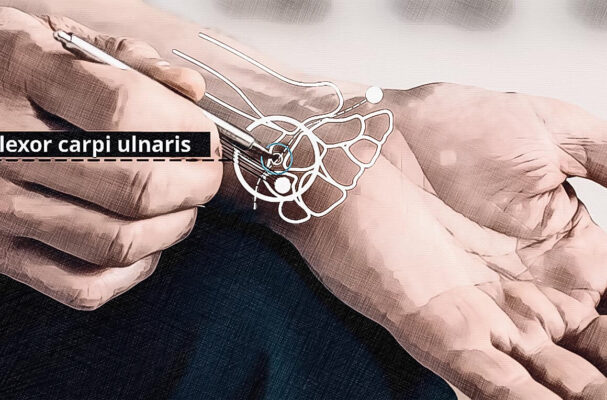
ACUPUNCTURE POINT: Ht 07
Heart 07
Gate of the Spirit — Shen Men
- Beruhigt den Shen direkt und gibt dem Geist Stabilität
- Eases anxiousness and inner restlessness
- Fördert den Schlaf und löst emotionale Anspannung
- Hauptpunkt bei allen Geist–Störungen
Location:
An der Handgelenksbeugefalte, auf der Kleinfingerseite, in der Vertiefung neben der Sehne des Musculus flexor carpi ulnaris.
Use:
2x täglich für 2–3 Min. pro Seite mit sanftem Druck kreisend massieren. Besonders wirksam bei akuter Unruhe oder vor dem Schlafengehen.
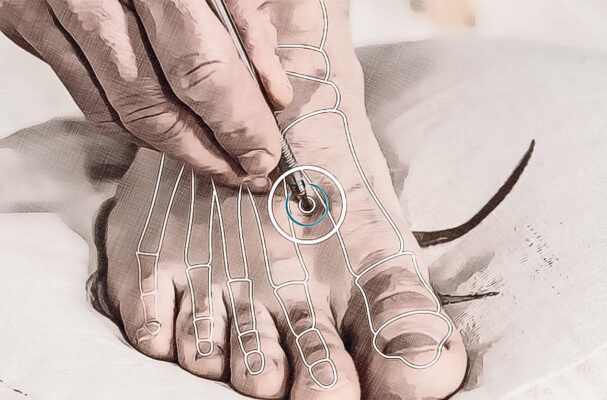
ACUPUNCTURE POINT: Lv 03
Liver 03
Great Rushing — Tai Chong
- Bewegt das Leber–Qi und löst emotionale Stagnation
- Lindert Reizbarkeit, Wut und Frustration
- Calms Ascending Liver Yang
- Harmonisiert die Emotionen und glättet den Qi–Fluss
Location:
Auf dem Fußrücken, in der Vertiefung zwischen dem ersten und zweiten Mittelfußknochen, etwa zwei Daumenbreiten vor dem Zehengelenk.
Use:
2x täglich für 2–3 Min. pro Seite mit mittlerem Druck massieren. Besonders hilfreich bei Reizbarkeit, Wut und Frustration.
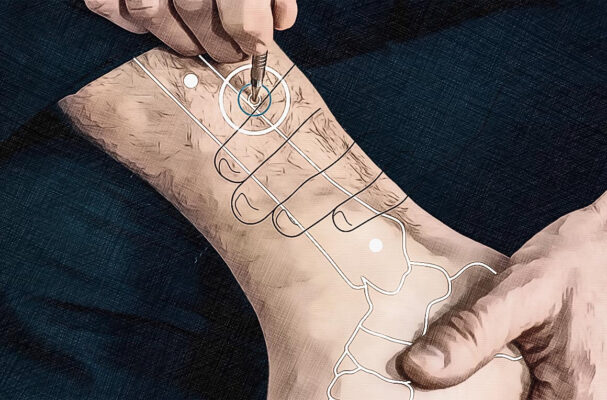
ACUPUNCTURE POINT: Sp 06
Spleen–Pancreas 06
Meeting point of the three Yin — San Yin Jiao
- Meeting point of the three Yin meridians (Spleen, Liver, Kidney)
- Nährt Blut und Yin — beruhigt den Geist von innen
- Strengthens the Spleen as the source of Blood formation
- Reguliert die Emotionen und fördert den Schlaf
Location:
Four finger widths above the highest point of the inner ankle bone, directly behind the shinbone.
Use:
Massage in circles with medium pressure 2x daily for 2–3 min. per side. Do NOT use during pregnancy!
Our app recommendation
Atemraum: your app for mindful breathing


Breathing is the foundation for physical and mental well-being — and in everyday life it is usually COMPLETELY underestimated. Yet hardly anything is as immediate: how we breathe shapes how we feel.
That's why we built Atemraum: an app with guided breathing exercises that you can take with you anywhere. Wolfgang put the exercises together — plus a 35-day course, quick help for the moment, and breath tests that let you see your progress.
A few minutes a day are enough. And if you use our personal guidance you already have Atemraum included.


You can try the app free for 7 days.
Qi Gong
Qi Gong is moving meditation — sanfte, fließende Übungen, die deinen Energiefluss harmonisieren und deinen Geist beruhigen. Bei Shen–Unruhe helfen diese Übungen, das Herz zu öffnen, verstreute Energie zu sammeln und emotionale Stagnation zu lösen.
Regelmäßiges Praktizieren von Qi Gong (schon 10–15 Min. täglich) zeigt nachweislich positive Effekte auf die emotionale Stabilität, den Schlaf und die innere Ruhe.
QI GONG: Exercise 1
Open the Heart
Calms the Shen, opens the chest
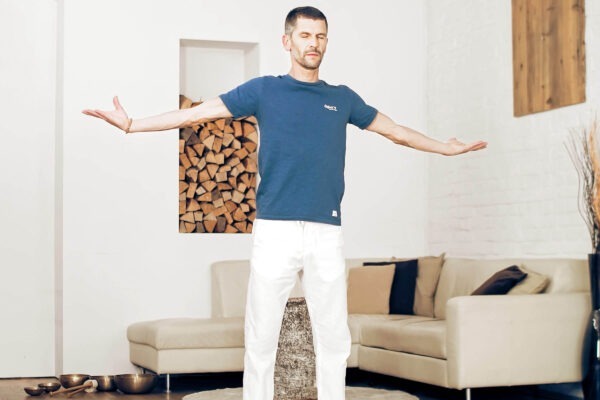
Especially helpful for:
- Inner restlessness and agitation
- Heart palpitations and a feeling of pressure in the chest
- Ängstlichkeit und emotionaler Anspannung
- Schlafproblemen und ruhelosem Geist
Effect:
Diese Übung weitet den Brustkorb und gibt dem Herzen Raum. Bei Shen–Unruhe ist das Herz oft „beengt“ durch aufgestaute Emotionen — diese Übung öffnet den Herz–Meridian und ermöglicht dem Shen, sich zu entspannen und zur Ruhe zu kommen.
QI GONG: Exercise 2
Gathering Qi
Sammelt die Energie, zentriert den Geist
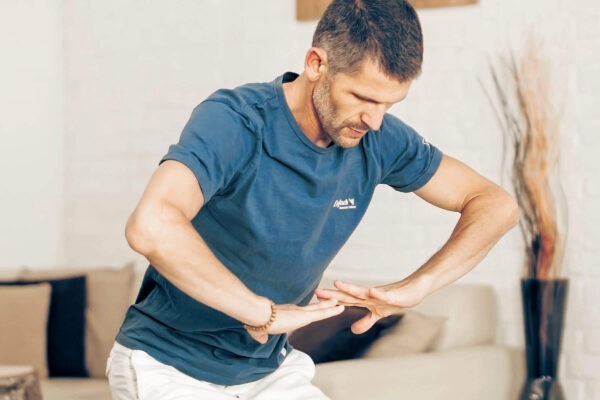
Especially helpful for:
- Zerstreutheit und fehlender Konzentration
- Emotionaler Überforderung
- Erschöpfung durch innere Unruhe
- Gefühl der Bodenlosigkeit
Effect:
Diese Übung sammelt verstreute Energie und bringt sie zurück in die Körpermitte. Bei Shen–Unruhe ist die Energie oft nach oben und außen verstreut — „Qi sammeln“ holt sie zurück, zentriert den Geist und schafft ein Gefühl von Erdung und Stabilität.
QI GONG: Exercise 3
Regulating Qi
Harmonisiert den Qi–Fluss, löst Stagnation
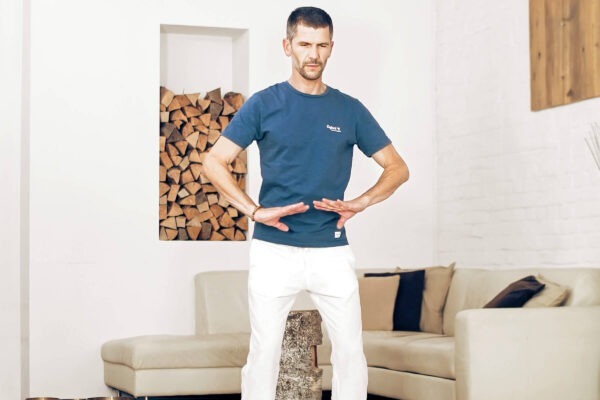
Especially helpful for:
- Leber–Qi Stagnation und Reizbarkeit
- Mood swings
- Spannungsgefühl im Brustkorb
- Seufzen und emotionalem Druck
Effect:
Diese Übung reguliert den Qi–Fluss im gesamten Körper und löst besonders Stagnation im mittleren Erwärmer. Bei Shen–Unruhe durch Leber–Qi Stagnation hilft sie, den blockierten Energiefluss zu befreien, damit die Emotionen wieder frei fließen können.
These Qi Gong exercises sind speziell für die Beruhigung des Geistes und die Harmonisierung der Emotionen ausgewählt. Sie öffnen das Herz, sammeln verstreute Energie und lösen emotionale Stagnation.
Alle Übungen wirken besonders gut, wenn du sie morgens praktizierst — das setzt den Ton für einen emotional ausgeglichenen Tag. Auch vor dem Schlafengehen sind sie ideal, um den Geist zur Ruhe zu bringen.
QI GONG:
When and how often?
Morning or evening (ideal):
- All 3 exercises as a sequence: approx. 15–20 min.
- Or just 1–2 exercises: approx. 5–10 min.
- Morgens für einen ruhigen Start in den Tag
- Abends zum Herunterkommen vor dem Schlafengehen
Throughout the day:
- Einzelne Übungen bei Bedarf (z. B. bei aufsteigenden Emotionen)
- „Qi sammeln“ für schnelle Zentrierung
- „Herz öffnen“ bei Herzklopfen oder Brustenge
Consistency matters more than duration:
- It is better to exercise for 10 minutes every day than for 60 minutes once a week.
- After 2–3 weeks, you will notice your first changes
- Nach 2–3 Monaten regelmäßiger Praxis: deutlich mehr emotionale Stabilität
Pro tip: Bei Shen–Unruhe ist es besonders wichtig, die Übungen in einer ruhigen Umgebung zu praktizieren. Schalte das Handy aus, dimme das Licht und schaffe dir einen Raum der Stille. Die äußere Ruhe hilft dem inneren Geist, sich niederzulassen.
EVERY MONDAY LIVE: QI GONG WITH WOLFGANG
Every Monday at 6:00 p.m. we practice together live on YouTube. Among other things, Wolfgang guides you through a complete Qi Gong sequence — free of charge and suitable for all levels.
Why join live? ✓ Practicing together is motivating ✓ Wolfgang explains the exercises in detail ✓ You can ask questions in the live chat ✓ A fixed time gives your routine structure
More about Qi Gong LiveMeridian Yoga — The Yoga of TCM
Meridian Yoga combines yoga with Traditional Chinese Medicine. The result is a holistic movement concept for more health and energy.
Die folgenden Übungen aktivieren gezielt den Herz–Meridian — denn das Herz ist das Zuhause des Shen. Wenn der Herz–Meridian frei fließt und das Herz genährt wird, kann der Geist zur Ruhe kommen und die Emotionen harmonisieren sich.
MERIDIAN YOGA: Exercise 1
Opening the Heart for the Heart Meridian
Opens the chest, calms the mind

Especially helpful for:
- Innere Unruhe und Nervosität
- Herzklopfen und Brustenge
- Emotional tension
- Stress and Feeling Overwhelmed
Effect:
Diese Übung öffnet den Herz–Meridian, der an der Innenseite des Arms verläuft. Sie weitet den Brustkorb und gibt dem Herzen Raum. Bei Shen–Unruhe hilft sie, den Geist im Herzen zu verankern und aufgestaute Emotionen sanft freizusetzen.
MERIDIAN YOGA: Exercise 2
Shell Stretch for the Heart Meridian
Gently stretches the Heart meridian while lying down
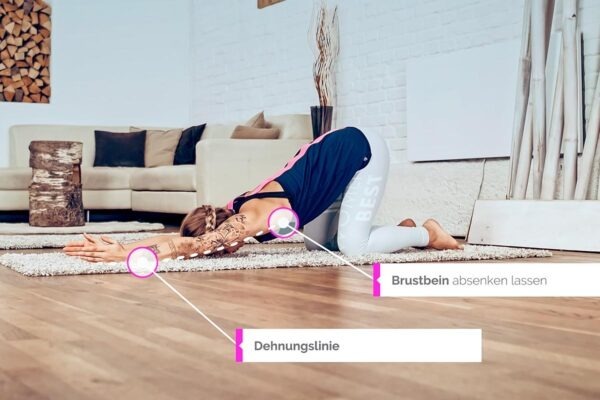
Especially helpful for:
- Schlafstörungen und nächtliche Unruhe
- Ängstlichkeit und Sorgen
- Emotionale Erschöpfung
- Herzklopfen und Nervosität
Effect:
Der Shell Stretch ist eine sanfte, entspannende Übung, die den Herz–Meridian im Liegen dehnt. Sie beruhigt das Nervensystem und fördert einen erholsamen Schlaf — besonders wertvoll bei Shen–Unruhe, wenn der Geist abends nicht zur Ruhe kommen will.
Beide Übungen aktivieren den Herz–Meridian, der an der Innenseite des Arms verläuft und mit dem Herzen verbunden ist. Das Herz beherbergt den Shen — durch die Aktivierung dieses Meridians beruhigst du den Geist direkt und öffnest den Brustraum für freien Energiefluss.
Especially effective: Halte jede Position für 3–5 Atemzüge und visualisiere dabei beruhigendes, warmes Licht, das dein Herz umhüllt und deinen Geist sanft zur Ruhe bringt.
MERIDIAN YOGA:
When and how often?
Best time:
- Abends vor dem Schlafengehen (besonders beruhigend)
- Or at lunchtime between 11 a.m. and 1 p.m. (heart time)
Duration:
- Hold each position for 3–5 breaths
- Complete sequence: 10–15 minutes
- 3–5x per week for best results
Important:
- Practice in a quiet, warm atmosphere
- Breathe deeply and slowly during the positions
- Stretching should feel comfortable, never painful
Pro tip: Kombiniere Meridian Yoga mit dem Qi Gong „Herz öffnen“ für eine kraftvolle Beruhigung des Shen. Bei Shen–Unruhe ist es besonders hilfreich, die Übungen mit bewusster, tiefer Bauchatmung zu verbinden — das aktiviert den Parasympathikus und beruhigt das Nervensystem.
Nutrition according to TCM
"Let food be your medicine" — dieser Grundsatz gilt in der TCM seit Jahrtausenden. Bei Shen–Unruhe ist die richtige Ernährung besonders wichtig, um den Geist zu beruhigen und die Emotionen zu harmonisieren.
The Shen belongs to the elements Feuer (Herz) und Holz (Leber) and needs cooling to neutral, calming foods. Bestimmte Lebensmittel haben eine direkte Wirkung auf den Geist — sie nähren das Herz und beruhigen den Shen.
What you eat, HOW you eat, and WHEN du isst — all das beeinflusst deinen Geist und deine Emotionen.
Die goldenen Regeln für einen ruhigen Geist
What does you good:
Beruhigende Getreidenahrung
- Weizen (ganzes Korn!)
- Oats
- Barley
- Spelt
Weizen ist DAS TCM–Nahrungsmittel für den Shen — er nährt das Herz und beruhigt den Geist. Bei Zöliakie oder Weizenallergie fällt er weg, ebenso Gerste und Dinkel; Hafer nur in ausdrücklich glutenfreier Qualität. Den nährenden Teil übernehmen dann Hirse und Rundkornreis, den beruhigenden die Lotus–Samen, Lilien–Zwiebeln und Datteln aus der Liste darunter.
Herznährende Lebensmittel
- Lotus–Samen
- Lilien–Zwiebeln (Bai He)
- Rote Datteln (Da Zao)
- Longan–Frucht
Diese Lebensmittel nähren das Herz–Blut und beruhigen den Shen direkt
Kühlende und beruhigende Kräutertees
- Chrysanthemum tea
- Chamomile Tea
- Lavendeltee
- Melissentee
Diese Tees kühlen sanft die Herz–Hitze und beruhigen den Geist
Nährendes für Yin und Blut
- Walnüsse
- Sesame (black)
- Eggs
- Tofu
- Fish
Yin und Blut sind die Substanz, die den Shen verankert
What you should avoid:
Kaffee und aufputschende Getränke
- Coffee
- Schwarzer Tee (in großen Mengen)
- Energy drinks
- cola
Koffein verstärkt die innere Unruhe und stört den Schlaf!
Scharfe und heiße Gewürze
- Chili
- Pfeffer (große Mengen)
- Ingwer (roh, in großen Mengen)
- Zimt (große Mengen)
Schärfe erzeugt Hitze und heizt den Shen weiter auf!
Alcohol
- Wine
- Beer
- Liquors
Alkohol bewegt das Qi kurzzeitig, erschöpft aber Blut und Yin langfristig!
Zucker und gebratenes Essen
- Sweets and cakes
- Deep-Fried and Heavily Pan-Fried Foods
- Soft drinks
- Ready-made meals
Zucker und Fett erzeugen Feuchtigkeit und Hitze!
HOW YOU SHOULD EAT:
In Ruhe und Achtsamkeit
- Nicht beim Essen arbeiten oder fernsehen
- Bewusst kauen und schmecken
- Essen als Meditation — Geist zur Ruhe bringen
- Keine aufregenden Gespräche beim Essen
Regelmäßig und leicht
- 3 regular meals a day
- Light and early in the evening (before 7 pm)
- Keine schweren Mahlzeiten vor dem Schlafengehen
- Warme, leicht verdauliche Speisen bevorzugen
Beruhigend trinken
- Warm water or herbal tea
- Chrysanthemum tea in the afternoon
- Lotus–Samen–Tee am Abend
- No coffee after 2 pm
IDEAL MENU FOR ONE DAY:
Breakfast (7–9 a.m.):
- Warm oatmeal with walnuts and dates
- Along with it: Chrysanthemum tea or warm water
Lunch (12–1 p.m.):
- Gedämpfter Fisch mit grünem Gemüse
- Along with it: Vollkornreis oder Weizennudeln
- Or: Tofu mit Gemüse und Sesam
Dinner (6–7 p.m.):
- Leichte Gemüsesuppe mit Lotus–Samen
- Or: Congee mit roten Datteln
- Along with it: Chamomile Tea
Snack if needed:
- 3–5 red dates
- Or: A handful of walnuts
- Or: Lotus–Samen–Tee
The most important rule when changing your diet is:
Start with ONE step!
Don't change everything at once.
Our suggestion for getting started:
- Reduce coffee and replace with herbal tea - 2 weeks
- Abends leicht und beruhigend essen — 2 Wochen
- Weizen und Lotus–Samen regelmäßig integrieren — 2 Wochen
Schritt für Schritt wirst du merken, wie dein Geist ruhiger wird und deine Emotionen sich harmonisieren.
Your Shen will thank you!
REZEPT: LOTUS–SAMEN–CONGEE MIT DATTELN
Ingredients:
Serves 2
- 100 g rice
- 30 g Lotus–Samen (vorher 2 Std. einweichen)
- 5 red dates (pitted)
- 1 L water
- 1 tbsp honey or maple syrup
- Optional: 1 tbsp goji berries
Preparation:
- Reis waschen, mit Wasser in Topf geben
- Lotus–Samen und Datteln dazugeben
- Aufkochen, dann bei niedriger Hitze 40–50 Min. köcheln
- Stir regularly
- Optional Goji–Beeren 10 Min. vor Ende hinzufügen
- Sweeten with honey to taste
Effect:
Nährt das Herz und beruhigt den Shen
Stärkt die Milz und fördert den Schlaf
Ideal als Abendessen bei Shen–Unruhe
3–4x pro Woche — der TCM–Klassiker für einen ruhigen Geist!
REZEPT: CHRYSANTHEMEN–WEIZEN–TEE
Ingredients:
Serves 2
- 30 g ganzer Weizen (Weizenkörner)
- 5 g getrocknete Chrysanthemen
- 5 red dates (pitted)
- 800 ml water
- Optional: 1 tsp honey
Preparation:
- Weizenkörner waschen und mit Wasser aufsetzen
- Datteln hinzufügen
- Aufkochen, dann 30 Min. bei niedriger Hitze köcheln
- Chrysanthemen hinzufügen, weitere 5 Min. ziehen lassen
- Abseihen oder alles zusammen genießen
- Sweeten with honey, if you like
Effect:
Weizen nährt das Herz und beruhigt den Shen direkt
Chrysanthemen kühlen die Leber und klären den Kopf
Datteln nähren Blut und Qi
1–2 cups daily — ideal in the afternoon or evening!
Bei Zöliakie oder Weizenallergie nicht geeignet: Der Weizen ist hier der wirksame Teil. Ohne ihn bleibt ein milder Chrysanthemen–Dattel–Tee — für den beruhigenden Teil nimmst du stattdessen besser den Lotus–Samen–Tee vom Abend: 10–15 Lotus–Samen 20 Min. in Wasser köcheln, warm trinken.
Breathing
Breathing is the bridge between body and mind. In TCM it is said: "The Lung governs the Qi" — according to this idea, conscious breathing lets you address your Qi flow directly and settle into deeper calm.
Breathe calmly and slowly: Deep belly breathing noticeably calms many people — the breath becomes deeper, the shoulders drop, and the mind becomes clearer. The good news: Even 5–10 minutes a day can make a difference for your well-being.
Recommended breathing techniques
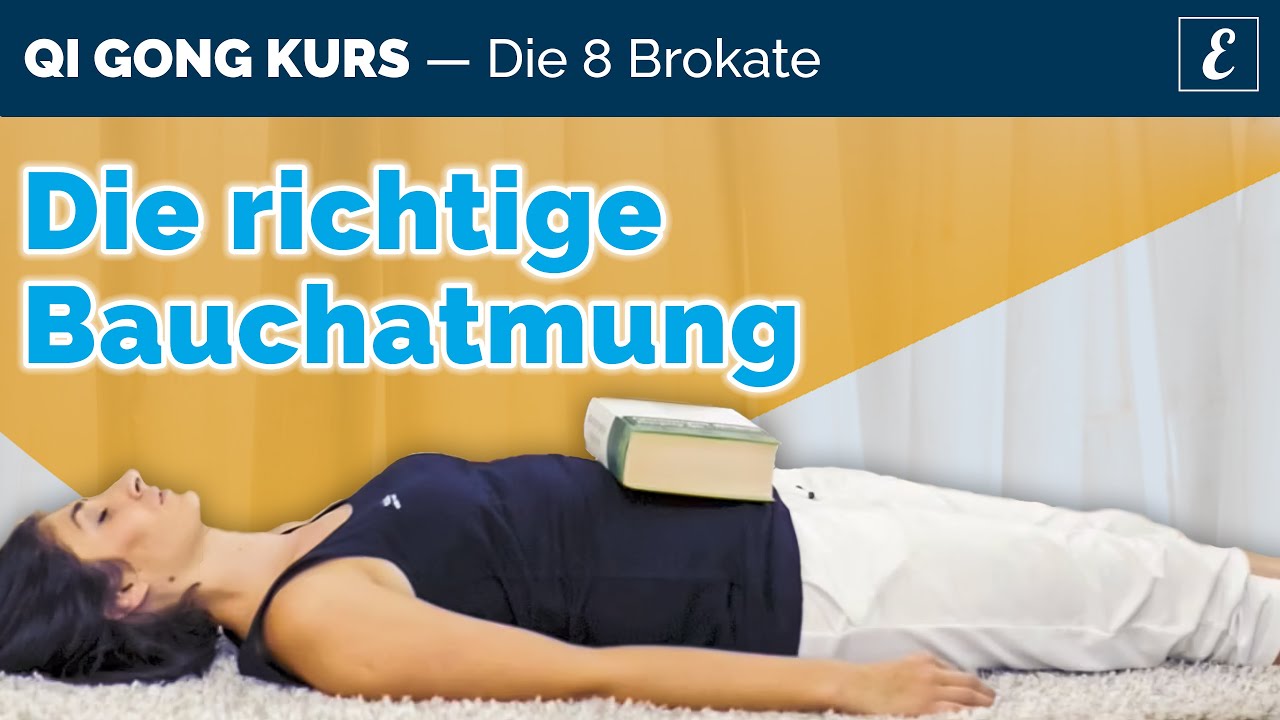
ABDOMINAL BREATHING — The foundation for every breathing technique
Natural breathing
Abdominal breathing is the most natural and calming form of breathing. According to TCM teachings, with every breath you bring Qi into your center (Dantian).
Wolfgang shows you step by step, how to learn abdominal breathing correctly — lying down at first, and later sitting and standing too.
Duration: 9 minutes
4–7–8 BREATHING — Settle into calm
The calming breath for the evening
In 4–7–8 breathing, you inhale for 4 seconds, hold for 7 seconds, and exhale for 8 seconds. Many people find that this steady rhythm helps them wind down in the evening — ideal when your mind just won't switch off at night.
Ideal for the evening or whenever you want to settle down quickly.
Duration: 9 minutes
To the follow-along videoBOX BREATHING — For inner coherence
The pro breathing technique for focus and calm
Box Breathing (4 sec. in, 4 sec. hold, 4 sec. out, 4 sec. hold) combines activation and relaxation in perfect balance. This method is used by elite soldiers, athletes, and executives to stay calm and focused even in extremely stressful situations.
A steady 4–4–4–4 rhythm of activation and calm — many people experience it as clearing and centering.
Duration: 9 minutes
To the follow-along videoCOHERENT BREATHING — Brings body & mind into harmony
The calming breath for balance
In coherent breathing you breathe in for 5.5 seconds and out for 5.5 seconds. This rhythm brings your Heart and breathing into an even beat — a state known as "coherence." Many people use it as a regular breathing break in their day.
A nice side effect: Heart and breath settle into a calm, shared rhythm.
Duration: 14 minutes
To the follow-along video
COHERENT BREATHING Around the clock
Our 24/7 livestream for coherent breathing runs non-stop. You can tune in at any time and join right away.
Perfect for:
✓ Spontaneous breathing breaks during the day
✓ If you would like calm breathing guidance
✓ As background while you work
✓ For the evening and for winding down
✓ For regular daily practice
Relaxation
When your body is relaxed, things flow more easily. Ongoing tension keeps you in constant stress mode. With targeted relaxation techniques, you signal to your body that it can settle down and gather new strength.
Progressive Muscle Relaxation is one of the best-known relaxation methods and has been practiced for over 100 years. It helps you notice tension, actively let go, and reach a state of deep relaxation — whenever you like.
Recommended relaxation technique
PROGRESSIVE MUSCLE RELAXATION (PMR)
The classic relaxation method
Progressive Muscle Relaxation according to Jacobson is one of the best-known relaxation techniques worldwide. By deliberately tensing and releasing individual muscle groups, you learn to consciously notice tension and let it go again.
This is how it feels:
Step by step, the body becomes heavier and calmer, and the breath more even. Many people use it as a regular part of their evening routine to help them fall asleep well.
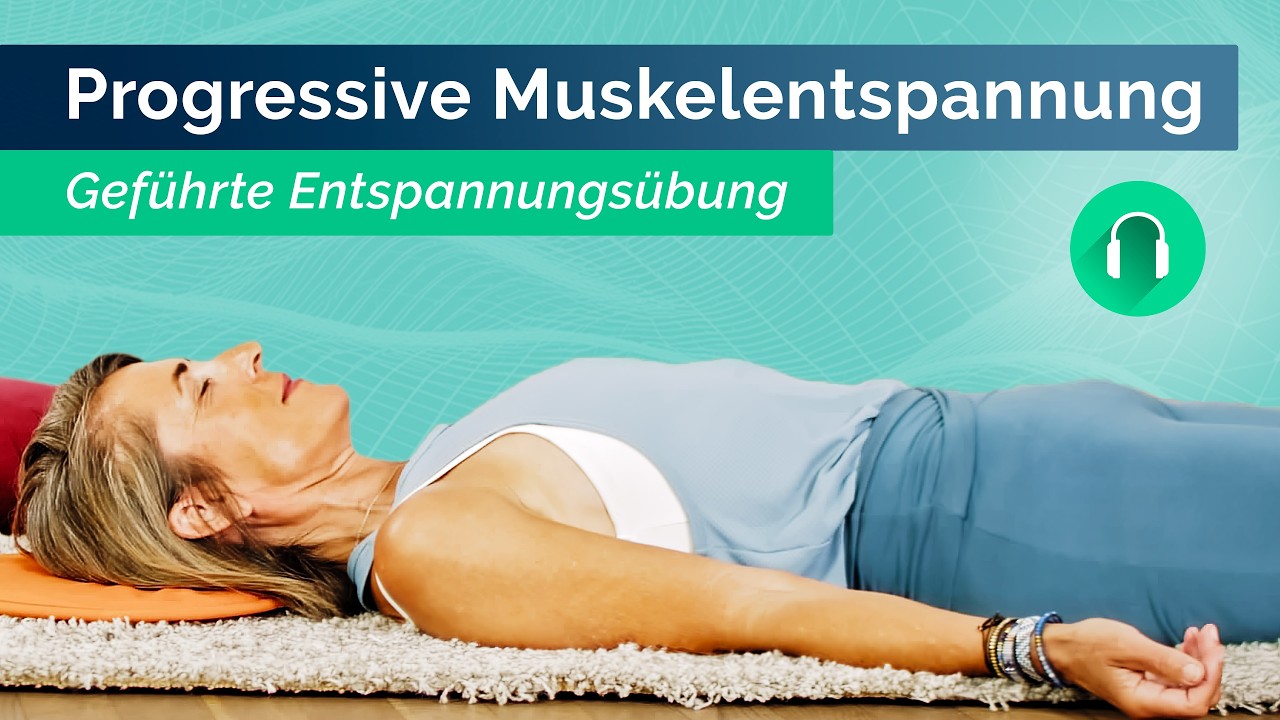
Maria guides you step by step through the complete exercise — perfect for beginners and advanced practitioners.
Duration: 23 minutes of complete instruction
To the guided PMRMeditation
Meditation calms the mind — and a calm mind is good for the whole person. In TCM, it is said that every emotion touches a particular organ. Through regular meditation, you learn to step out of circling thoughts, find emotional balance, and strengthen your inner center.
Just 10 minutes a day can do a lot for your inner calm. Many people find that it makes their everyday life feel more relaxed and clearer.
Recommended meditations
GUIDED MEDITATIONS FOR EVERY DAY
Your personal meditation library
We have put together a complete playlist with over 60 guided meditations, breathing exercises, and relaxation techniques for you — from short 5-minute meditations for in between to deep 30-minute sessions for intensive practice.
In the playlist you will find:
- Morning meditations for a mindful start to the day
- Sleep meditations for restful sleep
- Breathing meditations for inner calm
- Meditations for calm moments during stress and rumination
- TCM standing meditations for all 5 Elements
- Body scan and body journeys
- Calming meditations for body and mind
- Special breathing techniques (4-7-8, coherent breathing, bee breath)
Perfect for beginners and advanced practitioners. Choose the meditation that fits your time, time of day, and needs.
To the meditation playlistWenn der Shen ruhig ist, sind die Emotionen klar wie ein stiller See.
Ist er unruhig, gleicht der Geist einem aufgewühlten Wasser — nichts kann sich darin spiegeln. Erst wenn der Wind sich legt, kehrt die Klarheit zurück.
— Freely adapted from the HUANG DI NEI JING
(The Yellow Emperor's Classic of Internal Medicine)
More tips for your daily life
Alongside the classic TCM treatment methods gibt es viele kleine Alltagsgewohnheiten, die deinen Geist beruhigen können. Der Shen braucht Stille, Regelmäßigkeit und bewusste Pflege — mit den richtigen Gewohnheiten kannst du nachhaltige innere Ruhe aufbauen.
Sleep and rest
Get enough sleep
Bei Shen–Unruhe ist Schlafqualität entscheidend:
- 7–8 Stunden Schlaf sind das Minimum
- Bei Shen–Unruhe ist Schlafqualität wichtiger als Quantität
- Das Herz–Blut regeneriert sich im Schlaf
- Vor 23 Uhr ins Bett — die beste Zeit für die Leber–Regeneration
- Ein regelmäßiger Schlafrhythmus beruhigt den Shen
Schlafhygiene
Die richtige Umgebung für erholsamen Schlaf:
- Schlafzimmer kühl, dunkel und ruhig halten
- Keine Bildschirme 1 Stunde vor dem Schlafengehen
- Warmes Fußbad vor dem Schlafen (zieht Hitze nach unten)
- Beruhigender Tee (Chrysantheme, Kamille) am Abend
- Kein Essen 2–3 Stunden vor dem Schlafengehen
Erholungspausen
Regelmäßige Pausen beruhigen den Geist:
- Kurze Pausen alle 90 Minuten
- 10–20 Min. Mittagsruhe
- Tiefes Atmen bei Stress (4 Sek. ein, 7 Sek. halten, 8 Sek. aus)
- Nicht durcharbeiten — der Shen braucht Erholung
Emotionale Pflege — Den Geist nähren
Emotionen fließen lassen
Unterdrückte Gefühle erzeugen Stagnation:
- Gefühle nicht unterdrücken — sie erzeugen Stagnation
- Journaling: Täglich 10 Min. aufschreiben, was dich bewegt
- Sprechen hilft — teile dich vertrauensvollen Menschen mit
- Weinen ist erlaubt und heilsam — es löst Stagnation
- Kreative Ausdrucksformen: Malen, Musik, Tanzen
Stille kultivieren
Der Shen braucht Ruhe und Rückzug:
- 5–10 Min. tägliche Meditation oder stilles Sitzen
- Morgens vor dem Aufstehen: Bewusst im Bett liegen und atmen
- Natur als Medizin — regelmäßige Spaziergänge
- Digitale Auszeiten — feste handyfreie Zeiten
- Stille Momente bewusst genießen (Tee trinken, Sonnenuntergang)
Setting boundaries
Überforderung nährt die Unruhe:
- Nein sagen lernen — Überforderung nährt die Unruhe
- Reizüberflutung vermeiden — weniger Nachrichten, soziale Medien
- Toxische Beziehungen und Situationen erkennen
- Take your own needs seriously
- Pufferzeiten im Terminkalender einplanen
Bewegung und Körperarbeit
Sanfte, beruhigende Bewegung
Bewegung ohne Aufregung beruhigt den Shen:
- Qi Gong und Tai Chi — bewegen ohne aufzupeitschen
- Walks in nature — especially near water
- Sanftes Yoga ohne Leistungsdruck
- Swimming in warm water
- Dehnen und Stretching am Abend
What you should avoid
Übermäßige Aktivierung verstärkt die Unruhe:
- Intensiver Sport am späten Abend (aktiviert den Sympathikus)
- Wettkampfsport mit hohem Adrenalinpegel
- Training to the point of exhaustion
- Sport als „Ablenkung“ von Emotionen statt als Verarbeitung
- Laute, hektische Fitnessstudios bei starker Unruhe
Breathing exercises
Bewusstes Atmen beruhigt Herz und Geist:
- Die 4–7–8 Methode: 4 Sek. einatmen, 7 Sek. halten, 8 Sek. ausatmen
- Bauchatmung: Hand auf den Bauch, bewusst in den Bauch atmen
- Box Breathing: 4 Sek. ein, 4 Sek. halten, 4 Sek. aus, 4 Sek. halten
- 3x täglich 3–5 Minuten — kleine Übung, große Wirkung
Important to know
Die Beruhigung des Shen ist ein Prozess, der Geduld und Konsequenz braucht. Es geht nicht darum, Emotionen zu unterdrücken — sondern darum, mit ihnen umgehen zu lernen. Dein Shen braucht ein stabiles Fundament aus Schlaf, Ernährung und Stille, um wieder zur Ruhe zu kommen. Achte auf die Signale deines Körpers: Innere Unruhe, Herzklopfen und Schlafstörungen zeigen, dass dein Shen Pflege braucht.
When to see a doctor? Bei starker Ängstlichkeit, Panikattacken, anhaltender Traurigkeit oder dem Gefühl, den Alltag nicht mehr bewältigen zu können, solltest du professionelle Hilfe suchen. TCM und westliche Psychologie/Psychotherapie ergänzen sich hier hervorragend.
For the best possible course of treatment
TCM is not a quick fix for symptoms, but a holistic path to healing. You will get the best results when you consistently build the treatment into your daily life and give your body time to regenerate.
Integrating it into your daily life
Start with ONE step
Don't try to change everything at once! That is overwhelming and
usually leads to giving up. Instead:
- Woche 1–2: Mit deiner TCM–Kräutermischung beginnen — dazu eine beruhigende Ernährung mit Weizen, Lotus–Samen und Datteln
- Woche 3–4: Akupressur He 07 und Le 03 täglich
- Weeks 5–6: Qi Gong "Opening the Heart" daily for 10 min.
- Woche 7–8: Zwischenbilanz — Stimmungsschwankungen, Weinen ohne Anlass, innere Unruhe und Schlaf vergleichen mit dem, was am Anfang stand
- From week 9: Add further methods as needed
Realistic expectations
After 2–3 weeks: First improvements noticeable
- Etwas mehr innere Ruhe
- Weniger emotionale Ausbrüche
- Leicht verbesserter Schlaf
After 6–8 weeks: Clear improvements
- Deutlich ruhigerer Geist
- Bessere emotionale Belastbarkeit
- Stabilerer Schlaf
After 3–6 months: Lasting healing
- Emotionale Ausgeglichenheit im Alltag
- Der Geist fühlt sich verankert und klar an
- Lasting inner peace and serenity
TCM vs. Western Medicine
TCM and Western medicine do not exclude each other — they complement each other!
When Western medicine is important:
- In acute emergencies
- In cases of structural damage
- In cases of infection
- For precise diagnoses (lab work, imaging)
Where TCM has its strengths:
- For functional disorders
- For chronic complaints
- For prevention
- For holistic healing
Ideal: Combine both systems! Use Western medicine for
acute treatment and precise diagnostics, and TCM for lasting healing
and for strengthening the body's self-healing powers.
Important: Never stop taking prescribed medications on your own!
Talk to your doctor when you begin TCM treatment.
Do you have questions?

Wolfgang from meine-tcm.com
TCM is a broad field. Much of it sounds unfamiliar at first, and the real question often comes up only once you start trying some of it out in everyday life.
That's exactly what I'm here for. Write to me — no matter whether your question is big or small, whether it relates to this page or to something else entirely from TCM. I read every message myself and will get back to you. Calmly, clearly, and without a sales pitch.
P.S. There are no silly questions. So write to me.
Ask your questionEvery step counts
Your body strives for balance — you just need to create the right conditions for it.
Remember:
👣 Every small step counts
You don't have to be perfect. Even one warm meal a day is better than none. Even 5 minutes of Qi Gong is better than no movement at all.
⏳ Patience pays off
Your body took years to get into this state. Give it time to find its balance again. Change takes time, but it comes.
🎯 Focus on what you CAN do
Don't concentrate on everything you're doing "wrong." Focus on every positive step you take.
💚 Be good to yourself
There's no such thing as perfection. You're allowed to have a bad day now and then. Tomorrow is a new day, and you can pick up where you left off.
🤝 You are not alone
Thousands of people are walking this path with you. For over 2,000 years, TCM has been guiding people like you on their journey toward greater well-being.
Track your progress

To track your progress, we recommend repeating the TCM analysis after about 3 months.
Why is this useful?
- You see how your pattern has changed
- You can adjust your support as needed
- It motivates you to keep going
- You recognize which measures suit you best
⚠️ Important: Your answers from today are stored in encrypted form in a code that you received by e-mail. ONLY with this code can you follow your progress later on. Keep the e-mail in a safe place!
🔒 YOUR DATA IS SAFE
We store:
✓ Only your email for the reminder
✓ The date for sending
We do NOT store:
✗ Your analysis results
✗ Your personal data
✗ The link between e-mail and pattern
All analysis data is completely anonymous and is not linked to your e-mail address.
Newsletter
Stay up to date with our newsletter. Along with helpful tips and tricks for your training and your everyday life, you won't miss any of our new releases.